Title: The Integration of Functions of a Single Variable
Author: G. H. Hardy
Editor: Philip Hall
F. Smithies
Release date: March 3, 2012 [eBook #38993]
Most recently updated: August 6, 2026
Language: English
Other information and formats: www.gutenberg.org/ebooks/38993
Cambridge Tracts in Mathematics and Mathematical Physics
General Editors
G. H. HARDY, M.A., F.R.S.
E. CUNNINGHAM, M.A.
No. 2
BY
G. H. HARDY
Fellow of New College
Savilian Professor of Geometry in the University of Oxford
Late Fellow of Trinity College, Cambridge
SECOND EDITION

CAMBRIDGE UNIVERSITY PRESS
London
Fetter lane, E.C. 4
Cambridge Tracts in Mathematics
and Mathematical Physics
General Editors P. HALL, F.R.S. and F. SMITHIES, Ph.D.
| First Edition | 1905 |
| Second Edition | 1916 |
| Reprinted | 1928 |
Printed in Great Britain
THIS tract has been long out of print, and there is still some demand for it. I did not publish a second edition before, because I intended to incorporate its contents in a larger treatise on the subject which I had arranged to write in collaboration with Dr Bromwich. Four or five years have passed, and it seems very doubtful whether either of us will ever find the time to carry out our intention. I have therefore decided to republish the tract.
The new edition differs from the first in one important point only. In the first edition I reproduced a proof of Abel's which Mr J. E. Littlewood afterwards discovered to be invalid. The correction of this error has led me to rewrite a few sections (pp. 36—41 of the present edition) completely. The proof which I give now is due to Mr H. T. J. Norton. I am also indebted to Mr Norton, and to Mr S. Pollard, for many other criticisms of a less important character.
G. H. H.
January 1916.
| PAGE | |
| I. Introduction | 1 |
| II. Elementary functions and their classification | 3 |
| III. The integration of elementary functions. Summary of results | 8 |
| IV. The integration of rational functions | 11 |
| 1-3. The method of partial fractions | 11 |
| 4. Hermite's method of integration | 15 |
| 5. Particular problems of integration | 17 |
| 6. The limitations of the methods of integration | 20 |
| 7. Conclusion | 22 |
| V. The integration of algebraical functions | 22 |
| 1. Algebraical functions | 22 |
| 2. Integration by rationalisation. Integrals associated with conics | 23 |
3-6. The integral  |
25 |
| 7. Unicursal plane curves | 32 |
| 8. Particular cases | 35 |
| 9. Unicursal curves in space | 37 |
| 10. Integrals of algebraical functions in general | 38 |
| 11-14. The general form of the integral of an algebraical function. Integrals which are themselves algebraical |
38 |
| 15. Discussion of a particular case | 45 |
16. The transcendence of 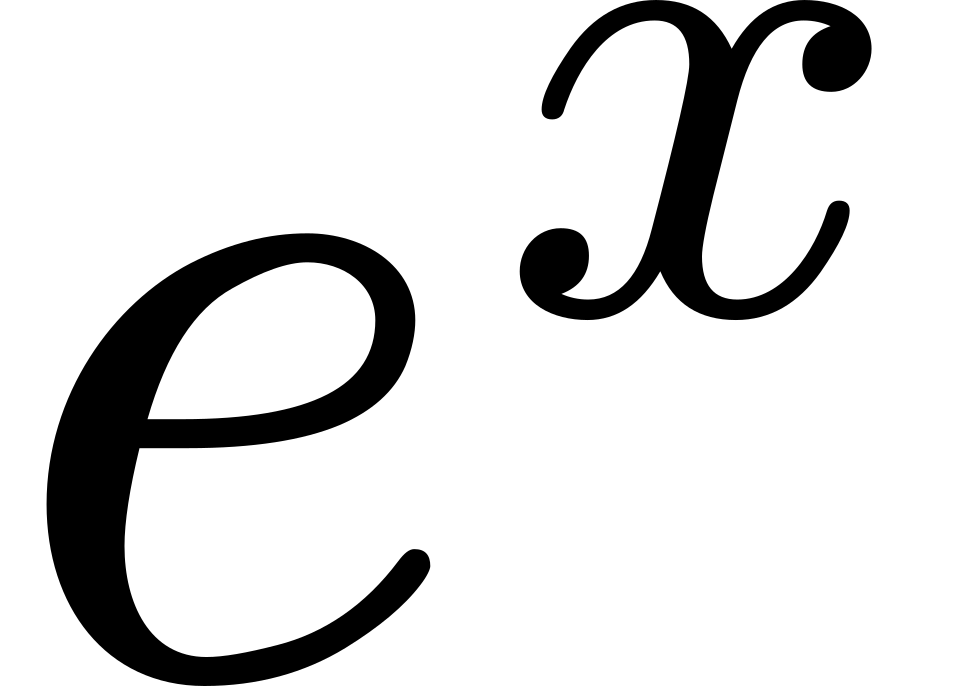 and and 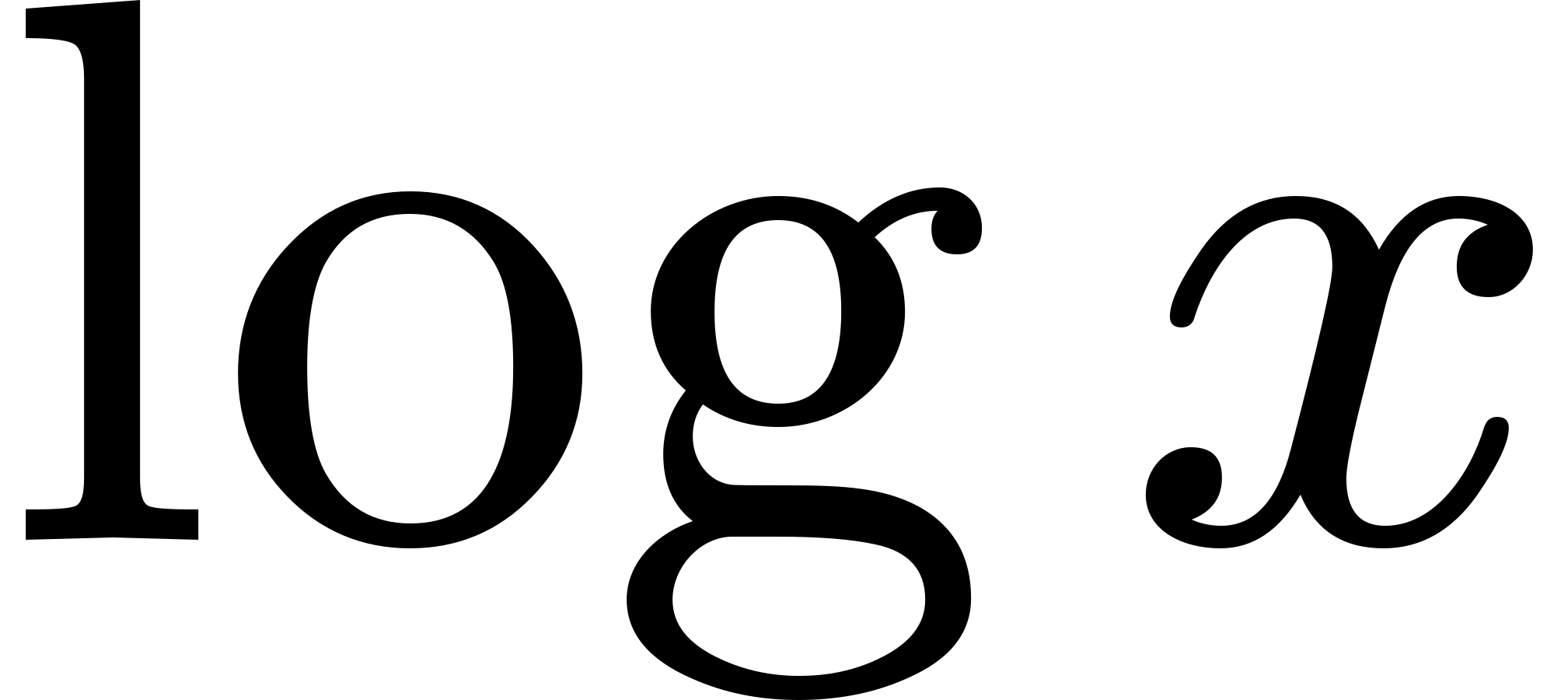 |
47 |
| 17. Laplace's principle | 48 |
| 18. The general form of the integral of an algebraical function (continued). Integrals expressible by algebraical functions and logarithms |
48 |
| 19. Elliptic and pseudo-elliptic integrals. Binomial integrals | 50 |
| 20. Curves of deficiency 1. The plane cubic | 51 |
| 21. Degenerate Abelian integrals | 53 |
| 22. The classification of elliptic integrals | 54 |
| VI. The integration of transcendental functions | 55 |
| 1. Preliminary | 55 |
2. The integral  |
56 |
3. The integral  |
59 |
4. The integral 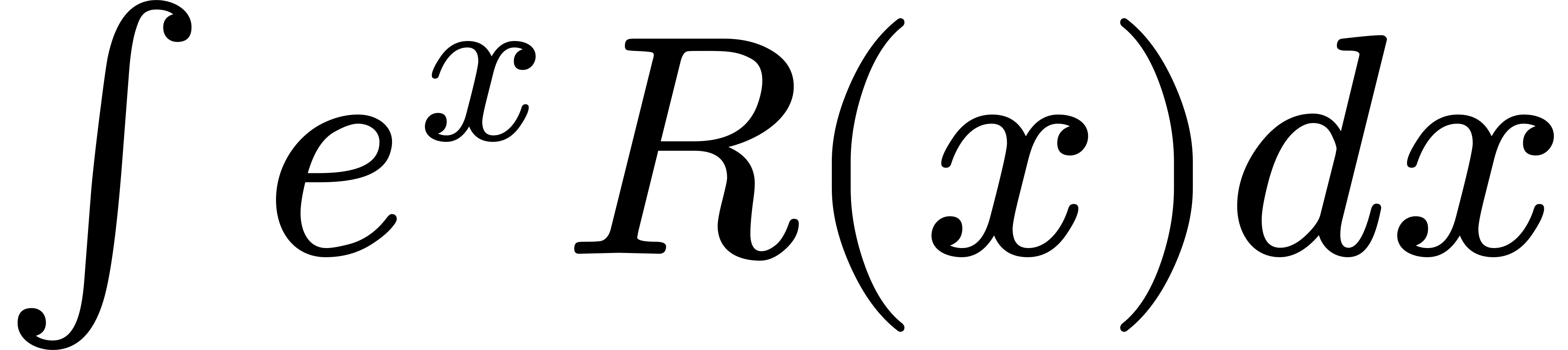 . The logarithm-integral . The logarithm-integral |
63 |
| 5. Liouville's general theorem | 63 |
6. The integral  |
64 |
| 7. Conclusion | 65 |
| Appendix I. Bibliography | 66 |
| Appendix II. On Abel's proof of the theorem of v., § 11 | 66 |
[Pg 1]
The problem considered in the following pages is what is sometimes called the problem of 'indefinite integration' or of 'finding a function whose differential coefficient is a given function'. These descriptions are vague and in some ways misleading; and it is necessary to define our problem more precisely before we proceed further.
Let us suppose for the moment that 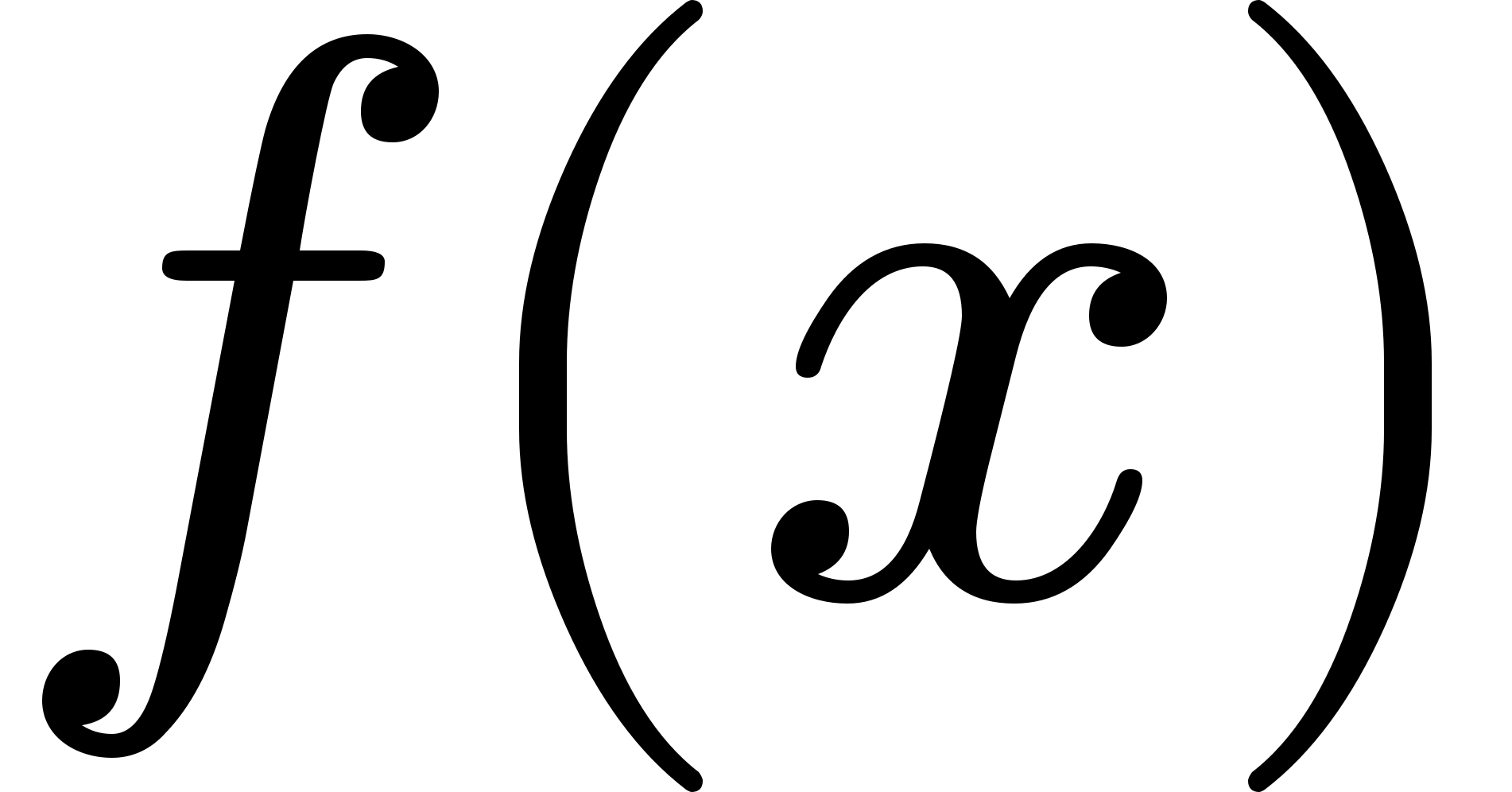 is a real continuous
function of the real variable
is a real continuous
function of the real variable 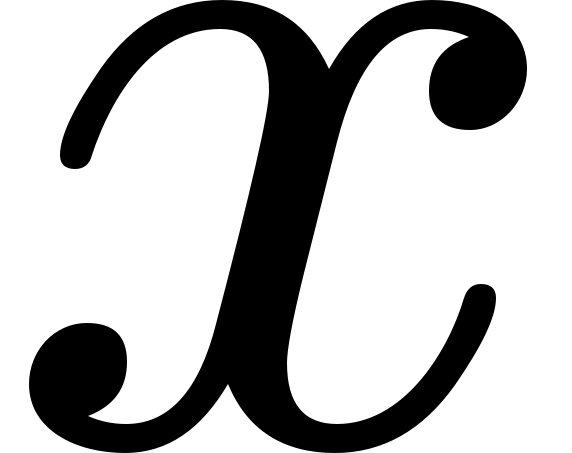 . We wish to determine a function
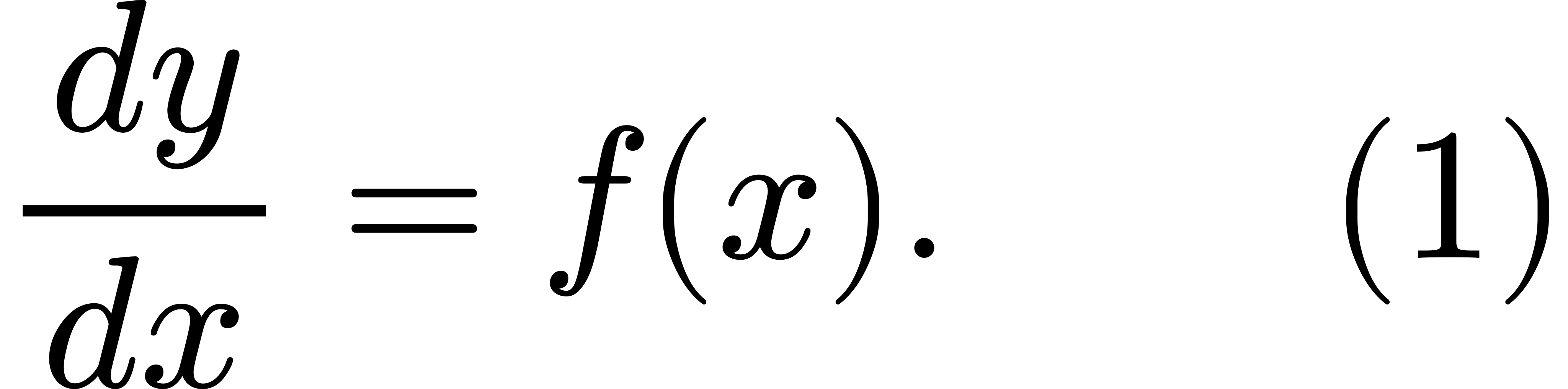
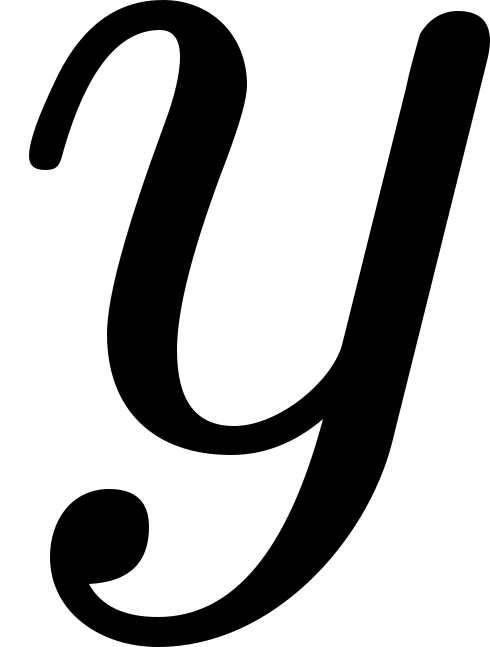 whose differential coefficient is , or to solve the
equation
whose differential coefficient is , or to solve the
equation
 A little reflection shows that this problem may be analysed into a
number of parts.
A little reflection shows that this problem may be analysed into a
number of parts.
We wish, first, to know whether such a function as necessarily
exists, whether the equation (1) has always a solution; whether the
solution, if it exists, is unique; and what relations hold between
different solutions, if there are more than one. The answers to these
questions are contained in that part of the theory of functions of
a real variable which deals with 'definite integrals'. The definite
integral
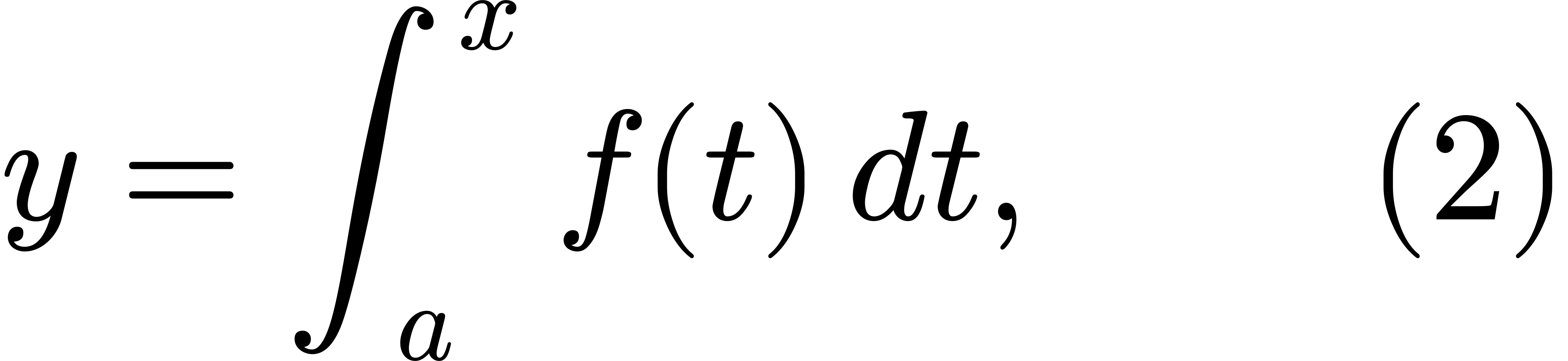 which is defined as the limit of a certain sum, is a solution of the
equation (1). Further
which is defined as the limit of a certain sum, is a solution of the
equation (1). Further
 [Pg 2]where
  is an arbitrary constant, is also a solution, and all
solutions of (1) are of the form (3).
is an arbitrary constant, is also a solution, and all
solutions of (1) are of the form (3).
These results we shall take for granted. The questions with which
we shall be concerned are of a quite different character. They are
questions as to the functional form of when is a
function of some stated form. It is sometimes said that the problem
of indefinite integration is that of 'finding an actual expression
for when is given'. This statement is however still
lacking in precision. The theory of definite integrals provides us not
only with a proof of the existence of a solution, but also with an
expression for it, an expression in the form of a limit. The problem of
indefinite integration can be stated precisely only when we introduce
sweeping restrictions as to the classes of functions and the modes of
expression which we are considering.
Let us suppose that belongs to some special class of functions
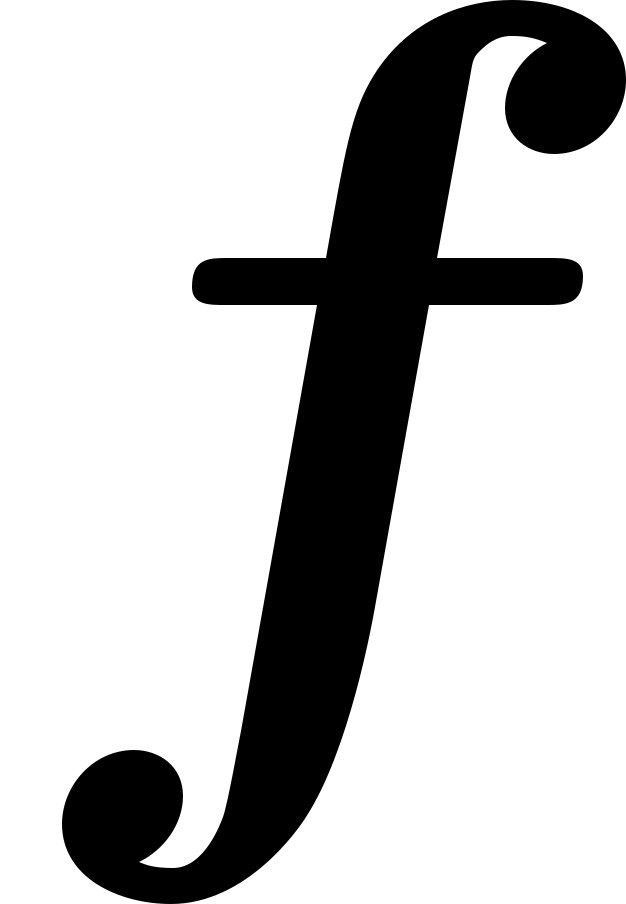 . Then we may ask whether is itself a member
of , or can be expressed, according to some simple
standard mode of expression, in terms of functions which are members
of . To take a trivial example, we might suppose
that is the class of polynomials with rational
coefficients: the answer would then be that is in all cases
itself a member of .
. Then we may ask whether is itself a member
of , or can be expressed, according to some simple
standard mode of expression, in terms of functions which are members
of . To take a trivial example, we might suppose
that is the class of polynomials with rational
coefficients: the answer would then be that is in all cases
itself a member of .
The range and difficulty of our problem will depend upon our choice
of (1) a class of functions and (2) a standard 'mode of expression'.
We shall, for the purposes of this tract, take to
be the class of elementary functions, a class which will be
defined precisely in the next section, and our mode of expression to be
that of explicit expression in finite terms, i.e. by
formulae which do not involve passages to a limit.
One or two more preliminary remarks are needed. The subject-matter of
the tract forms a chapter in the 'integral calculus'[1], but does not
depend in any way on any direct theory of integration. Such an equation
as
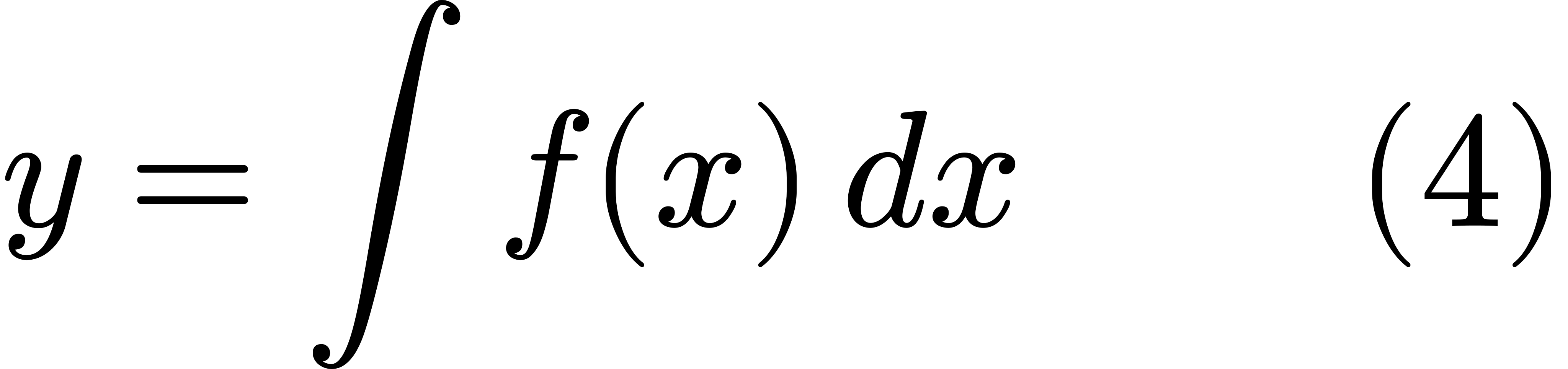 [Pg 3]is to be regarded as merely another way of writing (1): the integral
sign is used merely on grounds of technical convenience, and might be
eliminated throughout without any substantial change in the argument.
[Pg 3]is to be regarded as merely another way of writing (1): the integral
sign is used merely on grounds of technical convenience, and might be
eliminated throughout without any substantial change in the argument.
The variable is in general supposed to be complex. But the tract
should be intelligible to a reader who is not acquainted with the
theory of analytic functions and who regards as real and the
functions of which occur as real or complex functions of a real
variable.
The functions with which we shall be dealing will always be such as are
regular except for certain special values of . These values of
we shall simply ignore. The meaning of such an equation as
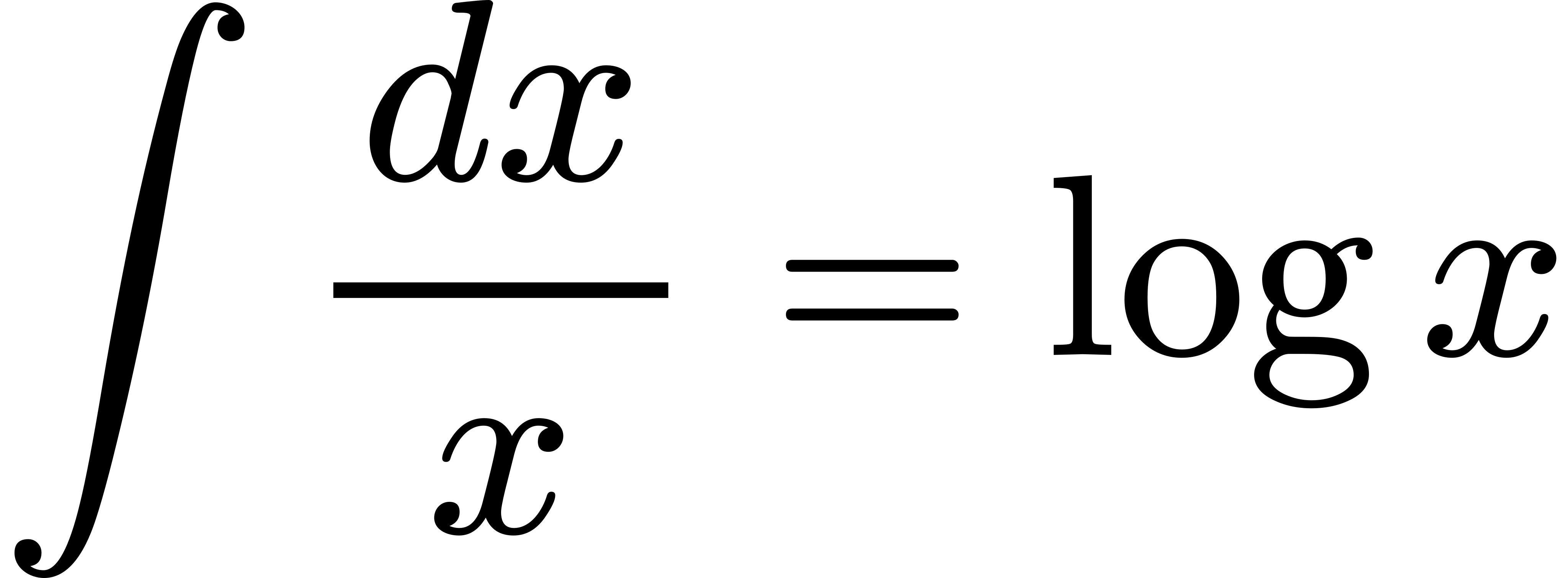 is in no way affected by the fact that
 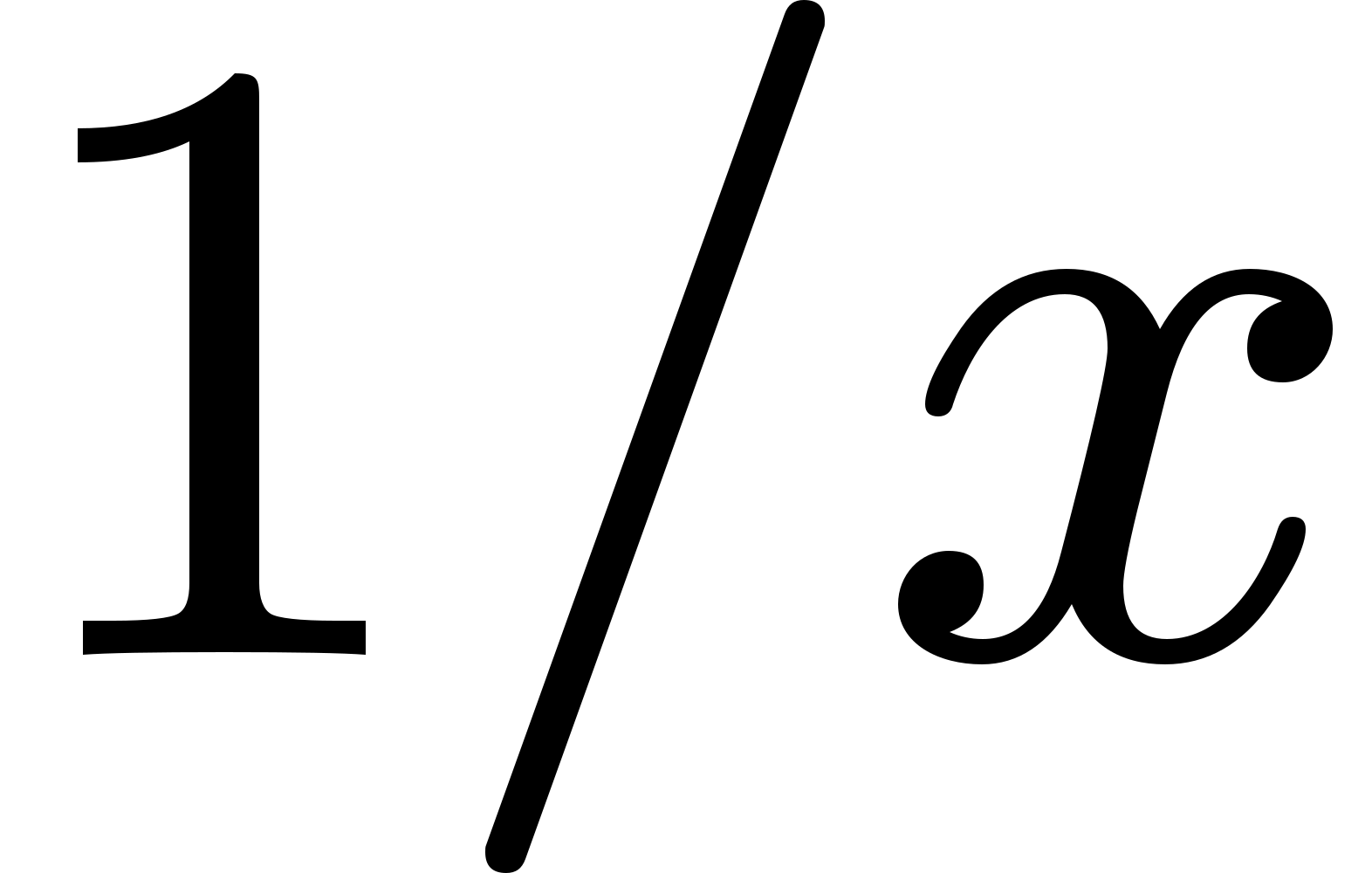 and have
infinities for
and have
infinities for 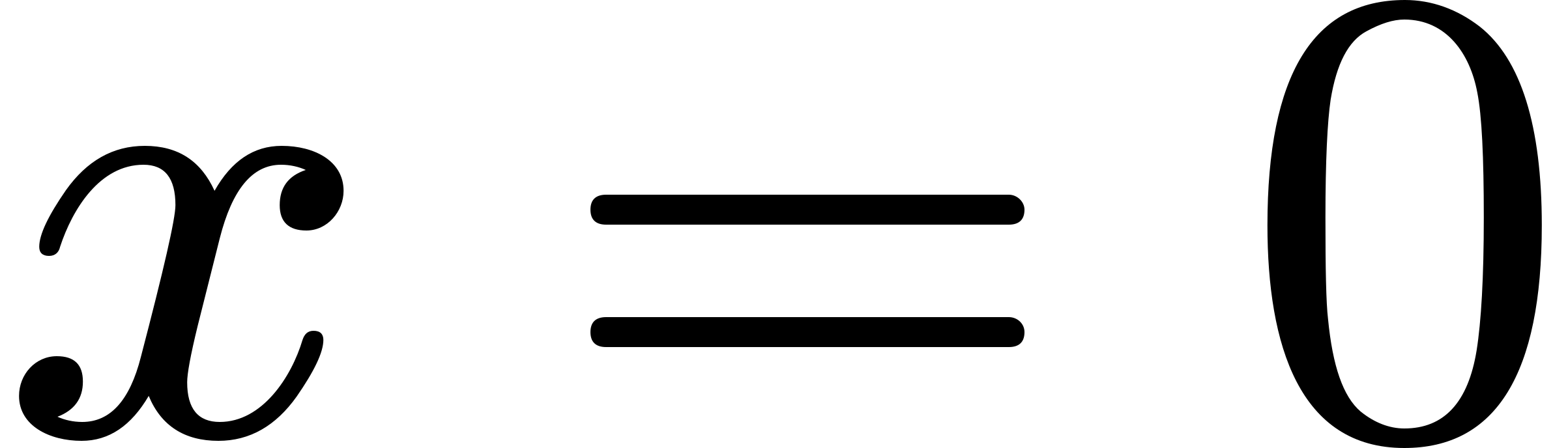 .
.
[1] Euler, the first systematic writer on the 'integral calculus', defined it in a manner which identifies it with the theory of differential equations: 'calculus integralis est methodus, ex data differentialium relatione inveniendi relationem ipsarum quantitatum' (Institutiones calculi integralis, p. 1). We are concerned only with the special equation (1), but all the remarks we have made may be generalised so as to apply to the wider theory.
An elementary function is a member of the class of functions which comprises
(i) rational functions,
(ii) algebraical functions, explicit or implicit,
(iii) the exponential function ,
(iv) the logarithmic function ,
(v) all functions which can be defined by means of any finite combination of the symbols proper to the preceding four classes of functions.
A few remarks and examples may help to elucidate this definition.
1. A rational function is a function defined by means of
any finite combination of the elementary operations of addition,
multiplication, and division, operating on the variable .
It is shown in elementary algebra that any rational function of
may be expressed in the form
 where
where 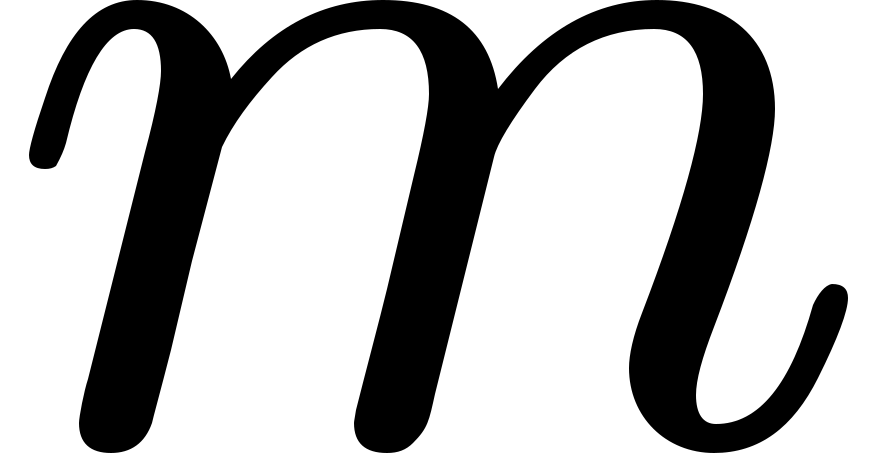 and
and 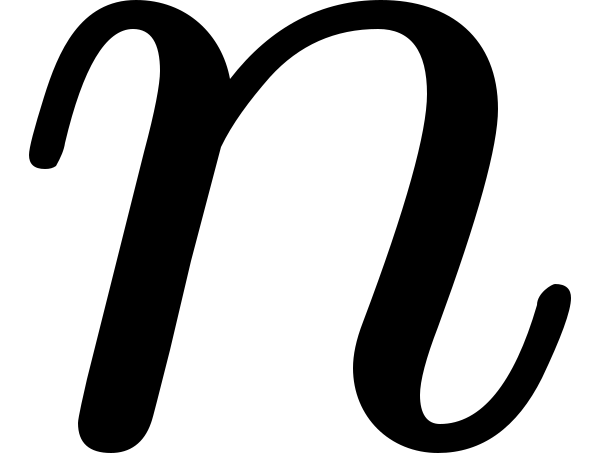 are positive integers, the
 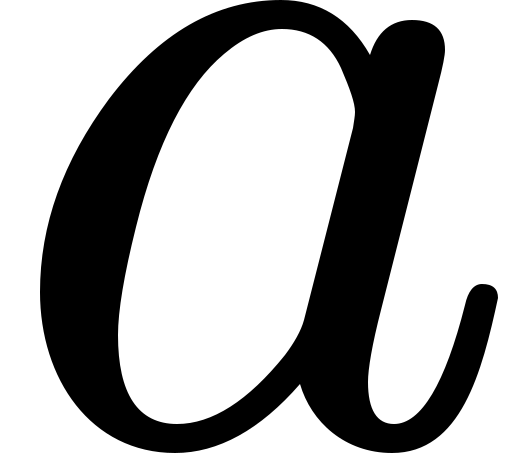 's and
 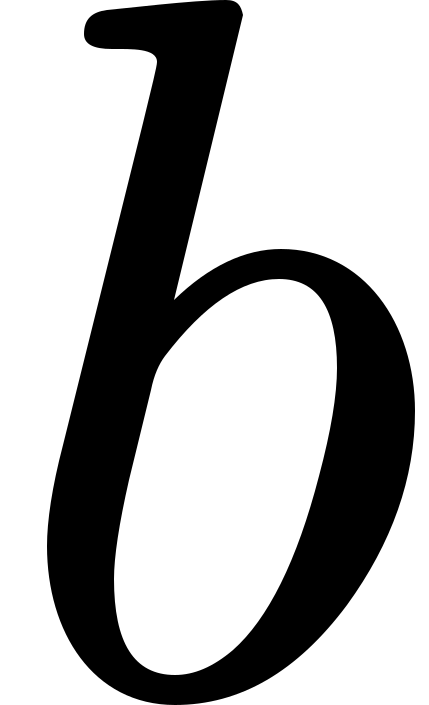 's
are constants, and the numerator and denominator have no common factor.
We shall adopt this expression as the standard form of a rational
function. It is hardly necessary to remark that it is in no way
involved in the[Pg 4] definition of a rational function that these constants
should be rational or algebraical[2] or real numbers. Thus
's
are constants, and the numerator and denominator have no common factor.
We shall adopt this expression as the standard form of a rational
function. It is hardly necessary to remark that it is in no way
involved in the[Pg 4] definition of a rational function that these constants
should be rational or algebraical[2] or real numbers. Thus
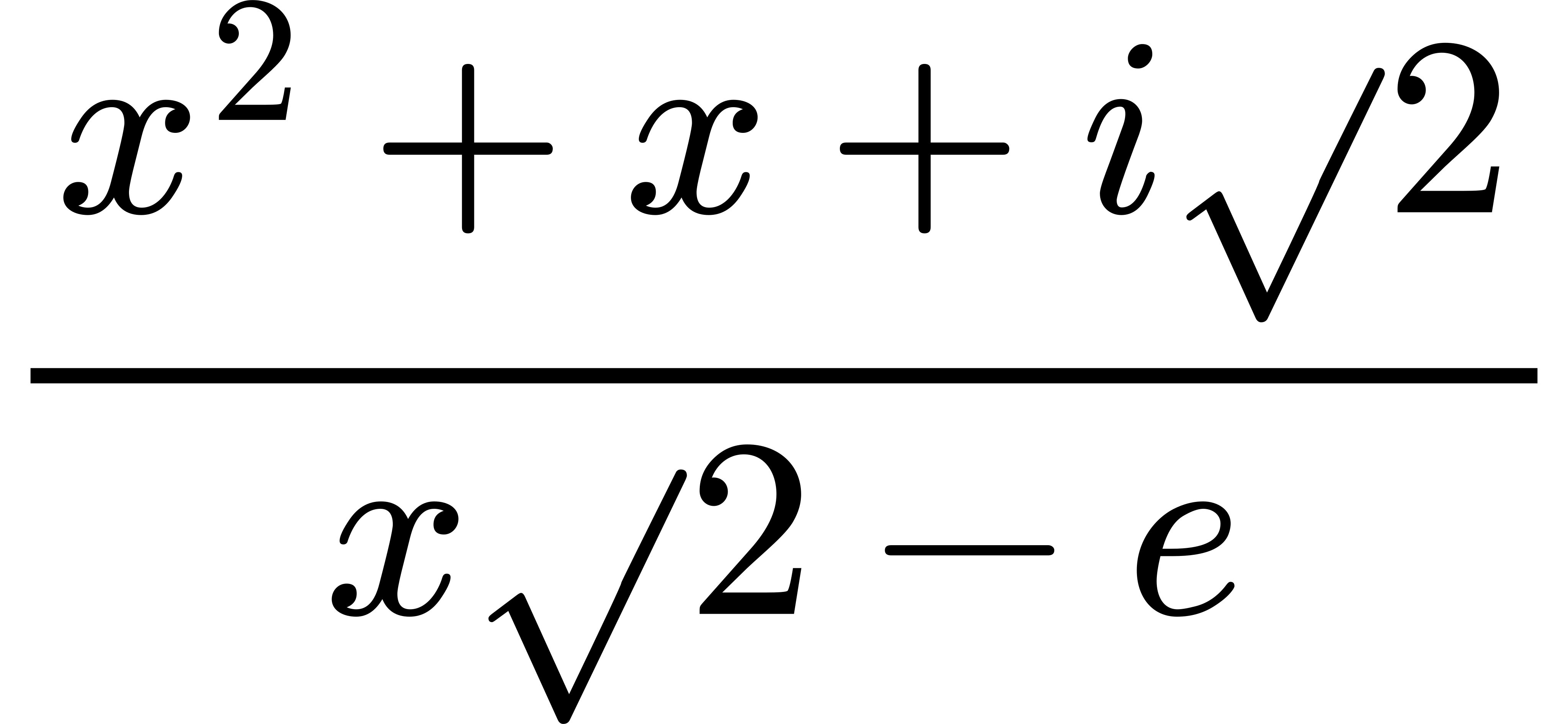 is a rational function.
2. An explicit algebraical function is a function defined by
means of any finite combination of the four elementary operations and
any finite number of operations of root extraction. Thus
 are explicit algebraical functions. And so is
 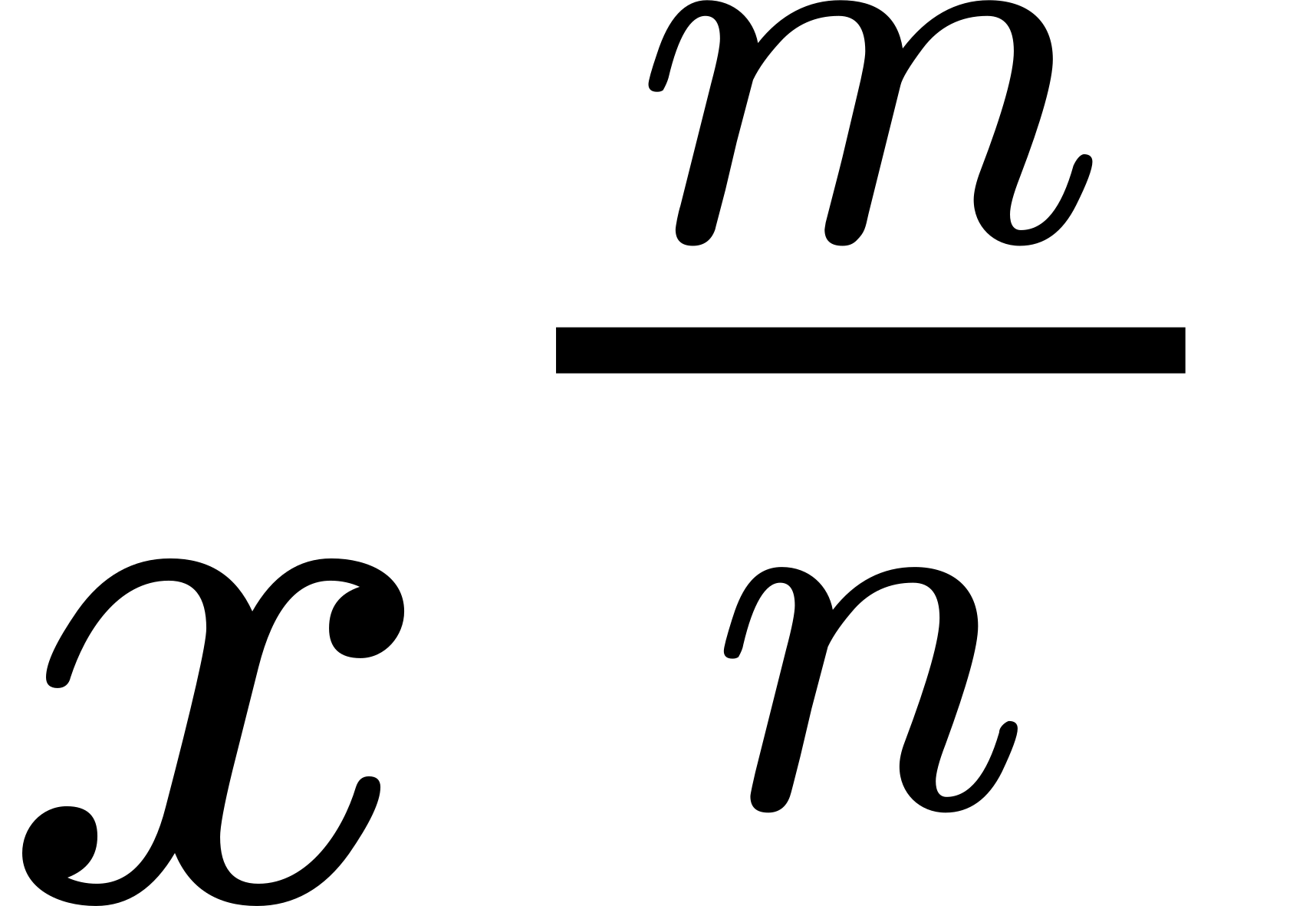 (i.e.
(i.e.
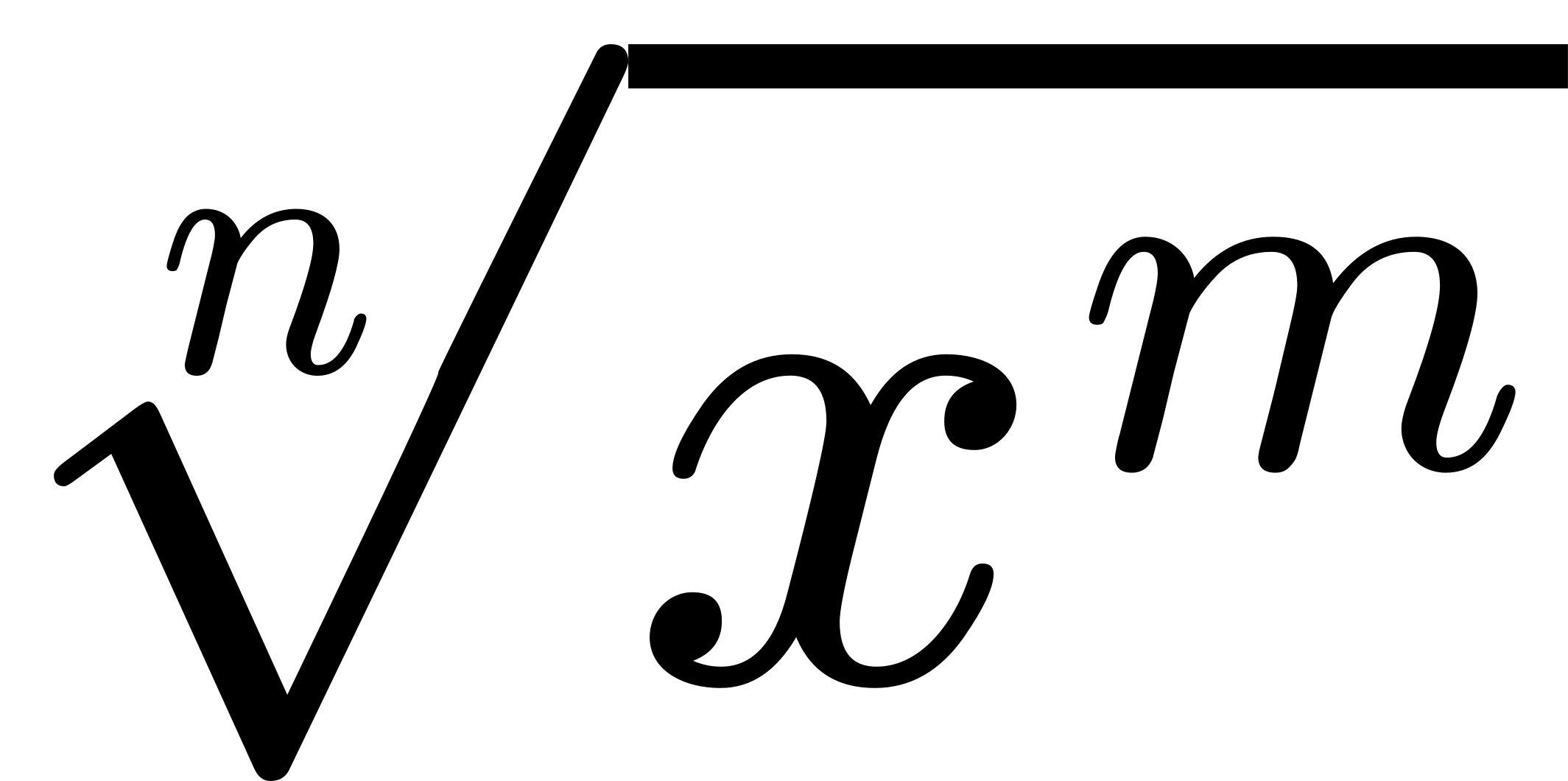 ) for any integral values of and . On the
other hand
) for any integral values of and . On the
other hand
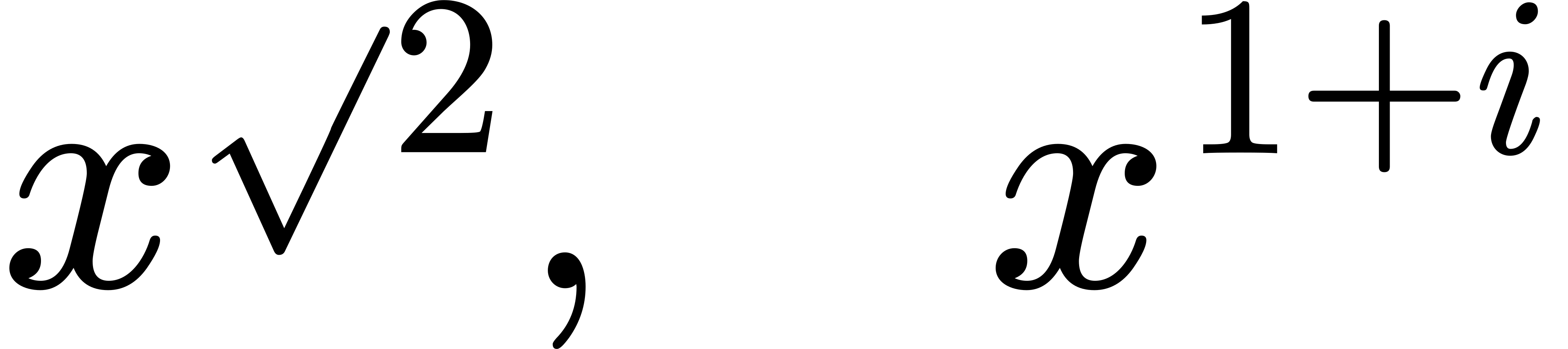 are not algebraical functions at all, but transcendental functions, as
irrational or complex powers are defined by the aid of exponentials and
logarithms.
are not algebraical functions at all, but transcendental functions, as
irrational or complex powers are defined by the aid of exponentials and
logarithms.
Any explicit algebraical function of satisfies an equation
 whose coefficients are polynomials in . Thus, for example, the
function
whose coefficients are polynomials in . Thus, for example, the
function
 satisfies the equation
 The converse is not true, since it has been proved that in general
equations of degree higher than the fourth have no roots which are
explicit algebraical functions of their coefficients. A simple example
is given by the equation
The converse is not true, since it has been proved that in general
equations of degree higher than the fourth have no roots which are
explicit algebraical functions of their coefficients. A simple example
is given by the equation
 [Pg 5]We are thus led to consider a more general class of functions,
implicit algebraical functions, which includes the class of
explicit algebraical functions.
[Pg 5]We are thus led to consider a more general class of functions,
implicit algebraical functions, which includes the class of
explicit algebraical functions.
3. An algebraical function of is a function which
satisfies an equation
 whose coefficients are polynomials in .
Let us denote by 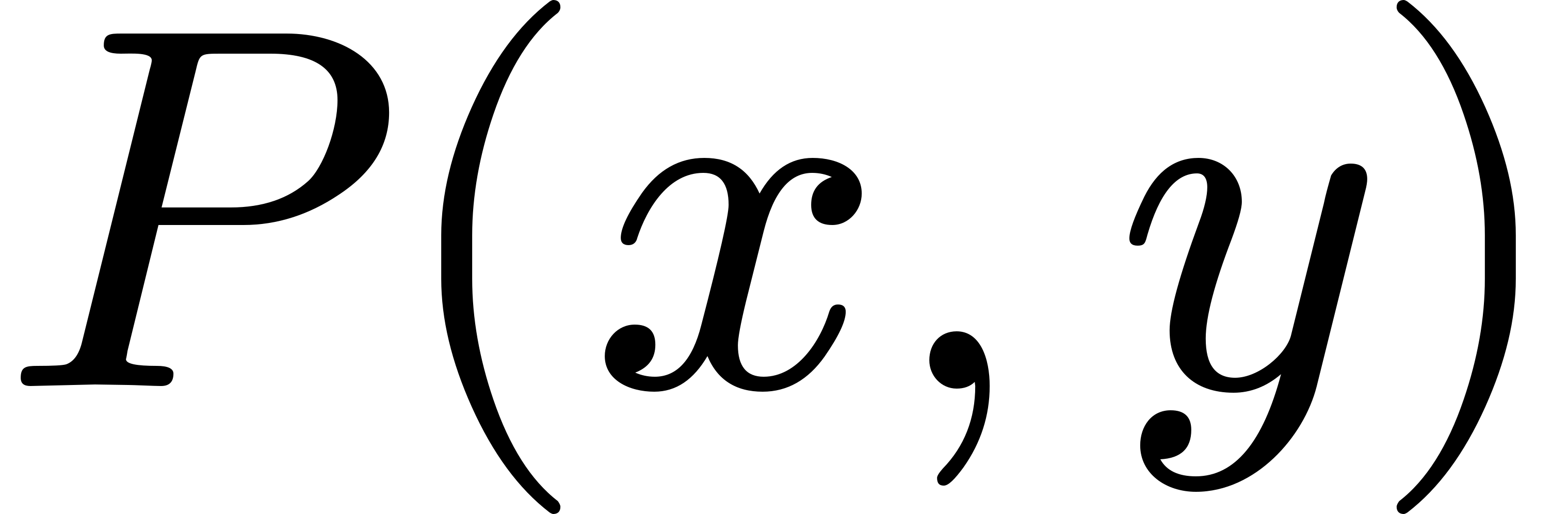 a polynomial such as occurs on the
left-hand side of (1). Then there are two possibilities as regards
any particular polynomial . Either it is possible to
express as the product of two polynomials of the same
type, neither of which is a mere constant, or it is not. In the first
case is said to be reducible, in the second
irreducible. Thus
a polynomial such as occurs on the
left-hand side of (1). Then there are two possibilities as regards
any particular polynomial . Either it is possible to
express as the product of two polynomials of the same
type, neither of which is a mere constant, or it is not. In the first
case is said to be reducible, in the second
irreducible. Thus
 is reducible, while both
 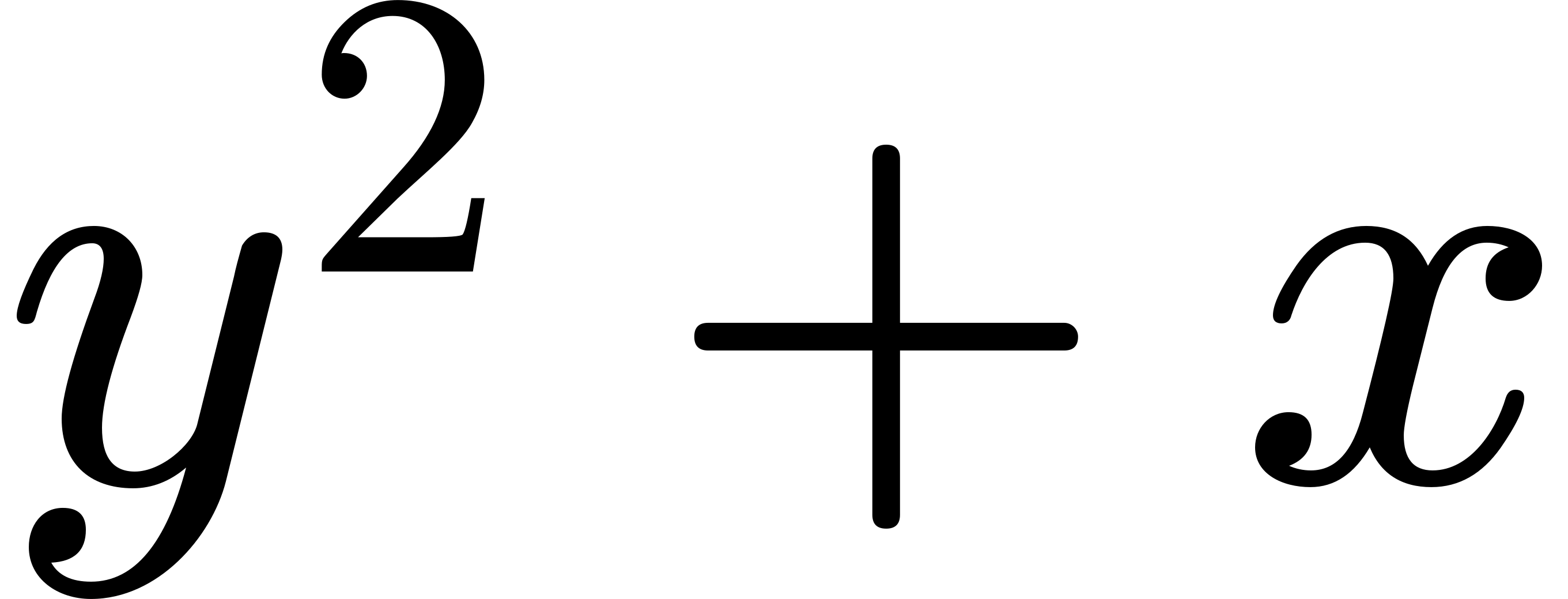 and
and 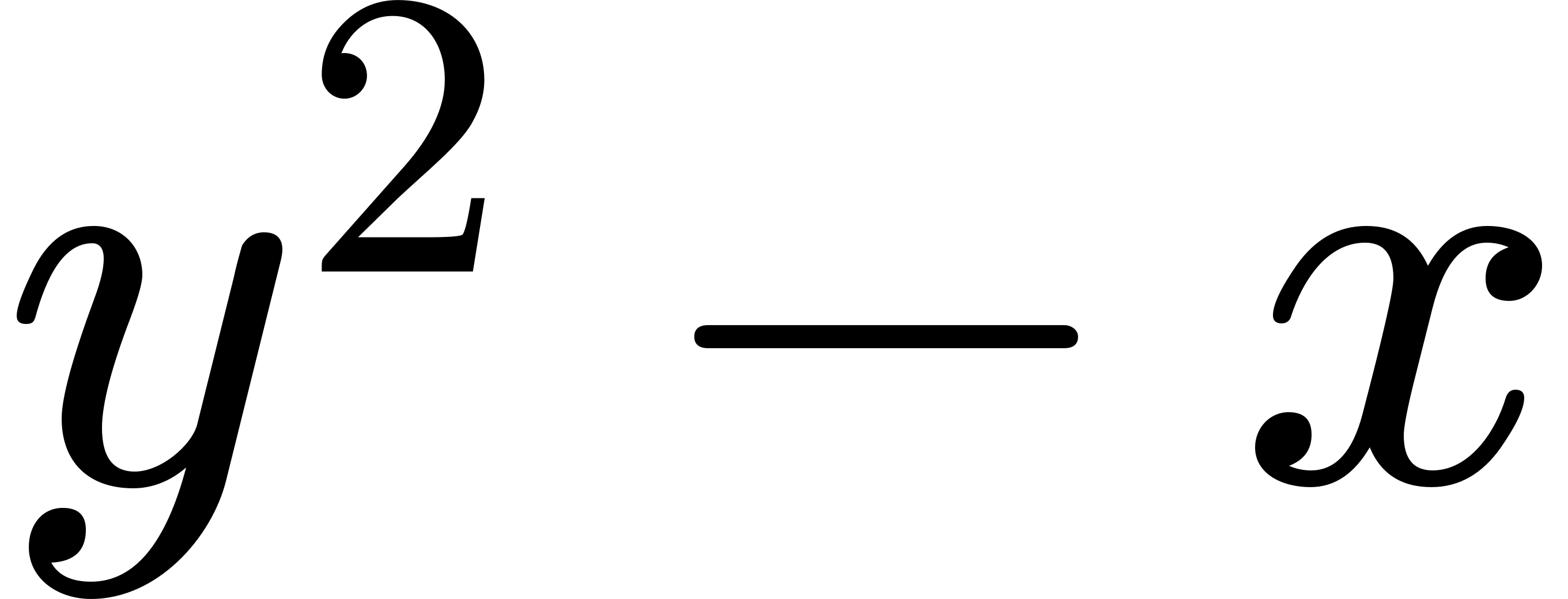 are
irreducible.
are
irreducible.
The equation (1) is said to be reducible or irreducible according as its left-hand side is reducible or irreducible. A reducible equation can always be replaced by the logical alternative of a number of irreducible equations. Reducible equations are therefore of subsidiary importance only; and we shall always suppose that the equation (1) is irreducible.
An algebraical function of is regular except at a finite number
of points which are poles or branch points of the
function. Let 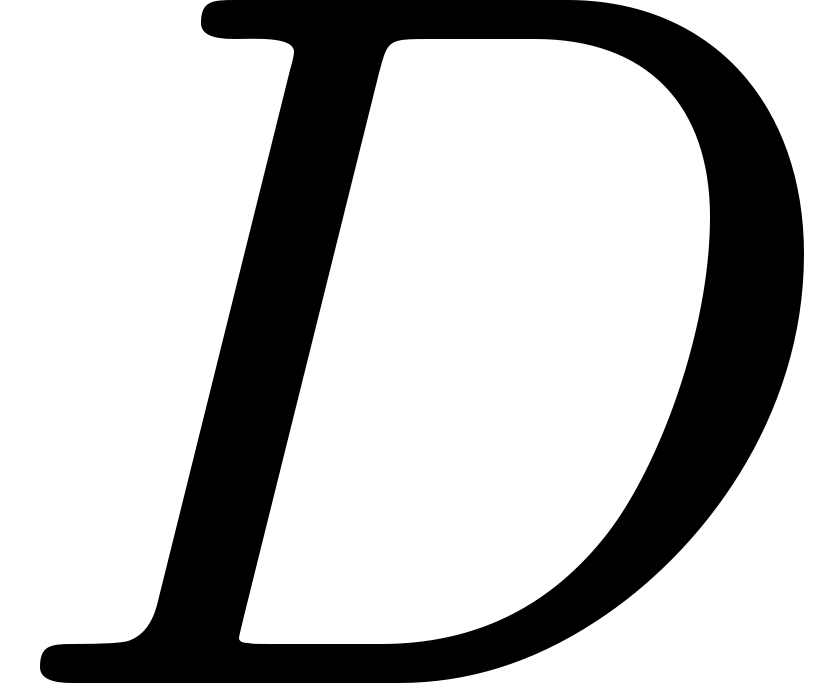 be any closed simply connected domain in the plane
of which does not include any branch point. Then there are
and only distinct functions which are one-valued in and
satisfy the equation (1). These functions will be called the
roots of (1) in . Thus if we write
be any closed simply connected domain in the plane
of which does not include any branch point. Then there are
and only distinct functions which are one-valued in and
satisfy the equation (1). These functions will be called the
roots of (1) in . Thus if we write
 where
where  , then the roots of
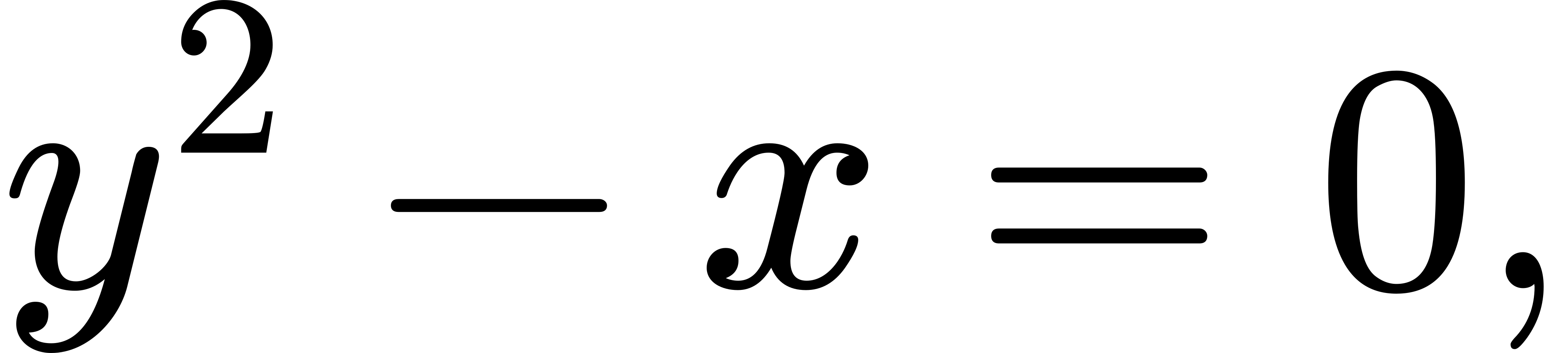 in the domain
 are
are 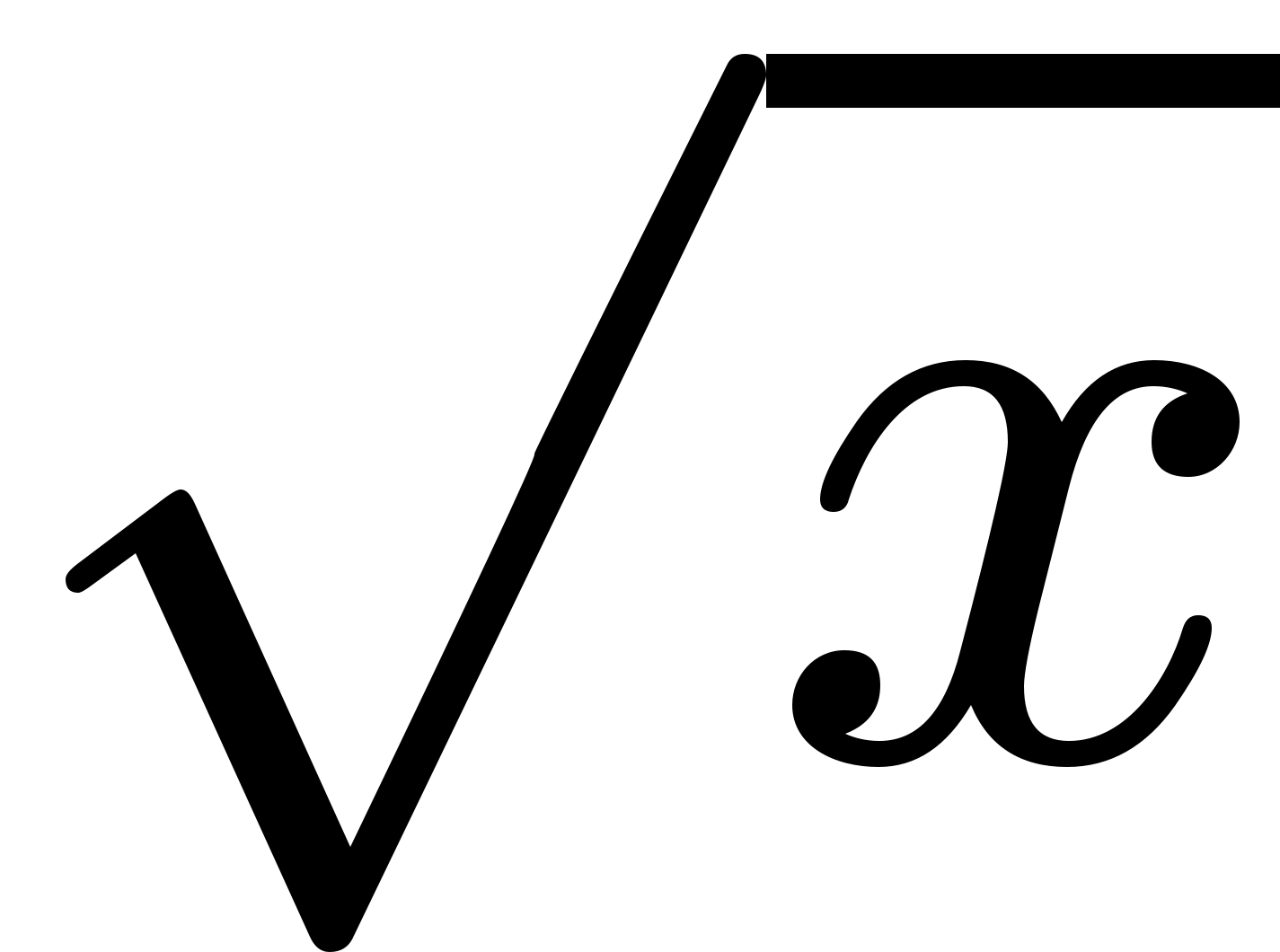 and
and 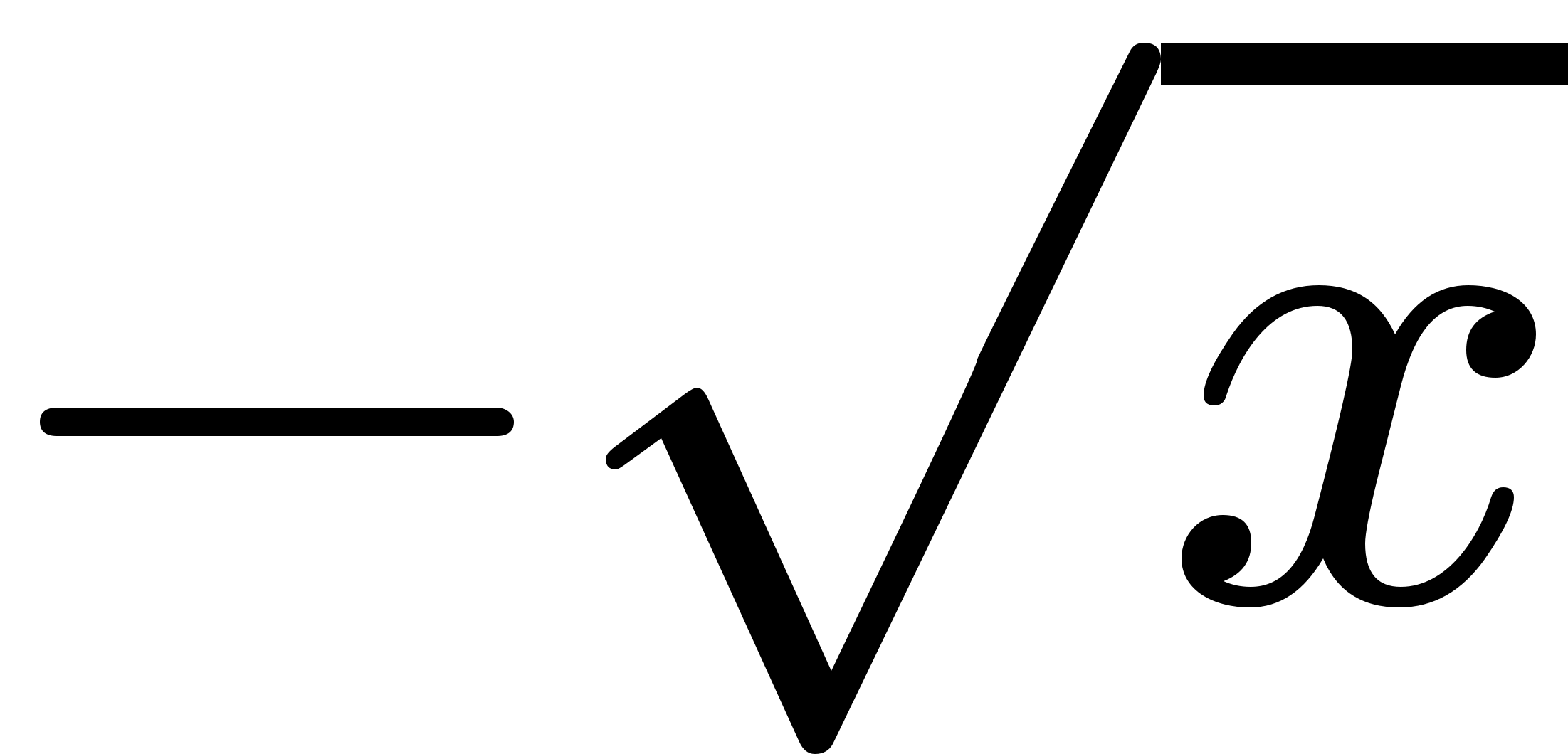 , where

The relations which hold between the different roots of (1) are of the greatest importance in the theory of functions[3]. For our present purposes we require only the two which follow.
(i) Any symmetric polynomial in the roots  [Pg 6] of (1) is a rational function of .
(ii) Any symmetric polynomial in  is a
polynomial in
is a
polynomial in 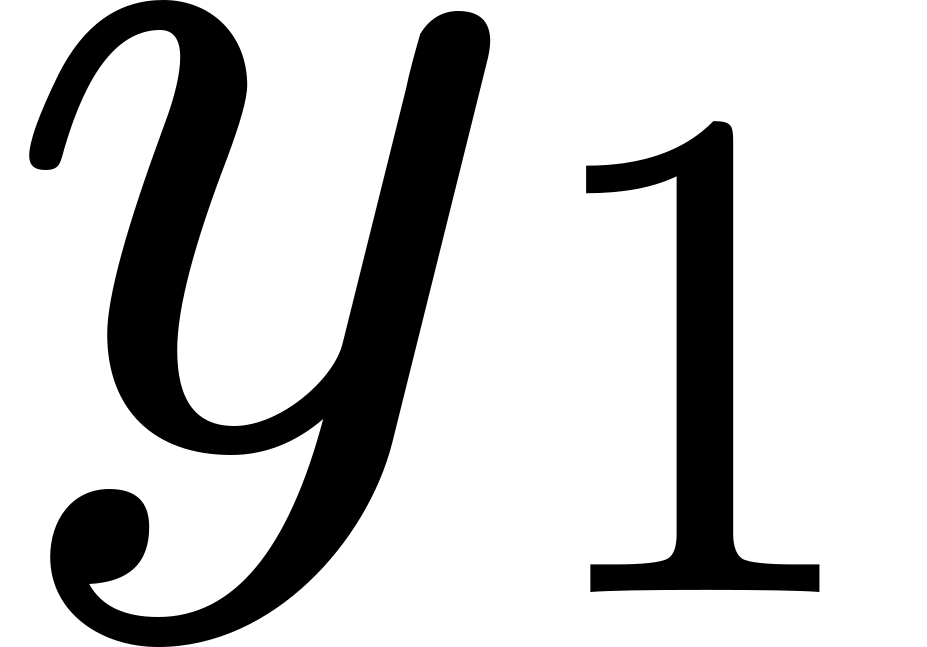 with coefficients which are rational functions
of .
with coefficients which are rational functions
of .
The first proposition follows directly from the equations
 To prove the second we observe that
 so that the theorem is true for
  if it
is true for
if it
is true for  . It is certainly true
for
. It is certainly true
for
 It is therefore true for , and so for
any symmetric polynomial in .
It is therefore true for , and so for
any symmetric polynomial in .
4. Elementary functions which are not rational or algebraical are called elementary transcendental functions or elementary transcendents. They include all the remaining functions which are of ordinary occurrence in elementary analysis.
The trigonometrical (or circular) and hyperbolic functions, direct and
inverse, may all be expressed in terms of exponential or logarithmic
functions by means of the ordinary formulae of elementary trigonometry.
Thus, for example,

There was therefore no need to specify them particularly in our definition.
The elementary transcendents have been further classified in a manner
first indicated by Liouville[4]. According to him a function is a
transcendent of the first order if the signs of exponentiation
or of the taking of logarithms which occur in the formula which defines
it apply only to rational or algebraical functions. For example
 are of the first order; and so is
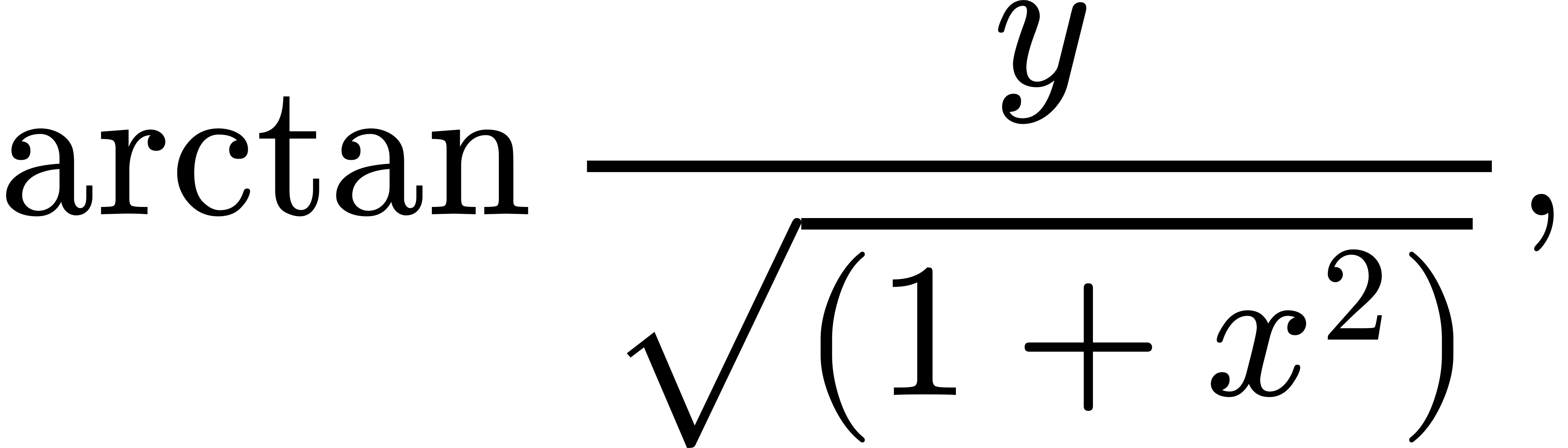 [Pg 7]
where is defined by the equation
[Pg 7]
where is defined by the equation
 and so is the function defined by the equation

An elementary transcendent of the second order is one defined
by a formula in which the exponentiations and takings of logarithms are
applied to rational or algebraical functions or to transcendents of the
first order. This class of functions includes many of great interest
and importance, of which the simplest are
 It also includes irrational and complex powers of , since,
e.g.,
It also includes irrational and complex powers of , since,
e.g.,
 the function
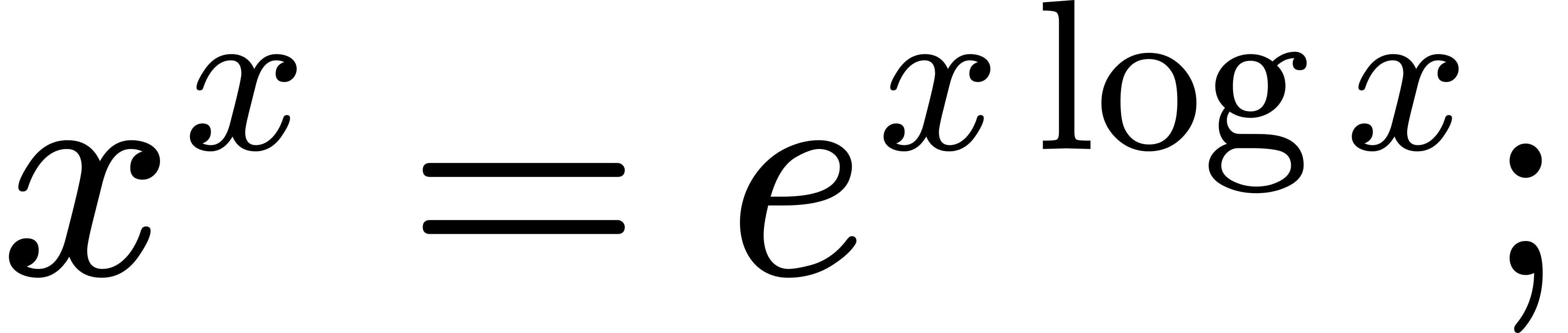 and the logarithms of the circular functions.
It is of course presupposed in the definition of a transcendent of the
second kind that the function in question is incapable of expression
as one of the first kind or as a rational or algebraical function. The
function
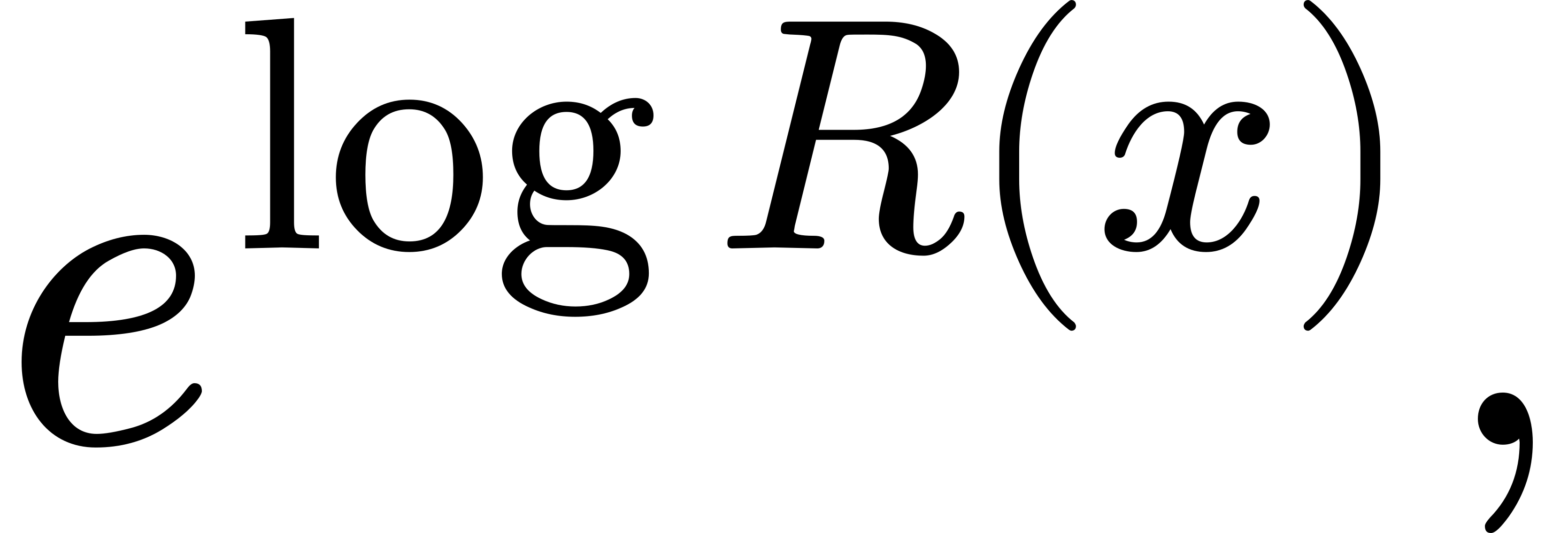 where
where 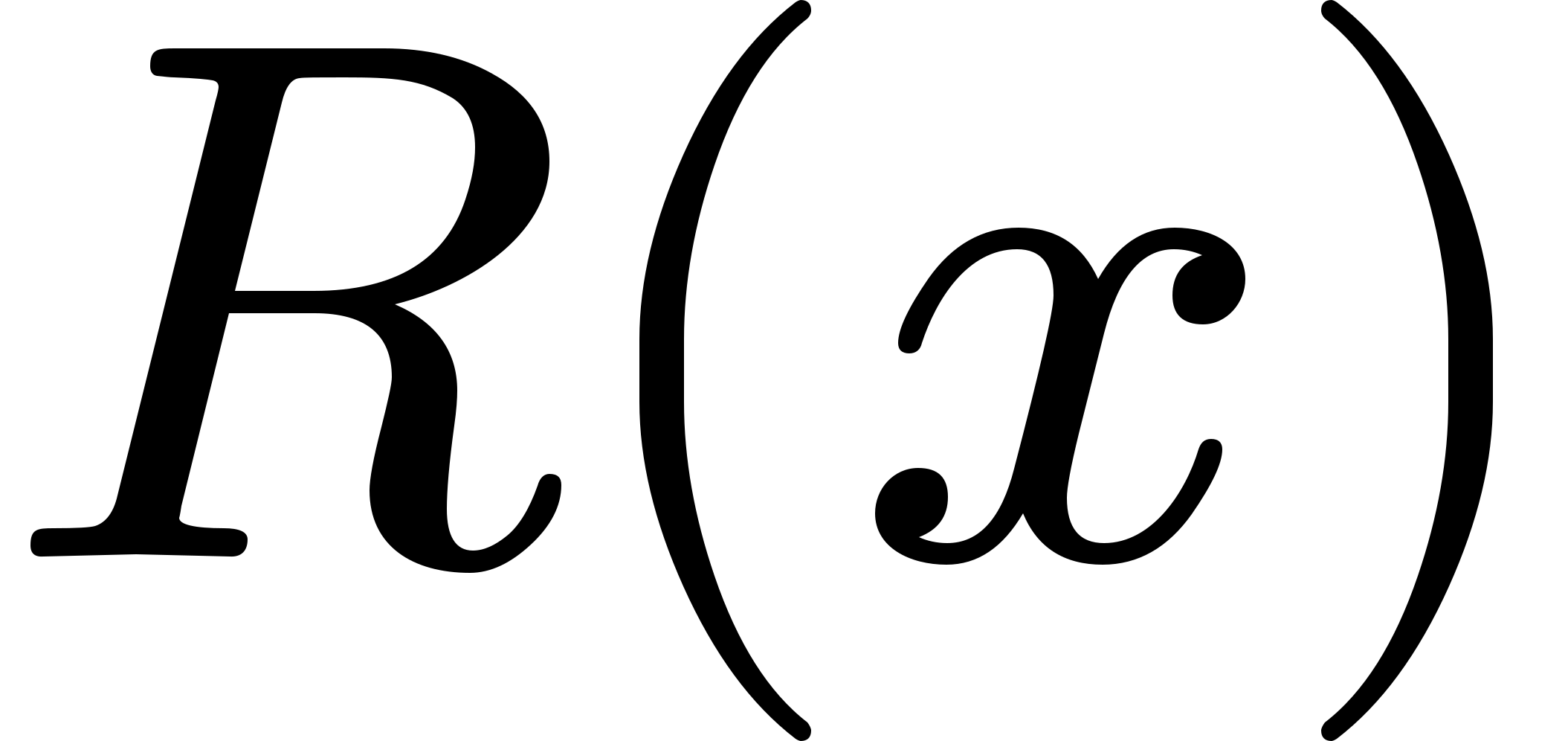 is rational, is not a transcendent of the second kind,
since it can be expressed in the simpler form .
is rational, is not a transcendent of the second kind,
since it can be expressed in the simpler form .
It is obvious that we can in this way proceed to define transcendents
of the th order for all values of . Thus
 are of the third, fourth, ...... orders.
Of course a similar classification of algebraical functions can be and
has been made. Thus we may say that
 are algebraical functions of the first, second, third, ......
orders. But the fact that there is a general theory of algebraical
equations and therefore of implicit algebraical functions
has deprived this classification of most of its importance. There is
no such general theory of elementary transcendental equations[5], and
therefore we shall not rank as 'elementary' functions defined by
transcendental equations such as
are algebraical functions of the first, second, third, ......
orders. But the fact that there is a general theory of algebraical
equations and therefore of implicit algebraical functions
has deprived this classification of most of its importance. There is
no such general theory of elementary transcendental equations[5], and
therefore we shall not rank as 'elementary' functions defined by
transcendental equations such as
 but incapable (as Liouville has shown that in this case is
incapable) of explicit expression in finite terms.
but incapable (as Liouville has shown that in this case is
incapable) of explicit expression in finite terms.
[Pg 8]
5. The preceding analysis of elementary transcendental functions rests on the following theorems:
(a) is not an algebraical function of ;
(b) is not an algebraical function of ;
(c) is not expressible in finite terms by means of
signs of exponentiation and of algebraical operations, explicit or
implicit[6];
(d) transcendental functions of the first, second, third, ... orders actually exist.
A proof of the first two theorems will be given later, but limitations
of space will prevent us from giving detailed proofs of the third and
fourth. Liouville has given interesting extensions of some of these
theorems: he has proved, for example, that no equation of the form
 where
where  are algebraical functions of , and
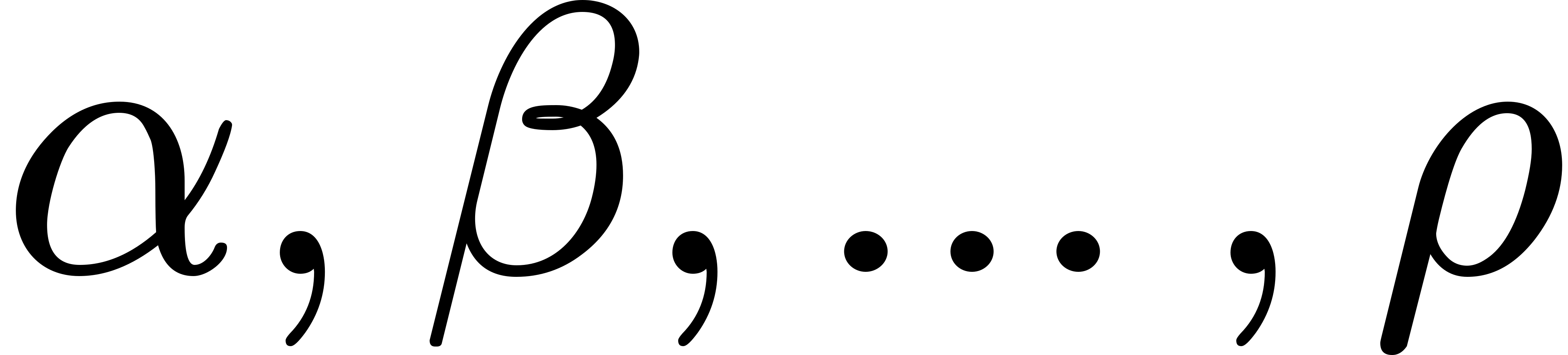 different constants, can hold for all
values of .
different constants, can hold for all
values of .
[2]
An algebraical number is a number which is the root of
an algebraical equation whose coefficients are integral. It is known
that there are numbers (such as 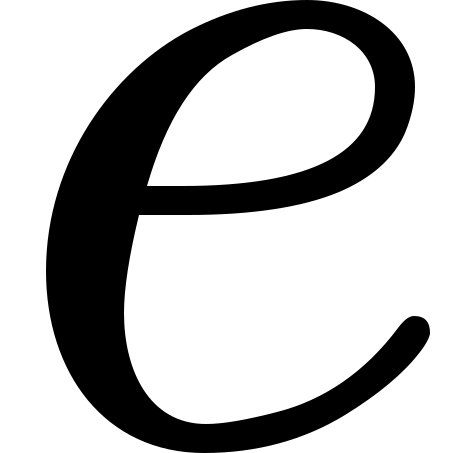 and
and 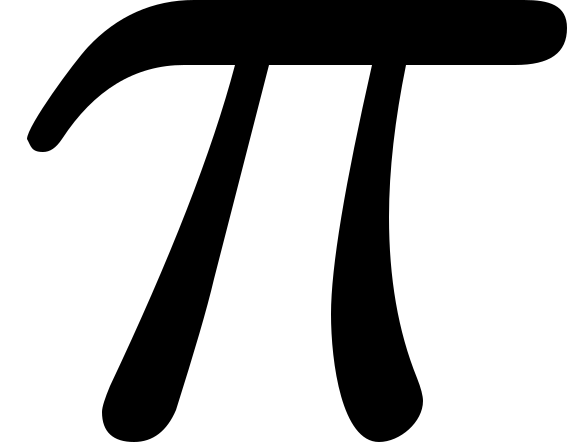 ) which are not roots
of any such equation. See, for example, Hobson's Squaring the
circle (Cambridge, 1913).
) which are not roots
of any such equation. See, for example, Hobson's Squaring the
circle (Cambridge, 1913).
[3] For fuller information the reader may be referred to Appell and Goursat's Théorie des fonctions algébriques.
[4] 'Mémoire sur la classification des transcendantes, et sur l'impossibilité d'exprimer les racines de certaines équations en fonction finie explicite des coefficients', Journal de mathématiques, ser. 1, vol. 2, 1837, pp. 56—104; 'Suite du mémoire...', ibid. vol. 3, 1838, pp. 523—546.
[5] The natural generalisations of the theory of algebraical equations are to be found in parts of the theory of differential equations. See Königsberger, 'Bemerkungen zu Liouville's Classificirung der Transcendenten', Math. Annalen, vol. 28, 1886, pp. 483—492.
[6]
For example, cannot be equal to 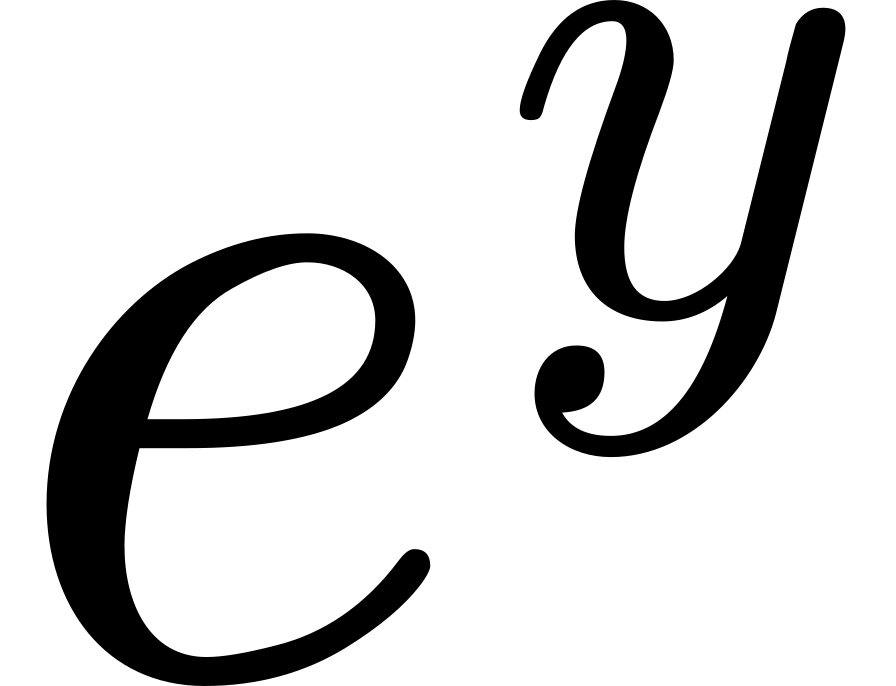 ,
where is an algebraical function of .
,
where is an algebraical function of .
In the following pages we shall be concerned exclusively with the problem of the integration of elementary functions. We shall endeavour to give as complete an account as the space at our disposal permits of the progress which has been made by mathematicians towards the solution of the two following problems:
(i) if is an elementary function, how can we
determine whether its integral is also an elementary function?
(ii) if the integral is an elementary function, how can we find it?
It would be unreasonable to expect complete answers to these questions. But sufficient has been done to give us a tolerably complete insight into the nature of the answers, and to ensure that it[Pg 9] shall not be difficult to find the complete answers in any particular case which is at all likely to occur in elementary analysis or in its applications.
It will probably be well for us at this point to summarise the principal results which have been obtained.
1. The integral of a rational function (iv.) is always an elementary function. It is either rational or the sum of a rational function and of a finite number of constant multiples of logarithms of rational functions (iv., 1).
If certain constants which are the roots of an algebraical equation are treated as known then the form of the integral can always be determined completely. But as the roots of such equations are not in general capable of explicit expression in finite terms, it is not in general possible to express the integral in an absolutely explicit form (iv.; 2, 3).
We can always determine, by means of a finite number of the elementary operations of addition, multiplication, and division, whether the integral is rational or not. If it is rational, we can determine it completely by means of such operations; if not, we can determine its rational part (iv.; 4, 5).
The solution of the problem in the case of rational functions may therefore be said to be complete; for the difficulty with regard to the explicit solution of algebraical equations is one not of inadequate knowledge but of proved impossibility (iv., 6).
2. The integral of an algebraical function (v.), explicit or implicit, may or may not be elementary.
If is an algebraical function of then the integral 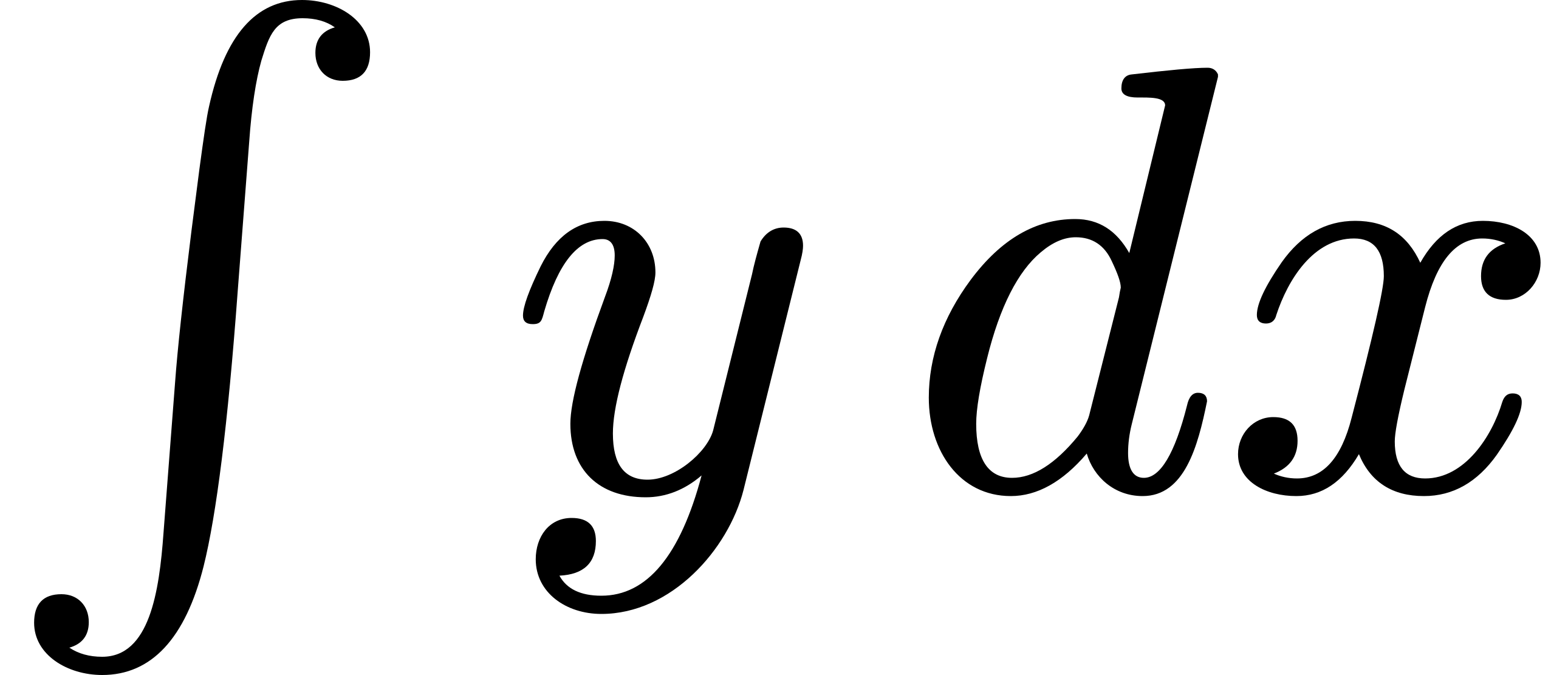 , or, more generally, the integral
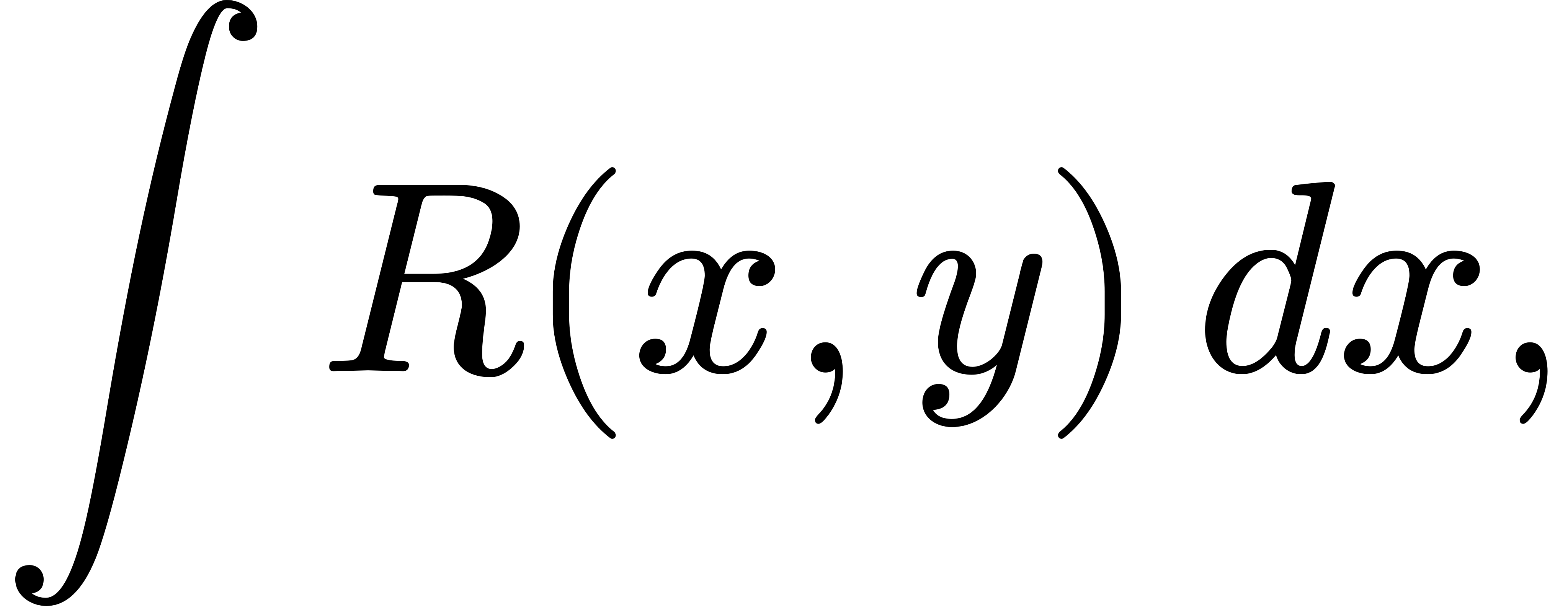 where
where 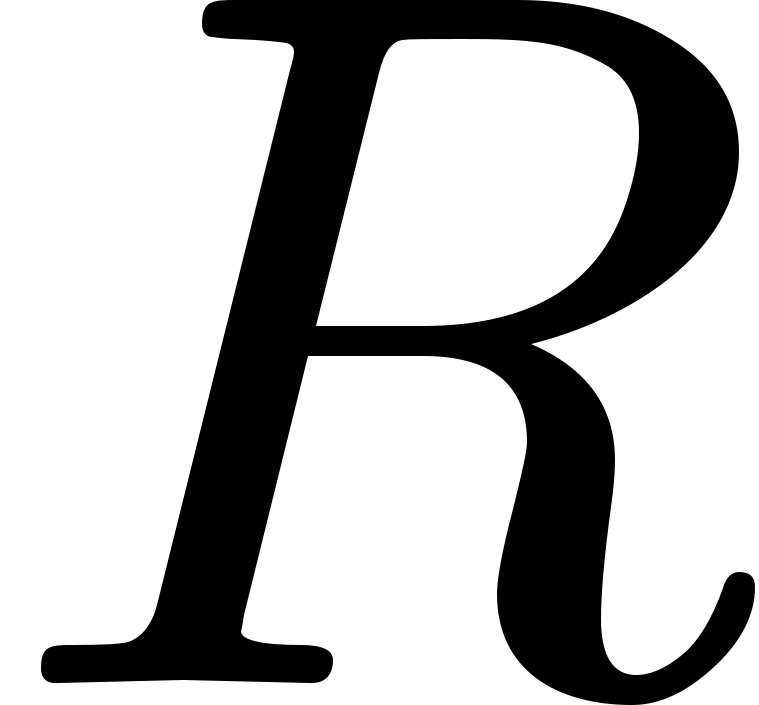 denotes a rational function, is, if an elementary function,
either algebraical or the sum of an algebraical function and of a
finite number of constant multiples of logarithms of algebraical
functions. All algebraical functions which occur in the integral are
rational functions of and (v.;
11—14, 18).
denotes a rational function, is, if an elementary function,
either algebraical or the sum of an algebraical function and of a
finite number of constant multiples of logarithms of algebraical
functions. All algebraical functions which occur in the integral are
rational functions of and (v.;
11—14, 18).
These theorems give a precise statement of a general principle
enunciated by Laplace[7]: 'l'intégrale d'une fonction
différentielle (algébrique) ne peut contenir d'autres quantités
radicaux que celles qui entrent dans cette fonction}'; and, we
may add, cannot contain exponentials at all.[Pg 10] Thus it is
impossible that
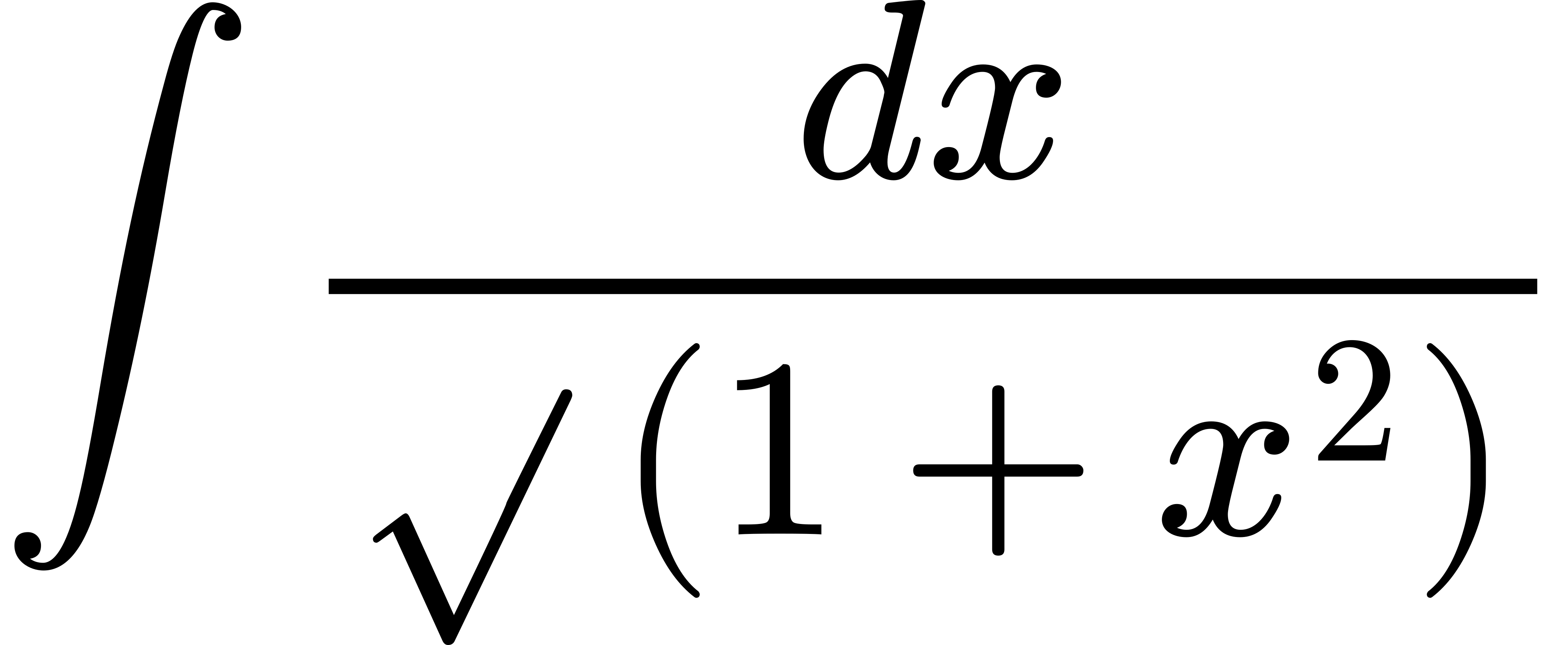 should contain or
 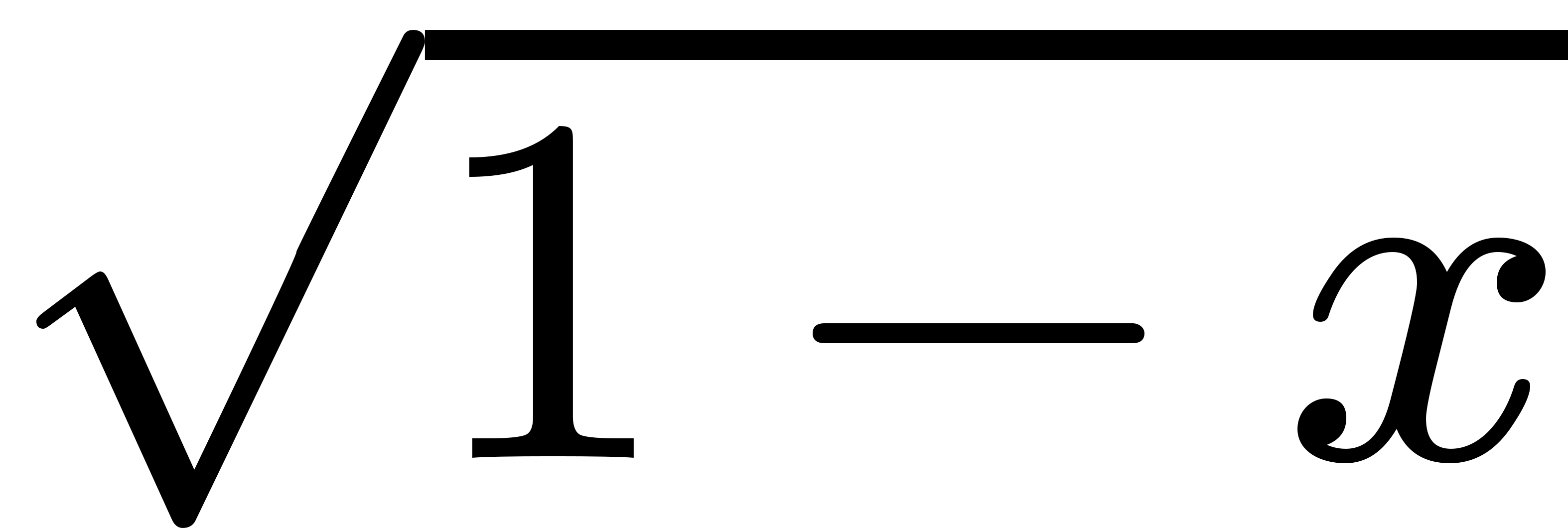 : the appearance of these
functions in the integral could only be apparent, and they could be
eliminated before differentiation. Laplace's principle really rests on
the fact, of which it is easy enough to convince oneself by a little
reflection and the consideration of a few particular cases (though
to give a rigorous proof is of course quite another matter), that
differentiation will not eliminate exponentials or algebraical
irrationalities. Nor, we may add, will it eliminate logarithms
except when they occur in the simple form
: the appearance of these
functions in the integral could only be apparent, and they could be
eliminated before differentiation. Laplace's principle really rests on
the fact, of which it is easy enough to convince oneself by a little
reflection and the consideration of a few particular cases (though
to give a rigorous proof is of course quite another matter), that
differentiation will not eliminate exponentials or algebraical
irrationalities. Nor, we may add, will it eliminate logarithms
except when they occur in the simple form
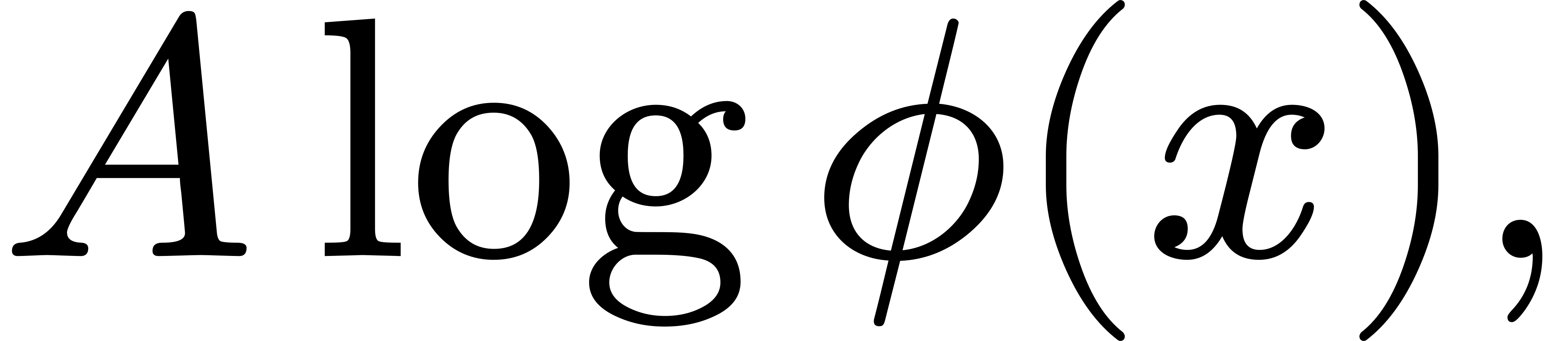 where
where 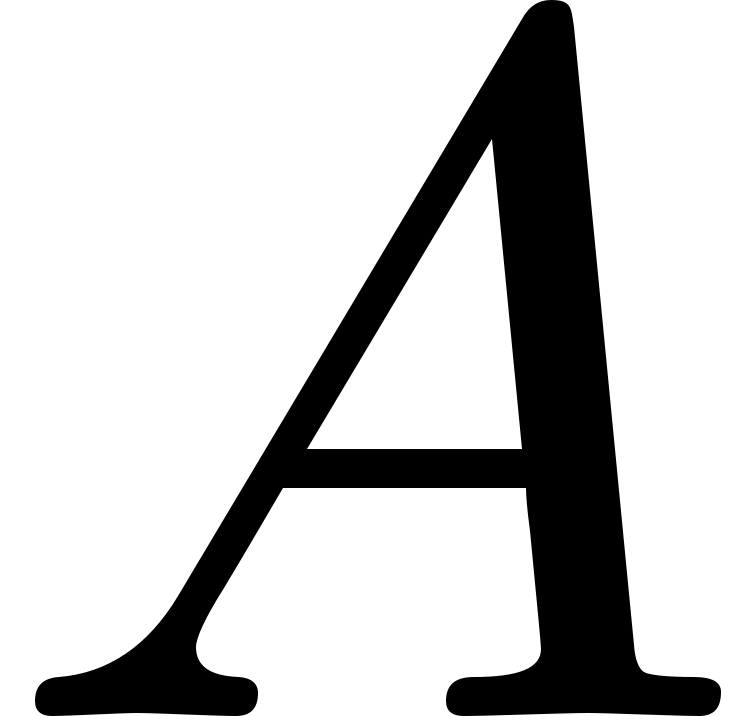 is a constant, and this is why logarithms can only occur in
this form in the integrals of rational or algebraical functions.
is a constant, and this is why logarithms can only occur in
this form in the integrals of rational or algebraical functions.
We have thus a general knowledge of the form of the integral of an
algebraical function , when it is itself an elementary function.
Whether this is so or not of course depends on the nature of the
equation 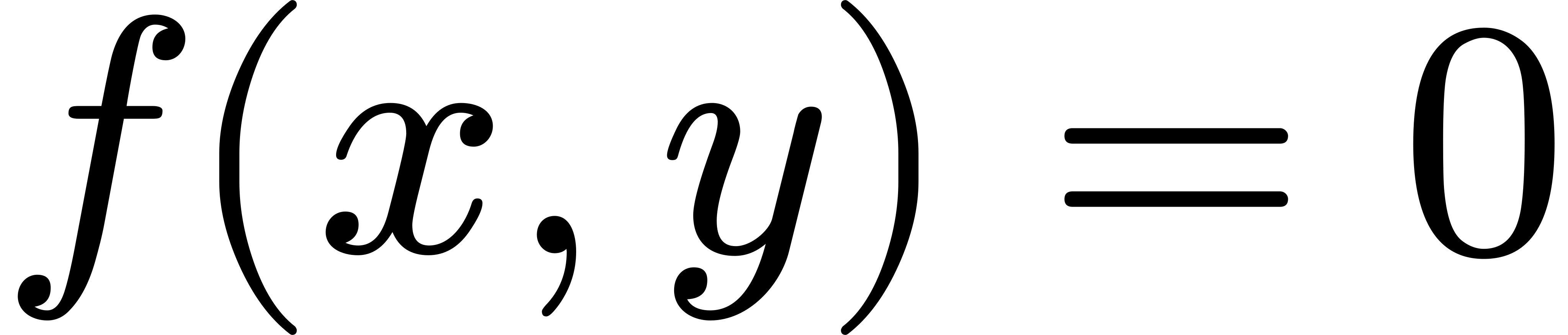 which defines . If this equation, when
interpreted as that of a curve in the plane
which defines . If this equation, when
interpreted as that of a curve in the plane 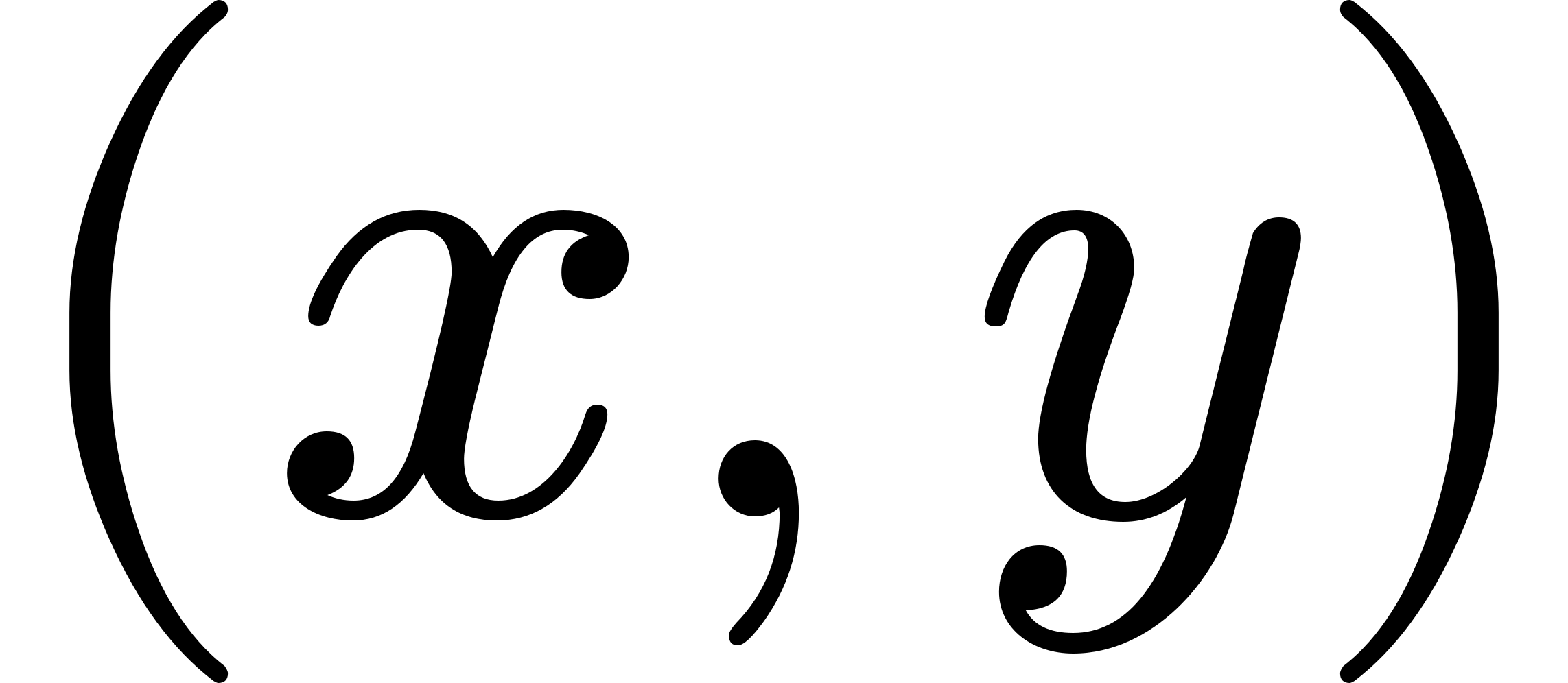 , represents a
unicursal curve, i.e. a curve which has the maximum
number of double points possible for a curve of its degree, or whose
deficiency is zero, then and can be expressed
simultaneously as rational functions of a third variable
, represents a
unicursal curve, i.e. a curve which has the maximum
number of double points possible for a curve of its degree, or whose
deficiency is zero, then and can be expressed
simultaneously as rational functions of a third variable 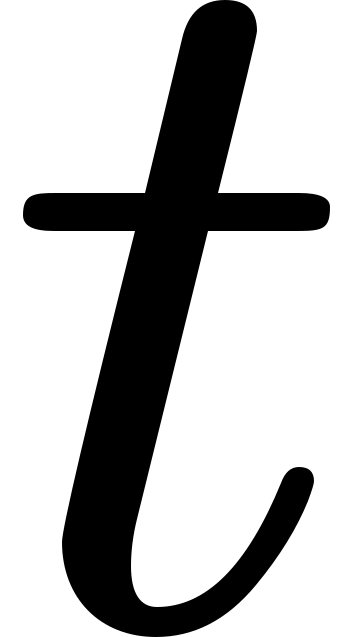 , and
the integral can be reduced by a substitution to that of a rational
function (v.; 2, 7—9). In this case, therefore, the
integral is always an elementary function. But this condition, though
sufficient, is not necessary. It is in general true that, when
, and
the integral can be reduced by a substitution to that of a rational
function (v.; 2, 7—9). In this case, therefore, the
integral is always an elementary function. But this condition, though
sufficient, is not necessary. It is in general true that, when 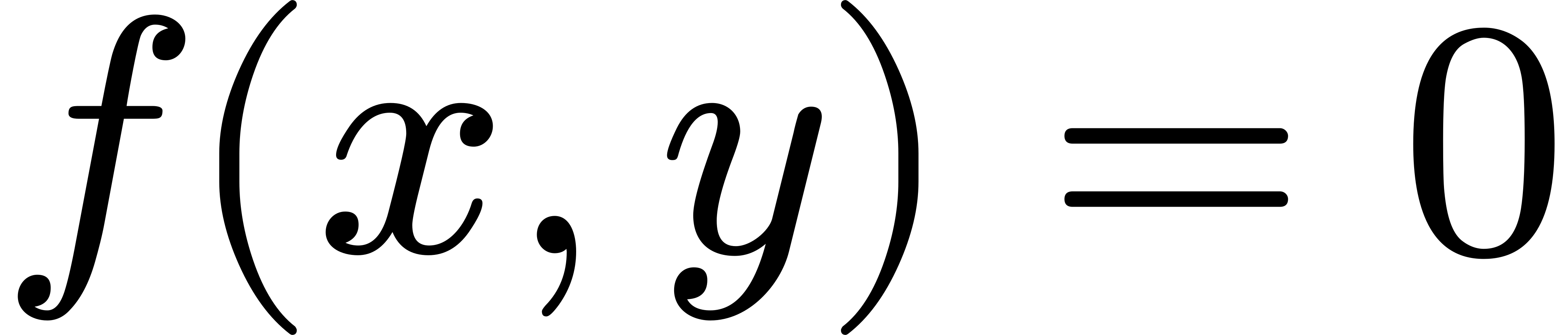 is not unicursal, the integral is not an elementary function but
a new transcendent; and we are able to classify these transcendents
according to the deficiency of the curve. If, for example, the
deficiency is unity, then the integral is in general a transcendent of
the kind known as elliptic integrals, whose characteristic
is that they can be transformed into integrals containing no other
irrationality than the square root of a polynomial of the third or
fourth degree (v., 20). But there are infinitely many cases
in which the integral can be expressed by algebraical functions
and logarithms. Similarly there are infinitely many cases in which
integrals associated with curves whose deficiency is greater[Pg 11] than
unity are in reality reducible to elliptic integrals. Such abnormal
cases have formed the subject of many exceedingly interesting
researches, but no general method has been devised by which we can
always tell, after a finite series of operations, whether any given
integral is really elementary, or elliptic, or belongs to a higher
order of transcendents.
is not unicursal, the integral is not an elementary function but
a new transcendent; and we are able to classify these transcendents
according to the deficiency of the curve. If, for example, the
deficiency is unity, then the integral is in general a transcendent of
the kind known as elliptic integrals, whose characteristic
is that they can be transformed into integrals containing no other
irrationality than the square root of a polynomial of the third or
fourth degree (v., 20). But there are infinitely many cases
in which the integral can be expressed by algebraical functions
and logarithms. Similarly there are infinitely many cases in which
integrals associated with curves whose deficiency is greater[Pg 11] than
unity are in reality reducible to elliptic integrals. Such abnormal
cases have formed the subject of many exceedingly interesting
researches, but no general method has been devised by which we can
always tell, after a finite series of operations, whether any given
integral is really elementary, or elliptic, or belongs to a higher
order of transcendents.
When 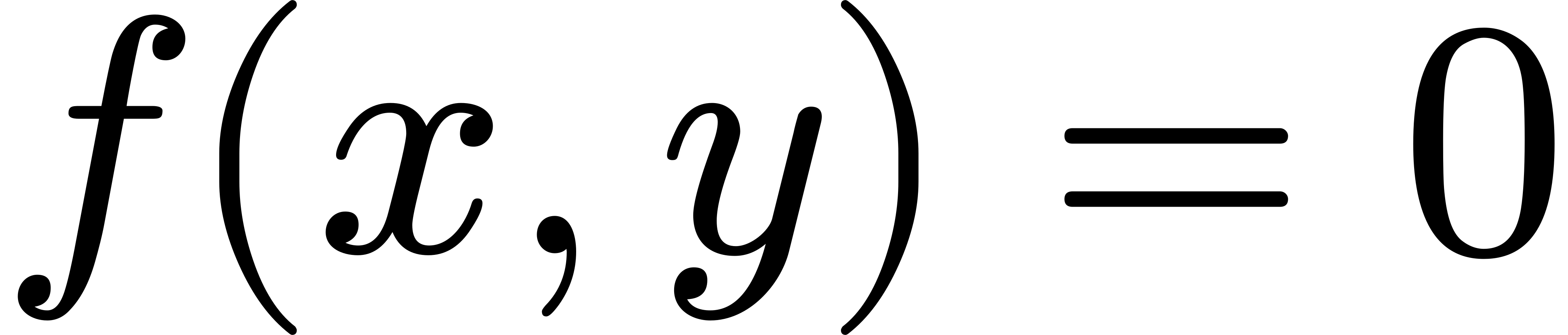 is unicursal we can carry out the integration
completely in exactly the same sense as in the case of rational
functions. In particular, if the integral is algebraical then
it can be found by means of elementary operations which are always
practicable. And it has been shown, more generally, that we can always
determine by means of such operations whether the integral of any given
algebraical function is algebraical or not, and evaluate the integral
when it is algebraical. And although the general problem of determining
whether any given integral is an elementary function, and calculating
it if it is one, has not been solved, the solution in the particular
case in which the deficiency of the curve is unity is
as complete as it is reasonable to expect any possible solution to be.
is unicursal we can carry out the integration
completely in exactly the same sense as in the case of rational
functions. In particular, if the integral is algebraical then
it can be found by means of elementary operations which are always
practicable. And it has been shown, more generally, that we can always
determine by means of such operations whether the integral of any given
algebraical function is algebraical or not, and evaluate the integral
when it is algebraical. And although the general problem of determining
whether any given integral is an elementary function, and calculating
it if it is one, has not been solved, the solution in the particular
case in which the deficiency of the curve is unity is
as complete as it is reasonable to expect any possible solution to be.
3. The theory of the integration of transcendental functions (vi.) is naturally much less complete, and the number of classes of such functions for which general methods of integration exist is very small. These few classes are, however, of extreme importance in applications (vi.; 2, 3).
There is a general theorem concerning the form of an integral of a
transcendental function, when it is itself an elementary function,
which is quite analogous to those already stated for rational and
algebraical functions. The general statement of this theorem will be
found in vi., §5; it shows, for instance, that the integral
of a rational function of , and is either
a rational function of those functions or the sum of such a rational
function and of a finite number of constant multiples of logarithms of
similar functions. From this general theorem may be deduced a number of
more precise results concerning integrals of more special forms, such as
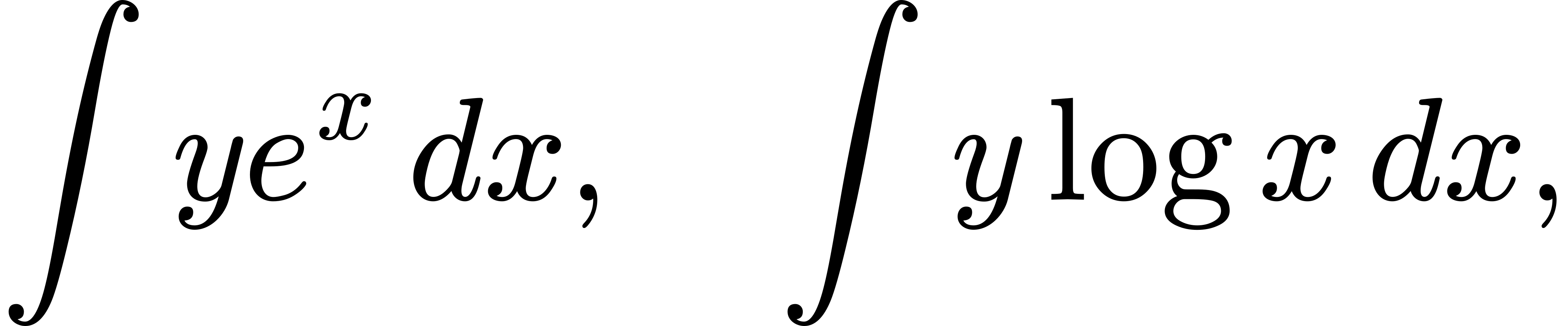 where is an algebraical function of (vi.; 4, 6).
[7] Théorie analytique des probabilités, p. 7.
[Pg 12]
1. It is proved in treatises on algebra[8] that any polynomial
 can be expressed in the form
 where
where  are positive integers whose sum is
, and
are positive integers whose sum is
, and  , are constants; and that any
rational function , whose denominator is
, are constants; and that any
rational function , whose denominator is 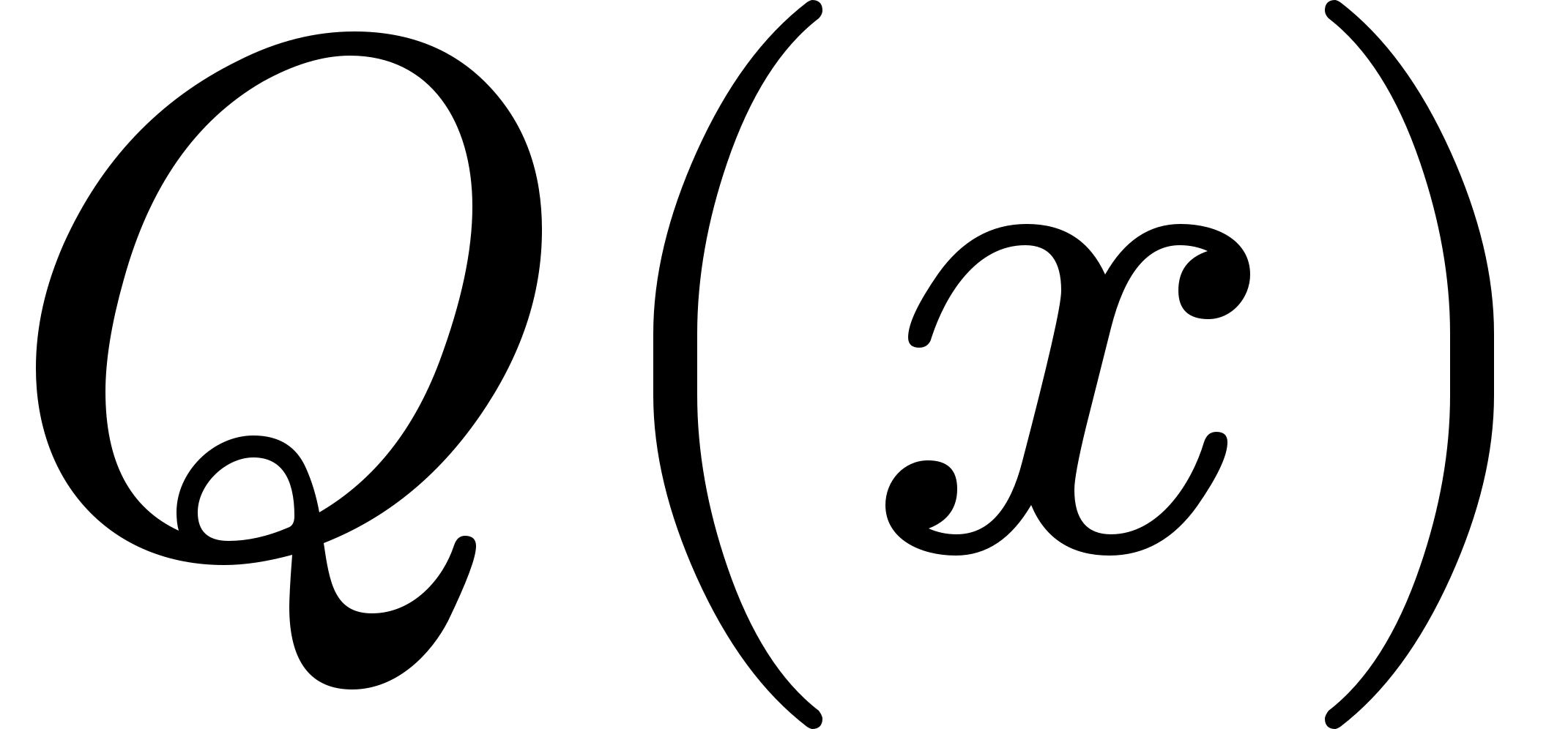 , may be
expressed in the form
, may be
expressed in the form
 where
where  are also
constants. It follows that
are also
constants. It follows that
 From this we conclude that the integral of any rational function is
an elementary function which is rational save for the possible presence
of logarithms of rational functions. In particular the integral
will be rational if each of the numbers
From this we conclude that the integral of any rational function is
an elementary function which is rational save for the possible presence
of logarithms of rational functions. In particular the integral
will be rational if each of the numbers 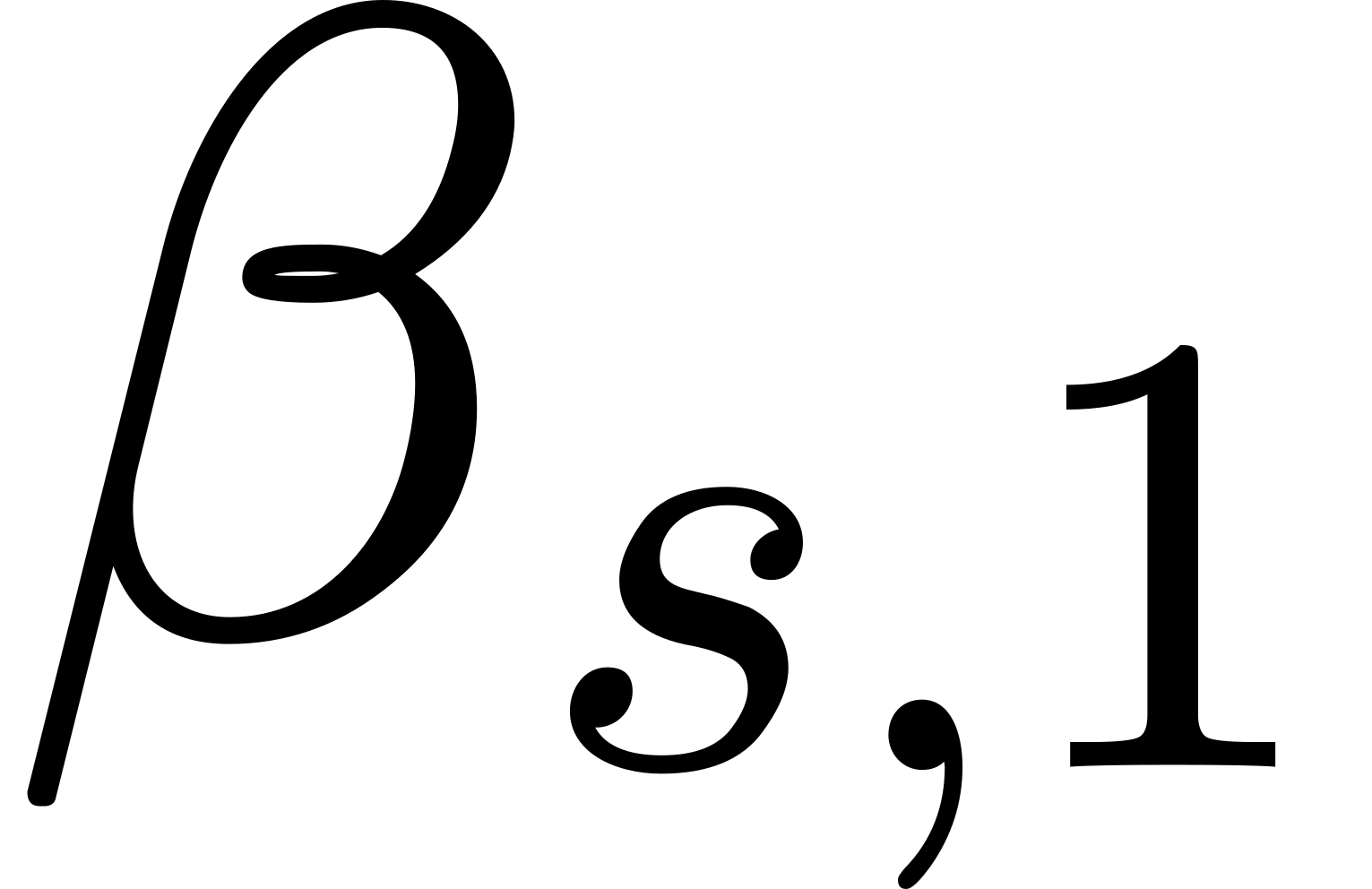 is
zero: this condition is evidently necessary and sufficient. A necessary
but not sufficient condition is that should contain no simple
factors.
is
zero: this condition is evidently necessary and sufficient. A necessary
but not sufficient condition is that should contain no simple
factors.
The integral of the general rational function may be expressed in a
very simple and elegant form by means of symbols of differentiation.
We may suppose for simplicity that the degree of 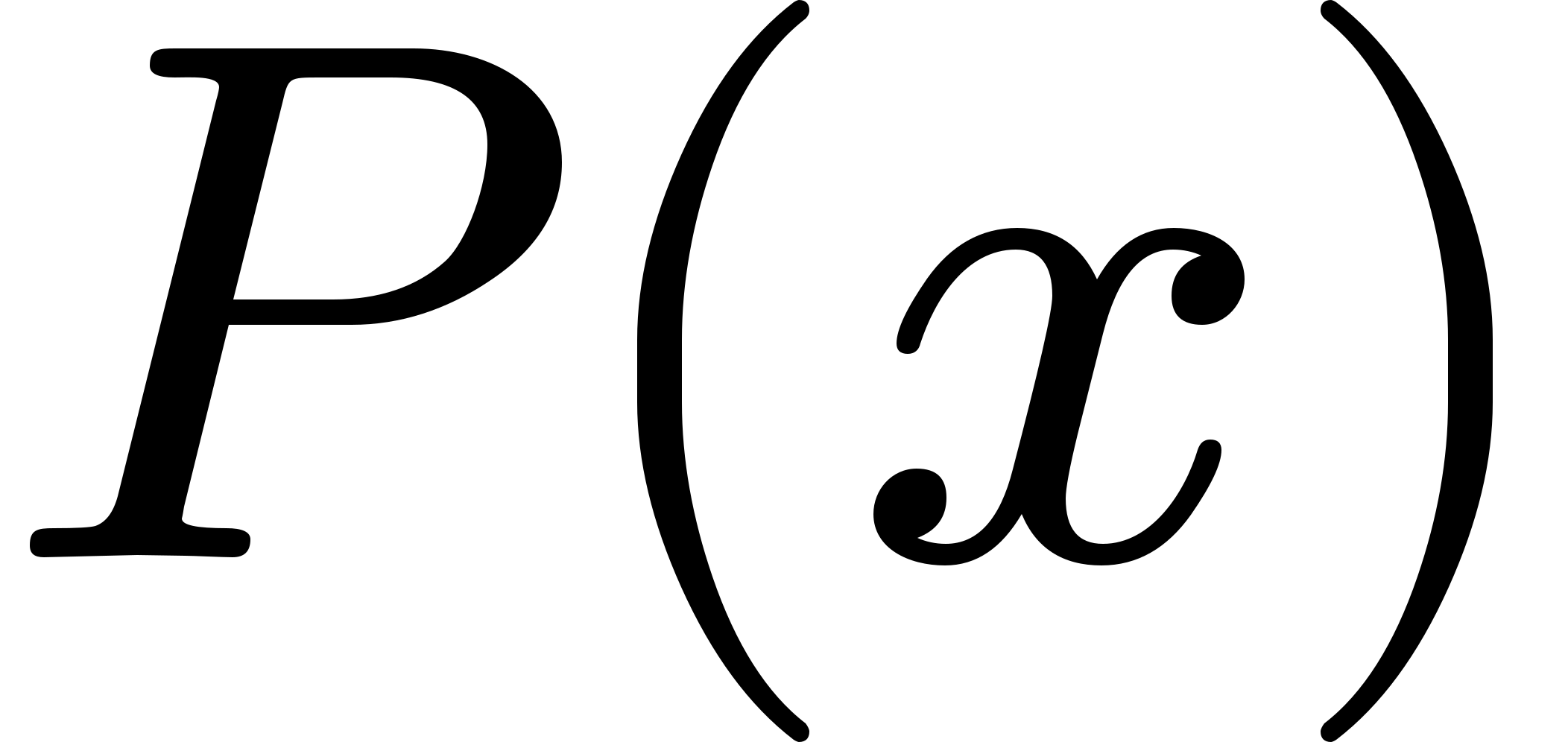 is less than
that of ; this can of course always be ensured by subtracting a
polynomial from . Then
is less than
that of ; this can of course always be ensured by subtracting a
polynomial from . Then
 where
where
 Now
Now
 [Pg 13]
where
[Pg 13]
where 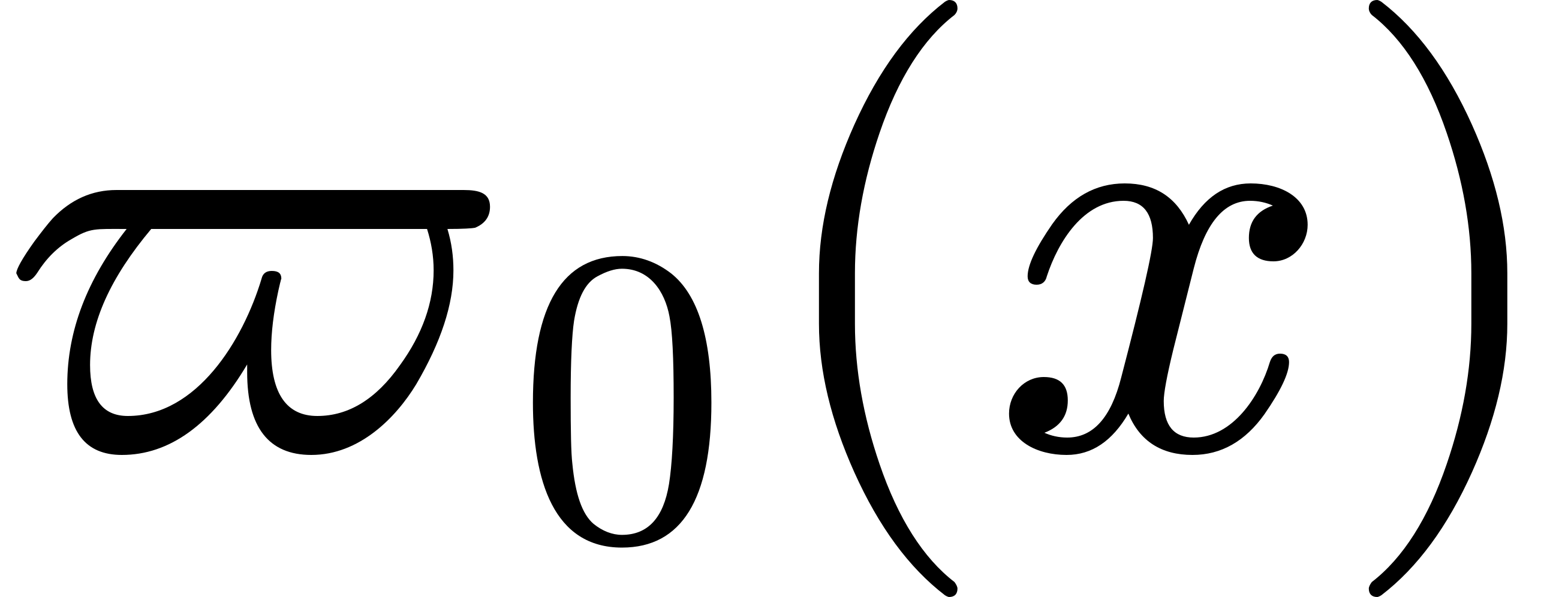 is a polynomial; and so
 where
where
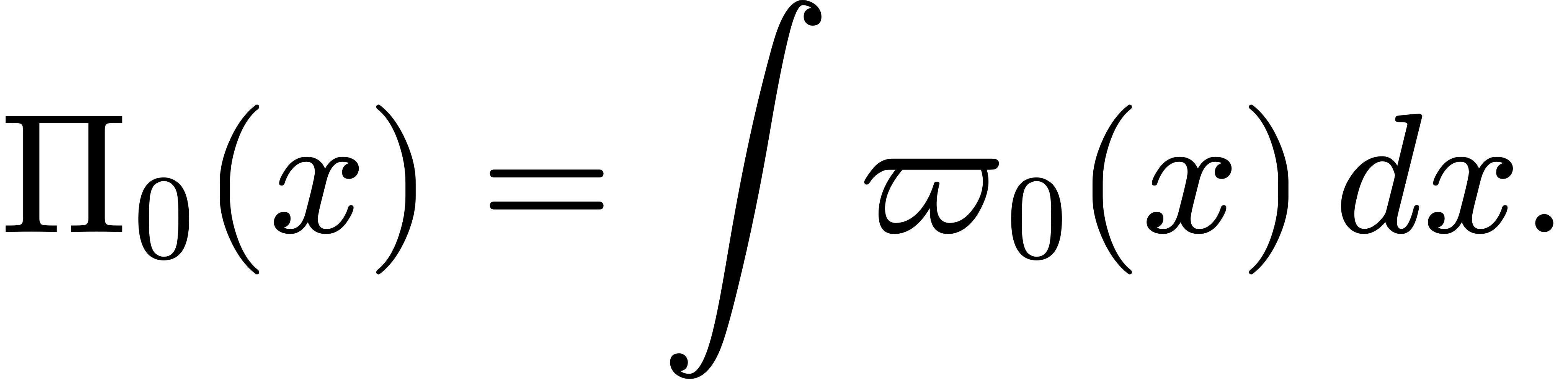 But
But
 is also a polynomial, and the integral contains no polynomial term,
since the degree of is less than that of . Thus
is also a polynomial, and the integral contains no polynomial term,
since the degree of is less than that of . Thus
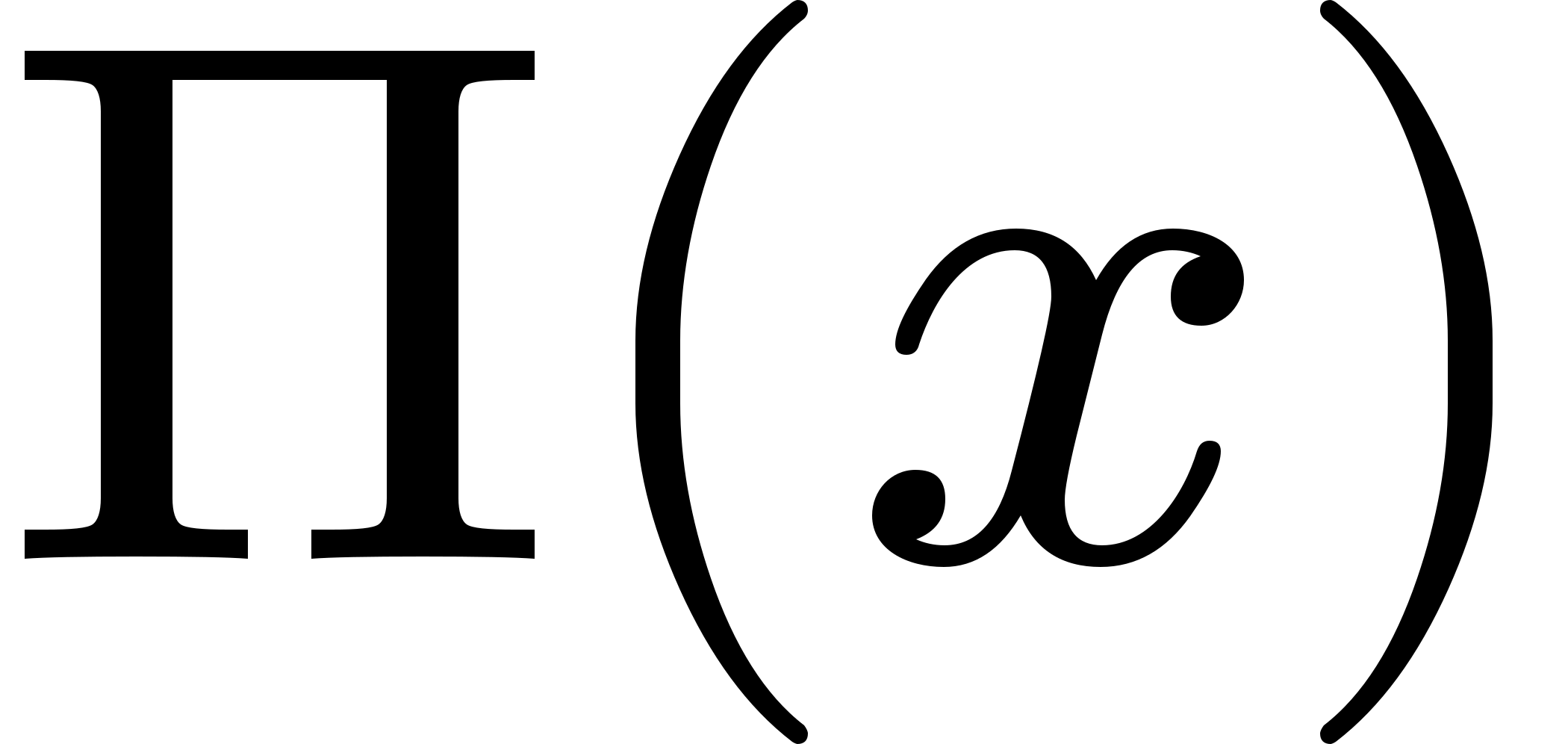 must vanish identically, so that

For example

That 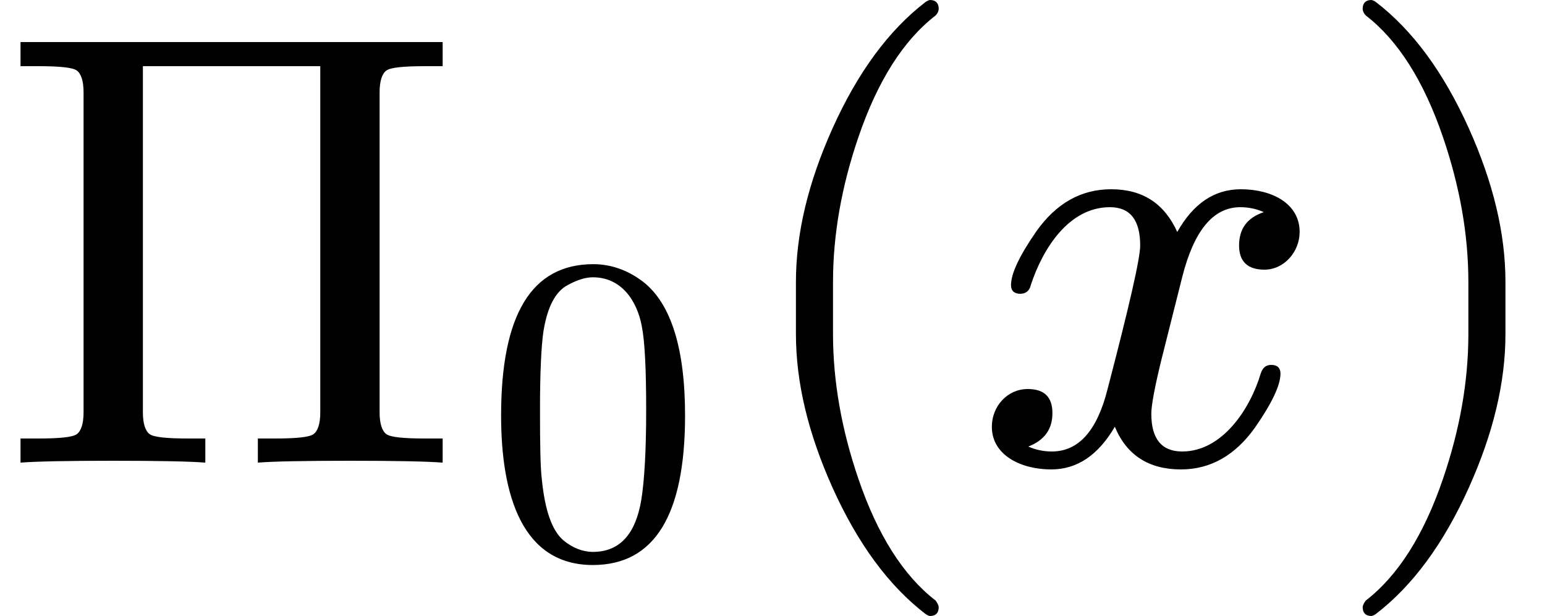 is annihilated by the partial differentiations
performed on it may be verified directly as follows. We obtain
by picking out from the expansion
is annihilated by the partial differentiations
performed on it may be verified directly as follows. We obtain
by picking out from the expansion
 the terms which involve positive powers of . Any such term is of
the form
the terms which involve positive powers of . Any such term is of
the form
 where
where
 being the degree of
 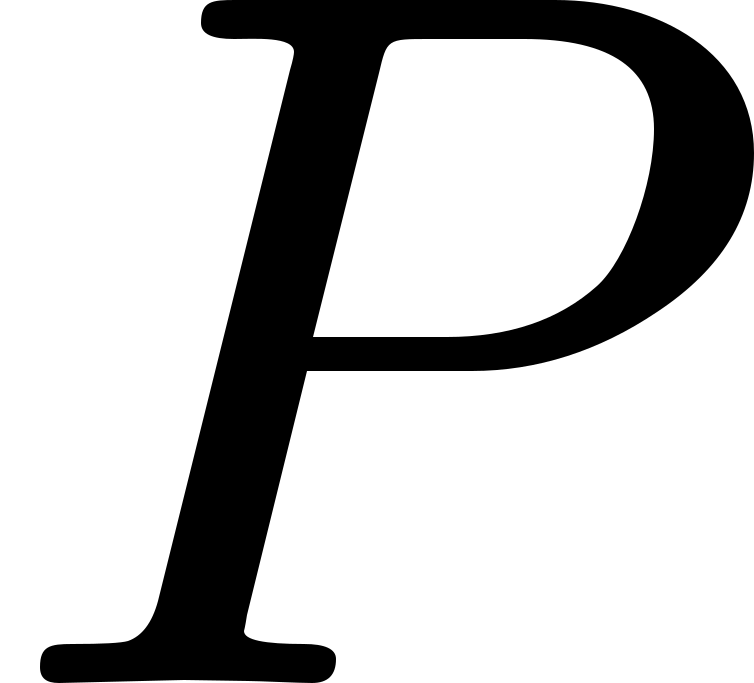 . It follows that
 so that at least one of
  must be less than the
corresponding one of
must be less than the
corresponding one of  .
.
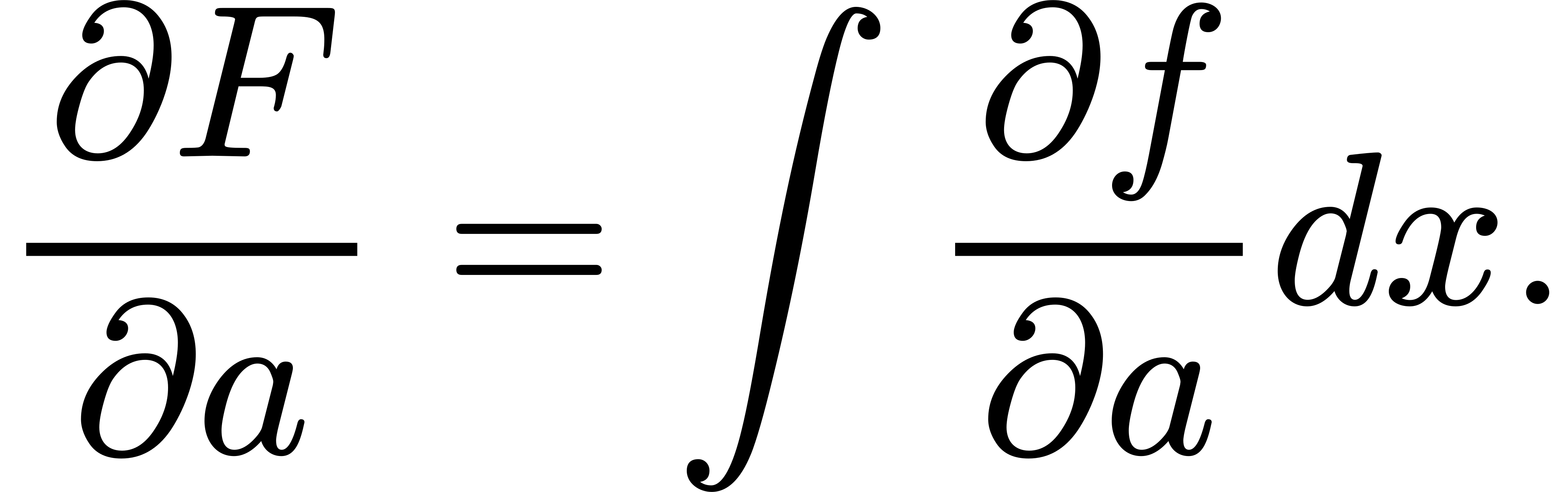
It has been assumed above that if
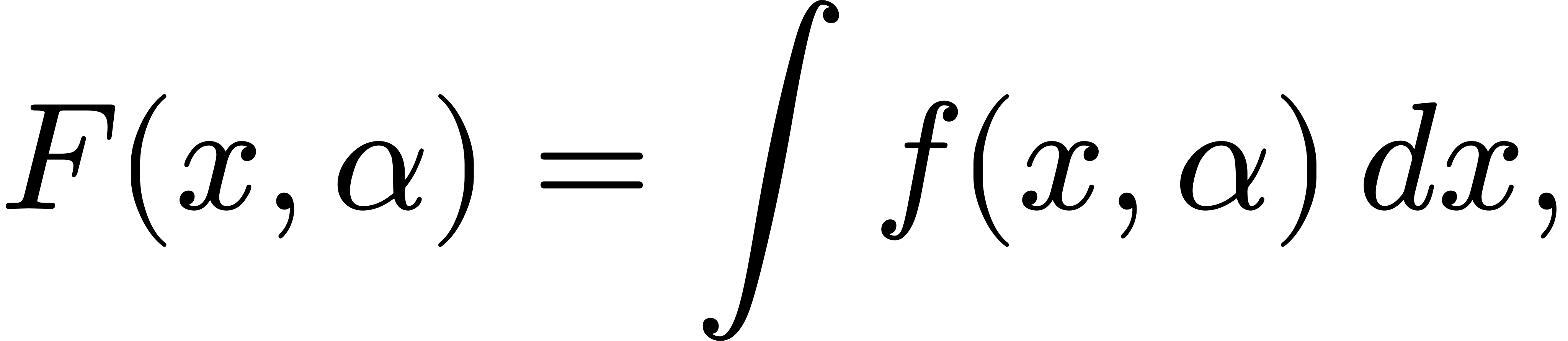 then
then
 [Pg 14]
The first equation means that
[Pg 14]
The first equation means that 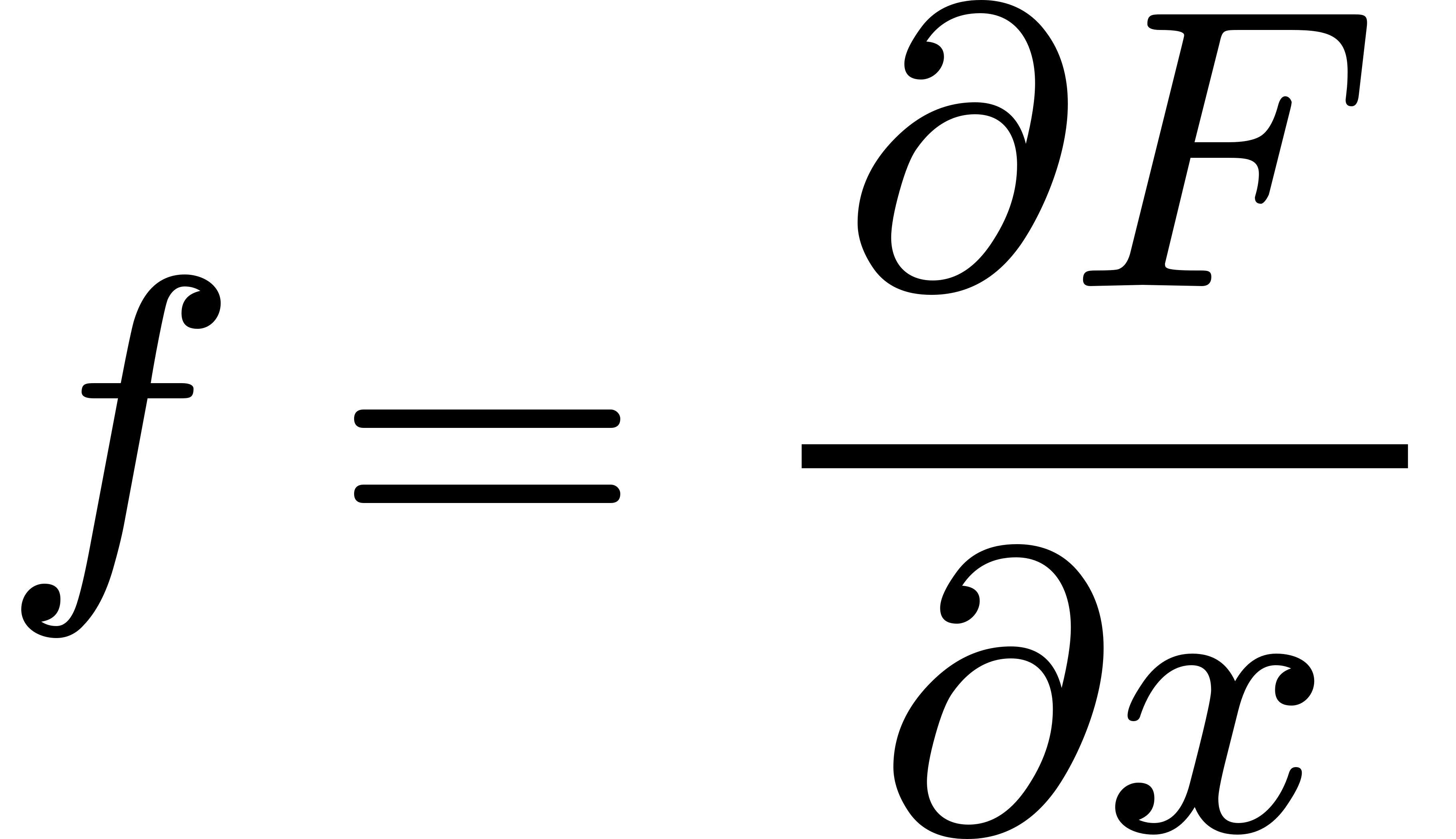 and
the second that
and
the second that 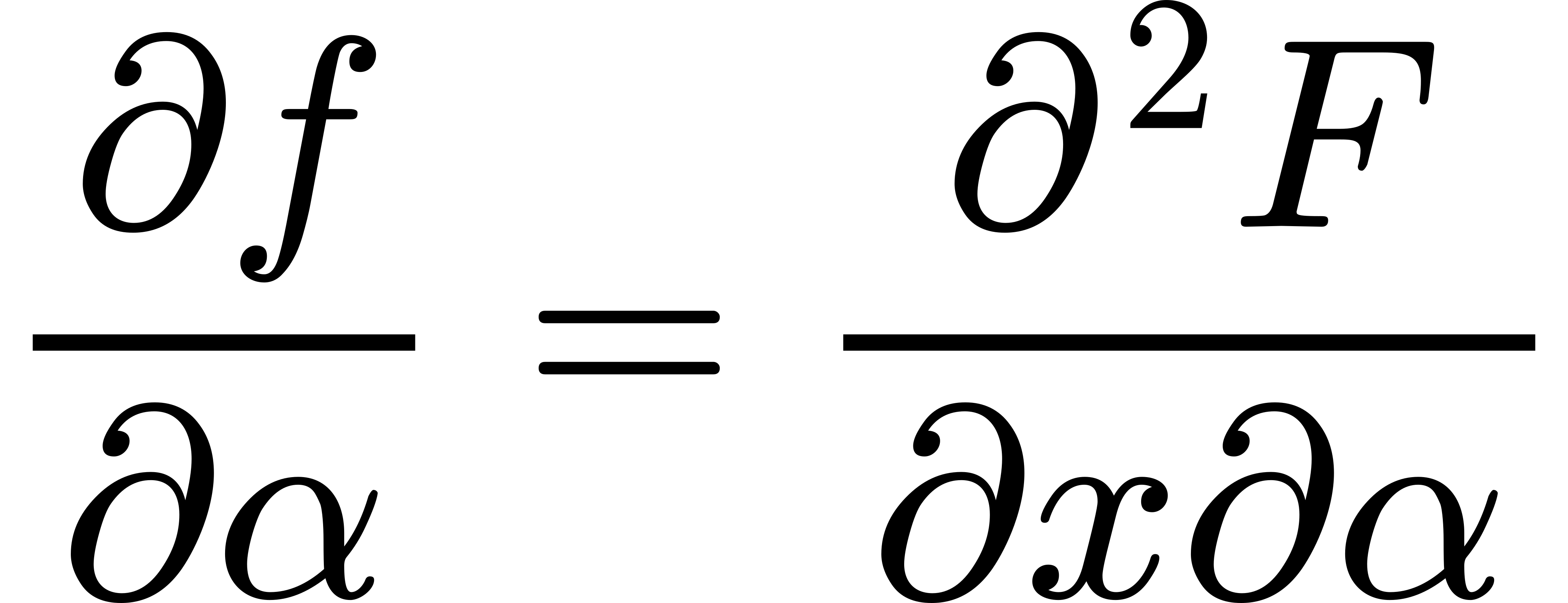 . As it follows from the first that
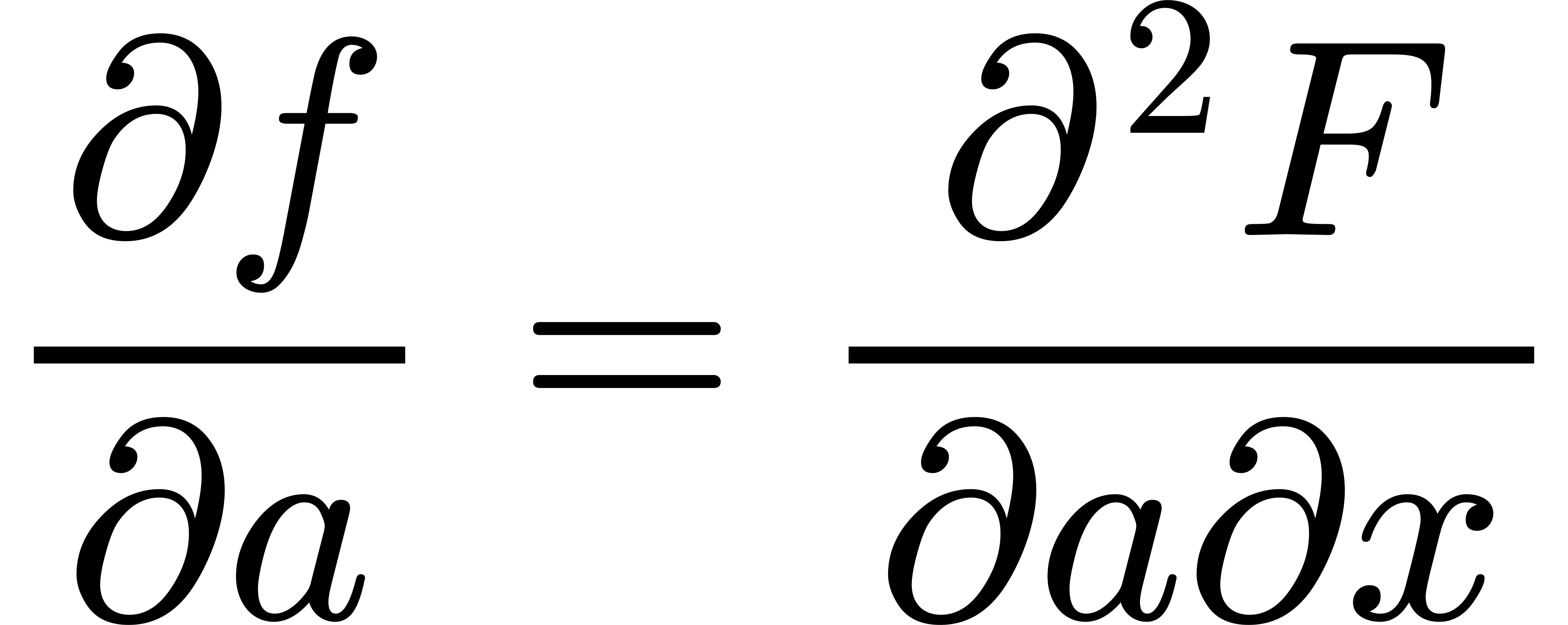 , what has really been assumed is that
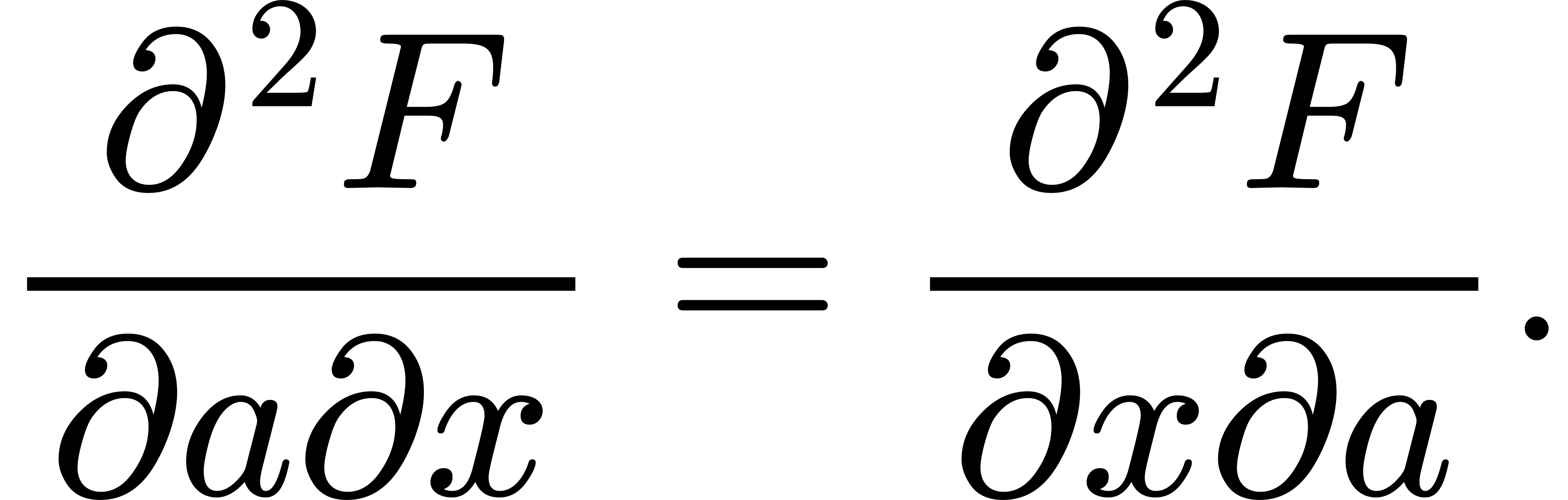 It is known that this equation is always true for
  if a circle can be drawn in the plane of
 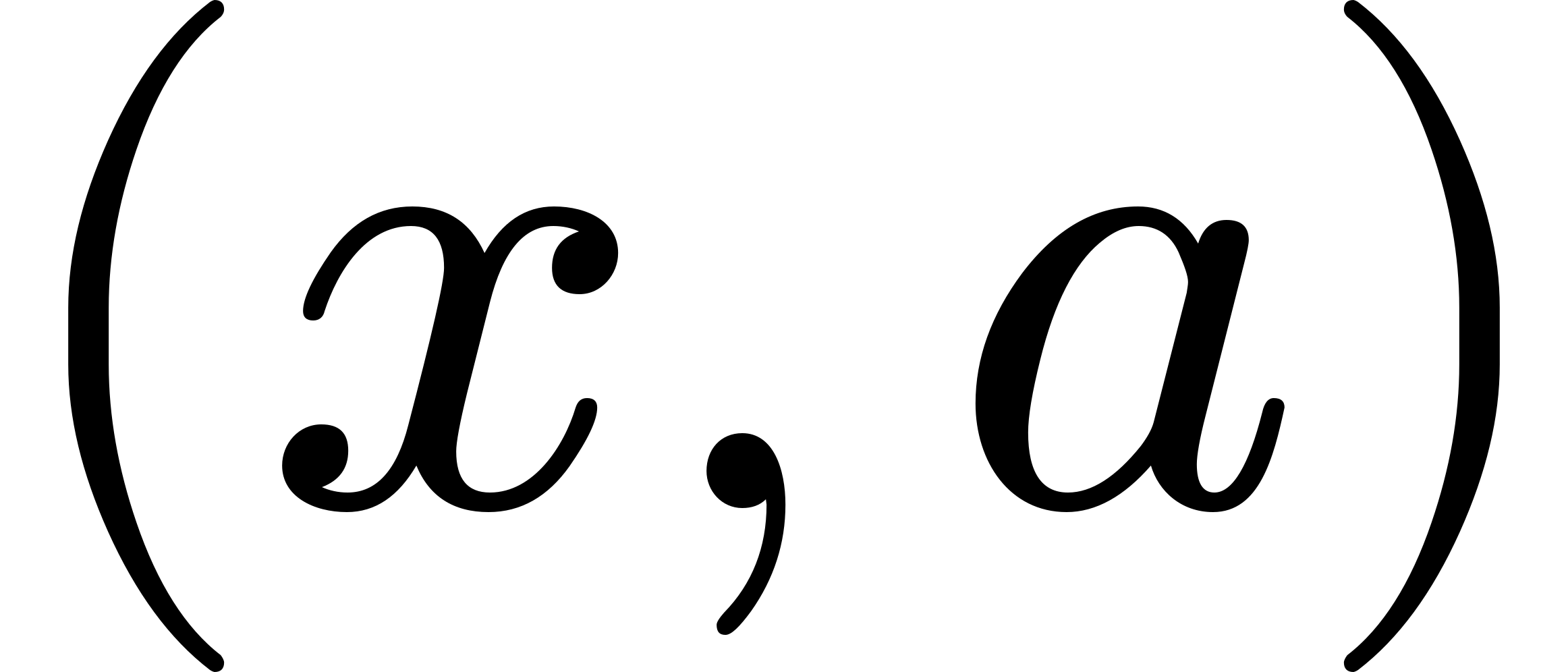 whose centre
is
whose centre
is 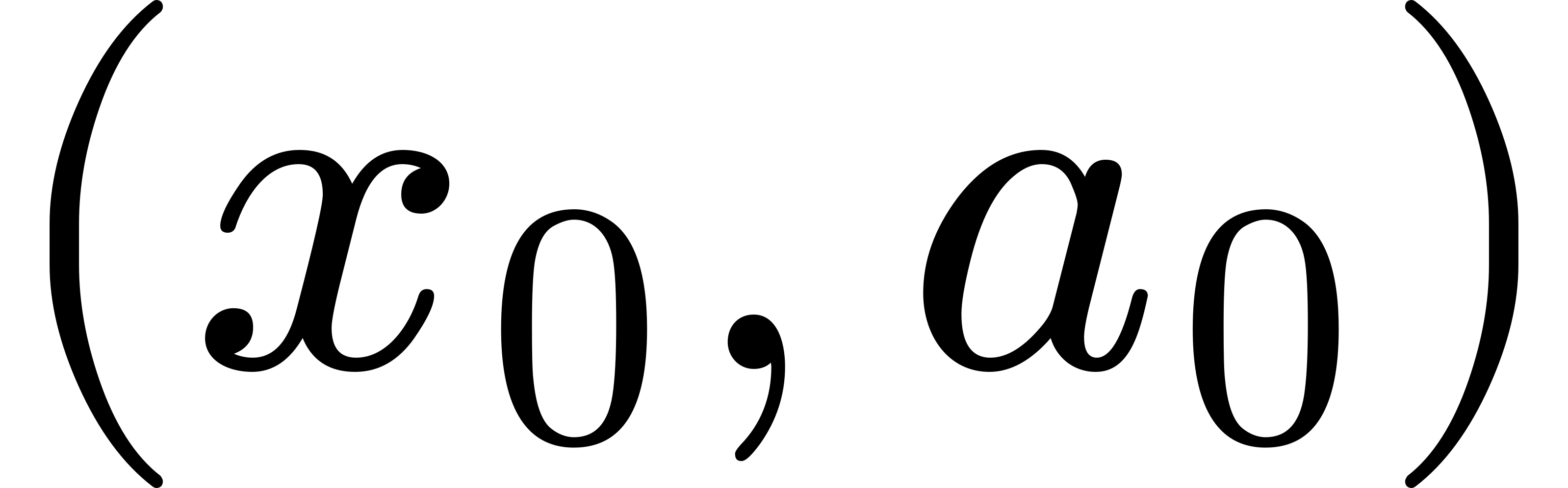 and within which the differential
coefficients are continuous.
and within which the differential
coefficients are continuous.
2. It appears from §1 that the integral of a rational function is in
general composed of two parts, one of which is a rational function and
the other a function of the form
 We may call these two functions the rational part and the
transcendental part of the integral. It is evidently of great
importance to show that the 'transcendental part' of the integral is
really transcendental and cannot be expressed, wholly or in part, as a
rational or algebraical function.
We may call these two functions the rational part and the
transcendental part of the integral. It is evidently of great
importance to show that the 'transcendental part' of the integral is
really transcendental and cannot be expressed, wholly or in part, as a
rational or algebraical function.
We are not yet in a position to prove this completely[9]; but we can
take the first step in this direction by showing that no sum of
the form (1) can be rational, unless every is
zero.
Suppose, if possible, that
 where and
 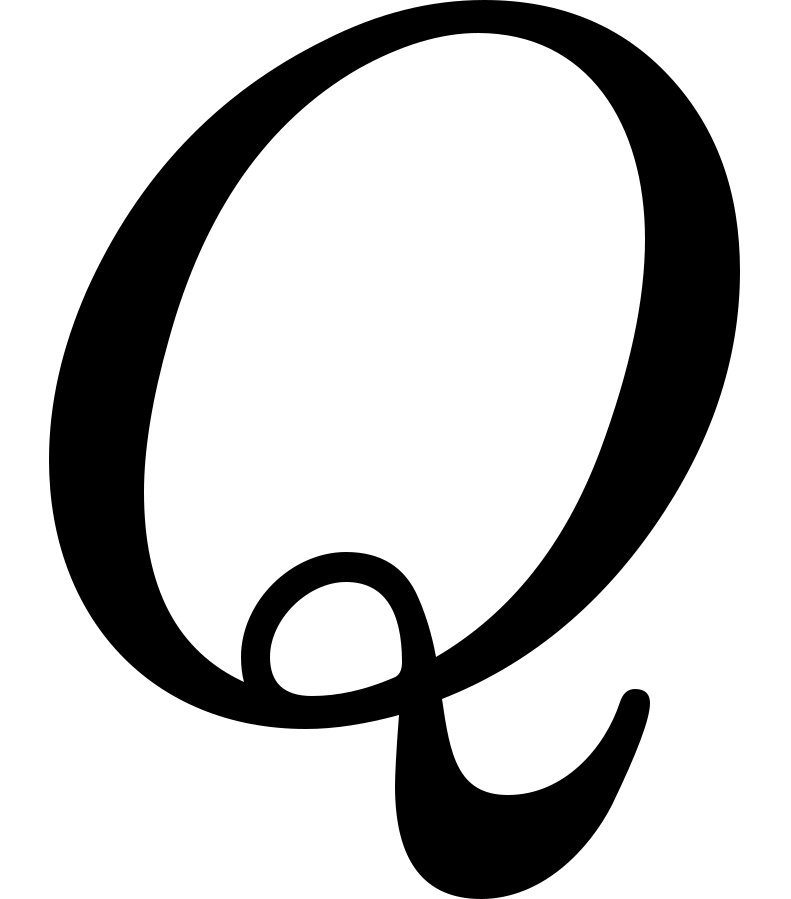 are polynomials without common factor. Then

Suppose now that 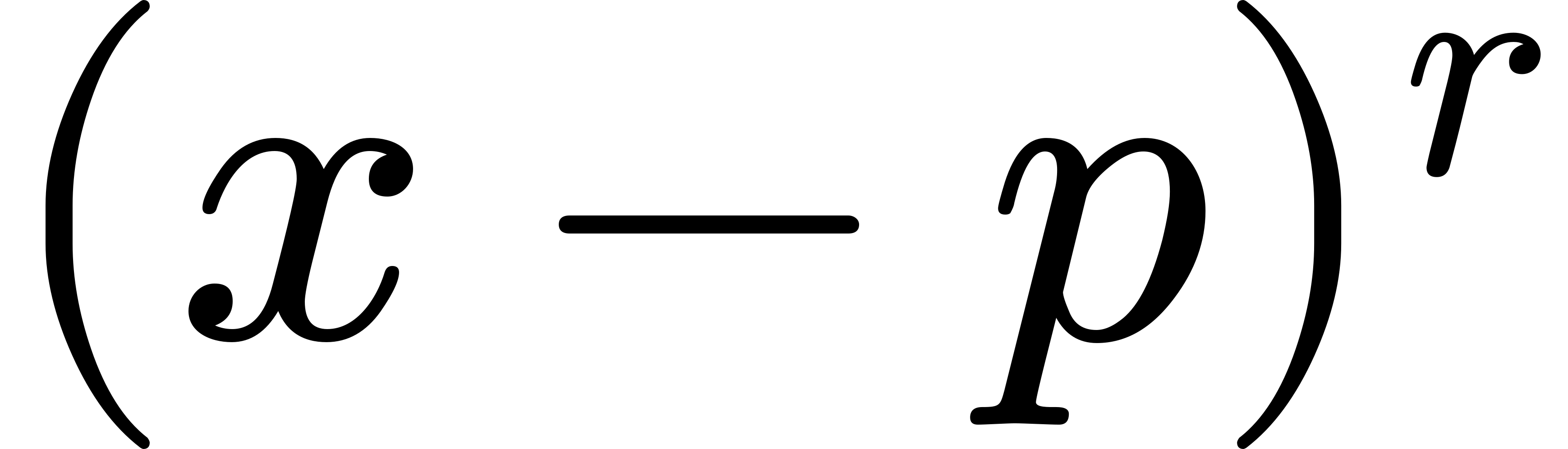 is a factor of . Then
  is divisible by
 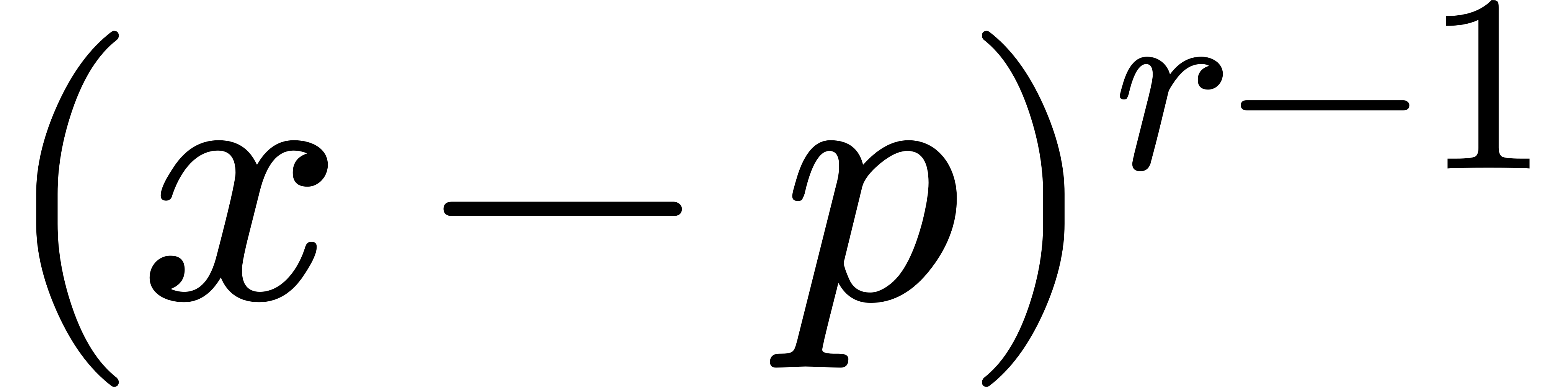 and by no higher power of
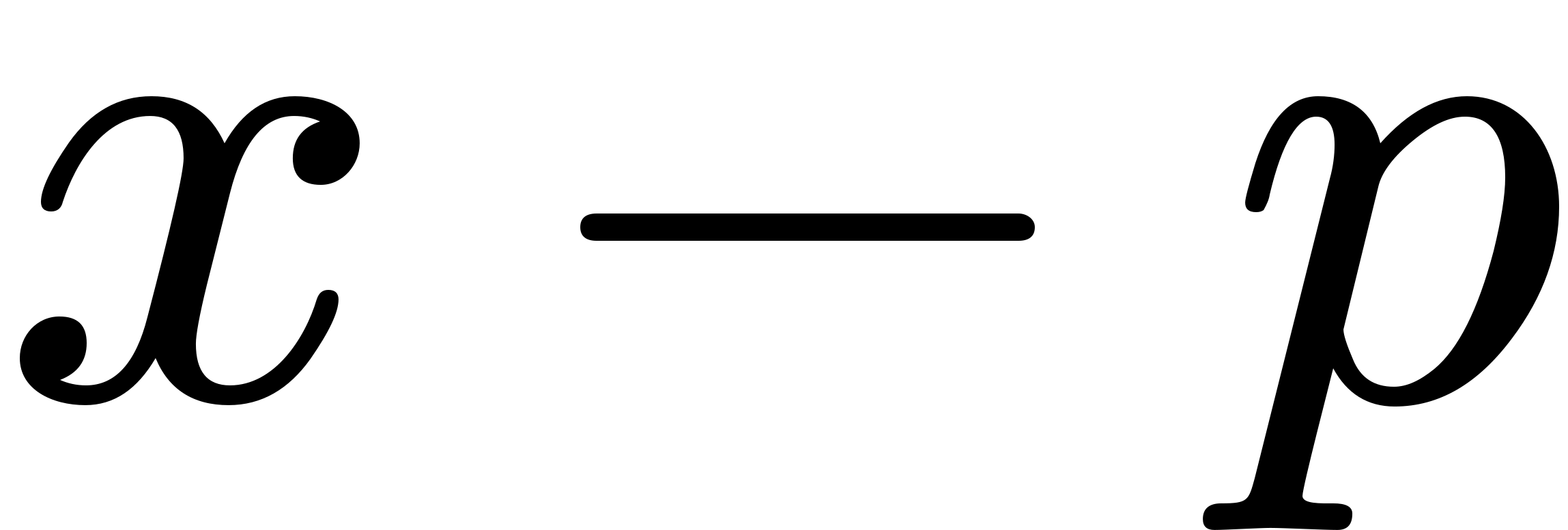 . Thus the right-hand side of (3), when expressed in its lowest
terms, has a factor
. Thus the right-hand side of (3), when expressed in its lowest
terms, has a factor 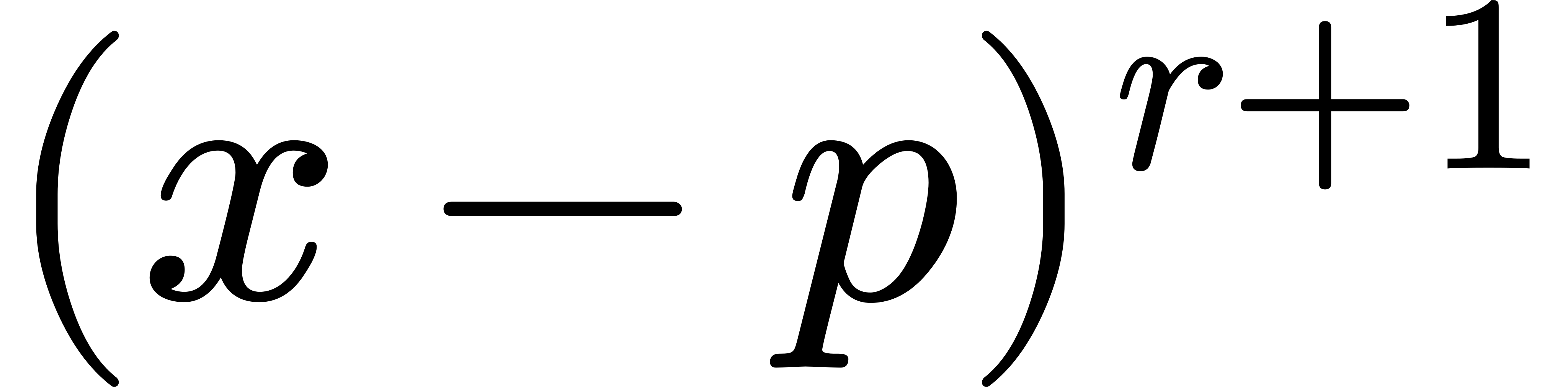 in its denominator. On the other
hand the left-hand side, when expressed as a rational fraction in its
lowest terms, has no repeated factor in its denominator. Hence
in its denominator. On the other
hand the left-hand side, when expressed as a rational fraction in its
lowest terms, has no repeated factor in its denominator. Hence 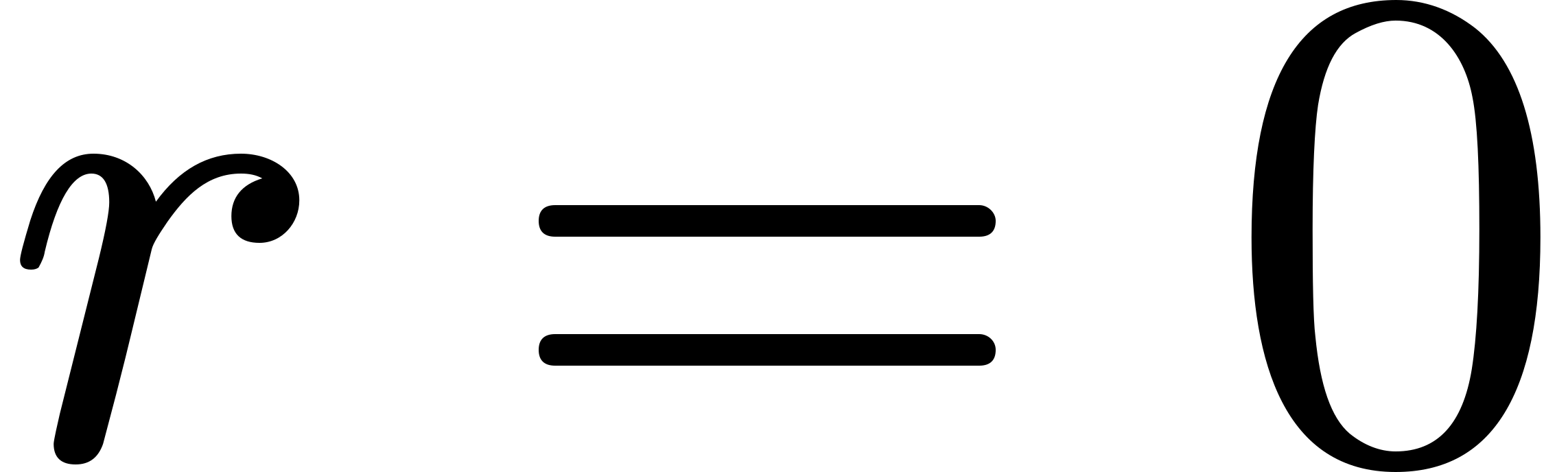 ,
and so is a constant. We may therefore replace (2) by
,
and so is a constant. We may therefore replace (2) by
 and (3) by
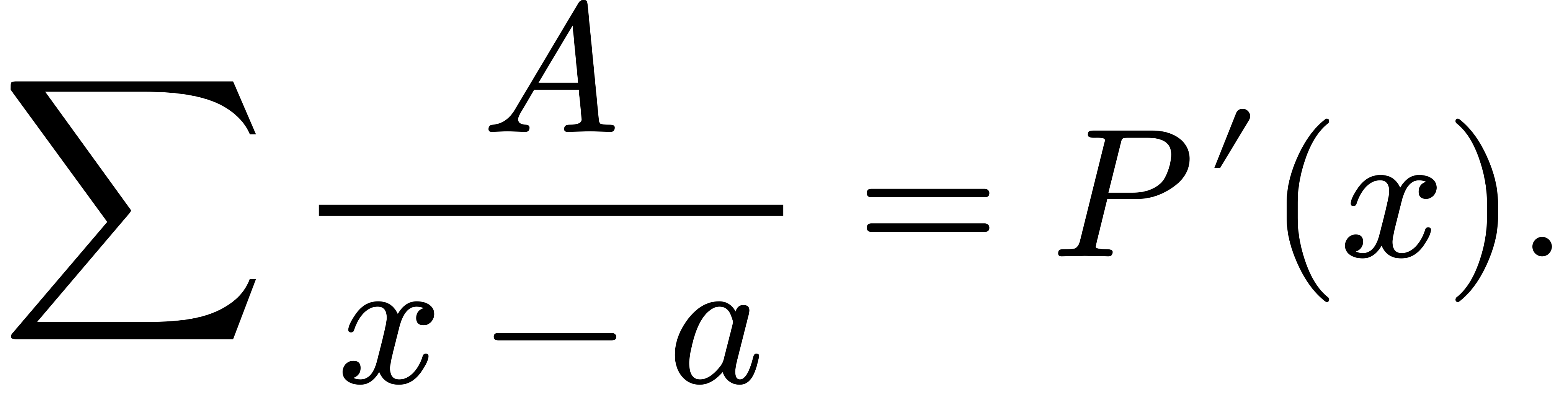 [Pg 15]Multiplying by
 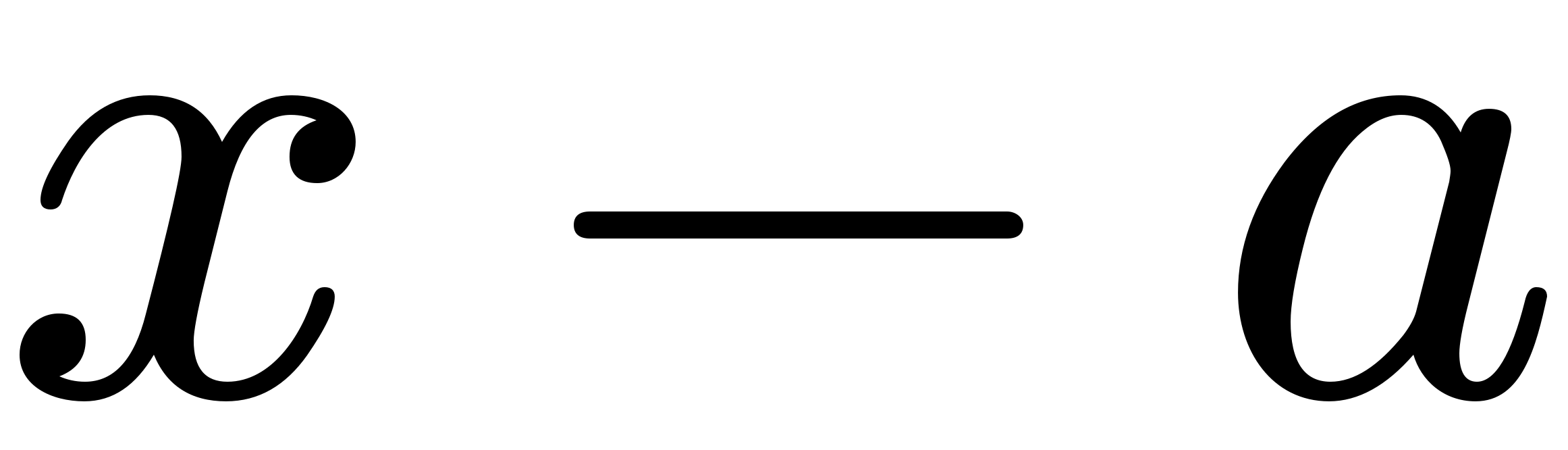 , and making tend to , we see that
 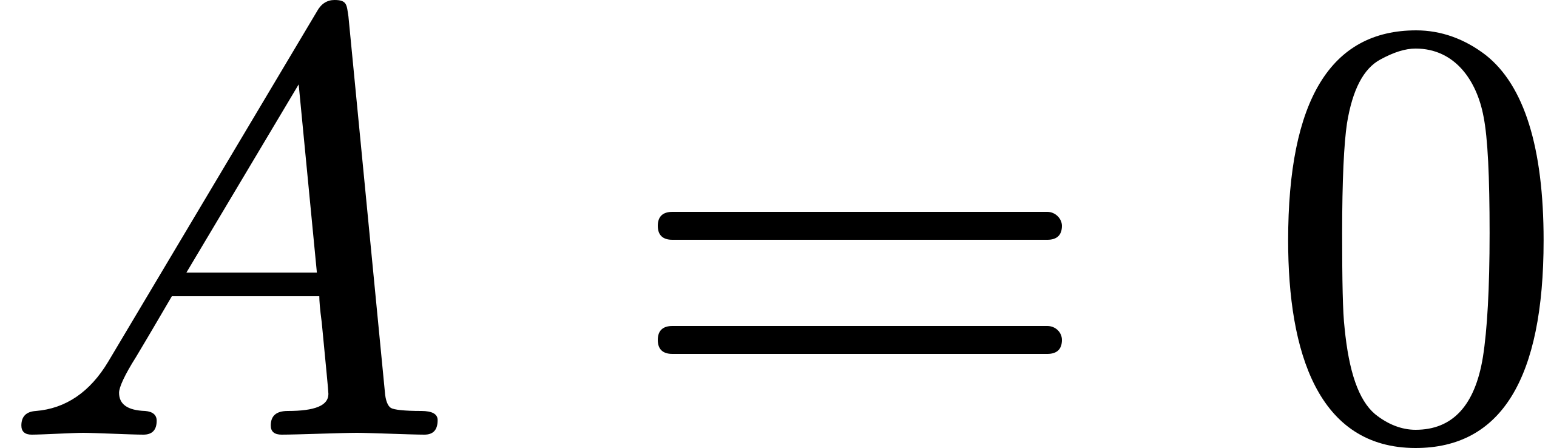 .
.
3. The method of §1 gives a complete solution of the problem if
the roots of 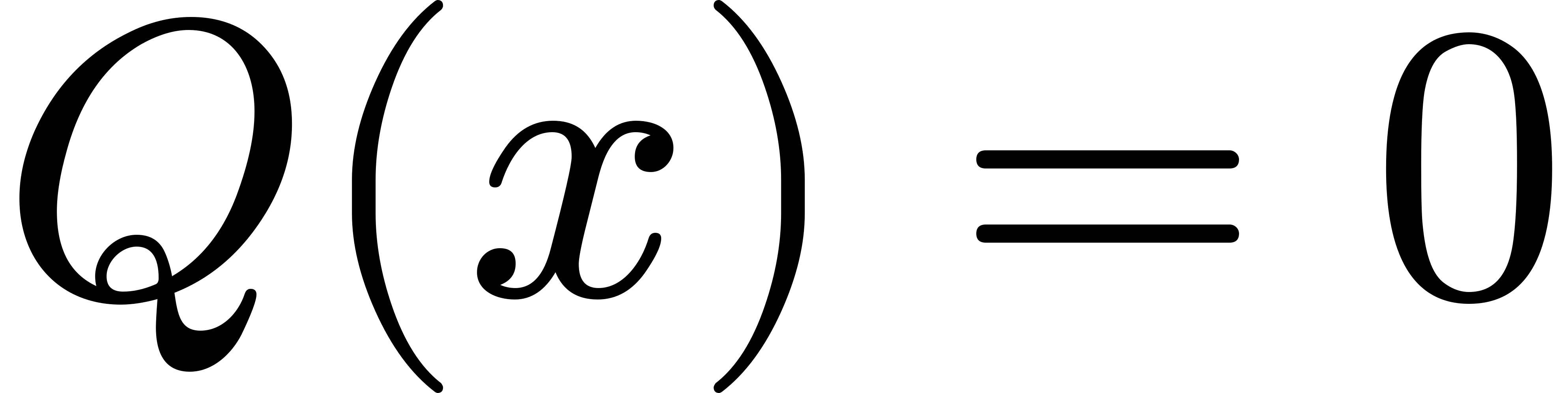 can be determined; and in practice this is
usually the case. But this case, though it is the one which occurs
most frequently in practice, is from a theoretical point of view an
exceedingly special case. The roots of are not in general
explicit algebraical functions of the coefficients, and cannot as
a rule be determined in any explicit form. The method of partial
fractions is therefore subject to serious limitations. For example,
we cannot determine, by the method of decomposition into partial
fractions, such an integral as
can be determined; and in practice this is
usually the case. But this case, though it is the one which occurs
most frequently in practice, is from a theoretical point of view an
exceedingly special case. The roots of are not in general
explicit algebraical functions of the coefficients, and cannot as
a rule be determined in any explicit form. The method of partial
fractions is therefore subject to serious limitations. For example,
we cannot determine, by the method of decomposition into partial
fractions, such an integral as
 or even determine whether the integral is rational or not, although
it is in reality a very simple function. A high degree of importance
therefore attaches to the further problem of determining the integral
of a given rational function so far as possible in an absolutely
explicit form and by means of operations which are always practicable.
or even determine whether the integral is rational or not, although
it is in reality a very simple function. A high degree of importance
therefore attaches to the further problem of determining the integral
of a given rational function so far as possible in an absolutely
explicit form and by means of operations which are always practicable.
It is easy to see that a complete solution of this problem cannot be looked for.
Suppose for example that reduces to unity, and that
is an equation of the fifth degree, whose roots  are all distinct and not capable of explicit algebraical
expression.
are all distinct and not capable of explicit algebraical
expression.
Then
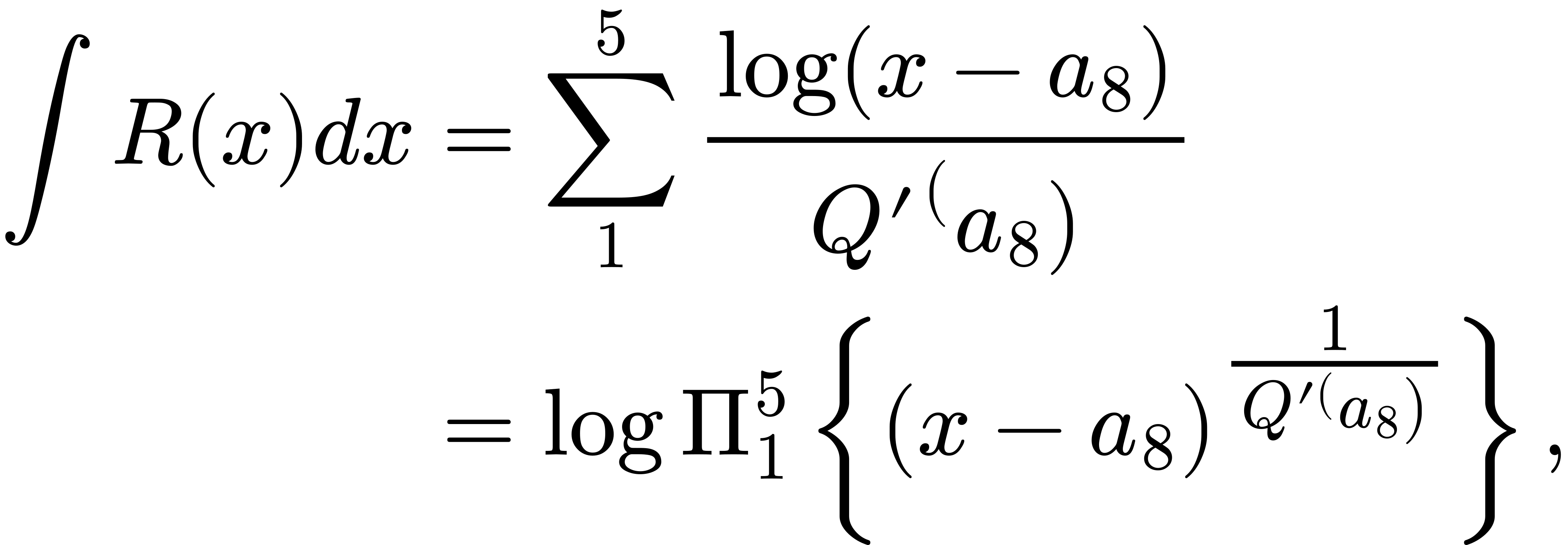 and it is only if at least two of the numbers
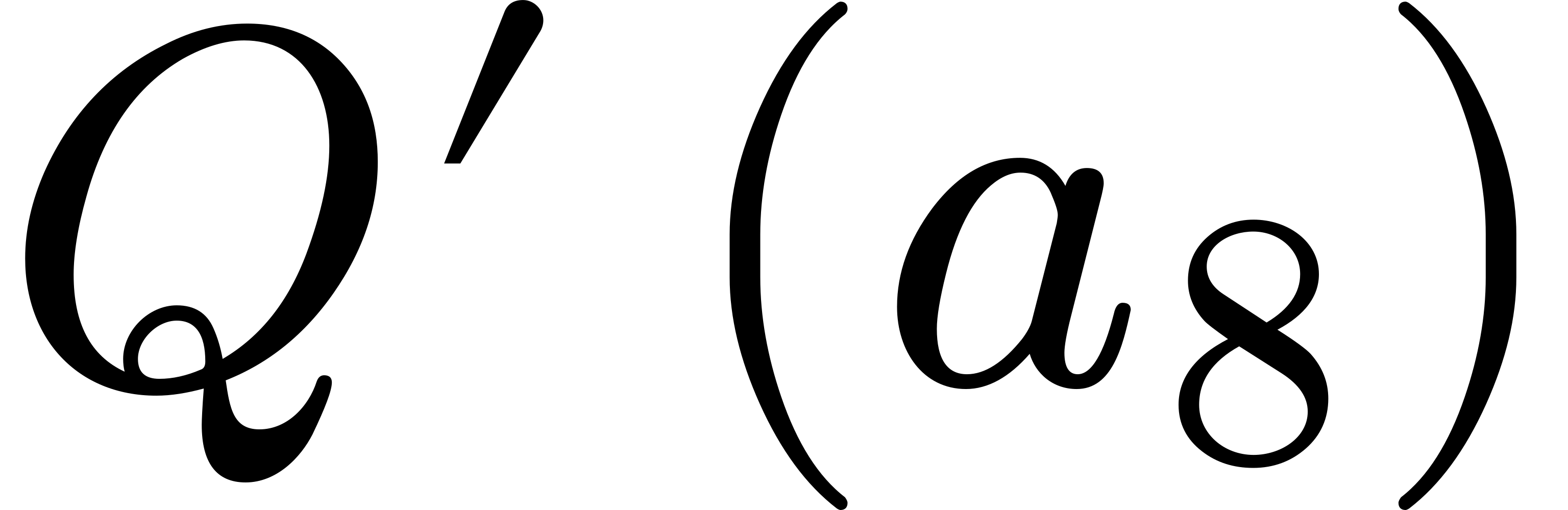 are commensurable that
any two or more of the factors
are commensurable that
any two or more of the factors 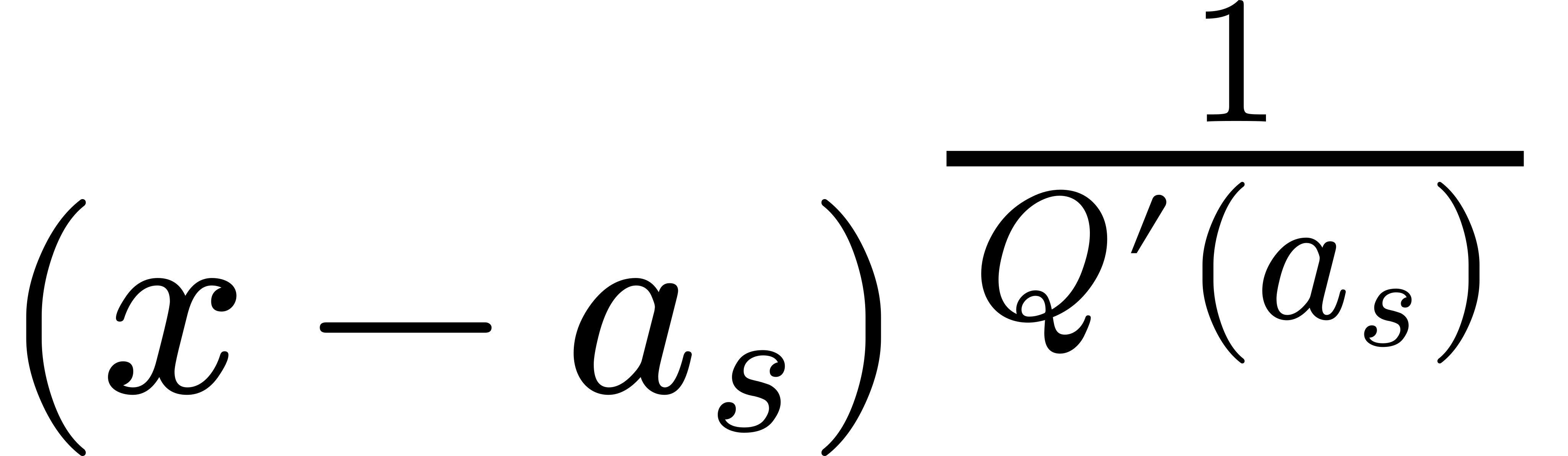 can be associated so as to give a
single term of the type
can be associated so as to give a
single term of the type 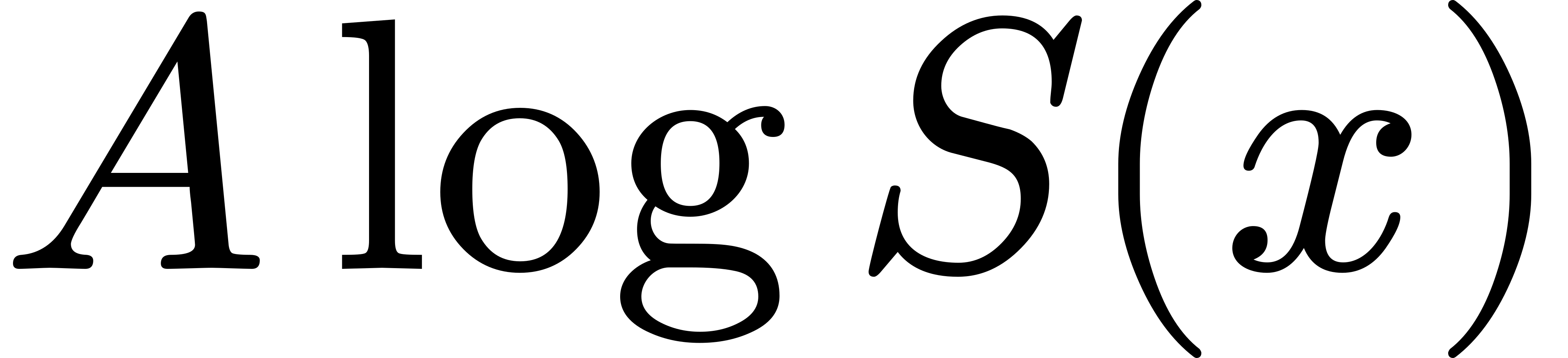 , where
 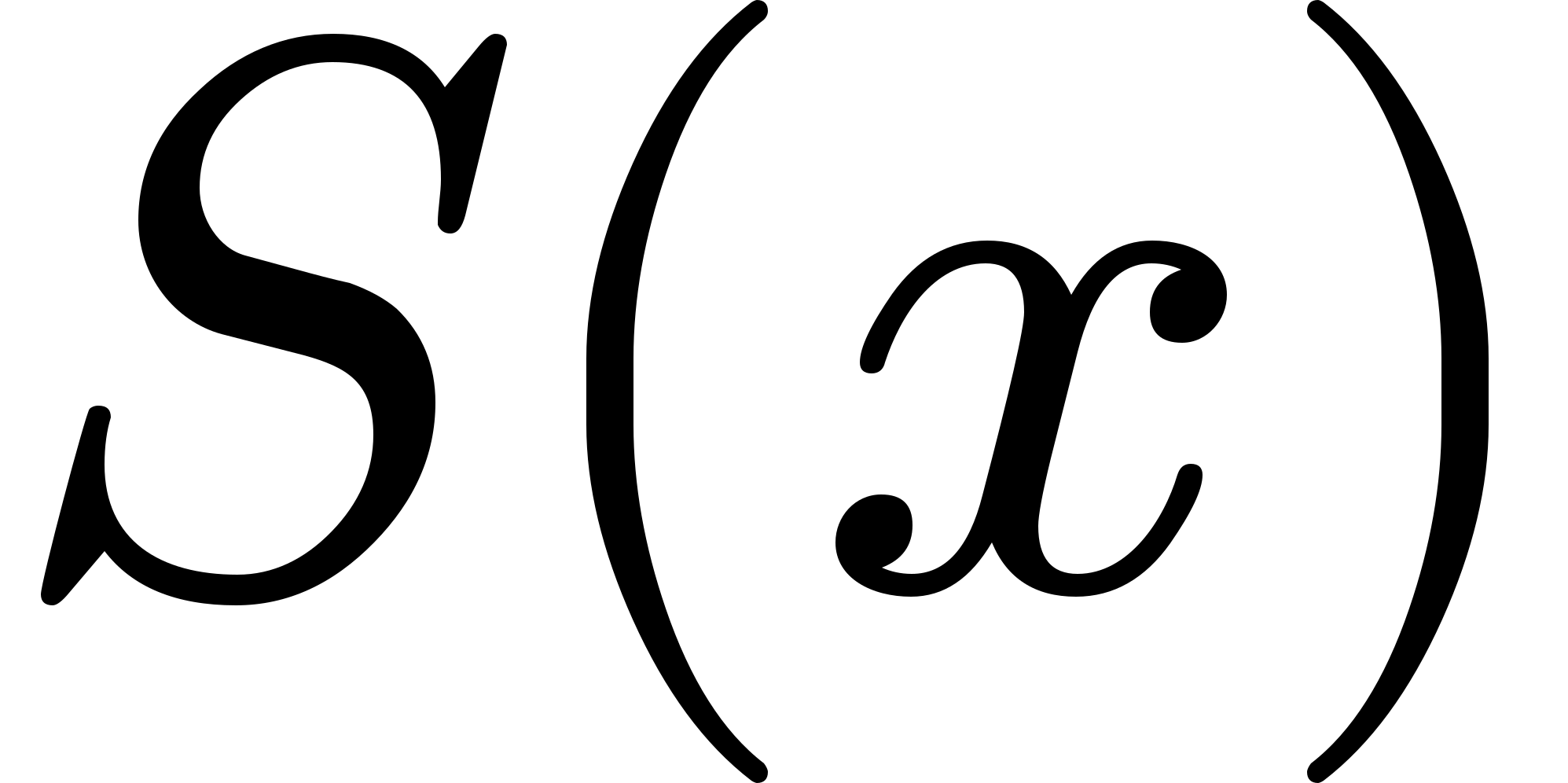 is rational.
In general this will not be the case, and so it will not be possible
to express the integral in any finite form which does not explicitly
involve the roots. A more precise result in this connection will be
proved later (§6).
is rational.
In general this will not be the case, and so it will not be possible
to express the integral in any finite form which does not explicitly
involve the roots. A more precise result in this connection will be
proved later (§6).
4. The first and most important part of the problem has been solved by
Hermite, who has shown that the rational part of the integral
can always be determined without a knowledge of the roots of ,
and indeed without the performance of any operations other than those
of elementary algebra[10].
[Pg 16]
Hermite's method depends upon a fundamental theorem in elementary algebra[11] which is also of great importance in the ordinary theory of partial fractions, viz.:
'If 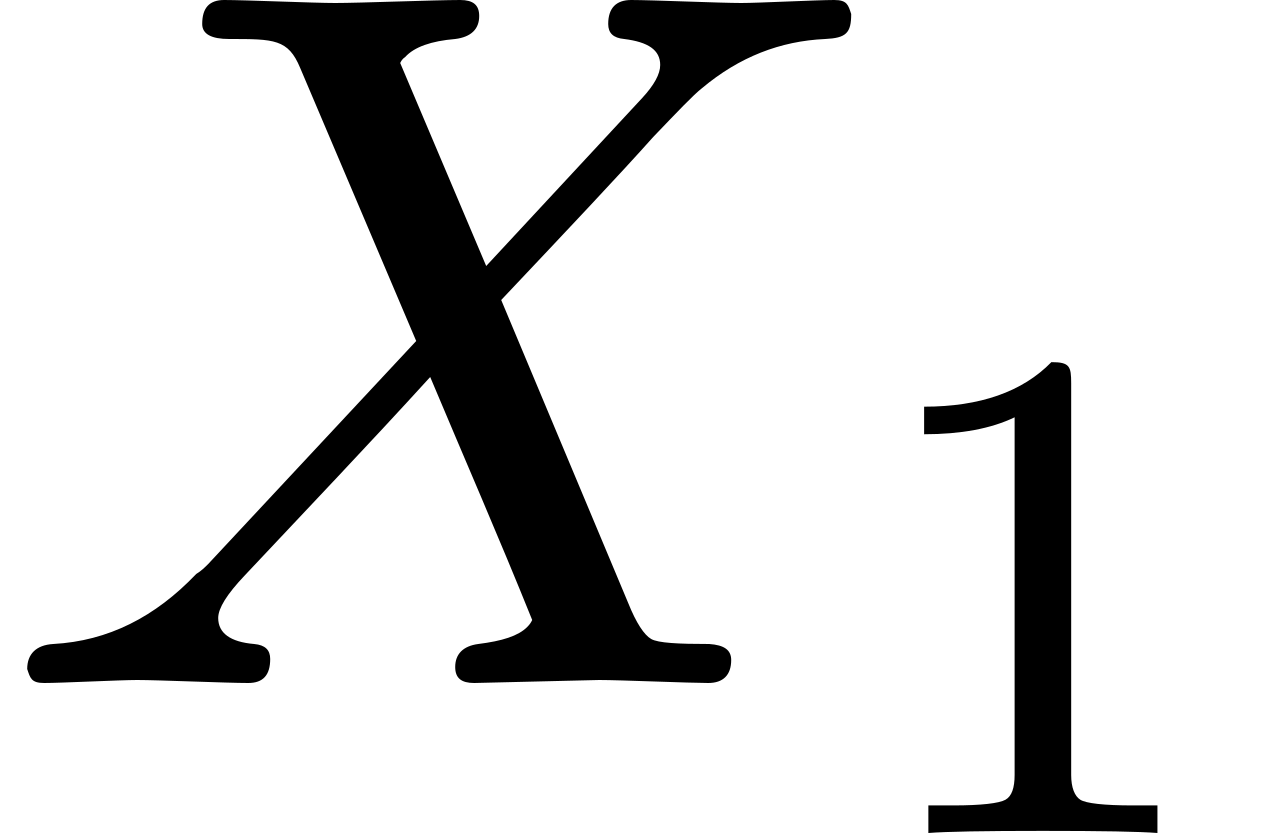 and
and 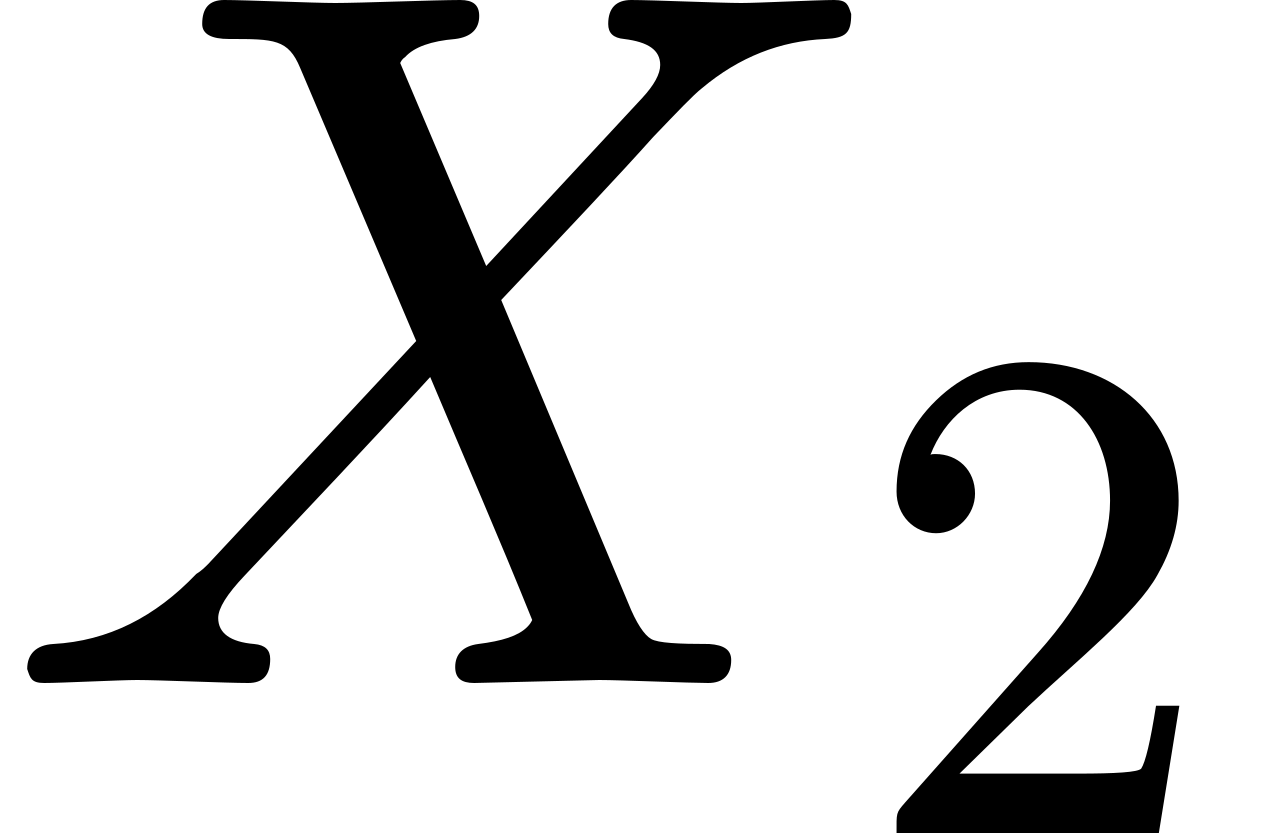 are two polynomials
in which have no common factor, and
are two polynomials
in which have no common factor, and 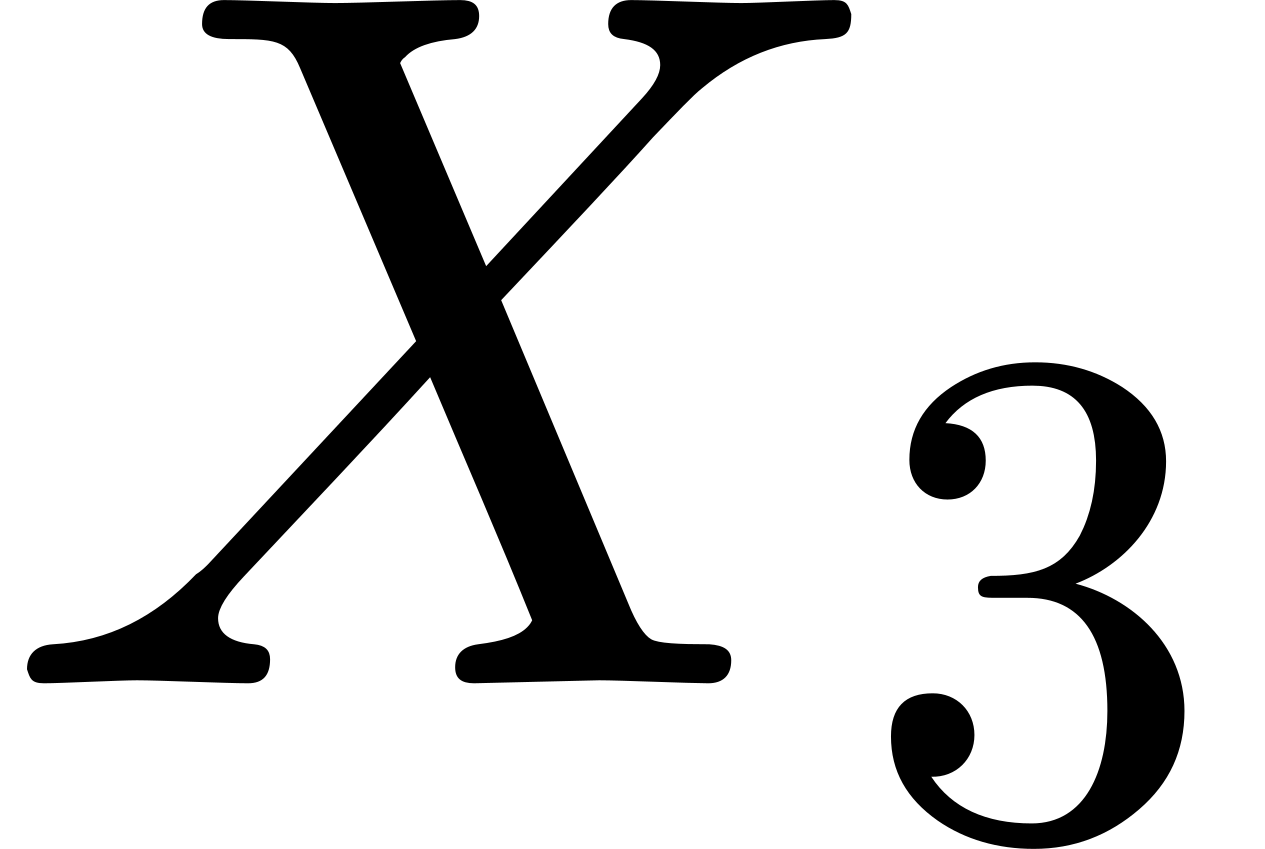 any third
polynomial, then we can determine two polynomials
any third
polynomial, then we can determine two polynomials 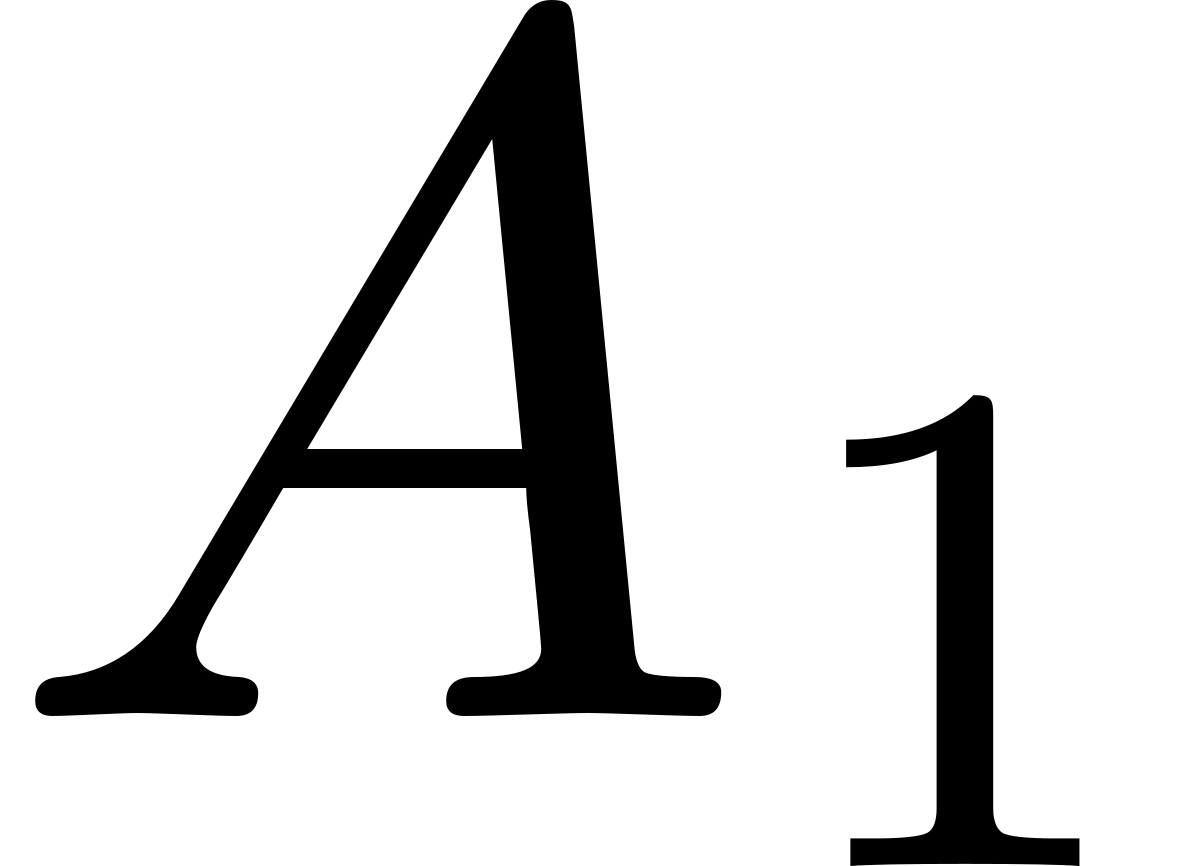 ,
, 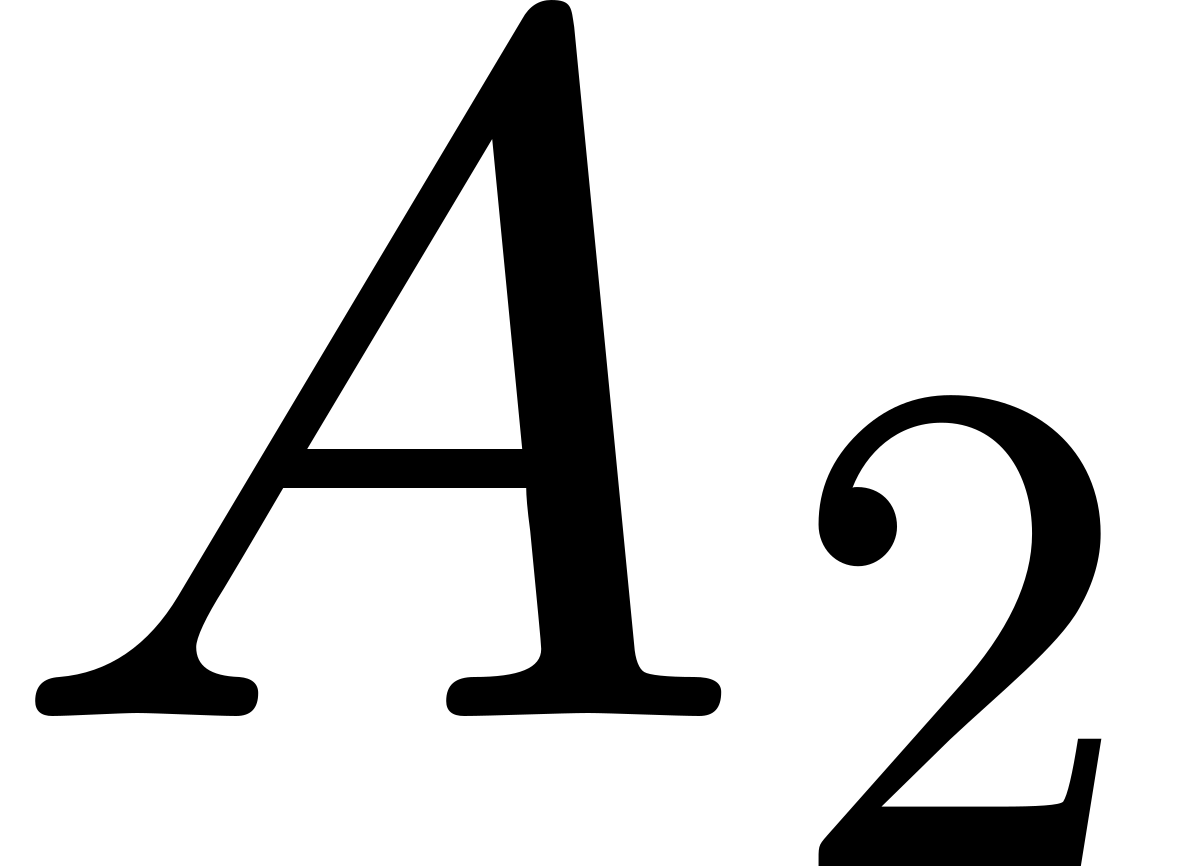 ,
such that
,
such that

Suppose that

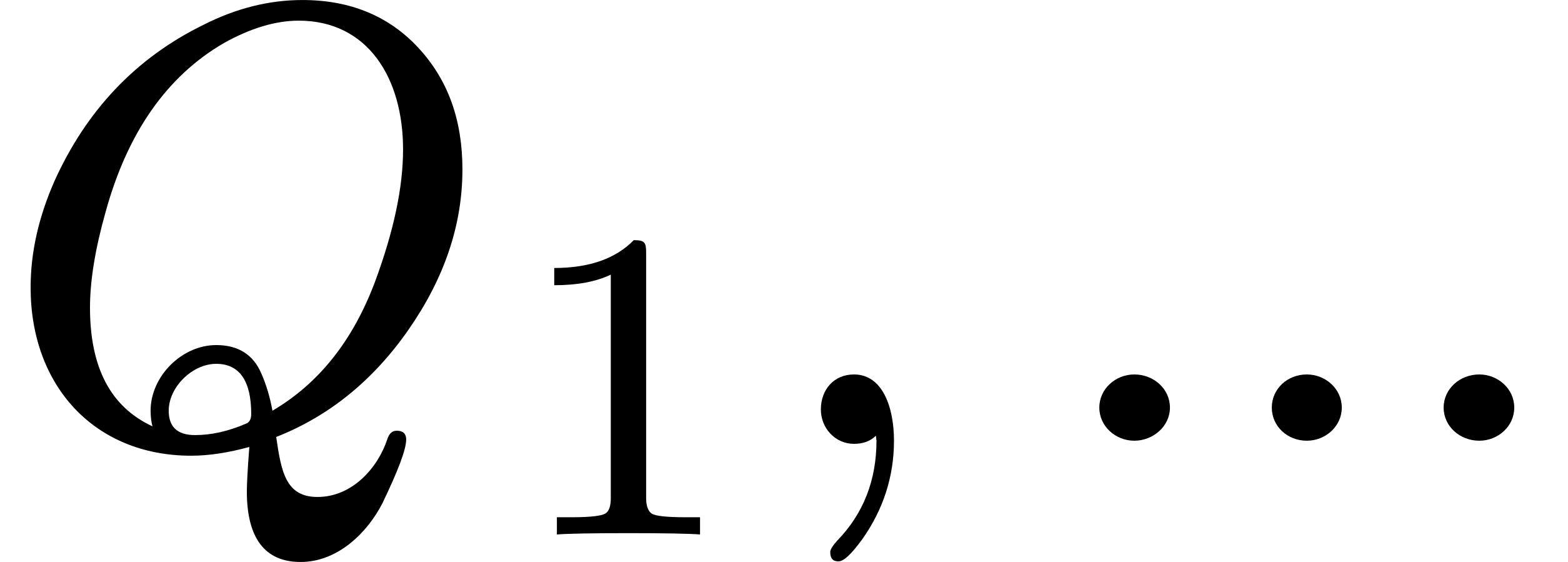 denoting polynomials which have only simple roots
and of which no two have any common factor. We can always determine
by elementary methods, as is shown in the elements of
the theory of equations[12].
denoting polynomials which have only simple roots
and of which no two have any common factor. We can always determine
by elementary methods, as is shown in the elements of
the theory of equations[12].
We can determine 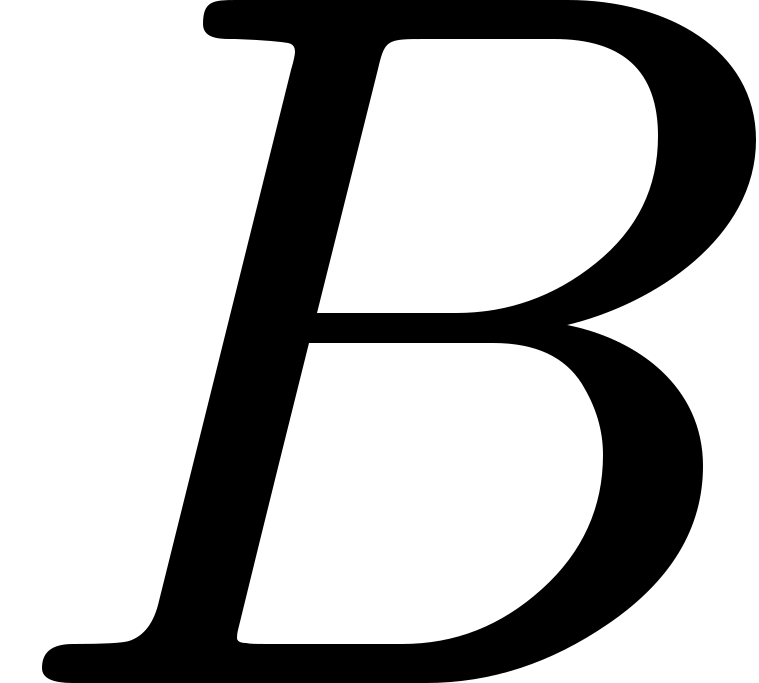 and so that
 and therefore so that
 By a repetition of this process we can express in the form
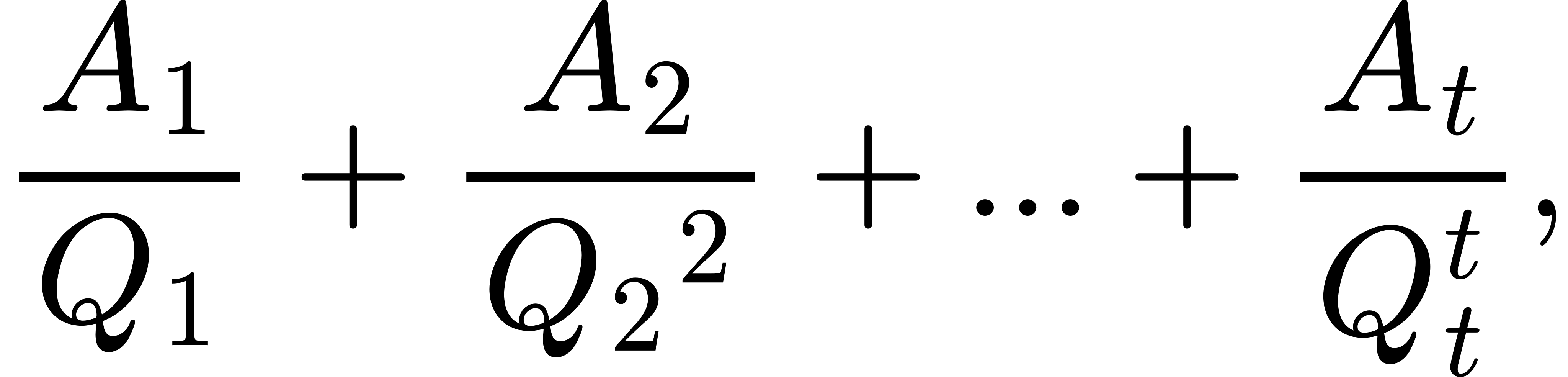 and the problem of the integration of is reduced to that of
the integration of a function
and the problem of the integration of is reduced to that of
the integration of a function
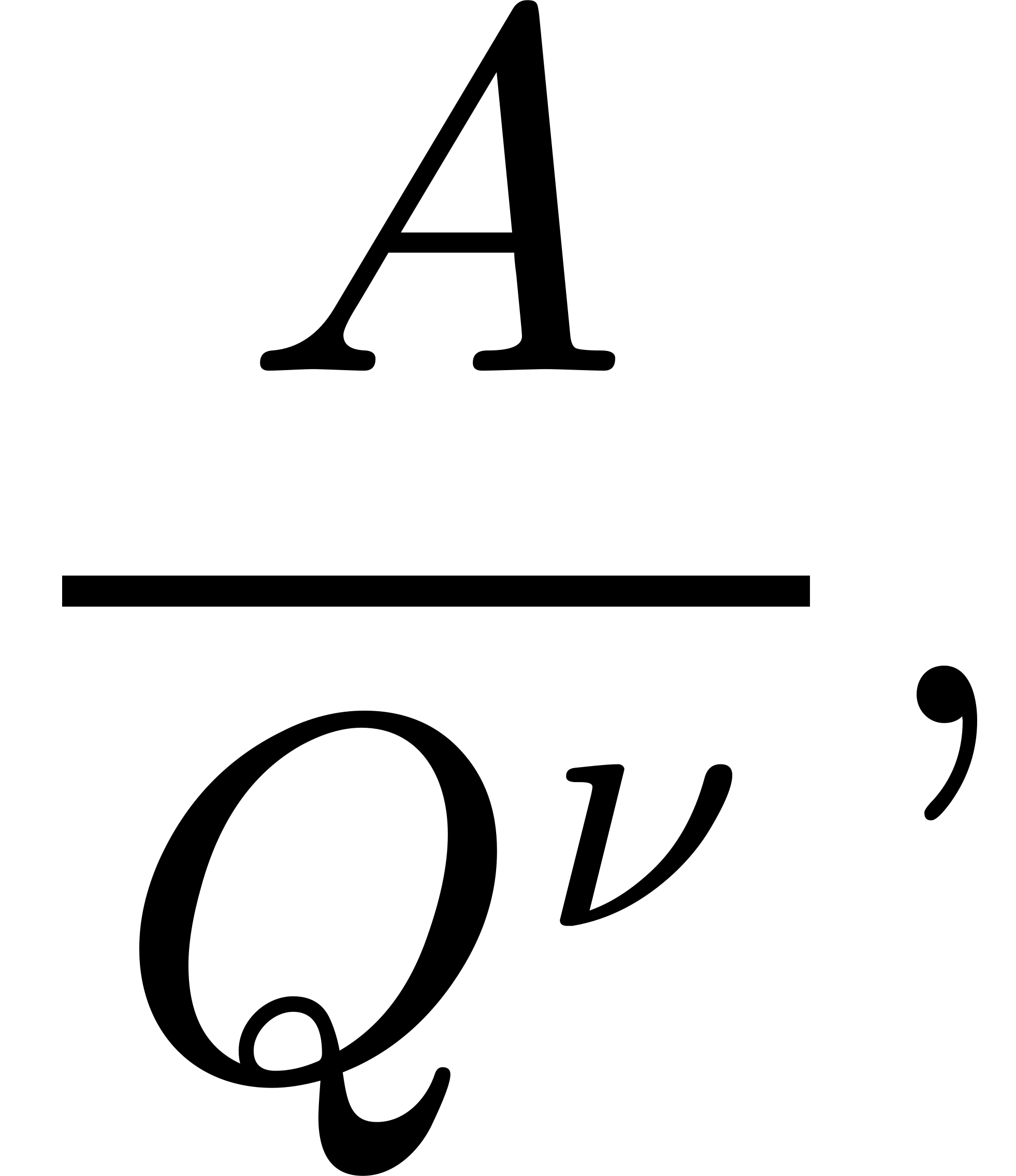 where is a polynomial whose roots are all distinct. Since this is
so, and its derived function
where is a polynomial whose roots are all distinct. Since this is
so, and its derived function 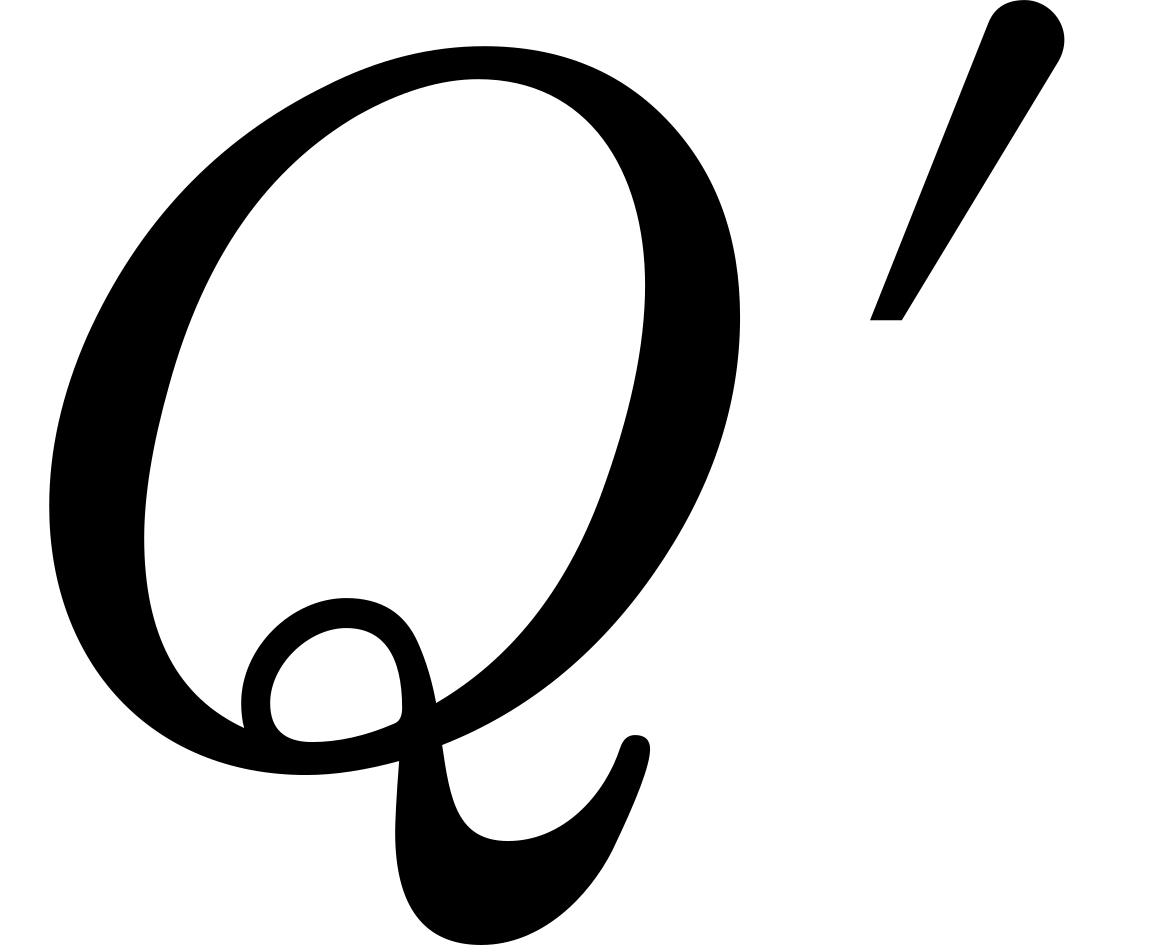 have no common factor: we can
therefore determine and so that
have no common factor: we can
therefore determine and so that
 Hence
Hence
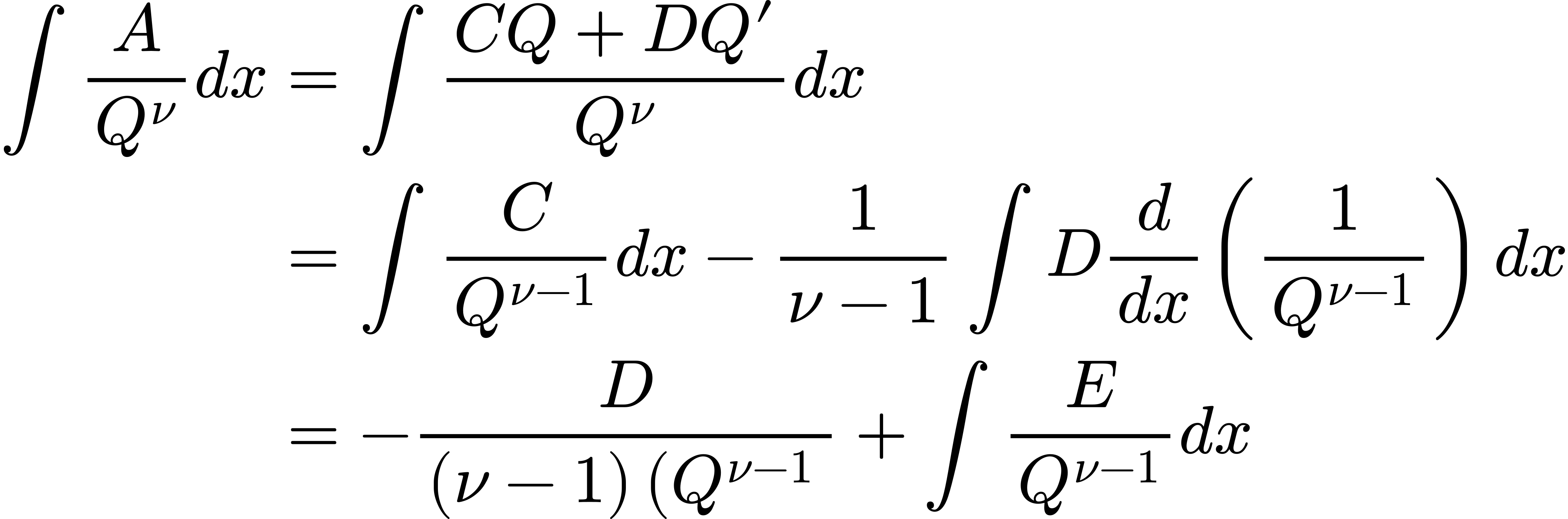 where
where
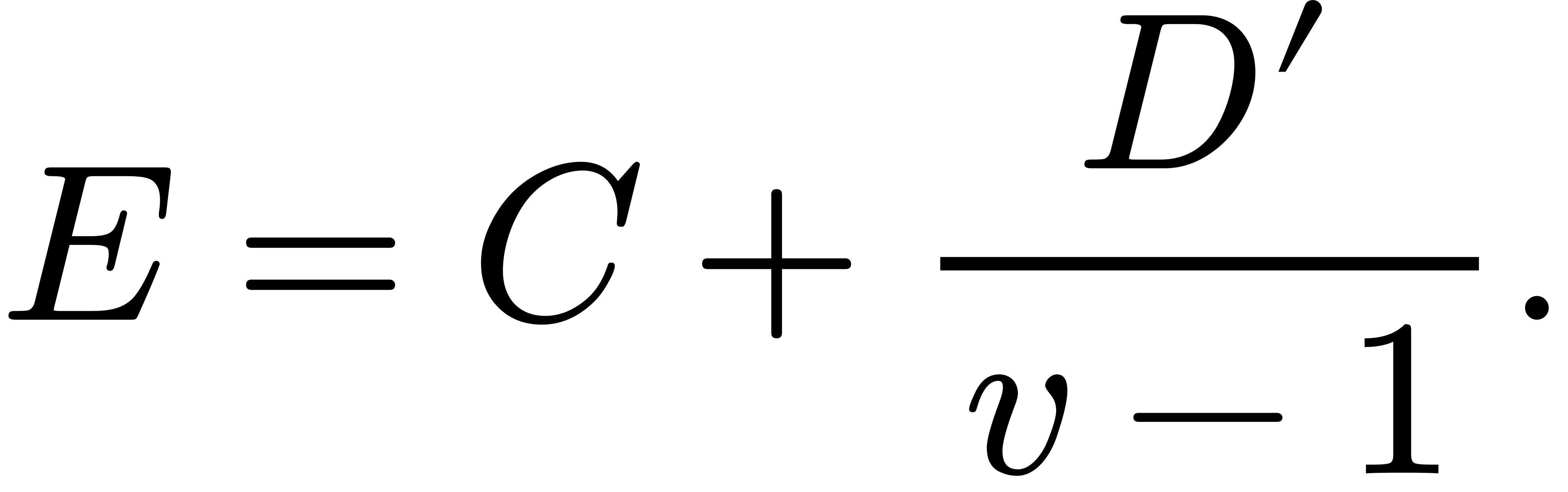 [Pg 17]
Proceeding in this way, and reducing by unity at each step the power
of
[Pg 17]
Proceeding in this way, and reducing by unity at each step the power
of 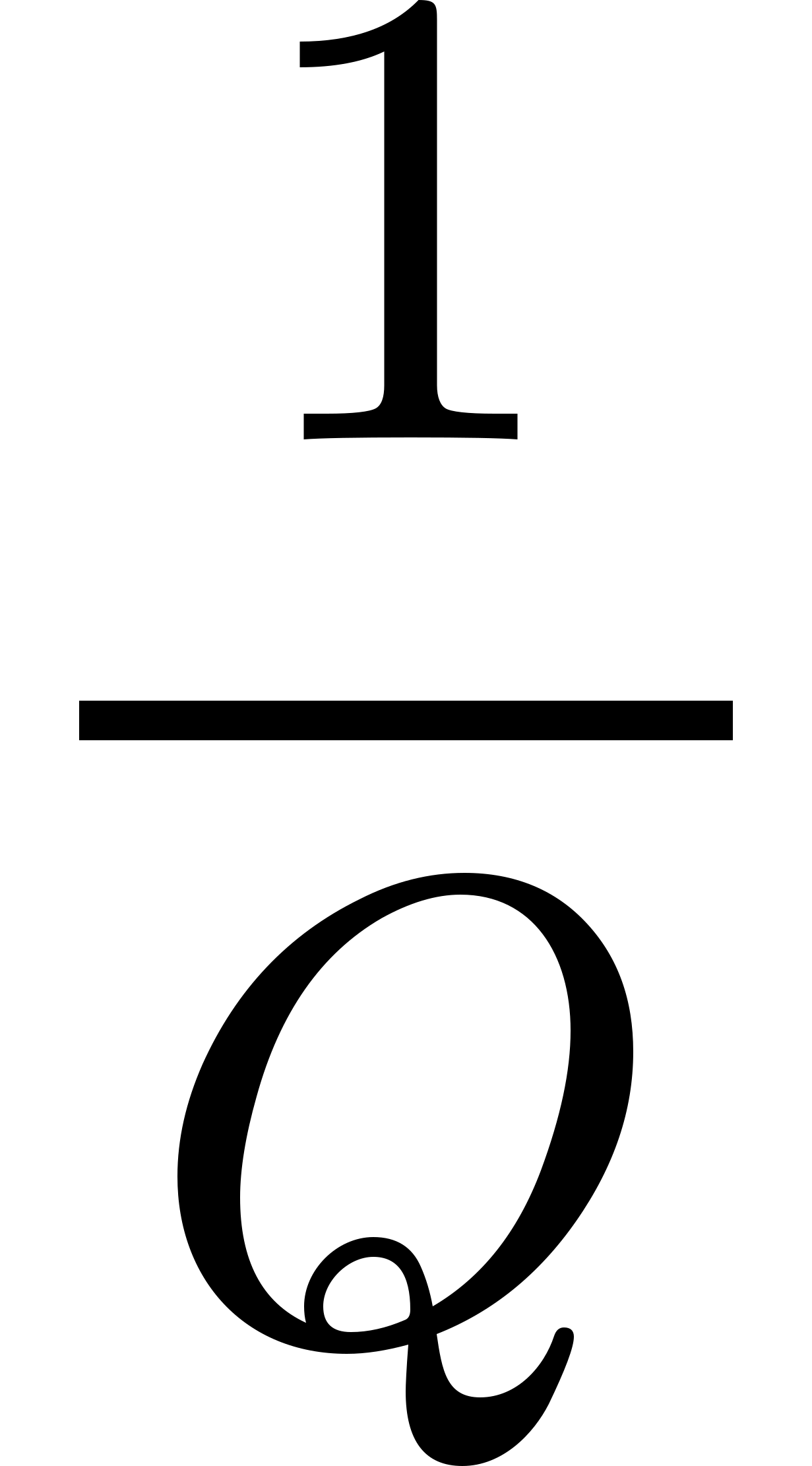 which figures under the sign of integration, we ultimately
arrive at an equation
which figures under the sign of integration, we ultimately
arrive at an equation
 where
where 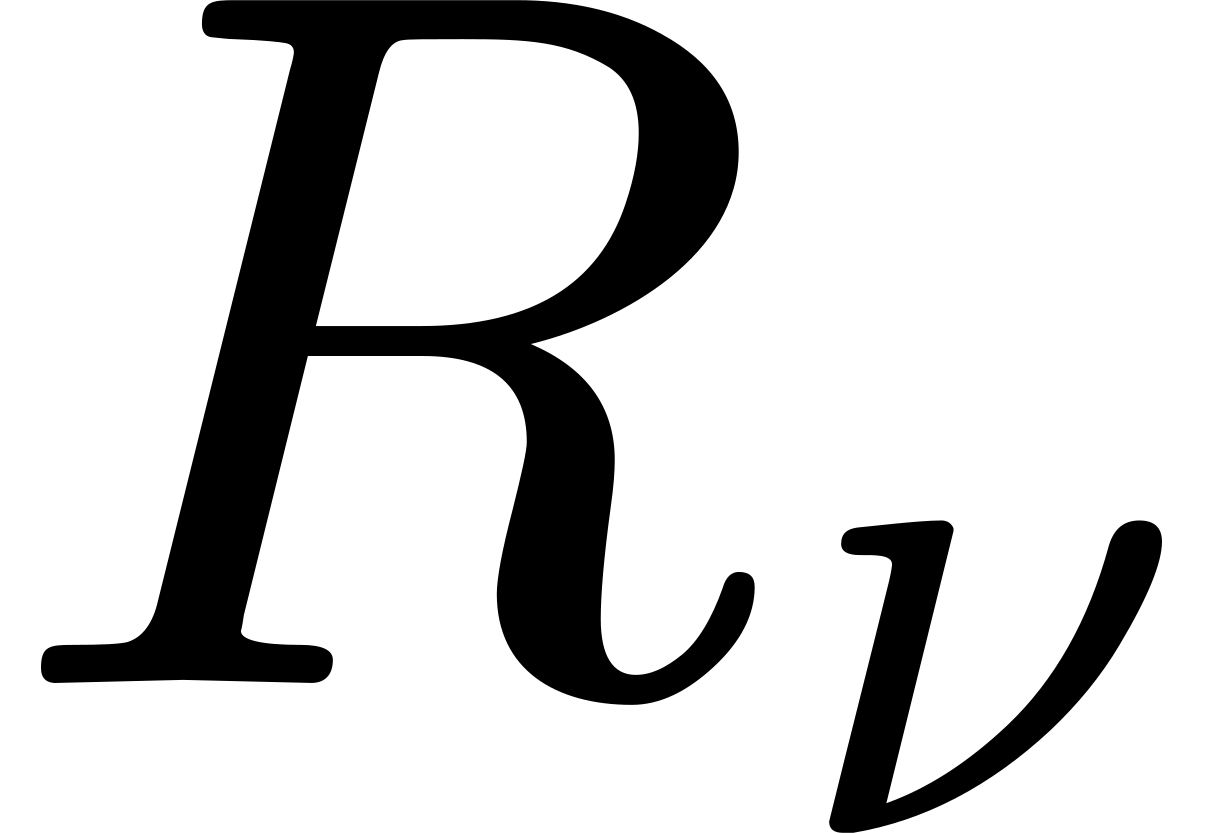 is a rational function and
 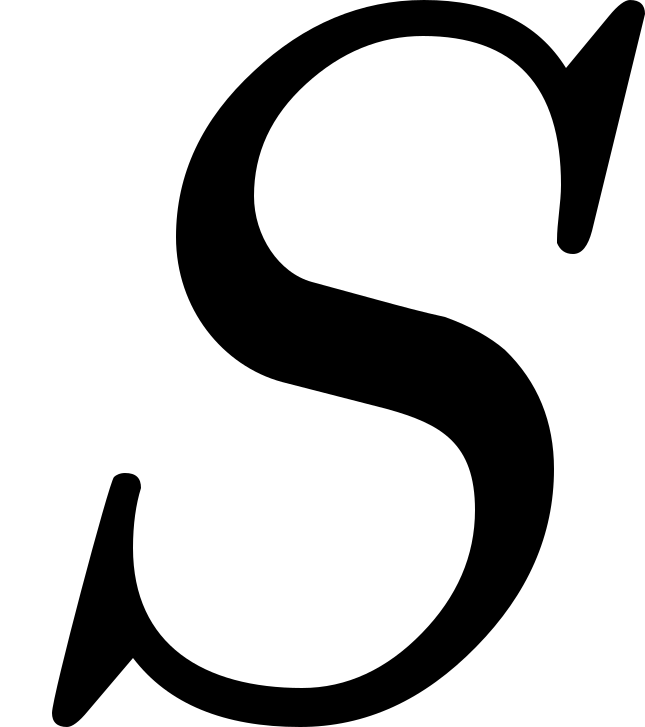 a polynomial.
The integral on the right-hand side has no rational part, since all the
roots of are simple (§2). Thus the rational part of 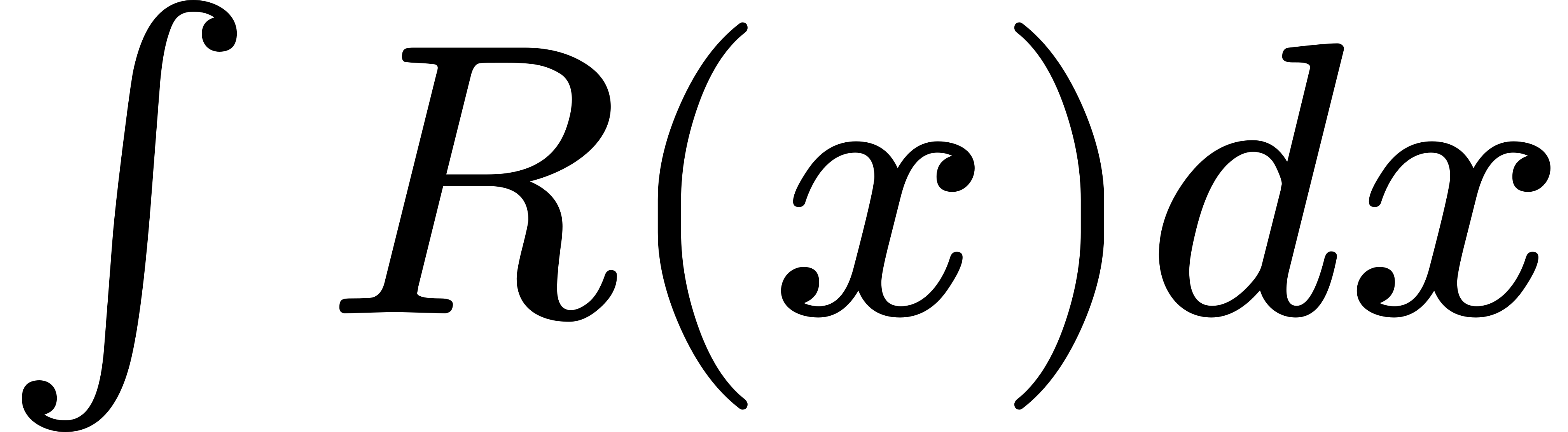 is
is
 and it has been determined without the need of any calculations other
than those involved in the addition, multiplication and division of
polynomials[13].
and it has been determined without the need of any calculations other
than those involved in the addition, multiplication and division of
polynomials[13].
5. (i) Let us consider, for example, the integral
 mentioned above (§3). We require polynomials
 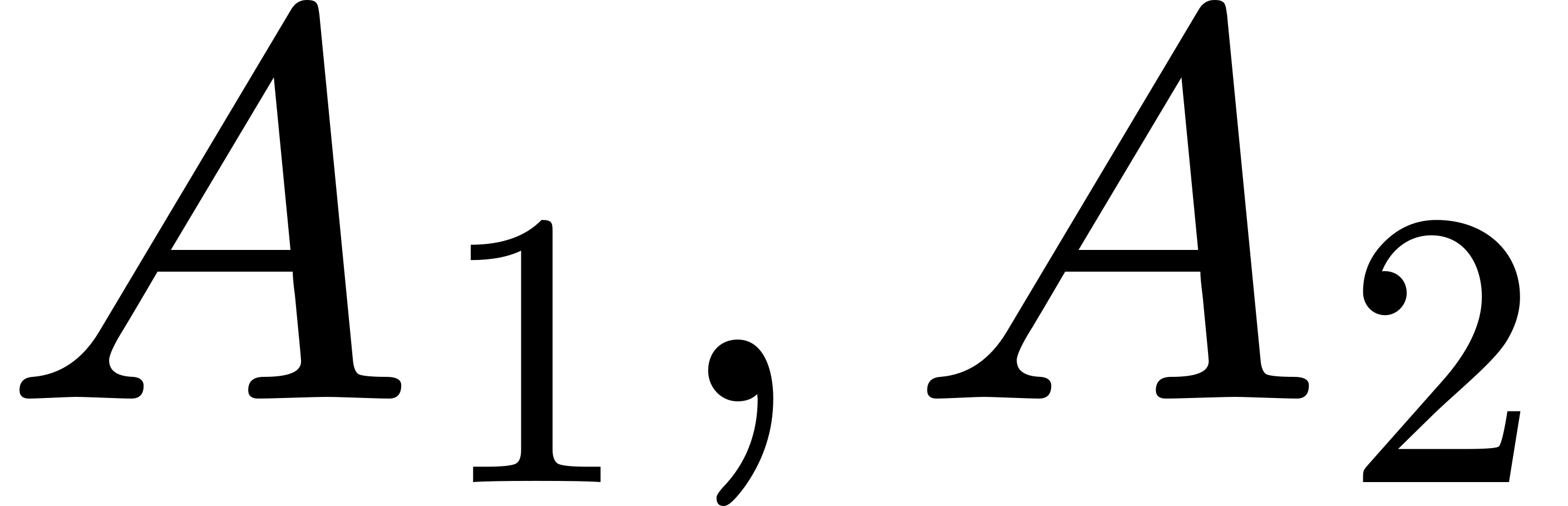 such that
 where
where

In general, if the degrees of and are 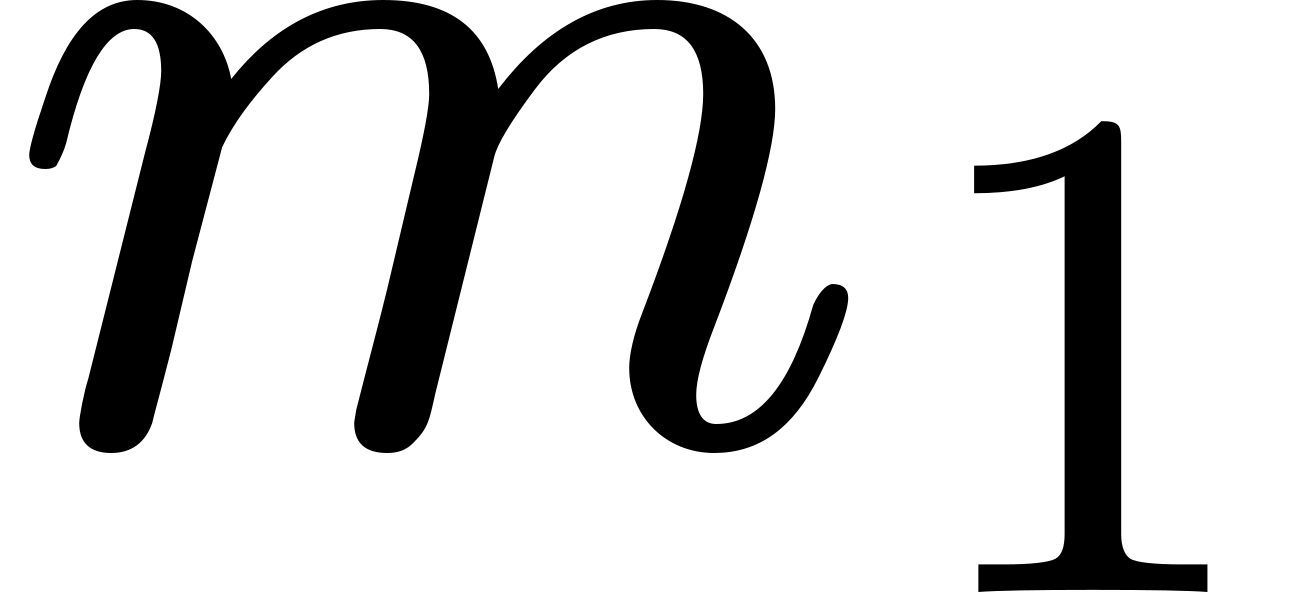 and
and 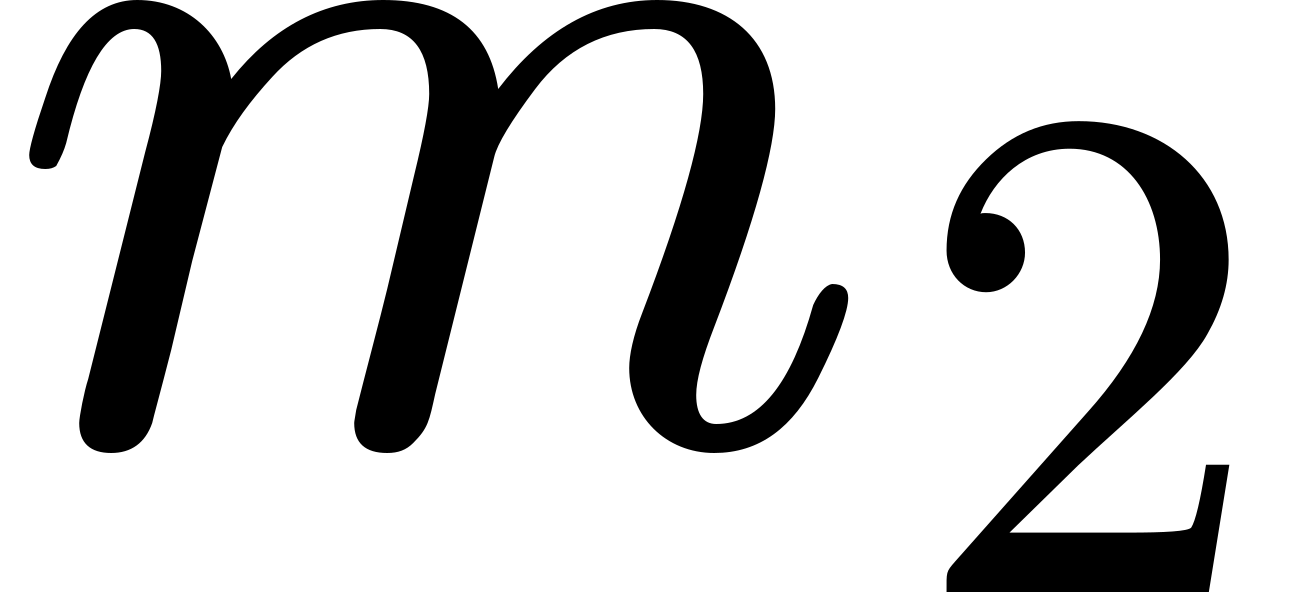 , and that of does not exceed
  , we can suppose that the degrees of and do not
exceed
, we can suppose that the degrees of and do not
exceed 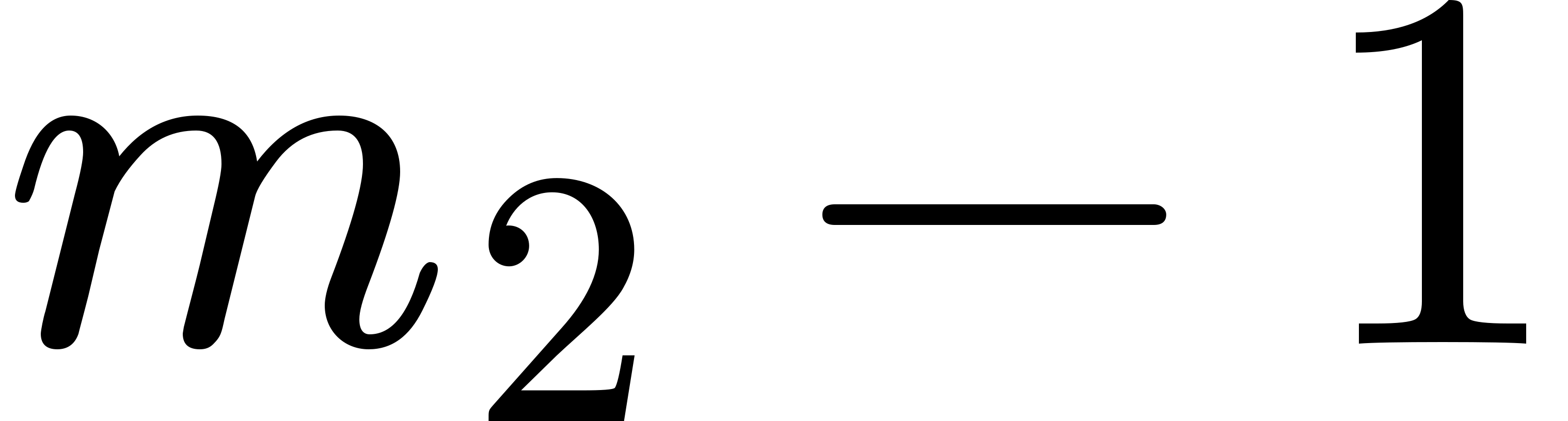 and
and 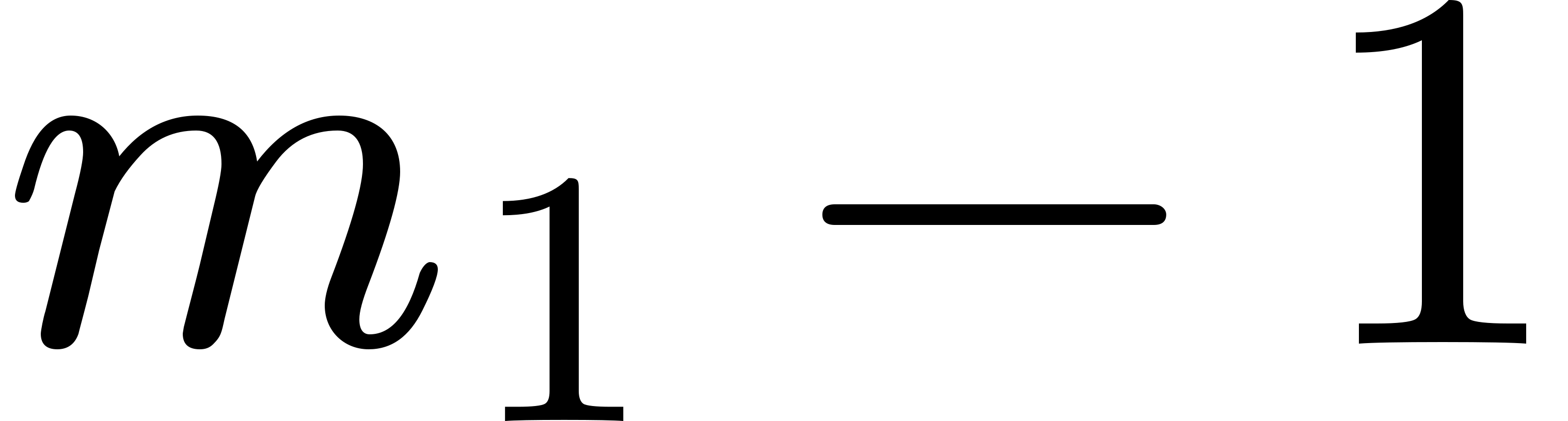 respectively. For we know that
polynomials
respectively. For we know that
polynomials 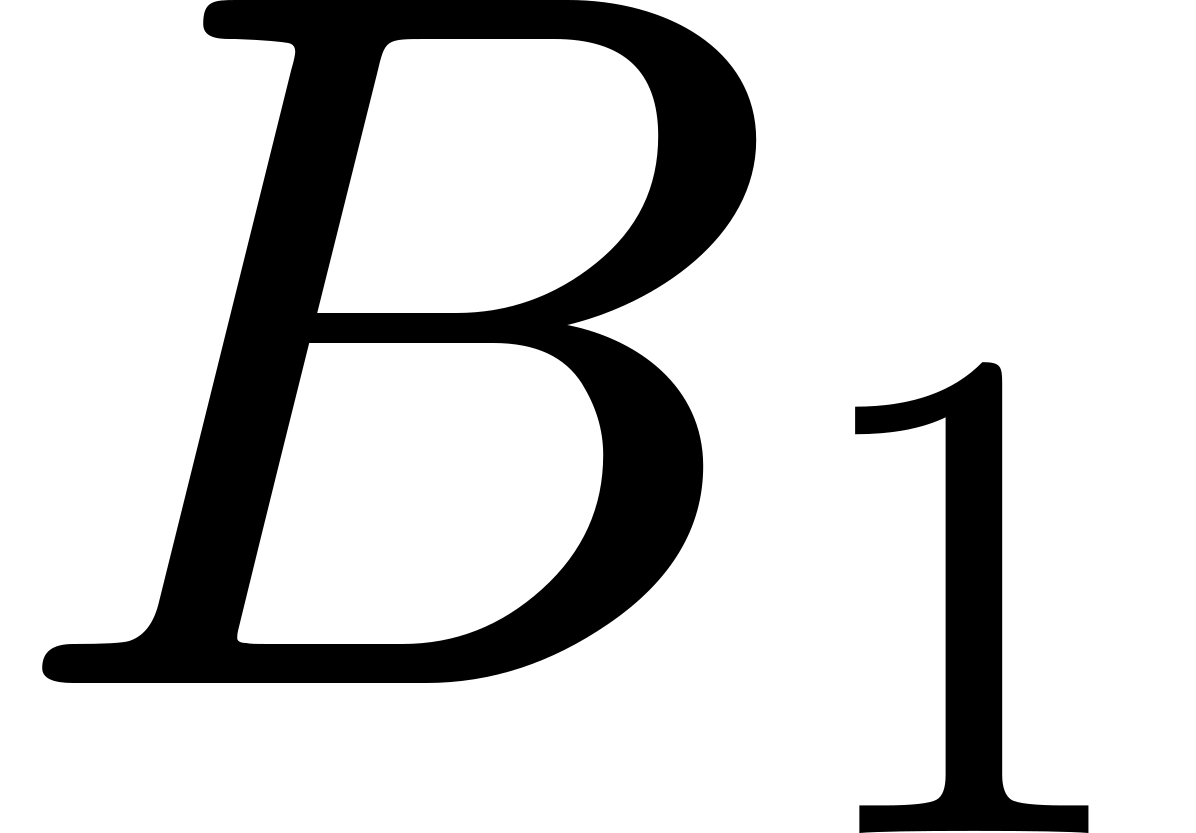 and
and 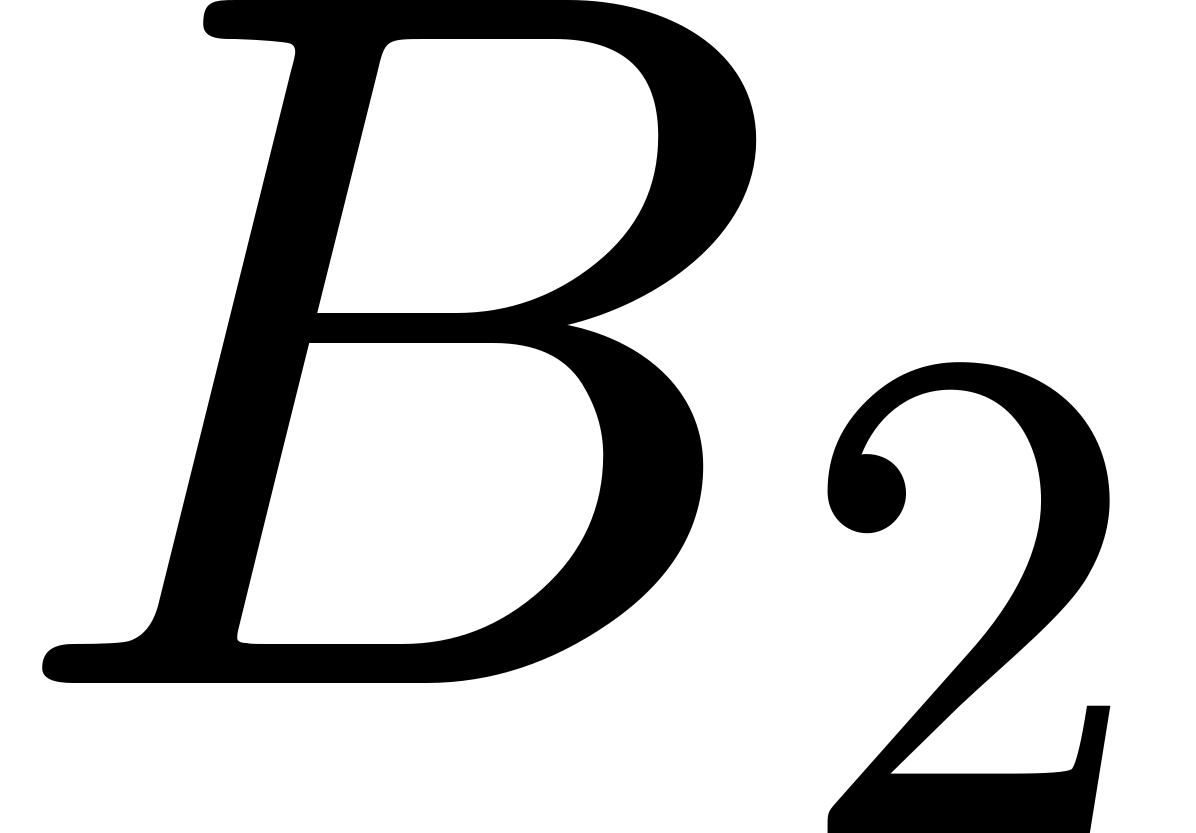 exist such that
 If is of degree not exceeding , we take
 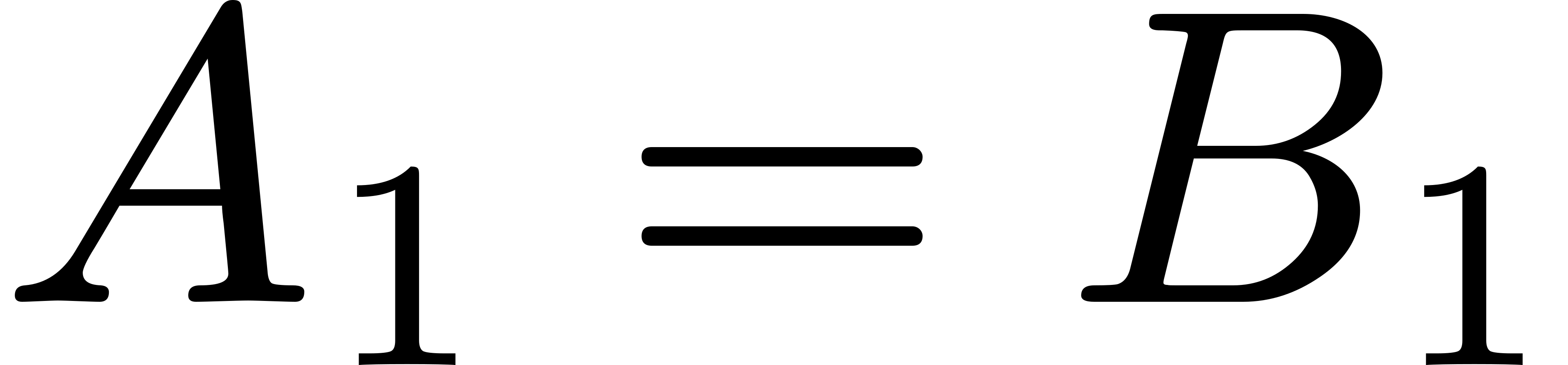 , and if it is of higher degree we write
 where is of degree not exceeding . Similarly we
write
where is of degree not exceeding . Similarly we
write
 We have then
 In this identity
 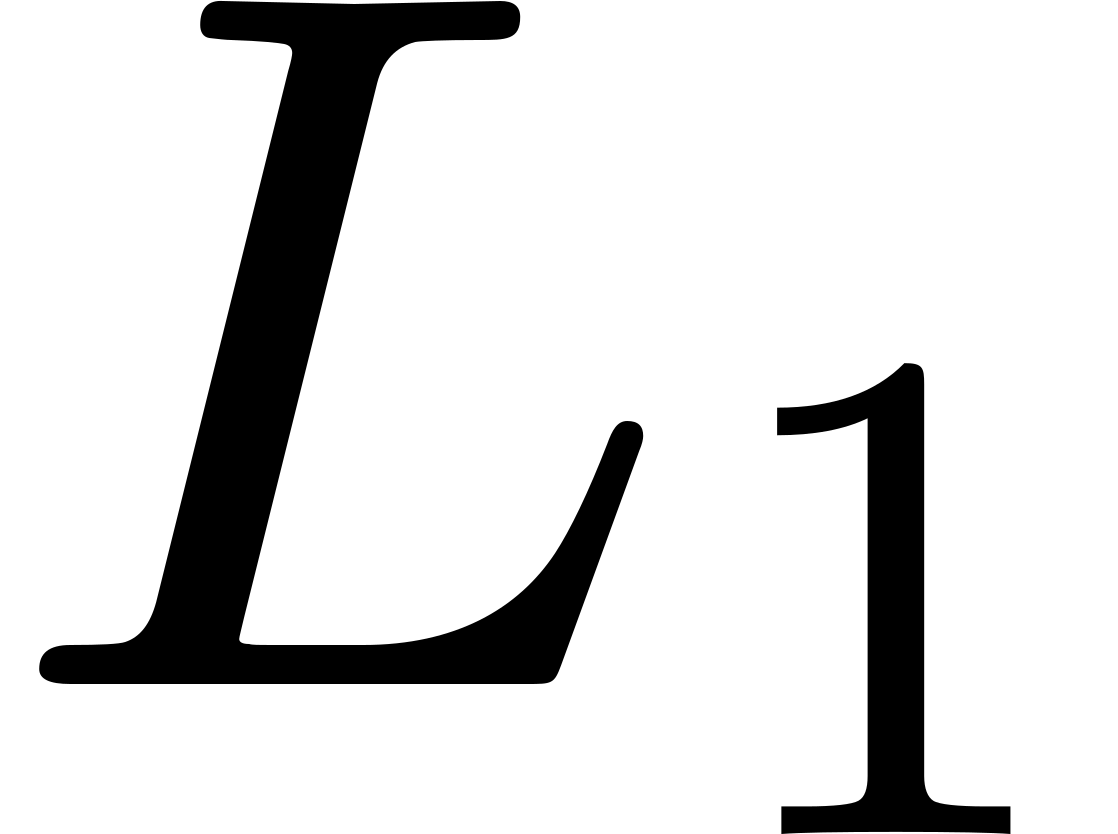 or
or 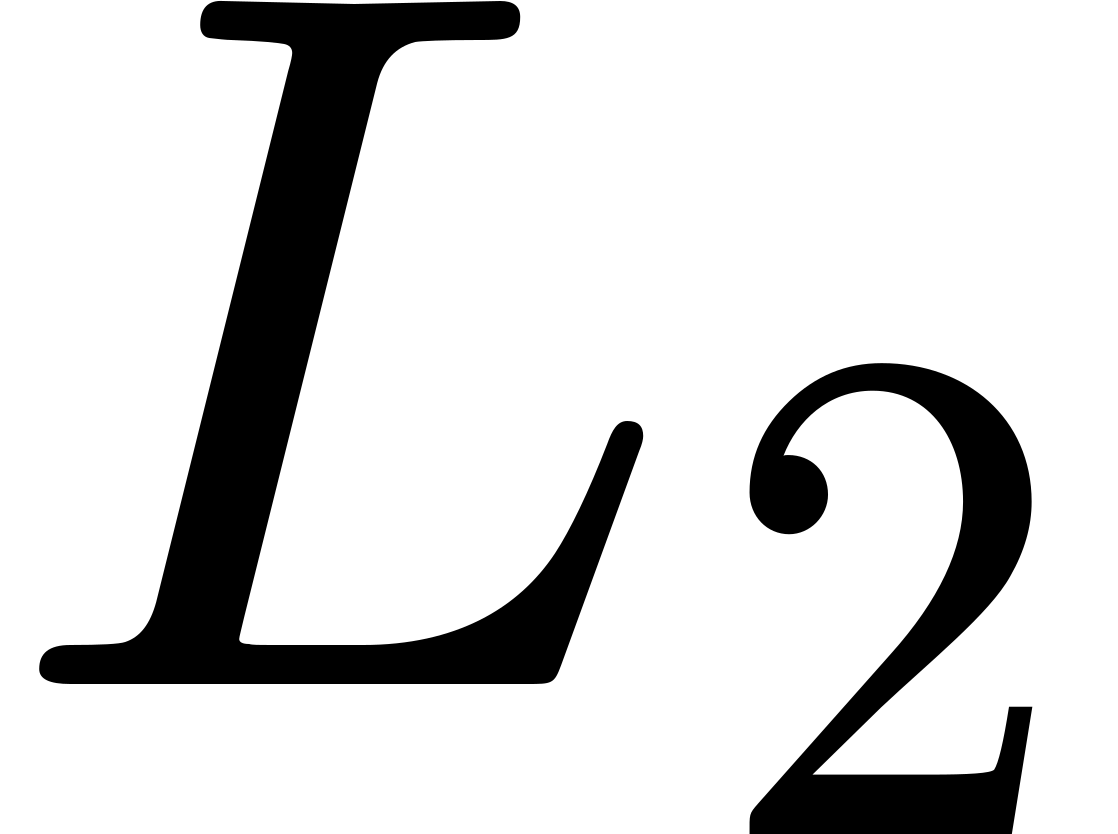 or both may vanish identically,
and in any case we see, by equating to zero the coefficients of the
powers of higher than the
or both may vanish identically,
and in any case we see, by equating to zero the coefficients of the
powers of higher than the  th, that
 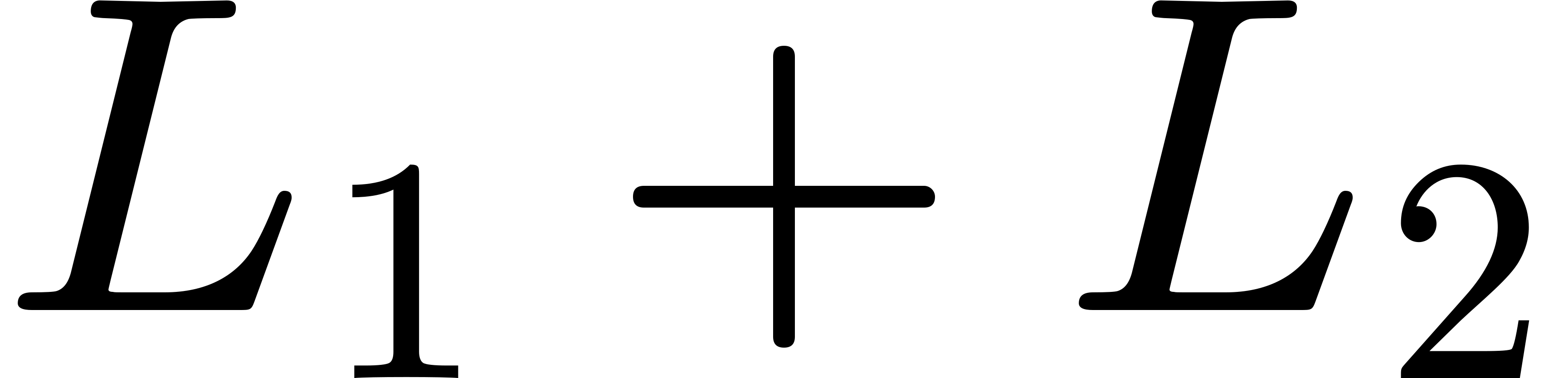 vanishes identically. Thus is expressed in the form
required.
vanishes identically. Thus is expressed in the form
required.
The actual determination of the coefficients in and
is most easily performed by equating coefficients. We have then  [Pg 18] linear equations in the same number of unknowns. These
equations must be consistent, since we know that a solution exists[14].
[Pg 18] linear equations in the same number of unknowns. These
equations must be consistent, since we know that a solution exists[14].
If is of degree higher than  , we must
divide it by
, we must
divide it by 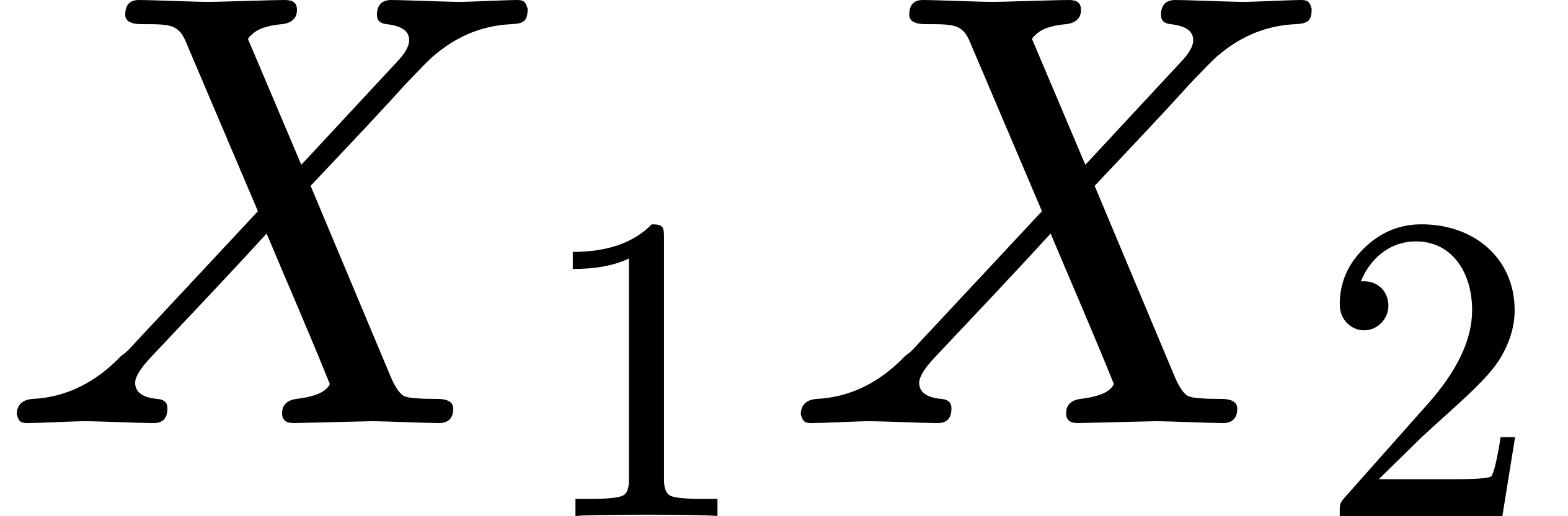 and express the remainder in the form
required.
and express the remainder in the form
required.
In this case we may suppose of degree 5 and of
degree 6, and we find that
 Thus the rational part of the integral is
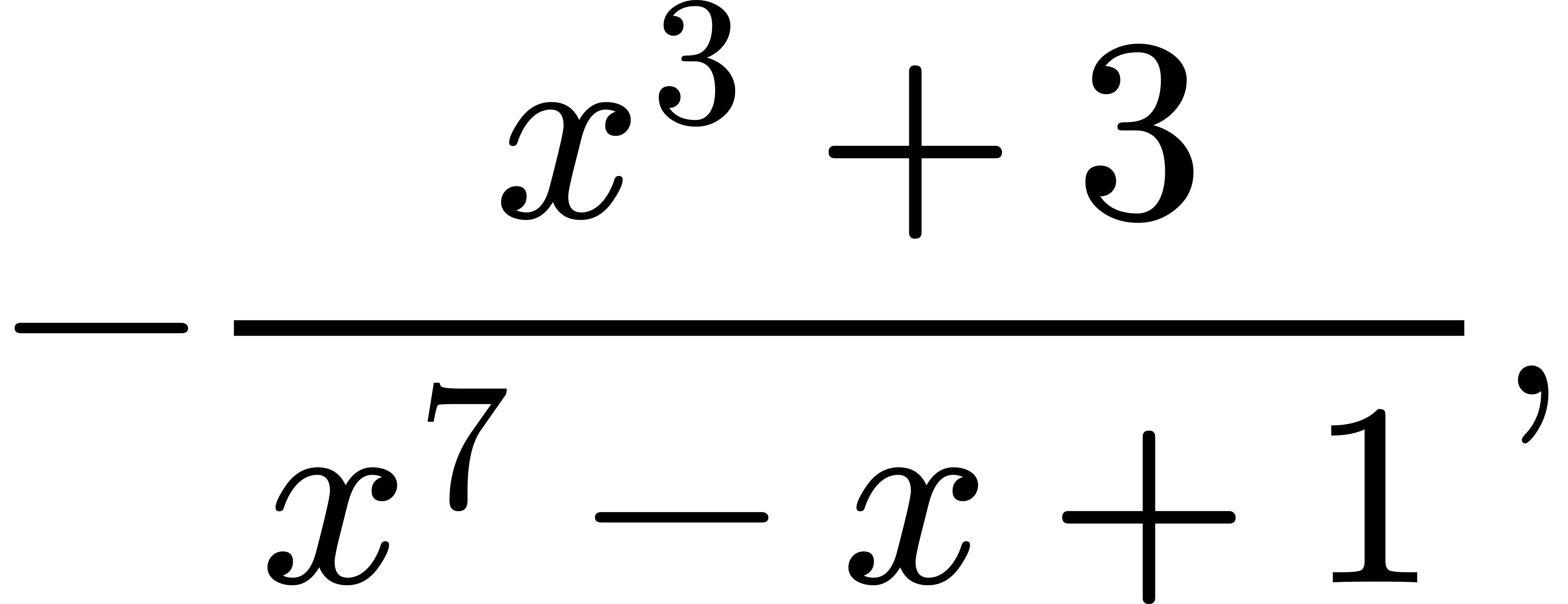 and, since
  , there is no
transcendental part.
, there is no
transcendental part.
(ii) The following problem is instructive: to find the conditions
that
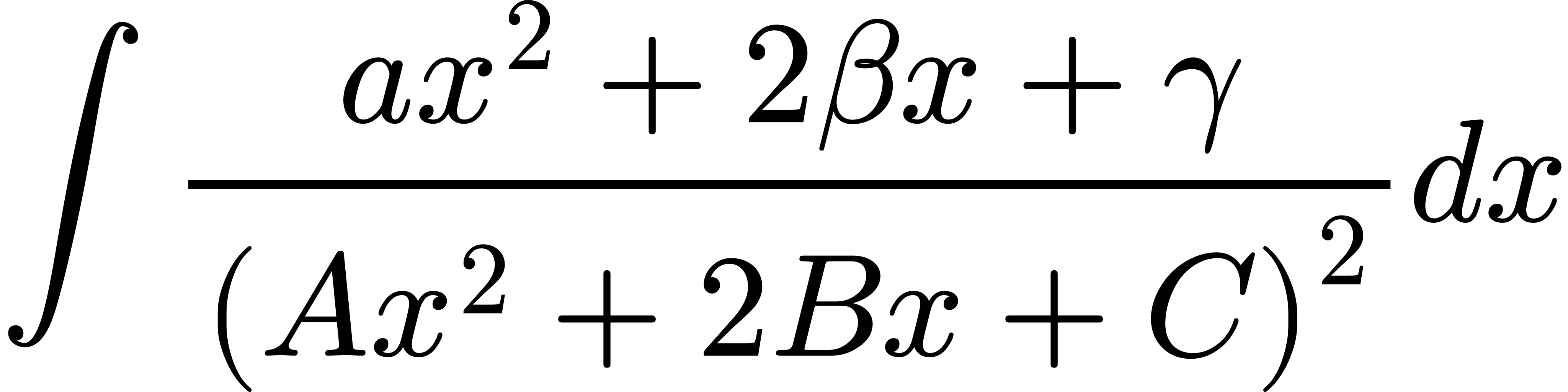 may be rational, and to determine the integral when it is
rational.
may be rational, and to determine the integral when it is
rational.
We shall suppose that  is not a perfect square, as
if it were the integral would certainly be rational. We can determine
is not a perfect square, as
if it were the integral would certainly be rational. We can determine
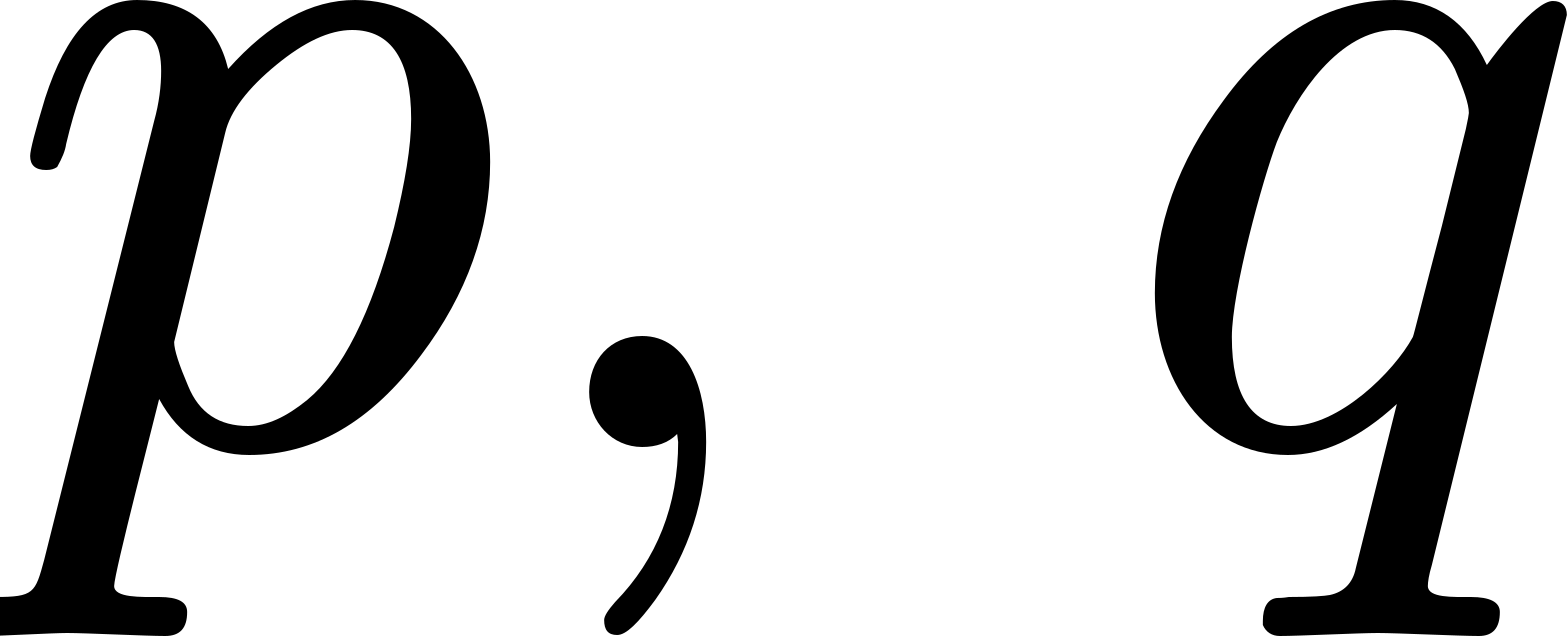 and
and 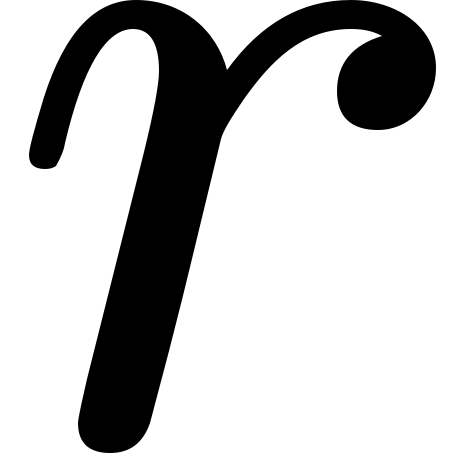 so that
 and the integral becomes
 The condition that the integral should be rational is therefore
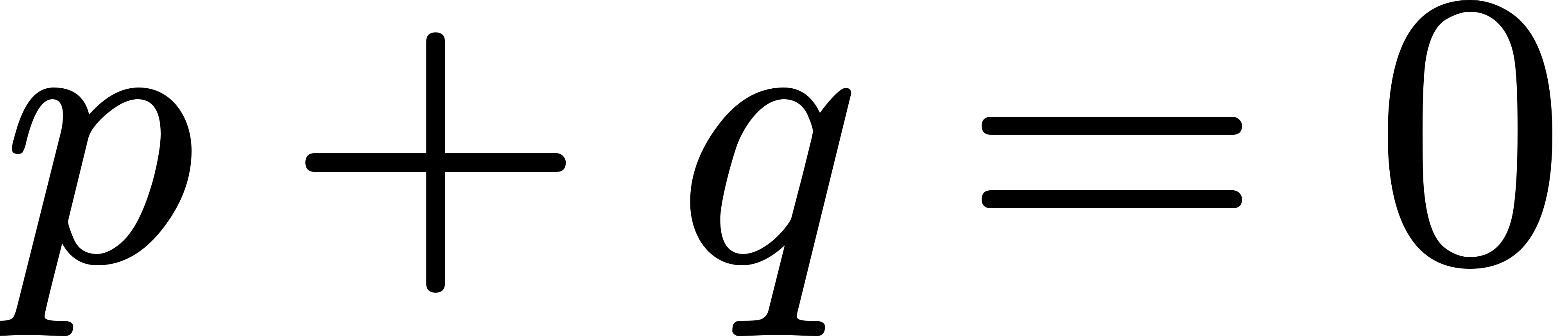 .
.
Equating coefficients we find
 Hence we deduce
 and
and  . The condition required is therefore
that the two quadratics
. The condition required is therefore
that the two quadratics  and
should be harmonically related, and in this case
and
should be harmonically related, and in this case

(iii) Another method of solution of this problem is as follows. If we
write
 and use the bilinear substitution
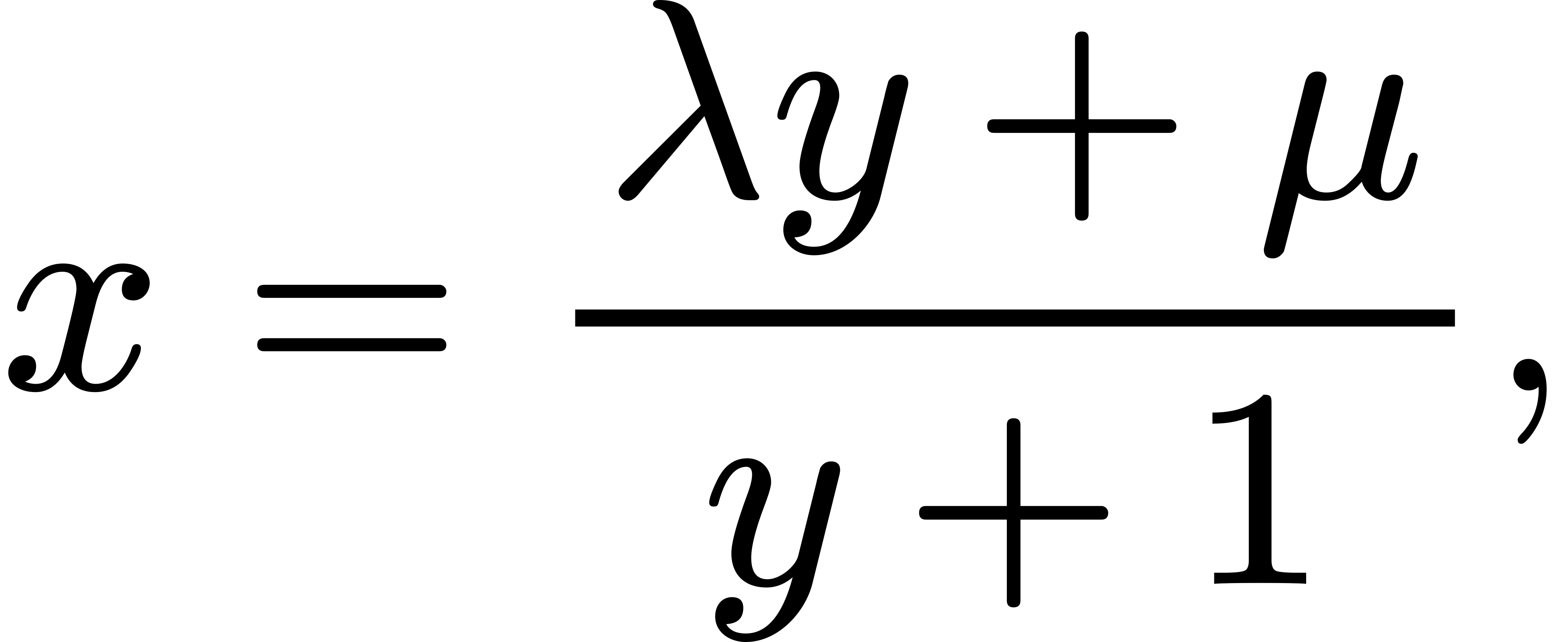 then the integral is reduced to one of the form
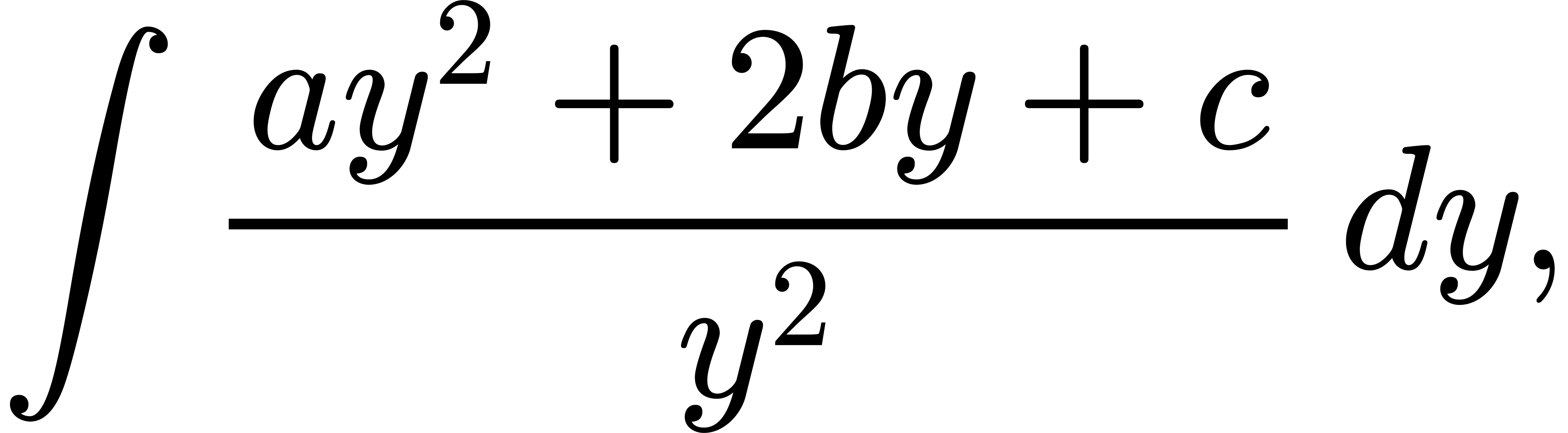 [Pg 19]
and is rational if and only if
[Pg 19]
and is rational if and only if 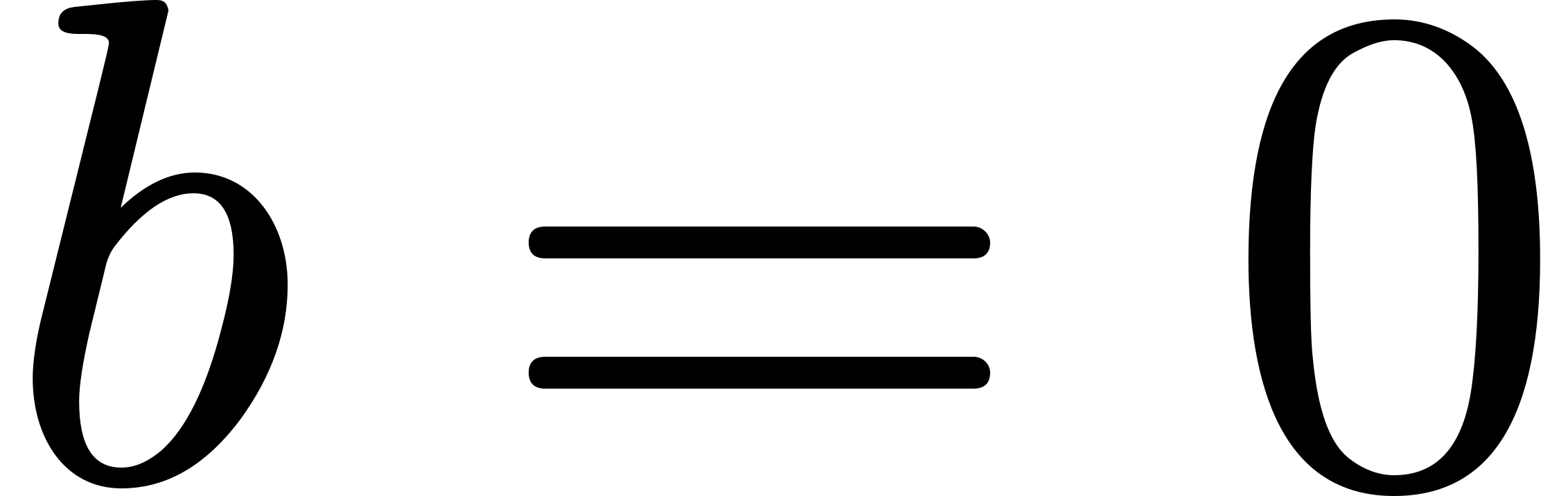 . But this is the condition
that the quadratic
. But this is the condition
that the quadratic  , corresponding to
  , should be harmonically related to the
degenerate quadratic , corresponding to .
The result now follows from the fact that harmonic relations are not
changed by bilinear transformation.
, should be harmonically related to the
degenerate quadratic , corresponding to .
The result now follows from the fact that harmonic relations are not
changed by bilinear transformation.
It is not difficult to show, by an adaptation of this method, that
 is rational if all the quadratics are harmonically related to any
one of those in the numerator. This condition is sufficient but not
necessary.
is rational if all the quadratics are harmonically related to any
one of those in the numerator. This condition is sufficient but not
necessary.
(iv) As a further example of the use of the method (ii) the reader may
show that the necessary and sufficient condition that
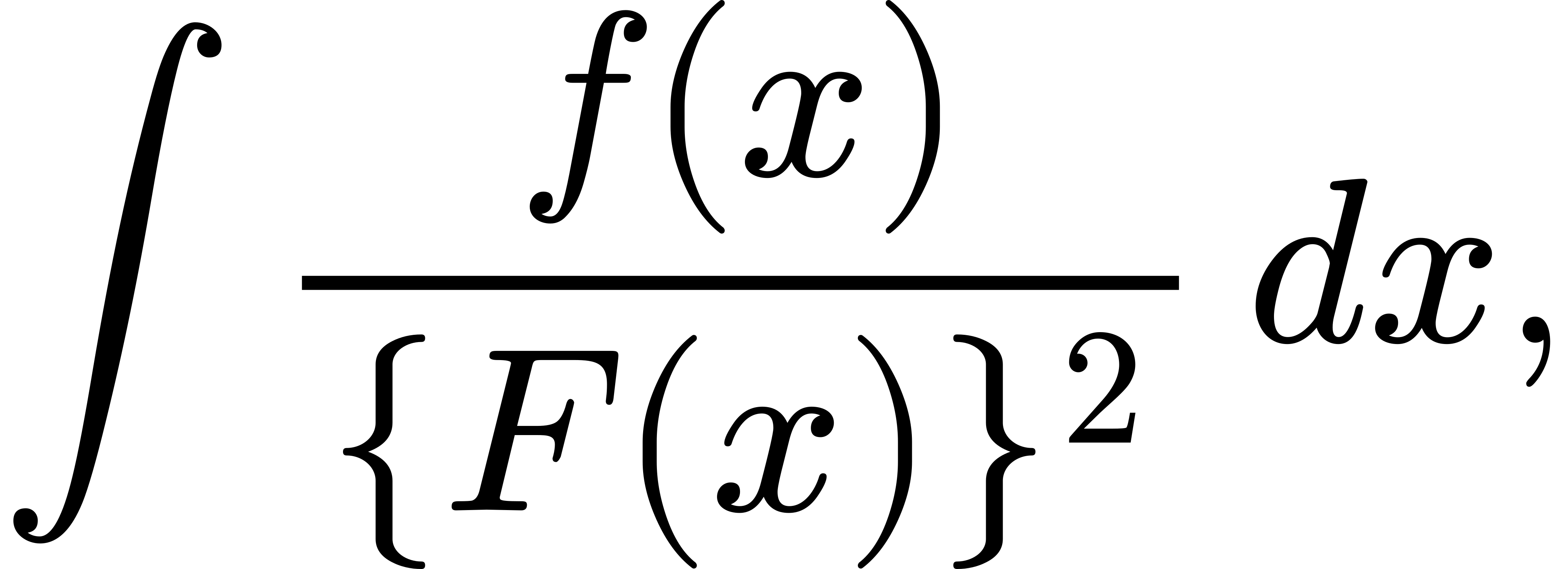 where
where 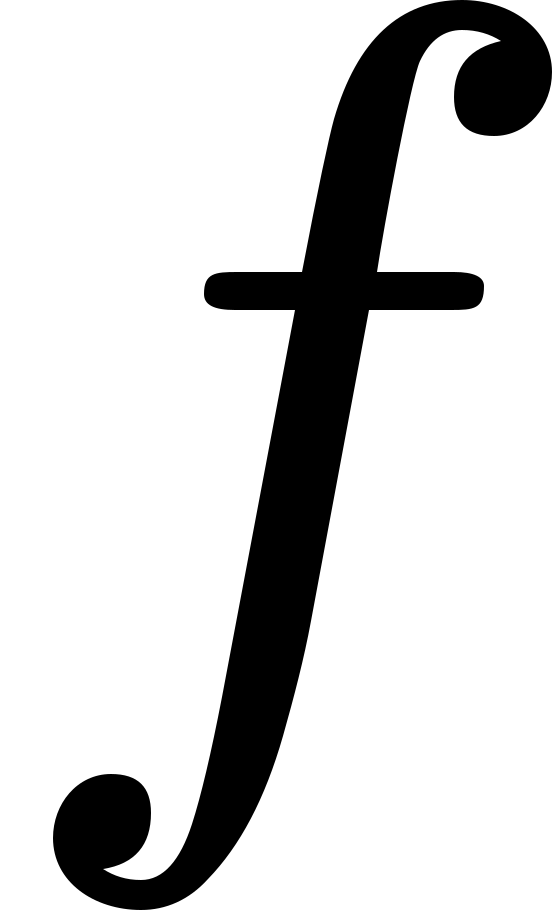 and
and 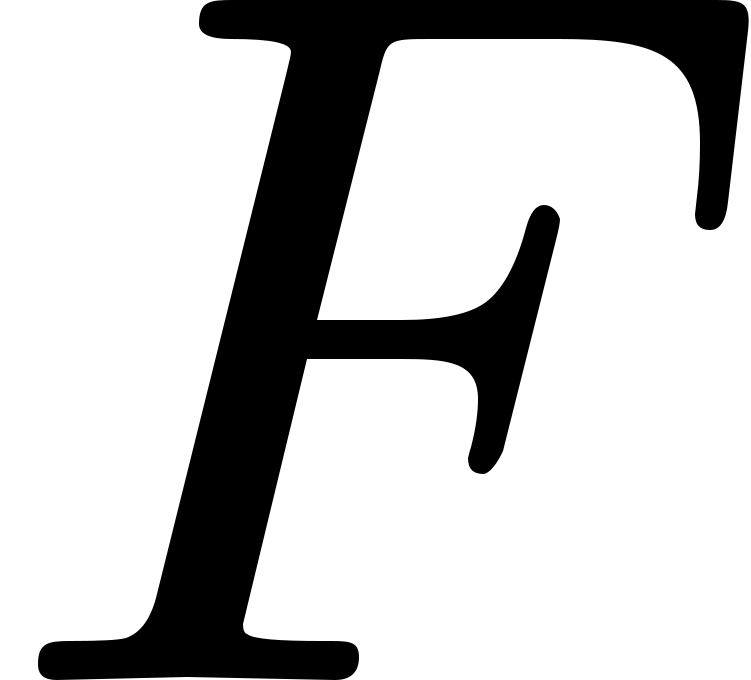 are polynomials with no
common factor, and has no repeated factor, should be
rational, is that
are polynomials with no
common factor, and has no repeated factor, should be
rational, is that  should be divisible by
.
should be divisible by
.
6. It appears from the preceding paragraphs that we can always find
the rational part of the integral, and can find the complete integral
if we can find the roots of 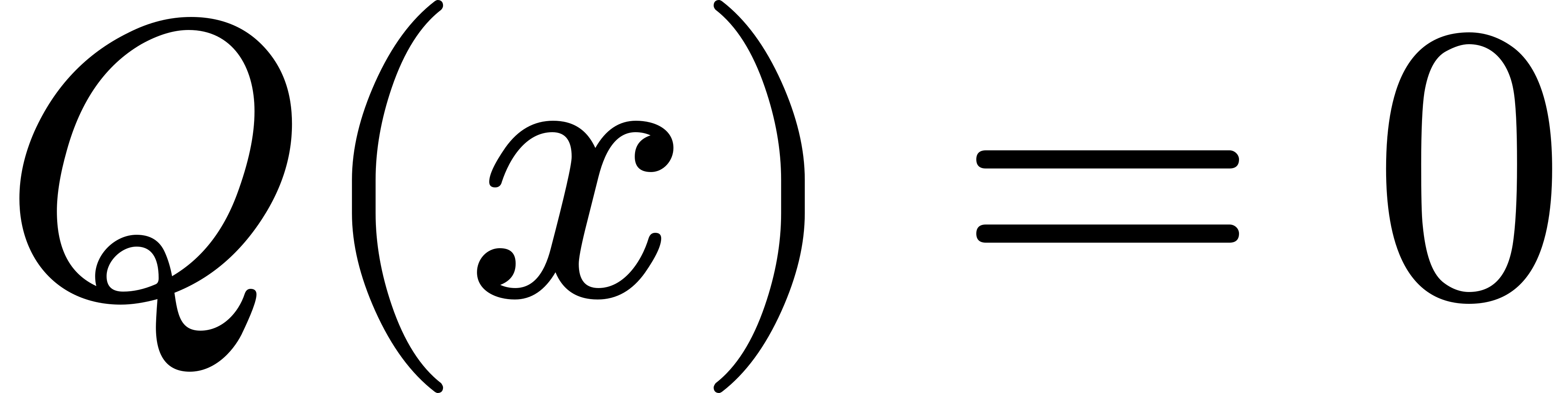 . The question is naturally
suggested as to the maximum of information which can be obtained about
the logarithmic part of the integral in the general case in which the
factors of the denominator cannot be determined explicitly. For there
are polynomials which, although they cannot be completely resolved into
such factors, can nevertheless be partially resolved. For example
. The question is naturally
suggested as to the maximum of information which can be obtained about
the logarithmic part of the integral in the general case in which the
factors of the denominator cannot be determined explicitly. For there
are polynomials which, although they cannot be completely resolved into
such factors, can nevertheless be partially resolved. For example
 The factors of the first polynomial have rational coefficients: in the
language of the theory of equations, the polynomial is reducible
in the rational domain. The second polynomial is reducible in
the domain formed by the adjunction of the single irrational
The factors of the first polynomial have rational coefficients: in the
language of the theory of equations, the polynomial is reducible
in the rational domain. The second polynomial is reducible in
the domain formed by the adjunction of the single irrational
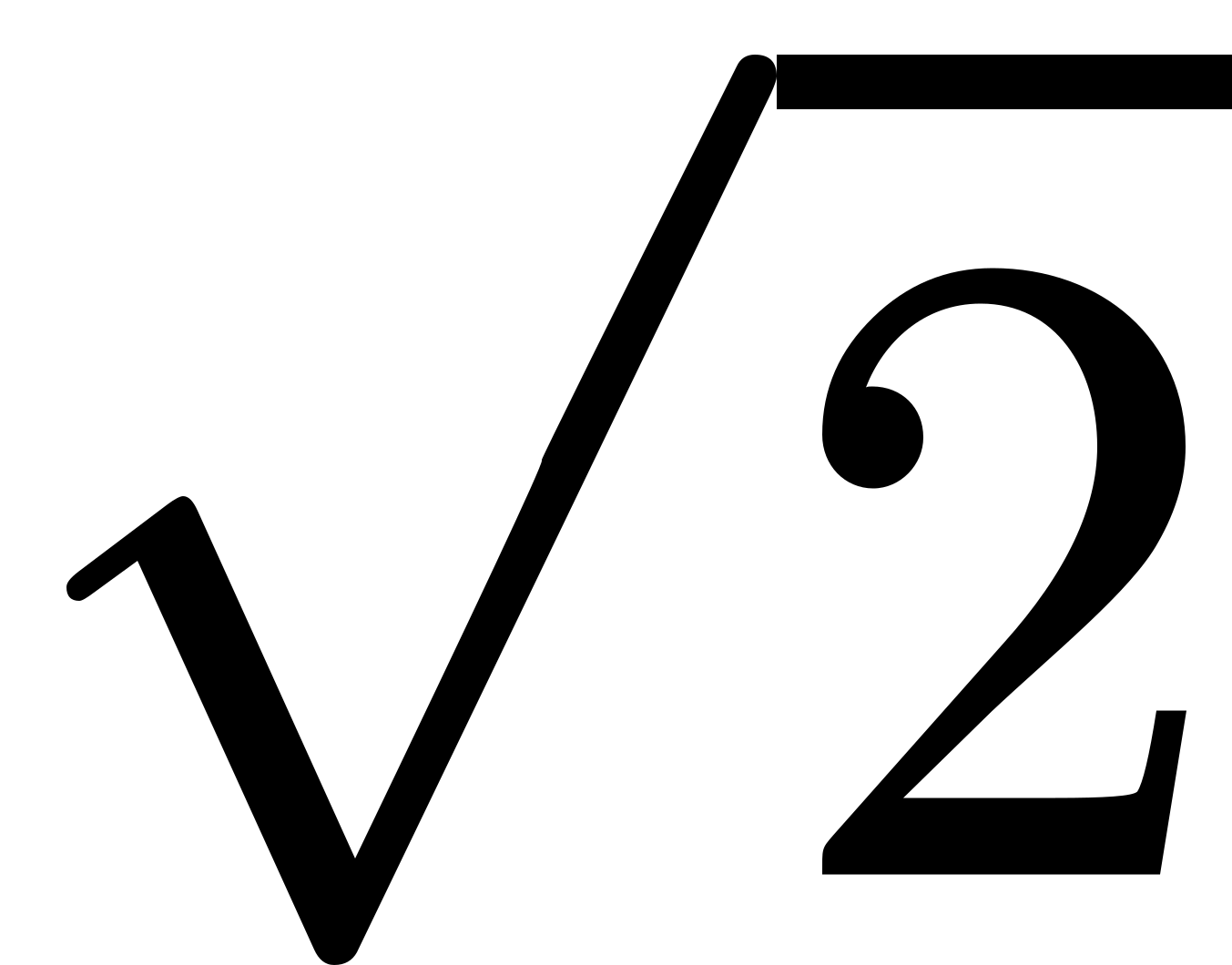 to the rational domain[15].
We may suppose that every possible decomposition of of this
nature has been made, so that
 [Pg 20]
Then we can resolve into a sum of partial fractions of the type
[Pg 20]
Then we can resolve into a sum of partial fractions of the type
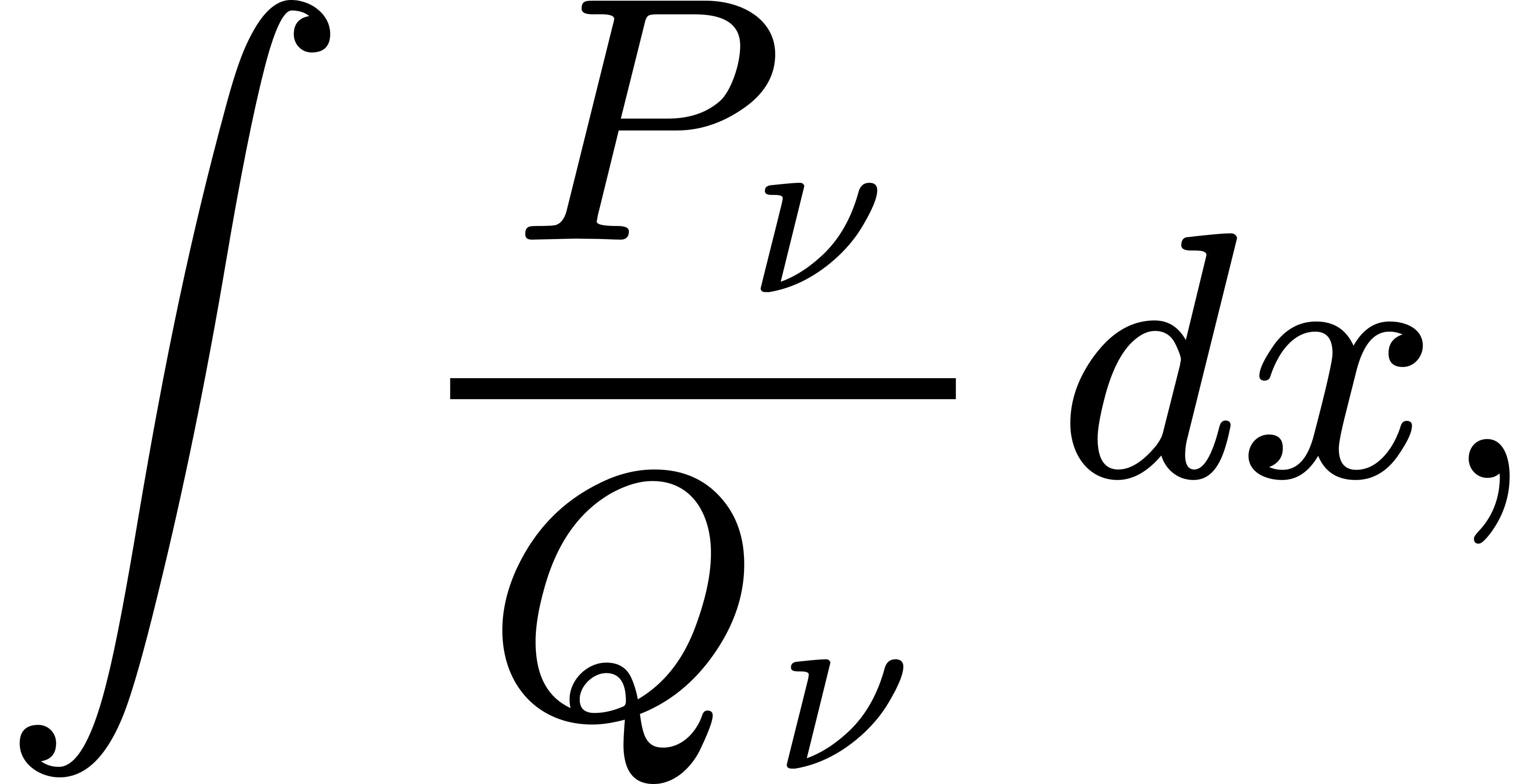 and so we need only consider integrals of the type
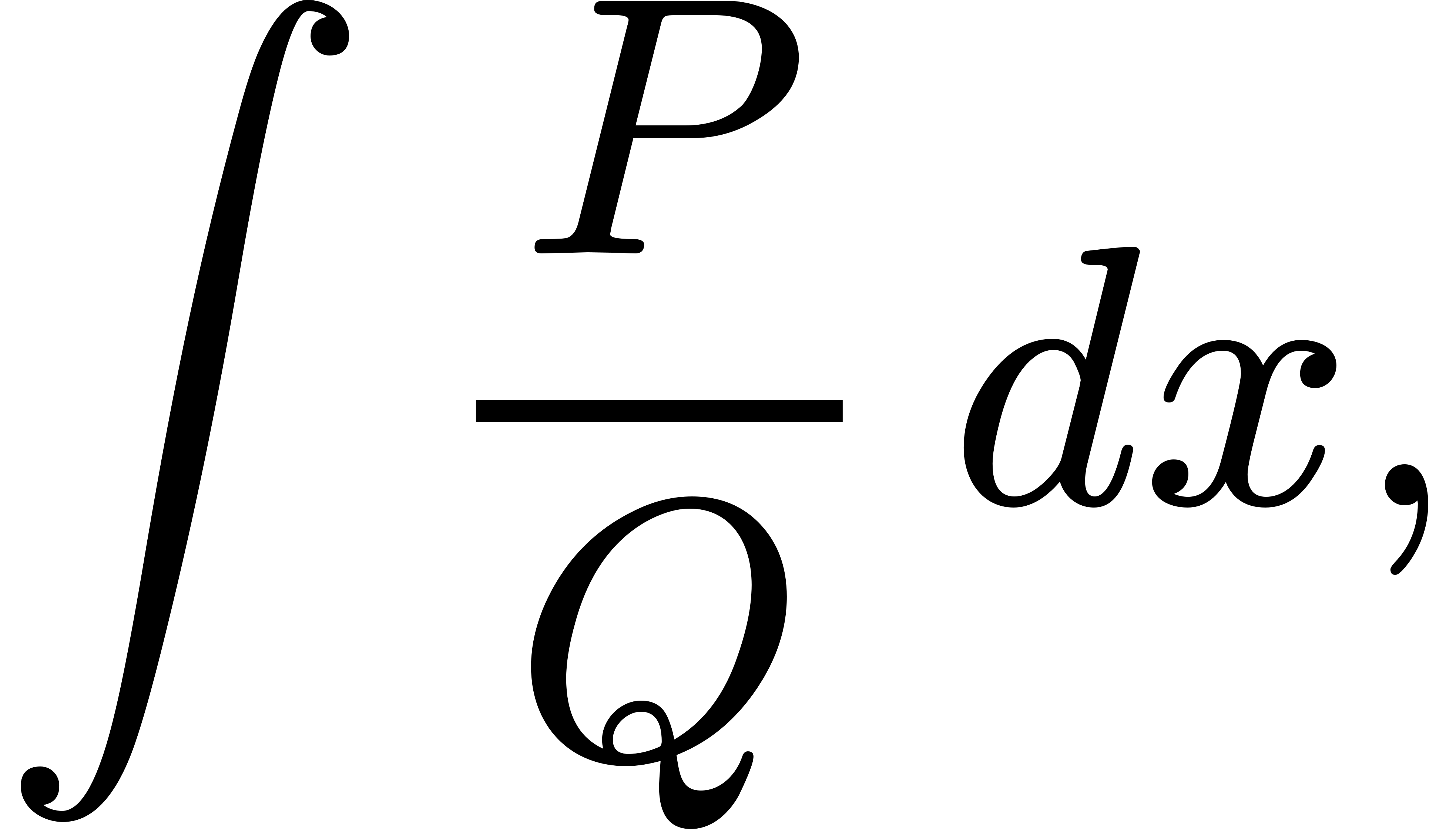 where no further resolution of is possible or, in technical
language, is irreducible by the adjunction of any algebraical
irrationality.
where no further resolution of is possible or, in technical
language, is irreducible by the adjunction of any algebraical
irrationality.
Suppose that this integral can be evaluated in a form involving only
constants which can be expressed explicitly in terms of the constants
which occur in 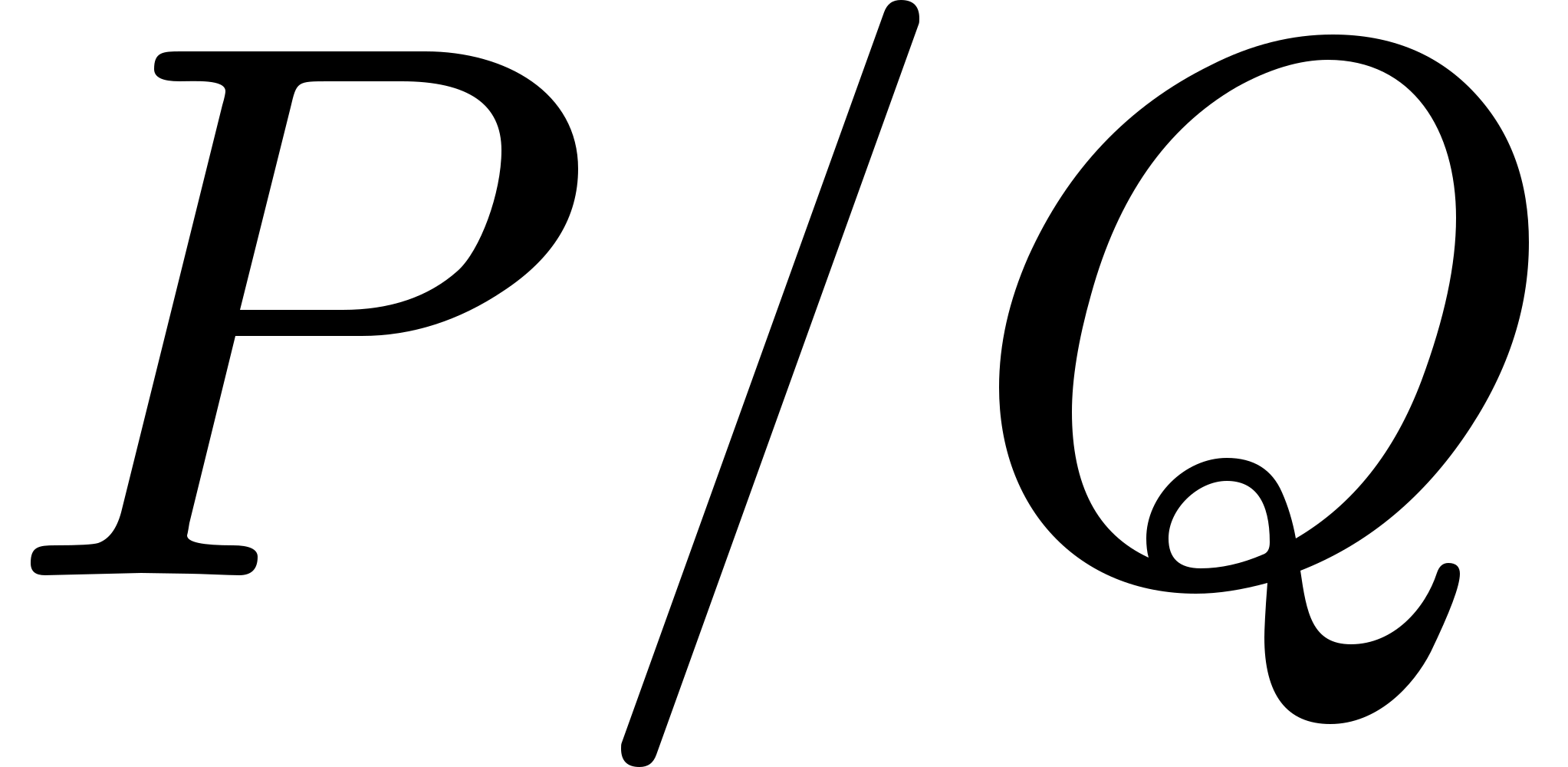 . It must be of the form
 where the 's are constants and the
 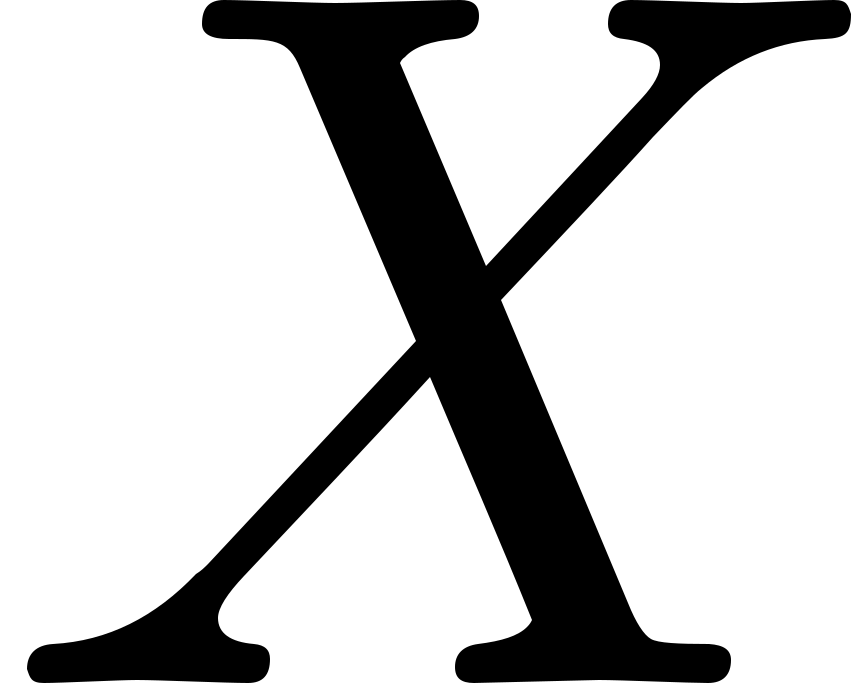 's polynomials. We can
suppose that no has any repeated factor
's polynomials. We can
suppose that no has any repeated factor 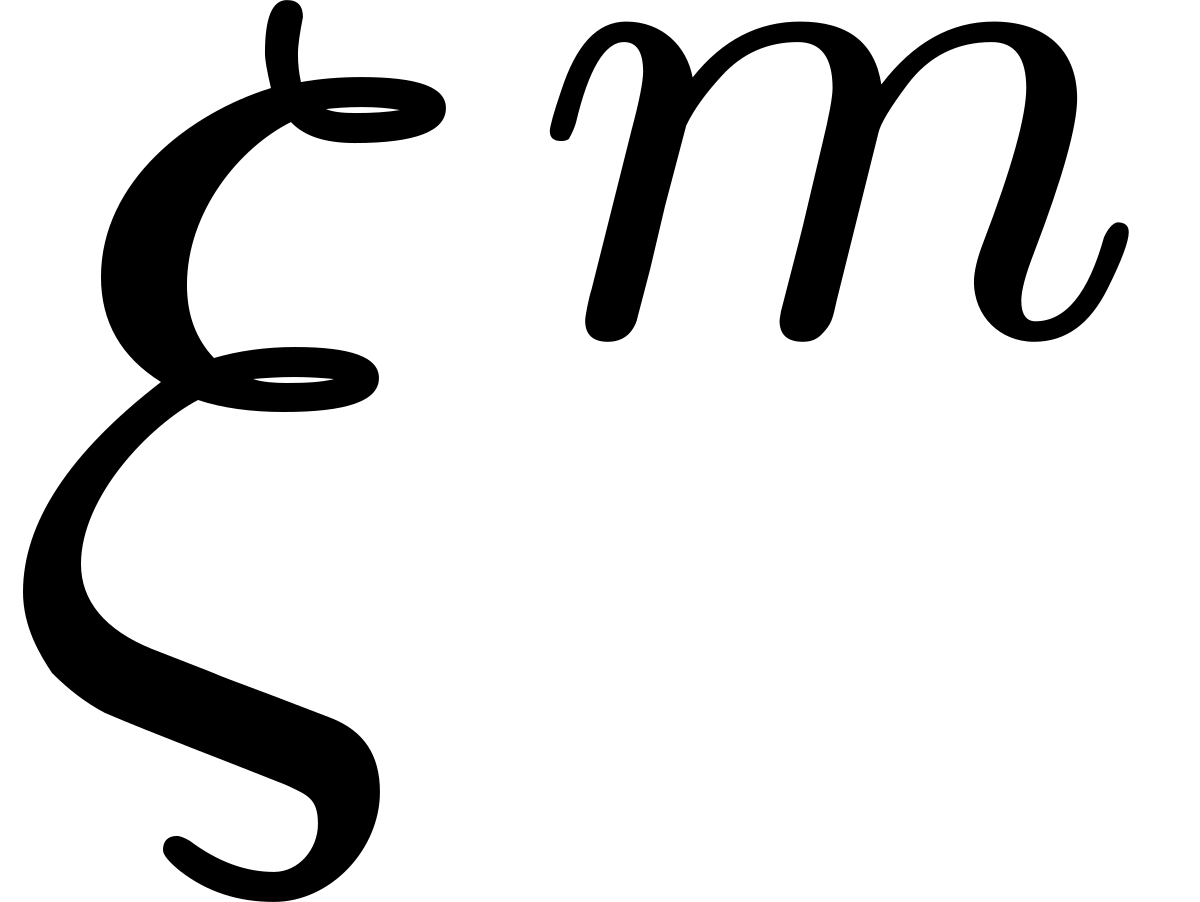 , where
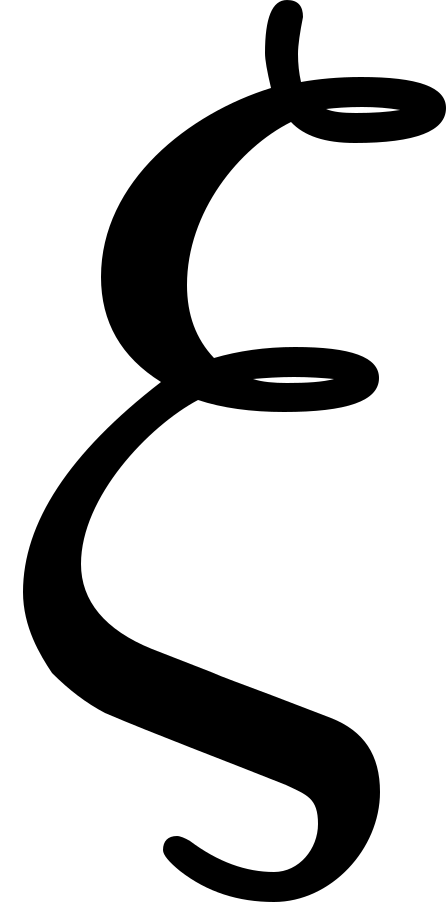 is a polynomial. For such a factor could be determined
rationally in terms of the coefficients of , and the expression
(1) could then be modified by taking out the factor from
and inserting a new term
is a polynomial. For such a factor could be determined
rationally in terms of the coefficients of , and the expression
(1) could then be modified by taking out the factor from
and inserting a new term 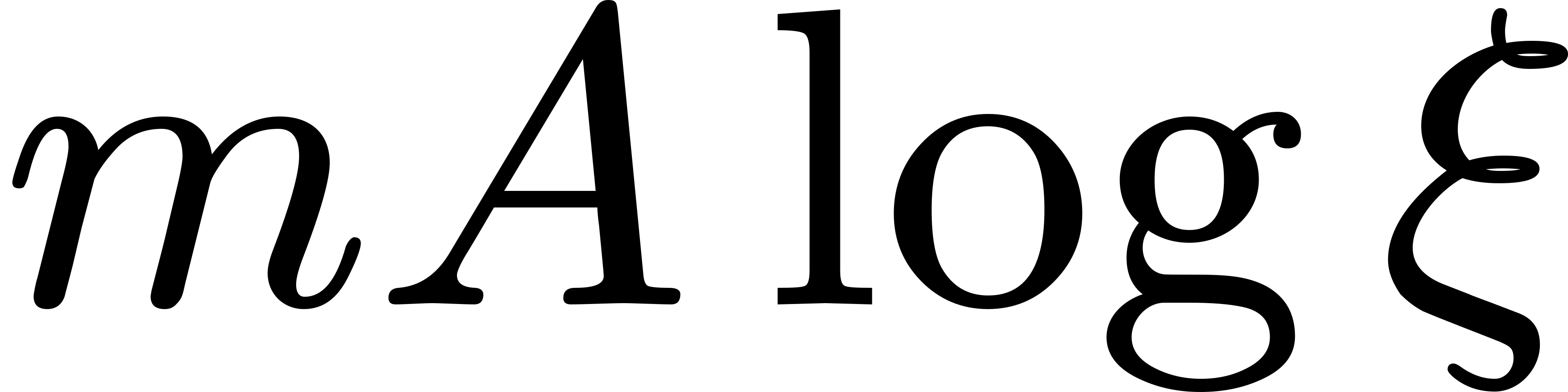 . And for similar reasons
we can suppose that no two 's have any factor in common.
. And for similar reasons
we can suppose that no two 's have any factor in common.
Now
 or
or
 All the terms under the sign of summation are divisible by
save the first, which is prime to . Hence must be
divisible by : and similarly, of course, by
All the terms under the sign of summation are divisible by
save the first, which is prime to . Hence must be
divisible by : and similarly, of course, by  . But, since is prime to ,
  is divisible by . Thus must be a
constant multiple of
is divisible by . Thus must be a
constant multiple of  . But is ex
hypothesi not resoluble into factors which contain only explicit
algebraical irrationalities. Hence all the 's save one must reduce
to constants, and so must be a constant multiple of , and
. But is ex
hypothesi not resoluble into factors which contain only explicit
algebraical irrationalities. Hence all the 's save one must reduce
to constants, and so must be a constant multiple of , and
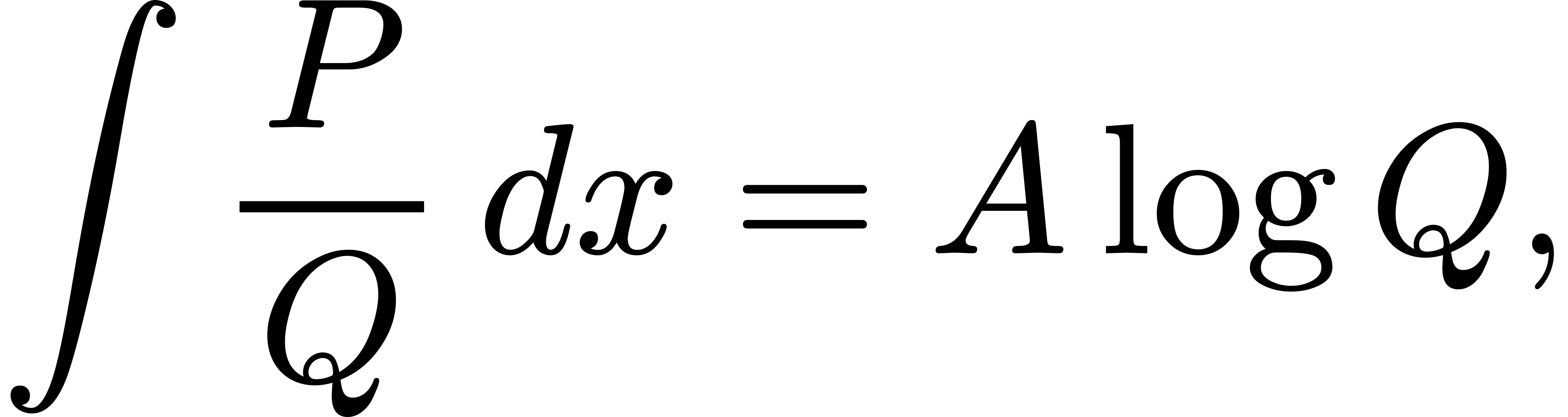 where is a constant. Unless this is the case the integral cannot
be expressed in a form involving only constants expressed explicitly in
terms of the constants which occur in and .
where is a constant. Unless this is the case the integral cannot
be expressed in a form involving only constants expressed explicitly in
terms of the constants which occur in and .
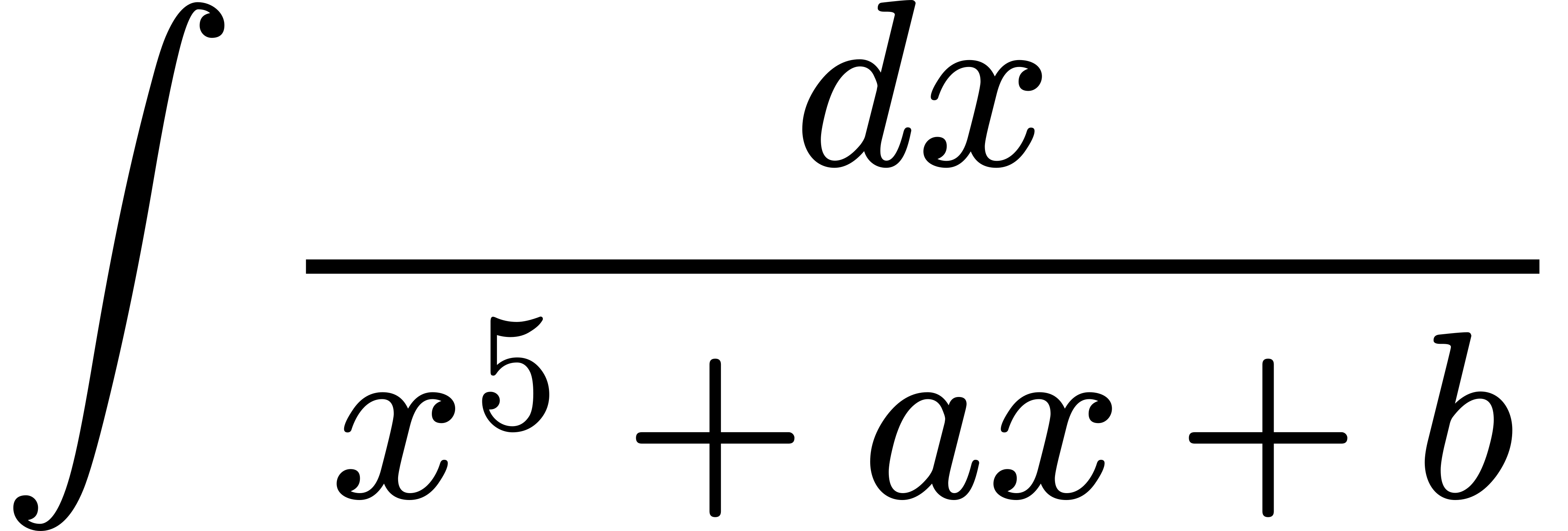
Thus, for instance, the integral
 [Pg 21]
cannot, except in special cases[16], be expressed in a form involving
only constants expressed explicitly in terms of and ; and
the integral
[Pg 21]
cannot, except in special cases[16], be expressed in a form involving
only constants expressed explicitly in terms of and ; and
the integral
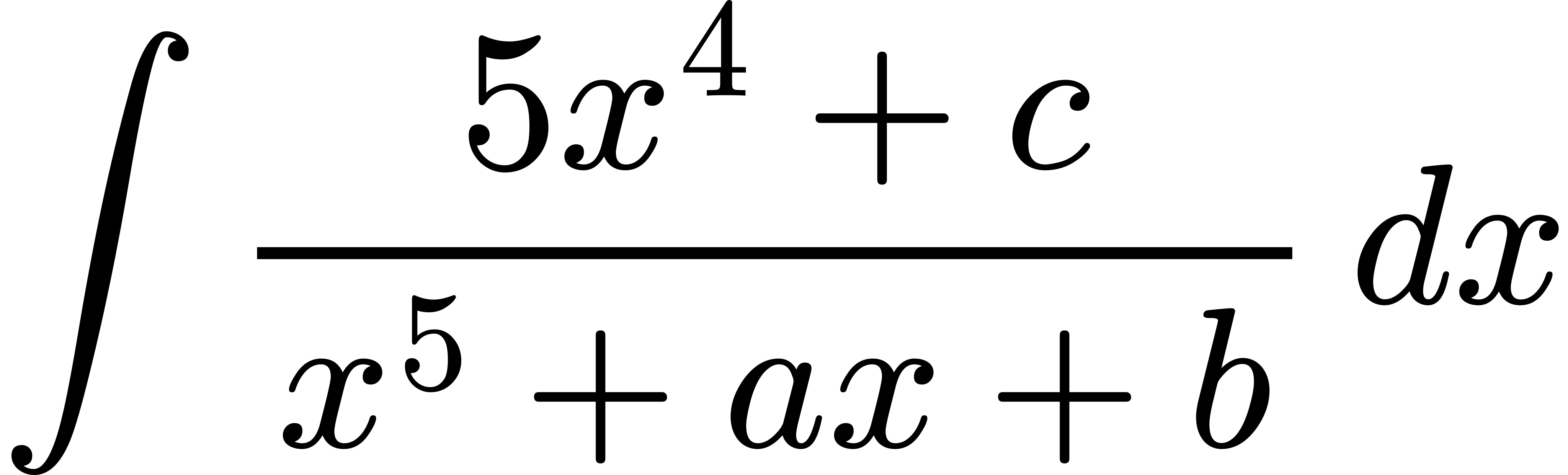 can in general be so expressed if and only if
  . We thus
confirm an inference made before (§3) in a less accurate way.
. We thus
confirm an inference made before (§3) in a less accurate way.
Before quitting this part of our subject we may consider one further
problem: under what circumstances is
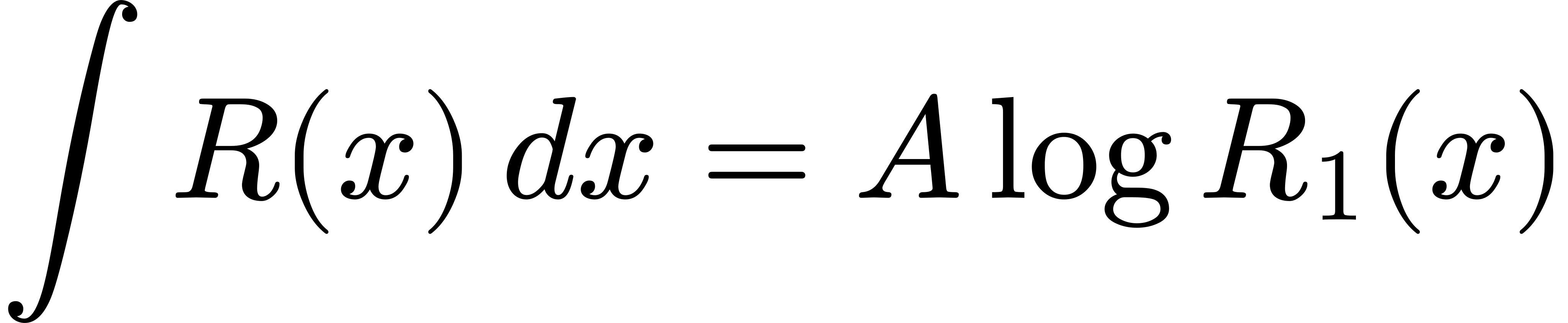 where is a constant and
 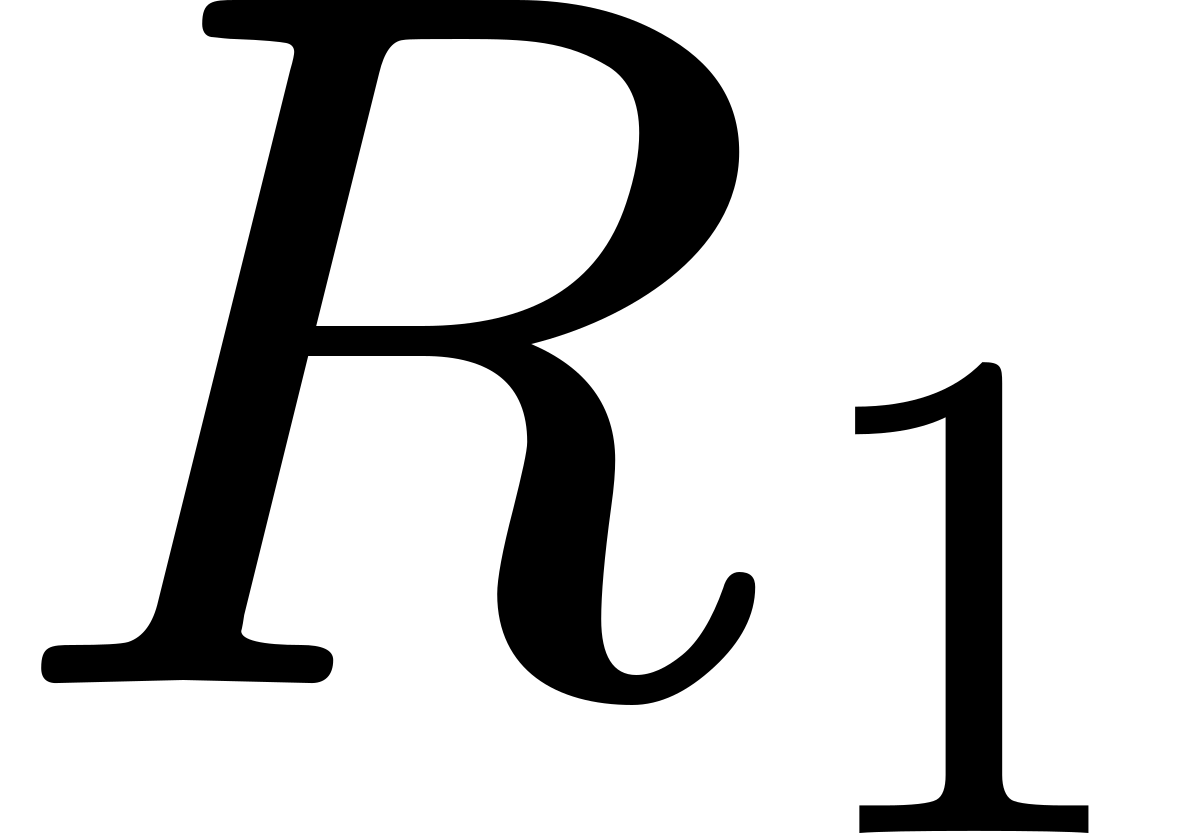 rational? Since the integral has no rational part, it is clear
that must have only simple factors, and that the degree of
must be less than that of . We may therefore use the
formula
rational? Since the integral has no rational part, it is clear
that must have only simple factors, and that the degree of
must be less than that of . We may therefore use the
formula
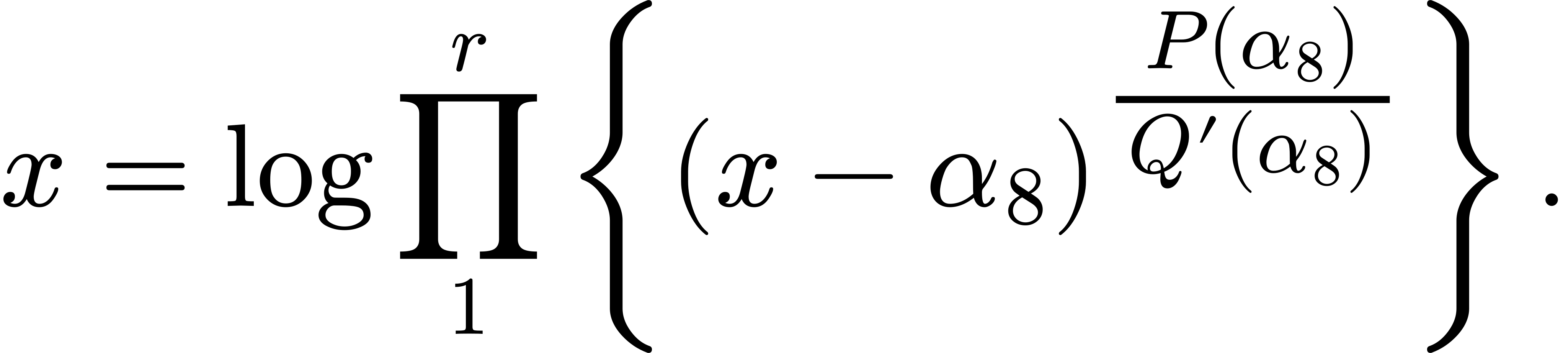 The necessary and sufficient condition is that all the numbers
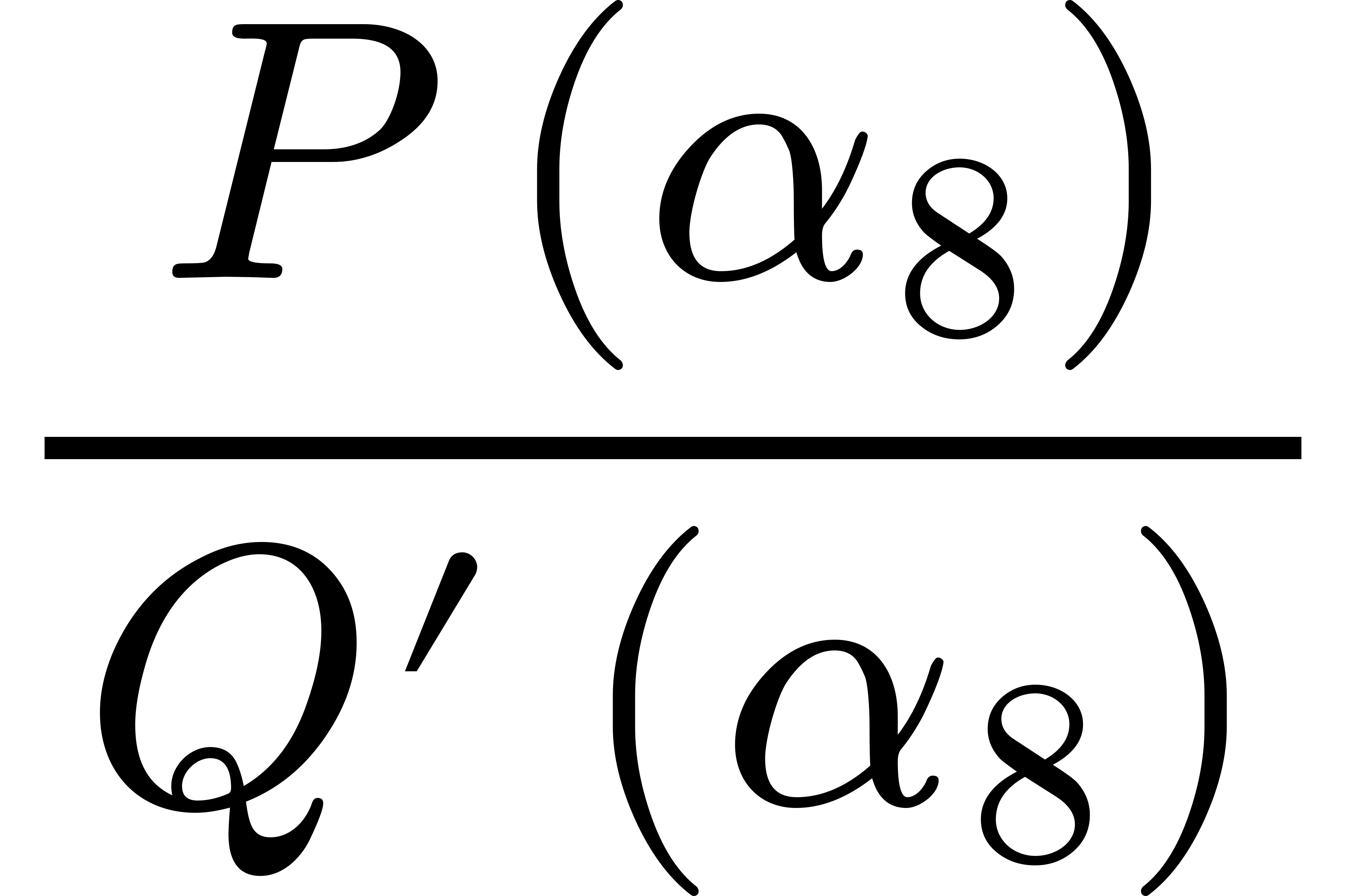 should
be commensurable. If e.g.
should
be commensurable. If e.g.
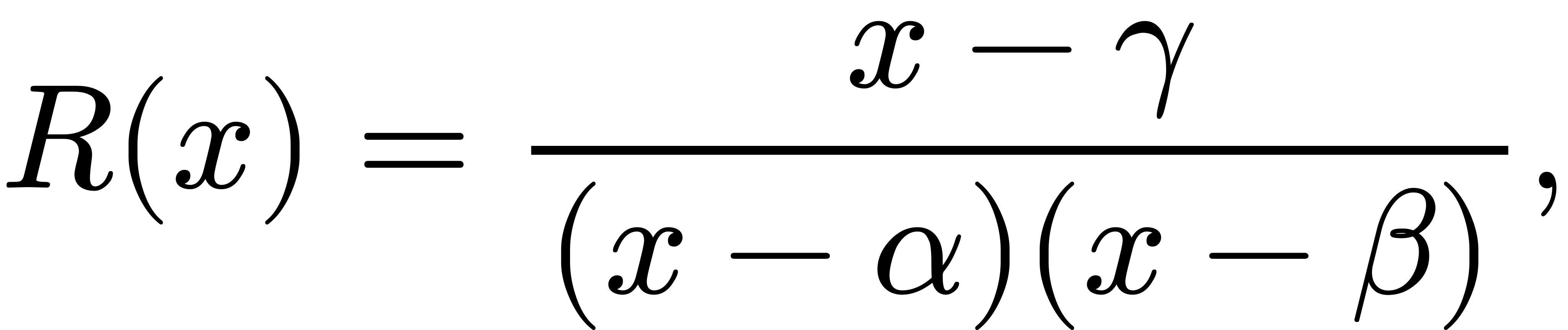 then
then 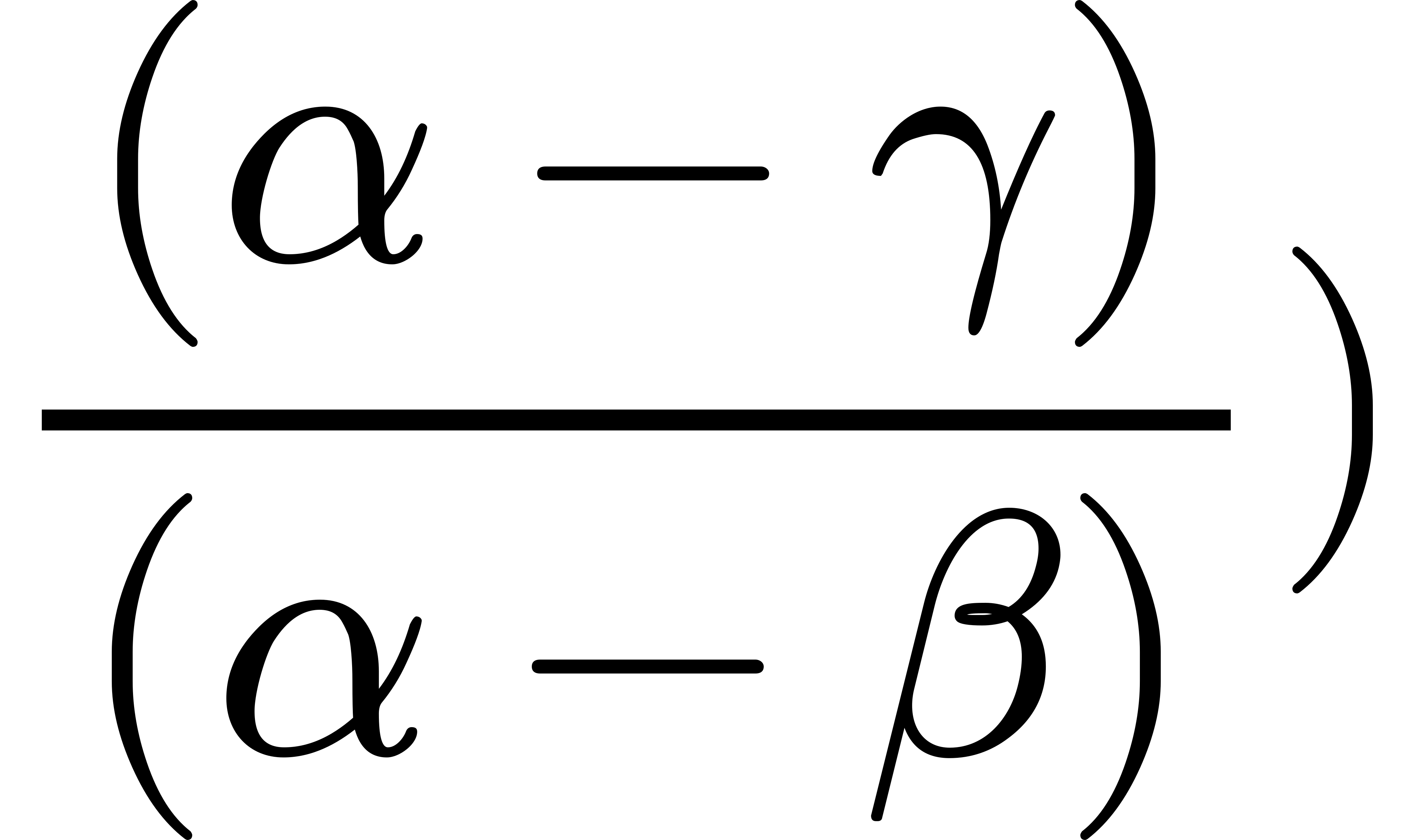 and
and 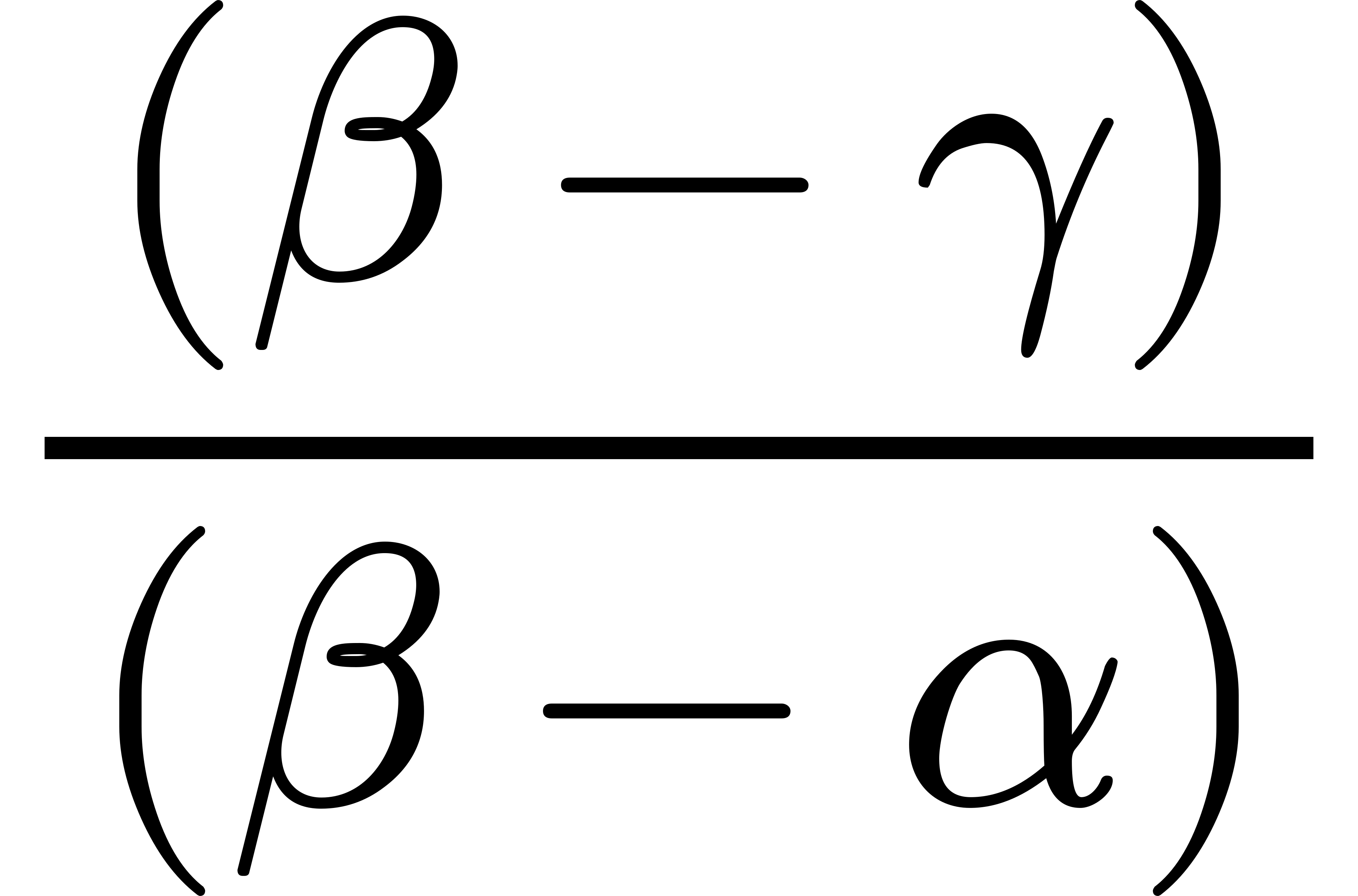 must be commensurable, i.e.
 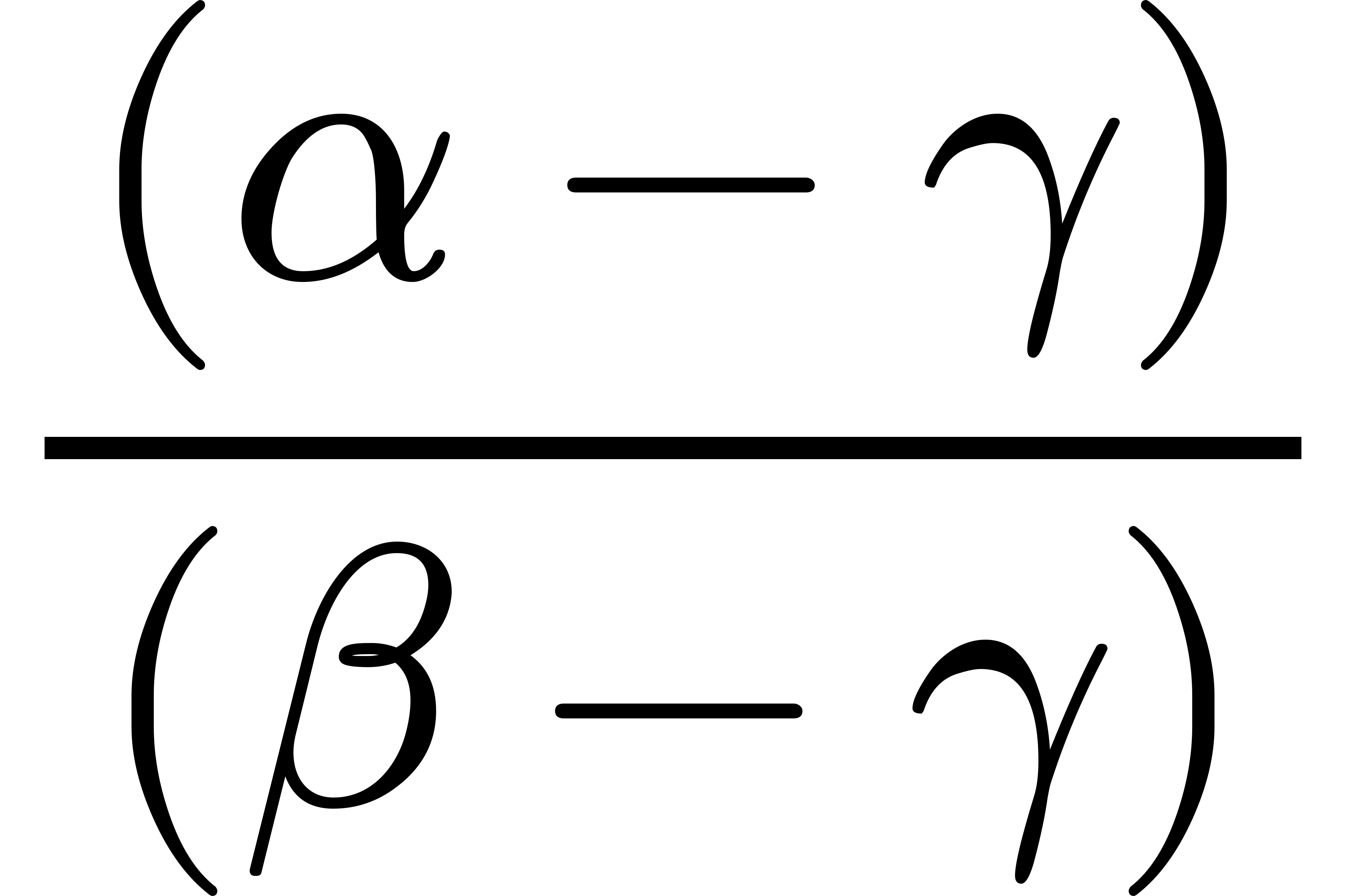 must be a rational number. If the
denominator is given we can find all the values of
must be a rational number. If the
denominator is given we can find all the values of 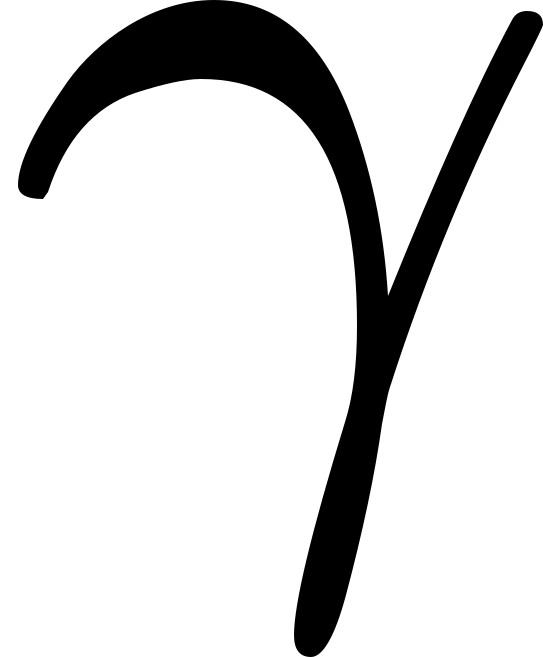 which are
admissible: for
which are
admissible: for 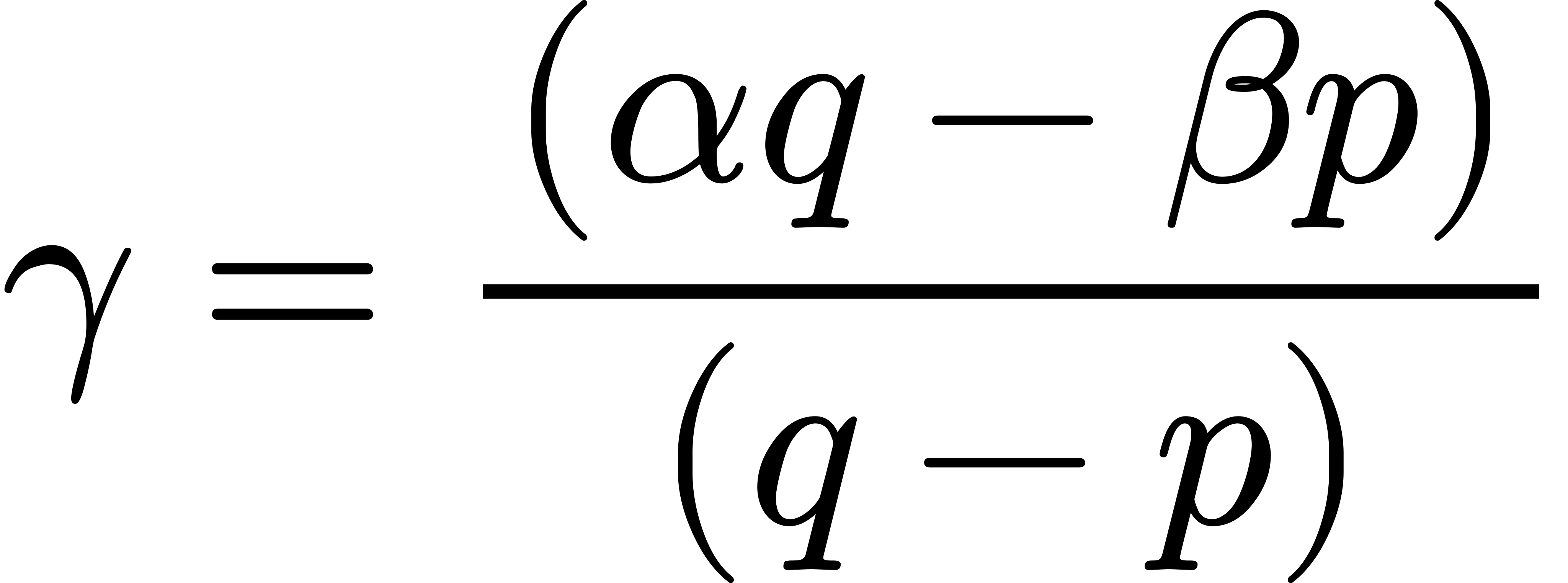 , where
 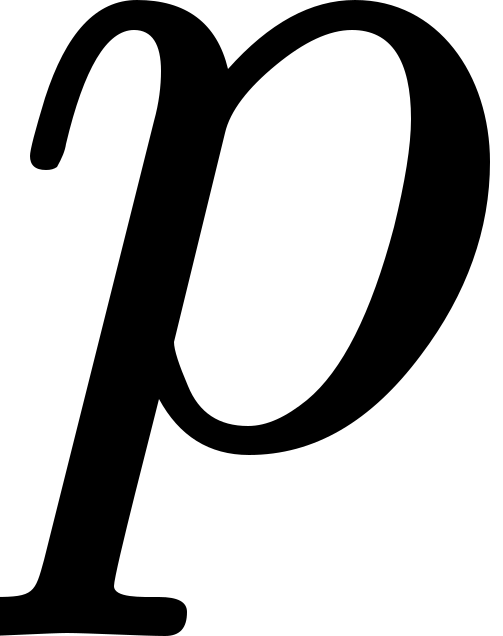 and
and 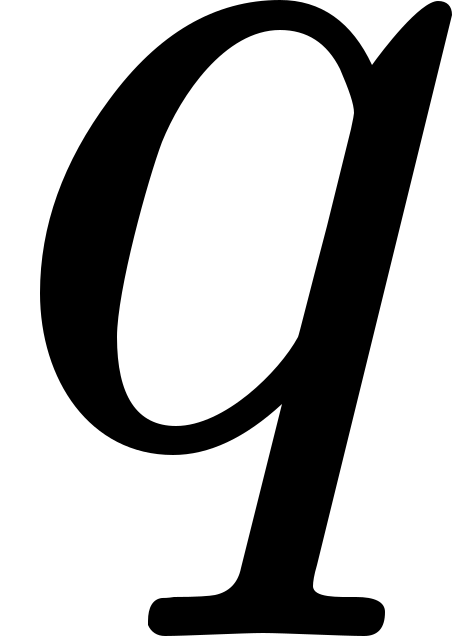 are integers.
7. Our discussion of the integration of rational functions is now complete. It has been throughout of a theoretical character. We have not attempted to consider what are the simplest and quickest methods for the actual calculation of the types of integral which occur most commonly in practice. This problem lies outside our present range: the reader may consult
O. Stolz, Grundzüge der Differential- und Integralrechnung, vol. 1, ch. 7:
J. Tannery, Leçons d'algèbre et d'analyse, vol. 2, ch. 18:
Ch.-J. de la Vallée-Poussin, Cours d'analyse, ed. 3, vol. 1, ch. 5:
T. J. l'A. Bromwich, Elementary integrals (Bowes and Bowes, 1911):
G. H. Hardy, A course of pure mathematics, ed. 2, ch. 6.
[8] See, e.g., Weber's Traité d'algèbre supérieure (French translation by J. Griess, Paris, 1898), vol. 1, pp. 61—64, 143—149, 350—353; or Chrystal's Algebra, vol. 1, pp. 151—162.
[9] The proof will be completed in v., 16.
[10] The following account of Hermite's method is taken in substance from Goursat's Cours d'analyse mathématique (first edition), t. 1, pp. 238—241.
[11] See Chrystal's Algebra, vol. 1, pp. 119 et seq.
[12] See, for example, Hardy, A course of pure mathematics (2nd edition), p. 208.
[13] The operation of forming the derived function of a given polynomial can of course be effected by a combination of these operations.
[14] It is easy to show that the solution is also unique.
[15] See Cajori, An introduction to the modern theory of equations (Macmillan, 1904); Mathews, Algebraic equations (Cambridge tracts in mathematics, no. 6), pp. 6—7.
[Pg 22]
[16] The equation  is soluble by
radicals in certain cases. See Mathews, l.c., pp. 52 et
seq.
is soluble by
radicals in certain cases. See Mathews, l.c., pp. 52 et
seq.
1. We shall now consider the integrals of algebraical functions, explicit or implicit. The theory of the integration of such functions is far more extensive and difficult than that of rational functions, and we can give here only a brief account of a few of the most important results and of the most obvious of their applications.
If  are algebraical functions of ,
then any algebraical function
are algebraical functions of ,
then any algebraical function 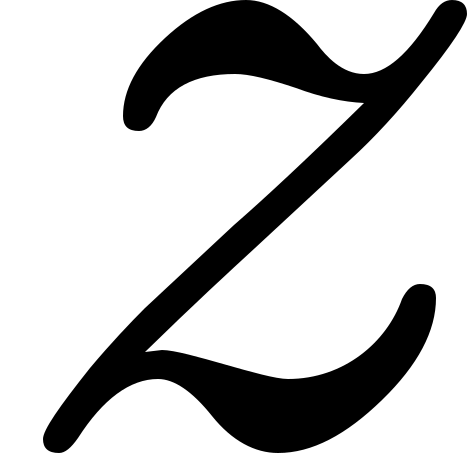 of ,
of ,  is an algebraical function of . This is obvious if we
confine ourselves to explicit algebraical functions. In the
general case we have a number of equations of the type
is an algebraical function of . This is obvious if we
confine ourselves to explicit algebraical functions. In the
general case we have a number of equations of the type
 and
and
 where the 's represent polynomials in their arguments. The
elimination of
where the 's represent polynomials in their arguments. The
elimination of  between these equations
gives an equation in whose coefficients are polynomials in
only.
between these equations
gives an equation in whose coefficients are polynomials in
only.
The importance of this from our present point of view lies in the fact
that we may consider the standard algebraical integral under any of the
forms
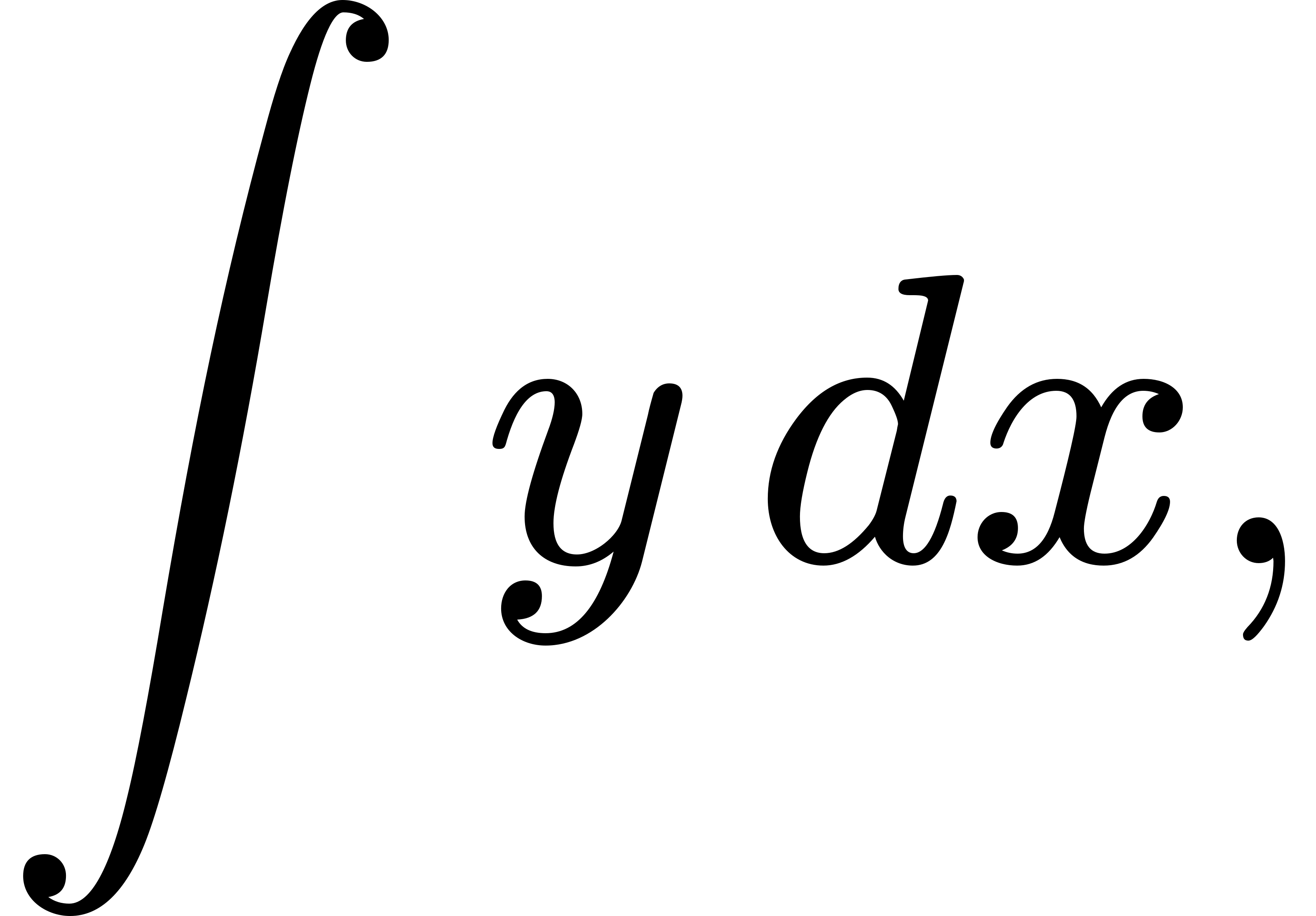 where ;
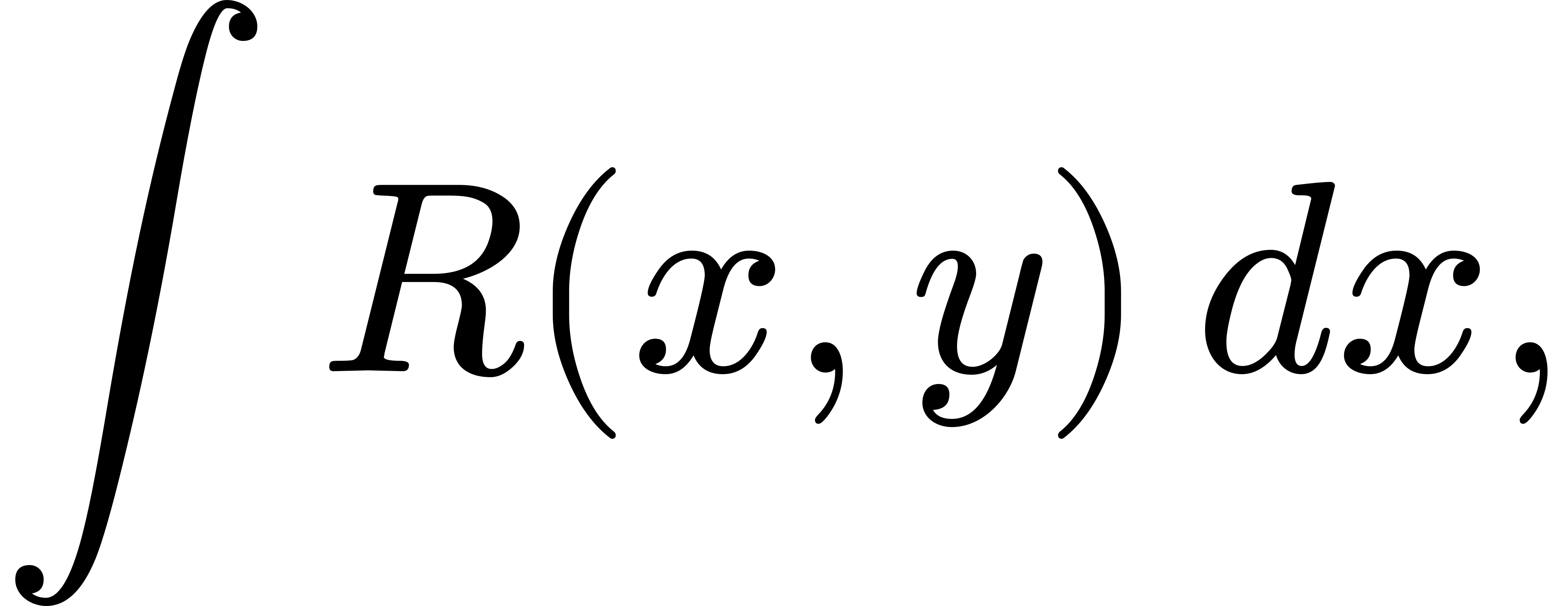 where and is rational; or
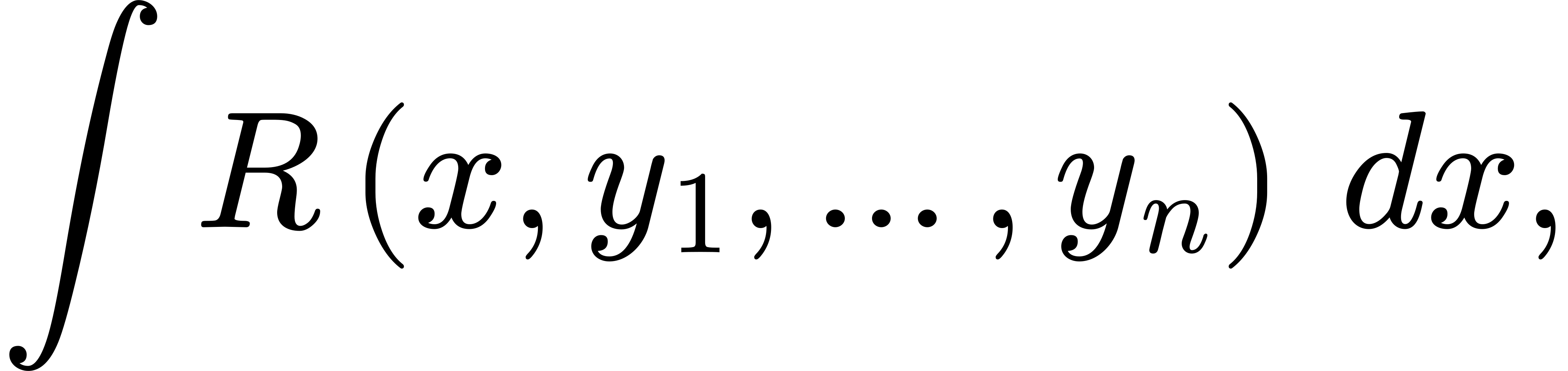 where
where  . It is,
for example, much more convenient to treat such an irrational as
. It is,
for example, much more convenient to treat such an irrational as
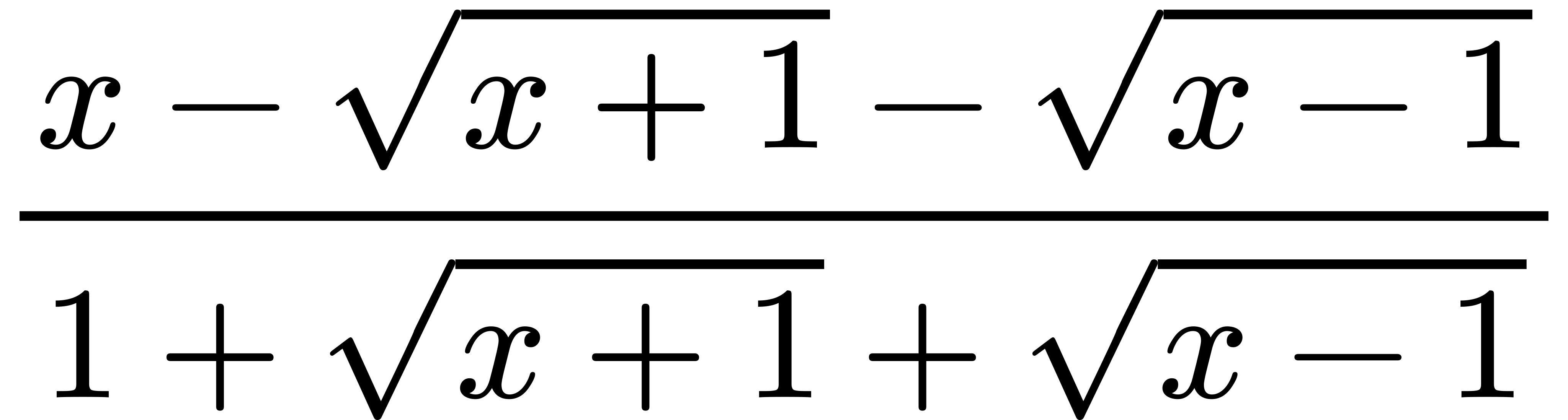 as a rational function of ,
  , where
 ,
,  , than as a rational function of and ,
where
, than as a rational function of and ,
where
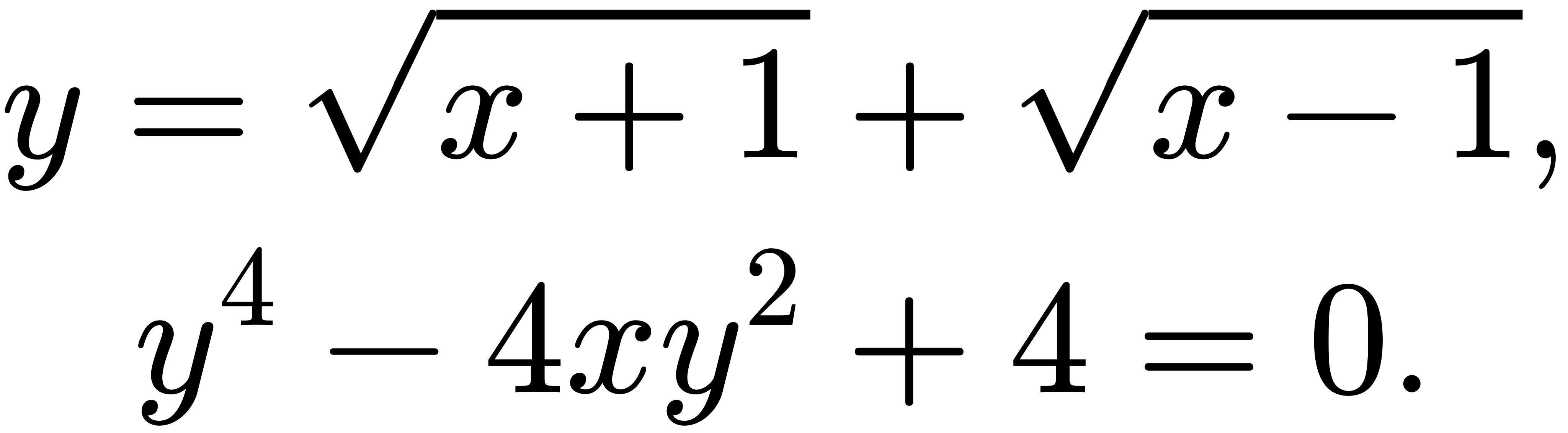 To treat it as a simple irrational , so that our fundamental
equation is
To treat it as a simple irrational , so that our fundamental
equation is
 is evidently the least convenient course of all.
[Pg 23]
Before we proceed to consider the general form of the integral of an algebraical function we shall consider one most important case in which the integral can be at once reduced to that of a rational function, and is therefore always an elementary function itself.
2. The class of integrals alluded to immediately above is that covered by the following theorem.
If there is a variable connected with
and (or ) by
rational relations
 (or
(or  ), then the integral
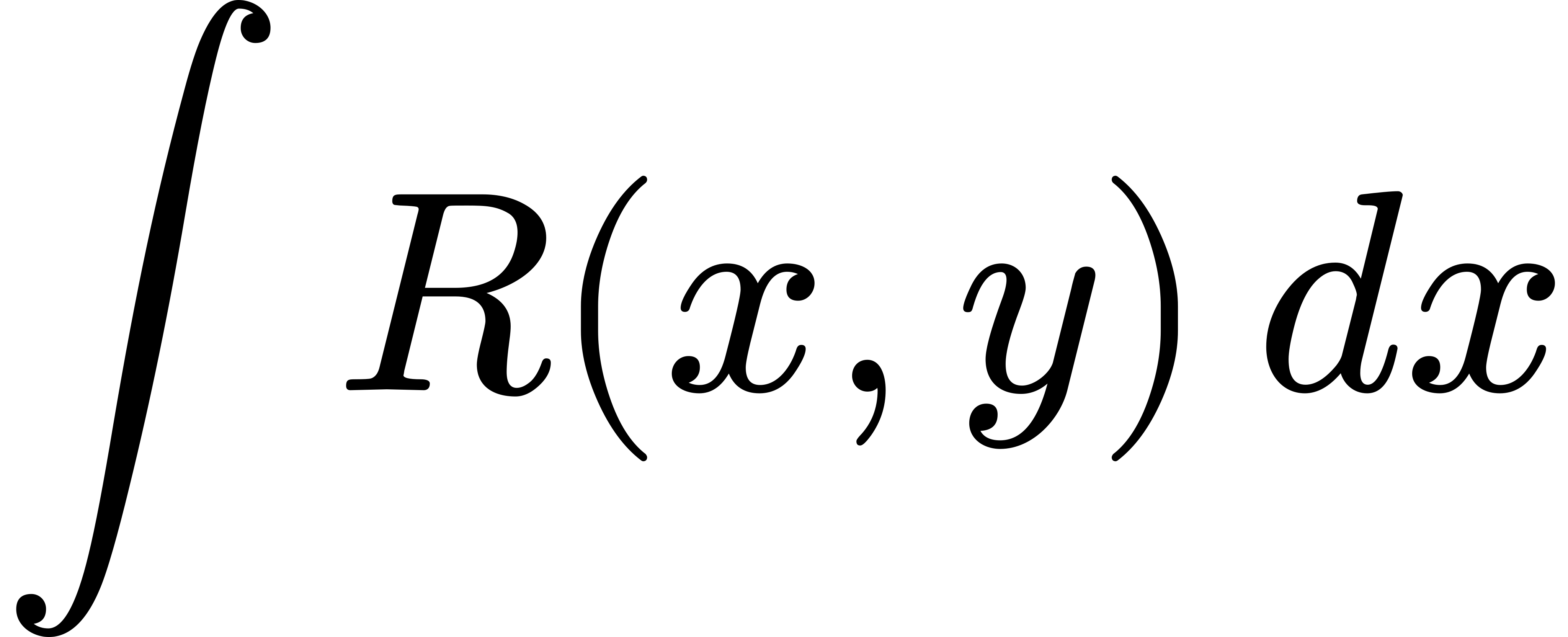 (or
(or  ) is an elementary function.
The truth of this proposition follows immediately from the equations
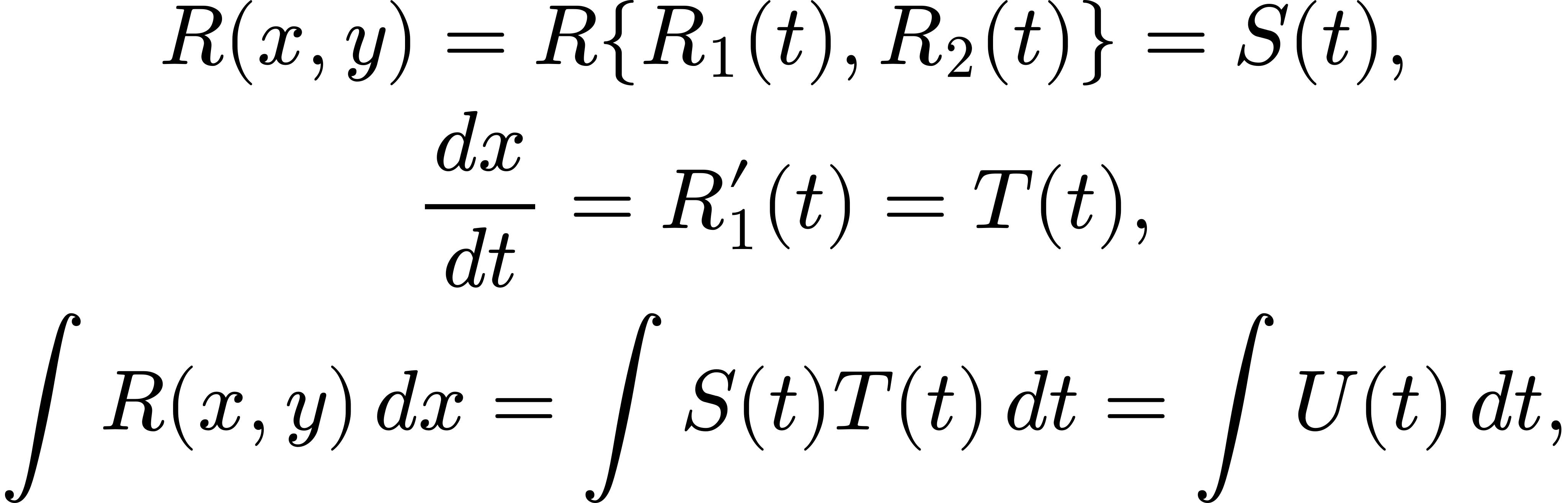 where all the capital letters denote rational functions.
The most important case of this theorem is that in which and
are connected by the general quadratic relation
 The integral can then be made rational in an infinite number of ways.
For suppose that
The integral can then be made rational in an infinite number of ways.
For suppose that 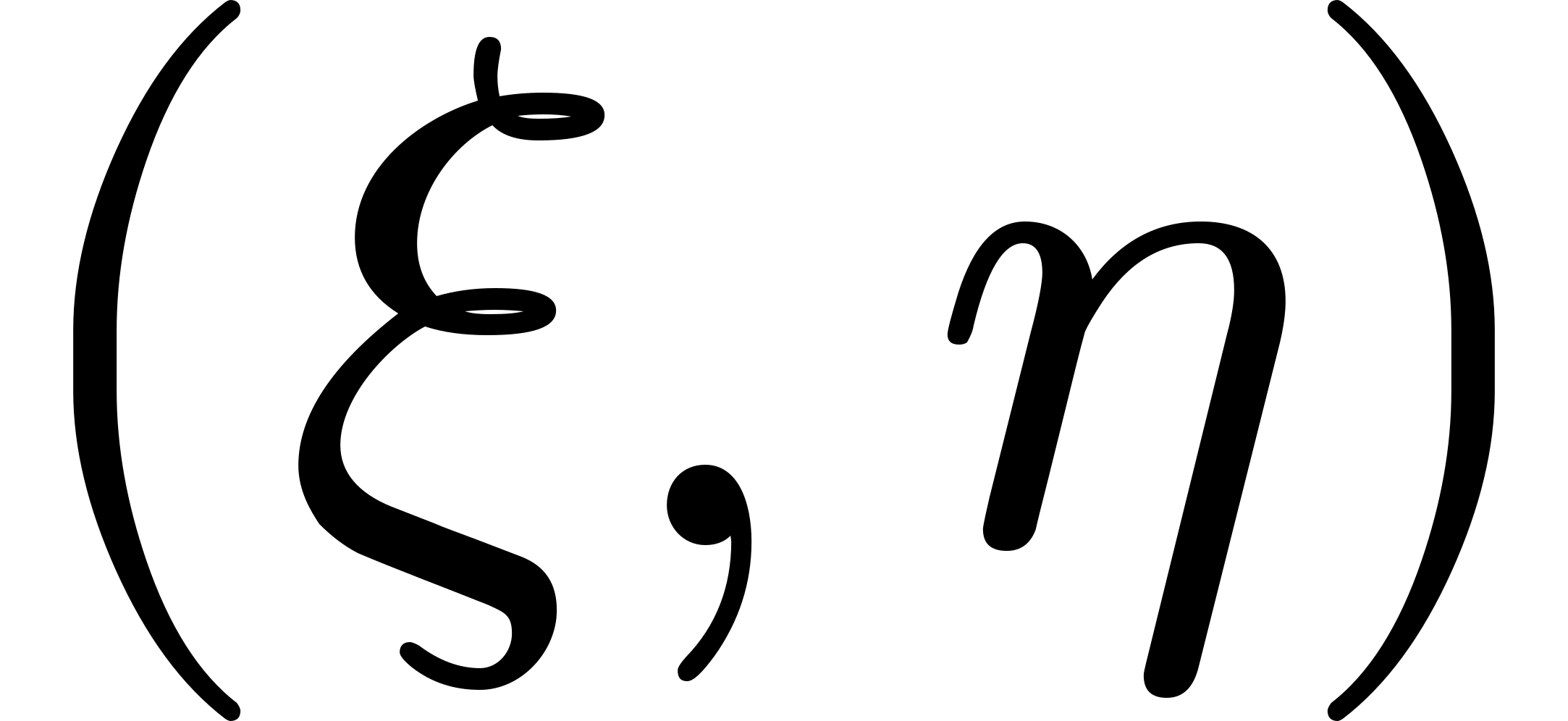 is any point on the conic, and that
 is any line through the point. If we eliminate between these
equations, we obtain an equation of the second degree in , say
is any line through the point. If we eliminate between these
equations, we obtain an equation of the second degree in , say
 where
where 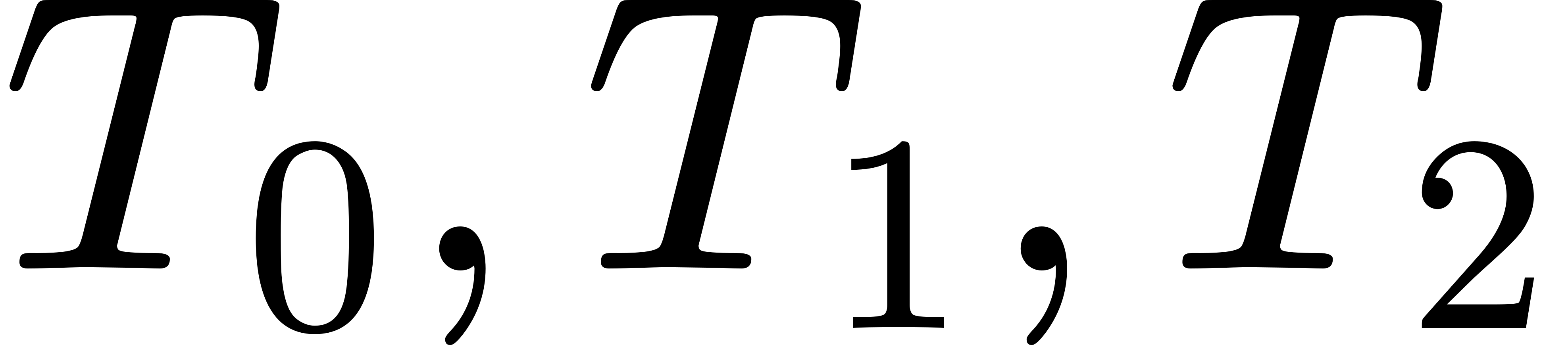 are polynomials in . But one root of
this equation must be , which is independent of ; and when
we divide by
are polynomials in . But one root of
this equation must be , which is independent of ; and when
we divide by 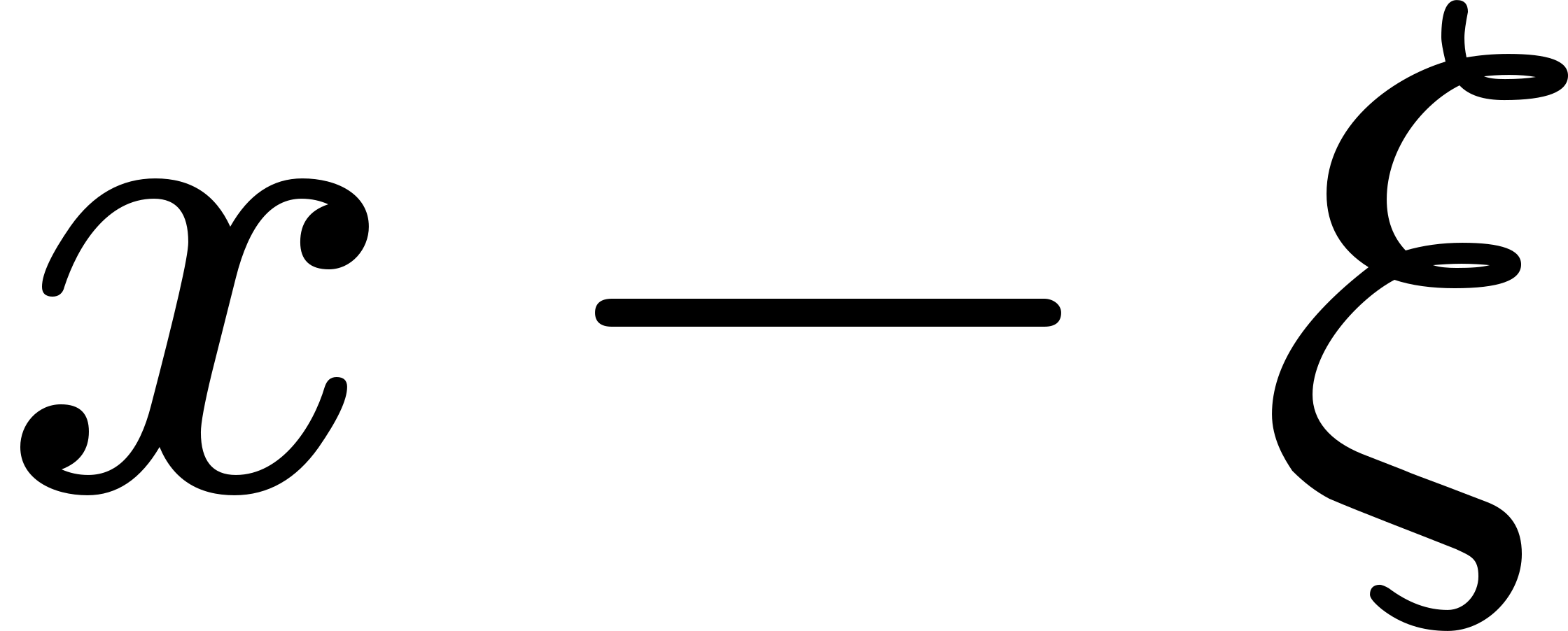 we obtain an equation of the first
degree for the abscissa of the variable point of intersection, in which
the coefficients are again polynomials in . Hence this abscissa
is a rational function of ; the ordinate of the point is also a
rational function of , and as varies this point[Pg 24] coincides
with every point of the conic in turn. In fact the equation of the
conic may be written in the form
we obtain an equation of the first
degree for the abscissa of the variable point of intersection, in which
the coefficients are again polynomials in . Hence this abscissa
is a rational function of ; the ordinate of the point is also a
rational function of , and as varies this point[Pg 24] coincides
with every point of the conic in turn. In fact the equation of the
conic may be written in the form
 where
where  , and the other point of intersection of
the line
, and the other point of intersection of
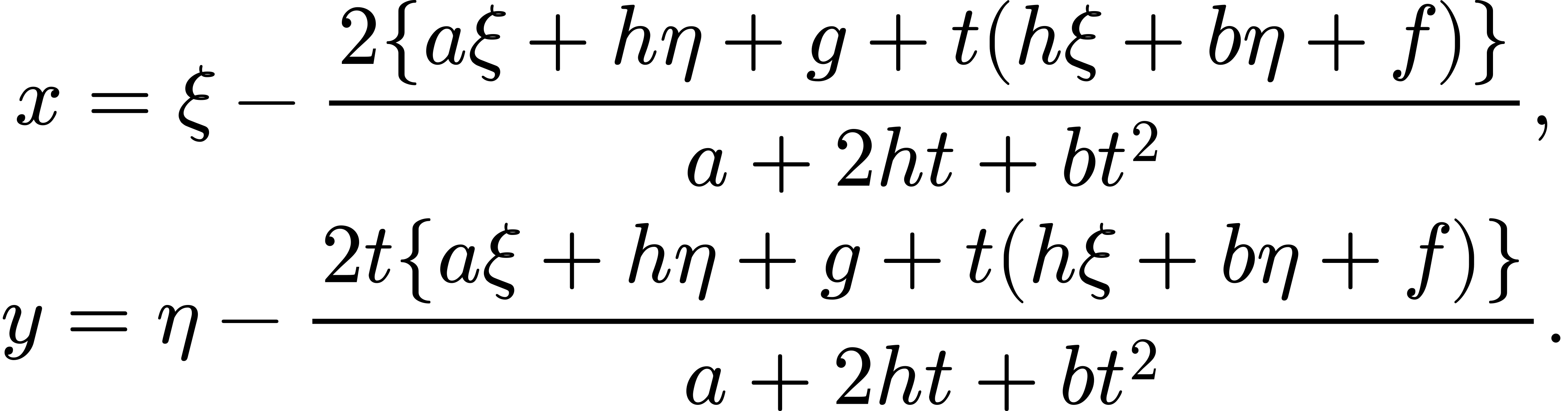
the line 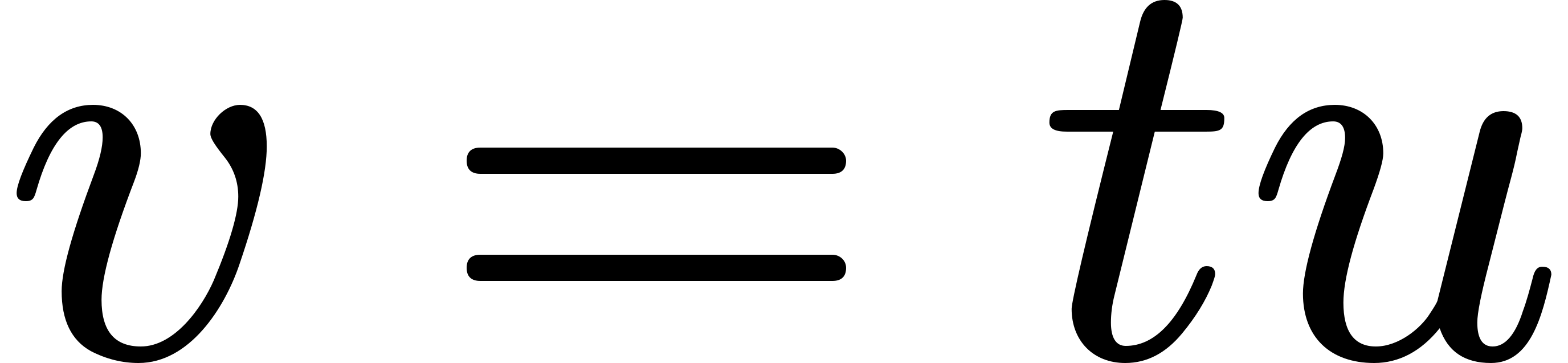 and the conic is given by
An alternative method is to write
 so that
  and
and  are parallel to the
asymptotes of the conic, and to put
are parallel to the
asymptotes of the conic, and to put
 Then
Then
 and from these two equations we can calculate and as
rational functions of . The principle of this method is of course
the same as that of the former method: is now at
infinity, and the pencil of lines through is replaced
by a pencil parallel to an asymptote.
and from these two equations we can calculate and as
rational functions of . The principle of this method is of course
the same as that of the former method: is now at
infinity, and the pencil of lines through is replaced
by a pencil parallel to an asymptote.
The most important case is that in which 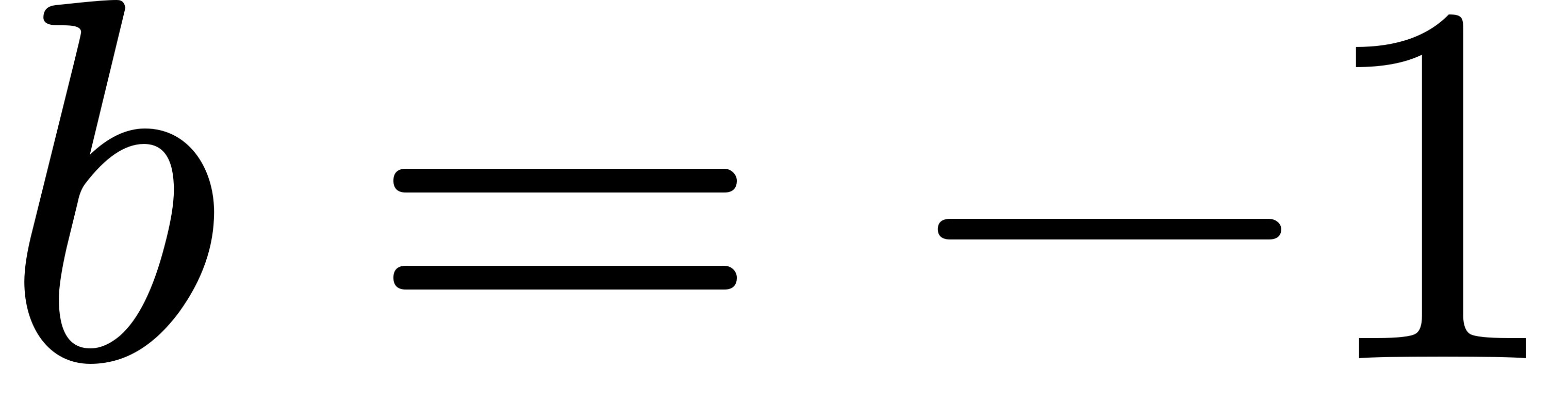 ,
, 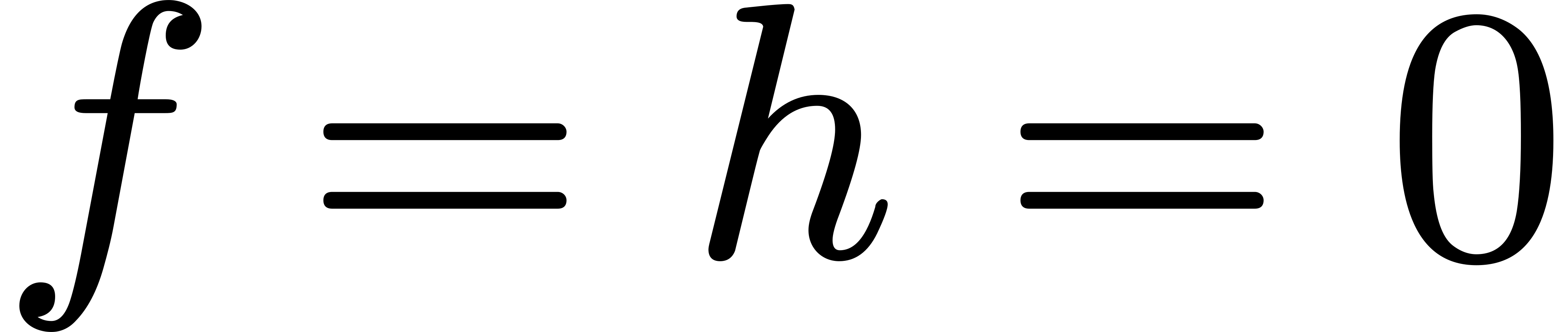 , so
that
, so
that
 The integral is then made rational by the substitution
 where ,
 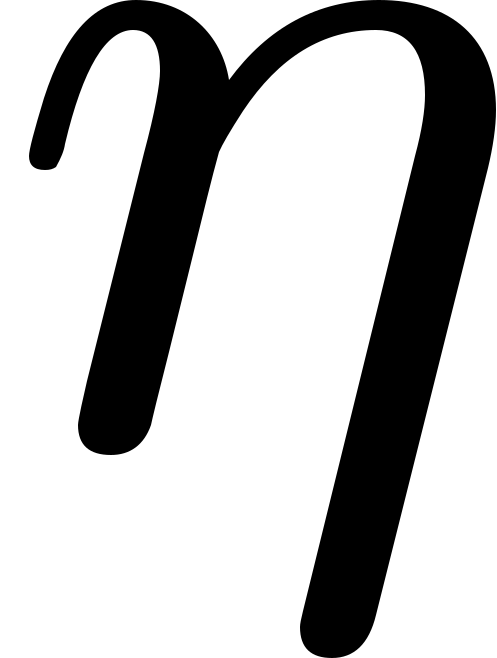 are any numbers such that
 We may for instance suppose that
 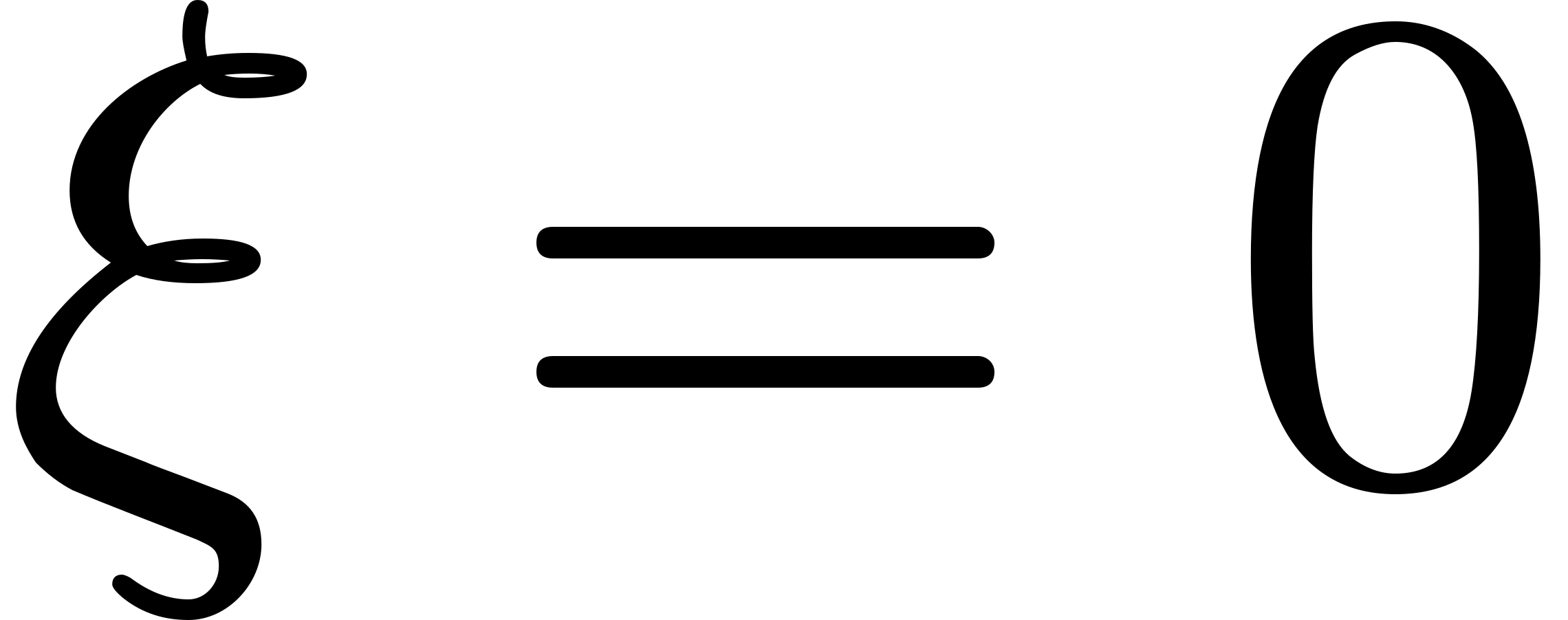 ,
, 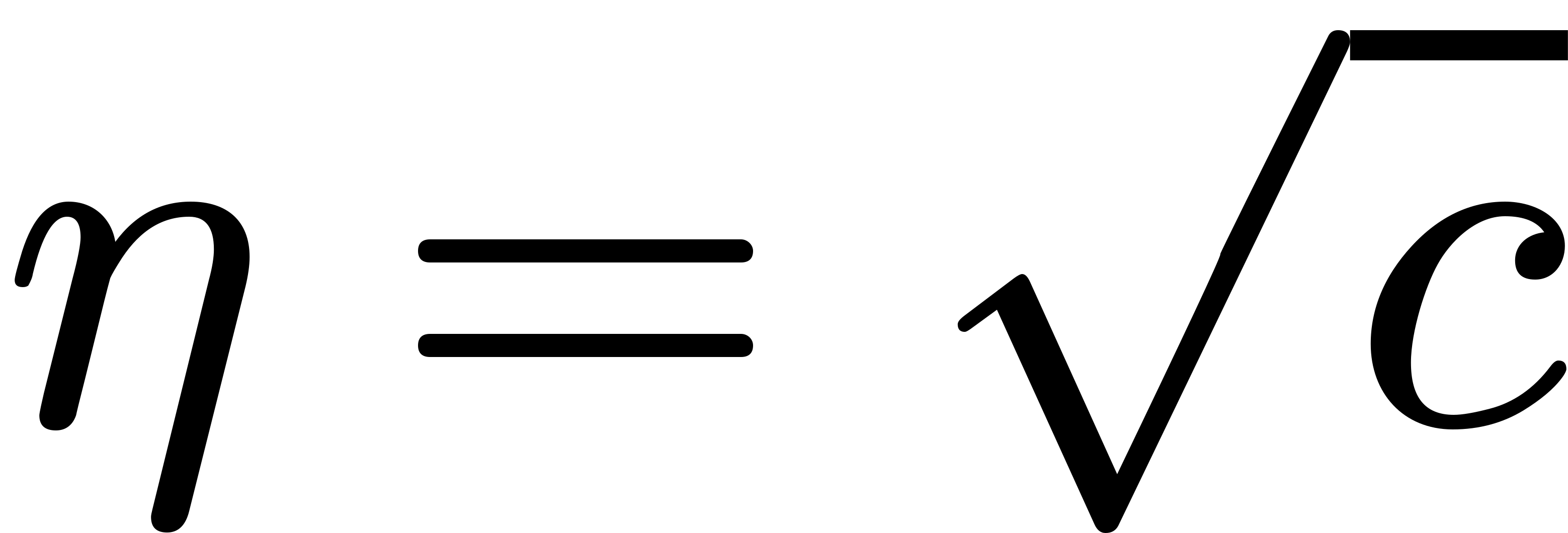 ; or
that
; or
that 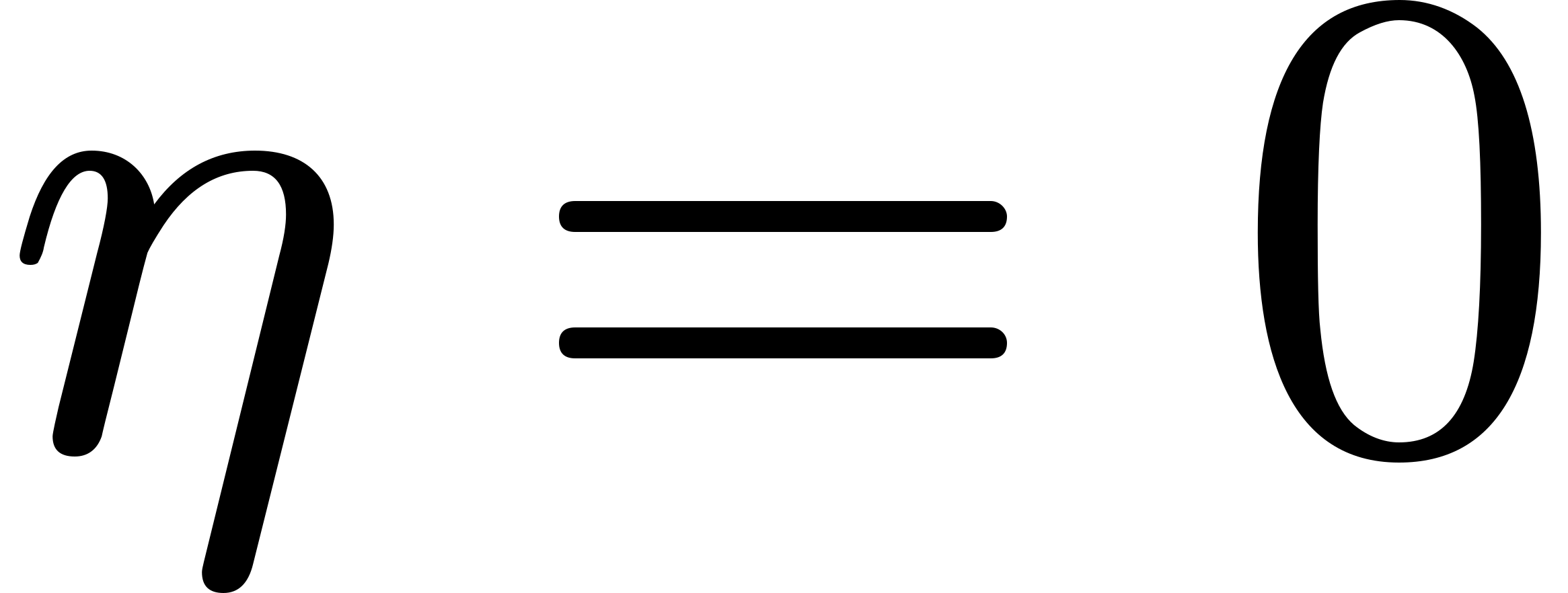 , while is a root of the equation
  . Or again the integral is made rational by putting
  , when

3. We shall now consider in more detail the problem of the calculation
of
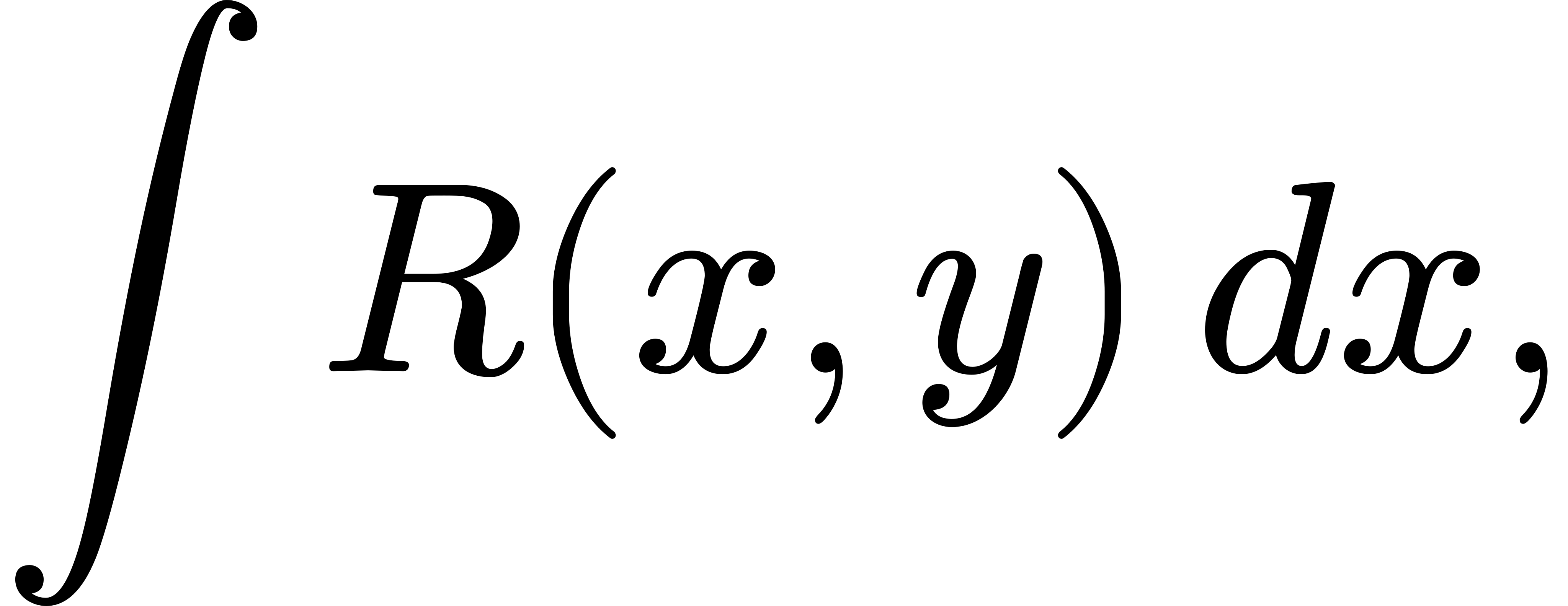 where[17][Pg 25]
 The most interesting case is that in which , ,
  and
the constants which occur in are real, and we shall confine our
attention to this case.
and
the constants which occur in are real, and we shall confine our
attention to this case.
Let
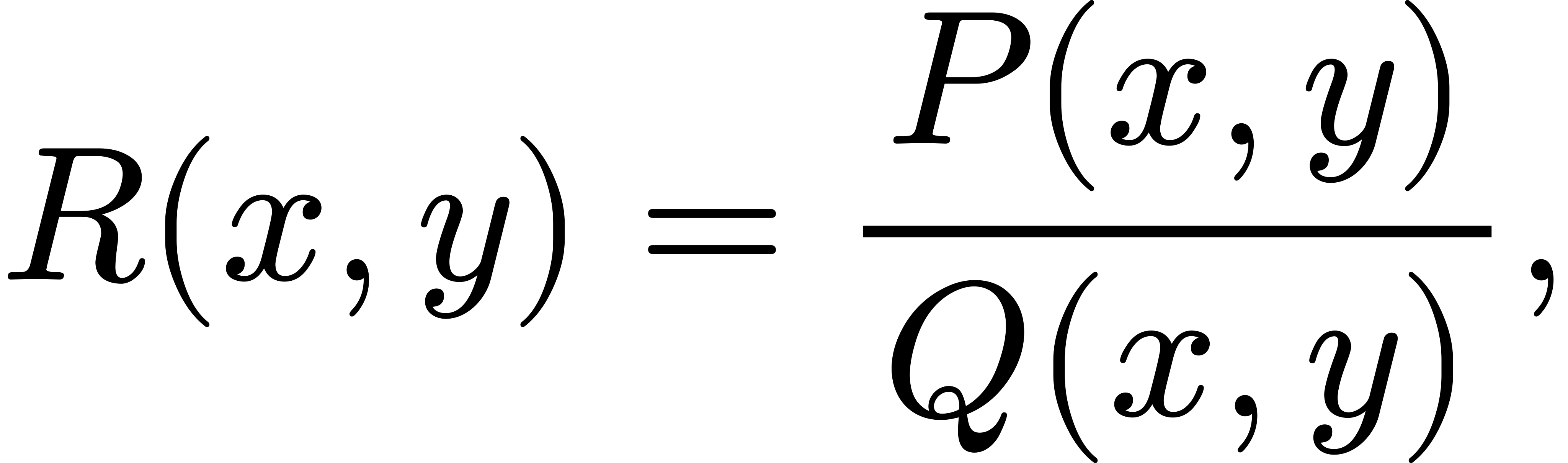 where and are polynomials. Then, by means of the equation

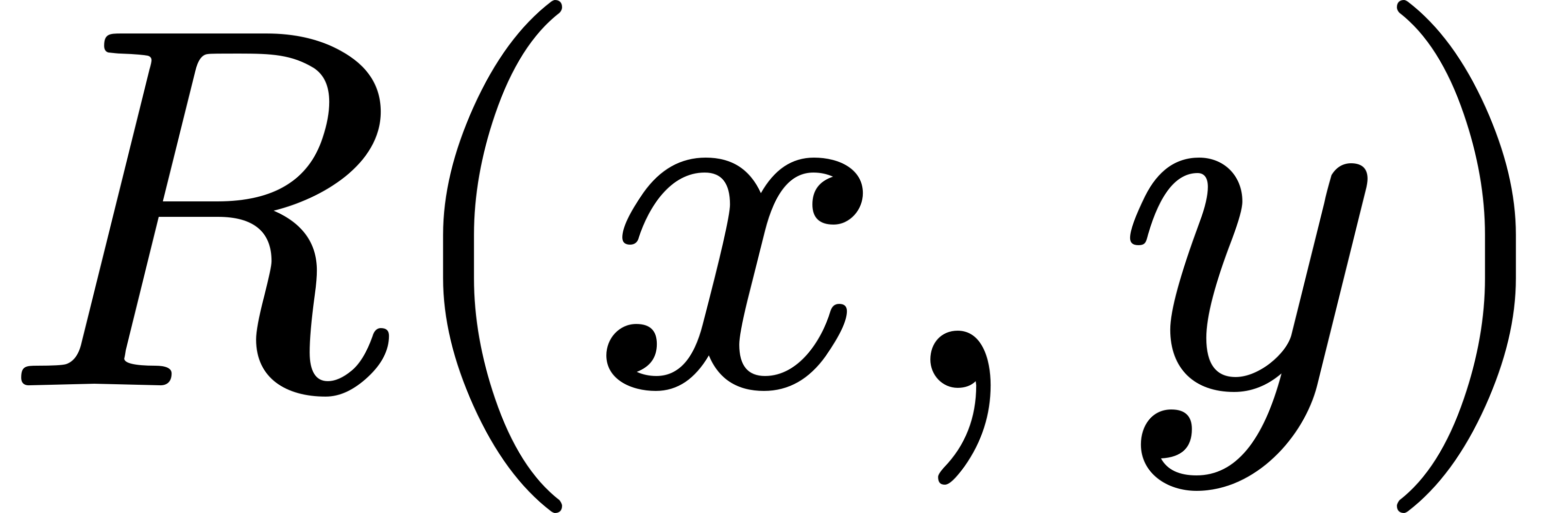 may be reduced to the form
 where , , , are polynomials in ; and so to
the form
where , , , are polynomials in ; and so to
the form 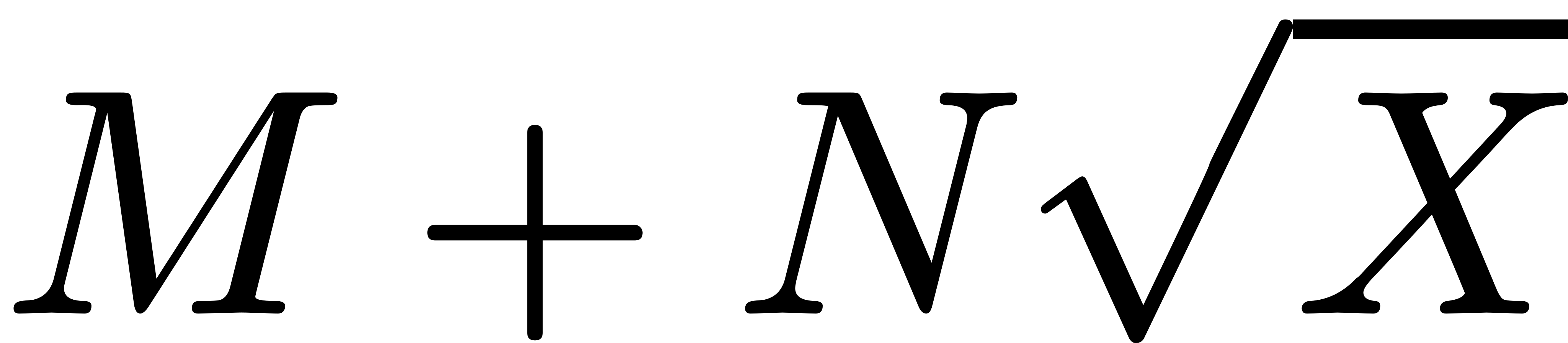 , where
 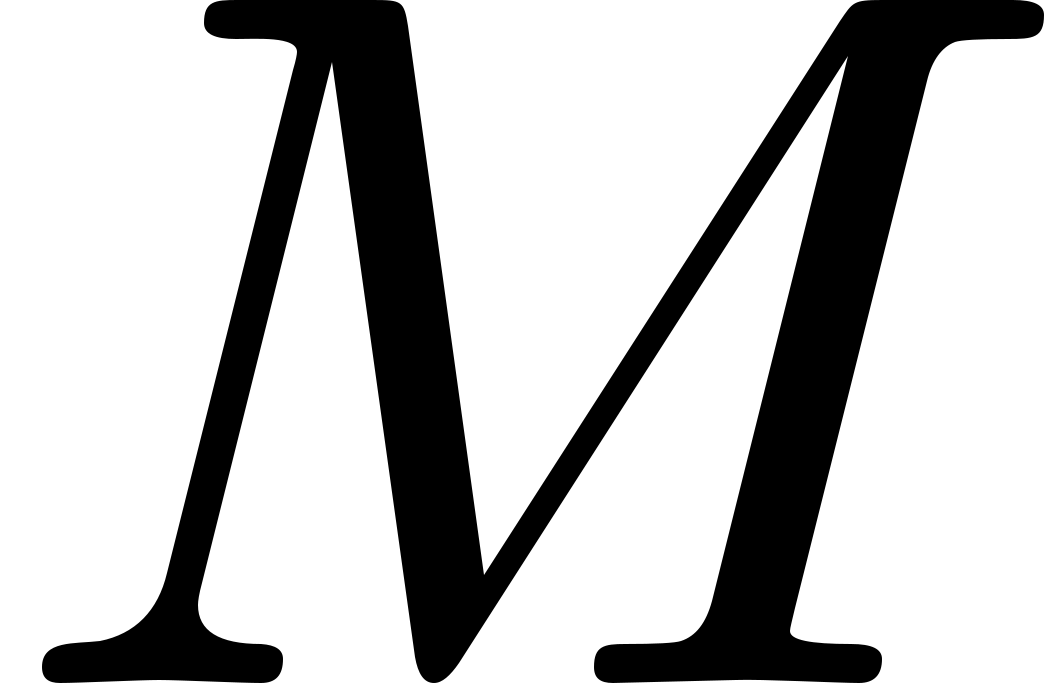 and
and 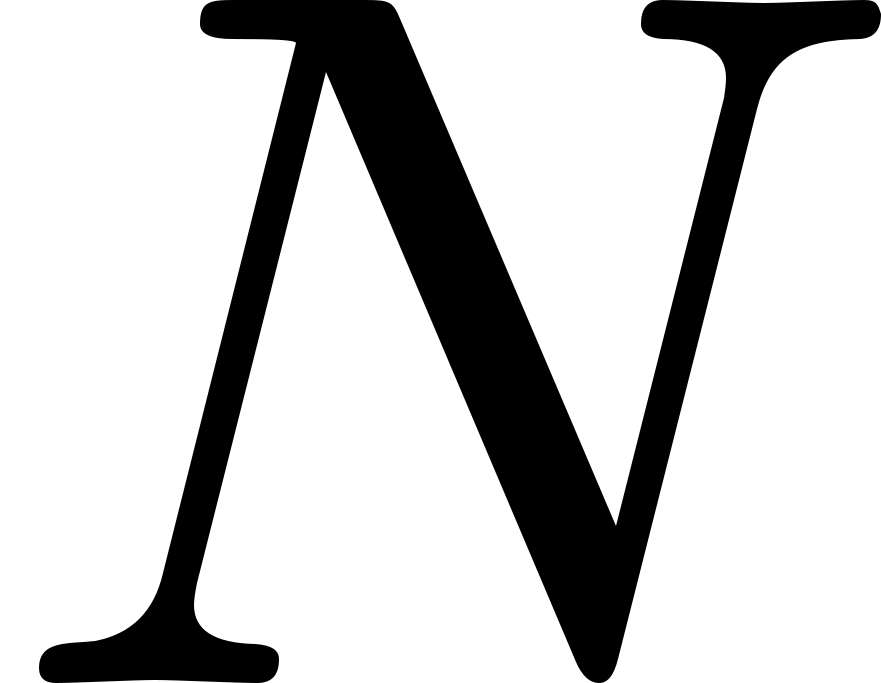 are rational, or
(what is the same thing) the form
are rational, or
(what is the same thing) the form
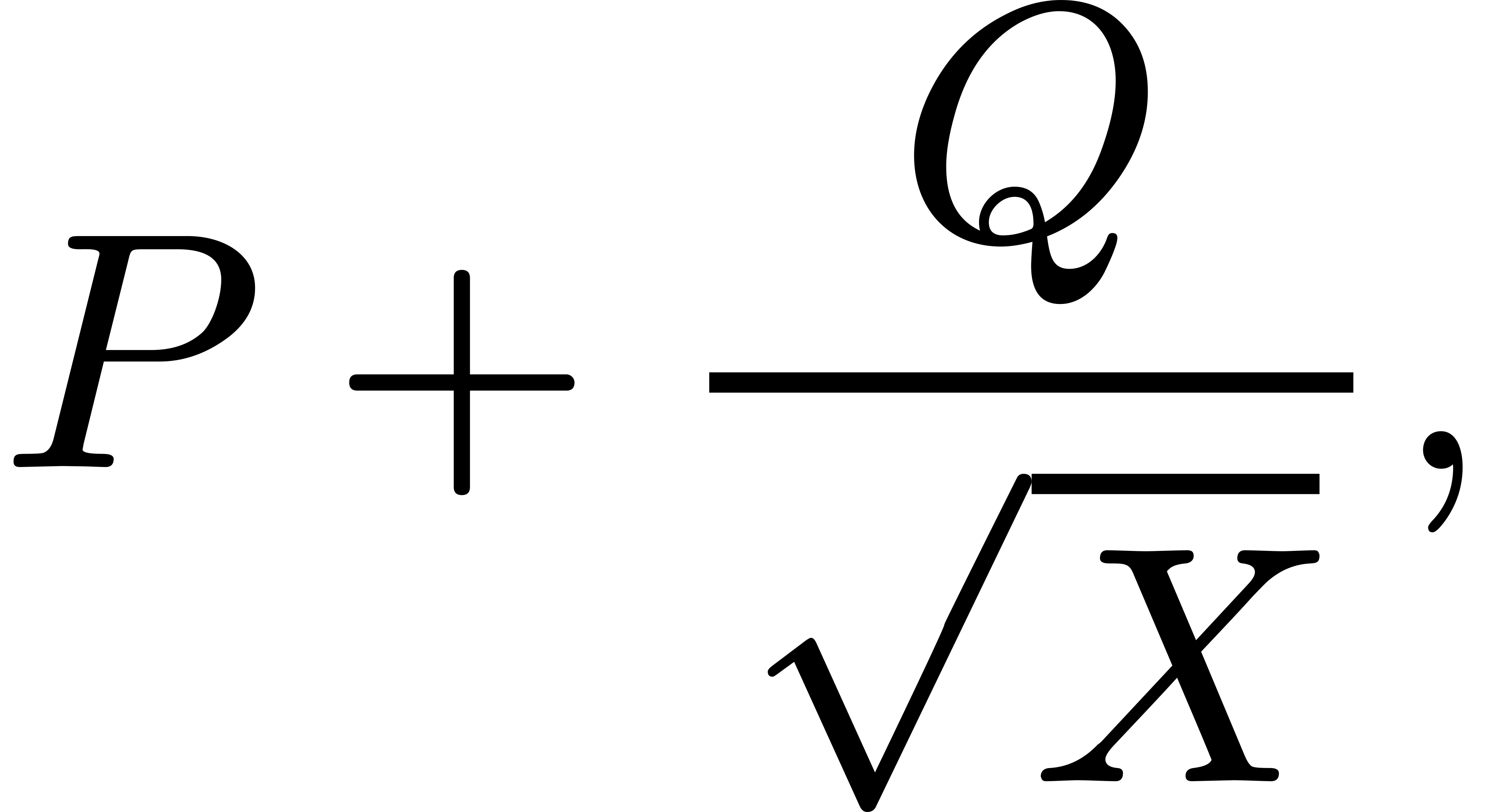 where and are rational. The rational part may be integrated
by the methods of section iv., and the integral
where and are rational. The rational part may be integrated
by the methods of section iv., and the integral
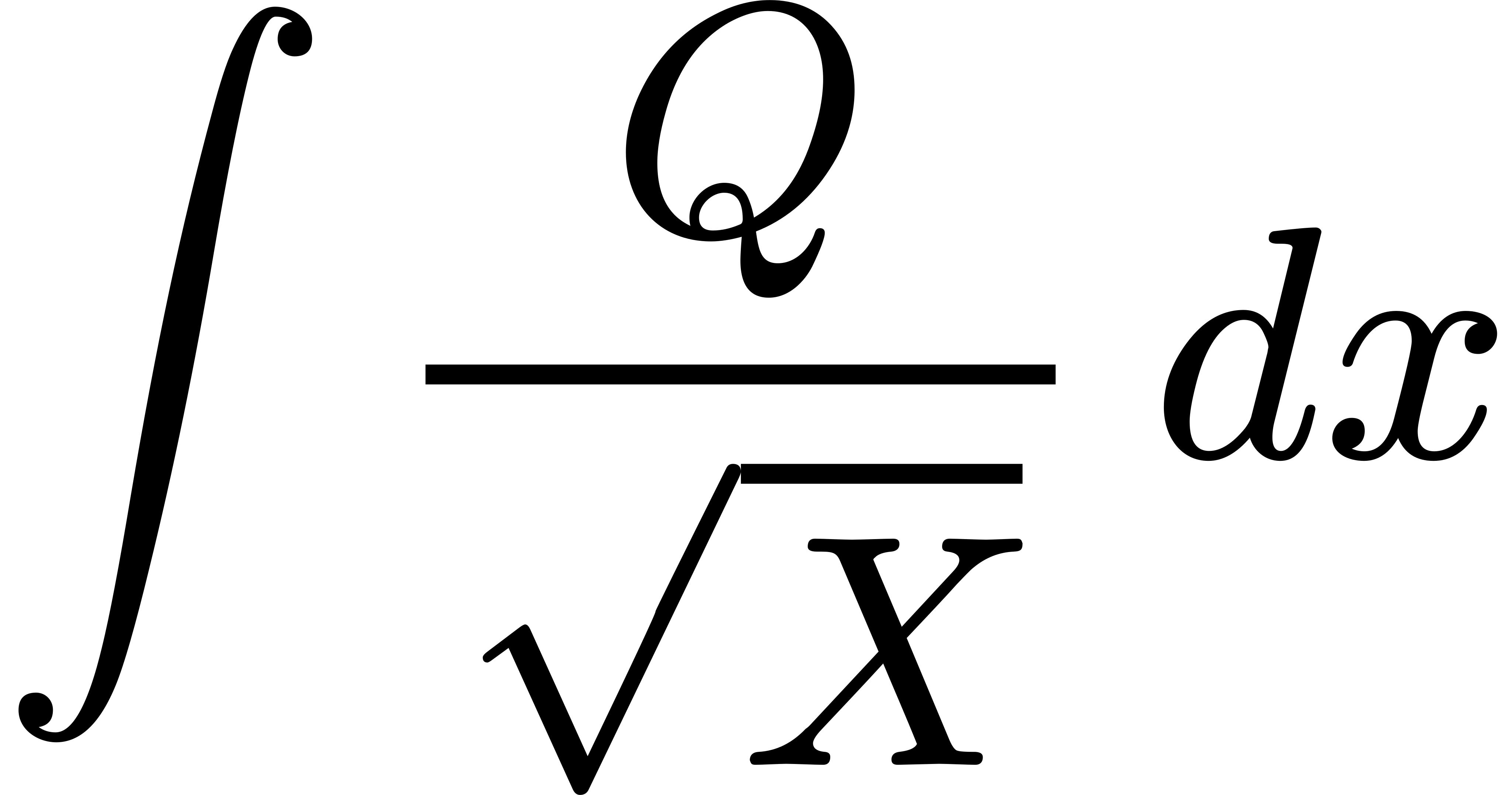 may be reduced to the sum of a number of integrals of the forms
 where , , ,
 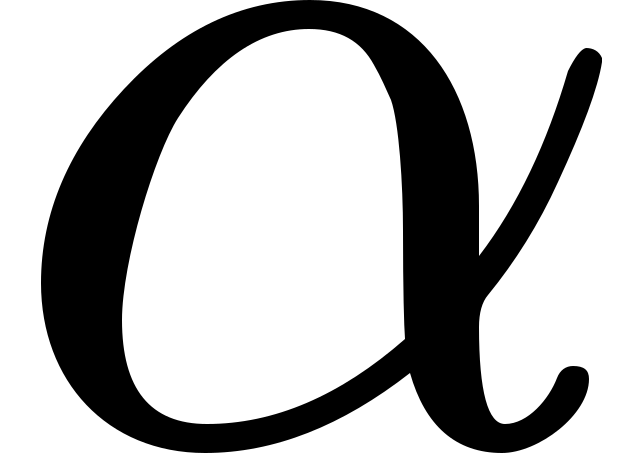 ,
, 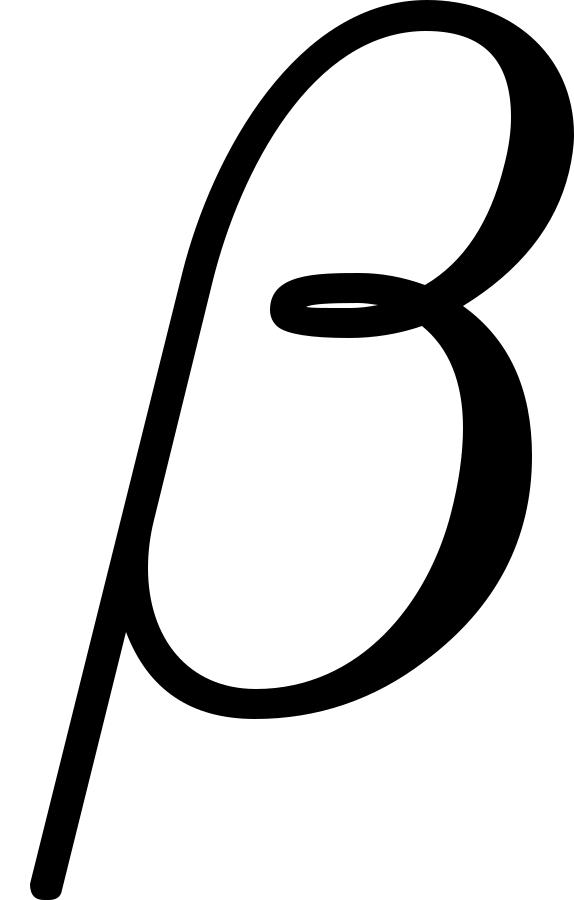 , are
real constants and a positive integer. The result is generally
required in an explicitly real form: and, as further progress depends
on transformations involving (or , ,
), it is generally not advisable to break up a quadratic
factor
, are
real constants and a positive integer. The result is generally
required in an explicitly real form: and, as further progress depends
on transformations involving (or , ,
), it is generally not advisable to break up a quadratic
factor  into its constituent linear
factors when these factors are complex.
into its constituent linear
factors when these factors are complex.
All of the integrals (1) may be reduced, by means of elementary
formulae of reduction[18], to dependence upon three fundamental
integrals, viz.

4. The first of these integrals may be reduced, by a substitution of
the type  , to one or other of the three standard forms
 where
where 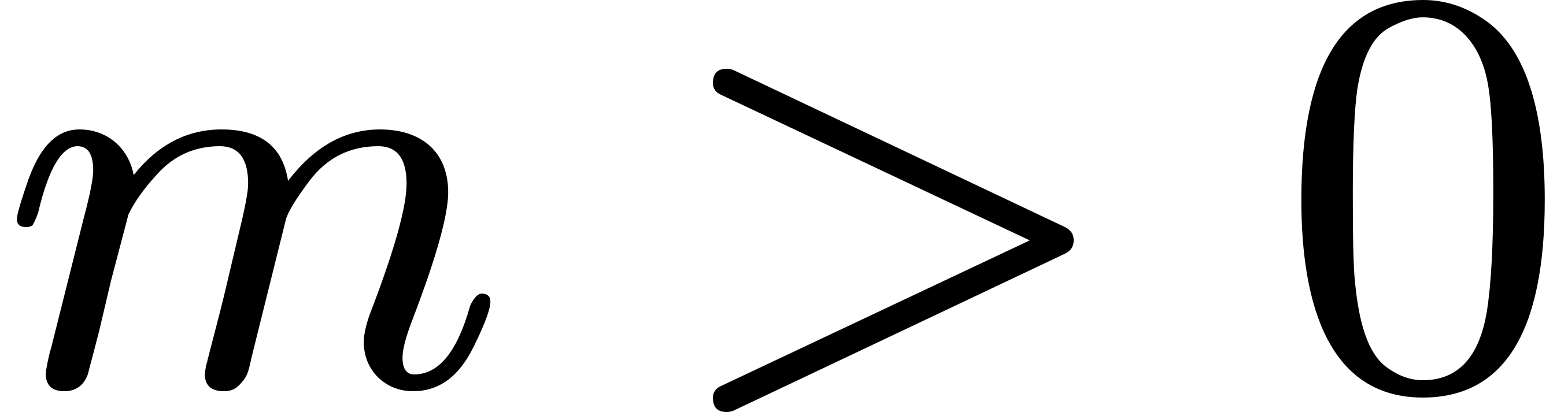 . These integrals may be rationalised by the
substitutions
. These integrals may be rationalised by the
substitutions
 but it is simpler to use the transcendental substitutions
 [Pg 26]
These last substitutions are generally the most convenient for
the reduction of an integral which contains one or other of the
irrationalities
[Pg 26]
These last substitutions are generally the most convenient for
the reduction of an integral which contains one or other of the
irrationalities
 though the alternative substitutions
 are often useful.
It has been pointed out by Dr Bromwich that the forms usually given in
text-books for these three standard integrals, viz.
 are not quite accurate. It is obvious, for example, that the first two
of these functions are odd functions of , while the corresponding
integrals are even functions. The correct formulae are
are not quite accurate. It is obvious, for example, that the first two
of these functions are odd functions of , while the corresponding
integrals are even functions. The correct formulae are
 and
and
 where the ambiguous sign is the same as that of . It is in some
ways more convenient to use the equivalent forms
where the ambiguous sign is the same as that of . It is in some
ways more convenient to use the equivalent forms

5. The integral
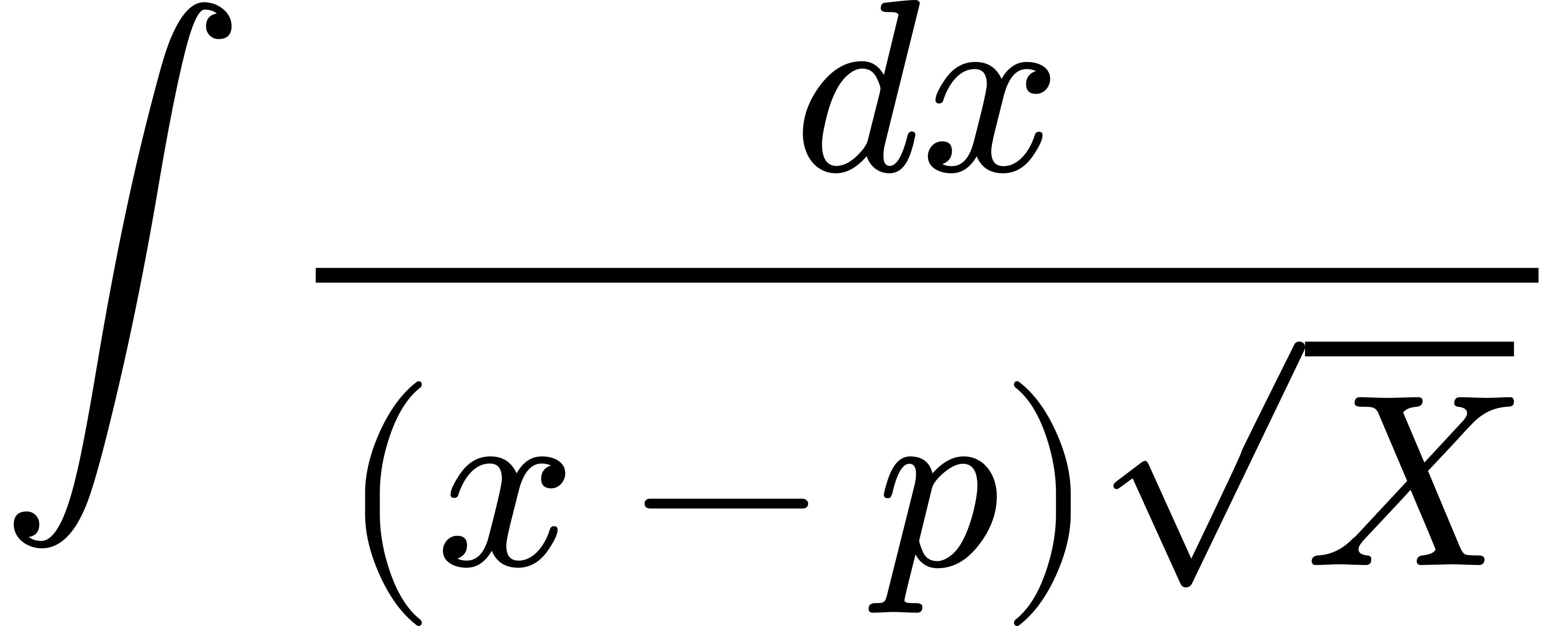 may be evaluated in a variety of ways.
If is a root of the equation 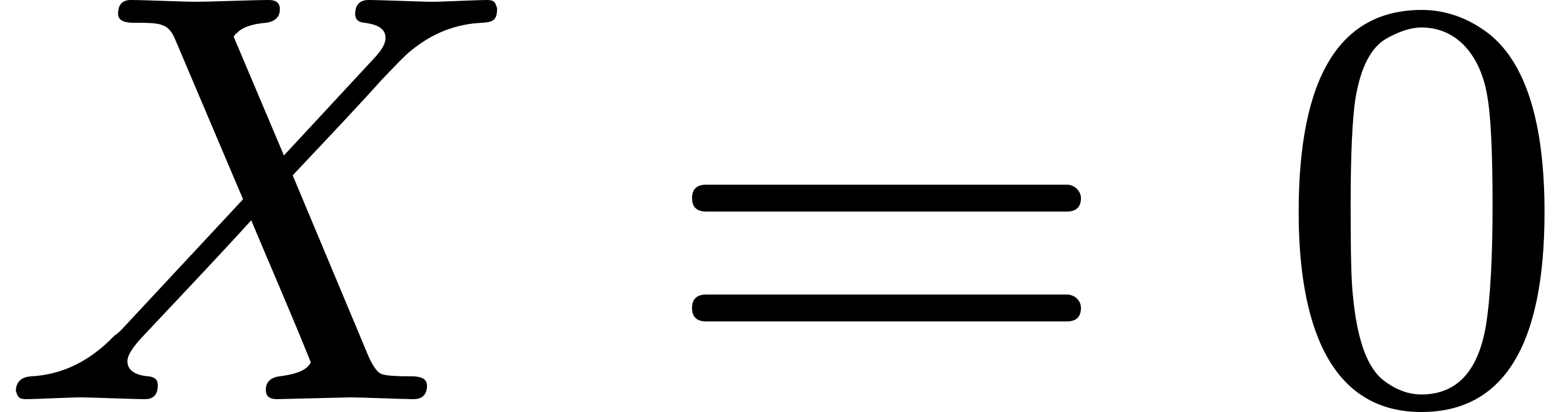 , then may be written
in the form
, then may be written
in the form  , and the value of the integral is given
by one or other of the formulae
, and the value of the integral is given
by one or other of the formulae
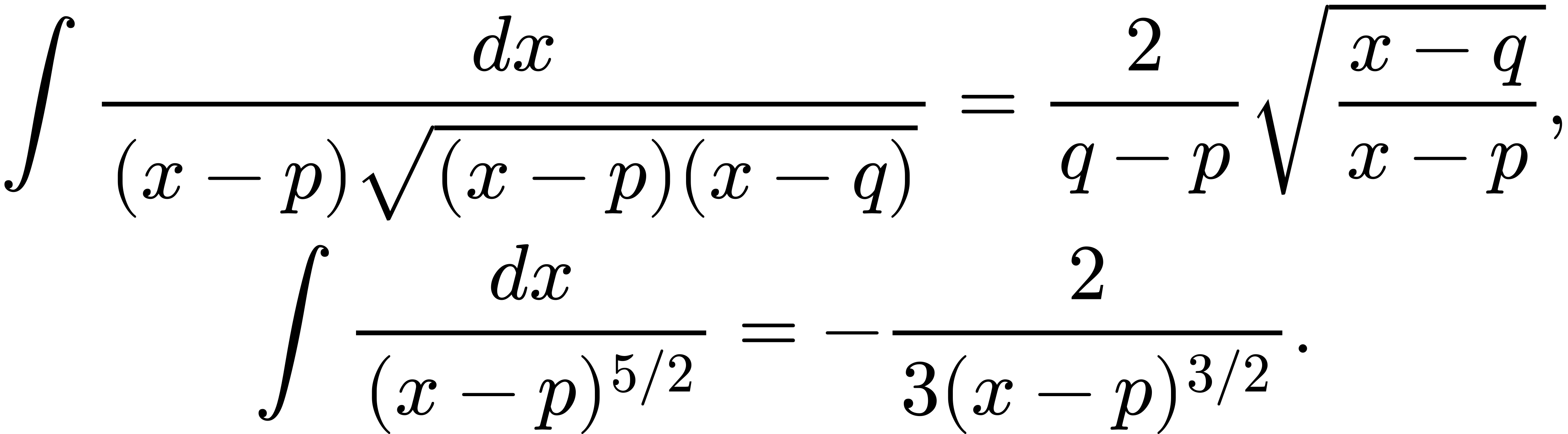 We may therefore suppose that is not a root of .
(i) We may follow the general method described above, taking[19]
 Eliminating from the equations
 and dividing by , we obtain
 and so

[Pg 27]
Hence
 But
But
 and so
 If
If  the transformation is imaginary.
Suppose, e.g., (a) 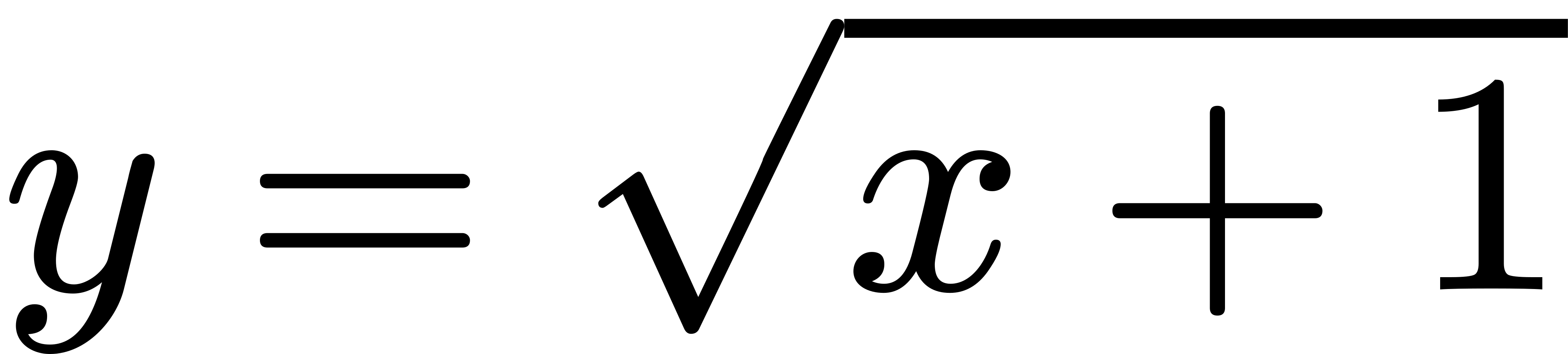 ,
, 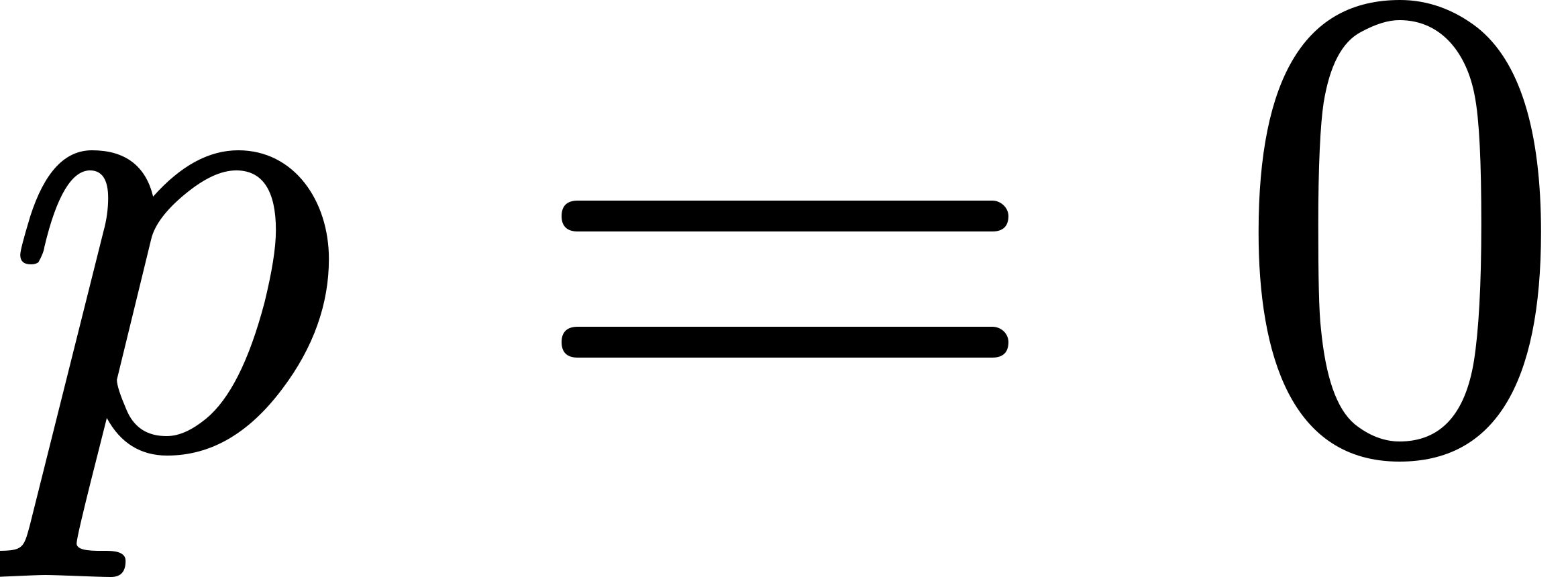 , or
(b)
, or
(b) 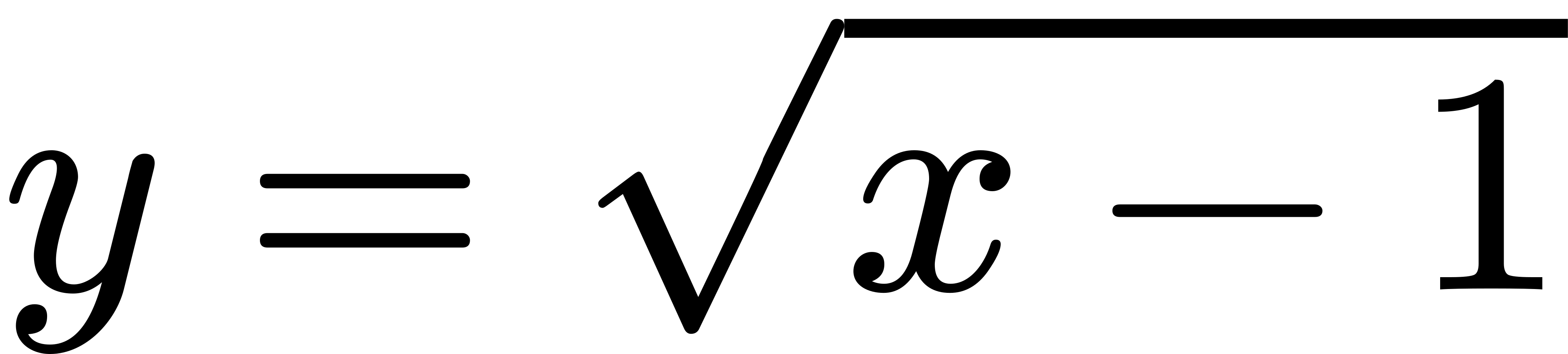 , . We find
(a)
 where
where
 or
or
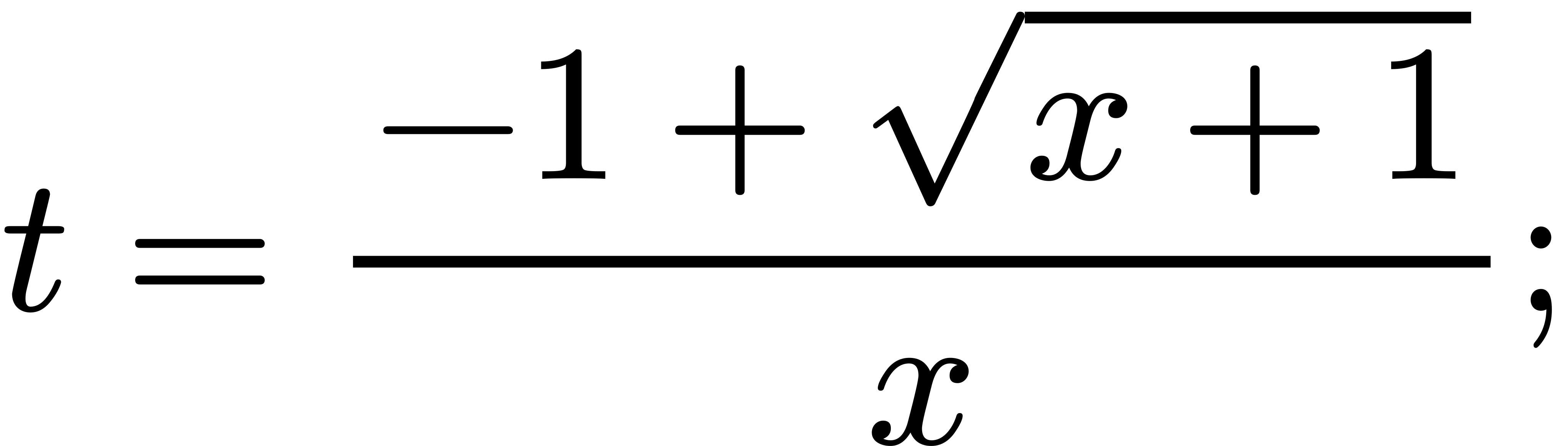 and
and
(b)
 where
where
 Neither of these results is expressed in the simplest form, the second
in particular being very inconvenient.
Neither of these results is expressed in the simplest form, the second
in particular being very inconvenient.
(ii) The most straightforward method of procedure is to use the
substitution
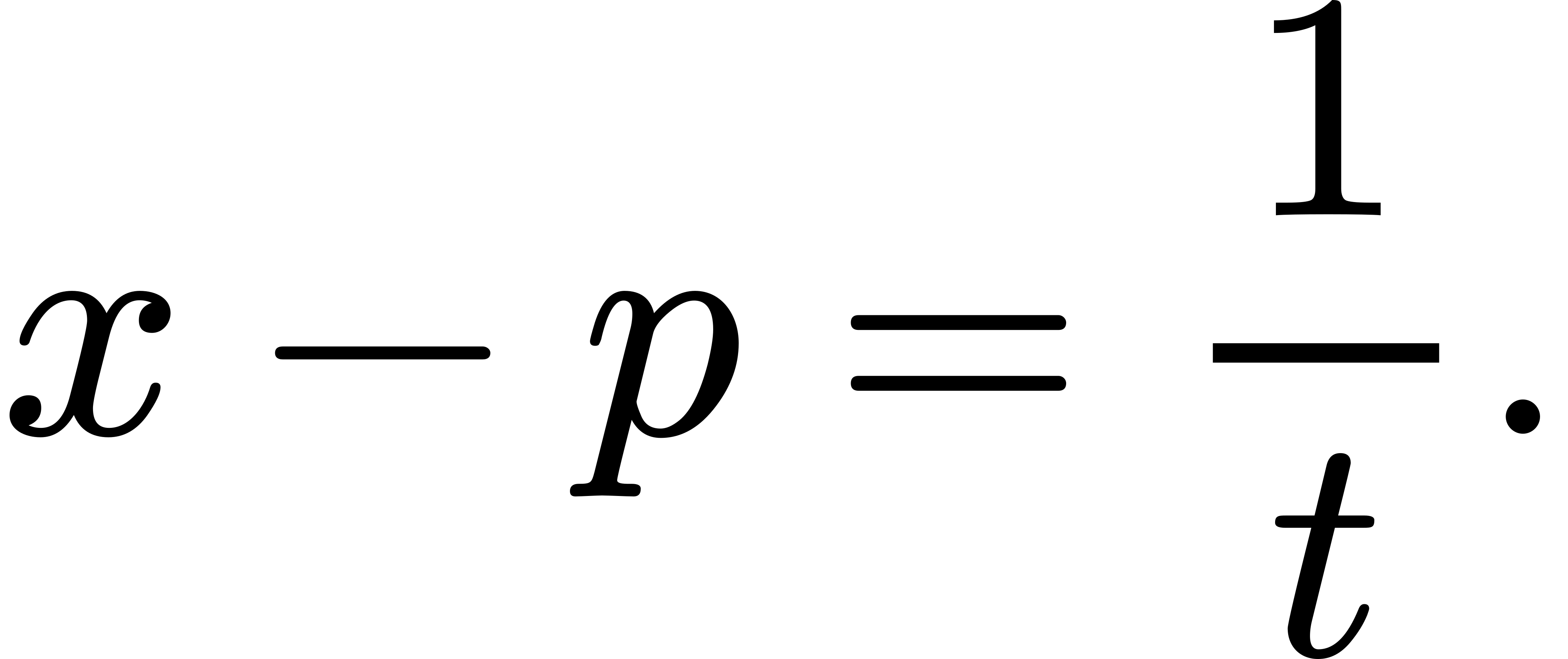 We then obtain
 where
where 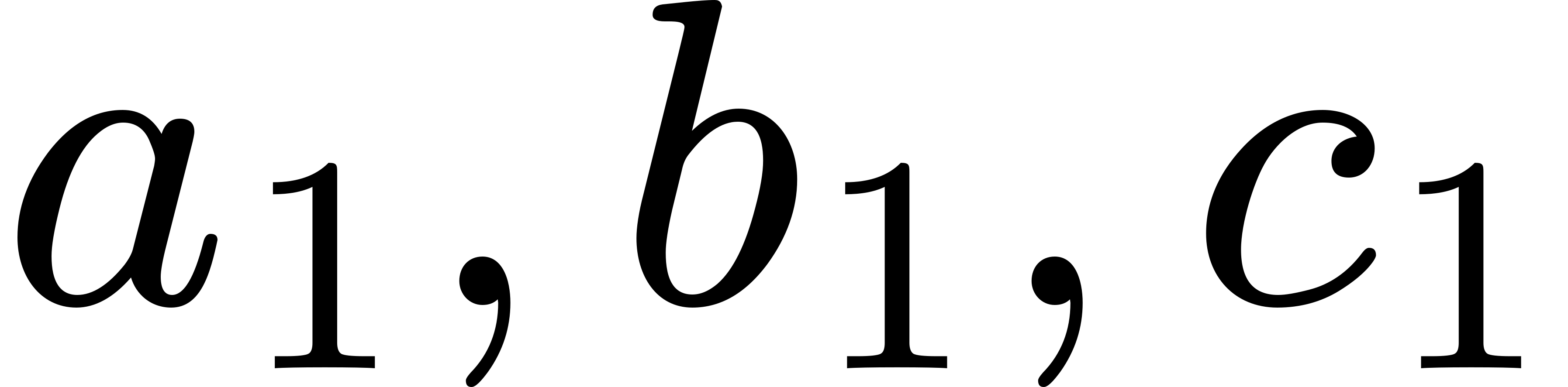 are certain simple functions of
 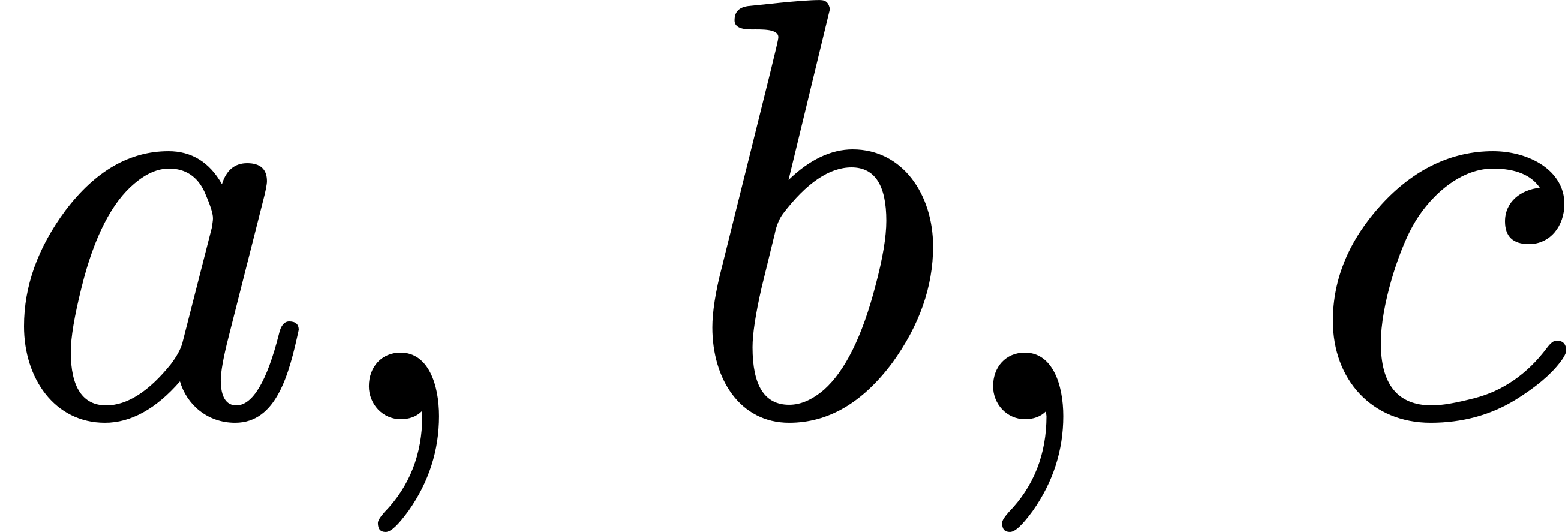 , and . The further reduction of this integral has been
discussed already.
, and . The further reduction of this integral has been
discussed already.
(iii) A third method of integration is that adopted by Sir G.
Greenhill[20], who uses the transformation
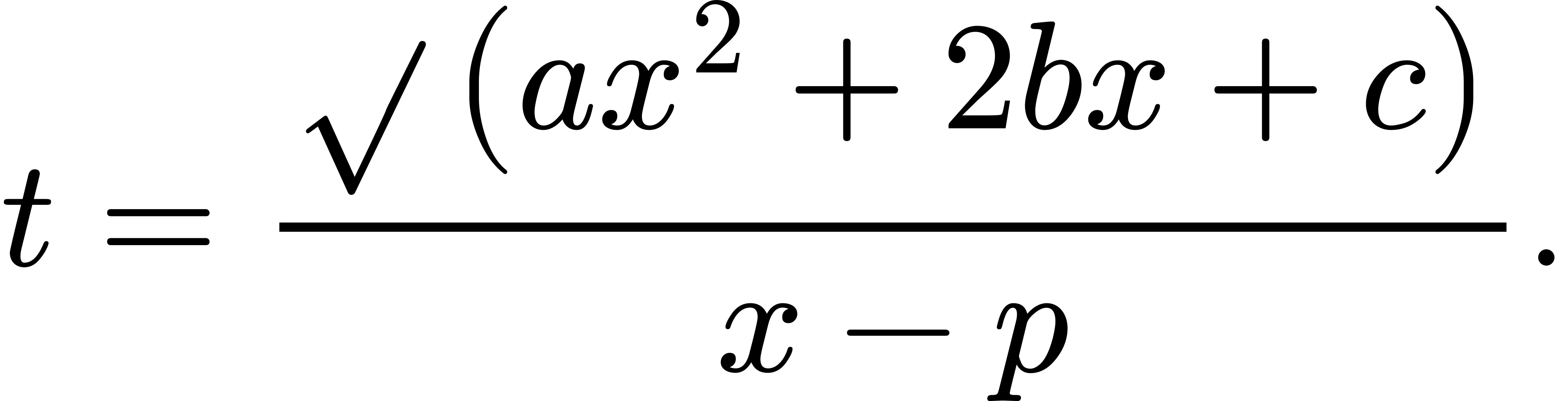 It will be found that
 which is of one of the three standard forms mentioned in §4.
[Pg 28]
6. It remains to consider the integral
 where or is a quadratic
with complex linear factors. Here again there is a choice of methods at
our disposal.
where or is a quadratic
with complex linear factors. Here again there is a choice of methods at
our disposal.
We may suppose that is not a constant multiple of . If
it is, then the value of the integral is given by the formula[21]

(i) The standard method is to use the substitution
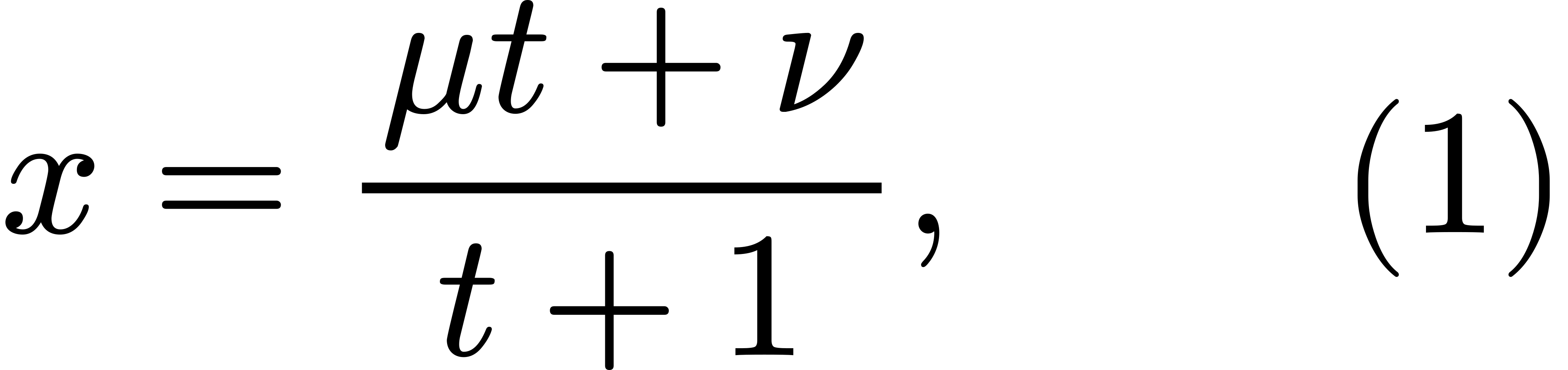 where
where 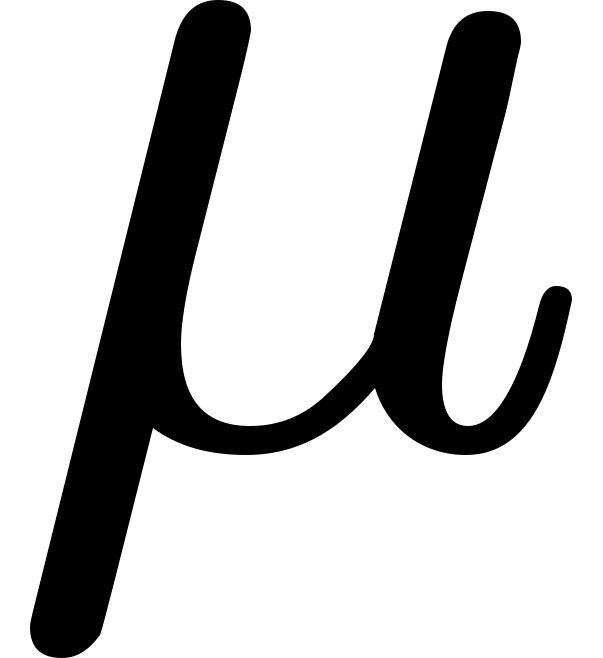 and
and 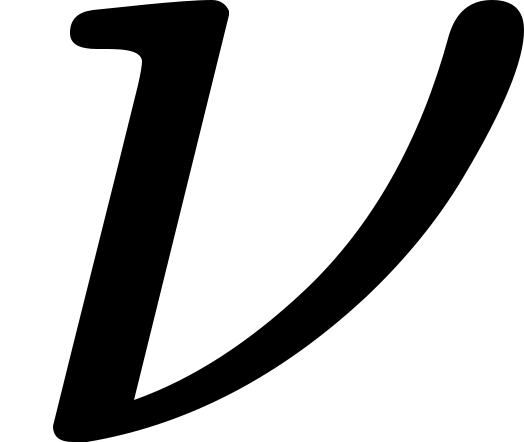 are so chosen that

The values of and which satisfy these conditions are
the roots of the quadratic
 The roots will be real and distinct if
 or if
or if
 Now
Now  , so that (3) is certainly
satisfied if
, so that (3) is certainly
satisfied if  . But if
 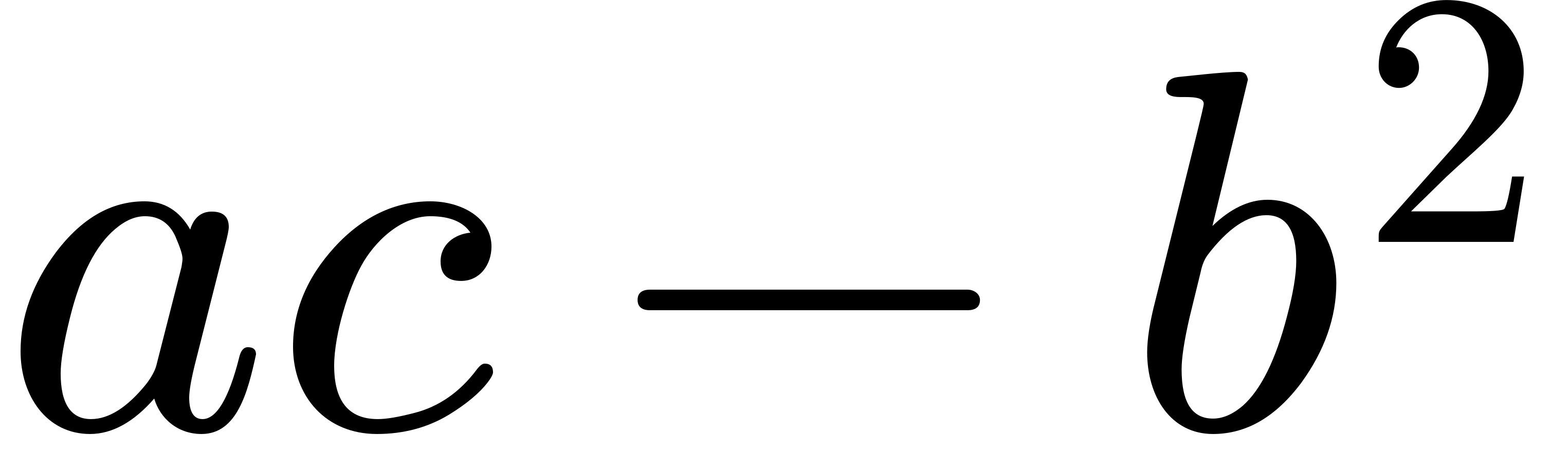 and
and
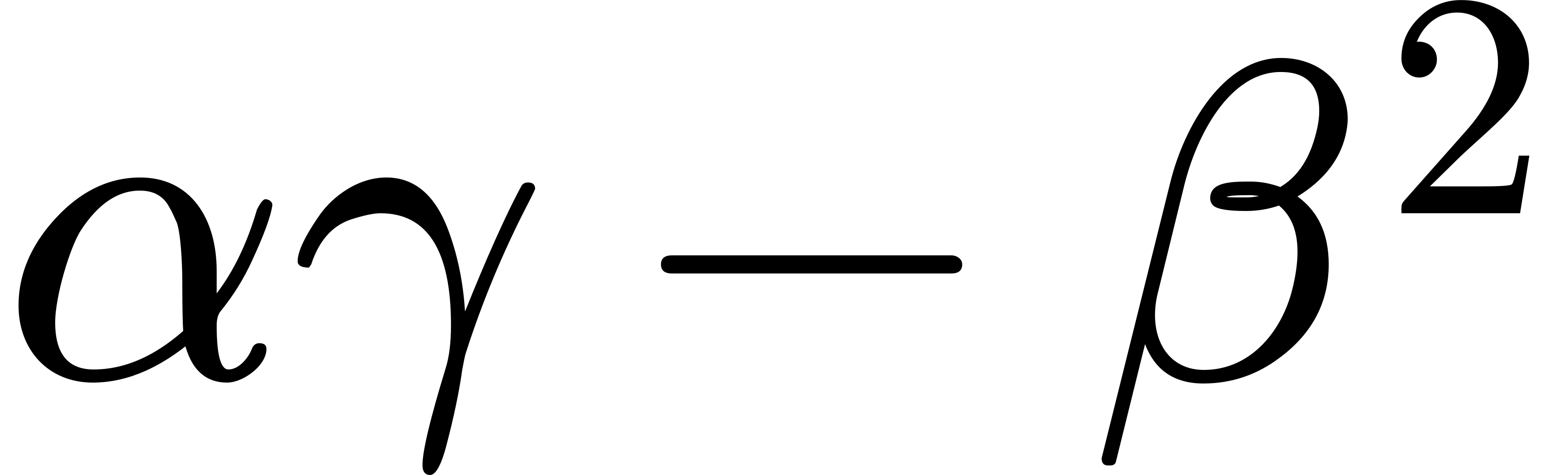 are both positive then
 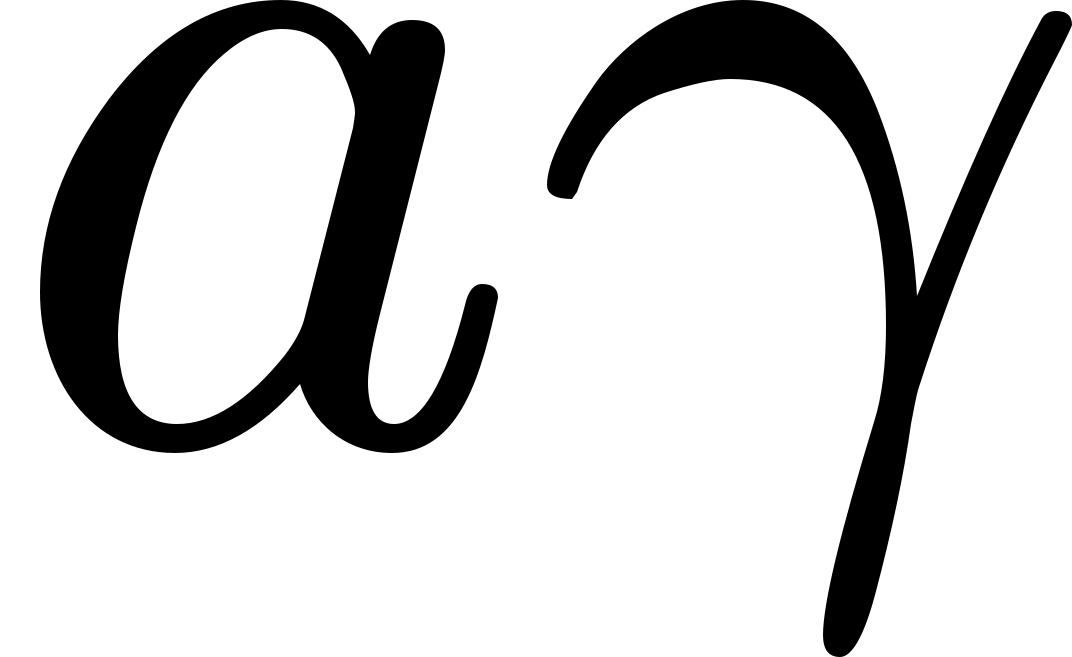 and
and
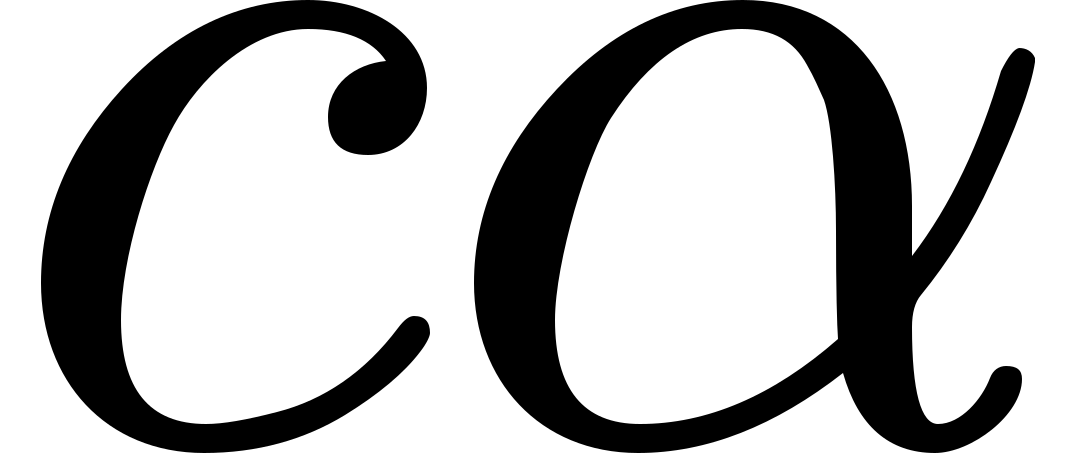 have the same sign, and
 Thus the values of and are in any case real and
distinct.
Thus the values of and are in any case real and
distinct.
It will be found, on carrying out the substitution (1), that
 where
where 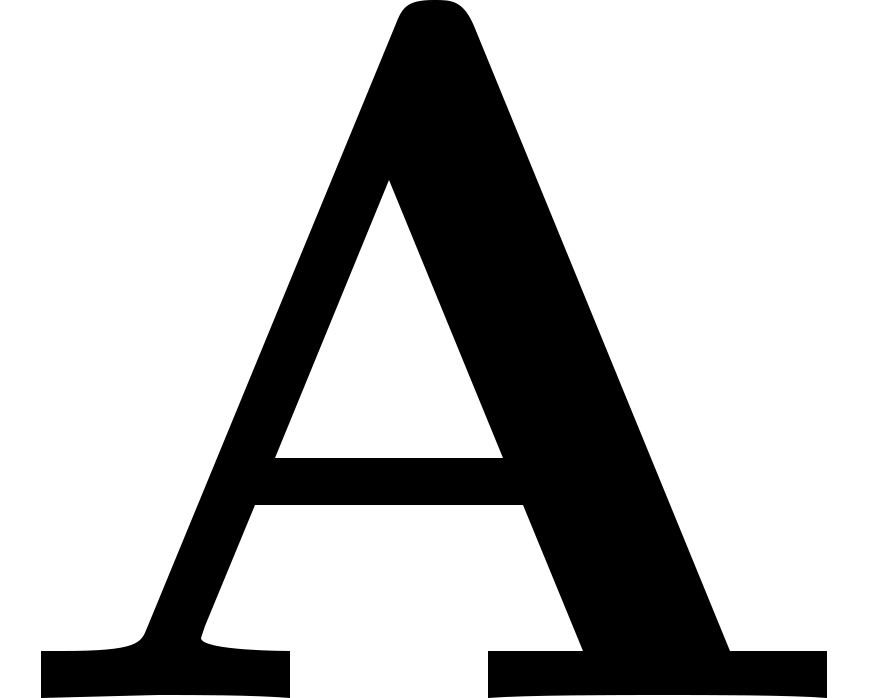 ,
, 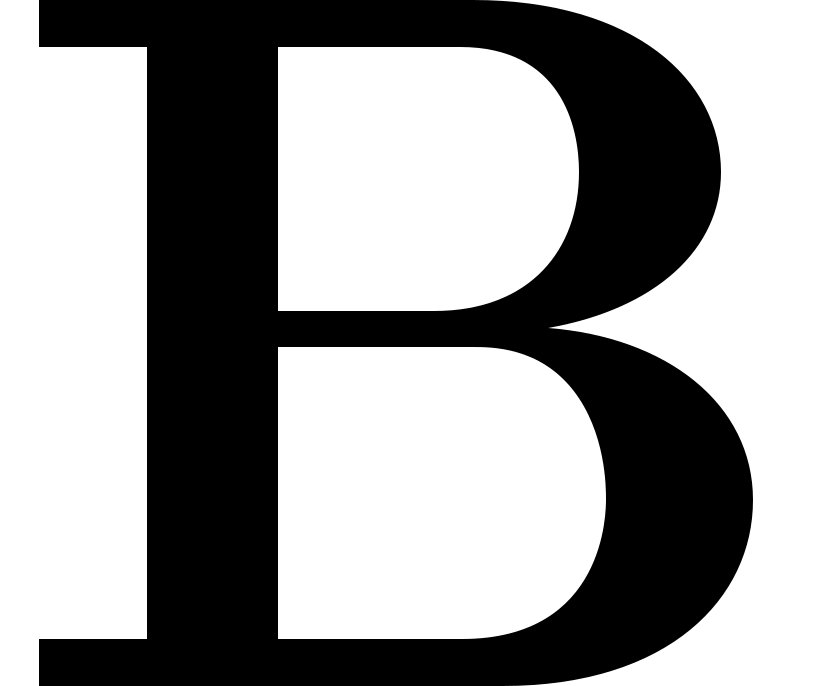 , , ,
, , , 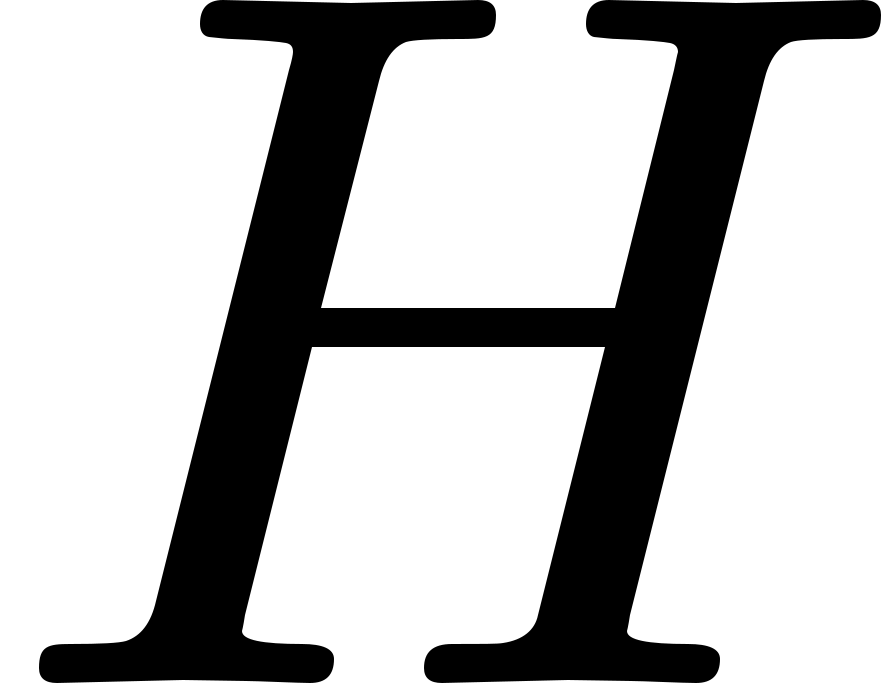 , and
, and 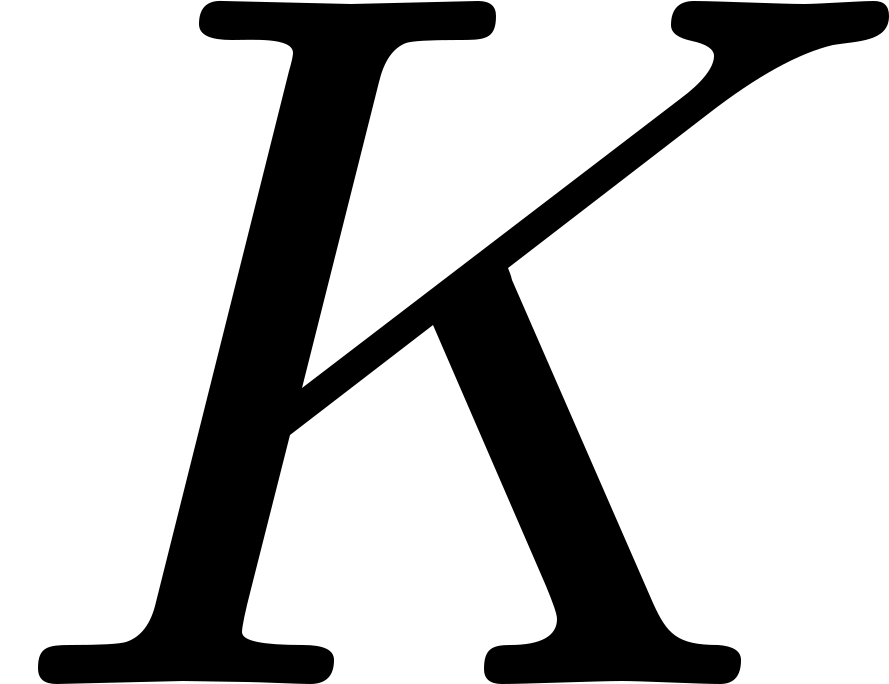 are constants. Of these two integrals, the first is rationalised by the
substitution
are constants. Of these two integrals, the first is rationalised by the
substitution
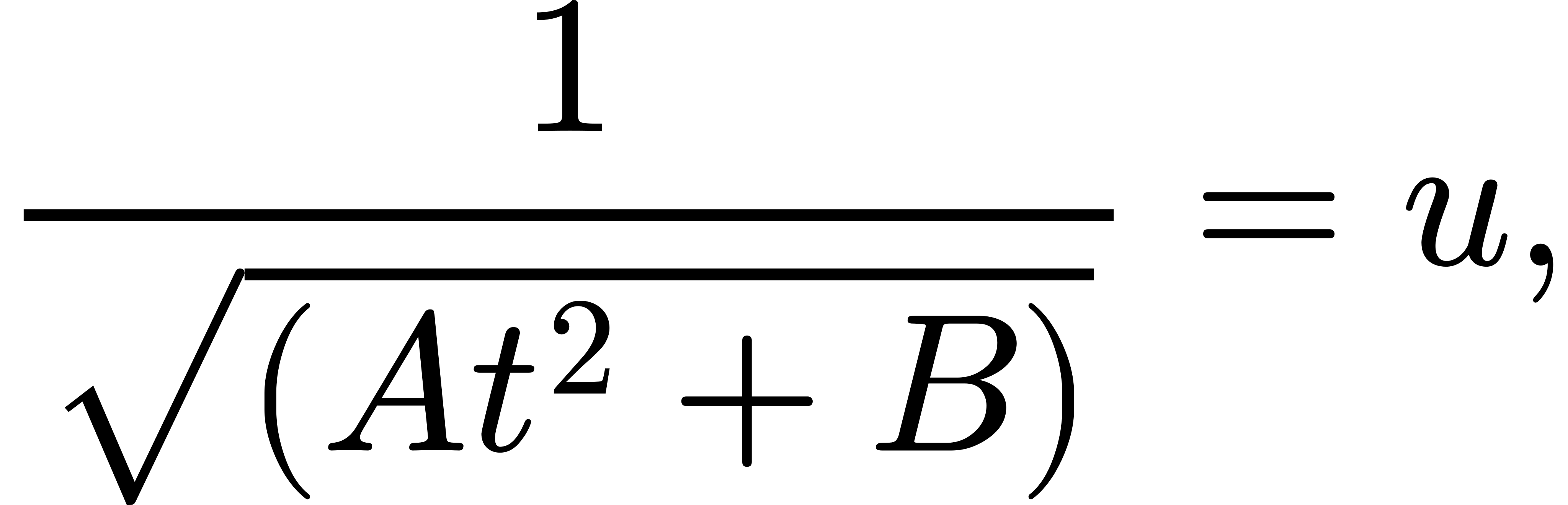 and the second by the substitution[22]
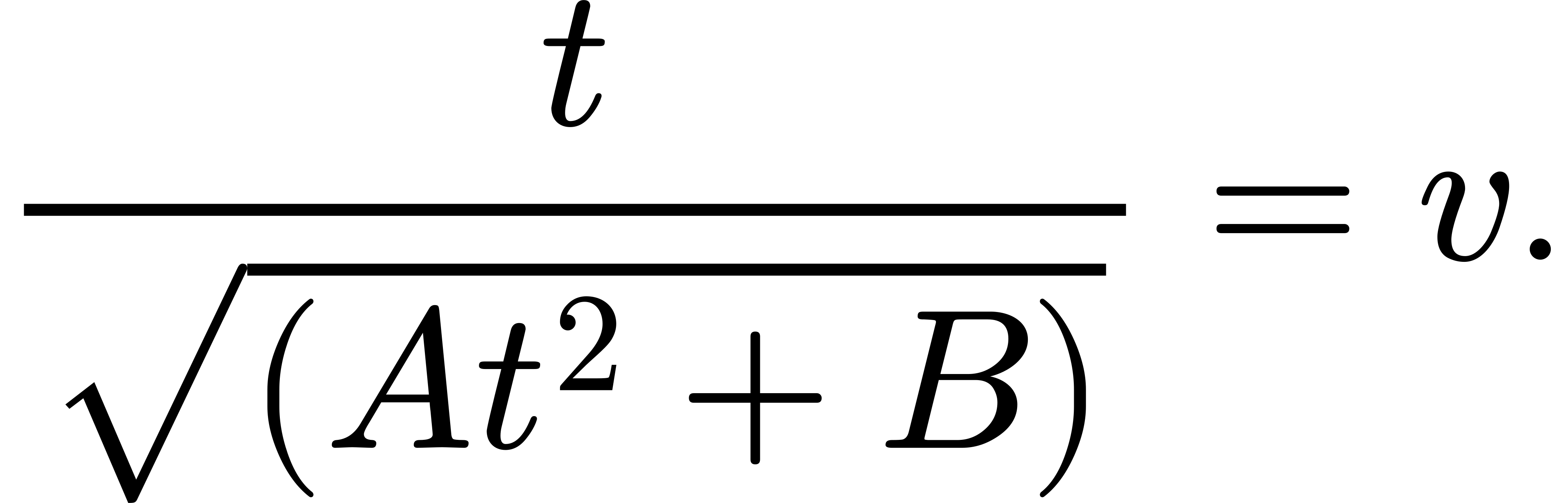
It should be observed that this method fails in the special case
in which[Pg 29]  . In this case, however, the
substitution
. In this case, however, the
substitution  reduces the integral to one of the form
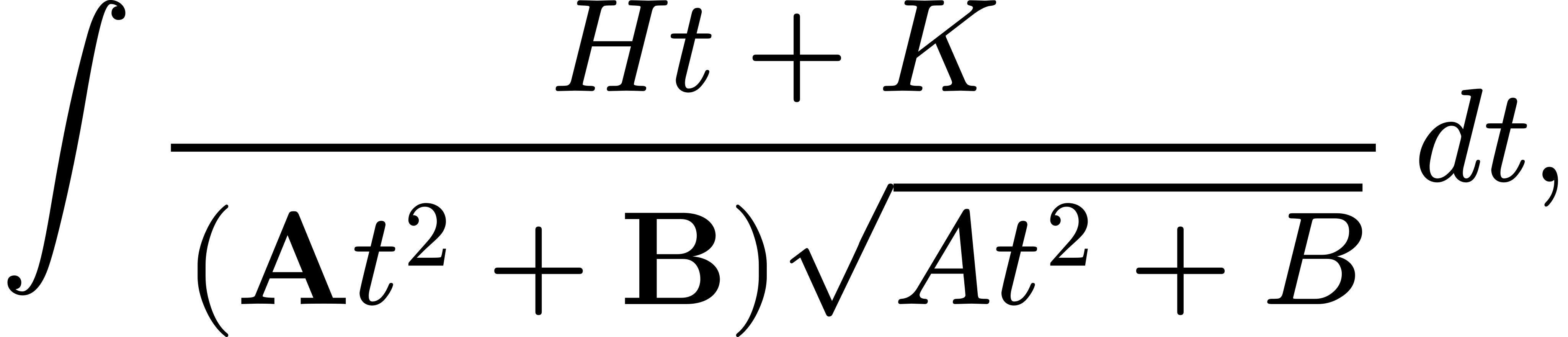 and the reduction may then be completed as before.
(ii) An alternative method is to use Sir G. Greenhill's substitution
 If
If
 then
then
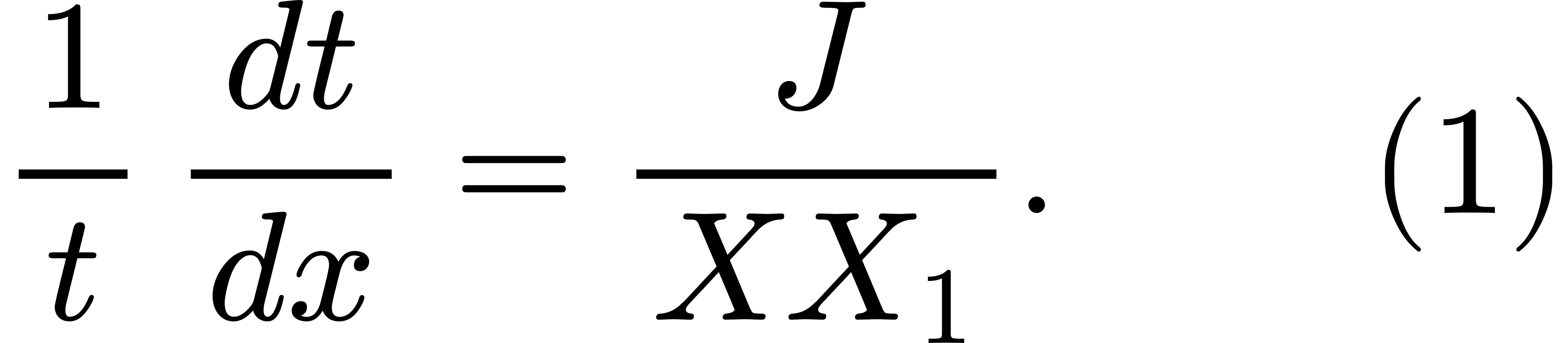 The maximum and minimum values of are given by
 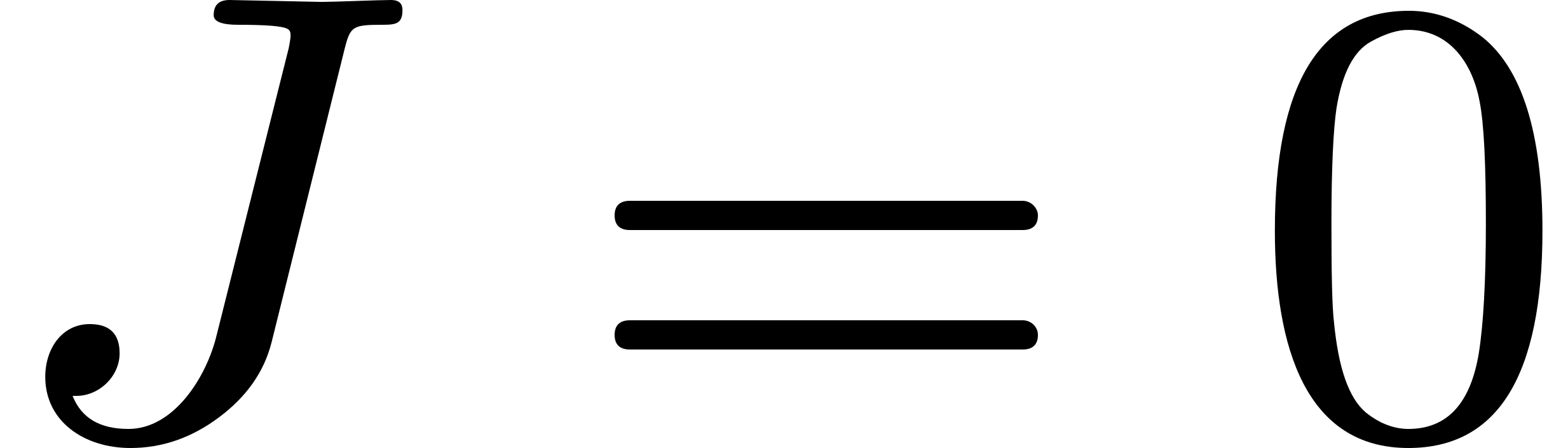 .
.
Again
 and the numerator will be a perfect square if

It will be found by a little calculation that the discriminant of this
quadratic and that of 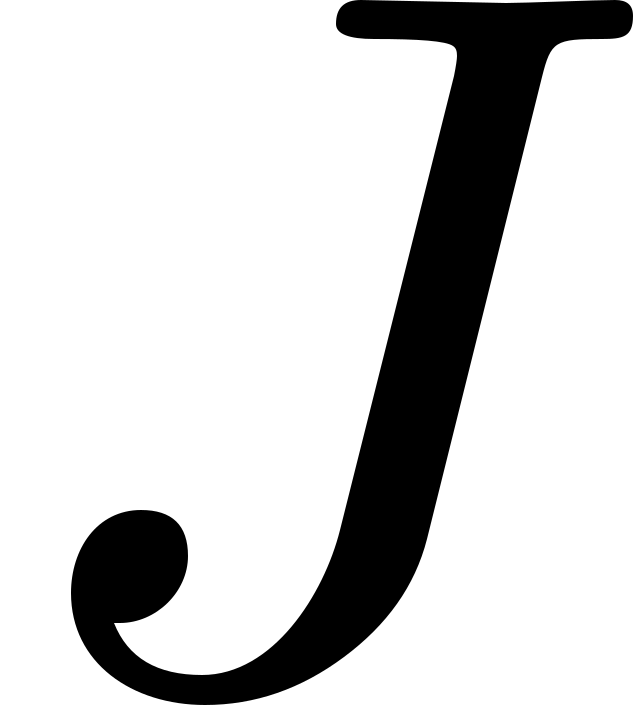 differ from one another and from
 where
where 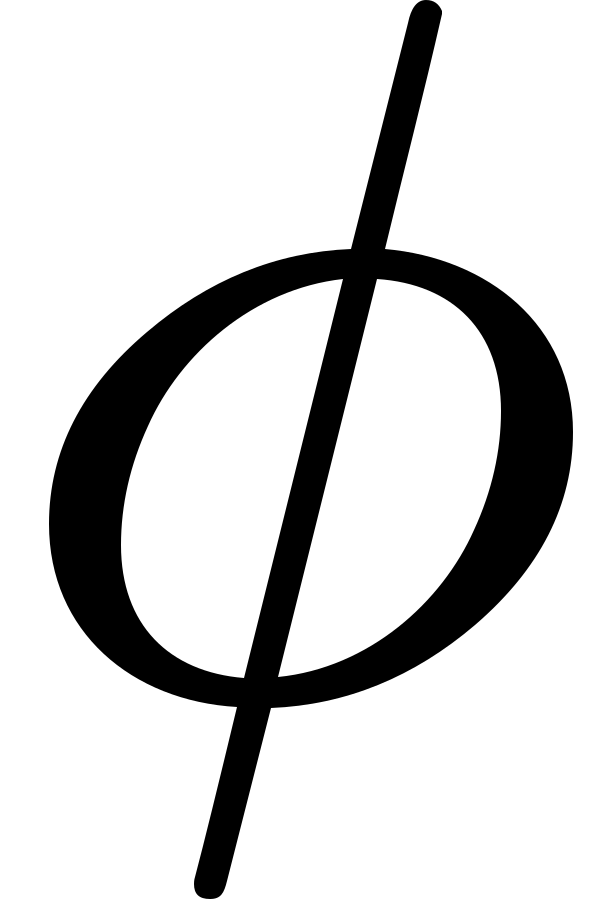 ,
, 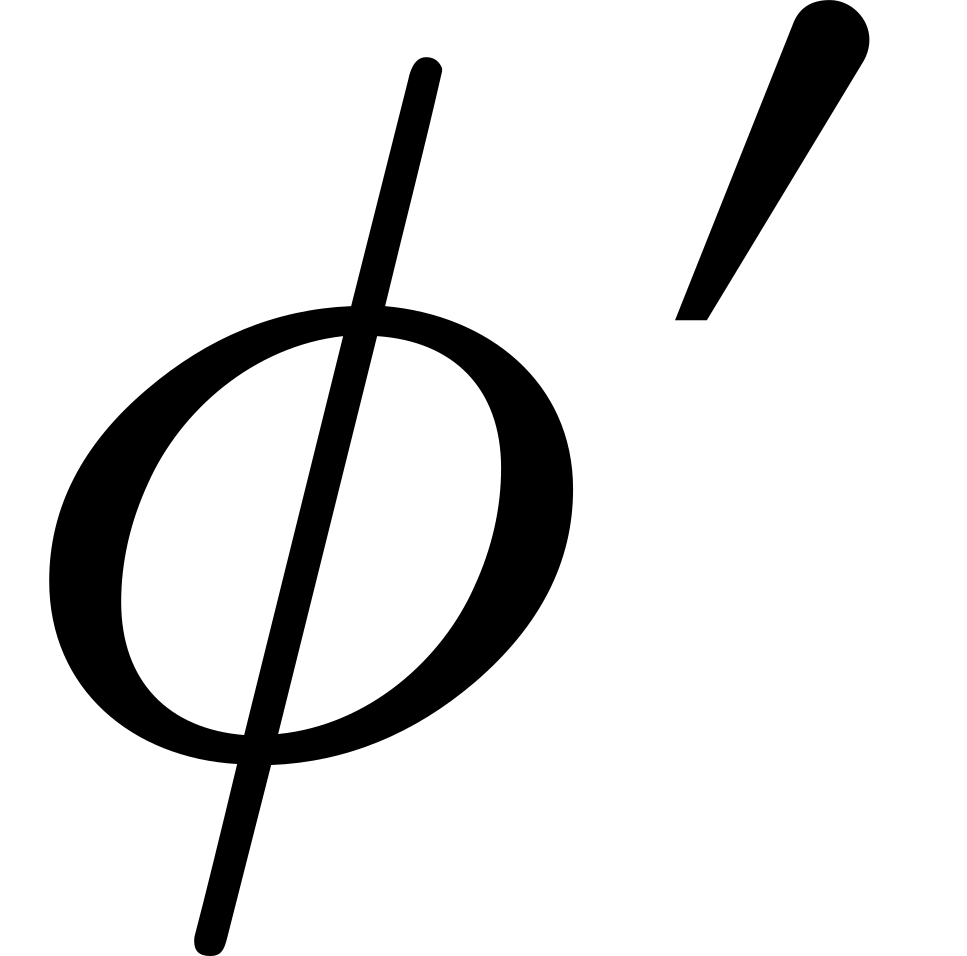 are the roots of and
 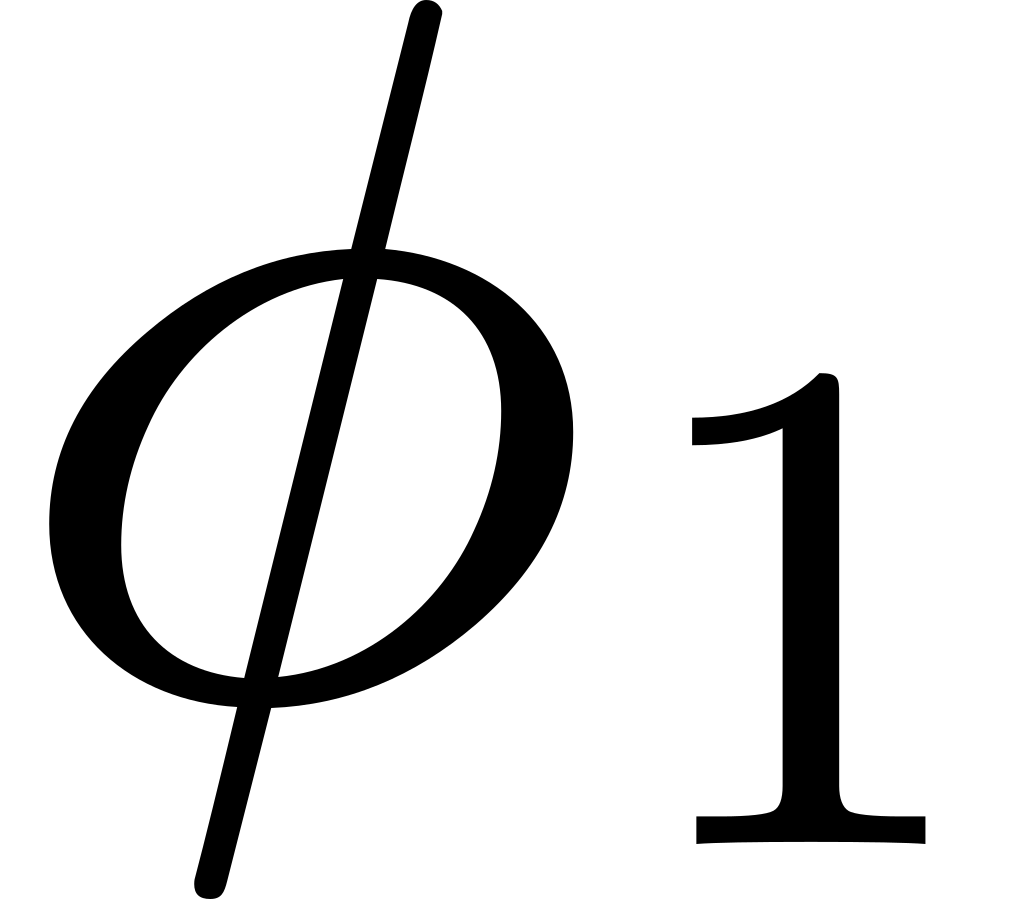 ,
,
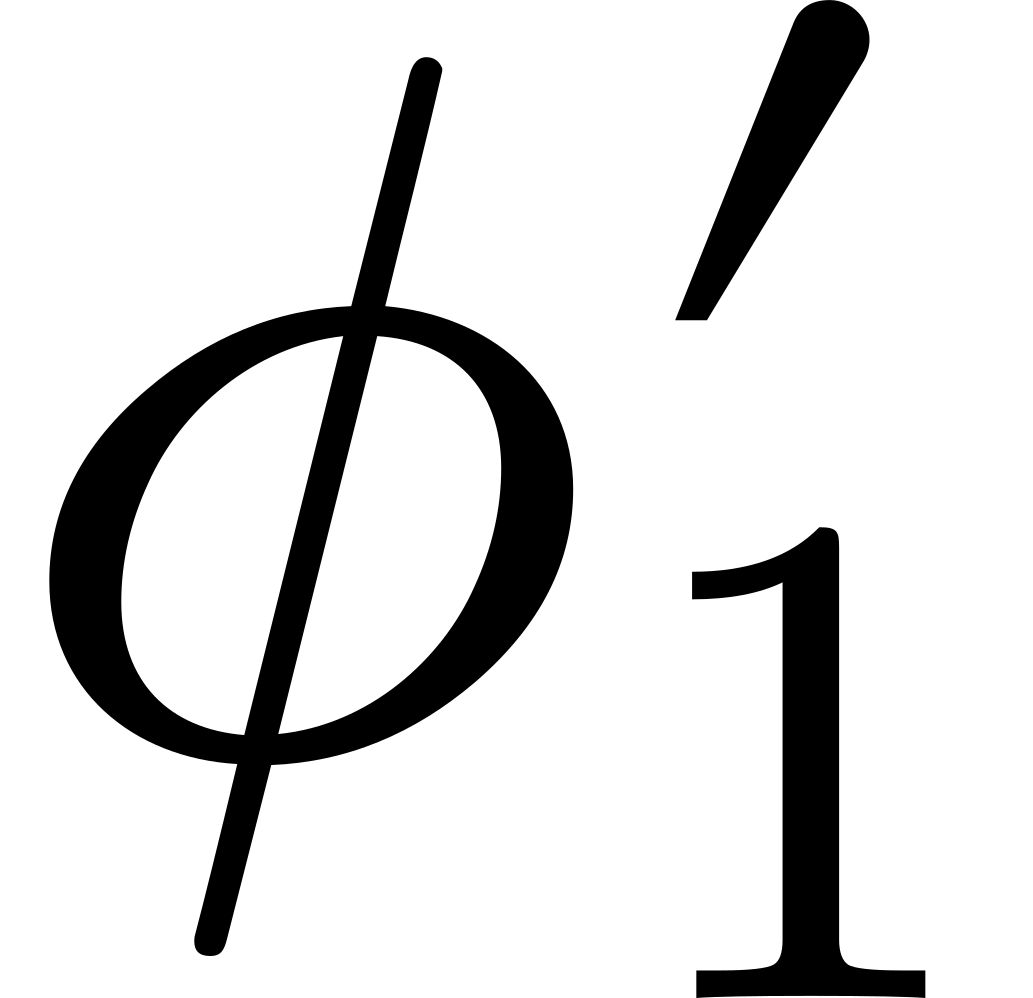 those of
 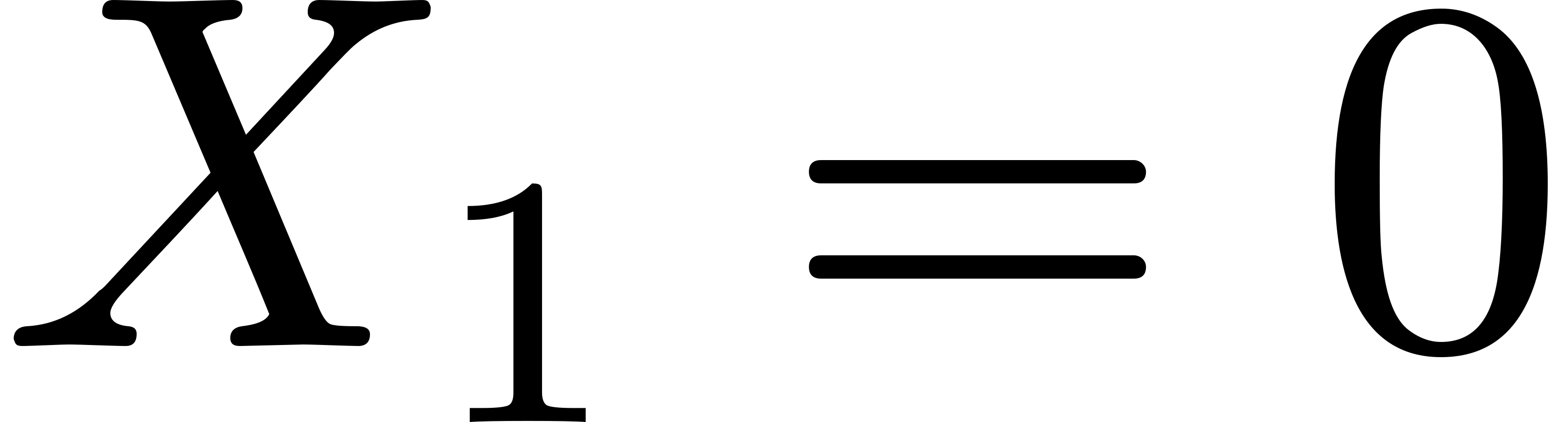 , only by a constant factor which
is always negative. Since and are conjugate
complex numbers, this product is positive, and so and
, only by a constant factor which
is always negative. Since and are conjugate
complex numbers, this product is positive, and so and 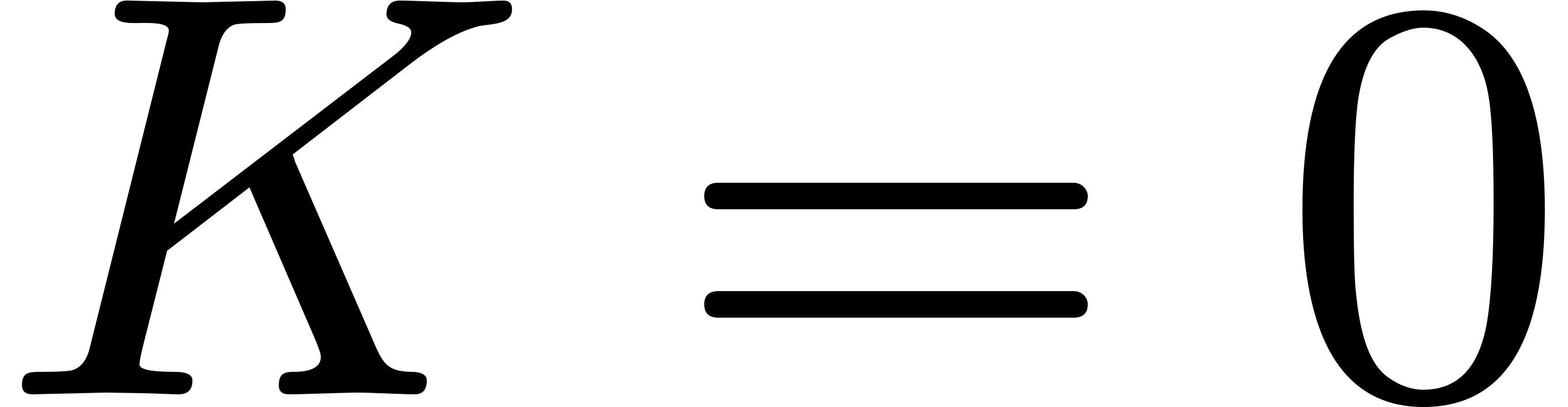 have real roots[23]. We denote the roots of the latter by
 Then
Then
 say. Further, since
 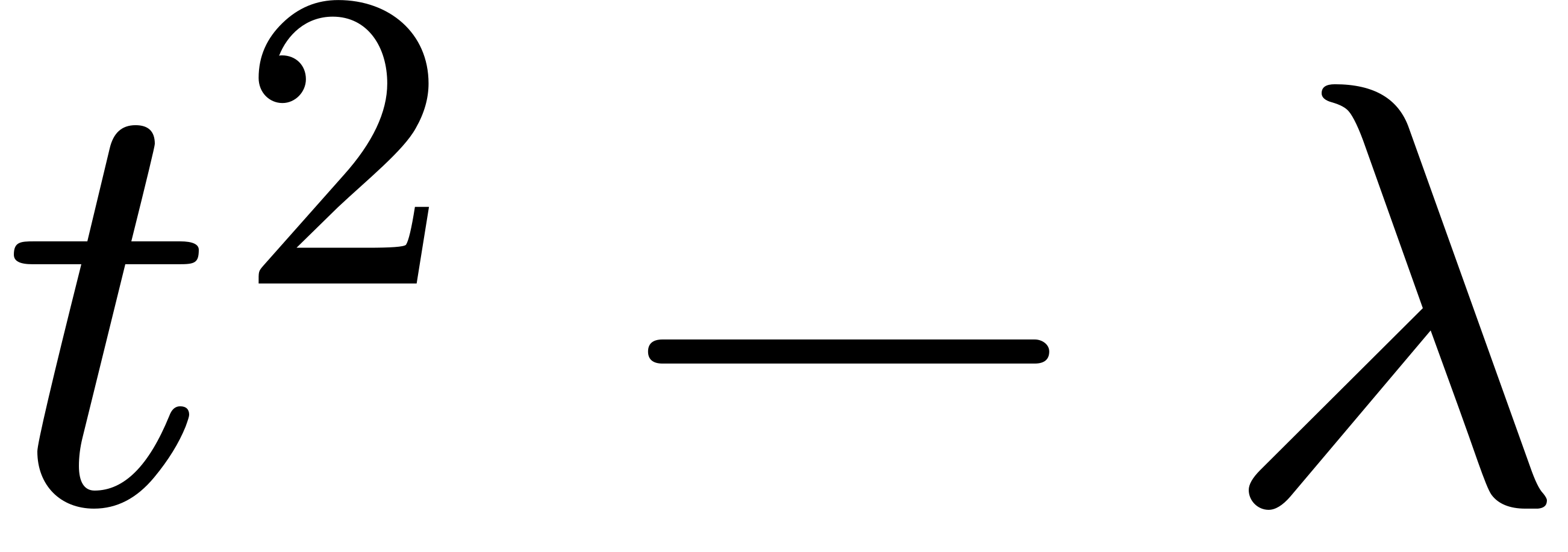 can vanish for two equal
values of only if
can vanish for two equal
values of only if 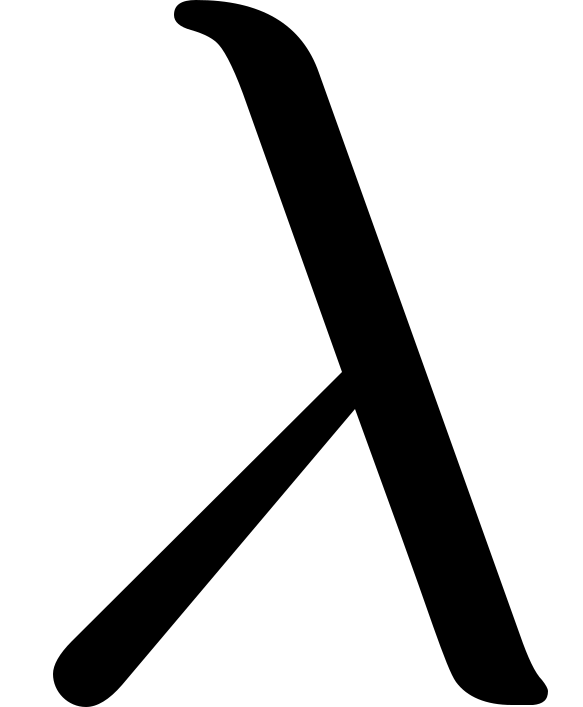 is equal to
 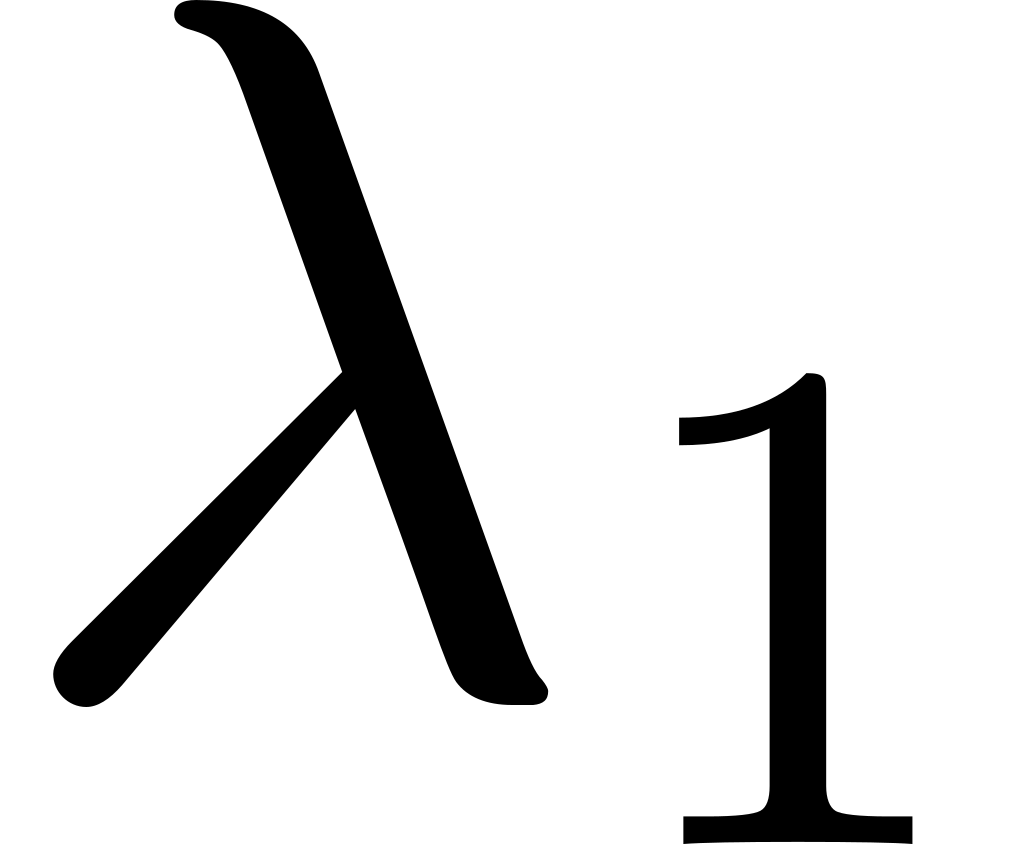 or
or
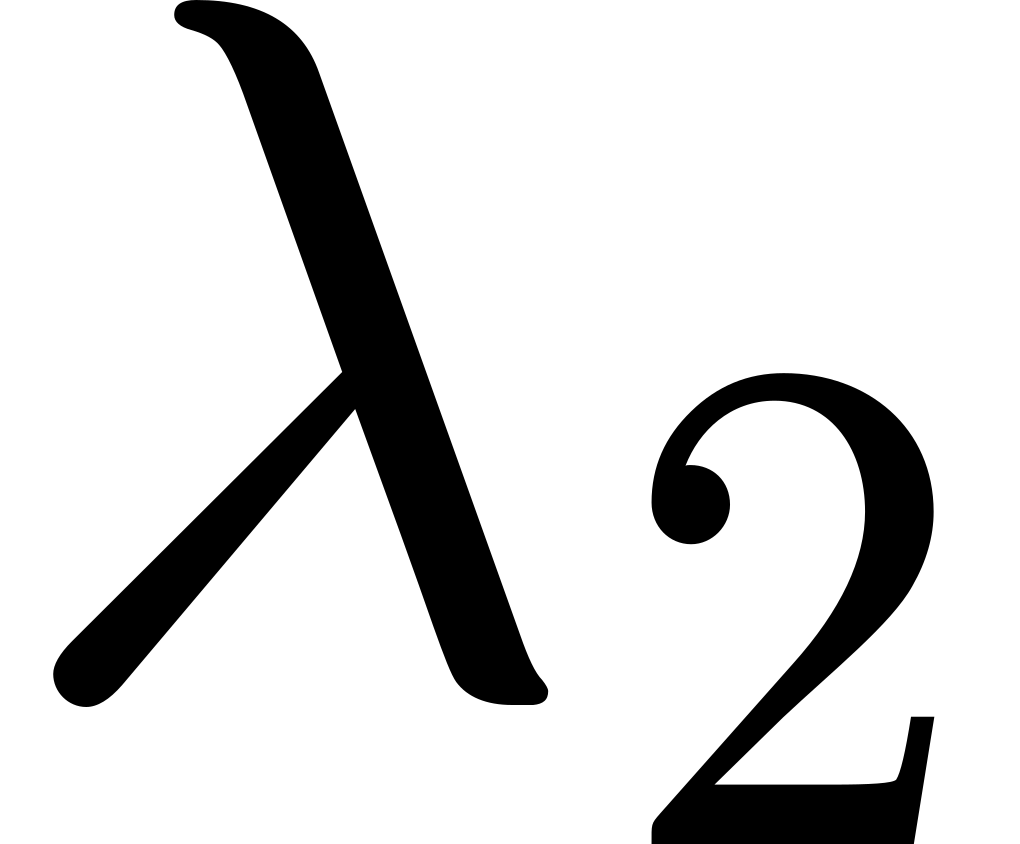 , i.e. when is a maximum or a minimum,
can differ from
, i.e. when is a maximum or a minimum,
can differ from
 only by a constant factor; and by comparing coefficients and using the
identity
only by a constant factor; and by comparing coefficients and using the
identity
 we find that

Finally, we can write 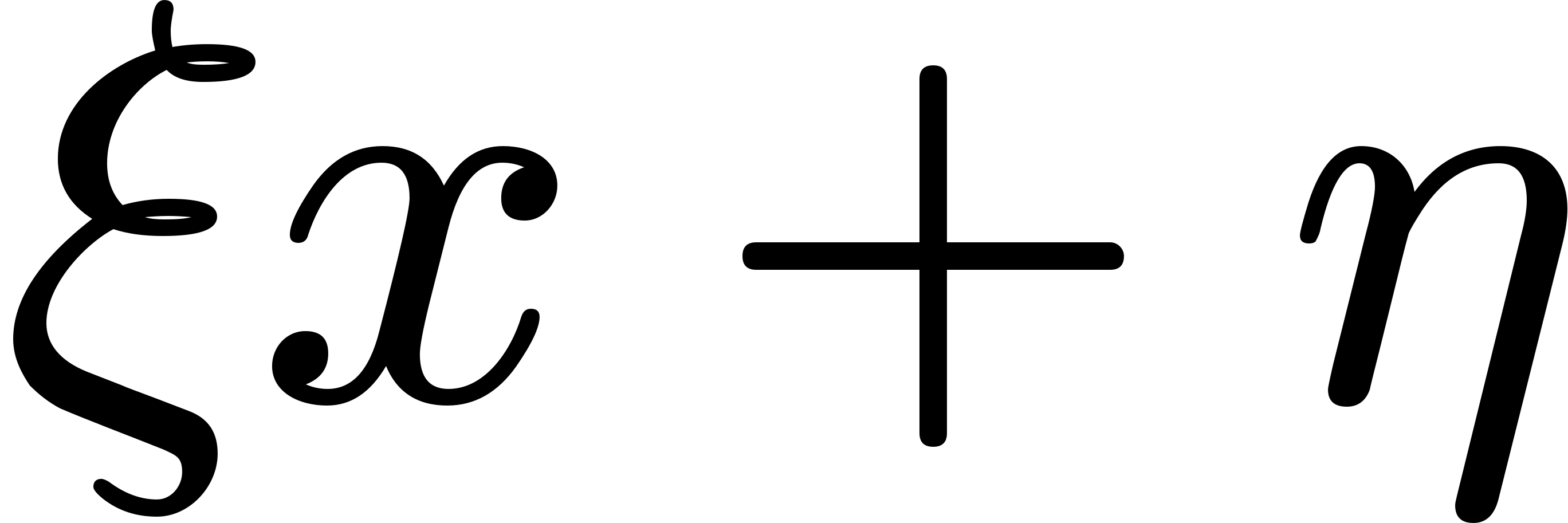 in the form
 [Pg 30]
Using equations (1), (2), (2'), and (3), we find that
 and the integral is reduced to a sum of two standard forms.
This method is very elegant, and has the advantage that the whole work
of transformation is performed in one step. On the other hand it is
somewhat artificial, and it is open to the logical objection that it
introduces the root 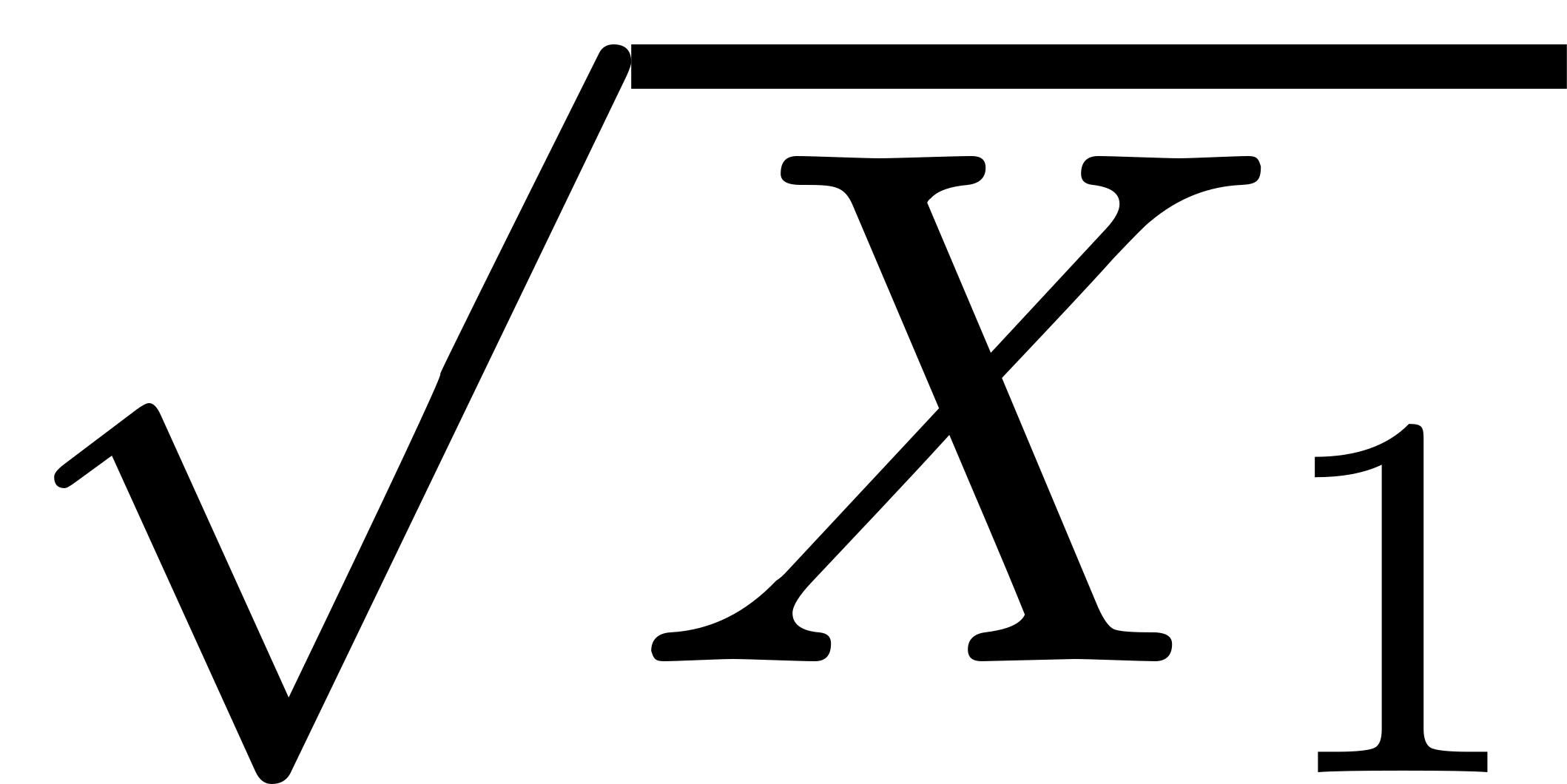 , which, in virtue of Laplace's
principle (iii., 2), cannot really be involved in the final
result[24].
, which, in virtue of Laplace's
principle (iii., 2), cannot really be involved in the final
result[24].
7. We may now proceed to consider the general case to which the theorem
of iv., §2 applies. It will be convenient to recall two
well-known definitions in the theory of algebraical plane curves. A
curve of degree can have at most  double points[25]. If the actual number of double points is ,
then the number
double points[25]. If the actual number of double points is ,
then the number
 is called the deficiency[26] of the curve.
If the coordinates , of the points on a curve can be
expressed rationally in terms of a parameter by means of
equations
 then we shall say that the curve is unicursal. In this case we
have seen that we can always evaluate
in terms of elementary functions.
then we shall say that the curve is unicursal. In this case we
have seen that we can always evaluate
in terms of elementary functions.
The fundamental theorem in this part of our subject is
'A curve whose deficiency is zero is unicursal, and vice versa'.
Suppose first that the curve possesses the maximum number of double
points[27]. Since
 [Pg 31]
and
[Pg 31]
and  points are just sufficient to
determine a curve of degree
points are just sufficient to
determine a curve of degree 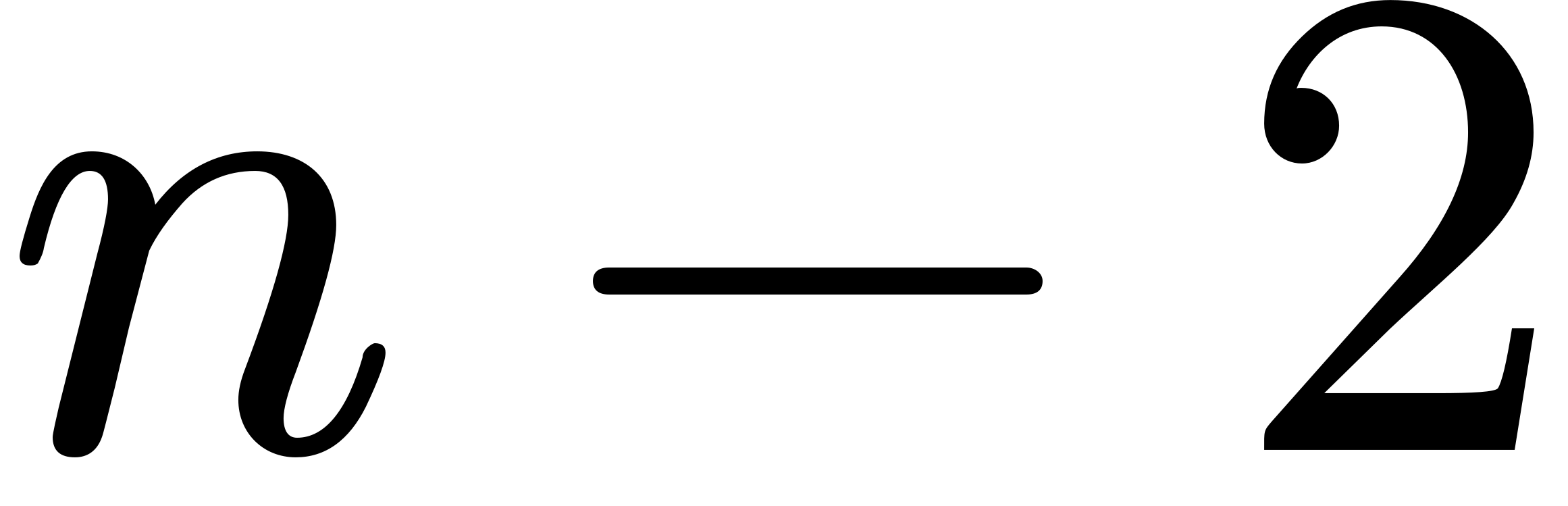 [28], we can draw, through the
double points and
[28], we can draw, through the
double points and 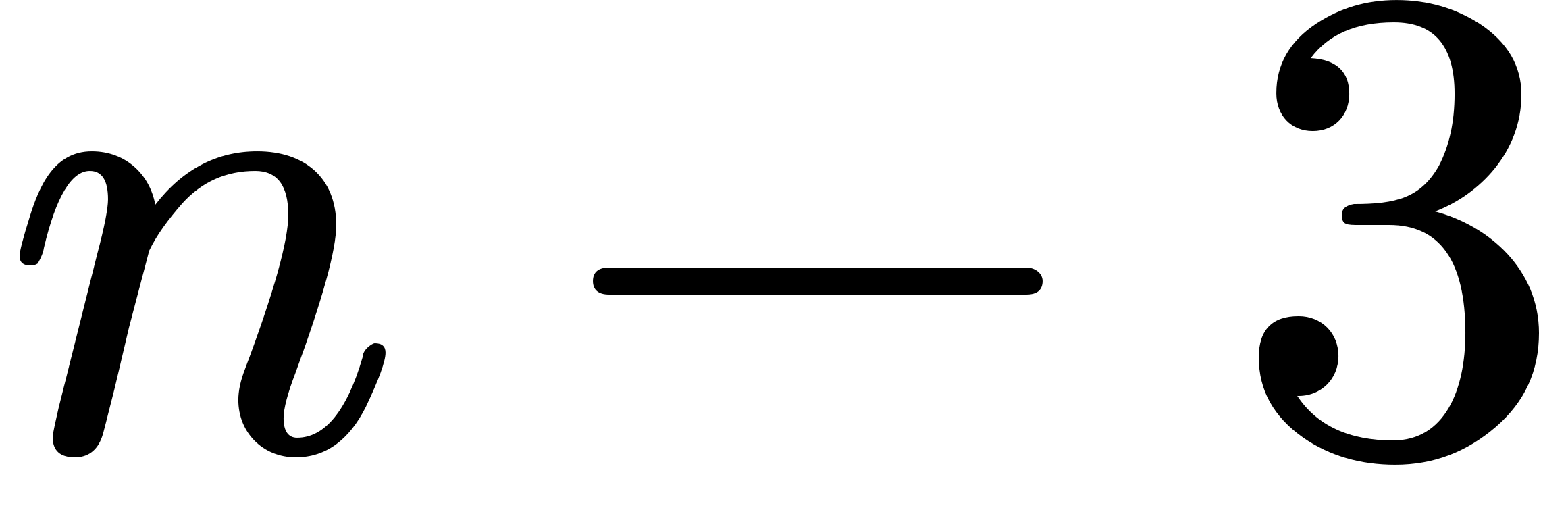 other
points chosen arbitrarily on the curve, a simply infinite set of curves
of degree , which we may suppose to have the equation
other
points chosen arbitrarily on the curve, a simply infinite set of curves
of degree , which we may suppose to have the equation
 where is a variable parameter and
 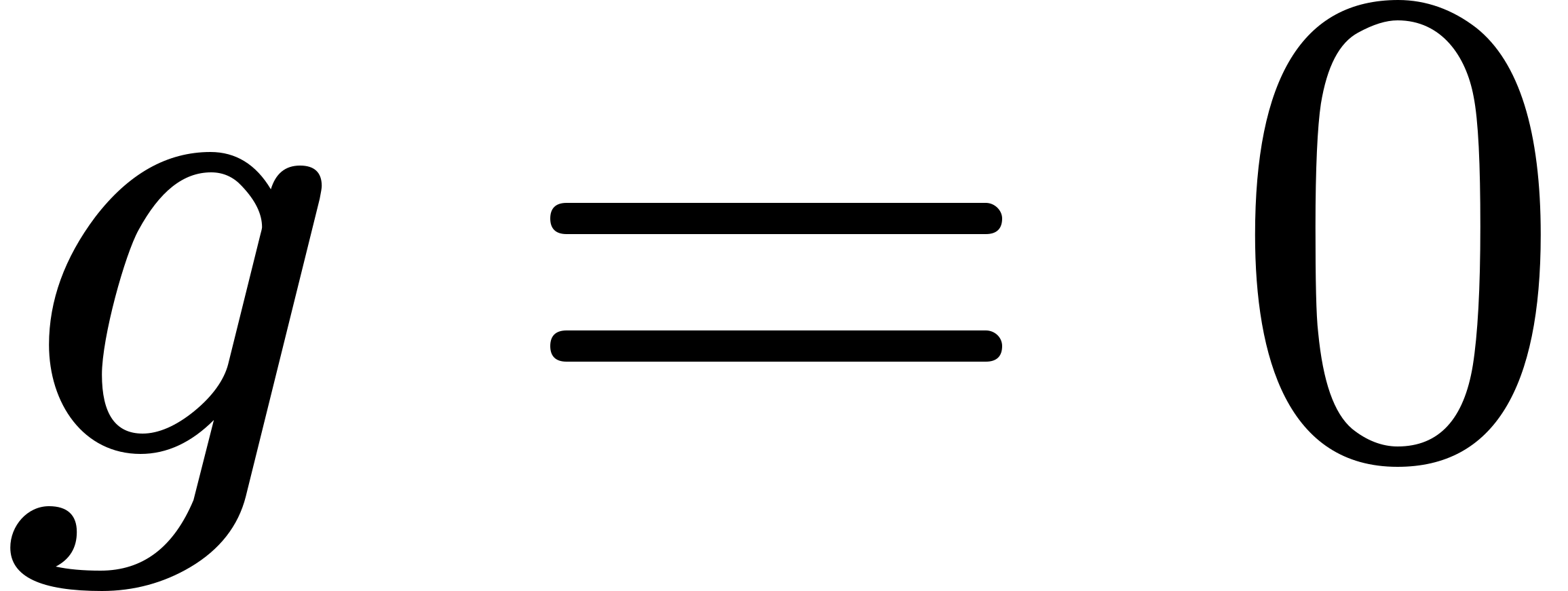 ,
, 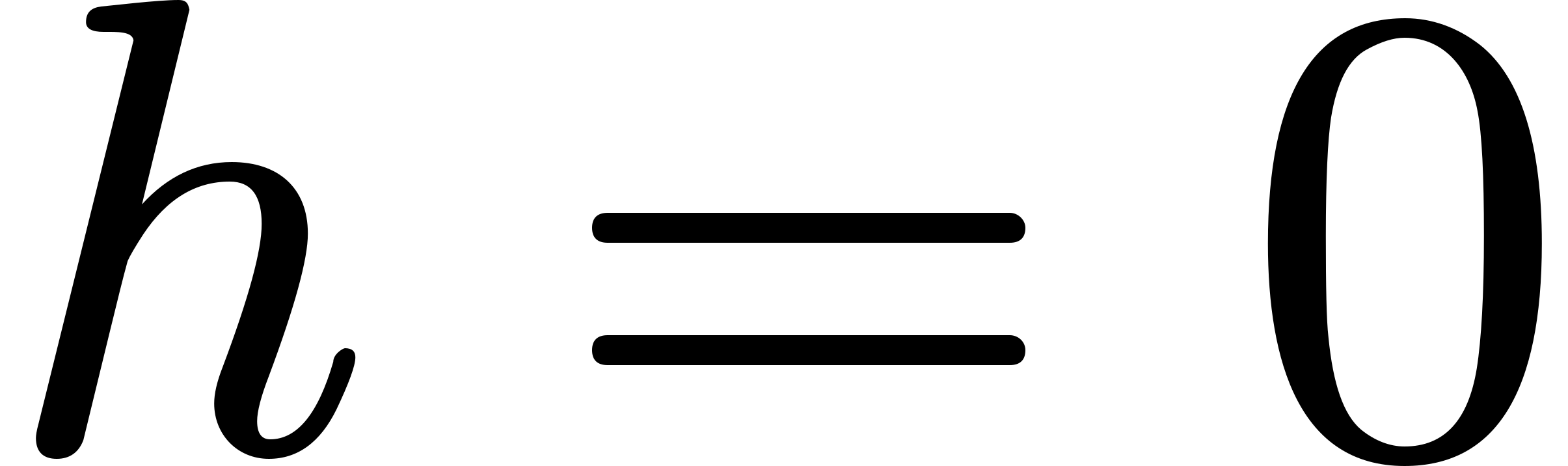 are the
equations of two particular members of the set. Any one of these curves
meets the given curve in
are the
equations of two particular members of the set. Any one of these curves
meets the given curve in 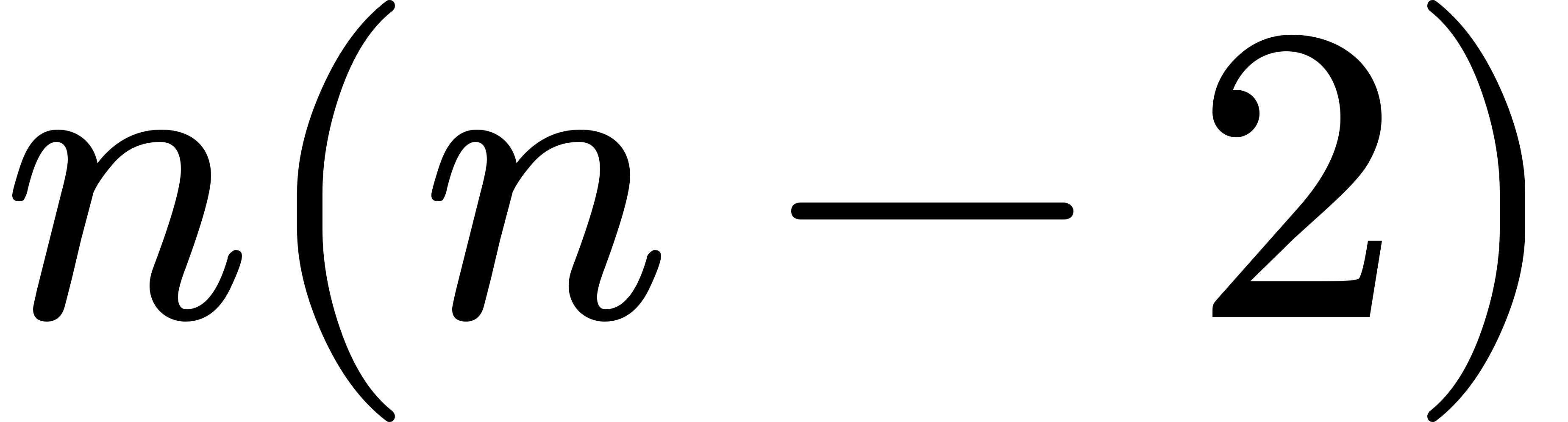 points, of which
  are accounted for by the double
points, and by the other arbitrarily chosen points.
These
are accounted for by the double
points, and by the other arbitrarily chosen points.
These
 points are independent of ; and so there is but one point
of intersection which depends on . The coordinates of this point
are given by
points are independent of ; and so there is but one point
of intersection which depends on . The coordinates of this point
are given by
 The elimination of gives an equation of degree
in , whose coefficients are polynomials in ; and but one
root of this equation varies with . The eliminant is therefore
divisible by a factor of degree
The elimination of gives an equation of degree
in , whose coefficients are polynomials in ; and but one
root of this equation varies with . The eliminant is therefore
divisible by a factor of degree  which does not contain
. There remains a simple equation in whose coefficients are
polynomials in . Thus the -coordinate of the variable point
is determined as a rational function of , and the -coordinate
may be similarly determined.
which does not contain
. There remains a simple equation in whose coefficients are
polynomials in . Thus the -coordinate of the variable point
is determined as a rational function of , and the -coordinate
may be similarly determined.
We may therefore write
 If we reduce these fractions to the same denominator, we express the
coordinates in the form
If we reduce these fractions to the same denominator, we express the
coordinates in the form
 where ,
 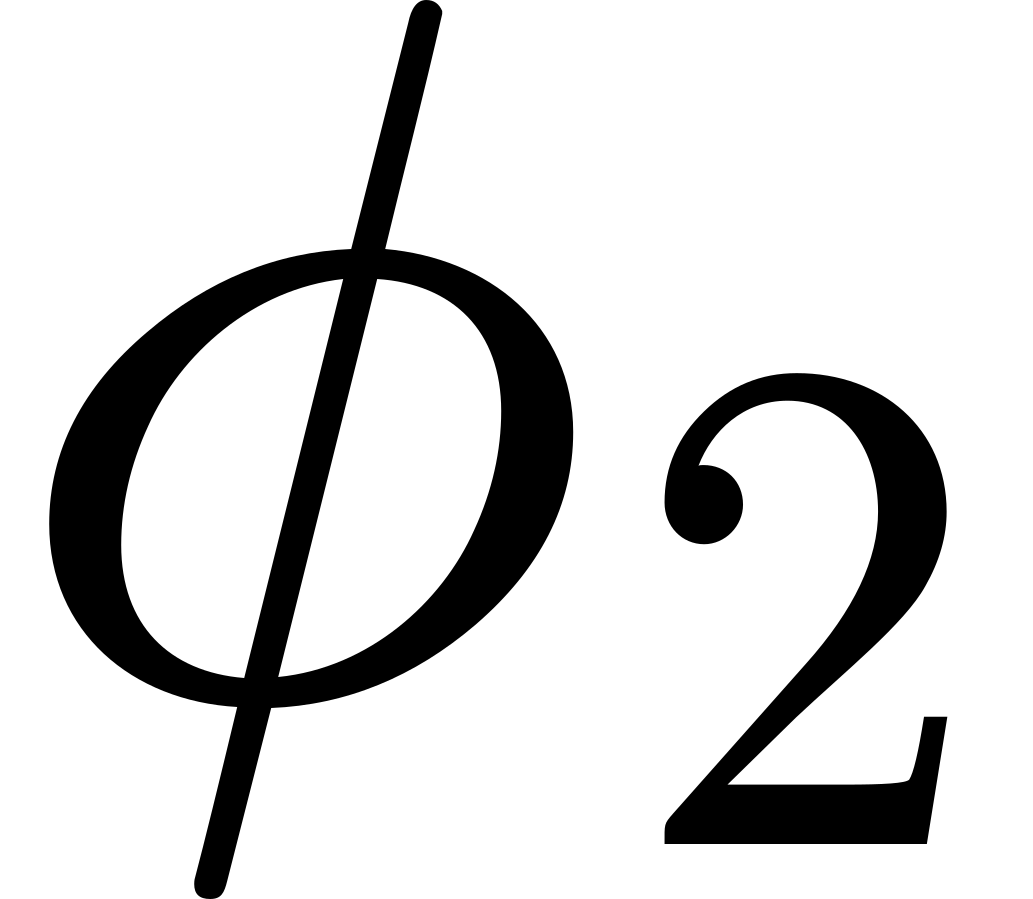 ,
, 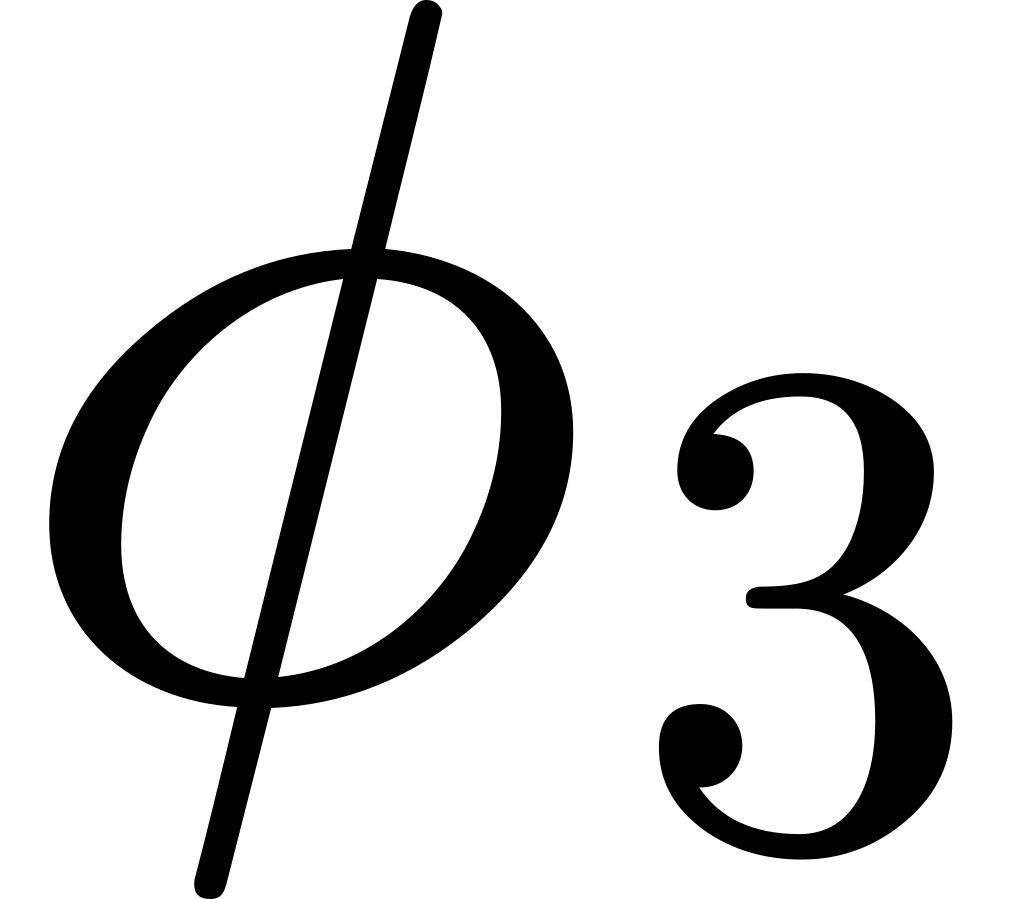 are polynomials which
have no common factor. The polynomials will in general be of degree
; none of them can be of[Pg 32] higher degree, and one at least must be
actually of that degree, since an arbitrary straight line
are polynomials which
have no common factor. The polynomials will in general be of degree
; none of them can be of[Pg 32] higher degree, and one at least must be
actually of that degree, since an arbitrary straight line
 must cut the curve in exactly points[29].
We can now prove the second part of the theorem. If
 where , , are polynomials of
degree , then the line
where , , are polynomials of
degree , then the line
 will meet the curve in points whose parameters are given by

This equation will have a double root 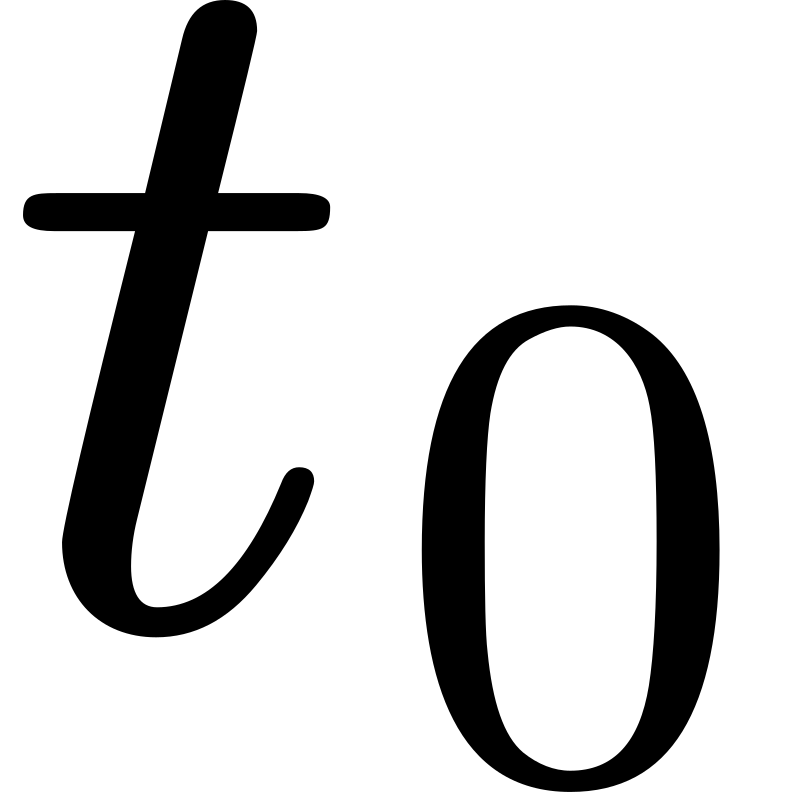 if
if
 Hence the equation of the tangent at the point is
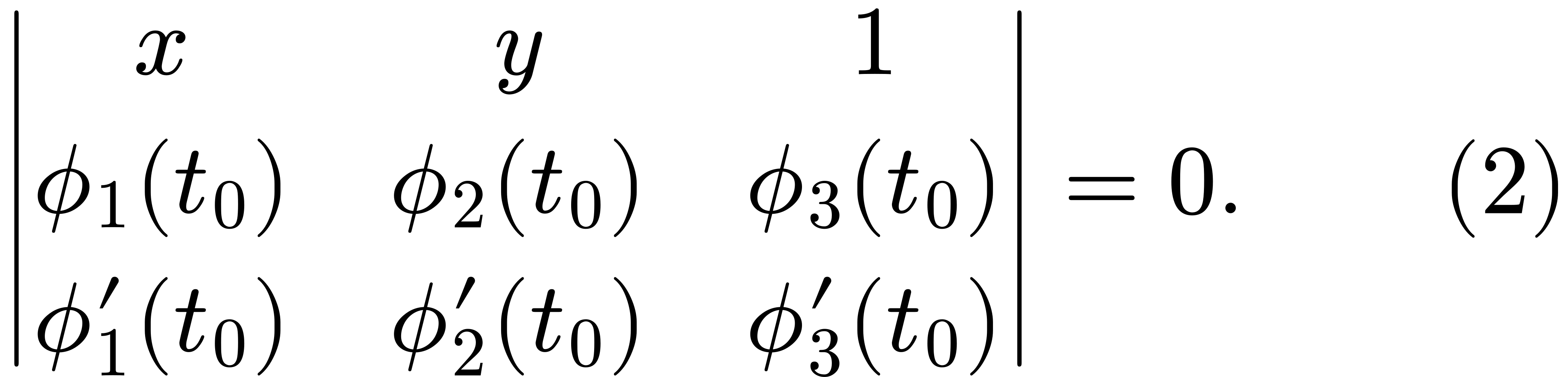
If 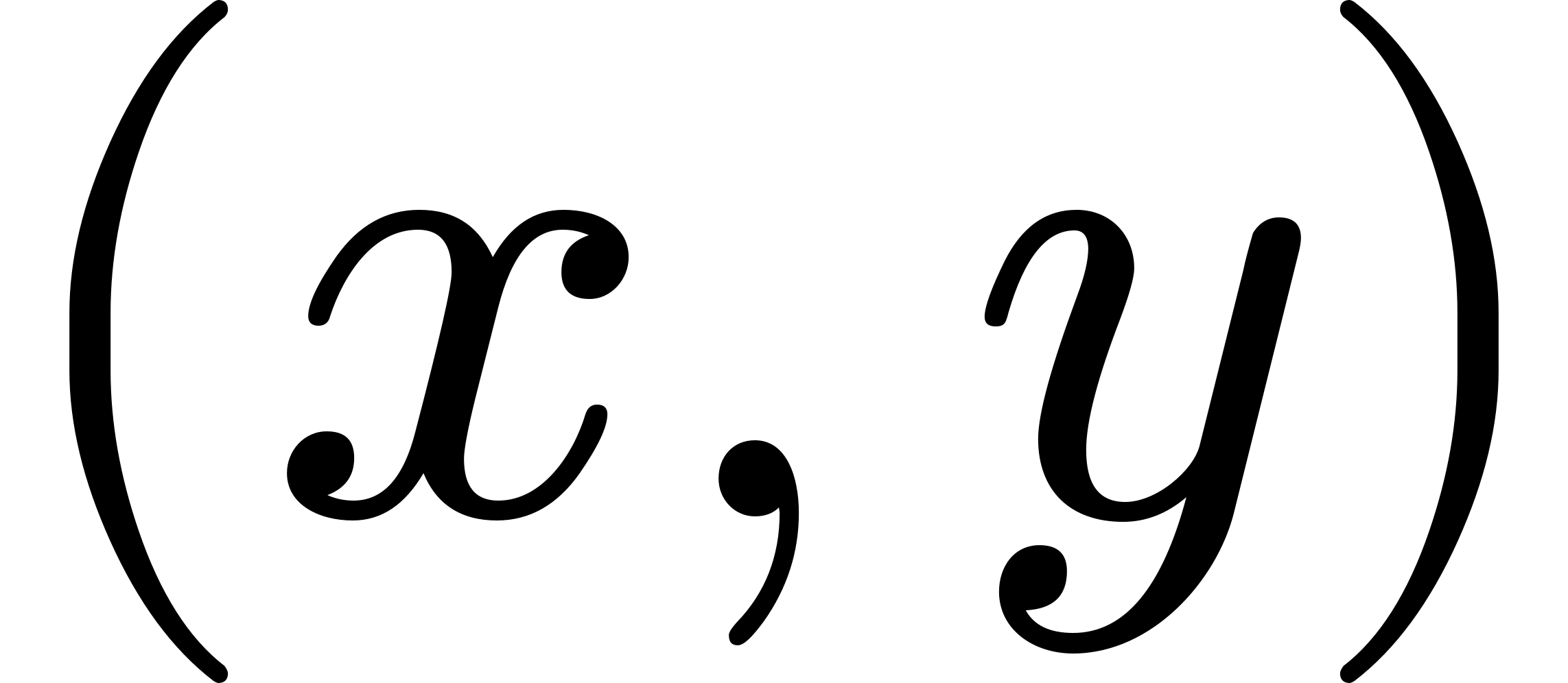 is a fixed point, then the equation (2) may be regarded
as an equation to determine the parameters of the points of contact of
the tangents from . Now
is a fixed point, then the equation (2) may be regarded
as an equation to determine the parameters of the points of contact of
the tangents from . Now
 is of degree
 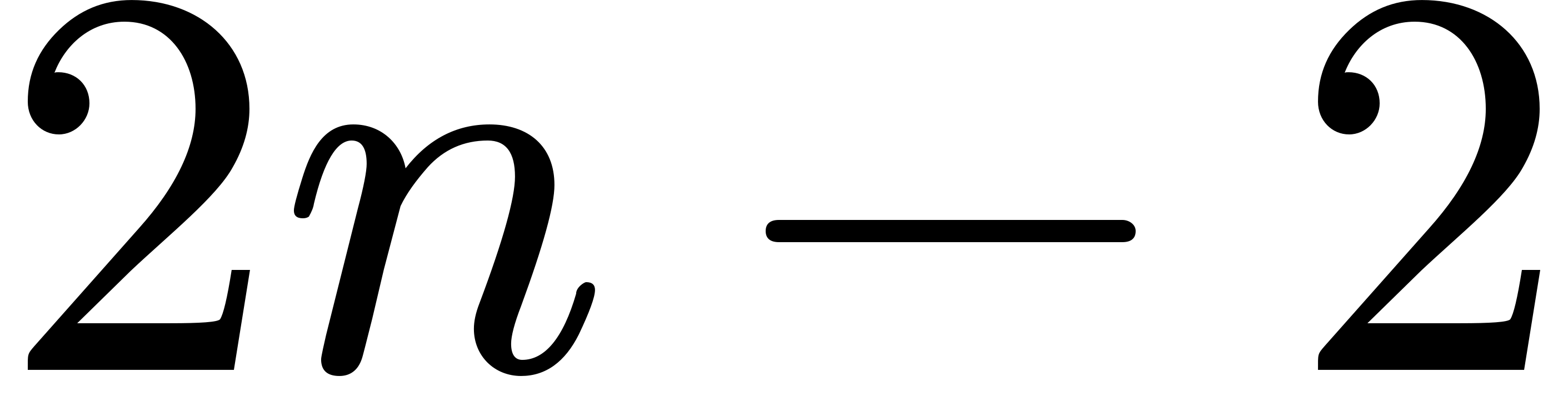 in , the coefficient of
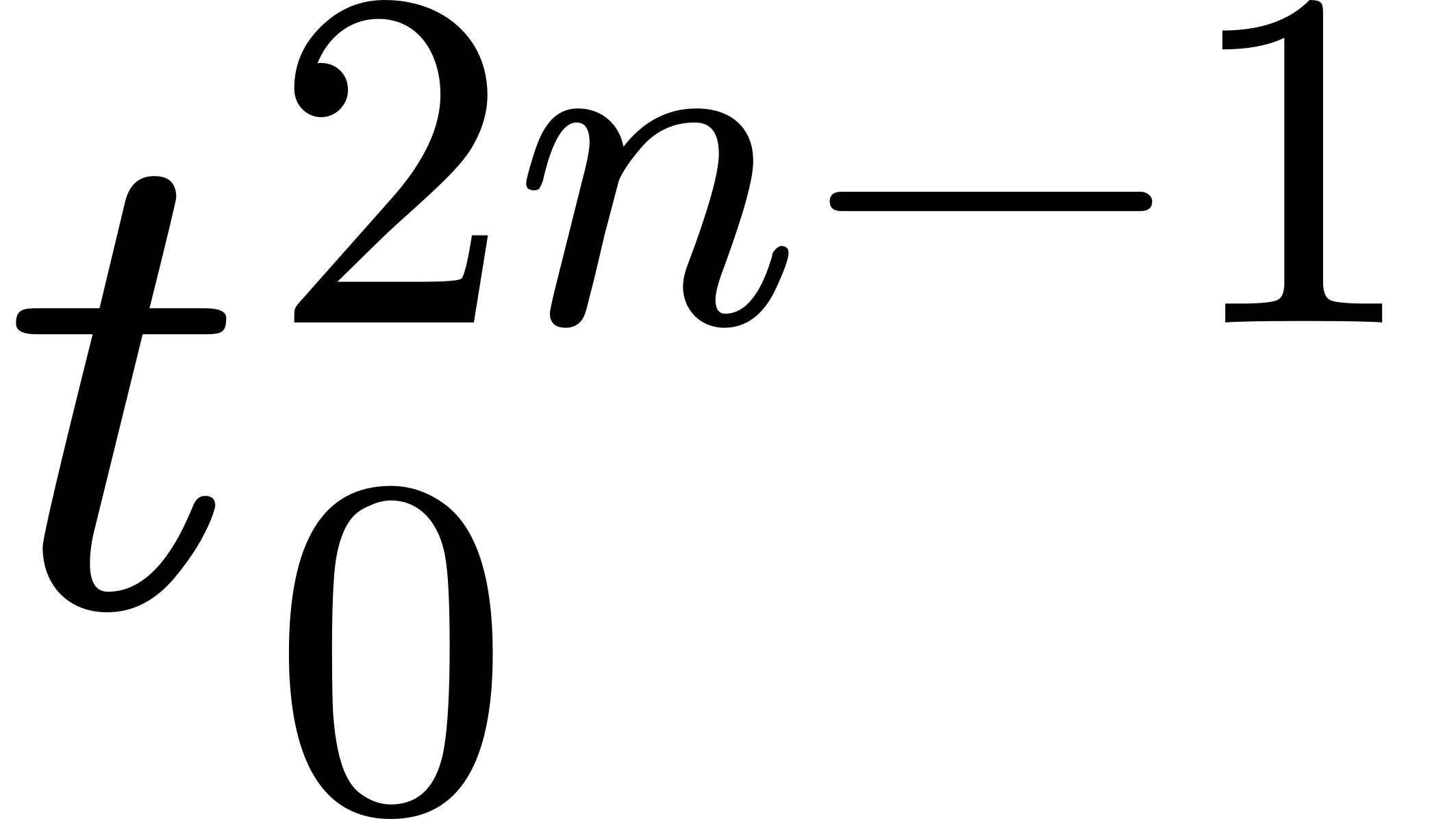 obviously vanishing. Hence in general the number of
tangents which can be drawn to a unicursal curve from a fixed point
(the class of the curve) is . But the class of a
curve whose only singular points are
obviously vanishing. Hence in general the number of
tangents which can be drawn to a unicursal curve from a fixed point
(the class of the curve) is . But the class of a
curve whose only singular points are 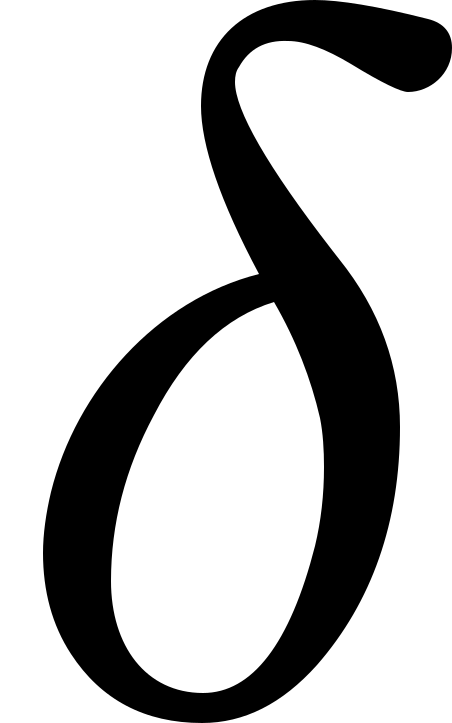 nodes is known[30] to
be
nodes is known[30] to
be  . Hence the number of nodes is

It is perhaps worth pointing out how the proof which precedes requires
modification if some only of the singular points are nodes and the rest
ordinary cusps. The first part of the proof remains unaltered. The
equation (2)[Pg 33] must now be regarded as giving the values of which
correspond to (a) points at which the tangent passes through
and (b) cusps, since any line through a cusp 'cuts
the curve in two coincident points'[31]. We have therefore
 where is the class of the curve. But[32]
 and so[33]

8. (i) The preceding argument fails if 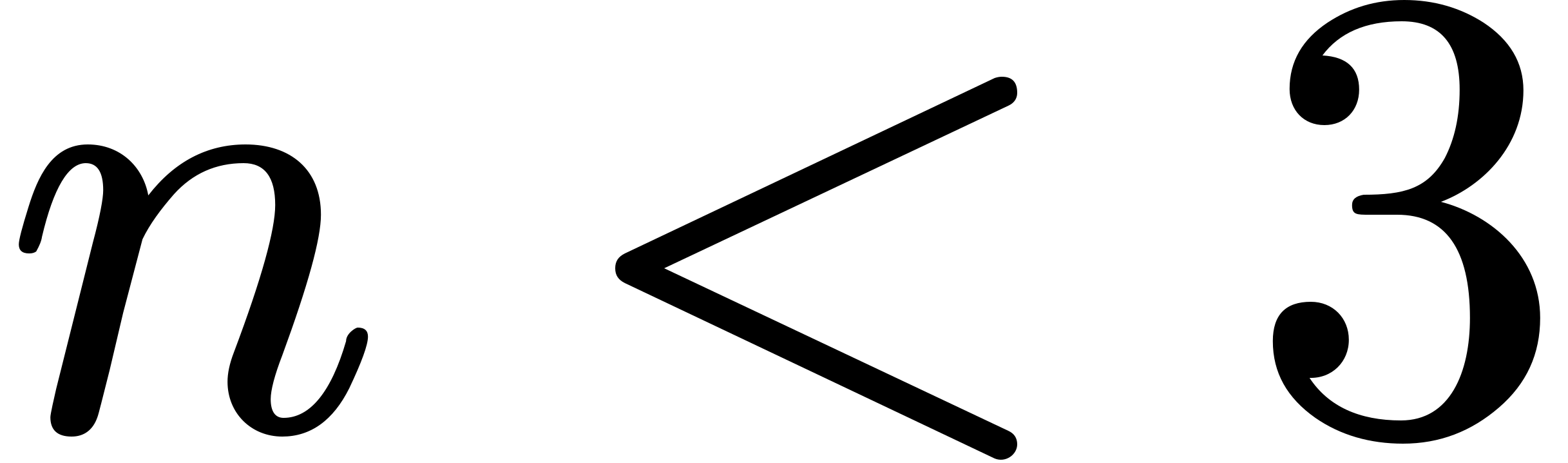 , but we have already
seen that all conics are unicursal. The case next in importance is that
of a cubic with a double point. If the double point is not at infinity
we can, by a change of origin, reduce the equation of the curve to the
form
, but we have already
seen that all conics are unicursal. The case next in importance is that
of a cubic with a double point. If the double point is not at infinity
we can, by a change of origin, reduce the equation of the curve to the
form
 and, by considering the intersections of the curve with the line
 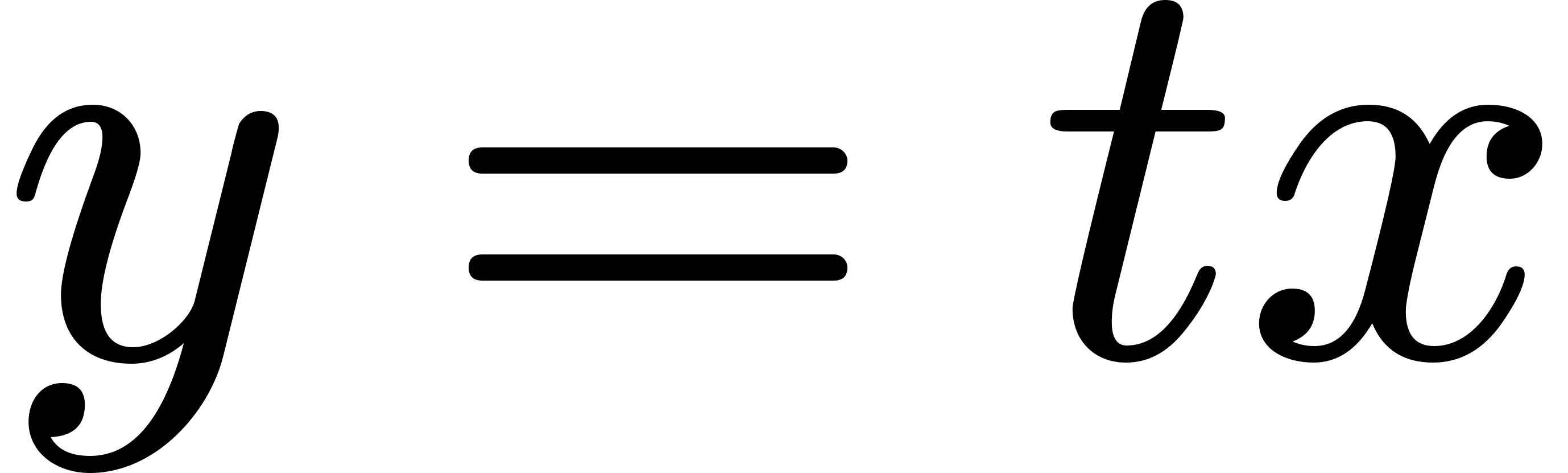 , we find

If the double point is at infinity, the equation of the curve is of the
form
 the curve having a pair of parallel asymptotes; and, by considering the
intersection of the curve with the line
the curve having a pair of parallel asymptotes; and, by considering the
intersection of the curve with the line  , we
find
, we
find

(ii) The case next in complexity is that of a quartic with three double points.
(a) The lemniscate
 has three double points, the origin and the circular points at
infinity. The circle
has three double points, the origin and the circular points at
infinity. The circle
 [Pg 34]
passes through these points and one other fixed point at the origin, as
it touches the curve there. Solving, we find
[Pg 34]
passes through these points and one other fixed point at the origin, as
it touches the curve there. Solving, we find

(b) The curve  has the double points
 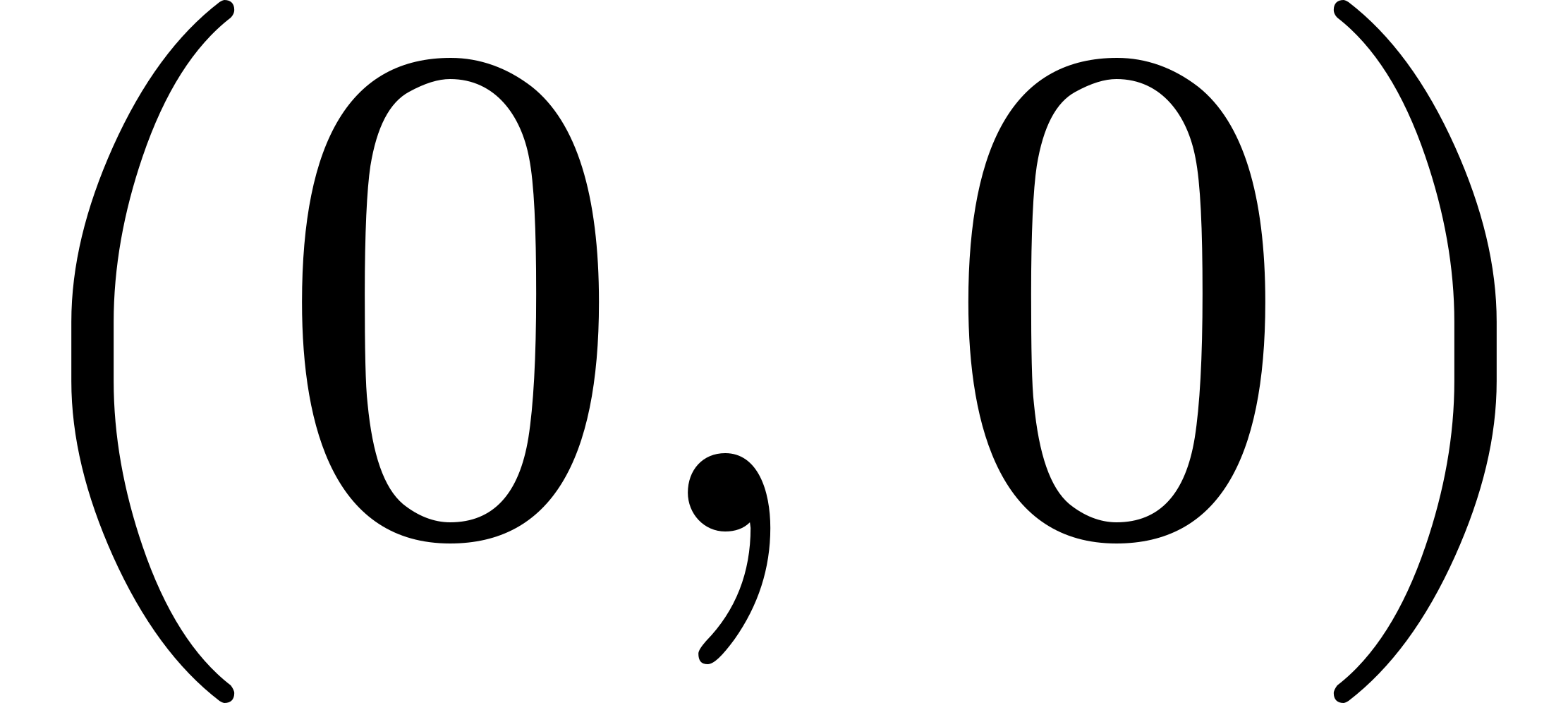 ,
, 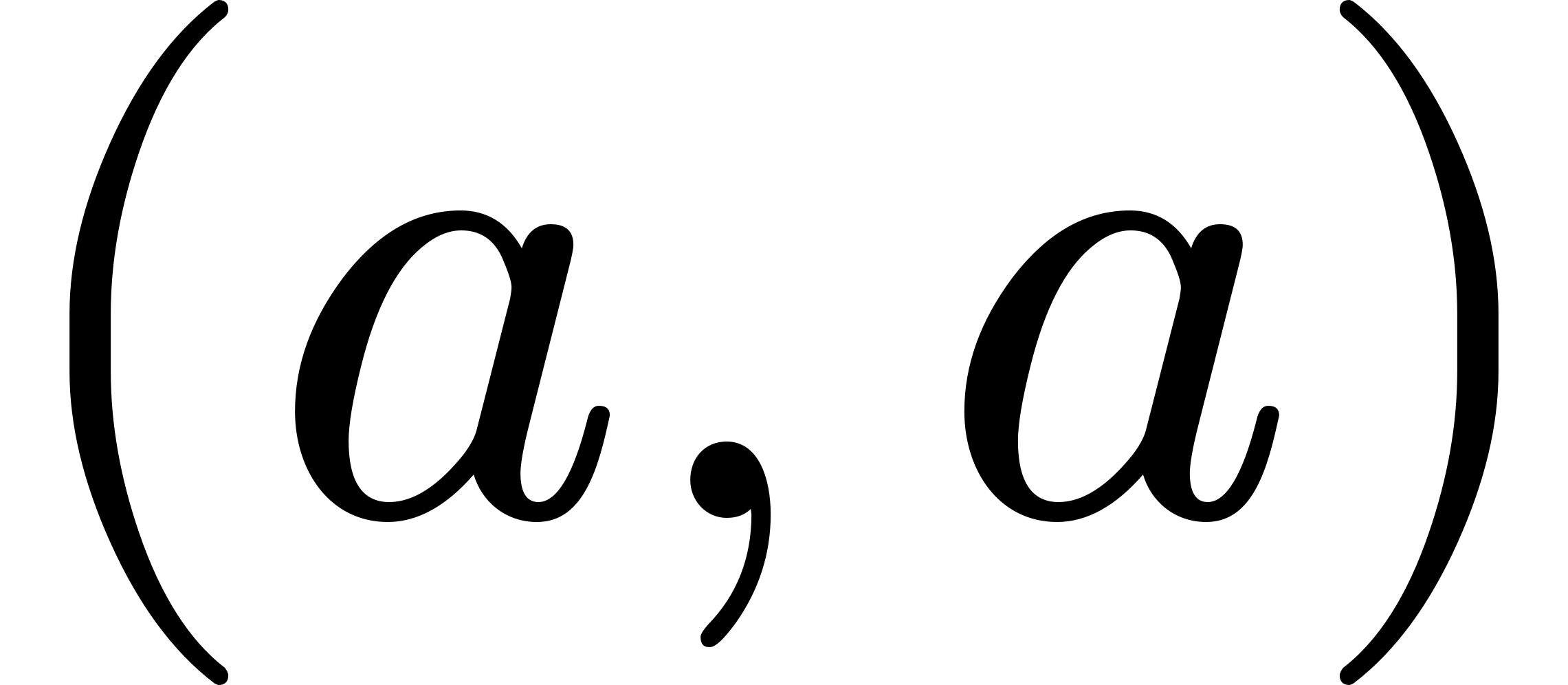 ,
, 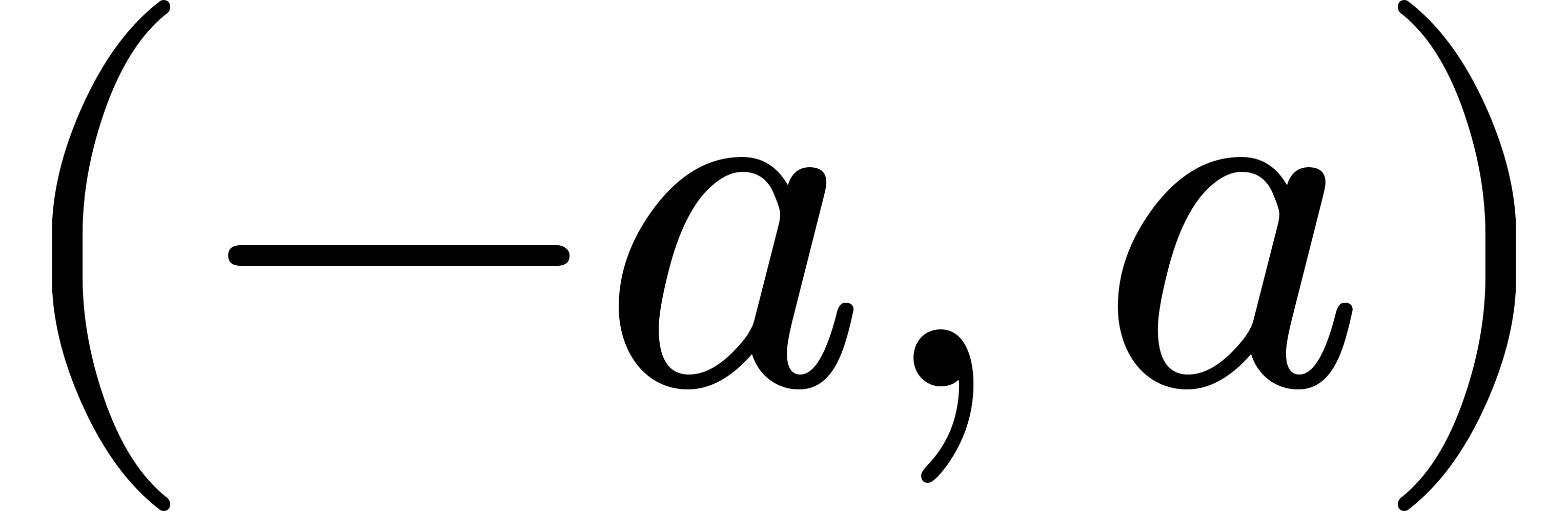 .
Using the auxiliary conic
.
Using the auxiliary conic
 we find

(iii) (a) The curve  has a
multiple point of order
has a
multiple point of order 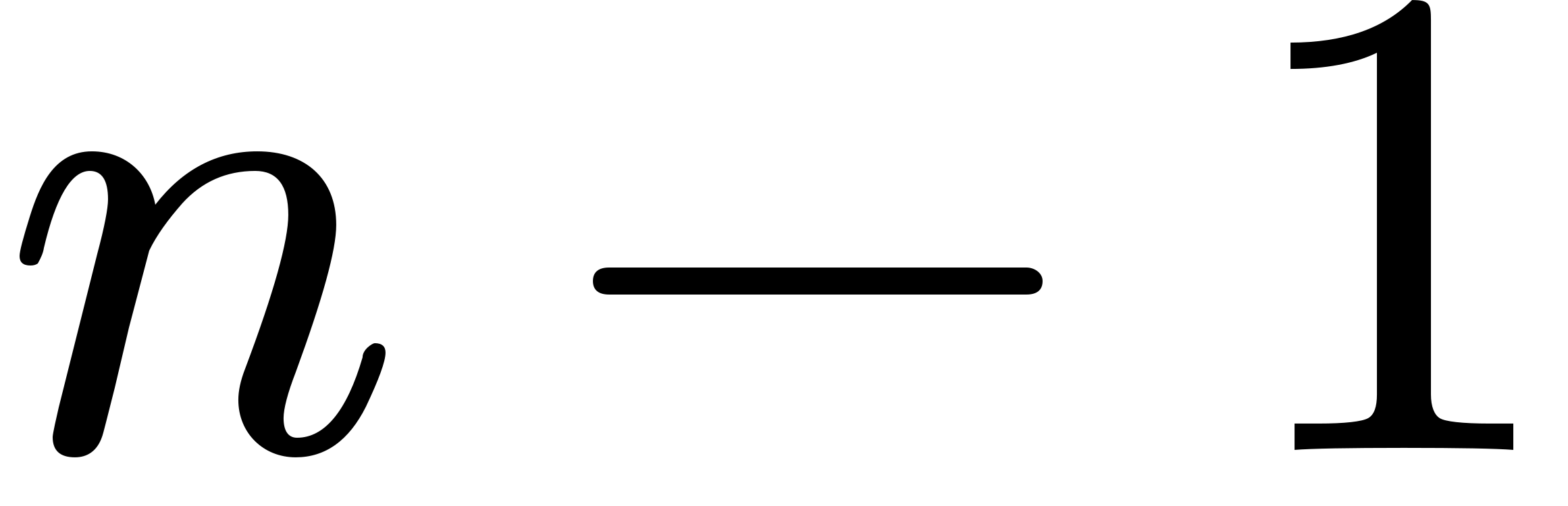 at the origin, and is therefore
unicursal. In this case it is sufficient to consider the intersection
of the curve with the line
at the origin, and is therefore
unicursal. In this case it is sufficient to consider the intersection
of the curve with the line 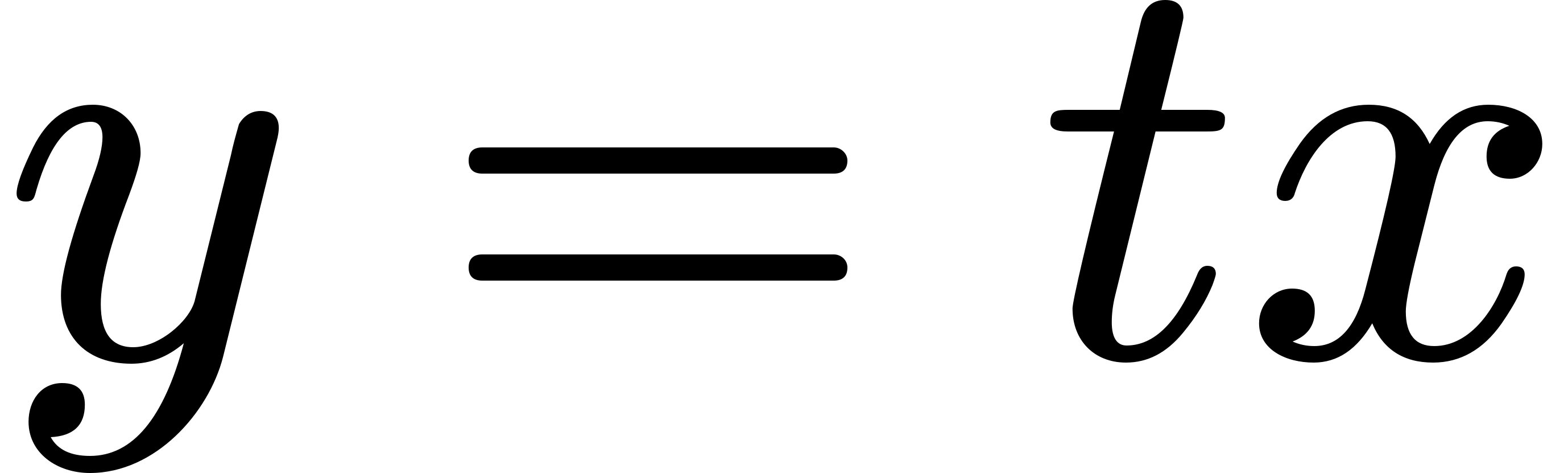 . This may be harmonised with the
general theory by regarding the curve
. This may be harmonised with the
general theory by regarding the curve
 as passing through each of the double
points collected at the origin and through other fixed points
collected at the point
as passing through each of the double
points collected at the origin and through other fixed points
collected at the point

The curves
 are projectively equivalent, as appears on rendering their equations
homogeneous by the introduction of variables in (1) and in
(2). We conclude that (2) is unicursal, having the maximum number of
double points at infinity. In fact we may put
are projectively equivalent, as appears on rendering their equations
homogeneous by the introduction of variables in (1) and in
(2). We conclude that (2) is unicursal, having the maximum number of
double points at infinity. In fact we may put
 The integral
  is
accordingly an elementary function.
is
accordingly an elementary function.
(b) The curve  is
unicursal if and only if either (i)
is
unicursal if and only if either (i) 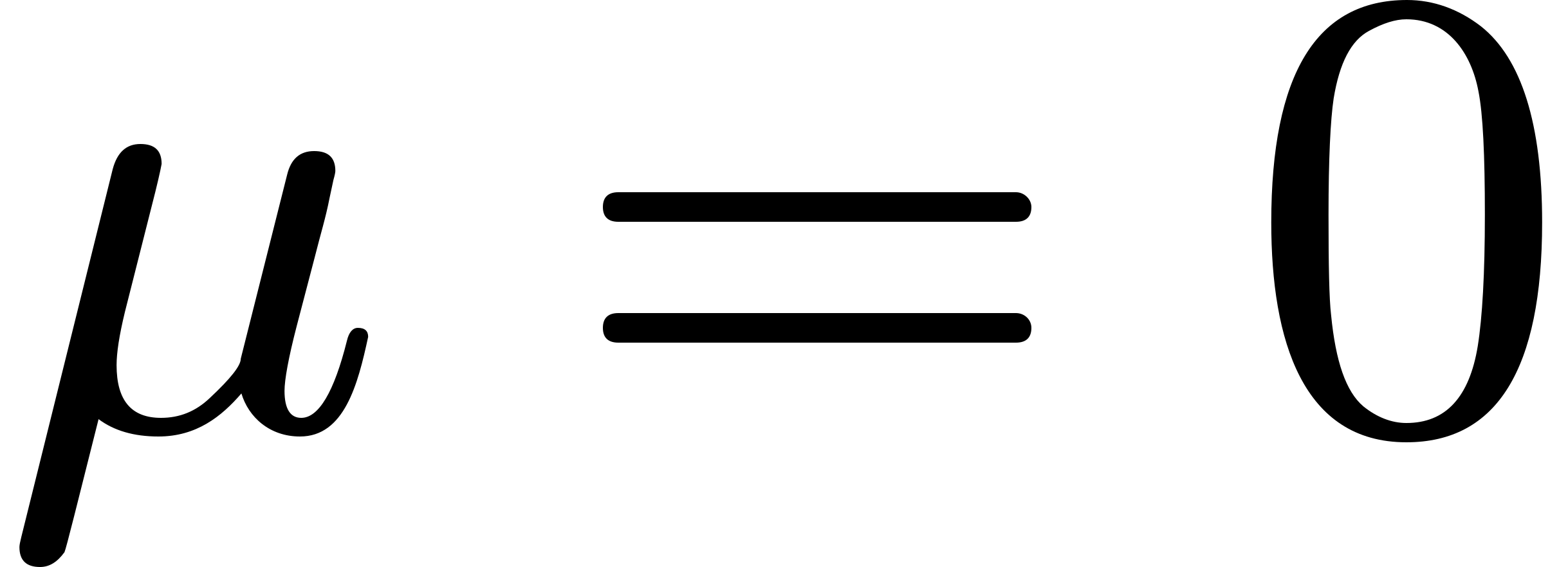 or (ii)
 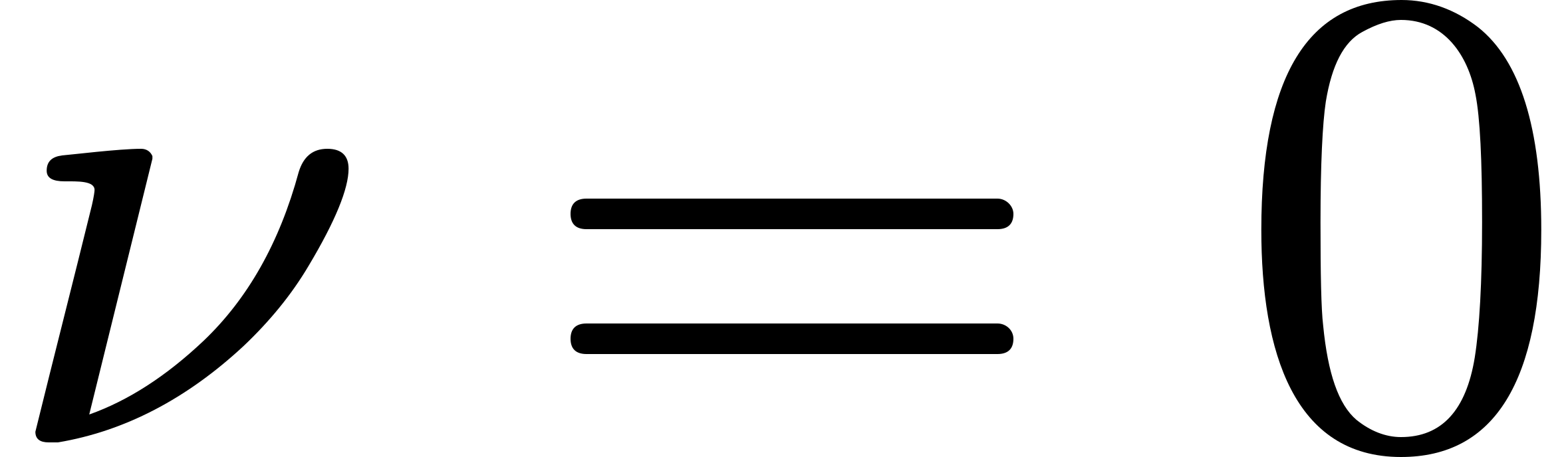 or
(iii)
or
(iii)  . Hence the integral
 is an elementary function, for all forms of , in these three cases
only; of course it is integrable for special forms of in other
cases[34].
is an elementary function, for all forms of , in these three cases
only; of course it is integrable for special forms of in other
cases[34].
[Pg 35]
9. There is a similar theory connected with unicursal curves in space
of any number of dimensions. Consider for example the integral
 A linear substitution
  reduces this integral to the form
 and this integral can be rationalised by putting

The curve whose Cartesian coordinates , ,  are
given by
are
given by
 is a unicursal twisted quartic, the intersection of the parabolic
cylinders
is a unicursal twisted quartic, the intersection of the parabolic
cylinders

It is easy to deduce that the integral
 is always an elementary function.
10. When the deficiency of the curve is not zero, the
integral
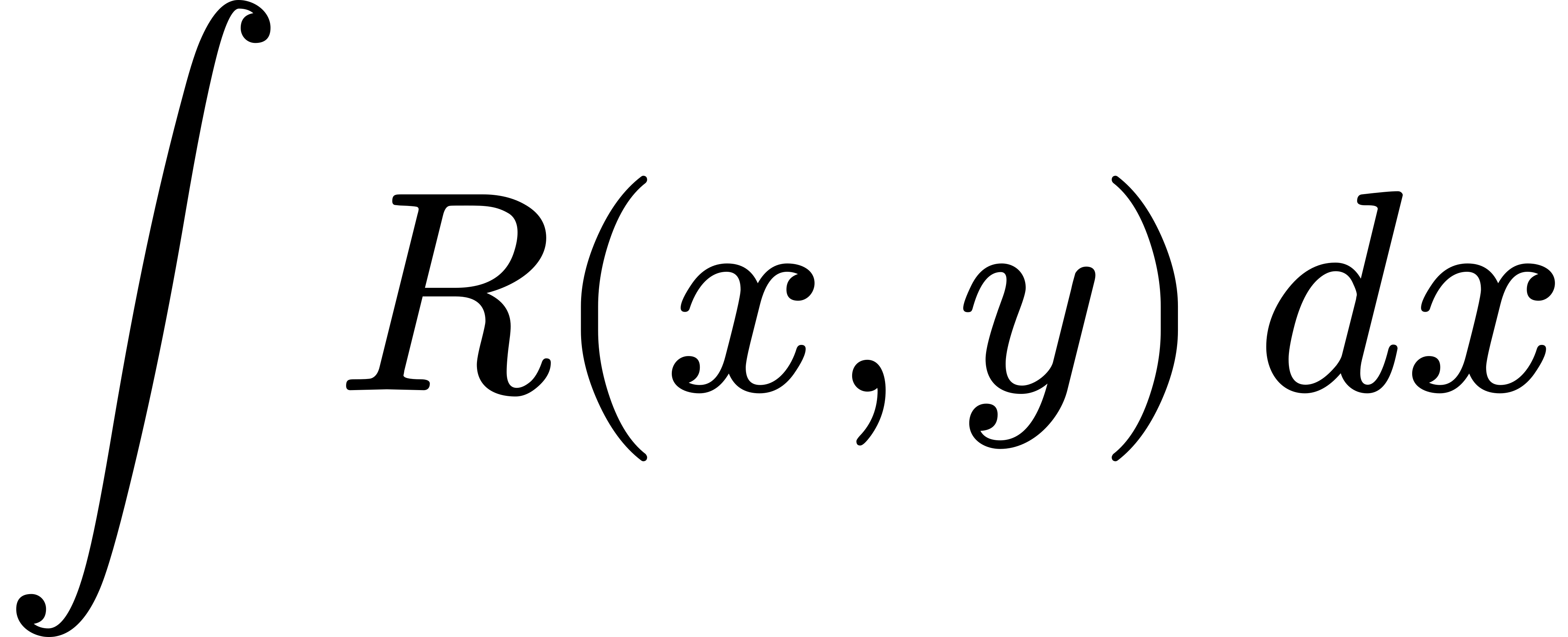 is in general not an elementary function; and the consideration of
such integrals has consequently introduced a whole series of classes
of new transcendents into analysis. The simplest case is that in which
the deficiency is unity: in this case, as we shall see later on, the
integrals are expressible in terms of elementary functions and certain
new transcendents known as elliptic integrals. When the deficiency
rises above unity the integration necessitates the introduction of new
transcendents of growing complexity.
is in general not an elementary function; and the consideration of
such integrals has consequently introduced a whole series of classes
of new transcendents into analysis. The simplest case is that in which
the deficiency is unity: in this case, as we shall see later on, the
integrals are expressible in terms of elementary functions and certain
new transcendents known as elliptic integrals. When the deficiency
rises above unity the integration necessitates the introduction of new
transcendents of growing complexity.
But there are infinitely many particular cases in which integrals,
associated with curves whose deficiency is unity or greater than
unity,[Pg 36] can be expressed in terms of elementary functions, or are even
algebraical themselves. For instance the deficiency of
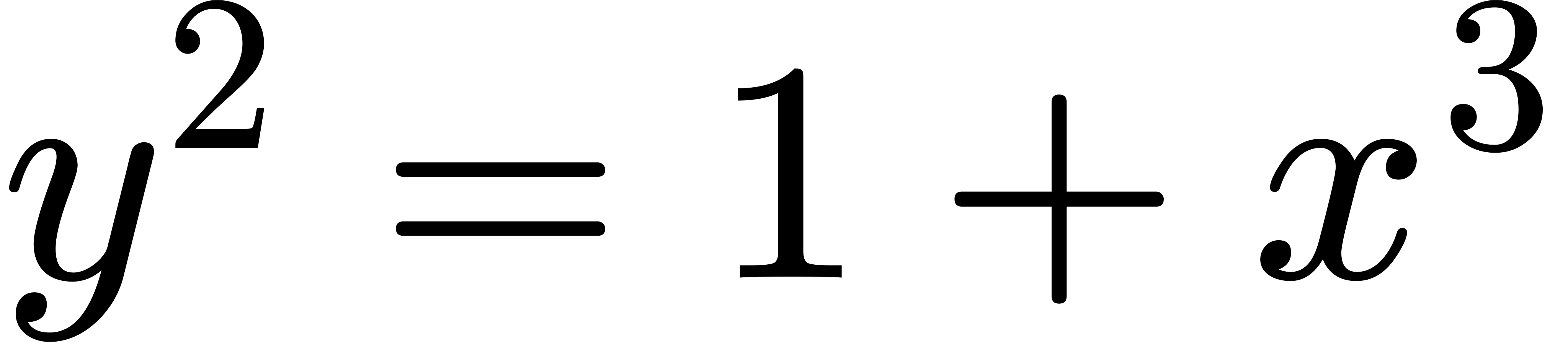 is unity. But
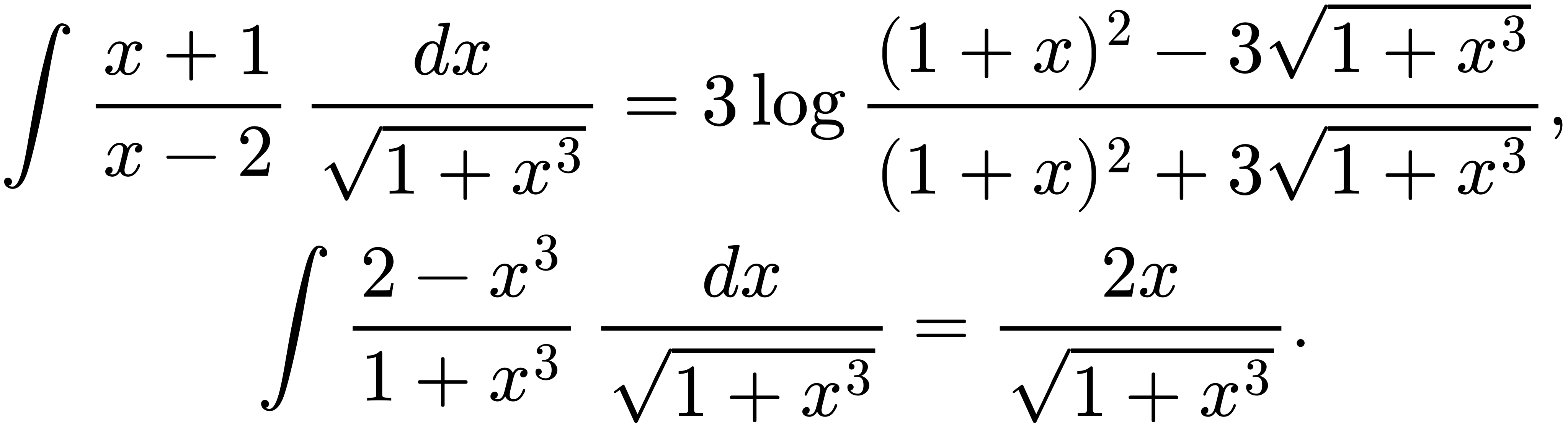 And, before we say anything concerning the new transcendents to which
integrals of this class in general give rise, we shall consider
what has been done in the way of formulating rules to enable us to
identify such cases and to assign the form of the integral when it is
an elementary function. It will be as well to say at once that this
problem has not been solved completely.
And, before we say anything concerning the new transcendents to which
integrals of this class in general give rise, we shall consider
what has been done in the way of formulating rules to enable us to
identify such cases and to assign the form of the integral when it is
an elementary function. It will be as well to say at once that this
problem has not been solved completely.
11. The first general theorem of this character deals with the case in
which the integral is algebraical, and asserts that if
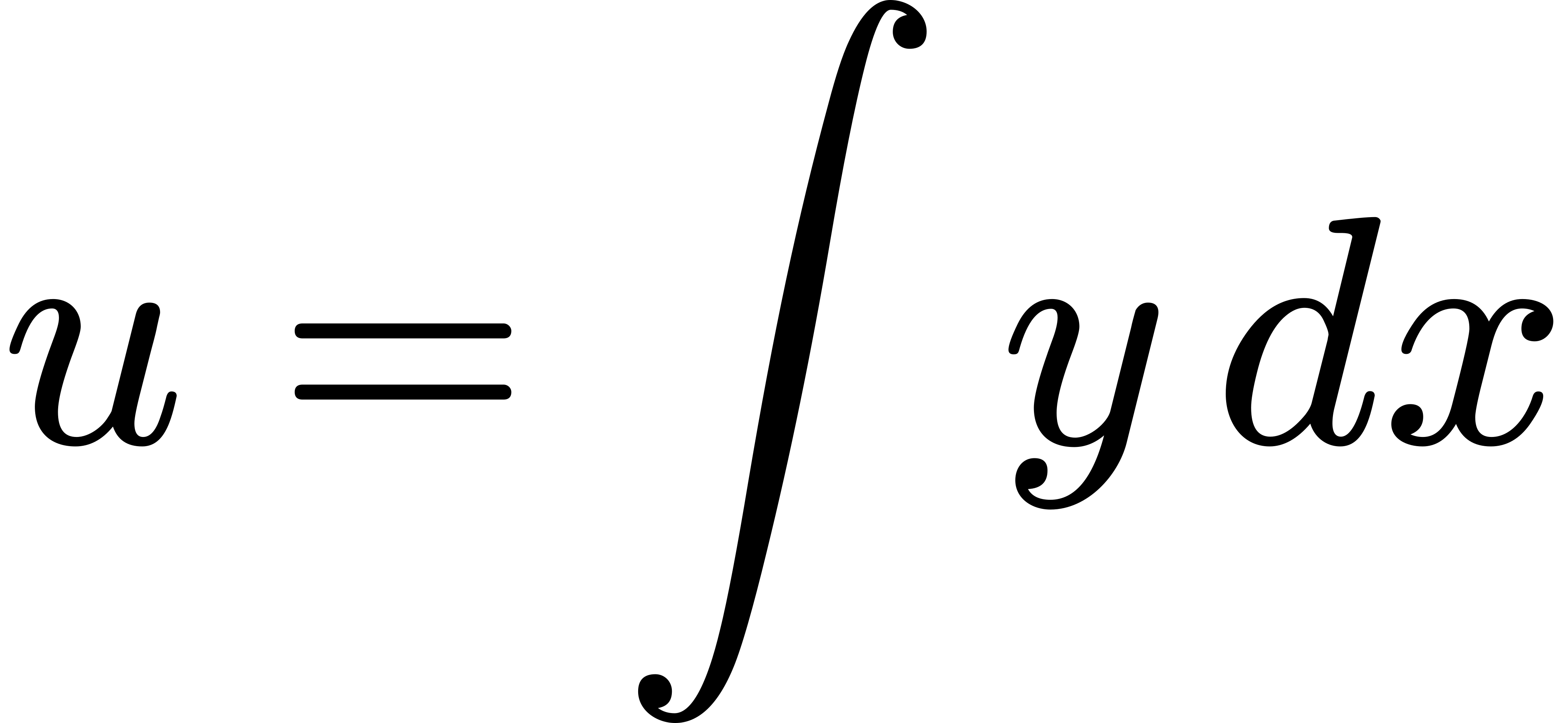 is an algebraical function of , then it is a rational
function of and .
is an algebraical function of , then it is a rational
function of and .
Our proof will be based on the following lemmas.
(1) If 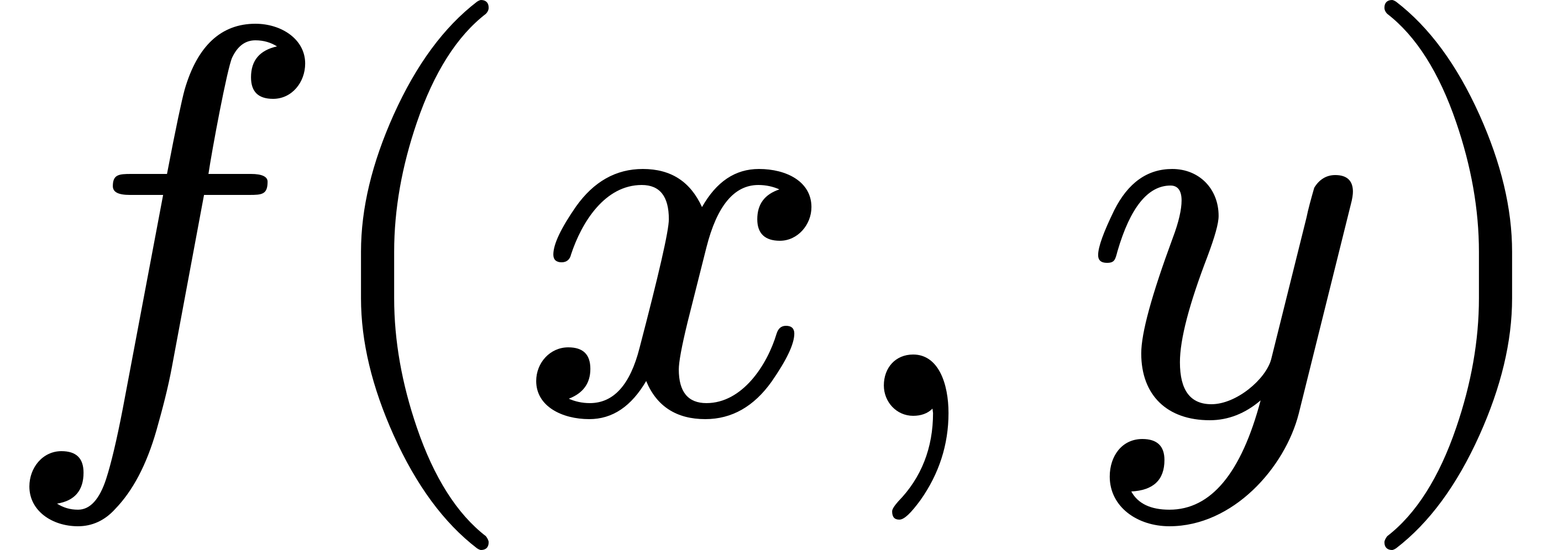 and
and 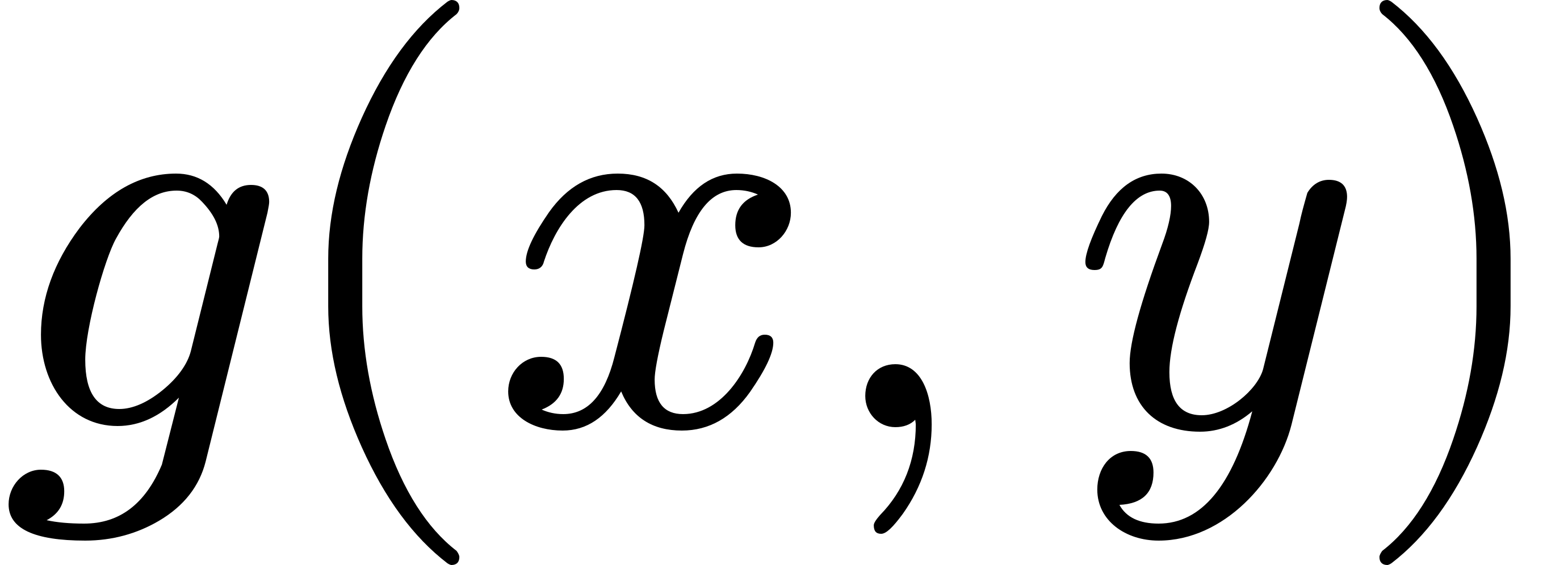 are polynomials, and there is no
factor common to all the coefficients of the various powers of in
; and
are polynomials, and there is no
factor common to all the coefficients of the various powers of in
; and
 where
where 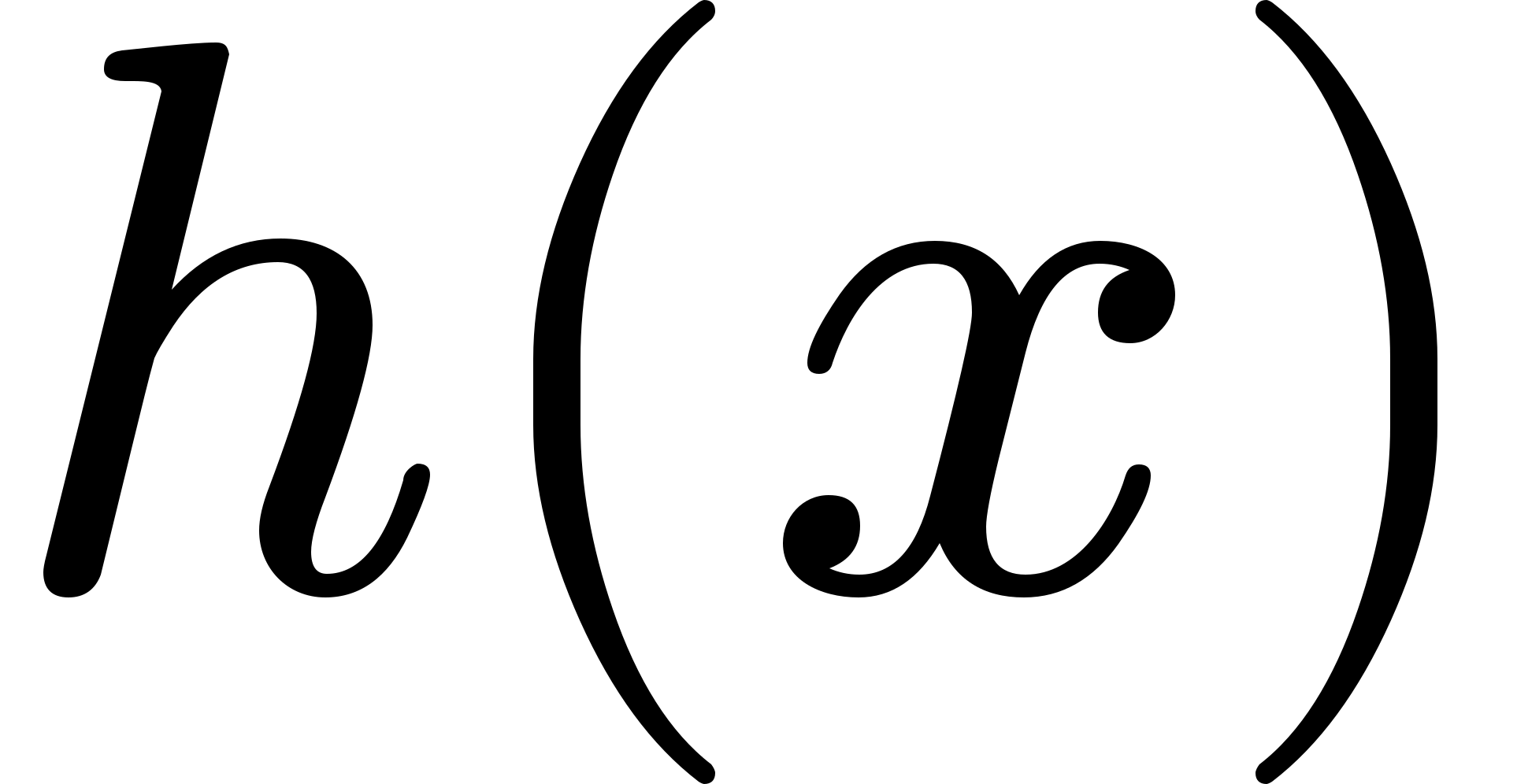 is a rational function of ; then is a
polynomial.
is a rational function of ; then is a
polynomial.
Let 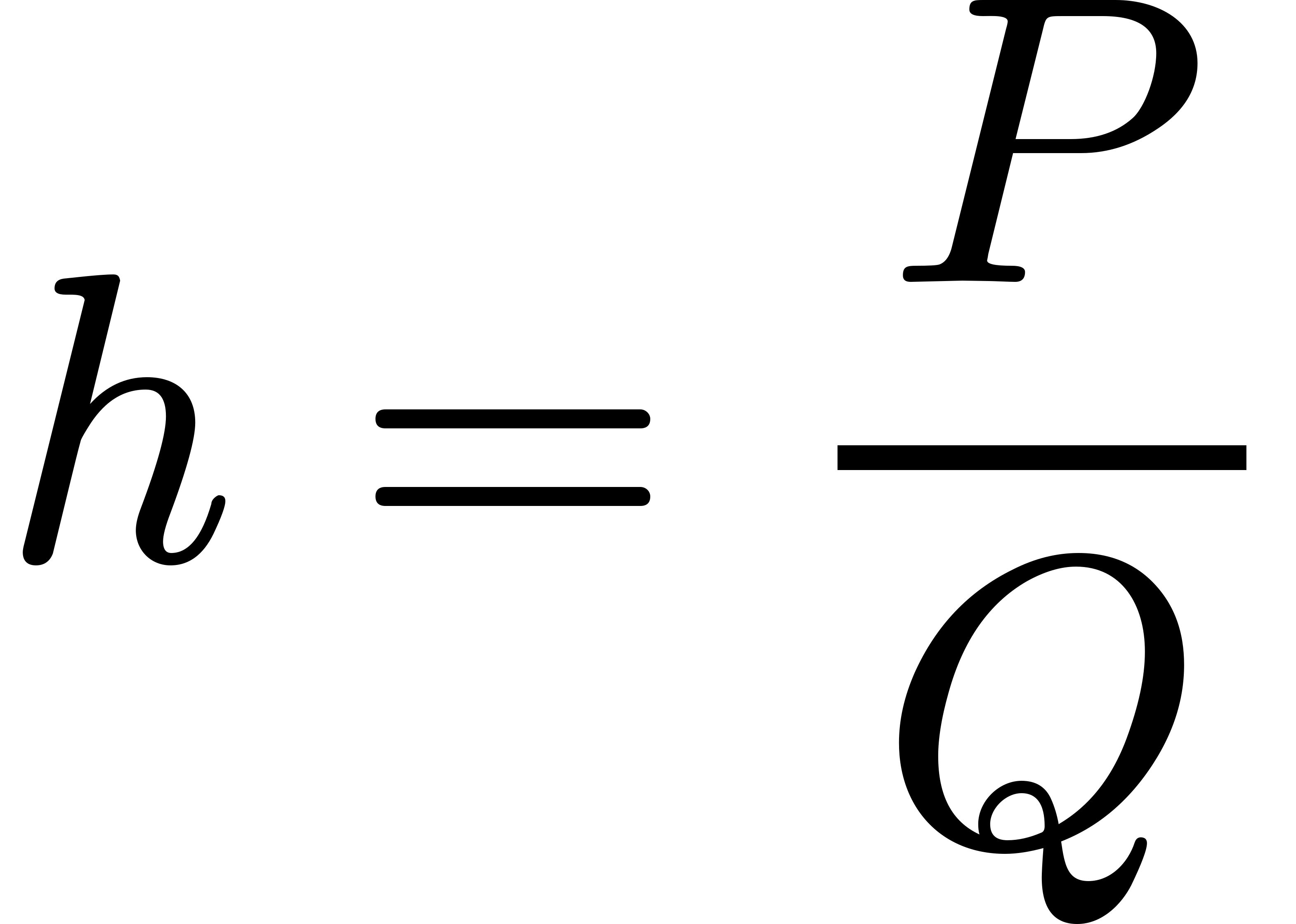 , where and are polynomials without a common
factor. Then
, where and are polynomials without a common
factor. Then
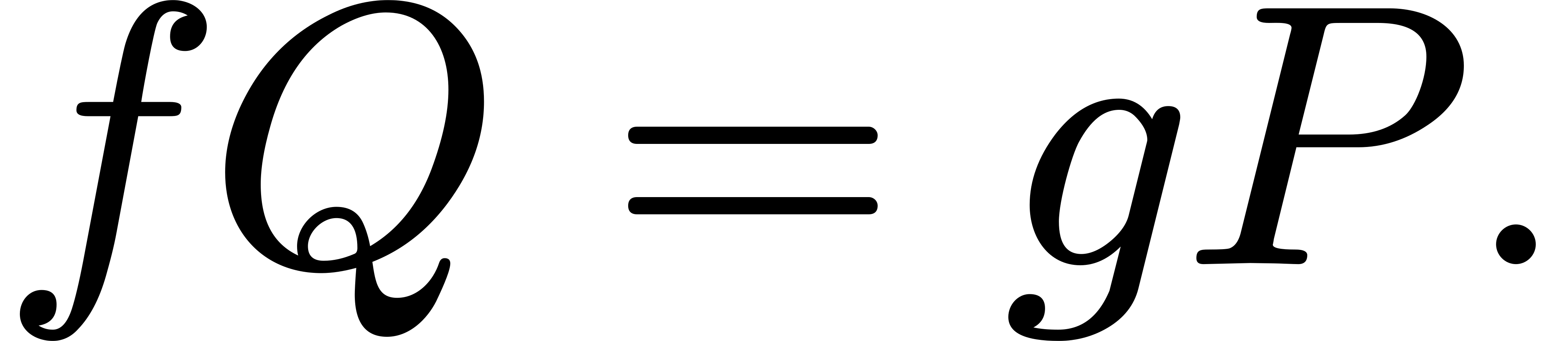 If
If 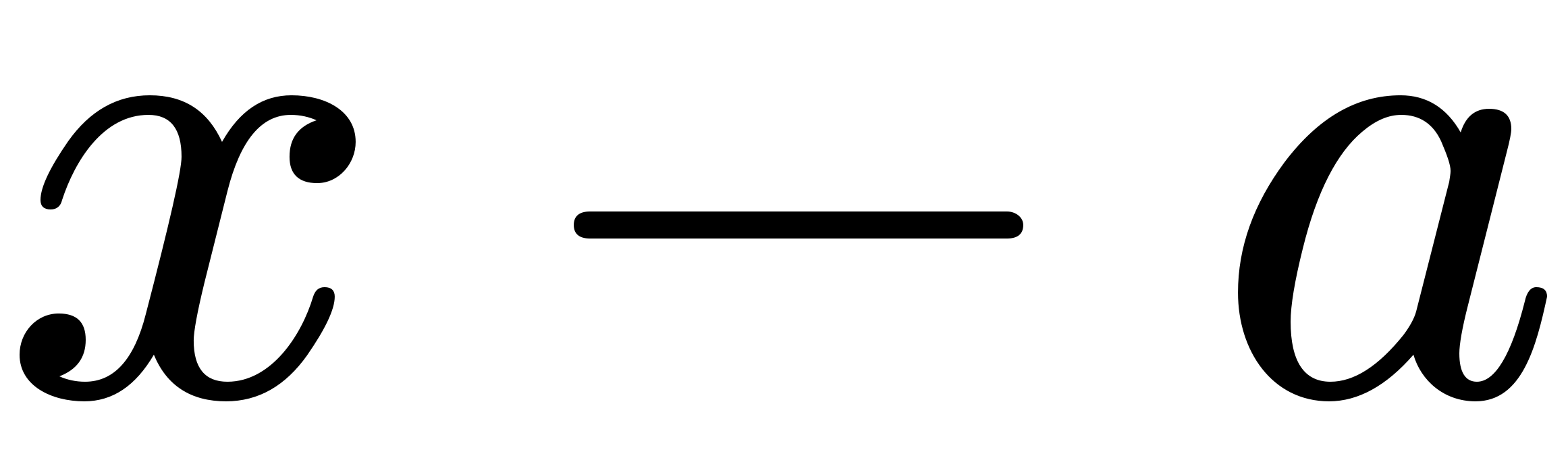 is a factor of , then
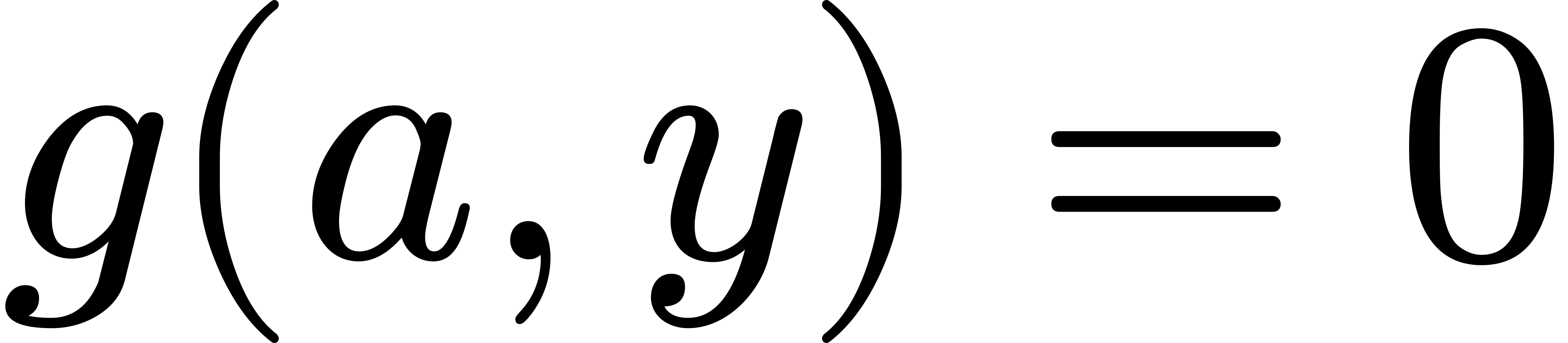 for all values of ; and so all the coefficients of powers of
in are divisible by , which is contrary to our
hypotheses. Hence is a constant and
for all values of ; and so all the coefficients of powers of
in are divisible by , which is contrary to our
hypotheses. Hence is a constant and 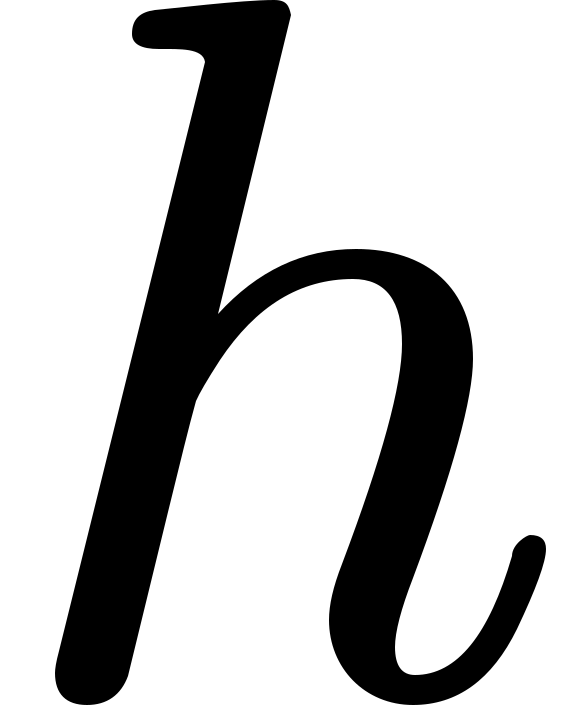 a polynomial.
(2) Suppose that is an irreducible polynomial, and that
 are the roots of
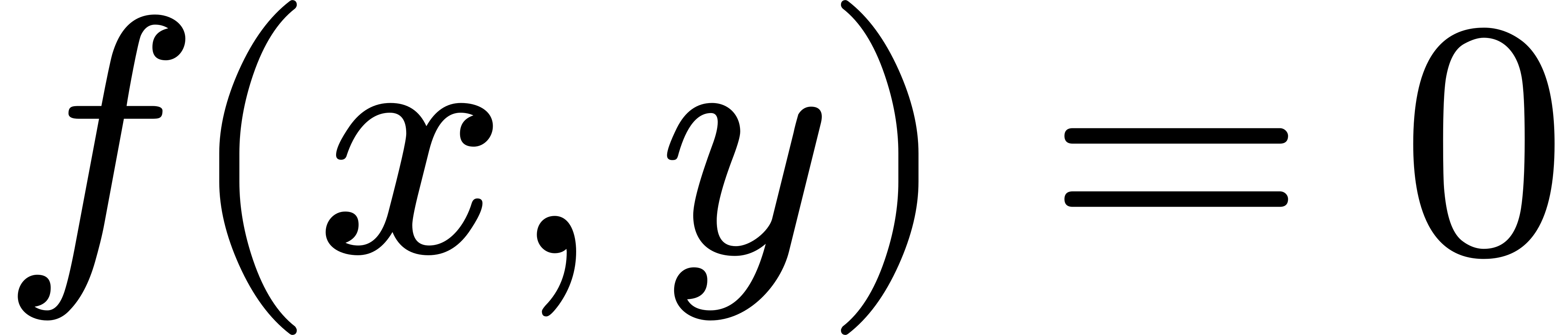 [Pg 37]
in a certain domain . Suppose further that
[Pg 37]
in a certain domain . Suppose further that 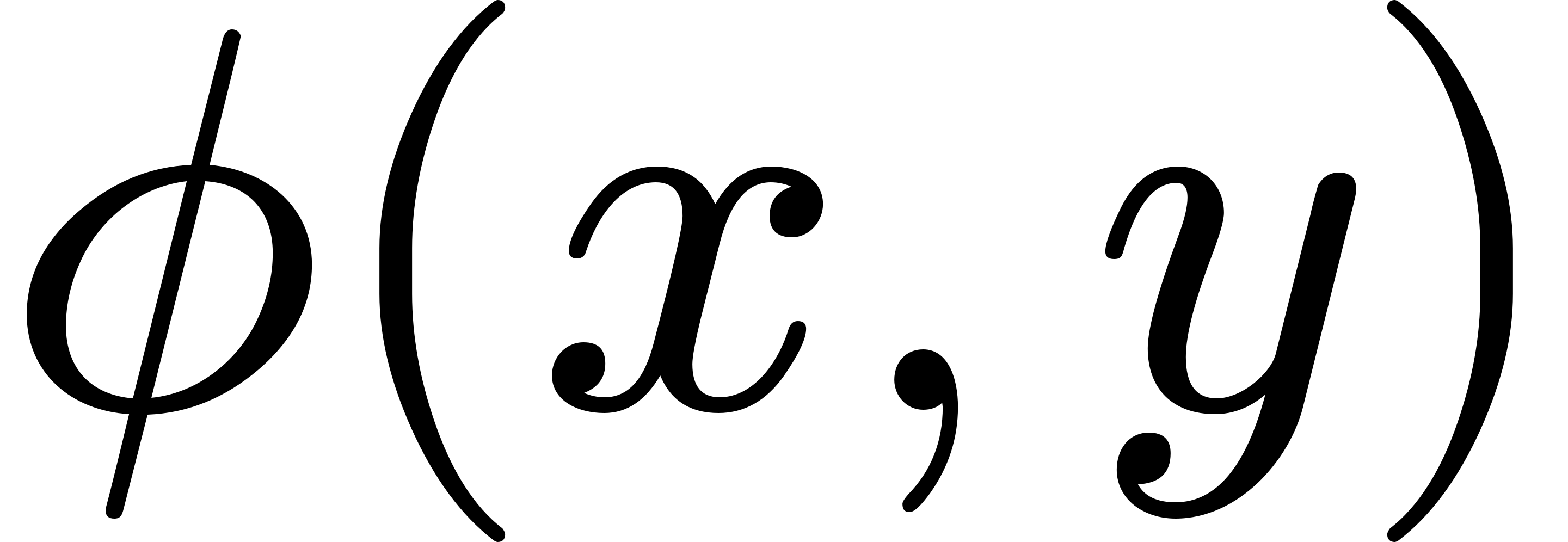 is
another polynomial, and that
is
another polynomial, and that
 Then
Then
 where
where 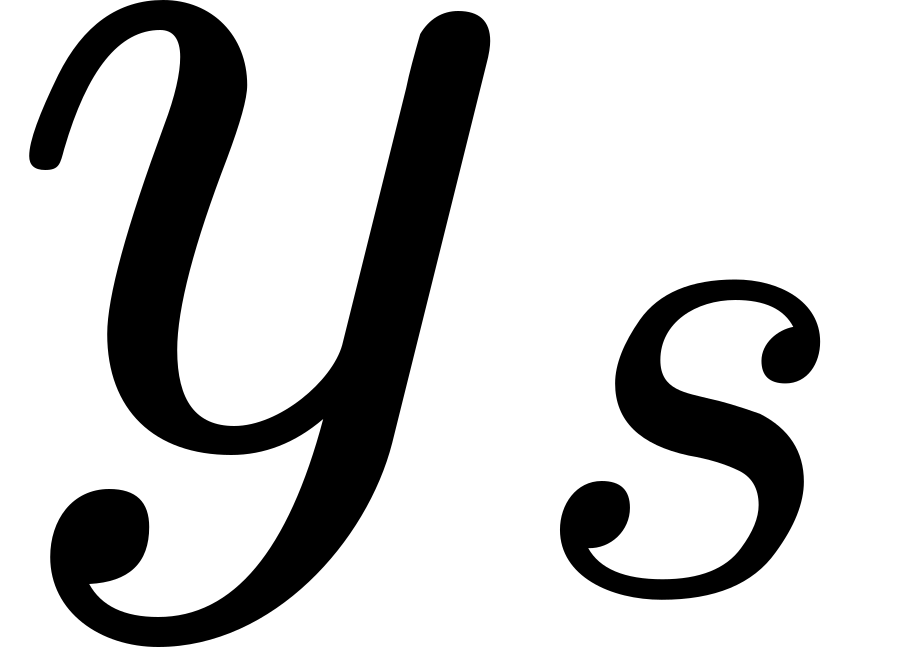 is any one of the roots of (1); and
 where
where 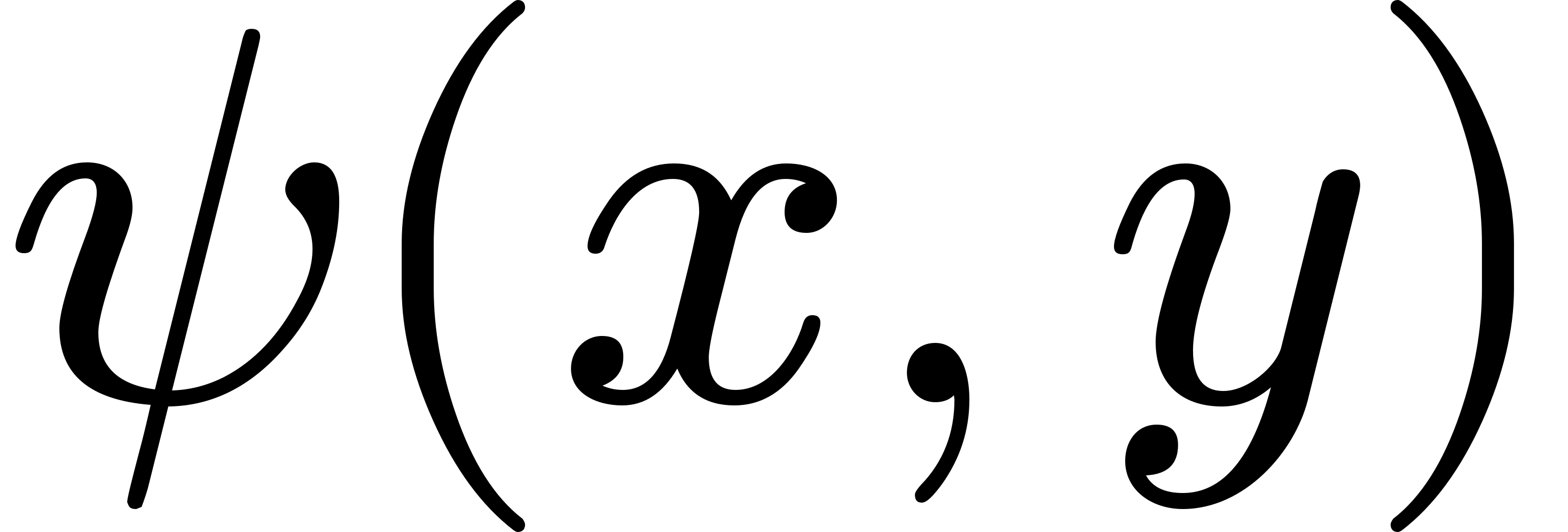 also is a polynomial in and .
Let us determine the highest common factor 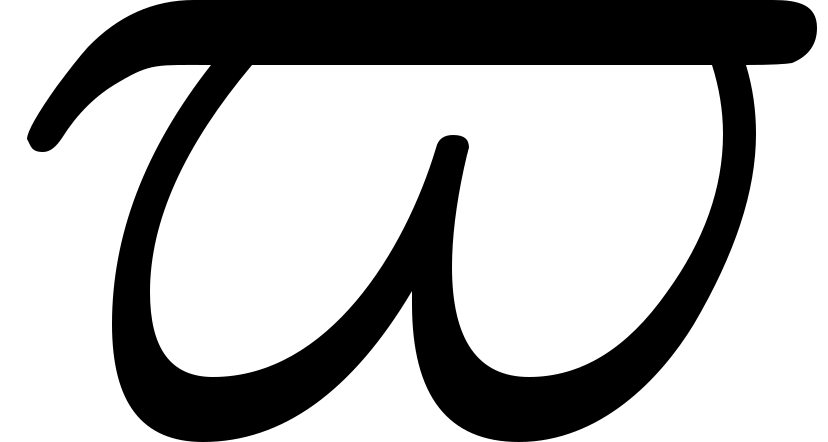 of and
, considered as polynomials in , by the ordinary process
for the determination of the highest common factor of two polynomials.
This process depends only on a series of algebraical divisions, and
so is a polynomial in with coefficients rational in
. We have therefore
of and
, considered as polynomials in , by the ordinary process
for the determination of the highest common factor of two polynomials.
This process depends only on a series of algebraical divisions, and
so is a polynomial in with coefficients rational in
. We have therefore
 where
where  , , ,
, , , 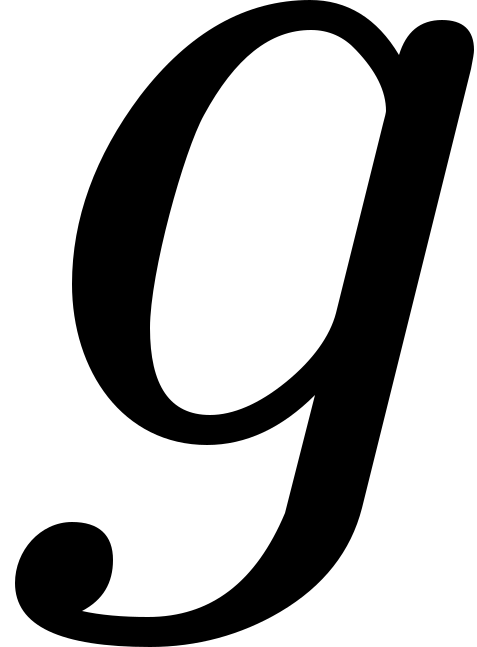 , and are polynomials and
, , and rational functions; and evidently we
may suppose that neither in nor in have the coefficients
of all powers of a common factor. Hence, by Lemma (1),
and are polynomials. But is irreducible, and therefore
and either or must be constants. If
were a constant, would be a function of only. But this
is impossible. For we can determine polynomials
, and are polynomials and
, , and rational functions; and evidently we
may suppose that neither in nor in have the coefficients
of all powers of a common factor. Hence, by Lemma (1),
and are polynomials. But is irreducible, and therefore
and either or must be constants. If
were a constant, would be a function of only. But this
is impossible. For we can determine polynomials  , in ,
with coefficients rational in , such that
, in ,
with coefficients rational in , such that
 and the left-hand side of (4) vanishes when we write for
. Hence is a constant, and so is a constant
multiple of . The truth of the lemma now follows from (3).
and the left-hand side of (4) vanishes when we write for
. Hence is a constant, and so is a constant
multiple of . The truth of the lemma now follows from (3).
It follows from Lemma (2) that cannot satisfy any equation of
degree less than whose coefficients are polynomials in .
(3) If is an algebraical function of , defined by an
equation
 of degree , then any rational function of and
can be expressed in the form
of degree , then any rational function of and
can be expressed in the form
 where
where  are rational functions of
.
are rational functions of
.
[Pg 38]
The function is one of the roots of (1). Let  be the complete system of roots. Then
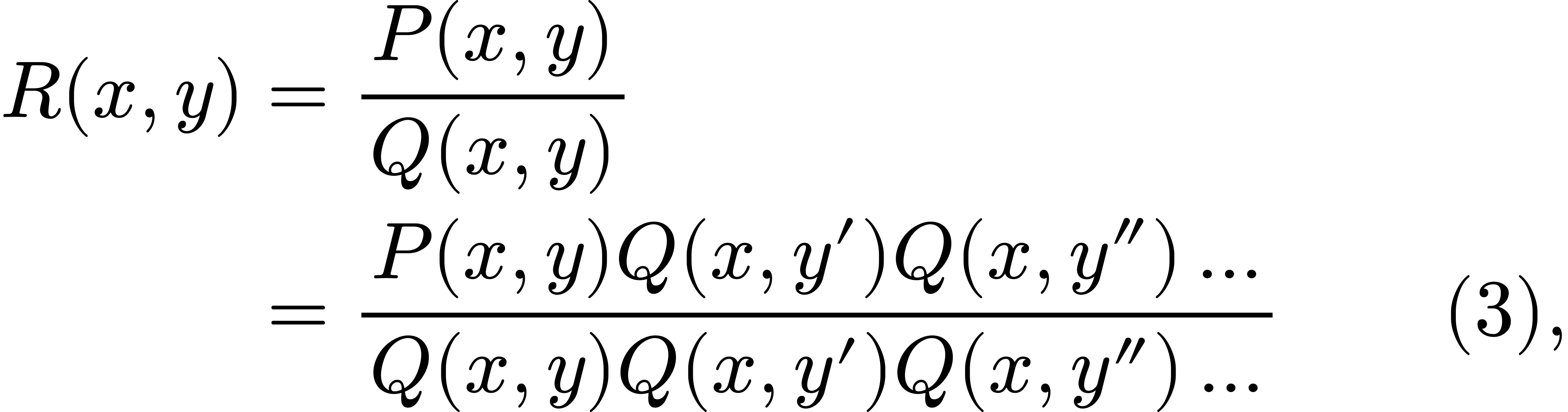 where and are polynomials. The denominator is a polynomial
in whose coefficients are symmetric polynomials in ,
and is therefore, by ii., §3, (i), a rational
function of . On the other hand
where and are polynomials. The denominator is a polynomial
in whose coefficients are symmetric polynomials in ,
and is therefore, by ii., §3, (i), a rational
function of . On the other hand
 is a polynomial in whose coefficients are symmetric polynomials
in
is a polynomial in whose coefficients are symmetric polynomials
in 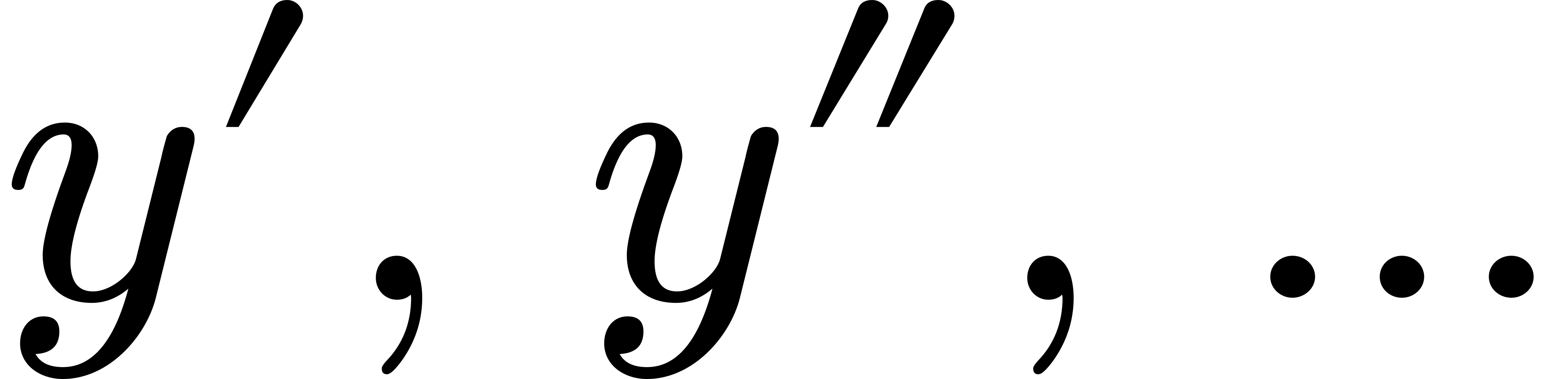 , and therefore, by ii., §3, (ii),
polynomials in with coefficients rational in . Thus the
numerator of (3) is a polynomial in with coefficients rational in
.
, and therefore, by ii., §3, (ii),
polynomials in with coefficients rational in . Thus the
numerator of (3) is a polynomial in with coefficients rational in
.
It follows that 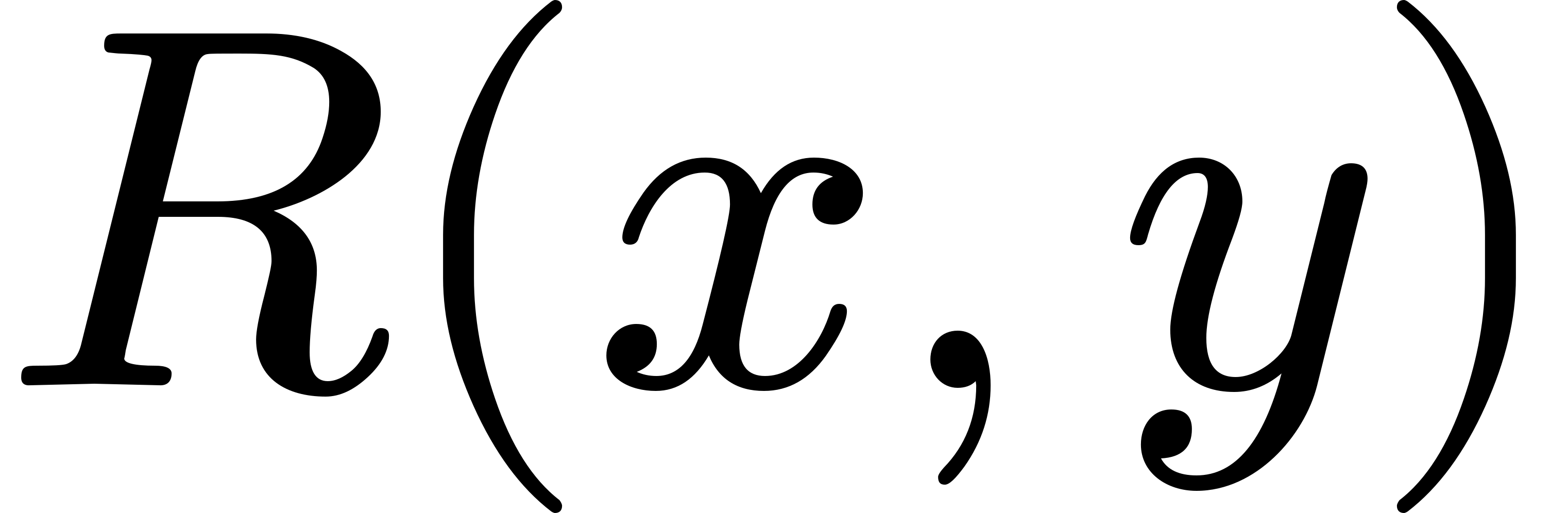 is a polynomial in with coefficients
rational in . From this polynomial we can eliminate, by means of
(1), all powers of as high as or higher than the th. Hence
is of the form prescribed by the lemma.
is a polynomial in with coefficients
rational in . From this polynomial we can eliminate, by means of
(1), all powers of as high as or higher than the th. Hence
is of the form prescribed by the lemma.
12. We proceed now to the proof of our main theorem. We have
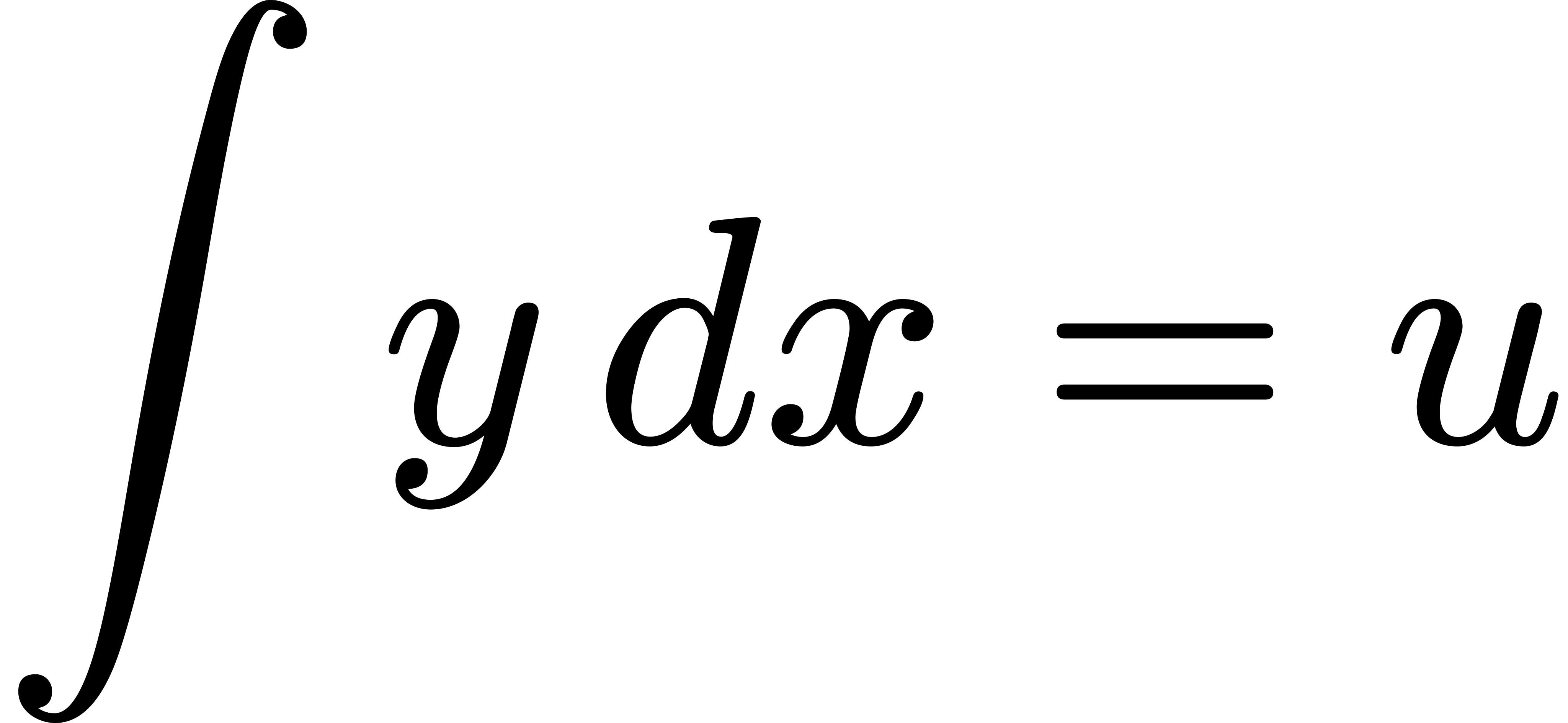 where
where  is algebraical. Let
 be the irreducible equations satisfied by and , and let us
suppose that they are of degrees and respectively. The
first stage in the proof consists in showing that
be the irreducible equations satisfied by and , and let us
suppose that they are of degrees and respectively. The
first stage in the proof consists in showing that
 It will be convenient now to write ,
 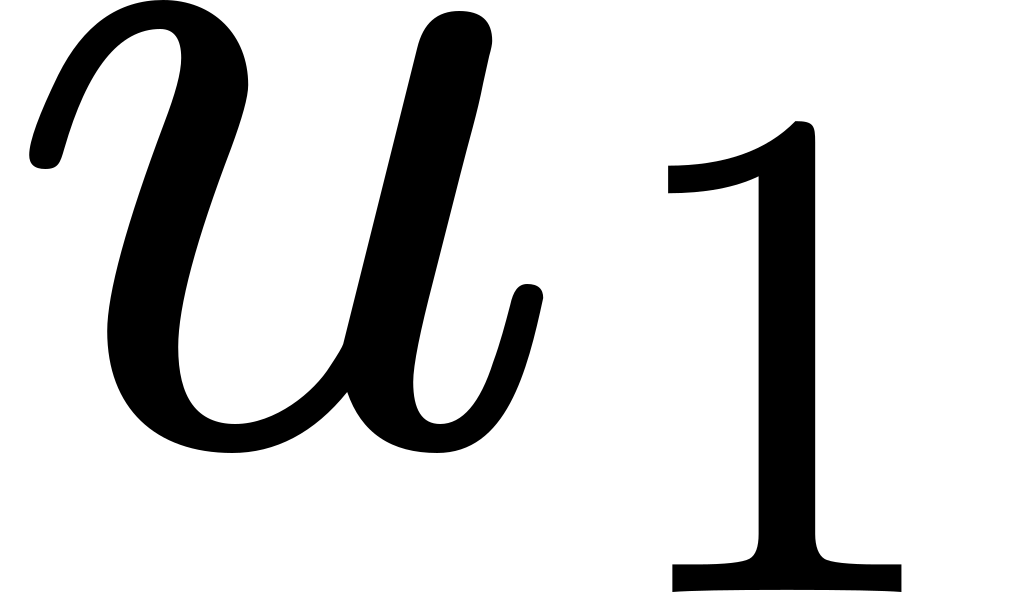 for ,
, and to denote by
for ,
, and to denote by
 the complete systems of roots of the equations (1).
We have  and so
 Now let
 Then
Then 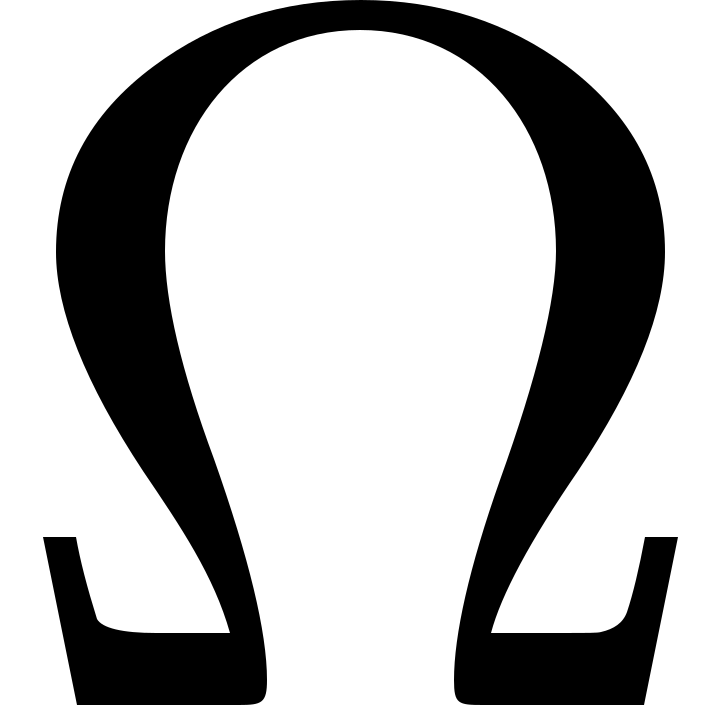 is a polynomial in , with coefficients
symmetric in
is a polynomial in , with coefficients
symmetric in  and therefore rational
in .
and therefore rational
in .
[Pg 39]
The equations 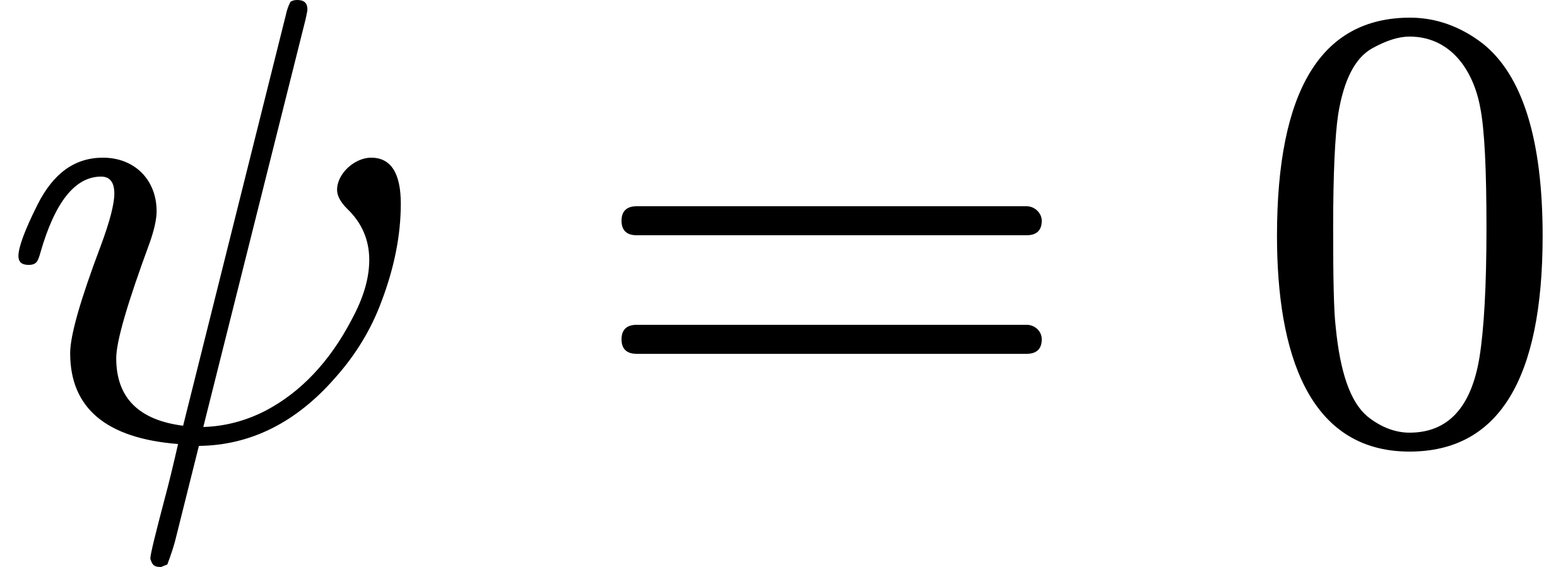 and
and  have a root in
common, and the first equation is irreducible. It follows, by Lemma (2)
of §11, that
have a root in
common, and the first equation is irreducible. It follows, by Lemma (2)
of §11, that
 for
for  .[35] And from this it follows that, when
 is given, we have
 for some value of the suffix .
But we have also
 and from (2) and (3) it follows[36] that
 i.e. that every is the integral of some .
In the same way we can show that every is the derivative of
some . Let
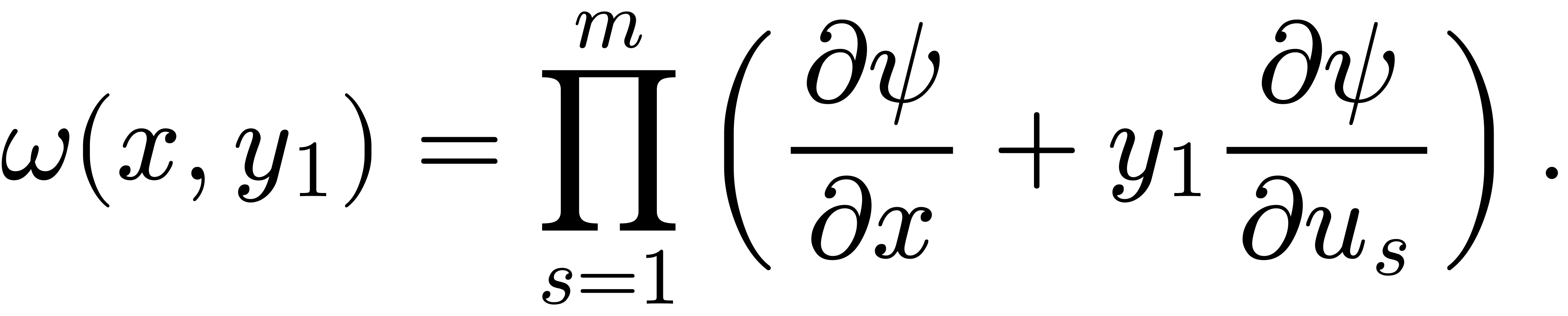 Then is a polynomial in , with coefficients
symmetric in
Then is a polynomial in , with coefficients
symmetric in  and therefore rational
in . The equations
and therefore rational
in . The equations 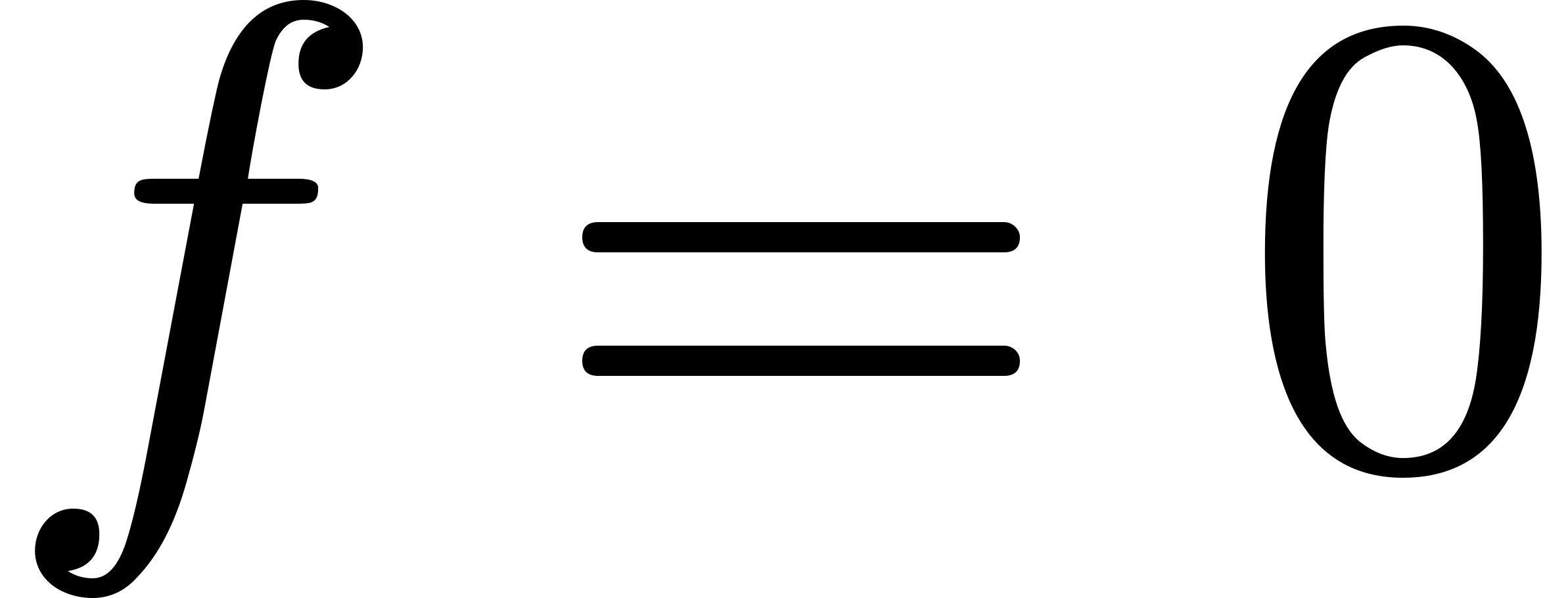 and
and 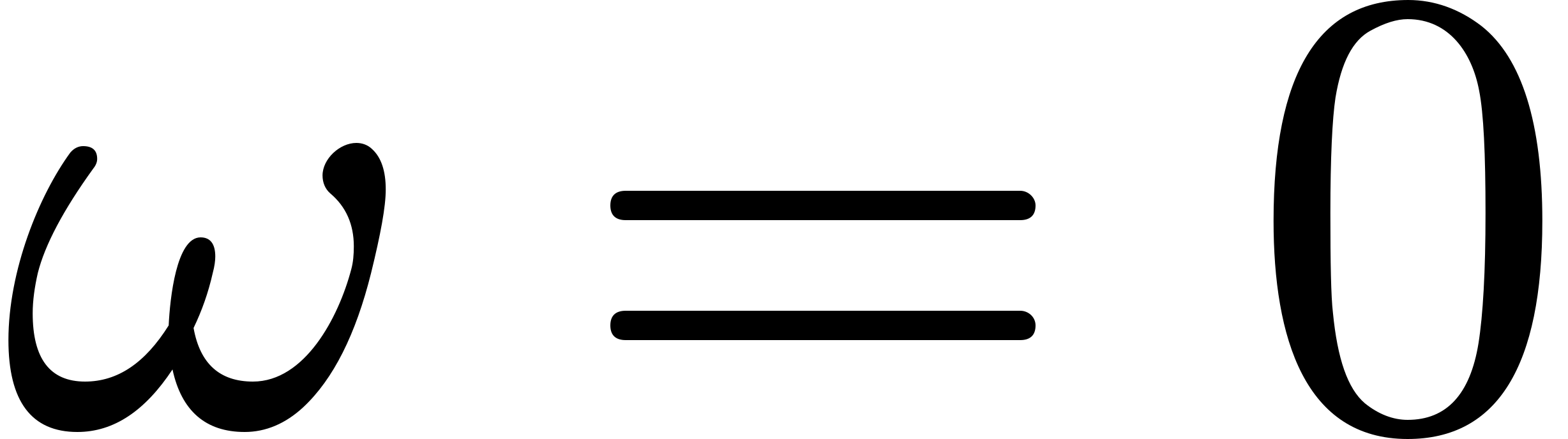 have a root
in common, and so
have a root
in common, and so
 for
for  . From this we deduce that, when is
given, (2) must be true for some value of , and so that the same
is true of (4).
. From this we deduce that, when is
given, (2) must be true for some value of , and so that the same
is true of (4).
Now it is impossible that, in (4), two different values of should
correspond to the same value of . For this would involve
 where
where 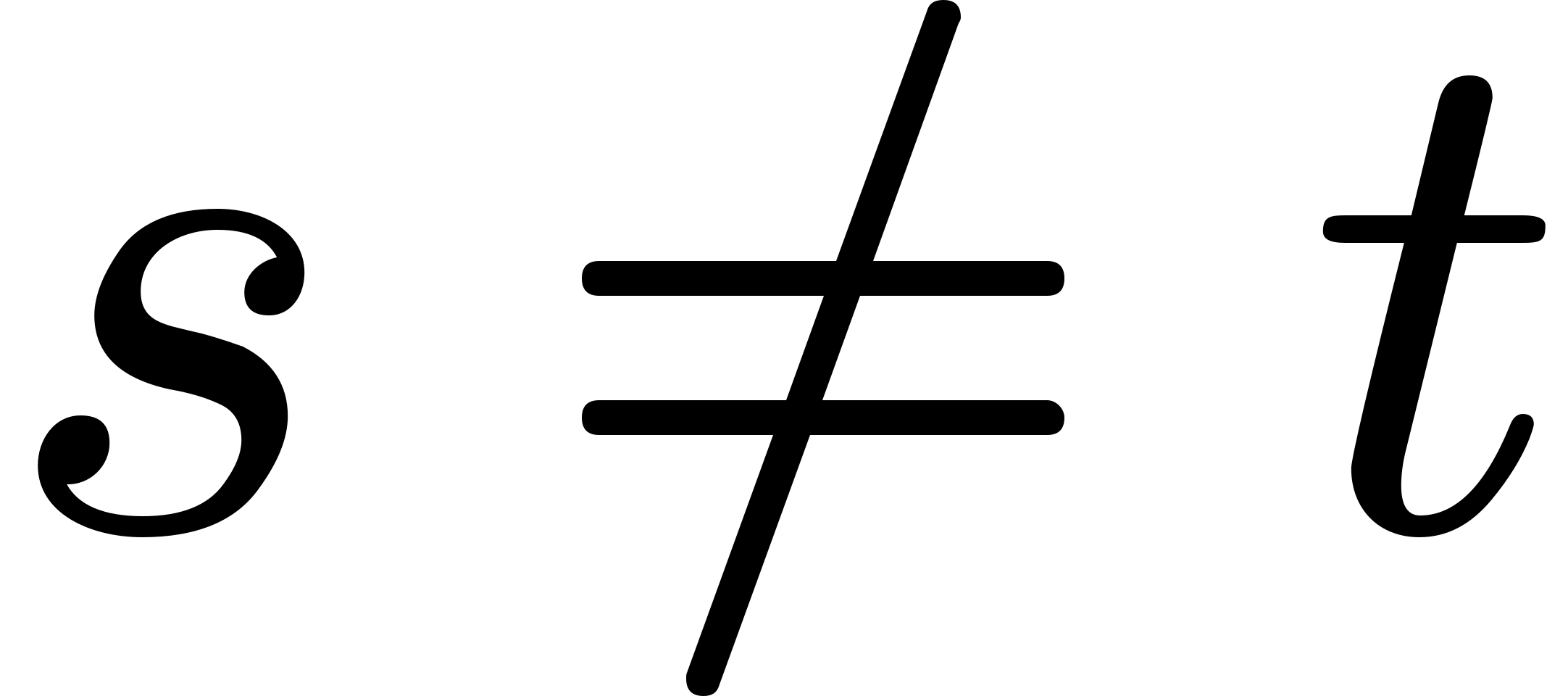 and is a constant. Hence we should have
 [Pg 40]
Subtracting these equations, we should obtain an equation of degree
[Pg 40]
Subtracting these equations, we should obtain an equation of degree 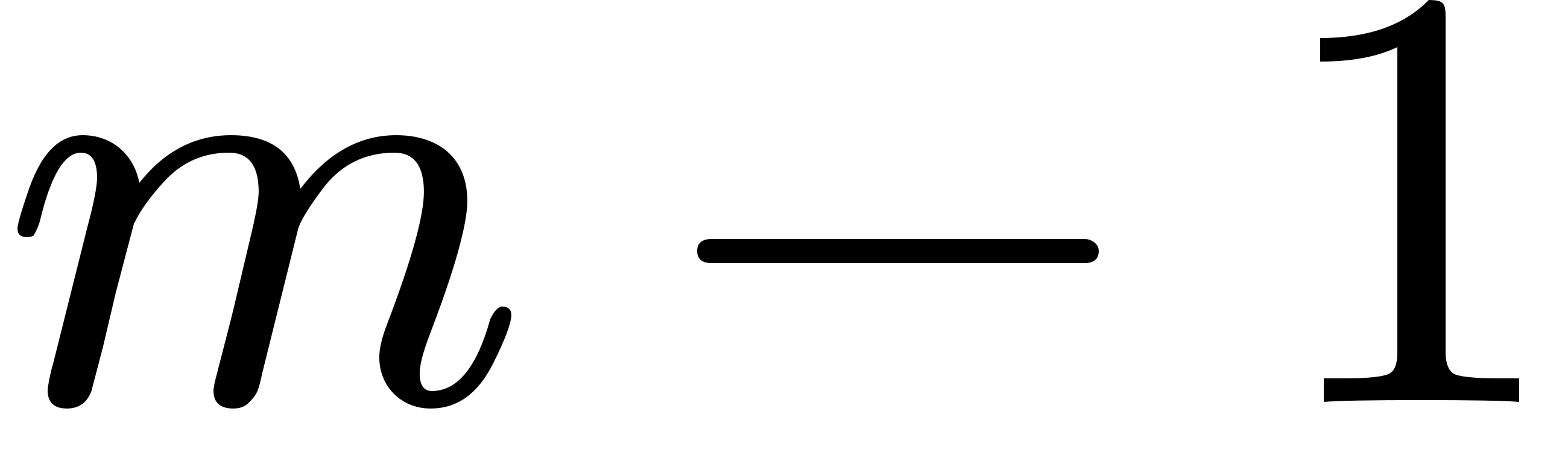 in
in 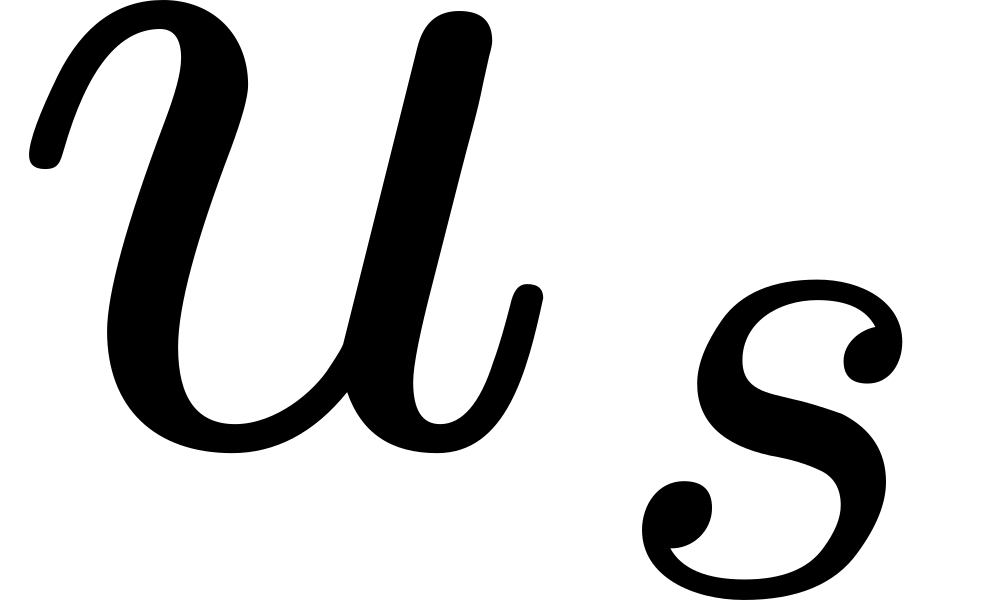 , with coefficients which are polynomials in ;
and this is impossible. In the same way we can prove that two different
values of cannot correspond to the same value of .
, with coefficients which are polynomials in ;
and this is impossible. In the same way we can prove that two different
values of cannot correspond to the same value of .
The equation (4) therefore establishes a one-one correspondence
between the values of and . It follows that
It is moreover evident that, by arranging the suffixes properly, we can
make
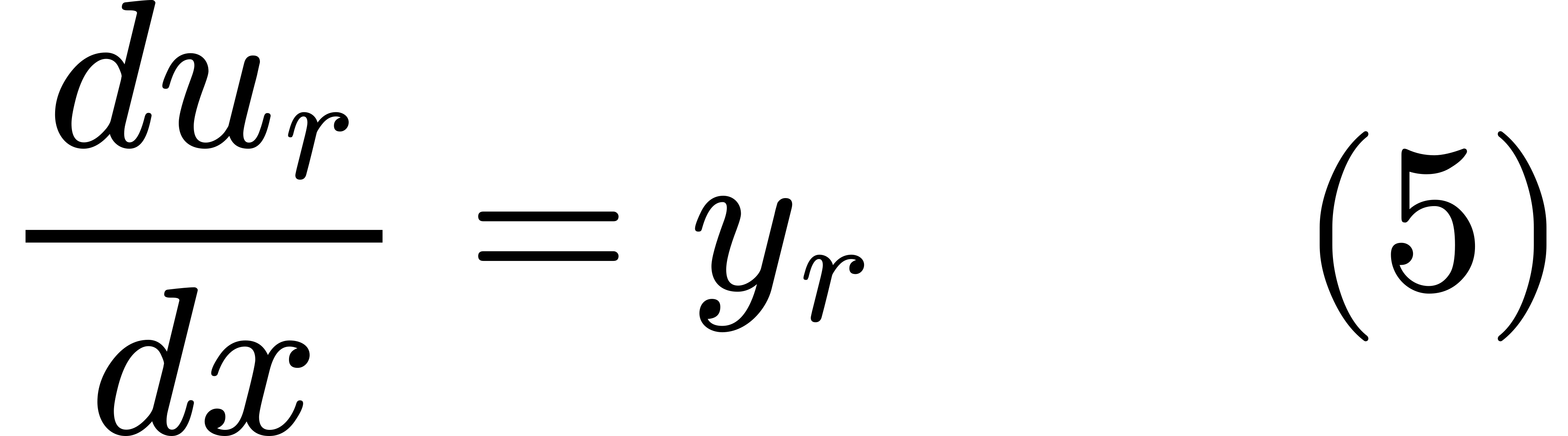 for .
for .
13. We have
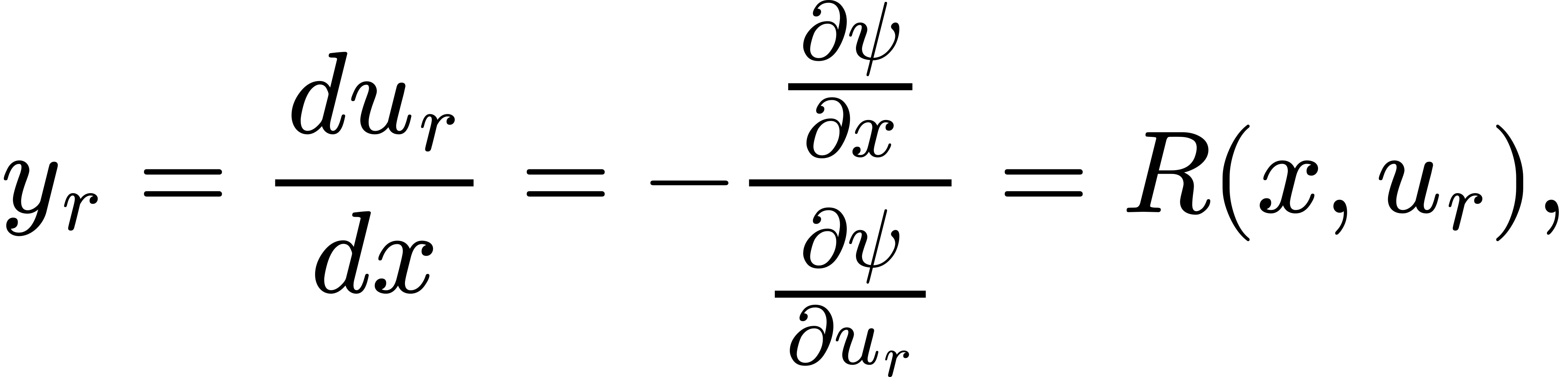 where is a rational function which may, in virtue of Lemma (3) of
§ 11, be expressed as a polynomial of degree in
where is a rational function which may, in virtue of Lemma (3) of
§ 11, be expressed as a polynomial of degree in 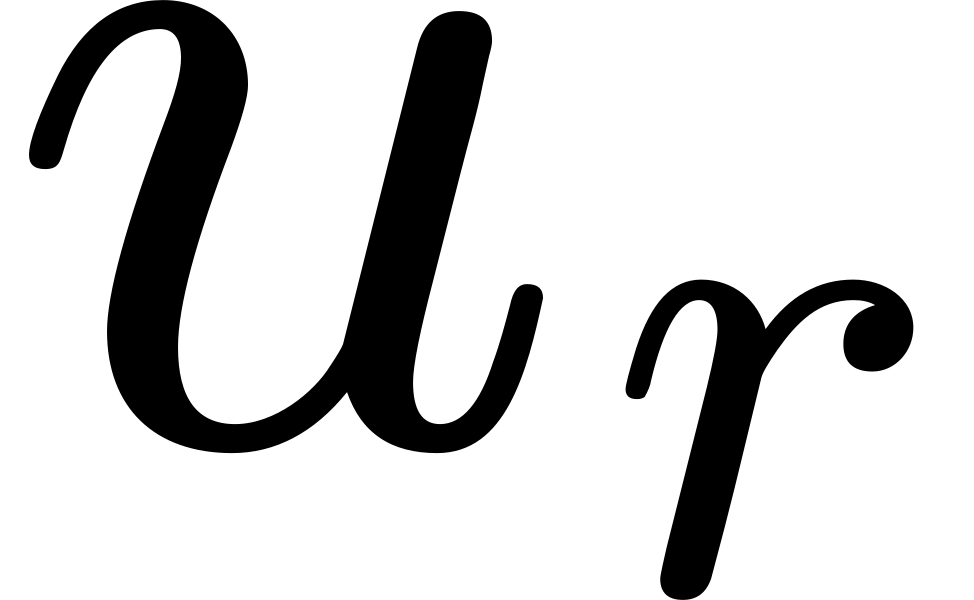 ,
with coefficients rational in .
,
with coefficients rational in .
The product
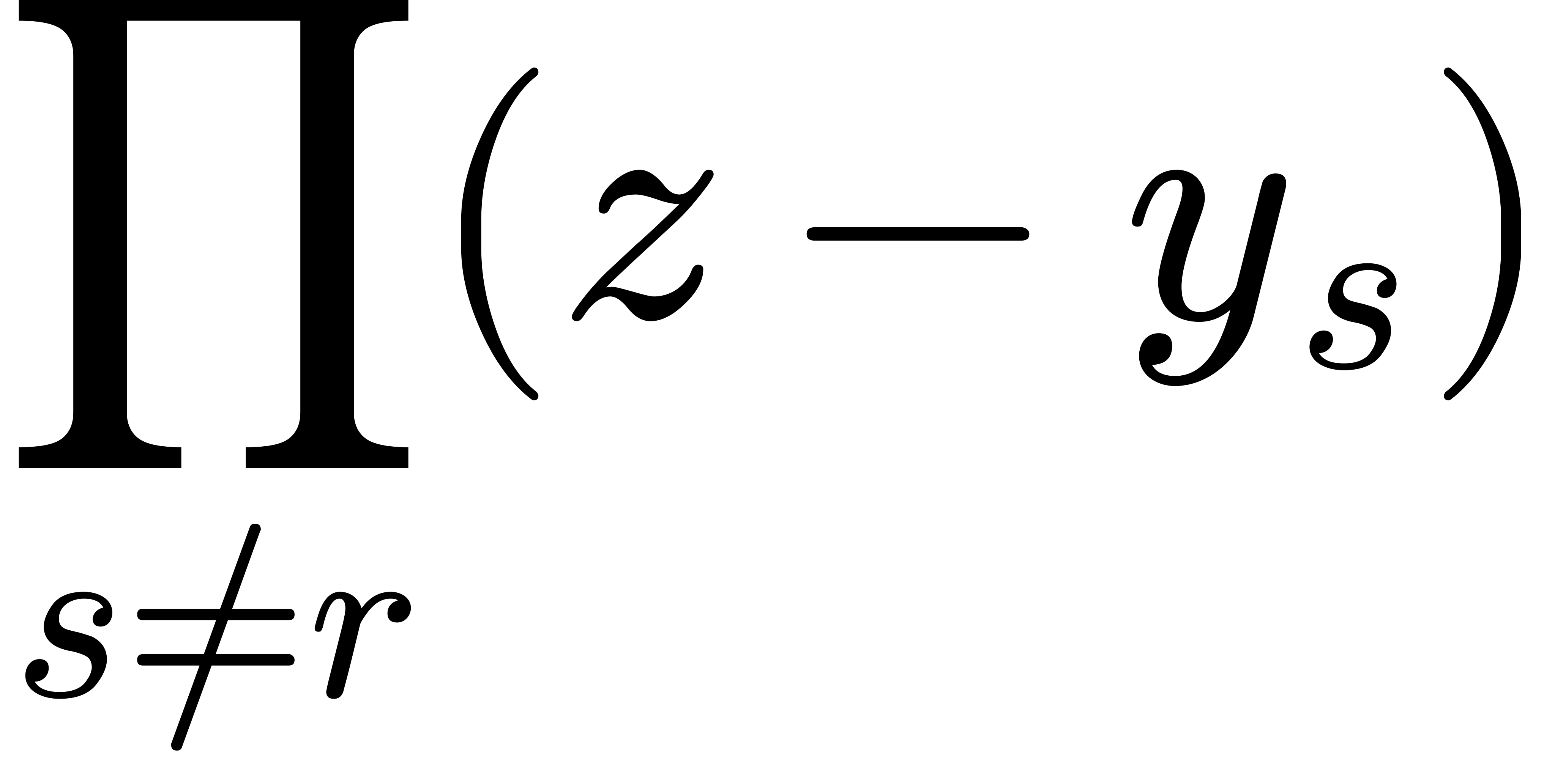 is a polynomial of degree in , with coefficients which
are symmetric polynomials in
is a polynomial of degree in , with coefficients which
are symmetric polynomials in  and therefore, by ii., §3,
(ii), polynomials in
and therefore, by ii., §3,
(ii), polynomials in 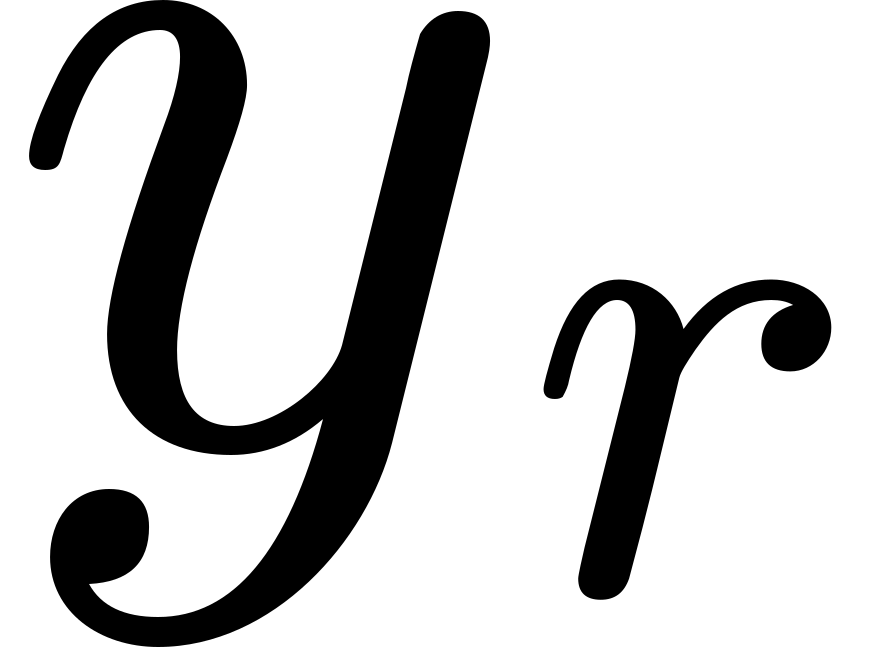 with coefficients rational in .
Replacing by its expression as a polynomial in
obtained above, and eliminating
with coefficients rational in .
Replacing by its expression as a polynomial in
obtained above, and eliminating 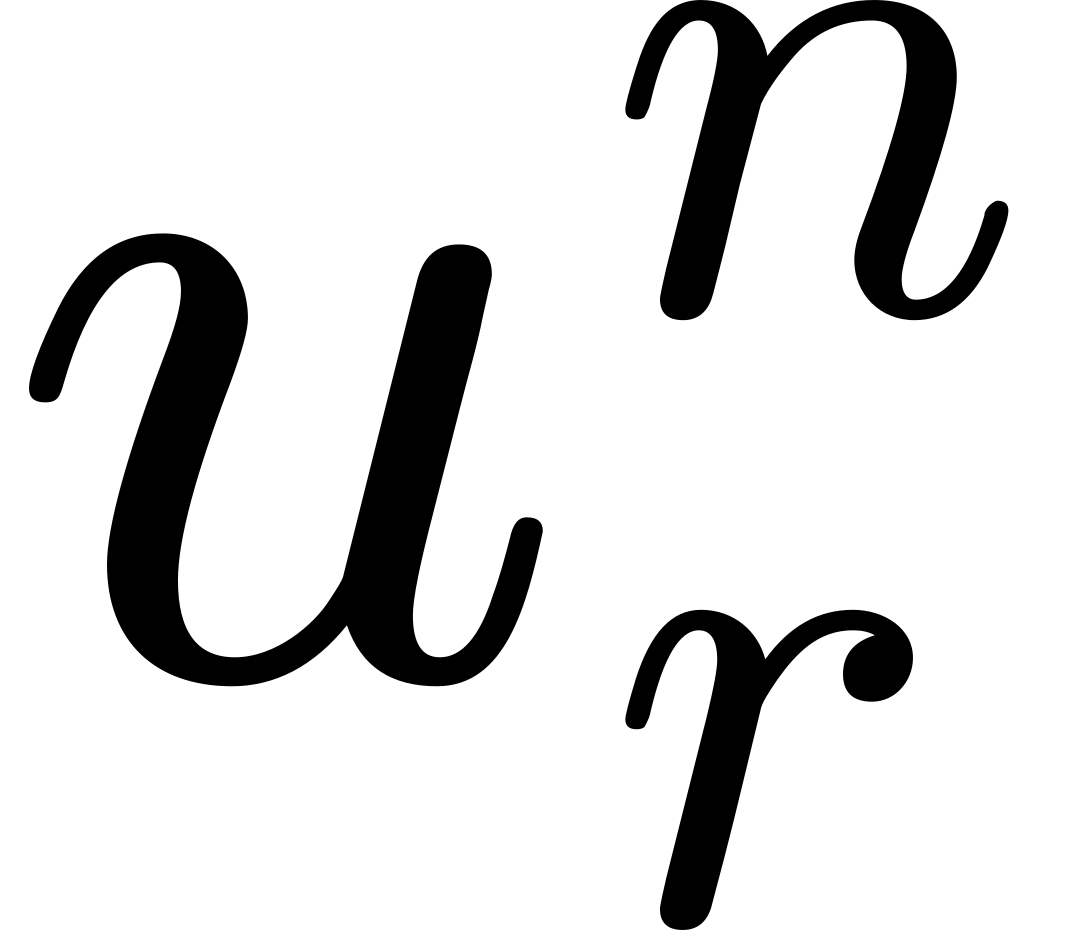 and all higher powers of
, we obtain an equation
and all higher powers of
, we obtain an equation
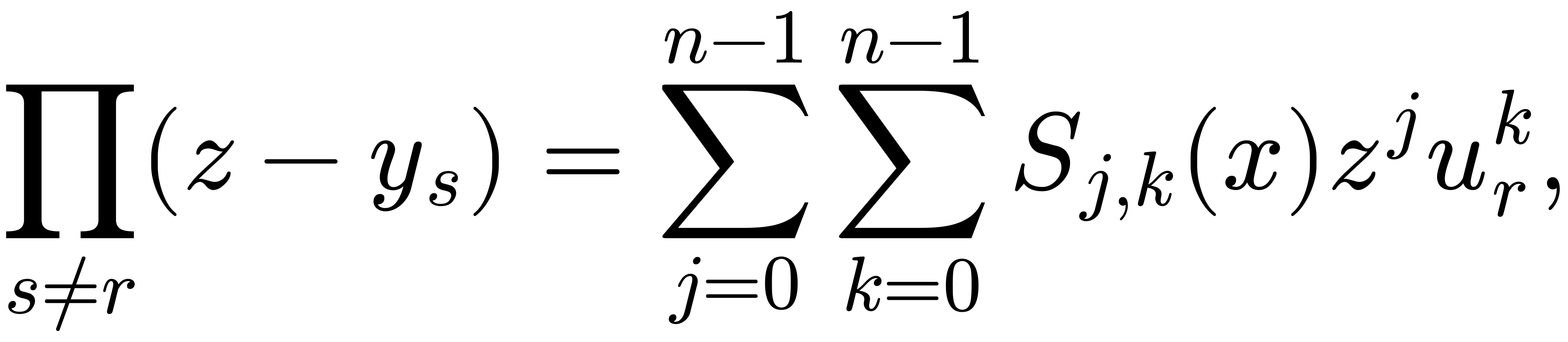 where the 's are rational functions of which are, from the
method of their formation, independent of the particular value of
selected. We may therefore write
where the 's are rational functions of which are, from the
method of their formation, independent of the particular value of
selected. We may therefore write
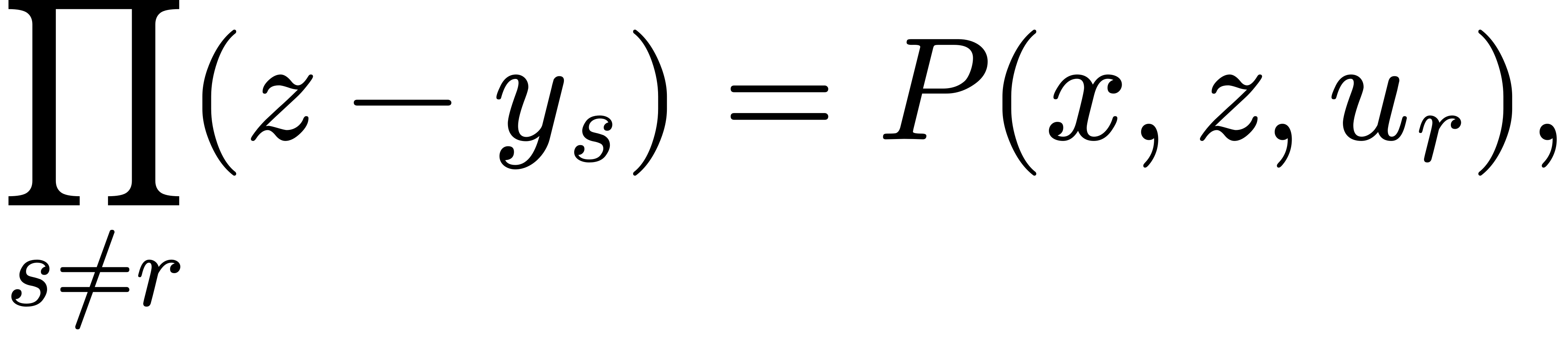 where is a polynomial in and with coefficients
rational in . It is evident that
where is a polynomial in and with coefficients
rational in . It is evident that
 for every value of other than . In particular

[Pg 41]
It follows that the 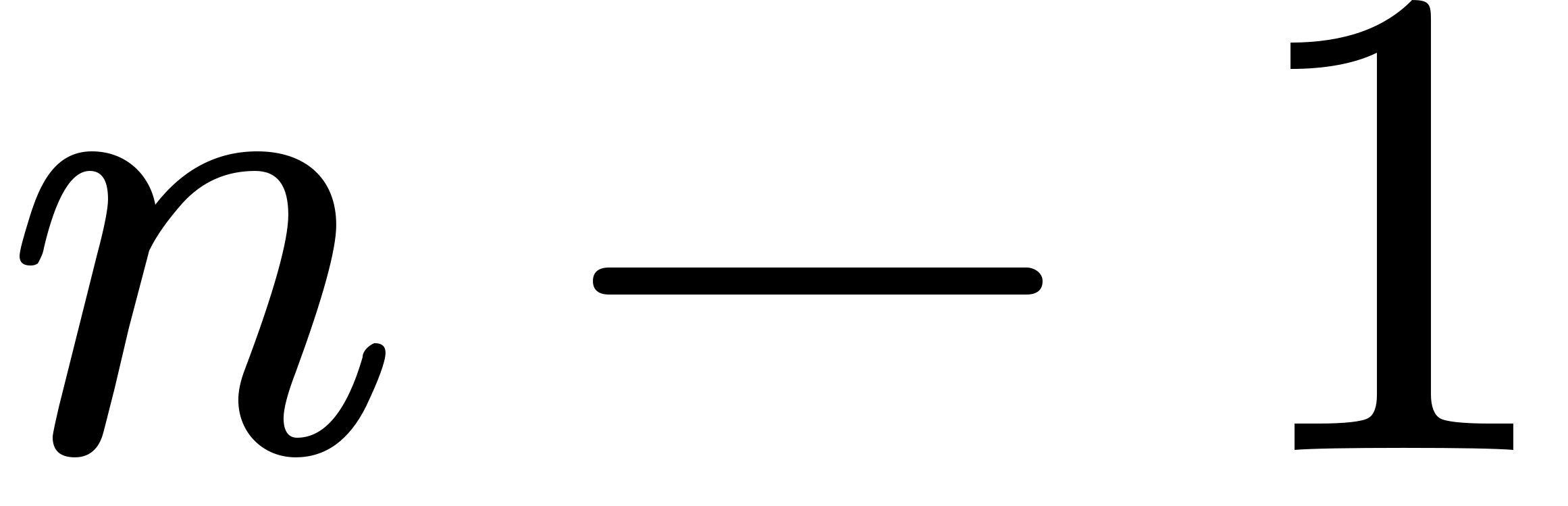 roots of the equation in
 are
are  . We have therefore
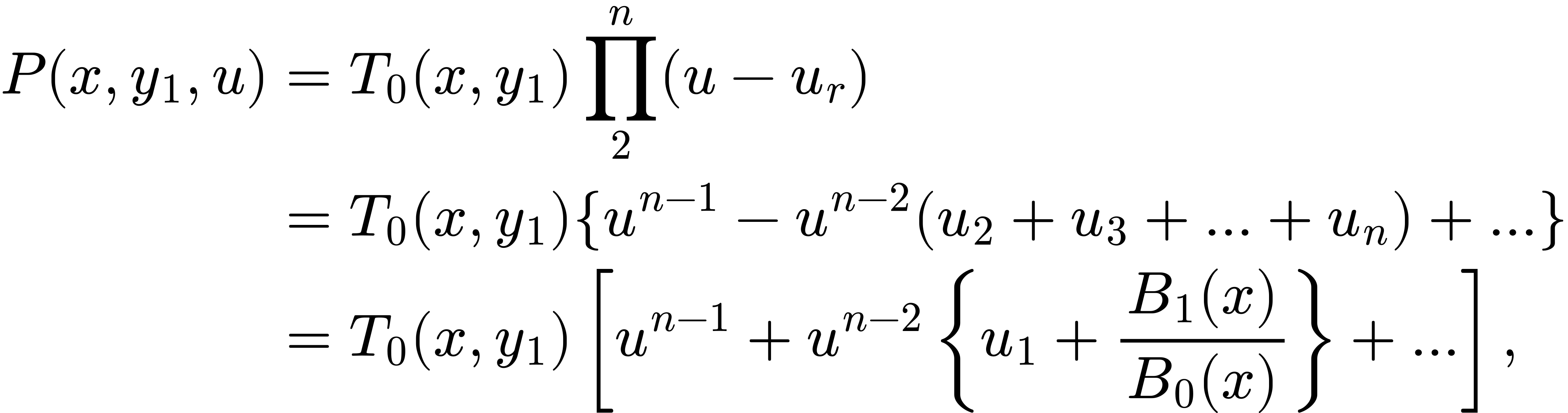 where
where 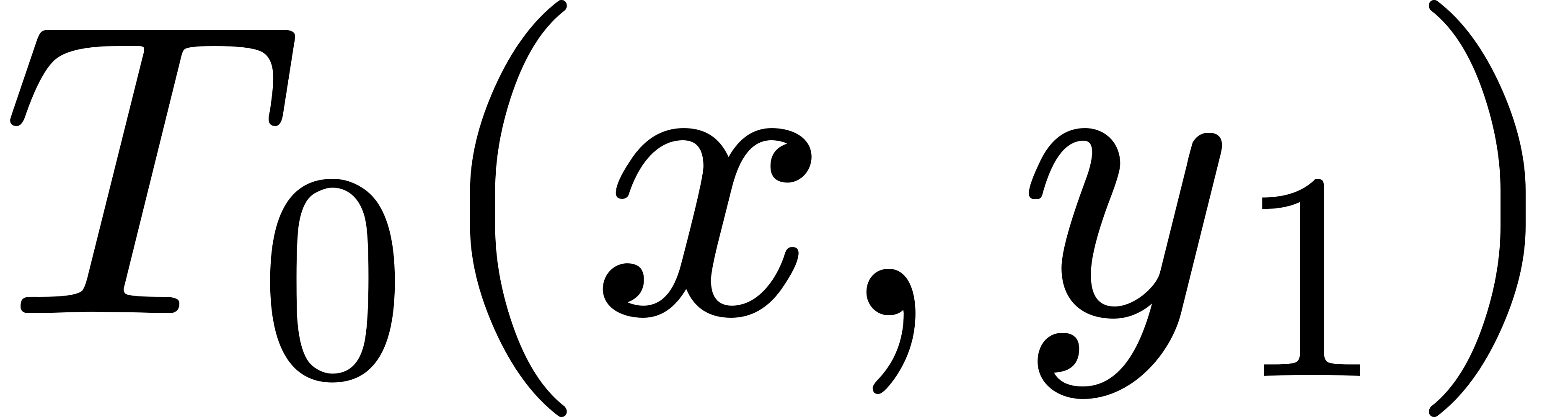 is the coefficient of
 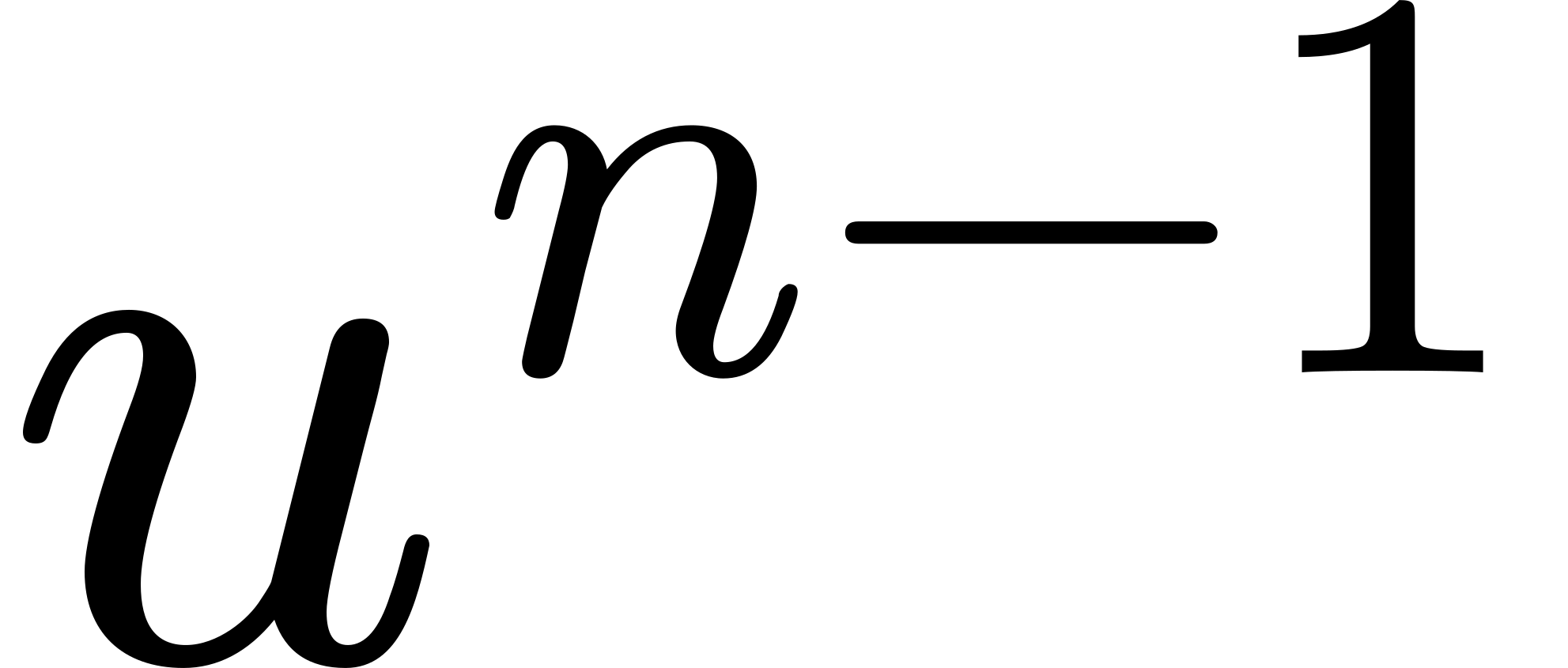 in ,
and
in ,
and 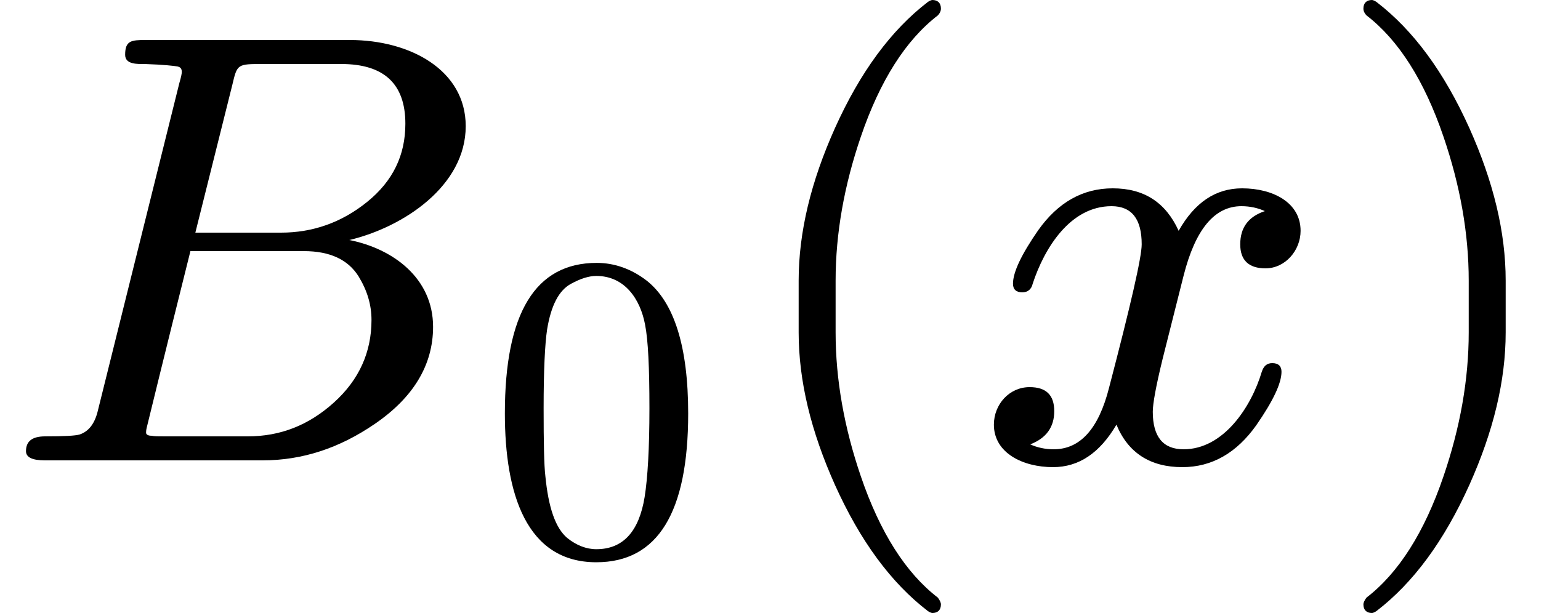 and
and 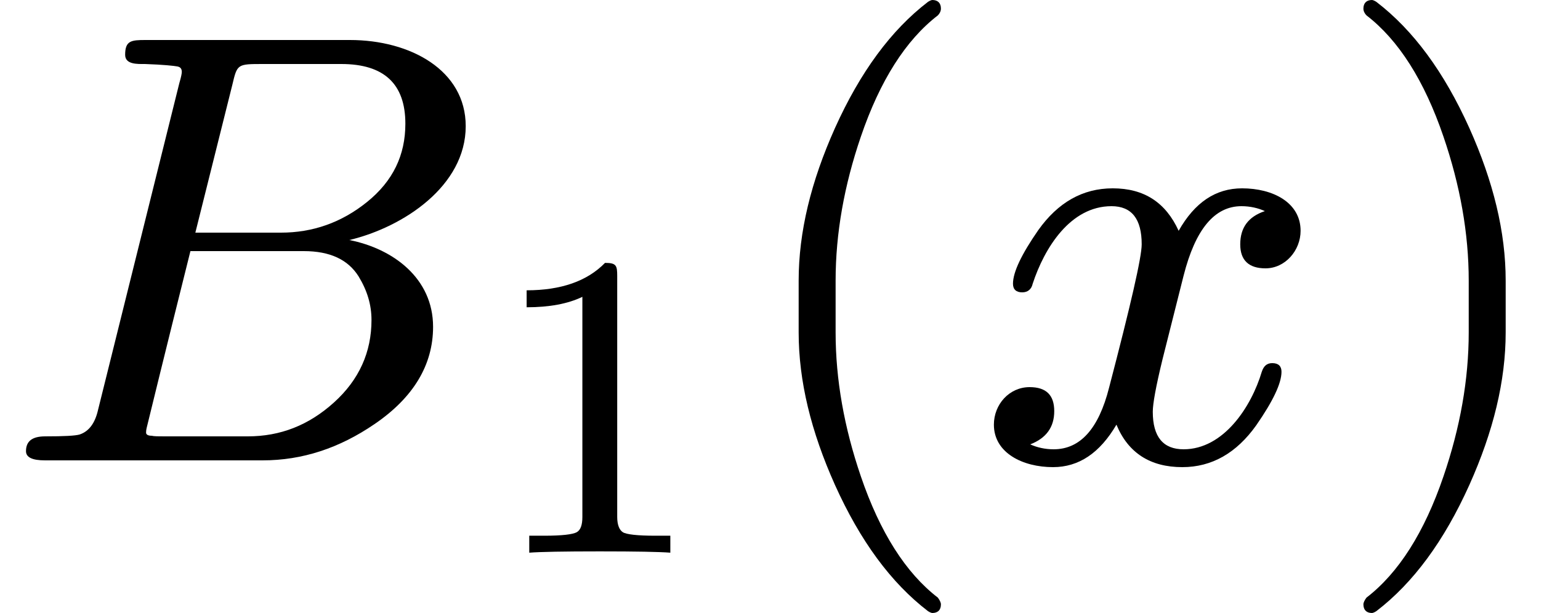 are the coefficients of
 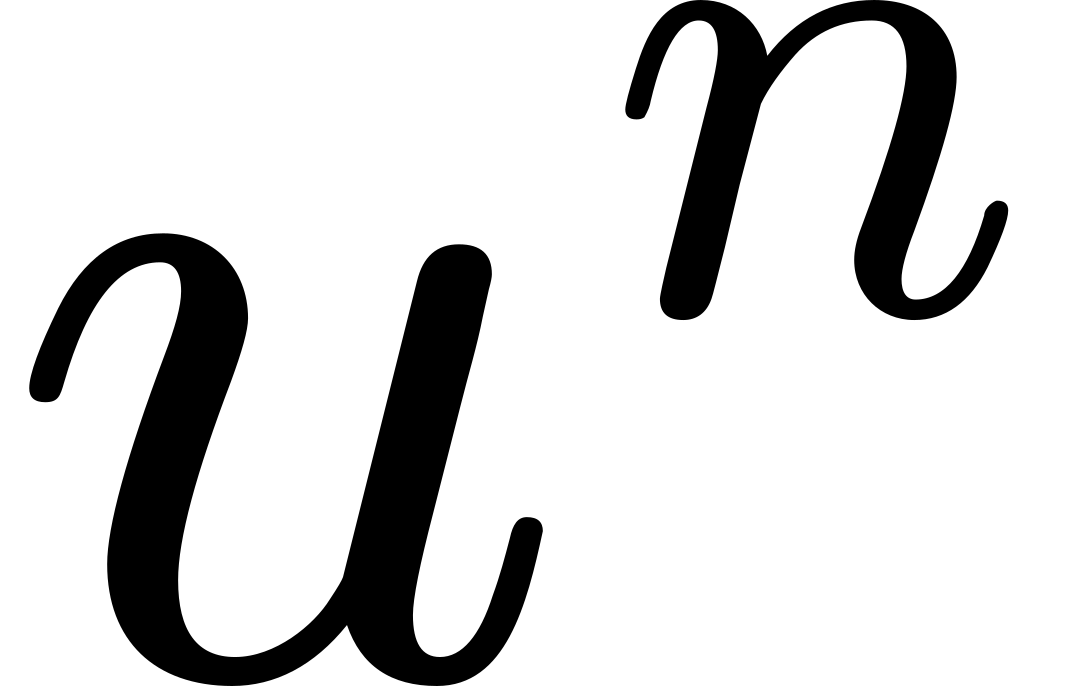 and
in
and
in 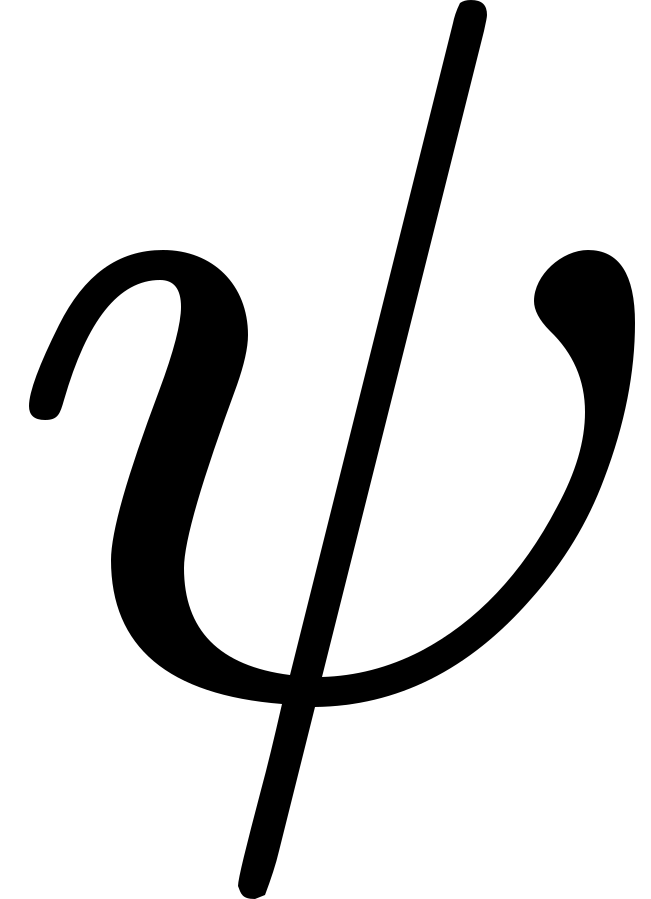 . Equating the coefficients of
 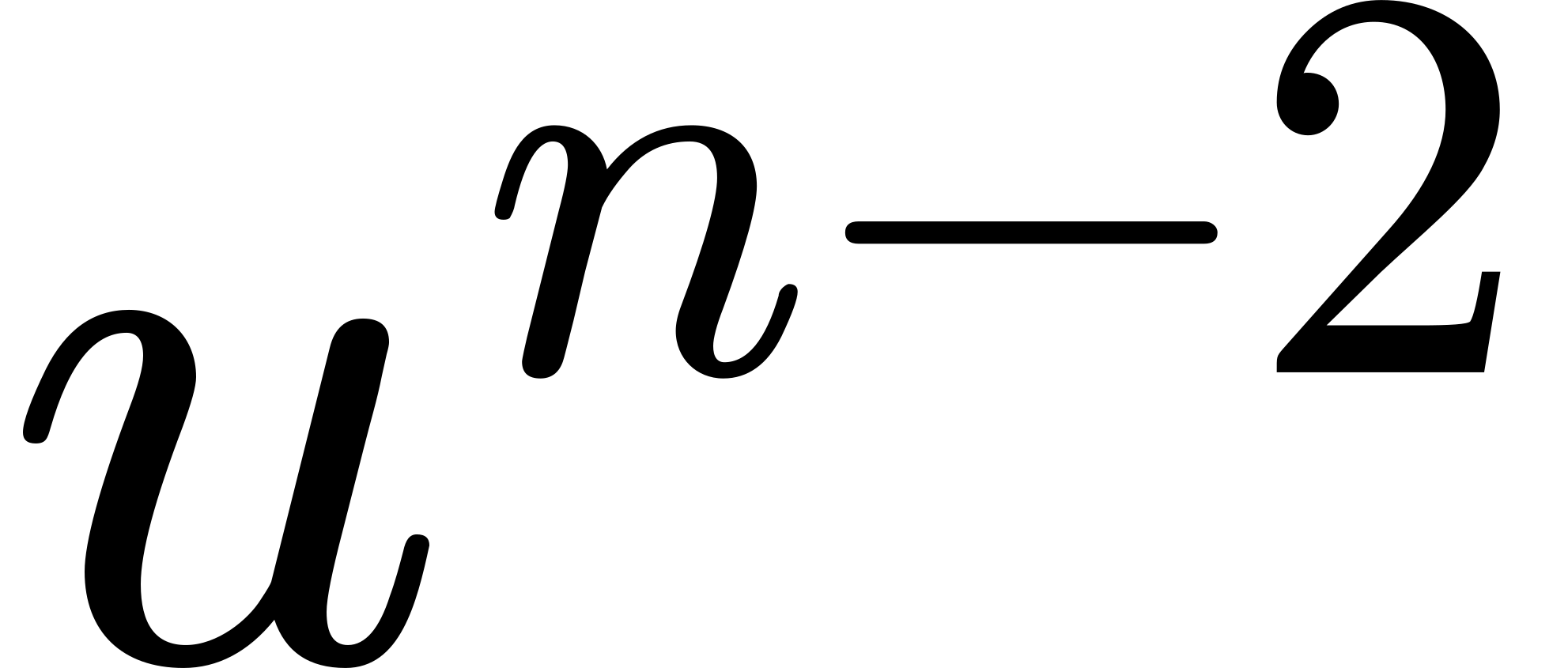 on
the two sides of this equation, we obtain
on
the two sides of this equation, we obtain
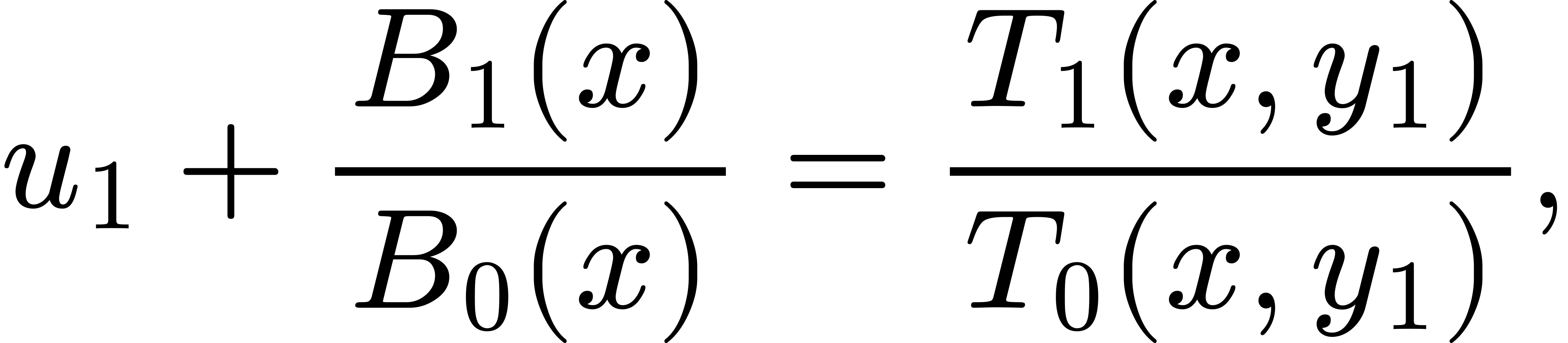 where
where 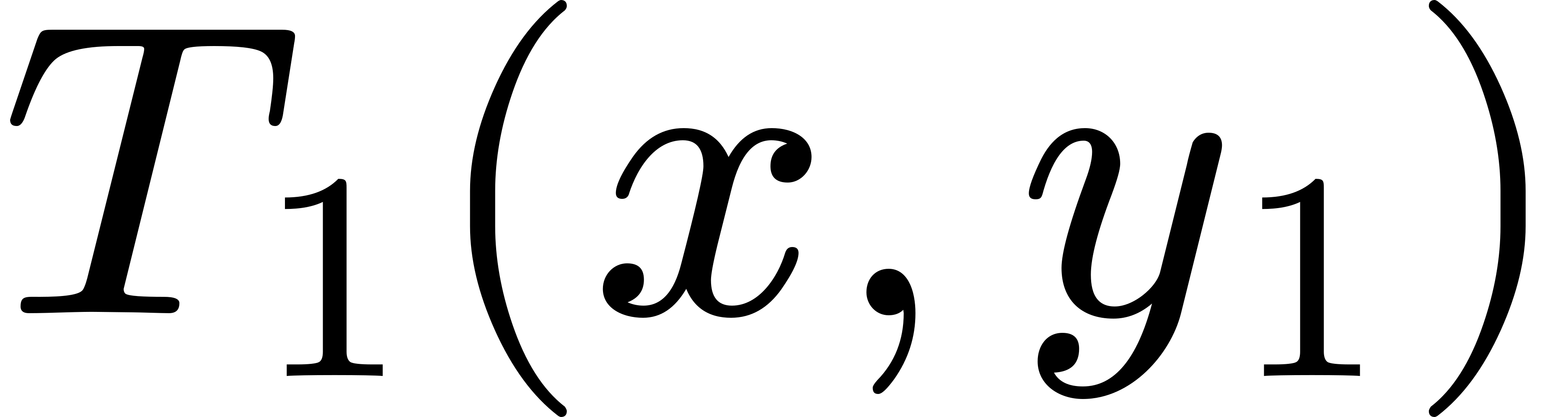 is the coefficient of in .
Thus the theorem is proved.
is the coefficient of in .
Thus the theorem is proved.
14. We can now apply Lemma (3) of §11; and we arrive at the final
conclusion that if
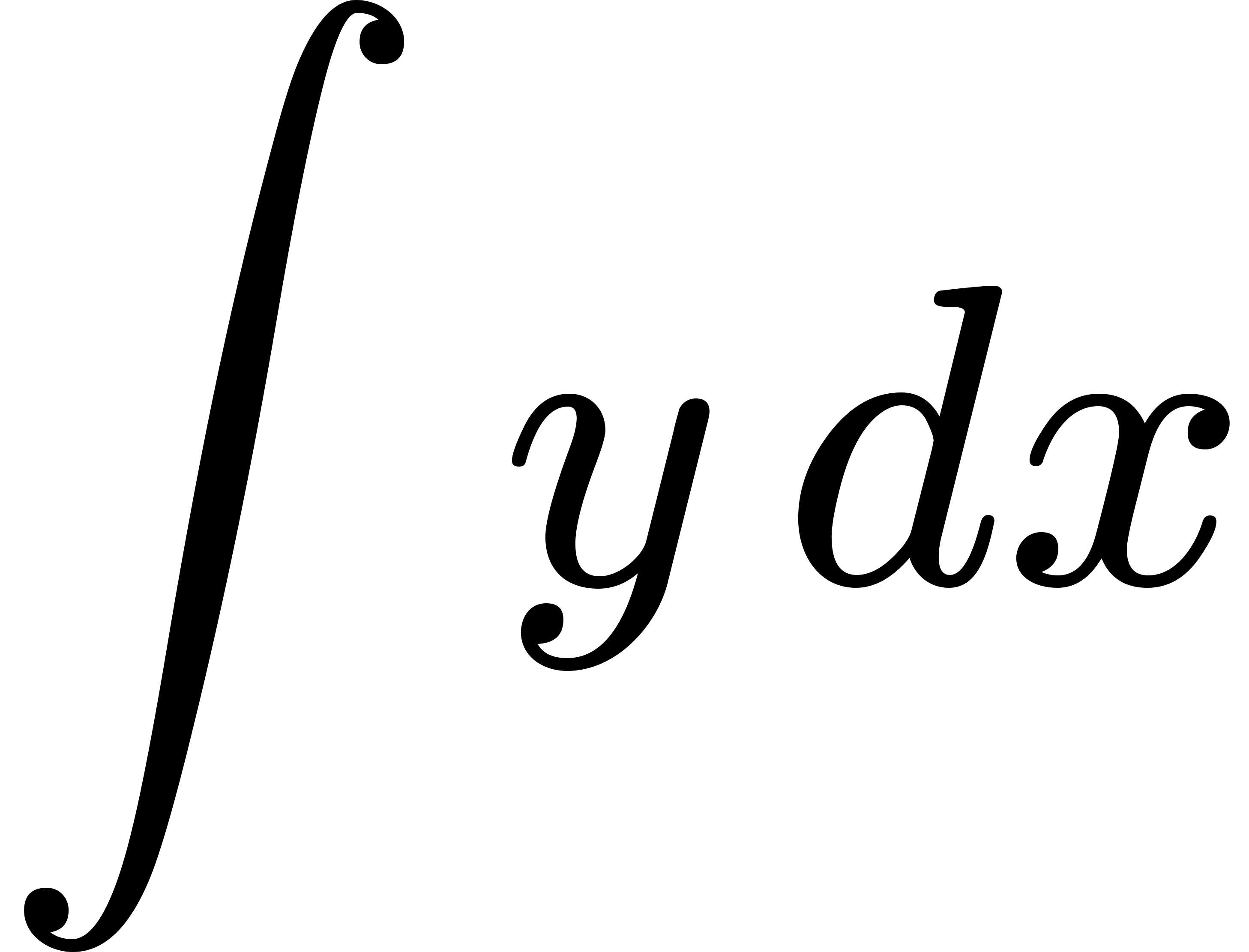 is algebraical then it can be expressed in the form
 where
where  are rational functions of
.
are rational functions of
.
The most important case is that in which
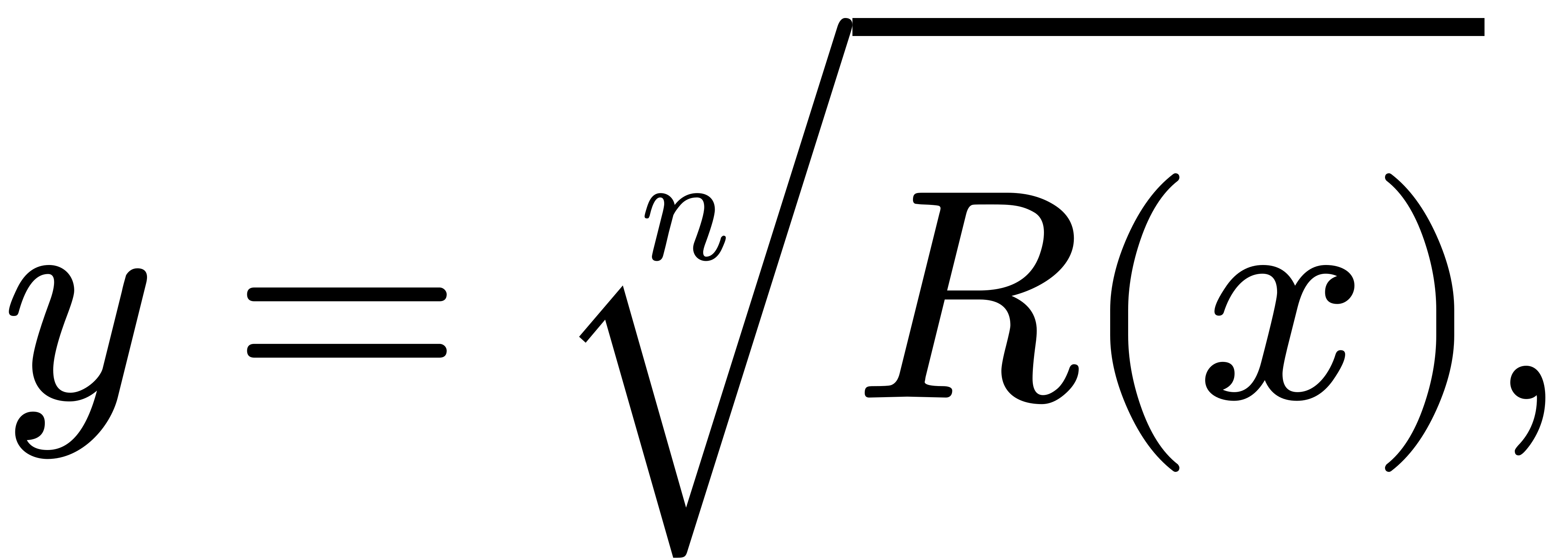 where is rational. In this case
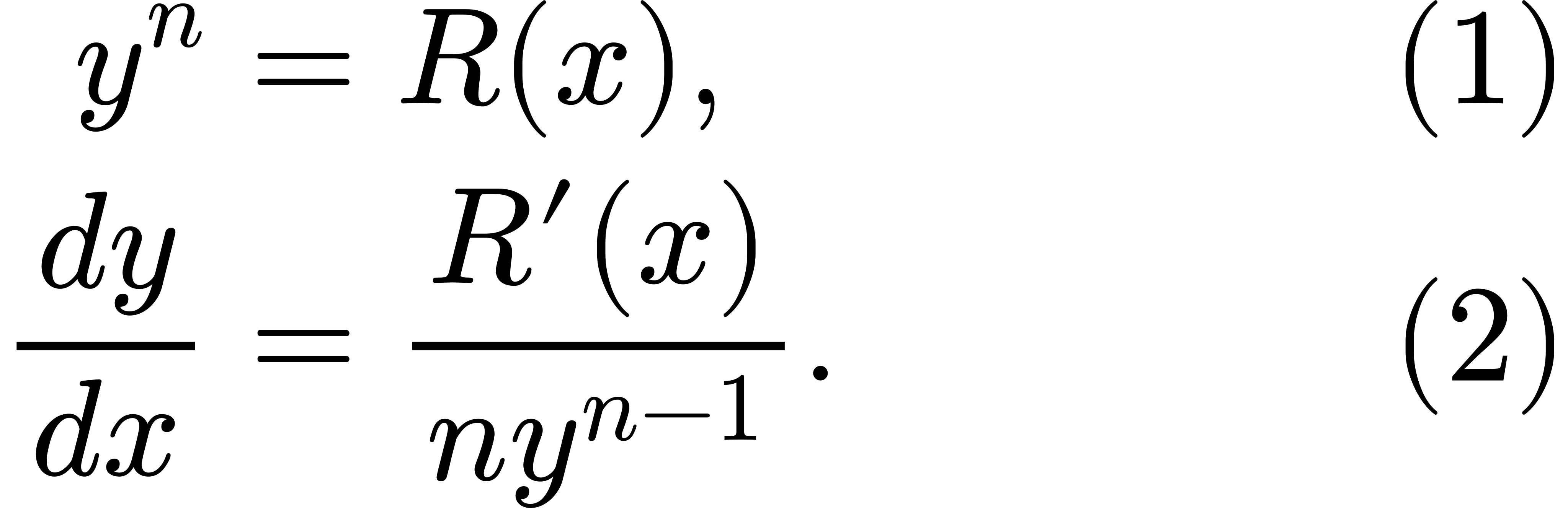
But
 Eliminating
 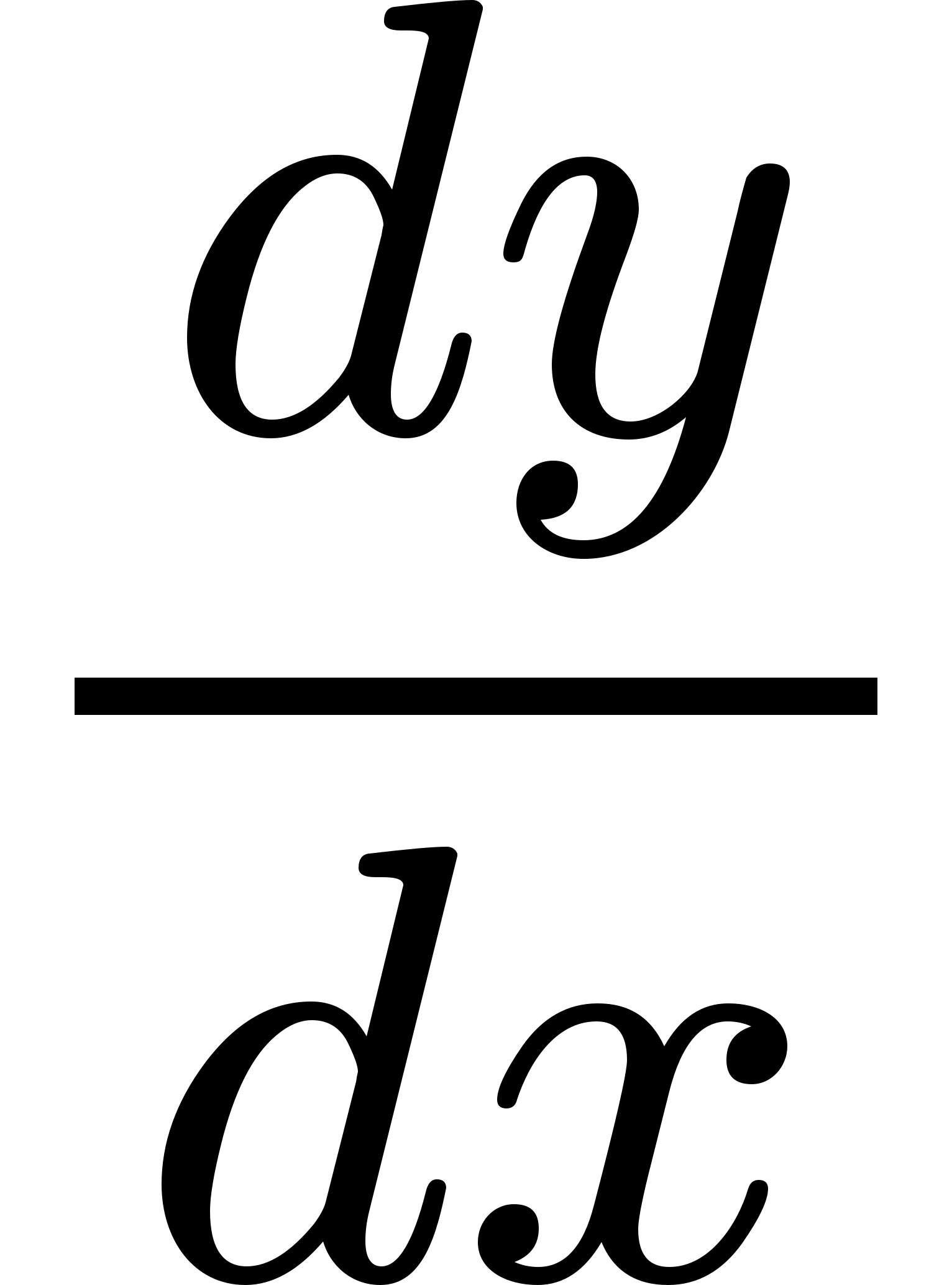 between these equations, we obtain an
equation
between these equations, we obtain an
equation
 where
where 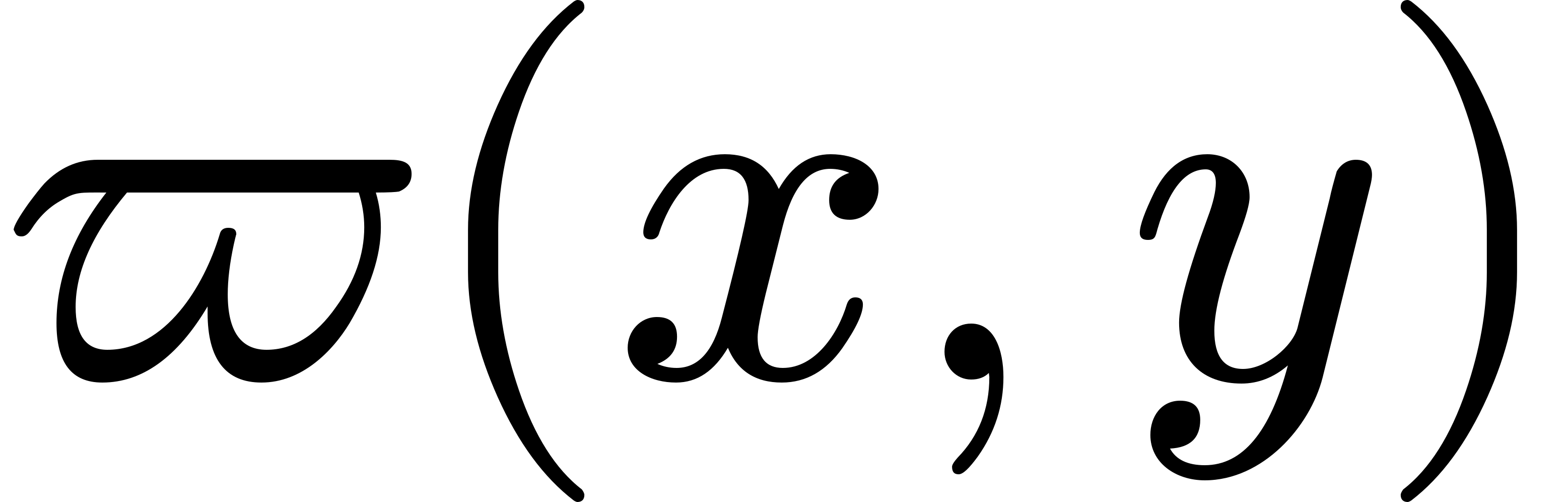 is a polynomial. It follows from Lemma (2) of
§11 that this equation must be satisfied by all the roots of (1). Thus
(4) is still true if we replace by any other root
is a polynomial. It follows from Lemma (2) of
§11 that this equation must be satisfied by all the roots of (1). Thus
(4) is still true if we replace by any other root 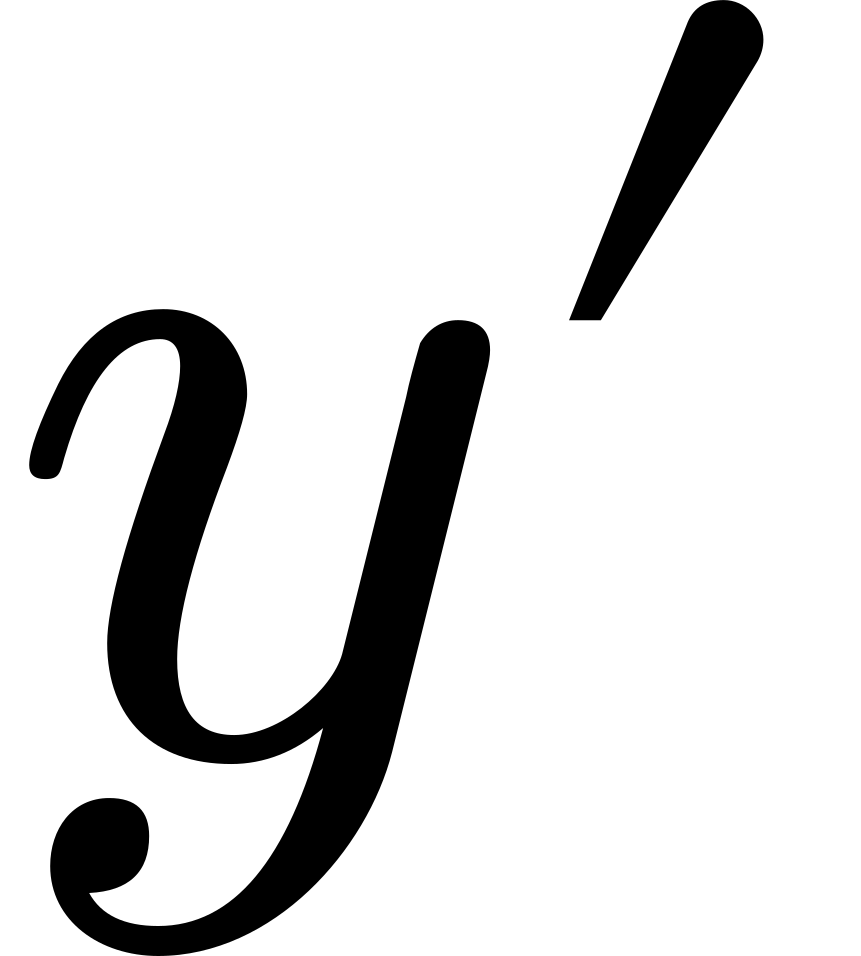 of (1);
and as[Pg 42] (2) is still true when we effect this substitution, it follows
that (3) is also still true. Integrating, we see that the equation
of (1);
and as[Pg 42] (2) is still true when we effect this substitution, it follows
that (3) is also still true. Integrating, we see that the equation
 is true when is replaced by . We may therefore replace
by
is true when is replaced by . We may therefore replace
by 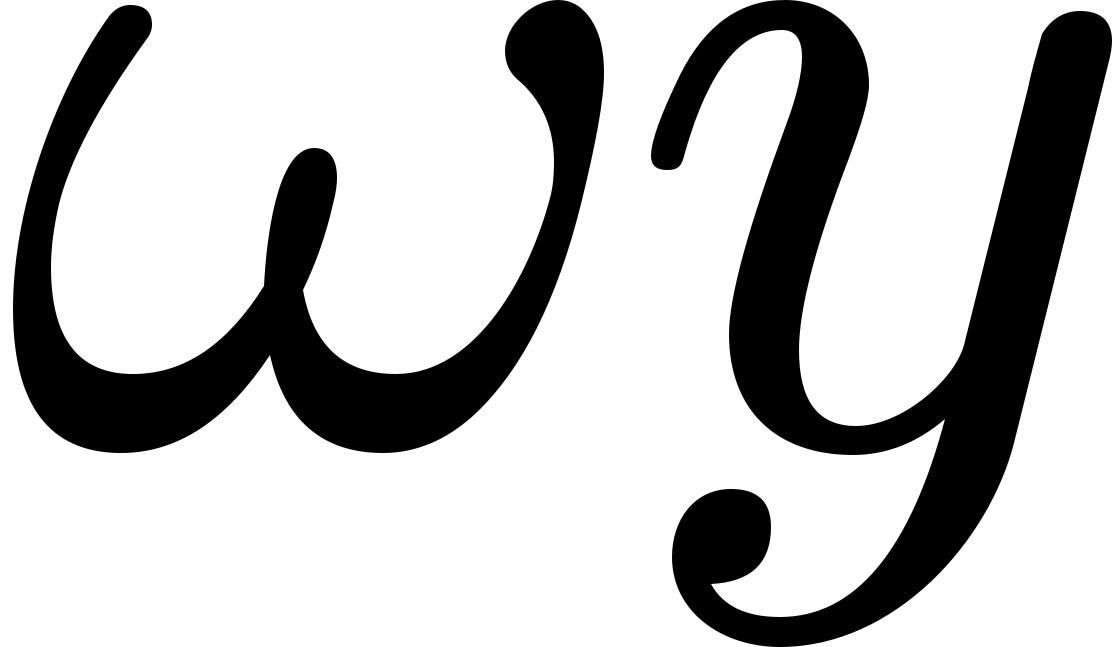 , being any primitive th root of
unity. Making this substitution, and multiplying by
, being any primitive th root of
unity. Making this substitution, and multiplying by 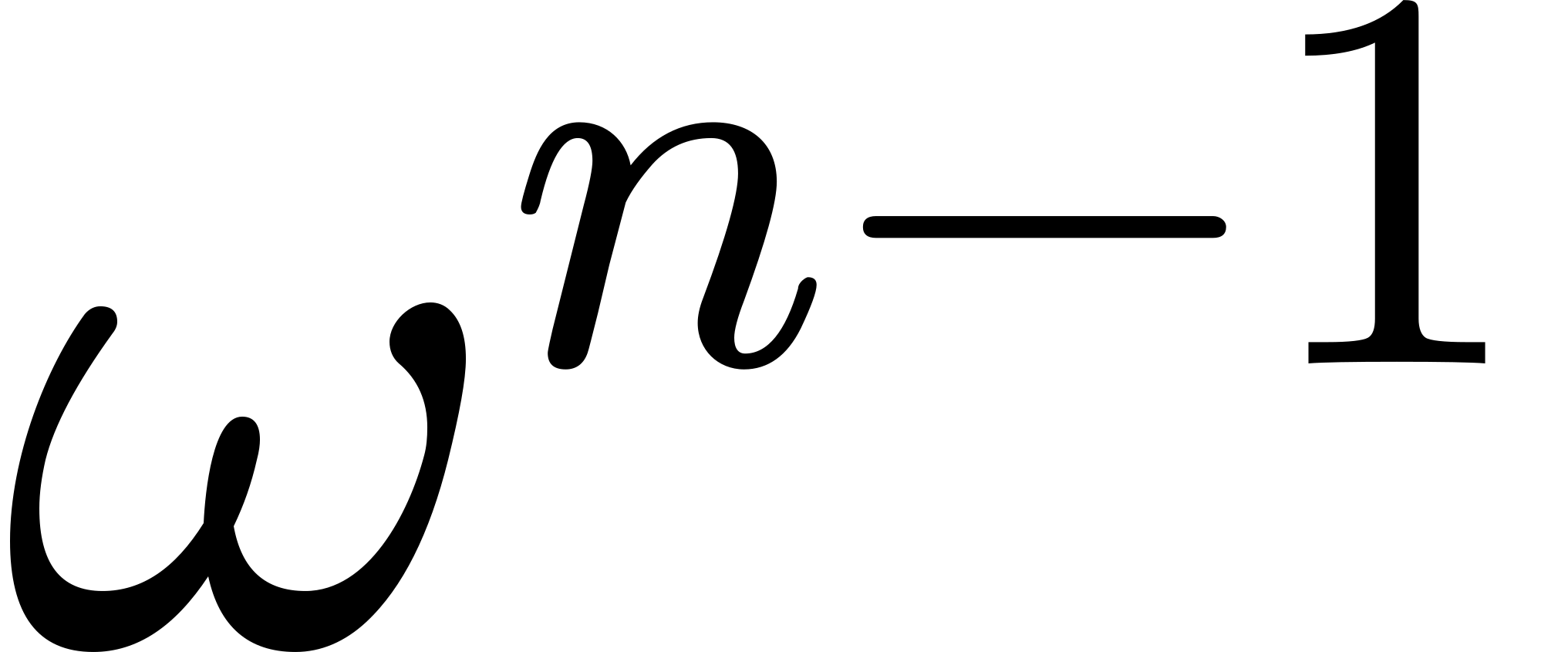 ,
we obtain
,
we obtain
 and on adding the equations of this type we obtain
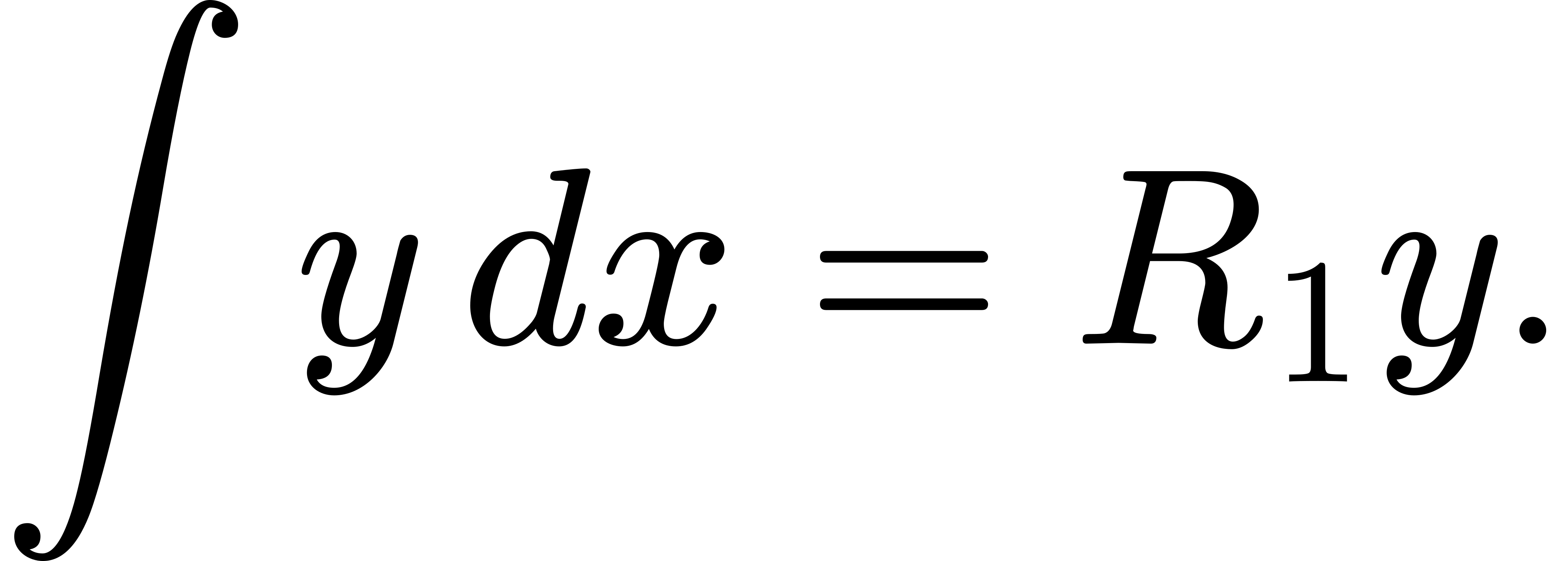 Thus in this case the functions
  all disappear.
It has been shown by Liouville[37] that the preceding results enable us
to obtain in all cases, by a finite number of elementary algebraical
operations, a solution of the problem 'to determine whether
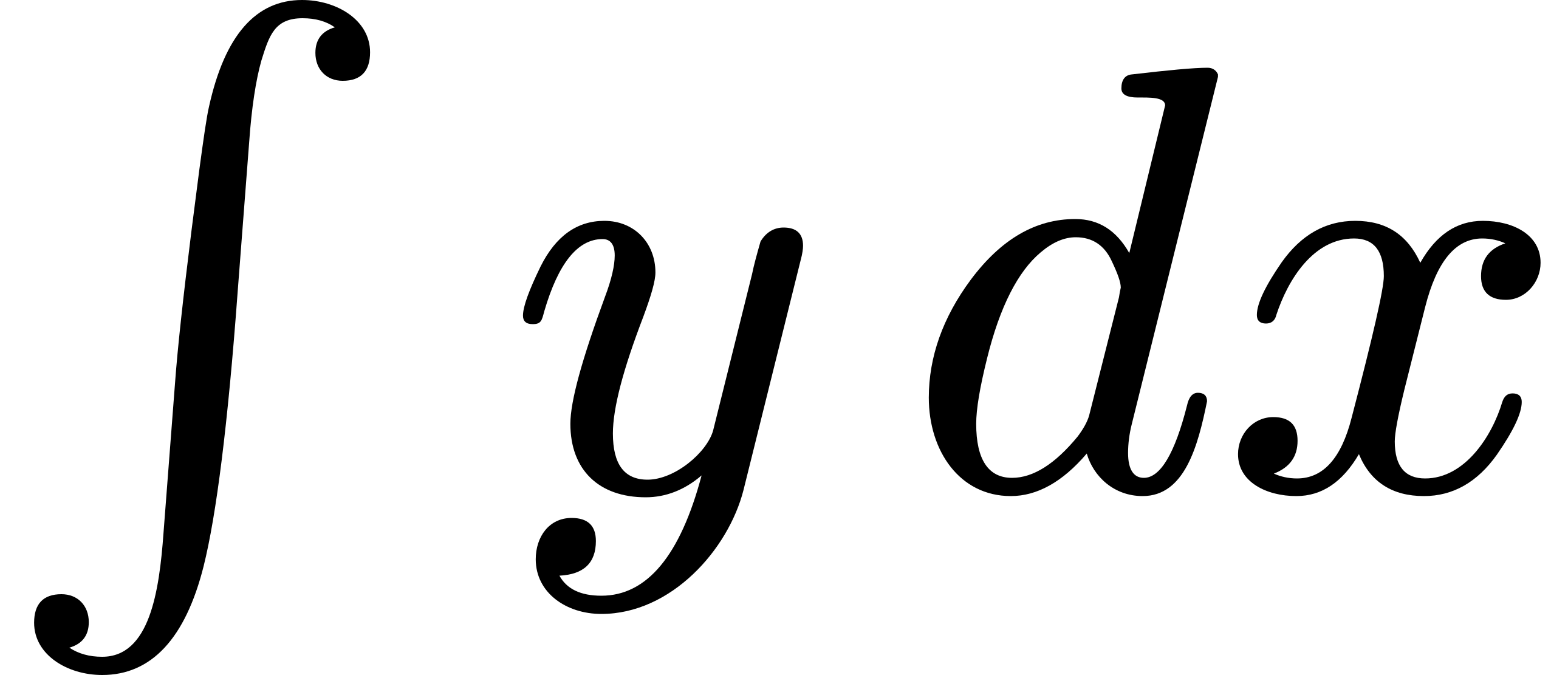 is algebraical, and to find the integral when it is
algebraical'.
is algebraical, and to find the integral when it is
algebraical'.
15. It would take too long to attempt to trace in detail the steps of the general argument. We shall confine ourselves to a solution of a particular problem which will give a sufficient illustration of the general nature of the arguments which must be employed.
We shall determine under what circumstances the integral
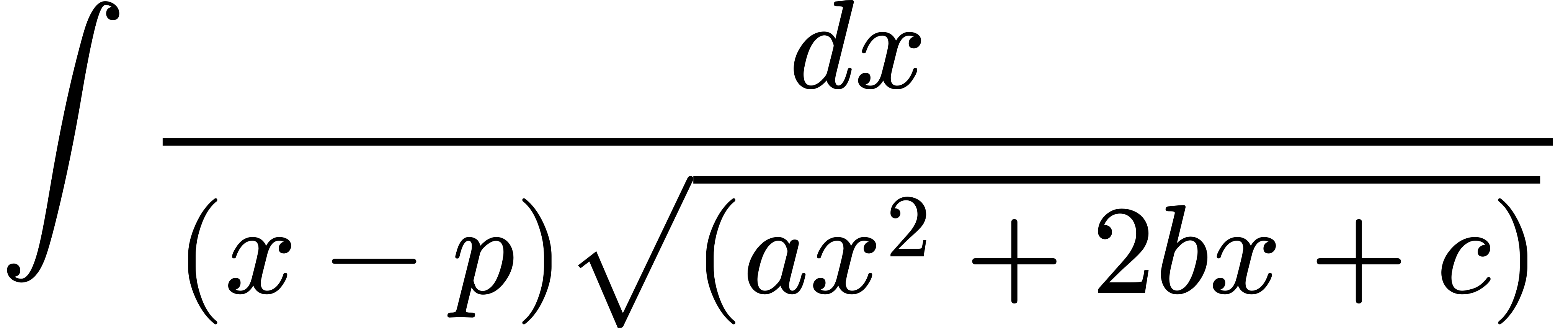 is algebraical. This question might of course be answered by actually
evaluating the integral in the general case and finding when the
integral function reduces to an algebraical function. We are now,
however, in a position to answer it without any such integration.
is algebraical. This question might of course be answered by actually
evaluating the integral in the general case and finding when the
integral function reduces to an algebraical function. We are now,
however, in a position to answer it without any such integration.
We shall suppose first that  is not a perfect
square. In this case
is not a perfect
square. In this case
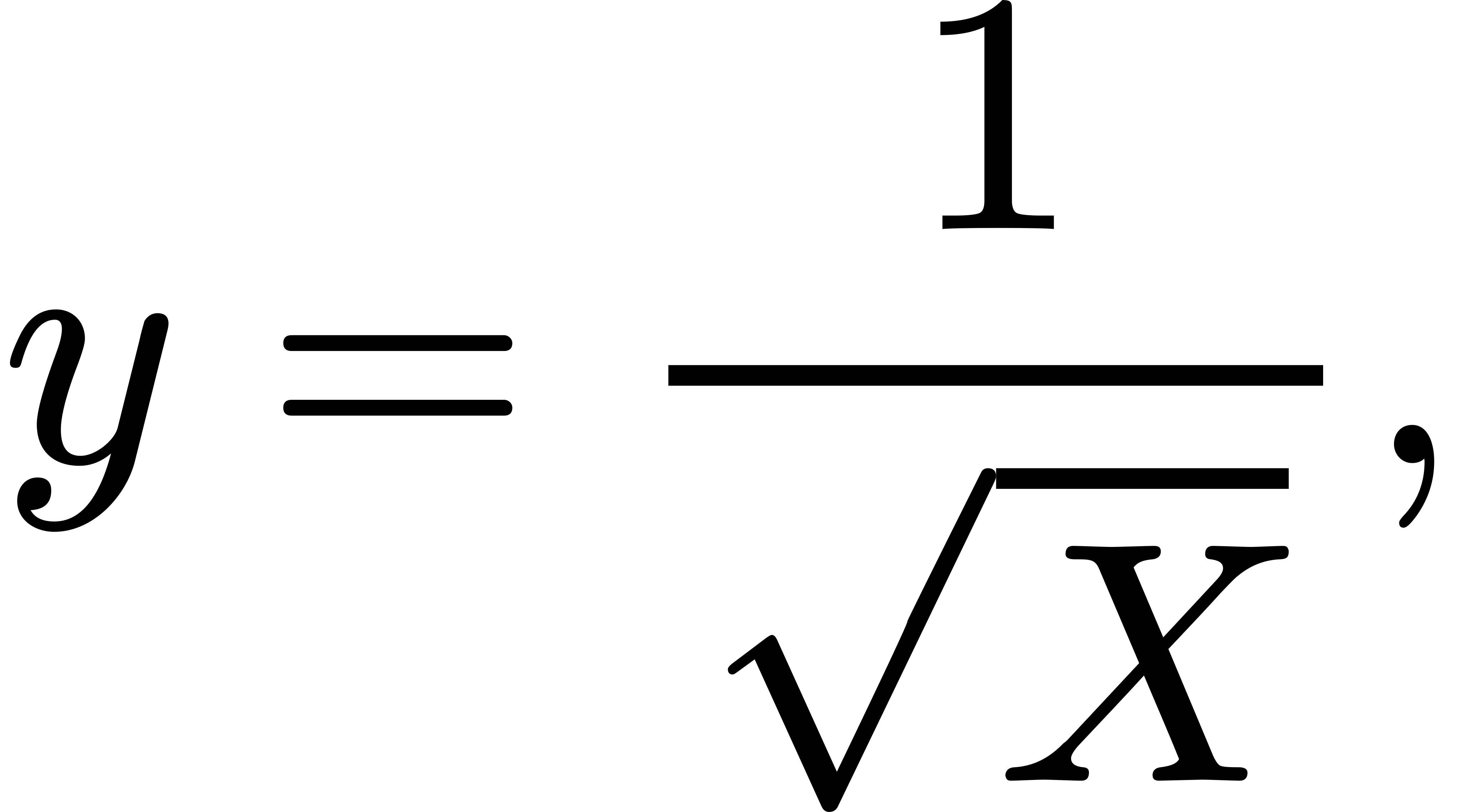 where
where
 and if is algebraical it must be of the form
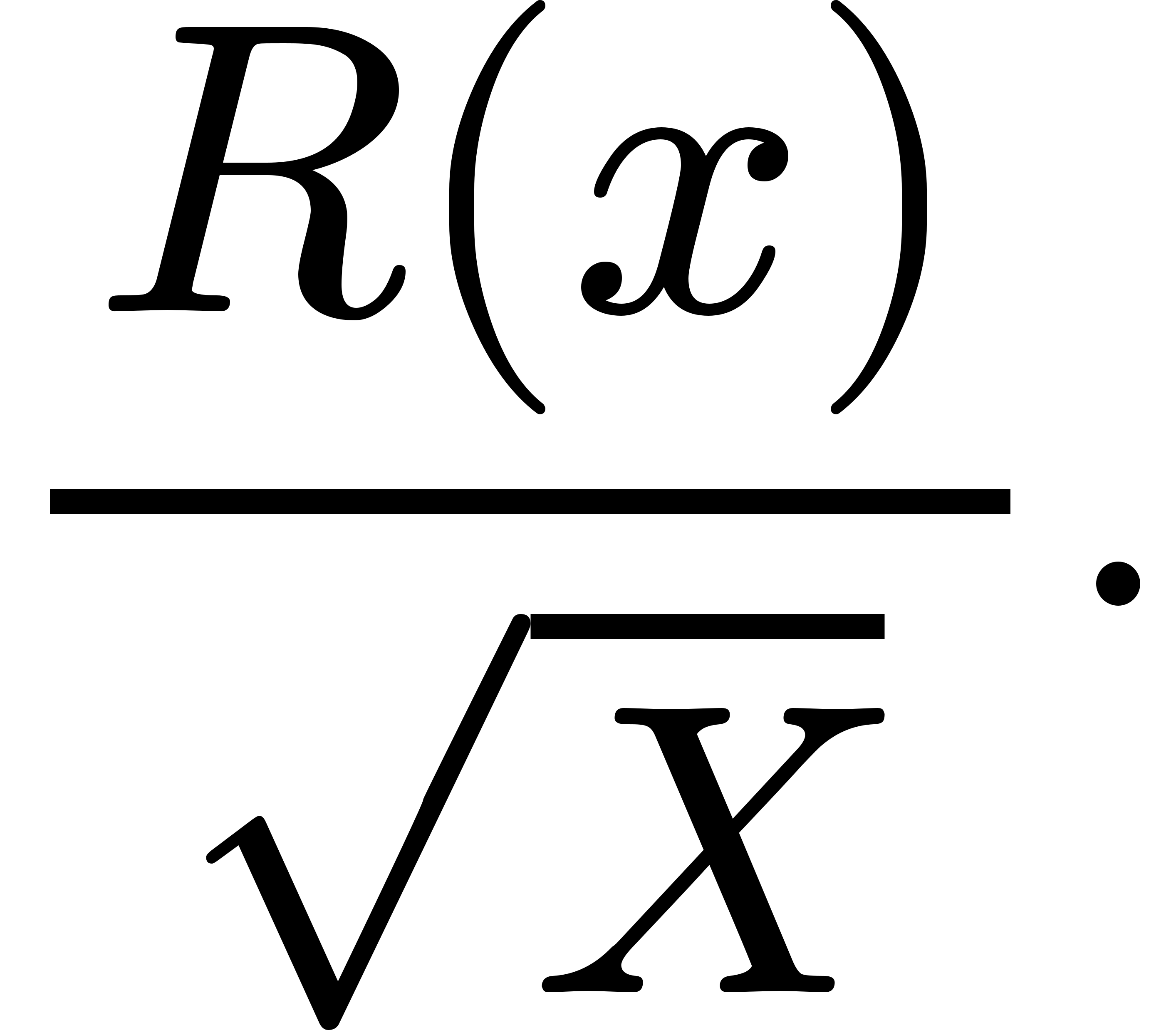 Hence
Hence
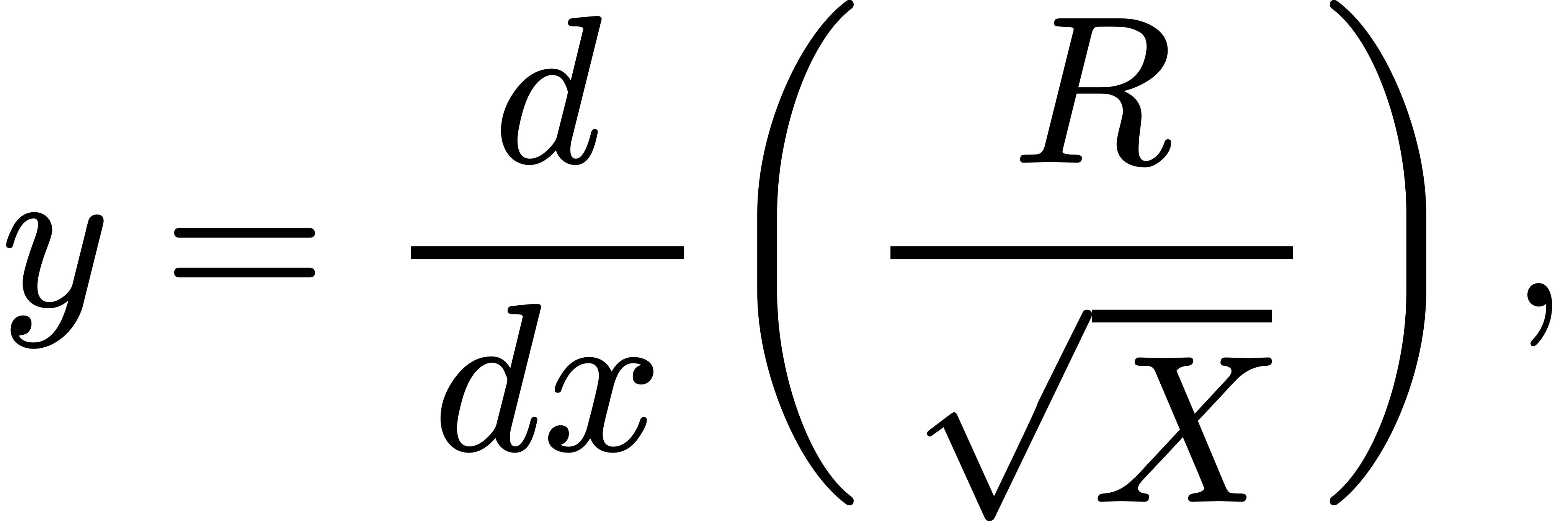 or
or

[Pg 43]
We can now show that is a polynomial in . For if 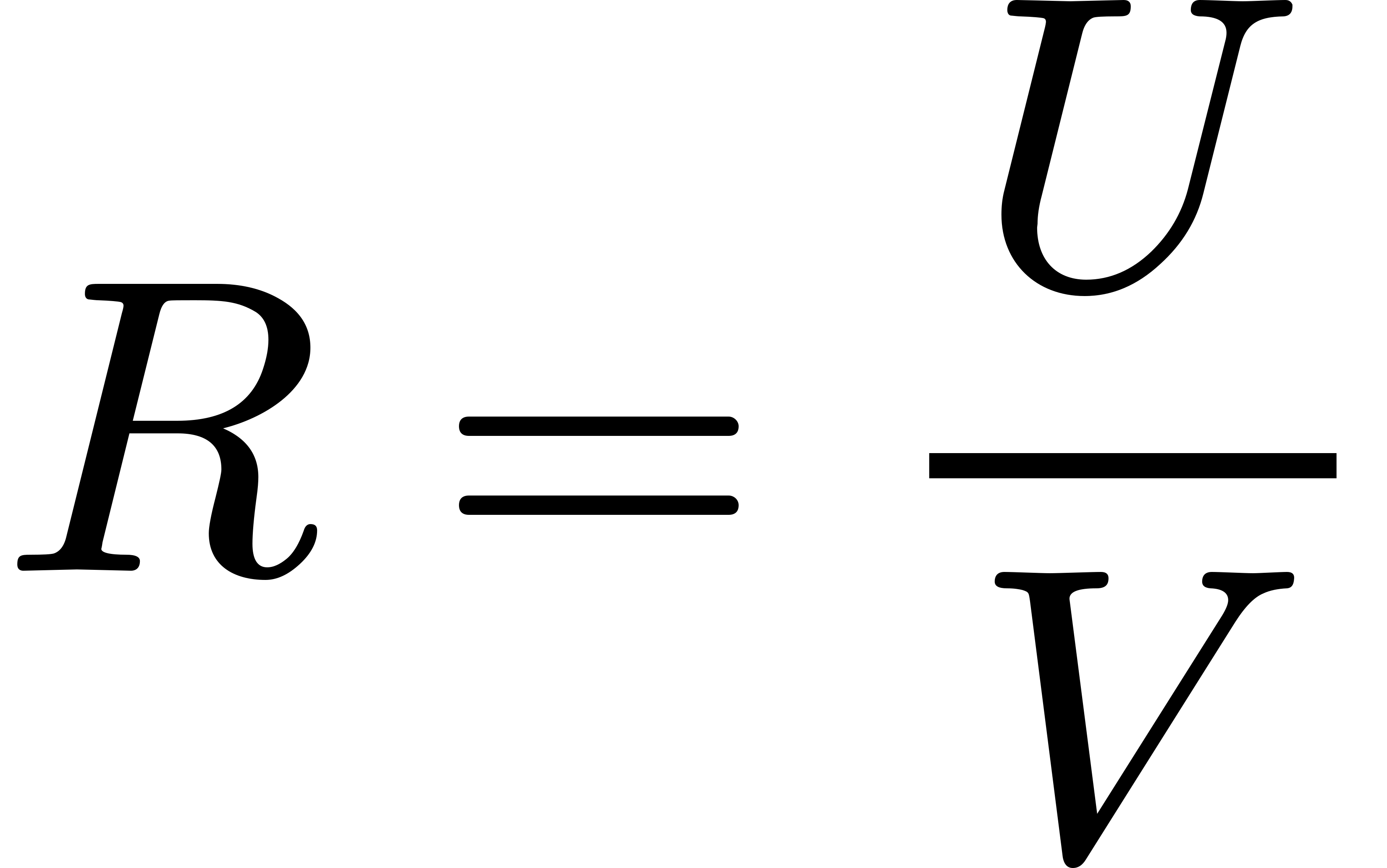 , where
 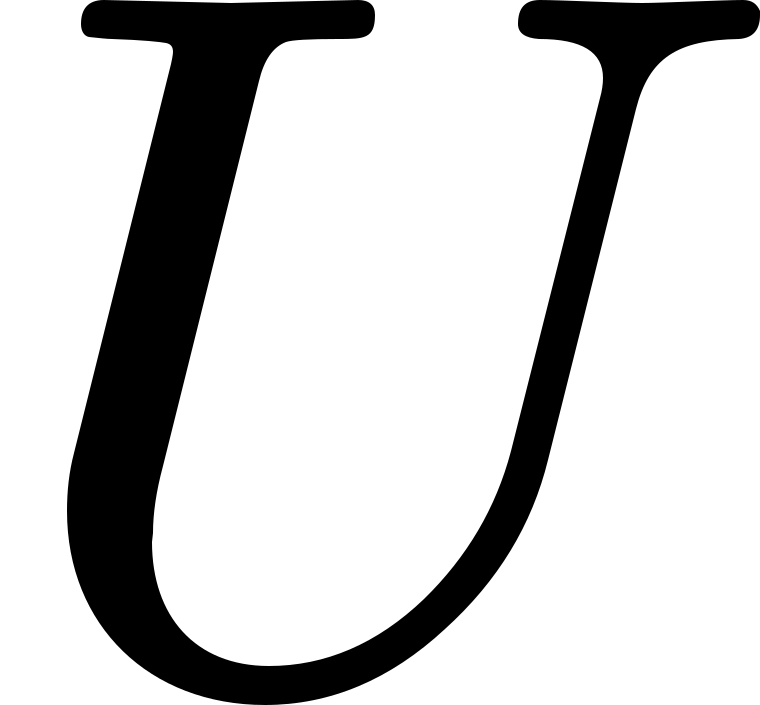 and
and 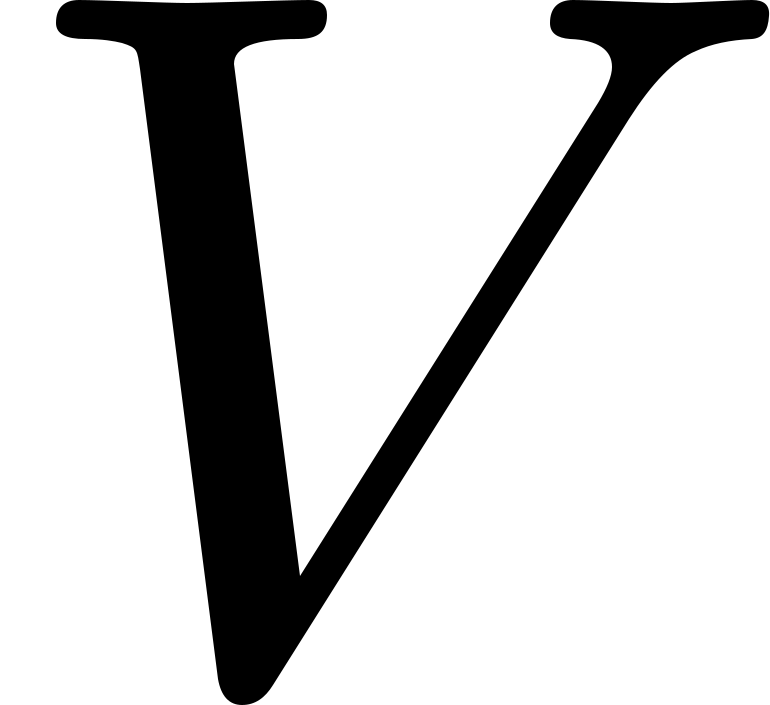 are polynomials, then , if not a mere
constant, must contain a factor
are polynomials, then , if not a mere
constant, must contain a factor
 and we can put
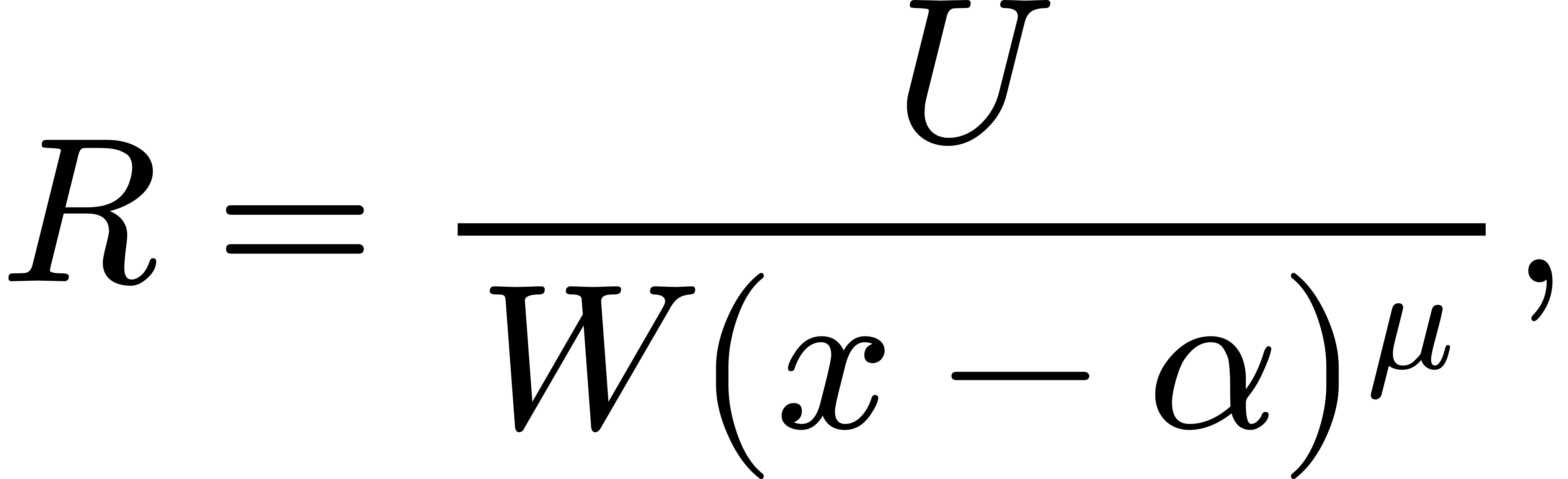 where and
 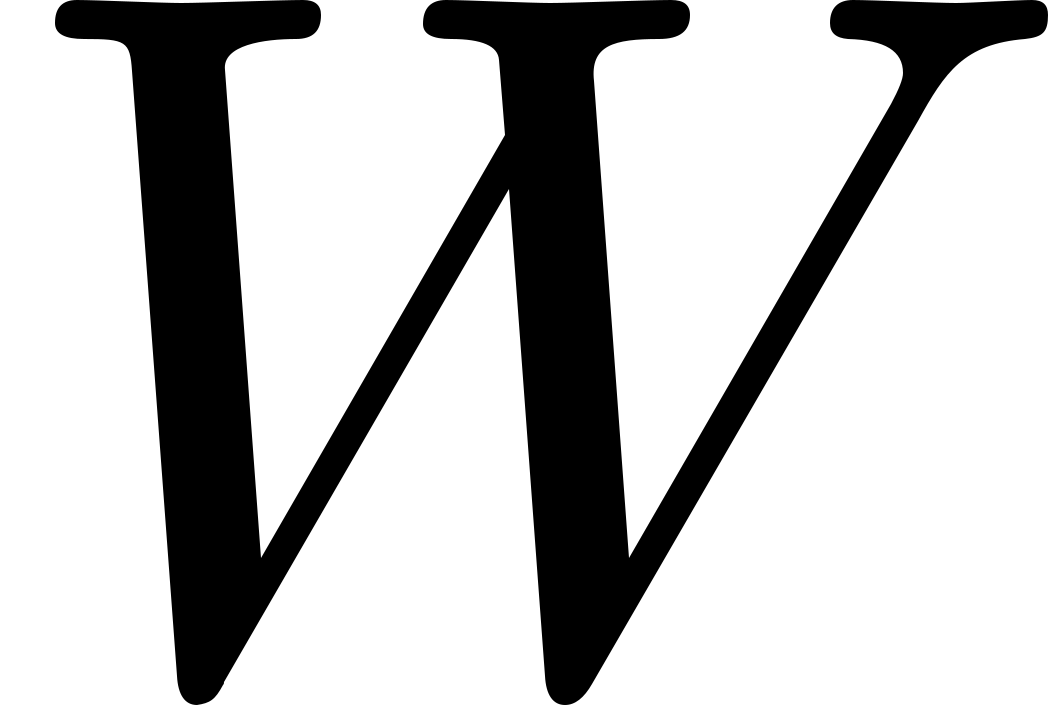 do not contain the factor
 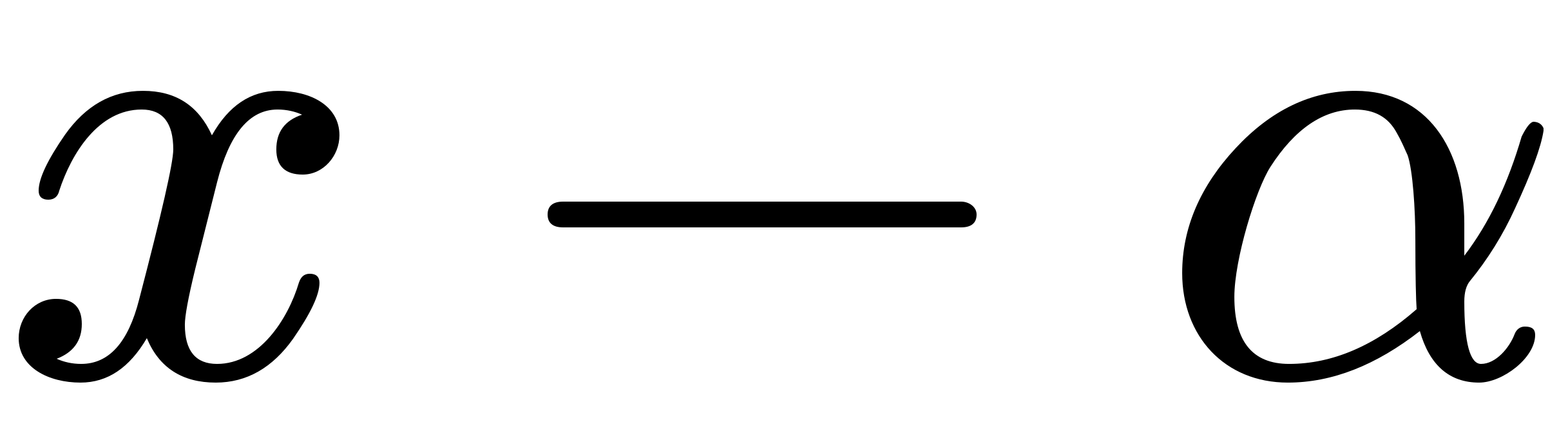 .
Substituting this expression for , and reducing, we obtain
.
Substituting this expression for , and reducing, we obtain
 Hence must be divisible by . Suppose then that
 where
where 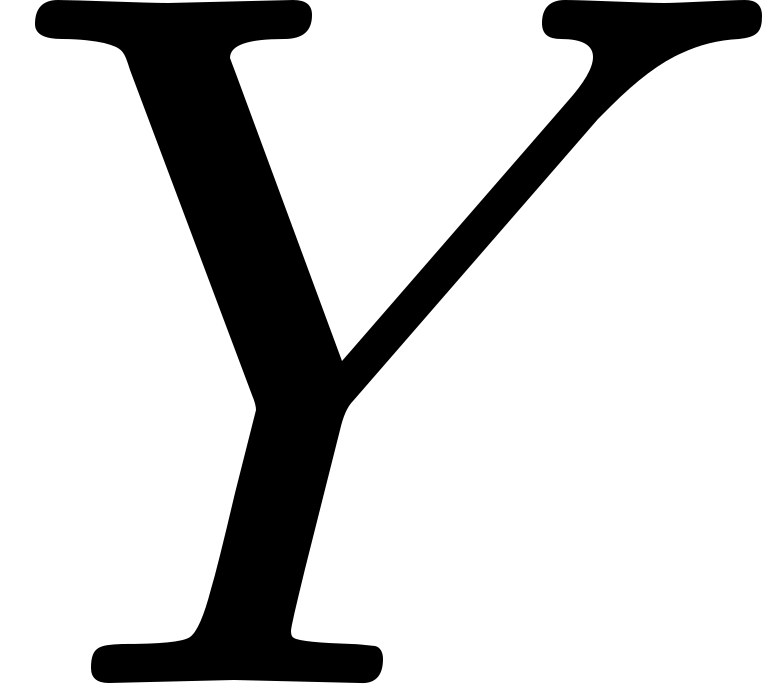 is prime to . Substituting in the equation
last obtained we deduce
is prime to . Substituting in the equation
last obtained we deduce
 which is obviously impossible, since neither , , nor is
divisible by . Thus must be a constant. Hence
which is obviously impossible, since neither , , nor is
divisible by . Thus must be a constant. Hence
 where
where 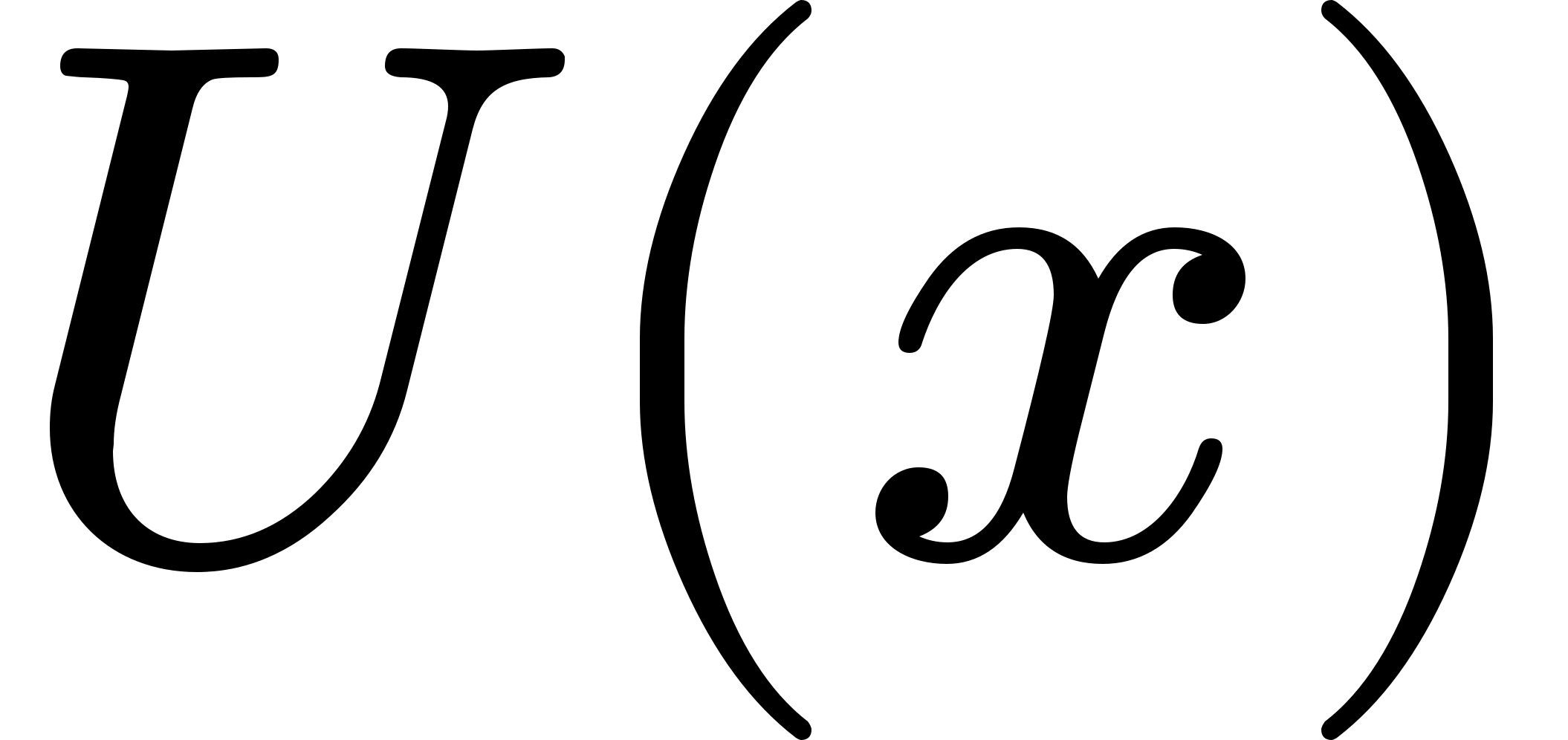 is a polynomial.
Differentiating and clearing of radicals we obtain
 Suppose that the first term in is
 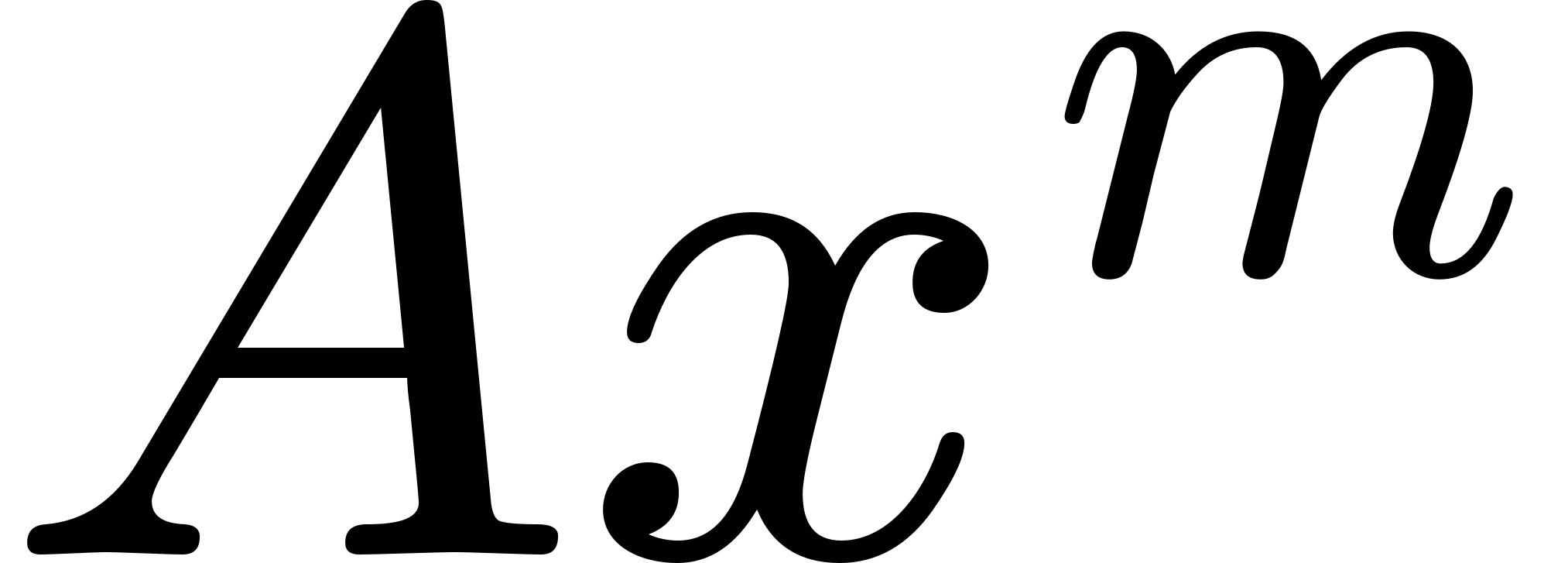 . Equating the
coefficients of
. Equating the
coefficients of 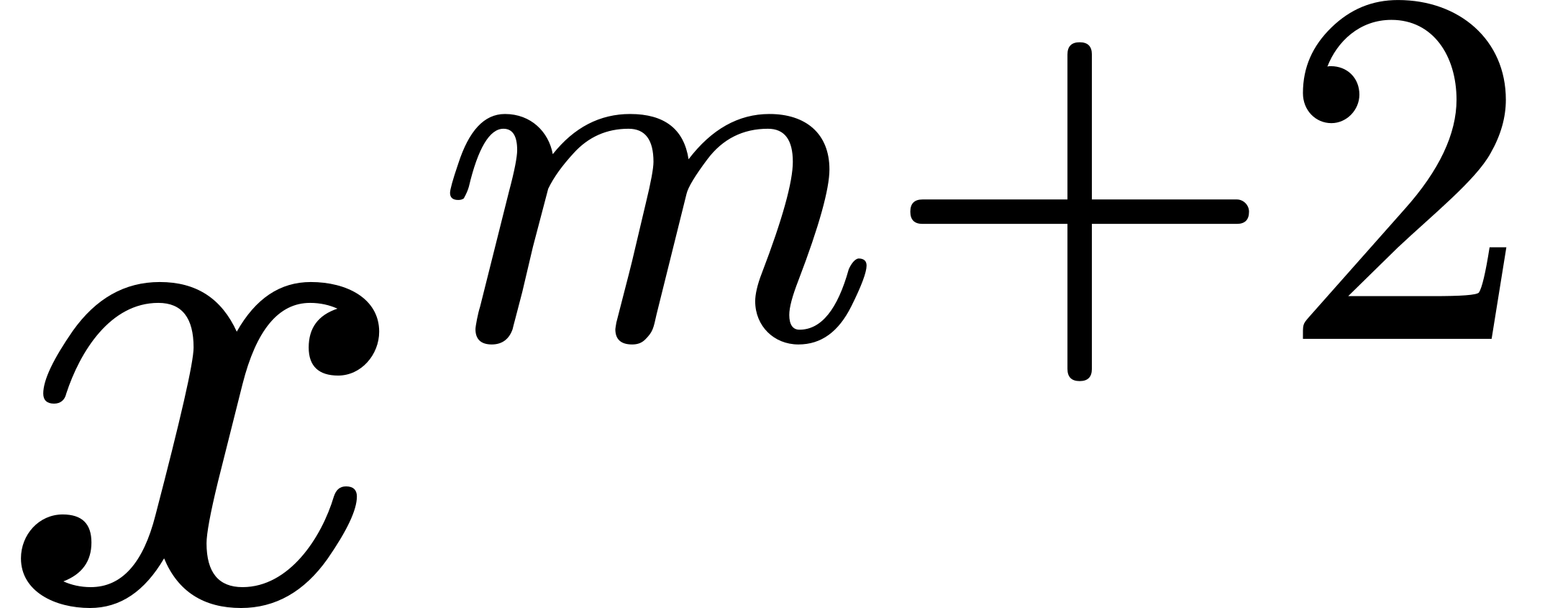 , we find at once that
 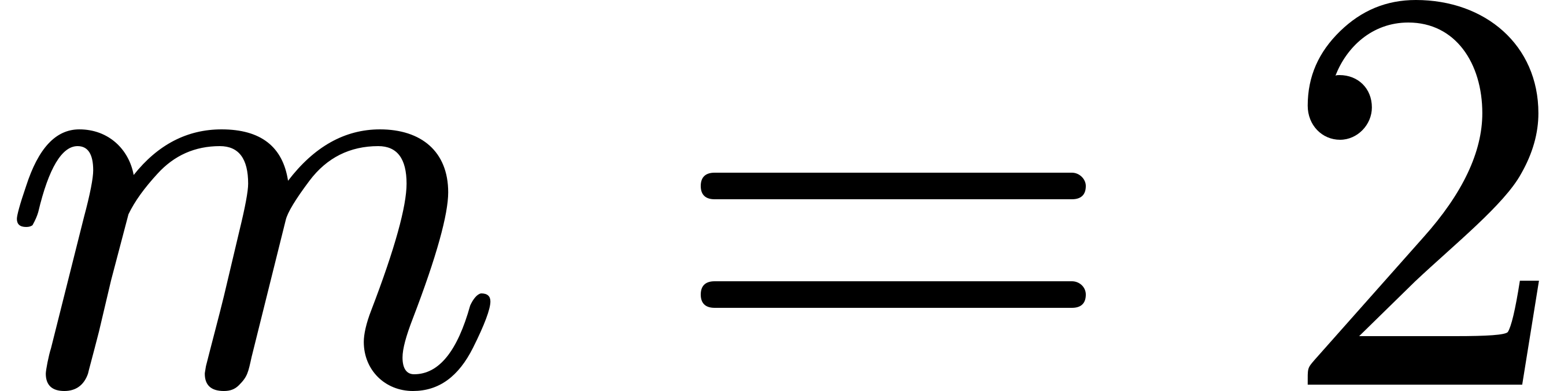 . We may
therefore take
. We may
therefore take
 so that

From (1) it follows that
 is divisible by . But
 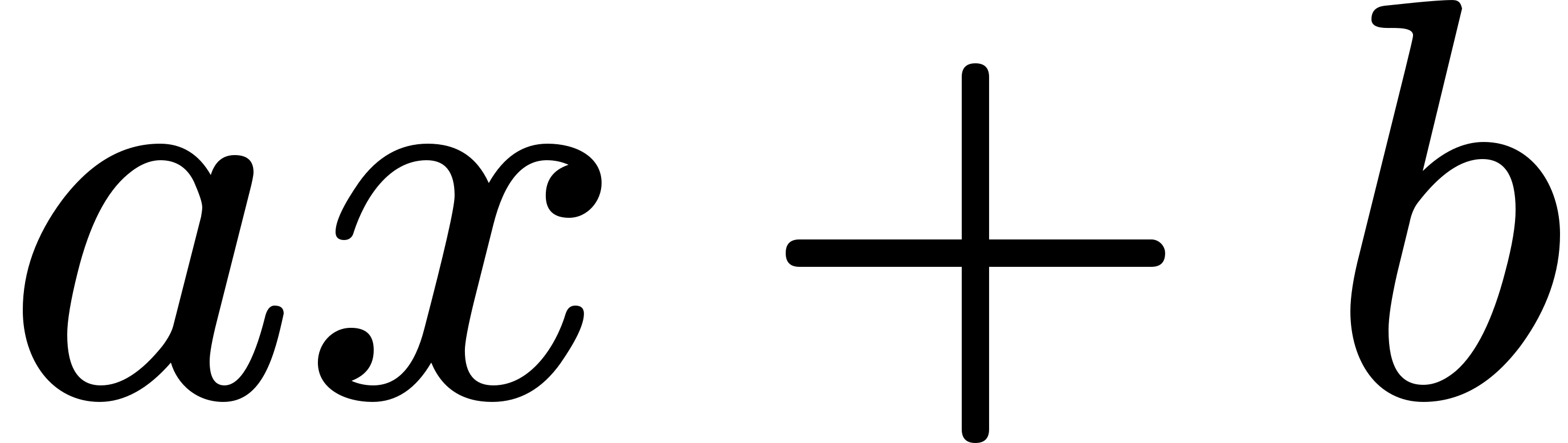 is not a factor
of , as the latter is not a perfect square. Hence
either (i) and differ only
by a constant factor or (ii) the two quadratics have one and only one
factor in common, and
is not a factor
of , as the latter is not a perfect square. Hence
either (i) and differ only
by a constant factor or (ii) the two quadratics have one and only one
factor in common, and 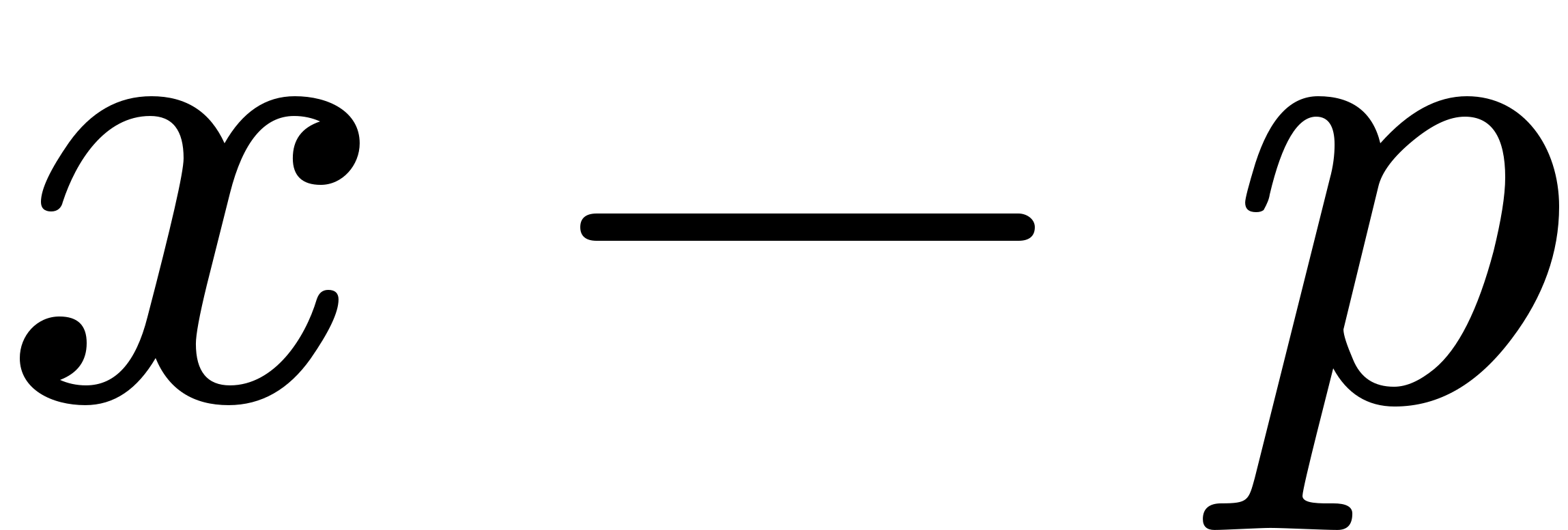 is also a factor of
  . In the latter case we may write
 where
where 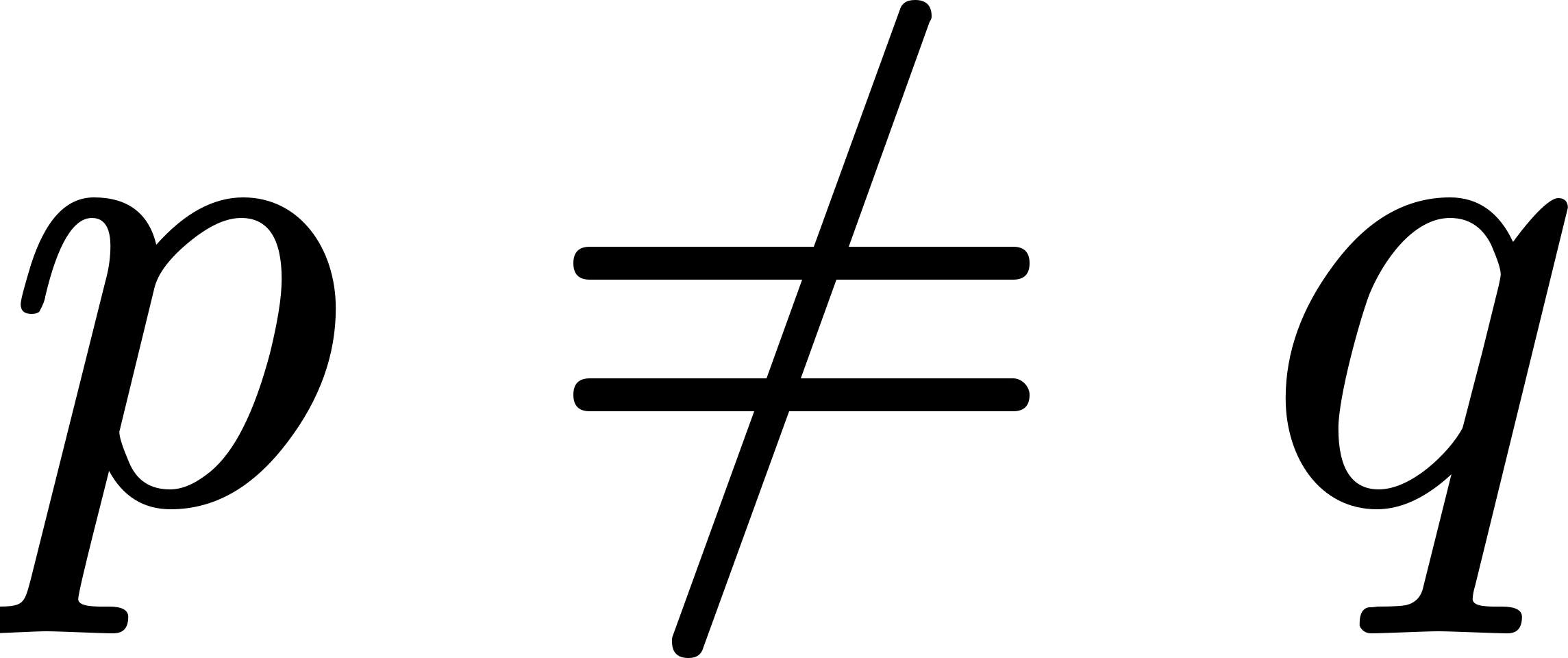 ,
, 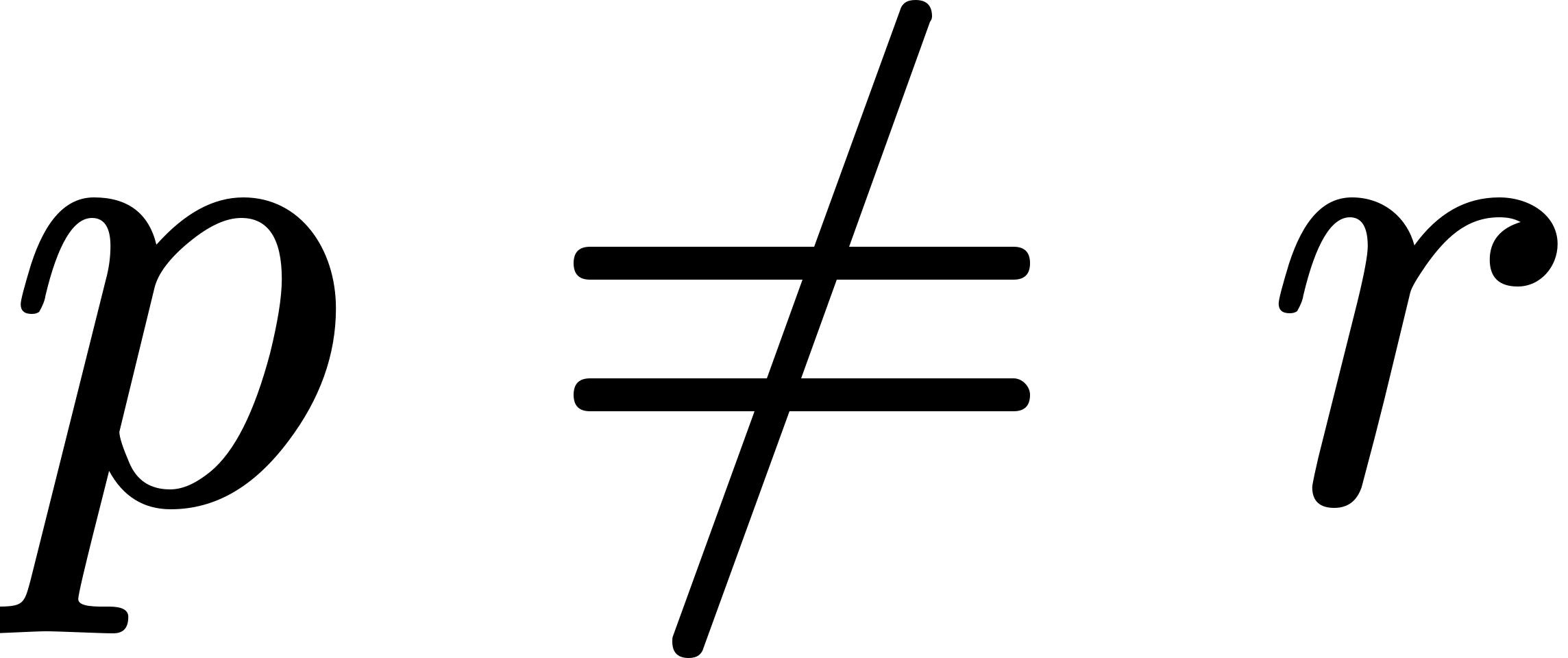 . It then follows from (1) that
 Hence
Hence  is divisible by
 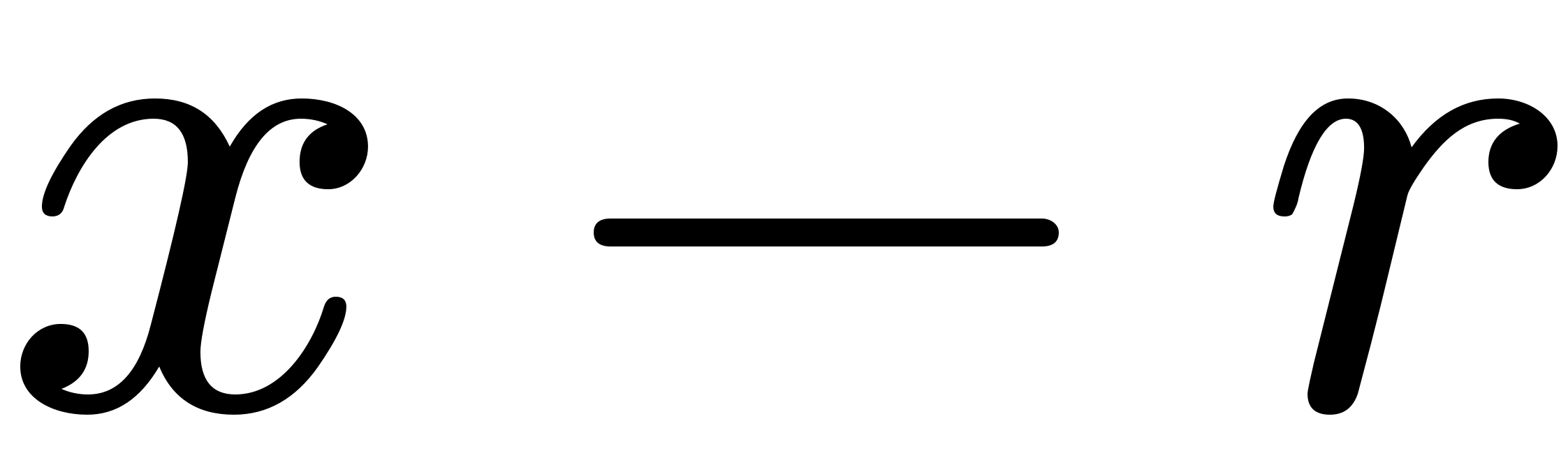 . Dividing by
 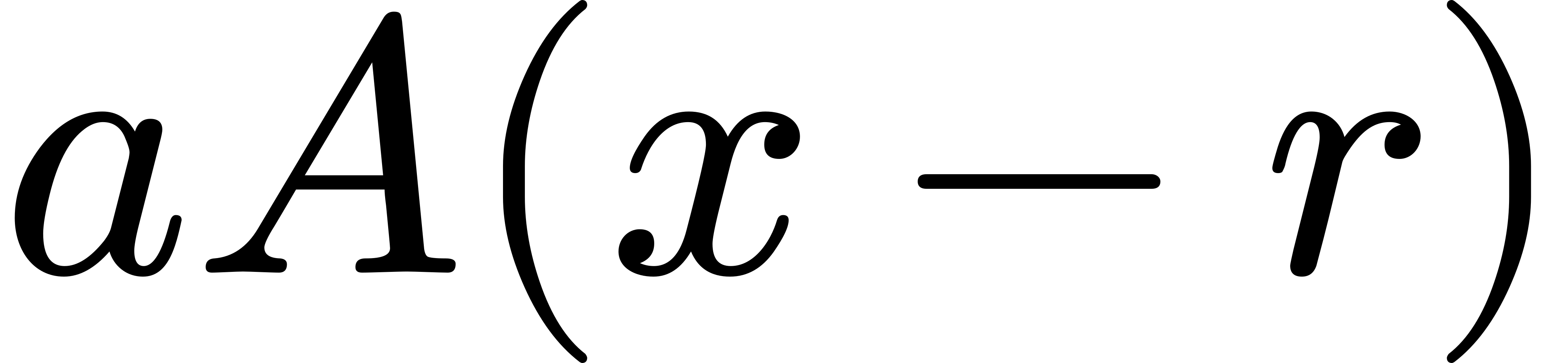 we obtain
 and so
 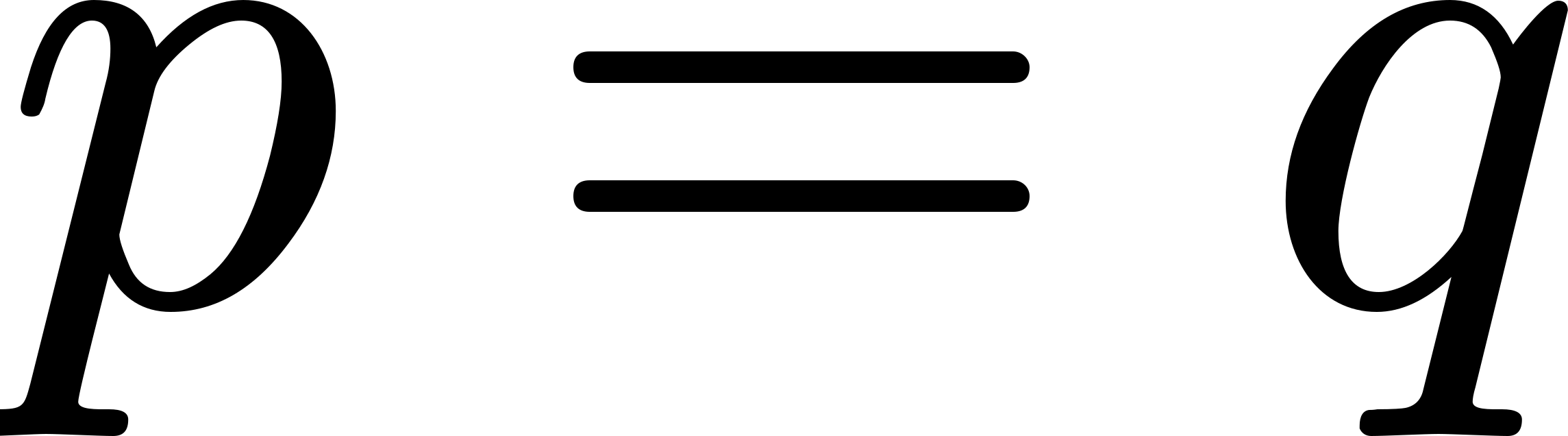 , which is untrue.
[Pg 44]
Hence case (ii) is impossible, and so and  differ only by a constant factor. It then follows from (1)
that is a factor of ; and the result
becomes
differ only by a constant factor. It then follows from (1)
that is a factor of ; and the result
becomes
 where is a constant. It is easily verified that this equation is
actually true when
where is a constant. It is easily verified that this equation is
actually true when  , and that
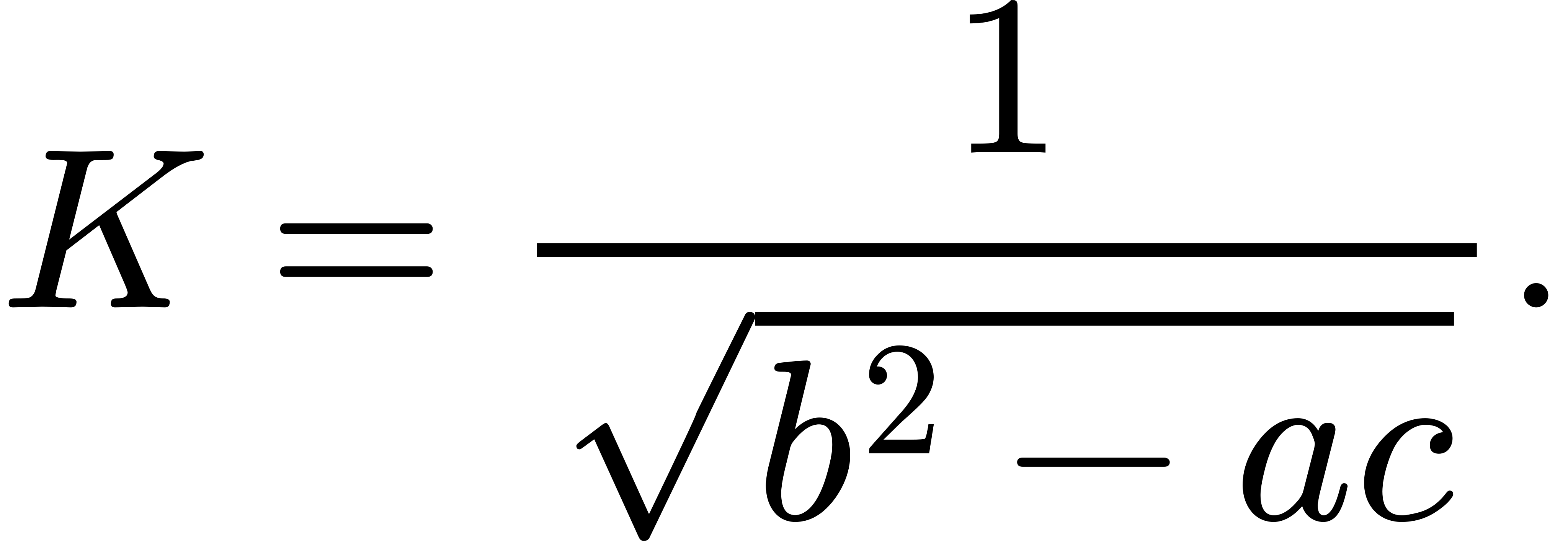 The formula is equivalent to

There remains for consideration the case in which
is a perfect square, say 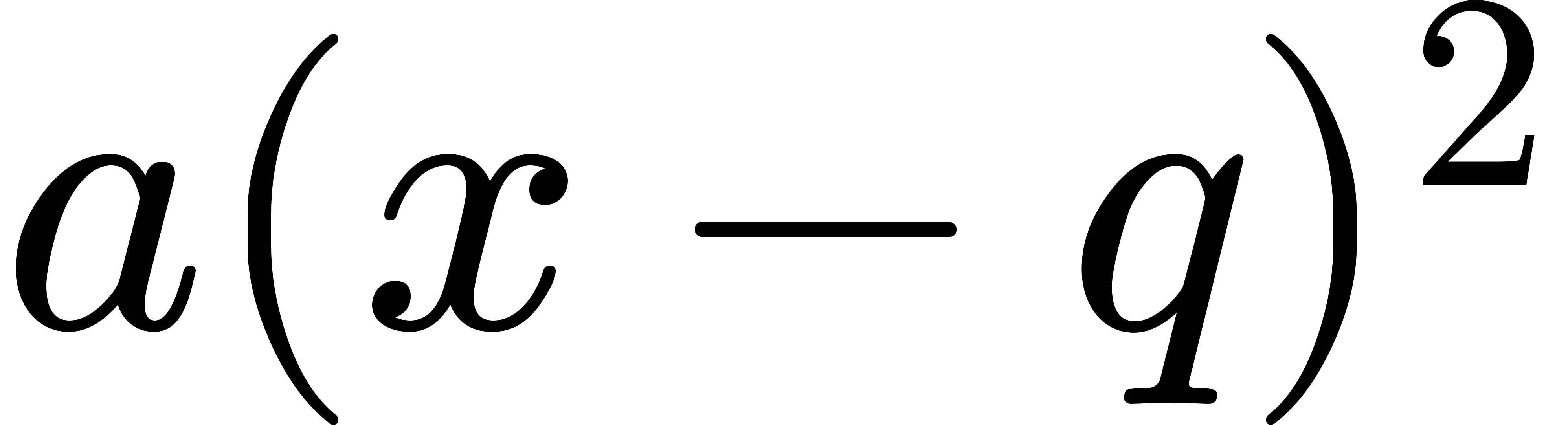 . Then
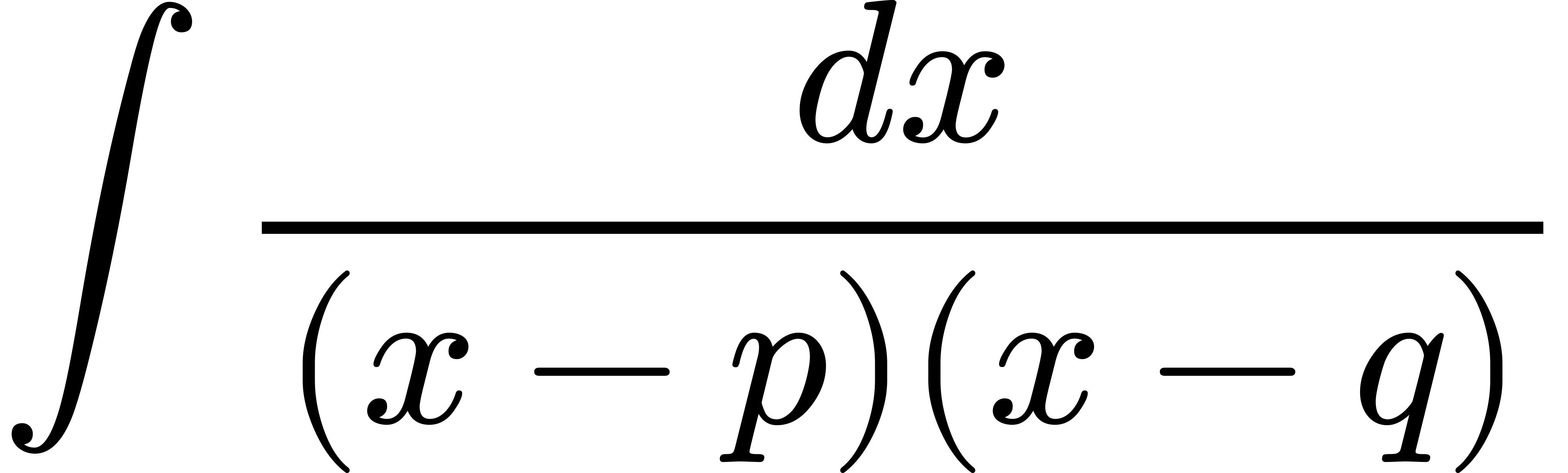 must be rational, and so .
As a further example, the reader may verify that if
 then[38]
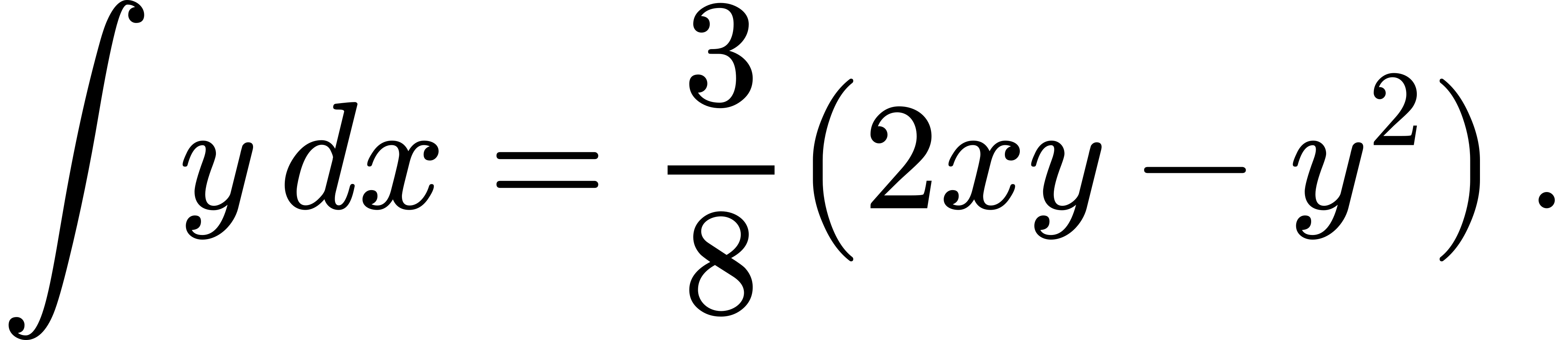
16. The theorem of §11 enables us to complete the proof of the two fundamental theorems stated without proof in ii., §5, viz.
(a) is not an algebraical function of ,
(b) is not an algebraical function of .
We shall prove (b) as a special case of a more general theorem,
viz. 'no sum of the form
 in which the coefficients
 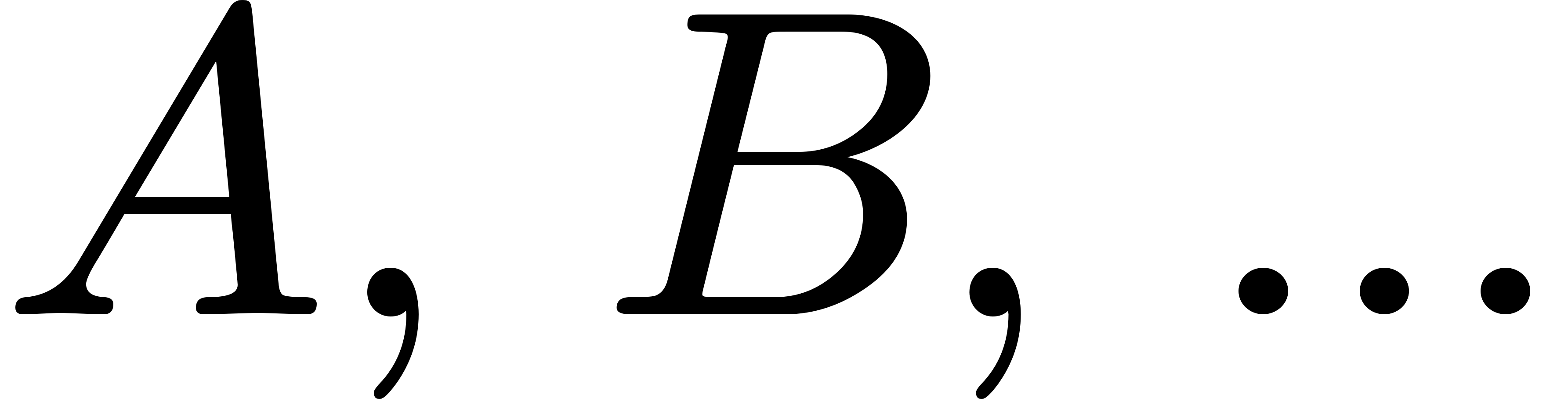 are not all zero,
can be an algebraical function of '. To prove this we have
only to observe that the sum in question is the integral of a rational
function of . If then it is algebraical it must, by the theorem
of §11, be rational, and this we have already seen to be impossible
(iv., 2).
are not all zero,
can be an algebraical function of '. To prove this we have
only to observe that the sum in question is the integral of a rational
function of . If then it is algebraical it must, by the theorem
of §11, be rational, and this we have already seen to be impossible
(iv., 2).
That is not algebraical now follows at once from the fact
that it is the inverse function of .
17. The general theorem of §11 gives the first step in the rigid proof
of 'Laplace's principle' stated in iii., §2. On account of
the immense importance of this principle we repeat Laplace's words:[Pg 45]
'l'intégrale d'une fonction différentielle ne peut contenir d'autres
quantités radicaux que celles qui entrent dans cette fonction'.
This general principle, combined with arguments similar to those
used above (§15) in a particular case, enables us to prove without
difficulty that a great many integrals cannot be algebraical, notably
the standard elliptic integrals
 which give rise by inversion to the elliptic functions.
18. We must now consider in a very summary manner the more difficult question of the nature of those integrals of algebraical functions which are expressible in finite terms by means of the elementary transcendental functions. In the first place no integral of any algebraical function can contain any exponential. Of this theorem it is, as we remarked before, easy to become convinced by a little reflection, as doubtless did Laplace, who certainly possessed no rigorous proof. The reader will find little difficulty in coming to the conclusion that exponentials cannot be eliminated from an elementary function by differentiation. But we would strongly recommend him to study the exceedingly beautiful and ingenious proof of this proposition given by Liouville[39]. We have unfortunately no space to insert it here.
It is instructive to consider particular cases of this theorem. Suppose
for example that , where is algebraical, were a
polynomial in and , say
 When this expression is differentiated, must disappear from
it: otherwise we should have an algebraical relation between and
. Expressing the conditions that the coefficient of every
power of in the differential coefficient of (1) vanishes
identically, we find that the same must be true of (1), so that after
all the integral does not really contain . Liouville's proof
is in reality a development of this idea.
When this expression is differentiated, must disappear from
it: otherwise we should have an algebraical relation between and
. Expressing the conditions that the coefficient of every
power of in the differential coefficient of (1) vanishes
identically, we find that the same must be true of (1), so that after
all the integral does not really contain . Liouville's proof
is in reality a development of this idea.
The integral of an algebraical function, if expressible in terms
of elementary functions, can therefore only contain algebraical or
logarithmic functions. The next step is to show that the logarithms
must be simple logarithms of algebraical functions and can only enter
linearly, so that the general integral must be of the type
 [Pg 46]
where are constants and
[Pg 46]
where are constants and  algebraical functions. Only when the logarithms occur in this simple
form will differentiation eliminate them.
algebraical functions. Only when the logarithms occur in this simple
form will differentiation eliminate them.
Lastly it can be shown by arguments similar to those of §§11—14 that
are rational functions of and .
Thus , if an elementary function, is the sum of a
rational function of and and of certain constant multiples
of logarithms of such functions. We can suppose that no two of
are commensurable, or indeed, more generally, that
no linear relation
 with rational coefficients, holds between them. For if such a relation
held then we could eliminate from the integral, writing it in the
form
with rational coefficients, holds between them. For if such a relation
held then we could eliminate from the integral, writing it in the
form

It is instructive to verify the truth of this theorem in the special
case in which the curve 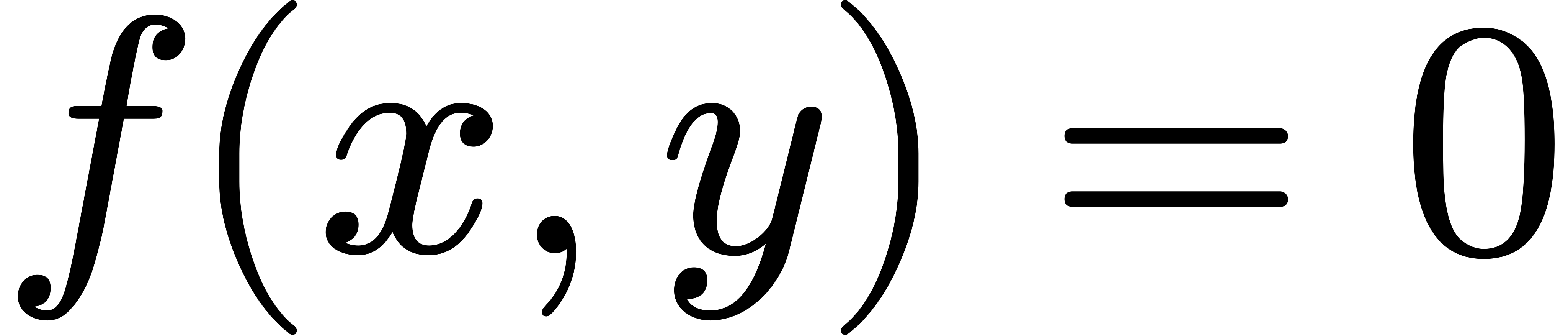 is unicursal. In this case
and are rational functions
is unicursal. In this case
and are rational functions 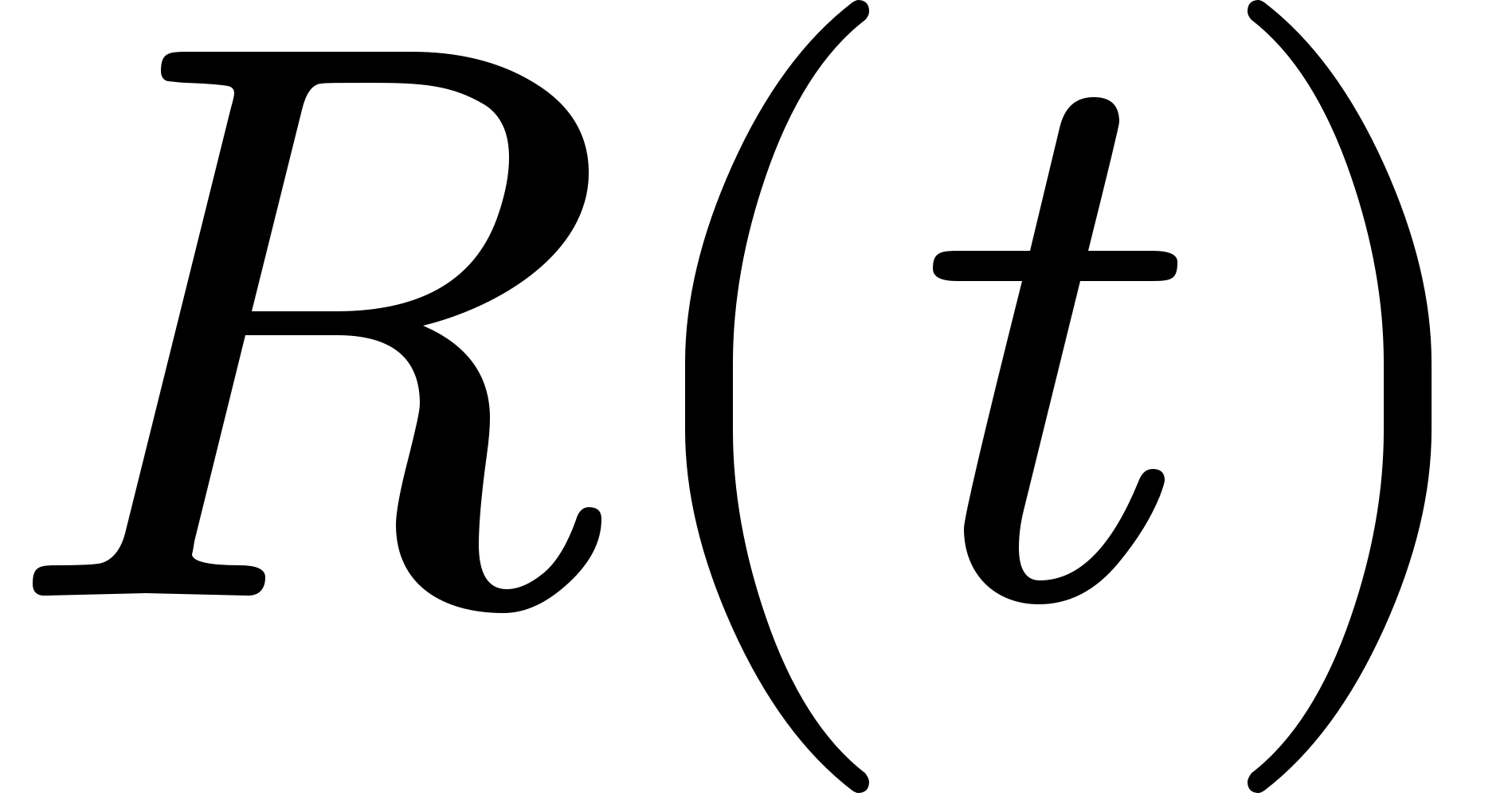 ,
, 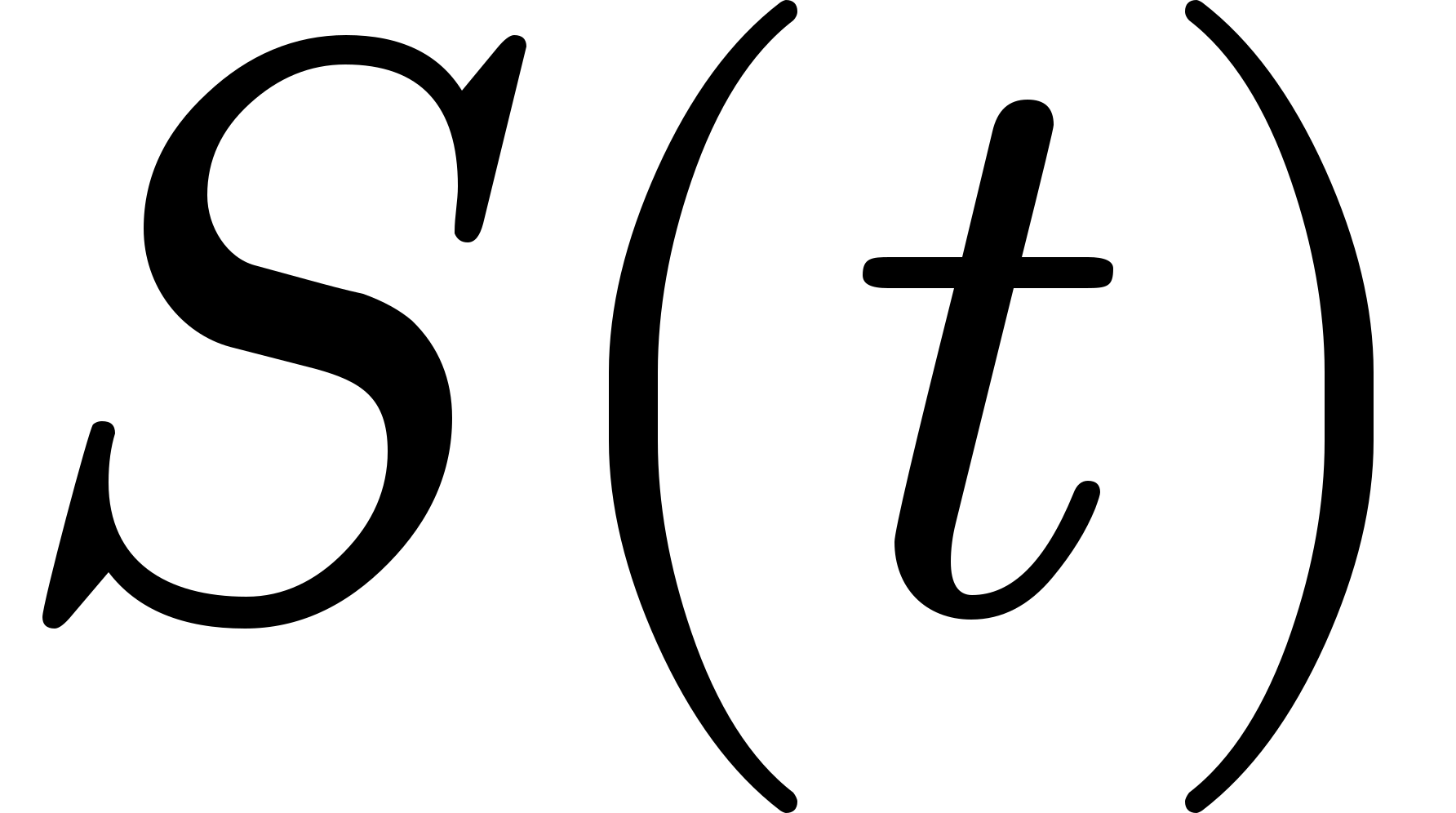 of a parameter
, and the integral, being the integral of a rational function of
, is of the form
of a parameter
, and the integral, being the integral of a rational function of
, is of the form
 where are rational functions of .
But may be expressed, by means of elementary algebraical
operations, as a rational function of and . Thus
where are rational functions of .
But may be expressed, by means of elementary algebraical
operations, as a rational function of and . Thus  are rational functions of and .
The case of greatest interest is that in which is a rational
function of and 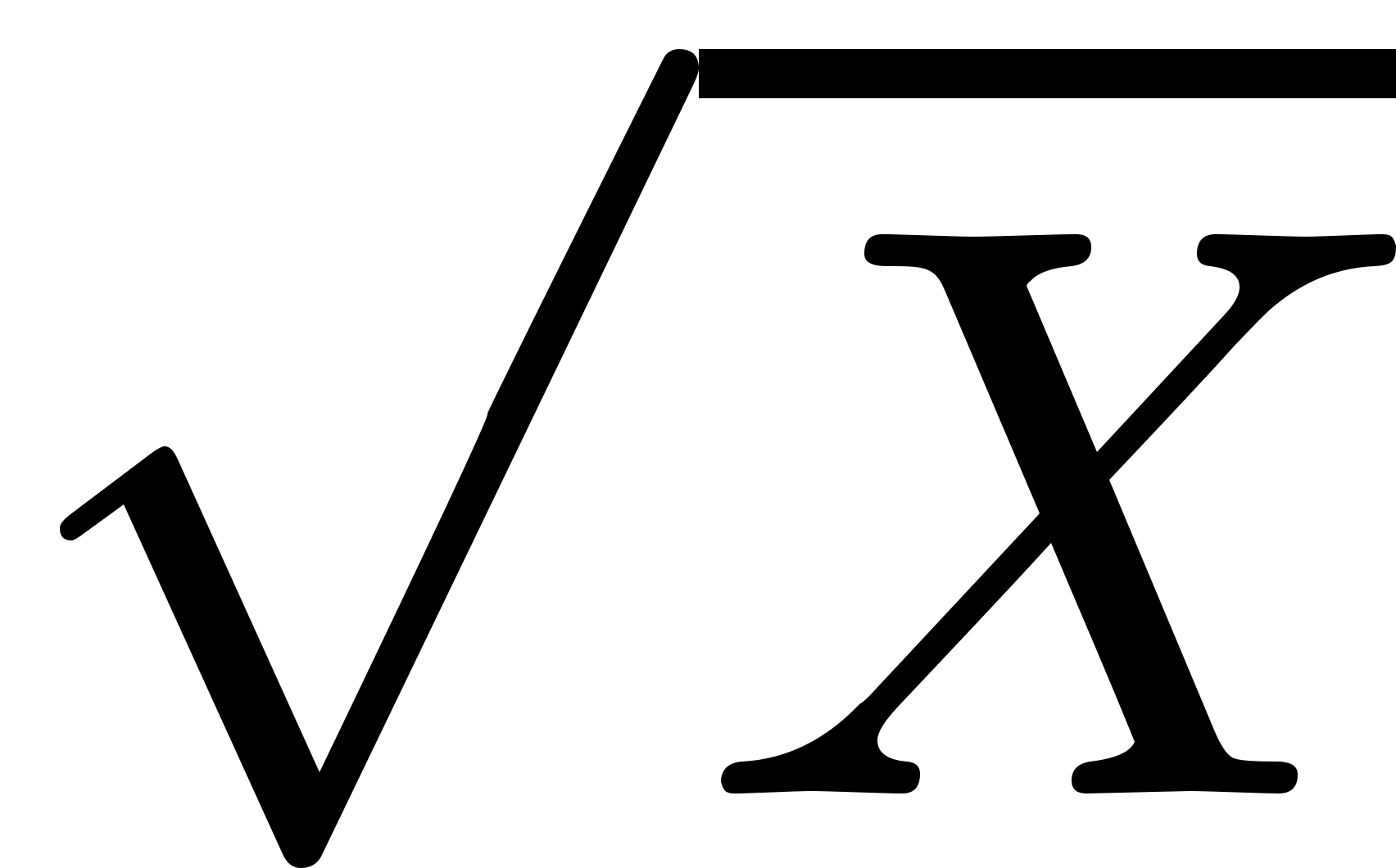 , where is a polynomial. As we
have already seen, can in this case be expressed in the form
where and are rational functions of . We shall
suppress the rational part and suppose that
, where is a polynomial. As we
have already seen, can in this case be expressed in the form
where and are rational functions of . We shall
suppress the rational part and suppose that 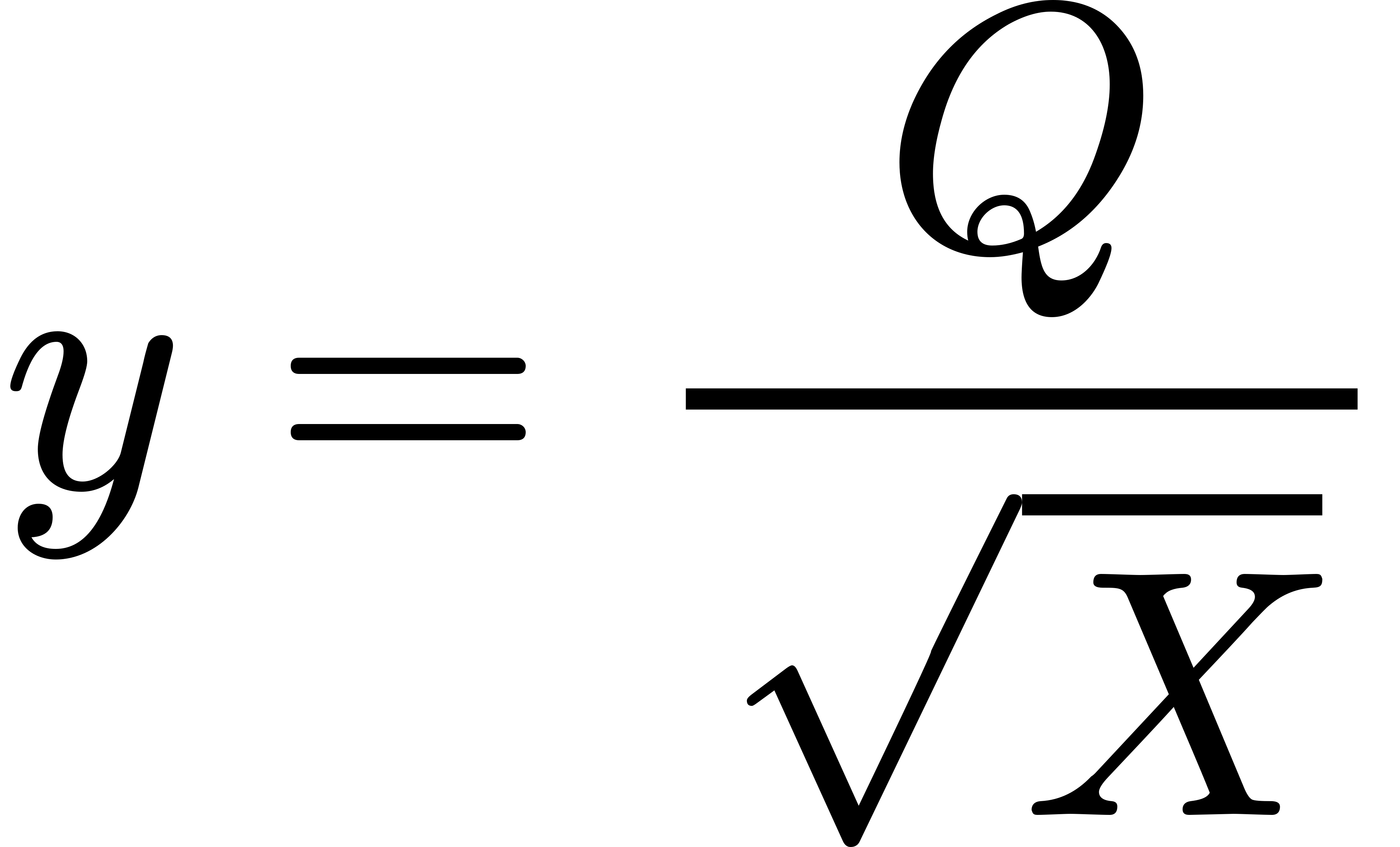 . In this
case the general theorem gives
. In this
case the general theorem gives
 where
where  are
rational. If we differentiate this equation we obtain an algebraical
identity in which we can change the sign of . Thus we may
change the sign of in the integral equation. If we do this
and subtract, and write
are
rational. If we differentiate this equation we obtain an algebraical
identity in which we can change the sign of . Thus we may
change the sign of in the integral equation. If we do this
and subtract, and write 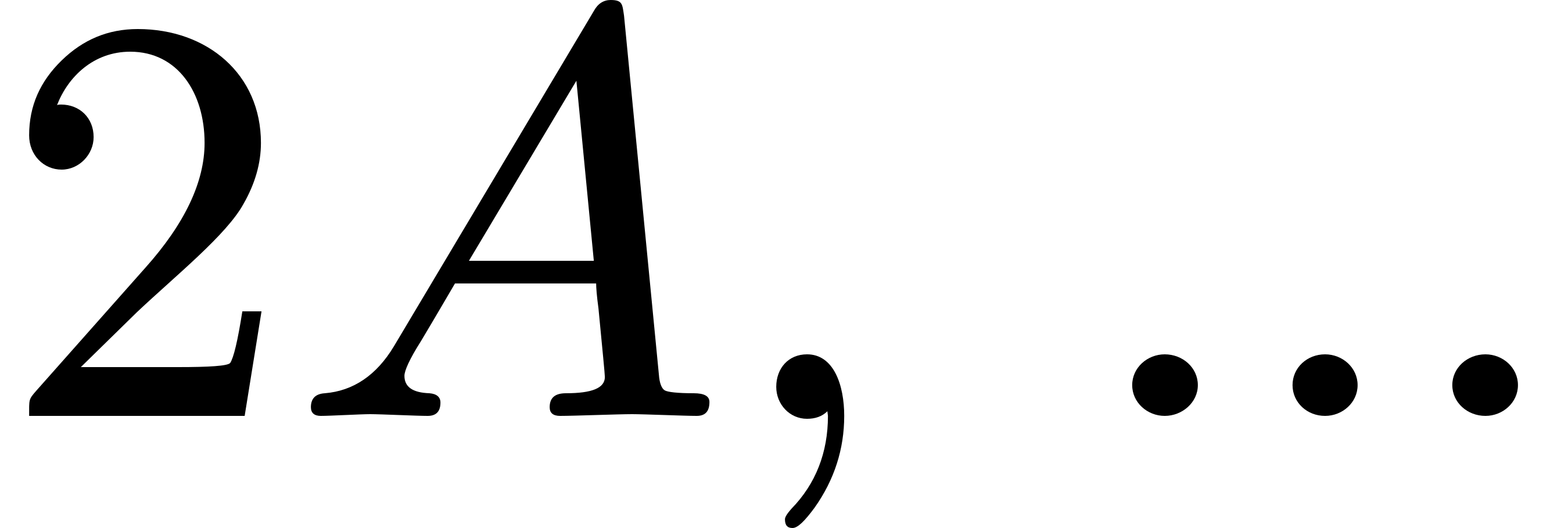 for
for 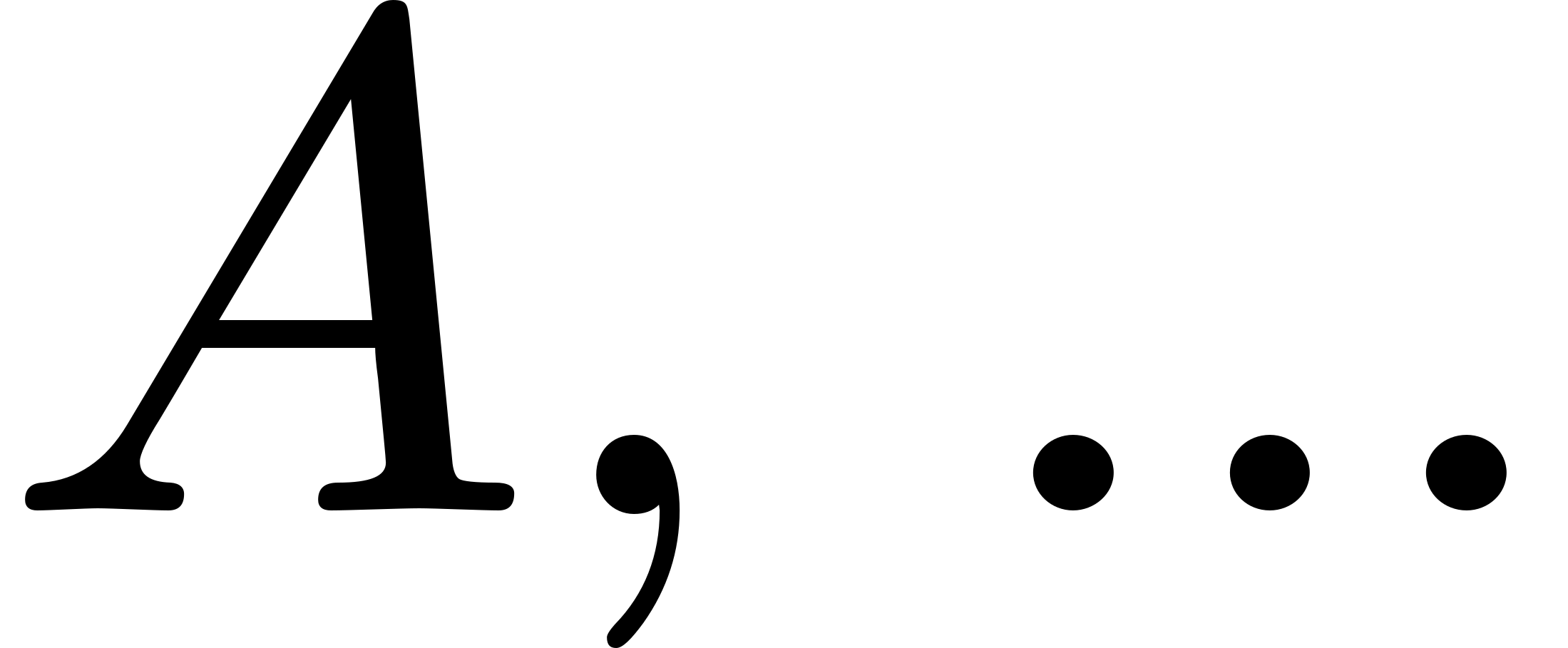 , we obtain
 [Pg 47]
which is the standard form for such an integral. It is evident that we
may suppose
[Pg 47]
which is the standard form for such an integral. It is evident that we
may suppose 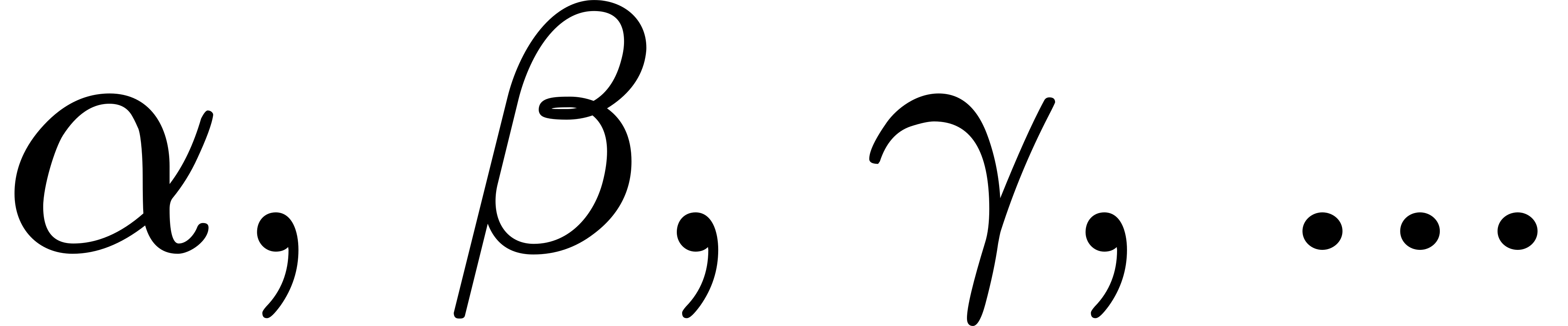 to be polynomials.
19. (i) By means of this theorem it is possible to prove that a
number of important integrals, and notably the integrals
 are not expressible in terms of elementary functions, and so represent
genuinely new transcendents. The formal proof of this was worked out by
Liouville[40]; it rests merely on a consideration of the possible forms
of the differential coefficients of expressions of the form
are not expressible in terms of elementary functions, and so represent
genuinely new transcendents. The formal proof of this was worked out by
Liouville[40]; it rests merely on a consideration of the possible forms
of the differential coefficients of expressions of the form
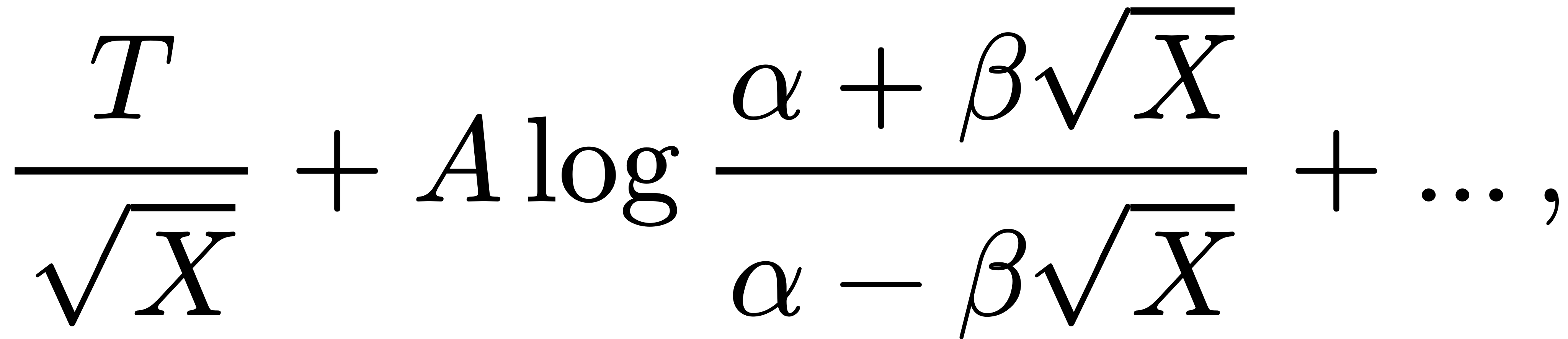 and the arguments used are purely algebraical and of no great
theoretical difficulty. The proof is however too detailed to be
inserted here. It is not difficult to find shorter proofs, but these
are of a less elementary character, being based on ideas drawn from the
theory of functions[41].
and the arguments used are purely algebraical and of no great
theoretical difficulty. The proof is however too detailed to be
inserted here. It is not difficult to find shorter proofs, but these
are of a less elementary character, being based on ideas drawn from the
theory of functions[41].
The general questions of this nature which arise in connection with
integrals of the form
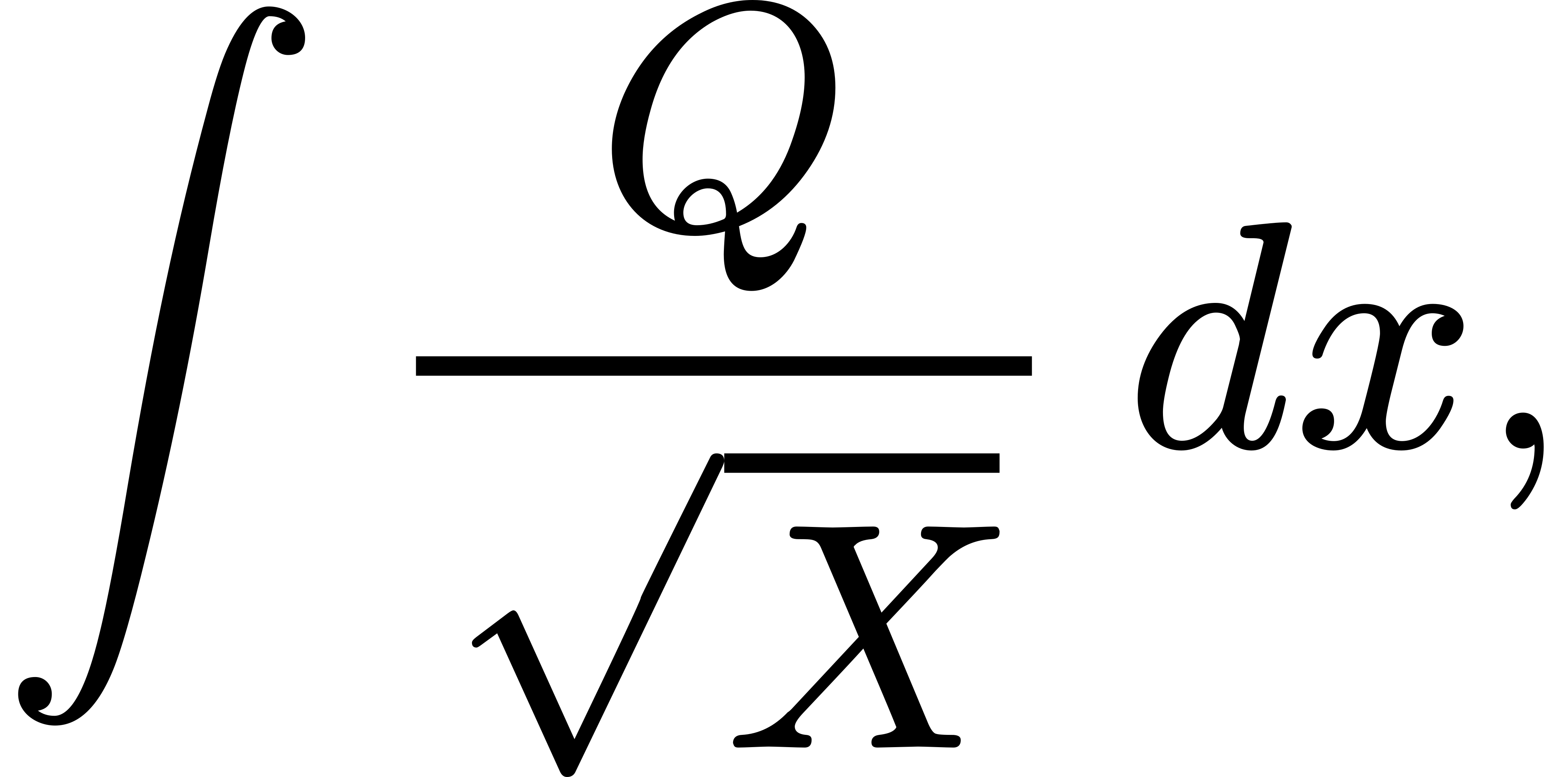 or, more generally,
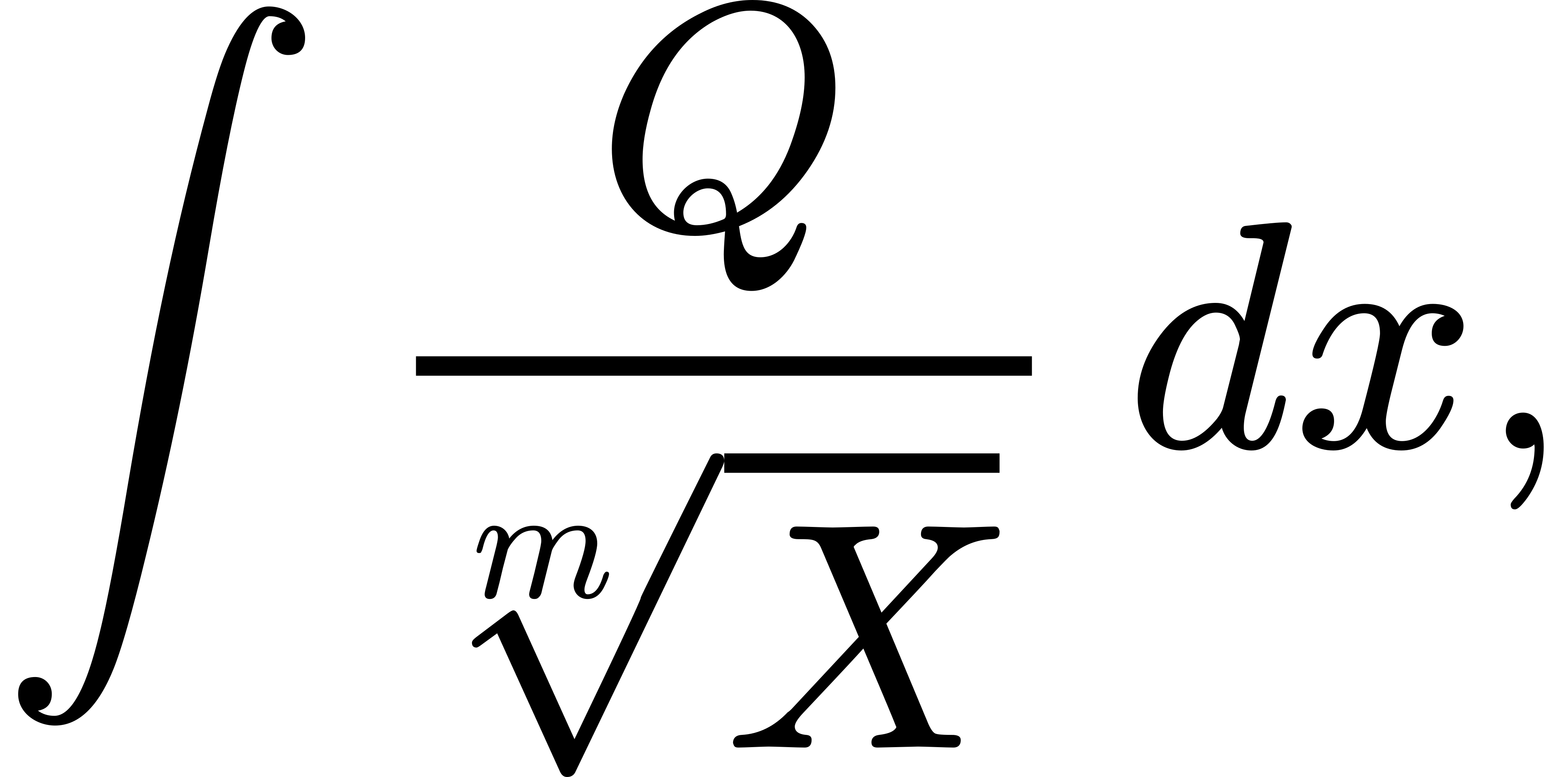 are of extreme interest and difficulty. The case which has
received most attention is that in which and is
of the third or fourth degree, in which case the integral is
said to be elliptic. An integral of this kind is called
pseudo-elliptic if it is expressible in terms of algebraical
and logarithmic functions. Two examples were given above (§ 10).
General methods have been given for the construction of such
integrals, and it has been shown that certain interesting forms are
pseudo-elliptic. In Goursat's Cours d'analyse[42], for instance,
it is shown that if is a rational function such that
are of extreme interest and difficulty. The case which has
received most attention is that in which and is
of the third or fourth degree, in which case the integral is
said to be elliptic. An integral of this kind is called
pseudo-elliptic if it is expressible in terms of algebraical
and logarithmic functions. Two examples were given above (§ 10).
General methods have been given for the construction of such
integrals, and it has been shown that certain interesting forms are
pseudo-elliptic. In Goursat's Cours d'analyse[42], for instance,
it is shown that if is a rational function such that
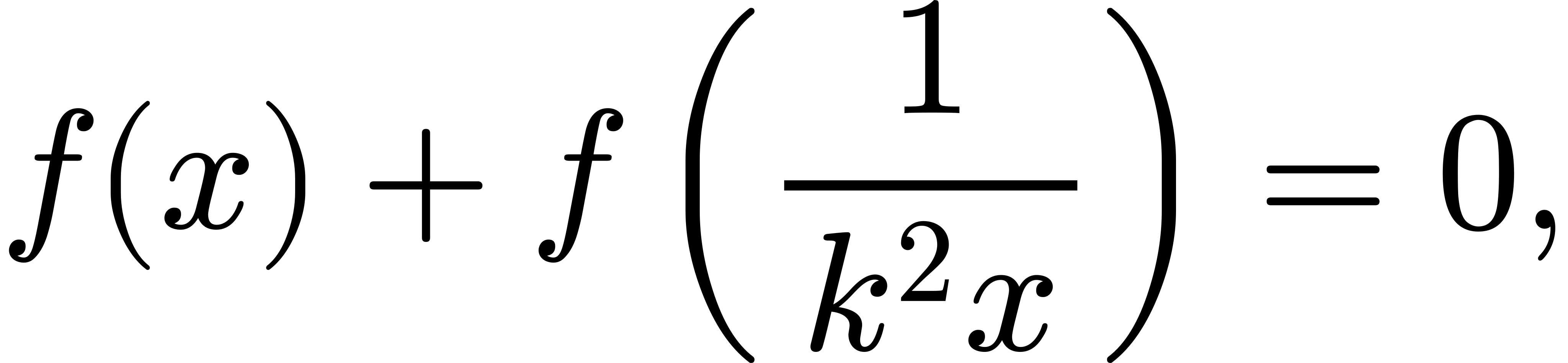 then
then
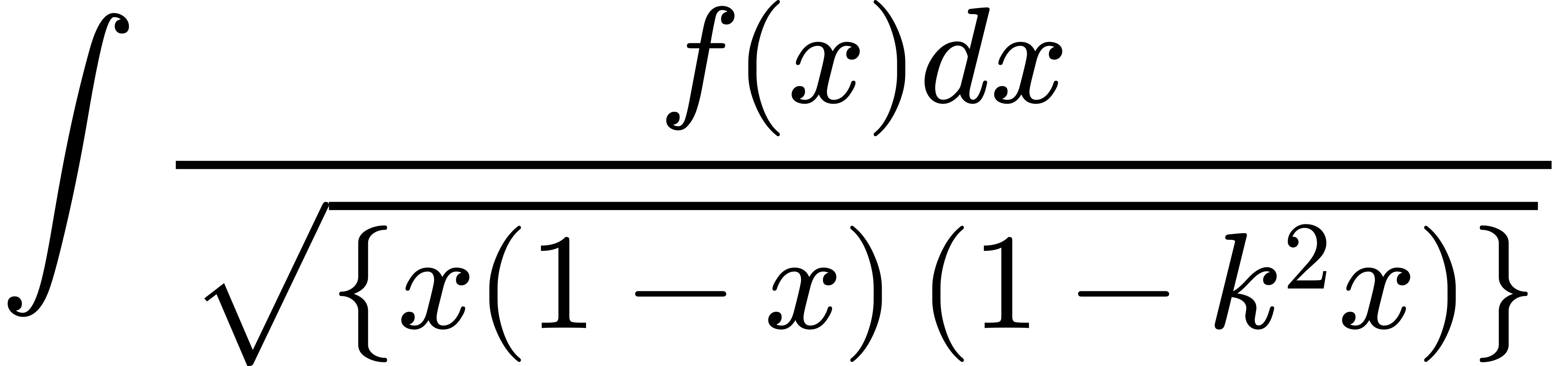 is pseudo-elliptic. But no method has been devised as yet by which
we can always determine in a finite number of steps whether a
given elliptic integral[Pg 48] is pseudo-elliptic, and integrate it
if it is, and there is reason to suppose that no such method can be
given. And up to the present it has not, so far as we know, been proved
rigorously and explicitly that (e.g.) the function
is pseudo-elliptic. But no method has been devised as yet by which
we can always determine in a finite number of steps whether a
given elliptic integral[Pg 48] is pseudo-elliptic, and integrate it
if it is, and there is reason to suppose that no such method can be
given. And up to the present it has not, so far as we know, been proved
rigorously and explicitly that (e.g.) the function
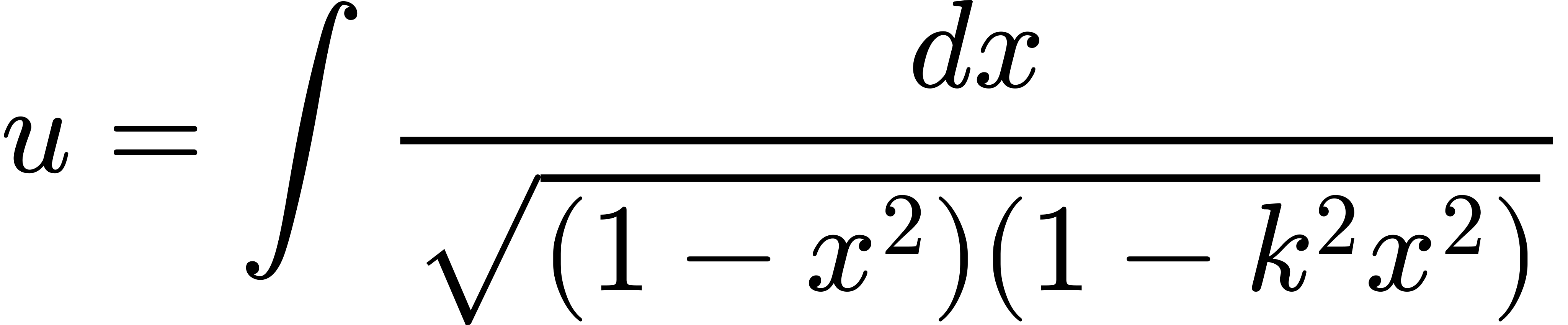 is not a root of an elementary transcendental equation; all that has
been shown is that it is not explicitly expressible in terms
of elementary transcendents. The processes of reasoning employed here,
and in the memoirs to which we have referred, do not therefore suffice
to prove that the inverse function
is not a root of an elementary transcendental equation; all that has
been shown is that it is not explicitly expressible in terms
of elementary transcendents. The processes of reasoning employed here,
and in the memoirs to which we have referred, do not therefore suffice
to prove that the inverse function  is not
an elementary function of . Such a proof must rest on the known
properties of the function
is not
an elementary function of . Such a proof must rest on the known
properties of the function 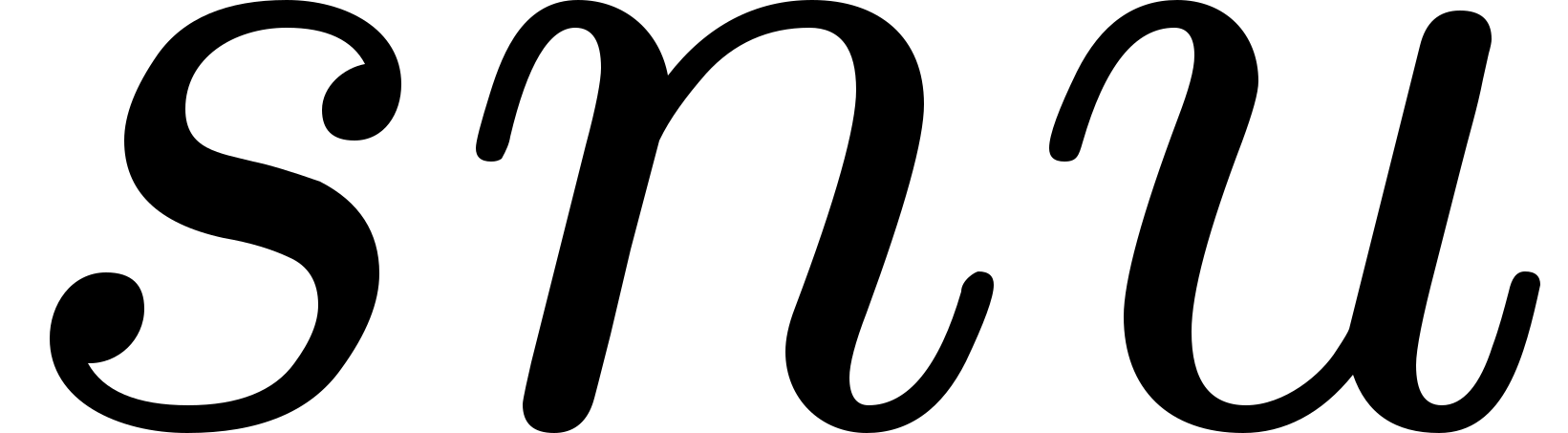 , and would lie altogether outside
the province of this tract.
, and would lie altogether outside
the province of this tract.
The reader who desires to pursue the subject further will find references to the original authorities in Appendix I.
(ii) One particular class of integrals which is of especial interest is
that of the binomial integrals
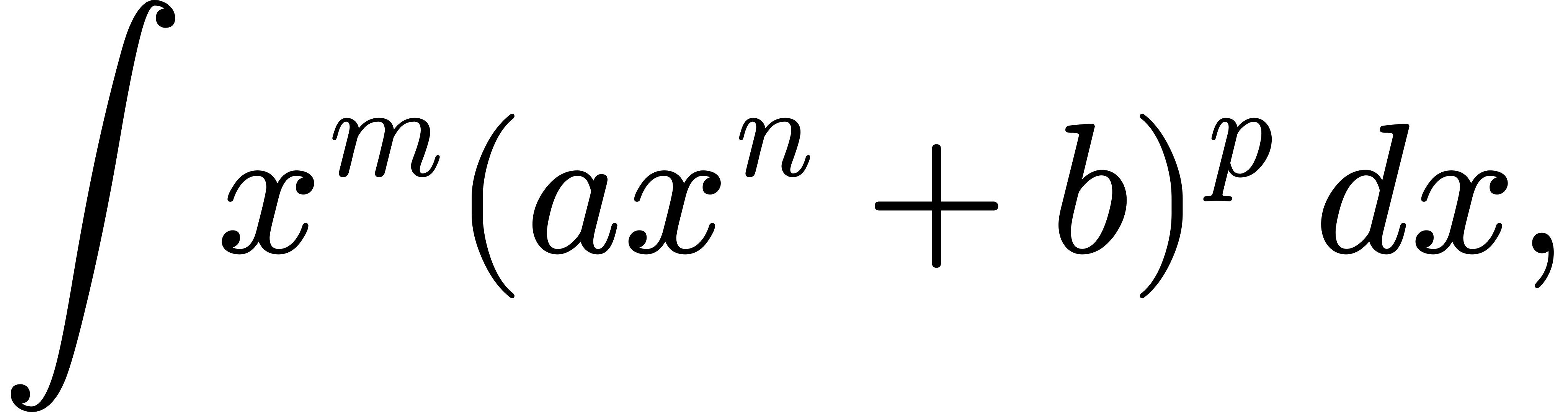 where , , are rational. Putting
  , and
neglecting a constant factor, we obtain an integral of the form
, and
neglecting a constant factor, we obtain an integral of the form
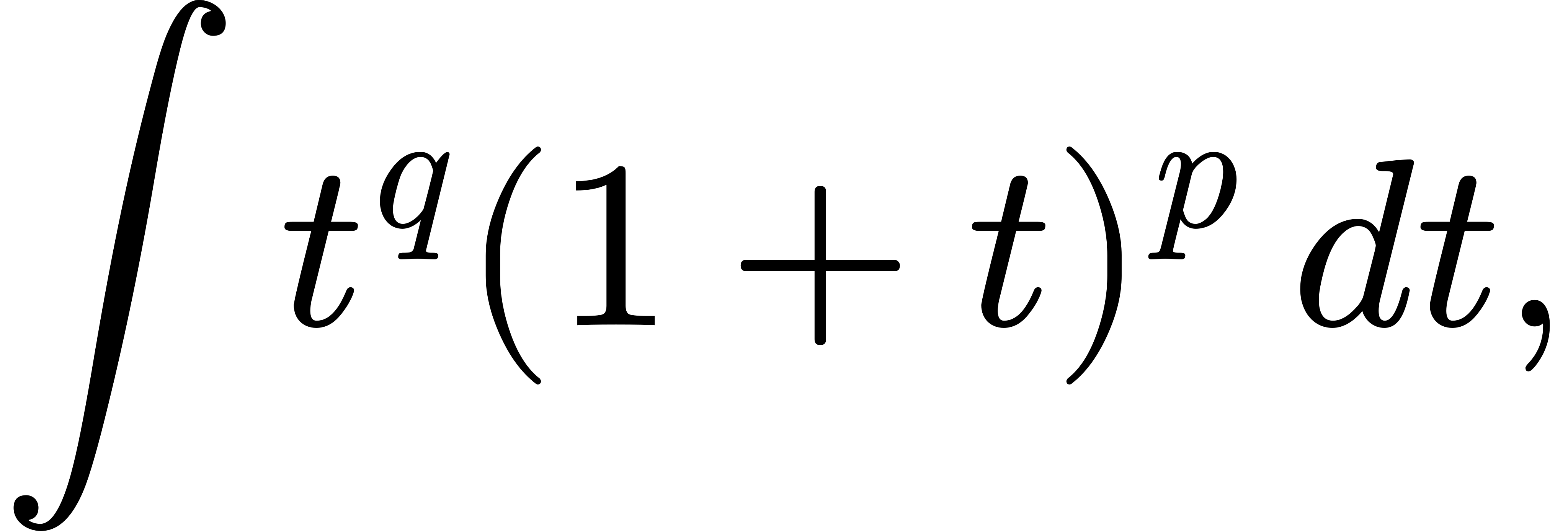 where and are rational. If is an integer, and a
fraction
where and are rational. If is an integer, and a
fraction 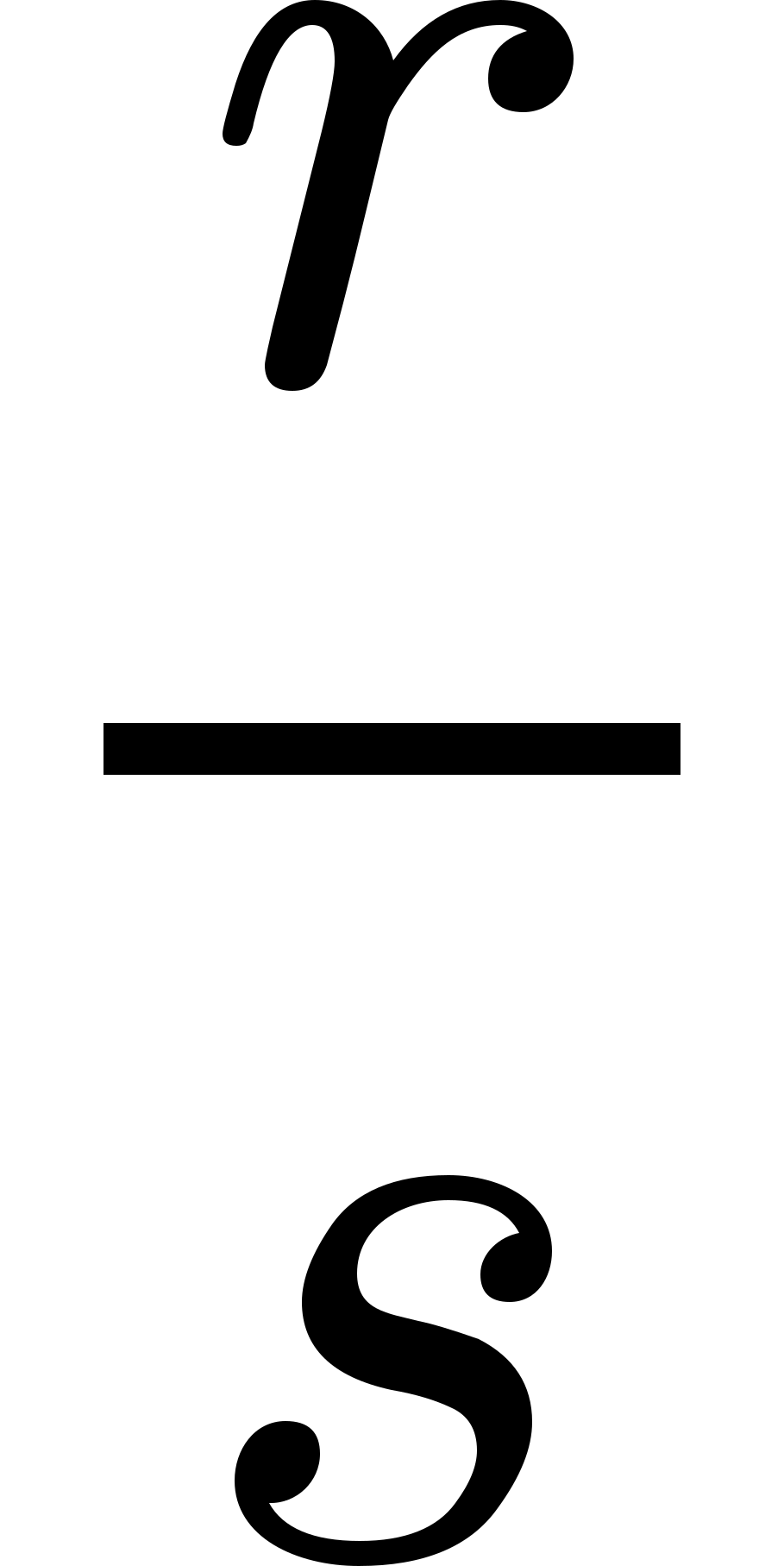 , this integral can be evaluated at once by putting
 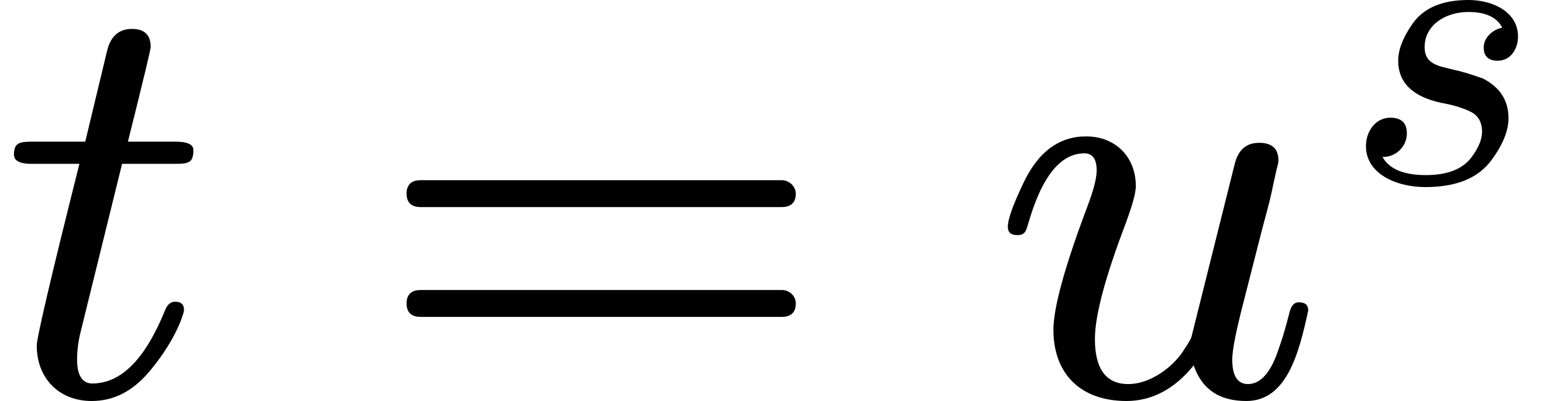 , a substitution which rationalises the integrand. If is
an integer, and
, a substitution which rationalises the integrand. If is
an integer, and 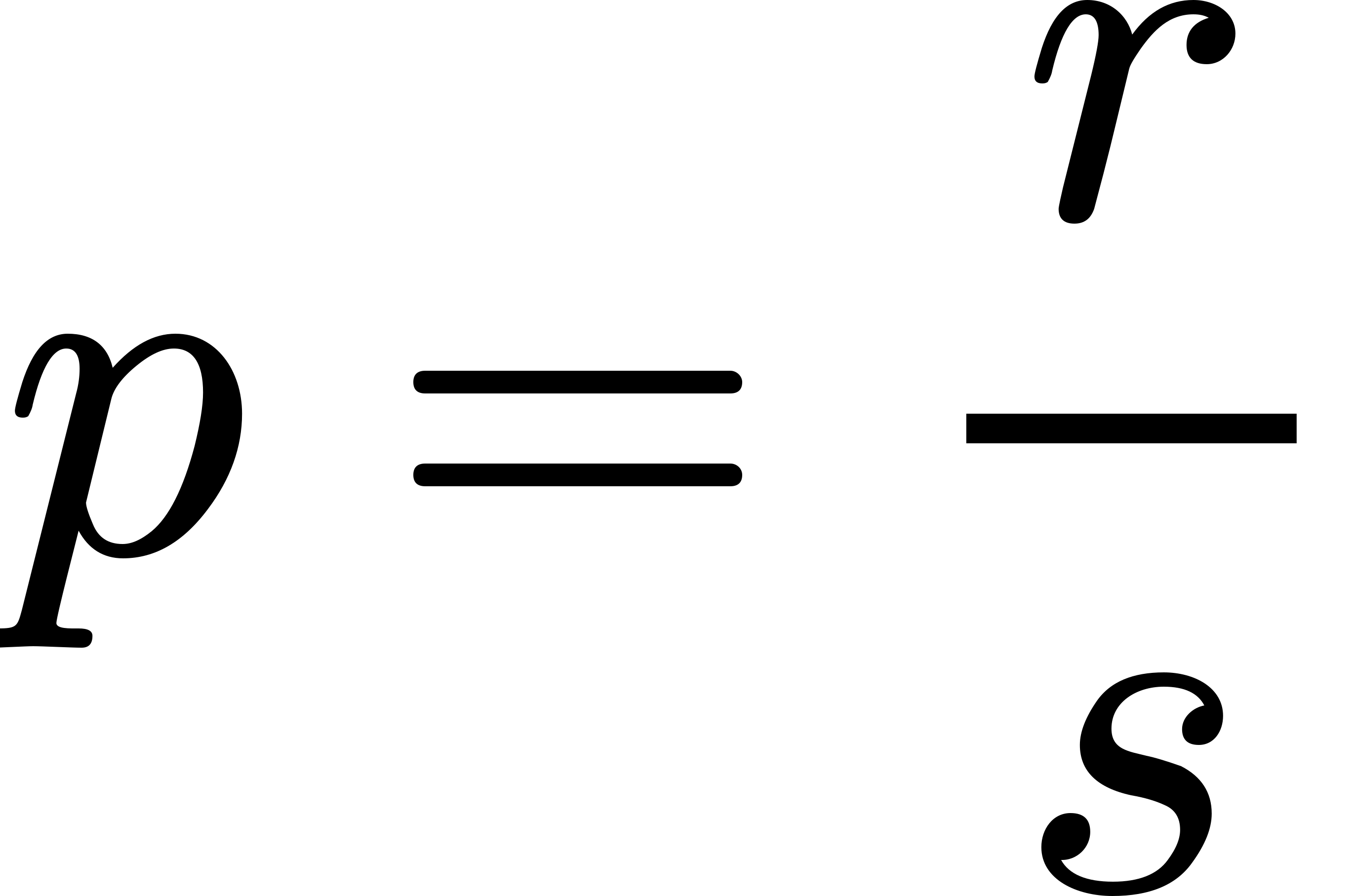 , we put
  . If
. If 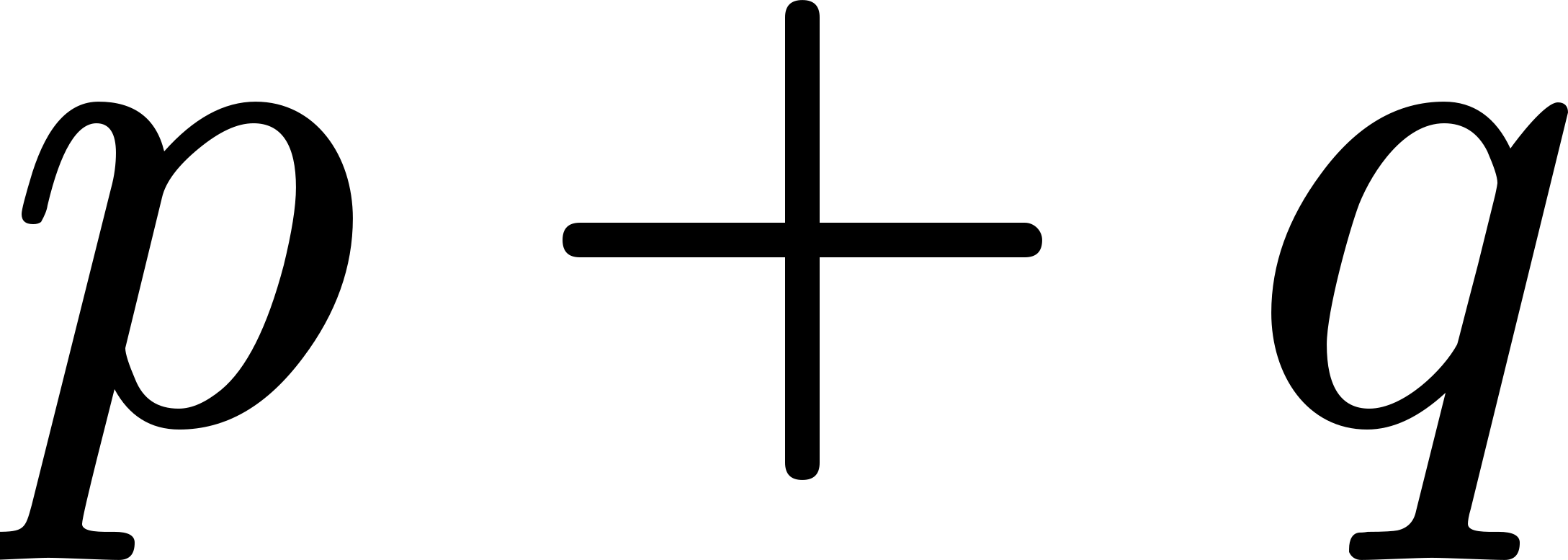 is
an integer, and , we put
is
an integer, and , we put  .
.
It follows from Tschebyschef's researches (to which references are given in Appendix I) that these three cases are the only ones in which the integral can be evaluated in finite form.
20. In §§7—9 we considered in some detail the integrals connected
with curves whose deficiency is zero. We shall now consider in a more
summary way the case next in simplicity, that in which the deficiency
is unity, so that the number of double points is
 It has been shown by Clebsch[43] that in this case the coordinates of
the points of the curve can be expressed as rational functions of a
parameter and of the square root of a polynomial in of the
third or fourth degree.
It has been shown by Clebsch[43] that in this case the coordinates of
the points of the curve can be expressed as rational functions of a
parameter and of the square root of a polynomial in of the
third or fourth degree.
[Pg 49]
The fact is that the curves
 are the simplest curves of deficiency
 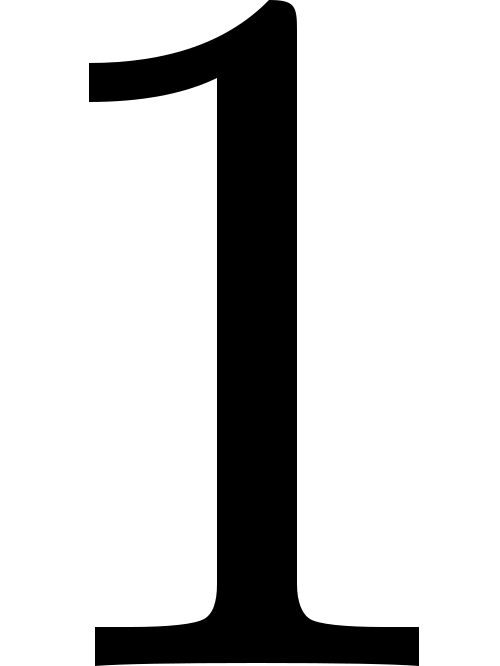 . The first is the typical
cubic without a double point. The second is a quartic with two double
points, in this case coinciding in a 'tacnode' at infinity, as we see
by making the equation homogeneous with , writing for ,
and then comparing the resulting equation with the form treated by
Salmon on p. 215 of his Higher plane curves. The reader who is
familiar with the theory of algebraical plane curves will remember that
the deficiency of a curve is unaltered by any birational transformation
of coordinates, and that any curve can be birationally transformed into
any other curve of the same deficiency, so that any curve of deficiency
can be birationally transformed into the cubic whose equation is
written above.
. The first is the typical
cubic without a double point. The second is a quartic with two double
points, in this case coinciding in a 'tacnode' at infinity, as we see
by making the equation homogeneous with , writing for ,
and then comparing the resulting equation with the form treated by
Salmon on p. 215 of his Higher plane curves. The reader who is
familiar with the theory of algebraical plane curves will remember that
the deficiency of a curve is unaltered by any birational transformation
of coordinates, and that any curve can be birationally transformed into
any other curve of the same deficiency, so that any curve of deficiency
can be birationally transformed into the cubic whose equation is
written above.
The argument by which this general theorem is proved is very much like
that by which we proved the corresponding theorem for unicursal curves.
The simplest case is that of the general cubic curve. We take a point
on the curve as origin, so that the equation of the curve is of the form
 Let us consider the intersections of this curve with the secant . Eliminating , and solving the resulting quadratic in ,
we see that the only irrationality which enters into the expression of
is
Let us consider the intersections of this curve with the secant . Eliminating , and solving the resulting quadratic in ,
we see that the only irrationality which enters into the expression of
is
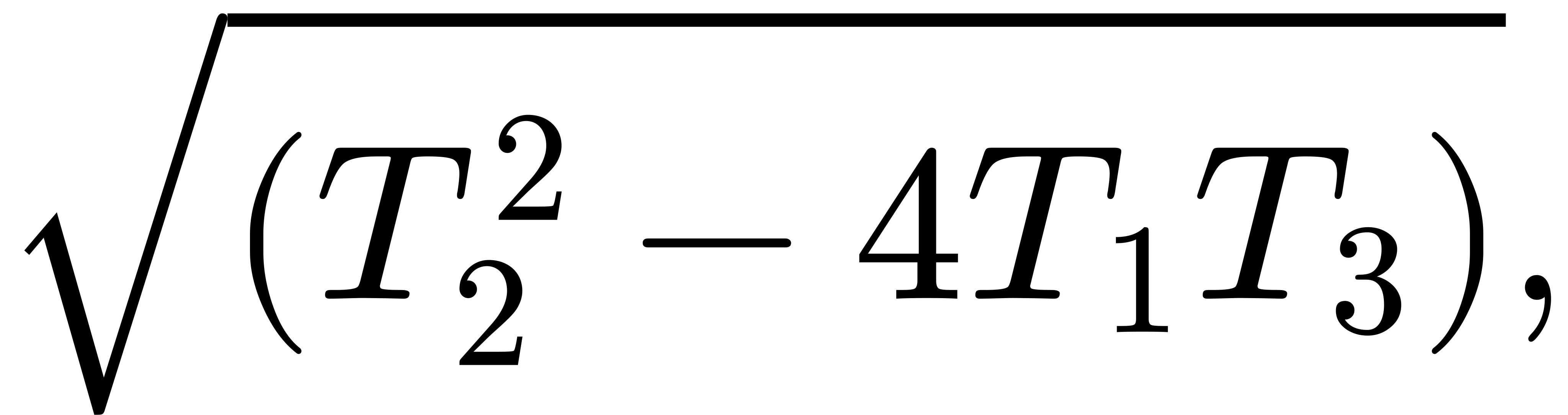 where
where

A more elegant method has been given by Clebsch[44]. If we write the
cubic in the form
 where , , , are linear functions of and
, so that , , are the asymptotes, then the
hyperbolas
where , , , are linear functions of and
, so that , , are the asymptotes, then the
hyperbolas 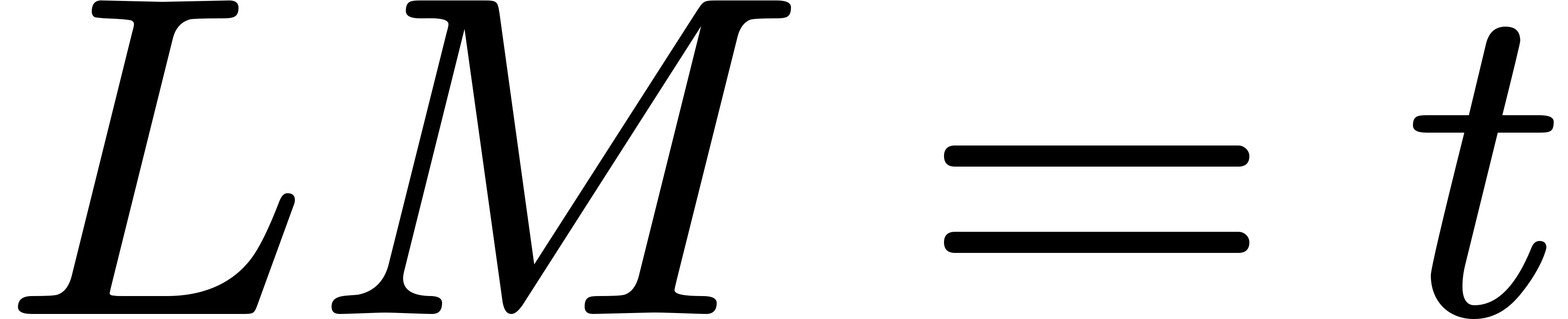 will meet the cubic in four fixed points at
infinity, and therefore in two points only which depend on . For
these points
will meet the cubic in four fixed points at
infinity, and therefore in two points only which depend on . For
these points
 Eliminating from these equations, we obtain an equation of the
form
Eliminating from these equations, we obtain an equation of the
form
 where , , are quadratics in . Hence
 [Pg 50]
where
[Pg 50]
where  is a polynomial in of degree not higher
than the fourth.
is a polynomial in of degree not higher
than the fourth.
Thus if the curve is
 so that
 being an imaginary cube root of unity, then we find that the
line
being an imaginary cube root of unity, then we find that the
line
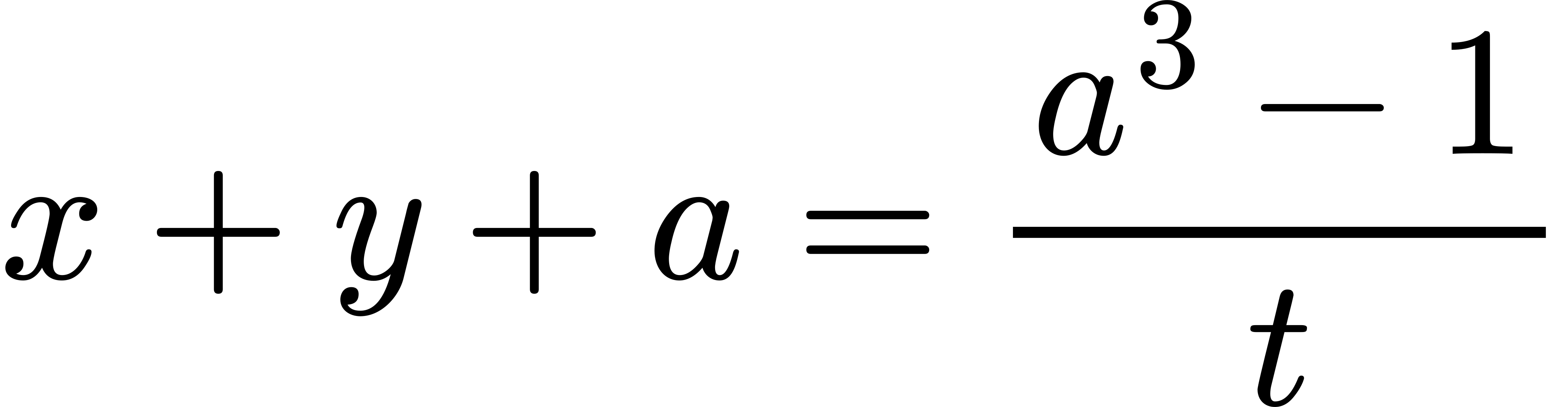 meets the curve in the points given by
 where
where 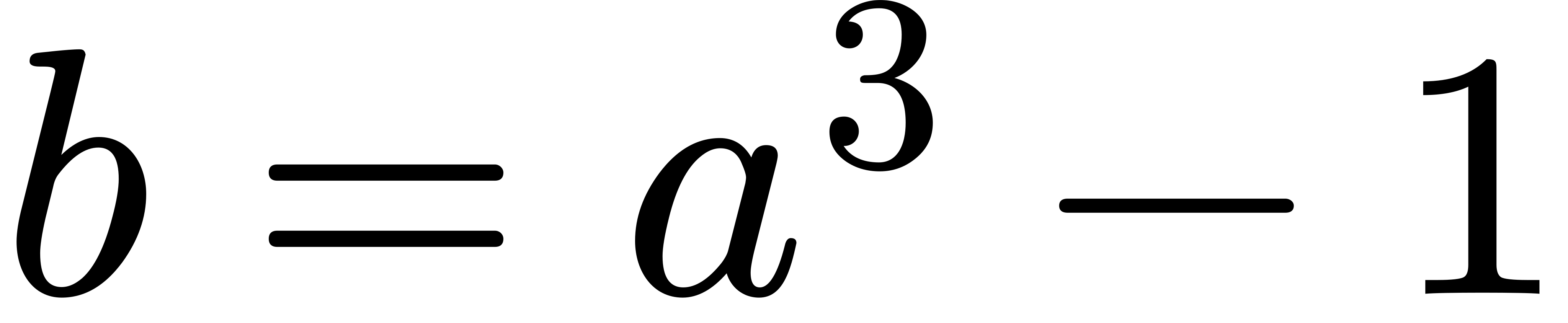 and
and

In particular, for the curve
 we have

21. It will be plain from what precedes that
 can always be reduced to an elliptic integral, the deficiency of the
cubic
can always be reduced to an elliptic integral, the deficiency of the
cubic
 being unity.
In general integrals associated with curves whose deficiency is greater
than unity cannot be so reduced. But associated with every curve of,
let us say, deficiency 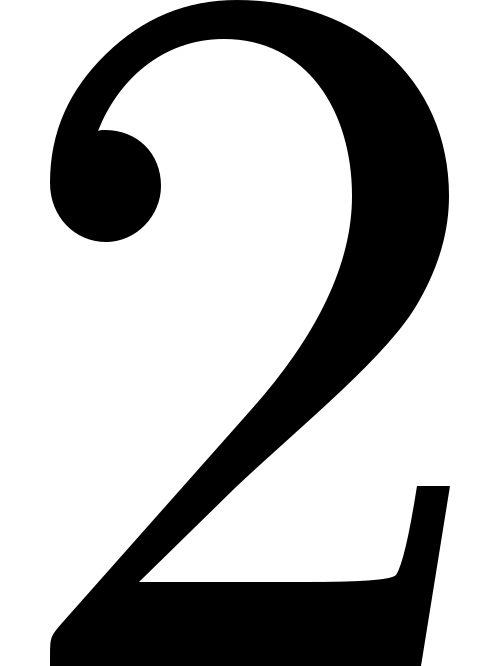 there will be an infinity of integrals
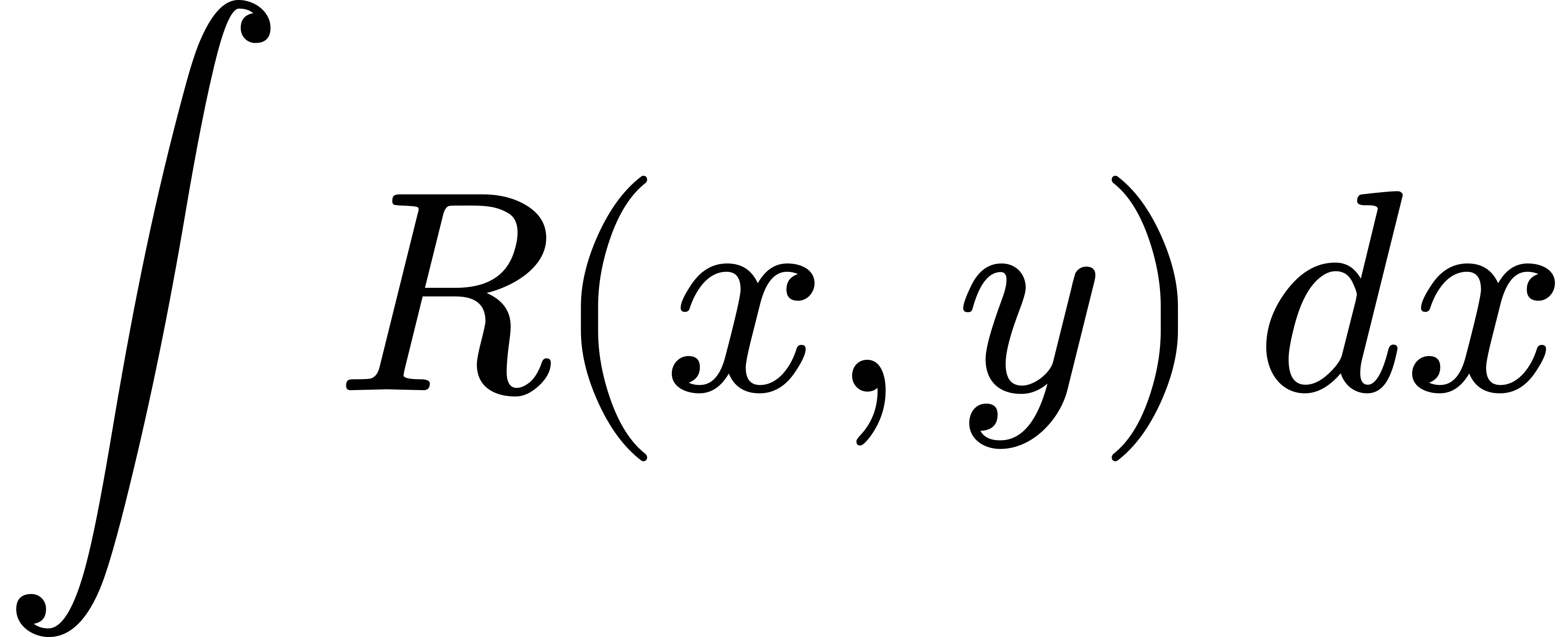 reducible to elliptic integrals or even to elementary functions; and
there are curves of deficiency for which all such
integrals are reducible.
reducible to elliptic integrals or even to elementary functions; and
there are curves of deficiency for which all such
integrals are reducible.
For example, the integral
 [Pg 51]
may be split up into the sum of the integral of a rational function and
two integrals of the types
[Pg 51]
may be split up into the sum of the integral of a rational function and
two integrals of the types
 and each of these integrals becomes elliptic on putting
 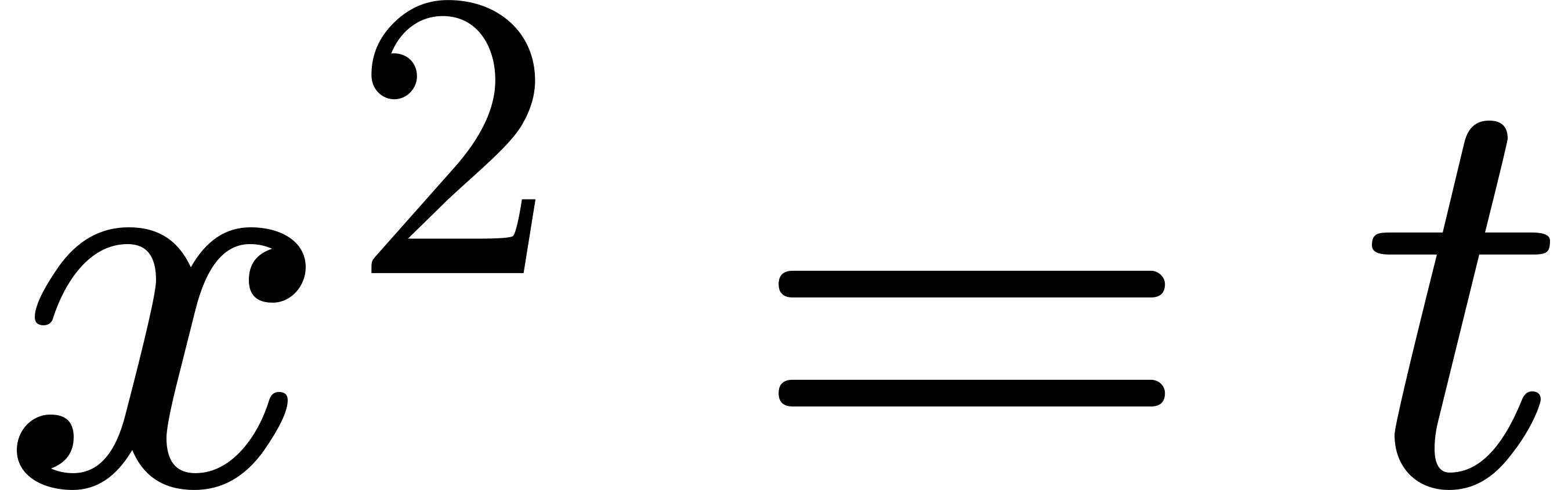 .
But the deficiency of
.
But the deficiency of
 is . Another example is given by the integral[45]

22. It would be beside our present purpose to enter into any details
as to the general theory of elliptic integrals, still less of the
integrals (usually called Abelian) associated with curves of deficiency
greater than unity. We have seen that if the deficiency is unity then
the integral can be transformed into the form
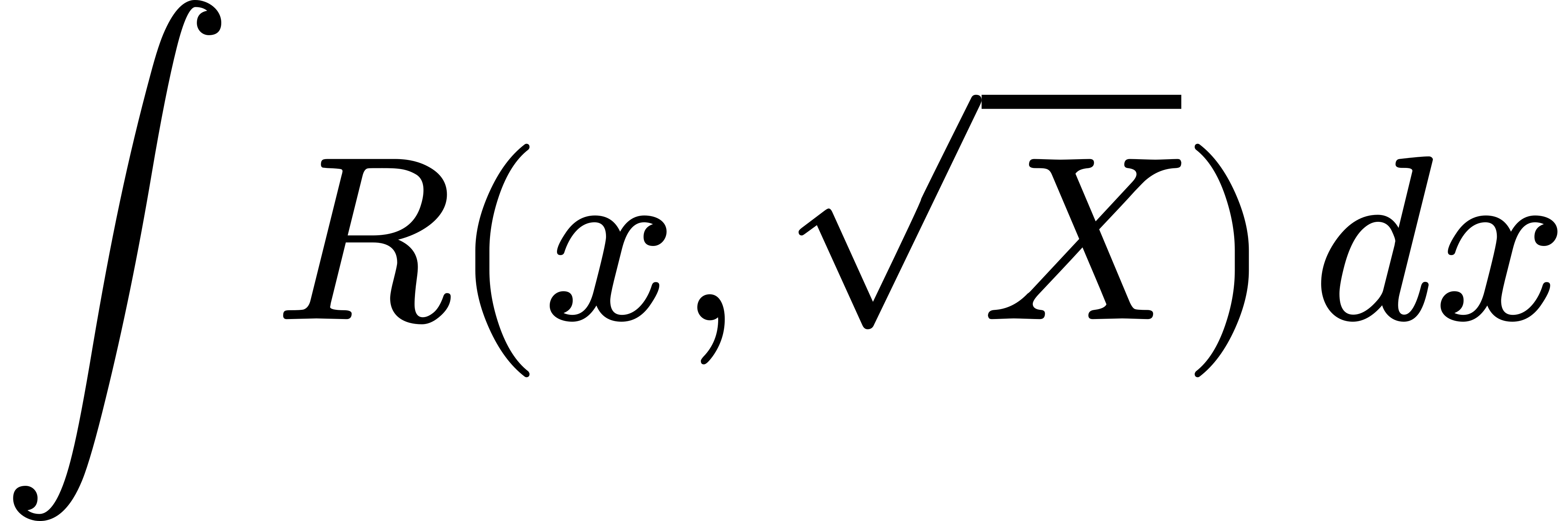 where[46]
 It can be shown that, by a transformation of the type
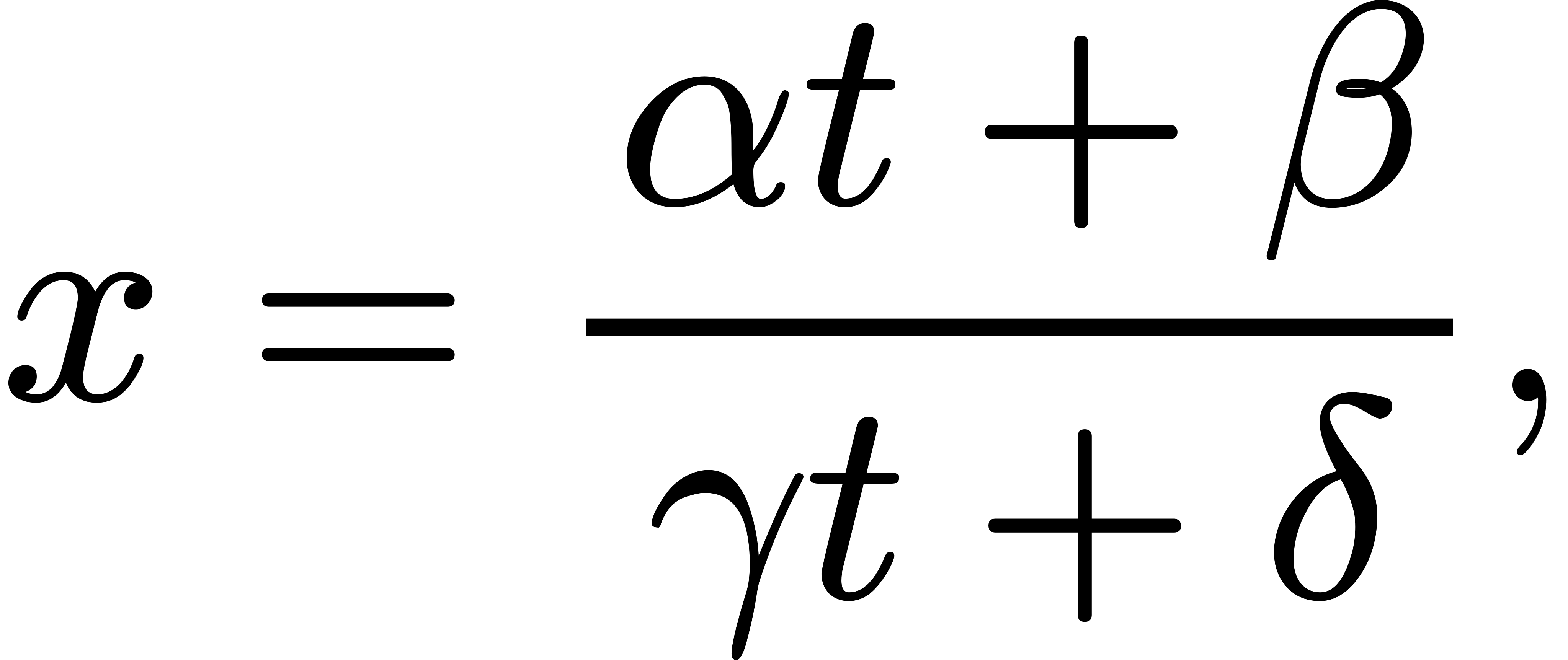 this integral can be transformed into an integral
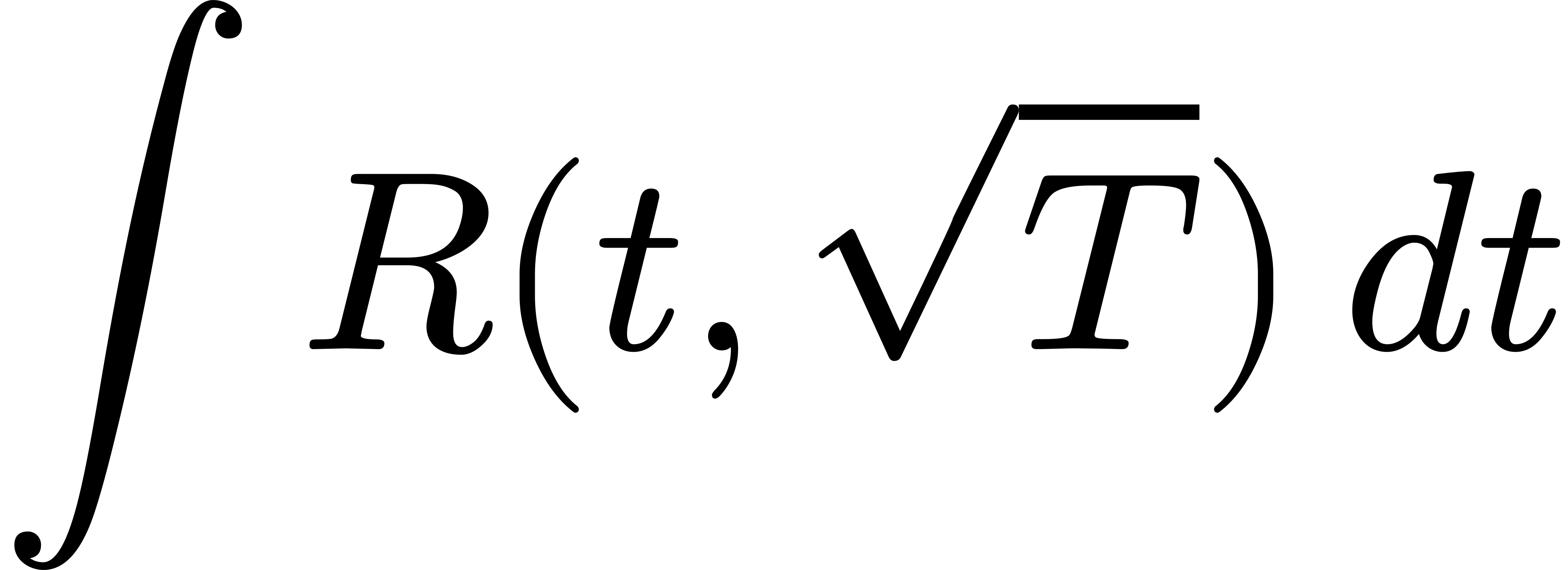 where
where

We can then, as when 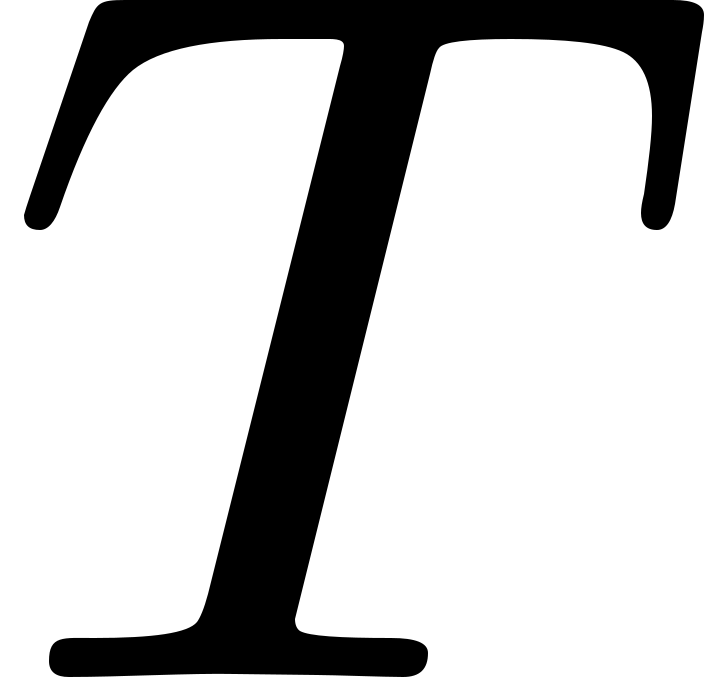 is of the second degree (§3), decompose this
integral into two integrals of the forms
is of the second degree (§3), decompose this
integral into two integrals of the forms
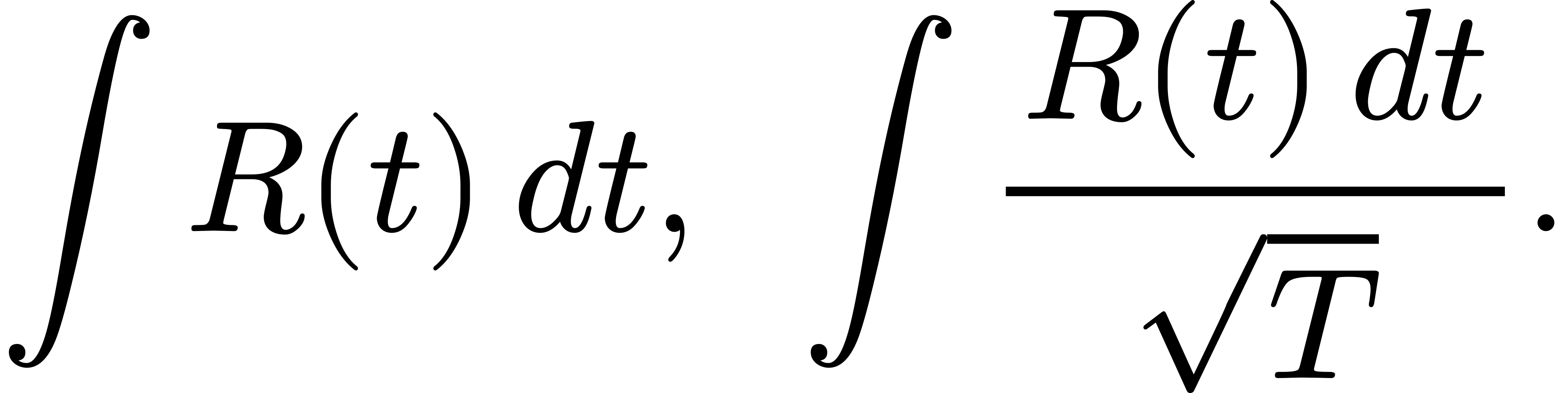 Of these integrals the first is elementary, and the second can be[Pg 52]
decomposed[47] into the sum of an algebraical term, of certain
multiples of the integrals
Of these integrals the first is elementary, and the second can be[Pg 52]
decomposed[47] into the sum of an algebraical term, of certain
multiples of the integrals
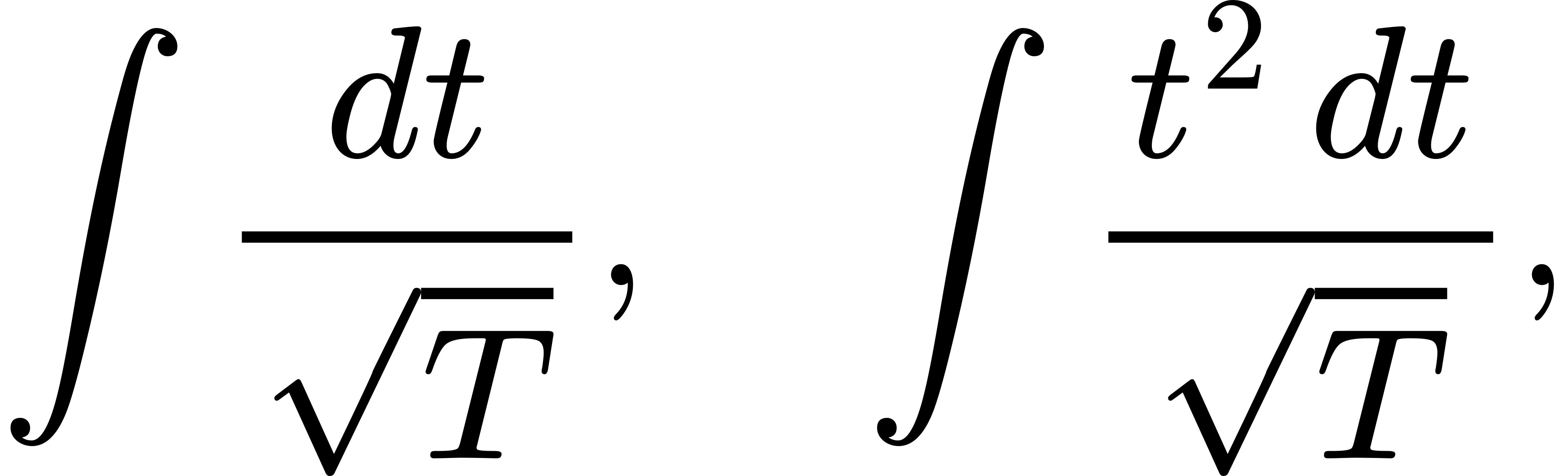 and of a number of integrals of the type
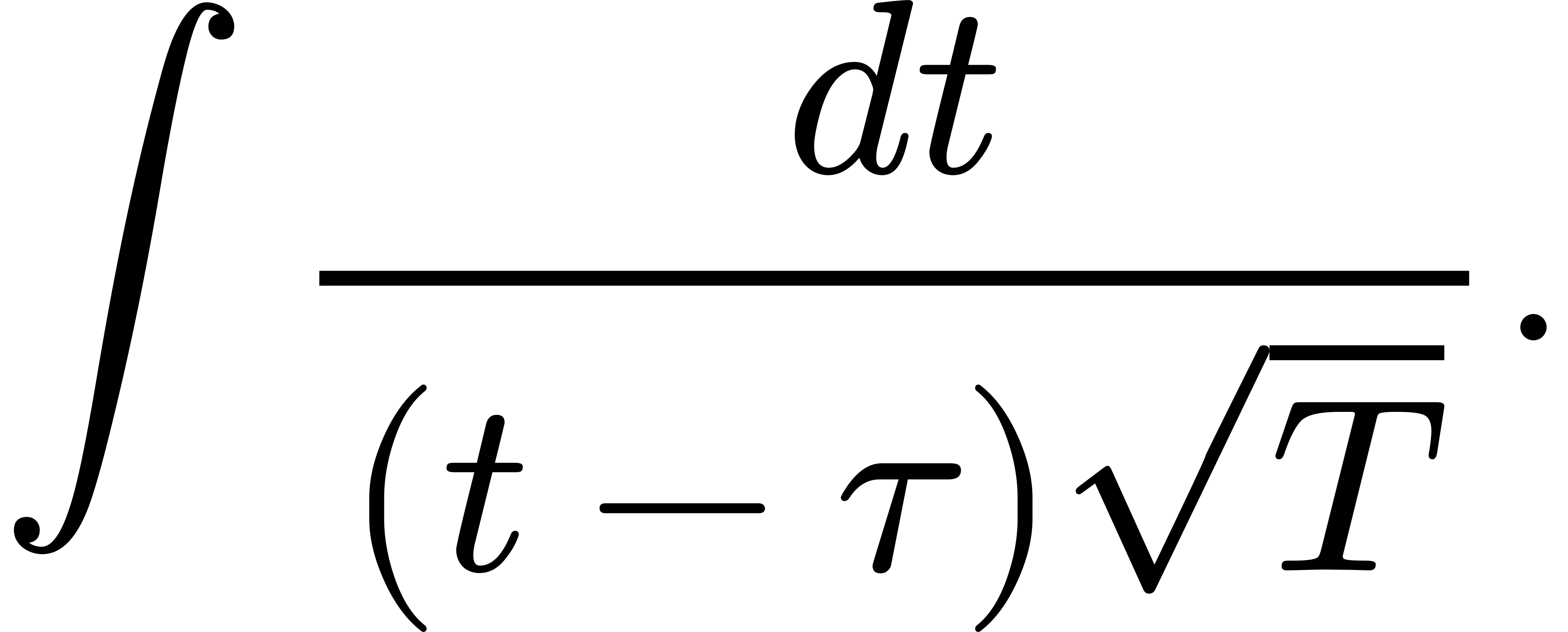 These integrals cannot in general be reduced to elementary functions,
and are therefore new transcendents.
These integrals cannot in general be reduced to elementary functions,
and are therefore new transcendents.
We will only add, before leaving this part of our subject, that the algebraical part of these integrals can be found by means of the elementary algebraical operations, as was the case with the rational part of the integral of a rational function, and with the algebraical part of the simple integrals considered in §§14—15.
[17]
We now write for for the sake of symmetry in
notation.
[18] See, for example, Bromwich, l.c., pp. 16 et seq.
[19] Cf. Jordan, Cours d'analyse, ed. 2, vol. 2, p. 21.
[20] A. G. Greenhill, A chapter in the integral calculus (Francis Hodgson, 1888), p. 12: Differential and integral calculus, p. 399.
[21] Bromwich, l.c., p. 16.
[22] The method sketched here is that followed by Stolz (see the references given on p. 21). Dr Bromwich's method is different in detail but the same in principle.
[24]
The superfluous root may be eliminated from the result
by a trivial transformation, just as 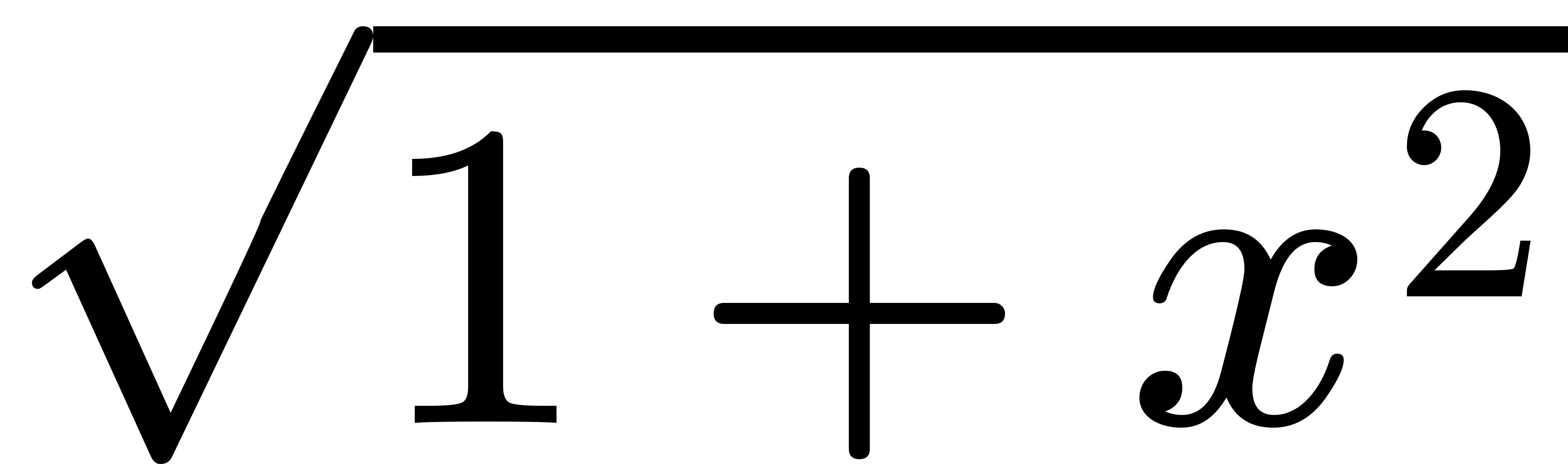 may be
eliminated from
may be
eliminated from 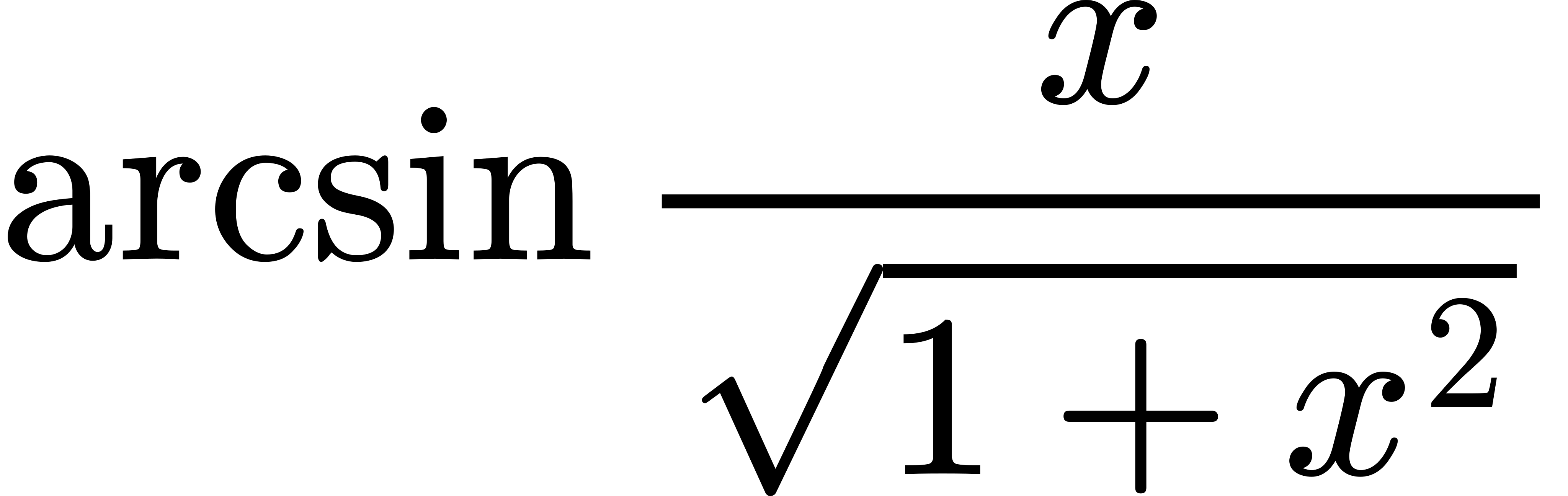 by writing
this function in the form
by writing
this function in the form  .
.
[25] Higher plane curves, p. 29.
[26] Salmon, ibid., p. 29. French genre, German Geschlecht.
[27]
We suppose in what follows that the singularities of
the curve are all ordinary nodes. The necessary modifications when
this is not the case are not difficult to make. An ordinary multiple
point of order 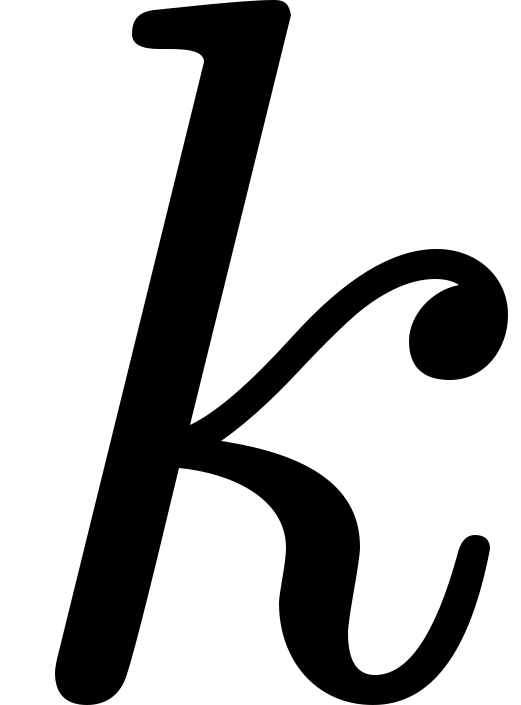 may be regarded as equivalent to
 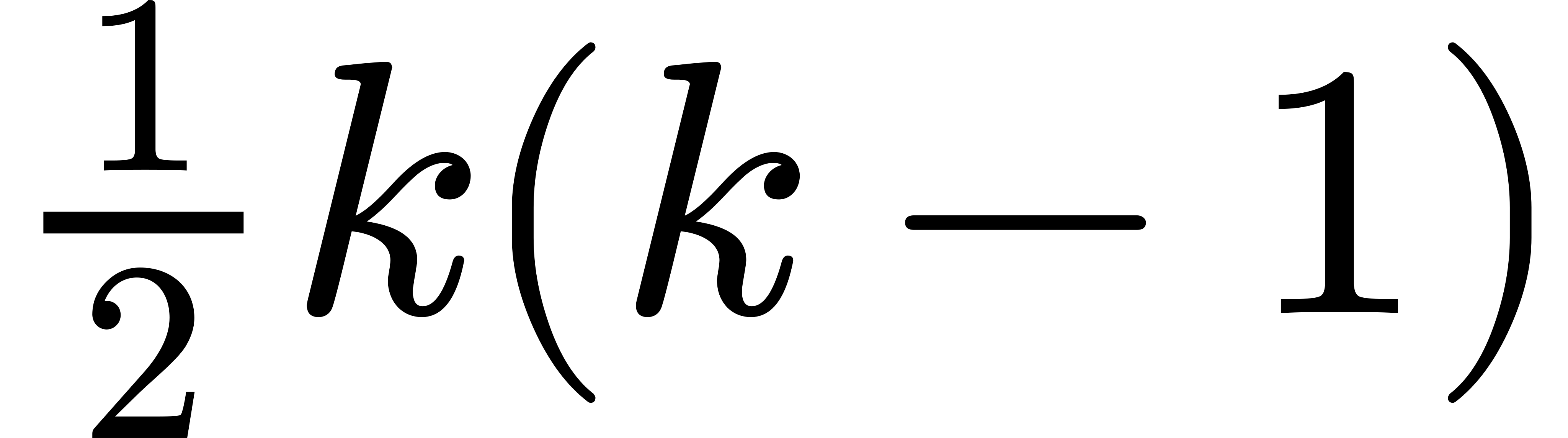 ordinary double points. A curve of degree which
has an ordinary multiple point of order , equivalent to
ordinary double points, is therefore
unicursal. The theory of higher plane curves abounds in puzzling
particular cases which have to be fitted into the general theory by
more or less obvious conventions, and to give a satisfactory account of
a complicated compound singularity is sometimes by no means easy. In
the investigation which follows we confine ourselves to the simplest
case.
ordinary double points. A curve of degree which
has an ordinary multiple point of order , equivalent to
ordinary double points, is therefore
unicursal. The theory of higher plane curves abounds in puzzling
particular cases which have to be fitted into the general theory by
more or less obvious conventions, and to give a satisfactory account of
a complicated compound singularity is sometimes by no means easy. In
the investigation which follows we confine ourselves to the simplest
case.
[28] Salmon, l.c., p. 16.
[29]
See Niewenglowski's Cours de géométrie analytique,
vol. 2, p. 103. By way of illustration of the remark concerning
particular cases in the footnote (4) to page 30, the reader may consider
the example given by Niewenglowski in which
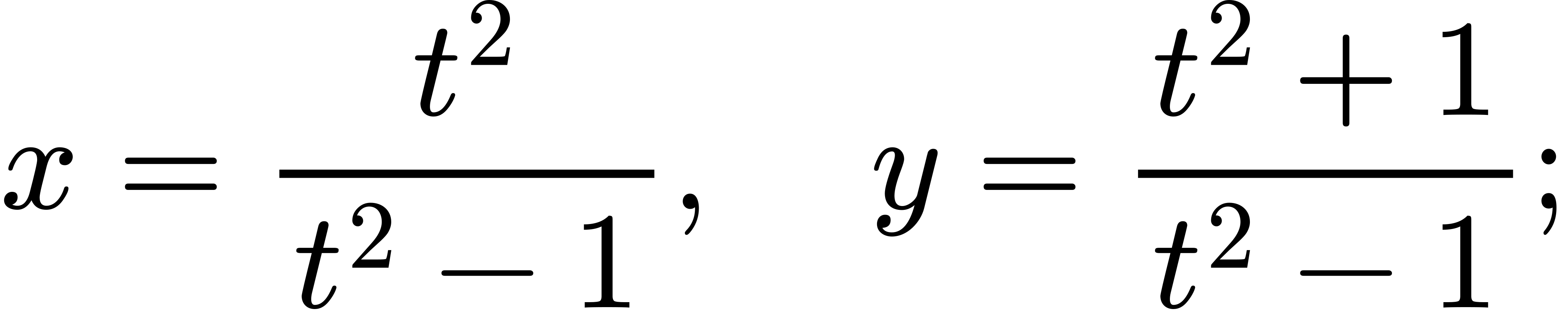 equations which appear to represent the straight line
  (part of the line only, if we consider only real values of ).
[30] Salmon, l.c., p. 54.
[31]
This means of course that the equation obtained by
substituting for and , in the equation of the line, their
parametric expressions in terms of , has a repeated root. This
property is possessed by the tangent at an ordinary point and by any
line through a cusp, but not by any line through a node except the two
tangents.
[32] Salmon, l.c., p. 65.
[33] I owe this remark to Mr A. B. Mayne. Dr Bromwich has however pointed out to me that substantially the same argument is given by Mr W. A. Houston, 'Note on unicursal plane curves', Messenger of mathematics, vol. 28, 1899, pp. 187—189.
[34] See Ptaszycki, 'Extrait d'une lettre adressée à M. Hermite', Bulletin des sciences mathématiques, ser. 2, vol. 12, 1888, pp. 262—270: Appell and Goursat, Théorie des fonctions algébriques, p. 245.
[35]
If 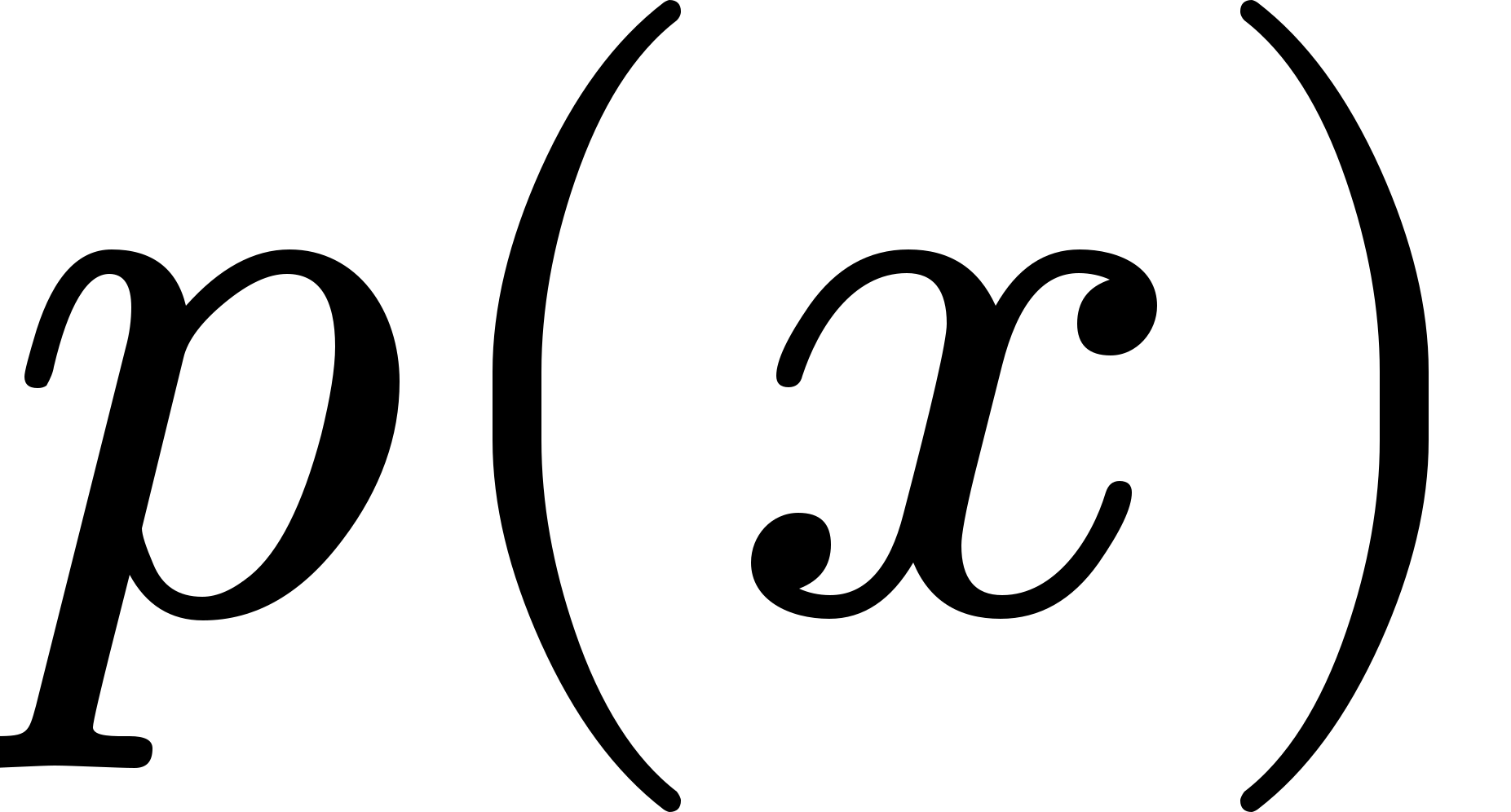 is the least common multiple of the
denominators of the coefficients of powers of in , then
is the least common multiple of the
denominators of the coefficients of powers of in , then
 where
where 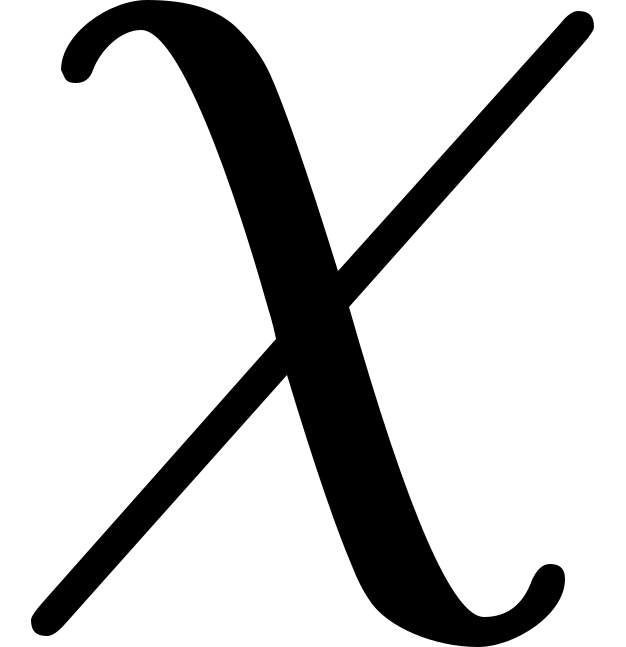 is a polynomial. Applying Lemma (2), we see that
 , and so

[36]
It is impossible that and 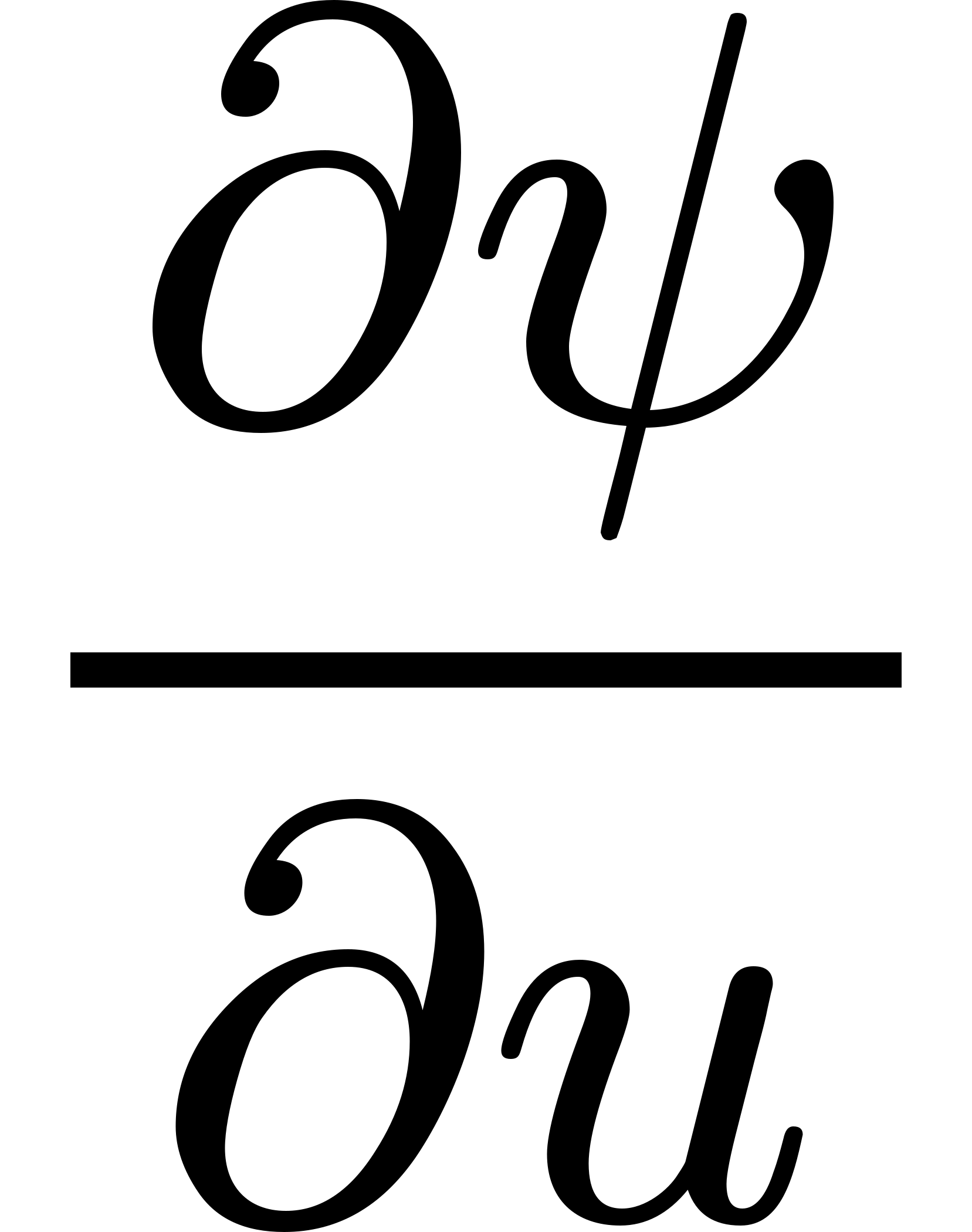 should both vanish for
 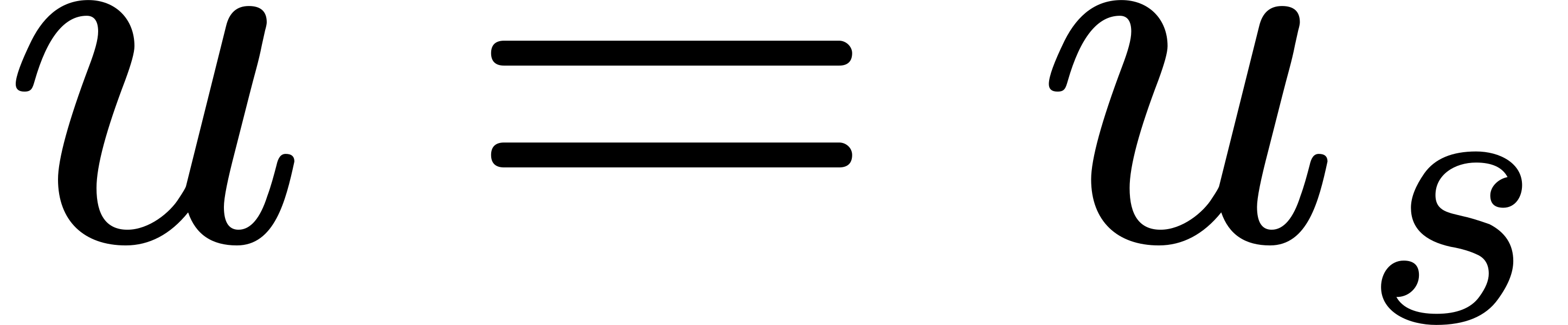 , since
is irreducible.
, since
is irreducible.
[37] 'Premier mémoire sur la détermination des intégrales dont la valeur est algébrique', Journal de l'École Polytechnique, vol. 14, cahier 22, 1833, pp. 124—148; 'Second mémoire...', ibid., pp. 149—193.
[38] Raffy, 'Sur les quadratures algébriques et logarithmiques', Annales de l'École Normale, ser. 3, vol. 2, 1885, pp. 185—206.
[39] 'Mémoire sur les transcendantes elliptiques considérées comme fonctions de leur amplitude', Journal de l'École Polytechnique, vol. 14, cahier 23, 1834, pp. 37—83. The proof may also be found in Bertrand's Calcul intégral, p. 99.
[41] The proof given by Laurent (Traité d'analyse, vol. 4, pp. 153 et seq.) appears at first sight to combine the advantages of both methods of proof, but unfortunately will not bear a closer examination.
[42] Second edition, vol. 1, pp. 267—269.
[43] 'Über diejenigen Curven, deren Coordinaten sich als elliptische Functionen eines Parameters darstellen lassen', Journal für Mathematik, vol. 64, 1865, pp. 210—270.
[44] See Hermite, Cours d'analyse, pp. 422—425.
[45] See Legendre, Traité des fonctions elliptiques, vol. 1, chs. 26—27, 32—33; Bertrand, Calcul intégral, pp. 67 et seq.; and Enneper, Elliptische Funktionen, note 1, where abundant references are given.
[46]
There is a similar theory for curves of deficiency 2, in
which is of the sixth degree.
[47] See, e.g., Goursat, Cours d'analyse, ed. 2, vol. 1, pp. 257 et seq.
1. The theory of the integration of transcendental functions is naturally much less complete than that of the integration of rational or even of algebraical functions. It is obvious from the nature of the case that this must be so, as there is no general theorem concerning transcendental functions which in any way corresponds to the theorem that any algebraical combination of algebraical functions may be regarded as a simple algebraical function, the root of an equation of a simple standard type.
It is indeed almost true to say that there is no general theory, or that the theory reduces to an enumeration of the few cases in which the integral may be transformed by an appropriate substitution into an integral of a rational or algebraical function. These few cases are however of great importance in applications.
2. (i) The integral
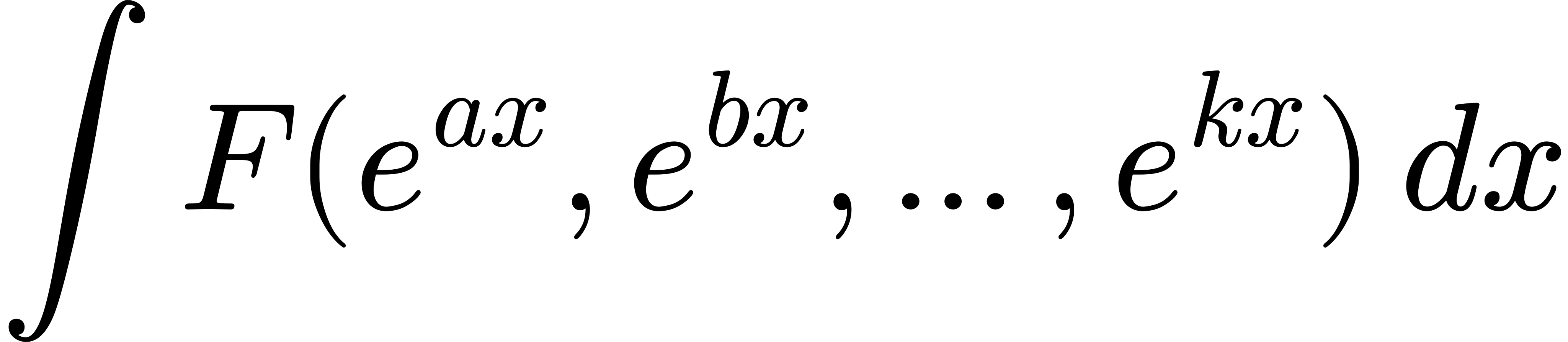 where is an algebraical function, and
 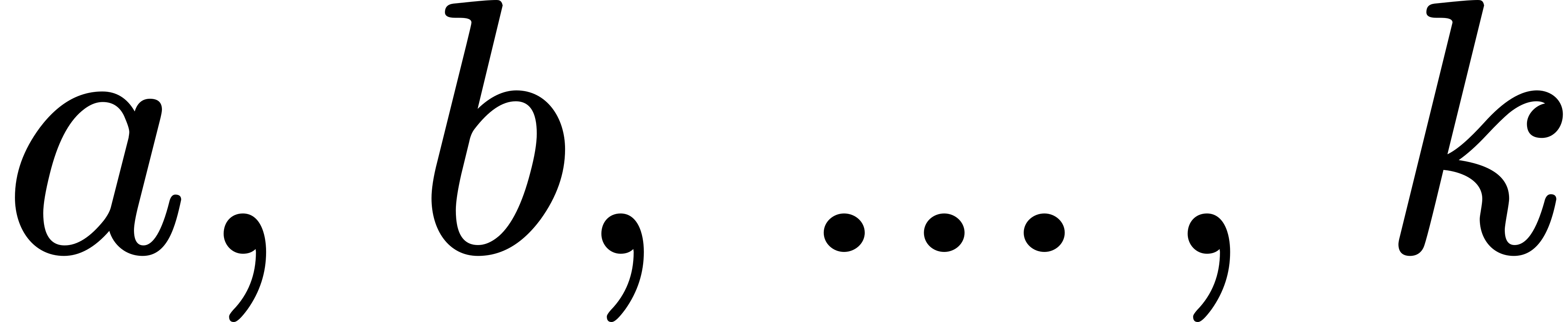 commensurable numbers, can always be reduced to that of an algebraical
function. In particular the integral
commensurable numbers, can always be reduced to that of an algebraical
function. In particular the integral
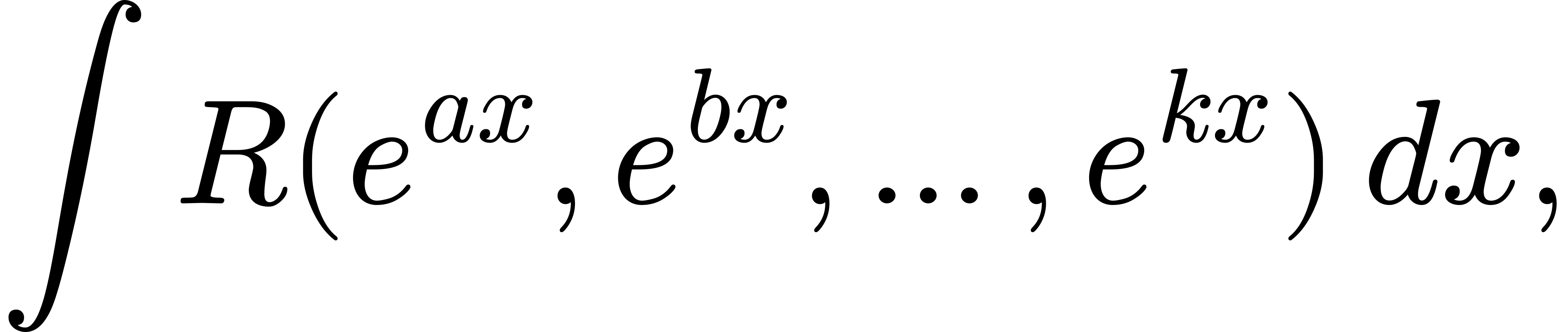 [Pg 53]
where is rational, is always an elementary function. In the first
place a substitution of the type
[Pg 53]
where is rational, is always an elementary function. In the first
place a substitution of the type 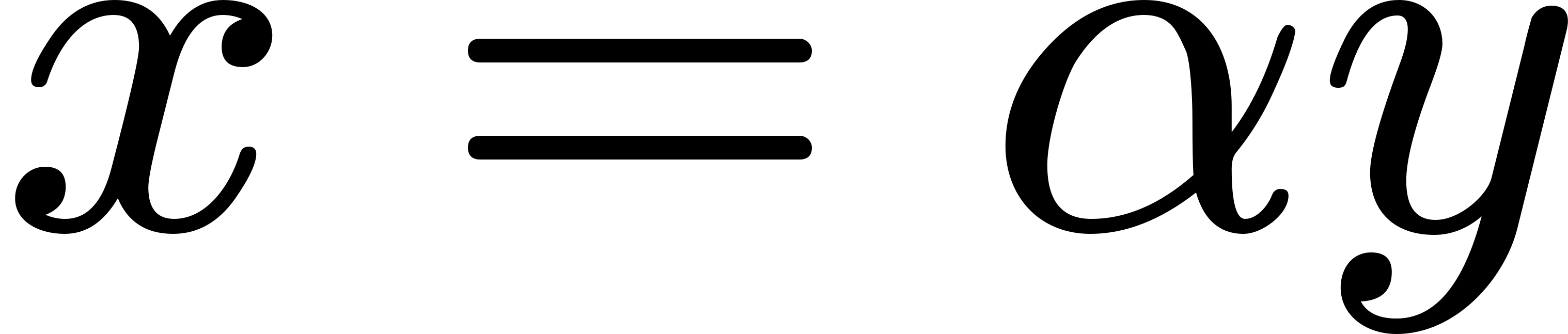 will reduce it to the
form
will reduce it to the
form
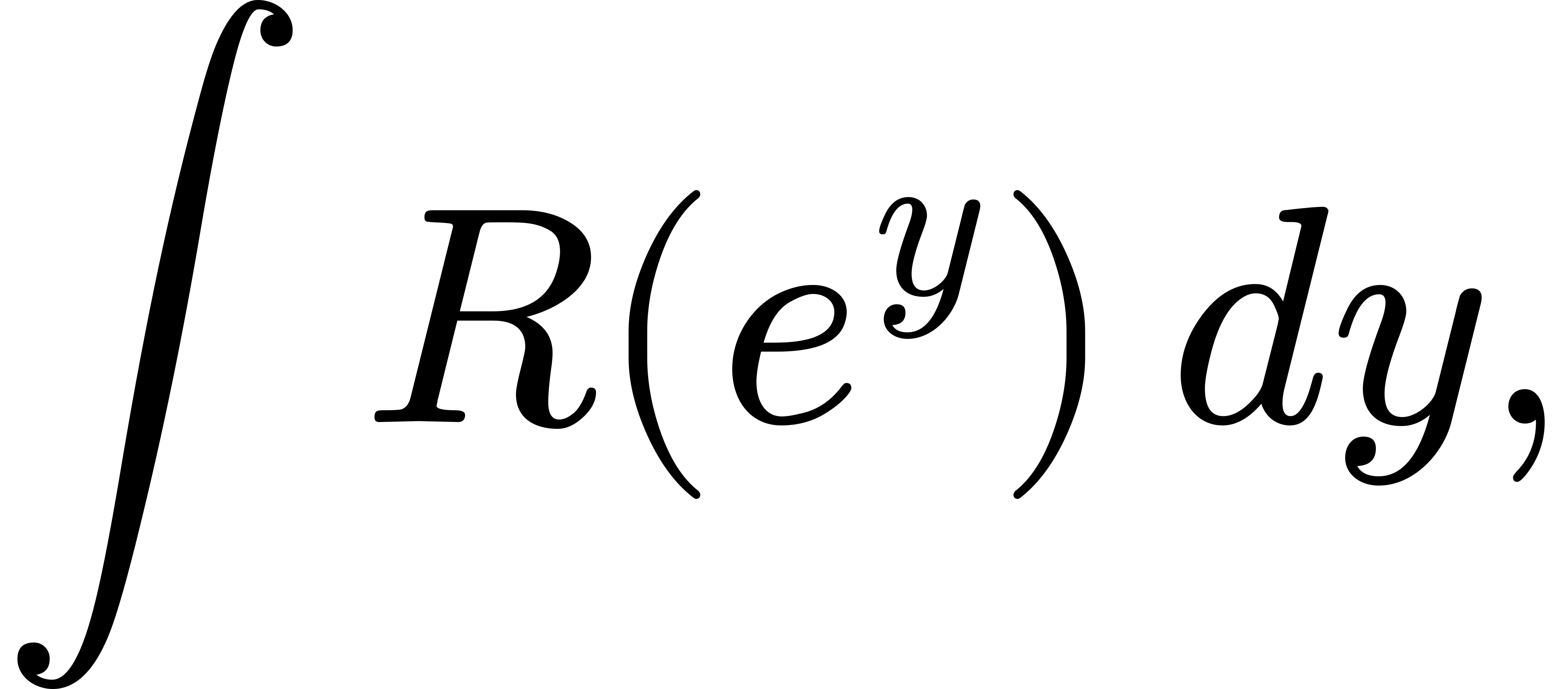 and then the substitution
 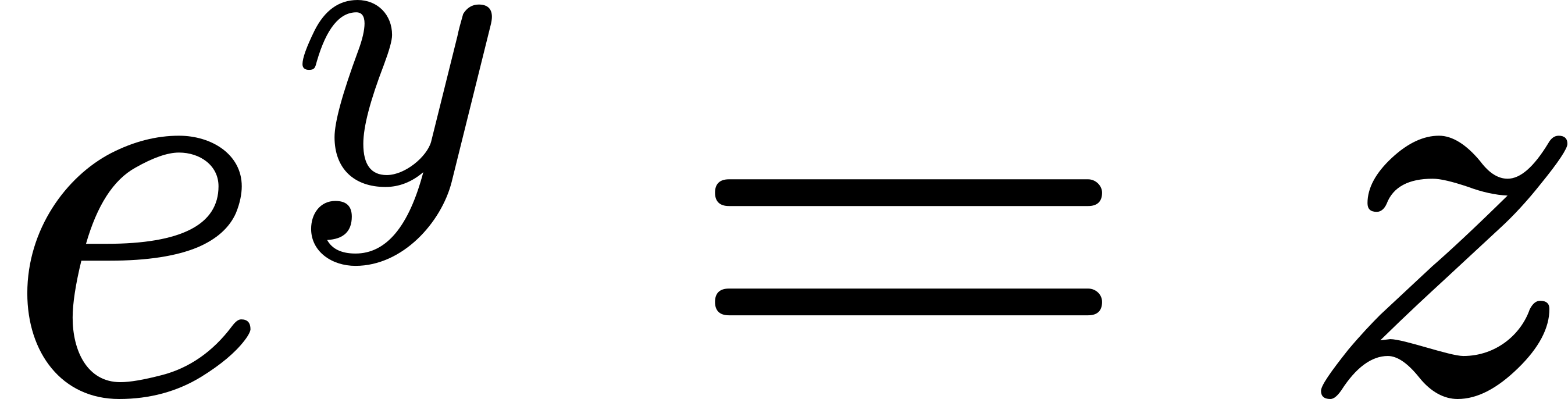 will reduce this integral to
the integral of a rational function.
will reduce this integral to
the integral of a rational function.
In particular, since 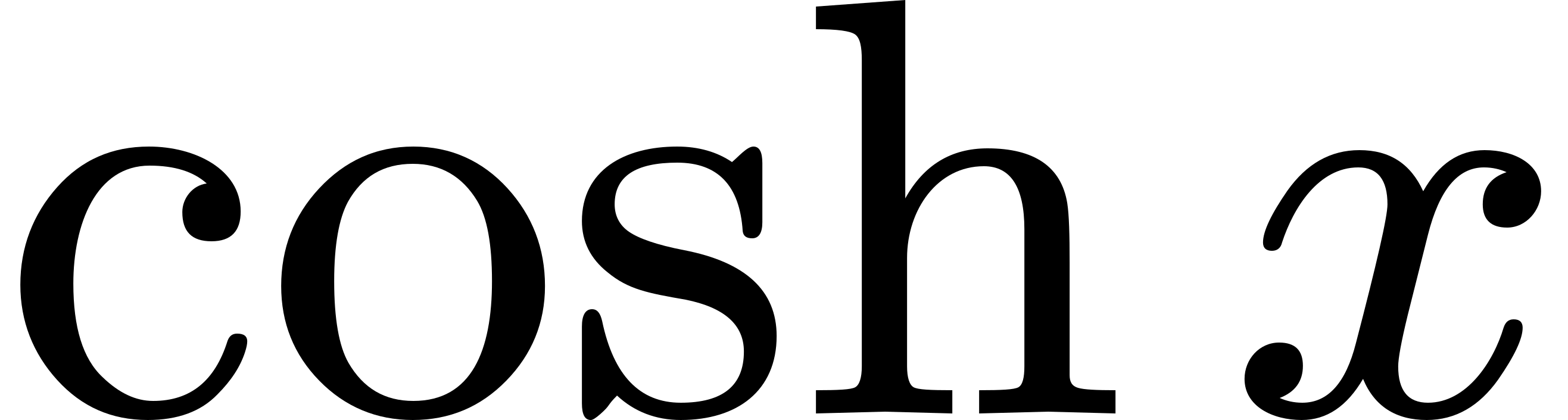 and
and 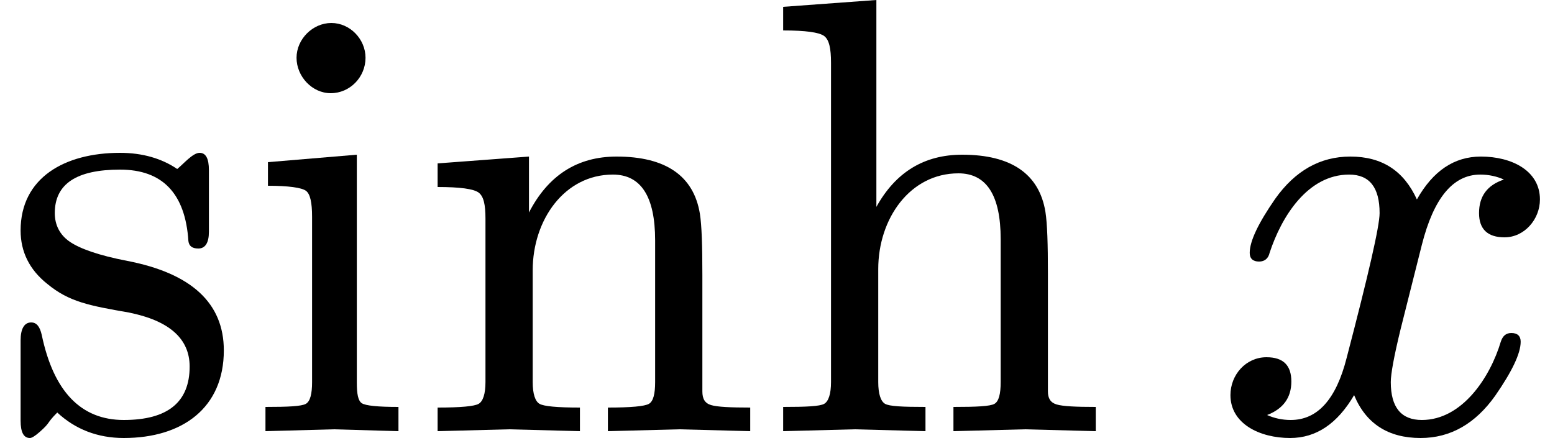 are rational functions
of , and
are rational functions
of , and 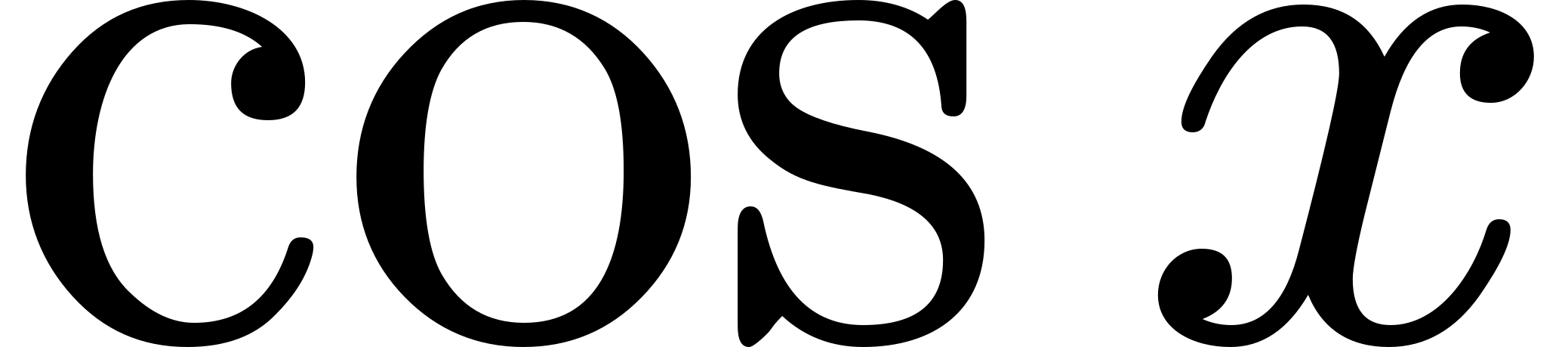 and
and 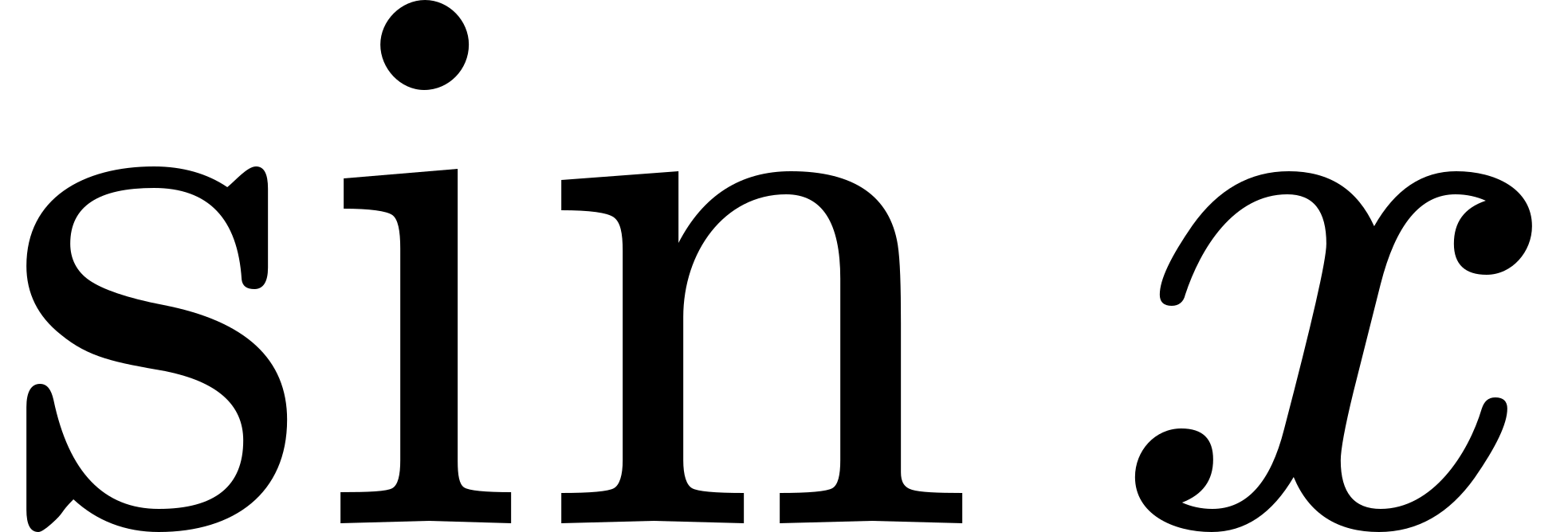 are rational functions of
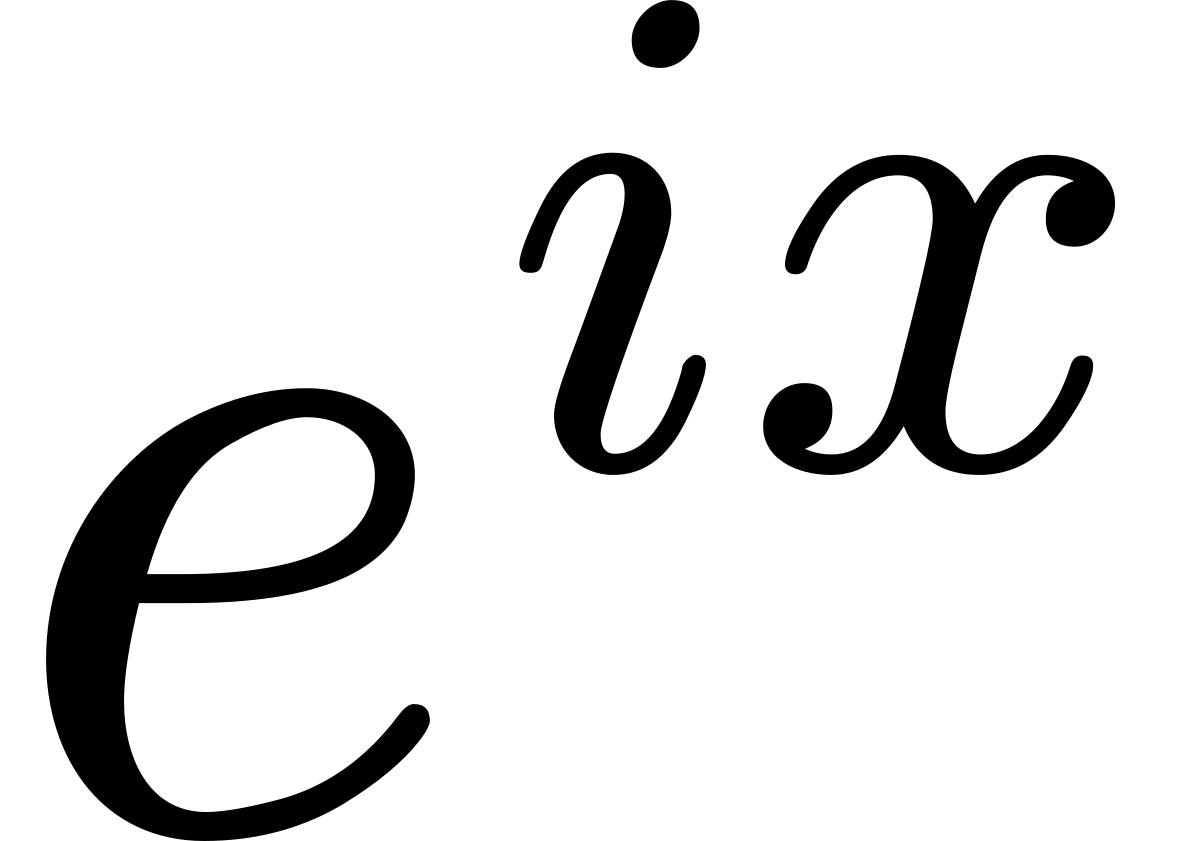 , the integrals}
 are always elementary functions. In the second place the substitution
just indicated is imaginary, and it is generally more convenient to use
the substitution
are always elementary functions. In the second place the substitution
just indicated is imaginary, and it is generally more convenient to use
the substitution
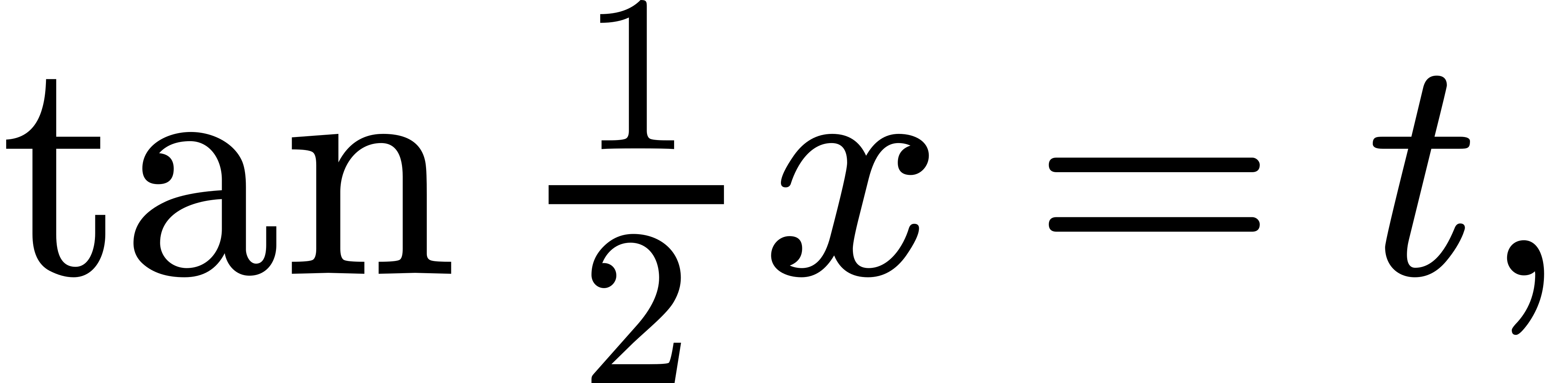 which reduces the integral to that of a rational function, since

(ii) The integrals
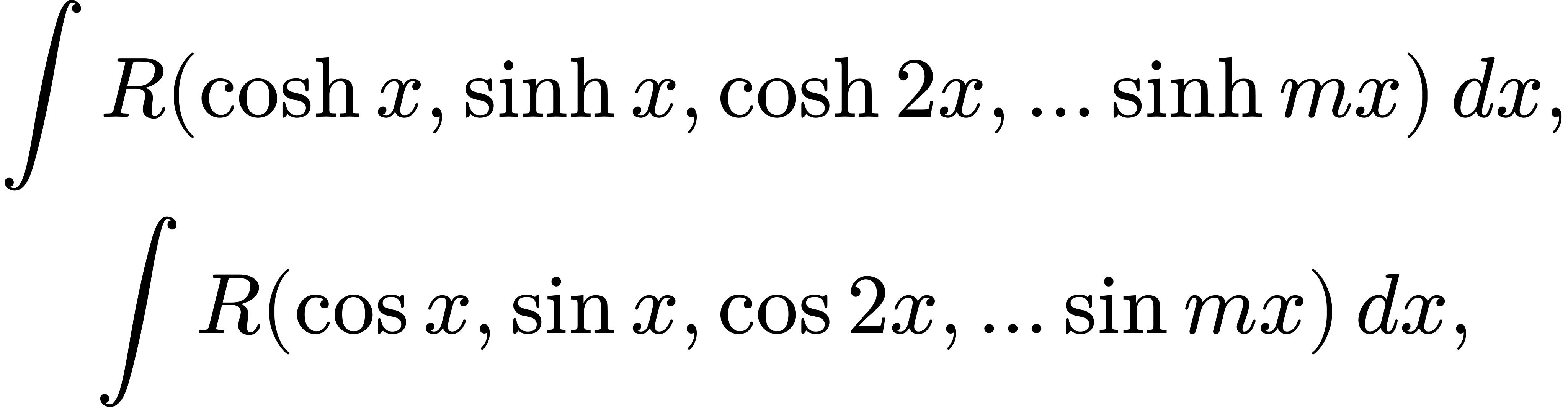 are included in the two standard integrals above.
Let us consider some further developments concerning the integral[48]
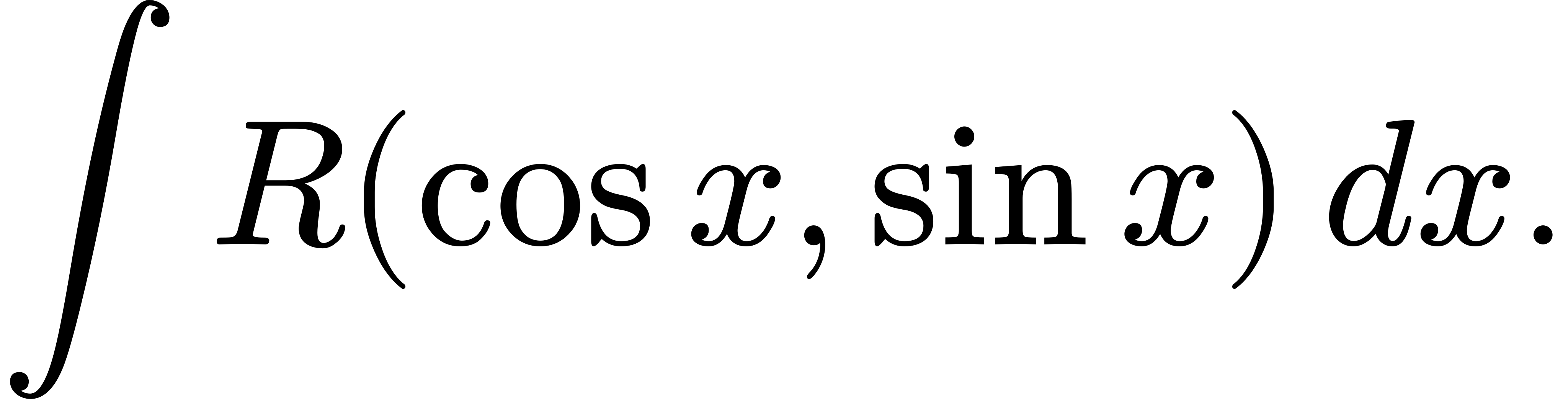 If we make the substitution
 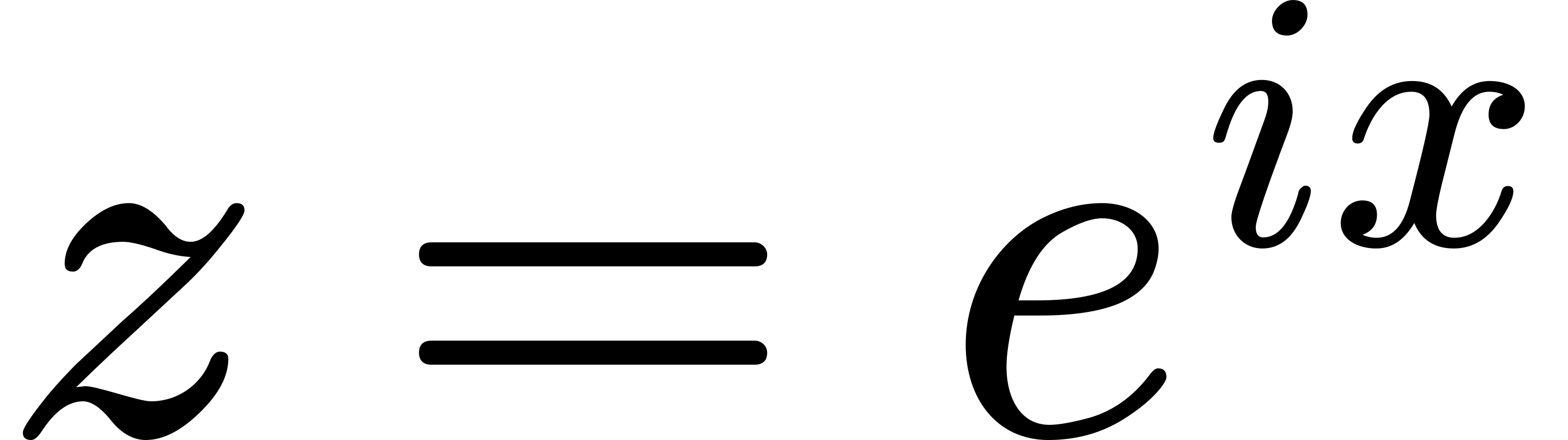 , the subject of integration
becomes a rational function
, the subject of integration
becomes a rational function 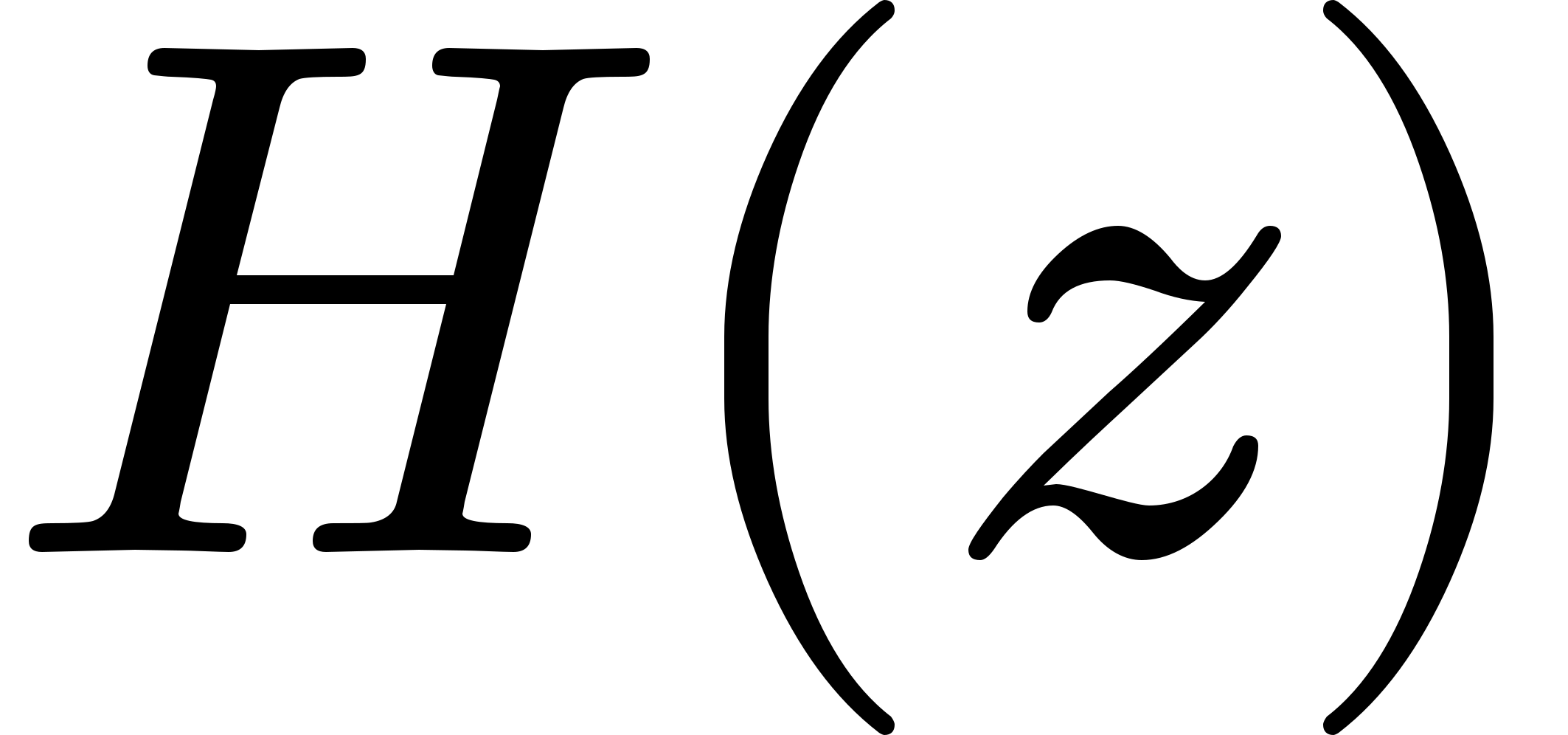 , which we may suppose split up into
(a) a constant and certain positive and negative powers of ,
(b) groups of terms of the type

The terms (i), when expressed in terms of , give rise to a term
 In the group (1) we put
 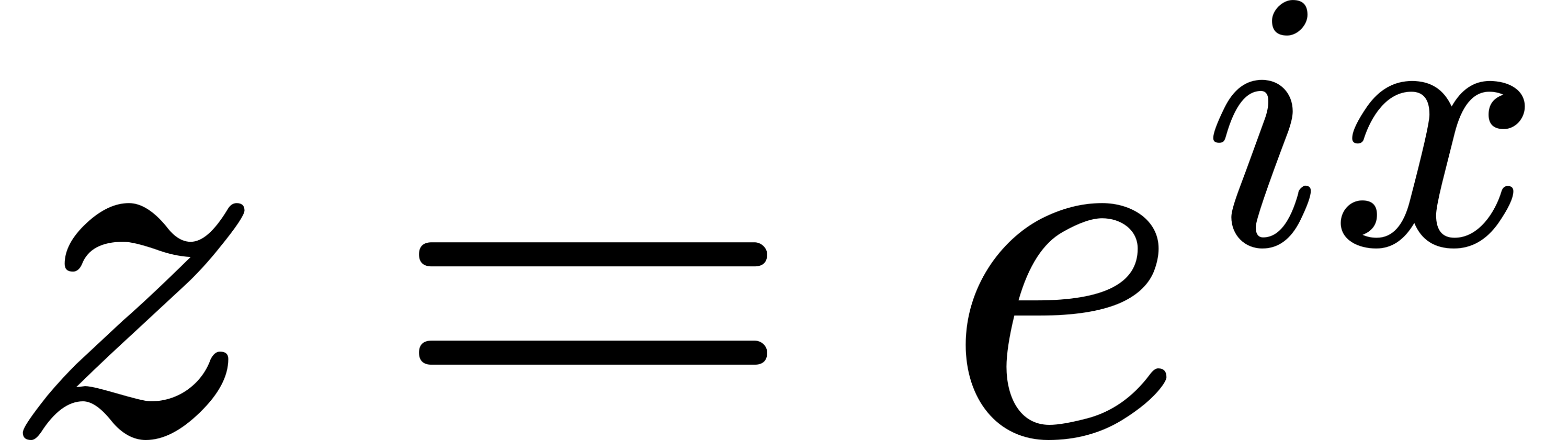 ,
, 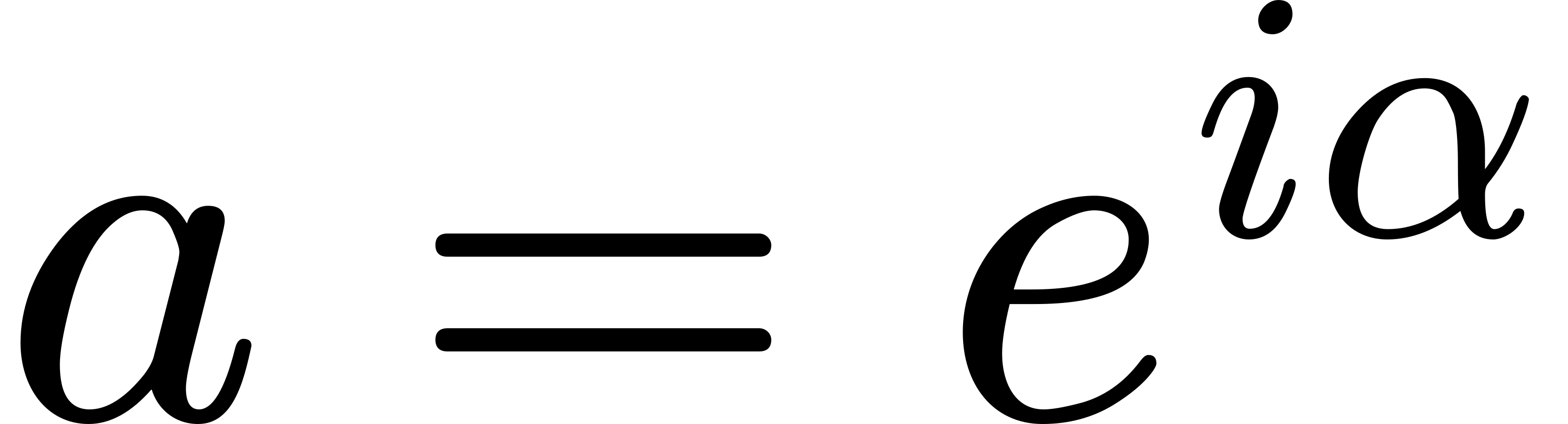 and, using
the equation
and, using
the equation
 [Pg 54]
we obtain a polynomial of degree
[Pg 54]
we obtain a polynomial of degree 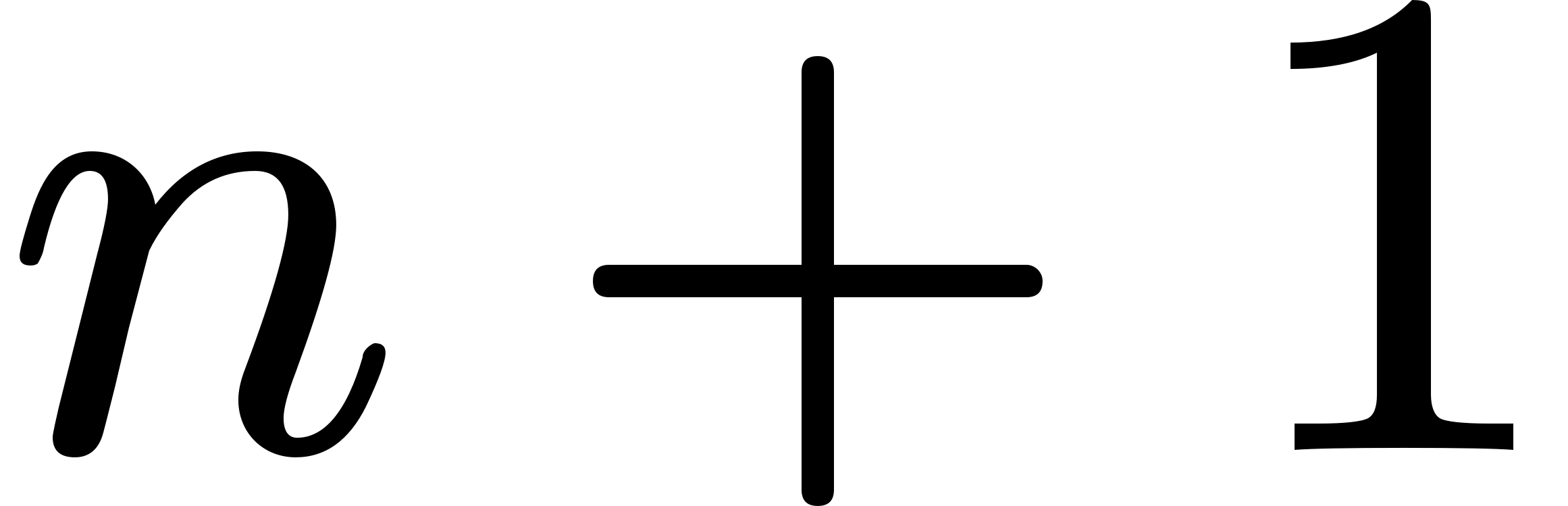 in
in 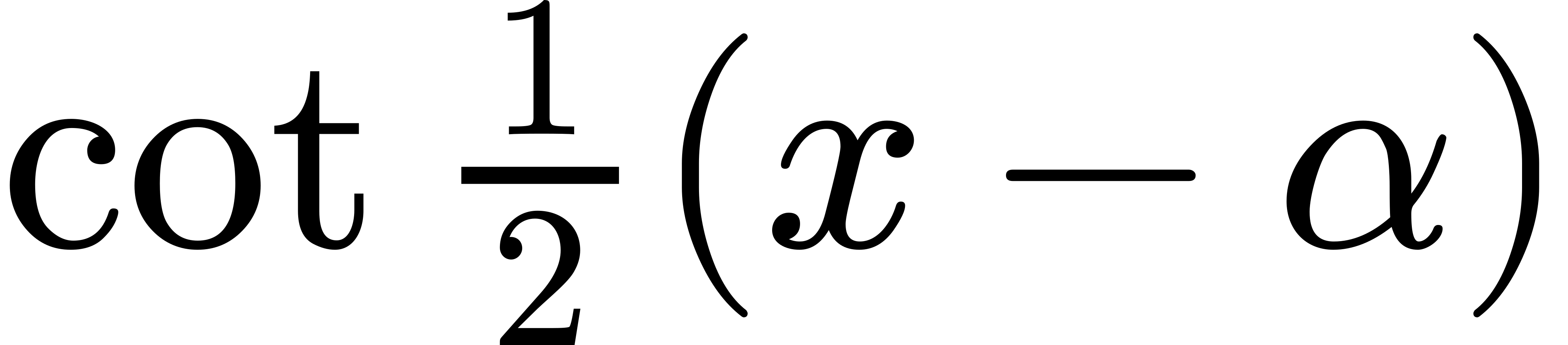 . Since
 this polynomial may be transformed into the form

The function  is now expressed as a sum of a
number of terms each of which is immediately integrable. The integral
is a rational function of and if all the
constants
is now expressed as a sum of a
number of terms each of which is immediately integrable. The integral
is a rational function of and if all the
constants 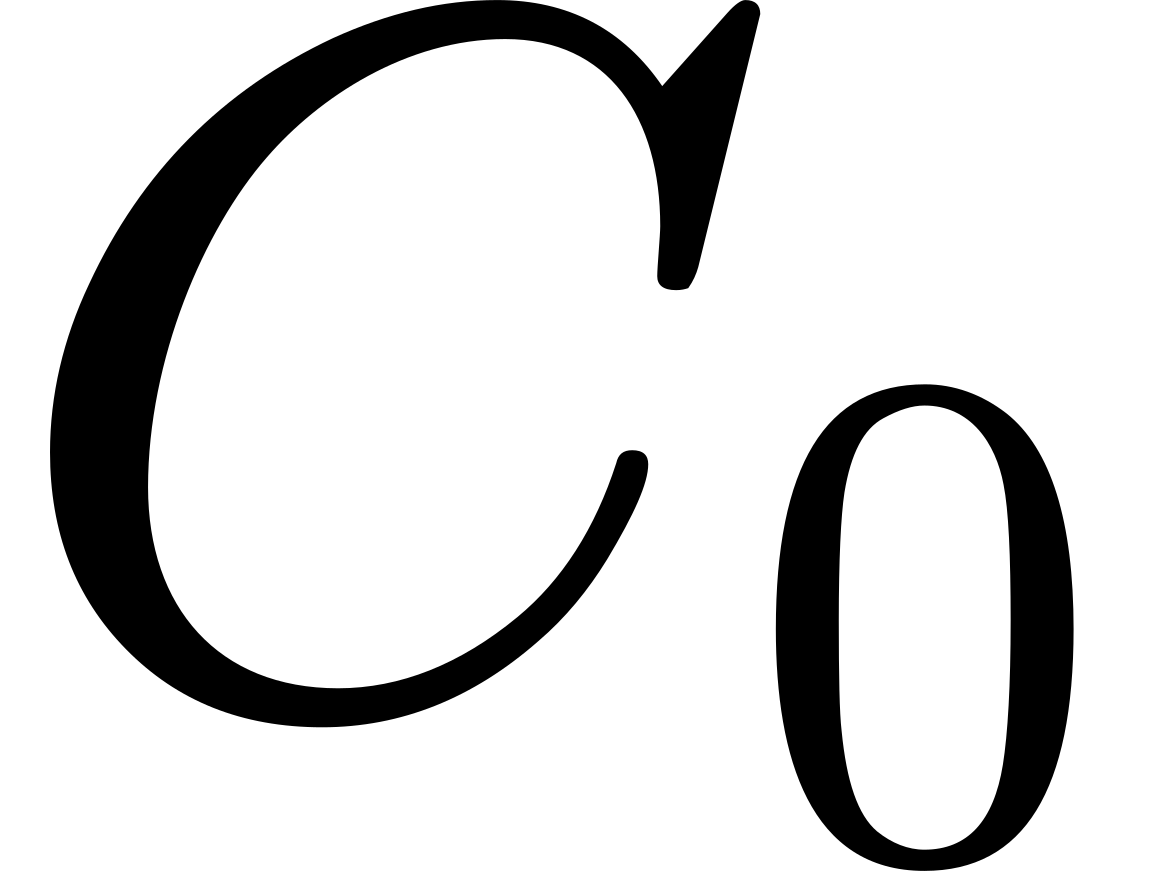 vanish; otherwise it includes a number of terms of
the type
vanish; otherwise it includes a number of terms of
the type

Let us suppose for simplicity that , when split up into partial
fractions, contains no terms of the types
 Then
Then
 and the constants
 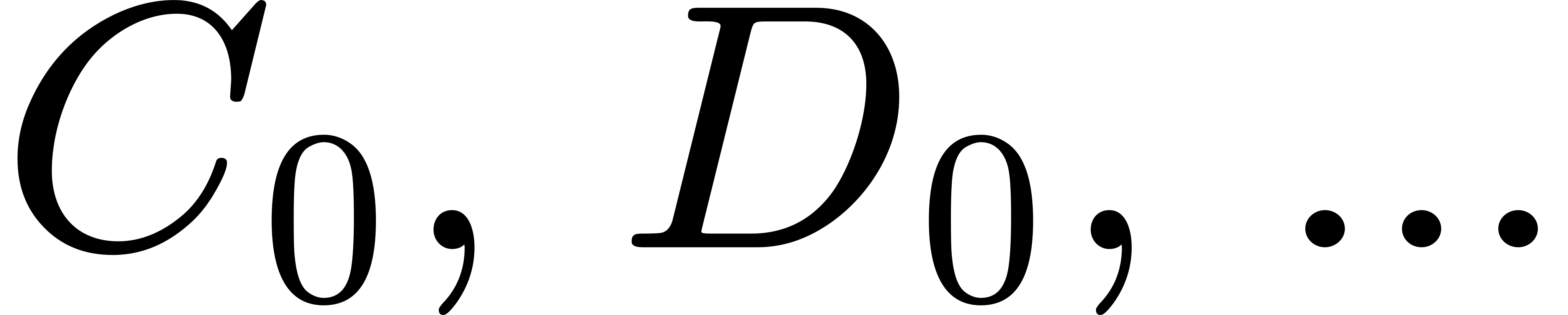 may be determined by
multiplying each side of the equation by
may be determined by
multiplying each side of the equation by  and making
tend to
and making
tend to 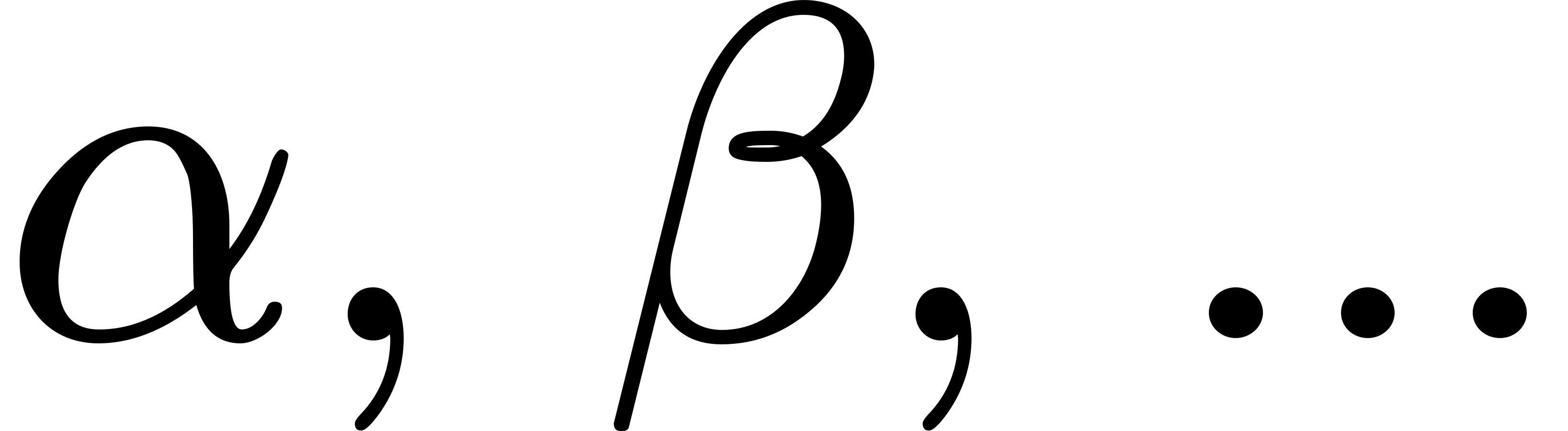 .
.
It is often convenient to use the equation
 which enables us to decompose the function into two parts
and
which enables us to decompose the function into two parts
and 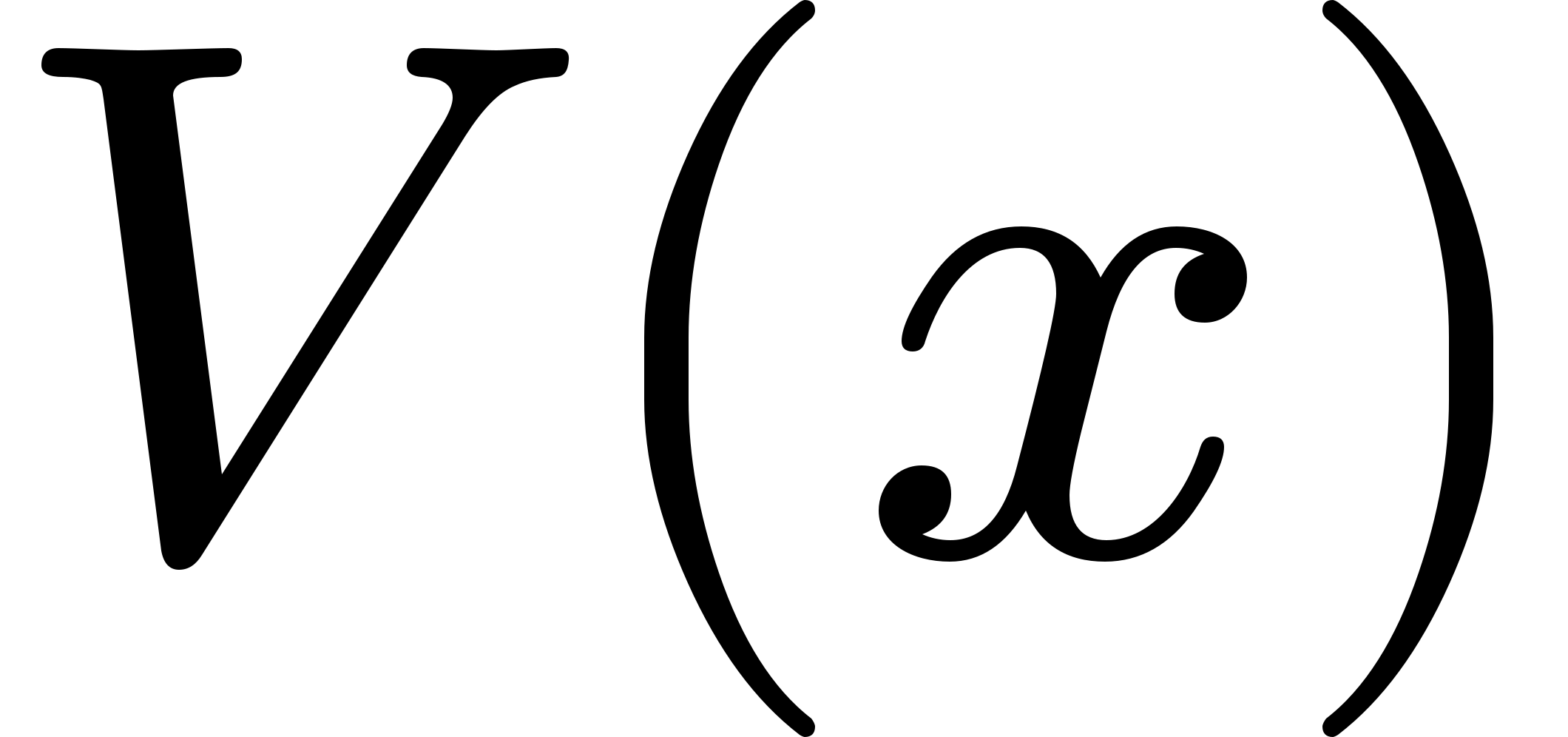 such that
 If has the period , then must vanish identically;
if it changes sign when is increased by , then must
vanish identically. Thus we find without difficulty that, if
If has the period , then must vanish identically;
if it changes sign when is increased by , then must
vanish identically. Thus we find without difficulty that, if 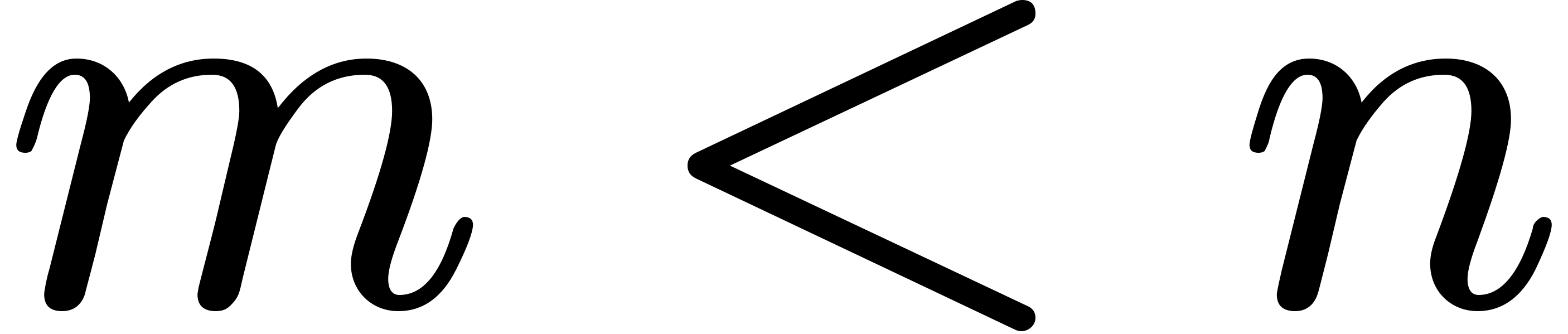 ,
,
 or
or
 where
where 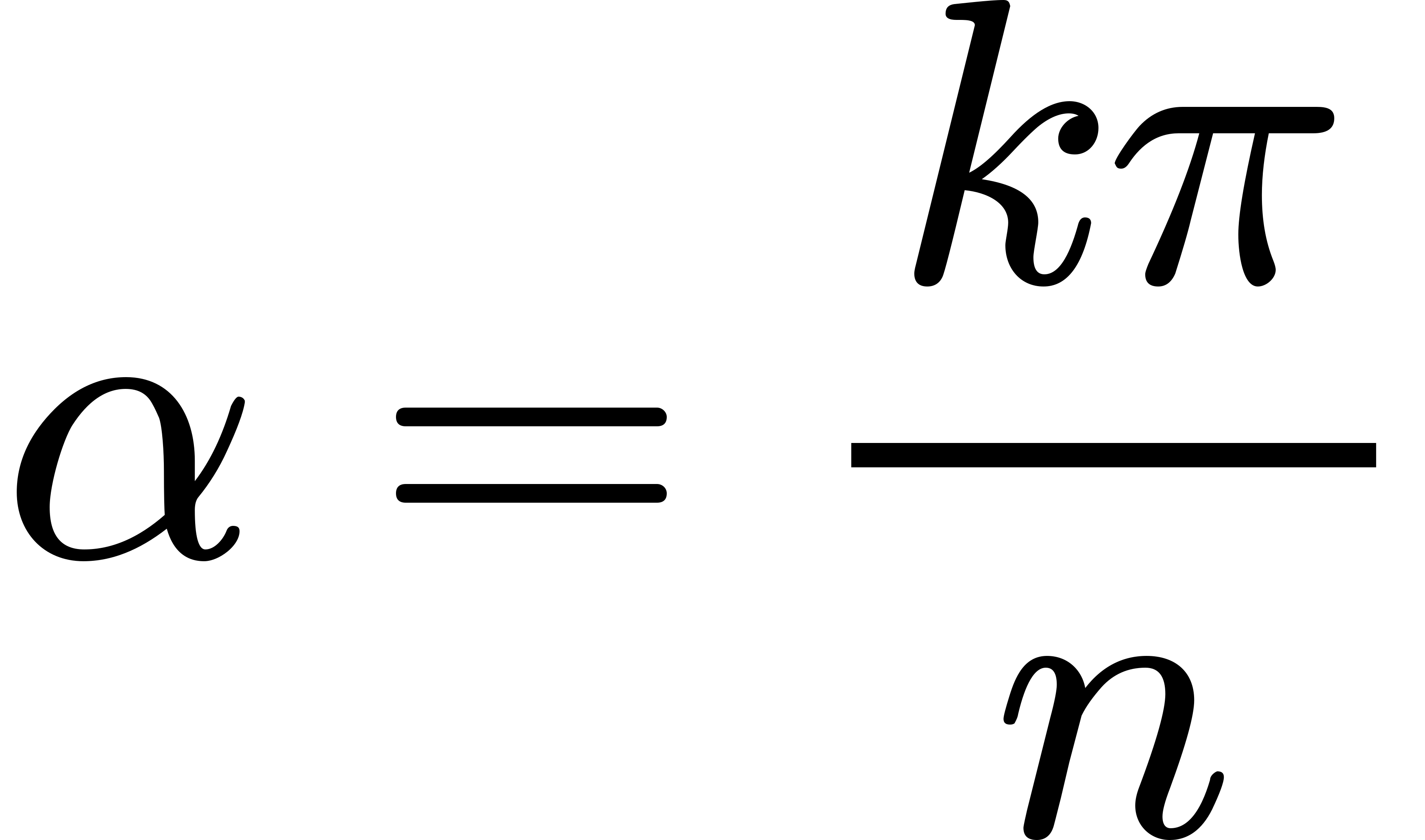 , according as
 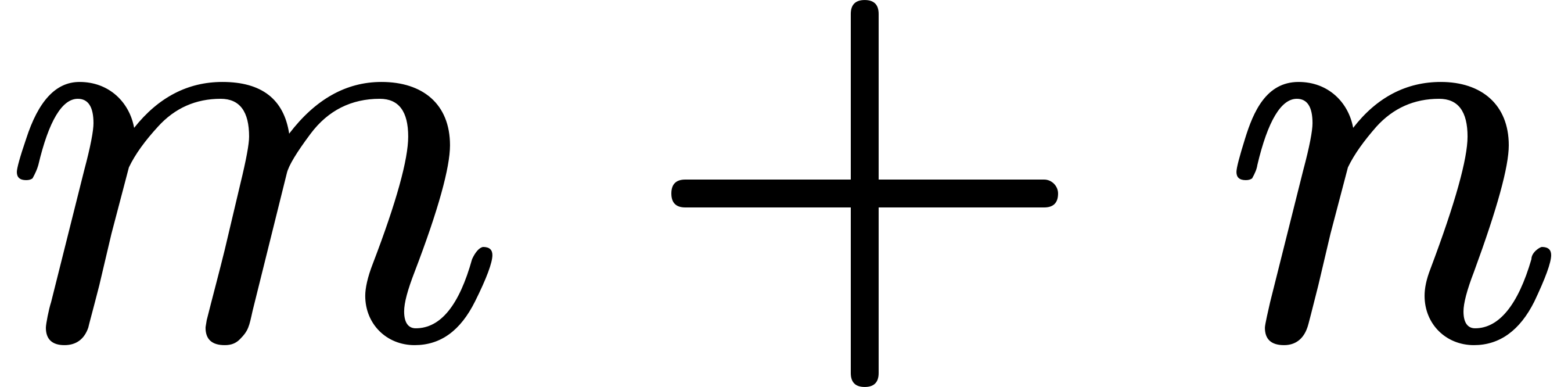 is odd or even.
Similarly

(iii) One of the most important integrals in applications is
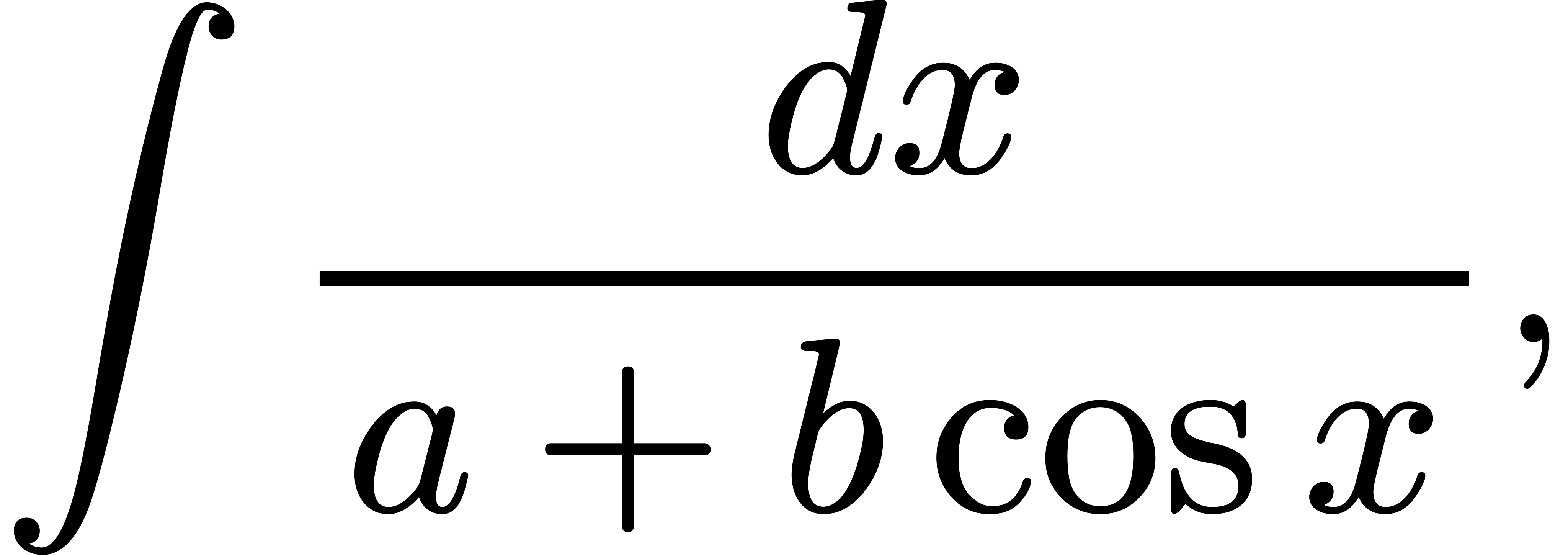 where and are real. This integral may be evaluated in the
manner explained above, or by the transformation
where and are real. This integral may be evaluated in the
manner explained above, or by the transformation 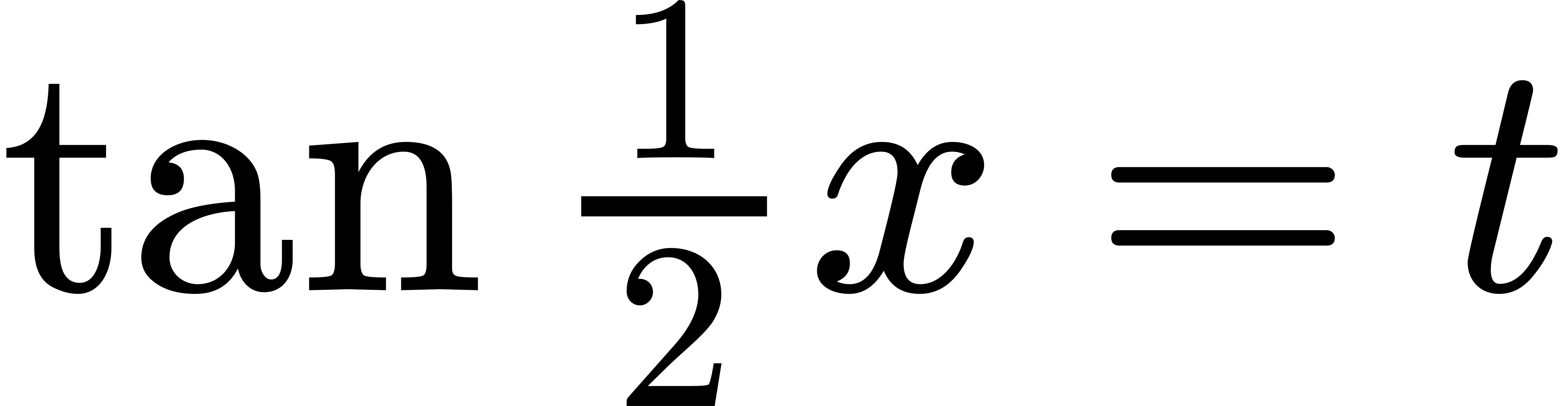 . A more elegant method[Pg 55] is the following. If
 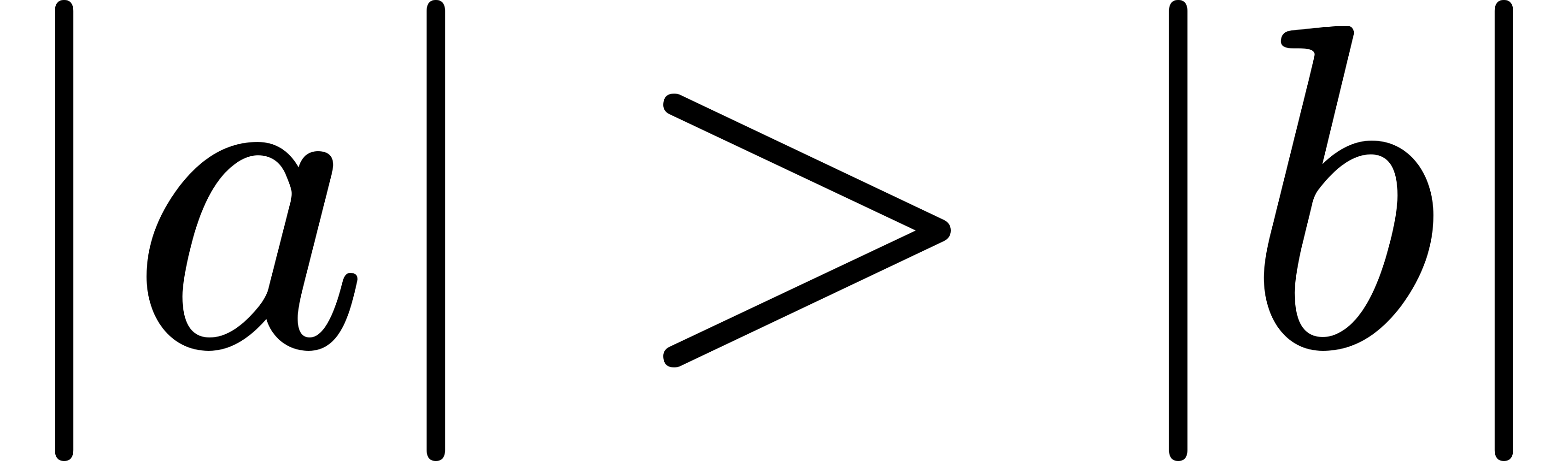 , we
suppose positive, and use the transformation
, we
suppose positive, and use the transformation
 which leads to
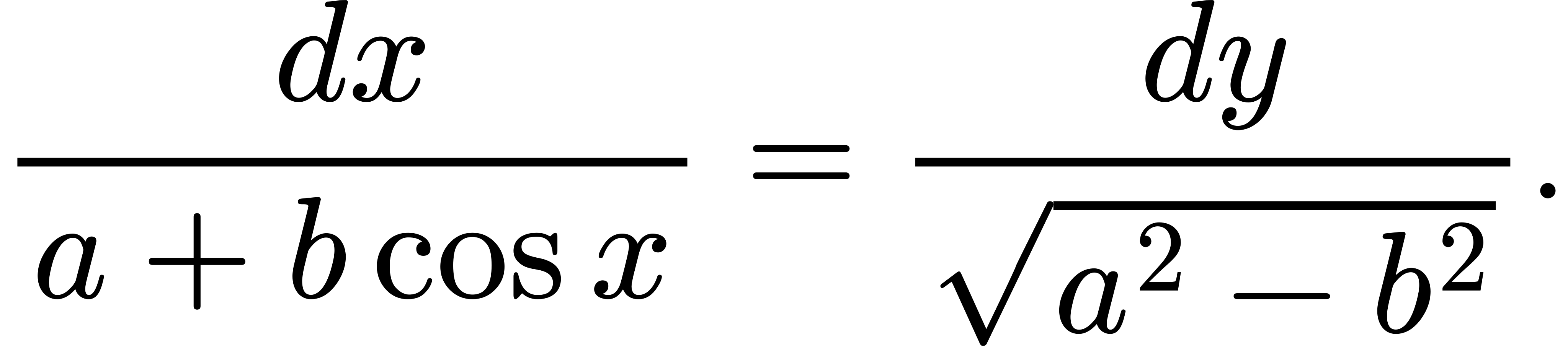 If
If 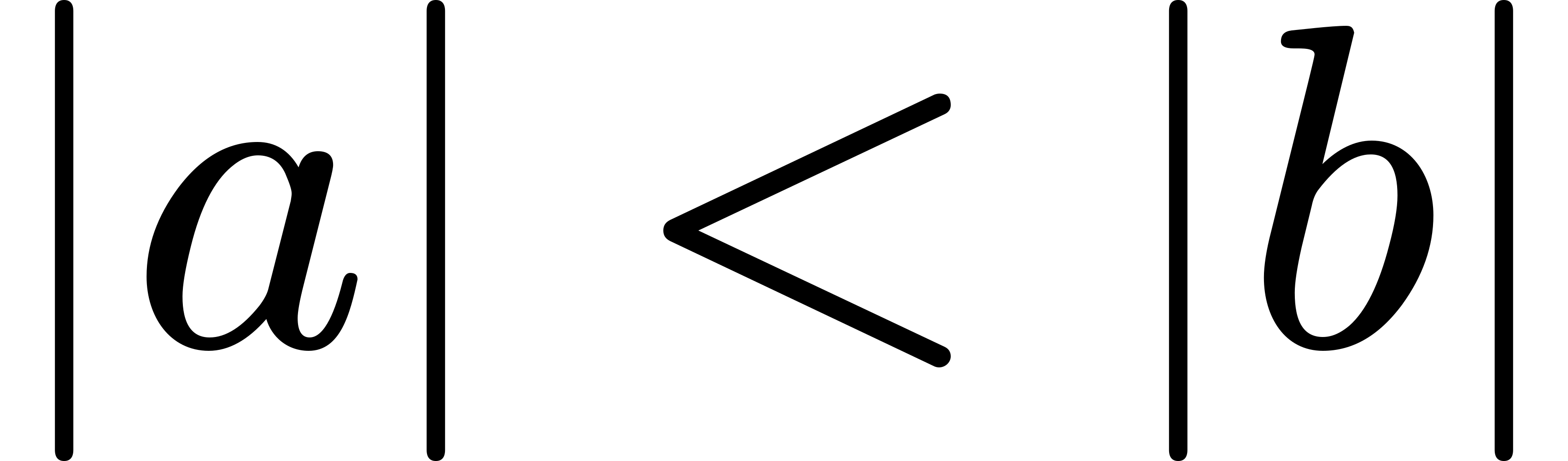 , we suppose positive, and use the
transformation
, we suppose positive, and use the
transformation

The integral 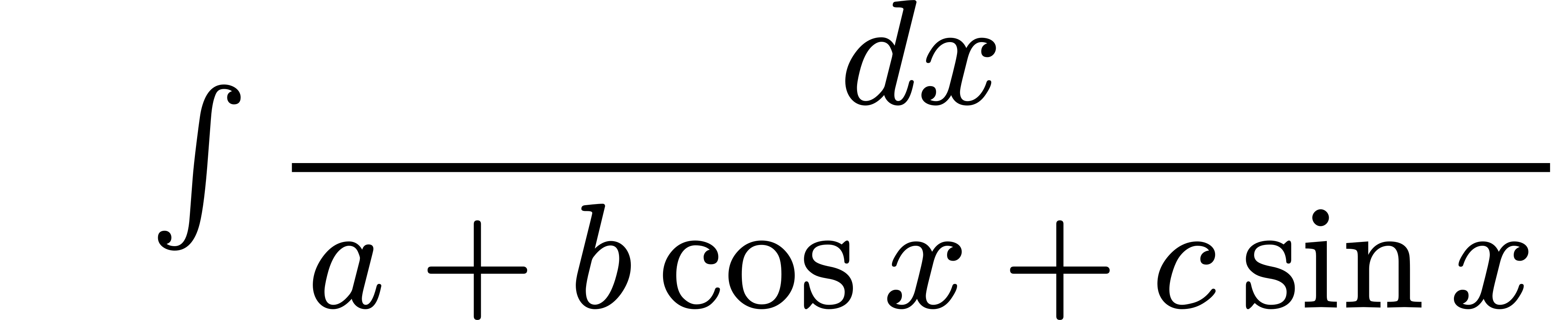 may be
reduced to this form by the substitution
may be
reduced to this form by the substitution  , where
 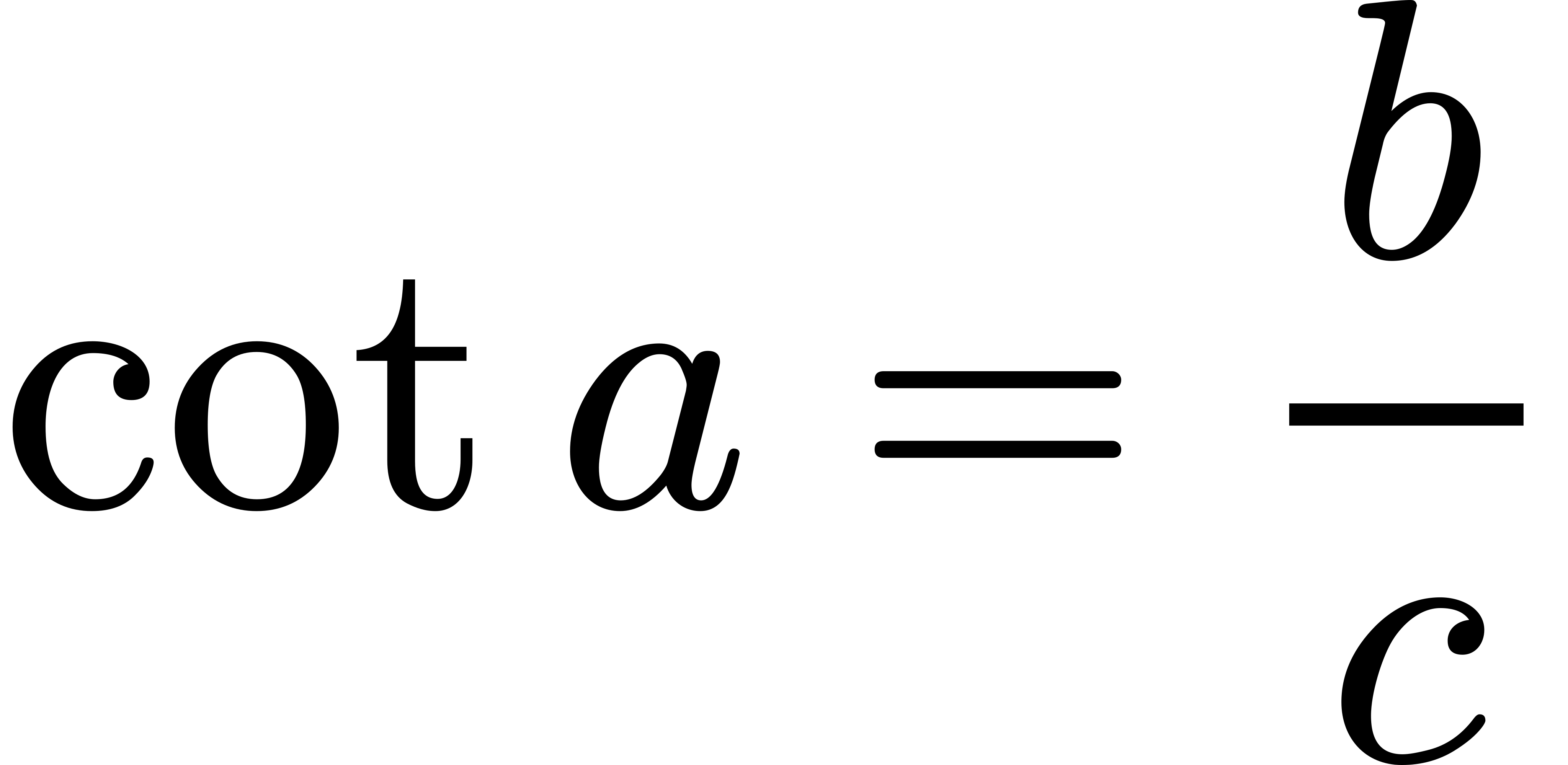 . The forms of the integrals
 may be deduced by the use of formulae of reduction, or by
differentiation with respect to . The integral
may be deduced by the use of formulae of reduction, or by
differentiation with respect to . The integral
 is really of the same type, since
 And similar methods may be applied to the corresponding integrals
which contain hyperbolic functions, so that this type includes a large
variety of integrals of common occurrence.
And similar methods may be applied to the corresponding integrals
which contain hyperbolic functions, so that this type includes a large
variety of integrals of common occurrence.
(iv) The same substitutions may of course be used when the subject of
integration is an irrational function of and ,
though sometimes it is better to use the substitutions  ,
,
 , or
, or  . Thus the integral
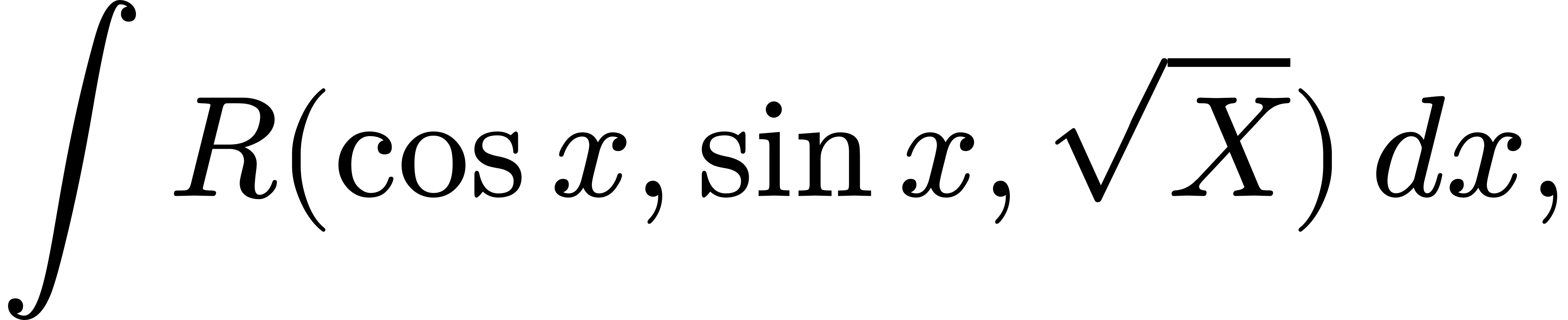 where
where
 is reduced to an elliptic integral by the substitution
 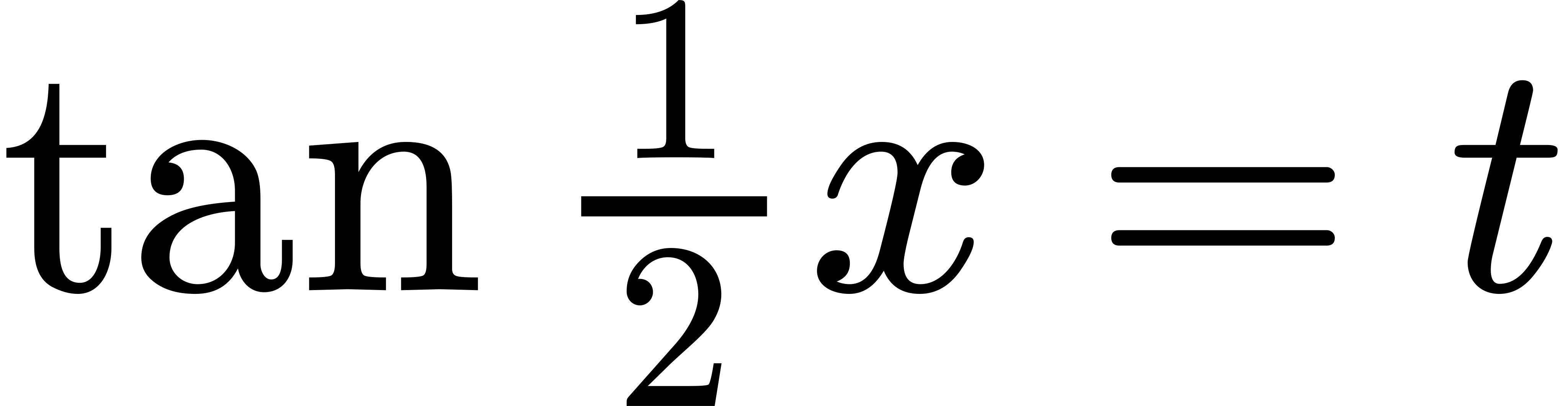 . The most important integrals of this type are

3. The integral
 where are any numbers (commensurable or not),
and is a polynomial, is always an elementary function. For it is
obvious[Pg 56] that the integral can be reduced to the sum of a finite number
of integrals of the type
where are any numbers (commensurable or not),
and is a polynomial, is always an elementary function. For it is
obvious[Pg 56] that the integral can be reduced to the sum of a finite number
of integrals of the type
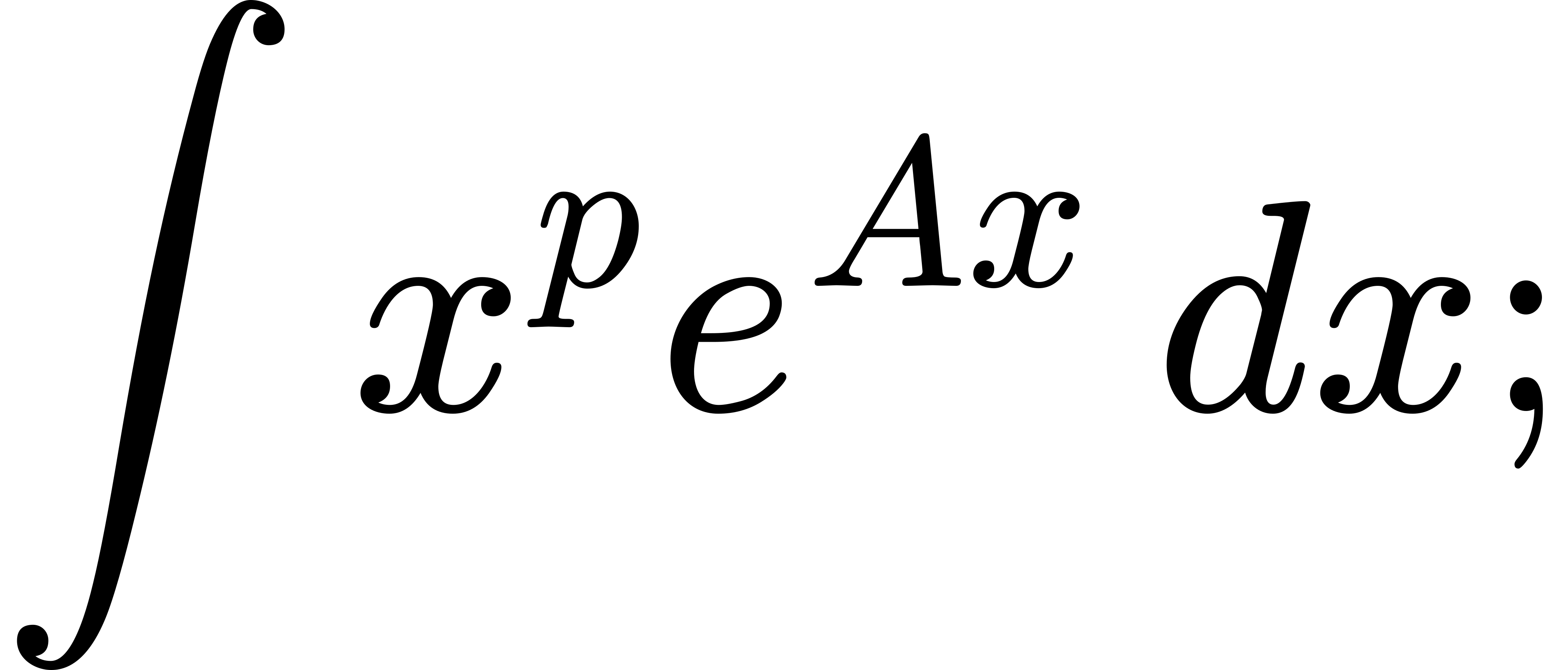 and
and
 This type of integral includes a large variety of integrals, such as
 (, , , being positive integers) for which formulae
of reduction are given in text-books on the integral calculus.
(, , , being positive integers) for which formulae
of reduction are given in text-books on the integral calculus.
Such integrals as
 where is a polynomial, may be reduced to particular cases of the
above general integral by the obvious substitutions
where is a polynomial, may be reduced to particular cases of the
above general integral by the obvious substitutions

4. Except for the two classes of functions considered in the three preceding paragraphs, there are no really general classes of transcendental functions which we can always integrate in finite terms, although of course there are innumerable particular forms which may be integrated by particular devices. There are however many classes of such integrals for which a systematic reduction theory may be given, analogous to the reduction theory for elliptic integrals. Such a reduction theory endeavours in each case
(i) to split up any integral of the class under consideration into the sum of a number of parts of which some are elementary and the others not;
(ii) to reduce the number of the latter terms to the least possible;
(iii) to prove that these terms are incapable of further reduction, and are genuinely new and independent transcendents.
As an example of this process we shall consider the integral
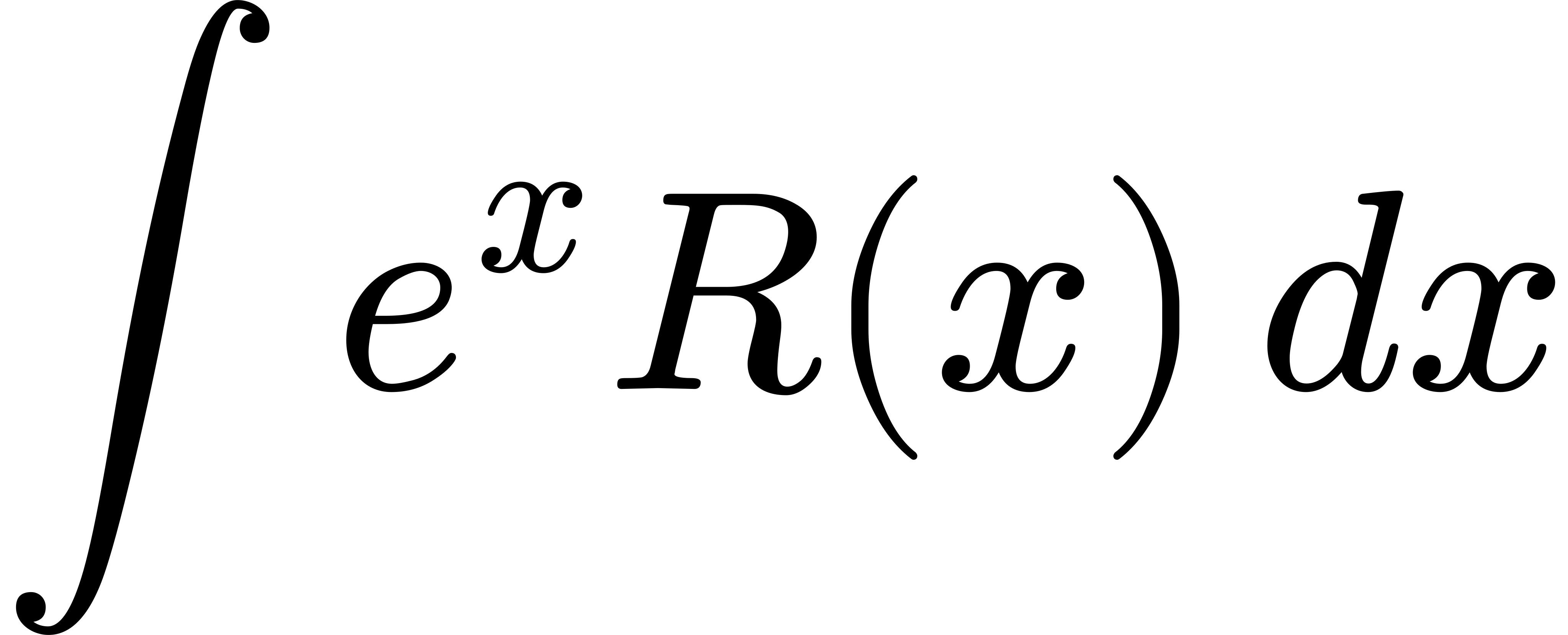 where is a rational function of .[49] The theory of
partial[Pg 57] fractions enables us to decompose this integral into the sum
of a number of terms
where is a rational function of .[49] The theory of
partial[Pg 57] fractions enables us to decompose this integral into the sum
of a number of terms

Since
 the integral may be further reduced so as to contain only
(i) a term 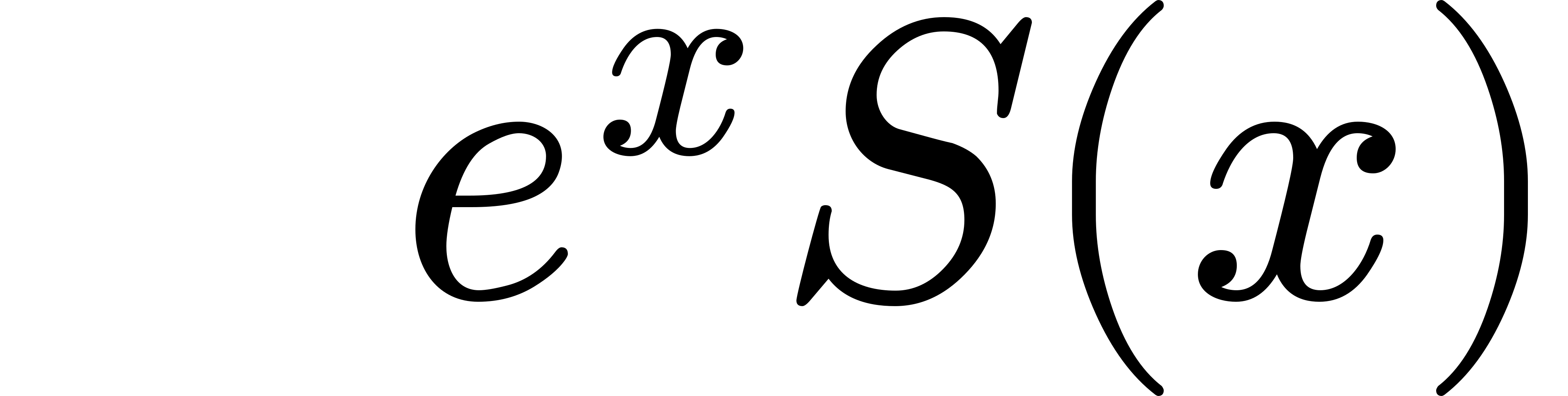 where is a rational function;
(ii) a number of terms of the type
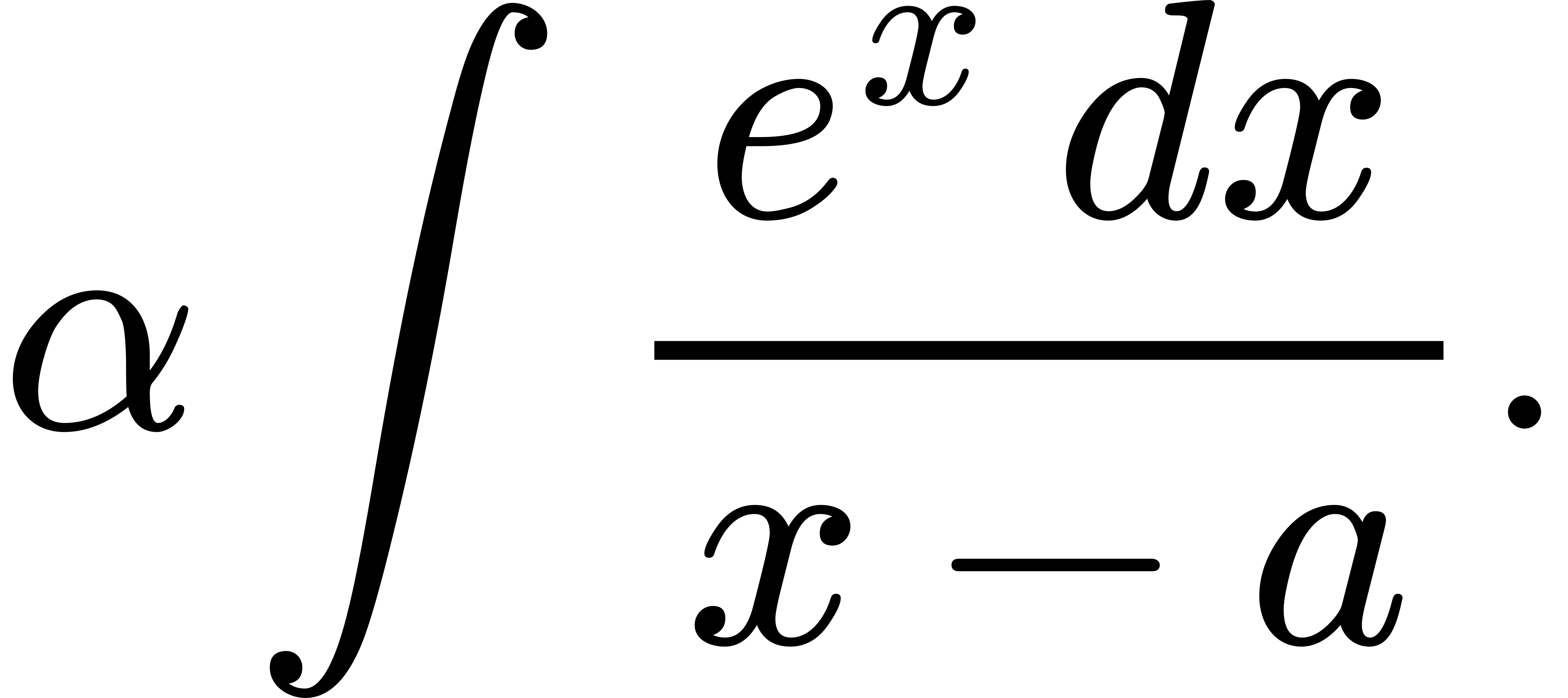 If all the constants vanish, then the integral can be
calculated in the finite form
If all the constants vanish, then the integral can be
calculated in the finite form 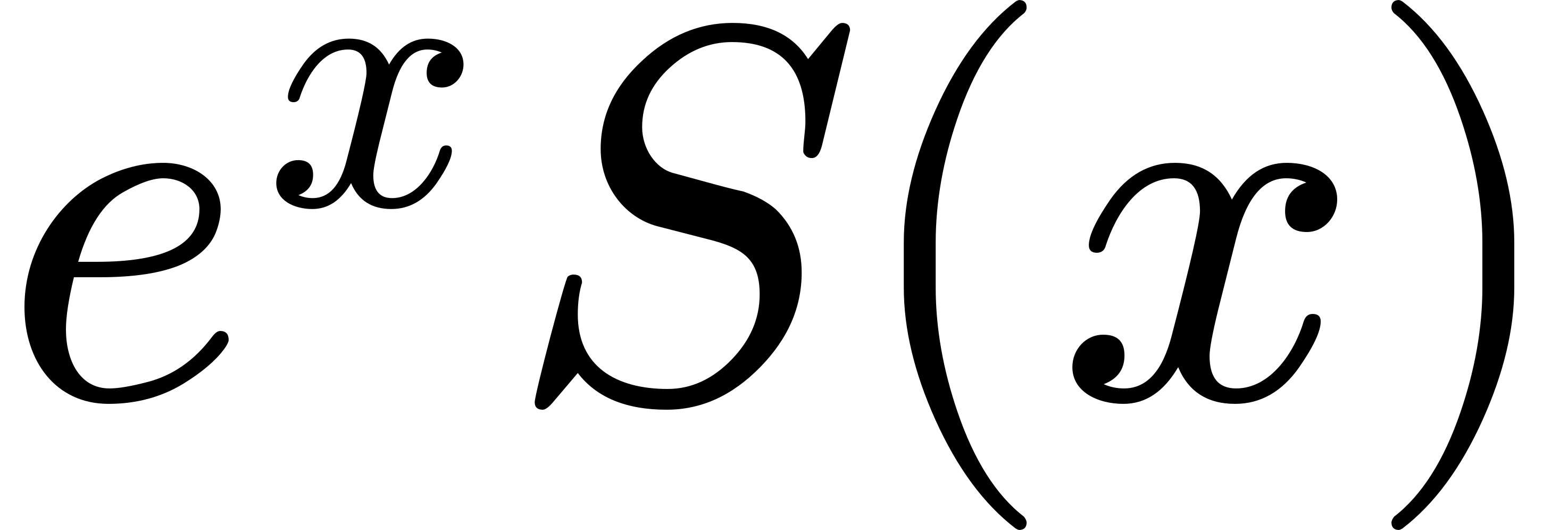 . If they do not we can at
any rate assert that the integral cannot be calculated in this
form[50]. For no such relation as
. If they do not we can at
any rate assert that the integral cannot be calculated in this
form[50]. For no such relation as
 where is rational, can hold for all values of . To see this
it is only necessary to put
where is rational, can hold for all values of . To see this
it is only necessary to put  and to expand in ascending
powers of . Then
and to expand in ascending
powers of . Then
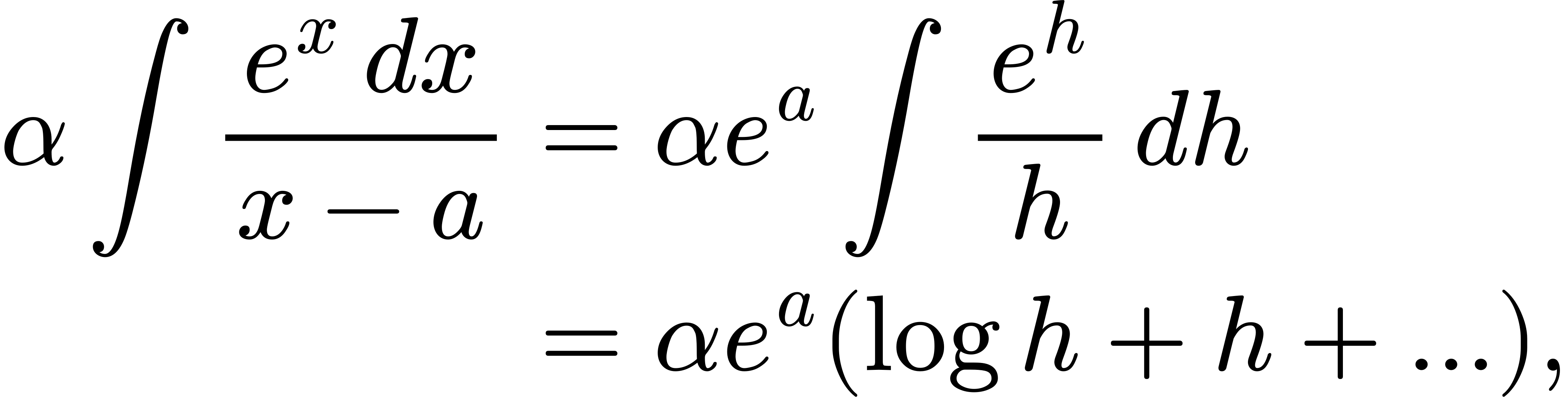 and no logarithm can occur in any of the other terms[51].
Consider, for example, the integral
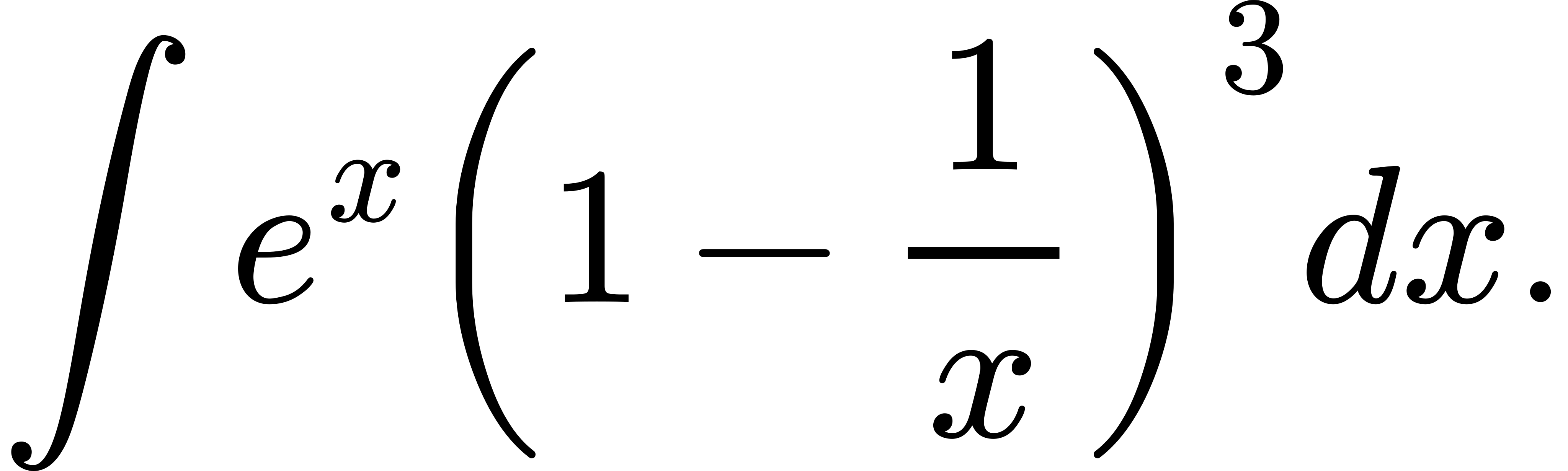 This is equal to
 and since
 and
and
 [Pg 58]
we obtain finally
[Pg 58]
we obtain finally
 Similarly it will be found that
 this integral being an elementary function.
Since
 if
if  , all integrals of this kind may be made to depend on
known functions and on the single transcendent
, all integrals of this kind may be made to depend on
known functions and on the single transcendent
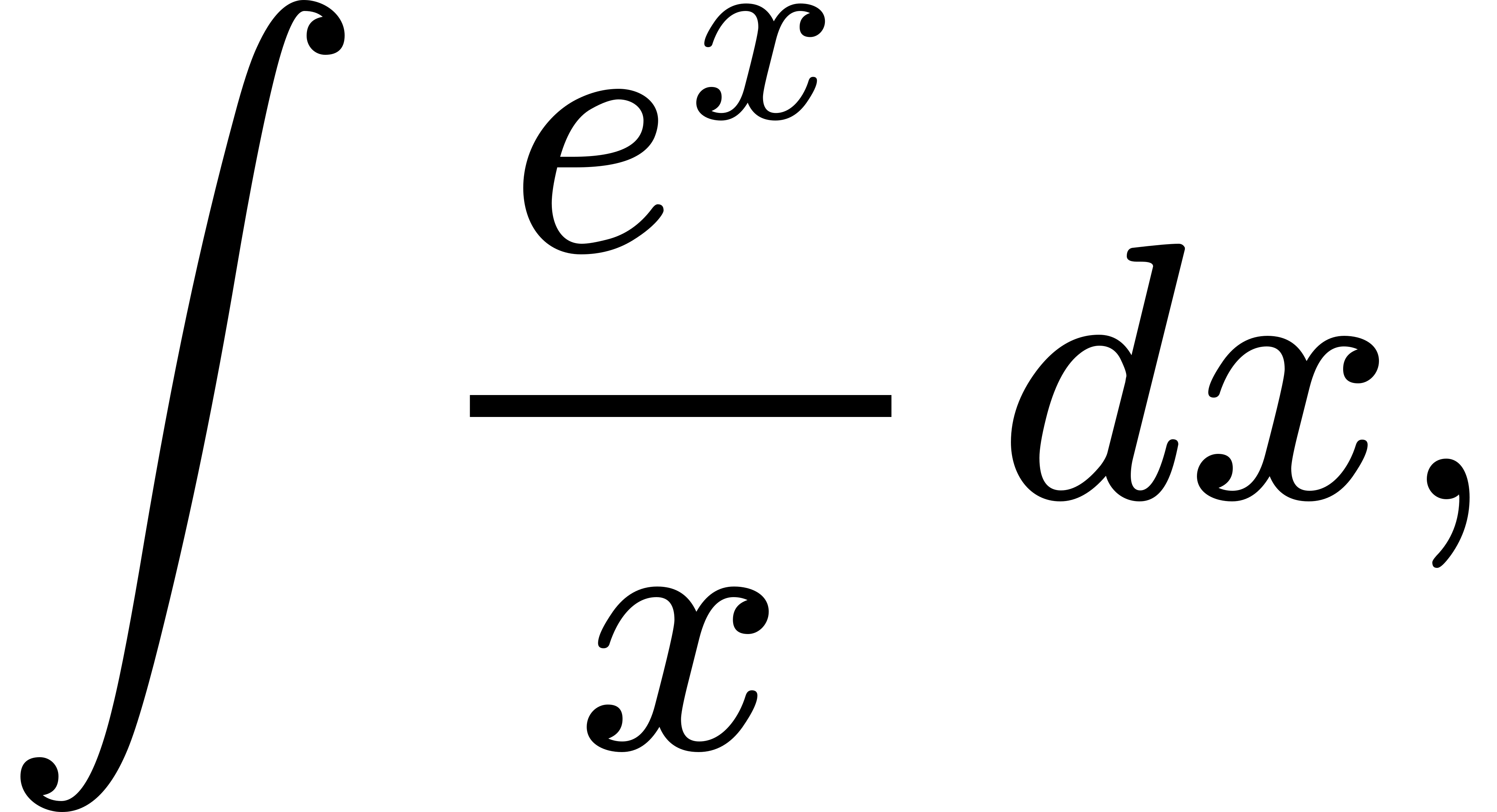 which is usually denoted by
 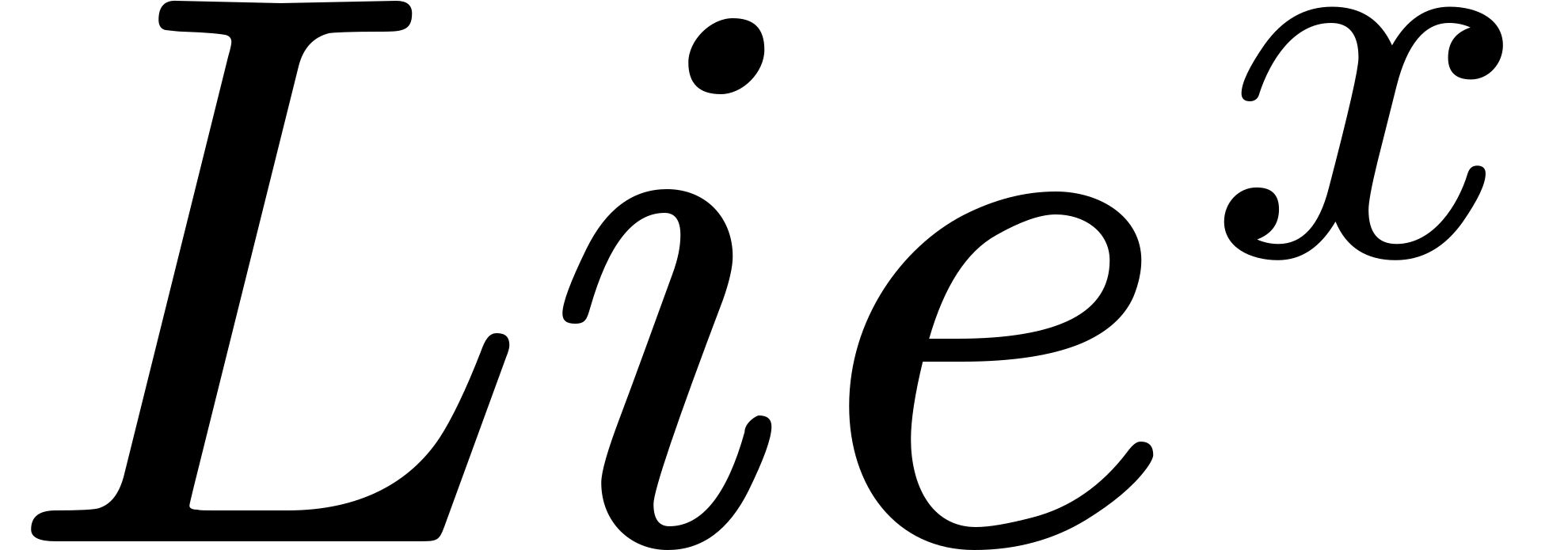 and is of great importance in
the theory of numbers. The question of course arises as to whether this
integral is not itself an elementary function.
and is of great importance in
the theory of numbers. The question of course arises as to whether this
integral is not itself an elementary function.
Now Liouville[52] has proved the following theorem: 'if is any
algebraical function of , and
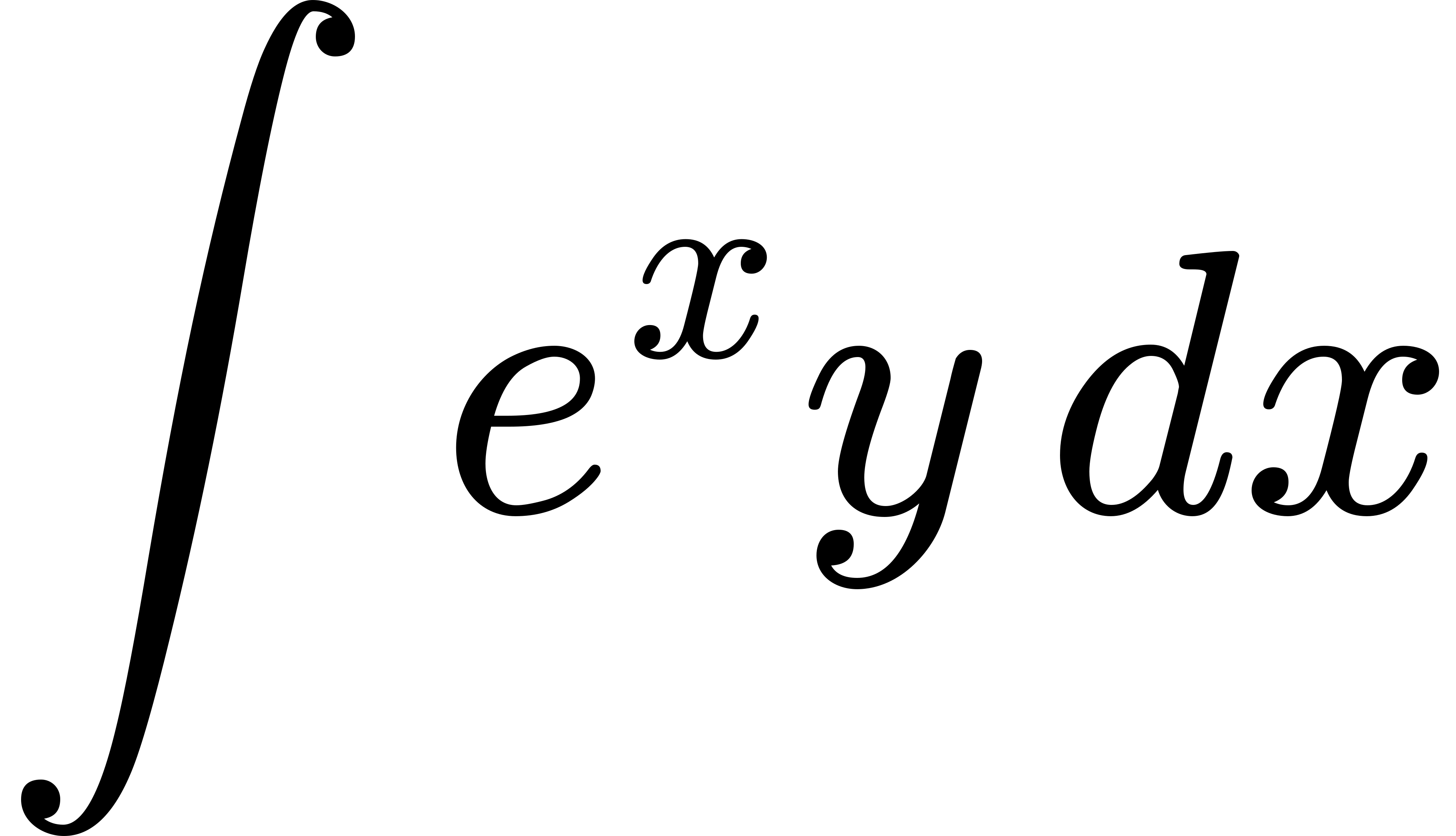 is an elementary function, then

 being rational functions of
and the degree of the algebraical equation which determines
as a function of '.
being rational functions of
and the degree of the algebraical equation which determines
as a function of '.
Liouville's proof rests on the same general principles as do those
of the corresponding theorems concerning the integral 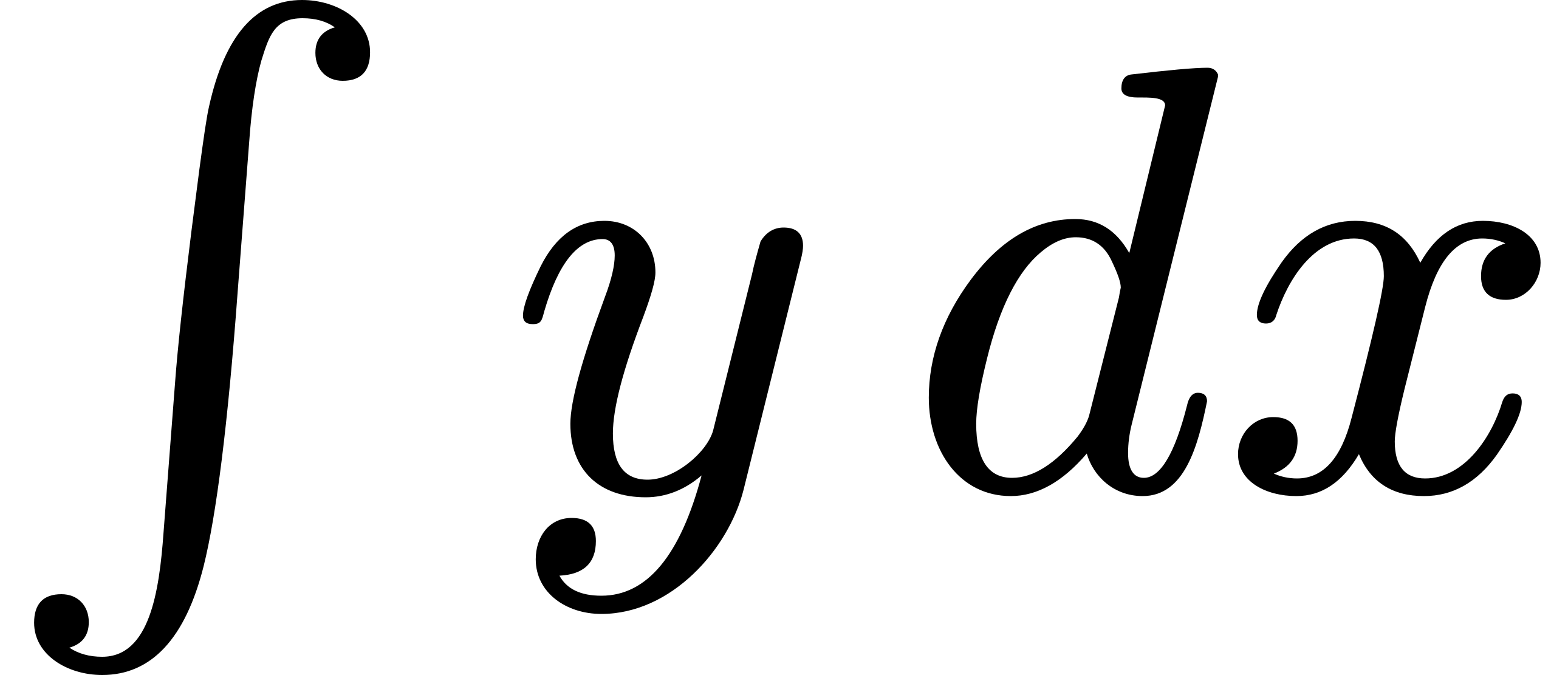 . It will be observed that no logarithmic terms can occur,
and that the theorem is therefore very similar to that which holds
for in the simple case in which the integral is
algebraical. The argument which shows that no logarithmic
terms occur is substantially the same as that which shows that, when
they occur in the integral of an algebraical function, they must
occur linearly. In this case the occurrence of the exponential factor
precludes even this possibility, since differentiation will not
eliminate logarithms when they occur in the form
. It will be observed that no logarithmic terms can occur,
and that the theorem is therefore very similar to that which holds
for in the simple case in which the integral is
algebraical. The argument which shows that no logarithmic
terms occur is substantially the same as that which shows that, when
they occur in the integral of an algebraical function, they must
occur linearly. In this case the occurrence of the exponential factor
precludes even this possibility, since differentiation will not
eliminate logarithms when they occur in the form
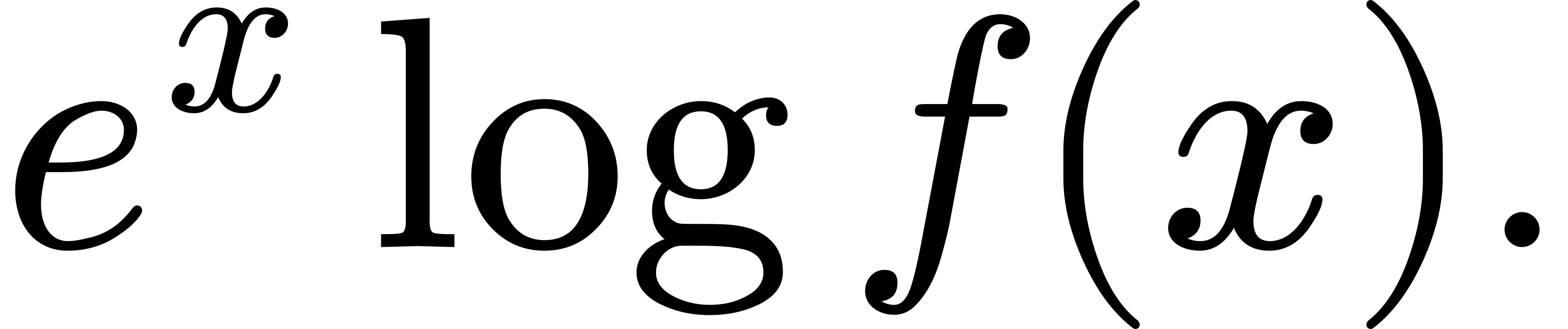
[Pg 59]
In particular, if is a rational function, then the integral must
be of the form
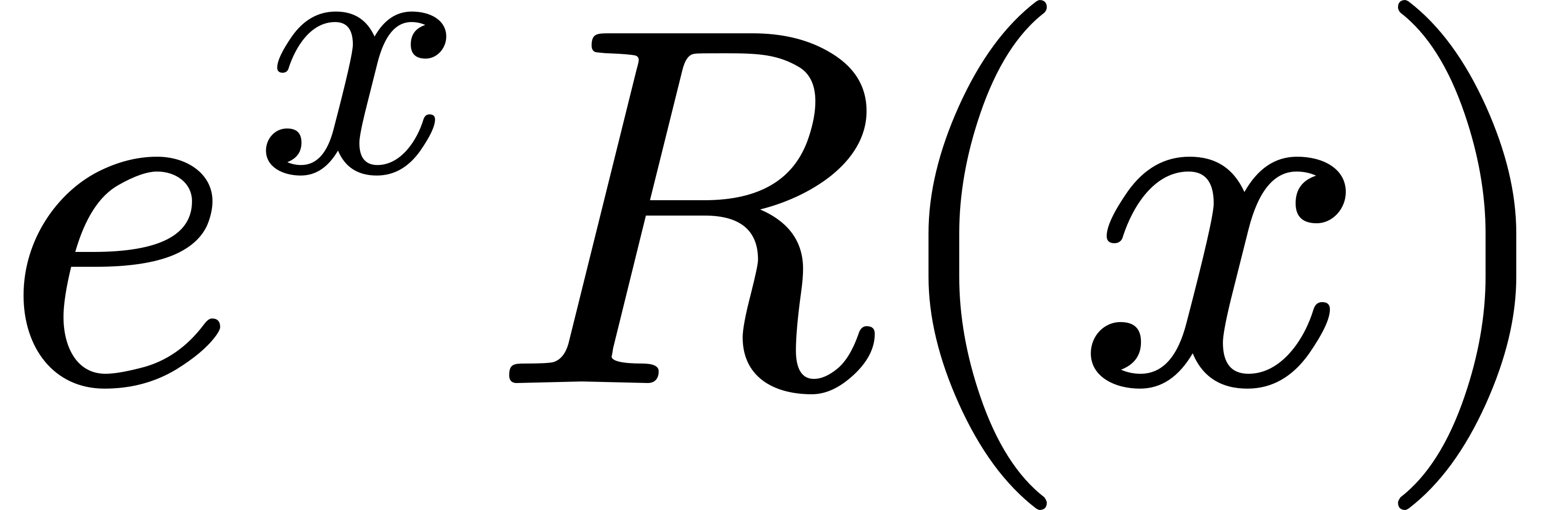 and this we have already seen to be impossible. Hence the
'logarithm-integral'
and this we have already seen to be impossible. Hence the
'logarithm-integral'
 is really a new transcendent, which cannot be expressed in finite terms
by means of elementary functions; and the same is true of all integrals
of the type
is really a new transcendent, which cannot be expressed in finite terms
by means of elementary functions; and the same is true of all integrals
of the type
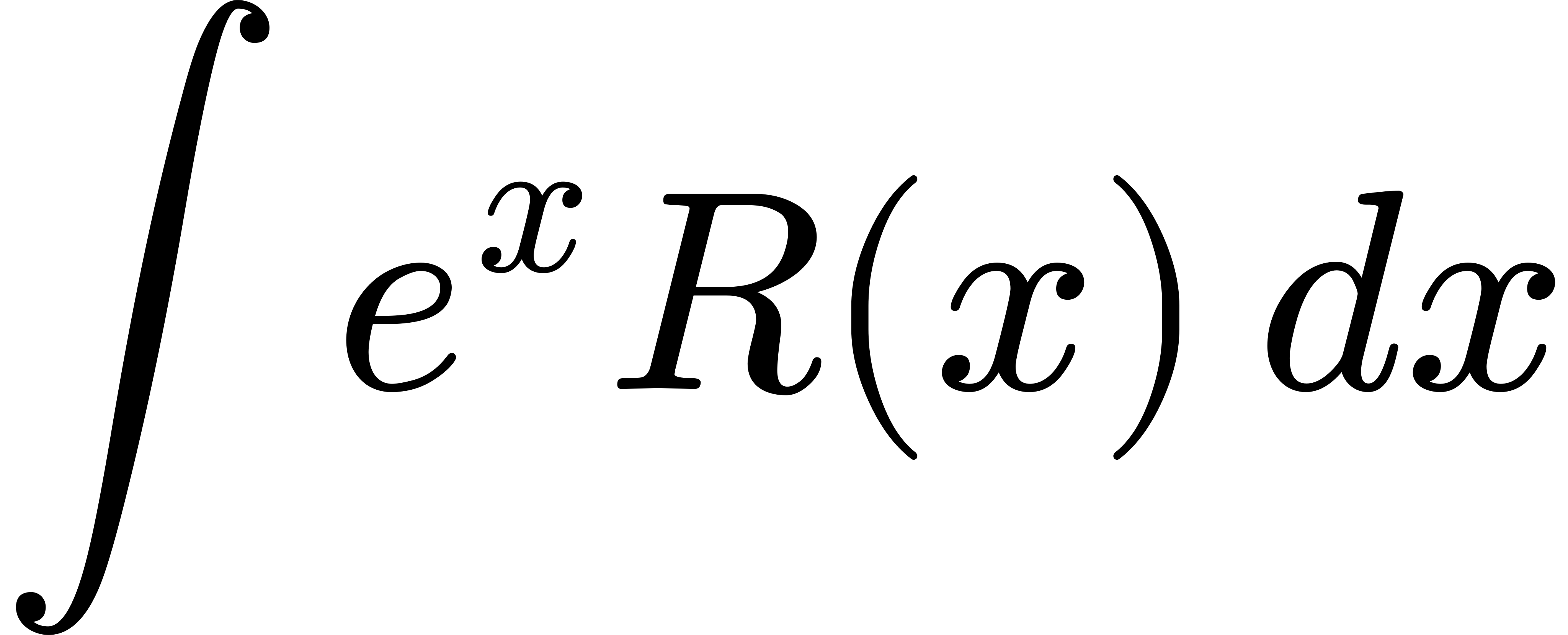 which cannot be calculated in finite terms by means of the process of
reduction sketched above.
which cannot be calculated in finite terms by means of the process of
reduction sketched above.
The integrals
 may be treated in a similar manner. Either the integral is of the form
 or it consists of a term of this kind together with a number of terms
which involve the transcendents
or it consists of a term of this kind together with a number of terms
which involve the transcendents
 which are called the cosine-integral and sine-integral of , and
denoted by
which are called the cosine-integral and sine-integral of , and
denoted by 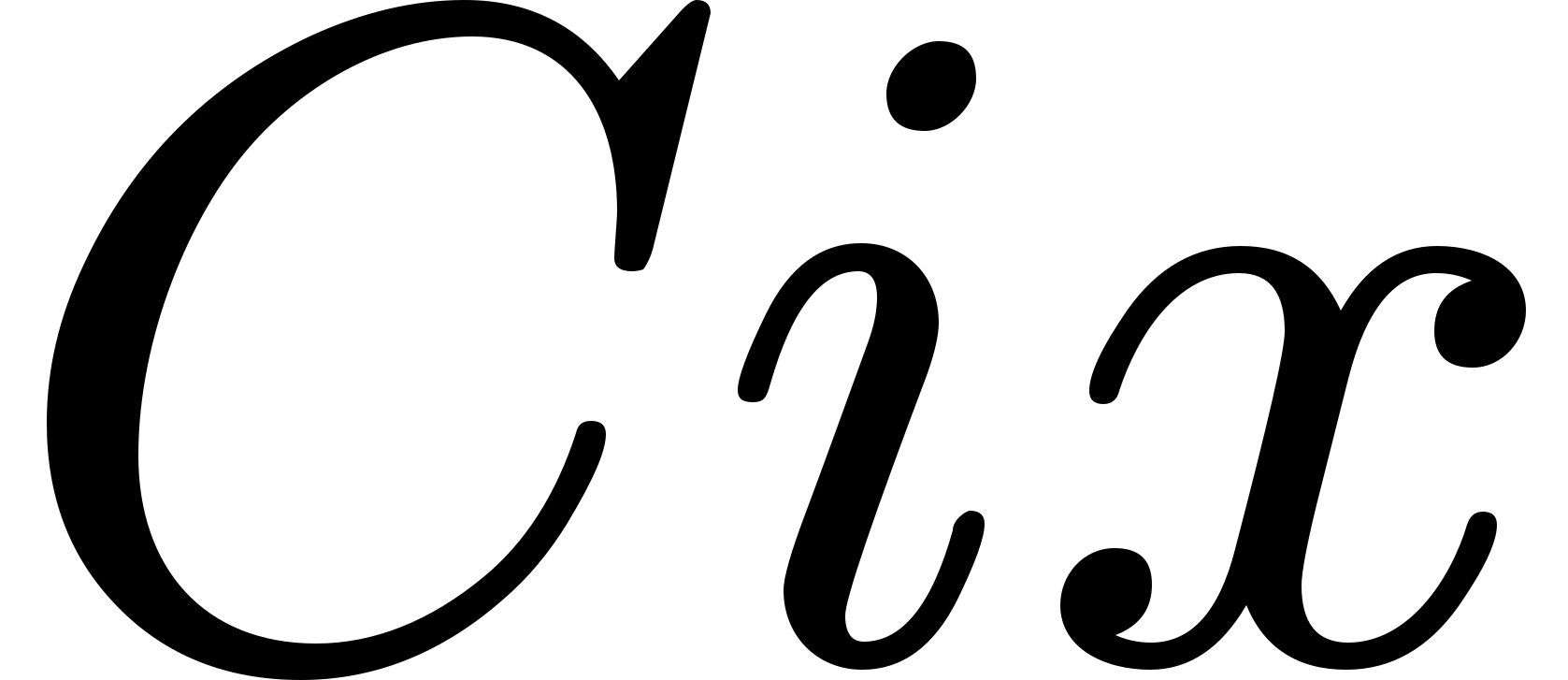 and
and 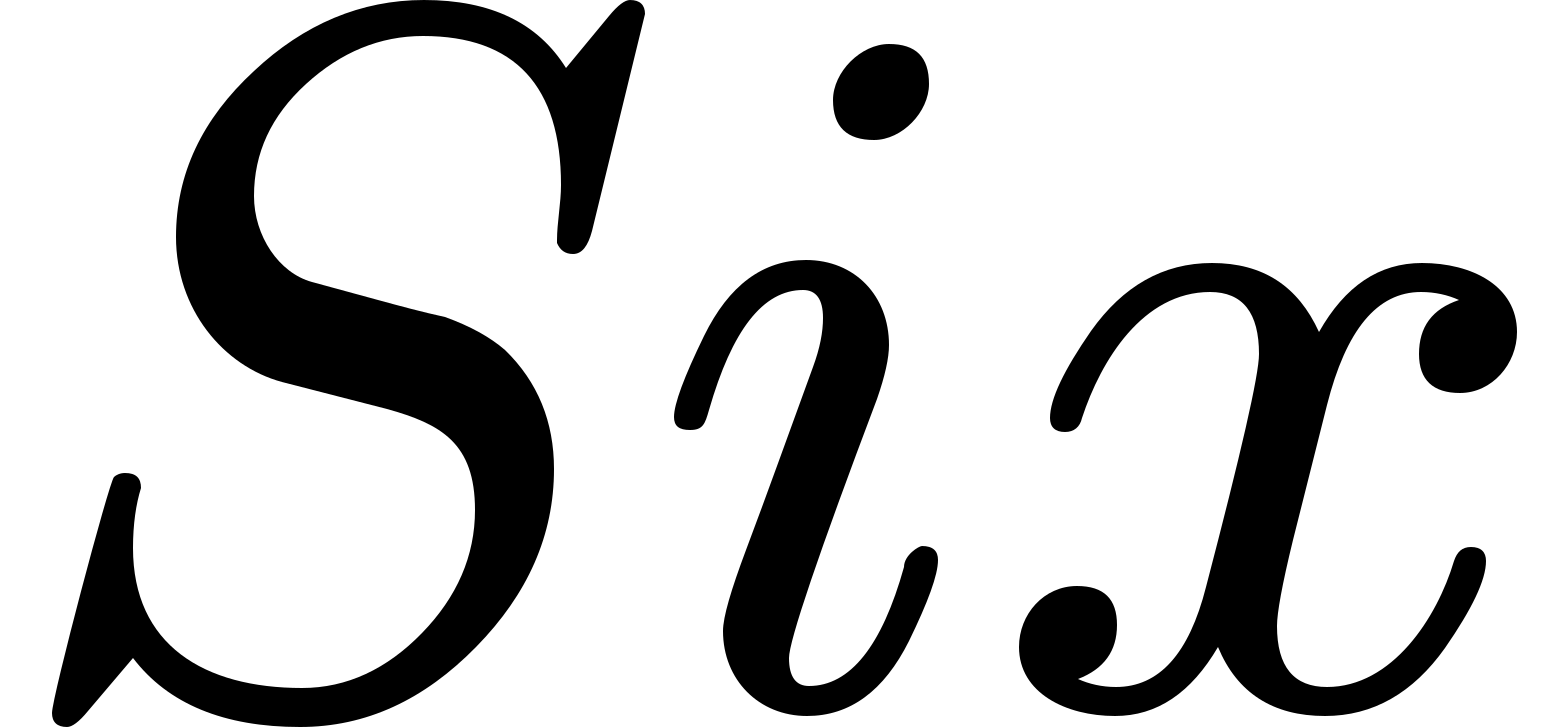 . These transcendents are of course
not fundamentally distinct from the logarithm-integral.
. These transcendents are of course
not fundamentally distinct from the logarithm-integral.
5. Liouville has gone further and shown that it is always possible to
determine whether the integral
 where
where  are
algebraical functions, is an elementary function, and to obtain the
integral in case it is one[53]. The most general theorem which has
been proved in this region of mathematics, and which is also due to
Liouville, is the following.
are
algebraical functions, is an elementary function, and to obtain the
integral in case it is one[53]. The most general theorem which has
been proved in this region of mathematics, and which is also due to
Liouville, is the following.
[Pg 60]
'If 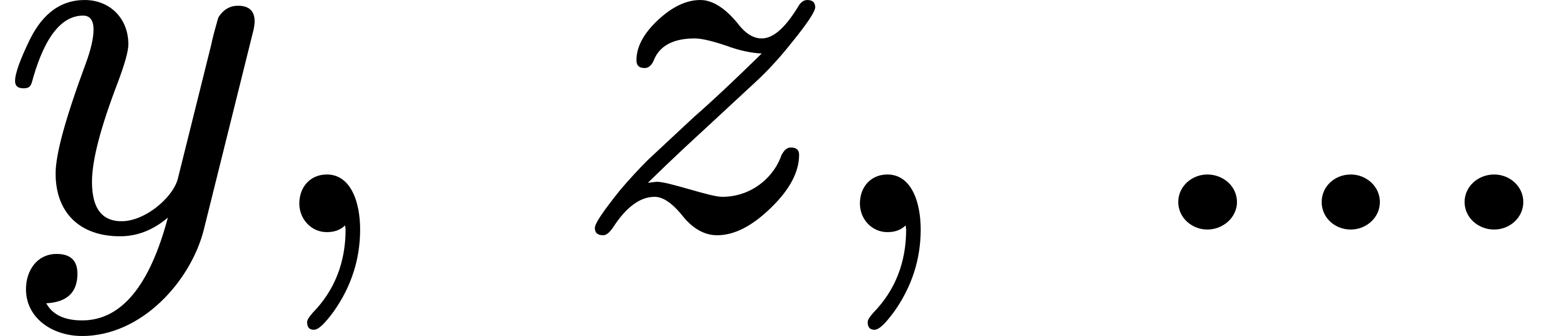 are functions of whose differential
coefficients are algebraical functions of
are functions of whose differential
coefficients are algebraical functions of  ,
and denotes an algebraical function, and if
,
and denotes an algebraical function, and if
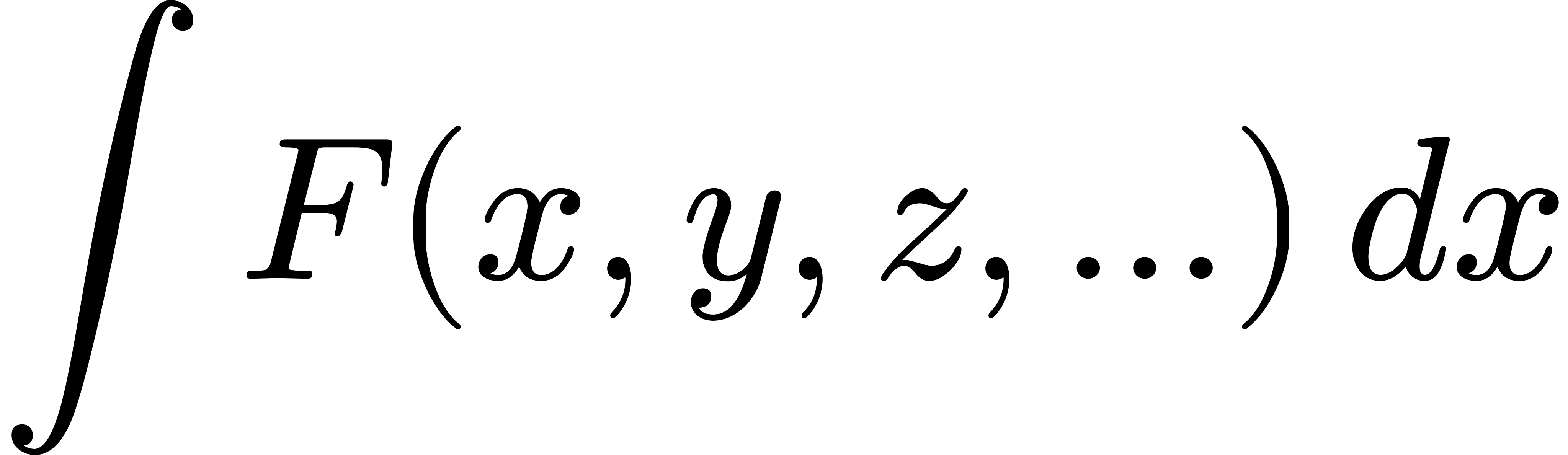 is an elementary function, then it is of the form
 where
where 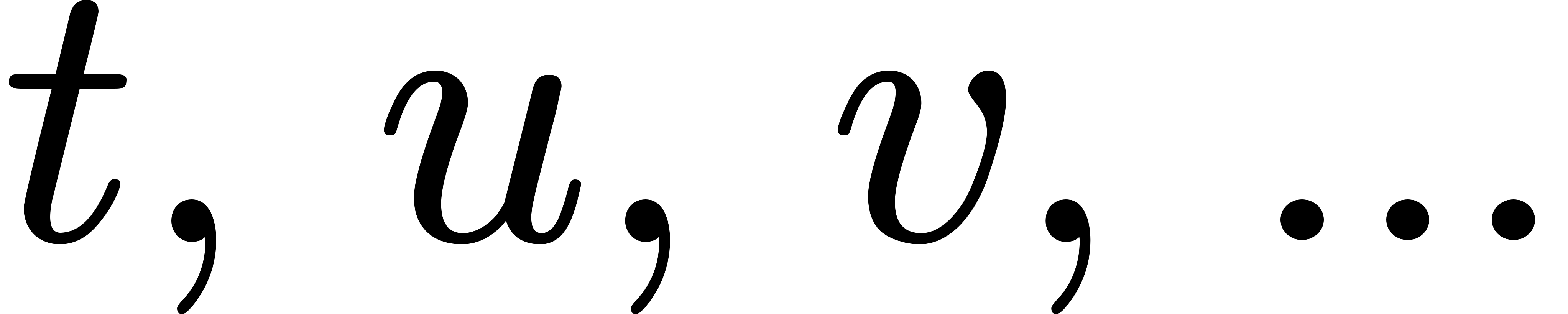 are algebraical functions of
  . If the differential coefficients are rational in
, and is rational, then
. If the differential coefficients are rational in
, and is rational, then 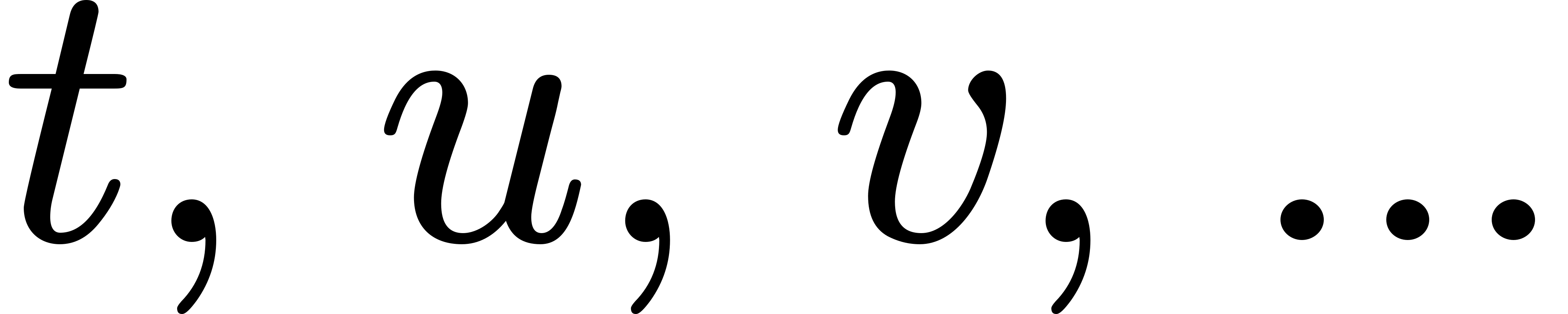 are rational in .'
Thus for example the theorem applies to
 since, if the various arguments of are denoted by , ,
, , , ,
since, if the various arguments of are denoted by , ,
, , , , 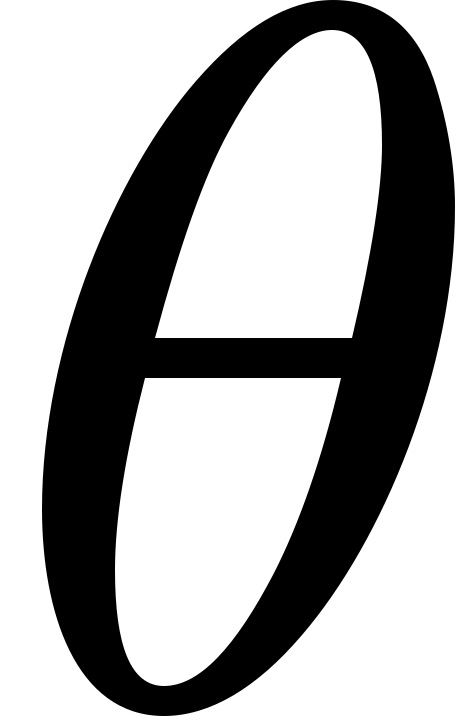 , we have
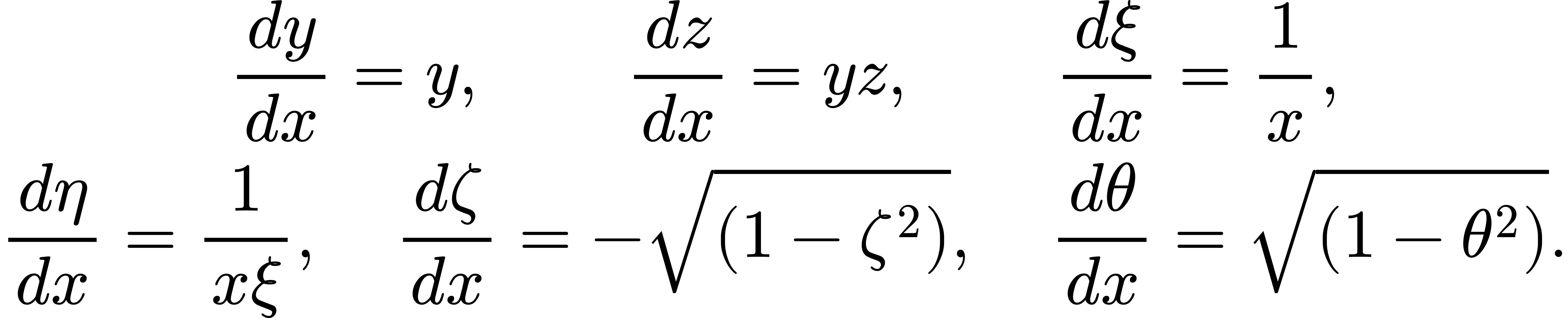 The proof of the theorem does not involve ideas different in principle
from those which have been employed continually throughout the
preceding pages.
The proof of the theorem does not involve ideas different in principle
from those which have been employed continually throughout the
preceding pages.
6. As a final example of the manner in which these ideas may be applied, we shall consider the following question:
'in what circumstances is
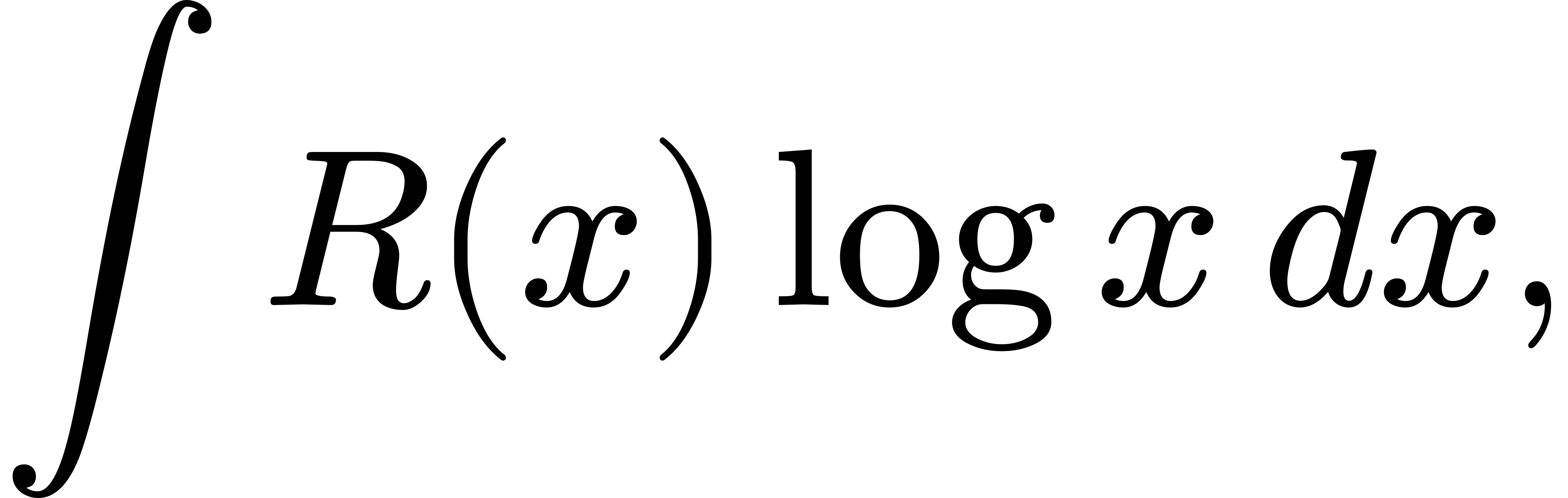 where is rational, an elementary function?'
In the first place the integral must be of the form
 A general consideration of the form of the differential coefficient
of this expression, in which must only occur linearly and
multiplied by a rational function, leads us to anticipate that (i)
A general consideration of the form of the differential coefficient
of this expression, in which must only occur linearly and
multiplied by a rational function, leads us to anticipate that (i)
 must be of the form
 where , , and are rational, and (ii)
 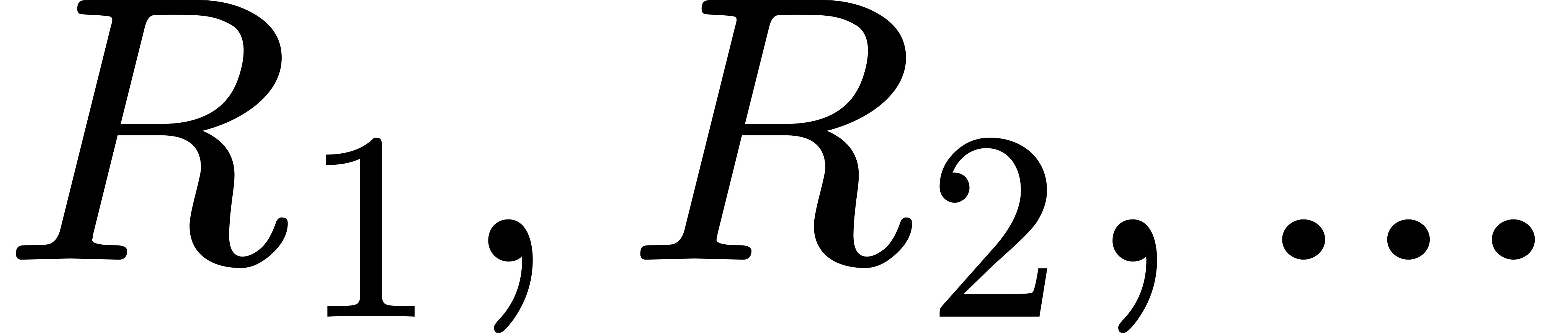 must be rational functions of only; so that the integral
can be expressed in the form
must be rational functions of only; so that the integral
can be expressed in the form

[Pg 61]
Differentiating, and comparing the result with the subject of
integration, we obtain the equations
 Hence is a constant, say
 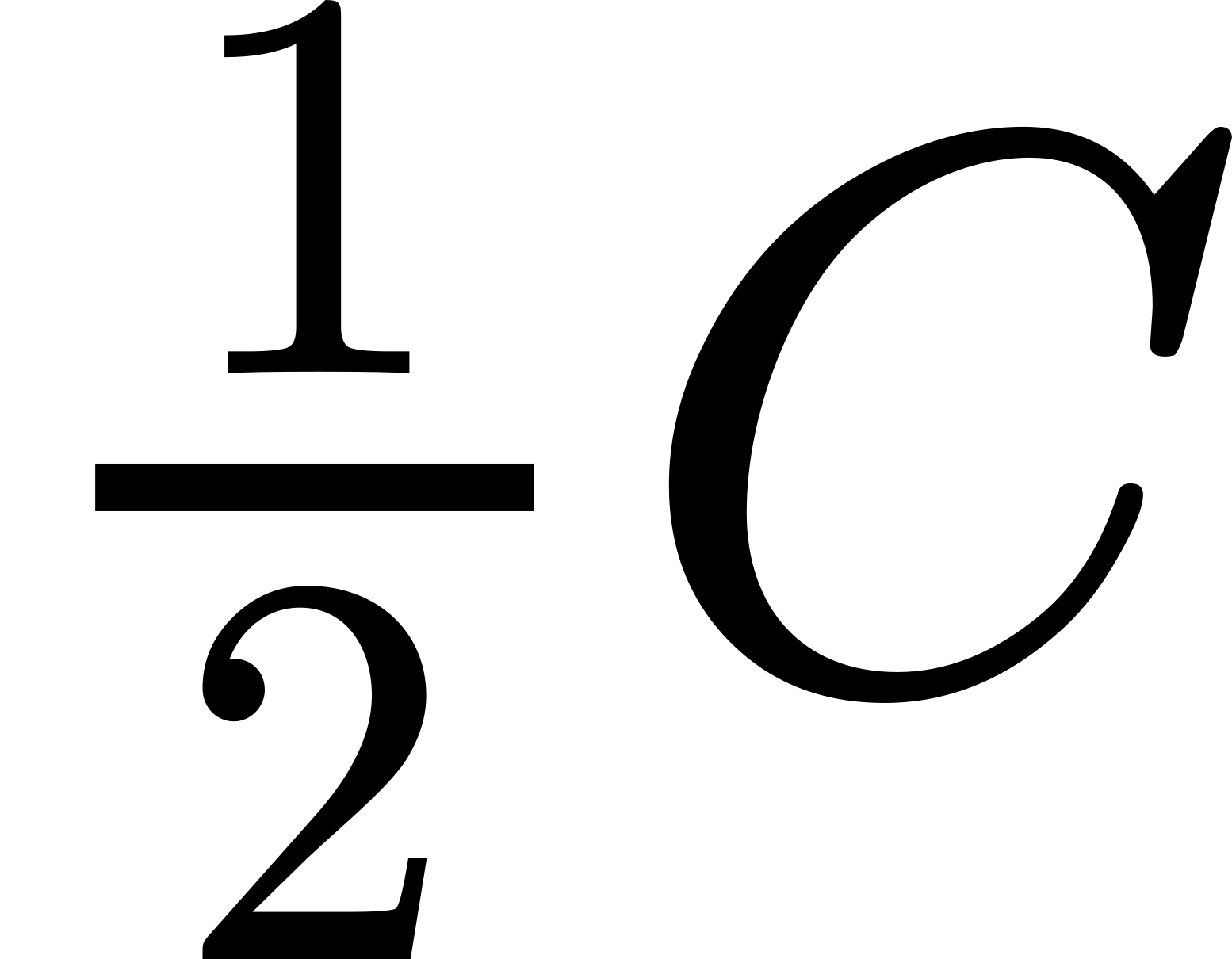 , and
, and
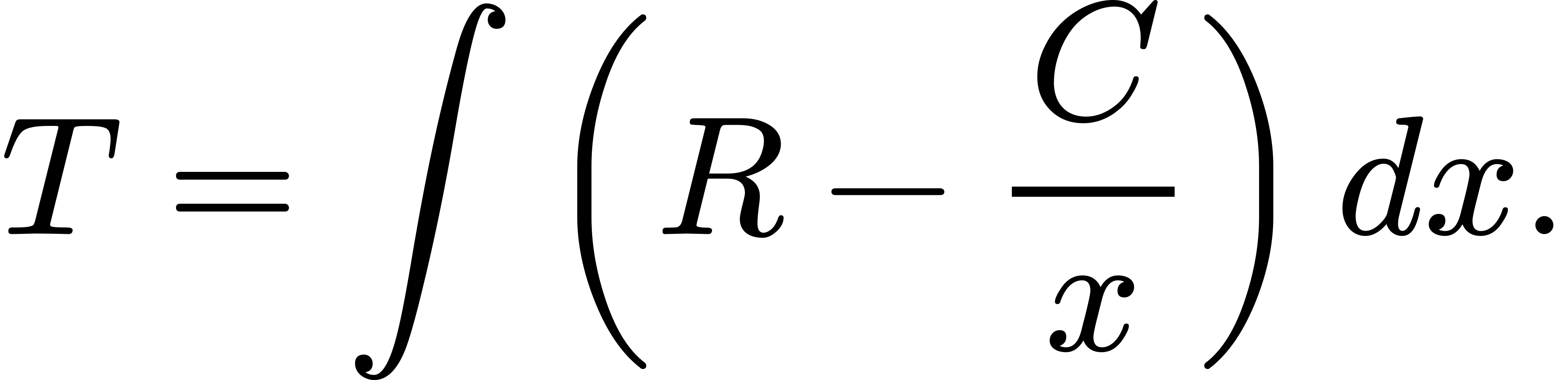
We can always determine by means of elementary operations, as in
iv., §4, whether this integral is rational for any value of
or not. If not, then the given integral is not an elementary
function. If is rational, then we must calculate its value, and
substitute it in the integral
 which must be rational for some value of the arbitrary constant implied
in . We can calculate the rational part of
which must be rational for some value of the arbitrary constant implied
in . We can calculate the rational part of
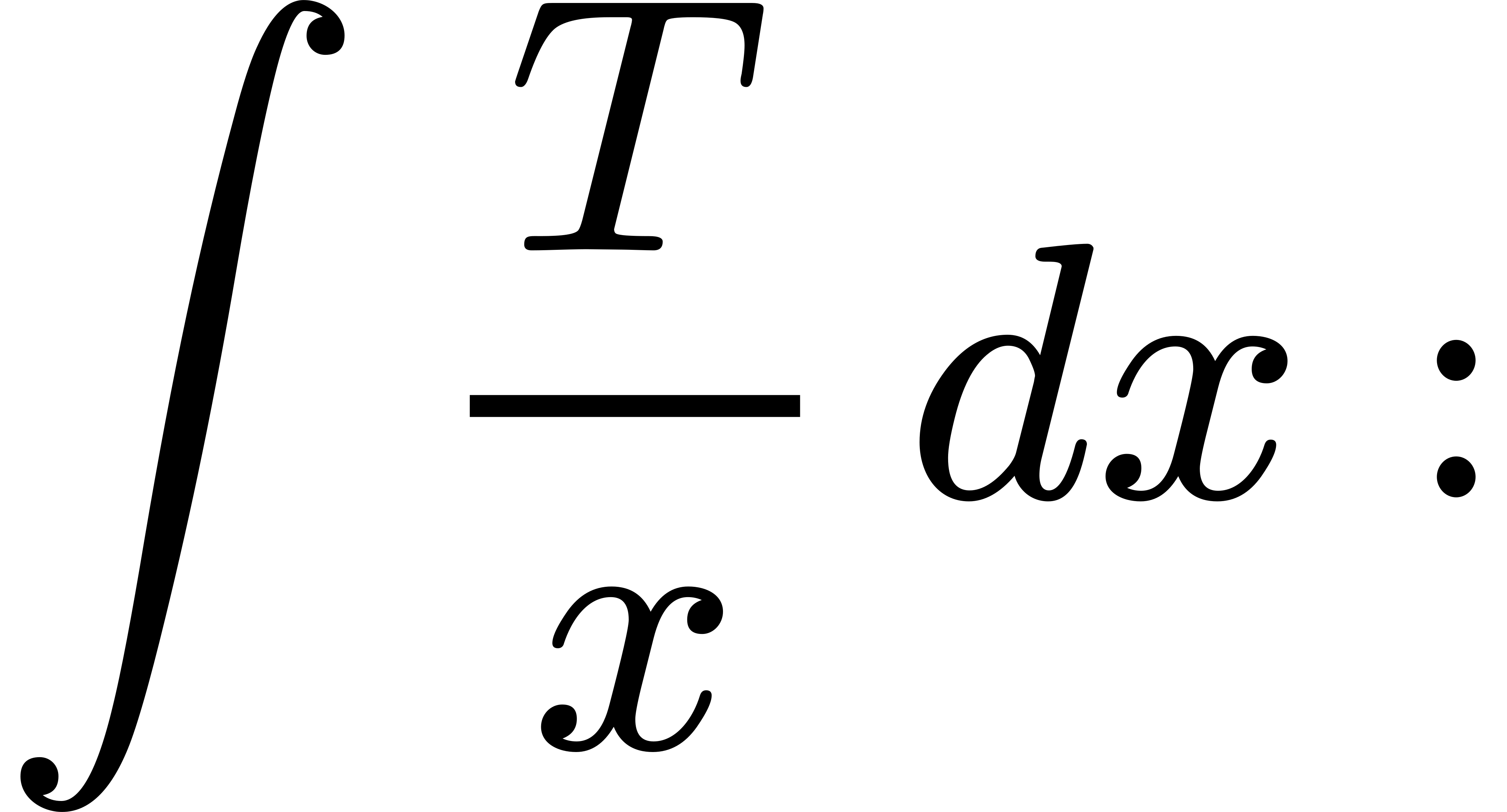 the transcendental part must be cancelled by the logarithmic terms

The necessary and sufficient condition that the original integral
should be an elementary function is therefore that should be of
the form
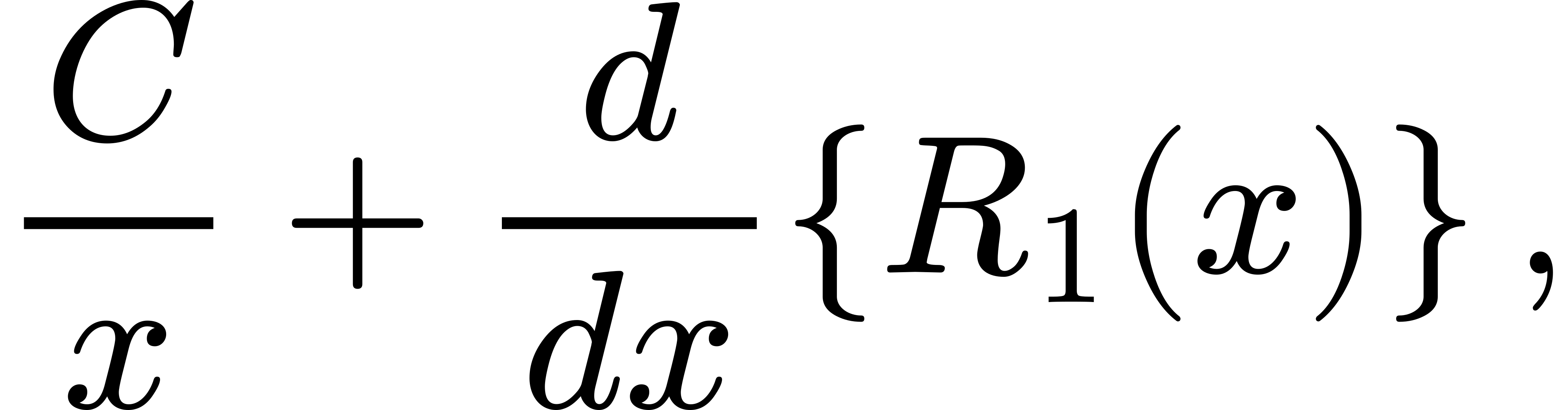 where is a constant and is rational. That the integral
is in this case such a function becomes obvious if we integrate by
parts, for
where is a constant and is rational. That the integral
is in this case such a function becomes obvious if we integrate by
parts, for

In particular
 are not elementary functions unless in (i)
 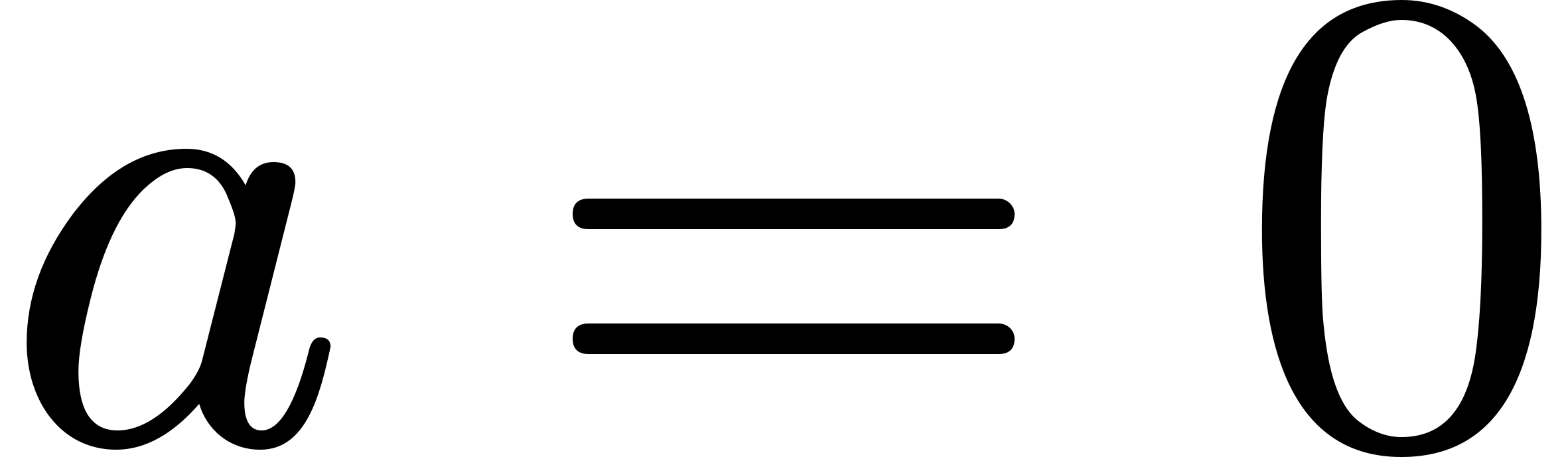 and in (ii)
 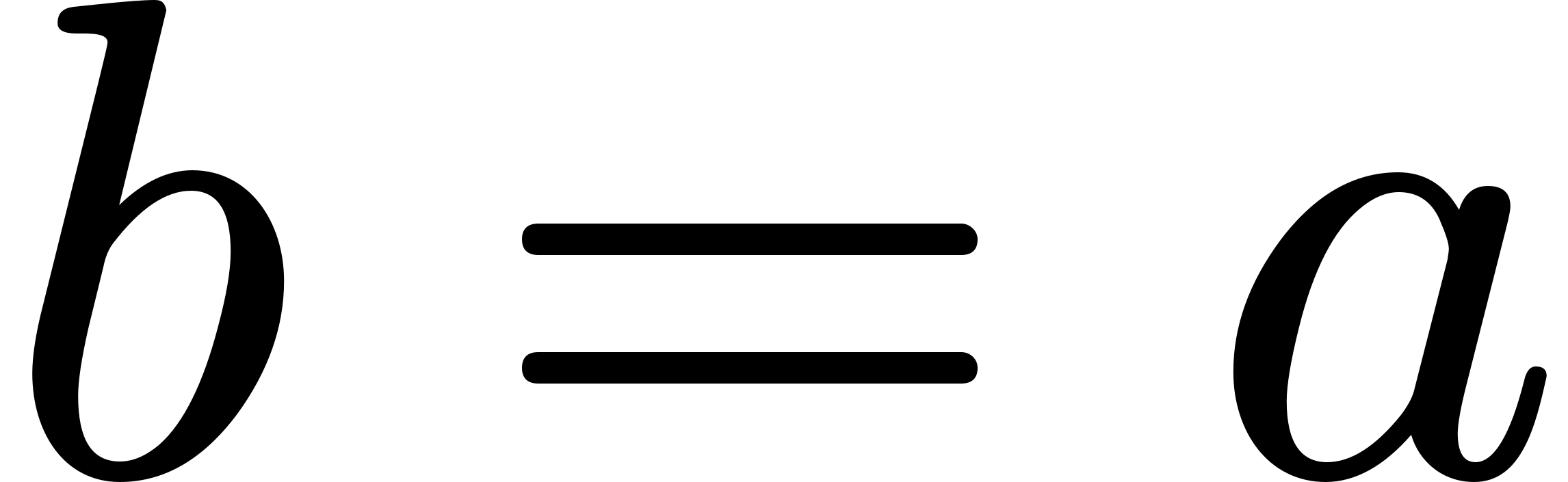 . If the integral is elementary then the integration can always be
carried out, with the same reservation as was necessary in the case of
rational functions.
. If the integral is elementary then the integration can always be
carried out, with the same reservation as was necessary in the case of
rational functions.
It is evident that the problem considered in this paragraph is but one of a whole class of similar problems. The reader will find it instructive to formulate and consider such problems for himself.
[Pg 62]
7. It will be obvious by now that the number of classes of
transcendental functions whose integrals are always elementary is very
small, and that such integrals as
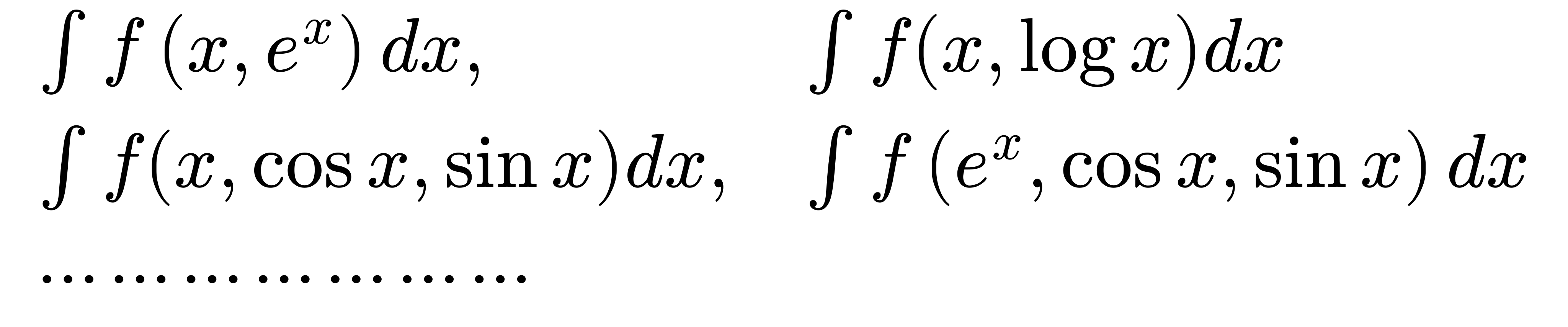 where is algebraical, or even rational, are generally new
transcendents. These new transcendents, like the transcendents
(such as the elliptic integrals) which arise from the integration
of algebraical functions, are in many cases of great interest and
importance. They may often be expressed by means of infinite series
or definite integrals, or their properties may be studied by means of
the integral expressions which define them. The very fact that such a
function is not an elementary function in so far enhances its
importance. And when such functions have been introduced into analysis
new problems of integration arise in connection with them. We may
enquire, for example, under what circumstances an elliptic integral or
elliptic function, or a combination of such functions with elementary
functions, can be integrated in finite terms by means of elementary and
elliptic functions. But before we can be in a position to restate the
fundamental problem of the Integral Calculus in any such more general
form, it is essential that we should have disposed of the particular
problem formulated in Section III.
where is algebraical, or even rational, are generally new
transcendents. These new transcendents, like the transcendents
(such as the elliptic integrals) which arise from the integration
of algebraical functions, are in many cases of great interest and
importance. They may often be expressed by means of infinite series
or definite integrals, or their properties may be studied by means of
the integral expressions which define them. The very fact that such a
function is not an elementary function in so far enhances its
importance. And when such functions have been introduced into analysis
new problems of integration arise in connection with them. We may
enquire, for example, under what circumstances an elliptic integral or
elliptic function, or a combination of such functions with elementary
functions, can be integrated in finite terms by means of elementary and
elliptic functions. But before we can be in a position to restate the
fundamental problem of the Integral Calculus in any such more general
form, it is essential that we should have disposed of the particular
problem formulated in Section III.
[48] See Hermite, Cours d'analyse, pp. 320 et seq.
[49] See Hermite, Cours d'analyse, pp. 352 et seq.
[50] See the remarks at the end of this paragraph.
[51] It is not difficult to give a purely algebraical proof on the lines of iv., §2.
[52] 'Mémoire sur l'intégration d'une classe de fonctions transcendantes', Journal für Mathematik, vol. 13, 1835, pp. 93—118. Liouville shows how the integral, when of this form, may always be calculated by elementary methods.
[Pg 63]
[53]
An interesting particular result is that the 'error
function' 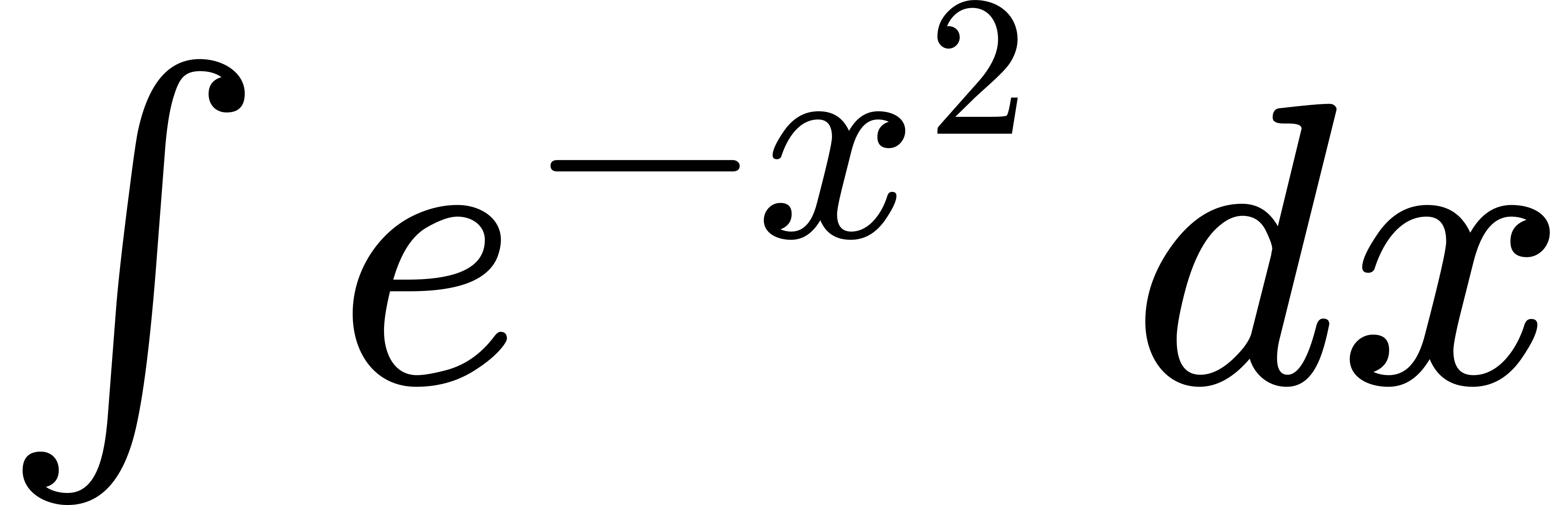 is not an elementary function.
The following is a list of the memoirs by Abel, Liouville and Tschebyschef which have reference to the subject matter of this tract.
N. H. Abel
1. 'Über die Integration der Differential-Formel
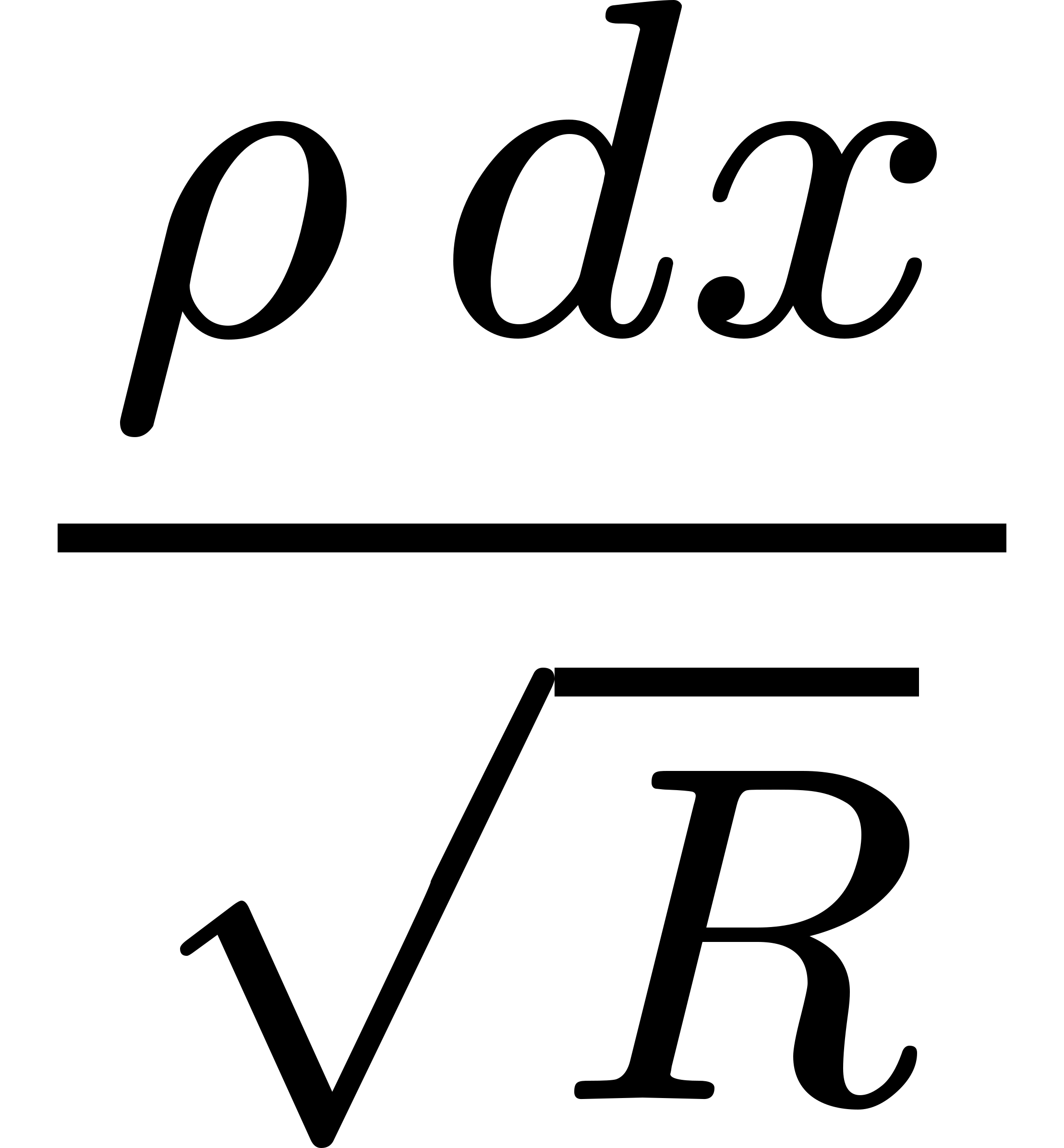 , wenn und
 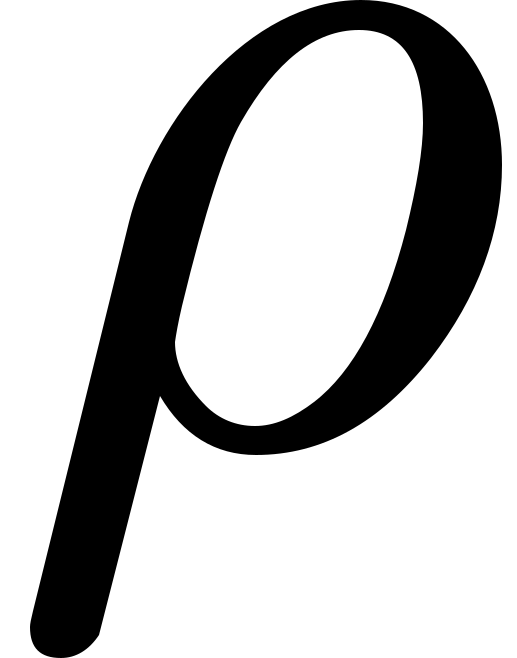 ganze
Funktionen sind', Journal für Mathematik, vol. 1, 1826, pp.
185—221 (Œuvres, vol. 1, pp. 104—144).
ganze
Funktionen sind', Journal für Mathematik, vol. 1, 1826, pp.
185—221 (Œuvres, vol. 1, pp. 104—144).
2. 'Précis d'une théorie des fonctions elliptiques', Journal für Mathematik, vol. 4, 1829, pp. 236—277, 309—348 (Œuvres, vol. 1, pp. 518—617).
3. 'Théorie des transcendantes elliptiques', Œuvres, vol. 2, pp. 87—188.
J. Liouville
1. 'Mémoire sur la classification des transcendantes, et sur l'impossibilité d'exprimer les racines de certaines équations en fonction finie explicite des coefficients', Journal de mathématiques, ser. 1, vol. 2, 1837, pp. 56—104.
2. 'Nouvelles recherches sur la détermination des intégrales dont la valeur est algébrique', ibid., vol. 3, 1838, pp. 20—24 (previously published in the Comptes Rendus, 28 Aug. 1837).
3. 'Suite du mémoire sur la classification des transcendantes, et sur l'impossibilité d'exprimer les racines de certaines équations en fonction finie explicite des coefficients', ibid., pp. 523—546.
4. 'Note sur les transcendantes elliptiques considérées comme fonctions de leur module', ibid., vol. 5, 1840, pp. 34—37.
5. 'Mémoire sur les transcendantes elliptiques considérées comme fonctions de leur module', ibid., pp. 441—464.
6. 'Premier mémoire sur la détermination des intégrales dont la valeur est algébrique', Journal de l'École Polytechnique, vol. 14, cahier 22, 1833, pp. 124—148 (also published in the Mémoires présentés par divers savants à l'Académie des Sciences, vol. 5, 1838, pp. 76—151).
7. 'Second mémoire sur la détermination des intégrales dont la valeur est algébrique', ibid., pp. 149—193 (also published as above).
[Pg 64]
8. 'Mémoire sur les transcendantes elliptiques considérées comme fonctions de leur amplitude', ibid., cahier 23, 1834, pp. 37—83.
9. 'Mémoire sur l'intégration d'une classe de fonctions transcendantes', Journal für Mathematik, vol. 13, 1835, pp. 93—118.
P. Tschebyschef
1. 'Sur l'intégration des différentielles irrationnelles', Journal de mathématiques, ser. 1, vol. 18, 1853, pp. 87—111 (Œuvres, vol. 1, pp. 147—168).
2. 'Sur l'intégration des différentielles qui contiennent une racine carrée d'une polynome du troisième ou du quatrième degré', ibid., ser. 2, vol. 2, 1857, pp. 1—42 (Œuvres, vol. 1, pp. 171—200; also published in the Mémoires de l'Académie Impériale des Sciences de St-Pétersbourg, ser. 6, vol. 6, 1857, pp. 203—232).
3. 'Sur l'intégration de la différentielle  ',
ibid., ser. 2, vol. 9, 1864, pp. 225—241 (Œuvres, vol.
1, pp. 517—530; previously published in the Bulletin de l'Académie
Impériale des Sciences de St-Pétersbourg, vol. 3, 1861, pp. 1—12).
',
ibid., ser. 2, vol. 9, 1864, pp. 225—241 (Œuvres, vol.
1, pp. 517—530; previously published in the Bulletin de l'Académie
Impériale des Sciences de St-Pétersbourg, vol. 3, 1861, pp. 1—12).
4. 'Sur l'intégration des différentielles irrationnelles', ibid., pp. 242—246 (Œuvres, vol. 1, pp. 511—514; previously published in the Comptes Rendus, 9 July 1860).
5. 'Sur l'intégration des différentielles qui contiennent une racine cubique' (Œuvres, vol. 1, pp. 563—608; previously published only in Russian).
Other memoirs which may be consulted are:
A. Clebsch
'Über diejenigen Curven, deren Coordinaten sich als elliptische Functionen eines Parameters darstellen lassen', Journal für Mathematik, vol. 64, 1865, pp. 210—270.
J. Dolbnia
'Sur les intégrales pseudo-elliptiques d'Abel', Journal de mathématiques, ser. 4, vol. 6, 1890, pp. 293—311.
Sir A. G. Greenhill
'Pseudo-elliptic integrals and their dynamical applications', Proc. London Math. Soc., ser. 1, vol. 25, 1894, pp. 195—304.
G. H. Hardy
'Properties of logarithmico-exponential functions', Proc. London Math. Soc., ser. 2, vol. 10, 1910, pp. 54—90.
L. Königsberger
'Bemerkungen zu Liouville's Classificirung der Transcendenten', Mathematische Annalen, vol. 28, 1886, pp. 483—492.
[Pg 65]
L. Raffy
'Sur les quadratures algébriques et logarithmiques', Annales de l'École Normale, ser. 3, vol. 2, 1885, pp. 185—206.
K. Weierstrass
'Über die Integration algebraischer Differentiale vermittelst Logarithmen', Monatsberichte der Akademie der Wissenschaften zu Berlin, 1857, pp. 148—157 (Werke, vol. 1, pp. 227—232).
G. Zolotareff
'Sur la méthode d'intégration de M. Tschebyschef', Journal de mathématiques, ser. 2, vol. 19, 1874, pp. 161—188.
Further information concerning pseudo-elliptic integrals, and degenerate cases of Abelian integrals generally, will be found in a number of short notes by Dolbnia, Kapteyn and Ptaszycki in the Bulletin des sciences mathématiques, and by Goursat, Gunther, Picard, Poincaré, and Raffy in the Bulletin de la Société Mathématique de France, in Legendre's Traité des functions elliptiques (vol. 1, ch. 26), in Halphen's Traité des fonctions elliptiques (vol. 2, ch. 14), and in Enneper's Elliptische Funktionen. The literature concerning the general theory of algebraical functions and their integrals is too extensive to be summarised here: the reader may be referred to Appell and Goursat's Théorie des fonctions algébriques, and Wirtinger's article Algebraische Funktionen und ihre Integrale in the Encyclopädie der Mathematischen Wissenschaften, ii} B 2.
[Pg 66]
Abel's proof (Œuvres, vol. 1, p. 545) is as follows[54]:
We have
 where is an irreducible polynomial of degree in .
If we make use of the equation , we can introduce
into this equation, and write it in the form
where is an irreducible polynomial of degree in .
If we make use of the equation , we can introduce
into this equation, and write it in the form
 where is a polynomial in the three variables , ,
and [55]; and we can suppose , like , of degree
in and irreducible, that is to say not divisible by any
polynomial of the same form which is not a constant multiple of
or itself a constant.
where is a polynomial in the three variables , ,
and [55]; and we can suppose , like , of degree
in and irreducible, that is to say not divisible by any
polynomial of the same form which is not a constant multiple of
or itself a constant.
From , 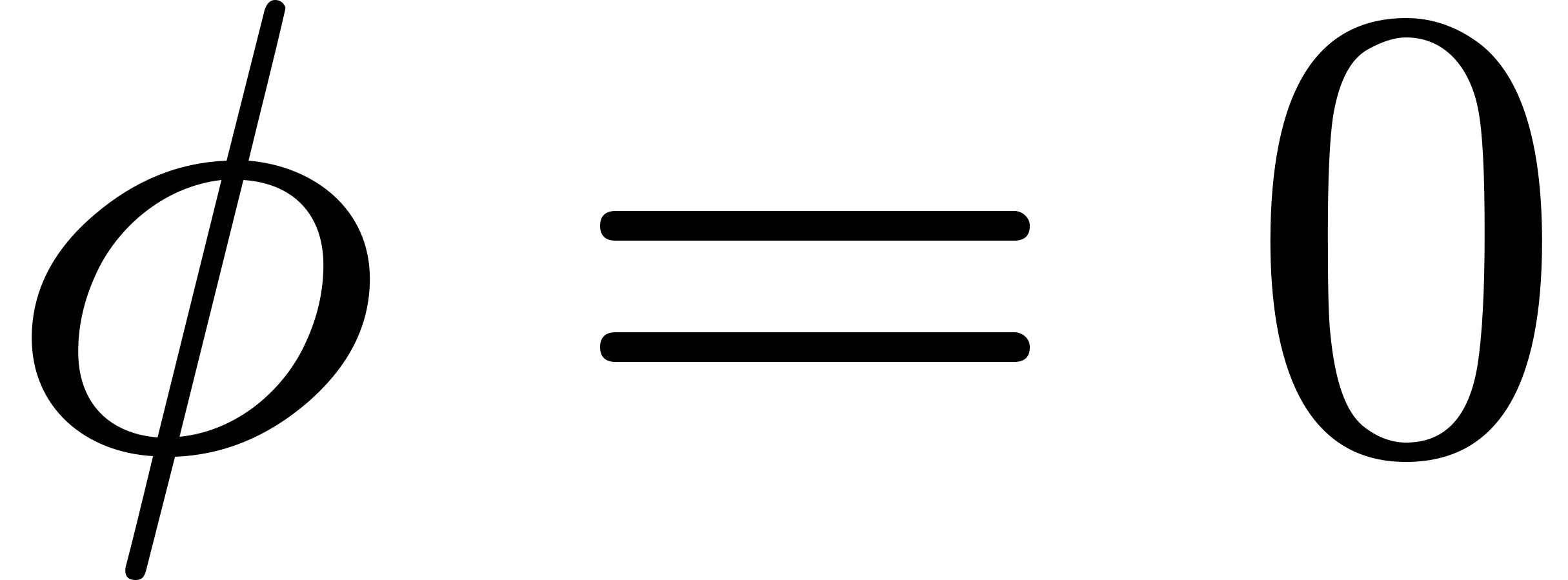 we deduce
 and, eliminating , we obtain an equation of the form
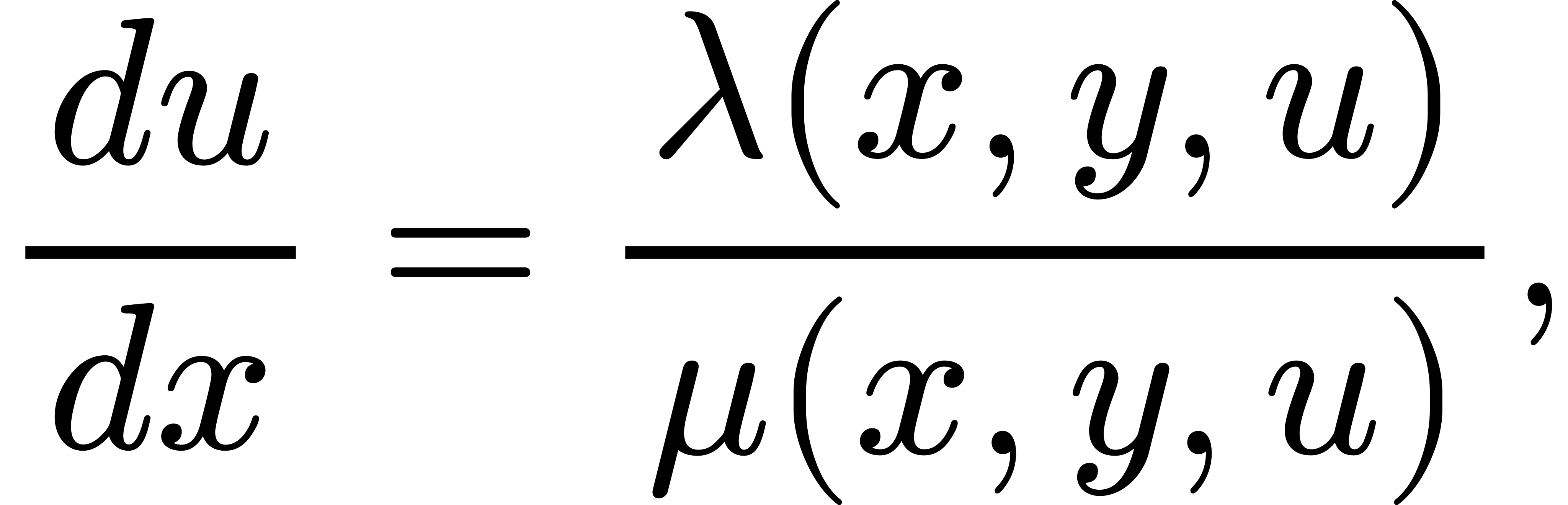 where and are polynomials in , , and
. And in order that should be an integral of it is
necessary and sufficient that
where and are polynomials in , , and
. And in order that should be an integral of it is
necessary and sufficient that

Abel now applies Lemma (2) of §11, or rather its analogue for
polynomials in whose coefficients are polynomials in and
, to the two polynomials and 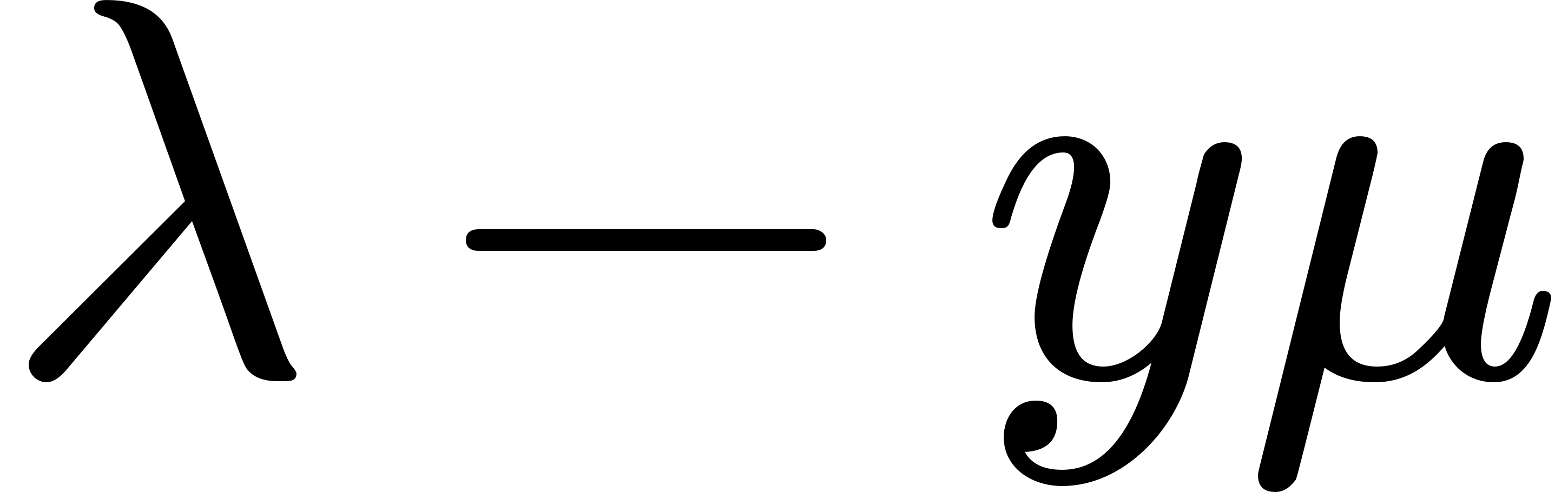 , and
infers that all the roots
, and
infers that all the roots 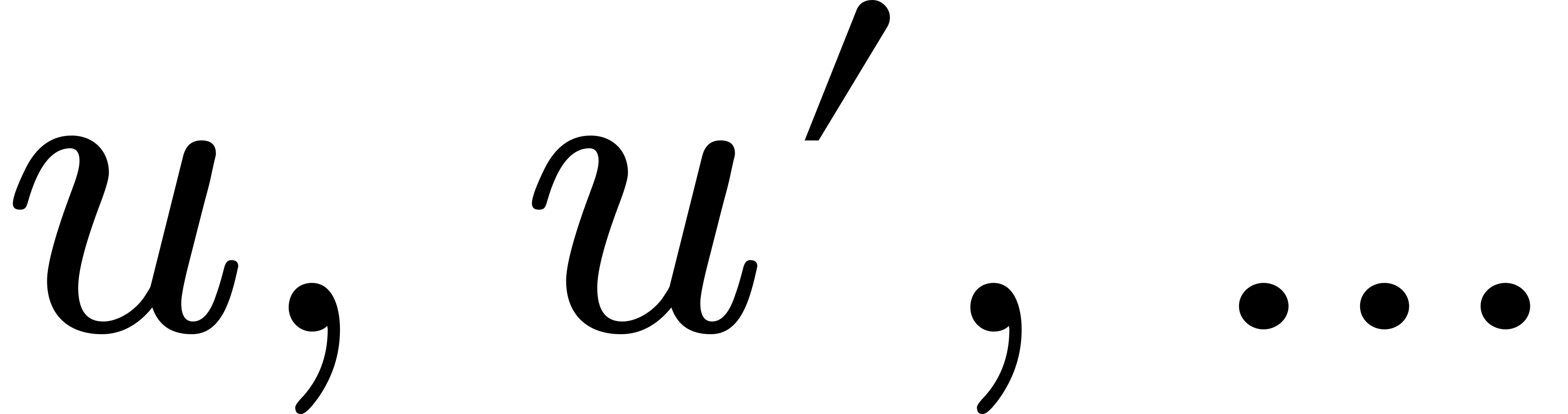 of
satisfy (3). From this he deduces that are all
integrals of , and so that
of
satisfy (3). From this he deduces that are all
integrals of , and so that
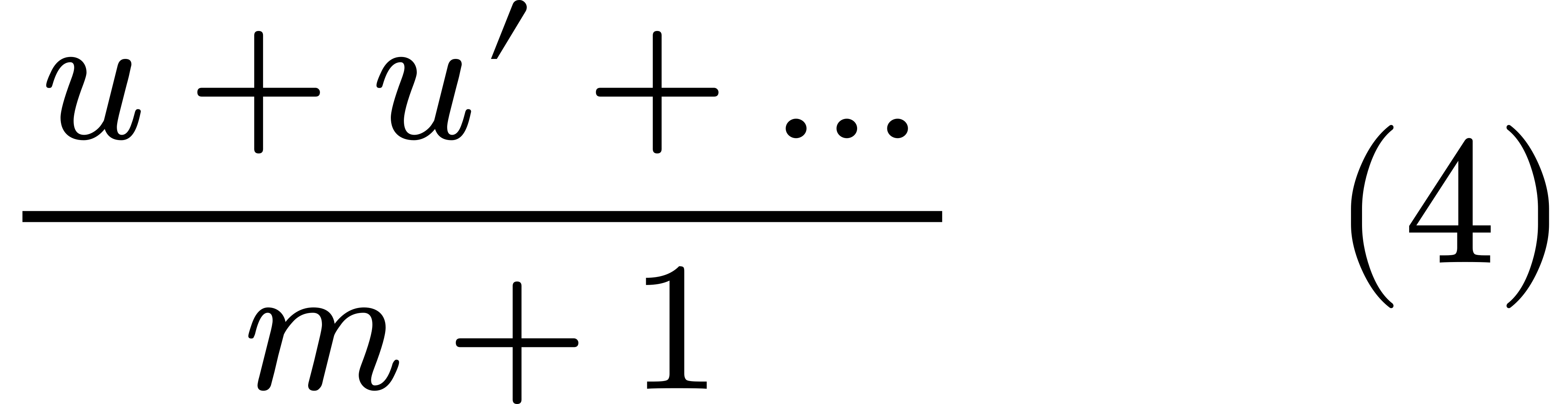 [Pg 67]
is an integral of . As (4) is a symmetric function of the roots
of (2), it is a rational function of and , whence his
conclusion follows[56].
[Pg 67]
is an integral of . As (4) is a symmetric function of the roots
of (2), it is a rational function of and , whence his
conclusion follows[56].
It will be observed that the hypothesis that (2) does actually involve
is essential, if we are to avoid the absurd conclusion that
is necessarily a rational function of only. On the other
hand it is not obvious how the presence of in affects
the other steps in the argument.
The crucial inference is that which asserts that because the equations
and  , considered as equations in
, have a root in common, and is irreducible, therefore
is divisible by . This inference is invalid.
, considered as equations in
, have a root in common, and is irreducible, therefore
is divisible by . This inference is invalid.
We could only apply the lemma in this way if the equation (3) were
satisfied by one of the roots of (2) identically, that is to
say for all values of and . But this is not the case. The
equations are satisfied by the same value of only when
and are connected by the equation (1).
Suppose, for example, that
 Then we may take
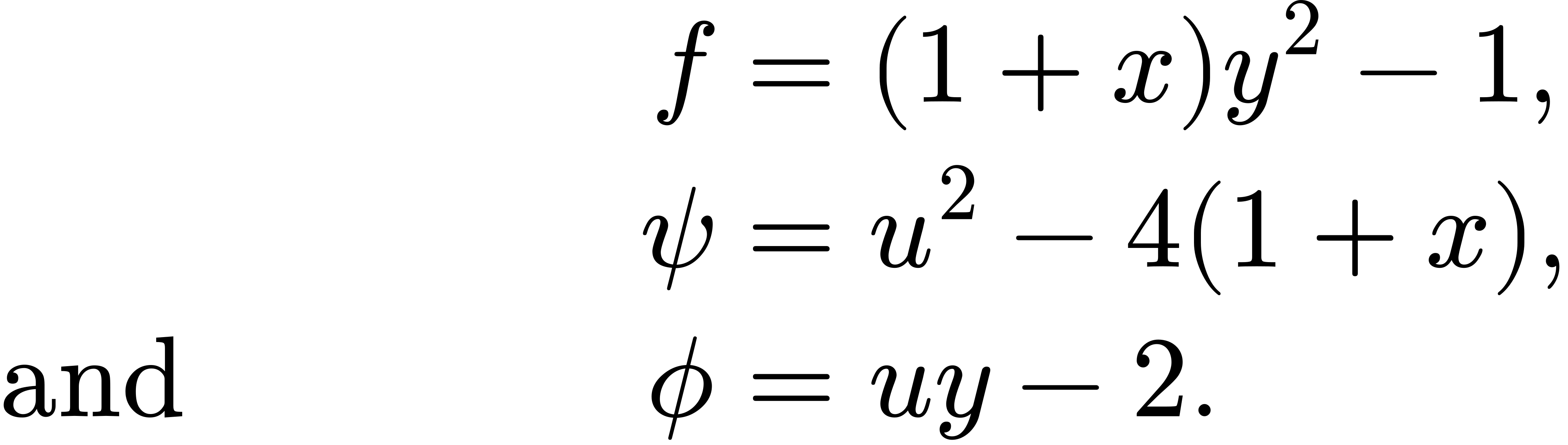 Differentiating the equations and , and
eliminating , we find
Differentiating the equations and , and
eliminating , we find
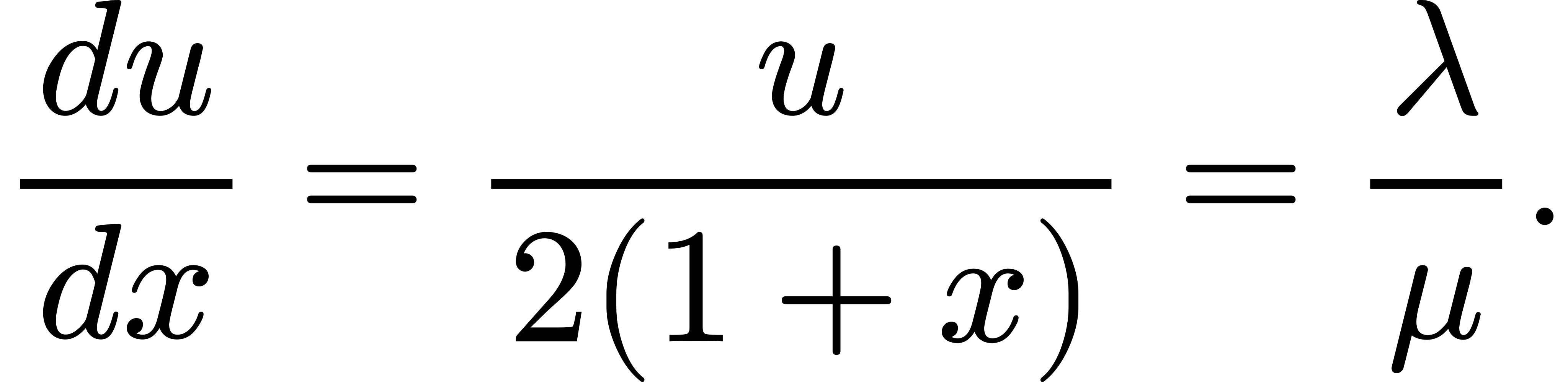 Thus
Thus
 and these polynomials have a common factor only in virtue of the
equation .
and these polynomials have a common factor only in virtue of the
equation .
[54] The theorem with which Abel is engaged is a very much more general theorem.
[55] 'Or, au lieu de supposer ces coefficiens rationnels en
, nous les supposerons rationnels en , ; car cette
supposition permise simplifiera beaucoup le raisonnement'.
[56] Bertrand (Calcul intégral, ch. 5) replaces the
last step in Abel's argument by the observation that if and
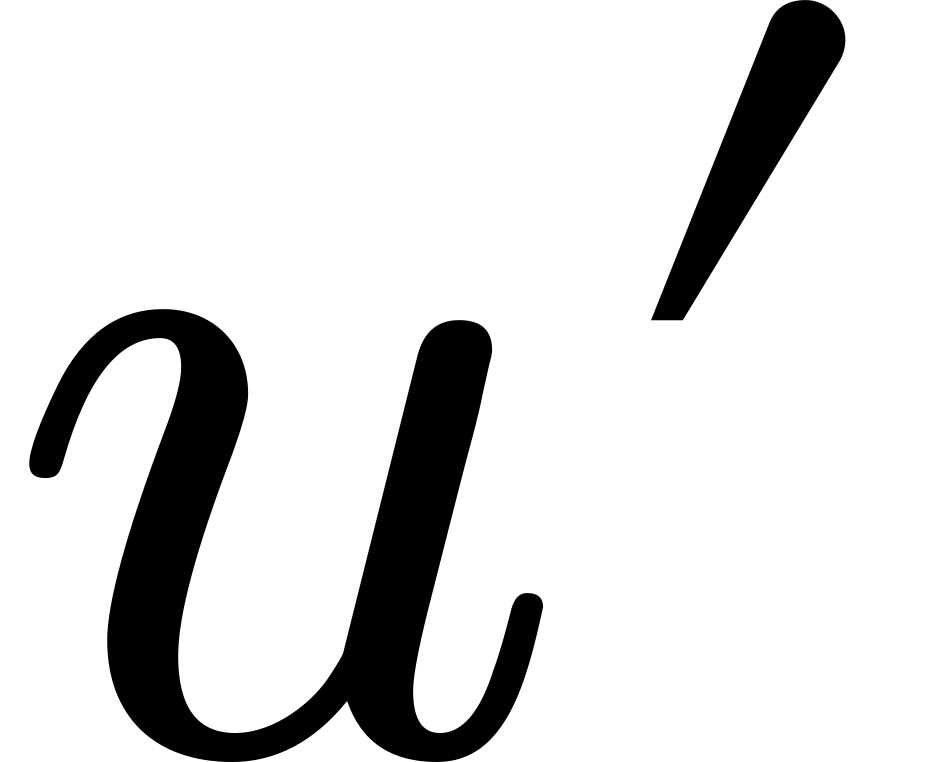 are both integrals of then
 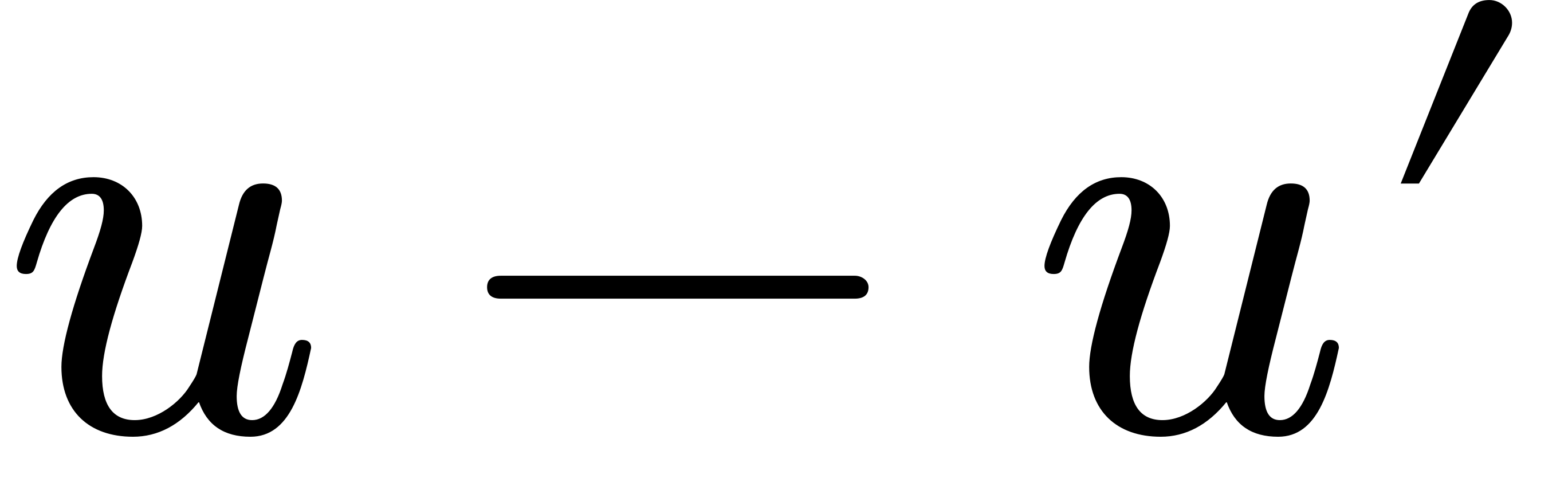 is constant (cf. p.
39, bottom). It follows that the degree of the equation which defines
can be decreased, which contradicts the hypothesis that it is
irreducible.
is constant (cf. p.
39, bottom). It follows that the degree of the equation which defines
can be decreased, which contradicts the hypothesis that it is
irreducible.
CAMBRIDGE:
PRINTED BY PHOTOGRAPHIC PROCESS
FOR THE UNIVERSITY PRESS