
Title: Charles Chapin's story
Written in Sing Sing Prison
Author: Charles E. Chapin
Author of introduction, etc.: Basil King
Release date: April 25, 2026 [eBook #78544]
Language: English
Original publication: New York: G. P. Putnam’s Sons, 1920
Other information and formats: www.gutenberg.org/ebooks/78544
Credits: The Online Distributed Proofreading Team at https://www.pgdp.net (This file was produced from images generously made available by The Internet Archive/American Libraries.)
This eBook is dedicated to the memory of Joe Cooper
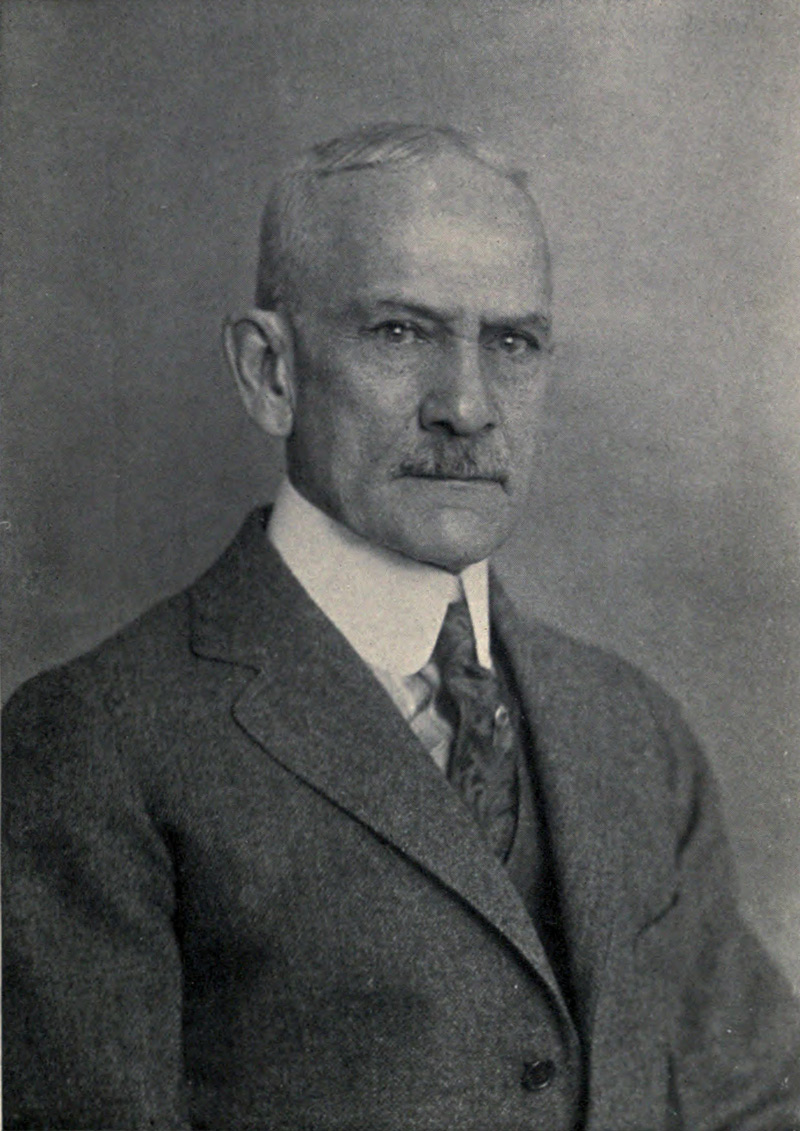
Charles Chapin’s Story
Written in Sing Sing Prison
With an Introduction by
Basil King
G. P. Putnam’s Sons
New York and London
The Knickerbocker Press
1920
Copyright, 1920
BY
G. P. PUTNAM’S SONS

“The defendant was indicted on September 18, 1918, for murder in the first degree, in that he had killed his wife Nellie, with a pistol, by shooting her in the head. At the time of the killing defendant was, and for several years prior thereto had been, the city editor of the New York Evening World. He is sixty years of age. He and his wife whom he killed had been married for thirty-nine years, and the uncontradicted testimony is to the effect that their relations had been singularly devoted.”
The tragic and unusual case of Charles E. Chapin, now serving a term of life imprisonment in Sing Sing, will be well remembered by newspaper readers. The paragraph quoted above is from the report of a Commission which passed upon the sanity of the defendant.
At the time of the tragedy Mr. Chapin wrote a letter to a newspaper associate in part as follows:
vi “For some time I have been conscious that I am on the verge of a nervous breakdown. I have fought against it continually, but the pains in my head grow more acute, and I realize now that the time is fast approaching when I will collapse entirely. I dread to think of passing the remainder of my life in a sanitarium so I am doing the only thing I can think of to escape such a calamity. I know how wrong it is, but I cannot go on suffering as I have for months. It takes greater courage than I possess. I have tried to think out what is best to do, and cannot bear the thought of leaving my wife to face the world alone, so I have resolved to take her with me.”
The defendant then went to Prospect Park, a revolver in his pocket, intending to end his life. In a newspaper he saw the headline, “Charles Chapin Wanted For Murder.” Going to the nearest police station, he gave himself up.
That, in brief, is the story of the tragedy which terminated the career of the author of this book.
In calling the reader’s attention to the following pages it may be well to strike at once the personal note and explain my acquaintance with the writer. I am not an official visitor at Sing Sing Prison. I am not a philanthropist. In philanthropy as now practiced I have only a limited confidence. Had I not had a personal reason for going to the House of Sorrow I should have felt it an intrusion, almost an impertinence, to have forced myself where men have at least the right not to be stared at while undergoing their agony.
I met Charles Chapin at the request of another prisoner at Sing Sing—a young man doing a life-term for a similar transgression of the law—whom I had come to know by correspondence. A story of mine having attracted his attention he was kind enough to write me. After an exchange of letters I viiiwent “up the river” to see him, finding a tall, stalwart, manly, bright-faced lad of twenty-six who had gone there at twenty-two. This meeting was the starting point of an affection which has become one of the precious things in my life.
The writer of this book had been at Sing Sing but a very short time when my younger friend asked me if I would see the new arrival. Here again my own books had prepared the way for me, and, as far as the conditions permitted, our coming together was not different from what it would have been had we met at a club. My recollection is that we talked of the public interests of the day, of literature, and of the scene around us. As to the last there was not a murmur of complaint. In subsequent meetings we have kept to the same tone, though we could not have become as friendly as we are without an element of what I may call mutual solicitude stealing into our intercourse.
My object in bringing up this point is to underscore the fact that when it comes to human dealing there is no difference between ixthe man whom we somewhat hideously call a convict and anybody else. We arrest him, we try him, we sentence him, we lock him behind bars—and having in our own thought thrust him outside the human race we fancy that it must seem to him a matter of course to be in the limbo of outcast souls.
But not at all! Arrested, tried, sentenced, buried in a cell, he is to himself as much a man, and the very same man, as ever he was. As truly as men at liberty he finds the prisoner’s life abnormal. Normality, after all, is only what we are accustomed to. Short of perfection it is not a standard in itself. For the individual normal life is the life to which he has trained himself, and no two lives have been trained alike. Normality is an inner principle more than it is an outer one. Outwardly, through a sort of moral cowardice, we conform as best we can to accepted patterns which inwardly we reject; but it is the inner ideal by which we truly live. There are honored men by the million all over the world whose methods would render them abnormal to most of their fellow-citizens were xthe bluff to be called. We do not call the bluff, and we dare not, for the reason that the vast majority of us fear that in any such unmasking we ourselves should be exposed.
At the same time hidden wrong, however concealed by our social false-fronts, demands an expiation. We are so constituted—uprightness is so much the native principle of the human being—that our universal departure from the only norm there is cannot go unrecognized. Unconsciously, subconsciously, and even to some extent consciously, we call for sacrifice and propitiation. The more dogged our refusal to repent and reform the more persistent our demand for something or someone to suffer in our stead.
Modern American slang has coined a word for this, doubtless because the need cried out for expression. Like all slang it is the voice of the man in the street, finding the right outlet for his pent-up soul where the scholar and lexicographer have walked round it. In this case, however, modern and ancient instinct have been one, and in our slang word of to-day we link up with a mighty tradition and xigo back to our first recognition of the soul’s necessities.
We speak of the man on whom the hard consequences fall as—the goat. So did the people who first read the results of wrong in terms of tragedy. The burden of their sin was intolerable. Unwilling to see that they could throw off that burden by giving up the sin they sought means whereby they might go on committing the sin and escape the penalty. So once a year they took a goat and laid their sin upon his head, sending him off into the wilderness to get rid of him. He became the scape-goat who bore their punishment so that they could begin with a clean slate again. It was naïve, childish, but significant.
And in the convict, I am driven to believe, modern civilization is not looking for the brother to be treated wisely because his weakness is so obvious and his suffering so great. If that were all the way would be found as soon as there was a will. The difficulties of dealing with the prison and prisoner are, to my mind, largely inventions. When we consider xiiwhat gigantic obstacles we have overcome when it was to our interest to overcome them anything here is child’s play. We shake our heads and pull long faces chiefly to get dust into our own eyes, so that we may better carry out the purpose we really have at heart.
That purpose is to find a goat. Is not that the underlying motive of the world-wide cruelty that has made the prison of the Christian the nearest thing to Calvary? Is not that the reason why the most philanthropic and tender-hearted among us can mentally look on at barbarities such as have rarely been surpassed on earth and never turn a hair? In the prisoner we have found our goat. He is suffering not for his own sins alone, but for ours. Naïvely, childishly, but significantly, we outrage every human instinct within him, so that our own secret self-reproach may be appeased. The world as it is, society as we have formed it, must have a goat; and we seize the weakest and most defenseless thing on which we can lay our hands.
xiii I should say right here that I am not speaking from personal knowledge. I know only what every other member of the public knows—what has been written of in newspapers and books, exposed in plays and moving pictures, and never contradicted. I am aware too that efforts at humanizing the prison system have been made here and there, and the Sing Sing of to-day is a proof of them. But they have been made by individuals and have never had the public back of them. When the public, through its elected representatives, have been able to intervene it has been largely to nullify or put a stop to anything meant to mitigate the poor goat’s suffering. Our women, our clergymen, our reformers will cry out against atrocities four thousand miles away, and not lift a finger to stop the operation of the third degree—to cite nothing else—against their own countrymen at their own gates. Here perhaps one should say in the words of One more tolerant than I, “These things ought ye to have done and not leave the other undone.”
It is the more amazing then to see the xivhuman sacrifice coming through his crucifixion with exaltation in his face and a new life in his heart. That happens. It happens rarely enough, God knows, but the miracle comes to pass. It has happened in the case of the boy friend I have already mentioned. It has happened in other instances, some of which I myself have known. I have watched it happening in the case of him whose book I am now commending to the public.
To reconstruct a sane and helpful life when all that is left of the self is what one has in common with the animal is an indication of a mighty principle of growth. The writer of these pages is not the man who went “up the river” two years ago. The book reads as though its author had climbed through smiling hills only to fall over a frightful precipice. Possibly; and yet one might fall over a precipice to find oneself in a valley of fruits and flowers, even if among them there are bitter herbs. That is the new life which out of anguish the man is creating for himself and helping to shed about him. The reader will not have finished this book when he has read xvto the last line, not any more than we have done with a life when we scan its record on a tombstone. The best part of it will lie in the invisible pages through which the tale goes on.
A friend came to visit me. We were seated in the visitors’ room at Sing Sing. It was the first time we had met since that fateful day when the structure I had spent a lifetime in rearing, crashed down upon me and buried me beneath the ruins. I told him something of my life in prison; the dreary monotony of it, the loneliness, the hours of bitter regret, the long nights of solitude, the heartache, the desolation.
In the new life in which I found myself there were duties to be performed during the day, or I must have gone mad with the morbid thoughts that were always surging through my brain. But there were the long evenings and longer nights, sleepless nights in a cell that is no bigger than a dead man’s grave.
I told my friend that I had sought distraction in books. I had plenty of time for reading and more than twelve thousand volumes to xviiichoose from. Books were almost my only companions. But sometimes I would read for an hour without retaining a word and frequently I would have to turn back and read the pages again, for I had read only with my eyes; my mind was focused elsewhere. Thoughts of that dreadful tragedy were ever running between the lines of the printed pages. Ofttimes something I read would bring memories and a flood of tears. For even a felon can weep. Oscar Wilde, in the most sorrowful story I have ever read, De Profundis, into which the imprisoned poet poured the tears of his tortured soul, wrote these lines:
“When a day comes that a man in prison does not weep, it is not when he is happy but when his heart is hard.” And yet there are men who argue that imprisonment is not an adequate punishment. They have never tried it.
“Why don’t you turn to writing during some of your leisure hours,” suggested my friend. “Why don’t you write a book?”
“About what?”
xix “Write an autobiography.”
“I haven’t that much egotism left.”
“Tell the story of your forty years as a newspaper man.”
That night in my cell my thoughts kept me awake. Forty years a newspaper man! Memories began to crowd in upon me. It seemed as if even the smallest events of my life were flashing through a kinetoscope. Whatever else had happened to me, my memory was unimpaired. Events and persons and names through all my forty years of newspaper activity came back to me as vividly as if they had been crowded into the past few months. Thoughts come quickly in the solitude of a prison cell.
Forty years! Looking forward, with the inexperienced eyes of youth, forty years seems a long stretch of time, the span of a life of fullness. Looking backward, when one is sixty and is at the end of his journey, forty years is but a succession of yesterdays that multiplied so rapidly they were come and gone almost without realization. How much action was crowded into those forty years. How much xxhappiness, how much sorrow; what ambitious hopes, what bitter disappointments. Sometimes achieving success, often humiliated by failure. Striving always for fame and riches, acquiring a fleeting glimpse of both, and in the end cast upon the scrap heap of humanity, abandoned and forgotten, dead yet alive.
There is no self-pity in what I write. My heart may be torn with anguish, my mind tormented with regret, but there has never been one moment since I came to prison that I have pitied myself or permitted the pity of others to depress me. I know why I am here and what brought it about. I know that if I were not here I should not be living. I know that if I had died and the dear one I loved had survived she would be suffering greater privation than I ever can. Nothing else matters.
The day after my friend suggested that I write a book, I chanced to read a bit of philosophy that was written by Samuel Smiles. “It is good for men to be roused into action by difficulty, rather than to slumber away their lives in useless apathy and indolence,” wrote this fine philosopher. In the same essay he xxiexpressed this thought: “There are natures which blossom and ripen amidst trials that would only wither and decay in an atmosphere of ease and comfort.”
Solitude drives some men mad; it sharpens the wits of others. There are many instances of courageous men who have turned confinement in prison into a great personal achievement. More faint-hearted ones, crushed and defeated by self-pity, drifted quickly into a condition of impotent inertia. Hopeless and without ambition, they withered and died.
Some of the greatest books in all literature were written in the solitude of confinement, written by men who suffered greater hardships than I shall perhaps ever know, for they were in prison in the days when men were treated with inhuman cruelty, before the searchlight of publicity had penetrated into the loathsome dungeons where they were chained and tortured. They are long since dead. What they wrote still lives and will endure as long as books are read. Thoughts expressed in words are imperishable.
When I realized what had been achieved by xxiisuch illustrious men as Cervantes and Dante and John Bunyan and Defoe and Lovelace and Cooper and Campanella and countless others, I was lifted out of despondent lethargy and fired with ambition to try and do something besides cry. It is so easy to cry in prison.
I began to write. In memory I lived my life over again. My manuscript grew into many pages and the occupation of mind it gave often lifted me out of myself and my gloomy surroundings. I think it may have saved me from the worst possible fate that could have befallen me. I wrote on from day to day without fixed purpose. I had no thought of ever publishing my story. I was content that it gave me something to do and that in doing it the iron within was rising to crush out morbid thoughts.
About the time my story was nearing completion, Major Lewis E. Lawes came to Sing Sing as Warden, a man of heart and understanding, the right man in a big job. Because I had previously had experience in newspaper making, he asked me to become editor of the institutional paper, the Sing Sing Bulletin. A request from the Warden is equivalent to an xxiiiorder and it was my duty to comply as obediently as if I had been ordered to duty on the coal dump. Major Lawes did not make his order compulsory. He simply pointed out that it might be an opportunity for me to do something useful, something that might be of lasting benefit to others. It is fine to make believe that one is still of some use in the world, even though he fails.
I published the first chapter of my autobiography in our prison paper and some of my associates here urged me to continue it. My good friend Basil King, who wrote that wonderful story, The City of Comrades, read my manuscript. His advice prompted me to send it to a publisher. That is how my story now comes to you.
C. E. C.
xxiv Sing Sing, May, 1920.
| CHAPTER | PAGE | |
|---|---|---|
| I. | —From the Bottom | 1 |
| II. | —Barnstorming | 20 |
| III. | —Chicago “Tribune” Days | 40 |
| IV. | —My First Big “Scoop” | 59 |
| V. | —A Murder Mystery | 82 |
| VI. | —“Star” Reporting | 98 |
| VII. | —A City Editor at Twenty-Five | 126 |
| VIII. | —Breaking into Park Row | 155 |
| IX. | —On the “World’s” City Desk | 172 |
| X. | —Newspapering To-day | 193 |
| XI. | —The Pulitzers | 216 |
| XII. | —Newspaper Ethics | 231 |
| XIII. | —Gathering Clouds | 265 |
| XIV. | —Tragedy | 287 |
| xxviXV. | —A “Lifer” in Sing Sing | 313 |
Charles Chapin’s Story
I began life, and I ended life—the real living of the everyday world—as a newspaper man.
Newspapering, of a kind, commenced for me in a thriving little Western town when I was just fourteen years old, and had started out to climb from the bottom the long ladder that leads up through education and experience to fame and fortune. In this little town I was attracted by a sign in the window of a newspaper office. A boy was wanted to deliver papers.
I applied at the front counter for the job and was directed to the circulation manager, who critically sized me up and declared that 2I wouldn’t do. He needed strong boys, he said, boys who were husky enough to pack a heavy bundle of newspapers over a route several miles in length and deliver them to subscribers before they sat down to breakfast.
I was a little chap, even for my age, but I had grit and persuaded the man to give me a trial. It was my duty to be in the pressroom at 3.30 o’clock every morning, take papers from the press as fast as they were printed, fold to regulation form, and start off with several hundred strapped to my shoulder, delivering to the homes of subscribers as I went along. It was a five-mile tramp before breakfast and in almost the hilliest town I ever saw. Many of the streets on my route were so steep that one took almost as many steps upward as forward and in the winter months I would often flounder through snow that was waist deep.
My wages were four dollars a week. I realized that I could not pay expenses and save up for my education on this slender income, so I set to work to find ways of increasing it. Opportunity came knocking at my door 3within a week. In the same building with the newspaper was a telegraph office and one morning when I returned from delivering papers the operator called me in and asked if I would carry an important message to the home of a United States Senator. It was from President Grant, he said, and could not be delayed. His regular messenger boy hadn’t shown up.
I readily consented and I recall how chesty I felt as bearer of a Presidential message on which the fate of the nation might hang. My importance grew on me as I trudged along and finally I broke into a run. When the maid came to the door and said the Senator wasn’t up I insisted that she show me to his bedchamber.
I was led upstairs to where the Senator was sleeping his wits away, perhaps dreaming of that big land swindle with which his name was afterward so scandalously linked. I rapped several times without a response. The door was ajar and I could get a glimpse of him in his bed, the blankets pulled over his head as if to deaden the sound of his noisy snoring.
4 Getting no reply to my repeated knocking I pushed the door open, went boldly into the room, and yanked the bedclothing from the sleeper. He awoke with a start and glared at me as if he were going to bite.
“Wake up, Senator,” I exclaimed, not a bit abashed, “I have an important telegraph message for you from President Grant.” I know that I must have swelled up as I thrust it into his outstretched hand.
He read it and began to laugh.
“How did you know that it is important?” he asked.
“Any message from President Grant to a United States Senator must be important,” I replied. The Senator patted my head as he reached for his trousers, drew out a silver dollar, and handed it to me.
“Nothing to collect on the message,” I hastened to assure him.
“The dollar is yours for being my little alarm clock and waking me up,” he good-naturedly replied.
He asked me to pull the bellcord and when a servant responded he ordered that breakfast 5be brought up for both of us. And when it came he made me sit down and help him eat it.
During the breakfast he asked me a lot of questions about myself and my ambitions and he gave me some wholesome advice and loaned me two books from his library. He told me stories about famous statesmen and how some of them had begun life as I was beginning and had fought their way to the top. It was a wonderful hour I spent with him and there were other hours and more silver dollars and the loan of many volumes from his well-stocked bookcases in the weeks that followed before he was called back to Washington by the opening of Congress.
When I reported back to the telegraph office I was offered a steady job, the operator having discovered that his red-headed messenger had run off with a patent medicine vendor. The messenger work wouldn’t interfere with my delivering papers. I was to get thirteen dollars a month and “perquisites.” The big sounding word meant that I was permitted to charge an extra quarter for every telegram I delivered more than a mile from the office. 6Visions of affluence and the means of obtaining the much coveted education flashed through the dreams of a tired small boy that night.
Before falling asleep I figured up how much my earnings might amount to in a year and was elated with the total I set down. Delivering papers at four dollars a week and telegraph messages at thirteen dollars a month footed up three hundred and sixty-four dollars a year, not counting “perquisites.” The “perquisites” was the only uncertain element in my calculations. I knew that a large percentage of the population lived more than a mile from the office and I tried to make mental estimates of how many might be important enough to receive telegrams. I grew as optimistic over my prospect as the visionary Colonel Sellers did in his calculations of how many bottles of lotion would be needed to cure all the sore eyed persons in the world.
The next day opportunity came knocking again. Across the way from “our office” was an unpretentious restaurant, run by a jolly, red faced man with an enormous nose, and his adorable wife. It was cheap as to price, but 7everything was of good quality. It was the cleanest and neatest eating place I can recall. At least that is the impression that lingers in my memory after the elapse of almost half a century. I wasn’t so fastidious as regards restaurants and food then as I grew to be in later years. How I did love that dear motherly woman who hurried steaming hot coffee and a “stack of wheats” to me every morning when I returned from delivering papers.
One morning she began chatting with me in a friendly way and when she had coaxed me to tell about myself she proposed that I help them out by acting as cashier during the mid-day rush hour. In return I was to get my meals. It took me less than a minute to accept. It meant that I could save my earnings, for I also had free lodgings, the foreman of the pressroom having granted me permission to sleep on a stack of print paper. I acquired a bedquilt and at night I would roll up in it and sleep more soundly and untroubled than ever I did in the luxurious Plaza Hotel in New York, where, later in life, I made my home for 8many years. There are tender memories of my nest a-top the reserve supply of print paper, covered only with my quilt of many colors and fantastic design. It was there I learned the lesson of self-education; a lesson that was worth while.
Looking backward now from the last milestone of my life’s journey, I am wondering what I might have achieved if I could have had the opportunities so many young men neglect.
There was an editor who took a liking to me and who helped me in a lot of ways. I have often wondered how so busy a man could have the time or patience to give so much attention to so small a human atom as me. He selected books for me to read and he would talk to me about them and explain many of the perplexities that lodged in my mind. I had a duplicate key to his bookcases and was permitted to take a book whenever I wished. In return for this privilege I kept the bookcases in order. It was a fine opportunity for a chap who was hungry for knowledge and had no other way of acquiring it. And how I did read! There 9was nothing in the wide range of literature that I wouldn’t tackle and try to comprehend. I read all of the essays of Emerson and Carlyle, the philosophies of Aristotle, Epictetus, Montaigne, and Johnson and volume after volume of history, ancient, modern, and medieval. In the line of fiction I read all of Balzac, Dumas, Hugo, Dickens, Scott, Thackeray, and a score of others of the great authors. I read the lives of the great men of all times.
And, best of all, I read the Bible. Of all authors, of all times, there were none who expressed themselves so clearly and so beautifully as did the men who wrote this greatest Book of all literature.
I studied the sciences, especially astronomy, chemistry, geology, and ethnology. The works of Voltaire and Darwin interested but mystified me. I read and studied and analyzed so far as my undeveloped brain would reach, but in all my reading of such books my belief in God and in the teachings of Christ was never shaken. To-day, in spite of my present condition and what brought me to it, that belief is as firmly rooted as ever.
10 I learned other things in the newspaper office and in the telegraph office that were useful later on. The easiest accomplishment that came to me was when I mastered the Morse code and learned to send and receive telegraph messages. The operator who employed me as messenger boy was my instructor and I repaid him by often taking messages from the wires while he lingered with convivial companions in a nearby saloon. One night the newspaper editor was worried because it was nearly time for the night report of the Associated Press to begin and the telegraph operator couldn’t be found. Scouts were sent scurrying in every direction, to search for him. When they found him and brought him to the office he could scarcely stand on his feet.
The signal for clearing the wire had already been given and the operator lurched over to the table and responded to the call of his office. The press report began coming. I knew the operator was in no condition for duty and I watched him with nervous apprehension. Automatically he grabbed a pencil and began to write but he got down only a few illegible 11sentences when he collapsed and plunged from his seat to the floor.
I let him lie there in drunken stupor while I took every word of the report without once breaking in on the wire to ask that a sentence be repeated. The report was several thousand words in length. The editor, tense and anxious, sat by my side, editing the copy as fast as I wrote it, sending it direct to the composing room. When it was done I almost went to pieces from the nervous strain.
The editor told everyone in the office how I had saved the paper from being sent to press without a line of telegraph news and before I went to bed I got him to promise not to report the operator. I met the operator many years later. He had become chief operator in one of the most important telegraph offices in the West and gave me every facility at his disposal when I called to arrange for filing my report of a great political convention. He told me then that he never drank another drop of liquor after that night I saved him from disgrace.
At the time I mastered telegraphy I also 12learned to set type. And I learned something of what is called job work, such as setting display type for letter heads, business cards, circulars, and other commercial necessities of the printer’s art. I learned to lock a form and put it on a press, and to run and feed the press. I got no pay for what I did other than what I earned by delivering papers and telegraph messages. I did it because I loved it and cared for no other form of enjoyment. I had no boy friends and made no attempt to cultivate them. My associates were men, chiefly men from whom I could learn something useful and there wasn’t a man in the entire organization of the newspaper office who didn’t cheerfully explain to me anything I asked of him. Even the busy editors and printers would stop important work to help me with something I couldn’t comprehend. Perhaps that is why I have always tried to be helpful to boys who were beginning at the bottom of the ladder as I did.
At the time I was trying to educate myself from books borrowed from the editor’s library, I chanced to get a copy of a weekly story paper 13that was exclusively for boys and girls. With that issue there had been started a department for instruction in shorthand, conducted by one of the ablest stenographers in New York. Shorthand was then almost unknown in the West and even in the big cities the comparatively few who had mastered it were employed in court and legislative work. It was but little known even in big business, which hadn’t yet heard of the telephone, or of electric lights, or typewriting and adding machines. I became interested, sent on my subscription to the magazine and studied the lessons. Soon I purchased a set of textbooks and applied myself with such industry that I quickly mastered it. I got so that I could take down in shorthand messages that came over the telegraph wires. Evenings I would attend lectures and public meetings and constant practice soon made it possible for me to make verbatim reports of even the most rapid speakers.
One day a lawyer came to me and asked if I could report an important trial in which he was to appear as counsel. I was timid about 14undertaking it, but urged on by the telegraph operator and my friend the editor, I consented. The day of the trial came and I walked importantly into the courtroom with my notebooks and pencils. The lawyer who had employed me greeted me effusively and escorted me to a table inside the railing and immediately under the judge’s bench. There had never been a stenographic report of a trial in that court.
Before the trial began the lawyer made a pretty speech about me, telling how I had mastered the mysteries of a wonderful sign language that enabled me to take down every word as fast as it was uttered, no matter how rapidly the speaker might talk. There were few stenographers who were my equals for speed and accuracy, the lawyer lyingly proclaimed. The courtroom was crowded and I felt as if a spotlight had been suddenly turned on me. The whitehaired judge beamed benignantly as he consented to my official appointment to report the trial.
There was one in the courtroom who was hostile. I knew it the instant I spotted him, 15scowling crossly at me from the opposite side of the table. He was a weazened old chap, as bald as an egg, hooked nose and catlike eyes. He had been official court reporter for many years and wrote longhand with considerable speed. He evidently looked upon me as menacing his job. Ignoring my appointment, he got out a ream of legal cap and proceeded to take testimony in accustomed longhand.
As many of the witnesses were foreigners and spoke brokenly I experienced some difficulty in understanding them, but I felt that I was getting along smoothly until the judge directed me to read the reply a witness had made to the preceding question. I read aloud from my notes and suddenly came to a halt. I stammered and stuttered. My notes had become undecipherable. The shorthand characters were dancing a jib. I could make nothing of them. The lawyer who employed me glared angrily and the old fiend with the hook nose sneered contemptuously.
The judge alone was sympathetic. He evidently understood that my confusion was due to nervousness rather than to incompetence. 16The judge tried to encourage me by telling me not to get flustered and to take as much time as necessary for the translation. The more I tried the more hopelessly confused I grew. At last the judge motioned to old hooknose to read from his report. How my heart throbbed the humiliation I felt when that hateful old court reporter gave me a withering look of contempt as he rose and read from his notes in a loud, firm voice. I have always hated him and his mean, supercilious sneer with which he sank contentedly back in his chair and gloated over my defeat. What stung the hardest was that almost the instant the judge signaled to old hooknose, the tantalizing hieroglyphics over which I had stumbled suddenly came to life and became as translatable as ordinary print. But it was too late. I felt crushed and beaten.
In the telegraph office one evening, I scribbled a fanciful story which I called An Autobiography of a Hotel Office Chair. I left it on a desk when I went across the street to eat and couldn’t find it when I returned. The operator had begun taking the press report and I 17couldn’t bother him. I thought he might have chucked it into the wastebasket, so went to bed, but when I returned from delivering papers the next morning I found a note from the editor, complimenting me on what he graciously described as an “exceedingly well-written little sketch.” He added: “Stick to it and you’ll get there.” Two silver dollars were enclosed.
I was transported to the seventh heaven with delight when I found that he had put my Autobiography of a Hotel Office Chair in a conspicuous position on the editorial page. Within an hour I read it not less than a dozen times. Never were telegraph messages delivered with greater celerity than I delivered them that day. I felt as if I had wings.
When the operator got to the office he explained the mystery of how my story got into print. He had noticed it lying on the desk when I went to supper and had picked it up and read it. He took it to the editor. “I’ll print it,” the editor said. “That lad has got stuff in him. He’ll make a newspaper man some day.”
18 He double leaded my story and put it on the same page with his own brilliant editorials, for he was a brilliant writer, as I recall him, much too big a man for the job he occupied or the narrow sphere in which some unexplainable freak of fate had cast him. I was an editor in Chicago when I read of his tragic death. He was dropped to make room for a younger man and he went into the woods and blew out his wonderful brains.
A few more words of conceit about my story of the hotel office chair. A few days after it was printed the editor showed me the Chicago Tribune and the St. Louis Globe Democrat. Each had reprinted my story, with credit to the paper in which it first appeared. Nothing I ever did afterwards in the field of journalism brought me so much happiness.
I began studying the papers of the big cities. Often I would read descriptions of events, get the facts in my mind, and rewrite them in my own way, critically comparing what I had written with what had been printed. I think this helped as much as anything in laying the foundation for what I ultimately came to. 19Whenever I could I talked to my friend, the editor, about my ambition and he was my ever-willing tutor and guide. One day he called me to him and said that before the year was up he would give me a regular job as reporter. I was elated over the promise and during the ensuing months I studied harder than ever.
Then came a calamity in my young life. Whether it was because I worked too much and slept too little, or because I was sleeping in the foul atmosphere of a basement pressroom, I was stricken with a fever and when next I was able to sit up I was a miserable little skeleton of skin and bones.
All ambition was gone. Even that bright and happy dream of a newspaper career vanished with the delirium I had suffered. There was but one thing in all the world I wanted. I wanted to see my mother. And home to her I went, as fast as a train could take me.
As soon as I had recovered from my illness, I began hunting for a job. I had already decided on a newspaper career and I went to Chicago with the hope of finding employment as a reporter. Not one of the editors appeared eager to grab me. One offered me a job as office boy.
The only one who listened to me seriously was the venerable Wilbur F. Storey, one of the greatest editors of his day. He was proprietor of the liveliest and most enterprising newspaper in the West, the Chicago Times, then at the top notch of its popularity. The day I called on him, there had appeared in the Times the most blatantly sensational headline that was ever printed in a respectable newspaper. It was the talk of the town. Over an account of a hanging, in big, black type, was: “Jerked to Jesus.”
21 When I entered Mr. Storey’s sanctum he was tilted back in a big swivel chair, his long legs stretched across the top of his desk. I imagine that he was gloating over the sensation that shocking headline had created. He was chuckling and smiling and his bony fingers were clutching his snow-white whiskers.
No one was ever more gracious to me. I told him my story and of my ambition to become a reporter. He even read the clipping I showed him of An Autobiography of a Hotel Office Chair. He asked a lot of questions but in the end said that a boy of sixteen, no matter how bright he might be, was too young and inexperienced to undertake a reporter’s job in a big city.
“Go back to your home town or some other small city and get a few years of practical training,” he said, “and when you have done this come to me again. Don’t get discouraged. I am sure you have got good stuff in you and the grit to win success.”
And the editor who was threatened with tar and feathers at the time of the Civil War and who was once publicly horsewhipped by an 22irate burlesque actress, put his arm about me and walked with me to the elevator. It was the last time I ever spoke to him, though a few years later I was city editor of the great newspaper he created.
I went back to the town where my parents lived, determined to follow the advice Mr. Storey had given me, but I discovered that it was easier for him to tell me what to do than it was for me to do it. Neither of the grouchy old editors of the two daily newspapers in my home town were sufficiently impressed with my youthful enthusiasm to give me a chance to develop the talent that was screaming for an outlet. Even the news items I wrote for them didn’t mollify their crabbedness. I offered to work three months on trial without pay, but they were mercilessly unyielding to the eloquence of my appeals, gruffly telling me to go to school and wait until I was grown up before venturing to break into journalism.
Journalism! How I grew to detest that much abused word. Every brainless mutt I ever met in a newspaper office described himself as a “journalist.” The real men, the men 23who knew news, knew how to get it and knew how to write it, preferred to be known as newspaper men. One never hears a star reporter along Park Row speak of journalism.
In our town there had been one of those mushroom insurance companies that suddenly spring into existence, collect all the money in sight and then blow up. This particular company had gone into bankruptcy and the sheriff was selling at auction what was left of the wreck. Among its effects were a printing press and a fairly complete outfit. I happened along, chirped a low bid and down came the auctioneer’s hammer. It was mine. Nearly all of my savings went to pay for it. I got a dray to cart it to our home and mother gave me two large rooms on an upper floor in which to establish a printing office. I remember making myself unpopular with the rest of the family by scrubbing inky type in the bathtub.
I worked most of that night putting my print shop in shape and the next day I printed business cards and circulars, announcing that I was prepared to do all kinds of commercial 24printing at prices much lower than any competitor. I got as many orders as I could fill by soliciting among merchants and family friends and my printing business grew so fast that I had to work day and night to keep up. To gratify my ambition to write, I began publishing a monthly magazine for boys and girls which I called Our Compliments. I wrote nearly every line in it, set all of the type and did the presswork.
Our Compliments became a flourishing publication, even if it did make a dent in the earnings of my printing business. Many of the budding geniuses of that period afterward entered the swelling ranks of professional newspaper writers and authors. We amateurs exchanged publications and got to know each other. I conceived the idea of forming an association of amateur editors, appointed myself secretary, issued elaborate invitations to a convention and the Western Amateur Press Association came into existence. We elected Alex Dingwall president, the same “Sandy” Dingwall who became famous and rich as a theatrical manager in New York, was 25much loved and died not long ago, leaving nearly a million dollars and almost as many mourners.
Now I made a false step; I became an actor. That is, my name was printed on playbills as an actor, but if there are any alive who ever saw me on the stage, I am sure they will back me up when I declare that I never was an actor.
At the time I was editing Our Compliments and running a printing business on a small scale, I had a young friend who was sadly stage-struck. In appearance he was not unlike pictures of Edwin Booth in his younger days. Conscious of the resemblance, he wore his hair long and wavy, soaked it with oil and brushed it back so as to give prominence to his forehead. He affected a serious and thoughtful expression of countenance, like the famous tragedian he idolized, and looked the highbrow he fancied himself to be. He always wore a long frock coat and enormously high collar. I can picture him now as he paced solemnly through the streets of the town with corrugated brow and downcast eyes, one 26hand thrust into the opening of his coat, the other drawn behind his back, with fingers twitching convulsively.
A strange character was Rodney, though beneath his studied eccentricity was a heart of gold. He set about organizing an amateur dramatic club and invited me to join. I protested that I knew nothing about acting, that in all my life the only plays I had witnessed were Uncle Tom’s Cabin and The Gypsy Queen. He suggested a trip to Chicago to see Lawrence Barrett in Richelieu. We went and I fell. It was wonderful. Before reaching the end of our journey I had promised to take part in the performance Rodney was getting up of Ten Nights in a Barroom. I was to be Willie, who gets killed by a gambler. Rehearsals were soon under way, directed by the public librarian, once a professional actor. The performance was given for a popular charity and the opera house was packed. There was a storm of applause when the gambler killed me. I suspected that it was because I was such a bad actor, but I was flatteringly mentioned in the newspapers and 27some of my friends said I ought to go on the stage.
Rodney was so elated with the success of our performance that he decided to get up another. This was more pretentious, two professionals from Chicago playing the leading characters. They were the Lords—Louie and James—who traveled extensively through the Western states with a company of which Louie was the star and her husband the manager. She was a versatile actress who played every range of character from Lady Macbeth to Topsy. They were organizing for a tour of the West and invited Rodney and me to join them. Louie painted an alluring picture of the life of a traveling thespian, so we signed contracts for a tour of forty weeks and were enrolled as professional “barnstormers.”
And barnstorming it was in all that the word implies. The Lords were pioneers on what was then the Western frontier, playing in the principal towns of Iowa, Nebraska, Kansas, Texas, and most of the mining camps of Colorado and Montana. In those days few of the Western towns boasted of a theater, so we 28carried our own scenery and gave many of our performances in courthouses, public schools, and vacant stores, borrowing lumber as we went along to build a raised platform on which we presented our plays. The reserved seats were chairs carried from the dining-room of hotels, but the ordinary seats were planks strung across cracker boxes and nail kegs. We actors built the stage, hung the scenery, arranged the seats and carried up the baggage. When this labor was done we distributed playbills throughout the town. In the evening we acted as ushers until time to go behind the curtain to make ourselves up for the performance.
We usually stayed a week in a town, for railway travel was expensive and trains uncertain. Sometimes we would get away from the railways and travel across country by team, we actors perched on a truckload of trunks and scenery, the ladies going ahead with the manager in carriages. The hotels were mostly primitive and often they were so crowded that eight actors would be compelled to sleep in four beds that had been crowded into one 29small room, standing on our beds to dress and performing our toilets in a public washroom.
Our repertoire was extensive, for we never gave a play twice in the same town. We did Richard III, Lady of Lyons, East Lynne, Damon and Pythias, Lucretia Borgia, Macbeth, Rip Van Winkle, Hidden Hand, Uncle Tom’s Cabin and many more. There was nothing in dramatic literature that our manager was too modest to attempt. The numerical strength of his company never stayed his ambition. If there were not enough actors to play the different characters, some of us had to play two or three. I have seen the armies of Richard and Richmond assault each other in terrific combat when both armies numbered seven men and a girl, the latter dressed in armor and wearing a bushy beard.
Once when sickness and desertion had reduced our company to seven, I played Uncle Tom and three white characters, blacking my face and washing back to white as occasion required. I wasn’t eighteen. Little Eva was nearly thirty and a mother. I met her years afterward in New York. She had become a 30star at a Broadway theater, but she didn’t look a year older than when she sat on my knee in a Colorado mining camp and lisped wistfully: “Uncle Tom, sing to me of the angels bright.”
After two seasons with the Lords I went with them to the Black Hills, where we played all winter in the opera house that had just been erected in Deadwood. It was then the liveliest mining town in the country. Fortune seekers were flocking from every direction. Vast wealth was being dug from the gold mines and enormous smelters were being worked day and night, converting the ore into bullion. Everybody had plenty of money and spent it freely. The miners patronized our theater to the limit of its seating capacity and were enthusiastic in their appreciation.
I recall the night “Calamity Jane,” a notorious female desperado, came to see us play East Lynne. She and “Arkansaw Bill,” equally famous as a bandit and stage robber, occupied front seats. Behind them sat Seth Bullock, afterward an intimate friend of Colonel Roosevelt. “Calamity” was dolled 31up for the occasion in corduroy suit and sombrero and appeared to be particularly vain of her green kid gloves. She was not a fascinating lady. As soon as she was comfortably settled in her seat she bit a chunk from a plug of tobacco and chewed as industriously as any miner throughout the evening.
She and her escort clapped their hands in noisy appreciation until Lady Isabel eloped with Sir Francis and then “Calamity” showed her disapproval of the erring wife’s conduct by marching down to the footlights and squirting a stream of tobacco juice over the front of Lady Isabel’s pink satin evening gown. There came very near being a rough-house when the curtain was lowered and Mr. Lord began to voice a protest over the indignity to his wife. Trouble was avoided by the lady desperado tossing a handful of gold coin over the footlights to pay for the gown she had so ruthlessly desecrated. Throughout the remainder of the performance she chewed her cud in courteous silence. “Arkansaw Bill” was killed a week afterward when he and his band of ruffians raided the little frontier town that is 32now the capital of South Dakota. I read not long ago that “Calamity” lived to be a very old woman. She raised enough deviltry to have deserved hanging a dozen times.
As the season drew to a close Johnny Rodgers, manager of the opera house, engaged me for another season. The Lords were not to remain. In the spring the manager started for Chicago to secure new talent, expecting to return in two weeks. At the end of that time he was still snow-bound at the end of the stage route, nearly two hundred miles to the eastward, waiting for the railway to be opened for traffic. The next we heard of him he had been drowned. Impatient to get to Chicago and complete his mission, he had ventured on a long voyage down the Missouri River in a frail skiff, hoping to reach Sioux City and get a train at that point for Chicago. His only companion was an Indian. The river was choked with ice and the skiff was crushed and sunk. The Indian alone escaped. There was a lot of speculation at the time as to whether the Indian might not have made ’way with the venturesome manager, who had a large 33amount of money in a belt around his waist. His body was never found.
When the news of the drowning came, I sat up all night with a hysterical widow and in the morning awoke to a realization of my own predicament, for I was a long way from home, with no opportunity to obtain theatrical employment and but few dollars in my pocket. The fare to Chicago was more than a hundred dollars and the walking was bad. The mayor met me that day and said he had been talking with some of the citizens and they were desirous of raising a purse to send me home. I declined the proffered charity and went to a newspaper office in search of work, got a job setting type and in ten minutes had my coat off and sleeves rolled up.
I didn’t have to earn my bread by setting type more than a couple of weeks, for the editor was summoned East by a death in his family and the publisher asked me to fill the chair until the editor returned. I held the job for six months, earning enough to take me to Chicago in the drawing-room of a Pullman, the only accommodation available when I reached 34a railroad, after traveling two days and nights across an alkali desert, riding the entire distance on top of a stagecoach under a blistering August sun. Never was anyone more cruelly sunburned. The journey was made in response to a telegram, offering me an engagement as leading man with a company that was organizing to support a woman star on a tour of the West. Why a manager should send to the far-away Black Hills for an actor, had me puzzled until I found my old friend Rodney was in the company and knew that it was through him that I had been called. That season I essayed such trivial roles as Romeo and Claude Melnotte and Armand Duval. Ye gods! as my mind flits back to those days when I was a trouper, I marvel how I ever escaped the hook.
Comes now the most important event in that period of my life. On the fourth day of November, 1879, I was married, six days after I became twenty-one. She was the sweetest, the truest, the most lovable woman I have ever known; full of fun and the joy of living; bright, witty, and entertaining. All who knew 35her loved her. She was a woman’s woman, a zealous champion of her sex, with none of the petty jealousies and envies with which some women are afflicted. I never once heard her speak unkindly of any of her associates. She was ever my best and most dependable friend, my comforter in disappointments and worries, patiently indulgent toward my weaknesses, proud of whatever success came to me and with an abiding faith in my ability. In all our thirty-nine years of married life she never wavered in her devotion, though many times I must have strained her love almost to the breaking.
When I did right she encouraged me; when I did wrong she forgave and kept on loving me.
We met in the parlor of a Chicago hotel. The card I sent to another was given to her by a careless bell boy. There were mutual explanations and she smilingly withdrew. We accidentally met again a week later. I was in a long line of ticket buyers that led to the box office of a theater. A lady in front of me dropped a purse and I picked it up and restored it. There was a smile of recognition 36when she saw that I was the one to whose card she had responded. Weeks went by and again we met, this time in the breakfast-room of a hotel in Iowa. I had arrived late the night before to join a theatrical company. When I went down to a late breakfast there was but one person in the room. It was the same lady. Fate!
She motioned me to a seat at her table. We were to be with the same company. It was her first season. She had been a teacher of elocution she told me, and had turned to the stage through advice of theatrical friends. She was afraid she wasn’t going to like it, for already there had been some things about stage life that grated harshly. We tarried long at our first meal. I made up my mind that she was a young woman of unusual refinement and intelligence and personally very attractive. She had received an excellent education and it was only an unexpected twist of fortune that had made it necessary for her to earn a livelihood.
That night I carried her bag to the theater and I carried it back to the hotel after the performance. 37In a little town in the West, some months later, I persuaded her to become my wife. She always claimed that I tricked her into marriage. She didn’t come down to breakfast one morning and I rapped on her door to ascertain the reason, thinking she might have overslept. She had been ill nearly all night, she told me, so I brought her some medicine and advised her to remain quiet for a few hours. That afternoon, while playing billiards with our manager, a strange impulse came to me and I put the cue back in the rack without finishing the game.
“What’s up?” asked the manager, surprised at my quitting so abruptly.
“I’m going to be married.”
There was an understanding between Nellie and me that we would get married at the close of our theatrical season, providing our affections didn’t wane. I was sure of myself, but I wasn’t of her.
Accompanied by the manager I went to the home of an Episcopal clergyman and arranged for a wedding in his house at five o’clock. It was then four and I hadn’t asked the bride. 38I arranged with the manager to be at the clergyman’s house with his wife to give the bride away and to act as witnesses. Then I called on the bride. She was feeling better and consented to go with me for a short walk. I walked her to the rectory and coaxed her to go in with me. Even then she didn’t suspect, but when she was in the house and found our manager and his wife there in their Sunday clothes and the clergyman in official robe, she saw the trap I had sprung, but she played her part of the game and came out with a marriage certificate tightly clutched in her hand. What seemed to bother her most was that she wore a black dress.
“Black is an evil omen for a bride,” she whispered to me on our way back to the hotel. The manager had ordered the wedding supper and we toasted my bride with the first champagne I ever drank.
The theatrical company had a disastrous tour and ended so ingloriously that we were left stranded a long way from home, our salaries far in arrears. My bride and I returned to Chicago on our trunks, the railroad company 39furnishing transportation and holding our baggage until redeemed. I borrowed the money to reclaim our trunks, settled my wife in a hotel and started out to look for work, all in one day.
My first thought was to try for a newspaper job and when I went home to dinner that evening I was a reporter on the Chicago Tribune. At the end of my first week I drew the smallest pay of any reporter on the staff; at the end of my last week, four years later, when I left to become city editor of the Chicago Times, I was the Tribune’s highest salaried reporter.
I enjoyed my work on the Chicago Tribune. It was the life I had longed for from boyhood, and I became so fascinated with reporting that I regretted having wasted so much time as a barnstorming player. At first I was given only the smaller assignments to cover, but no matter how unimportant the city editor considered them they were always important to me and I seldom failed to make the most of my opportunities.
It wasn’t long until some of my small assignments began to develop into big stories, for one cannot always measure the value of a potential news tip from the restricted horizon of a city editor’s desk. I demonstrated this soon after I joined the staff. A citizen telephoned that rumors were circulating of some sort of trouble at the plant of a big steel corporation 41in a southern suburb. The city editor chased me out to investigate. He evidently didn’t think much of the tip, for several of his star reporters were sitting idle in the office at the time.
It was a long, hard trip through a nasty storm, but when I got back to the office I had the biggest news beat of the year. The sheriff had closed the plant, throwing hundreds of men out of work; the concern was bankrupt and the president of it had fled to Europe. He was a man of great business prominence, his wife a leader in high society. I saw him years afterward in New York, wrecked in health, his once brilliant mind shattered. He died in an insane asylum.
That was an astonished city editor when he lifted a bunch of copy from my desk and read what I had written about the collapse of the steel corporation. Through lack of experience I had neglected to tell him what I had. He was quickly alert to the importance of it and my first big news story filled a lot of space on the front page.
But it isn’t often that the experienced editor 42is caught napping. It is more apt to be the reporter. I recall that memorable night in the Tribune office when a reporter who had been sent to interview William H. Vanderbilt strolled languidly into the office, and reported that the great railroad magnate refused to talk. His assignment had been an important one. The Nickel Plate road, paralleling the tracks of the Vanderbilt lines between Chicago and Buffalo, had just been completed and the financial pirates who conceived and carried to a finish what the public suspected was the biggest gold brick game ever attempted, were waiting for Vanderbilt to open his money-bags and pay their price. Mr. Vanderbilt had arrived that night in his private car and the reporter was sent to ask him what he was going to do about it. It was so late when he got back the city editor had gone home and his assistant, busy with belated copy, simply nodded as the reporter turned in a brief item and said he had failed to get an interview.
With this off his mind, the reporter strolled to the telegraph editor’s room, in search of a 43poker game. I was there, chatting with Tod Cowles, the night editor. It was almost time for the last edition to go to press.
We heard the reporter tell the poker players how he boarded the Vanderbilt car and asked its owner if he had come to buy the Nickel Plate and Vanderbilt had sneeringly called it a “streak of rust.” The reporter had insisted on getting an interview as a matter of “great public interest” and the irate old magnate had arrogantly exclaimed: “The public be damned.”
“The old devil actually pushed me out of the car and slammed the door in my face,” concluded the reporter, as he began to deal the cards.
I saw an angry glitter in the night editor’s eyes as he glanced at a proof containing a brief item of the railroad magnate’s arrival. He ordered the reporter to drop his cards and tell him every word said on the car. Then he got as busy as a boy killing rattlesnakes. The most striking story on the front page that morning was headed “The Public be Damned!” The expression spread all over 44the world and is still frequently quoted, nearly forty years afterward.
On that trip William H. Vanderbilt bought the “streak of rust,” and Calvin S. Brice, General Samuel H. Thomas, William B. Howard, Columbus R. Cummings, and the rest of the crowd, who put this over on him, divided the swag. The deal netted them more than $13,000,000.
I got the full particulars first-hand from Howard, a shrewd financier who was a genius for making fortunes in daring manipulations. He gave me the details of many big financial stories. My first trip to New York was as his guest, to write about the construction of the Croton aqueduct, which was then being dug. He had a $7,000,000 contract for the Tarrytown section. We stayed at the Union League Club for two weeks and I frequently lunched there with his financial associates, who amazed me with the freedom with which they discussed their affairs in my presence. My reportorial greed for news fairly made me itch to tell in print some of the things these mighty men discussed so brazenly. It was my introduction 45to the life of a millionaire. The taste for luxury I acquired in those two weeks I never got over.
One day, after luncheon, General Thomas confided to me that he had once been a reporter and he told me something of how he accumulated his millions. I suggested that he let me into the secret of how he did it.
“Better stick to reporting,” he said. “You’re a lot happier now than I am.” From what I learned afterwards I am inclined to think he meant it.
Some millionaires I have since known were far less happy and far more discontented than most reporters. One who is rated high among the greatest and most successful in the industrial world and is reputed to have accumulated more than $100,000,000, had to divorce his beautiful wife because of her infatuation for an aged gambler. His doctor added to his woes by cutting off his drinks and forbidding him to smoke. That was some blow to a man who always drank champagne with his breakfast and smoked a box of dollar cigars every day. The doctor also put him on a diet of 46plain food. Death was to be the penalty of disobedience. What a wretchedly unhappy man he must be, although he had enough money to ballast a battleship, a marble palace on Fifth Avenue, another at Newport, and a country estate that a king might envy.
Another mighty man of big finance was on such bad terms with his home folk they would scarcely speak to him. All the big guns in the Wall Street district feared him and some say he practically controlled the affairs of the nation, bossing Presidents and Cabinet officers and senators in much the same way that he did his chauffeur. But he got his one day when the wind slammed a door in his face, driving an amber and gold cigar holder so far down his throat that he almost choked to death. It must have strained something in his mechanism, for he had to go abroad for treatment. He died there, with only a granddaughter, a half dozen doctors and several trained nurses at his bedside. The newspapers got out extras announcing his death and all the millionaires in Wall Street got up and stretched, much as the fans do at the Polo Grounds at the end of the seventh.
47 But I have wandered far afield from the newsroom of a daily paper. When I began on the Chicago Tribune, Joseph Medill was the chief editor and principal owner. He was a man of big brains and wielded a mighty influence. He belonged to the old school of journalists. There were few like him then; I know of none now. He and Dana were much alike, only Mr. Medill was more influential in politics and took a more active interest in municipal government and public improvements. It was his great brain power that made the Tribune the most prosperous of all newspapers west of New York, a position from which it has never receded, though it is no longer dominated by its editor. Few who read it now know or care who writes its editorials or directs the policy. It is just a big, well-greased machine and the wheels roll round and the paper comes out with accustomed regularity no matter who drops out from the organization. The indispensable man in a great newspaper office no longer exists.
In those days Mr. Medill was almost as well-known to most of the inhabitants of Chicago 48as Lake Michigan, yet he was seldom seen outside of his sanctum. Conversation with him was difficult, for he was so deaf that he couldn’t hear a word without holding an ever ready trumpet to his ear. He had a trick of turning his affliction to advantage, sometimes pretending not to hear when he did and withdrawing his trumpet from his ear and resuming his writing when he was bored or didn’t wish to listen.
I recall when he was on the witness stand in a half-million dollar libel suit and insisted on telling what he had to say in his own way. In vain the counsel for the plaintiff tried to stop him, but Mr. Medill pretended not to understand, haranguing the jury and presenting his side of the controversy in such scholarly and logical fashion that verdict was returned in his favor. Lawyer Trude, counsel for the Tribune, declared that the case would surely have gone against him but for the cleverness of the editor.
It was my good fortune to attract the attention of the great editor. He intrusted to me many assignments in which he was personally 49interested and I was never happier than when my efforts won his approval. He had a way of bestowing praise that stirred in the recipient an ambition to do even better, but he could also be snappish and make one feel cheap if an article did not come up to his expectation. Once he was so crabbed with me that I went back to my desk and exploded the indignation I felt in a letter of resignation. The next day he sent for me and related an anecdote about something that happened to him in the early part of his career and I laughed so heartily that I forgot my injured dignity, for what he told me made him out a bigger boob than I had been.
His brother Sam was managing editor, but I came into contact with him very little, for he was in poor health and not long after I went on the paper he went to California with his close personal friend William H. Crane, the comedian, and soon after his return he died. We all mourned him, for he was popular with the entire staff, but the paper came out as regularly as when he was alive and there stepped into his managerial shoes a son-in-law 50of Joseph Medill, Robert W. Patterson, known among his intimates as “Handsome Bob.”
Most of the staff looked upon his coming as a huge joke. They called him a dude and prophesied that he wouldn’t last six months. He had been given the job simply because he had married the editor’s daughter, they sneered, and they poked fun at his faultless attire and criticized his whiskers, which he parted in the middle and brushed with much care. But one cannot always tell by the way a man grows his whiskers what sort of brain power is concealed beneath his skull. Nor does it infallibly follow that a man is a fool because he is married to the daughter of his boss. He had barely got his editorial chair warm before the Tribune began to do things, bigger and better than ever before. The staid old way of presenting news gave way to a newer and better way and the Tribune, by brilliant strokes of enterprise, made such rapid progress that some of its contemporaries couldn’t keep the pace and dropped out of the race. It was Mr. Medill’s great brains that founded the Tribune and placed it on a solid foundation 51but it was Mr. Patterson’s news instinct and managerial ability that lifted the paper out of the rut.
Some of the old hacks on the staff described the new managing editor as an “arrogant up-start,” but I always found him courteous and kindly, quick to appreciate efficient work, and equally quick to condemn the slovenly methods and slothful ways of some of the old-timers who comprised the hammer brigade.
I am told that after the death of Mr. Medill, Mr. Patterson began to let down and throw the burden of responsibility on the shoulders of subordinates while he was pulling wires to get elected United States senator. He erected one of the costliest mansions in Washington and lived there much of the time during the later years of his life, but he never attained his political ambition. He suddenly dropped dead while on a visit to Philadelphia and the Tribune is just as progressive and prosperous as it ever was. The paper is now controlled by the two grandsons of Mr. Medill. One of them was in the Ojai Valley in Southern California when I was, a few years ago. He startled 52the natives by chartering a stagecoach, drawn by six white horses, to convey him fifty miles over the mountains to Santa Barbara to get his hair cut.
The man on the paper who most interested me was the city editor. He was one of the oddest characters I ever came in contact with and one of the best-informed men on almost every conceivable subject. Eccentric though he was, he was a marvelous developer of young men. He had a positive talent for exciting their ambition and training them to make the most of their opportunities. A demon for hard work and a slave to his profession, he was intolerant toward shirkers. Some called him a “slave driver,” but he never asked one of his men to work nearly so hard as he did himself. He was always the first to show up in the morning and he was almost the last to leave at night. The office clock was less regular than he and from the time he got to the office until the paper went to press he was never idle. He did more actual work every day than a half-dozen men now perform in most newspaper offices. For twenty-seven years he 53worked sixteen hours a day and seven days a week without a day off and without once taking a vacation. At the end of twenty-seven years’ continual service, Mr. Medill insisted on his having a vacation.
Once before when a holiday had been suggested, the city editor had angrily threatened to resign. This time he yielded to persuasion. He bought a fishing rod and what goes with it and sat for a week on a bridge that crosses the Chicago River, baiting his hook with worms and casting it into the turbid waters of that vast sewer. He sat there from sunup till sundown for a week. He didn’t get so much as a nibble but at the end of his vacation he returned to his desk sunburned and happy.
Fred Hall was his name. He served throughout the Civil War in the War Department as secretary to Mr. Stanton and, after the rumpus between Stanton and President Johnson, came to Chicago and got a job on the Tribune. I don’t think he has been beyond the city limits since. When I last heard of him he had been retired on a pension, after almost a half-century in the Tribune office. His wife had been 54horribly killed in a motor boat explosion, his only daughter had married and moved away and he was alone with his books and his memories. I know but one man more lonely than he is. Both of us have lived too long.
In fancy I can see him as he was in the old days when I was a Tribune reporter, crouched in a chair, sucking the stem of a corncob pipe and filling the air about him with a dense cloud of smoke while his active brain created striking features for the next day’s issue, sometimes tossing into the wastebasket the poorly written story of some indolent reporter and rewriting it in his own finished style. He was the first man I ever saw use a typewriter in the editorial room and his nimble fingers did jigsteps on the keys as he reeled off columns of copy. In the office he invariably wore a straw hat, summer or winter, a hat so yellowed with age that one might suspect he wore it when he came from Washington at the close of the war. His office coat was a seedy cardigan jacket, so frayed and worn that his shirt sleeves showed through the elbows. I never knew him to wear a different suit than the one he had on 55when first I saw him. His beard was scraggly and of many shades. Sometimes his blue eyes would beam with merriment through the spectacles he always wore and sometimes they stared at one icily when a reporter stammeringly attempted to explain how he happened to fall down on his assignment. It was useless to defend failure with deception, for he seemed to know instinctively that a lie was coming before it was formed. I sometimes felt as if he could simply look a man in the eye and read what was in his mind.
He kept himself aloof from everyone except his family and the members of his staff, yet he had an intimate knowledge of nearly every important person in Chicago. And he knew their secrets, who and when they married and how they got their money. He knew the city better than all the police force and the letter carriers combined. He knew just how long it would ordinarily take a reporter to get to any part of it, cover a story and get back to the office. He could rattle off names and dates from memory of nearly every event that had taken place since the “Big Fire,” and he was a 56human encyclopedia of a wider range of subjects than I ever dreamed could be stored in one human brain.
How he acquired so much useful information always puzzled me. He read nothing but newspapers in the office, for his time was too much occupied to permit him to read books and he was never in his home except to eat and sleep. He had no companions and never went anywhere. He never went to a theater, but he could repeat the plot of every new play and tell who the actors were and the parts they played. The next day after the first performance of Mikado he was humming “The flowers that bloom in the spring, tra la.”
Some of the men who were reporters with me at that time afterward became famous in literature, in other professions, and some overturned tradition by winning high places in finance. Frank Vanderlip is the most illustrious success of all. While reporting the financial market for the Tribune he won the confidence of Lyman Gage and when the latter retired from a bank presidency to become Secretary of the Treasury, he appointed Vanderlip 57his chief assistant and Vanderlip stepped from there into the National City Bank, where he soon rose to President and then to Chairman of the Board of Directors, recently retiring with more millions than a barn would hold.
John Wilkie was also taken from the Tribune by Mr. Gage to fill the important position of Chief of the Secret Service, holding the job with distinction through several administrations and finally giving it up to become general manager of the Chicago street railways. John McGovern and Stanley Waterloo both achieved reputations as writers of fiction. Ted McPhelim, described by Sir Henry Irving in his memoirs, as the greatest of American dramatic critics, read and studied and wrote until he broke down completely. He was one of the gentlest and most lovable of all my many brilliant associates and didn’t deserve the dreadful fate that befell him. He was yet a young man when he died in an asylum. Paul Potter, the most humorous writer on the staff, became famous as a writer of plays. He still is.
Will Van Benthuysen, who joined the staff 58about the time I did, succeeded Mr. Patterson as managing editor when Mr. Medill died, attracted the attention of Mr. Pulitzer and was lured to New York as managing editor of the morning World at double the salary he was getting in Chicago. George Bell, who came over from Ireland in the steerage and wrote such a clever description of his voyage that he was promptly hired as a reporter on the Tribune, became one of our shining stars. He also felt the call of the Metropolis and was many years with the Sun. Like Ted McPhelim, he died insane. Vance Thompson, one of our brightest reporters, later distinguished himself as a Paris correspondent and fattened his bank account by writing one of the “best sellers,” Eat and Grow Thin. There was “Biff” Hall, who became a magistrate; Charlie Shuman, who got rich building apartment houses in Los Angeles; Burke Waterloo, whom everyone loved and who mystified all of us by blowing out his brains.
The escape of McGarrigle from the Chicago jail gave me an opportunity to score my first conspicuous news scoop. It won me a lot of glory among the craft and what was more gratifying, boosted my salary so substantially that I landed among the highest salaried men on the staff, promoting me almost in a twinkling from a “cub” to a “star.”
McGarrigle had been chief of police while Carter Harrison was Mayor and with a change of administration that turned him out of office, he was appointed warden of the big county hospital. There was no more popular man in political life. Handsome, courteous, and genial, he had a host of friends. The gang that put him in his new job had an ulterior motive, for they made him collector of boodle for the most corrupt political ring that ever 60infested the western metropolis. The ring was made up of those in control of the Board of County Commissioners. The graft was enormous. Contracts were awarded without regard to lowest bidders and the merchants who furnished supplies to all of the county institutions were compelled to pay a big percentage of the amount of their bills to the boodle gang. The county was plundered right and left, the merchants getting even for what they had to give up, by false invoices, short weights, and outrageous overcharges. McGarrigle did the collecting and the ringsters divided the spoils.
The county was on the verge of bankruptcy when the newspapers turned the searchlight of publicity on the rascals and forced an investigation by the grand jury. Eight or nine county commissioners were hustled off to jail. Some got away and fled to foreign countries. McGarrigle was indicted with the others and was the first to go to bat. He was promptly convicted and sentenced to a long term of imprisonment in Joliet penitentiary. An appeal was taken in his case and the courts 61having refused to accept bail he was kept in jail until the Supreme Court could review the evidence.
One Sunday morning Chicago was startled by the news that he had escaped. Unlike most jail breakers, he didn’t saw his way through steel bars to freedom nor overpower and disarm his guards. McGarrigle had brains and he used them to open prison doors. It was the most unique getaway I ever heard of.
Canute R. Matson was sheriff. He was a ponderous Scandanavian, big of heart but with sluggish wits. It chanced that he and McGarrigle were members of the same benevolent order. When McGarrigle found this out he gave the high sign and the grip and the big sheriff fell into a trap. One Saturday, when McGarrigle had been in jail for several months he coaxed the sheriff to take him home for a visit with his family, at the same time getting a hot bath and change of clothing. Not suspecting a trick, the sheriff came to the jail that night and conveyed his prisoner to the northern limits of the city in a closed carriage. 62Arriving at McGarrigle’s home without incident, the prisoner’s attractive wife brought refreshments and entertained the sheriff while her husband retired to the bathroom with a suit of fresh underwear. There was a sound of water running into the tub and then all was still.
The clock on the mantel ticked industriously and Mrs. McGarrigle was as vivacious and entertaining as an anxious woman who is playing a game could be. The sheriff grew uneasy. He went to the bathroom door and knocked. There was no response. He tried the door and found it securely fastened. Mrs. McGarrigle began to laugh. Then she dropped to her knees and prayed that her husband might not get caught. The sheriff went out of the house with a rush and around to the rear. The bathroom window was open and he peeped in. The tub was filled with water, there was a change of underwear on a stool, but it was like a cage from which the bird has flown.
There were exciting times in Chicago the remainder of that night. The sheriff notified the police and routed all of his deputies from 63their beds to search for the fugitive. The only trace they found was the track of the carriage wheels and the prints of horses’ hoofs at the rear of the house, where some trusted friend had waited for the boodler to crawl through the bathroom window. Sheriff Matson became the laughingstock of the town. It proved his political ruin.
I was in Captain Dunham’s tugboat office the following day and overheard Superintendent Sinclair tell of the mysterious movement during the night of a schooner from her mooring at Rush Street bridge. The schooner had taken on a cargo of grain during the week and had been towed down the river late Saturday afternoon, bound for a Canadian port on Lake Ontario. It was the schooner Blake. Instead of proceeding to Lake Michigan to begin her long voyage, as a well-behaved vessel should, she had been made fast to the dock at Rush Street, unmindful of the fine weather and fair wind. She lay there throughout the afternoon and evening. About midnight the bridgetender saw a carriage roll down to the dock. The horses were jaded 64as if from a hard run. A tall man got out of the carriage, shook hands with one who remained inside, and hurriedly boarded the Blake. Immediately afterward the captain came ashore, walked to a nearby saloon and excitedly telephoned for a tug to tow him out to the lake.
“That’s how McGarrigle got away,” I whispered to Captain Dunham and I pledged him not to mention it until I could complete an investigation and write a story for next day’s Tribune.
On consulting Lloyd’s vessel register I found that the Blake was owned by Fred St. John, a wealthy shipowner of St. Catherine’s, Canada. I knew that a Doctor St. John was a prominent member of the medical staff at the hospital where McGarrigle had been warden, and I recalled seeing him leave the jail a few days before when I was there interviewing one of the imprisoned boodlers. It didn’t take long to ascertain that the Doctor was a Canadian, that he came from the town where the owner of the schooner lived and that the owner and he were brothers. My story was now fairly 65complete, except for an interview with Doctor St. John, whom I was unable to locate, although another reporter camped on his doorstep almost the entire night.
It was an interesting story that appeared in the Tribune the following morning. No other newspaper had it. The Tribune hadn’t been on the streets long before a squad of sheriff’s men were hurrying by train to the Straits of Mackinaw, three hundred miles away, through which the Blake must pass after sailing the length of Lake Michigan. The officers were expected to intercept the schooner in the narrow waters of the straits and capture the fugitive. They had orders to take him dead or alive. They might have been successful if they hadn’t run afoul of Captain Johnny Freer and fallen victims to an insidious drink called “cherry bunce.”
I figured that I could take a night train, follow the sheriff’s men to the straits, get there ahead of the schooner and be in time to report the capture of the fleeing boodler, but it so happened that the Blake had fair winds from the hour she sailed from Chicago and she 66almost broke the record for a fast voyage through Lake Michigan.
On the train that took me to Mackinaw was Melville E. Stone, now general manager of the Associated Press. He was then one of the owners of the Chicago Daily News and a live wire when it came to gathering news. Accompanied by the city editor of his paper, he was heading for the straits to report personally the arrest of McGarrigle. I recall how nervous I got when the sleeping car porter confided to me that Mr. Stone had sent a telegram, ordering that the fastest tug available be waiting for him. How could I expect to compete with such extravagant enterprise, when I had come away with not much more than railroad fare? I had overheard the city editor scolding one of the reporters only a week before for charging too many carfares and telephone calls. What would he say to one who chartered a tugboat? I believed that he would expect his reporter to swim. When we got to Mackinaw early the next morning, a powerful tugboat was awaiting the enterprising proprietor of the Daily News. I hoped 67he would invite me to accompany him, but I watched him steam out from the wharf and there was a wicked grin on his face as he left me disconsolately wondering what I could do to keep from being beaten.
“Are you after McGarrigle?” said a voice at my elbow. “If you be you won’t get him here, for the schooner he is on slipped through the straits at sundown last evening and is well on her way down Lake Huron.”
“How is it the Chicago officers didn’t capture him? Didn’t they get here in time?”
“They got here all right and they hired a tug and cruised about all afternoon until they sighted a vessel, almost becalmed, heading into the straits from Lake Michigan.” My good natured informant continued, “They thought she might be the one McGarrigle is on, so they hailed her and went alongside. It was Captain Johnny Freer’s schooner, also bound down the lakes from Chicago. They told him of McGarrigle’s escape and Freer replied that he left a day ahead of the Blake and there was no good of the officers looking further before morning. He asked them 68aboard and led them down to his cabin and opened some bottles of cherry bunce. While they were getting soused Freer chanced to go on deck and he spied the Blake heading in with a fine slant of wind. She had every stitch of canvas set and the fresh westerly wind was driving her along with the speed of a yacht. It happens that Freer thinks a lot of McGarrigle, because of what he did for his wife when she was sick in the hospital and he made up his mind that the officers shouldn’t take him if he could prevent them. And they didn’t. Returning to the cabin, Freer opened more of his cherry bunce and they drank until they were ‘oreied.’ They had to be helped aboard their tug and they have been sleeping ever since. Everybody around here is laughing about it.”
I asked if there could be any mistake about the schooner having been the Blake.
“Not a chance. I have reported to the underwriters every vessel that has sailed through the straits for the last twenty years. Besides, I distinctly made out her name on the stern with my glasses. I rowed out and 69chinned with Johnny Freer before he got under way and he told me how he fooled the officers and got them stewed.”
“What is cherry bunce?”
“Canadian brandy, in which wild cherries have soaked for years. It’s a favorite tipple with Canuck sailing men, and powerful stuff.”
The old vessel reporter told me that the only chance I had of overtaking McGarrigle before he landed in Canada was to go to Port Huron by rail and board the Blake while she was being towed through the St. Clair River to Lake Erie. I hurried to the railroad station and found my train had already pulled out. I ran after it faster than I ever ran in my life, grabbed the handrail of the rear car and was almost drawn under the wheels. Trainmen dragged me to the platform and cursed me in their excitement for taking such chances.
As I sank into a seat, gasping for breath and trembling from exertion, I began to speculate on the wisdom of what I was doing. If the garrulous vessel reporter had misinformed me about McGarrigle having safely run the gauntlet I would be ruined, for Stone 70and his city editor would have the story of his capture and no amount of explanation would ever satisfy my editor that I wasn’t a fool. I’d probably get fired by telegraph and when I returned to Chicago the boys at the press club would tab me a boob. No other paper would give me a job, for I hadn’t yet emerged from the adolescent stage of reporting. These and kindred thoughts chased tormentingly through my agitated brain all that day on the long ride to Port Huron. I began to liken myself to the gambler who risks his all on the turn of a card or the cast of a die.
It was night when I arrived at Port Huron without a dollar. All the money I had when I left Chicago had gone for railroad fare. I had gone without meals all day and was without the price of a cab to take me to a hotel. I walked from the depot and got even by engaging the best room in the house.
After supper I telegraphed a story of the cherry bunce episode to the Tribune, adding a personal note to the editor that I expected to head off McGarrigle and send a complete story of his adventures the following day. In 71an hour a reply came from the editor. It read:
“Stone wires the Daily News that McGarrigle hasn’t passed through the straits and is not expected until to-night. You are on the wrong track and we are beaten. Come home.”
Somehow I felt confident that no matter what Mr. Stone had reported to his paper, the fugitive had escaped from the sheriff’s men and would be within sight of Port Huron in a few hours. Ignoring Mr. Patterson’s curt order to return, I went down to the docks and negotiated with Jimmy Linn for one of his fastest tugboats. We struck a bargain and then I asked for a loan. There was no money in the tugowner’s safe that night, but he proved a friend in need by driving me to the home of a banker and persuading that amiable gentleman to open his vault. With a fat roll of bills in my pocket I felt myself ready for any emergency.
I might not have indulged in such extravagant expenditure as chartering a tugboat if Editor Stone had not taught me a lesson in newspaper enterprise. While he was a newspaper 72owner and I but a cub reporter, I had staked my all on landing that story and I argued that a big bill for expenses couldn’t make matters any worse for me if I were beaten.
All that night I sat up in Jimmy Linn’s office, waiting for the break of day, as nervous and apprehensive as the wretch who is expecting a summons to the execution chamber. With the first streak of light in the sky I was aboard the waiting tug and we steamed out into Lake Huron. An hour later we sighted a tow of three big grain vessels, trailing astern of a tugboat, headed for the entrance to St. Clair River. My captain made out the middle one to be the Blake.
We ranged alongside and hailed the man at the wheel, but he made no response. Something entirely unexpected happened just then. We saw two sailors run forward along the deck of the last schooner of the tow and cast off the hawser that stretched from her bows to the stern of the Blake, and when her headway was checked we saw the crew lower a boat. A tall man, muffled in a long coat and carrying 73a valise, came from the cabin, swung over the side and dropped into the dinghy. Two sailors began pulling for the Canadian shore, the captain of the drifting schooner urging them on, dancing and yelling like a rum-crazed Comanche.
“That’s Johnny Freer,” exclaimed my captain, as he headed his tug into the wake of the dinghy.
That venturesome little vesselman had played another trick. I afterward learned that when he got rid of the tipsy officers in the straits he headed his boat down Lake Huron and overhauled the one McGarrigle was on, becalmed off Point Au Sable; transferred the fugitive to his own snug cabin, figuring that the sheriff’s men might proceed by rail to Port Huron in time to head off McGarrigle before he could reach Canadian soil. The tug put me ashore on the Canadian side soon after McGarrigle got there in the dinghy, and when he found there were no officers with me he accompanied me to a hotel, where he gave me the details of a story that caused a big sensation when it appeared exclusively in the 74Tribune the following morning. As the last line of it went over the wires this message came back to me, signed by the managing editor:
“Congratulations and my personal thanks for your brilliant story. You have covered yourself with glory. It is the biggest scoop in years. All of us in the office are more than delighted with your splendid achievement. You shall be handsomely rewarded.”
I couldn’t help laughing when I read it. Tired as I was, I still had some sense of humor.
Mr. Patterson kept me in Canada until the Courts decided that McGarrigle could not be extradited. I left him at the home of Dr. St. John’s brother, where a lot of nervous politicians from Chicago visited him, eager to aid in keeping him out of the clutches of the law. They had to save their own slimy hides. When I got back to Chicago the managing editor summoned me to his office, raised my salary and told me to take a vacation of two weeks, with a generous money allowance. As he handed me a money order on the office cashier, Mr. Patterson magnanimously said: 75“I want to thank you for disobeying my orders.”
“Would you mind telling me what you would have done if, after I disobeyed your orders, Stone had got McGarrigle in the straits?” I responded.
It wasn’t nice of me, but I could afford to be chesty. A laugh was his only reply.
The city editor told me how excited they all were when my story came over the wires and how Mr. Patterson put uniformed watchmen in the pressroom and about the building to prevent rival newspapers from getting a copy of the Tribune in time to steal the scoop. No other paper had so much as a smell.
Late in the day Mr. Stone, still guarding the straits with the sheriff’s men, telegraphed to his paper that McGarrigle was expected any minute and gave instructions to hold a working force in the office to handle a big story he expected to send after the last regular edition. The only one in his office that dared tell him of the Tribune’s scoop was Victor Lawson, his partner, who wired him to “come home and buy wine.”
76 A year later I traveled five thousand miles to get another interview with McGarrigle; out to the Pacific coast by rail, thence by steamship to Victoria, another across to Vancouver, then another long journey by rail through great masses of snow and ice over the lofty Cascade Mountains to Banff Hot Springs, where the fugitive had sought safety from being kidnapped across the border. I spent a week with him and the story I wrote softened the heart of Judge Grinnell, who permitted McGarrigle to return and escape imprisonment by paying a heavy fine.
On that trip I ran across another of the boodle gang in hiding. He was Commissioner Johnny Hannigan. I saw him hide his face when I entered a hotel in Vancouver. He was reading a newspaper and recognized me the instant I did him, jerking a newspaper up as if to conceal himself from notice. I walked over to where he was sitting and snatched the newspaper from his hands. He almost hugged me with the delight of seeing a familiar face, even if it might mean his betrayal. He had been pretty much over the world since he 77ran away from Chicago to avoid arrest at the time of the boodle exposure. I never saw a man more homesick. Judge Grinnell also permitted him to return on the same basis as McGarrigle.
Lake navigation gave me another important news beat soon after that chase to Canada at the time McGarrigle played his trick on the fat-witted sheriff. This time it was an exclusive story from the lips of the only survivor of the passenger steamer Vernon, which foundered in the middle of Lake Michigan early one winter. She went down in a furious snowstorm, drowning passengers and crew, only one poor Swede seaman escaping to tell how and when and where it happened. I had witnessed the launching of the Vernon the previous spring and had written an article for the Tribune that pointed out her faulty model and construction. She was built for speed and with apparent disregard for safety, as sharp and slender as a yacht, with cabins perched so high that she was an easy prey to wind and wave. She reminded one of a wedge as she slid from the ways into the waters of the lake, 78flags flying proudly, bands playing and men and women feasting and drinking champagne to celebrate the christening. Captain Dunham, owner of many lake vessels and an expert on marine architecture, stood by my side. I asked what he thought of her.
“She’ll drown everyone aboard of her some day” was his sententious reply. I feared it might be prophetic.
Booth, who supplied almost the entire West with oysters and fish in those days, had built the steamer to make fast trips with passengers and fish from the northern end of Lake Michigan to Chicago. He lavished money on her construction and furnishings and was so proud of her that he named the boat after his only son.
As lake navigation was drawing to a close in the beginning of winter, a terrific storm swept Lake Michigan and raged with unabated fury for days and nights. When it subsided some fishermen discovered a gilded board on which the name Vernon was carved. It was the first intimation of disaster. The owner refused to believe his boat was lost, insisting 79that she probably had found shelter from the storm among the numerous islands at the foot of the lake. The bit of drift the fishermen had brought in didn’t shake his confidence.
One afternoon, when all Chicago was excited over the missing steamer, Charlie Elphicke, a prominent vessel owner, summoned me to his office in the Board of Trade, where he showed me a telegram from one of his captains, reporting that he had picked up a raft from the Vernon, with a live sailor and a dead one frozen to it. They were aboard of his vessel, which had just arrived at Green Bay, in northern Wisconsin, to take on a cargo of lumber. Elphicke gave me a letter to his captain at Green Bay and promised not to mention the telegram until I could get there.
I was in Green Bay at daybreak the following morning and found a man to row me out to the Elphicke schooner. The captain showed me the frozen corpse beneath a tarpaulin, related the story of the rescue and then brought from his cabin the most forlorn human wretch I ever beheld. His name was Axel Stone. He was in such a pitiable plight that 80I quickly offered to take him to Chicago and provide medical treatment in a hospital. The captain agreed to this arrangement and helped me get him to the railroad station. His limbs were so swollen he couldn’t walk or even stand, for he had been frozen to the raft on which he escaped, without food or sleep, for nearly a week. Others had been on the raft with him but one by one they perished and were swept into the lake, all save Axel Stone and the dead man, both frozen so securely the greedy waves couldn’t pry them loose.
While we were at the station waiting for a train, an officious little chap, accompanied by two policemen, demanded custody of the survivor. He was the coroner and declared that he would not permit Axel to leave until after the inquest. I pointed out the physical condition of the sailor and warned the coroner that delay in getting him to a hospital might mean his death, but the perky little official had high ideals of his duty and was obdurate. I finally persuaded him to summon a jury and hold the inquest on the spot.
When the jury was assembled, fearful that 81we would miss the train and fearing more that Axel would be compelled to tell his story for local newspaper men to telegraph to Chicago ahead of our coming, I addressed the jury as eloquently as I could, describing the physical suffering of the unfortunate sailor and denouncing the coroner for “his heartless cruelty in imperiling a life for a useless display of authority.” The jury applauded my speech and the foreman announced that they would go on with the inquest without the witness. They even escorted us to the train.
It was an all-day ride to Chicago, so I put the sailor to bed in the drawing-room of the parlor car and when he was as comfortable as he could be made, he gave me a thrilling narrative of the last trip of the steamer Vernon. It caused a big sensation when it appeared in the Tribune. The sailor got well in the hospital I took him to and earned the five hundred dollars that carried him home to Sweden by exhibiting himself in a dime museum.
One day I entered the Tribune office just as a tip came in of a tragedy in the little village of Winnetka, in the northern suburbs. Henry Lloyd, an editorial writer, lived there, and his wife had telephoned that old Mr. Willson and his invalid wife had been found horribly murdered in their home. The city editor directed me to go after the story and I was the first one from the city to reach the scene of the crime.
I found a crowd of excited villagers gathered at the home of the murdered couple, but not one among them could tell much more than that Mr. Willson was president of Winnetka, and its richest citizen and that Mrs. Willson was so eccentric that servants would not remain with them. For years they had lived alone, Mr. Willson caring for his crazed wife and doing the housework. He was rated a 83millionaire and had the reputation among his neighbors of being stingy, and a hard man in business dealings. The murder was a mystery. No clues had been discovered; no one was suspected.
Neal McKeague, who kept a butcher shop nearby, had been the last to see the old man alive. He had told how Mr. Willson came into his shop the night before and selected a larger steak than customary because he was expecting company from Chicago. I inquired for the butcher and was told that he had taken an early train to the city, leaving immediately after the tragedy was discovered. He wouldn’t be back until night. His shop was closed.
The Willson homestead was an attractive place, occupying an entire block, the large, old-fashioned house standing in the middle, almost concealed from the street by the great elm trees with which it was surrounded. The village constable let me into the house through a window. On the floor of the living-room was the body of the murdered millionaire, a bullet wound in his breast. He had been shot through the heart. There were signs of a 84violent struggle. The old man had evidently made a hard fight for his life. Furniture was overturned and near the body was an empty metal box, in which money and valuable papers had probably been kept. Some of the papers, deeds and mortgages among them, were scattered about the room, tossed hurriedly aside by the murderer while searching for whatever he was after. There was no money. If there had been it had been taken.
The constable showed me a vest button he found on the floor of the living-room. There were broken threads in the eye to which bits of shoddy were clinging. We compared it with the buttons of Mr. Willson’s vest and found it distinctly different. Evidently it had been wrenched from the vest of the murderer during the struggle. I cautioned the constable to take good care of the button, as it might prove important in identifying the murderer. It was the only clue.
When the constable led me to the floor above I was confronted with the most gruesome sight I ever beheld. On a bed was the brutally mutilated body of old Mrs. Willson 85the face horribly crushed. Everything near it was bespattered with blood. What struck me as peculiar was that she had not been shot to death, like her husband. There was no sign of a bullet wound. The implements with which she was slain were on the floor. She had first been beaten with a pair of heavy tongs the murderer had snatched from the fireplace, and when they had come apart he had used the saber of her dead soldier son that had hung in a scabbard on the wall. The scabbard was dented by the savage blows that had been dealt on the poor woman’s head.
Assuming that both Mr. Willson and Mrs. Willson had been killed by the same person, why wasn’t the revolver used for both murders?
What prompted the murderer to discard the easier weapon after shooting his first victim?
Why was Mrs. Willson so cruelly butchered?
These were the confusing thoughts that raced through my brain as I gazed on the sickening tragedy. Descending the staircase, I noticed a blood smear on the wallpaper, the entire length of the stairs, as if made by a 86bloody raincoat. It had rained all of the night before.
We went into the kitchen to look for indications of company having been there for supper, but the dishes from the evening meal had been washed and put away. Everything was in order. We looked in the refrigerator and searched the garbage can for traces of the steak the village butcher said had been bought in anticipation of visitors coming to supper from Chicago. There was not a scrap of meat to be found. If company had come from Chicago, they couldn’t have remained long, else how could the dishes have been put away and no remaining signs of the evening meal be apparent, between their departure and the coming of the murderer. Surely, if the visitors from Chicago had committed the crime, they wouldn’t have remained to clear away the supper table and wash and put away the dishes and silverware. The more I thought about this the more desirous I became for the butcher to return from the city and tell me what he could.
The crime had been discovered by a school-teacher, 87the only person in the village who was privileged to come to the Willson home. The constable summoned her from the crowd to tell me her story. It wasn’t much. Mr. Willson had sent her a note the previous evening, asking her to come in the morning and look after his wife, as he had to go into the city on business. He would go by an early train, but she would find the key to the front door under the mat. When she got to the house she was surprised to find that the blinds had not been opened. The key was not under the mat. As all of the doors were locked, she lifted a window sash and crawled into the living-room. Mr. Willson lay dead on the floor. There was a pool of blood near the body and the overturned furniture and scattered papers told of a tragedy. She went no farther and hurried from the house.
The first person she met as she ran excitedly up the street was butcher McKeague. She told him what she had discovered, but he directed her to tell others as he was on his way to the depot to catch a train for Chicago.
She hurried on and spread the news as she 88went. This was about all she could tell me. The only relative she ever heard of was James Appleton Willson, a nephew. He was a Chicago real estate man, not on good terms with his uncle and never visited at his home. Nor were there ever any visitors. The school-teacher was the only villager who had been permitted to enter the house since Mrs. Willson lost her mind. It was a touching story of a husband’s devotion that she told me. He never left her if he could avoid it, shutting his home against his neighbors that her demented condition might not attract curious attention. For years he had cared for her as tenderly as if she had been a sick child.
The next train from Chicago brought a squad of reporters and a half-dozen Pinkerton detectives, with Superintendent Robertson of the Pinkerton agency personally to direct the men. They began searching for clues in the usual way. When Neal McKeague returned from the city he was asked to tell about Mr. Willson coming to his place for a steak the evening before and what was said about expecting visitors. Robertson seemed to attach 89considerable importance to the statement, although I told him that I had learned from the station agent that no strangers arrived on any of the evening trains. The detectives suggested that they might have driven out from Chicago. It was before the days of motor cars. Drive twenty miles in a rainstorm when there were numerous trains! I couldn’t reconcile it with my way of reasoning.
I learned from some of the villagers that Mr. Willson had befriended McKeague, selling him the property where his shop stood on the easy-payment plan and loaning him the money with which to establish himself in business. There had been some ill feeling when McKeague discovered that the lot where his shop stood had once belonged to the village and that Mr. Willson couldn’t give clear title to it. The day before the tragedy they had words about the title in the village post office and Mr. Willson had angrily demanded the money that was due him.
McKeague was a good-looking young Canadian who had been employed in a shop where Mr. Willson formerly traded. The close-fisted 90old millionaire fell out with his butcher over prices and partly out of spite and to establish a competitive shop, he set the butcher’s helper up in business.
What impressed me strongly was that when McKeague was told of the murder by the school-teacher he hurried off to Chicago without stopping to investigate. I called his attention to this and he attempted to explain by saying that he had promised to pay an overdue bill that morning at a wholesale market and he was afraid if he delayed doing so his meat supply would be shut off. He gave me the name of the wholesaler with whom he traded and the names and addresses of persons he had called on during the day. He appeared to have perfect control and to answer without show of irritation any questions that were asked him.
I couldn’t help thinking that McKeague knew more about the tragedy than he professed to. That night I wrote a story that pointed a finger of suspicion at McKeague.
I followed up the story the next day by visiting all of the addresses the butcher had 91furnished, and one that he didn’t mention. At a wholesale market on North Clark Street, where he was being pressed for payment of a bill, I learned that in settling his account he tendered a bank note of large denomination that had never been creased. This further excited my suspicion, for a village butcher was not likely to have so large a bank note come to him in his trade and the added fact that it had never been creased by frequent handling, inspired a thought that it had recently been in Mr. Willson’s treasure box that I had seen on the floor near his dead body.
Inquiry revealed that at none of the places where he visited did McKeague once mention the shocking tragedy that had been uncovered a few minutes before he came to the city. I reasoned that an innocent man would have talked of little else, particularly when the victim was the most important man in his home town and his benefactor.
The place that he visited and didn’t tell me about, I found by accident. After making the round of the addresses furnished by McKeague I started for Winnetka to learn what the detectives 92had discovered during the day. While crossing Wells Street bridge to reach the Northwestern railroad station, a tugboat darted from under the bridge, belching sooty smoke over me and soiling my linen.
I stepped into a small shop for a clean collar. The clerk said my collar wasn’t so badly soiled as one a customer wore in the previous morning. His was stained with blood. I don’t know why I asked, news instinct, perhaps, but I did ask what time it was the customer called and the time the clerk gave me corresponded with the arrival of the train that brought the butcher from Winnetka. His description of the customer tallied with McKeague.
The clerk told me that when the customer removed the bloodstained collar he exclaimed: “I was in a hell of a fight last night.” After putting on a fresh collar the customer went to the back of the shop and had a tailor replace a missing button on his vest!
The next morning the heading over my story on the front page of the Tribune was: “Thou Art the Man!”
93 Superintendent Robertson was called off the case by the Pinkertons and in his place came blue-eyed Jim Maginn, the ablest detective I ever came in contact with. He had brains and he knew how to use them. Once he struck a trail he was as tenacious as a bull dog. He had read my story that morning and he followed up the lead.
In the heap of ashes back of McKeague’s shop Maginn found some metal buttons and decided that the butcher had burned the bloodstained raincoat that smeared the wallpaper in the Willson home. Next he searched the butcher’s bedroom and in a closet found a vest from which a button had been yanked with such force that it left a hole. Another button, different from the others, had been sewed on without much effort to darn the hole. There were stains on the vest that looked like blood, but this didn’t count for much as a butcher might have blood on any of his clothing. The detective said a chemical analysis of the stains would determine if the corpuscles were of human blood.
While Maginn was finding the vest, I got 94possession of another important link in the chain of circumstantial evidence. It was a revolver with which I shall always believe McKeague killed the old millionaire. I had luncheon that day at the home of Mr. Lloyd, of the Tribune editorial staff, and Mrs. Lloyd, who had taken an active interest in the tragedy handed me a small weapon she had found beneath the mattress in her maid’s room, the significance of which was that Belle Hagin, the maid, was McKeague’s sweetheart. On examining the weapon I found that the cylinder would not revolve. Evidently the cylinder pin had been lost and the round nail that had been put in its place prevented the cylinder from turning. One could fire a single shot, but the next time the trigger was pressed the hammer fell on the empty cartridge. This cleared up the mystery in my mind as to why the murderer discarded the revolver after shooting Mr. Willson and attacked the helpless old woman with tongs and saber.
I reasoned that after the quarrel in the post office, McKeague went to the Willson house, where the quarrel was renewed, and that when 95Mr. Willson brought out his box of valuables there was a struggle and he was shot. Mrs. Willson heard the shot and screamed and McKeague, realizing that she knew who killed her husband, ran up the stairs to her room. Unable to fire his weapon again, he grabbed the first implement his eyes fell upon and beat her to death.
I hurried to Maginn with the revolver and after telling him my theory, suggested that McKeague be taken into custody. He didn’t want to make an arrest without consulting Mr. Pinkerton, so he instructed his men not to lose sight of the butcher and returned to Chicago with his newly discovered evidence.
The vest was turned over to a famous microscopist and I recall how excited I got when the vest was put under a powerful glass and the threads in the eyes of the detached button matched the broken threads in the vest, for under the microscope the threads were magnified to the size of a half-inch rope. The shreds of woolly fluff clinging to the torn threads in the eyes of the button, were identical 96with the shade and texture of the shoddy of the vest.
The heading over my story the next morning was: “The Shadow of a Noose.”
Before noon McKeague was brought to Chicago and placed in jail. Although the evidence against him was purely circumstantial, the general opinion was that he would be easily convicted, but Belle Hagin helped to save him by testifying that she took the revolver from him at a party one night when he had been drinking, two months before the tragedy. She swore that it was hidden ever since under her mattress and was there on the night the Willsons were murdered. Luther Laflin Mills, the then prosecuting attorney, was blamed for the acquittal by the newspapers and the criticism was not undeserved, for the prosecutor went away on a long fishing trip in Canada and did not return to Chicago in time properly to prepare the case for trial.
McKeague celebrated his acquittal by getting drunk and a few days later he returned to Canada. Within a month he was in jail for felonious assault on a woman. Some time 97after that Belle Hagin admitted that she didn’t tell the truth about the revolver at the trial and the Pinkertons were about to arrest him again and put him on trial for the murder of Mrs. Willson, but a cowboy spared them from further trouble by killing McKeague in a bar-room brawl out in North Dakota.
I now began to get nothing but big stories to cover. Frequently I was permitted to select my own assignments and often to create them.
As an illustration of what I mean by creating an assignment, I once clipped a five-line item from an evening paper about a band of regulators in southern Indiana that were masking themselves and taking out men and women who were loose in their moral conduct, tying them to trees and whipping them with hickory switches.
I traveled all day and night to get to the scene of their activities and was rewarded by witnessing, the first night I was there, the most brutal public punishment that could be inflicted. The community was made up of conspicuously ignorant people, and like most 99men and women who are densely ignorant and uncouth, they were harshly intolerant in dealing with the weaknesses of others. If a man wouldn’t work and neglected his family, they took him out at night and whipped him until he couldn’t work. The regulators were no respecters of sex and the week before I got there they stripped and cruelly punished a woman who didn’t care for her husband and children as they considered she should.
The night of my arrival I was awakened after midnight by a vigorous pounding on the front door of my hotel. A battering ram drove the door from its hinges and a crowd of men came stamping up the stairway. A door was smashed in, a woman screamed in terror, there was a struggle and loud curses in the hallway, and then I heard them all going down stairs and I knew they were dragging a man and a woman with them. Peeping out of the window, I saw in the bright moonlight that more than fifty stalwart men were grouped in front of the hotel and that every one wore an enormous white mask, which was simply a flour-sack, with slits for 100eyes and nose, the sack pulled over the head and bunched on the shoulders.
The man and woman, still struggling, were dragged out and quickly surrounded. The party then marched with their victims to a clump of trees, where they were stripped of their night clothes, tied to trees and unmercifully whipped with long switches.
After administering the punishment, the crowd melted slowly and silently away. I talked with the victims when they crawled back to the hotel, their backs lacerated. I learned from them that both were married but living apart from their lawful mates and that anonymous notes had come to them in the last week, threatening them with a visit from the “whip-ups” if they didn’t reform their ways. I spent two days getting stories about this new method of reforming folk and when I got back to Chicago I wrote a page article, giving the band the name of “white-caps,” a name they themselves speedily adopted.
I visited another band of so-called regulators of public morals some time afterward. They 101had taken a young girl who was running wild, into a vacant lot, stripped off her clothing and covering her with a coat of hot tar and a bagful of feathers, drove her away into the night. I reached the place the following day, found the terrified girl hiding in a limestone quarry, got her story and provided her with clothing and shelter. She was only seventeen. A church deacon who boastfully admitted that he was leader of the ruffians, gave me a list of all who participated in the outrage and I furnished it to the prosecuting attorney, together with sufficient evidence to indict them. Some were sent to prison and the remainder paid heavy fines. I caused the girl to be placed in an institution. I never knew how she turned out.
Once I witnessed the hanging of six murderers from the same scaffold in the old Federal prison at Fort Smith, Arkansas. They were all outlaws from the Indian Territory. At another time I was on a passenger train in Missouri when it was held up and robbed, after the bandits had blown up the locomotive with dynamite. They looted the passengers 102and carried away a lot of plunder from the express car, shooting and severely wounding the messenger. After the train robbers escaped, I telegraphed five columns about it in time to catch the regular edition.
Another time I followed a daring opium smuggler over the Canadian border, after he had escaped from treasury agents, and interviewed him in a hotel. He talked freely to me about his adventures, but in all the time I was with him he kept a revolver pointed at me. He apologized for his rudeness, said he didn’t doubt that I was a newspaper man, but that he couldn’t afford to run risks of being captured. He had taken desperate chances the night before in attempting to visit his mother and had narrowly escaped with his life. For years he had been the most successful smuggler of opium operating along the Canadian border, belonging to a ring that had its headquarters on Vancouver Island. The duty on opium was then ten dollars a pound and smugglers found traffic in the drug more lucrative than robbing banks. Treasury agents had been after this elusive fellow for a long time, 103but although they were often close upon him they always failed of capture. A big reward was offered for his arrest.
Somehow the treasury men got word that he intended visiting his mother at her home in Michigan and a posse was organized to head him off and get him, dead or alive. The posse hid in the woods near the home of the smuggler’s mother, felling a tree across the roadway to block his progress. It was a bright moonlight night when they discovered him riding alone through the woods on horseback. When he came to the obstruction in the road, a voice commanded him to halt and surrender. As he wheeled his horse to make a dash for liberty, six men rose out of the bushes and blazed away with their weapons. The horse dropped dead in his tracks, the rider under him. With six Federal officers, all armed and ready to shoot, almost on top of him, the nervy smuggler dragged himself from under the dead horse, darted into a thicket and lost himself in the shadows. Making his way to the river, he found a boat and crossed to the Canadian shore. I interviewed him the following day.
104 The most singular experience I ever had and one that I have never been able to explain satisfactorily even to myself, came to me on the day the Anarchists were hanged. I had been among the earliest newspaper men to reach the Haymarket after the bomb scattered death among a squad of policemen sent there to disperse that meeting of Reds, and I was active in the rounding up of the leaders and the long trial that followed.
I was assigned to write the story of the execution. It was a nerve-straining task, for I had known all of them for years and had frequently reported their meetings, long before anyone suspected they were anything more than harmless cranks.
The night before the execution, I was among a large number of newspaper men that kept the death watch on the condemned and one of the first to reach the cell of Louis Ling, when he cheated the hangman by blowing off his head with a dynamite cartridge, exploding the cartridge between his teeth.
After a night of sleepless excitement, we newspaper men and the spectators that held 105cards of admission, were summoned to the execution chamber and I saw the unfortunate wretches I had known so well drop into eternity with broken necks. I had witnessed many executions but this was the most horrible. When it was over I was nauseated and so faint I could scarcely drag myself to the street. With others, I went to a nearby saloon and asked for brandy. I drank the stuff and then came oblivion. In all the years since I have never been able to recall what happened to me afterward, not even leaving the saloon.
When I recovered my senses I was in my bed at home. The rising sun streamed through the window and I awoke with a start. It was six o’clock in the morning. Then came the humiliating remorse of a drunkard. I had always proven dependable in every emergency, but now I had fallen down and forever disgraced myself. Worst of all, the editor who had trusted me must have had a difficult time whipping a story together when I failed to return to the office. I felt he could never forgive me and I buried my face in the pillow and cried.
106 At last I got up and dressed, so ashamed of what had happened that I sneaked silently out of the house, hurrying down the street to find a paper-carrier and ascertain how my paper had fared when I so treacherously betrayed it. I bought a complete set of all the various morning papers and eagerly began scanning the Tribune.
As I read the story I grew more and more puzzled. The introduction was precisely as I had planned to write it and the story described everything just as my eyes had seen what had taken place. There were sentences that were undeniably mine. I was completely mystified, but my mind was greatly relieved. It was apparent that even if I had failed in my duty, the paper hadn’t suffered. The story was complete and was written as well as I could have done it. Perhaps I had written it and was now suffering from a trick of memory. I wondered if that could be possible.
Hurrying back to my home, I encountered the maid and asked her what time it was when I got in the night before. She said it was shortly after ten o’clock and that I looked so 107pale and tired she was worried about me. I searched her face in an effort to discover whether she suspected that I was intoxicated, but her eyes beamed nothing but sympathy. After breakfast I decided to go to the office and face the music. In the elevator, I encountered Mr. Patterson.
“You wrote a fine story of the execution,” he said, putting his arm affectionately around me and giving my body a hug.
I thanked him with as much modesty as I could assume, but I was too uncertain about what had happened to prolong the conversation. Perhaps the city editor had concealed from his superior that I had fallen down on the assignment, until he could have a talk with me.
The only way to find out was to put on a bold front, so I walked into the local room and bade the city editor a cheery “good morning.”
Mr. Hall’s response set my mind at rest. He praised my story unstintedly and was particularly gratified that I had turned the last of the copy over to him before nine. I next went to the proofreaders’ room and found 108the copy I had so unconsciously written. There was no indication of trembling fingers, nor were there scratched-out words to betray unsteadiness of mind. I had never written more perfect copy.
By cautious inquiry, I learned that I took but a single drink after the execution and I then went straight to the Tribune office, locked myself in a room and wrote steadily for eight hours without a break. The only way I can account for my interruption of memory is that I was weary from excitement and loss of sleep, but automatically kept at the task before me until it was accomplished and when it was and I had a chance to think about myself, my tired brain collapsed and went dead. An expert psychologist might explain it differently. I can’t.
Someone telephoned to the office one day that a large lake vessel, laden with lumber, had been driven ashore near Miller’s Station, a small village in northern Indiana. The informant said a storm was raging and he could see the crew clinging to the rigging, frantically waving distress signals. I called 109up the Chicago life-saving station and was told they were as busy as hornets looking after vessels that were in trouble off the harbor. The captain said the best he could do would be to send one of his men with me. I met his man “Ed” at the Michigan Central.
The first train out was the Limited. I knew it didn’t stop at Miller’s, which was only a flag station, but I took a chance and we got on the rear platform of the last sleeper. As we neared Miller’s I jerked the cord that released the air brakes and when the train slackened, “Ed” and I hopped off and ran away as fast as our legs could carry us, followed by curses from the angry trainmen.
It was a walk of three miles through sand that was ankle deep to the scene of the wreck. We found the vessel had pounded to pieces in the breakers, drowning all but one of her crew. The shore was strewn with wreckage and lumber and the entire population of the village, men and women, was gathering and carting it away. They told us that the only survivor had been taken to a clubhouse, two miles away.
110 “Ed” had on his life-saver uniform of blue, with gilt buttons, and I made him pretend that he was an officer, intimidating a man with a team to quit beach combing long enough to haul us to the club. The survivor gave a graphic recital of the wreck and we trudged through the sand to the railway station, only to find there were no more trains to the city until morning. I wrote a story for the paper, but the “plug” operator at the station was so slow that I had to turn in and send most of it myself after I had finished writing. There was no hotel. The operator said he would gladly invite us to his house if two of his children weren’t sick with scarlet fever.
“Ed” and I went out into the murky night to hunt for lodgings. There was a single light glimmering from a small shack of a house. All the rest of the village was dark. We made for the light and a belligerent, red-faced woman opened the door wide enough to get a glimpse of the gilt buttons on “Ed’s” uniform. She may have thought we had come to arrest them for carting away lumber from the wreck. Anyway, she would have slammed the door in 111our faces if my companion hadn’t interfered with his foot. We pushed our way into the house, for it was bitter cold and raining cats and dogs. I offered to pay a dollar if she would shelter us for the night. The silver dollar brought hospitality and she led us to the attic, where there was a dirty mattress and dirtier bedding, in one corner on the floor. I dropped on it as I was, wet clothing and all, and was soon fast asleep. When I awoke in the morning “Ed” wasn’t there. From behind a curtain that was stretched across the attic, came sounds of suppressed giggling and on reconnoitering I discovered that the venturesome life-saver had found playmates, daughters of our hostess.
There was another time when a tip came by telephone of a vessel in distress off Hyde Park. It was nearly midnight when I got there. A few helpless men were gathered impotently on the shore, watching the blazing signals as the crew set fire to oil-soaked bedding and cast it into the lake. I had the idlers build a bonfire on the beach to let the wrecked sailors know that help was coming, and hurried to a telephone 112to notify the life-saving station. I kept the fire blazing all night and the sailors kept signaling until they used up everything combustible.
It was daylight when the life-savers came with their boat on a wagon. They had driven nearly fifteen miles. The boat was launched and was quickly propelled through the breakers to the stranded vessel. I went with them. As we approached the wreck the sailors dropped into the lake and were picked up. The last to be rescued was the captain. I asked his name. It was the same as mine. If it had been Jones or Smith I don’t suppose I would now recall the incident, for it was two months prior to the assassination of Garfield and that was thirty-nine years ago. I knew the crazy slayer of our martyred President when he was a lawyer in Chicago. His half-brother was one of my boyhood friends.
The last important story I wrote for the Tribune was a pitiful domestic tragedy that culminated in a brain-tortured wife shooting her faithless husband dead in my arms. As I recall the exciting events that were woven 113into the story I wrote that Christmas eve, long years ago, I am reminded of Joe McCullagh’s definition of journalism. He was the famous editor of the St. Louis Globe-Democrat for many years, terminating a brilliant career by plunging headlong from an upper window of his home early one morning, breaking his neck. In delivering a lecture before a body of university students, he defined journalism as “the art of knowing where hell is going to break loose next and having a reporter on the spot to cover it.”
I chanced to be the reporter on the spot when the pent-up hell that was blazing in a woman’s brain broke loose. The story I wrote is indelibly fastened in my memory. I would have forgotten it if I could.
One day I ran into Magistrate Prindiville during the noon recess and he told me that he had just issued warrants for the arrest of a business man and the latter’s sister-in-law. He thought it might prove an interesting story for the paper and suggested that I come to his courtroom after the principals had been arrested and get the details. All that he 114could tell then was that a few minutes before, an excited little woman, accompanied by an excited brother, had obtained warrants for the arrest of the woman’s husband and the brother’s wife. It was a complicated case of infidelity. Officers were to make the arrests during the afternoon. The magistrate returned to his court long enough for me to copy names and addresses. The man to be arrested was William McCauley; the woman was Molly Mackin.
I learned in the city directory that McCauley was office manager of a big brewing plant on the West Side and there I went in hopes of obtaining the story before he was locked up. At the brewery I was told he had gone away that day for his annual vacation. They gave me his home address, a flat building in a quiet little residential street called Arthington Place. When I pressed a button in the lower vestibule, a woman appeared at the head of the staircase on the floor above and inquired what I wished.
“I have called to see Mr. McCauley,” I said.
“What is the nature of your business?”
115 “It is entirely personal. Kindly tell him that a Tribune reporter is calling.”
“A reporter, I thought so. You may come up.”
She held the door open and motioned me into the parlor. As I entered a man came from a side room and confronted me. He was a handsome chap, about thirty years old, big and muscular. The woman followed into the parlor and stood there as if eager to know what I intended asking her husband, perhaps more eager to know how he would reply.
Her presence was so embarrassing I asked the man if I could see him alone. He waved me toward the room he had just come from and followed me into it. Without closing the door he brusquely demanded what I wanted. I hardly knew myself. I had to go at it almost blindly.
“I have come to ask about Mrs. Mackin,” I venturingly began.
“What do you want to know?” was the angry response. He was visibly agitated and was making an effort to control himself. His face grew scarlet. “What about Mrs. Mack——”
116 The name died on his lips. Before he could complete it his wife appeared in the open doorway with a revolver in her outstretched hand. His back was to the door; I was facing it. Before I could warn him or stop her, she pointed the revolver at the back of his head and pressed the trigger.
There was a flash of flame and the man sank limply into my arms with a bullet in his brain. He never knew, unless his spirit saw me struggling with the woman when it left his body. She made as if to fire another shot, so I let him down to the floor and grabbed her wrist, wresting the weapon from her hand.
“Why did you do this dreadful thing?” I asked.
“Because he has wrecked all of our lives.”
I heard little children crying with fright.
“Our children,” she sobbed. “What will become of them?”
The dying man groaned and there were choking sounds in his throat. I asked where I could find the nearest doctor.
“Don’t call one. He mustn’t live! It would be horrible after all he has done.”
117 There appeared to be no likelihood of a doctor being of service, but I went after one. A maid was shaking a rug under the window where the shooting had taken place, but she evidently hadn’t heard the shot, for she calmly directed me to the home of a nearby physician. The doctor wasn’t in but his wife said she expected him any minute and she would send him or telephone for another. I told her the case was urgent.
When I got back to the McCauley apartment the front door had been bolted from the inside. There was no response to my knocking. Something must have given me the strength of a stevedore, for I threw myself against the door and burst the lock. I found Mrs. McCauley in the kitchen with her children. She had a knife and was about to use it when I took the knife from her hand.
McCauley was still crumpled up where I left him. I rolled him on his back and put a pillow under his head, for there was still a flicker of life. The queer gurgling sounds in his throat were growing less distinct and I knew he would soon be done for.
118 Mrs. McCauley watched him with apathetic calmness. She made no attempt to help, except to bring a flask of liquor when requested. I tried to force some of it down his throat, hoping to keep him alive until the doctors came, but his teeth were tightly clenched and I was unable to pry them apart.
While waiting for the doctors she told her story, told it so simply and with such pathos that it stirred my sympathy more than any story of human suffering I ever listened to. Two doctors came in the midst of the recital, but she went on with it to the end.
William McCauley, son of a wealthy widow, had been educated for the priesthood but before the time came for his induction his mind changed and he went into business. He had grown prosperous when he met Ida Mackin, a school-teacher, and when they were married and settled in a pretty home, there wasn’t a cloud to mar their happiness. Two children were born and everything was serene. Along came Molly! She entered their lives when she became the bride of sturdy Harry Mackin, Mrs. McCauley’s brother. She was 119as pretty as a doll and almost as brainless. The families saw much of each other, though they lived apart. McCauley supplied the capital to start Harry in business. Soon Molly had a baby. And they all were as happy as they could be. Then something happened.
When Harry Mackin went home from the store one evening Molly was gone. Pinned to a chair was a note in Molly’s familiar handwriting. She had gone away with the baby and would never return. She asked to be forgotten as one unworthy. The note stunned him. They had never quarreled and he had toiled unceasingly that Molly might have all the finery her heart craved.
He hurried to the home of her mother, but found no trace of Molly or baby and next he burst into the home of his sister and sobbed his grief into her sympathetic ears. It was as mystifying to her as it was to him, for she and Molly had been as intimate as sisters and she had never heard a word of discontent. William McCauley came home and pretended great astonishment at what they told him. 120There was no way of explaining what Molly had done. McCauley suggested hiring detectives and went with Harry to an agency, directing that no expense be spared in searching for the runaway wife.
Weeks went by without trace of Molly or baby. The detectives could find nothing that might help to solve the mystery of her disappearance. The husband searched frantically day and night, neglecting his business and growing thin and pale with loss of sleep and anxiety. McCauley was ever sympathetic. He directed the activities of the detectives and spent hours with the grieving husband as they blindly searched every part of the city where she might be hiding. Finally, he declared that Molly must have lost her mind and plunged into the lake with her baby in her arms. There seemed no other solution.
Time dragged wearily along for young Mackin, until one evening he unexpectedly ran into his brother-in-law in the street. McCauley was carrying bottles of wine and was walking so hurriedly he passed Harry without recognition. The following day Harry 121had luncheon with his sister and asked for a glass of wine. There was none in the house.
“Didn’t Will bring some home last night?” he asked.
“Will hasn’t been home for three days. He is out of town on business.”
The first suspicion that had ever come to him of his brother-in-law’s perfidy burned its way into Harry Mackin’s brain. He recalled that McCauley had been frequently away from home of late. Business had been the excuse. That evening he was hidden in a shadow when McCauley left the brewery and hurried away. Harry followed on the opposite side of the street and never lost sight of him. McCauley turned into Sangamon Street, stopped in front of a flat, fumbled in his pocket for a key and let himself in.
Harry saw a woman, with a baby in her arms, appear at an upper window and draw down the shade. Then he saw the shadow of a man and woman embracing silhouette on the curtain. It was his own wife and child, for whom he had been searching until he was almost insane.
122 His impulse was to burst in the door and get revenge, but another thought came and he hurried to his sister and told her of his discovery. It made clear to her why her husband had been from home so much of late on what he called important business. She suggested that they go together to the Sangamon Street flat and kill them. The brother counseled waiting until morning, when he would have them arrested and sent to prison, a punishment that would be worse than death, he argued. All that night, with bruised hearts and tortured minds, they cried aloud in their misery, while William McCauley and Molly Mackin slept peacefully, without a thought of the tragedy that was soon to come.
In the morning brother and sister went to Magistrate Prindiville and procured warrants, hurrying on ahead of the officers, so as to be there when the arrests were made. It was arranged that Harry should watch in front of the flat in Sangamon Street and Mrs. McCauley return to her home, that she might be there if her husband came. When he went away, McCauley had promised to be back that 123morning. While passing a pawnshop she saw a revolver in the window. Impulsively she went in and bought it. The pawnbroker loaded the weapon and showed her how to use it.
When she got home her husband was there. She told him that his perfidy had been uncovered and he made no denial. He no longer cared for her, he said, for he loved only Molly and he and Molly were planning to go far away, where they could be happy and secure in each other’s love. He would share his savings with his wife to provide for herself and the children.
It was then I rang the doorbell.
McCauley died before she had finished telling me her story. Officers came soon after that, sent the body to the morgue and took her to the police station.
Before leaving the flat I ransacked the family album for photographs of all concerned in the tragedy. Then I hurried over to the Sangamon Street house, ahead of the officers and interviewed Molly. Harry came while we were talking and I had to restrain him from harming her. We all went to the courtroom, 124where I explained to Magistrate Prindiville what had happened. At my request he consented to release Molly on bail furnished by her husband.
Harry said he would “see her in hell” before he would sign her bond, but when I suggested that it might be prudent to do what I asked, considering that I was the only witness to the killing of McCauley, he yielded.
I knew that no other reporter had the story and I proceeded to bottle it up so tightly they couldn’t get it. I sent Molly away in a cab to a place where she couldn’t be found. Harry was similarly disposed of. Mrs. McCauley had collapsed before they got her to the police station and was under the care of a doctor. Magistrate Prindiville told me he was leaving the city immediately, to be gone over the holidays. There was no one left to feed the story to other reporters except—me.
I wrote five columns that night that appeared on the front page, with photographs of the principals and their children. No other paper contained more than the police could tell and that was almost nothing.
125 At the inquest, two days later, Mrs. McCauley was too prostrated to tell her story but I related it just as she had told it to me, giving at the same time a description of what had happened from the time I first entered the McCauley flat. The jury set her free without leaving their seats. Not long afterward she and her two children were found dead in bed. She had turned on the gas.
Molly Mackin I saw a year later on the stage of a cheap vaudeville theatre. A magician was performing a trick he called “The Sleeping Beauty.” The beauty I recognized as the frail and foolish Molly. I don’t know what became of Harry.
Just a week after the McCauley homicide, I became city editor of the Chicago Times. It was a great newspaper when I was a youngster, but it was subsequently wrecked by incompetent management and was finally absorbed by the Herald, as were also the Record, and the Inter-Ocean, and all have since been merged with the Hearst publication.
For a quarter of a century the Times was one of the most enterprising newspapers in the West. A crisis came in its career when Wilbur F. Storey suddenly developed a kink in his overworked brain and neglected his editorial duties to devote most of his time and thought to spiritualism. He became a fanatic on the subject, fell an easy victim to charlatans, lost his mind completely and died in obscurity. For awhile the paper ran along under the loose 127management of his executors and in the end was sold to James J. West, a chap without much newspaper experience, but possessed of some brains and much gall. Clint Snowden, his brother-in-law, was a brilliant newspaper man who had been city editor under Storey and was editing the Evening Mail when West bought the Times. He had agreed to go with West as editor. They had just assumed control when my story of the McCauley tragedy appeared. West asked Snowden who the Tribune reporter was.
“I haven’t learned,” replied Snowden, “but I’ll gamble it was Chapin, who landed that McGarrigle scoop. He’s the luckiest reporter I ever heard of. They say he can walk into a news sensation blindfolded.”
“Let’s make him city editor of the Times,” said West. “Then he can’t scoop us.”
And that is how I came to receive a note the following Saturday, asking me to call and see West and Snowden about a matter of personal interest. I had been to a fire and was writing a report of it when the note came. As soon as my task was finished I went over to 128the Times office and accepted their offer, with the understanding that I was to have control of the entire staff without interference and that no one should be employed or dismissed except by me. West insinuated that this was too much authority to confer on so young a man, but I would come under no other condition, so he yielded.
They insisted that I take charge that night and I agreed to report for duty in an hour. I felt considerably embarrassed when I returned to the Tribune office to quit without notice, for I had been kindly treated during the four years I had been there and I recognized that it was the training I had received under Mr. Hall that had made it possible for me to land a city editor job at twenty-five. Nearly all of the city editors at that time were twice my age. Mr. Hall flew into a passion when I told him what I had done and parentally forbade my leaving. When I went in to tell Mr. Patterson, he listened to me courteously.
“I can’t make you city editor,” he said, “but the Tribune will pay you as much salary as any paper, so why not stay with us?”
129 “It isn’t a question of salary,” I replied, “I don’t even know what my pay is to be, for I didn’t ask, but I do know that I would very much like to boss that gang of reporters that have been calling me a cub for four years.”
Mr. Patterson was big enough to understand. He said he didn’t think I would like it as much as I imagined, but if I grew tired of the job to remember there would always be a good one waiting for me in the Tribune office.
The entire staff was assembled in the local rooms when I got back to the Times office, for the news that I was coming had traveled fast. They were all much older and much more experienced than I, and most of them were hostile. Guy Magee, whom I was to replace, gracefully surrendered his desk and turned to go, an old man without a job. I felt a sharp twinge in my heart when I saw his white face and realized what my coming meant to him.
It is the fate of most newspaper men. They give all that is in them to the service of their employers and when they are old and worn-out they are cast adrift, like battered wrecks. 130Some find a brief haven in an obscure political job, to be again turned adrift with the next change of administration. I shudder at the thought of what may come to them after that. The luckier ones die young. Few remain actively in harness as long as I did. There were older men than I on the great newspaper where I worked the last twenty-seven years of my career, but they were editorial writers, who came to the office in the middle of the day, spent a couple of hours chatting with their associates, another hour in composing an editorial, and then went home to rest.
As these thoughts come to me I am reminded of dear old Harry Scoville, one of the gentlest characters I ever met in a newspaper office. He was on the Tribune when I was and was probably there before I was born. He had filled many important positions but when his hair and beard grew white he was relegated to the exchange desk, the last anchorage in a newspaper office for editors who are nearing the toboggan.
Soon after I went over to the Times, word came to me that after all of his many years of 131service on the Tribune, old Harry had gone into the discard. The man who told me about it said that an hour before he had encountered the cast-off editor disconsolately standing on one of the bridges, gazing longingly down into the swift, flowing waters of the river. I asked him to look Harry up and send him to me.
That evening I told the white-haired editor how much we needed a man of his wide experience and offered him a better berth than the one he had lost and it was gratefully accepted. His story of what had happened was that late on Saturday night he was summoned to the office of the managing editor and curtly told that a younger man had been engaged to take his place, but—“because of your long and faithful services I have secured you an easy job in the office of the county clerk,” benevolently concluded the managing editor. It was the meanest act I ever heard associated with Mr. Patterson’s name. In all the later years of my career I never forgot what happened to Harry Scoville in his old age.
The first man I ever employed was Pete Dunne—Finley Peter Dunne, he importantly 132called himself after he won fame and fortune with his “Mr. Dooley” stories. I hired hundreds of men afterwards, but Pete was always my special pet, both because I was fond of him and that in hiring him I was raised from reporter to boss. It was my first official act as city editor.
I met Pete on the street when I was hurrying over to the Times office to begin my new duties. He was just out of high school and had written some clever stories for the Daily News. He agreed to join me on the Times the next day. He became the star man of the staff and in the end succeeded me as city editor.
The first man I ever fired was a chap named Scott and I hadn’t been city editor fifteen minutes when I did it. While I was bidding my predecessor a regretful good-bye, I inadvertently overheard what some of the reporters in an adjoining room were saying about me. What they said wasn’t complimentary and what Scott said was so offensive that I would have been justified in punching him. When he coupled my name with the most 133objectionable epithet he could think of, I stepped into the room and discharged him.
“If there are others who share Scott’s opinion of me you may all ride down in the same elevator,” I said, as I turned back to my desk. Scott went alone.
About a fortnight after I became editor I employed a young school-teacher who had considerable talent as a writer and directed her to answer “help wanted” advertisements, obtain employment in sweatshops and factories where girls worked, and write a series of articles on the conditions she found. The stories of her experiences and observations, under the caption of “City Slave Girls,” attracted wide-spread attention and the circulation of the paper increased so rapidly that the presses were overtaxed. Elated with her success, the young woman went to New York, showed clippings of what she had done to an editor, and was promptly employed to repeat in the Metropolis what she had done in Chicago. Afterward she joined the regular staff and continued to do newspaper work until she married the editor, now a wealthy publisher. 134They live in a mansion in the city and have a beautiful summer home in the country, with all that goes with it.
The success of the “City Slave Girls” made such an impression on Mr. West, publisher of the Times, that he came to me with the “yellowest” suggestion I ever listened to in a newspaper office. The inflated circulation was beginning to slump and he wanted to do something, he said, to revive it and send it higher than ever. He was confident that he had hit upon the thing that would do it. When he told me what it was I was so angry I wanted to quit and we came very close to the breaking point while he was stubbornly arguing that what he had in mind was within the scope of decent journalism.
What he asked me to do was to send a man and a woman reporter to all of the reputable physicians in the city, let them pretend they were sweethearts and that the girl was in trouble, and offer to pay liberally for an illegal operation. I pointed out to West that sensationalism of that sort would ruin his paper. He was so inflated with the idea that he sent 135for the editor, but Snowden was as much opposed to it as I had been. Both of us flatly declared that we would sever all connection with the paper before we would suffer our professional reputations to be linked with such indecency.
For awhile nothing more was said on the subject and Snowden and I supposed that West had come to his senses and dropped it. The paper continued to lose circulation and some of the big advertisers began withdrawing their patronage, the chief reason being that stories affecting West’s integrity were being noised about.
One day a note came from West, directing me to assign a bright man and a woman reporter to report to him for instructions. He didn’t mention what he wanted them to do and I didn’t ask. It was my duty to obey the order. The reporter came back and wanted to tell me what the assignment was from the publisher, but I declined to listen.
I went into the composing room shortly afterward and discovered a page of type that was to go in the next issue. It was headed 136“Chicago Abortioners.” The foreman told me it had been ordered in by the publisher. I hurried to editor Snowden’s room and told him about it. He was as indignant as I. We waited for West to return from a theater and both of us pleaded with him not to print the nasty stuff, but he obstinately refused to yield to our arguments, so we both put on our coats and quit.
It was the end of Snowden’s newspaper career. He was an able newspaper man, but he gave up his profession and sacrificed ambition rather than depart from his high ideals. I always honored him for it. He became a Government Indian agent and the last I heard of him he was old and blind. West hired another editor, but his paper never recovered from the black eye it got when he attempted to besmirch reputable physicians.
Several months after Snowden and I had quit the Times, I met West on the street and he asked me to accept the position of Washington correspondent at a liberal salary, offering to sign a contract for three years and give me freedom of pen. Although I disliked the 137man, his offer was alluring in that it would bring me into intimate contact with all that was going on at the national capital. I had a yearning for that sort of work and as there was no other opportunity within reach I smothered my feelings and accepted.
I went to Washington shortly before the inauguration of President Harrison and remained a year. ’Lije Halford, the President’s secretary, had been my friend when he was an editor in Chicago, and he aided me in getting a foothold in Washington by introducing me to many of the most important statesmen. Senator Farwell and Senator Cullom, both of them from Illinois, I had known in Chicago and I found them obliging and helpful. I lived next door to Senator Farwell’s home and he directed me to drop in on him every evening, and he would stuff my notebook with news that would interest my readers. He gave me many important stories that no other Chicago correspondent got. Reginald De Koven, the musical composer who died recently, was his son-in-law.
Senator Cullom I won by writing a personal 138article that compared him to Lincoln, to whom he bore a striking resemblance in physical characteristics, if not in mental equipment. It tickled his vanity so much that he never failed to look me up if he knew anything worth printing. He was chairman of the Senate Committee on Interstate Commerce at that time and a most useful source of important news. So was Congressman Bob Hitt, one of the brightest minds among the Illinois delegation and always my reliable friend.
“Uncle Jerry” Rusk was a perfect gold mine of information. I had known him when he was Governor of Wisconsin and had ingratiated myself to such an extent that he became one of my most valued friends when Harrison appointed him Secretary of Agriculture. He would take notes at all of the Cabinet meetings and read them to me in his rooms at the Ebbitt House. Many wondered how I got so much accurate information of the secret meetings of the President with his Cabinet, but this is the first time I have ever betrayed my informant. He has been dead so many years it no longer matters.
139 Blaine was ever icily unapproachable. He didn’t like newspaper men, except when he could use them to his personal advantage, but I found it unnecessary to court him, for I was on an intimate footing with his son, who knew most of his father’s secrets and kept me well-posted on affairs connected with the State Department.
Attorney General Miller was always affable. Sometimes when I exhausted all other sources in trying to get at the bottom of some important news that no one else would talk about, I would go to him and he would explain every detail. I looked on him as one of the ablest and best-informed men in Washington. He related to me once an amusing personal story of a visit he made to his old home in Indiana during his first summer in Washington. After calling on friends in Indianapolis, where he and President Harrison had been law partners, he decided to pay a visit to the town where he was born and where he had passed his early boyhood. It was night when he arrived and he was the only passenger to get off at the station. Miller climbed on top of the omnibus 140beside the driver and they started for the hotel. The driver had lived in the town all his life.
“Know who I am?” Miller asked.
“Yep, you and me went to the same school.”
“Indeed! Well, that was a long time ago.”
“Yep, sure was.”
“Do you know that I am now Attorney General of the United States?”
“Yep.”
“Folk here generally know about it?”
“Yep.”
“What do they say?”
“They jes laugh.”
The remainder of the ride was in silence.
One of the men in public life I esteemed most highly was James S. Clarkson, Assistant Postmaster General. He had been a prominent newspaper man in Iowa and had a fine appreciation of the value of news. He not only knew news but he came into intimate contact with people who created it, and nearly everything worth while that came to him was passed on to me. Night after night he would slip quietly into my office and often with the biggest news story of the day.
141 Clarkson was one of ’Lije Halford’s friends and we three played a trick on the President that resulted in the appointment of Frank Palmer as Government Printer. The job is a lucrative one and was much sought after. The Typographical Union was boosting a Philadelphia man. Palmer had been an editor on the Chicago Inter-Ocean with Halford, and ’Lije was doing all he consistently could to get him appointed.
I called at the White House one day and found ’Lije agitated over charges that had been filed by the powerful Typographical Union that Palmer was editing a paper in Chicago that employed non-union printers. If the charges were proven Palmer was beaten. I explained to Halford that Palmer was working for a salary and had no more to do with employing printers than I had with hiring compositors on the paper I worked for.
Shortly before midnight a messenger came from the White House with word that the President wished to see me immediately. I obeyed the summons and was conducted into the President’s private office, where he sat so 142sedate and dignified at his desk that one couldn’t help wondering if he had ice water in his veins. He asked if I knew to be a positive fact what I had told Halford about Palmer. I assured him it was and he then asked me if I had means of finding out for him if the appointment of Palmer would meet the approval of the Typographical Union in Chicago. I replied that my brother was a member of the union and I could wire to him.
“Do so to-night and send me the reply; I will wait up for it,” said Mr. Harrison. “But do not misinterpret what I have said as meaning that I shall appoint Mr. Palmer,” he diplomatically added.
I wasn’t sure of my brother, so I wrote a dispatch such as I wished him to send, and rushed it to my office in Chicago, with instructions that it be repeated back to me. In half an hour it was returned and was speeded to the White House. It read: “I am positive that the appointment of Mr. Palmer will be most acceptable.”
I sent another telegram that night to Frank Palmer, advising him to get ready to come to 143Washington and he had his grip packed and his ticket purchased when, a few hours later, he was officially summoned. When he arrived in Washington the following day and received his appointment, General Clarkson piloted him around to my office and we three had dinner together. My brother was the first person to be given a job under him.
Melville W. Fuller, then one of the justices of the United States Supreme Court, was one of my most dependable sources of important news. He was a Chicago man and not long before my coming to Washington he had sat at my desk in the Times office waiting for news to come over our leased wire from Washington that his appointment by President Cleveland had been confirmed by the Senate. I had the pleasure of being first to tell him that his appointment had been approved and first to salute him a justice. He mentioned the incident the first time I called on him in Washington and assured me that he would be glad to help me all he could with my work as correspondent.
I have a picture of him in my mind as he 144was that day of my first visit. He was in his chamber in the dingy old building that then housed the highest judicial authorities of the country, stretched full length on a lounge, his coat and vest flung carelessly across a chair, a tall mint julep on a stand by his side. He was reading a book and puffing into its pages dense clouds of smoke from an enormous black cigar. He closed the book as I entered the room, but my eye caught the title. It was the The Decameron of Boccaccio. I fancied he looked as sheepish as my mother once did when I came from the office long after midnight and found her propped up in bed with a copy of the Italian novelist’s erotic stories of amorous adventure.
When I had been almost a year in Washington, a messenger boy came to my home early one morning to tell me that a “crazy man in our hotel wants you to come as quick as you can.”
I went with him and found my employer, Publisher West, pacing his room like a caged animal. He was almost hysterical. I calmed him as best as I could and after much urging 145got him to tell me what ailed him. He had been hard pressed for money, he told me, and had issued duplicate certificates of stock, pledging the fictitious securities for large loans at the banks. His irregularity had been discovered and prison was staring him in the face. He had brought a suitcase full of money to Washington and he wanted me to go to Europe with him. I counseled him not to act like a madman, but to return to Chicago on the next train and try to adjust his tangled affairs before it was too late. After much argument he accepted my advice and I saw him aboard of a westbound train.
In a few days word came that a new man was in charge of the Times and that an editor for whom I had the utmost contempt had been given editorial charge. It didn’t take me long to telegraph my resignation and follow it by the first train.
The day I returned to Chicago I was introduced to a banker from Salt Lake, one of the elders of the Mormon Church, who had been sent to Chicago in search of someone who would go to Utah and teach his people modern 146methods of running a political campaign. A wholesale merchant whom I had known for many years and who ran into me on the street a few hours after I arrived from Washington, recommended me. The banker explained that there was to be an important local election in Salt Lake City within a month and the Mormons were anticipating a bitter fight with their implacable enemy, the Gentiles. He offered a thousand dollars and liberal expenses if I would go to the Mormon capital and secretly direct the campaign.
The proposition appealed to me, for I had never been in Salt Lake and this would afford me the best opportunity I might ever have to get a close-up view of Mormonism. Besides, I needed the money. An hour after I promised to go, Horatio Seymour, editor of the Chicago Herald, offered me the city editorship of his paper, which I promptly accepted with the understanding that I was not to begin until my return from Utah.
I had an interesting time during the month I spent with the Mormons. We tore up the streets and brought colonies of voters from all 147over the territory to do the work of repaving. Fortunately I was able to get away before the finish, for one less experienced in politics than I could have seen at a glance that the stupid Mormons hadn’t a ghost of a chance of winning. The night before I left for Chicago they gave me a banquet at the famous Amelia Palace, where old Brigham Young once lived with his favorite wife. President Woodruff presided at the feast and George Q. Cannon made an impressive speech, after which all of the dignitaries congratulated me on having won the election for them. I felt as if I had sold a gold brick when they handed me a thousand dollars and a return ticket to Chicago. They were overwhelmingly defeated.
In many respects the Herald, where I was soon installed as city editor, was the pleasantest office I ever worked in. The paper was alive with enterprise, brightly written and ably edited. The staff was like a happy family. I never knew such teamwork, every man pulling harmoniously with his mates and giving the best that was in him for the glory of his paper. The only newspaper staff at that 148period that equaled it in alertness, brilliancy of intellect, and ability to write, was the splendid organization with which Mr. Dana and Chester Lord were surrounded on the New York Sun. The staff of the Sun was larger and better paid than ours but in no other respect did it surpass us.
The editor of the Herald was Horatio Seymour, one of the ablest of American journalists, keen, calm, logical, a close student of public affairs. His brain was ever alert with ideas and with power to express himself such as possessed by few editors I ever came in contact with. He is now and has been for many years, an editorial writer on the New York World. He was managing editor of the Times when Storey was in full vigor of greatness.
It was Seymour who put “Jerked to Jesus” over the account of a hanging. He afterward told me that he was more ashamed of it than anything he had ever done. Anyone who knows him would never suspect him to be capable of so much as a blasphemous thought. He was one of the gentlest gentlemen I ever knew. The harshest word of reproof I ever had 149from him was when a story in which he was specially interested and which he had suggested did not appear in the paper. He summoned me to his office and asked why it had not been written. I mumbled some excuse, the real reason for my neglect being that I had been pressed with other matters and had forgotten his instructions.
“Please take it up to-day and pursue it until completed,” he mildly directed, without raising his voice or betraying the irritation I know he must have felt. The reproof as he administered it was far more effective than if he had blustered with rage and cursed until he was black in the face, as I have seen some editors do with much less provocation. It is more than thirty years since that “scolding” and I have never forgotten it.
John R. Walsh, a banker, owned the Herald, but beyond his first investment, he wasn’t drawn upon for financial backing, Editor Seymour’s brains having put the paper on a solid foundation almost from the time he assumed control. It had been started a few years before by some bright young men who quickly made 150it popular but who had the property taken from them when they lost a libel suit for half a million dollars that was won by a department store proprietor. As soon as I became city editor I began employing from other newspapers the ablest young men I knew. Mr. Seymour gave me free rein and never found fault with my bidding for brains.
Philip D. Armour, one of the greatest of American business men, once told me that the secret of his success was in selecting the best men he could find for his organization. I never forgot it and in my small way I put into practice that principle. Whatever success I attained was almost entirely due to the fact that I first bargained with my employer that I was never to be interfered with in selecting a staff, and always reaching out for men of ability and energy with which to recruit it. I lured them away from other jobs and rewarded their coming by paying higher salaries than some of them had ever dreamed of earning, in return for which I always exacted from them the best they had to give. If they “made good,” they were rewarded still further. If 151they shirked, it was but a short walk to the elevator.
There were no shirkers among the young men of the Herald staff. They were always greedy for work and I gave them every opportunity to gratify their desire. There was nothing in the line of reporting they couldn’t cover and write better than the best reporters of rival papers. In the vocabulary of the profession, they were all “stars.” There was Pete Dunne, the “Mr. Dooley” humorist, who had been with me on the Times; Brand Whitlock, until recently Ambassador to Belgium; Charlie Dillingham, now proprietor of the Hippodrome and the Globe Theater in New York; John Eastman, proprietor of the Chicago Journal; Charlie Seymour, brother of the editor and almost as brilliant a writer; Ben (I forget his last name) the chap who wrote “nothing to eat but food; nothing to wear but clothes”; and many others, some of whom are dead. Most of those who survive are in the front ranks of journalism or in positions high up in the business world.
They were sometimes a difficult bunch to 152handle, for most of them were spirited young geniuses and not always amenable to discipline. They had a Bohemian sort of club close by which they called the Whitechapel and where they could always be found when not on duty. Stories came to my ears that made me apprehensive that some of my youngsters were in danger of becoming demoralized. I posted a notice that no member of the club would be employed on the Herald and all of my stars quit in a bunch, leaving only the cubs to report a disastrous railroad wreck. Their pride was stung to the quick when they read the Herald’s poor account of the wreck and they came back to their desks in a hurry the next day and asked to be forgiven, and of course they were.
The crowning folly of the Whitechapel bunch was to take the body of a member who died to the outskirts of the city, put it on a blazing pyre, join hands and circle about it, chanting weird songs until the body was reduced to ashes.
Late one Saturday night a reporter brought in a story of a mother and her daughter having 153been found frozen to death in their fireless home. It was bitter cold weather and there was much poverty and suffering, for many were out of employment. A man read the story and came to the office the following day with a thousand dollars, which he asked me to distribute among the needy. A blizzard was raging all of that Sunday. I gave ten reporters a hundred dollars each and directed them to go to different police stations, obtain from the police names of suffering families and relieve distress as far as the money would go. What the reporters found and did among the poor filled a page of the paper and the man came back before noon with another thousand dollars. He wouldn’t tell his name. I called him “the man with a heart.”
Many others sent money, for the story startled Chicago as nothing had done for years. Thus began one of the biggest and most successful campaigns for helping poor folk that I ever participated in. Within two days we had a building full of willing workers for a headquarters and the merchants sorted out their stocks and sent around dray loads of 154goods of every description, while the well-to-do reduced their wardrobes to contribute to the poor. Illinois mine owners sent an entire train of coal. Wholesale houses and department stores sent horses and trucks and men to aid in the distribution. Hundreds of tons of clothing and provisions were received at headquarters and promptly sent to different parts of the city, society women volunteering their services to act as investigators, for we were careful to guard against impostors. I doubt if any great public charity was ever more prudently or systematically distributed. It was several weeks before the money and supplies were exhausted, and by that time fine weather had set in and there was employment for all that wanted it.
I don’t know why this incident comes back to me so vividly now unless it is because I broke down my health under the strain of it and was sent away unconscious to rest until I had recovered.
I never went back to the Herald. After my health was restored, or partly so, I went to New York from the seashore, drifted down to Park Row and was attracted by the gilded dome of the World building. The date was July 18, 1891.
I was familiar with the wonderful success of Joseph Pulitzer in New York and I was fascinated with this stupendous monument to his brains and energy. Acting entirely on impulse I went in, ascended to the dome and found my way to the office of Ballard Smith, at that time editor-in-chief. He was easily accessible. I started to introduce myself and relate to him my newspaper experience, but he cut me short by saying he knew of me and he almost took my breath away when he asked if I would accept a place on the staff. Would 156I join the staff of the New York World? I would have bartered ten years of my life for the chance. It was a realization of my fondest dream.
I had been told that one needed a jimmy to break into the organization of a New York newspaper, but here was an editor offering me a job before I even had time to apply.
I began work the following day. I hadn’t been there two weeks when Ballard Smith summoned me to his office to read a cable dispatch that had come from Paris. It was from Mr. Pulitzer, inquiring who it was that had written an account of a railroad wreck that appeared on the first page a few days after I came to the paper. Mr. Smith had replied, giving my name and the additional information that I was a new man, and the proprietor had directed him to convey his personal compliments to me and to present in his name a substantial cash reward. Before completing my first month I was made assistant city editor.
I had been there a little more than a year when poor health prompted me to take a trip 157to Colorado. Returning eastward, some months afterward, I stopped in St. Louis and met Florence White, now general manager of the New York World, at that time manager of the Post-Dispatch, the paper that was the foundation of the enormous fortune that Mr. Pulitzer afterward accumulated. Mr. Pulitzer left it in charge of subordinates when he went to New York and bought the bankrupt World, with the smallest circulation of any newspaper in the metropolis, and almost overnight transformed it into one of the most widely read and influential newspapers in America.
Mr. White offered me a job. I had always worked on a morning paper, with the attending long hours and little chance for home life and almost no recreation. The Post-Dispatch was an afternoon paper and I realized that I would have all of my evenings to myself. To one recovering from a long spell of sickness it looked attractive, so I hung my coat on a peg and went to work. It wasn’t long before I was made city editor and I held the job until Mr. Pulitzer called me back to New York, four years later.
158 I was in St. Louis when a terrific tornado cut a great gash through the most thickly populated section of the city, destroying hundreds of lives and millions of dollars’ worth of property. And of the newspaper men there when the storm came tearing out of the west I was the most inactive. That afternoon, when my work for the day was about completed, Frankenfeld of the local weather bureau, dropped into the office and suggested the advisability of my starting for home, if I wanted to reach there ahead of a storm that was portended by falling barometer and darkening skies.
“Cyclone?” I asked.
“No, not so bad as that. We never have cyclones in cities, but I think it will be a nasty storm and I would advise you to hit the trail.”
I went to my home in the western suburbs and the storm burst with wicked fury as I entered the house. Old Moses, my black house servant, and I had a lively time closing the windows and when this was done I watched the storm wrench branches from 159trees and carry them over the tops of houses. I saw my chicken house topple over and the prize rosebushes I had nursed so tenderly torn up by the roots. Almost every growing thing in the garden was blown away. That was the penalty of living in the suburbs, I thought, as I viewed the damage, for the storm would pass over the built-up city and do no harm. I ate dinner and went to bed with a grouch.
I was always up at five in the morning and at my desk before seven, but the morning after the storm the street-car line I was accustomed to take wasn’t running. Nor had any morning papers been delivered. More penalty for living in the suburbs, more annoyances to start one off to business in bad humor. I found cars moving on another line four blocks away but I was half-way to my office before a man got on with a newspaper. When he opened it the headlines that caught my eyes gave me the greatest surprise I had ever known. Hundreds killed; thousands of homes in ruins! And I was grieving over uprooted rosebushes and a wrecked chicken house.
When I got to the office I saw a fine demonstration 160of the efficiency of our organization. Not a man was missing and all were as busy as hornets. Not one had slept a wink all night. My assistant, whose duty it was to stand watch for an emergency after the last edition had gone to press and I had left for the day, was at his desk with a few belated workers when the storm hit the city. Darkness came and then a screeching, roaring pandemonium. The tornado raged with unabated fury for nearly an hour. All through it telephones rang and reporters in various sections of the city described what they saw. Dead lying in the streets, homes demolished, havoc, ruin and desolation for miles.
An extra was rushed to press and the newsboys were crying it in the streets before the storm subsided. Additional details came over the telephones and a second extra was sent out, followed by another shortly before midnight. Throughout the remainder of the night the reporters groped about in the blackness, for almost the entire lighting system where the greatest damage was done had been put out of business, and they bravely helped the firemen 161and police drag out the maimed and dying from the heaps of ruined homes. With the beginning of dawn they were in the office, writing like mad of the dreadful scenes they had witnessed. I shall always be proud of those boys and of what they did while their boss was fuming over his uprooted rosebushes.
It was the first big story within my reach that I hadn’t mixed up with since I became a newspaper man, though I had another similar experience some years later when President McKinley was assassinated.
At the time of that tragic occurrence I was city editor of the Evening World in New York. One afternoon I started for a ball game at the Polo Grounds, but the weather was so hot I gave up going to the game on the way uptown and went to my hotel at the entrance to Central Park and was soon fast asleep. When I awoke there were several notes that had been slipped under the door. I was wanted at the telephone booth in the hotel. In those days rooms were not supplied with individual telephones. I went to the office and learned that the World had been calling for me. The 162operator rang for twenty minutes without getting a connection. “Busy,” “busy,” reported the exchange.
“Anything happened?” I asked the operator.
She shifted her gum and languidly drawled: “McKinley’s shot!”
Good lord, the President assassinated and I fast asleep! The Nation pulsating with horror and an editor sleeping his wits away because the day was warm! When I got the connection with my office they told me a third extra had gone to press. There was nothing left for me to do but eat dinner, smoke a cigar, read the papers and go to bed. And that is what I did.
While I was city editor of the Post-Dispatch a judge of the criminal court challenged me from the bench to fight a duel. It was an amusing episode as I now recall it, although it might have terminated in a tragedy.
Colonel Charles H. Jones, a pompous little man with bristling white whiskers, had been sent from the World office by Mr. Pulitzer to take editorial charge of the Post-Dispatch. 163He was an aggressive chap, with an exalted opinion of his importance, and he kept the paper and everyone connected with it in hot water almost from the day he assumed control. It was said of him that he used vitriol when writing editorials. He was volcanic and turgescent. One day he caused to be written an article attacking the integrity of the President of the Board of Education, which he personally passed upon and ordered to be printed the following day. He left for the East on a night train.
In his absence I was in charge of the paper and that is how I came to be arrested for criminal libel when the angry official instituted legal action against the newspaper. I was arraigned in the criminal court before Judge Murphy, who was smarting over an article about himself that had appeared in the Post-Dispatch at a time I was away on vacation. Because the Judge was known to be hostile to the paper and everyone connected with it, the attorney who represented me asked that the libel case be transferred to another court.
It was then that Judge Murphy turned 164loose his wrath. Rising from the bench in a towering passion, he stalked out of the courtroom and disappeared in his chambers. The spectators suspected something unusual was about to happen and there was a hum of suppressed conversation while awaiting the Judge’s return. Larry Harrigan, Chief of Police, moved around to where I was sitting and whispered a warning in my ear.
“Be careful what you say and do,” he said. “Judge Murphy is crazy drunk and ugly. He will kill you if you give him a chance.”
My vicarious arrest was growing exciting. Judge Murphy returned from his chambers, flourishing a copy of the Post-Dispatch. It was the issue that had contained the article attacking him. His face was livid and there was a look in his eyes that evidently meant mischief. He ordered me to the witness stand and motioned to Chester Crum, a prominent lawyer, to interrogate me. The frame-up was now complete, for Crum had brought his ax to the grindstone along with Murphy. Crum’s grievance was a story in the Post-Dispatch that had set the town laughing by describing how 165he slid down a fire escape when a gambling house was raided.
Judge Murphy handed the newspaper to Crum and leaned far over his bench and glared furiously at me. His right hand was beneath the bench and the Chief of Police afterward told me that it held a revolver. The courtroom was packed, the spectators silent and expectant.
Crum read the article about Murphy in a loud voice and at the end of each sentence I was asked who had written it. I declined to answer. When Crum had finished reading, Judge Murphy thunderously ejected a stump speech about his life being an open book, guiltless of what the paper had printed about him. He wound up his tirade by openly challenging me to fight him a duel. Then he went back to his chambers for another drink.
Chief Harrigan escorted me to my office. He told me that throughout the questioning by Crum, Judge Murphy was gripping a revolver, evidently intent on shooting me if he could find provocation. The Chief gave me his revolver and told me to carry it and 166not to hesitate to use it if Murphy attacked me.
The next edition of the Post-Dispatch contained a stenographic report of what had taken place in the courtroom. It was headed: “A Blatherskite on the Bench.”
An hour after the paper came out Judge Murphy, drunk and ugly, appeared in the street opposite. A crowd gathered in anticipation of a shooting, but the judge contented himself with shaking his clenched fist at the editorial windows above and shouting nasty names. He didn’t come up or fire a shot. The affair had a bloodless termination. I was exonerated when the libel case was given a hearing before another judge and the case itself was thrown out of court.
A week later I was walking down Olive Street one Sunday morning and I saw Judge Murphy approaching from the opposite direction. There was no one else in sight. I would have avoided meeting him had there been any other way than to turn and run. I thrust my hand into the pocket of my overcoat and gripped Harrigan’s revolver. At the same 167time Judge Murphy’s hand shot into the breast of his coat. Neither of us slackened pace and we were soon so close that we could have touched each other. Judge Murphy averted his eyes from me and I was just as polite to him, though I am positive that both of us were cautiously squinting out of the corner of an eye. Nothing happened. He simply walked on as if I wasn’t there. I don’t think he so much as looked back after passing me. I did, for I was a bit apprehensive of rear attack, but both of us walked so fast we were soon out of range.
I recall another occasion when our fiery little editor, Colonel Jones, came very near being the cause of a tragedy. Some years before, while he was editing the St. Louis Republic, he and David R. Francis had been such fast friends that Jones persuaded Francis to run for Governor, supporting his candidacy with his newspaper and personally working for his election. Francis was elected. A quarrel between the wives of the two men disrupted their friendship. Mrs. Jones wasn’t invited to the inaugural festivities and of 168course her husband wouldn’t go without her. There followed a bitter attack on Francis in the editorial columns of the Republic and it was kept up until Francis put an end to the sting of his tormentor by quietly purchasing control of the Republic and ousting Colonel Jones from the editorial chair.
Jones went to the World in New York for awhile and later was sent back to St. Louis by Mr. Pulitzer to take editorial charge of the Post-Dispatch. He arrived soon after I joined the staff of the Post-Dispatch and his first official act was to appoint me city editor of the paper. The enmity between Jones and Francis had not cooled and Jones let no opportunity escape to give Francis a stab with his caustic pen. One day there was something printed in the paper in connection with the mysterious drowning of Dennis P. Slattery that so aroused the anger of Francis, he came stalking into the Post-Dispatch office, accompanied by his brother Tom, angrily demanding to know where the editor was. I told him that Colonel Jones was in his office on the floor above and he and Tom 169Francis went up the staircase two steps at a time.
I saw my assistant, Kinney Underwood, another fiery little Southerner, grab a revolver from a drawer of his desk and rush up the stairway behind them. I followed. The two Francis brothers were in the editor’s sanctum, when I got there, demanding an immediate retraction.
Colonel Jones was at his desk, white of face but coldly dignified. I found Kinney Underwood in an adjoining office, that was divided from the editor’s sanctum by a glass partition through which every action of the men inside could be watched. Underwood was crouched behind a desk, revolver in hand, the weapon leveled at David R. Francis. The latter had his back turned to him. Francis never knew how close to death he was. One move to draw a weapon and Underwood would surely have killed him.
With that imperturbable dignity that characterized our spunky little editor, I heard him tell Francis to dictate to a stenographer what he wished to have printed by way of retraction 170and I saw him at least pretend to go ahead with his work while this was being done. When the stenographer had written it out Colonel Jones carefully read it and struck out more than half of it with his blue pencil. He handed the revised item back to Francis to read.
“I’ll print that much and no more,” calmly remarked the editor.
Francis read and gave a nod of approval.
Colonel Jones turned to Tom Francis. “Take your brother out of here,” he said, jerking his thumb in the direction of David R. and resuming the writing from which he had been interrupted. They went away.
That is how close David R. Francis came to never receiving an appointment as American ambassador to Russia.
Colonel Jones continued to lambast in the editorial columns everyone with whom he formed an enmity and drove all of the advertisers away from the newspaper by his vicious attacks. The property was in imminent peril of being wrecked and Mr. Pulitzer began proceedings in the courts to oust his editor, 171who tenaciously hung onto his job by virtue of a long-term contract. It cost Mr. Pulitzer a lot of money to get rid of him, but it was cheap at any price. A stroke of apoplexy terminated his editorial career and some years later he died in a sanatarium in Italy.
Then came the startling news that the Spaniards had sunk the Maine off Havana. Alf. Ringling, the circus man, and I were discussing the probability of an early declaration of war at luncheon, and our conversation was interrupted by a messenger boy from my office. He brought a telegram from Mr. Pulitzer, directing me to leave for New York that night if possible and to come prepared to remain. A few hours later I sat in the end of an observation car and watched the twinkling lights of St. Louis fade into nothing. My newspaper career in that city was at an end and I was glad of it.
On arriving in New York and reporting at the World office, I was told why I had been summoned from St. Louis on such short notice. There had been a tragedy in the editorial rooms of the Evening World. Three nights before my arrival the managing editor had collapsed at his desk and had been carried out with his mind completely shattered. For weeks he had worked early and late, almost without sleep or rest. Ever since the Maine had been sunk he had seldom left his desk, lest some more dreadful happening of imminent war find his newspaper unprepared.
The Evening Journal had recently sprung into existence and there was great rivalry between the two papers, for Arthur Brisbane, the Journal editor, had been editor of the Evening World and was now actively engaged 173in trying to beat the paper on which his reputation had been made.
Ernest Chamberlain, who had succeeded Brisbane on the Evening World, was equally alert in his efforts to maintain the supremacy of Mr. Pulitzer’s wide-awake afternoon edition. Chamberlain expected Congress to declare war any day and was alive to the importance of every scrap of news that might point to such action. He wouldn’t trust the judgment of subordinates, but sat at his desk day and night, eagerly scanning press dispatches and directing the energies of special correspondents, ready at a moment’s notice to rush extras to press. And extras came from the presses like hot cakes from the griddle in Childs’s window.
One night, when most of the staff had gone for the day, an extra went out from the Evening World office announcing that war had been declared. Someone went up to the editorial room to inquire about it and found a lunatic at the managing editor’s desk. Poor Chamberlain had gone stark mad from overwork and worry and had manufactured the war 174declaration from the raving of his crazed brain. Messengers were rushed in every direction to recall the extras from the newsboys. Fortunately but few of the papers got into the hands of readers or the reputation of the Evening World for accuracy and reliability might have been seriously impaired by so palpable a fake. They dragged Chamberlain from his desk and took him home. In a few days he was dead. He had sacrificed his life to his calling.
The paper came out at the usual time the next morning, as bright and enterprising as ever. None of its readers could suspect what had occurred in the office the night before. Its brilliant young editor was gone, but another editor of greater ability was at his desk. He was Foster Coates. He had a fine perception of news values. He was dynamic in the quick handling of big news, a genius for getting an extra on the streets ahead of his rivals. I never knew an editor who was more loyal to his job.
And I recall that day in after years when I stood with bared head and looked with misty eyes upon his dead face in a casket; the eyelids forever closed; all animation gone from his 175now placid features; that tremendous energy of mind and body stilled like chiseled stone, and there came to my mind the couplet he so often repeated when he and I, all but exhausted by the nerve-straining toil of turning out war extras in midsummer, would drop into our chairs after the final edition had gone to press:
“Oh hell! What’s the use, what’s the use; what’s the use of chewing tobacco just to spit out the juice. What’s the use, what’s the use!”
Like Chamberlain, Coates worked himself to death. He went from his office after a day of hard work and dropped dead as he entered his home. And he was a young man; Chamberlain was even younger. They die young in journalism. During the twenty years that I was city editor of the Evening World more than fifty of our staff went to their graves and nearly all of them were under forty.
Mr. Pulitzer came home from Europe when the war clouds gathered, and was in New York when his promising young editor went to pieces. He had always been fond of Chamberlain and was much distressed by what happened, 176but in a great newspaper office there isn’t much time for lamentation, for the editions must go to press according to schedule, no matter how many worn-out editors drop by the wayside. It’s all in the game.
The messenger who carried the news of Chamberlain’s collapse to the home of the proprietor, brought back an order for Coates to assume editorial charge and the new editor was at Chamberlain’s old desk, planning the next edition, when most of the members of the staff reported for duty. Few of them had heard of the tragedy of the night before. They saw a new editor in charge, but newspaper workers are accustomed to sudden editorial shifts and they went about their duties as if he had always been there.
I arrived the following day and was installed as city editor, Fred Duneka yielding his desk to me, in obedience to instructions from Mr. Pulitzer, he in turn becoming assistant to Coates. The machine was now in perfect running order, and it is the machine that counts. An individual is but a small cog. He may think himself important and indispensable 177but when he drops out the machine grinds on with uninterrupted energy. The cashier simply balances his account and enters a different name in the ledger.
Coates and Duneka, my two new associates, were both companionable and capable. In all my newspaper experience I do not recall two more delightful men. Coates was the perfection of affable gentleness though superlatively profane. There is no word in blasphemous vocabulary that wasn’t on the tip of his tongue. He ripped out oaths that fairly made the windows rattle, but it was habit more than temper, for otherwise he was almost without faults and to me was ever generous, warm-hearted, and kindly. We were friends from the day we met.
I was equally fond of Fred Duneka, an entirely different type; less explosive, not so energetic, but capable and effective. He had traveled pretty much over the world as literary secretary to our blind employer, had been London correspondent of the World and had filled other positions of responsibility before assuming the city editorship of the evening edition.
178 I shall always remember his devotion through a long spell of sickness I had that first year we were together. Worn out by the long hours of hard work all of us had through the Cuban War, I fell an easy victim to pneumonia. Throughout my illness and convalescence a messenger boy was at my home at nine every morning to take to Duneka a bulletin of my condition. This he posted on the office bulletin board and in the evening, after the last edition had gone to press, he would sit at my bedside and read to me and tell me what was going on at the office and how much they all missed me. He left us to become general manager of the publishing house of Harper Brothers. Within a year news has come to me of the death of this dear friend and at a time when I couldn’t look for a last time on the features I loved so well or send a message of condolence to his afflicted family. A newspaper friend who attended the funeral wrote me that the corpse was dressed in white broadcloth and a conspicuous red four-in-hand tie.
War with Spain was declared a month after I was called to the Evening World and it set 179all of us hopping with activity, eager to be the first on the street with news that everyone was impatient to read. An epoch of delirious journalism began, the like of which newspaper readers had never known. Editions of evening newspapers made their appearance before six in the morning and almost every hour afterward until nearly midnight.
Coates on our paper and Brisbane in the Journal office developed a craze for big type and tried to outdo each other in creating startling headlines, the type of which was sometimes almost as deep as the front page. Coates defended his poster type headlines by likening the front page of a newspaper to the show window of a department store. One must display his wares attractively, he argued, or the other fellow would reap the largest sales. I can’t say that I was ever fully converted to such extreme sensationalism, though I don’t think my worst enemy would accuse me of being an old fogy in presenting news to the public.
Flashy headlines were not the only innovation at that period. The editors used poster 180type in every edition, sometimes when the news wasn’t important enough to justify extravagant display, so when a really big piece of news came along there was no way of attracting attention to it except by printing the headline in red ink. Then followed a riot of red ink, until women readers began protesting against having their white gloves ruined. This put a crimp in the red ink folly, for publishers are ever mindful of women readers.
Women can make or break a newspaper. Big advertisers are quick to learn which newspapers are popular with women and the papers they read on street cars and take to their homes are the ones that carry the greatest amount of advertising, from which the profits of newspaper making are chiefly derived. It is a mistaken notion that newspaper sales make publishers rich. There isn’t a newspaper published that wouldn’t be forced into bankruptcy if it depended on sales for revenue, for the price of a newspaper, after deducting what the news dealers get out of it, barely pays for the raw paper and ink.
I have often heard it said that the European 181War must have been a bonanza to the newspapers because of the great demand for news, but I doubt if there is a newspaper in New York that didn’t lose money from the time the war began, notwithstanding that the price was doubled. The cost of everything, the gathering of news, cable and telegraph tolls, mechanical labor, and raw materials, was doubled and trebled. And there were times when there was such a shortage of print paper that publishers were at their wits’ end to get sufficient paper to run through the next edition.
The World, with a circulation of almost a million a day, was in such straits that it was obliged to buy two big paper mills outright and it had to buy a coal mine to get enough fuel to keep the mills running. It wasn’t in times of great news activities that Mr. Pulitzer accumulated the vast fortune that enabled him to give two millions of dollars to found a college of journalism and more millions for the development of music and art and kindred beneficiaries of his munificence.
All of us toiled early and late through the 182Spanish-American War, for our staff was seriously crippled by the brave fellows who responded to the call for soldiers. Those of us who didn’t enlist did the work on the paper of those who did, that their salaries might go to support their families while they were away. Every morning while the war lasted I was out of bed at two and at my desk before four, to lay out the work of preparing an edition that was sent to press at six. Most of the time it was night before I could leave. The managing editor came at seven and often remained until midnight. Both of us ate our meals at our desks, sometimes from our hands, while superintending the making up of an edition in the composing room.
I particularly recall that morning when the World got the greatest news beat in all journalistic history. It was news of Dewey’s great victory at Manila, news that set all the world aflame, coming so unexpectedly and so splendidly glorifying the American navy in the first crushing defeat to Spain.
Edward Harden, then a newspaper man and now a broker in Wall Street, was a guest on 183one of Dewey’s battleships when the entire Spanish fleet in Manila Bay was sunk. He witnessed all of it and the smoke of battle was barely cleared away before he set out for Hong-kong to cable to the New York World news of what had happened. His dispatch was paid for in advance at the highest cable rate and went ahead of the official report. It reached the World office after the last morning edition had gone to press. Van Benthuysen, managing editor of the morning edition, was starting for home when it came. Almost the entire working force had already gone, but enough men were rallied to put the news in type and rush it to the presses for a late extra. Unfortunately there were few newsboys at hand and neither men nor wagons to give the paper with its tremendous news sensation much distribution. My recollection is that not more than twenty thousand of the World’s half-million circulation that morning contained the news of Dewey’s victory and most of the twenty thousand papers that had it were sold at the entrance to Brooklyn Bridge. The sale of twenty thousand papers brought to the office 184about a hundred and twenty dollars. The news beat cost the World five thousand dollars.
When I got to the office that morning Harden’s dispatch had just been received. I got a copy of it and set all hands at work to prepare a quick extra of our evening edition. The dispatch was set in big type the full width of the front page and the headline over it was the largest type in the composing room. Several inside pages were filled with articles describing Manila Bay and the Philippine Islands; why the Spanish fleet was there and how Dewey caught the enemy unprepared; a contrast of the battleships of both fleets, a sketch of the Admiral’s career, sketches of some of the officers under his command and everything else of interest that flashed into my mind while the complete story was being written and assembled. By the time the press crews had reported the extra was ready for them. Every press in that great battery was soon in motion and was kept going throughout the day and far into the night, stopping only long enough to change some of the pages as additional details came from cable and telegraph wires. I 185don’t think as many Evening Worlds were ever printed before or since.
It may surprise many to know that the next highest record in circulation figures, excepting the day when news came of the battle of San Juan Hill, was when we printed the report of a prize fight out in Nevada. These were high-water marks in circulation until the American forces got into action in France. Not even the sinking of the Lusitania sold as many papers as did the prize fight.
Is it any wonder that even the most experienced editor finds it difficult to measure the public’s appetite for news? I have often printed what seemed to me to be startling news that anyone would be eager to read only to find out the next day there had been no appreciable increase in circulation. Other days when the paper was below the average in news interest, there would be unexpected sales that no one in the office could explain.
Cutting down our staff to give soldiers to the Army in Cuba, prompted me to try a new experiment in gathering news of the city, or rather the Metropolitan district, for the city 186editor and his reporters are responsible for covering all of the news happenings within a hundred miles of the office. It had been the customary practice up to this time to send a reporter from the office to even remote parts of the city and wait until he had gathered his facts and returned to the office before his story was written. With extras being sent to press every hour or oftener, the necessity arose for more expeditious methods. I made a sort of checkerboard of the entire news district and stationed a reporter in each of the squares, the principle being similar to the peg post system that Commissioner Waldo afterward adopted for the police force. Each reporter was held responsible for all news happening in the square to which he was assigned and he was required always to keep in communication with the office by telephone. If there was a fire, a murder, a suicide or any other event worth printing, he must get to it and obtain all the facts, and instead of wasting valuable time by coming to the office he was to telephone the details to an experienced writer, the latter weaving the facts into a finished story 187for the paper. In newspaper offices all news articles that are not mere items are designated as stories, whether about politics, crime, finance or society.
When the new system of news gathering was first introduced, I was somewhat apprehensive that accuracy might be sacrificed for speed. To guard against this I organized a writing staff that was composed of experienced men who not only could write but who had won their way to the top of the profession by covering every description of news, and who were intimately familiar with every part of the greater city and its suburbs. They were “star” men and they became widely known as the most accomplished and best-paid news writers in the Metropolis. There wasn’t one among them who considered himself overworked when he had taken over the telephone and written on a typewriter a dozen stories of from five hundred to three thousand words each in a single day, and for as many days as opportunity afforded.
To me they were always wonderful. I watched them day after day through a long 188stretch of years and marveled at what they accomplished. The reporters who did the leg work and fed their stories through the telephone to the rewrite men, were quick to fall in with the new method and it was surprising what perfect word pictures most of them gave of what they saw and heard, and how complete were their stories in incident and detail.
To guard against inaccuracies, a leg man was required to spell all proper names and to read his story carefully after it was printed and call the city editor’s attention to even the smallest mistake. In this way a spirit of rivalry was stimulated between reporters and the men who wrote their stories, each calling the other to strict account if an inaccuracy was detected.
The reputations of our able rewrite battery spread so widely that they were always sought after by other newspapers and magazines and by big business industries. Most of them are commanding high salaries wherever they may be. One of the ablest was Barton Currie, now editor of Country Gentleman. He was with us for more than ten years and I never parted 189with an associate with keener regret. The Curtis people lured him away by doubling the large salary the Evening World paid him. He was such a finished and brilliant writer of news that I sometimes wonder why he is using his talents to tell farmers how to coax hens to lay two eggs a day.
Irving Cobb was another of our stars. He was a small salaried reporter on the Evening Sun when my attention was first called to his work. I asked him to come and see me and was so favorably impressed that he got a job on the Evening World at double the salary he was then getting, and I doubled it again before the Saturday Evening Post grabbed him and sent him over to Germany when the war began.
Cobb is the homeliest man and one of the cleverest I ever knew. As an all around newspaper writer he is worth his weight in gold, and he weighs something under a ton. He was a crack reporter in addition to being an accomplished writer.
My only quarrel with Cobb was that he insisted on posing as a humorist. His idea was to turn even the most serious and tragic 190happening into a laugh. One of the wittiest stories he ever wrote was about a woman splitting her husband’s skull with an ax. I was the only one who was permitted to enjoy its humor, for it went into the wastebasket. One of his brightest witticisms was at my expense. It slipped out unpremeditatedly one day when word was sent to the office that I wouldn’t be down because of illness.
“Dear me, let us hope it is nothing trivial,” said the sympathetic Cobb, without looking up from his typewriter.
One of Cobb’s greatest achievements as a reporter was during the trial of Harry Thaw. I think he averaged more than twelve thousand words a day, taking all of the testimony in longhand and writing a running account as the trial progressed. What he wrote was telephoned direct from the courtroom to the office, taken by a rapid typist and passed to compositors, not more than five minutes intervening before what was spoken in court was in type in the Evening World. There was no story of that famous trial that touched him for accuracy and literary style.
191 Martin Green has been a shining star on the Evening World rewrite staff for eighteen years and there is no better in the profession. I have known him to cover a National political convention unaided and send a better account of it than the combined efforts of a half-dozen representatives of a rival. He went to France soon after the first Pershing expedition was sent over and the descriptive stories of battles and trench life that he cabled to the Evening World made the other war correspondents look like a bunch of cubs.
Another of our crack men was Bob Ritchie, who also went to France as war correspondent and was made manager of a great news syndicate with headquarters in London, directing from there the activities of a large force of correspondents in various parts of Europe.
Will Inglis, after many years of service with us, left to become a literary secretary with the richest man in the world. I am told that the permanency of his job solely depends on the doctors keeping his employer alive and from all accounts old John D. has a lot of kick left in him. Lindsey Denison, who could write 192circles around most newspaper men, abandoned his typewriter to become a captain in the army. “Cupid” Jordan was one of our wittiest writers and as clever in their way were Jimmy Loughboro, Joe Brady, and a lot of other bright chaps, for whom I have always felt a deeper affection than they perhaps credited me with.
Many newspaper readers have a mistaken impression that reporters wander aimlessly around the city, gathering news wherever they chance to run across it. It may surprise them to learn that during the entire twenty years that I was city editor of the Evening World I do not think there was a half-dozen times when a reporter brought into the office a news story that he wasn’t sent after.
It seldom happens that a reporter stumbles upon news by chance. Gathering the news of a great city is a carefully thought-out and systematized piece of human machinery that operates under the personal supervision of the city editor. There are news centers like the criminal and civil courts, the municipal offices, police headquarters and precinct station houses, the important hotels, the theaters, 194and the places where politicians congregate, where reporters are constantly on the alert and are held responsible for the routine news that is certain to turn up. There are reporters stationed on the water front who board every passenger ship at quarantine and make frequent trips to the customhouse and shipping offices.
The big news, that which commands attention and is conspicuously displayed on the front page, is either the unexpected or news that is obtained through the persistent investigation of reporters working under the direction of the city editor.
The unexpected news, such as fires, murders, suicides, elopements, and business failures, comes to a newspaper in a variety of ways, chiefly through the police. Every one of the twelve thousand policemen in New York is unconsciously a newspaper reporter. He must telephone to his precinct station every happening that comes to his notice and from there it is promptly transmitted to police headquarters. A bulletin is then posted at headquarters for newspaper reporters to copy and telephone to their city editors.
195 Within ten minutes after a murder is discovered in the most remote section of the city, news of it should be on the desk of every city editor. Nearly all of the criminal happenings, together with accidents in the streets, the subways and on railroads, reach the newspaper offices through the police. At headquarters, also, alarms are sounded on a gong, within hearing of the reporters, and the location of all fires is telephoned to the city editors almost simultaneously with the sounding of the alarm and a city editor telephones to the district reporter nearest to the point where the fire or other happening is located, dispatching him to cover it and often calling upon reporters in adjacent districts to assist.
Readers of the paper frequently call on the telephone to tell of something they have witnessed. I have received in this way tips from men in almost every station of life. A bank president has called up to report a thrilling runaway in Fifth Avenue, a Federal Judge to tell of a fatal automobile collision on Riverside Drive, a florist to tell of the sudden death of a great financier, and one of the most prominent 196corporation lawyers in lower Broadway once got me on the telephone to report that he had just seen a man leap from the fifteenth story of a skyscraper across from his office.
Most city editors have an extensive list of acquaintances who telephone to him out of friendship whenever they see or hear anything they think might be of interest. I recall the time Bob Davis, editor of Munsey’s Magazine, got me on the telephone to tell of a disastrous train collision in the tunnel at Grand Central railway station, in which many were killed and many injured. He had been on the train and as soon as he could crawl out of the wreck he hurried to the nearest telephone to let me know what had happened. In five minutes twenty of our best reporters were on their way to report the details of the accident.
Although he is one of the highest salaried magazine editors in America, I sent Bob a check for twenty-five dollars. I was told that instead of cashing the check Bob had it framed and that it still hangs in his office as a testimonial of the first honest money he had earned since Frank Munsey gave him 197a twenty-five thousand dollar a year job editing a magazine.
Some of the best and most reliable tips come from women, particularly women in business and women telephone operators. It is customary to compensate them for their trouble and once a tipster has received a newspaper check for something that cost him but little time and trouble, he is always on the alert for an opportunity to earn another. I have frequently rewarded a telephone operator for a tip that took not more than two minutes to transmit, with a check that was more than twice her wages for a full week’s work.
Clerks in big law offices often betray secrets of their employers and clients for what they can get from a newspaper for a tip, the newspaper not knowing that the tipster is guilty of disloyalty. Some of these chaps are shrewds and wary and will barter for the sale of information until they frequently are paid far more than their tip is worth. It is from rascally clerks of this character that most of the sensational news about divorce suits and breach of promise cases leaks out. I have often had a 198fifteen dollar a week stenographer in some law office offer to let me read the papers in some sensational lawsuit long before the papers were filed in court. For this privilege they asked all the way from fifty dollars to a thousand dollars. Usually their prices were subject to compromise.
Sometimes tips come in that are untrue, but these are easily exploded by the investigation of experienced reporters. One of the most persistent tips of this character I ever had to do with was connected with the death of a multimillionaire with presidential aspirations. I was driving past his home on Fifth Avenue the day he died and a physician who had just come from his bedside stopped me to tell of his patient’s death. He gave me all of the particulars of his illness and I had no reason for doubting his veracity. Yet the following day word came from more than a dozen sources that the millionaire had been shot in his box at the Metropolitan Opera House by a jealous husband. Investigation showed that it was untrue, but the rumor spread all over the city and kept reaching me 199through tipsters long after the man was in his grave.
A similar rumor was associated with the death of the president of one of the great trust companies, who shot himself at his home a few hours after the trust company closed its doors at the beginning of a financial panic. I knew the man and what prompted self-destruction but tipsters came hurrying to my office the following day to tell that he had been slain by a popular actress. The scandalous rumor was kept alive for a long time in all of the fashionable clubs and was revived and magnified when the actress, whose name was linked with the banker’s, killed herself in a southern city. I know as positively as it is possible to know anything one is not an eyewitness to, that the actress did not murder him.
Another tip that came to the office from a hundred different persons and was told with more than ordinary circumstantial detail, was connected with the alleged mysterious disappearance of a beautiful society girl. The story ran that she was looking at laces in a Fifth Avenue department store when a strange 200elderly woman spoke to her and casually mentioned that she knew of some wonderful bargains in laces that were to be found in a small shop that was run by Armenians in a side street not far away. The woman offered to go with the society girl and show her the place and they left the department store together. As they reached the street they encountered the society girl’s fiancé. She told him where she was going and hurried along, after making an engagement to meet him for luncheon in an hour at a nearby restaurant.
The young man waited for her long after the appointed time and growing uneasy, telephoned to her home and finding she wasn’t there went in search of her in the side street where she told him the lace shop was located. He found one that had an Armenian proprietor in a basement and when he began questioning the Armenian he replied so evasively that the young man ran into the street and summoned a policeman to aid him in searching the shop. On returning with the officer the shop was locked and the proprietor had disappeared. They broke into the shop and 201in a back room found the society girl. Her clothing had been torn from her and she had been so brutally treated that she was unconscious. They took her to a hospital and when consciousness was restored she was hopelessly insane.
I have told the story here almost word for word as it was told to me many times by as many different persons. There was little or no variation and it came from so many persons of apparent reliability that I refused for a long time to accept the word of reporters that investigated it that the entire story was a palpable fake. The only fact they found in way of corroboration was a small lace shop run by an Armenian in a basement on the side street that had been named, but the Armenian was known in the neighborhood as a reputable merchant. He had been there for years and so far as I know is still there.
Not satisfied with the investigations made by reporters, I personally went to Police Commissioner Waldo, roused his interest by telling him that a magistrate and many persons of equal prominence had come to me with the 202story, all telling the details practically alike, and the Commissioner was so much impressed that he ordered a thorough investigation by the ablest detectives in the department. There is no longer any doubt in my mind that it was a fake from beginning to end. The only solution I could ever conjecture was that the story must have been manufactured and industriously circulated by vindictive enemies of the Armenian lace merchant to injure his business standing.
Another fake that was even more widely circulated and which came to me day after day for weeks, was that a young girl had been found murdered in the lavatory of a Brooklyn department store. So persistent was this report that newspapers were accused of suppressing a horrible crime because they were afraid of incurring the displeasure of a big advertiser. Yet there wasn’t a word of truth in the story, or a single fact on which to base it, other than the name of the department store.
If it had been true all of the advertisers combined could not have prevented publication. Although some uninformed persons may 203think differently, the silence of a New York newspaper is not purchasable at any price, nor are newspapers like the World ever intimidated into withholding news by any of its advertising patrons. I have known, however, of several instances where big advertisers withdrew their advertisements because they were unable to bluff an editor into suppressing some perfectly legitimate piece of news.
Another demonstration of what editor McCullagh meant when he said “Journalism is the art of knowing where hell is going to break loose next and having a reporter on the spot to cover it,” forcibly came to me at the time Mayor Gaynor was shot on the deck of a steamship as he was about to sail for Europe. Early in the morning of that day, I sent a reporter to the Mayor’s home in Brooklyn, thinking to get a more satisfactory interview than could be had amid the bustle and confusion on a ship that is about to take her departure.
After the reporter telephoned the result of the interview, I directed him to accompany the Mayor to his ship in Hoboken and to remain 204with him until the ship sailed. I sent a man with a camera to meet him and to get a photograph of the Mayor.
Reporter and photographer were aboard of the ship when one of the most sensational news happenings of the year took place, a crazy assassin shooting down the Mayor because of a fancied grievance he had been brooding over. It so chanced that the shot was fired at the very instant the photographer clicked his camera. The film showed the wounded Mayor sinking into the arms of those closest to him. The photographer turned his camera and clicked it again as “Big Bill” Edwards grappled with the madman and hurled him to the deck. Within an hour both pictures appeared on the front page of the Evening World.
One very dull day, when there was a dearth of news, my telephone rang and an excited voice reported that a big excursion steamer was ablaze in the East River. The man said he could see men, women, and children jumping overboard in a mad panic to escape from the flames. He hung up before I could ask a 205question or obtain from him the location of the burning steamboat. In a jiffy a half-dozen men were in telephone booths calling up points along the river for verification of what the man had reported and as soon as the boat was located twenty of our reporters were hurrying to the scene of disaster. I never witnessed more splendid team work.
The steamer was the General Slocum, crowded far beyond her legal capacity with Sunday school children and their parents. Survivors were dragged by reporters from the water and rushed down to the World building to tell their stories of what happened, the reporters scurrying back after additional news. The boat was still burning and rescuers were combing the waters about her for survivors when our extra appeared on the street. Another extra was issued soon afterward and within an hour was followed by another, the story having grown into four full pages of the newspapers, with a dozen or more graphic illustrations.
I recall that Harry Stowe, one of the most reliable reporters on the staff, anxiously inquired 206of me over the telephone what estimate we were printing of the loss of life and when I replied that our figures indicated that between three and four hundred were believed to have perished, he excitedly declared that there were not less than a thousand. I cautioned him against exaggeration and didn’t change our estimate. The actual loss of life was even greater than the estimate given by Stowe.
On another dull day all of us were suddenly startled by a series of terrifying explosions that jarred the World building to the foundation. We heard the crashing of glass in buildings all around us and from the windows saw crowds rushing wildly through the streets. The noise was like a bombardment.
Instantly a dozen telephones were active, our men calling in every direction to locate the explosion. Calls came in from all over the city and suburban surroundings from excited ones who wanted to know what had happened. All that our men could learn was that the explosion was across the river in Jersey. We directed all our energies then to calling up points over there, but no one appeared to 207know where it was located and the only information obtainable was that the damage was widespread. A score of reporters hurried across the river on a blind hunt.
Nearly an hour went by and we were still groping for information, though every second of the time we kept the telephones in operation. Such a condition had never confronted us before and all of us grew wildly impatient with our impotence.
Don Seitz, the publisher, who had heard the explosions and the crashing of glass and who had been importuned by telephone inquiries, tore into the editorial rooms and angrily demanded an explanation of why plates for an extra hadn’t reached the pressmen. I attempted to explain but it was of no use. He didn’t want explanations, he wanted an extra. Publishers get that way when they know something has happened that the public is eager to read about and the presses are not in action.
Then came the news we had been straining our nerves to get. Irving Cobb was one of our staff who had gone out of the office soon after 208the explosion almost shook us from our chairs and had located it after a wild chase in an automobile. The account he gave over the telephone wire of what had happened when the dynamite dock blew up was far more complete and comprehensive than I read in any of our contemporaries.
The remainder of the story, the damage in the financial district, the havoc in the harbor and the effect in all of the nearby towns in New Jersey and on Staten Island, was in the office and most of it in type before we located the spot where it happened and what had caused it. Our extra was on the street ahead of any of the others and that night the publisher slept the sleep of the just and the righteous.
It was “having a reporter on the spot when hell broke loose” on the Atlantic Ocean that gave the Evening World one of the largest news beats it ever had. Some will call it luck, but here is the way it happened: A few days before the Titanic crashed into an iceberg and dragged to the bottom so many brave men and women, a reporter for Mr. Pulitzer’s paper 209in St. Louis, the Post-Dispatch, called to see me. He was taking a vacation and was to sail the next morning for Italy. I was so busy that I could spare but a few minutes to chat with him, long enough, however, for me to learn that he was to go on the Carpathia of the Cunard Line, a bit of information that proved valuable in a time of pressing necessity that was soon to come.
When news of the Titanic disaster was flashed into our office one morning and with it the information that the Carpathia had come to the rescue and was picking up survivors from lifeboats and rafts, I instantly thought of the Post-Dispatch reporter and sent him a wireless to prepare a complete story and I would meet the Carpathia with a tugboat off Sandy Hook.
Before sunrise the following morning several of the Evening World’s reporters accompanied me to Sandy Hook on the fastest tug in the harbor and we sat all day in the tower of the wireless station waiting for the Carpathia to show up. It was night when she entered Ambrose Channel. Our tug steamed alongside 210and when we shouted through a megaphone for the Post-Dispatch man, he leaned far out over the rail from an upper deck and dropped a bundle of manuscript, tied to a life preserver, into my outstretched arms. There was a dozen columns of a brilliantly told story with all of the thrilling details of heroism, of wives refusing to separate from husbands who were denied a place in the lifeboats, of brave men who perished that women and children might be saved, of the Titanic’s commander who swam to a lifeboat with a child in his arms and deliberately swam away to a grave beneath the sea.
The tugboat nearly burst her boilers racing at full speed to the Battery that we might get to the office with our story and issue an extra that all New York was feverishly waiting for. Newsboys were crying the extras throughout the city before the Carpathia was at her dock.
Besides giving the Evening World a splendid beat over all of its rivals, the story the Post-Dispatch man brought enabled the Morning World to have a complete account in the edition that goes to other cities, while the other morning 211papers were many hours in gathering a comparatively fragmentary story from survivors and crew after the Carpathia had been docked.
Ralph Pulitzer, who inherited a spirit of liberality toward his employees from his father, presented the Post-Dispatch man with a thousand dollars in cash that night and authorized him to double the time allotted for his vacation abroad. For the little I did towards securing the beat, he rewarded me almost as generously.
The Pulitzers have always been magnanimous toward men who work for them. Perhaps it is one of the reasons of their phenomenal success. The great genius who made the World seldom let a week go by without distributing benefits among those he thought deserving of special generosity. Every man who by luck or industry scored an important beat or turned in an unusually well-written story, sometimes simply a striking headline, was almost certain to receive a substantial check from the proprietor.
Mr. Pulitzer loved his profession, loved his newspaper, and loved his men. He was a 212bigger man in all that goes to make up a man who is truly great, than any other man I ever knew. Humanity lost a scholarly teacher and devoted friend when death stilled his activities.
Once when he was at a health resort in the south of France, a secretary brought in a bundle of newspapers to be read to the blind publisher. There was an accumulation of copies of all of his publications for several weeks, for he had been traveling so fast over Europe that the mails from New York hadn’t overtaken him. The various editions of the World were gone carefully over and he then asked for the Post-Dispatch, on which he first achieved fame and laid the foundation for his fortune. Sam Williams started to read and stumbled so confusedly that the blind man grew irritable and angrily asked what ailed him, for he was always impatient of anything he construed as indifference.
“The damned paper is so rottenly printed it is almost unreadable,” Sam explained. “The type is bad, the ink is pale and dauby, the quality of the paper is inferior and the presswork is worse than the rest.”
213 “Dear me, is it really so bad as all that,” replied Mr. Pulitzer. “From the way you describe it I think they must have substituted shoe pegs for type and tar for ink. Send a cable to Chapin to go out and take charge for a month and put it in shape.”
Then he summoned Dunningham, his valet, to prepare him for a nap.
Almost before he awakened from it I was on my way to St. Louis. I remained there six weeks, making such editorial changes as I thought were necessary and causing the business manager no end of anxiety by getting rid of all of the old type and ordering for immediate delivery an entirely new outfit. I did other things that I believed were for the good of the paper and ended my stay by engaging Horatio Seymour to take editorial control.
The last day I was in St. Louis a dispatch came from Chicago, announcing the suspension of the Chronicle of that city. Mr. Seymour, who was editor of the Chicago Herald when I was its city editor, had become editor and publisher of the Chronicle, backed by John R. Walsh, a banker, who had formerly 214owned the Herald. Walsh had just been sent to prison for a swindle involving many millions and his downfall had wrecked the Chronicle. I located Mr. Seymour amid the ruins by long-distance telephone and made an engagement to meet him in Chicago the next morning.
In the disconsolate mess I found him in it didn’t require much persuasion to induce him to accept the editorship of the Post-Dispatch at a liberal salary and with a contract that insured permanency. He got a good job that will endure as long as he wishes it to and Mr. Pulitzer gained one of the brainiest editorial men that American journalism has produced.
After we had arranged the details I left for New York, caught a severe cold in the sleeper and was sick abed when my employer returned from Europe, a few days later. As was his custom when he got back from an extended trip, Mr. Pulitzer had a bundle of papers brought to his home and read to him. On opening the Post-Dispatch the secretary commented on its improved appearance. Mr. Pulitzer had the paper fully described and was told that I had bought entirely new type.
215 “Who authorized him to do that?” asked the Chief.
“He did it of his own initiative. Chapin does things and gets his authority for what he does afterward.”
“Call up Shaw and tell him to increase Chapin’s salary five hundred a year.”
Then he got me on the telephone at my home and said so many nice things that I got well in spite of the doctor.
When Mr. Shaw, treasurer of the World, informed me of the increase, he suggested that I write a note of acknowledgment to Mr. Pulitzer, who had gone to his summer home in Bar Harbor. I did so, thanking him for his generosity and adding, “I can wish myself no better luck than to be permitted to continue in your service as long as I work for anyone.”
The return mail brought this from his confidential man of business:
“The Chief was so much pleased with your letter that he has wired to Shaw to double the increase.”
Lucky is he who has such a man for his employer.
Joseph Pulitzer was the greatest man I ever knew; great as a journalist, great as a writer, great as a business man, great as a scholar, great as a thinker, great in his knowledge of the events of the world, great as the directing force of a big organization of workers. To be associated with him and to listen to the wisdom that came from his lips in ordinary conversation, was an education in itself. To study the working of his wonderful mind was a rare privilege. Some of the most enjoyable hours of my life were spent in his library and in the long drives we sometimes had together. I never came away from him that I did not feel inflated with ambition to accomplish something big and worth while, not just something that might attract his attention and perhaps win commendation for 217myself, but something that would be a credit to the newspaper he was so proud of. It was the reflex of his magnetic personality.
The story of his humble beginning and his rise to greatness in the face of obstacles that would have kept most men groveling in the mire, has been told so often and is so familiar to all I shall not even attempt to sketch briefly his biography. I am content to write just a few words of the Great Master as I knew him. He was my best friend among men. I watched them lower his body into the grave and I felt as if my spirit were being buried with him. I loved Joseph Pulitzer.
I have heard what others who professed to know him better than I did said of him after he was dead. Some spoke with bitterness, called him a tyrant and described him as unfeeling and brutal. My own experience was just the opposite.
To me he was always kind, courteous, generous, and indulgent, mild in criticizing and almost prodigal when praising my efforts. His mind worked like a kinetoscope. I felt a keen delight while reading newspapers to him, 218he grasped everything so quickly and with such perfect understanding. No matter what the topic might be, blind as he was, nothing need be elaborated or explained. He instinctively knew.
Sometimes when I have been reading to him he would become explosively profane over an article in the World he disapproved of, or perhaps an editorial writer had not fully comprehended his instructions.
And how shockingly that blind man could swear! With him profanity was more of an art than a vice. Once when I had read something to him that made him angry with the writer’s stupidity he swore so passionately and so loud and grew so choleric and red in the face, that I feared something inside of him might snap.
Suddenly he checked himself and pricked up his ears. There were angry voices in an adjoining room. One of his young sons was having a run-in with his tutor and was forcibly telling what he thought of him. A peculiar expression, a mixture of annoyance and amusement, came over my employer’s countenance.
219 “Dear me,” he said, “I wonder where that boy learned to swear.” He didn’t utter another oath during the remainder of my visit.
It was at the time of this incident that I learned a useful lesson that guided my conduct in all the years afterward that I was with his newspaper. He had telephoned to my home before six in the morning, asking me to call at his home before going to the office. He was breakfasting alone when I got there and the first question he asked me was: “What is the news at the office?”
I replied that the most important to me was that I had discharged a dozen young reporters the day before.
“Were there no good ones among them?” he asked.
“Some were very promising and in time might have developed into first-class men.”
“Then, why fire them?”
“I was ordered to by Norris.”
John Norris was at that time financial manager of the entire World establishment. Whenever a spasm of economy hit him he would order the head of each department 220to reduce his payroll and often this involved discharging men without regard for merit. The last ones employed were usually the victims. It was a rotten thing to do and all of us knew it, but Norris was supposed to have full authority from the proprietor and we took it for granted that when he said retrench the order must be obeyed.
“But why fire men you considered worth keeping?” demanded Mr. Pulitzer. He was looking straight into my face and his blind eyes seemed to be searching my inmost thoughts.
“What could I do but obey the order from Norris?”
His face twitched nervously, there was a frown on his brow and his compressed lips indicated irritation.
“I know what I would have done had I been in your place,” was the placid response, after it had been carefully weighed in his mind.
He didn’t explain in words what he would have done and I didn’t ask him to, but the next time Norris ordered me to cut down the staff I didn’t do it. Norris fumed and fussed 221and ripped and snorted and even threatened, but I stood pat and never again did I discharge competent men for no other reason than that I was ordered to. The financial manager who came after Norris won his reputation for efficiency by less destructive methods.
If other newspaper proprietors would speak as candidly to subordinates as Mr. Pulitzer did to me that morning there would be fewer wholesale dismissals of capable men at the whim of the chap who controls the finances. It is the instability of newspaper employment that rises like a specter to disturb the peace of mind of every young man who is fighting for a foothold on the elusive ladder of journalistic fame. They never know when the dreaded “iron ball” will next roll and knock them out. I have watched their faces when a hateful blue envelope reached them with its curt note of dismissal, and I have seen the look of dismay as they packed their belongings and silently headed for the elevator; and I have fairly hated myself for being in a job that made me the instrument of such ruthless treatment of men.
222 Once when I had breakfasted with Mr. Pulitzer he asked me to read the morning newspapers to him. While I was opening the bundle his butler brought, he lit a black cigar and settled contentedly back in his chair to listen. In a few minutes he interrupted to ask if his cigar was burning. With the inquiry he blew a cloud of fragrant smoke into my face and I was nearly choked.
I have thought of this incident many times and I have closed my eyes while smoking to try and realize the sensation that comes to a blind man when he is unable to tell if his cigar is lit. I have read of the enjoyment of blind men for tobacco, but I don’t believe it.
Another pathetic incident connected with his blindness impressed me deeply. We were both in London. I had completed my vacation, after an extended automobile tour of France and England, and had packed and was intending to sail for New York the following day. Mr. Pulitzer arrived from the continent shortly before midnight and when he was told that I was in London and was to sail in a few hours he had them call me up and ask me to 223cancel my passage and come to him the next day for luncheon. He was interested in all I told him about my trip and insisted that I remain at least another week, suggesting points of interest in and about London he particularly wished me to visit. Among others were the House of Commons and the National Portrait Gallery.
I spent the next two days in visiting places he recommended and the third day drove with him through the park and described what I had seen. I recall how interested he was in the speech I had heard Chamberlain deliver, of my being invited to tea with lords and their ladies on the broad portico overlooking the Thames, of being shown the wardrobe of the King and his Queen in a room off from the House of Lords and of being permitted to sit in the throne chair and to recline on the Cardinal’s woolsack.
What interested him most was the description I gave of the wonderful paintings in the portrait gallery. I had spent almost an entire day there and he had me lead his imagination through all of the rooms as I had visited 224them and describe to him the portraits of English Kings and Queens of bygone centuries and of some of the famous men who were conspicuous figures in the history of Great Britain. When I finished tears were flowing down his cheeks.
“What wouldn’t I give to see what you saw,” he sobbed, as he sank back into the cushions of the carriage and remained pensively silent throughout the remainder of our drive. I thought then that I would gladly have given him one of my eyes were it possible.
Mr. Pulitzer was ambitious that his three sons should follow in his footsteps and be fitted by actual experience some day to assume control of his newspaper properties. They were fine chaps, the best types of a rich man’s sons, but they were full of the joy of youth and the father seemed to expect them to grow into sedate, serious men before nature intended they should. Ralph, the eldest of the three, came from college and passed through the various stages of news reporting, gravitating to the editorial rooms after a few years, he having developed an inherent ambition 225for editorial writing. Consequently he was well-equipped with actual experience as well as brains to assume active control upon the death of his father.
I recall when young Joe came from college. He was a lovable lad, with many of his father’s characteristics and much of his mother’s gentleness. Joe loved fun. Something at college, bills I suspect, displeased the father and by way of discipline Joe was told that he was to be put at work in the office. Nothing could have pleased him more. Mr. Pulitzer got me on the telephone and these were the instructions he gave, as nearly as I can remember:
“I am sailing for Europe in the morning and I am sending Joe down to work under you. Treat him exactly as you would any other beginner and don’t hesitate to discipline him should he need it. There is to be no partiality shown because he is my son. Do you quite understand?”
“I think so.”
“Promise me you will do as I ask.”
“Your instructions will be carried out.”
226 “Good, I shall rely on you. Don’t forget about the discipline. I have told him that he is to report to you every morning promptly at eight and work until five. Please see that he does it and that he gets there on time. I know how you handle young men and I wish you to do the same with him that you do with them.”
Joe came the following morning and we talked matters over. He appeared to be enthusiastic and eager. He was assigned to assist Bob Wilkes in covering the Criminal Courts Building. Wilkes had grown up in the office, and was a veteran reporter and I knew that he would be particularly interested in breaking Joe in. Joe reported for duty promptly at eight for two consecutive mornings. The third morning he was more than an hour late. His excuse was that the “butler neglected to call me.” I explained to him that reporters were not supposed to rely on butlers getting them out of bed and suggested that he stop at a department store on his way home and invest in an alarm clock. The alarm clock did the business and Joe got down on time for almost a week. Then came a day 227when he failed to put in even a tardy appearance.
When next I saw him he explained his absence by saying that he had been at his dentist’s an entire morning and at a ball game in the afternoon. We had a serious talk about it and I tried to impress upon his youthful mind that every member of the staff was expected to obey the rules of the office, one of the rules being that no one should be absent from duty unless he were ill or had been excused. He was sorry he hadn’t understood and promised not to do it again. The next day he asked to get off in order that he might be at the station to welcome a girl friend who was coming from the West. The day following it was a request to spend the week-end with the young lady’s relatives in the country. I explained to him what his father’s instructions were, but both of his requests were granted.
There was another week-end party a week later and Joe would very much like to be with it, he positively wouldn’t ask again and would work very hard when he got back to make up 228for his absence. Again I was a traitor to the promise I had given his father. Joe must have enjoyed the party, for he overstayed his leave and was roundly scolded when he got back. He was as penitent as an heir to millions might be expected to be and he made a lot of promises that I think he sincerely intended to keep.
But the sting of reprimand is soon forgotten, and promises and good resolutions are easily broken when a pretty girl beckons from afar. And that is what happened to Joe the following week. Despite all I had told him about the instructions his father had given me and his own promise not again to ask me to disobey them, he came with another pleading request to get away for a few days and I refused. Joe went without permission and didn’t come back for almost a week. When he did come I fired him.
The office gasped with astonishment when it got noised about that I had discharged “Prince Joe,” as they called him, but Joe good-naturedly treated it as a joke and took the night train for Bar Harbor, where he 229fitted out his yacht and sailed it in all of the regattas there that summer, or until his father returned from Europe and sent him out to St. Louis. This was just what Joe wanted, for that is where his heart was. He married the girl and they have a beautiful home and babies, and Joe is now president of the Post-Dispatch Publishing Company and one of the important men of the town. I imagine he has forgiven me for firing him.
Ralph was more serious-minded. Although in such delicate health in his early manhood as to cause his parents much anxiety, he built up his strength by outdoor life and hunting expeditions in the western mountains, and was in full vigor of robust manhood when called upon to take the management of his father’s newspapers. His management has been along safe and sane lines, but few changes having been made in the splendid organization that his father so intelligently assembled. The most important change has taken place within the past year when Florence White was made general manager, a title that is new in the World office. He had been financial 230manager for many years and has been with the Pulitzers ever since he came from college, more than thirty years ago. He is the quietest and most seldom seen man in the entire establishment, and certainly one of the most efficient. Another quietly efficient man is Don Seitz, business manager for nearly twenty-five years. Much of the prosperity of the World is due to his untiring energy. I always found him broadminded and liberal.
I have mentioned the instability of newspaper employment, but this condition no longer exists in the World office, where nearly every man who occupies a responsible position in the business, the editorial, or the mechanical departments, has been with the paper for twenty years or longer, many of them in the same positions they now fill. I do not think this can be truthfully said of any other American newspaper.
The editor of one of the leading magazines recently wrote to me, asking that I write for him a series of articles on the rise and decline of journalism during the last fifty years. The proposition struck me as being so absurd that I promptly declined, explaining to the editor that I was unaware of any deterioration in our daily newspapers of to-day as compared with any period with which my memory is associated. Nor has there been.
It is my firm belief that at no time in the history of American journalism have newspapers been more enterprising, more reliable, or more influential. They are now, as they always have been and I hope always will be, the greatest of all educators of mankind, honest, truthful, and dependable. A dozen years have gone by since the great editor of the New York World passed to his reward, but his paper is to-day as ably edited and as alert in 232gathering and presenting news as during his lifetime. I can observe no signs of degeneracy in either the news or editorial columns. This is true of its most aggressive rival, the New York Times, a greater newspaper to-day than at any time since it was founded. Other great newspapers are the Philadelphia Ledger, the Chicago Tribune, and scores and hundreds of lesser important ones in various cities throughout the country.
A devoted friend, evidently sharing the mistaken opinion of the magazine editor who asked me to write about the decline of American journalism, has sent me a book that was written by Upton Sinclair. It is entitled The Brass Check, an abusive and wholly unmerited tirade against American newspapers. If half that he writes against them were true, most of the publishers and editors deserve to be put in jail and kept there.
My friend who sent me the book writes: “You certainly ought to know the truth about a good deal of what he relates, and now that you are in a disinterested position in relation to it you will probably be ready to admit many 233of the iniquities of the present system of journalism.”
I read the book, a mess of maliciousness, and I am surprised that anyone so intelligent as my friend could be so prejudiced by what seems to me unconvincing mendacity.
As to my admitting “many of the iniquities of the present system of journalism,” I can do nothing of the kind, for none exist or ever have existed, as far as I ever experienced. In all of my forty years of active newspaper work, most of it in the capacity of editor, I have personally known of but two dishonorable newspaper publishers. One of these got his just deserts when he was sentenced to serve a long term of imprisonment in Joliet Penitentiary.
During the entire period of twenty-seven years that I was with the Pulitzers, I was never once asked by anyone in authority to publish an improper news item, nor was I ever asked to withhold or suppress or color a news article. Joseph Pulitzer was the last man who would have suggested such a thing, and had I done so at the suggestion of another I 234would have ceased to be connected with his newspaper the instant it was called to his attention.
Mr. Pulitzer was as zealous in preserving the integrity of his newspaper as he would have been in protecting the good name of any member of his family. He was a stickler for accuracy. He appreciated the difficulties his news writers encountered in getting absolutely accurate details of anything they could not personally witness, but he had no patience with careless reporting or exaggeration. I have known him to handsomely reward the enterprise of one of his reporters, and a week later order his suspension because of a gross exaggeration in estimating the number of marchers in a St. Patrick’s Day parade.
He forgave mistakes, but punished carelessness. He knew, as all experienced newspaper men know, that inaccuracies are bound to appear in the news accounts that are written by the ablest and most conscientious men of the staff, as often as in the work of the novice. The rapidity with which details of an important news happening are gathered and put into 235type in time to get into the next edition is partly responsible for some of the inaccuracies, but the greatest difficulty lies in getting accurate statements from those to whom a newspaper reporter must go for facts.
Let an accident, a murder, a robbery, or any of the many happenings of a great city take place, and the first reporters to arrive on the scene will frequently encounter a dozen or more eyewitnesses, all of them eager to tell what they heard and saw and no two of them ever tell the story alike. All may mean to be truthful and perhaps are sincere in describing what they believe took place, but they saw it through different lenses and the reporters are confronted with the difficulty of weeding out the facts from the mass of conflicting and confusing statements. That is why the reports in different newspapers so seldom agree. I have made repeated tests and have never yet found the statements of two persons to be alike in many of the important details.
This is also true in the testimony that one hears at every important trial. No two witnesses testify alike, although they may intend 236to be absolutely truthful and impartial. Reporters, I think, seldom deliberately lie or color the facts for the purpose of adding interest to their stories; “faking” is what lying is called in newspaper offices. The career of a “faker” is short lived. His offense is sure to be soon detected and it is never condoned. I don’t think there is a city editor who wouldn’t discharge a news “faker” without compunction. In my long career as a city editor I fired more men for inaccurate reporting than for all other causes.
I have mentioned how zealous Mr. Pulitzer was in preserving the integrity of his newspaper and there comes to my mind an incident that attracted the attention of every member of the staff at the time it happened. A new managing editor had come to the paper from the West, at a time when the World was exposing one of the most corrupt political bosses that ever flaunted himself in Tammany Hall, and one night someone connected with the World was astounded at seeing the new editor occupying a box at one of the theaters with the Tammany boss. Others in the audience were 237equally astounded. Mr. Pulitzer heard of it and sent for his indiscreet editor and what he said to him rang in his ears as long as he lived. Soon after that the editor was shunted into a less conspicuous position and he never regained the confidence of his employer.
Another editor, who had a personal grievance against William R. Hearst, smuggled into the editorial columns a bitter attack on the proprietor of the Journal and it cost him his job, for although Mr. Pulitzer was in no way friendly to Mr. Hearst, he would not suffer his newspaper to be degraded by personal animosity on the part of one of his staff.
One often hears it said that the news columns of a newspaper are influenced by the business office and that news is frequently colored or suppressed in the interest of some important advertiser. I suppose this may be more or less true in the case of some of the small newspapers that are struggling for their daily existence, but it is positively untrue in the offices of the larger dailies. I was city editor for the Evening World for more than twenty years and for a period city editor of the 238Morning World, and in all that time no one in the business office with authority ever interfered, even by suggestion, with the handling of the news. The only approach to it came from a solicitor of advertising, who had no more influence or authority in the editorial rooms than the smallest office boy. I have many times had big advertisers come to me, frequently accompanied by their lawyer or some man of supposedly great influence, but what they said or sometimes threatened was wasted effort. If I had permitted them to intimidate me into suppressing a legitimate news article and Mr. Pulitzer found it out, I would probably have been sent away to hunt for a new job.
The greatest pressure that was ever brought to bear on me in the way of suppressing news was in connection with the exposure of life insurance methods. It was I who published the first article that opened the way to exposing the greatest scandal in financial circles that New York has ever known. It came about in this way: I was living at the Hotel Majestic and had a party of friends for dinner one evening. 239As we were about to go down my wife answered the house telephone and reported to me that Gage Tarbell was calling and desired to talk with me on a matter of urgent importance. My wife consented to take our friends to dinner without me and I went with Tarbell into the library, where we could converse without interruption. He appeared to be greatly perturbed. Before stating his object in calling on me he opened his watch and showed me inside the case the photograph of a beautiful woman.
“That is my mother,” he said, “and before I go any further with what I have to say, I want to tell you of a pledge I made to her before I left home to make my own way in the world. I promised her that no matter what befell me I would never in all my life do a dishonorable act and I want you to believe me when I tell you that I have never broken that pledge.”
I listened to him with ill-concealed astonishment wondering what could have happened to cause him to approach me in such an intimately confidential way. I had known him in 240a casual way for several years, during the period that he had lived in the same hotel and we had occasionally played billiards together and had chatted socially in the foyer on a number of occasions, but that was the extent of our relations, except that we were both admirers of fine horses and frequently drove our teams side by side on the driveways of Central Park. With the brief preliminary about the promise he had made to his mother long years before, he went squarely into the subject he had come to talk with me about.
It will be recalled that Tarbell was, at the time of which I write, Vice-President of the Equitable, reputed to be the richest and most prosperous of any of the large life insurance corporations, with investments running high into the hundreds of millions. Tarbell had control of all the agencies. I knew that he must be a man of importance and that his income must be very large to sustain the extravagant style in which he had lived ever since our acquaintance began.
He began by briefly sketching his career and telling me of the magnitude of the business his 241company had been doing for many years. Then he plumped something at me that opened my eyes with astonishment. There had been a row that day in the office between Hyde, who controlled the stock by right of inheritance from his father, and Alexander, the President of the Equitable. In a general way Tarbell told me what the row was about and what it was certain to lead to when once it got into the courts.
I was amazed that such rascality could have gone on unchecked for so many years. In all my experience I had never heard of such crookedness among men of high financial standing and supposed integrity. Hyde I knew only from having seen him many times driving six horses to a stage coach through the park, and when he exhibited his prizes at the annual Horse Show in Madison Square Garden. Alexander I had met several times and once had been his guest at dinner at the University Club. I had thought then that he was the handsomest and the most polished gentleman I ever came in contact with. And could this man be the crook that Tarbell 242was picturing to my mind? It seemed unbelievable.
I arranged with Tarbell that he was to be at the old Astor House at noon the following day, prepared to present proofs of what he had told me to a newspaper man I would assign to meet him. I sent William Spear, one of the hardest headed and most persistent investigators on the staff of the World, and Tarbell made good his promise. Part of what he told Spear appeared in our paper the following day and it caused the greatest sensation that had been known in financial circles for many years.
Other papers took it up and the World forced the Governor, in the face of many obstacles, to begin a public investigation of all the insurance companies. The history of that scandal is so recent that I shall not go further into details, for all newspaper readers know how the reputations of great business men were blasted, some of them dying of the shame of it, and they know also how the investigation brought Hughes into the limelight and carried him straight up to the Executive Mansion at 243Albany and later on to the Supreme Court of the United States.
I remember Tarbell saying to me that night at the Majestic: “I will furnish your paper with full particulars of the greatest business scandal this country has ever known and what I give you will tear hitherto unblemished reputations to tatters and smear many men with the mud of their own iniquity. But mark what I now tell you: When the exposure that is bound to come is sifted to the bottom, Gage Tarbell is going to come out of it with character unstained and with a clean bill of health.”
Soon after the investigation was well under way I went abroad and was with Mr. Pulitzer in London when the report of the investigating commission was made public. I read it aloud, every word of it, to my blind employer and I never knew him to be more deeply interested. I had told him of Tarbell’s visit to me and how the exposure was begun and of what Tarbell had predicted would be the outcome so far as he was personally concerned. Mr. Pulitzer seemed pleased when I read to him that the 244report of the commission completely exonerated Tarbell.
As I was leaving the World building one afternoon, I was stopped by one of the reporters and introduced to the man he was talking with, Rosenthal, a gambler. I had never seen the fellow before but had read in the World a few days previous an article he had furnished that had caused a commotion in police circles and among the gamblers of the Tenderloin. I listened for awhile to what Rosenthal was saying to the reporter about threats that were being made to put him out of the way, and then hurried away to keep an appointment I had in another part of the city.
I got to my desk early the next morning, as details of the murder of Rosenthal in front of the Metropole Hotel were being telephoned into the office by our reporters who were covering the story. The man I had talked with late the previous afternoon was lying dead in the morgue and a score of detectives and several assistant district attorneys were chasing about the Tenderloin in search of the gunmen who had lured him to the street and 245punctured him with bullets from their automatics. Something that Rosenthal had said to me the afternoon before prompted me to ask Max Fischel, one of our reporters who was telephoning details of the murder, if he had seen Lieutenant Becker and what he had to say about the crime.
“Becker is sitting on the steps of the West Forty-seventh Street police station, across from where I am now telephoning,” reported Fischel. “I haven’t been able to get much out of him.”
“Ask him to call me on the telephone,” I directed.
Becker called me up a few minutes later, protested that he knew nothing about the murder or who had done it, and angrily hung up the receiver when I started to question him. The next day I went up to Police Headquarters and asked Commissioner Waldo why he permitted Becker to remain on duty when everyone was connecting his name with the killing of Rosenthal.
Waldo defended Becker to me and declared that he would not arrest him when there was 246no evidence against him except the unsubstantiated statements of gamblers and their disreputable associates in the Tenderloin. He told me, also, that he had been down to City Hall and had talked the matter over with Mayor Gaynor and the Mayor had given positive orders that Becker was not to be arrested or even suspended from duty until sufficient evidence, not yet uncovered, should be developed to justify an arrest.
Waldo declared his belief that Becker was being “framed up” by friends of the murdered gambler and he told me that Mayor Gaynor was firmly convinced of his innocence. I do not believe that Waldo was ever convinced that Becker was responsible for the killing, even after the policeman was convicted and put to death in the electric chair. He often told me that he believed that Becker was a victim of circumstances and the lying testimony of those who perjured themselves to save their own slimy hides.
The night that Gyp the Blood and his gangster pals were captured in a Brooklyn flat, Deputy Commissioner Dougherty, who personally 247led the raid that resulted in their arrests, called me in my apartments at the Plaza Hotel to tell me of the capture he had made. He was telephoning from the flat in which they had been hiding and he offered to hold them there until I could run over to Brooklyn and join him. It was a tempting invitation, but I had to decline it to keep a theater engagement I was not privileged to break.
After Becker and the gunmen had been executed and were in their graves, District Attorney Whitman and his wife were dining with me one evening at the Plaza and we got to talking about the Rosenthal case. He had been elected Governor of New York only a week before our dinner party. I told him how Waldo felt about Becker, and he related, with circumstantial detail, a story about the two men that made me gasp with astonishment.
It was the story of an up-town raid, years before the Rosenthal affair, and if true, explained in a way the hold Becker had on Waldo at the time all New York was clamoring for Becker’s arrest.
248 I took pains to carefully investigate the next day the story told me by Whitman and I learned that Becker was not concerned in the raid Whitman told about and that at the time of the occurrence Waldo was serving as an officer in the Philippines. A week later Whitman and I and our wives went together to White Sulphur Springs in West Virginia to spend Thanksgiving week and I told him the result of my investigation.
“I told you the story exactly as it was related to me,” was his only defense.
“But you didn’t tell it to me as a bit of hearsay gossip,” I retorted. “You told it as a statement of fact, and coming from the lips of the District Attorney who prosecuted Becker and the gunmen and who is soon to be Governor of the State, I had every reason to believe it was true. I am glad I took the precaution to investigate what you told me and I suppose that you will be gratified to learn that it is untrue in every particular, so that you will not again repeat as a fact what is really only a malicious, lying scandal.”
Governor Whitman changed the subject. 249On that trip we had a long and earnest discussion about prohibition and, in the light of later developments, I am impressed by the far-sightedness of my companion, or it may have been only a lucky guess, when he predicted that the day was not far off when Congress would declare for nation-wide prohibition.
I couldn’t conceive of such a thing coming to pass in my lifetime and said so.
“There will come general prohibition in all of the States before my term of office as Governor has expired,” was his prophetic reply.
At luncheon, the following day, after drinking his wine, Whitman raised his empty glass and looking me squarely in the face, exclaimed with considerable feeling: “I assume that you, who never indulge in intoxicants, think that I drink more than I should. Then listen to what I am now saying: On the first day of January next I shall be Governor of the State of New York, and from that day on I become a prohibitionist in fact as well as theory.”
Governor Whitman prophesied accurately 250in regard to what Congress would do; but he missed fire in his prophecy about himself.
One night I was dining with Mayor Mitchel. He was smarting under the sting of what had appeared in some of the newspapers in connection with his transactions with Senator Reynolds in the purchase by the city of Dreamland at Coney Island and a tract of land at Rockaway. He was plainly upset.
“I tell you, Chapin, that the worst iniquity in this city to-day is yellow journalism,” he exclaimed, bringing his clenched fist down on the table with a thump that set the glassware to jigging.
I happened to know that there was some justification for what had appeared about the Mayor and Reynolds. It was the only smudge on his administration of city affairs, and I told him so. I told him, also, that it had become the fashion for men who didn’t like what newspapers printed about them to call the paper “yellow,” but that I could never make up my mind what “yellow,” as applied to newspapers, meant. If it meant that the newspaper printed lies and manufactured 251sensations that were unfounded, I knew of no such conditions that existed in any of the New York newspapers. I told him that I believed that all of them meant to be fair and truthful at all times and that no paper that was run with any different policy could hold its circulation.
Then I told him my ideas of what is meant by “yellow journalism” and went back to forty years or more of my own experience. I told him of the Chicago Times, which was run on the policy of “raise hell and sell newspapers,” and mentioned that headline which shocked readers of the newspaper—“Jerked to Jesus,” over the execution of a murderer who became a religious enthusiast just before the hangman broke his neck.
I told the Mayor something more about the Chicago Times that appeared to interest him. It was the story of the burning of Hooley’s Theater. It thrilled Chicago one morning and then caused almost a riot when it turned out that the story was a vicious fake.
Frank Wilkie, father of a recent Chief of the United States Secret Service, was one of the 252most brilliant writers in Chicago. He was for many years on the staff of the Times. One night he went to the box-office of Hooley’s Theater and was told that the seats were all sold. He took pains to ascertain that the statement was untrue and that it was another way of denying him free tickets.
Wilkie went to his office and wrote five or six columns of the most graphic description of a fire that I have ever read. Hooley’s Theater had burned during a night performance and many had perished in the flames because there were not enough exits. A list of those who were dead or horribly burned contained the names of many of the most prominent men and women in the city. All Chicago who read the Times that morning was horrified at the appalling disaster until it came to the bottom of the final column where, in very small type, was a line in a bracket:
“(This is what may happen).”
Then Chicago grew angry and threatened to tear the Times office apart and mob its editor. Old Wilbur F. Storey sat in his sanctum and 253chuckled. He had “raised hell and sold newspapers.”
That is what I call “yellow journalism,” although the Times defended the outrage by declaring that the theater was notoriously unsafe and a menace to the lives of all who patronized it. Wretched and inexcusable fake though it was, prompted by no other motive than to “get even” for not receiving free tickets of admission, the article resulted in awakening the authorities to the fact that the theater really was unsafe and “Uncle Dick” Hooley had to close and make extensive alterations.
What a pity that New York was so ungrateful to Mitchel. He was by far the best Mayor the city ever had in my time. He had high ideals and purposes and worked with untiring zeal for the betterment of New York and her people. I know of no man, either in political or civil life, who worked so hard as he did during his term of office.
I called on Mayor Mitchel in City Hall one day and asked him to appoint Magistrate Herbert to a vacancy on the bench of Special 254Sessions Court. There were seventeen candidates. Frank Polk, then Corporation Counsel and later Assistant Secretary of State, came into the Mayor’s private office just after I had stated the object of my visit.
“Come on in, Frank,” said the Mayor. “Chapin is asking me to promote Herbert to Judge of Special Sessions. What do you think about it?”
“Herbert is a fine man,” replied Polk, “but I have another candidate and therefore am prejudiced. However, if Chapin is boosting Herbert I imagine that my candidate and all the others will have to wait, for I don’t see how you can very well refuse.”
“I have no intention of refusing,” said the Mayor. “I have asked many favors of Chapin and this is the first he has ever asked of me. Is Herbert a Catholic?” The Mayor addressed his question to me.
“I assume that he is, but don’t know,” I replied.
“Is he a Democrat?”
“I don’t know that, either. I have never asked him what his religion or his politics are. 255I only know that he is decent and I think he is deserving of the promotion and will make a good judge.”
Herbert telephoned to me a few evenings later that he had been summoned to the City Hall and that he had met the Mayor for the first time and had received his appointment. He is still on the bench.
It was Herbert who introduced me to Sing Sing. Some years before any thought came to me that I should some day call it “home,” Herbert invited me to visit the famous old bastile on the banks of the Hudson. A former court officer of his, John Kennedy, was then warden of Sing Sing. Herbert sent word to him that we were coming and the warden met us at the railway station with his official carriage. It was so different when I came again that the event is rooted deep in my memory.
We had dinner in the warden’s residence and it was then that I first met Father Cashin, the prison chaplain, with whom I was destined to later in life become so intimately associated. I recall how uneasy I felt when the warden informed us that the nice looking chap who 256waited on table and passed the food to me so politely was a convict, serving a life sentence for murder. It gave one a creepy sensation among the nerves of his spinal column.
After dinner we looked through the prison, guided by old “P. K.” Connaughton. I recall the horror I felt when I saw the stone holes where the prisoners were confined when they were not at work. It seemed incredible that human beings could live in such dank and smelly cells and not go mad or waste away with disease. I remember saying to Judge Herbert that if all of the judges in the Criminal Courts of New York would come up and inspect the cells they would have little desire to send men here, save in extreme cases. He agreed with me.
Yet, for a year and a half I have slept every night in one of these cells and have slept as soundly as ever I did in the Plaza Hotel, which proves the old saying that “one can get used to hanging in time.”
One day I went to the French Line pier to say bon voyage to some friends who were sailing on La Bourgoyne, then one of the most magnificent 257of ocean steamships. I saw her draw away from the pier, her decks alive with happy voyagers, band playing, flags fluttering, passengers waving farewells to loved ones left behind. Aboard the ship I had picked up a printed passenger list. I thrust it into a pocket and started to return to the World office.
As I was leaving the pier, I encountered Judge Dillon, one of the ablest lawyers in New York. He was for many years attorney for Jay Gould and for Russell Sage. It was in the home of the latter that I first met him. I walked with him to his carriage. He told me that he had come down to see his wife and youngest daughter off for Europe. I imagined that he appeared troubled and anxious as if he had a premonition of impending peril. That impression would probably not have lingered in my memory all these intervening years if La Bourgoyne had sailed safely to the end of her voyage.
Two days later a telegram was brought to me at my desk in the Evening World office. It was a brief message from our correspondent at 258Halifax, telling of a terrible tragedy at sea. La Bourgoyne had been run into by a sailing vessel in a smother of fog and had gone down, drowning many of her crew and nearly all of her first cabin passengers.
Our correspondent had been standing on the dock at Halifax and had sighted a vessel sailing into the harbor with colors at half mast. He sprang aboard of a tug and went out to her. The flag at half mast was quickly explained. The vessel had sunk La Bourgoyne and was bringing in the few survivors that had been rescued.
The correspondent didn’t wait for details, but hurried his tug back to land and ran for a telegraph office. In ten minutes his message of disaster and death was before me. I rushed it to the composing room to be put into type and telephoned the mechanical forces to get ready for an important “extra.” I wrote a headline and directed that it be set in the largest type we had. There instantly flashed through my mind the passenger list I had brought back from La Bourgoyne and that was rushed up to the typesetters.
259 In less than fifteen minutes the “extra” was in the hands of the stereotypers and a few minutes later it was on the presses. The presses ran all day and far into the night, stopping only that additional details might be added to the greatest sensation of the year. I was the first in this country except telegraph operators to learn of the disaster. The other newspapers and the press associations got their first intimation of it when the Evening World extras appeared in the streets.
As the extra went to press I thought of poor Judge Dillon and what the sinking of La Bourgoyne meant to him. I got him on the telephone and broke the news as gently as I could, bidding him hope, for the list of survivors aboard the sailing vessel had not yet come and there was a chance that other ships would pick up additional survivors.
I got no response after breaking the news to him. The operator reported that his receiver was off the hook and she could get no reply. I was too busy at the time to devote further time to him, but I learned afterward that he was so overcome that he sank feebly 260into a chair and had to be helped to a lounge. This, I learned under rather peculiar circumstances.
More than a year had passed since the sinking of La Bourgoyne and my wife and I were having Thanksgiving dinner at the Hotel Savoy. The dining-room was overcrowded and so hot that my wife swooned at the table and would have fallen from her chair had I not caught her in my arms. The incident attracted so much attention from the other diners that I motioned to two waiters to aid me in carrying her in her chair from the room. A lady at a nearby table followed and directed that my wife be taken to her apartment. I protested and urged her to return to the dining-room, but she insisted on having her way. She put my wife in her bed and applied restoratives until consciousness returned and while we waited for my wife to recover she told me that she was in mourning for her mother and sister who were lost on La Bourgoyne. She was a married daughter of Judge Dillon.
I related the incident of my telephoning 261news of the disaster to her father and she told me what happened to him when I did. She was one of the most gracious and charming of women. We chatted until long after midnight and when I thought my wife was sufficiently recovered to be removed to our home in a carriage, she wouldn’t listen to it, but insisted on keeping her the remainder of the night. She brought her home the next day and came frequently to visit us. A few years afterward she died.
Returning to the topic with which I began this chapter—the alleged degeneracy of American newspapers—I might add that the only noticeable deterioration, if any really exists, is in the writing of news by reporters. Viewed from a distance and away from a desk in the editorial room, my impression is that the standard of writing is not so high as it was before the European war.
One reason for this is that many of the best writers on the New York newspapers enlisted at the first call for volunteers. Many of them never returned. Some sleep beneath the stars that shine on the battlefields of France and 262Russia. Many found more profitable fields of activity. I don’t suppose that they have become secretaries to wealthy hod carriers, but I know that hundreds of clever men were lured into publicity work for great industrial concerns and that hundreds have found lucrative employment in the publicity end of motion picture production. In one of the largest of the cinema companies are more than a half dozen who were with me on the Evening World. The general manager was a thirty-dollar-a-week reporter and the general sales manager was a four-dollar office boy who came to me in knee pants and grew to manhood in our office. These two are now earning fifteen or twenty thousand dollars a year.
Newspapers have not kept pace with other lines of business in the way of salaries and they have let many of their best writers slip away from them, recruiting the ranks with inexperienced graduates of the schools of journalism that have sprung up all over the country. In the mechanical branches, all of them unionized, publishers have been compelled to grant such large increases that 263printers and pressmen are now paid almost as much as editors and the editors and reporters have, in many instances, found a better market for the product of their brains and energy.
What I regret most is that publishers have found it necessary to increase the selling price of their newspapers. I believe in the one-cent newspaper that even the poorest can afford. I believe in the widest possible circulation that newspapers can attain. Papers like the World and Times should have a daily circulation in excess of a million copies. They cannot get and hold it unless they sell their papers for a cent. Past experience proves this.
Publishers justify the raise in price by the great increase in the cost of raw material since the war began. I think it would have been wiser to make the advertisers pay the increased cost. In times like these, when many of the smaller newspapers have been compelled to suspend publication because of the shortage of print paper, advertising rates are altogether too cheap when a candy shop in New York can afford to purchase two full pages of advertising space in all of the leading newspapers, 264and where a dozen or more department stores fill a page or more each every day in the week.
Make the advertiser pay! Let the poor read! The more newspapers that are read the less Bolsheviki and I. W. W.
Newspaper men are notoriously improvident. Many of them spend their salaries as fast as they earn them. Perhaps if they were to acquire habits of thrift and were ambitious to save, they would cease to be newspaper men and would go into fields where the brains and energy and hard work that make a successful newspaper man, would make the same man rich if as earnestly applied to almost any legitimate business enterprise. In proof of this nearly all of the good newspaper men I knew who left editorial jobs to go into business, soon climbed to the top, while those of us who stuck and grew old and gray, with no taste for business and little inclination to save, counted ourselves lucky if we kept out of debt.
Love of luxury was my besetting sin. I was like the chap who declared he could get 266along without the necessities if he could have the luxuries. Perhaps I was too much absorbed in news gathering and newspaper making to give much serious thought to personal matters. I was not one of the saving kind, too fond of the good things of life to hoard my earnings.
There was a more cogent reason why I didn’t feel called upon to stint and save; I had expectations of inheriting great wealth. A relative, whose sincerity I never had cause to question, had promised to make me rich, so why deny myself and those I loved, at a time we could most enjoy what money could buy? Why worry over what became of my newspaper salary when there were millions in sight that would some day be mine?
An old man whose life was nearly spent would soon go to his grave and there would be no pocket in his shroud to hold the eighty millions of his miserly hoarding. Hadn’t he assured me time and again that he intended leaving me a large slice of his vast fortune and wouldn’t it be silly for me to scrimp in the present when the future would soon be splendidly 267provided for? It never occurred to me that a slip might come that would deprive me of the expected inheritance.
Already I had visions of a mansion on the Avenue, a home in the country, a yacht, a garage full of cars, a closet all my own to hang my clothes in and a pair of suspenders for each pair of trousers.
The relative whose millions I expected to inherit was Russell Sage, my great uncle.
He had no children. My grandmother was his only sister and I appeared to be the only relative in whom he was interested. He liked to go about with me, for I had passes to everything that was worth while and it pleased him that we could sit in a box at the opera or at any of the theaters and not have to pay. I took him to many of the big political gatherings at Madison Square Garden and got him a seat on the platform, and before the meetings were over my police friends would lift him over the heads of the crowds and escort him to the street to save him from the crush. I took him to prize fights and watched him grow as excited as any around us.
268 Sometimes he would drive with me behind my team of fast horses, sometimes I drove with him behind his, and often we would meet out at the speedway and he would race his team against mine. I took him for his first automobile ride. It tickled him so much that I think he would have been tempted to buy a car if my chauffeur hadn’t told him how much gasoline was consumed in a drive of twenty-five miles. He always figured the cost of everything. He didn’t buy a car, but he rode in mine whenever I would take him and I never saw him so happy as when we were racing at high speed over the fine roads of Westchester County and on Long Island.
What a lot of fun that old man could have gotten out of life if he hadn’t been so stingy!
Russell Sage was the most penurious man I ever knew. In all his life he never spent more than twenty dollars for a suit of clothes or four dollars for a pair of shoes. He boasted to me that he made a twenty-dollar suit last him from five to ten years, and he wore them until they were more threadbare and shabby than the clothes worn by the man who cleaned his 269office. He was more than eighty years old before he put on his first suit of underwear.
I have sat in his shabby little bedchamber when we were going out to an evening entertainment and watched him sew a button on his coat or mend a rent in some part of his clothing. I have seen him draw off his shoes and display no embarrassment because his toes were peeping through the holes in his socks. I have walked a mile with him through congested streets to return an empty mineral water bottle and collect the nickel he had deposited with the dealer.
He was a director and one of the largest stockholders of the elevated lines and when we would ride uptown together he would crowd ahead with his annual pass and wait until I had purchased a ticket. Once he said he could get me by the ticket chopper on his pass, but he didn’t feel it would be fair to the other stockholders.
Russell Sage worshipped God, but his God was Mammon. He loved nothing but money. Nothing else in all this wonderful world counted.
270 “You’ll be a very rich man some day,” he often said to me. Once when he had repeated this several times and looked as if he was expecting me to reply, I said that I hoped I would get more enjoyment out of riches than he did.
“I hope you will get as much pleasure out of spending my money as I have had in accumulating it,” was his characteristic response.
I sometimes wonder what he would have thought could he have known what became of his millions after death deprived him of the pleasure of counting them. I have never doubted that Mr. Sage meant what he so often said about making me rich, but Mr. Sage had no voice in distributing his fortune. Long before he died his mind went awry and trustees were secretly appointed to look after his business affairs, while he remained secluded in his home. It was while the old man was in this pitiful state of mental decay that he signed a will. It is common history how his will subsequently was altered and erasures made with chemicals.
Some of my relatives started to contest it, 271but they were persuaded by their lawyers to compromise and their lawyers received fat fees not only from my relatives who employed them, but from those who had charge of settling the estate. I remained passively inert. One of the big lawyers of New York urged me to contest and offered to supply the funds to carry the suit to the highest court, but I couldn’t without hurting those who were near and dear to me and who needed what they got by the settlement to make easy declining years.
Newspaper readers will remember how that crazy Norcross came on from Boston, walked into the office of Russell Sage, demanded a million dollars and when he didn’t get it exploded a bomb that blew his body into fragments, wrecked the offices, hurled a man through a window into St. Paul’s churchyard, and cruelly maimed for life the unfortunate Laidlaw, with whom my uncle shielded himself from harm. I was called to Mr. Sage’s home that evening, where I listened to the graphic recital he gave of what had happened.
Although he had passed through the most 272exciting experience that ever came to him, he told the story without apparent emotion and with astonishing calmness, not forgetting the smallest detail. The amazing part of it to me was when he related how he had grabbed Laidlaw, a broker’s clerk, who chanced to enter the office just as the robber made his demand for money, and had forcibly held him in front of himself until the bomb went off. A few trivial scratches on his face were the only marks on Mr. Sage to show how close he had been to death.
I told him that the robber had been torn apart and that Laidlaw had been so terribly hurt that he might not recover. If he did he would probably be a helpless cripple all the rest of his life.
“Too bad, too bad,” was Mr. Sage’s only comment.
I suggested that someone be sent to look after Laidlaw and provide the best medical aid obtainable, but he made no reply other than an impatient movement of his hand. The suggestion plainly annoyed him. He hated anything that touched his pocket.
273 Afterward, when he was sued for damages, he denied on the witness stand that he had used Laidlaw to shield himself from the robber, but I know from his own lips that he did do it and I have always believed that if he had given Laidlaw one of his eighty millions he would have gotten off cheap.
Russell Sage wasn’t built that way. He would pay without protest a fifty-thousand-dollar fee to his lawyer for fighting a damage suit, but not a dollar would he voluntarily give to the unfortunate victim of his selfish cowardice.
It was in the parlor of his Fifth Avenue home, one Sunday afternoon, that Mr. Sage introduced me to Jay Gould, with whom he was associated for many years in great financial operations. Jay Gould was a wiry little man with bristling beard and ferret-like eyes. He impressed me as being extraordinarily restless and nervous.
He motioned me to a seat beside him on a divan and became so chatty and affable that I ventured to relate an incident of my early reporting days in which he figured. It was 274while I was with the Chicago Tribune. I had been sent out of town to meet an incoming train to which his private car was attached, my mission being to interview him concerning a western railroad he was accused of having deliberately wrecked. While we were seated in his car he began to grow fidgety over the speed the train was making. Both of us were nearly pitched from our seats every time the train took a curve. The locomotive engineer had probably been told who was behind him and was trying to show off.
Mr. Gould stood it as long as he could but became so frightened that he interrupted our interview by springing to his feet and jerking the bellcord. The train was stopped and when the conductor came running back to find out what was the matter, he got a lecture on carelessness that made his ears tingle.
When I related this incident that Sunday afternoon in Mr. Sage’s parlor, a peculiar expression came over Mr. Gould’s face.
“Are you a newspaper man?” he asked.
When I told him that I was with the World, the newspaper he once owned and used to 275boost his schemes, he hastily arose, abruptly walked to another part of the room and never deigned to notice me again. Jay Gould didn’t like newspaper men. There was a reason. Newspapers blocked some of his cleverest schemes by turning the searchlight of publicity on them.
It was a treat to listen to Mr. Sage relate bits of anecdotes about the big men of finance. He knew them all, knew most of them more intimately than their wives did, for it was to him they came in times of stress to borrow money. It has been said of him that he had more ready cash at his immediate command than any man in the world. His loans were usually made in millions and I am certain that he always exacted two millions of collateral for every million of his cash.
He told me a lot of interesting stories about his financial “buddies” that I don’t feel privileged to repeat. I loved to hear him tell about Vanderbilt. Mr. Sage always called him “Bill.” Fancy being able to speak of the greatest railway magnate in the world as “Bill!” That alone must be full 276compensation for the many annoyances of being a multimillionaire. It was a treat to hear him tell how “Bill” would come to him and humbly plead for a loan of a few millions to tide him over the week-end. That is where his fun came in. It was all the fun he ever got.
The Sages lived for almost half a century in an old-fashioned brown stone house on Fifth Avenue, a few doors above Forty-second Street, but after the aged financier lost his mind a more pretentious house was bought farther up the avenue and Mrs. Sage furnished it newly throughout. When it was ready for occupancy the old gentleman was decoyed up there and shown through the handsome rooms, but he turned his nose up at the expensive furnishings and insisted on returning to the familiar old home with all its well-worn shabbiness. They had a hard time coaxing him to stay. It wasn’t until everything in the old house had been sent to an auction shop and the house itself turned into a busy hive for dressmakers and hairdressers that he was weaned from it.
277 Even his personal wardrobe went with the rest. Riley, his nurse, bundled all of the threadbare garments and battered hats and patched shoes and sent them to the Salvation Army to be given to anyone who would accept them, ordering for Mr. Sage an entirely new outfit. It was then that this poor old millionaire, poor in spite of the fact that he had more ready cash than any other man in the world, put on the first suit of underwear he ever wore and for the first time in all his life was attired in clothing that distinguished him from the most lowly beggar in the street.
My grandmother told me this story connected with the birth of Russell Sage: Her parents were poor and lived on a small farm near Oneida, midway between Syracuse and Utica, in the central part of New York State. When my grandmother was seven years old she was sent out of the house one day and cautioned not to return until late in the afternoon. She wandered into the woods and came back with her apron filled with black and white “kittens” which she had found squealing in a stump. They smelled so dreadfully she 278intended to wash them but when she got home she was immediately called to her mother’s room and the bedclothing drawn down to show to her astonished eyes a new baby brother the doctor had brought in her absence. Grandmother was so surprised that she dumped the litter of kittens on the bed for the baby to play with, but her horrified mother quickly pulled the covers over the baby and screamed for someone to come and take away “those nasty skunks.”
I related this incident to Russell Sage eighty years after it happened and he laughed until tears ran down his cheeks.
Grandmother also told me that he didn’t attend the funeral of either his father or his mother. On both occasions he telegraphed that he was too busy to leave New York, directing that bills for the funeral expenses be sent to him. In later years, when the cemetery where his parents were buried was abandoned, he telegraphed instructions to have the bodies taken up and interred in another cemetery at Oneida and he also directed that a suitable headstone be erected. All this was done, 279but he didn’t so much as acknowledge receipt of the bills that were repeatedly sent to him. In the end my grandmother had to pay.
He left her fifty thousand dollars when he died. That is, a bequest for that amount was one of the clauses in his will, but when the will was filed she had been dead for several years. He had evidently forgotten, for she died before the will was drawn. Riley told me that Mr. Sage didn’t know what he was doing when he signed the will and hadn’t the mentality to understand what was in it.
When I tumbled from the dream clouds and realized that the millions I had expected to get had faded into a single cipher that hadn’t even a rim, I accepted the situation philosophically and I do not recall now that I had any feeling of disappointment or resentment. I would have liked the money for the comforts and pleasures it would have brought, but when Mr. Sage’s will was made public I was already in such easy circumstances that I had been able to provide for myself nearly everything that I could have gotten with his money. I had been successful with speculation in Wall 280Street and had salted away in a safe-deposit vault securities that apparently insured me a competence as long as I might live. I had a yacht, a high-powered touring car, fast horses, and was able to live in the finest hotel in New York, to make a tour of Europe and to spend all of my vacations as luxuriously as the richest of the idle rich.
And I had the closet all my own that I had always coveted and the pair of suspenders for each pair of trousers. Besides all this I had a good position and a good salary that promised to endure as long as I should need them. I felt that I could afford to smile over the loss of my potential inheritance and smile I did, for I had already enjoyed a dozen years of affluence and I was so lucky in speculating that I had an idea that I would gain riches without having them handed to me by the administrators of a dead man’s estate.
Then things began to happen. In Wall Street one may get rich or go broke almost over night. The ticker is a fascinating play-thing when it is ticking thousands of dollars into one’s pockets, but it doesn’t always tick 281that way. Somehow I didn’t realize that my “luck” was in following the tips of friends who let me in on some of their financial deals. I got an idea that I could do as well on my own hook and sometimes I played the tips of men who thought they knew and were only poor guessers. There came some hard knocks and my securities began to take wings. The more I plunged the harder the knocks. Then came sickness and a peremptory order from a physician to take my tubercular throat to California.
I had some big deals pending when this calamity befell me, deals that I was confident would turn out successful and recoup all of my losses. To safeguard my account if the market took a downward turn in my absence, I withdrew my securities and deposited them with my brokers. I also took to them securities that were not mine, but of which I was legal custodian. In doing this there was no thought of dishonesty in my mind.
In the hurry of getting away my only thought was to leave with my brokers more than sufficient collateral to protect my account in any emergency that might arise while I was 282away. It didn’t occur to me that I might be wiped out. I expected to be gone not more than six weeks, but it was eight months before I returned, eight months of hardening outdoor life in the mountains of California and Colorado and two months of recuperative sojourn in the lazy atmosphere of the beautiful Hawaiian Islands.
During the winter months that I was in California I kept pretty closely in touch with the trend of affairs in Wall Street and the reports that came from my brokers were all favorable. In the effort to regain health I spent money with the free hand of a Pittsburgh millionaire, but with every confidence that my speculations would pay it back and leave a fat margin to my credit. This was the situation when I sailed for Honolulu.
In that far-away, fascinating paradise, it was easy to forget Wall Street. Surf riding, midnight bathing, moonlight rides, shore picnics, native feasts with wonderful dancing and more wonderful music, climbs up Mount Tantalus, motor trips over the Pali and around the island through sugar and coffee plantations, 283and cocoanut and pineapple groves, and an excursion to the awe-inspiring volcano, Kilauea; all these delightful distractions tend to make one unmindful of the frantic clashing of bulls and bears in the arena of the New York Stock Exchange. There is no other spot on all the earth that I have seen where one can so completely forget to worry and gain such perfect rest. It is called the paradise of the Pacific. It is dreamland.
For three months I didn’t see a market quotation. I knew that I was many thousands of dollars ahead of the game when my ship sailed from San Francisco, and it never occurred to me that a convulsion might come that would turn rich men into paupers. A convulsion did come.
On my return to California I found that all of my supposed profits had been swept away and that many of the securities I had deposited as margins had gone with them. I telegraphed to my brokers to find out how I stood. A reassuring reply came back that the worst was over and the tendency of the market was now upward. The statement that came with 284it showed a satisfactory balance to my credit. I had been scorched a bit but was far from consumed.
A San Francisco bank president took me to his club to luncheon and introduced me to other financiers, all of whom spoke optimistically in discussing the future of the stock market. I confided to the bank president what had happened to me while I was blissfully oblivious in Hawaii and he gave me a tip that he said would make up my losses and a lot of money besides. It was to buy sugar. He got the tip in “strict confidence” he told me, from the biggest sugar grower in the world. That night I wired to my brokers an order to buy me enough sugar to stock a wholesale grocer. A few days later I was inflated with optimism, for sugar began to rise.
Before starting for New York, I decided to visit a celebrated throat specialist and let him look me over. At the end of the week he declared that it would be hazardous for me to return East before warm weather set in. My throat was improved but not cured. He suggested Arizona or Colorado. A friend who 285had accompanied me back from Honolulu, invited me to go to his big cattle ranch, six thousand feet above sea level, on the western slope of the Rockies.
So to Colorado I went, after a flying trip to the Yosemite and the Big Trees. On the way I read the newspapers and sugar looked to be the sweetest quotation in the market reports. I was certain from the way the market was then going that my profits would bring back all I had lost and more than pay for the expenses of my trip. I decided to act on the advice of the banker and not sell until sugar reached a point that he had jotted on the back of his visiting card.
I got to the ranch of my friend, after a hard ride on a hard-riding horse. It was a fifty-mile climb over steep mountain roads. There was a log cabin with a blazing fire to welcome me. It was to be exclusively mine as long as I cared to stay. The cowboys took me on hunting and fishing trips and I went with them on the spring round-up and aided in driving thousands of cattle to be branded. It was the best fun I ever experienced and all the 286while I knew that the tubercular germs in my throat were being killed and that sugar was going to bring me greater riches than I had ever known.
One day a telegram came from my brokers. Sugar had gone to smash and so had I. All of my securities and securities that were not mine had been lost.
I was broke. Worse than that, I was ruined and dishonored.
Upon returning to New York, I found that my imagination hadn’t pictured the situation any worse than I found it. Practically everything I possessed had been swept away.
When I went to California I had enough put away to have kept me comfortably the remainder of my life and to insure the future of all who were near and dear to me. I came back to find myself worse than beggared, with only my newspaper salary left and uncertainty as to how long that might last if my tangled financial condition became known. There were many debts and but little to pay them with and I realized that as soon as it became known that I was back in town there would be a swarm of hungry creditors at my heels. I sold my yacht and automobile and used the proceeds in settling the most pressing obligations.
288 Worst of all was that I didn’t have the courage to take anyone into my confidence. I believed that if it became known to others that I was in financial difficulties my newspaper position would be jeopardized and my creditors would get me by the throat and prevent me from doing anything to rehabilitate myself. My only chance of salvation, I reasoned, was to hold creditors in check as long as possible and devote all of my energies to building up anew.
Isn’t it the perversity of fate how lucky one sometimes is when he least needs it and how unlucky when he is face to face with disaster?
There had been many times in recent years when speculative ventures yielded astonishing result with almost no effort or wisdom on my part, but now that I had reached the brink of a precipice and knew that it would take but a little push to send me over, luck forsook me. No matter how I speculated or how sure seemed the tips given to me by my friends, I almost invariably was on the wrong side. If I bought stocks, they went down; if I sold, they went up. The more I sought to lift 289myself from the mire, the more hopelessly involved I became.
Time was rapidly nearing when I could no longer keep my secret. It wasn’t debt alone that tormented me by day and night. I perhaps could have survived that by arranging with creditors to pay them in instalments from my newspaper earnings, but I was menaced by something far worse, for unless I could raise a substantial sum within a period of time that was swiftly coming to an end, there would be dishonor and inevitable arrest and imprisonment. It was this impending ignominy that upset my mental balance and caused me to do the crazy things that followed.
I mentioned in the preceding chapter that at the time I was hurried away to California I sought to safeguard the account with my brokers by depositing with them all of the securities I possessed, together with securities that were not mine, but of which I was legal custodian. The latter represented an investment of eight thousand dollars I had made in behalf of a minor relative as guardian. There was no one to question or criticize what I did 290with these bonds so long as I produced them in court when called upon to make final settlement of my trusteeship. A bonding company must make good if I defaulted. The hideous specter that was ever before me was whether I would be able to replace the lost bonds.
Several times I was almost within reach of them, but each time the market turned against me and as often I would be brought to the verge of prostration by despair. I grew disheartened over repeated failure. Fear took possession of me and fairly choked me into submission.
Then came days and nights of abject terror. The ring of my telephone would often startle me so that my heart would almost stop beating and the mere sight of a policeman in the street would cause me to tremble and hasten my pace and perhaps dodge around a corner or into some hallway. Often when I went to the World office in the early morning I felt certain that the policeman near the entrance was waiting for me with a warrant, and my heart would thump wildly against my ribs 291until I had passed him and was at my desk. If a card of some unknown caller was brought to me in the office, I have caught myself asking if it were a policeman. I got so I couldn’t sleep.
All I could think of was what would surely happen to me when the day for settlement came and I couldn’t produce the bonds. I couldn’t take refuge in the plea that I had intended no wrong, that I hadn’t the least intention of converting the bonds to my own use or of speculating with them. The law, I knew, would take into account what I had actually done, not what my intentions were, so in reality I would be adjudged as guilty as if I had actually stolen the bonds and squandered them or gambled them away.
I recall going to a movie and seeing a picture of a lad who stole the pennies from his sister’s toy savings bank and spent them for candy and apples. After he had eaten the candy all of the people in the street were suddenly transformed into policemen and he fled from them in terror, but they surrounded him on all sides and beat him down with their 292clubs. It turned out to be a dream, but I likened my own state of mind to that of the conscience-stricken boy who robbed his sister’s bank, and I realized more than I ever had before that “conscience makes cowards of us all.”
The day I long had dreaded was finally at hand and I didn’t have the bonds. I staved off disaster for a brief respite by sending a telegram that I was detained by business, thus obtaining an extension. I knew that I was at the end of my rope and rather than suffer disgrace and imprisonment, I resolved to do the only thing that was left me. It was cowardly, but all the courage I ever had was gone and I felt myself crushed and beaten.
Suicide, the last resort of a moral coward, I decided was preferable to never-ending disgrace, so I set about preparing for it. Police Commissioner Waldo was my friend and I telephoned to him for a revolver. Winnie Sheehan, his secretary, replied that if I would call at the commissioner’s office there would be a weapon waiting for me. I got it within an hour, a wicked looking thing, and found it 293fully loaded. A police officer taught me how to use it.
That evening I destroyed all of my personal papers at the office and left a note to the effect that I was unexpectedly called out of town and might be absent for several days. At midnight I left for Washington, accompanied by my wife, who knew nothing of my difficulties or of what had been in my mind ever since our return from Colorado. I told her that I was going to Washington on business and she gladly consented to accompany me.
On the train that night I tore up my bank books and all private papers that were in my pockets. I never would see New York again, for I was going away to die, to die like a coward and leave her to bear all the poverty and disgrace that was sure to follow, leave her in this way after a lifetime of affectionate devotion. I cried all night, sickened with the thought of it.
I caught a cold in the sleeper and the next day I was down with the grippe. The fever lasted for two weeks and all that time I was 294planning self-destruction. The first day I was able to get about I went to the cemetery where my mother was buried and bought the plot adjoining hers, arranging at the same time to have it resodded and beautified with plants and shrubs.
Up to this time I thought only of putting an end to myself. My wife, I supposed, would be cared for by my relatives. I asked them about it and the reply was so evasive and unassuring that my plans were completely upset. The problem now confronting me was what was to become of her. She was so fragile and delicate it was impossible that she could ever do for herself. She had no relatives to turn to. She had scores of loving friends but there were none to give her more than temporary shelter when I abandoned her.
I went away into the woods for a day and sat silently thinking. When I returned I had made up my mind to do the most dreadful deed that my distorted brain could conceive. It was hideous, but there was no other way.
The following morning I went to a tombstone maker and selected a large block of 295granite, giving directions to have my name and my wife’s name carved on it and to have the stone immediately set up on my cemetery plot. I wanted to see that everything was done as I planned, and I arranged to go to the cemetery as soon as the tombstone maker should notify me that his work was completed.
The interval was spent in pleasure seeking. I took my wife and my relatives for long automobile rides in the daytime and to the theaters in the evenings and we celebrated the anniversary of our wedding with a sumptuous dinner at the New Willard. The day after that dinner was to be our last day on earth. Could anything be more horrible?
The morning of that last day I was with Harry Dunlop, at that time Washington correspondent of the World. I had gone to his office to write farewell letters. When I finished my task he asked me to accompany him to the White House, where President Wilson was to receive all of the correspondents in a body and talk to them of the threatening situation along the Mexican border.
296 I was reluctant to go but finally yielded. When we were assembled in the President’s office, some two hundred or more, Joe Tumulty slipped around to my side and asked me to linger after the others had been dismissed and be presented to Mr. Wilson. I couldn’t get out of it. One may imagine the thoughts that were flashing through my mind while for fifteen minutes I stood with the President and chatted with him about matters of national importance. I felt grateful that he could not read my thoughts or know that the hand he clasped so cordially would soon press the trigger of the revolver that was concealed in my pocket.
As I was leaving the White House, a secret service agent informed me that Chief Flynn had telephoned that he would like me to come to his office. I had known Flynn when he was a deputy police commissioner in New York and we were friends. I called in response to his invitation and he took me over to the New Willard to luncheon. He didn’t suspect what was in my mind any more than President Wilson had, but when I left him I 297went to a writing table in the hotel and wrote him a brief note of explanation, to be delivered with the others I had written, after my body should be found.
That night the strangest, most inexplicable phenomenon prevented me from doing the dreadful deed I had planned.
We all went to the theater in the evening to see Ziegfeld’s Follies and it was nearly midnight when we retired. My wife and I were occupying the room that had been my mother’s and were sleeping in the bed in which she died. After I had turned out the lights I hid my revolver beneath my pillow and then lay still for a long time, trembling with horror and dreading the monstrous thing I had to do.
At last the deep breathing of that dear little woman by my side told me that she was fast asleep. I had waited for that time to come that she might never know.
I drew the revolver from under the pillow and as I raised myself on my elbow I saw something that stopped me. It was my dead mother.
She stood in the room but a few feet from 298the bed, not the white-haired old woman, wasted with disease, that I had come to see a few days before she died, but the beautiful mother I had idolized when I was a child. She looked at me with the same sweet smile and gently shook her head, just as she had done in childhood days when reproving me for something I shouldn’t have done. Then she faded away.
I have thought of it often since and have wondered if it really was my mother’s spirit I saw, or if my fevered brain imagined it. I know it all seemed very real at the time and that what I saw or imagined I saw caused me to thrust the revolver under the mattress and to take my sleeping wife in my arms and kiss her, at the same time breathing a silent prayer of gratitude that she was still alive.
In the morning I received a telegram, peremptorily demanding that I appear in court without further delay and render a final accounting of my trusteeship. It was accompanied by a threat to forfeit the bond. I knew I could no longer delay the execution of what I had determined to do, but after what 299had happened the night before I resolved not to do it in our family house.
That evening my wife and I sailed down the Potomac and the next morning we were at Old Point Comfort. We found the Chamberlain so crowded that we were unable to secure more than one small bedroom. I declined the poor accommodations offered me and the next train carried us on to Richmond.
If my wife thought I acted strangely she probably attributed it to the weakened condition the grippe had left me in. I know that she never suspected that I was in trouble and more than half-crazed. She was accustomed to leaving everything to me and to believing that what I did was always the best thing to do, and I had always trained myself to mask my thoughts and to present an untroubled exterior, no matter how great my worries might be. It is the worst thing a husband can do and brutally unfair to the wife, but I had always gone on the principle that the husband should bear all the burdens and that he owed it to his wife to share with her only his joys and pleasures.
300 What blind idiots some of us are.
There was a delightful suite of rooms awaiting us when we arrived in Richmond, a fitting place for the gruesome tragedy that was so imminent, and I resolved that it should be done that night.
We spent an enjoyable afternoon, or at least my wife did, driving about the historic city, visiting the site where Libby Prison had stood and in which her brother had been a prisoner of war, and on out to the historic battlefields.
After dinner I went alone to write a brief letter of directions to the hotel people and the coroner. When I rejoined my wife I found her chatting vivaciously with an old friend of mine I hadn’t seen for many years and who had noticed our names in the evening paper and had called to renew a friendship that was broken off long ago. I was so glad to see him that we visited until far into the night and when he went away I had no heart to go ahead with what I had come to do.
The next day we returned to Washington. There I found another telegram in reply to 301one I had sent, giving me an extension of one week to make my appearance in court. Two days of the week were already gone. I suggested a visit to Baltimore and to Baltimore we went, and again I selected a suitable suite of rooms that had no connecting doors. It was in this city that the head office of the surety company that had furnished the bond for my trusteeship was located. I have never been able to explain to myself why I went there. I recall seeing the gilt lettering on the windows of the surety company as we drove by on our way from the railway station to the hotel.
All the blood in me rushed into my heart as I realized that they must soon make good the bonds I had lost in speculation. I wondered if they had yet become alarmed and if they might not be trying to trace me. In a newspaper I glanced at while we were at dinner was a notice that George Cohan was playing Broadway Jones at one of the theaters that evening and my wife suggested that we go. I don’t remember enjoying a play so much in all my life. The comedy of it caused me to forget myself completely and the horror that 302was suspended above my head. After the play we went to supper and continued to laugh over what we had seen and heard. Broadway Jones had been in almost as deep trouble as I was and had pulled out of it.
There was no tragedy in our apartment that night.
The following morning, when we started for a walk, two men with slouched hats drawn over their eyes, went out of the hotel when we did, crossed the street and stood on the corner for a minute as if watching to see which direction we would take. When we started up the street they followed on the opposite side and I was certain that they kept glancing in our direction from the corner of their eyes. I began to shake so I could scarcely walk. They disappeared in a building and came out as we passed and again followed. I led my wife into a small park and we sat on a bench. The men passed us and I imagined they looked sharply at me, though neither spoke. They went on through the park and I lost sight of them as they disappeared around a bend of the walk. I believed they were hiding 303behind a clump of shrubbery. I was in agony.
“Those two men who just passed us are detectives and they will arrest me,” I said to my wife.
“Arrest you! Arrest you for what?”
I told her the whole miserable story, of my losses through speculation and what had happened to the other bonds; of my determination to put an end to myself. I said nothing of the more monstrous part of my plan. She listened to me in silence and without once interrupting. I don’t think she even stirred or that the expression of her face changed during the recital. When I had finished she took my hand in hers and said:
“My dear husband, I know better than you can tell me that there was nothing intentionally dishonest in what you have done. I know you are incapable of that. I think, too, that you have worried so much over it that you have magnified your troubles and lost control. Try to pull yourself together. Those men you saw were not detectives, nor is it likely that anyone is concerned about you or your 304movements. Let us return to New York. You have scores of friends who will gladly aid you. I am sure there will be some way out of it if you will only collect your scattered wits.”
We went to New York that evening. The following day I told my troubles to a lawyer friend. He gave me good counsel. If there were no way of replacing the bonds, he suggested that I go direct to the bonding company, make a clean breast of everything and propose to them that they settle with the courts, which they would be required to do if I defaulted, and accept from me monthly payments from my salary until their claim was fully satisfied. What he told me gave me hope. That night I awoke from a sound sleep and the name of a friend was fixed in my mind. I called to my wife, who was asleep in an adjoining room, and told her I would try and see that friend as early in the morning as I could. I did see him. When I started to tell him of the trouble I was in, he checked me.
“I don’t care how you got into trouble, just tell me what I have got to do to get you out of it,” he said.
305 And when I did, he directed me to go to his bankers and the bonds would be waiting for me. In less than an hour after I got them they were on their way to court, together with my accounting, and my bondsmen and myself were released from further liability. Only my wife, the lawyer who counseled me, and the friend who aided me, ever knew of the peril I was in. That legal friend is now a judge in the New York courts. I put him there.
Unlike the burned child who dreads the fire, I didn’t keep away from the flames that scorched and almost consumed me. One would naturally suppose that after all I had gone through I would have learned a lesson and would never again be drawn into the whirlpool of stock speculation. But the microbe that had fastened in my mind wasn’t easily uprooted.
Speculation sometimes becomes a mania that should be classed with insanity. The mischief is done when the speculator begins luckily. If his first ventures were disastrous he could be easily cured, but when his initial investment has been followed by an almost 306uninterrupted string of profits, he begins to imagine himself a wizard and no matter how much or how often luck turns against him he seldom stops until he is ruined. There isn’t a broker’s office in the financial district that isn’t haunted by white-faced, careworn men who were ruined by speculation. Many of them were once millionaires. Worst of it is they never give up hope of some day making a “killing.”
I stayed away for awhile, but a friend came to me with a sure thing tip one day and I plunged on it with every dollar I could borrow. And I won.
The check that came to me was so munificent that I almost felt rich. Part of it went to creditors, but the greater share into another speculative investment. Again I won and I kept on winning until one day the stock market was thrown into a wild panic by news that Germany had declared war. The bottom dropped out of everything and the Stock Exchange was compelled to close.
That was the last time I ever speculated. I never again had an opportunity. The ruin 307that came to me was even more disastrous than the first. Everything I had was swept away, leaving me broke and twenty thousand dollars in debt. It was the finish.
The next four years I was in hell. Creditors harassed me day and night and there was no way of satisfying them. They got my salary as fast as I could earn it and sometimes much faster. I borrowed from every friend who would lend to me, from Peter to pay Paul and from Tom to pay Peter, but the strain was more than I could stand and I cracked under it.
There came a time when something snapped in my brain.
I knew that I was breaking down and I felt that it wouldn’t be long before I lost my mind. Came long nights of sleeplessness, nights of mental torment, nights when I would awake to hear “insanity and death” shouted in my ears. I lived again the torture I went through that time I was in Washington.
Thoughts of suicide were always hammering into my brain. All that restrained me was what it would mean to my wife. If I were to carry out what was ever present in my mind 308she would be a beggar. Worse than that there would be nothing left for her to do but follow after me and in the same way. It was maddening, for I loved my wife.
Once I went alone to Maine ostensibly to fish, but with a determined purpose not to return. I had been there the summer before and had been nearly upset in a storm on the lake. The thought came to me that I could get caught out in another storm and that my upturned boat would enable me to end my life without scandal, for it would at least have the appearance of accident. No one could possibly know that it was premeditated.
Again I cleared out my desk at the office and destroyed all of my private papers. I fished every day for a week. Then came the opportunity I was waiting for, a stormy day. People at the house where I was stopping advised me not to venture on the lake, but I laughed at their fears, and went, intending not to return. I had figured that my life insurance would be sufficient to maintain my wife for the few years she might survive me.
I went out on the lake and not until I was 309struggling with the waves did it suddenly dawn on me that I had come away from New York without paying the premiums on two of my accident policies. I had carried the insurance for twenty years and had suffered the policies to lapse only ten days before. How I could have forgotten so important a matter is incomprehensible. I knew the companies would reinstate my policies as soon as they received the premiums, but it was too late then for the urgent purpose that was in my mind, for if I attempted to send checks from Maine and in a few days was “accidentally drowned,” the companies were certain to contest payment.
All of this flashed through my mind while I was out on the lake. I pulled the boat back to shore. I went back to New York that night. I paid the delinquent premiums and waited for sufficient time to elapse.
Two months went by and there was scarcely a waking hour that I wasn’t planning self-effacement, taxing my ingenuity to find a way that would make it appear to have been an accident. The more I thought about it 310the less plausible it seemed. If I were drowned while bathing, it might at first be reported as accidental, but my experience with such matters convinced me that my plan was impossible, for the insurance investigators would be certain to find out how hopelessly involved I was and there would be sufficient grounds to contest payment of my policies. Creditors grew more and more importunate. I had exhausted every expedient I could think of and knew that I could no longer stave off legal proceedings. Lawsuits and exposure meant the loss of my position. I was against a stone wall.
The climax came in the middle of September, 1918. A bank refused to renew my note, another bank notified me that I had overdrawn my account, two creditors sent word that my checks had been returned to them unpaid, and other creditors served notice that they would immediately take action to garnishee my salary. All this in a single day.
The following day was Sunday. It meant a respite of twenty-four hours. After that, abysmal ruin. Nothing could save me.
311 If I were alive on Monday morning there would be a pack of sheriff’s officers and process servers waiting at my office. I would be turned out of my hotel and all of my belongings would be seized. Probably I would be arrested for overdrawing my account. I lay awake all night thinking about it. What a wretched end!
Early Sunday morning my wife and I started for the seashore. A block from our hotel a little old woman in a faded black dress, her face pinched with suffering and privation, stretched out a trembling hand and I dropped a coin in it.
“Oh, God! I wonder if I will ever come to that,” my wife said.
I don’t suppose she meant it. She knew nothing of the predicament I was in, though she may have intuitively suspected that I was worried about money matters.
But what she said cut into my heart like a knife stab. I knew that within a few hours she would be almost as friendless and helpless as that poor creature.
On the beach at Brighton all that afternoon 312I could think of nothing but the little old beggar woman. Her face would fade from the picture and my wife’s face would come and, I would see her, sick and trembling and wan and feeble, stretching out her hand to a chance passer-by. It burned into my brain like fire.
There was only one way I could save her from such a fate.
The amazing part of my story is that I am alive to relate it. I have often asked myself how it happened that I did not finish what I set out to do, and I am sure that this thought must have been even more puzzling to my friends and probably to nearly all who read this. Some considerate persons have tried to convince me that God had a purpose in prolonging my life, but I wonder what the purpose could be, other than to give me opportunity for repentance. Life seems so bleak and useless when one is in prison.
It has been said by others that after taking the life of my wife I lacked the fortitude to kill myself. The assumption is justifiable, but it is untrue. With nothing left to live for, it was easy to die. It required far greater courage voluntarily to walk into a police station and deliver 314myself into custody, knowing what it would mean to me and what I must go through when once I was made a prisoner. There were two loaded revolvers in my pocket. I had but to press the trigger of one and in the fraction of a second I would be beyond the reach of human punishment.
When I gave myself up to the police I realized as vividly as I ever realized any act of my life, that I would be put in prison, placed on trial and convicted, and that I would have to go through the ordeal of ignominious death by legal execution. The thought that I might escape the electric chair and spend the remainder of my life in prison, never came to me. I believed when I walked into the police station that but little time would elapse before I would be put to death. Had I thought otherwise, I would surely have chosen the easier way.
Whatever my mental condition may have been a few hours earlier, my mind at this time was perfectly clear. I had come to myself and I knew what I was doing. At the time of the tragedy I had scarcely slept for more than a week. My nerves were unstrung and there 315was a prickling sensation as if my brain was being tortured with red hot needles. I felt that I was going mad and I was fearful that insanity might so twist my brain that I would be unable to carry out what I had planned to do. What if I became insane and killed myself and left my wife alone in the world, without relatives or friends, to suffer and starve, after all her loving devotion through our long married life. This thought was a constant torment. I wonder now how I ever remained sane.
My wife never knew that the man she loved killed her. She died while peacefully asleep. That is all the consolation I shall ever have and it makes easier to bear what I must face as long as I live. It would have been horrible if she had known.
Had death come to her instantly, I would now be lying by her side in Glenwood Cemetery at Washington. She lingered for two hours, unconscious and without pain. Had I killed myself while she were yet alive and she had survived, all that I sacrificed to save her from penury and want would have been in 316vain. I did not dare end my own life while she breathed. So I knelt by her side, her hand in mine, and prayed that God would understand and forgive. When her life fluttered and went out, there came to me a strange exaltation and with it all the worries that had been tormenting me faded into nothingness. I had nothing more to worry about. No harm could ever befall her. Then my brain went dead.
What happened immediately afterward I but dimly remember. I have tried to piece together what I did throughout that day and all of the night but it is like trying to gather the elusive threads of a fast-fading dream. I left our hotel to go into Central Park and finish there what was in my mind to do.
Then came delusions. It seemed to me that no matter where I went there were hundreds of outstretched hands waiting to snatch my weapon and prevent me from carrying out my purpose. I now realize that these fancies were vagaries of an overwrought brain. I grew numb, insensate. All day and all night I rode about the city on elevated trains and in 317the subways. I went over to Brooklyn and sat for hours in Prospect Park, waiting for the crowds that seemed to surround me to go away and give me a chance to die. In the blackness of the night I found myself trying to get into Bronx Park. It was raining and at the sound of a footstep I fled in terror, lest a policeman seize me and take away my weapons. No thought of arrest for what I had done came to me. I thought only that an encounter with a policeman would result in the loss of my two revolvers and that I should then be without the means of destroying my life.
Throughout the night I rode up and down in the subway, from end to end and back again, crouched in a seat at the end of a car. I fancied myself dead and that it was the shell of what once was me that sat so silent and still in a subway train. It was as if I were in a trance. My hands were like lumps of ice. The blood in my body seemed frozen. For hours I couldn’t even think. I had no sensation of thirst or hunger. I just rode on and on like a dead man might.
318 In the early morning I got off at a station and went to a lavatory. A boy was opening a bundle of papers when I came out. I bought one and got on a train to go to my office, just as I had done every morning at that hour for more than twenty years. I read all of the war news on the front page. When I turned to the inside a headline glared at me. My eyes were fascinated with the horror it told. In black type at the top of the page was:
“Charles Chapin Wanted for Murder!”
Then it all came back. I wasn’t dead; I was alive and was wanted by the police for murder! How many headlines like that I had written in my forty years as a newspaper man! And now it was me who was wanted for murder. I got off the train at the next stop and made for the nearest police station. A voice within kept urging me to kill myself while opportunity remained, but I deliberately walked to the station house, placed my two revolvers before the astonished eyes of the officer in charge and told him my name and why I was 319there. He looked at me as though he thought I was crazy.
An hour later, at Police Headquarters, I made as complete a statement as my shattered nerves would permit to an assistant district attorney and a group of police officials. They warned me that anything I told them might be used against me in court, but I had nothing to withhold and no defense to offer for what I had done. I was ready to receive the punishment the law demands and told them so. I was never more unafraid in my life. Before night I was in a cell in the Tombs, a watchful guard at the barred door to prevent me from cheating the executioner. A bright light was kept shining on me throughout the night, for I was under “observation” in “Murderers’ Row.”
Many lawyers called next day to tender their services. Some were old friends and they generously offered me financial aid as well as legal. I wanted nothing of them and told them so. I wanted only to be left alone and to let the law finish me as quickly as possible. Hundreds of letters and telegrams came. Many asked why I had not let them know of 320my financial difficulties. “I would gladly have paid your debts twice over had you come to me,” I read in some of the letters. The offers came too late, for the one worth saving was beyond human aid and I was a murderer.
When I was arraigned in court I asked the District Attorney if he would obtain consent for me to attend my wife’s funeral, pledging in return for this one favor that I would waive all formalities of trial and save the State from further expense in expediting my execution.
It may seem strange, in view of the fact that a newspaper man is supposed to know about such things, that I was unaware that a prisoner charged with a capital offense is not permitted to plead guilty. Whether he wishes to or not, a plea of “not guilty” must be arbitrarily entered and it is then incumbent upon the prosecuting attorney to prove him guilty. Could I have had my way, there would have been nothing to do in disposing of my case but to sentence me. The executioner would have attended to the rest.
When a plea to the indictment had been entered and I was remanded to the Tombs, a 321newspaper friend brought Abe Levy to see me. I had known him for twenty years as one of the ablest criminal lawyers in New York and he and I had had many a wordy scrap when he fancied that something our paper printed was detrimental to his client, for Levy is a zealous champion of every man whose defense he undertakes. I explained to him that I had no means to employ counsel and that I wished for none, as I had no intention of making any defense when my case was called for trial. I further told him that after the prosecution presented a prima facie case against me, which would occupy but a few minutes, I expected to announce to the court that I had no witnesses in my behalf and no defense to offer.
“And then what?” asked the lawyer.
“The judge will sentence me and my troubles will soon be over.”
“And do you think there is a judge in our Criminal Courts who would permit you to do such a thing? If there is, the Court of Appeals would surely not tolerate it. Now, you do need a lawyer and you need one very much, and at the request of many of your friends I am 322going to act in your behalf, not for any fee, however, for I want none. I look upon it as a sacred duty to save you from yourself.”
I was much distressed the following day to learn that my counsel had appeared in court to ask for the appointment of a commission to inquire into my sanity, although I was much gratified when told that Justice Malone had appointed three men of the highest integrity to preside at the hearing. They were George W. Wickersham, formerly United States Attorney General; Lamar Hardy, Corporation Counsel of New York during the administration of Mayor John Purroy Mitchel; and Dr. Jelliffe, a famous specialist in mental diseases. I knew that these men would not permit me to be railroaded to an asylum for the insane. I further realized that no matter which way they reported to the court, their finding would be above criticism. I shall always feel grateful to these important men who gave up their valuable time and listened so patiently to the great mass of testimony that was presented by my indefatigable counsel.
323 I sat a silent spectator at the sessions of the Commission and attentively listened to well-meaning friends and my former office associates testify to everything they could conjure from their resourceful memories that would help to prove me irresponsible. Every little act of mine that could in any way be twisted into an indication of an insane mind was dug up and elaborated, until they got me to wondering whether I was a moral idiot, a paranoiac, or just an ordinary unclassified lunatic.
It seemed to me that in all my life I had never heard so much unconscious perjury. One reporter interpreted as an indication of a deranged mind that many of his political items went into my waste basket. Another that I would rush to a telephone booth while he was conversing with me. I didn’t explain that I went into a telephone booth because there was an irate creditor on the wire and that I did not wish others in the office to hear what I said to him. A cub reporter was sure that I was crazy because I gave him tickets to a banquet and told him to go there and enjoy himself, but only as a guest, as another reporter had been 324assigned to write about it. Four famous specialists told of interviewing me in the Tombs on several occasions and of their explorations into my anatomy in search of bugs. One took as an indication of paresis that I joked with him and smoked a cigar while he bored into my spinal column and drew from it two tubes of fluid for laboratory analysis.
There was a doctor in the Tombs who is supposed to minister to sick prisoners. He came to my cell and tried to win my confidence by telling how he had hurried back from his vacation when he learned that I was there and in need of medical attention. He bobbed up at the hearing as a witness. I heard him proclaim himself an insanity expert and I thought I detected a smile of derision on the countenance of Dr. Jelliffe, one of the most celebrated of insanity experts, and if I read his thoughts aright he was mentally exclaiming, “You poor fish!” To the astonishment of everyone present and plainly to the disgust of the three gentlemen who were presiding, the doctor drew from his pocket a voluminous 325manuscript which purported to contain a report of every word that had passed between himself and me during the many visits he had made to my cell in his capacity of physician. I had always talked freely with him. It now developed that every time he talked with me he went straight to his office and wrote out for the District Attorney’s use all he could recall of our conversation. He had a treacherous memory. What he failed to remember he filled in from imagination. For this service he earned an extra fee of fifty dollars.
When he had finished reading his manuscript he passed it over to the District Attorney and it was put in a portfolio with other papers. Confessedly, the doctor was less of a physician than he was “stool pigeon” for the District Attorney. There was nothing that he could testify to that could harm me, for I was beyond any harm he could do and, besides, I courted the worst that could possibly befall me. But I shudder when I think of the incalculable injury he may do to others by prostituting his calling as he did in my case. Dr. Jelliffe took him in hand after the manuscript 326had been read and interpolated with theories and opinions, and what he didn’t do to him in the way of showing up his ignorance and bumptious pretension, was because Dr. Jelliffe grew tired of his own ruthlessness.
The witness who most interested me was Katie. She testified that she had been my wife’s personal maid for eighteen years and in all that time she could not recall having heard me utter so much as a cross word. “He was her constant and devoted companion,” said Katie, “more like a lover than a husband.” Katie said a lot of nice things about me and so did the intimate women friends of my wife. Their testimony convinced everyone present that there was no motive connected with the tragedy other than was shown in my own frank statement.
The hearing dragged along for nearly four months. Sometimes there would be an interruption for several weeks, because of the illness of someone, or some other would be importantly engaged elsewhere. Nearly a thousand pages of typewritten testimony were taken. I was on the witness stand for seven hours, 327telling as connectedly as I could all of the circumstances that led up to the tragedy. I made no attempt to justify my act or to give my hearers the impression that I was in any way irresponsible. On the contrary, I did everything I could to defeat what my able and resourceful counsel was so ingeniously trying to accomplish. And I succeeded. When I had finished telling my story the District Attorney was so well satisfied that out of my own mouth I had proven my sanity that he announced that he would call no witnesses. He didn’t even review the testimony that had been given or address the Commission. Mr. Wickersham personally wrote the report of the Commission, which I was afterward privileged to read. It was an ably constructed document of nearly forty pages and summed up my case with remarkably clear understanding. It was fair, logical and not without sympathy. I marvel that anyone could have come so close to my own appraisal of what I did. The finding declared me legally responsible. Dr. Jelliffe injected into it an inference that although legally sane I was medically insane, 328a distinction without much difference. These dear old doctors, bless their souls, whenever they delve profoundly into psychiatry, get so they “kid” themselves into believing that almost everyone except themselves is a “bug.”
I recall one question that Mr. Wickersham put to me while I was testifying that perplexed me beyond reply. It was: “You believe in God and in His watchful care and mercy. If you had killed yourself and not your wife, haven’t you enough faith to believe that God would have looked after your wife and provided for her wants?”
When the question was asked there flashed through my mind the vivid picture of the little old woman in black who tremblingly stretched out her hand for alms that last Sunday morning when my wife and I were starting for Brighton Beach. No doubt she had faith in God and often went on her knees to Him for help and strength, yet there she was in her dire extremity of keeping body and soul together, a poor little beggar in the streets of a cold and pitiless city. Truly, the inscrutable 329working of the Divine mind is beyond human comprehension.
I falteringly attempted to reply to Mr. Wickersham, but grew confused lest I be misunderstood and simply told him it was the only question for which I was unable to frame an answer. I believe he understood what was in my mind.
A day was set for my trial and Justice Bartow S. Weeks of the Supreme Court was chosen to preside. Just a week before the trial was to begin, Lawyer Levy came to see me in the Tombs, accompanied by one of my friends. It was his first visit since the day, four months before, that he applied for a commission to inquire into my sanity. All through the hearing almost the only words exchanged between us were when I asked about his son, sick with a fever at one of the army encampments. All feeling of resentment had long since been merged in the admiration I felt for the lawyer when I watched his masterly method of piecing together testimony to support his theory. His shining bald pate conceals a magnificent intellect.
330 Mr. Levy informed me that he had just come from the District Attorney. The latter had sent for him, he said, and had told him that the complete testimony taken during my insanity hearing had been submitted to five Supreme Court judges and that after going over it they had given a unanimous opinion that I could not be convicted of first degree murder. The District Attorney had proposed that I consent to plead guilty to a lesser degree, saving myself from a trying ordeal and the State from the expense of a trial by jury.
“I promptly told the District Attorney that I would agree to nothing in the way of compromise,” declared Mr. Levy, “and I further told him that I am confident of acquitting you at the final trial of your case. But, after a conference with some of your friends, they have asked me to explain what you will probably have to go through if you are placed on trial. I am reasonably certain that no jury would ever convict you, but it is very doubtful if twelve men could agree on a verdict. This would mean another trial, with perhaps the same result, and the trials that would follow 331would perhaps run through more than a year, possibly two or three years. If the jury should agree and found you guilty, it would be at least a year before the Court of Appeals could act upon it, and if a new trial was ordered many months more would probably elapse before it could be reached. All this time you would be confined and closely guarded in the Tombs or in the condemned cells at Sing Sing. The case might drag along for several years and in the end, unless there was an acquittal, we would be back to where we are to-day. Your friends insist that you have not the physical strength to stand such an ordeal. I will not attempt to advise you what course we shall pursue. You must now decide that for yourself.”
It was appalling the way he described it. I already had spent four months in the dreadful Tombs, surrounded by vicious and depraved men. I witnessed and heard things that made my blood run cold. The horror of it no pen can describe. Dante’s conception of hell made of it a paradise as compared with the iniquities of that bedlam of a prison. I 332realized that if I had to endure it much longer a commission wouldn’t need to waste much time in finding me stark mad. God, what a hole to stick men in!
To Mr. Levy, I replied: “Let me make clear to you that I have no wish to dodge my fullest responsibility to the law for what I have done. My desire is for the quickest possible finality. I feel now, as I have from the day I came here, that I can go to the execution chamber without fear. If the choice is left to me I would prefer the electric chair to imprisonment. But I am not unmindful of all that you and my friends are doing for me, and I am greatly distressed at what it all means to the newspapers with which I was associated for so many years. If what the District Attorney has said about not being able to convict me is true, and I have no reason to doubt his sincerity, I am willing to do as he suggests, providing that it is made clear in open court that my plea of guilty to the lesser degree is offered only to save further trouble and expense, and because the District Attorney is convinced that I cannot be convicted of the crime for 333which I am indicted. A life sentence to State Prison at my age is to be preferred to even one year in the Tombs.”
The following morning I went before Justice Weeks, accompanied by Sheriff Knott, and was sentenced to serve at hard labor not less than twenty years or more than natural life. The entire proceeding that terminated forever my activity in the world outside of prison walls was over in three minutes and a few days later I was brought to Sing Sing.
For many months after I put on the gray garb of a felon, I was so ill and dazed that much of the time I could scarcely realize my surroundings. I wanted to crawl out of sight of everyone and cry. And there was the almost constant dread that I would soon break down completely and be transported to that far away asylum in the mountains of the North for the criminal insane.
Gradually the nervousness and apprehension wore away and my health began to improve. Fear of insanity has now almost entirely left me. I have been treated with great kindness and consideration, not only by 334prison officials but by my associates in gray. My closest friends of bygone days could not have been more kind than these unfortunate men who are serving long sentences of imprisonment. There is so much good in the worst of them, so much sympathy and generosity among them all. I expect to be here as long as I may live and I am trying to serve God and be helpful to my fellow men as best I can. The past is behind me. What I have done I cannot undo. I give no thought to what may come. The yesterdays are gone, the to-morrows will take care of themselves. I try to get as much as I possibly can out of each day as I live it.
Almost two years have passed. In the solitude of my cell I have subjected myself to a more searching examination than the most analytical prosecutor could put me through, and the verdict that is firmly fixed in my mind is that I did the only thing that was left me to do. There was no other way of saving my wife.
Transcriber’s Note:
Punctuation has been standardised. Hyphenation and spelling have been retained as in the original publication except as follows: