Title: Carranza and Mexico
Author: Carlo de Fornaro
Contributor: Ignacio C. Enríquez
Charles Ferguson
M. C. Rolland
Release date: May 4, 2026 [eBook #78600]
Language: English
Original publication: New York: Mitchell Kennerley, 1915
Other information and formats: www.gutenberg.org/ebooks/78600
Credits: Alan, Charlene Taylor and the Online Distributed Proofreading Team at https://www.pgdp.net (This file was produced from images generously made available by The Internet Archive/American Libraries.)
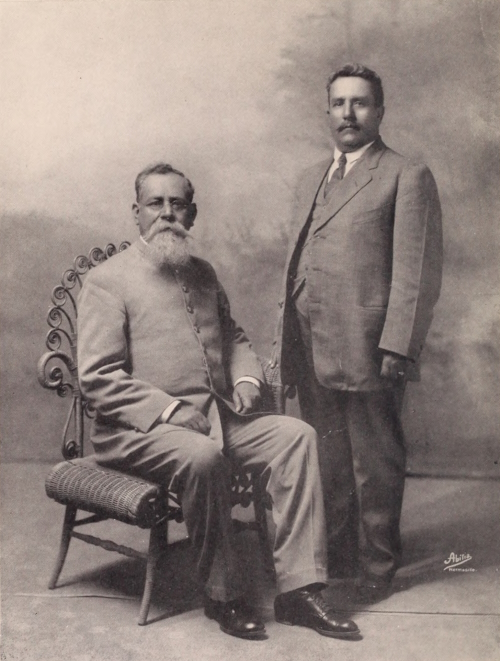
DON VENUSTIANO CARRANZA
AND GENERAL I. L. PESQUEIRA
First Chief and Minister of War
CARRANZA AND
MEXICO
BY
CARLO DE FORNARO
[WITH CHAPTERS BY COLONEL I. C.
ENRIQUEZ, CHARLES FERGUSON AND
M. C. ROLLAND]

NEW YORK · MITCHELL KENNERLEY · 1915
COPYRIGHT, 1915, BY
MITCHELL KENNERLEY
PRINTED IN AMERICA
TO
PRESIDENT WOODROW WILSON
who discovered
real Mexico to the Americans
CONTENTS
| CHAPTER | PAGE | |
| I | The Life of Don Venustiano Carranza | 9 |
| II | Conditions in Mexico During Diaz’ Régime | 34 |
| III | The Madero Revolution, Its Aims and Failures | 50 |
| IV | Plotting Which Overthrew Madero | 60 |
| V | Huerta in Power. The Landing of American Marines in Vera Cruz |
77 |
| VI | Financial Organization of the Revolution | 86 |
| VII | Civil Organization of the Revolution | 96 |
| VIII | Diplomatic Work in Washington | 99 |
| IX | The Constitutionalists in Paris | 102 |
| X | Investigation Work in the United States. By M. C. Rolland |
106 |
| XI | General Outline of Campaign Against Huerta | 114 |
| XII | Campaign of General Obregon in the West. By Col. I. C. Enriquez |
118 |
| XIII | Villa and His Campaign in the North | 132 |
| XIV | Campaign of Gen. Gonzalez in the East | 142 |
| XV | Zapata and His Campaign in the South | 146 |
| XVI | One Hundred Years’ Struggle for Land and Democracy against Clericalism |
157 |
| XVII | Attempts at the Solution of the Land Question | 166 |
| XVIII | Behind the Scenes of the Carranza-Villa Imbroglio | 176 |
| XIX | The Need of a Democratic Finance in Mexico. By C. Ferguson |
184 |
| XX | The Foreign Policy of Carranza | 192 |
| XXI | President Wilson’s Mexican Policy | 205 |
| Reflections | 214 | |
| Appendix | 219 |
ILLUSTRATIONS
| Don Venustiano Carranza and General I. L. Pesqueira |
Frontispiece |
| FACING PAGE | |
| Don Rafael Zubáran Capmany | 99 |
| Modesto C. Rolland | 106 |
| War Map of Mexico | 114 |
| General Alvaro Obregon | 118 |
| General S. Alvarado | 132 |
| General Pablo Gonzalez | 142 |
| General Benjamin Hill | 176 |
[Pg 9]
LIFE OF CARRANZA
DON VENUSTIANO CARRANZA!
Who is this man, practically unknown to the American public a year and a half ago, who with the help of the Mexican Constitutionalists, overthrew the most cynical, murderous, grafting and powerful military dictatorship that ever existed in Mexico?
Concentration of power in Mexico City, the support of the foreigners, of the church, the bankers, the landowners, the militarists, of foreign bankers and most foreign nations, with the exception of the United States Government, were at the disposal of General Huerta and his régime, but Carranza and the Constitutionalists eliminated this nefarious rule after eighteen months of unbroken victories, sweeping finally into Mexico City in a peaceful, orderly manner.
The American public is beginning to realize that such a thorough victory could never have been achieved without a popular movement, directed by a fearless, statesmanlike chief.
Venustiano Carranza, with the exception of Don Fernando Iglesias Calderón, is the oldest of all the Constitutionalists, who have fought for the last year[Pg 10] and a half, with every means in their power, against the rule of General Huerta and his governmental camorra.
Don Venustiano Carranza was born in the State of Coahuila in 1859, and is therefore, fifty-five years old. In spite of the assertion of one of the correspondents who interviewed him six months ago for the Metropolitan magazine, Mr. John Reed, we claim that Carranza is anything but a “senile old man,” for he rode over 1,500 miles on horseback, through the States of Nuevo Leon, Coahuila, Durango, Chihuahua and Sonora, visiting the military camps, organizing all the state and federal governments, and finally settling down in Hermosillo, State of Sonora, as his capital. Later, after Torreon had been captured from the Federals, Carranza with his staff and soldiers again crossed the State of Sonora into Chihuahua on horseback, a distance of nearly 300 miles.
We must admit that unless Carranza had lived a greater part of his life on his farm, he would not have been able to stand the hardships and rigors of that famous ride.
His mental training was that of a lawyer, for he studied in the schools of Coahuila and finished his law course in Mexico City.
A certain weakness of the eyesight prevented him from practising law, so he retired on his farm, dedicating his time to improving his “hacienda” and studying history and political economy.
[Pg 11]
Like the President of the United States, Carranza is one of the greatest authorities on the history of his own country.
Just as all student-statesmen, Carranza is the type of man which makes no direct appeal to the imagination of the public by a strenuous, romantic life—it is the quiet, clear, thinking, organizing brain which creates, commands and achieves, without the blaze of trumpets, or the help of well-salaried press-agents.
One incident in his life stands out glaringly like a solitary facet of a diamond struck by sunlight. Very few Mexicans, and it can be safely said even a lesser number of Americans, know that Carranza was the only man who started a local revolution against General Diaz, during the rule from 1876 to 1910, and succeeded;—that is to say, continued to live in Mexico, without sacrificing his life to his bold attempt.
This strange and seemingly incomprehensible incident happened in the year 1893, when Don Venustiano was only thirty-four years old.
At that time there ruled over the State of Coahuila a governor named Garza Galán. With the exception of Mucio Martinez and General Cravioto, he was the worst governor in Mexico. Garza Galán used his great power to rob, expropriate lands by all manner of tricks and stratagems, imprison, kill those who stood in his way, and went so far as to kidnap respectable girls.
[Pg 12]
Everybody expected that Garza Galán would be eliminated after his two years of governorship, but when it was discovered that Romero Rubio stood sponsor for another two years of Garza Galán as Governor of Coahuila, the inhabitants of that State were in utter dismay and protested to the President.
At that time Romero Rubio, the father-in-law of President Diaz, was one of his closest advisers. He is the originator of the party which later was called the “Cientifico” party, and of which Limantour became the successor.
As Romero Rubio insisted on the candidacy of Garza Galán for a second term, and as protests were of no avail with General Diaz, Don Venustiano Carranza arose in arms with the assistance of his brother, Don Emilio, and started on the warpath against Garza Galán. General Diaz sent some federal troops to quell the revolt, but Don Venustiano and his brother took particular care to avoid coming into armed conflict with the federal troops, while they attacked Garza Galán’s state troops and defeated them repeatedly. This strange, three-cornered fight lasted longer than was expected; very soon, other wiser counsellors of General Diaz pointed out to him that a continuation of this armed revolt might communicate itself to the other border States with disastrous effects to the Federal Government. General Diaz then recalled the candidacy of Garza Galán, and it was transformed into the one of Señor Musquiz.
[Pg 13]
Peace followed, but strangest of all, was the immunity of Venustiano Carranza and his brother to persecutions and attempts on their lives.
Carranza was not a novice in the politics of his country; he served as a member of the legislature of his native State, as Senator of the Federal Government in Mexico City and even as a governor of his State.
Maybe the wily old dictator, Don Porfirio Diaz, made a mistake in the case of Carranza. For sixteen years after the revolt against Garza Galán, Carranza gave further proof of his strength of character, by accepting the gubernatorial candidacy offered to him by the people of Coahuila and refusing to renounce it in the face of the opposition of the “cientifico” group in Mexico City, because Carranza stood for the candidacy of General Reyes as Vice-President, as against Ramon Corral who was the Mephisto of the “cientifico” party.
The answer of Carranza to the emissary of Diaz, who suggested the advisability of his refusal to run for Governor, was as follows: “Tell General Diaz, that as long as there is a single person, who will propose and work in favor of my candidacy, I shall not renounce it, and I shall accept all the consequences of my conduct.”
After such an unequivocal answer, everybody expected that either the door of the penitentiary would close upon the bold candidate, or that he would mysteriously[Pg 14] disappear, in accordance with the policy of General Diaz.
What saved Carranza from either of these fates, was the publicity given to this incident in the American press, especially a letter of protest against the meeting which was to take place in El Paso, between General Diaz and President Taft. The passage referring to this incident says:
“Even as I write these lines, the report is wired from Mexico that General Diaz has ordered the demission of the Governor of Coahuila, as the latter showed a marked tendency in favor of General Reyes’ candidacy. Imagine the Republican President of the United States asking for the resignation of Governor Johnson of Minnesota, because of his democratic leanings.”[1]
It is quite logical that a man of the stamp of Carranza should view with great interest the movement which culminated in the overthrow of General Diaz in 1911.
Francisco I. Madero wrote his famous book “The Presidential Succession of 1910,” and published it in San Pedro, Coahuila, in December, 1908.
F. I. Madero, because of his innocence or his fearlessness, tried to create a working candidacy, with himself as presidential candidate and Dr. Vasquez Gomez as Vice-President, in opposition to General Diaz and Ramon Corral. There was however no intention of rising to arms against the government[Pg 15] of Diaz, but the policy of the President made the opposing candidate realize the futility of his efforts.
F. I. Madero was placed in jail twice for his daring, and after the second time, he was informed that a third imprisonment would mean his complete elimination. Madero took the tip, and fled to San Antonio, Texas. The slogan of the Madero revolution was “Effective suffrage and no re-election” and not, as many Americans believe, “the land question.”
If any one will take the trouble to peruse the long document of San Luis Potosí, of October 5th, 1910, signed F. I. Madero, which contains 2,500 words, it will be noticed that the land question takes up very little space, in comparison to the rest of the Plan.[2]
General Carranza never hesitated for one moment, and was soon over the border to join Madero, and formed part of his revolutionary junta. He was appointed chief of the Military Division of the States of Coahuila, Nuevo Leon and Tamaulipas, and later Secretary of War in the provisional cabinet of F. I. Madero.
The premature cessation of hostilities and the installation of the clerical candidate, L. de la Barra, was strenuously opposed by Carranza, who said to F. I. Madero, “You are delivering to the reactionaries[Pg 16] a dead revolution, which will have to be fought over again.” These prophetic words were not heeded, so Don Venustiano went back to his native State, and calmly awaited the course of events, while he offered himself as a candidate and was elected as Governor of Coahuila.
One of the accusations which was published in the American papers by the Huerta press agents was that F. I. Madero, as President, had sent several hundred thousand dollars to Governor Carranza, for the purpose of arming and increasing the state militia against the Orozco rebellion. About the time of the overthrow of F. I. Madero, Don Venustiano had been supposedly asked to give an accounting of the expenditure of the money furnished from Mexico City. As he could not account for it, it was said, he had decided to start a revolution against President Madero. When the Huerta treachery took place and Madero was murdered, Carranza took the opportunity to rebel against the provisional presidency of General Huerta.
This story may sound plausible to the Huerta type of man, but the facts in the case dispose of it. A few months before the plot which overthrew Madero, Don Venustiano Carranza paid a visit to the President. His watchful eyes and ears detected a very complicated net of plots and counterplots brewing against Madero. The President did not believe that there were any plots, and doubted any one’s[Pg 17] ability to overthrow him. Carranza went back to his State and communicated his suspicions to a few intimate friends. As soon as he heard of the release of Felix Diaz and General Reyes from their jails, he at once sent several hundred of the Coahuila volunteers to the assistance of Madero. They took part in the assault against the citadel, and the reason why General Huerta lingered so long before turning traitor is now clear.
Besides the Coahuila riflemen, there were several hundred Madero volunteers who were loyal to the President. General Huerta could not arrest Madero and Suarez, and make peace with Felix Diaz until the loyal Madero troops had been eliminated.
So he cautiously kept his own federal regiments back, and sent the Madero volunteers and the Coahuila riflemen to charge the citadel, manned by machine guns, in close formation. The Coahuila volunteers who were mostly mounted, and numbered about 1,150, bravely attacked the guns, but none of them came back alive; the same happened to the Madero volunteers.
As soon as Huerta had disposed of the volunteers, he made his peace with Felix Diaz. What remained of the Madero and Coahuila volunteers fled to the standard of Zapata after Huerta came into power.
On the 18th of February, 1913, Madero and Suarez were arrested by order of General Huerta.[Pg 18] On the 19th of February all Mexico had heard the fateful news, and nobody doubted the outcome of the imprisonment.
Don Venustiano Carranza never hesitated one hour, one minute; he convened at once the legislature of the State of Coahuila, and the following decree was the result:
Venustiano Carranza, Constitutional Governor of the free and Sovereign State of Coahuila of Zaragoza, informs its inhabitants: That the Congress of the State has decreed the following:
The Constitutional Congress of the free, independent and sovereign State of Coahuila of Zaragoza decrees:
No. 1421: Article I.
We disavow General Victoriano Huerta in his character of chief of the Executive power of the Republic, which he claims was conferred to him by the Senate, and we likewise disown all the acts and resolutions which he may dictate under such authority.
Article II. Extraordinary powers are transmitted to the Executive of this State in all the branches of Public Administration, so that he may suppress what he may deem convenient and that he shall proceed by the force of arms to sustain the Constitutionalist order of the Republic.
To arouse the Governments of the other States and the Chiefs of the Federal, Rural and Auxiliary Forces, so that they may assist the stand taken by the Governor of this State.
Decreed in the room of the Congress of the State, in Saltillo, on the 19th of February, 1913. A. Barrera, President[Pg 19] of the Legislature. J. Sanchez Herrera, Secretary. Gabriel Calzada, Secretary.
Let this be printed, communicated and observed.
V. Carranza.
E. Garza Perez,
Secretary.
Saltillo, 19 de Febrero de 1913.
After the imprisonment of President Madero and Vice-President Suarez in February, 1913, a year and a half ago, there were twenty-seven governors in Mexico, who had the same opportunity to protest against the usurper Huerta, and refuse to recognize his “coup d’état,” his dictatorship and his cowardly murders. None of the governors dared protest. Had all the governors in Mexico arisen together with their legislatures and refused to recognize the authority of the czar in Mexico, Huerta with all his money, all his soldiers, all his greed and ruthlessness, could not have lasted more than three months.
Don Venustiano Carranza was the only governor in Mexico who had the audacity and patriotism to challenge the great pirate in Mexico City, who had raised the black flag with the skull and the cross bones over the national palace.
The chiefs of the States were too terrorized, cowed and frozen by the brutality, the cynicism, the power of the man in the provisional presidency, and were aghast at the suddenness of the events which[Pg 20] led to Madero’s downfall. They had not found out what had happened behind the scenes, the horror of the events and their natural consequence had not dawned upon their paralyzed minds. Carranza as a real leader and chief never faltered an instant. Those are the rare and precious moments which create the national hero.
As soon as Felix Diaz and Victoriano Huerta heard of the stand taken by Don Venustiano Carranza as Governor of the State of Coahuila, they realized that a formidable enemy had arisen to spoil their crooked game. They put their heads together and penned the following epistle to Carranza, signed it together, and sent a trusted friend as emissary to find him and convince him:
Mexico, D. F. 27 de Febrero 1913.
Don Venustiano Carranza,
Gov. of the Free and Sovereign State of Coahuila,
Dear Sir—
By letters of recent date we have informed you of the plausible reasons which have inspired the army against the dissolving régime of Don F. Madero, and we have likewise justified the acts which placed General Huerta in the office of President of the Republic.
We have been informed that it was your intention to rebel against the legal authority of the Government. We beg to insist, in the name of the country and for its exclusive benefit, that you change your announced attitude not to collaborate with us in the work of peace which we intend to pursue to the end, at any price. If for some personal reason[Pg 21] you wish to leave the office which you occupy, and if that can be done without offending or hurting our patriotic end, the Government will give you all sorts of guarantees and will pay your salary up to the end of your term.
This letter, as you understand, must be absolutely of a particular and private character. On this basis we beg to inform you that on our part there will be no obstacles that could arise between ourselves, which cannot be solved in the manner most suitable to you. It would be advisable for you to retire into the United States (for your greater safety). We shall make all sorts of sacrifices (should you demand them) so as to satisfy all your wishes and demands. Our envoy (agent) will bring you instructions on the subject. He is empowered to arrange matters on the spot.
We beg you to accept our assurance of admiration and respect.
(Signed) Victoriano Huerta.
Felix Diaz.
Carranza’s answer follows:
11th March, 1913.
Messrs. V. Huerta y Felix Diaz:
My only answer to the despicable proposals offered to me in your letter dated February 27th, is that I want to inform you that men like myself do not betray, do not sell themselves; that is your function, you who have no other objects in life than the shameful satisfaction of ignoble ambitions.
Raise the black flag of your tyranny, and over the country the voice shouts: “Treason and Death.”
On my part, with the help of the Mexican people, I shall lift from the mud into which you have thrown it, the flag[Pg 22] of the country. Should I fall defending it, I shall have obtained for my small action in life, the greatest prize which we honest men can aspire to.
(Signed) Venustiano Carranza.
In the month of March, 1913, not satisfied with having defied the powers in Mexico, General Carranza published the “Plan of Guadalupe,” so called from the fact that the revolutionary plan was signed by the officers at the “hacienda” farm of Guadalupe. The plan is the following:
DECLARATION TO THE NATION
Considering that General Victoriano Huerta, to whom the Constitutional President, Francisco I. Madero, had confided the defence of the institutions and the legality of his government, on uniting with the rebel enemies in arms against that same government, to restore the latest dictatorship, committed the crime of treason to reach power, arresting the President and Vice-President, as well as their ministers, exacting from them by violent means the resignation of their posts, which is proven by the messages that the same General Huerta addressed to the Governors of the States, advising them that he had the Supreme Magistrates of the nation and their cabinet prisoners.
Considering that the legislative and judicial powers have recognized and protected General Victoriano Huerta and his illegal and anti-patriotic proceedings, contrary to the constitutional laws and precepts,[Pg 23] and considering, finally, that some governors of the States of the union have recognized the illegitimate government, imposed by the part of the army which consummated the treason, headed by the same General Huerta, in spite of the fact that the sovereignty of those same States whose governors should have been the first in disowning it, had been violated, those who subscribe, chiefs and officials, in command of constitutional forces, we have accorded, and shall sustain by arms the following:
PLAN
1. General Victoriano Huerta, as President of the republic shall be disowned.
2. The legislative and judicial powers of the federation shall also be disowned.
3. The governors of the states who still recognize the federal powers forming the actual administration, 30 days after the publication of this plan, shall be disowned.
4. For the organization of the army in charge of seeing that our purposes are carried out, we name as first chief of the army, which will be called Constitutionalist, Venustiano Carranza, Governor of the State of Coahuila.
5. The Constitutionalist army on occupying Mexico City, the executive power will be provisionally in charge of Venustiano Carranza, first chief of the army, or in charge of that person who might substitute him in command.
[Pg 24]
6. The provisional President of the Republic will convene general elections as soon as peace may have been consolidated, handing the power to the citizen who may have been elected.
7. The citizen who may act as first chief of the Constitutionalist army in the States whose government might have recognized that of Huerta, will assume the charge of provisional governor and will convoke local elections, after the citizens elected to discharge the high powers of the federation may have taken possession of their office, as provided for in the foregoing basis.
The plan was signed at the Hacienda of Guadalupe, Coahuila, on the 26th of March, 1913. Sixty-four officers of the state troops affixed their signatures to the protest. Among the most famous on the list was Lieut. Col. Lucio Blanco, who fought in Tamaulipas and initiated the sale of lands belonging to Felix Diaz, among Constitutionalist soldiers, and Major J. B. Trevino.
As Don Venustiano Carranza was leaving Saltillo to take the field against the federals, he said to a friend: “We are going to fight the three years’ war over again.”
A coincidence in atavism is that Don Venustiano’s father, Colonel Carranza, fought in the north during the three years’ war under the leadership of Benito Juarez (1857-60) and assisted him financially as well as politically in the struggle. Later,[Pg 25] after the Constitutionalist government had placed Benito Juarez in the presidency through the elections, Colonel Carranza was offered the reimbursement of the sixteen thousand odd dollars which he had contributed to the liberal cause. He refused the money saying that the victory of the party was sufficient payment to him.
A further coincidence, amusing to students of history, is found in the case of Gen. Victoriano Huerta, whose father, Gen. Epitacio Huerta, fought under the same banner as Colonel Carranza. The history of the three years’ war mentions the name of three generals: The Constitutionalist Generals Rocha, Huerta and Arteaga.... After the clericals had been defeated by the Constitutionalists under Benito Juarez in 1860 they invited foreign intervention, which ended in the courtmartial and shooting of Emperor Maximilian and Generals Miramón and Mejia.
In the present instance, Don Victoriano Huerta, when he perceived an early defeat, heaped indignities and insults upon American citizens so as to invite an intervention and a quick march of the American troops into Mexico City. The clericals which he represented preferred the presence of Americans to that of the Constitutionalists in Mexico City. Luckily for Mexico, the Chief Magistrate in Washington foresaw the move and wisely refused to pull the chestnut out of the fire for a Mexican monkey.
The first battle of the revolution was fought between[Pg 26] Saltillo and Monclova in a small place called “Anhelo,” which, translated from the Spanish, means a vehement desire.
The reason for going into certain details of the march of Carranza across the northern States, is for the purpose of showing the physical endurance, the mental activity, as well as the profound and implicit faith that Venustiano Carranza had in the people of Mexico.
The personality of Carranza does not seem to have been sympathetic to foreign newspapermen who have visited him. His presence and manner seem utterly cold, intellectual; extremely polite, non-committal. When talking, his speech is devoid of all the superlatives and amenities which made New York reporters say of L. de la Barra, “He talked incessantly for fifteen minutes without saying one word for copy.”
Carranza’s talent as a good listener made him the despair of journalists, who preferred the generals who fought, talked, gave orders to shoot a few prisoners, and between snatches of food, dictated incidents from their lives or told what their plans were for the future of Mexico. Carranza is more subtle if not sufficiently romantic. The careful observer must read between the lines, when the personality grows on one, like the taste for olives or the magnitude of the Chief Magistrate in Washington. Some leaders are unattractive because of their very uprightness, their justice, their integrity,[Pg 27] their polish; their flawlessness offers no purchase to a sly attack. Aristides asked an Athenian citizen, who had voted to ostracize him, if Aristides had personally offended him, “No, but I am tired of hearing him called the Just!”
Enemies of Carranza have accused him of being too much of an aristocrat and a puppet in the hands of his lawyers’ cabinet, or again a jingo for effect and a rebel for power. His conduct towards his general staff, his generals, his enemies, his attitude towards the United States and the foreign powers, his promises or silence on the question of interior policy,—his words, speeches, letters and decrees are his best witnesses to judge him by.
After the defeat at Anhelo, Carranza went to the border, passing through Cuatro Cienegas, which is famous as his birthplace, to Eagle Pass.
In the month of July, 1913, when the Arrietas and Contreras were attacking Torreon, Carranza joined them in the hope of success, but even the second time when Villa attacked Torreon, the victories were empty, except for the arms, ammunition and money captured.
Disconsolate but not discouraged, Carranza, accompanied by about two hundred men, slowly wended his way across the State of Durango. General Huerta was at that period on the highest crest of success and power,—orders had been telegraphed all over the north, to the federal and counter-guerrilla chiefs, to capture Carranza, dead or alive, and[Pg 28] be rewarded with a bonus of $150,000. Abraham Gonzalez, Governor of Chihuahua, had been arrested and assassinated by order of Huerta. Venustiano Carranza, therefore, travelled at night and rested during the day; his only pilots were the stars, a small compass and a pocket edition of “Mexico-Atlas.” The chief himself recounts how often during their night ride, they espied coming towards them in the distance, the vaguely outlined forms of peons, men and women carrying their children in their arms. Scouts were sent ahead to discover if the peasants were only disguised federals in a desperate attempt to assassinate the brain of the revolution, and capture a kingly reward.
The phantom shadows were “pacificos,” who had walked for miles to greet the chief who was going to battle for their rights and their lands. They only wanted to touch his hands, the hem of his coat, to hear the voice of the great “Jefe,” and then they turned their weary way sending back a salutation: “May God protect you!” or “May God be with you!” which rang in the silent night like the voice of the people, the voice of God.
As Carranza kept his itinerary secret, the first encounter might have been accidental, but it happened so frequently that it seemed almost uncanny and supernatural, this triumphant procession accompanied by the blessings, the wishes, the yearnings of the Mexican peons. Carranza himself confessed that no incident in his life made a more profound[Pg 29] impression on him, and gave him a deeper insight of the tremendous faith of the Mexican people in their champions, pathfinders, and saviors.
Across the mountains in Durango to Tepehuanes, into Parral in Chihuahua, where he came in contact with General Chao, and from there across the Sierra Madre, a mountain range, dividing Chihuahua from Sonora, into the small city of Fuerte, where Carranza met for the first time General Obregon and his soldiers.
He reached Guaymas, in Sonora, about the middle of September, 1913. The little band was tired, and their clothes were in rags, their shoes in tatters, but the goal was reached and they began the work of organizing the capital of the Constitutional government.
In Mexico the presence of Carranza was known only to the revolutionists, and as the federals could not discover the whereabouts of the Chief at that time, they heralded his disappearance and death. Everywhere that Carranza had passed with his band of followers in the small cities, away from the federals who cautiously kept within the city limits and near the railroads, he invariably organized small local governments until he was able to communicate with his chiefs in the middle and east. In the State of Coahuila, his brother Don Jesus, and Gen. Don Pablo Gonzalez, had come to an understanding as to the great strategic outline of the campaign in combination with General Villa in the north and[Pg 30] General Obregon on the west. In Guaymas a provisional cabinet was organized with Don Rafael Zubaran Capmany, one of the keenest intellects of the revolution, a lawyer from Campeche, with Francisco Escudero as Minister of Foreign Affairs, as Minister of Finances F. I. Villareal, Engineer G. Bonilla as Minister of Communications, and General Angeles as Minister of War.
Gen. J. B. Trevino was the chief of the general staff of Carranza; the chief secretary was G. Espinosa Mireles; there was also a staff of officers attached to his person. It was in Hermosillo that the great strategic campaign was outlined with the help of General Angeles and the general staff. The orders to the three chiefs, Obregon, Villa and Gonzalez, came from Hermosillo.
After the northern States were conquered slowly, all the city and rural governments were organized, and although the work was arduous and continuous, it was not quite as strenuous as the classic ride across the sierras and the deserts. The daily routine at headquarters was very simple but efficient. The chief usually got up between five and six in the morning, and except when he rode across the mountain took his bath and attended at once to the most important work of the day. At 7 A. M. there was a light breakfast with whatever could be had, milk, crackers with peach preserves, or honey and butter. On the march everybody had to be satisfied with the national tortilla, made of cornmeal and beans.[Pg 31] Sometimes they could get fresh eggs, sometimes not.
In Hermosillo they fared better; Carranza had two Indian attendants, one who did the cooking and the other who attended to his horses and those of the general staff. The Mexican cooks have the most wonderful capacity for being able to light a fire and cook anywhere under the most distressing conditions.
Thus they were able to get meals and a few luxuries like boiled and fried meal, vegetables, and the famous chile with cheese, and a powdered coffee called “Washington coffee,” with milk. Sometimes they drank a red wine which is grown in the north of Mexico. Carranza invited at almost every meal, some friends who had travelled many miles to see him, or soldiers or civilians belonging to his immediate surroundings.
Between the hours of 7:30 and 1 P. M. the whole staff was again busy taking orders from the chief,—writing, telegraphing and conferring. At one o’clock there was a light luncheon and the work was resumed until six, when the chief took his daily ride, accompanied by an aide or a friend. Ten o’clock was usually the time to retire, unless the “Jefe” had been invited to a fiesta or a dance, which happened quite frequently as Mexicans are very fond of dancing, theatricals, speech-making, and are in general very sociable. Unlike most Mexicans, the chief does not smoke, or favor the national drink “tequila,” or the Mexicanized cognac, or the excellent[Pg 32] Monterrey and Toluca beer which was advertised in Mexico as “the beer that made Milwaukee jealous.”
By February the chief and his staff packed their belongings, and the state papers, and crossed the State of Sonora into Sinaloa in Culiacán, the capital, which had been captured by General Obregon. After the organization of Sinaloa, the peripatetic government moved back to Hermosillo and towards the border, to Nogales. By that time, Torreon had been captured and Carranza, accompanied by 300 cavalry and 400 infantry, crossed the Sierra Madre range into Chihuahua, to Juarez, an excursion which lasted twenty-five days and covered over 400 miles. They had come from the tropical heat of the deserts of Sonora to the snow on the Sierra Madre.
From Juarez on, the procession of the Chief rolled downward to Chihuahua, Torreon, Saltillo, Monterrey, Tampico, down to Tepotzotlan near Mexico City. The details of his slow organization of the civil government of all the conquered States, of his foreign attitude and of the other details of his revolutionary rule, will be discussed in separate chapters.
Carranza at first sight makes the impression more of a Saxon personality than of a Mexican type. The Spanish blood, which flows in his veins three or four generations back must have been of Basque origin, which is pure northern European. He is about five feet, eight inches high, proportionately[Pg 33] built, neither too thin nor too stout, and he carries himself erect and in a dignified manner. His white hair and beard contrast with the very dark brown complexion which is the result of an active, out-of-door life. The eye-glasses give to his appearance a slight professional mien. The professorial air is rather disconcerting at first, for one expects to behold a type of a man different from the quiet, unassuming, very polite, gentleman farmer, and instead of a deep, sonorous voice, a rather high and clear tone of speech. His eyes are hazel, very open,—his nose straight, his forehead very high, and he has the high brow of an intellectual, rather than of a fighter, his ears are quite large, denoting a strong constitution and a long life. The whole impression is of self-restraint, gentleness; nevertheless, the keen observing eyes prove an alert intelligence, always watching, weighing, judging and carefully registering all the impressions for future use. As all men dealing with people politically, Carranza has a very retentive memory for faces and names. Being a comprehending and patient listener he always hears a great deal more than he says, but when an answer is required, the words come out slowly, as if chosen with extreme care to express a thought with as few words as possible. While speaking in public, the use of simple language denotes a clear mind which can express complicated problems in first principles, and Carranza makes himself understood by cultured Mexicans as well as by peons.
[Pg 34]
CONDITIONS IN MEXICO DURING DIAZ’ RÉGIME
IT would appear after all that has been written in the United States and Europe concerning Mexico, that the people ought to possess a clearer conception of the conditions which brought about the Madero and the Constitutionalist revolutions, especially when the latter is nothing more than a continuation of the former. But the words of the late Joseph Pulitzer, when he said that to instil facts into the minds of the people there must be constant repetition, seem undeniably true. It is not sufficient to reiterate certain facts; the correlation of these facts must be understood and explained.
People heard about the peonage system in Mexico, about the great power of Porfirio Diaz, about the abuses of this power, but it was not realized how vital, how deep, how intimate the solution of the political problems was to the Mexicans themselves. To foreigners the Mexican problem was only interesting in so far as it affected their interests,—no more.
After all the cruelties perpetrated by the Diaz-Huerta régimes, I have heard intelligent Americans exclaim that the Mexicans needed a strong[Pg 35] man like Huerta, and that Diaz after all had brought railroads, schools, higher wages, money, improvements and progress. It makes one almost despair of human intelligence to hear such superficial prattle, but it proves the axiom of Joseph Pulitzer to be very profound and that Porfirio Diaz had used it to its fullest extent.
Known by few people, Porfirio Diaz used for years a secret fund amounting to millions solely for the purpose of advertising to the world that Diaz was the creator of modern Mexico, that “peace” and “progress” were his two watchwords, with which he had put Mexico on a permanent basis of greatness. Many small newspapers near the border as far as San Antonio were paid as much as $5,000 a year to speak in good terms about Diaz and never to mention any trouble or agitation which might be started along the border by anarchists who might call themselves Mexican revolutionists.
Great newspaper proprietors in the United States were given concessions, others were offered special inducements to publish special Mexican numbers, which brought from $25,000 to $30,000 worth of advertising; well-known individuals, such as judges, congressmen and senators, were invited in an indirect way to visit Mexico, were received like princes, fêted, dined and were offered mining or other concessions as one gives cigars to a guest after dinner. When the concessions were not needed or available, Don Porfirio took particular[Pg 36] care to impress his famous visitor with a set of well chosen phrases most apt to impress him favorably as to his greatness, his patriotism and his democracy.
One incident, which was related to me, illustrates the Machiavellian talent of Diaz. A nationally famous librarian paid his visit to General Diaz, who received him very graciously. No concessions were asked or wanted and the President did not mention the great battles he had fought, which were unknown to the gentle librarian, but he spoke at great length of the extensive school system in vogue since his ascension to the presidency, and ended the conversation by declaring: “It is my greatest ambition to be known as the great schoolmaster of Mexico.” The phrase impressed the scholar and many people heard the phrase, and many newspapers repeated it until everybody believed it.
Pearson’s Magazine printed six years ago a fulsome life of Diaz. What General Diaz thought of it is told in an interview between Ireneo Paz, a Mexican newspaperman and the President who were friends for more than sixty years. Don Ireneo Paz asked the President: “I have been wanting to ask you if that interview which the papers published a few months ago was authentic; that one which is said to have taken place between yourself and one Creelman, an American journalist?”
“What surprises me is that sagacious men like you should have been capable of giving credit to[Pg 37] such folly (à semejante paparrucha),” replied Diaz.
“Because I did not believe it, I asked you if it was authentic.”
“It’s as true as a dead child. You know me too well to believe that I could stroll for hours upon the terrace of Chapultepec, exhibiting the white of my eyes and opening my nostrils excessively in order that the Yankee reporter may be able to give wings to his fancy. What happened was this: A friend of mine, a member of my cabinet, came to read me the article which was already manufactured (confeccionado) for an American publication. It didn’t seem bad to me, or rather it seemed very good, because without compromising me much it lent a lustre to my antecedents, and put me on a good footing for the future, so that it gave me all the facilities which I desired, whether to continue sacrificing myself for the Fatherland, or to shake off the dust thereof (zafarme) in time if things should blow into a whirlwind (à ponerse turbias). I acknowledge to you that I thought the writing was so well dressed up, so much in conformity with what are not but should be my profoundest thoughts, so seemly for our luckless proletariat, that I accepted it unhesitatingly as if it had been inspired by myself, not making more than a very few modifications on some entirely Yankee points of view which would have put me in a very ridiculous position, and I gave my consent to two things:—that it should be published[Pg 38] in English and Spanish, and that it should be amply paid for.”
“About how much was the cost of this work?”
“Some fifty thousand pesos.” (Como unos cincuenta mil pesos.)[3]
Toward the end of the Diaz régime and in an effort to refute the attacks made in a book by the present writer called, “Diaz, Czar of Mexico,” the cientificos inspired James Creelman to write “Diaz, Master of Mexico”; whole chapters were also dedicated in an effort to discredit the exposé by J. K. Turner in his “Barbarous Mexico.” Several books published in the United States and England were bought by Diaz. One was “Porfirio Diaz,” by R. de Zayas Enriquez, and the other “Yucatan, the American Egypt,” by Tabor and Frost. The Mexican government inspired their consul in Cuba, J. F. Godoy, to write a book, “Porfirio Diaz,” which had “seventy pages of endorsements of Diaz written by prominent Americans.” Here we have the case of a man, Mr. Godoy, who actually went about—or sent about—among senators, congressmen, diplomats and cabinet officers, soliciting kind words for President Diaz.[4] Porfirio Diaz and his cientifico supporters thought that they could keep the Mexicans, peons, and the middle class workingmen down if public opinion in Europe and in the[Pg 39] United States was misinformed about the real conditions in Mexico.
The great reputation of General Diaz in America and Europe was essentially manufactured through laudatory articles in the press, magazines, weeklies and daily papers, by the publication of books, interviews of prominent Americans who came back from a visit to the “Great Old Man” in Chapultepec, who could have said as Macbeth, “And I have bought golden opinions from all sorts of people.” Judges, congressmen, senators, governors, members of cabinets, even presidents, princes and kings spoke in reverence and admiration of Don Porfirio Diaz.
What chance had any patriotic, democratic, and free loving Mexican against the avalanche of lies, deliberate and unconscious falsehoods? Whoever heard in the United States of the Massacre of Papantla where 20,000 Mexican peasants, men, women and children were shot down in cold blood, and as a result half a dozen villages wiped off the map of Mexico?
What newspaper in America published the story of the revolution of Tomochic, when 15,000 mountaineer peasants in Chihuahua were destroyed and only forty old men and women were left to tell the tale? And the murder of 15,000 men, the whole male population of Juchitan, State of Oaxaca, in revenge for the death of Diaz’s brother, and the assassination[Pg 40] of 750 workingmen of the Orizaba cotton mills?
Workingmen in Mexico were killed if they attempted to unionize or to strike, the peasants were slaughtered to take away from them their rights under the law; the Yaqui Indians were deported and sold into slavery in Yucatan to permit the great landowners in Sonora to sell their land to American syndicates. Anybody who protested orally or in writing was thrown into jail, where imprisonment was worse than death. We reproduce the description by a Mexican of a night passed in the prison of Belem, Mexico City.
May 16.
I dare not credit the testimony of my senses. I cannot yet believe all that I have suffered in that horrible night which has just passed; a night of horrible dreams, a succession of repugnant nightmares, terrific, phantastic, demoniacal, impossible, inconceivable and nevertheless perfectly and completely real. I thought the night would be endless. I fancied myself in the infernal regions, in a hell as the heated phantasy of the poet of maniacal brain never conceived it.
The prison is a sort of a room of 50 yards in length by 6 broad and 5 in height, that is to say 1500 cubic yards. Within its walls sleep 800 individuals according to my calculation. The hygienists claim that 12 by 14 cubic yards of air are necessary in a dwelling for each person: in that space we did not even have 2 cubic yards each.
All the ventilation consists in an iron grating at the entrance at one extremity and a window at the other end.
[Pg 41]
How could 800 persons stay in that small space? It is a mystery to me; I have seen it and still I cannot explain it, and I am almost willing to admit the penetrability of the bodies.
The men lie down in two rows, feet to feet and the head against the wall. Those who arrive first or the strongest lie on the ground, those who follow do as best they can by lying between two bodies cradle-wise. Everybody must perforce sleep sideways. For this reason quarrels and fights are frequent and occasionally they end in wounds and sometimes in death.
In this prison there are some revolting W. C.’s. They are cleaned in the morning, but as the night advances they are used constantly and as there is no running water, the fecal matter and the urine run over onto the ground soaking those who sleep near them. Some wretches even sleep seated on those barrels, and bitter fights take place when somebody wants to use them and for that purpose they are forced to disturb the sleepers on top of the barrels. Others prefer to commit nuisance where they happen to be, against the companions who happen to be near them and that occasions new fights.
The atmosphere is so fetid that it almost chokes and asphyxiates you. It is so dense that you can almost cut it with a knife.
This dungeon is lighted by some electric lamps whose rays can barely penetrate the atmosphere. Eight hundred men habitually dirty, clad in pestilential rags, the respiration of all those lungs, the emanations of all these bodies, the filth of those barrels.... I am horrified at the remembrance of it all and I am wondering that I am still alive.
Soon after the prisoners have settled to sleep, from the different walls there starts a downward immigration of[Pg 42] myriads of parasitical insects. One cannot possibly conceive the innumerable number of bed-bugs, some of enormous size, lice of all classes, fleas, mosquitoes and cock-roaches. They assure me that the prisoners become accustomed to all these parasites and they do not heed them. The truth is that besides myself I did not notice anybody paying any attention to them.
Only three persons were privileged to use cots; the head keeper and two head men. I could not find a place to lie down. The head keeper saw me standing and understood the reason of my perplexity and authorized me to sleep under his cot. At first I took this offer as an insult; later I understood the full value of that concession which was not gratis but cost me 25 cents.
It had just struck nine at the prison clock when suddenly and accidentally all the electric lights went out. The darkness was absolute. Immediately a formidable roar arose from that mob and a fearful struggle began. There were heard shouts of hatred, fearsome lamentations, blasphemies, the voices of the head men trying to impose order and shouting to the prisoners to keep silent, but without avail. It was undescribable uproar.
Soon afterwards footsteps of soldiers were heard nearing the door. An employé arrived with the escort bringing a lantern along. He opened the grated door with a great deal of noise and gave order to the soldiers to fire in case of further disorder. Then everything was silent as if by incantation. The turnkey asked for the oil lamps hanging on the walls, lighted them and distributed them to the head men to place them in their corresponding places. From time to time the silence was interrupted by some stifled groans.
The turnkey ordered the formation of rows to make ready[Pg 43] for the roll call. They brought the register and the prisoners going into the corridor after their names being called. Some did not appear, others answered in a dying voice. All the prisoners able to do so went back to rest. There were three dead and seventeen wounded. Who are the authors of these crimes? They have so far not discovered them, and those who know the way of the prison claim that they never will be found. The prisoners no matter how strict the vigilance and how often they search them succeed in hiding pieces of bones which form part of the meat rations, and these bones they sharpen against the stones of the floor until they become as sharp and pointed as daggers. Those are the weapons used in their fights. They also employ scissors, and spoons and other instruments which are used in their different trades and which they manage to steal.
Every time that there is a riot as happens when the lights go out then some of the most hardened prisoners take advantage of this fact to revenge themselves or to wound those nearest to them, without any provocation, and it is very difficult to discover the author of the crime as many are spattered with blood owing to the crowded conditions of the dormitory.
Many of the wounds result from the indiscriminate use of the stick in the confusion and darkness by the head men, who do so in self-defence or in fear.
After the dead and wounded had been taken to the hospital they locked us up again calling the names anew and leaving two guards at the gate to fire at the first sign of disorder. I went back to my place under the cot of the head keeper thinking to myself that the solitary cell in spite of the “incommunicacion” was preferable to this dangerous and filthy galley. I did not sleep a wink all night long. At 6[Pg 44] o’clock in the morning they opened the gate and all this sickening lee contained was vomited forth.
I was one of the first ones to go out and I nearly fainted when I felt the fresh air of the morning. Mr. H.... was waiting for me and he invited me to breakfast with him in the department of distinction. Later he asked to see the warden so as to get me a permit to go over to his department.
Meanwhile I jotted down those notes although I did not know how I managed to do so as my head seems to be a vacuum. I think I have a beginning of fever.
Not only were Mexicans persecuted in their own country, but when Mexican liberals fled across the border into the United States, thinking that they could tell the truth and publish it in the American press, they were persecuted and imprisoned through the orders of the Mexican Ambassador in Washington to the Attorney Generals under Theodore Roosevelt, and William H. Taft. Some of the liberals were even kidnapped across the Mexican border and sent to rot in the fortress of San Juan de Ulloa in Vera Cruz. Manuel Sarabia, F. Flores Magon, L. Rivera and Antonio I. Villareal were the pioneers of Mexican agitation against Diaz. “Mother” Jones by suggestion of the writer before his imprisonment for libel against a Diaz official, induced Congressman W. B. Wilson of Pennsylvania (Secretary of Labor in the Cabinet of Wilson), to investigate the persecution of Mexican liberals in the United States by American officials in 1910. The result was a cessation of these persecutions[Pg 45] and a renewal of agitation in the southwest and along the border.
The agitation against the blood and iron rule of Porfirio Diaz was begun over six years before the Madero revolution; it was the preliminary work of untold numbers of martyrs who died unknown, crushed by the ruthless hand of the half-breed Czar.
In every State governors, jefes politicos, and cientificos robbed the Indians of the land in their possession. By the year 1892 all the great bodies of agricultural land had passed from the possession of more than a million small farmers into the hands of less than fifty rich families and corporations of the Diaz clique.
The State of Morelos (2,734 square miles) and a population of 179,614 inhabitants, became practically the property of half a dozen families. In the State of Chihuahua one family alone, the Terrazas, owned as much land as the combined territory of Switzerland, Belgium and Holland. Towards the end of the Diaz régime nearly 3,000,000 Indians had been despoiled of their native land and General Diaz had sold over 83,000,000 acres for the paltry sum of $3,000,000.
The policy of General Diaz was to eliminate the Mexican Indian peons from valuable land and from an independent economic life into peonage in great haciendas, in great mines and factories where they could be more easily controlled by the rurales and the soldiers. At the height of Diaz’s rule, in 1908,[Pg 46] when all the world was singing the pæans to the glory of Porfirio Diaz, the writer found out by personal investigation that the average salary for unskilled labor in the mines near the city of Pachuca (inh. 40,000) was three cents gold a day, and in the haciendas six cents gold.
What was the result of this policy of despoliation and oppression? Simply that wages in the great haciendas, mines, and factories were kept as low as possible, while prices of food stuffs and necessities went up by the help of a rigid system of high tariff. The great haciendados, the foreign owners of mines and industrial concerns, the same ones who were reaping a golden harvest and singing the praise of Diaz’s rule were buying labor in Mexico at a very low Mexican silver rate and were selling the result of this labor at a gold rate.
The press agents of Diaz spoke of the perfect school system inaugurated at the beginning of his rule. General Diaz never could have crushed Mexico in the iron grip of his hand if education had been as general as was claimed. The percentage of illiteracy in the thirty-five years of the czar’s rule was lowered from ninety to eighty-six per cent. but only in the cities. The rural school system was almost completely neglected, or was turned over to the care of priests and nuns.
It was this fourteen per cent. of the people who could read and write, which organized the agitation[Pg 47] in Mexico under tremendous difficulties and by unheard-of sacrifices.
The political advisers of Diaz never dreamed that every Indian who was expatriated, every workingman who saw the murders of his companions, every Mexican who suffered from an unjust imprisonment, became an incipient rebel, only awaiting the time that a leader would show them their strength and the way to break the chains of their economic and political slavery.
It could never be imagined by the rich foreign investors in Mexico who had observed the patient and ignorant peons, that no matter how pacific, how miserable and subdued a race, the day would come when they must rebel and evolve into a daring and independent race.
The same happened in France through the revolution. Read the description written by Mirabeau’s father of the savage-looking, long-haired, barefoot peasants who came down from the mountains, and the older Mirabeau’s prophetic reflections on the subject.
The worst offenders and the greatest enemies to Mexican political and economic freedom were the foreigners; they always stood by the oppressors with their financial and moral influence in Mexico, in the United States and in Europe. Without this powerful help Diaz would never have lasted thirty-five years. Foreigners in Mexico were treated with[Pg 48] a deference and were allowed privileges unknown to the average Mexican. Porfirio Diaz always raised the spectre of American intervention when he wanted to frighten restless Mexicans.
The only friends of liberal Mexico were the Socialists and the organized workingmen in Europe and especially in the United States who understood from the beginning the danger of an enslaved, ill-paid proletariat across the border. The great agitation which exposed the iron rule of Diaz was helped by Socialists and the proletariat in the United States, and made it easy for Madero and his friends to plot and organize a revolution across the border.
The foreign bankers, concessionaires, “friends of the friends” of General Diaz, wanted a continuation of peace at any price, even at the price of subjugation of all Mexican liberties, or if that failed, by American intervention, and as a result of it either American conquest or of American police rule as in Cuba.
The successor of Diaz had been chosen by the invisible rulers of Diaz, everything about it was cut and dried, and even the list of members of the Cabinet of the successor had been drawn up. When a foreigner was asked about the economic and political rights of the Mexicans, he shrugged his shoulders and answered that Indians and niggers were not fit to rule themselves. The self-same Americans who would have started a revolution in their[Pg 49] own country if political conditions had been as oppressive as in Mexico, spoke contemptuously of the valiant struggle of the middle class Mexicans. To my utter amazement I heard an American clergyman inform me after he had listened to a lecture of mine in favor of the Constitutionalists and the prophecy of a speedy downfall of Huerta, that he nevertheless believed Mexico needed strong men like Huerta and Diaz.
Americans who invest money in Mexico cannot be blamed for being ignorant of Mexican conditions, but how about foreigners who live years in Mexico and come in daily contact with the people? Is it a wonder that Mexicans are suspicious of foreigners?
Porfirio Diaz sold out his country to foreigners for a pittance, he made them rich and prosperous, and he used Mexican labor, freedom, and their suffering to raise himself on a pinnacle of fame unheard of to any other man of his times. Mexico was only Mexico, but Diaz was its prophet, its savior, its creator, its superman, and demi-god. The Mexicans were an unknown, negligible quantity and quality, and the fatal pseudo-greatness of Diaz was trumpeted across the world by an army corps of foreign concessionaries, exploiters and grafters. But the great Diaz myth like a monstrous Frankenstein destroyed itself in time.
[Pg 50]
THE MADERO REVOLUTION, ITS AIMS AND FAILURES
IN the summer of 1908, when the writer was in Mexico he had heard that a man called F. I. Madero was writing a book, in which he discussed the advisability of contesting the seventh presidential election of General Diaz. The book was supposed to have been written in collaboration with a journalist who later was rewarded with the Governorship of Chiapas.
“The Presidential Question of 1910,” the title of the book, had about ninety thousand words of written matter, and began with the War of Independence down to General Diaz’s régime when he tried to analyze the future political conduct of Diaz.
Of the interview of General Diaz in Pearson’s Magazine of 1908, he said: “We judge a study of his declarations to Creelman useless, as we do not believe they are sincere, for they are in manifest contradiction with his past acts, as General Diaz has always made promises which were never kept, from the Plan of la Noria down to the last one.”
Although few intelligent Mexicans took General Diaz at his word, they nevertheless caught him for[Pg 51] the first time in a flagrant political “faux pas” for not having denied the interview. They saw a chance to take him at his own words and start the work of organizing an agitation of the political conscience of Mexico.
Madero’s book was a powerful factor in this propaganda, which was followed by a national organization of political clubs and speechmaking by a few daring young men of the middle class. This fearless, open propaganda copied the campaigning methods of the United States and Madero was the head of the movement.
At first, Diaz, his political supporters and even the foreigners laughed at their rash, foolish crusade which they thought would soon be crushed and destroyed.
The Diaz clique, the cientificos and the old supporters of the czar, men like General Reyes, General Naranjo, General Trevino, General Izabal, General Torres, General Terrazas, Gen. Mucio Martinez, T. Dehesa, R. Corral, J. Y. Limantour, E. Creel, Gen. G. Cosio, O. Molina would all have liked to be president, but they were too much in awe of the power of the old man in Chapultepec. Their political work was all done underground, they were all getting ready for the moment when General Diaz should step down gripped by the hand of death. None of them imagined that any Mexican, no matter how daring, could shake the foundation of the Diaz throne without the help of the middle[Pg 52] class of Mexico. When the old guard observed the impunity of the Madero propaganda they guessed that it was going to be a repetition of the events in the presidential elections of 1903-04 when Diaz allowed his foolish enemies to come out in the open and then destroyed them wholesale and in detail.
The great strength of Madero consisted in his peaceful methods of propaganda and his constant advice to Mexicans to be patient under the persecutions of the government agents. He advised them to suffer even imprisonment and death so as to awaken the interest of the majority who would soon follow their example.
Madero was assisted in his campaign by his brother Gustavo and a young lawyer Roque Estrada, and was accompanied everywhere by his wife, even in jail. Roque Estrada wrote about the evolution of the Madero revolution and divided it into four parts:
1. The Awakening of the Mexican political soul.
2. The Concentration of the revolutionary propaganda.
3. The Destruction of the Diaz régime.
4. The Reconstruction of the new government.[5]
The campaign continued under difficulties, when the supporters of Diaz awakened to the fact that Madero was growing popular. Then on the 6th of June, 1910, came the news of his arrest.
[Pg 53]
It must be added that one of the reasons for the indifference of the authorities to the Madero propaganda was the firm conviction that F. I. Madero was a fool, an idiot, who was being used by powerful enemies to initiate a counter campaign against Diaz. A second reason was the fact that Madero belonged to a wealthy and politically influential family of which the head, Don Evaristo, had been Governor of Coahuila during General Gonzalez’ term (1880-84). Moreover, the Maderos had financial connections in New York, Paris and London.
Besides the head of the family, every member of the Madero clan had disowned Francisco I. Madero’s political activities with the exception of his wife and Don Gustavo. It was a repetition of the story of Joseph in the Old Testament: F. I. Madero like Joseph was sold out by this brother’s family. There was a radical wing in the Madero movement headed by Gustavo Madero which believed that all the peaceful methods of agitation were useless and that the only successful method of overthrowing the dictator was to be effected in the same way by which he had come into power—by revolution.
F. I. Madero insisted on peaceful methods, so Gustavo without informing his brother went to Paris ostensibly to organize a Mexican Railway of the Centre. As soon as he cashed the first instalment of the moneys for the construction ($375,000)[Pg 54][6] he used it to buy arms and ammunition for the revolution which was certain to burst out in a few months.
In San Luis Potosí, October 5th, 1910, Don F. I. Madero, who by this time had become convinced of the futility of peaceful propaganda, wrote the famous Plan. A few days later he was advised that there was an order for his arrest which would be followed by the application of the “Ley Fuga.” Disguised as a common laborer he fled into the United States on October 7th, and went to San Antonio. Some New York papers had long accounts of his flight and plans, sent by their correspondents but the news was not published.
The Plan of San Luis Potosí was a direct challenge to Porfirio Diaz, and it used almost the same slogan which General Diaz had written on the Plan de la Noria against Juarez and later his Plan de Tuxtepec and Palo Blanco which was: “Effective suffrage and no re-election.”
A great deal has been published about the great promises of land reform and distribution of great estates by F. I. Madero and which he could or would not fulfil.
The exact wording of that famous Article 3d of the Plan has either been forgotten or misinterpreted. We reproduce the Article:
Article 3d: “As a result of the abuses of the lands, numerous small proprietors, mostly Indians,[Pg 55] have been despoiled of their lands by common consent of the ministry of Fomento or by the decisions of the Mexican courts. In justice to the old proprietors, they should be given back lands which have been taken away from them in such an arbitrary manner. The decisions of the Ministry of Fomento and of the courts will be subject to revision and it will be demanded of those who acted in such immoral fashion, to return the land to their original owners, besides paying them an indemnity. Only in case that the lands should have passed to a third party before the publication of this plan, will the original owners receive an indemnity from those whose spoliation benefitted them.”[7]
Thus it will be seen that the Plan of San Luis Potosí aimed first of all to destroy the régime which had made the land robbery possible.
After the capture of Juarez the whole Diaz Government was practically destroyed as a political force and the Reconstruction would have been easy with a new government. But the reactionary forces were at work to arrest the impetus of the revolution. Limantour came back from Paris and prepared the way to an entrance of the reactionaries by threatening to arrest Gustavo Madero for the misappropriation of money to the use of the revolution.
Madero’s father and brother had to accept his conditions and went post haste to confer with F. I.[Pg 56] Madero at the border. Limantour’s conditions were the cessation of hostilities and a constitutional transfer of the presidential power on the shoulder of the clerical L. de la Barra. Limantour’s clever, strategic movement arrested the radical impulse, put a few Maderistas in the Cabinet, and others in the Governorship, but the inexperience of the new men and the conscious inertia of ministers, like Ernesto Madero, Secretary of Finance and Rafael Hernandez, Secretary of Fomento, checked all effective attempts at reforms. The two radical brothers, the Vasquez Gomez, were eliminated. Limantour went back to Paris to watch from a distance and to direct the tactics of the policy of inertia.
Meanwhile plots were hatched against the life of Madero. One almost succeeded at this time. While L. de la Barra was provisional President they sent F. I. Madero to confer with Zapata who agreed to meet him on condition that no federal troops should accompany Madero in Cuautla. General Huerta, who was in charge of the federal troops in Morelos broke the promise, and attacked Cuautla in hopes that Zapata would kill Madero for his supposed treachery. The common sense of Zapata saved Madero’s life.
The first conspiracy against Madero happened when he was in Juarez and the cientificos had plotted his destruction by inciting the suspicious anger of men like Orozco and Villa against him. But Madero’s bravery saved him again. The cientifico[Pg 57] plotters were said to be T. E. Obregon, F. Carbajal and Oscar Braniff. T. E. Obregon later became a member of Huerta’s cabinet and Carbajal the provisional president following the flight of General Huerta. As soon as Madero was elected the cientificos captured Orozco with money and started him as the head of a counter revolution before the President had been seated a month. Then they pushed General Reyes and later Felix Diaz and Vasquez Gomez to revolt against Madero.
These movements although they failed, were kept up so as to show the world the incompetence and lack of popularity of the Madero régime. Zapata started on the war path incited by the cruelties of the federal generals and all over the country rich haciendados (ranchers) gave money to guerrilla leaders to keep up the anarchy and by attacks on American property and American citizens to invite American intervention.
Twice the Taft régime attempted or threatened an invasion of Mexico and once they almost succeeded. The failure was due to the exposé of the little plot which resulted in the resignation of Dickinson, then Secretary of War.[8]
It must be remembered that the Attorney General under Taft was a lawyer who had been a personal representative of Diaz in the United States, and among some of the lawyers who had been his partners[Pg 58] was a brother of the President of the United States. All were interested in Mexico financially and politically.
The threats of invasion by the Taft régime had a disastrous effect on the reorganization of the new government. Madero was surrounded by enemies at home and abroad. The army, the cientificos and the clericals were plotting at home. The Mexican Ambassador Calero had formed an alliance with the American Ambassador, hoping to step into the presidency as L. de la Barra had done. Calero went so far as to telegraph to some French bankers who were negotiating a loan to Madero, to stop until further orders; the further orders were supposed to come from the new government which Calero hoped to head.
But meanwhile there should not come any financial assistance to Madero. In Congress men like F. Bulnes, Q. Moheno, J. M. Lozano headed the opposition which interfered with any plans of reform, by cutting off all financial help. Madero was just beginning to reap the fruit of his policy of conciliation.
With few exceptions all the old Diaz appointments in the courts, in the States, in the consular and diplomatic service were kept in their places, and as a result the old methods were kept in vogue. All the army officers who had ruthlessly fought the revolutionists were left in their positions and the rebel chiefs were dismissed with thanks.
[Pg 59]
With the new interests created by the Madero ascension to power there sprang up a hungry crowd of office seekers and a neo-cientifico régime headed by Ernesto Madero and Rafael Hernandez. It would not be supposed even as a fantastic flight of a poetical imagination that the neo-cientificos would sincerely attempt a reform of the government. E. Madero is reported as having said that the financial system left by Limantour worked like a Swiss watch. The only reform to men of great interests can be achieved in their favor, not against them.
Zapata could only be induced to stop his rebellious activity by a solution of the agrarian problem in Morelos. The Cabinet Minister under Madero only incited the exasperation by sending men of Huerta’s stamp in their midst.
It can be safely asserted that all the government officials in Mexico were inimical to reforms beginning with the Madero clan (excepting F. I. and Gustavo Madero), down to the lowest officials. The men who had fought for the revolution watched in disgust and dismay the disintegration of the revolutionary ideals.
[Pg 60]
PLOTTING WHICH OVERTHREW MADERO
WE have seen in the foregoing chapter the mistakes which had been made by Madero. Being surrounded by enemies, he was too lenient with them, and it proved disastrous.
Orozco, one of his chiefs of guerrilla, should have been court-martialled and shot in Juarez according to military rule. The same drastic penalty could have been applied without injustice against two other high officers in the Mexican army, who had rebelled against the authority—Felix Diaz and General Reyes. But Madero, besides being too humane for such methods, sincerely believed that leniency was a sign of strength. Assuredly it was, but only in case the cabinet and the government in general had been loyal to him. Some cabinet members plotted quite openly against him—A. G. Granados, for instance. The headquarters of the plotters were in Paris and Geneva, with a branch office in the New York Consulate. In Mexico Rodolfo Reyes was the soul of the movement. In Paris, Limantour and L. de la Barra worked together with General Mondragon to unravel the[Pg 61] threads of the conspiracy in favor of Felix Diaz, who would represent the old Porfirista crowd, with the assistance of the clericals and the great landowners, and bankers, Americans as well as Mexican and French.
In New York the plotters supported General Reyes as representing the army, especially the younger element. To all appearances the conspiracy was essentially a military mutiny backed by the científicos, the landed interest and the clericals. The most prominent army plotters were General Mondragon, General Reyes, General Blanquet, Gen. Felix Diaz, General Beltran, General Navarrete and General Huerta. Among the civilians were: M. Calero, A. G. Granados, T. E. Obregon, Vera Estañol, A. R. Gil, L. de la Barra, J. M. Lozano, Q. Moheno and Dr. Urrutia. The political and military heads, exemplified in the above mentioned names, represented the army, the científicos, the clericals, the landed aristocracy,—in fact, all the reactionary powers and none of the liberal or revolutionary tendencies of the people.
In utter blindness, innocence and optimism, call it what you please, Madero scoffed at the idea of a plot which could overthrow him. He firmly believed that the Mexican people were behind him and would support him. He forgot that all the powers of reaction were well organized and that the Mexican people who supported him were not organized,—that they were at the mercy of a few[Pg 62] political bandits without principles and without country.
These unpatriotic politicians knew from experience that the foreign bankers, the foreign corporations, the American government and especially the American ambassador, were inimical to Madero, and hostile to liberal ideas, and would help them to resist any attempts to reform the land question or change the financial “status quo” as left over by J. Y. Limantour.
When Gustavo Madero discovered the plot on February 4th, and learned of the conspirators, he took it to his brother, who laughed at him. The mutiny started on Sunday morning, the 9th of February. During five days Madero continued playing with fate, and when the rebellion, which was dated for the 16th of March, burst out on the 9th, he was taken by surprise. The plotters were scared into action six weeks before the date set, because they suspected treachery in their own ranks. On one side there existed the ambition of General Reyes, who was under the political management of his son Rodolfo, on the other side the ambition of Felix Diaz, whose mentor was General Mondragon. General Huerta’s ambitions were always latent, but were kindled and managed by his political tutor, Dr. Urrutia, who represented the clerical interests, as far back as the Diaz time.
In the year 1908 a young painter, Dr. Atl, had to undergo an operation and went to the sanatorium[Pg 63] of Dr. Urrutia. There he found General Huerta, who was then unknown to anybody except his own officers and soldiers. Dr. Atl was a “compadre” of Dr. Urrutia, and although a radical of the extremest type, Dr. Urrutia and General Huerta only laughed at him, humored him, but took him into their confidence. One afternoon as they were discussing political events, Dr. Urrutia exclaimed that ambitious and able men should prepare the way for the presidency after the death of General Diaz. Finally Dr. Urrutia said to General Huerta: “General, you look like presidential timber, you are capable and fearless and you control half of the army. Why don’t you begin to get ready?” General Huerta looked at Dr. Urrutia and Dr. Atl through half closed eyes, expressionless as a graven image, and after a long pause he said: “It is difficult, but it is not impossible.”
During the Reyes-Diaz mutiny in Mexico City, General Huerta was in charge of the troops. He was making a great noise and killing off as many volunteers of Madero and non-combatants as possible. His ambition was to sap the strength of the Maderists and to terrorize the population of the city into acquiescence to any future pact.
During these strenuous ten days Dr. Urrutia was seen going back and forth constantly between the house of the Bishop of Mexico and General Huerta. He was advising the soldiers and tying the strings which would lift the less experienced Huerta into[Pg 64] the presidential chair, backed by the money and the prestige of the Church. During the ten days of constant bombardment, the citadel where Felix Diaz was entrenched was touched but twice by the Huerta guns, and the National Palace only twice also. An American officer who happened to be in Mexico City, backed the claim of General Angeles, that the citadel could have been taken in a few hours if Huerta had really been sincere in his attack. General Angeles proposed to carry the citadel if F. I. Madero would only place him at the head of the government troops. Madero refused for fear of hurting Huerta’s vanity, and hoped thus to prove that he had faith in his loyalty.
We publish the account of events which followed the arrest of Madero and Suarez, by Mr. Marquez Sterling, who tried his best to save Madero’s life.
DECLARATION made by the Minister of the Republic of Cuba in Mexico, Mr. Manuel Marquez Sterling, to the Herald.
It was exactly twenty-nine days after I presented my credentials to President Madero, when the revolt in the City of Mexico started. I shall not refer to the tragic scenes which took place during the struggle in the city, from the 9th of February to the ruin of the government, as the same are now well known to all the world; I shall only refer to the fall of Mr. Madero, after ten days of terrible[Pg 65] disorder, during which, automobiles of diverse legations constantly crossed the streets of the city.
On the morning of February 18th, in a conference which I had with the Secretary of Foreign Relations, Pedro Lascurain, he assured me that in the afternoon the revolt would receive a decisive blow, and that the city would return to the hands of the government. Precisely at two o’clock in the afternoon, I received notice that General Blanquet had made the President and his cabinet prisoners. A short time later we were called to the American Embassy by Mr. Henry Lane Wilson and informed of this extraordinary event.
General Blanquet verified the arrest by order of General Huerta, and as a consequence, the sharpshooting in the streets ceased. In the evening, the Ministers of Chile, Brazil and I visited the American Embassy, looking for further news. We there met General Huerta and Gen. Felix Diaz, who for several days had fought in the streets of Mexico. They were accompanied by other persons, such as the actual Minister of Justice, Lic. Rodolfo Reyes. Reyes then read in a loud voice, in our presence, a document in which both Generals agreed upon the ceasing of hostilities. Huerta and Diaz later signed this document, embracing immediately afterwards, while their companions applauded; the diplomats did not applaud, remaining as mute witnesses of a scene which was unexplainable to us.
[Pg 66]
On the 19th, in the morning, I left the Cuban Legation and went through several streets, in order to get an idea of the popular sentiment. I heard the death of Gustavo Madero discussed, of whose capture I had already heard, they saying that he had been assassinated in the arsenal, and that in the afternoon Huerta would execute the president himself. They also stated that the Vice-President, Pino Suarez, had tried to escape. While I listened to all this, a distinguished Mexican gentleman, whose name I shall not state, detained me and said: “You and the members of the Diplomatic Corps are the only ones who can save Madero.”
On returning to the Legation, this idea had taken possession of my mind, and for that purpose I immediately sent a note to the American Ambassador, communicating the matter to him and proposing to him that the Diplomatic Corps should take charge of the same. In the name of my government, I offered the services of the Cruiser Cuba (which some days previous I had requested from my government, and which was anchored in Vera Cruz) to save them from danger, taking them away from the country, in case they should obtain their liberty. I immediately went to the Japanese Legation to see the parents of the President, who had heard of the death of their son, Gustavo, and which they did not credit. They begged me therefore, to go to Mr. Wilson and beg him to aid us with General Huerta, to save the lives of their two sons. The Chargé d’Affaires of[Pg 67] the Japanese Legation accompanied me to the American Embassy and we made our proposition known to the Ambassador.
We there met the Spanish Minister, and he and I agreed that the situation was more serious than we had thought, and therefore determined to personally see General Huerta, asking him for the lives of the prisoners. We went in my automobile, flying the Cuban flag, but we were not able to see Huerta. Instead, we were received by General Blanquet, who treated us with great courtesy, assuring us that they would respect the lives of the prisoners, and while this was passing the Minister of Chile arrived, telling us that Madero had consented to resign as President of the Republic, and that the Secretaries of State and other persons who had been made prisoners with Madero and Pino Suarez, had been set at liberty.
On the morning of the 19th nevertheless, a representative of Huerta urged Madero to resign. Madero replied to this messenger that he was now resolved to resign, provided that he who had usurped his place should govern according to the Constitution. While they were explaining this, Mr. Lascurain went to see Madero, as a mediator, to whom Madero expressed the conditions under which he would resign. Lascurain, in Huerta’s name, accepted. These conditions were: that the resignation should be delivered to the Minister of Chile, who would retain it in his possession until[Pg 68] Madero and Pino Suarez should be safely aboard the Cuba in Vera Cruz. Madero stipulated also that in the trip to Vera Cruz, they should be accompanied by the Chargé d’Affaires of Japan and myself, Madero insisting principally in that, before delivering the resignation to Congress, Huerta should sign a letter, in which he would promise to comply with the terms of same.
That same afternoon Madero signed his resignation, and further, as Lascurain was present, he granted, at his indication, that the affair should be ventilated among Mexicans, handing the resignation to Lascurain, instead of delivering it to the Minister of Chili. It was then stipulated that at ten o’clock that night Madero and Pino Suarez would leave for Vera Cruz in a special train, together with their families, and accompanied by myself and an official of the Japanese legation, and escorted by a powerful guard.
Having communicated this arrangement to the office of General Blanquet, I ascended to General Huerta’s department to see him, but I was informed that he was sleeping. I immediately returned to the office of General Blanquet, where the Ministers of Chile and Spain awaited me. We then asked for permission to see Madero and same was immediately conceded to us, going to the four first rooms, in which he was confined.
Madero warmly expressed his gratitude to me,[Pg 69] begging me to accompany him to Vera Cruz, which request I was pleased to accede to.
“When you are ready,” he told us, “come to the palace in order to go to the station. It would be well if you could come at eight, but at any rate I shall wait for you until ten o’clock.”
I then left, and immediately went to telegraph to the Commander of the Cuba that he should expect us, being ready to sail from Vera Cruz, and that he should do what was necessary in order to receive aboard the Heads of the Government and their families.
At eight o’clock I was punctually at the Palace, making my proposition known to General Blanquet. He ordered one of his aides to accompany me; the four rooms occupied by Madero and Pino Suarez were connecting. The door of one of the rooms faced the yard, and there were many soldiers and officials in the entrance; there were also sentinels in the interior of the sparsely furnished rooms, sentinels who, according to what I knew were replaced each moment. General Angeles, one of the official favorites of Madero, was also a prisoner in these rooms. Ernesto Madero was there visiting his nephew.
Receiving us affectionately, Madero asked me if I knew anything about his brother Gustavo, and it could be seen that he did not know of his death. I evaded the question to the best of my ability. Suddenly,[Pg 70] Madero asked about the letter that he had to give to Huerta. None of us had it, and then Ernesto Madero said that he would go and get it from Huerta. Almost immediately he returned without it, but with the news that Lascurain had gone to present Madero’s resignation to Congress.
On knowing this, Madero became very excited, and from that moment lost all hope of salvation. “I have fallen into a trap for the second time,” he said, indicating to his uncle that he should go and tell Lascurain that he wished him to come immediately. Then Ernesto Madero confessed the truth to him, telling him that the resignation had already been presented and accepted by Congress. “This is a felony of Lascurain,” said Madero. “The agreement was that the resignation should not be presented until I was aboard the Cuba.”
In those moments, we knew by the conduct of an official that Huerta had just been designated as Provisional President by Congress.
“This has been the second trap into which I have fallen,” Madero finally said to me. “I am now convinced that I shall not leave Mexico alive. They will conduct me to prison this same night, and on the trip, they will shoot me, or else they will assassinate me right here, as soon as we are alone.”
Ernesto Madero begged me to remain with him, telling me that if they succeeded in surviving that night, that probably the Diplomatic Corps would be capable of saving them. I decided to accompany[Pg 71] them, for how could I have the heart to take my hat and leave them, being persuaded that these men would be dead as soon as I was in the street? Ernesto finally left us, Madero, Pino Suarez and I remaining in these gloomy rooms.
At one o’clock in the morning he invited me to rest, indicating to me that he was very sleepy, and without the least agitation, this man who had just been deposed from the Presidency, commenced to prepare two beds with chairs, one for himself and the other for me.
He had finished his labor, when an official sent by General Huerta arrived, he having ordered him to tell us that the train arranged to conduct the prisoners out of the country was conveniently ready, but on account of circumstances which he would explain later, it had been impossible to despatch it. The same official invited me to retire and wait. And as, previously, something had been said in regard to the train being ready to leave at five o’clock in the morning, I asked the official if this was in the programme, but he replied that he did not know anything. As soon as I saw Madero sleep, I went to keep company with Pino Suarez, first giving a glance at Madero, who slept like a child. At this moment, the guards entered and turned out the lights.
From the upper crevices of the windows some rays of light penetrated, but they did not molest us. We were so closely guarded, that any phrase[Pg 72] which passed between Pino Suarez and myself had to be spoken in a very low voice.
At 9:30 in the morning breakfast was served to us. Pino Suarez did not wish to take the coffee, fearing that it might be poisoned, but Madero and I took it. Then Madero gave the boy who had served us a dollar, and told him to bring us the morning papers. We did not permit this, fearing that he might find out about Gustavo’s death. Madero became resigned, lying down on his bed of chairs, where he slept for twenty minutes.
When he awakened, he said he was prepared for everything that might happen, but he indicated to me that I should approach the diplomats in order to save him, which I promised to do with pleasure. He also asked me if his wife had also made any petition personally to Huerta.
About ten o’clock in the morning, the wife of Pino Suarez arrived, accompanied by a gentleman, and I then took leave of them.
The balance of that day, February 20th, and the two following days, we worked to save Madero. I asked Huerta why he had not given his consent in this respect, to which he replied that he did not dare send Madero to Vera Cruz, until he could have confidence in the military authorities of that place. I, in turn, indicated to him that he might be sent to Tampico, where I could have the Cuba sent. He further showed himself irresolute. Almost all the[Pg 73] foreign ministers saw Huerta personally that day, and interceded for the life of Madero.
On the morning of the 22d, the ministers thought the lives of Madero and Pino Suarez to be out of danger, although we had heard the rumor that they schemed to place Madero in an insane asylum. At night all the ministers approached the American Embassy to celebrate the anniversary of the birth of Washington. Huerta and all the Ministers in his Cabinet were present and they all appeared very calm.
On the morning of the following day, Sunday, I was very urgently called to the telephone. It was Mrs. Madero, who was very excited on account of the news she had received that her husband had been wounded. I answered that this could not be true, but a little later I read in the morning papers the event of the death of Madero and Pino Suarez at 11:15 the previous night, on being taken to the penitentiary.
Ambassador Wilson finally tried to obtain permission for Mrs. Madero to see the body of her husband. We then believed that the balance of the family were in danger, and I hastily proposed to take them from the country. I personally sent in a secret manner to Vera Cruz, Francisco Madero, father of the assassinated president, and his brother Ernesto, and they embarked on the Cuba.
I later conducted the mother, widow and sister[Pg 74] of the President to the Cuba, leaving Vera Cruz on February 25th.
Mr. Marquez Sterling has belonged to the Diplomatic Corps of the Republic of Cuba several years, and has occupied the post of Minister in Argentine, Peru and Brazil. During the administration of President Palma, he was counsellor of the Department of State. He presented his resignation as Minister of Mexico after the murder of Madero and Suarez.
In the account of the events leading to the murder of Madero and Suarez, Mr. Marquez Sterling mentions the excitement of the prisoner-president when he discovered that Don Pedro Lascurain had turned over the written resignation of Madero into Huerta’s hands.
What happened was told by Lascurain himself. As soon as General Huerta heard that Pedro Lascurain had Madero’s resignation in his possession, he asked to see him and begged him with great insistence to give him the valuable paper. Don Pedro Lascurain was obdurate, so the cunning old Indian, knowing that Lascurain was a devout Catholic, fished out the holy medallion hanging by a chain to his neck. “See this medallion,” said Huerta. “It is the most precious thing I possess; it was given to me by my mother when I was a little boy. I promise you on all that is holy and sacred to me, I swear on the white head of my sainted mother, the[Pg 75] memory of this holy image, that if you give me the President’s resignation, I shall guarantee his life,” and as he finished the sentence he kissed the holy medallion.
Don Pedro Lascurain, convinced, handed him the paper with the resignation of Madero and Suarez. The next day General Huerta was visited by the Belgian, Spanish and Japanese Ministers who asked him to guarantee the life of the ex-President and Vice-president. Huerta answered:
“Gentlemen, will you guarantee to me that if I permit Madero and Suarez to go out of Mexico, that they will not start another revolution against my government in the United States?” The three diplomats declared that they could not give such promises.
“Then,” he exclaimed, “gentlemen, how can I be made responsible for their lives?” The diplomats left the general without answering.
As the price of blood, the generals and the civilians demanded the heads of Madero and Suarez; the most insistent of all was Don Rodolfo Reyes, who called for victims to avenge the death of his father in front of the National Palace. Adolfo Basso’s life was also sacrificed with that of Gustavo Madero’s. The Huerta Cabinet went into power like a Black Hand Cabinet, after the assassination of its enemies. This infamous list should be remembered by all who are interested in the reconstruction of Mexico, and who speak of amnesty.
[Pg 76]
General Huerta, Provisional President.
L. de la Barra, Foreign Affairs.
A. García Granados, Interior.
Rodolfo Reyes, Justice.
T. Esquivel Obregon, Finance.
General Mondragon, War.
J. Vera Estañol, Instruction.
A. Robles Gil, Fomento.
[Pg 77]
HUERTA IN POWER—THE LANDING OF AMERICAN
MARINES IN VERA CRUZ
WHEN we speak of revolutions we must consider three facts. First, that in Mexico’s history there have been only three real revolutions: the revolution which overthrew Spanish rule, the three years’ war (1857-60), and the Madero revolution, which began with the overturning of the Diaz régime and was continued by the Carranza revolution and the flight of Huerta. Secondly, it must be remembered that all other political and military upheavals, of long or short duration, cannot be called revolutions but are in fact either mutinies or revolts or coups d’état or as the Mexicans call them “cuartelazos.” And lastly, that no revolution can hope of success unless it is backed by the majority of the middle class, and no successful revolution can be organized with foreign and especially American money with concessionary strings attached to it.
General Huerta with a soldier’s training and temperament, and an unsympathetic knowledge of his country’s history, thought that for the sake of getting and staying in power the control of the army[Pg 78] was the only possible road. Not only Huerta, but his most prominent supporters made the mistake of confusing cruelty, brutality and treachery with power.
Huerta’s cunning was believed to be statesmanship, but very soon his Machiavellian “double crossing” of Felix Diaz, Rodolfo Reyes and General Mondragon, pointed to his methods of procedure. The elimination of his more powerful enemies and the mysterious disappearance of the less known enemies, showed that wholesale assassinations were as frequent as under Diaz’s rule. Nevertheless, if Diaz was ruthless he was at least more careful of public opinion. The foolish excuse that a rescuing party had been responsible for the accidental death of Madero and Suarez, laid bare to the world the inner circumvolution of Huerta’s political brain.
A simpleton could have advised him that Madero murdered was much more to be feared than Madero alive. Madero the martyr was remembered through his virtues and ideals, and all his faults, weaknesses and blunders were forgotten. What Madero alive could not achieve, Madero dead, united under one idea, one effort, one banner.
Huerta’s supporters lacked what is essential in politics, psychological perception of public opinion. Huerta, the double-edged sword of the clericals, destroyed by his blunders the last vestige of clerical power which supported the militarists and reactionaries.[Pg 79] Terrible sacrifices were enacted to strike terror into the hearts of political opponents. Secret agents lured the political victims into automobiles to a solitary spot near Mexico City, close to Guadalupe; then they were stabbed to death and hastily buried on the spot.
The Huerta executioners were themselves in danger of being murdered for knowing too much, but their suspicion enabled them to escape death, and during Carbajal’s short rule they were caught and lived to tell the details of their gruesome work.
Dr. Urrutia, once minister of the interior in Huerta’s cabinet was the chief executioner of the dictator. Senator Dominguez because he had attacked Huerta in the Senate and accused him of the murder of Madero and Suarez, and Mr. Rendon were driven gagged to Dr. Urrutia’s sanatorium in the suburbs. They were put to sleep under the influence of ether, their bodies were atrociously mutilated and when awakened to consciousness, they died of the loss of blood and the tremendous nervous shock.
Such savage methods accelerated the disruption of the reign of terror and drove all elements into active co-operation under the leadership of Carranza. Secret agents were also sent to murder Carranza, Villa, Obregon, Gonzalez, but the game was too risky. The federal General Rabago succeeded in catching Abraham Gonzalez, governor of Chihuahua under Madero, and he was murdered by[Pg 80] being pushed under the wheels of a moving train.
A supporter of General Huerta when he foresaw the end of his friend went into exile. He claimed that he had escaped two dangers by leaving Mexico, one was a term in jail and the other a portfolio in Huerta’s cabinet.
There was never a period in the history of Mexico when such a congregation of incompetents, of grafters, and murderous fools held sway; even in the world’s history there is difficulty in finding a parallel. We have to go back to Nero and Caracalla to find such a depth of infamy, cowardice and Sadism.
Victoriano Huerta appeared as a demoniacal clown let loose on the political circus of Mexico City, in an infernal saturnalia of gore, drunkenness and prostitution. Huerta was the Avatar of greed, lust and alcoholism, a moral hyena laughing diabolically at the amazed world, a white-livered soldier pickled in cognac, a mental baboon grinning inanely at his own political antics.
His own cabinet was chosen from among the best saloons, in the houses of prostitution and from the prisons. A meeting of the Cabinet was like a confab between maniacs, idiots and drunkards. A prominent Mexican who asked to be heard by the members of the Cabinet reported that he was interrupted by a minister before he could finish: “This is no time for reforms,” said he; “we must drown the whole country in blood.” Another suggested[Pg 81] American intervention as the best method of uniting the warring revolutionary elements. “Then,” he added, smiling, “the fool gringos will do the dirty work for us and our lives and property will be respected.” A third member advised a repetition of the system of reconcentration as was inaugurated in Cuba by General Weyler.
Cabinet meetings took place in a house several miles from Mexico City and later in the red light district and the famous Café Colon, whose proprietor was made a general. All the ministers were also made generals and had to appear in their uniforms. Everybody in the employ of the government was created an officer in uniform, even the teachers and clerks. Bartenders were made sergeants and it was reported that Doña Lupe of the Salto del Agua was appointed honorary Rear-Admiral of a squadron of cruisers. The sons of the ministers, especially those of General Blanquet and the sons and relatives of General Huerta received concessions for running gambling houses, for the sale of human beings into the army at so much per head, and contracts for the sale of arms, ammunition, uniforms and victuals to the War Department.
A naturalized American named Ratner was indirectly responsible for the landing of the marines in Vera Cruz. Ratner was the president of the Tampico News Co.; during Madero’s time he was caught selling arms to Zapata and was deported under Article 33 of the Constitution.
[Pg 82]
When General Huerta became dictator Ratner came back. Being fertile and unscrupulous in expedients, he became a favorite of the general. One day he advised the dictator to buy all the arms and ammunition for sale then in the United States, and for six months ahead so as to prevent the Constitutionalists from getting any at any price. It was discovered that the sum required for the purpose was too great so the order was limited to machine and field guns and ammunition. Twenty-five million dollars in gold was the price for this corner in war engines. Ratner engineered the whole scheme and shipped the material to Odessa in Russia. From Odessa they were sent to Hamburg and there reshipped for Vera Cruz.
The United States secret service agents, who had been watching closely the sales of American manufacturers, did not at first understand the meaning of the elaborate and expensive shipping and reshipping.
When the Ypiranga headed for Vera Cruz the whole matter became clear. Huerta’s idea was to get first all the field guns in the United States so as to prevent the revolutionists from getting them; thereupon to force the United States to intervene in Mexico, counting on the patriotism of the Mexicans to fight the invaders. His idea was to concentrate all the revolutionary chiefs in the battles against the Americans and to eliminate them one by one when they could be reached more easily and[Pg 83] without arousing suspicion. If that plot did not succeed, he had decided to permit the Americans to occupy Mexico City, knowing that they would respect the lives and properties of all factions.
The Huerta conspiracy fell through because the Constitutionalists believed in the word and friendship of President Wilson and they mistrusted the word and patriotism of Huerta. It was soon afterwards that the dictator made up his mind to resign. By the acceptance of the A.B.C. mediation, the game was ended and he had decided to retire before it was too late. Ratner had succeeded in his undertaking and his commission was a million and a half in gold.
Señor Don Fernando Iglesias Calderón related that while he was a prisoner in the castle of San Juan de Ulloa he heard that an order had been telephoned from the Commander of Vera Cruz to the Commander of the fort, to release, arm and dress about 300 convicts in civilian clothes. They were landed in Vera Cruz the night before the landing of American marines. In the morning General Maas, his officers and soldiers hastily retreated to the hills near Soledad.
The blue jackets found no Federals, but the Mexican snipers who made such a desperate resistance were mostly ex-convicts who were promised their liberty if they fought the Americans. The shooting which emanated from the Naval Academy was directed[Pg 84] by ex-prisoners and a few cadets who fought very bravely.
Two days after the landing of the marines General Navarrete of the staff of General Maas passed through the American lines into the fort of Ulloa, where he tried to induce F. Iglesias Calderón to join Huerta in Mexico City and publish a manifesto uniting all factions against the hated Americans.
Don Fernando Iglesias answered that he could not believe any promises made by Huerta and that he was quite certain that the Constitutionalists would not join the dictator even if they were forced to resist an American invasion in the north. A few days later the Commander of the fort under the advice of Don Fernando Iglesias released all the political prisoners.
The Vera Cruz incident showed up the Federals as a despicable, cowardly lot,—they had to arm a few hundred ex-convicts and civilians to do the fighting for them.
The retirement of the Federals to Soledad likewise proved that there was no serious intention to resist an advance of American soldiers to Mexico City, as the general line of march could never have been taken by way of Soledad, but only through the Cerro Gordo on the road to Jalapa by the Interoceanic Railroad, the same itinerary used by Scott in 1847. By advancing through the Cerro Gordo, Jalapa, Perote and Puebla, the American troops could have ignored or driven the Federals at Soledad[Pg 85] into the mountains and by the capture of Esperanza cut off their communications in the rear. That would automatically have forced them to evacuate Soledad, Cordoba, and Orizaba. The whole campaign would have been a repetition of the treachery of Santa Anna in 1847. Fortunately for the Americans and Mexicans, President Wilson was too wise to fall into such a trap, and the Constitutionalists were too patriotic to play into the hands of Huerta.
Note.—The details about the arming of prisoners in Ulloa and the landing of American marines in Vera Cruz were given to the writer by Don Fernando Iglesias Calderón.
[Pg 86]
THE FINANCIAL ORGANIZATION OF THE
REVOLUTION
INTERESTED observers among the Americans and foreigners were wondering how the Constitutionalists could keep up a revolution against an organized military dictatorship like Huerta which had millions at its disposal; and strange to relate instead of getting weaker the revolutionists grew stronger and better organized; they seemed to have money to buy arms and ammunition, to run their local governments and even to send representatives to the United States, and Paris, London, Madrid and Barcelona, as well as social and political investigators into America and Europe. The Huerta Government was as surprised as the foreigners; they were certain that after a year of fighting, the backbone of the revolution would be broken, but instead, the offensive became so dangerous that General Huerta invited American intervention so as to save himself as well as his partisans from complete political annihilation.
The Huerta agents in America accused the Constitutionalists of having borrowed money from great trusts or syndicates, and a New York paper published[Pg 87] stolen letters to prove that Carranza had succeeded in getting loans from corporations. The letters served no other purpose than to advertise the lawyer who had been in the service of the Madero revolution, but as far as the source of financial support, it was as mysterious as ever.
“How can they fight, eat and dress without money?” was asked. “How can they get the fighting material across the border when it is patrolled by American soldiers?” Everybody asked the question and nobody could answer it satisfactorily. But the suspicion was in the air that the revolutionists with their agents in the United States had received millions at a high rate and bartered in return for it oil, mining and railroad concessions. The senatorial investigation which had labored for months and published its results in a voluminous report did not prove that Madero had financed the revolution of 1910 with the help of American money. The money used by Gustavo Madero to finance his brother’s revolution seemed so small that the senators looked for greater sums borrowed from the United States to convince them in their suspicion that all Central American revolutions were started in Wall Street. But they forgot that Madero’s revolution was not initialed in New York’s financial centre, and that no great movement can succeed unless the lower or middle class fight for it.
The fact is clear that no Mexican political leader or military chief could afford to be linked in any[Pg 88] shape or manner with any foreign corporation, as that would have discredited him forever in the eyes of his countrymen.
As a convincing example illustrating this assertion, the Madero revolutionary loan can be referred to. When Francisco I. Madero came into power his brother, Gustavo, put in a bill for 750,000 pesos ($375,000) for expenses incurred by him during the revolution. As no vouchers or explanations were offered as to the origin of the money, accusations were made against Gustavo Madero that he had borrowed money at a high rate of interest from an American oil company and given in exchange valuable oil concessions to the detriment of a British oil company. After Gustavo’s death it was discovered that he had misappropriated $375,000 from the funds of a railroad company, organized in Mexico and financed in Paris to build a railroad from Camacho to Gomez Farias, and instead of using the money for railroad construction he had sunk it to buy arms and ammunition for his brother’s revolution. By his desperate and bold action, Gustavo Madero had risked his reputation and liberty and was saved in the nick of time from extradition proceedings by the success of the revolution.
Later, instead of telling the truth, Gustavo Madero kept silent and in Mexico his enemies went so far as to accuse him of having practically delivered his brother’s government into the hands of a Yankee corporation. Those accusations cast a shadow on[Pg 89] the whole Madero régime and were a great handicap to its success.
Carranza, who is an older man of political and financial experience, realized from the beginning that he could not borrow money from American or foreign companies and decided to rely entirely on the resources of his own country. Impoverished as Mexico was by two successive revolutions, the work was slower and entailed great loss of lives and foreign property. Nevertheless, Carranza reasoned that if Mexico could not organize a revolution without foreign help it might as well give up the task and bend under the yoke of the dictator. The faith of Carranza in the resources of his country proved that he was right.
It demonstrated first, that Mexico would go to any length rather than submit to the murderous régime of Huerta; secondly by forcing his adherents to organize local governments in every conquered state and city for the purpose of contribution and order, Carranza facilitated and accelerated the final political reconstruction of the government when his troops should enter Mexico City, and third and last he would create for himself and his supporters an impregnable position from the foreign as well as the Mexican enemies of his cause.
Carranza is fifty-five years old, young enough to take the field personally and wise enough not to walk into pitfalls and mistakes excusable but not pardonable in a younger man. The blunders[Pg 90] of the Madero régime were not lost upon him. Two of the most grievous mistakes committed by the Madero revolutionist leaders were the acceptance of foreign financial assistance and a compromise with the power which was being overthrown.
As revolutions cost money and none was forthcoming or could be had after the murder of President Madero and Vice-president Suarez, Carranza convened the state legislation of Coahuila demanding from it the refusal of allegiance asked by General Huerta, and a vote to turn over to him the money of the state treasury for revolutionary purposes. Then he rode with a few followers on horseback through the federal lines across the mountains of the States of Durango and Sinaloa into Sonora, a State not connected directly by rail with Mexico City. Being more free there from molestation by federal soldiers than the other border States he helped to organize the government and made his headquarters for a while in Hermosillo, Sonora. The seizure of the border towns of Nogales and Agua Prieta opened the way to the importation of arms and ammunition and to the receipts of the custom houses. As the revolutionary troops on the border States captured more custom houses, as happened in Juarez, Ciudad P. Diaz, Nuevo Laredo, Matamoros and finally the seaport of Tampico, the revenues increased as well as the facilities for the importation of foodstuffs, clothing and ammunition.
[Pg 91]
Carranza and his sub-chiefs had five different methods of acquiring financial support in northern Mexico.
1. The interior war tax, which was paid by Mexican and foreign commercial mining and industrial firms doing business in the northern States, besides the taxes paid by the “haciendados” or land owners, farmers.
2. Custom house duties at all the border towns on imports and exports, that is to say on foodstuffs, cattle, ore, metal, clothing, etc., which were paid in gold as arms and ammunition bought by the rebels had to be paid in gold.
3. Forced loans from the enemies of the Constitutionalists.
4. Voluntary loans by the friends of the revolution such as rich Mexican landowners, capitalists and miners.
5. The creation of an interior debt by the issue of paper money to be circulated in all the territory under the power of the revolution and the prohibition to circulate the bills issued by the Banco Nacional of Mexico City on February 18th, 1913, at the order of General Huerta.
In a pamphlet of recent date there will be found the decrees and other transactions of the Constitutionalist army. The official publication born in Chihuahua, 1914, prints the date of each one of the decrees permitting the printing of paper money. The first issue of paper money was emitted for 5,000,000[Pg 92] pesos on the 26th of April, 1913, the second one for fifteen millions on February 28th, 1913, and the third one for ten millions on February 12th, 1914, for bills of five, ten, fifty and hundred pesos denominations. As the circulation of those three issues tended to raise prices in general by paralyzing the transactions with fractional money, Carranza authorized three more issues of paper money. One for two hundred thousand, the second for eight hundred thousand and the third for one million, for five and ten cents denominations, on the 26th of April, 28th of December, 1913, and on February 12th, 1914.
Up to May, 1914, altogether thirty-two million pesos in paper money were issued to cover the expenses of the revolution.
The governors and military chiefs were empowered to do the same in the States under their jurisdiction: Generals Villa and Chao in the State of Chihuahua, Governor Riveros in Sinaloa, General Caballeros in Tamaulipas and Villareal in Nuevo Leon.
When it is considered that the Constitutionalists had almost 100,000 men under arms, the Madero revolution by comparison will seem an amateurish and insignificant affair.
General Obregon was supposed to have 20,000, General Villa another 20,000, General Gonzalez 22,000, General Carrera 20,000, General Natera[Pg 93] and the Arrietas 6,000, without counting the Zapatistas with over 20,000 men.
On an average and in fairly round figures the revolution cost about $200,000 a week or $800,000 a month. For a revolution which has lasted over a year and three months the performance is quite wonderful and shows remarkable organizing qualities in Carranza and the amazing vitality of Mexico.
When General Huerta waded through Madero’s blood into the dictator’s chair he was able to get over fifty million dollars in gold from American and French bankers, besides voluntary and enforced contributions from the Catholic clergy, foreign corporations and commercial and industrial concerns with headquarters in Mexico City and unwilling loans from Mexican haciendados. Huerta had all the power of the government concentrated in Mexico City in his hands, the support of all the foreign powers with the exception of the United States, and in spite of all he failed.
American bankers who had hastily but unwisely loaned several millions to General Huerta in the forlorn hope that he could prove a second Diaz to subdue Mexico, lost faith in the dictator’s ability and sent an agent to offer six million dollars to Carranza if he would promise to guarantee Huerta’s loans. It goes without saying that the offer was rejected.
Another committee of American bankers sent an[Pg 94] emissary to Mexico City to offer General Huerta three million dollars if he would only resign and get out. In the first case the aforementioned banker learned to his surprise that the revolutionary chief was a man of principles and could not be bought; the mistake would have been avoided if the American financier had read the answer of Carranza to Felix Diaz and General Huerta offering him a huge bribe to retract his challenge against the dictatorship. In the second instance they offered Huerta three millions when he had decided to throw up the sponge, and instead of accelerating his exit from Mexico, only retarded it long enough for Huerta to pocket their money.
In both cases the American bankers have shown a fundamental lack of knowledge of the Mexican situation and of Mexican ways.
The Mexican revolution was essentially a Mexican affair and even a superficial review of Mexican history would have revealed a great similarity between it and the Three Years’ War. It took the name of Constitutionalist Revolution from the Constitution of 1857, for which the Liberals of that period were fighting as against the clerical dictatorship.
Even if General Huerta had been able to borrow 150 million dollars in Paris as he expected to do, he would have been defeated in the end; it would have taken longer to destroy his power, but the result would have been the same. It would pay[Pg 95] American bankers to seek the advice of unbiased observers, men who are in sympathy with Mexican aims and ambitions, who have a thorough knowledge of the people and their history, and not from agents or individuals who are interested concessionaires and foreigners or Americans who in spite of their long residence in the country are as ignorant of Mexican conditions as on the first day of their arrival in Mexico.
[Pg 96]
CIVIL ORGANIZATION OF THE REVOLUTION
ONE of the causes which defeated the work of the Madero revolution, was the lack of organization of civil governments within the States conquered by the Maderistas. Rebel bands wandered hither and thither, taking anything they needed and signing vouchers to be repaid at the end of the revolution.
The Judges, “Jefes Políticos” and minor officials, with the exception of marked men, stayed in office during the revolution, and after Madero came into power. The machinery of Diaz remained, the army and all the officials, with the exception of the President, cabinet members and the governors.
Carranza learned a lesson and decided to organize the local government wherever he went and wherever the Constitutionalists were masters of States. As the chief of the revolution, Carranza directed the movement of the three army divisions, that is to say, the great strategic lines, and the generals took care of the tactical movements. Thus was the first chief able to devote his energy to the creation of civil government, instead of personally directing or fighting battles. Many critics have[Pg 97] wondered what Carranza had done in the Revolution. It is quite comprehensible that the patient, unremitting task of organizing the civil government of conquered States, does not appear in the same romantic light as the attacking and storming of a city, although it is as important and useful, and more enduring work.
In many States in the south—Morelos, Guerrero—where the Huerta officials had all fled and the only rulers were the Zapatista soldiers, the Indians had instinctively organized a patriarchal and tribal rule of their own. Very significant of the patience, and law-abiding sentiment of the average Mexican, is the fact that in those regions, where for over two years no government existed, crimes were less frequent than where the government held sway.
Carranza began to organize the postal and telegraph systems in Durango, Sinaloa and Sonora. Headquarters were in Hermosillo, as the federals always kept either to border towns or seaports,—the rest of the State was under the control of the Constitutionalists. Wherever possible the trains were run on schedule time,—telegrams and mail were sent and received. Judges and all the municipal governments of the larger and smaller cities were created. When the border towns were taken, a simple system of tariff was enacted working both ways, for exports as well as imports. The Minister who helped Carranza as Secretary of the Interior,[Pg 98] was Rafael Zubáran Capmany, who afterwards was sent to Washington as a confidential agent for the Constitutionalists.
Those who have had an opportunity to follow the operations of Carranza through the official paper, El Constitucionalista, and the pamphlet which contains his decrees, can pursue step by step all his official acts and his reconstructive policy.
Don F. Iglesias Calderón, after escaping from the fortress of San Juan de Ulloa, told the writer that he crossed the border at Juarez for Chihuahua, Torreon, Saltillo, Monterey, and back to the border, and very much to his surprise he travelled on schedule time. At that time the whole north was in the hands of the Constitutionalists.
The foreign press could not understand why Carranza did not hasten at once to Mexico City after the flight of Huerta. Carranza could not leave a single State between Mexico City and the border unorganized, that is to say, without placing Constitutionalist officials in charge. Otherwise the Huerta officials would later have created local strife. The first Chief had to put new wine in new bottles, in order to succeed in any future reform which might be enacted by Congress.
With Carranza it was not only a question of conquest. His idea was to rebuild, reconstruct Mexico, not merely conquer it.
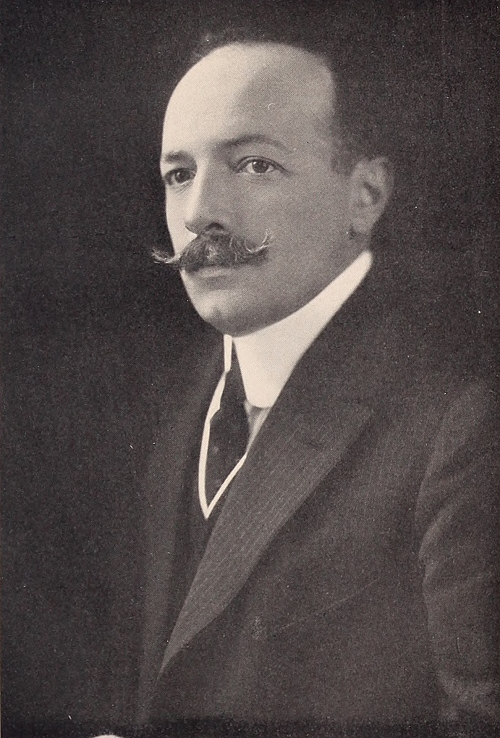
DON RAFAEL ZUBÁRAN CAPMANY
Minister of Foreign Affairs with Carranza, also Representative
of Carranza in Washington
[Pg 99]
DIPLOMATIC WORK IN WASHINGTON
FROM the inception of the Constitutionalist revolution, Carranza appreciated the necessity of having a representative in Washington. Alberto Pani and Roberto V. Pesqueira organized a junta which would counteract the campaign waged against the Constitutionalists by the Huerta agents in conjunction with the American interests, in the vain hope of a recognition of the Huerta régime by the Democratic administration. Pesqueira paid the expenses of the office out of his own pocket until Carranza was able to devote some of the money at the disposal of the revolution, to other purposes besides the buying of arms and ammunition.
The intelligent and effective work done by the two constitutionalist ambassadors concentrated the attention of the American public upon a struggle which had appeared one-sided and hopeless.
After a succession of defeats by the federal generals in the north, Huerta recognized that the great army at his disposal was swiftly crumbling to pieces, and the three divisions under the Constitutionalist generals were determinedly closing in upon him, he became afraid, and with the same unscrupulousness[Pg 100] of former reactionary despots in Mexico, he plucked a leaf from the history of Mexico, attempting to repeat the feat successfully carried out by the clericals in 1847, when American intervention was forced, and in 1861 when French intervention was deliberately invited, to save clericalism from utter annihilation.
Carranza foresaw the move, as the members of Huerta’s cabinet had openly boasted to bring about American intervention to save their interests and their lives. With Carranza in Hermosillo was a Mr. Rafael Zubáran Capmany, a young Mexican lawyer from Campeche, who acted as his Secretary of the Interior in the Provisional Cabinet. Carranza picked out Mr. Zubáran as the one man in Mexico to play the diplomatic game in Washington which would ward off American intervention, even after the American troops had occupied Vera Cruz.
It is quite true that the landing of American marines meant intervention, but President Wilson had declared that it was done against General Huerta, the Dictator, and not against the Mexican people; that American soldiers would be satisfied to occupy the Mexican port until the usurper was driven out.
To make the average Mexican understand this complicated situation, and to convince the Americans that Carranza’s protest was not only necessary but was the only manly and patriotic act possible for any Mexican leader, was the task which befell Sr. Zubáran.
[Pg 101]
The lifting of the embargo on arms and ammunition at the border, without arousing the hostility of the War Department in Washington, was another difficult mission.
To prevent the Mexican constitutionalists from crossing the American border, thereby playing into the hands of Huerta, was as perilous and risky a game as putting out a lighted fuse near a powder magazine.
A talented writer and lawyer, Don Luis Cabrera, ably assisted Rafael Zubáran. The sympathetic attitude of President Wilson and Secretary Bryan helped to crown the efforts with success. Also, the unofficial and friendly co-operation of ex-Governor Lind was of incalculable value to the Mexican diplomats.
But any other less experienced and less discreet personality, a mind less acute, keen and masterly, would have failed ignominiously. Americans as well as Mexicans are discovering that diplomatic victories, although silent and modest, are as effective and useful as military achievements.
[Pg 102]
THE CONSTITUTIONALISTS IN PARIS
ALTHOUGH the diplomatic and financial battle for great loans of the Huerta régime was waged and lost in the United States, as a result of the attitude of the Wilson administration, Huerta was nevertheless enabled to make a loan in Wall Street, ostensibly to pay the interest on the Railroad Merger. The real battle for financial assistance, however, was fought in Paris.
The Parisian bankers were always favorably inclined to the existing governments of Mexico. Diaz had always been considered financially solvent, with Limantour at his side.
The French and English bankers, who had made fortunes on Mexican loans, always spoke with regret and almost pique at the overthrow of “the grand old man.” Foreign bankers not being by nature sentimental or radical, had no sympathy or understanding for the tremendous popular upheaval in Mexico. The whole great libertarian movement was quite misunderstood or ignored. The Huerta régime seemed like a reversion to the good old fat times under Limantour. Huerta exhibited all the ear-marks of the strong man on horseback.[Pg 103] To the superficial bankers, the Mexican Caracalla was bound to stay and ask for more loans, and offer more profits.
In London, the press did not pay much attention to the Constitutionalists, as the English oil interests saw to it that stories were circulated about the bandits, cut-throats and robbers who were infesting Mexico under the excuse of fighting against the de facto government.
As the English oil interests were closely connected with the English government, they having signed a contract to supply the British navy with oil, Huerta gladly gave all the concessions asked for, and confirmed the previous ones. Although the English oil interests denied in the press that they were involved in politics, certain facts came to the notice of the Constitutionalists in Paris, which proved the contrary. Dr. Atl, who was living in Paris, vouches for the data furnished.
Dr. Atl had been very friendly to Dr. Urrutia years ago, as the famous surgeon politician had saved his life. While Dr. Atl was in the hospital, he became intimate with General Huerta, and being a “compadre” to Dr. Urrutia, there were no secrets between them. After the assassination of Madero and Suarez, Dr. Urrutia bethought himself of the friendship and gratitude of his friend, and without much ado telegraphed Dr. Atl that one hundred and fifty thousand dollars were at his disposal at the Mexican legation in Paris: he was to[Pg 104] use it to influence the French press. Although Dr. Atl was broke, as befits a sincere artist, he sent an answer which is not fit for publication, but which does credit to his patriotism and his integrity.
Dr. Atl discovered that in spite of the fact that he was considered almost a confrère among the French journalists, owing to the fact that he published an art paper in French, and wrote for most literary magazines and papers in Paris,—when it came to offering material on the subject of the Constitutionalist cause of Mexico, the pages of the periodicals were without exception closed to him. Finally reporters admitted to him that the English oil interests had been paying enormous sums of money, aggregating the sum of seven million francs. He was even pointed out an agent of the same oil interests, who had left to the editor of the paper the sum of one hundred and fifty thousand francs as a friendly reminder.
After the refusal of Dr. Atl to work for the Huerta régime, a brother of de la Barra took up the task. Not a word could slip into the French papers about the defeats of the Federals, and strenuous efforts were being made to finance a loan of one hundred and fifty million dollars for Huerta. Dr. Atl had heard that the loan would be effected within a week. In despair he walked from one office to the other and succeeded only in getting snubs and rebuffs. To make matters worse, it rained cats and dogs. Our peripatetic artist, soaking wet, tired and[Pg 105] hungry, not having eaten a morsel of food for two days, was on the point of giving up the struggle, when he decided to try the only newspaper in Paris which was above venality, the socialist paper, L’Humanité. He presented himself at the office, and insisted on speaking to Monsieur Jaurès, who was the editor. The veteran socialist finally consented to see him. “I am not representing any financial interests,” spoke up Dr. Atl, “I am only a poor Mexican artist, who expects you to tell the truth about a matter of interest, not only to Mexico, but especially to French investors. Huerta is expected to wind up a loan of 750 million francs; I want to inform you that Carranza, Chief of the Constitutionalists, has communicated a letter to the press in the United States, and to us, that if the revolution is successful, the French loan to Huerta will not be recognized by the successful Constitutionalists. As I know that you are honest and do not want to see the French investors risk losing their money, I beg of you to publish the statement made by Carranza.”
Jaurès published the letter the next day. Mexican bonds went down ten points, and the loan fell through. Dr. Atl is now Director of the National Art School in Mexico City.
[Pg 106]
INVESTIGATION WORK INTO THE MUNICIPAL CITY
GOVERNMENTS AND THE RURAL SCHOOL SYSTEM,
FACTORIES AND INDUSTRIAL CENTRES IN THE
UNITED STATES
BY MODESTO C. ROLLAND
PUTTING aside my humble personality, not of much importance to the reader, I am going to relate my life since the Mexican revolution, for in this manner I can more clearly place in relief something of the history and social conditions in Mexico, which should be known by all who desire information on what has taken place and what we wish to do.
Convinced as we were of the tremendous social inequality that has existed in Mexico under the authority of the capitalists and of the clerical party, before the apparition of Madero, the idea was launched of not permitting a re-election with a view to compelling Porfirio Diaz to verify the necessary evolution, fearing as we did the effects of a revolution.
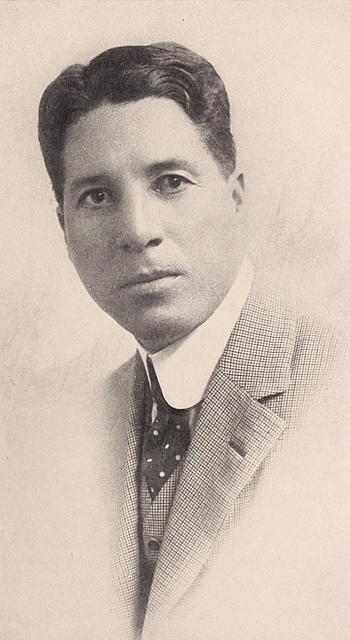
MODESTO C. ROLLAND
Engineer, School Teacher, Member of the Cabinet
We thought, inexperienced sociologists, that it was possible to conquer a tyrant by persuasion, so [Pg 107]as to permit the democratic practices necessary to choose the President. We made a mistake, and the anti-re-electionists had to combat a revolution. Madero expounded the doctrines which were spread over the country, and was at the head of the revolution that imperiously triumphed.
Many of us Mexicans thinking it was time to take part in public affairs, united and formed an Engineers’ Club with a view to studying national problems. In a word, we worked for the nationalization of the National Railways, and for the establishment of postal savings. Nearly all of our efforts were shattered by reason of the inertia displayed by the Secretary of the Treasury, headed by Messrs. Ernesto Madero and Jaime Gurza.
The Catholic party, seeing the approach of an epoch of social reforms which they could not admit, conspired with the army and taking advantage through Huerta, for Felix Diaz turned out to be weak, finally assassinated Madero and grasped the power.
Then they enjoyed their clerical rule and their laws regarding public instruction. The army served them to kill the people and to defend their great estates. The war was kindled with more fury, headed by Venustiano Carranza. We in the capital suffered day by day from the insults of the soldiery. All persons who did not favor the government were known to the authorities, and at any moment were likely to be detained.
[Pg 108]
After the ten days’ tragedy, I went to the Military College, where I was a professor, with the intention of speaking for the last time to my pupils. I explained to them the course that the army would pursue, and that they would be the instrument of a traitor to shed the blood of Mexicans. That same afternoon I was dismissed from my charge. From that time on I was persecuted.
Being independent and my ideas being known, I could not long remain free. The idea contrary to the dictatorial system was what they persecuted most. At length one day they took me out of my office and conveyed me to the penitentiary where they held me in a dark dungeon for a month in solitary confinement.
My friends arranged for Minister Garza Aldape to speak with me. I explained to him frankly why I could not be with the Huertistas for I could not conform with the politics of the outbreak, and the consequences of the same. I made him understand that I was not an active conspirator, for having to keep in favor with two parties is truly crazy and like throwing oneself into the wolf’s mouth.
He permitted me to go out into the street, but it was impossible for me to work. My business affairs were shattered; every move was constantly watched, and at any time I might be sent back to the penitentiary, as were many others.
I decided to get out of the country. I went to Vera Cruz and with some difficulty boarded a boat[Pg 109] as a contraband, and it was in the position of table-steward that I finally arrived in this country.
This is the history of thousands of men in Mexico. Thousands of families remained until they had nothing left to live on, and even the women were in danger of being put in jail, as many were.
With great eagerness I went toward the north of the republic with a view to putting myself in contact with the revolution. There I met many friends who had travelled the path ahead of me, and under various conditions were serving the cause. There I could speak with Carranza, first chief of the revolution. It was in Juarez City where I was presented by the Hon. Mr. Zulara, Minister of Communications. Mr. Carranza spoke with me of the reconstruction of Mexico. At that period of the struggle so much confidence was felt in the triumph of the revolution that the first chief looked ahead to prepare the era of reconstruction.
He talked with me of the agrarian problem, as a touchstone of all the social unbalance of our people, and I was convinced that that serene man, economist by experience and liberal by conviction ought to be the personification of the national unity.
He spoke to me above all else of the schools. The great desire of Mr. Carranza is to develop a school system in Mexico. He expressed himself with the enthusiasm of the man who has long been in contact with the needs of the people, and I was convinced still further of the necessity of working[Pg 110] without hesitation under the influence of such a man. The supreme chief being convinced that another soldier was not needed in the battlefield, and taking advantage of my experience as a schoolmaster and as an engineer, he arranged for me to go to the United States with a view to studying municipal and school systems. In this way I joined a body of students of Administrative service, which Mr. Carranza had been forming in this country and in Europe. I have put my heart in my work, and happily I have found in this nation the greatest facilities for attaining our object. I have visited the principal cities of the East. New York particularly has served me practically.
SCHOOLS
The Department of Education furnished me with all the methods for studying the schools, and in this manner I obtained most interesting information regarding the organization and educative systems of these schools, where from the first step a child takes, he is taught something about democracy. The impression which this spirit of the American schools made upon me will never be forgotten. The continued effort of the teachers to form the free will of the child is excellent. The soul of this nation palpitates in its schools. There the body and the mind are fortified, intensifying the customs of sociability. These things are facts, not theories, in the American schools. The way in which all this educative[Pg 111] labor is consummated with ingenuity and honesty, was what impressed me above everything.
Regarding the material organization it is already known how able Americans are. Organization is nearly always the secret of success, and that is above all what the Latins need to learn.
The organization of the Department of Education is notable, which makes possible the co-ordination of an infinity of data, so as to see schematically the working of the mechanism. I can judge at sight of the weak point so that the same may be perfected. The weak spot in the Mexican school system being the rural school system, I was asked by Carranza to investigate especially that phase in the United States. The result of my inquiries brought forth the fact that the States of Wisconsin and Massachusetts have the best organized rural system for schools in America. These two States are going to be the pattern which will be used for Mexico’s Minister of Education to work from.
It is well-known that the scholastic family is amiable over the entire world, but I believe that the American teacher especially is a model of courtesy. Wherever I went I was treated with such kindness that I shall always remember my visits with pleasure.
MUNICIPAL SERVICES
The revolution was eager to change the social state of Mexico and that naturally comprised the[Pg 112] sanitary condition of the people. In Mexico it is necessary to change the hygienic state of the people who have been always treated with a spirit of exploitation by the privileged castes.
We know that sunshine on the earth does away with the services of the doctor, for which we shall work so that the sewers called casas de vecindad may be dispensed with; in these tuberculosis prospers, while the rich owner assisted through the lenity of the laws is occupied only in collecting the rents. Pure water, air and light,—the people need these and Mexico will give them.
New York has given me great experience and has furnished a wide field of observation, in respect to the Municipal services; and I wish to set forth my report so as to profit by the many good subjects I have studied. Naturally, here as in other places there are many matters which have not yet been satisfactorily settled, as for example that relative to the “casas de vecindad,” but anyway the efforts of this people, so materially progressive will help us in a high degree.
The resolution of the problem of the “casas de vecindad” as it is understood in Glasgow, is our ideal and we shall feel proud on the day that we can present a city with comfort for the poor.
In the conscience of all the revolutionaries is the profound conviction that to guarantee the triumph of the revolution it is necessary to change the social status of Mexico, and for that reason they[Pg 113] will not hesitate to pass laws affecting the land to further works of irrigation, to establish schools and to contribute to hygienic homes.
The example of this nation is valuable for us and we shall not fail to utilize the same. We are anxious to push our people forward through more democratic paths, and are certain that this nation knows how to appreciate our efforts.
In Mexico, where it may be said that humanity is making a trial of adaptation, we shall make a trial of what this country has shown us, and if I myself put into practice what I have learned here I shall consider myself happy, welcoming all the annoying details, for nothing is worth more than the esteem of a nation.
[Pg 114]
GENERAL OUTLINE OF THE CAMPAIGN AGAINST
HUERTA
TO get a clear conception of the strategic work achieved by the three divisions of the East, North and West, it is advisable to look at the map of Mexico.
Mexico is broadest at the American border and tapers exactly like a cornucopia at the Isthmus of Tehuantepec. Mexico City lies in a valley 7,400 feet high, within twelve hours’ ride from Vera Cruz, and being the centre of all the railroads of Mexico, is therefore of the utmost strategical importance.
Huerta, from Mexico City, could reach all his troops anywhere in Mexico, either by rail or water. The Constitutionalists in Sonora were separated from the Northern division by a high range of mountains, and the Northern division from the Eastern division by another range. Zapata could not communicate very easily with the three northern divisions, and was not able to assist them directly.
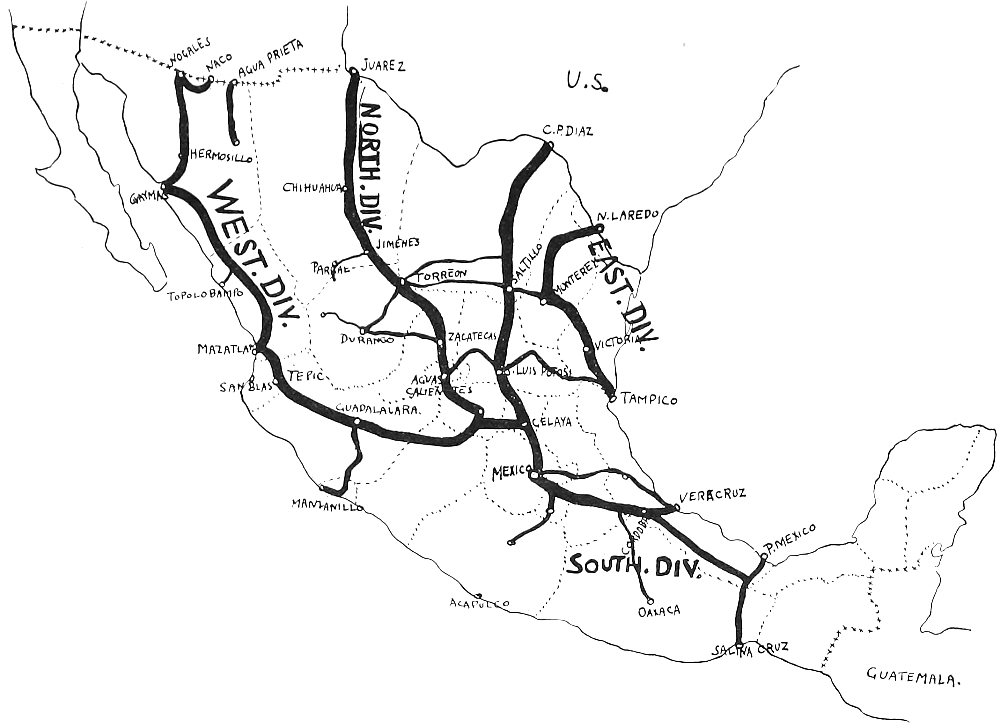
WAR MAP
OF
MEXICO.
STRATEGIC R.R. LINES.
(click image to enlarge)
Huerta’s strategy consisted in keeping his soldiers in the large cities, at the border towns, always hugging the railroad lines. The federals very seldom [Pg 115]attacked in the open, as the lack of horses detracted from their mobility.
The Western division had for its object the control of the railroad, starting from Nogales, through Hermosillo to Guaymas in Sonora, then to Culiacán, Mazatlán in Sinaloa, through San Blas, Tepic into the State of Jalisco, to the capital Guadalajara. Once Guadalajara was captured, the aim of the campaign was achieved, and Obregon had only to wait for the arrival and junction of the Northern and Eastern division near Celaya, to march to Mexico City. The difficulties encountered by the Western and Eastern divisions were trebled by a condition which did not exist in the case of the Northern division under Villa, the fact that the seaports on the Pacific and Atlantic which were always at the mercy of the federals, could feed and supply and augment the contingent of soldiers in the ports.
On the Pacific side, the Federals controlled Guaymas, Topolobampo, Altata, Mazatlán, San Blas and Manzanillo,—and on the Atlantic side they controlled Matamoros, Tampico, Tuxpan, Vera Cruz and Puerto Mexico.
The Western division, under Obregon, captured one by one all the border towns, and later most of the seaports,—and in spite of the fact that Guaymas stuck to the last, the Western division had so effectively cooped up the Federals in that port, that they were not interfering with their downward course towards Guadalajara. General Gonzalez[Pg 116] acted on the same principle. He first captured the border towns, and then Victoria the capital of Tamaulipas. With the fall of Tampico, the Federals in San Luis Potosí were outflanked.
General Villa did the same. After he controlled the border cities, he concentrated all his energies on the capture of Torreon.
The three chiefs of divisions, East, North and West, co-operated with one another under the direction of Carranza. They were supplied with money, arms and ammunition by the organization created by Carranza in the different States, and directed by the efforts of the members of the provisional cabinet.
Zapata by his activity, aided by that of Genovevo de la O and several other chiefs in the South, forced Huerta to keep about forty thousand soldiers in the South.
The railroads created new strategic lines—
1st. From Nogales at the border, the railroad goes almost uninterruptedly through Sonora, Sinaloa and Tepic, with the exception of a gap between Tepic and Guadalajara.
2d. From Juarez the railroad runs through Chihuahua, Durango and Zacatecas into Aguascalientes.
3d. From Ciudad Porfirio Diaz through Coahuila into Nuevo Leon, and to San Luis Potosí, and from Monterrey to Tampico.
They represent the lines which had to be controlled[Pg 117] by the three divisions. Then there were lines connecting Torreon with Saltillo and Monterrey,—and Aguascalientes with San Luis Potosí.
The assertion that either one of the three chiefs of the divisions was solely responsible for the success of the revolution is absurd and inexact.
Let us admit for instance, that Obregon had reached Guadalajara, and tried to march through Celaya to Mexico City alone, before Villa had taken Aguascalientes, or General Gutierrez taken San Luis Potosí. He would then have been attacked in the rear by the Federals.
In Villa’s case, if he had captured Aguascalientes and tried to march south to Mexico City, without waiting for Obregon to take Guadalajara, or General Gutierrez, San Luis Potosí, he would have also been attacked in the rear.
General Gonzalez in his turn, could not march south as long as San Luis Potosí was in the possession of Federals.
The three chiefs had to work together, and the utter defeat of either of the three separately, spelled disaster for the rest. It is fortunate for Mexico that this campaign should have created four strong soldiers “on horseback” for the danger to Mexico’s liberties always appeared with one man as the hero, who subsequently turned to be the “villain.” When there is more than one savior or liberator, they are apt to be so busy watching one another, that Mexico’s liberties are more likely to be respected.
[Pg 118]
CAMPAIGN OF GENERAL OBREGON IN THE WEST
BY COL. I. C. ENRIQUEZ
PERHAPS the most interesting chapter of the Constitutionalist revolt against the dictator Huerta is the campaign of rebellion led by the brave citizens of the State of Sonora. When they decided to fight the bloody dictator and resist his murderous deeds, they were confronted by a very strong and well organized army. The Federal troops were well equipped with ammunition and guns. Their positions were well established, while the Constitutionalists had nothing more than desire of justice, backed by reckless bravery. They had neither guns nor ammunition, and certainly no trained army, and in spite of all this, they were the victors.
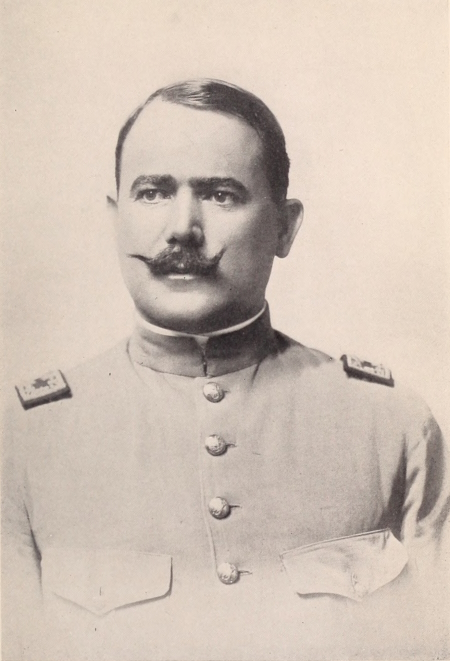
GENERAL ALVARO OBREGON
Chief of the Western Division
After the assassination of Señor Francisco I. Madero and Señor José Maria Pino Suarez, a dreadful feeling of fear spread through the country. This was especially evident among the civilians. What but death had they to expect from such a brutal dictator as Huerta? For this reason alone, there were at the beginning very few men who were [Pg 119]willing to take up arms against him. Even among the governors, twenty-seven in number, only one dared to throw down the glove of challenge to the assassin. He was Don Venustiano Carranza, at that time governor of the State of Coahuila. Half an hour after the news of the assassination reached him, he called the state legislature into session, denounced the dictator Huerta and demanded that they should not recognize Huerta’s authority. He was the only man with sufficient moral courage to openly revolt against Huerta.
At that time, Carranza was not the only one who had the historic opportunity of coming out as a defender of his country’s honor. The same message was transmitted to Señor José M. Maytorena, then the governor of the State of Sonora, but unlike Carranza, he did not take up the cause of his downtrodden countrymen. He saw at a glance the danger of such a move, and realized that the struggle against Huerta would be a very unequal one. Thinking of his own safety first, he left Deputy Ignacio L. Pesqueira as acting governor, and fled to the United States.
At that time, in Hermosillo, capital of Sonora, there were five hundred men under the command of Lieutenant Colonel Obregon, who later in the campaign became a famous general under Carranza. Major Salvador Alvarado, now general, had command of four hundred troops of the Yaqui region, while in the southern part of the State, five hundred[Pg 120] men were under the command of Generals Juan Cabral, Benjamin Hill and Sosa. Many of the officers and soldiers of this army had participated in the revolution of 1910, consequently they were opposed to the dictatorship of Huerta. This marked the beginning of the Sonora revolution.
Even before the assassination of Madero, there were a number of chiefs who waged a relentless war. They were Col. Pedro F. Bracamonte, Col. Plutarco Elias Calles, and Major Campos. They began to recruit people on their own authority in the northern part of the State, and the cutting of railway communication. They also began an open attack on the Federals in many places. When the Sonora revolution was started, the chiefs became united, and opened hostilities.
At the beginning of the Sonora revolution, the Federals had a force of 2,650 troops distributed throughout the State, from the frontier to the coast. Bearing this in mind, the Constitutionalists mapped out a careful campaign. General Obregon was appointed to direct the military operations, as he had distinguished himself in the campaign of 1912 against the Orozquistas.
The difficult task that the Constitutionalists were confronted with, was the prevention of the concentration and the union of the entire Federal army. They knew that as long as the Federal army was divided and spread throughout the State, their chances were more than equal. Thus they had a[Pg 121] double task: first, to prevent the union of the Federal troops, and secondly to fight them in small groups. The main object of the Constitutionalists was to secure the border positions of the State.
As the revolution progressed and the fighting continued, the Constitutionalists found their plans perfectly suited to their needs. They marched from one city to the next, sometimes under terrible difficulties, but always victorious. All those in command, and also the troops, fulfilled their duties admirably. Soon, however, they were confronted with new and unexpected troubles.
The taking of Naco, as also the greater part of the towns on the frontier, involved many unnecessary dangers. As it was situated on the international line, it could only be attacked from the east and west,—if it was assailed from the south many projectiles would pass over to the American side. The Constitutionalist chiefs were always careful to respect the rights of the American people, and avoided as much as possible the damage and troubles that a war waged at such close quarters, would be likely to occasion them. The Federal generals, realizing the position of the Constitutionals, took advantage of their noble intentions and stuck close to the international line. The Constitutionalists did not wish to attack them in the town—but were anxious to meet them in the open country, where there would be no danger of inflicting suffering to families, especially those of American citizens.
[Pg 122]
Knowing that the Federals intended to join their comrades of Chihuahua, the Constitutionalists decided to lay in wait for them. For more than a week, they lay concealed behind ridges and in the mountains, but the blow they had suffered a few days before was a lesson General Ojeda could not forget, and all the attempts of the Constitutionals to lure them out in the open country failed.
The chiefs of the Constitutionalists then decided not to wait any longer. They demanded of General Ojeda, who was in charge of the Huerta troops, that he come out of the city. They explained to him the injustice of fighting near a town, where many innocent people and non-combatants might be injured, but Ojeda’s reply was characteristic of all the Huerta generals. As long as he was safe, General Ojeda said, the whole human race might be slaughtered. Furthermore, he would not come out of his fortified town position—the Constitutionals could attack him there if they wanted to.
The Constitutionals, realizing that they would have to attack, although he was entrenched in a position very disadvantageous to such action on their part, began preparations for the battle. The Federals were located in a position occupying a semicircle. Their six hundred men, cannon and rapid-fire guns, could easily defend their positions. They could sweep the open country with a deadly fire, there being no protection for the assailants.
After a few days of reconnoitring, during which[Pg 123] small skirmishes took place, the final decisive battle took place, on the night of the 1st of April. It lasted more than twenty-four hours, after which the Federals were forced to their barracks for protection, while General Ojeda fled to the American side. The remaining troops surrendered, and the fighting stopped. This victory gave the Constitutionals complete control of the frontier towns, assuring them a base of operations.
One of the remarkable features of the Sonora Campaign was the wonderful manner in which the Federals after each battle, left behind ammunition, guns and equipment which the Constitutionalists so badly needed. The reply of the Constitutional chiefs to their complaining soldiers usually was: “Never mind, boys, Huerta himself will give us arms and ammunition to fight him with.” This statement has proved true all through the revolt.
Before the Constitutionals had a chance to recover from the hardships of the Naco victory, a still greater danger threatened them. A strong force of Federals, four thousand in number, well-equipped, was coming from the south by way of the Pacific coast, General Luis Medina Barron was in charge of them. Before leaving Guaymas, he pledged on his “military honor” that he would be in Hermosillo in fifteen days. He said he would have the head of Obregon stuck upon the point of his sword and that he would banquet at the Hotel Arcadia. But the Constitutional chiefs were not frustrated by[Pg 124] the boastings of General Barron, and quickly reorganizing their army, they took positions between Ortiz and Guaymas at Santa Rosa, a flag station on the Southern Pacific Railroad of Mexico.
Confident of their ultimate victory, the Federals marched towards the Constitutionalists. Early in the morning of the 9th of May they opened a vigorous fire. The attack lasted three days.
The Constitutionalists realizing the value of the springs and wells in that torrid zone, fought desperately for their possession. Once the water supply was captured, it meant the defeat of the Federals. On the second day of the battle, this was accomplished and the Federals were forced back to the Railroad tanks, which could supply them with water no longer than one day. After the third day’s fighting, the Federals, worn out with thirst, retired, leaving a large number of dead and wounded. In their hasty retreat they left behind a great quantity of armaments and provisions. The boasting General Barron escaped to Guaymas, wounded by the enemy, while many of his chiefs were taken to Hermosillo as prisoners of war.
While Obregon was fighting against General Barron, General Hill had not remained idle. He was appointed to carry on operations in the southern part of the State. This he accomplished admirably, especially the wiping out of the “Battalion of Death.” This battalion carried a black flag, with a skull and cross bones upon it and their method was[Pg 125] to terrorize the townspeople by killing innocent women and children. When they met General Hill in open battle they were completely wiped out.
Later General Hill drove 450 from the town of Torin, forcing them back to Guaymas, thus clearing the southern part of the State. After his successes in this locality, he joined General Obregon, in the hope of attacking Generals Ojeda and Barron. The following move of the Constitutionalists is one of the most effective of the whole campaign. It was a decisive battle for the main water supply, which the troops were badly in need of and took place at Santa Maria.
The plans of Generals Obregon, Alvarado and Dieguez once more proved very effective. The Federals, finding the water supply taken, were forced to assume the offensive. They felt confident of success, and burdened themselves with all kinds of unnecessary impediments. But the Constitutionalists were not to be taken by surprise; instead of waiting for the Federals to advance, they went out to meet them: by this manœuvre the Federals found themselves face to face with the Constitutionalists much sooner than they had expected.
For the Federals, it was a fight for existence. They were face to face with death from thirst, and felt that unless they regained the wells a miserable death would be their lot. With them, it was not a fight for the honor of Huerta—they fought from sheer desperation. Under such conditions, the battle[Pg 126] could not last long. Four desperate assaults were made upon the Constitutionalists’ positions, and were repulsed. One of these assaults lasted more than twenty-four hours, resulting in a hand to hand fight. In those hand to hand frays one could not help admiring the remarkable way in which the Yaquis handled their daggers. The Federal army was wiped out completely in a very short time.
While much credit is due to the soldiers who fought in the ranks of the Constitutionalists, many of their victories are due to the remarkable strategy of the generals. One instance will illustrate this. General Alvarado, realizing the terrible thirst of the Federal soldiers, drove them into a watermelon field. He knew fully well the result of such a move. No sooner had they reached the watermelon field, when all the fighting on their part ceased. The Federal officers had to force them to fight at the point of their bayonets, but even that did little good. Once they had entered the melon field, they were the easy victims of the Constitutional fire. At the close of the battle, General Ojeda fled from the scene, abandoning his officers and soldiers. He was followed by the officers, while a small group of soldiers, braver than their chiefs, kept on fighting till they reached Guaymas.
The Constitutionals did not realize how great a victory they really had won, and waited a whole day thinking that the retreat of the Federals was nothing but a trap set for them. But when they[Pg 127] marched forward they found nothing but dead and wounded, and a great quantity of ammunition and supplies. They had left behind all the cannons, twelve rapid-firing guns and sixteen hundred rifles, also a large number of horses and trappings. But the Constitutionalists had no time to lose, and they immediately went in pursuit of the enemy.
While I was overjoyed at our tremendous victory, pity and sorrow embittered the cup of joy. The scenes of horror and misery which I saw are still engraved in my memory. I saw the disastrous results brought about by a tyrannical dictator who, in his effort to perpetuate himself in absolute power, was willing to sacrifice everything and everybody. It was dreadful to see the battlefield littered with the dead and wounded, men who meant well but who understood little.
On the other hand there were the patriotic, well-intentioned men, full of self-sacrifice, willing to die for liberty and the prosperity of their native country. Alongside these sturdy young fighters were also the poor women and children, innocent sufferers in the great strife. They were the greatest sufferers,—they bore the greater burden.
*****
The campaign of General Obregon through the State of Sonora, marks only the beginning of the great struggle which led him victoriously to the city of Mexico. This campaign, although never mentioned by the newspaper correspondents, was nevertheless[Pg 128] as important as the campaign of General Villa. General Obregon not only had to fight an army much larger than his own, but the geographical location of his territory constantly endangered his rear wings. Unlike Villa, he was constantly compelled to guard from rear attacks, as well as from frontal attacks. This ever existing danger made the campaign much more difficult, multiplying the dangers which constantly confronted him.
The remark of General Obregon to Don Venustiano Carranza when the First Chief marked out the three lines of struggle, illustrates the nature of the fighting General Obregon. When Carranza was about to depart from Nogales, in February, 1914, Obregon said to him: “First Chief, tell Generals Villa and Gonzales to hurry up in their march, for I am going to get busy and get to Mexico.” And true to his word, several months later, although beset by many more difficulties than the other generals, he reached Mexico City before any of them. After the Federal troops were routed and driven back in great disorder to Guaymas, the State of Sonora was practically cleared from Huerta troops. But that only meant the beginning of the great fight.
During the months of July and August, General Obregon was preparing for his advance South. He had little time to waste, for even before he was through with his preparations, he was forced to[Pg 129] advance on San Blas, Sinaloa. A strong detachment of Federals were sent up from Mexico City to reinforce the defeated Huerta troops who landed at Topolobampo. But General Obregon was not taken by surprise. Having assigned Generals Hill and Iturbe to proceed against the Federals, he himself continued his march further south. His objective point was the city of Sinaloa. In the meantime Generals Hill and Iturbe had succeeded in defeating the Federal troops which landed in Topolobampo, and joined General Obregon in his attack upon the city of Sinaloa.
The storming of Sinaloa was one of the fiercest battles of the entire campaign. It lasted nearly five days and again, as in all the previous battles, the Federals retreated so hastily that they did not have time to take their guns and ammunition with them. A great quantity of ammunition and provisions were left behind by them, of which the Constitutionalists were much in need.
One of the great difficulties which constantly confronted General Obregon was the guarding of the frontier and the positions all along the coast. The slightest error in the guarding of those positions might have caused the annihilation of his entire army by a rear attack. So that, whenever he took a city from the Federals, he was confronted with the question of protecting that point. He was forced to always leave troops behind him, to guard those[Pg 130] conquered cities. Had he not done so, the Federals might have sent up new forces by way of the Pacific and re-taken the conquered posts.
The most important of all the battles of the entire campaign was the storming of Culiacan. The Federals, realizing the dangers of Obregon’s swift march, massed a strong force of troops in that city, numbering about seven thousand. Needless to say, they were much better equipped than the Constitutionals, who always had more men than rifles and guns. When General Obregon, who personally conducted the battle, reached the city, the Federals were well fortified in their positions. The fight lasted a whole week, and fighting continued day and night, almost without cessation. At the end of that time, the Federals were badly beaten and were forced to retire to Mazatlan. The taking of Culiacan meant to the Constitutionalists more than just an ordinary victory. It meant the success of the operations towards their goal, and the weakening and disintegration of the Huerta troops. The winning of this battle enabled the Constitutional forces to move further south to the Territory of Tepic, where General Obregon took the city of Acaponeta and San Blas by storm.
The rapidity with which he moved and the persistency of his attacks won him most of his battles. He lost no time,—he did not wait. As soon as he had taken San Blas, he did not even wait long enough to give his tired soldiers a good rest. He[Pg 131] moved on to his destination immediately. With his characteristic rapid fire action, he moved towards Guadalajara in the State of Jalisco. The most interesting thing about the storming of that city was the capture of fifty-six train loads of supplies. Never before had they had such luck. The trains were packed with all kinds of provisions, guns, rifles, cannon and ammunition. It was one of the richest hauls they ever made.
The conclusion of his march towards the capital was marked by a series of successful battles, in spite of the difficulties he had in guarding his base of supplies and the frontier towns. After his victory at Guadalajara, he marched on towards Irapuato, where he again succeeded in routing the Federal troops, and thence proceeded to the city of Mexico.
[Pg 132]
VILLA AND HIS CAMPAIGN IN THE NORTH
SO much has been written about Francisco Villa that only a few preliminary remarks are necessary to describe the personality of the famous general. The enemies of Villa made the accusation that the rebel chief was not respectable because he had been an outlaw under the Diaz régime.
Those who have studied the Diaz rule with a mind unbiased by profits and interests, will have discovered that if Villa was a bandit under the Diaz reign, he certainly must have been an honest one; for almost without exception all the officials from the President down to the lowest Jefe Político, were robbers, cut-throats and grafters.
Villa is not better nor worse than the average Mexican, but his weaknesses are those of his unfortunate countrymen, and his strength is the latent strength of his people.
Villa, although directly responsible for the mutiny at Juarez in 1911, when with Orozco he almost succeeded in eliminating F. I. Madero, discovered that the three cientifico agents in El Paso were the instigators of the plot. Ever since then Villa remained [Pg 133]loyal to Madero and continued to fight against Huerta, in memory of Madero.
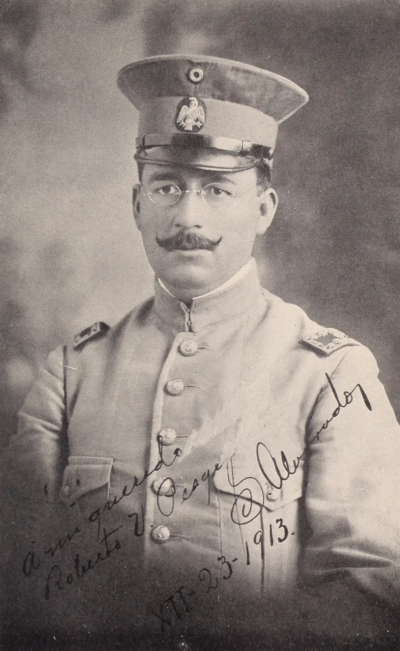
GENERAL S. ALVARADO
Second in Command under General Obregon
All the biographers of Villa spoke of him as a Napoleon, who had created an army out of nothing. It must not be forgotten that out of one hundred and thirty thousand soldiers who fought against the military dictatorship, there were at least forty generals who created armies out of nothing. They, too, were without money, ammunition, arms and with even less experience than Villa.
During his ten or more years as an outlaw, Villa was roaming all over the States of Chihuahua and Durango, as a leader of lesser outlaws, and his guerrilla experience was invaluable to him later.
In the case of most other Generals, like Obregon, Gonzales, Gutierrez, Natera, Herrera, Chao, Calles, Hill, Caballero, their experience was insignificant. Most of the chiefs who fought the Federals were either farmers, lawyers, engineers, clerks who had never before handled a gun in their lives till the last revolution.
When Villa crossed the American border into Mexico in the spring of 1913, he marched up and down the States of Chihuahua, Coahuila and Durango. He gathered men, attacking small cities and doing very much the same as other revolutionists did—surprising small detachments of Federals in outlying districts, and capturing the arms, ammunition, and horses which were so badly needed. With him were co-operating the Herrera brothers, Chao,[Pg 134] Rosalio Hernandez, and in Durango, the Arrieta brothers, Contreras, Triana, Carrillo and Urbina. They looted the banks to buy arms and ammunition from the United States, and stole horses and saddles to creat a mobile force and killed cattle to feed themselves.
The first important battle won by Villa was fought in San Andrés with eight hundred men against fourteen hundred Federals, who were defeated on October 4th, 1913. He attacked, captured and sacked Torreon. Near Chihuahua he again defeated the Federals, but as Juarez was still in their power, he had to take the border towns before attempting to fight towards the south.
How he outwitted the commander of Juarez by stealing a ride north of Chihuahua on a train loaded with coal, and surprised and drove the commander across the border, has been told before.
The battle of Tierra Blanca, when he defeated five thousand Federals who came from Chihuahua to relieve Juarez, was his first important strategical battle, and as far as the campaign is concerned, is the most important, even without excepting the battle of Torreon, in April, 1914. Without the battle of Tierra Blanca, no other successes could have had any decisive value. In Torreon, Villa had all the men, arms and ammunition he wanted, and with great recklessness, he sacrificed his men, counting only upon results.
After the capture of Torreon, Saltillo and Monterrey[Pg 135] automatically fell into his power, for Torreon was the strategic key which opened the way south to his army, i. e., the Northern division.
In another chapter, the causes and details of the Carranza-Villa quarrel will be discussed. The character of General Villa must be studied, in order to understand the underlying causes of the quarrel.
Villa, like Zapata, is a man of the peasant class. Physically strong, with great will power and a good deal of horse sense. In men of this type, due to their utter lack of education, and inexperience in politics, they are an easy prey to their secretaries, friends, advisers and hangers-on. Being fundamentally honest, they take it for granted that their entourage is likewise, and being unable to read or write, they are constantly deceived by their secretaries. In the case of the other generals, like Obregon, Gonzales, etc., their education and political experience put them on their guard against petty, scheming politicians, and unscrupulous tools of the reactionaries.
Villa’s ideas outside of stratagems, spoils and the game of war, are primitive, and not always clear. His appetites and his contempt for human life is equal to that of the Apaches and Comanches; his attitude toward life is anarchistic, rebellious. Towards people he is cunning, suspicious, ostensibly good-natured and at times tyrannical. An uncontrollable temper is softened by a keen sense of humor, and a[Pg 136] lavish generosity is encouraged by a propensity to acquisitiveness.
Villa is so terribly suspicious of everything and everybody, that he has been accused of being not quite so brave as he wants to appear. General Maclovio Herrera is admired for his courage and is nicknamed “the Lion”: Villa has an unbounded respect for him, tinged with a little envy. Villa’s enemies claim that he went to Aguascalientes escorted by eighteen thousand soldiers, because he was afraid,—although the other generals had none but bodyguards.
When Obregon was sent by Carranza to join Villa in a solution of the Sonora controversy between Maytorena and Hill, he went alone. Villa soon lost his temper and had Obregon arrested, and threatened to have him shot by his soldiers unless he acceded to his demands. Obregon, calm and cool, answered: “My life belongs to Mexico,—if you believe that my death is necessary to the solution of the question, I am ready to sacrifice it. I came here to meet Villa the patriot: I find a savage Villa who calls himself the savior of Mexico.” The manly and courageous attitude of Obregon conquered Villa, who instead of ordering an execution, gave a ball in his honor.
When Carranza was in Chihuahua with Villa after the fall of Torreon, he heard that Villa had ordered the execution of General Chao, Governor of Chihuahua. Villa was asked to appear before[Pg 137] Carranza, who demanded an explanation. “I have shot Chao,” grinned Villa. Carranza was very indignant, and protested vehemently. Then Villa laughed, and admitted that the order had not been carried out. Carranza ordered him to free Chao immediately, and said to him: “You have no right to arrest and shoot an official not under your immediate command, without my authority, especially a governor who is under my jurisdiction. Am I the chief of the revolution or am I not?” Villa was impressed and he ordered the release of Chao. He excused himself by saying that Chao had grafted. Later it was discovered that Villa’s secretary had sent orders to Chao, Villa not being able to read what he had signed, and the whole scheme was engineered by Villa’s secretary to get rid of Chao, who was his personal enemy. Villa embraced Chao as a result.
One of Villa’s many wives was enterprising enough to induce Villa to let her sign some treasury notes, which were honored by the officials, who did not dare refuse.
Once, Villa gave an order for the exportation through Juarez of $5000 worth of material. The Secretary changed the order from five, to fifty thousand, which without his knowledge had been telegraphed to the official in charge of the Custom House in Juarez. The honest official refused to let the goods pass the border, and the irate Villa almost shot him for disobedience. Finally the matter was[Pg 138] cleared up, and Villa declared that he had ordered five, and not fifty, thousand dollars’ worth. “But here is the order signed by you,” said the official. Villa had been deceived again, as he has been all along by his secretaries. The two following telegrams, one from Villa, and the answer of the Arrieta Brothers, will throw a very clear light on the attitude of Villa toward Carranza. It will also prove that the majority of the generals do not sympathize with Villa, as he is making a personal question, or better said, an alleged insult to his division, a pretext to overthrow Carranza, and become the political dictator of Mexico.
TELEGRAM.
Chihuahua, General Headquarters,
Sept. 23d, 1914.
Urgent.
Generals Mariano and Domingo Arrieta.
Durango, Dgo.
Venustiano Carranza having deeply offended the honor and dignity of the Northern Division under my command, and not being able to tolerate any longer his whims and inconsequences, which would have sunk our country in ruins, disseminating anarchy, while creating distrust with foreign nations,—since yesterday, all my generals and myself have decided to repudiate him as Chief of the Nation.
For we are convinced that because of his alliance with the cientificos and his noted tendencies to favor a certain personal group which surrounded him, and prevented the solution[Pg 139] of the real revolutionists, and to fulfil the promises made to the people.
As a consequence we have decided to fight only against the personality of Venustiano Carranza, and to drive him out of the country, without antagonizing or molesting the other chiefs who have fought to overthrow the usurping government which has just fallen. Therefore we repeat that our movement is solely against the personality of Venustiano Carranza.
As we have always understood that you have been animated by patriotic sentiments, like ourselves, we address ourselves to you, showing you the matter clearly, and we hope that in view of the right which is on our side, you will be with us, and will help by offering your services to the cause of the people.
Already the Governor of the State of Sonora and his forces, have repudiated Venustiano Carranza, and we hope that you will act likewise and will define your position informing us if you are with us or with Carranza.
We beg you to answer as soon as possible. Greetings.
The General in Chief,
Francisco Villa.
Answer to the above telegram.
Durango to Chihuahua, Sept. 24th, 1914.
Señor General Don Francisco Villa,
Chihuahua.
We are in receipt of your telegram, in which you declare that the division under your command has repudiated the authority as Provisional President, of Don Venustiano Carranza, because of insults to the dignity of said Division and for not having fulfilled the promises made to the people.
[Pg 140]
We discover in your telegram a certain ambiguity, as we have no knowledge of the insults to which you refer.
Concerning the promises made to the people, we consider your pretentions premature, as a convention has been named to meet on the first of October, in which clearly and explicitly the programme of the government will be discussed and studied, so as to solve the various problems which will benefit the proletariat.
Therefore we would be grateful, if you would communicate to us the nature of the insults to which you refer, and the cause of the people which has been frustrated, so that we can intelligently come to a decision.
And lastly we appeal to your patriotism and the interest of the country which through this break would be more weakened, and be at the mercy of the American nation, which has not retired its troops from Vera Cruz. We beg of you if you are a real patriot, to calm your temper and meditate on the evils which would befall our country with this civil war—which would bring about as a consequence a foreign war.
1st. We are of the opinion that you should sacrifice your self-love for the good of the country, and you should not take notice of said insults, even if they existed.
Secondly. That we hope that the Convention which is to take place on the first of October, when all the Constitutionalist forces will be represented, to solve the great problems of our country, will put them into effect with the assistance of the arms which we will not relinquish until our ideals have been fulfilled.
Hoping for an answer to give our definite resolution, we salute you affectionately.
General Domingo Arrieta,
General Mariano Arrieta.
[Pg 141]
As an answer, Villa sent General Urbina against the Arrieta Brothers. Urbina and his forces were defeated, and the general badly wounded. Innocent, well-meaning, but utterly deceived Villa! If he only knew that the Cientifícos whom he accuses of having affiliated with Carranza, are really pulling their wires from New York, and using him (Villa) as the tool to eliminate Carranza, and this because the first chief intends to carry out all the radical reforms of the revolution.
[Pg 142]
CAMPAIGN OF GENERAL GONZALEZ IN THE EAST
LIKE most of the campaigns in the north of Mexico, where the strategic objectives are the border towns, so the campaign of General Gonzalez was fought, first for the possession of Piedras Negras (Ciudad Porfirio Diaz), Nuevo Laredo, Camargo and Matamoros, and later for the control of Tamaulipas.
The first battle of the revolution against Huerta was fought at Anhelo and ended in a defeat. Then Venustiano Carranza, with his brother Jesus Carranza, and Pablo Gonzalez, took Piedras Negras.
Huerta, as well as his generals, were of the opinion that if Carranza was captured and shot, it would end the constitutionalist revolution then and there. Therefore, they concentrated all their efforts upon Piedras Negras, which was defended by four hundred men. More than 9,000 Federals were sent against them, and although the revolutionists were forced to leave, the enemy did not succeed in capturing the leaders.
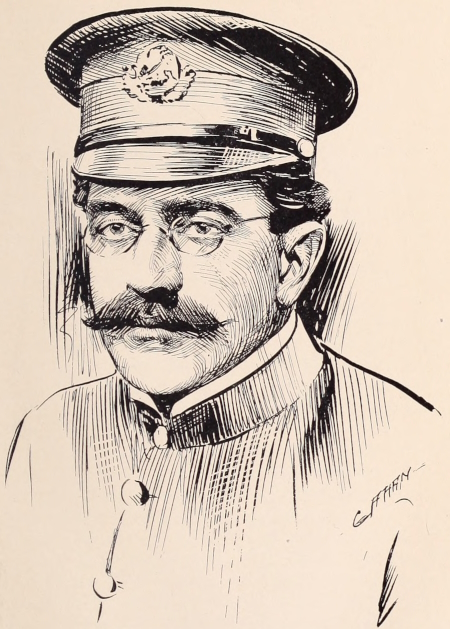
GENERAL PABLO GONZALEZ
Chief of the Eastern Division
Then Pablo Gonzalez, with the help of Jesus Carranza, roamed all over the States of Coahuila[Pg 143] and Nuevo Leon defeating over twenty Federal garrisons and capturing the much needed arms and ammunition, which were so scarce and hard to get at the beginning of the struggle.
It is a fact worth noticing that, in the three campaigns in the North, Centre and South, the revolutionists captured many cities, and then departed. To the lay mind it seems absurd to fight so hard to capture a city, and then to let it go almost immediately without even waiting for the Federals to retake it. Nevertheless, it was good tactics. The Federal garrisons offered big stores of war material, while the cities supplied them with food, clothing and money.
Monterrey was attacked twice without success, and there was no chance of victory until Torreon, Piedras Negras, Nuevo Laredo, Matamoros and Tampico were in the hands of Pablo Gonzalez. When that was done, Monterrey was automatically evacuated by the Federals.
Tampico was attacked several times and besieged by Caballero. The Federals had a great advantage, as they controlled the city with their gunboats. Another drawback was the presence of foreign warships, of foreign Consuls and representatives of the great oil corporations. The Dutch, English and American Oil Companies protested most vigorously against the attack on Tampico, and the Federals took good care to use this protection to great advantage.
[Pg 144]
When Pablo Gonzalez was ordered to take Tampico at all costs, he did so after only four days’ battle. When the Federals began their retreat, they threatened to burn and destroy all the oil tanks and property of the foreigners, if they were followed by the Revolutionists.
Like many of the important moves in the campaign against Huerta, the great significance of the capture of Tampico was pointed out by a civilian. In this instance, the Secretary of the Interior in Carranza’s revolutionary Cabinet, Don Rafael Zubáran, was the wise counsellor.
The first reason given was that Huerta had practically given away many very valuable oil concessions to an English company, in return for cash. That the export tax on each barrel of oil was doubled from sixty cents to $1.20 and calculating that over half a million barrels of oil were exported daily, it will be seen what a rich source of income would have been taken away from Huerta.
The second reason was that the seizure of Tampico would eliminate a great source of friction between the foreign powers and the revolutionary government, besides relieving the anxiety felt in Washington as to the constant danger of foreign marines landing in Tampico to protect the interests of their countrymen.
The third reason was that Tampico, besides being the most important seaport in Mexico after Vera Cruz, was also a great strategic point. It cut[Pg 145] off Monterrey and Saltillo from the coast, and endangered and flanked their communications. Huerta considered the possession of Tampico of such value that when it was threatened by the rebels, and he knew that it was lost to him, he decided to force American intervention by arresting some marines who had landed at the Tampico wharf on routine business. The action was deliberate and was meant to concentrate the attention of the revolutionists on American aggression, so that they would discontinue their attacks. The State and Navy Department very wisely kept the American warship outside of the Panuco River so as to offer as few pretexts as possible for attacks. It can be asserted that the fall of Tampico sounded the end of Huerta’s rule in Mexico.
[Pg 146]
ZAPATA AND HIS CAMPAIGN IN THE SOUTH
UNDOUBTEDLY there is no Mexican who has been talked about, described, praised and vilified more than Emiliano Zapata, in the last four years. Now everybody can pronounce his name in America, for it has become a byword of the revolution in Mexico.
Innumerable articles have been written in America on Zapata but I have only met two men who had seen him,—one was a Mexican newspaperman and the other was a federal major who slept in the same room with him, unconscious of the fact that a few feet from his bed there was the man he was supposed to capture dead or alive for Huerta, with three thousand soldiers. When he did discover this interesting fact, Zapata was miles away. This incident proved conclusively that the southern chief could not be caught by force, and that the Indians in Morelos would as soon think of committing suicide as to betray him.
The nature of the volcanic country in the State of Morelos makes it very hard for a body of soldiers to march through it without danger of being[Pg 147] surprised and ambushed almost every hundred yards. Every peon in Morelos and many other southern States is a Zapatista.
No man could have held such power as Zapata over the population of almost three States, by offering in return only the spoils of war or brigandage. No bandit ever controlled thirty thousand men on the mere results or promise of loot or theft. The Zapatistas, with few exceptions, are all for the abolition of all forms of slavery and for the distribution of lands. Although Zapata is not the intellectual leader of the Zapatistas, his name has become a legend. Many people claim that he never existed, others claim that Genovevo de la O was the braver and more intelligent of the two, and the real leader.
There were several leaders who fought Diaz before Zapata became prominent, but the Morelian chief represented the deepest yearnings, the most profound aspirations and all the unspoken desires of a miserable, downtrodden, but patient, long-suffering and kindly race. Any one who has visited that Garden of Eden of Mexico, the State of Morelos, will bear testimony to the simplicity, morality and patience of the Morelian Indians, their love of the soil which is almost a passion, their sterling qualities.
The injustices, robberies and cruelties perpetrated on the Indians are almost incredible, and almost unbelievable in our century. Until the European war[Pg 148] started, civilized people did not believe that soldiers could be so cruel, reckless and ruthless against an enemy.
Zapata’s and Villa’s wholesale shooting of prisoners, the looting of haciendas, banks and stores in captured cities, their retaliation against federal officers, now seem like kid-glove, pink-tea affairs, after the stories of German atrocities. In the light of these atrocities, Villa might be a Mexican Chesterfield, and Zapata a scrupulous Morelian hidalgo of the most fastidious tastes. Strange to relate, the most virulent attacks against Mexican civilization, methods of warfare and revolutionary barbarities, were written by German editorialists. The Mexicans had no Treitschkes, Nietzsches, von Bernhardis to sing the pæans of war, of the destruction and annihilation of enemies, and inoffensive non-combatants in the name of a higher culture and a greater civilization.
The precedents of cruelties and wanton destruction were created by the federal officers under Diaz and Huerta. Where the Federals passed, they left a trail of death and desolation. To prove that they had fought valiantly the Federals killed peaceful peons and sent the ears of the Indians as vouchers to the War Department.
Whole villages passed through fire and sword—in others all the men were impressed into the army, and the women and children concentrated in the cities. Thousands of fruit trees that had been[Pg 149] growing for years, bearing fruit, and which were the sole source of income of families of peons, were ruthlessly cut down to be sold for firewood by greedy Jefes Políticos. A whole population was decimated because it would not stay under the leash of the slave driver on the sugar and tobacco plantations owned by half a dozen rich families.
Their day of reckoning has almost arrived, and no matter what Zapata or any other leader may do politically, the peons of Morelos know that the lands are theirs for the taking.
Morelos is one of the smallest States in Mexico, and one of the richest, and has an area of 2,734 square miles and a population of 179,114. As many as thirty thousand soldiers with machine guns and cannon were sent to conquer Zapata and his army, but Zapata remained unconquered. All the generals, including Huerta, who had won laurels in many battlefields, invariably lost them in Morelos. The Federals fought according to book-strategy, while Zapata and his chiefs fought with the same fabian tactics which defeated Hannibal in Italy and Napoleon in Spain. When the patient, ignorant, but physically powerful Indians discovered that they could shoot and fight as well as the trained Federals, and that a few thousand Indians banded together could keep at bay a whole army of Federals, the struggle for land was won.
But there is the reverse of the medal. As all strong people have their compensation in some flaw,[Pg 150] so has Zapata a great weakness which prevents him from becoming the greatest factor for good in his country. His illiteracy, coupled with a lack of knowledge of politicians of the middle and higher class, make him an easy prey to all sorts of schemers and intriguers.
For years Zapata kept up his guerrilla warfare, accompanied by a staff of officers and several secretaries. One of the most famous was a certain Montaño, a school-teacher who wrote the first plan which Zapata endorsed. The second plan, which was written by a certain Palafox, another secretary, and was named the Plan of Ayala, which acknowledged Orozco as the provisional president, when he rebelled against Madero, assisted by Científico money.
After Madero’s murder, Orozco joined the standard of Huerta, who, true to his usual methods, tried to use Orozco’s influence with Zapata, to eliminate him. Orozco went to Morelos for the purpose of conferring with Zapata, but the wily Morelian had discovered that the meeting was not meant to bring peace, but to facilitate his capture and murder. As Orozco was not very brave, and his conscience not very clear, instead of going personally to the meeting, he sent instead his father and two other agents. As an answer to the contemplated plot, Zapata took Orozco’s father and his two agents as prisoners. Later they were found dead, after an attack by the Federals.
Orozco vowed vengeance, but he left Cuernavaca[Pg 151] in great haste under the pretext of going North to fight the Constitutionalists, where he was defeated at every encounter. Any one who had read Mexican newspapers would have known how discredited Orozco’s personality was, but Zapata’s secretaries wanted a continuation of conditions wherein they would run the Morelian chief for their own benefit.
When Carranza arrived in Mexico City with the constitutionalist government, he sent two agents to Zapata, with power to settle the agrarian question in Morelos, once for all. The following letter by Gen. A. I. Villareal will show how Zapata’s secretaries spoiled the settlement.
Mexico, Sept. 5th, 1914.
General Emiliano Zapata:
Cuernavaca, Mor.
Esteemed General:
I had the pleasure of receiving the last letter, which you were kind enough to send through Mr. Reyes and in which you express the fact that you were to blame for the incident at Huitzilac. I must advise you that this matter was not one of much importance, and it seems that they gave you exaggerated reports of the same. What we consider a grave affair, and was really a sad one regarding which we went to consult you with the object of arriving at an agreement between the revolutionary elements of the North and the South, was the unjustified conduct and belligerent attitude of your secretary, Mr. Manuel Palafox, in respect to whom I intend to speak in this letter with the most absolute and honest frankness; believing in this way[Pg 152] that I may do you a good turn, not alone yourself personally but also the cause of the well-being of the public which we must all defend and also the peace of the nation.
If you critically analyze the happenings which occurred during our visit in this city, and to which I beg to call your attention, you will discover in a moment that all the difficulties, all the petty misunderstandings, all the threats of war, emanated principally from Mr. Palafox supported by Mr. Serratos, who also in our opinion is carrying on work right in your office that is very far from being patriotic and loyal.
It is always the case that when various people come together to settle great or small differences which may exist between them, it is understood if they work in good faith and the matters treated of are thoroughly talked over, that some points are ceded by one party and some by the other party; there must be reciprocity in the arrangements, and a definite conclusion reached regarding the subject under discussion. To continue, conferences held with regard to any matter must not be reduced to the party on one side imposing a settlement and the parties on the other side accepting the same without discussing the propositions for and against and coming to a mutual agreement.
Unfortunately, in our case this which was the rational and just method of procedure did not take place, because as you will remember Mr. Palafox, who was the spokesman during the discussions almost prevented us from setting forth our side of the subject, and attempted to impose upon us certain conditions which would have to be accepted unconditionally as preliminaries before arriving at a resolution.
You will recollect that Mr. Palafox demanded as a first[Pg 153] condition that as revolutionaries of the North we should accept without discussion the Plan of Ayala as the Supreme Law of the Republic, declaring that otherwise it would be impossible to treat of other matters.
This is in direct contradiction to your declarations, that you had no ambition for power; for in one of the clauses of the Plan of Ayala it states that General Pascual Orozco is recognized as leader of the revolution, and in case he is not able to discharge that task, you will be eligible; and as our complete submission to the Plan of Ayala is demanded it would intimate that we ought to place you in the position of the Supreme Chief of the Nation and in a more or less covert manner, you would be Provisional President of the Republic.
I believe in the sincerity of your words when you say that you have no ambition to command, that all you want is the settlement of the agrarian question and the economic betterment of the lower classes for which you have struggled so bravely. But back of this is Mr. Palafox, who has the ambition to rule, and who is desirous to see you raised to supreme power so that he may enjoy a privileged position in your office in his character of Secretary and Councillor. The same object animated Mr. Serratos more or less who also enjoys a certain amount of influence regarding your affairs, and doubtless awaits the auspicious moment of utilizing the same for his own benefit.
You will remember that Don Luis Cabrera and I set forth very clearly that we were authorized to accept essentially the Plan of Ayala; that is, the land question, the satisfaction of the popular needs, the betterment of the poor. We hereby declare that we agree fully with the principles set forth in the Plan of Ayala, and only desire[Pg 154] that its form may be modified, and that there may be added to the gubernatorial programme which we might draw up some clauses relative to the needs of the Northern States and the States in the centre of the Republic, which are not in the same condition as those of the south. Messrs. Palafox and Serratos refused to accept our cordial and just propositions, and insisted in a blind, unquestionable, despotic manner that the Plan of Ayala be accepted, without the change of a word or a comma.
Convinced that the influence of Messrs. Palafox and Serratos over you would make sterile all our efforts for coming to an agreement in the form which we proposed, we declined to start a discussion which only might have served to embitter our souls and to give rise to more ill-feeling than what we suffered in the course of our conversation with you. For our part we found ourselves in a visibly hostile atmosphere, and we lacked the liberty necessary for the free expression of our opinions.
When Mr. Sarabia spoke with you for the first time, he wrote me stating that your attitude was cordial and that he saw that your propositions of peace were sincere. On the occasion of our meeting with you our surprise was great to find you different from what Mr. Sarabia had represented. This may be easily explained that the first time you spoke with Mr. Sarabia you were guided by your own impulses and by your good intentions, and the second time you were under the influence of the unhealthy machinations of Mr. Palafox.
The question then is reduced to the following facts: On our part the greatest and most sincere cordiality, the recognition of the justice of your cause, the acceptance of the principles of the plan of Ayala relating to the division of[Pg 155] lands and the social betterment; on your part, good impulses, no ambition for power, and the exclusive desire for the welfare of the public; and on the part of Mr. Palafox and Mr. Serratos a spirit of intrigue that distorts the best intentions, ambitions for power in your hands with a view to thriving in your shadow, and a decided object of provoking war if their ambitions should not be satisfied.
Is not this sad, General Zapata? Is it not deeply to be lamented that all the patriotic efforts of honorable men shall go to pieces before the caprices of two intriguers? Is it not bitter and even shameful that a movement as great and unselfish as yours after four years of struggle should degenerate by reason of an instrument of vile ambition and in an ignoble weapon for bringing war a second time on a country already exhausted in its struggle for independence?
I make a supreme appeal to your honor, to your patriotism, to your love of the people, who would be in the last analysis those who would suffer most from a war, that you take into consideration what we said when we were with you, and which I again repeat in this letter, that we may arrive at a good understanding with the revolutionaries of the north and the south, who in reality are brothers.
We know that we have done all in our power to arrive at a peaceful solution, and if at length it might be found impossible to reach it, it will not be through our fault.
God grant that to-morrow I may not have to tell you that through attending to the intrigues of an ambitious party more than to the dictates of patriotism, you may be to blame for the beginning of a war which would be thoroughly unjustifiable, which no one wants and which would do no one any good!
I believe that after what I have said it is only necessary[Pg 156] to add the following: That while Palafox continues at your side enjoying the influence that he does, it will be impossible for us to return to see you at Cuernavaca, nor for us to send other representatives, for we consider that we would not have, as we did not, the necessary liberty to treat with frankness and amplitude the transcendental subject which is under our discussion.
We would be very thankful to know that you had resolved to act independently of your harmful counsellor; and in such a case we consider that it would be easy enough to arrive at a settlement.
In place of Mr. Palafox you should be able to consult your principal chiefs, who have struggled faithfully for the cause, and you will surely find among them better standards and better counsel than from your ancient secretary.
I know that the majority of your chieftains hold Mr. Palafox in scant esteem and do not care for him; and if they have not so expressed themselves to you it has been perhaps through lack of opportunity or excess of discipline. Now it would be convenient that you consult them regarding this matter.
I trust, Mr. General, in your good judgment and sense of right, to kindly bear in mind with a spirit of serenity and justice what we have set before you, and unite your efforts to ours with a view to realizing the peace which our Republic needs so much, without lessening the agrarian ideals for which you have struggled for so long a time.
I am happy to sign myself,
Yours affectionate and loyal friend,
Antonio I. Villarreal.
[Pg 157]
ONE HUNDRED YEARS’ STRUGGLE FOR LAND AND
DEMOCRACY, AGAINST CLERICALISM
IN August, 1521, Cortez consummated the conquest of New Spain and in August, 1821, under Iturbide, the independence of Mexico was wrested from the mother country.
For exactly three hundred years Spain governed Mexico with soldiers and priests. Ten prelates of the Dominican order, out of a list of sixty-two viceroys, had ruled New Spain, which was surrounded with a ring that was mightier than a Chinese wall.
Education, outside of religious teaching, was discouraged. Communication with the outside world was forbidden. Spain fed New Spain commercially, politically and intellectually.
The Mexican born was allowed no privileges, no rights. The Spaniards, soldiers, priests and aristocrats monopolized everything; all the offices, the commerce, the property, were theirs. Four-fifths of the lands were in the hands of the Church.
In 1811 an ex-priest, Hidalgo, unfurled the banner of the revolution by the shouts of: “Long live Religion! Death to bad Government! Death to the Gachupines!” (Spaniards).
[Pg 158]
The revolution for freedom from Spanish rule was initiated by an ex-priest. Morelos, Matamoros, Dr. Cos, and Navarrete, who continued the struggle, were all ex-priests. Great personalities appeared in the ten years’ revolution, such as Alvarez, Guerrero, Bravo, Victoria. The Mexican revolutionists were battling for political liberty and land.
When the Church realized that Mexico was lost to Spain, it put forward a Spanish officer, Iturbide, as the Liberator. Iturbide betrayed his own king, and after accepting the first Constitution, betrayed the revolution and became emperor by means of a military “cuartelazo” (mutiny).
The Mexican liberals fought continuously the encroachments of the Church, which used the army to support it politically. The military strength created by the Church and landowners was maintained, not to protect the nation from foreign aggression, but to guard the government from the assaults of the people.
The climax of the struggle took place during the three years’ war, 1857-1860, when the liberal leaders enforced the laws of the reform, which entitled the nation to possess all the properties of the clergy, both religious and secular, and the Church was denied the right to own real estate.
Religious orders as contrary to public welfare were dissolved. Church and State were absolutely[Pg 159] separated, and religious freedom was fully and firmly established.
Benito Juarez, a pure-blooded Indian, continued the strife of the Liberals, initiated by Gomez Farias, Melchior Ocampo and other martyrs of the cause. After the three years’ war, the Church was ostensibly eliminated as a political power. The land which had been absorbed by the Church from the Indians, and known as “egidos,” communal lands, reverted to them, and over three million Indians became small landowners.
Defeated but not discouraged, the clericals then brought about French intervention and placed on the throne of Mexico a clerical, Emperor Maximilian, who met his defeat and death in Queretaro in 1867.
Porfirio Diaz came into power as a liberal through a revolution, and ended as a clerical. Under his régime of spoliation, all the lands which belonged to the Indians were taken away from them by trickery and legal frauds, and distributed among Diaz’ generals and political supporters. Government land was sold to foreigners.
Through the influence of Carmelita Diaz, the wife of General Diaz, the religious orders, foreign priests, friars and nuns, came back to Mexico and acquired property, and the clericals began reorganizing themselves and taking breath for another struggle which they knew was coming soon. When[Pg 160] Diaz was tottering to his fall, the Church placed the clerical, De la Barra, in the provisional presidency. The Madero cabinet was composed of clericals and neo-Científicos who sat tight in a passive policy of non-intervention in Mexican internal affairs, as if the government reforms were none of their business.
Meanwhile, the clericals were very active politically and financially; they contributed millions of dollars to the downfall of the Madero government. As usual, the clericals corrupted the army chiefs, and succeeded in having the reform government overthrown.
Dr. Urrutia, a pupil of the Jesuit College, was the instigator and chief plotter. He picked out Huerta as the most convenient tool for the Church. Huerta, although a Catholic, was a most unscrupulous and ambitious man, and used the Church as a stepping-stone. He received millions of dollars from the clergy, from the landowners, and the foreigners, such as bankers and mining and oil interests. During Huerta’s régime, Dr. Urrutia was the Mephisto and Iago of Huerta.
As soon as Huerta was in power and the higher clergy began to notice the unpopularity of the dictator, they began plotting his assassination or overthrow. Huerta, who trusted Dr. Urrutia more than any other man in Mexico except General Blanquet, made him Minister of the Interior, and upon his shoulders fell the responsibility of the murder[Pg 161] of scores, nay, hundreds, of political enemies of the Huerta régime.
As long as Dr. Urrutia and his friends, Mora the Archbishop of Mexico, Jenaro Mendez, Archbishop of Michoacan, Eulogio G. Gillow, Archbishop of Oaxaca, Ramon, Archbishop of Puebla—in fact, almost all the archbishops of Mexico, were plotting with Dr. Urrutia for the elimination of the enemies of the dictatorship, Huerta seems to have made no objection. The following letter, addressed to Dr. Urrutia, Minister of the Interior, by the Archbishop of Mexico City, silences the statements made by Catholics in America and Mexico, that the Church was neutral and did not play politics.
LETTER FROM ARCHBISHOP MORA TO URRUTIA
Mexico, July 11th, 1913.
My dear Minister and friend:
Thanking you for the kind terms of your favor of the 9th inst. which I received yesterday, I beg to assure you once more THAT ALL THE CURATES AND PRIESTS UNDER MY JURISDICTION, in compliance with their duty, will make every effort in order to bring about as soon as possible, the fulfilment of the aspirations of all the good people in this republic, who desire the peace and tranquillity of the beloved country.
I say that they do so in compliance with their duty because the Church desires peace, and to avoid bloodshed, and that all co-operate to the ultimate object of society, which is the well-being of all its members.
[Pg 162]
In this sense, I shall continue to animate them to lose no opportunity to exhort their parishioners to help to obtain this great boon.
In order to proceed in all justice, I would like, if you have no objection, to know the name of the person who is working against the government. One word from you on the subject will be sufficient.
I enclose a Memo. of something which may be of use to you, and which has come to my knowledge from trustworthy sources.
With kindest greetings, and assuring you of my thankfulness, friendship and respect, I beg to remain,
Very respectfully,
José, Archbishop of Mexico.
Dr. Urruita, emboldened by his success in eliminating so many enemies by assassination, and in his formidable and terror-inspiring position as official executioner of Huerta, became ambitious. The high clergy of Mexico encouraged his pretentions, and began sending out feelers to discover if he would be willing and ready to oust Huerta and place himself in Huerta’s stead as dictator. But Huerta was wide-awake, and as soon as he discovered the plot, he gave orders to have Urrutia arrested. Urrutia escaped by the skin of his teeth; disguised as an Indian peon he crossed the American lines to Vera Cruz, where he was almost lynched by the infuriated Mexicans.
The following letter from the Archbishop of Michoacan proves irrefutably that the Mexican[Pg 163] clergy had plotted to place one of the most dastardly, cruel and infamous men in Mexico, in the culminating position of Chief Executive of the Republic, as a protégé and tool of the Church in Mexico.
LETTER OF THE ARCHBISHOP OF MICHOACAN TO
MINISTER URRUTIA
September 11th, 1913.
My dear compadre:
The timely measures taken by you saved this city from being ravaged by the rebel gangs which have been concentrating in these localities to the number of over a thousand strong, but now, I think I can assure you that if the detachment which has just arrived, pursues them, this part of the State will soon be pacified.
The principal object of this letter is to ask you to relieve me of a great anxiety under which I am laboring, and which has been caused by the aggressive and almost scandalous attitude taken in public by Mr. Calero and a small group of porristas, against your good self. I can well see that their object is to tarnish the glory which you have so justly won, and to alienate your adherents all over the republic.
But they will not accomplish anything, because all the sensible men know very well the envy and intrigues that animate these degraded people. Although I am at ease on that score, my profound sympathy and affection for you make me fear that these men’s intrigues might put obstacles on the path that Our Lord and His Blessed Mother HAVE PUT BEFORE YOU TO CLIMB TO THE CULMINATING POSITION OF CHIEF EXECUTIVE OF THE REPUBLIC, which position[Pg 164] will require of you the greatest sacrifice, but will at the same time lay before you a vast field in which to exercise your activity for the glory and honor of God, and for the benefit of our beloved country.
In the meantime I beg of you to tell me confidentially if this threat of Calero is to be feared, or whether you think it will be easy for you to humiliate the efforts of these upstarts.
Your compadre etc.,
Jenaro Mendez,
Archbishop of Michoacan.
The flight of several archbishops from Mexico was not due so much to their fear of the persecutions of the Constitutionalists but more to the terror of the retaliations of General Huerta. The Mexican clergy enlisted the sympathy of the American Catholics and of the Pope in Rome, in their appeals for protection. The impression has been given that the Mexican clergy is a victim of the persecutions of the Constitutionalists, who want to destroy religion.
What the Mexican liberals, as well as the leaders among the Indians, are after, is the elimination of the clergy from the political arena. The political activities of the clericals will only result in disastrous effects—their abstention from it will only enhance their spiritual supremacy.
At Aguascalientes, one of the delegates of Zapata, Paulino Martinez, said before the assembled generals: “The Indian, the peon, the workingman[Pg 165] of all the factories, the artisans in the cities, were all exploited by that odious trinity formed by the cacique, the military man and the priest.
Carranza never said a more profound truth, than when he stated, at the beginning of the revolution against Huerta— “We are fighting the Three Years’ War all over again.”
The religious question in Mexico has to be settled once for all by the Mexicans themselves, and the pernicious interferences by the Mexican clergy, which tries to enlist the sympathy, influence and intervention of the American or foreign Catholics, will only revert to the disadvantage of all the fair thinking, just Catholics, who, if they are sincere in their claims that they do not mix in politics, will find that the safest and most practical thing to do is to keep neutral in a family quarrel. Otherwise they might burn their fingers.
[Pg 166]
ATTEMPTS AT THE SOLUTION OF THE LAND
QUESTION
SEVERAL attempts have been made during the last four years to solve the land problem in the States of Morelos, Tamaulipas, Chihuahua. Other States have followed in the wake in a more or less radical manner according to the conditions of the peons and the necessity for cultivating the land to feed the population.
The most interesting of all attempts was initiated by Gen. Lucio Blanco who was fighting under Gen. Pablo Gonzalez in the division of the East. Any one taking the trouble to look up the map of Mexico will observe that the State of Tamaulipas touches the border of the United States from the mouth of the Rio Grande (Matamoros) to Nuevo Laredo. Along the line of that strip, on the most fertile parts which can be irrigated by the waters of the Rio Grande, were lands which belonged to small tenants and in many cases were communal lands “egidos” belonging to Indians.
Under the Diaz régime in the last ten years of his rule, Felix Diaz, the nephew of the dictator,[Pg 167] was able to expropriate most of those lands with the assistance of the governor and the jefes políticos of Tamaulipas. The company which expropriated the lands and paid the expenses was under the patronage of Felix Diaz. Roughly speaking there were about 75,000 acres under the control of that company.
As soon as Gonzalez’s and Blanco’s troops had driven the Federals and the jefes políticos from the border, Lucio Blanco originated the idea of selling the lands of Felix Diaz to the peons of Tamaulipas.
He asked the engineers fighting under him to survey the land in question and divide it into small lots from ten to sixty acres. Then he offered them at public auction, giving the preference to the soldiers under his command. The effect was surprising; peons came from everywhere to watch the proceedings. Most of the land was sold to the highest bidder at a very low price, on the installment plan, with a small sum to be paid in cash. The most astonishing and significant result of the experiment was that over 400 peons bought the land besides a great many soldiers who, having acquired small lots, refused to continue fighting. Their logic was irrefutable: they had taken up arms to get back the land and now that they were in possession of it, why fight any longer?
The problem was perplexing in the extreme. If all the generals in the revolution acted on the same[Pg 168] principle as Lucio Blanco then all the Constitutionalist soldiers would stop fighting.
This incident proves quite conclusively that the revolution in Mexico is an economic more than a political upheaval.
Carranza was informed of this land distribution and its disastrous results in as far as it touched the military question and the result was that Gen. Lucio Blanco had to shift his command to the western division under General Obregon.
In the State of Chihuahua General Villa began a distribution of lands. Unlike General Blanco, he went at the problem in a haphazard, personal way.
As the Terrazas were personal enemies of his and owners of almost one-third of the State of Chihuahua, he proclaimed the Terrazas estates confiscated. The distribution was made among some of his officers, civilians on his staff and personal friends.
In Mexico wherever there is cultivation of any kind there will be found a farmhouse (hacienda) built like a fortress. The hacienda proper is a small village, sometimes a small city in itself, containing the house of the proprietor, the manager, the servants and the peons, a church, buildings for gathering the crops, often a factory, enclosures or stables for horses, cattle, sheep. The whole is surrounded by a high and very thick wall which can stand a prolonged siege and can defy capture by armed forces. Everything for its protection is[Pg 169] found within its walls: gatling guns, rifles, ammunition, food, clothing, and even wells of water.
Formerly some of the haciendados were able to arm and organize as many as 30,000 men under their command from their haciendas.
Most of the haciendas are now in the hands of the Revolutionists, generals, officers and peons who work the farms for their own benefit.
Land without a farmhouse has not the same value, as the farmer coming into a piece of land would have to build a house, unless the land allotted to him happened to be near his abode. Besides, the haciendas contain everything needed for the cultivation, such as plows, agricultural implements, seeds, horses, cattle.
When Villa gave land away he incorporated with it a farmhouse. In that sense he was creating another landed aristocracy to take the place of the old one. Another factor which is important in the land question is the climatic condition of the State. In Chihuahua with the exception of the western part the rest is dry and needs artificial irrigation to bring satisfactory results. Artificial irrigation has to be done by the State or the federal government and cannot be carried on by private individuals unless they are very rich or backed by capitalists or corporations.
Most of the Terrazas estates thereupon fell into the hands of a few scores of individuals instead of one single family.
[Pg 170]
When it is taken into account that the population of Chihuahua is about 405,500, it will be found that the distribution of the land by Villa only touched an infinitesimal percentage of the population. Even if it is calculated that it is necessary that one-third of the population of Chihuahua may be needed to sustain the State by agriculture, then 135,000 people or a third of the State would have to come into possession of land. Admitting that Villa should succeed in giving away land to all the soldiers and officers who have fought under him or about 25,000 men, still there would be left over 110,000 landless peons who very likely would have to go to work for the fortunate soldiers of the northern division. The peons could justly claim that the revolution was fought for all the Mexicans and especially for the peons and not solely for the soldiers of the northern division.
The solution of the land question by Villa is therefore unequitable and is likely to bring further trouble.
Zapata on the other side solved the problem in the most drastic and so far in the most practical manner.
The State of Morelos is a very small State and has a population of about 180,000 inhabitants. The land is very fertile, needing no irrigation, as the periodical rainy season and the rivers irrigating the whole State makes the growth of every kind of fruit trees, vegetables, coffee, sugar cane, tobacco,[Pg 171] corn, etc., luxuriant in the highest degree. In fact several crops can be gathered every year.
Zapata did not only include the officers of his staff and army in the land distribution but every soldier who had fought for him and every peon and every family of peons in the State of Morelos.
In the case of the big sugar plantations Zapata levied a ransom which was calculated on a certain percentage of the profits; to feed, clothe and arm his soldiers. The salaries of the workers were increased and the proprietor of the plantation was protected against depredations and destruction. If the sugar planter refused to pay, then his machinery, the buildings and the crops were burned. The constant threat of and fear of Zapata’s army eliminated the worst form of slavery: peonage.
The rest of the population was empowered to appropriate and cultivate the land surrounding the villages or near their dwellings.
In this fashion Zapata’s soldiers were fed, clothed and armed—every ablebodied man, every peon had his rifle and his ammunition and was always ready to fight the aggressions of the federal army. Practically the whole male population between the ages of twenty and thirty was under arms; when the Federals were away it attended to the crops; when soldiers invaded its territory they were driven out of it or forced to keep within the limits of the cities.
Without having any knowledge of French history[Pg 172] the Zapatistas followed in the footsteps of the French revolutionists.
While the leaders Marat, Danton, Robespierre were fighting their and their parties’ supremacy and eliminating one another with the assistance of the guillotine; while the French armies were fighting the foreign invaders, the French peasants after burning a few chateaux and driving away the aristocratic landowners settled down to work the land for their own profits. As long as the aristocrat could not come back to claim the land, the peasant cared not who ran the government. Napoleon was able to become Emperor because he wisely left the peasants in possession of lands which they had confiscated from the aristocrats.
In Mexico the identical thing has happened and continues and will continue until some sort of government will be created to satisfy the needs of the country. The basis of future democracy in Mexico will be founded on municipal self rule in all the cities and rural settlements.
When that is a fact there will be little trouble with the other branches of the government. The landowners in most of the States have been driven out and meanwhile the peons are working on the land in Morelos as well as in most of the other States. The rich haciendados have left and the poor peons have stayed behind.
We hear only about battles, the capture of cities, the ambitions of leaders, the quarrels among the[Pg 173] generals, but we hear nothing at all of the peons working to feed the 15,000,000 inhabitants in Mexico, of the thousands of artisans and workingmen who help to complete the work of the farmer.
There may be 140,000 or 150,000 men under arms in Mexico, but what is that in comparison to the 15,000,000 people who continue to live without fighting, who have to be fed, clothed and even amused? The longer the revolution lasts the happier will be the lot of the average peons, for every added day will decrease the chances of the reactionary landowner to come back and through legal means deprive the Indian of this land.
The French revolution lasted almost ten years. When the Bastille was stormed about 25,000 aristocrats and prelates owned all the land in France. When Napoleon came into power as Emperor over half a million people owned land in France.
In Mexico over 65,000 haciendados are in possession of the country, but a great majority of them are not on their haciendas, many are in exile. The revolution has lasted about four years. The longer it lasts the more chances there are that the original proprietors will stay away and the latifundiæ will be divided automatically. The peons are more interested in the ownership of the land than the question of peace, the ballot, or who is going to be president or governor; they are indifferent as to who will loan or will not loan money to the Mexican government; if the Mexican consols are rising or[Pg 174] dropping in value, as long as the haciendados keep away long enough to give him a chance to claim the land as his own. A little cultivation will give him all the food he needs, what he does not need he will sell and buy with it a few necessities.
For the success of the revolution it is vital that it should continue until every reactionary element, the clergy, the landowner, the army chiefs have been so thoroughly beaten that they will have no opportunity to come back and play a political game of which they know all the tricks. The reactionary elements must be so fearful of the wrath of the revolutionists, must be made so poor, that they will never come back again.
Carranza is right and so is Cabrera when they say that the land must be taken wherever it can be found; that the revolutionists must carry out the reforms with the power of their bayonets or they will never be consummated. That those who speak of a constitutional government and of elections are the reactionaries who want to play the game and arrest the triumphant march of the revolution.
Madero was elected constitutionally, so was a congress, so were the senators and the governors. The ministers sat in council. What happened to the reforms of the plan of San Luis Potosí? Reactionaries like Ernesto Madero and Rafael Hernandez who sat in the cabinet for two years, very effectively canned all the reforms. The revolution had to be fought all over again.
[Pg 175]
If Villa backed by the reactionary elements should control the destinies of Mexico, then it would be only a question of a few months until a new revolution would overthrow his régime.
Revolutions are the maladies of nations, they cannot be arrested in their course with impunity, for then the disease will crop out in a more virulent form.
Mexico at the end of the Diaz régime was as feudal as France under Louis XVI. Mexico had the aristocratic landowner, the political clergy and the military chiefs as well as in France. They will have to be eradicated as thoroughly as noxious weeds from a field before cultivation. After a while order will come out of chaos. Meanwhile the peon is slowly coming into his own.
[Pg 176]
BEHIND THE SCENES OF THE CARRANZA-VILLA
IMBROGLIO
TO make the story very short we could say that Mexican and American reactionary interests were behind Villa, in an endeavor to exclude Carranza as a factor in Mexican politics. But the story will be more interesting and revealing if we point out some of the methods used to engineer the conspiracy.
During the first six months of the revolution against Huerta (1913), few authentic stories were published about the revolution. Most of the news came from Mexico City. There was no other political personage who could get more space in the first page of the newspapers than Victoriano Huerta.
In Europe, the oil interests very effectively silenced the press as to the progress of the revolution; in Paris the press was bought outright.
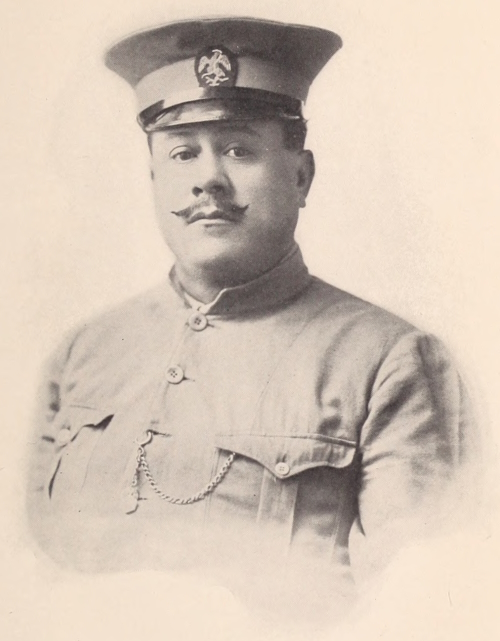
GENERAL BENJAMIN HILL
(Defender of Naco), under General Obregon
Although the American press cannot be bought, there are ways of circumventing it and cheating it of the truth. The Huertista press agents knowing the curiosity of the American people, fed them with [Pg 177]stories about Huerta, and with details of his official and unofficial actions, and more than once his very thoughts were reported and published. The refrain was always: No matter how bad Huerta may be, he is nevertheless President de facto,—he is the strongest man in Mexico and he should be recognized. A Mexican and a foreign newspaperman spent four thousand dollars a week on publicity work, while another supporter of Huerta is known to have spent ten thousand dollars for the same purpose.
The Huerta agents came in contact with the felicista and científico agents, and they put their heads together to devise a means of breaking up the successful revolution. The reactionary junta watched the events with keen interest. As soon as Villa had proved his ability as a general, he was chosen at once as the easiest and most convenient tool to break up the harmony between the revolutionists.
All the efforts were concentrated on Villa. He was furnished with money, ammunition, friends and advisers. Villa’s sincerity, impulsiveness, his violent temper and cruelty, his utter lack of scruples and his ignorance, were splendid instruments in the hands of the past masters of intrigue. On May 13th, 1911, during a mutiny, Pascual Orozco and Villa almost succeeded in murdering Francisco I. Madero. This incident pointed out to the científico element, the man who might be induced[Pg 178] to repeat, more successfully, the elimination of another leader of the new revolution.
The Villa press agents began to fill the magazines and Sunday papers with romantic stories about the bandit general, the Napoleon bandit, the Washington, the Lincoln of Mexico. The life record of Villa, his personality and ignorance, forbade his ever becoming a presidential possibility. That just suited the junta, as Villa’s presidency would have been fraught with too many dangers for the científico element. Huerta worked very hard to bring about a break between Villa and Carranza, while he was in power, but he did not succeed. Nevertheless, the work of corrosion and strife was continued by the exiled huertistas, felicistas and científicos.
During the summer of 1913, the Villa publicity reached its zenith. As much as two hundred dollars was paid to a writer to get a story on Villa into a New York Sunday paper. At about that time everybody began to suspect that Huerta would resign. Carranza was approached by the interests which had loaned money to Huerta, to discover if he would recognize the loan, and as Carranza would not countenance such a proposition, the foreign interests united with the Huerta, felicista and científico exiles, with the addition of some of the Madero clan, to work together, against the Constitutionalists.
Villa, with all his ability as a guerrilla general,[Pg 179] became a marionette in the hands of politicians who pulled the strings. Even the Aguascalientes Convention became a Punch & Judy show managed from New York, and it was used as a convenient lever to oust Carranza and place a puppet in his stead. The original suggestion to acclaim Don F. Iglesias Calderon as provisional president missed fire, because of the refusal of that very fine and integral personality to take orders from a single military division. Suggestions were telegraphed from New York to the junta’s representatives in Aguascalientes, who, under the guise of radical counsellors, were really dictating what Villa should do.
In fact, all the interviews passed through the hands of an American press agent of Villa, and his manifestos, proclamations and letters were written by the agents, and signed by Villa, who was absolutely ignorant of the contents of the documents.
The Aguascalientes convention was to be represented by all the generals who had fought in the revolution. Only one civilian was present: Luis Cabrera. No soldiers outside of the personal staffs of the generals were supposed to come near Aguascalientes.
Nevertheless, Villa sent ten thousand soldiers to the city and had it surrounded by troops, while he sat in a caboose on a railroad track at the outskirts. For all practical and illegitimate purposes, the Convention was imprisoned—the deliberations were not free and independent, and were not meant to be[Pg 180] so. Many generals who tried to escape outside of the ring formed by Villa’s soldiers were sent back to the city; while others managed to slip through and joined their commands.
A perusal of the cabinet members supposed to be named by E. Gutierrez, shows that the list was drawn up in New York. F. Iglesias Calderon, although perfectly honest and independent, stands very high among the members of the Científico Junta. He refused the honor of a portfolio. José Vasconcelos is known to the American public through the stolen Hopkins letters, where his name was mentioned as a recipient of American oil money. E. C. Llorente, who is to represent Gutierrez in Washington, was a porfirista who plotted against the Madero régime at the border.
One of the most important reasons for Villa’s caution in not rushing into a fight against Carranza’s generals, is that he did not feel strong enough to cope against the constitutionalist forces. Fighting veteran Constitutionalists is a different proposition from fighting Huerta’s raw recruits and ex-convicts, or boys. The defection of Villa’s best generals, Generals Luis and Maclovio Herrera, and the Arrieta brothers, could not be supplanted by the support of J. M. Maytorena.
In his anxiety to fight Carranza, General Villa went so far as to enlist many federal Huerta generals, whom he had fought so bitterly and denounced so roundly, and who had escaped from[Pg 181] Mexico in fear of Villa’s wrath. Poor Villa seemed unconscious of the fact that he was slowly being surrounded by all the reactionary elements in Mexico—the same element of which he was a conspicuous victim during the Diaz régime. When these interests that now surround him have achieved their purpose, they will try to corrupt him, and if they cannot buy him they will assassinate him.
Villa’s blindness could not go any farther. No reasoning, no arguments, no sense of patriotism or decency can rouse such an innocent fool, and therefore, force will have to decide once more the question of supremacy.
As Luis Cabrera said in a speech before the Convention, “In all probability, the only solution at which the Aguascalientes Convention will arrive, will be another war, another military action,” the name of Aguascalientes (hot waters), is very significant as to the trouble which the Convention has brought Mexico face to face with.
The Científico-Huerta-Madero junta in New York decided a few months ago that if Carranza could not be eliminated through the Convention, he could be forced out by another revolution within the revolution proper.
When it was discovered that the appeal Villa had sent out to the revolutionary generals on September 23d before the Convention, had not succeeded in bringing about the desired result, it was decided to induce the doubtful element in the Convention to[Pg 182] join in a supposedly legal procedure. After Carranza’s resignation had been refused at the Convention in Mexico, the delegates suggested the Aguascalientes meeting as a means of settling all the questions of reform. Villa’s supporters, instead of keeping to the business on hand, jammed through the Gutierrez election, published the list of the Cabinet members, and sent Carranza an ultimatum.
In this way they expected to give a legal appearance to their action, and thus accelerate the secession, throwing the loyal Constitutionalists on the side of the Villa contingent.
Neither Villa nor Zapata ever harbored the intention of handing over their forces to the generals designated by the convention—their hope was that Carranza might resign, and then they would control the situation by the mere threat of force, backed by their success.
It can be safely asserted that if Villa should succeed, he would be the president maker, the virtual dictator of Mexico. Then Villa and the científico faction would fight for supremacy ... and destroy each other.
However, no matter what the result of the struggle may be, the Mexican people are tired of “strong men on horseback” and the succession of a Villa tyranny would not be much more advantageous than a Huerta or Diaz dictatorship.
The Mexican people, the 15,000,000 who have suffered so much from military liberators, will very[Pg 183] effectively overthrow the pretorian rule of one or more guerrilla czars, when they discover that the strings are managed by Mexican and foreign reactionary interests.
Villa will only repeat Orozco’s treachery and defection, and he will pay the price of his foolishness and ignorance with the contempt and ostracism of the real revolutionary element.
[Pg 184]
THE NEED OF A DEMOCRATIC FINANCE IN MEXICO
BY CHARLES FERGUSON
During the summer of 1914, while Mr. M. C. Rolland was studying the financial system of the United States for Carranza, he came in contact with Mr. Charles Ferguson, who had devoted a year to investigating financial conditions in Europe. Mr. Rolland suggested the need of a democratic finance in Mexico, so as to liberate it from the financial system left over by J. Y. Limantour. The Mexican and the American investigators exchanged their views, and as both were on mutual and sympathetic ground with a perfect understanding of the subject, Mr. M. C. Rolland begged Mr. Ferguson to crystallize his ideas into an article. The following chapter is a simple outline of the idea which is behind the revolutionary reforms of all vital questions in Mexico.
Mr. Charles Ferguson was for a time one of the leading editorial writers of a well known Metropolitan paper. He was sent abroad by President Wilson to investigate the banking system of Europe. Mr. Ferguson is considered one of the greatest authorities on the subject of finance and banking in the United States.
UNDER the conditions of capitalistic and corporate organization and of universal banking and exchange that have spread throughout the[Pg 185] world during the last two or three generations, the problem of democratic politics has become an entirely new problem. The old solutions, the ideas of Rousseau, Jefferson, Juarez, have become, in large part, inapplicable.
The change is mainly due to the strength of the modern business organization. The business organization tends to become stronger than the democratic state, because it deals more directly with the forces of nature and with the every day interests of ordinary men.
Everywhere in Europe, in the modern States of Asia and Africa, and in North and South America, there is a struggle going on between the business organization and the economic rights of the people.
This world-wide struggle has shown its acutest phases in Mexico.
The Mexican problem cannot be solved merely by the establishment of land reform, a wide suffrage and a representative parliament. These things are good and necessary, but they are not enough. If the banking and credit system of Mexico is left to settle back into the general lines approved by Diaz and Limantour, or by the orthodox financial opinion of Europe, the banks of Mexico will contravene the work of the political revolution.
And since the revolution cannot be wholly crushed, Mexico will continue to be a house divided against itself, and will utterly exhaust itself in a continuing[Pg 186] series of revolutions and counter-revolutions.
The modern business system centres in the bank. If the democratic revolution is to prevail and stand fast, the business system of Mexico must be democratized. It is impossible to make business democratic otherwise than by making the bank democratic.
The leaders of the Mexican revolution shall seize upon the control of the capitalistic forces of the country. This can be done by improvising—perhaps by executive decree, perhaps otherwise—a central bank and a banking system that shall monopolize the banking function.
The existing banking systems of the world are in general based upon public debts and are motived in their operation by the interest of a creditor class. Mexico should have a banking system based first, upon the property rights of the nation—the sum of the material values that belong not to individuals but to the Commonwealth; second, upon a capitalization of the productive powers of the people to the extent that these can be developed by the civilizing projects of the bank.
Under existing banking systems the National estate is either not represented at all or else stands as debtor or claimant on a footing no higher than that of private estates. But the bank of the revolution should be the responsible legal trustee of the public estate, exclusively devoted to the improvement[Pg 187] of that estate—i.e., to the betterment of the material status of common citizenship.
Under most banking systems the bankers have no direct interest or concern with the development of the natural and creative resources of a country. Their interest in the processes of production is at best indirect and incidental. What the bankers aim at is the accumulation of certificates of indebtedness against society at large. They are indeed concerned that the assets of Society at large shall equal its liabilities. But they make no effort and take no risk for the enrichment of society beyond bare solvency.
The general tendency of their finance is to load the working organization of the world with as heavy a weight of bond and mortgage as it will stand, and to vest the ownership of the securities in a comparatively small class of creditors.
The unsocial and unscientific character of the world’s banking systems is the main cause of that universal conflict between the business organization and the democratic state, which has reached its most poignant crisis in Mexico. If Mexico can work out a congruity between modern business organization and the economic rights of the people, it will solve the essential social problem of our times. It will win economic leadership in the family of nations. It will achieve unparalleled wealth and power.
The bank of the revolution should be governed by a board of directors, got together with a minimum[Pg 188] of racial bias in the spirit—let us say—of the university—that is, of the arts and sciences.
There should be a dozen men, more or less, having the highest reputation and credit as engineers, agriculturists, sanitarians, administrators, and so on. They should be paid perhaps on the scale of Cabinet Ministers, but should derive no other income from Mexican sources. Their control of the bank should be disinterested and impersonal—like that of men in high public office.
Every detail of the banking business will undergo a marked change because of this change of motive. Yet there need be no serious division of opinion as to the financial technique that will best promote the new purpose.
The changes of practice concerning discount rates, note issues, metallic reserves, etc., will follow logically and obviously from the conception that the business of the bank is not the accumulation of enforceable claim against the public, but rather the husbanding of the public estate.
Banking, under any and all systems, is chiefly a matter of exchanging specific personal claims for general social claims. The bank receives personal debt-certificates and gives back certificates of social-debt or documentary claims against society at large. Personal credits at the bank are, in effect, charges against the public. Sound banking consists in not overcharging the public.
The mystery that shrouds all banking problems[Pg 189] is due to the obscuring of the fundamental fact that banking has become, under modern conditions, the most vital social function; it determines the obligations owed by society to the individual and so fixes every man’s status and power.
It is absurd that such a social function should be performed without social responsibility and solely for the sake of a speculative private profit. The proposal is, therefore, that the revolution shall establish in Mexico the first banking system in the world deserving to be called modern. For no excellence of banking machinery can atone for the fact that throughout the whole circle of commerce, private credits and the corresponding public obligations are being measured and registered by men whose interest is quite separate from that of the public.
The proposed identification of the banking interest with the public interest does not necessarily imply that banks should be administered by political officials. It is indeed necessary, as an exigency of the revolution, that the new bank of Mexico should be backed by the highest political authority. But the real point is that modern banking will reach a normal development only when banking has become a responsible profession—in the analogy of law and medicine at their highest level. In the long run it will be found that a sound, democratic, financial system is to be regarded as the creator rather than the creature of democratic government.
[Pg 190]
The new Mexican government should take its bank managers from any quarter—as one might choose world-famous engineers or physicians to conquer a devastating plague, or to accomplish a constructive public work of extraordinary difficulty. These men should be chartered as directors of a corporation to set up a central banking institution in the City of Mexico and a system of branch banks in provincial towns. The basic capital of the bank should be a trust deed executed by the Mexican Government and conveying to the banking corporation such portions of the national estate as are not needed for the administrative uses of the government. The State would, of course, retain its right to annul if necessary the bank charter and trust deed—after reasonable notice and with due adjustment of the equities involved.
The Bank should be the general fiscal and economic agent of the Government for the enhancement of its revenues, the funding and amortizing of outstanding public debts and the development of the wealth of the country.
Through the bank, the government should take good care of the soldiers of the revolution—giving them possession of lands on easy terms and assistance in capitalizing farms and small business undertakings.
Legal means should be taken to cancel or compound uneconomic commercial concessions made to foreigners and other private persons by reactionary[Pg 191] governments in the past. The inordinate foreign profits derivable from such concessions might be scaled down by a system of export duties.
It should be understood that the new bank in all its branches is not to be regarded as a passive or merely regulative factor in the economics of Mexico. It should, on the contrary, embody the highest possible organization of intelligence and will for the expansion of the productive life of the people. Much may be learned for this purpose from a study of the working methods of the Deutsche Bank of Berlin.
[Pg 192]
CARRANZA’S FOREIGN POLICY REPRESENTATIVE OF
THE NATIONAL SPIRIT
FROM the beginning of the Constitutionalist revolution the attitude of Carranza as the first Chief toward the Foreign Powers, was very bitterly criticised. His uncompromising stand as regards the European nations was corroborated by interviews given out to the press. Several reasons can be given for Carranza’s conduct as well as for the criticisms. The first one is that Foreign Cabinets, Ministers and Consuls have been so used to the servile, cowardly and undignified behavior of Diaz and his Ministers toward Foreign Representatives that the proud, independent behavior of Carranza and his Ministers was a shock to European courts.
The foreign policy of the Great Powers towards small and weak nations, with the exception of the United States, has been as a rule, that of polite bullies and buccaneers. Great nations committed political acts, which private individuals would not dare perpetrate. If the average standard of the individual has been raised, that of the nations in their international policy, has advanced very little from the times of the cave dwellers.
[Pg 193]
Mexico being weak and torn by civil war since the inception of her independence, has always suffered as much, if not more, from foreigners, than from her own enemies. The French in the thirties and sixties, the Americans in the forties, the Spaniards intermittently, have brought trouble to Mexico. The Mexicans are always suspicious of the international policy of the European powers.
When Huerta committed murder in the persons of the President and Vice-President of Mexico, France, England, Germany and Spain rushed to recognize him, so anxious were they to get in at the trough of concessions. It was this conscienceless, greedy, sordid behavior which disgusted Carranza in particular, and Mexicans in general. No action in the history of the United States has created more sympathy for the feared Yankees in Mexico and South America, than the refusal of the recognition of Huerta on moral grounds. Carranza’s refusal to give an account or to allow Villa to permit an investigation into the murders of Benton and Bauche, was correct from an international standpoint. England, who had so hastily recognized the murderer of a Mexican President and Vice-President, became very indignant at the murder of a naturalized Britisher who got into trouble through his own fault, and expected the United States to demand satisfaction for it. Carranza, as the first Chief, insisted that England should protest to him, as the representative of the revolution, not to Villa[Pg 194] or the United States. The attitude of England, France, Germany and Spain towards Mexico, was very arrogant and insulting; their protests to the United States were quite expressive of their anxiety to have the United States intervene and police Mexico in the same manner as had been done in Cuba.
The European powers were quite too busy watching their own frontiers to embark on a foolish expedition like the threatened march and occupation of Mexico City by the allied powers. The American papers came out time after time announcing the landing of European marines in Mexico, in case that the United States should not deem it expedient to protect their interests. Any one familiar with European politics could have guessed that the alarmist’s warning came either from the innermost circles of the American military clique which had been itching for intervention for the last four years, or from foreign chancellorships who wanted to frighten the United States into a war with Mexico.
The European powers foreboded a general conflagration at the end of 1914. Some of them felt that the northern republic should do their police work in Mexico while they would be busy fighting for their own existence in Europe; others more charitably inclined, hoped that the United States might easily get into a wasps’ nest, by intervening in Mexico,—especially as Japan stood on the other side of the Pacific, as a warning of the brown peril, and as[Pg 195] a sympathetic, though selfish supporter of Mexican integrity. In spite of contrary assertions, Mexican statesmen and level-headed thinkers dread an American invasion into their country; be it for the purpose of conquest or an unselfish police-work.
A military offensive or defensive alliance with Japan is much more dreaded by the Mexicans than an American intervention. The American Colossus, as the United States is called, does not represent the brutal, military, imperialistic methods of the Japanese, but a danger of elimination by military conquest or absorption by political, commercial, and financial attrition and suction.
All the Mexican politicians, writers and statesmen fear American meddling in their internal affairs, and although their admiration for the United States and its greatness is unbounded, nevertheless, their patriotism is still greater than their neighborly love. The whole spirit of South America, south of the Rio Grande, is not Spanish nor Indian—the spirit is essentially latin and gallic. The mental attitude of the Zapotec Indian Juarez was neither Iberian nor Aztec, but essentially of the roman type of the republic.
The intellectual radicalism of the liberals, Gomez Farias, Melchior Ocampo, Leandro del Valle, was of the same pattern as that of the French revolutionary Jacobins—the clearest, most advanced and progressive ideas in politics have been absorbed from Gallic and Latin sources. The French revolution,[Pg 196] the Napoleonic epos, are the text books of the liberals and the ambitious politicians. Roman and French history was admired and unconsciously imitated. The one for the civic virtues, courage and greatness of its citizens,—the other for the daring, patriotism and intellectual clearness of its most prominent men.
Spanish history and philosophy is a closed book to Mexican thinkers—for Spanish thought was always in the rear guard of intellectual Europe. The Spanish spirit is found in reactionary types, like Lucas Alaman,—the Don Quixotic characteristic in a Lopez de Santa Ana,—the Castilian cruelty in a Miguel Marquez. As a Mexican writer once said: “Spain has brought us only priests, money-lenders, bull-fighters and dancers.”
Americans were astonished at the outburst of hatred made manifest in the persecution of Spanish priests in Mexico, and Spaniards in general, especially in the State of Morelos, by Zapata, and the deportation of Spaniards in Chihuahua by Villa. They do not know that the Spaniards have always been on the side of the dictators, the oppressors, never with the liberators, and that the active co-operation of Spaniards in politics has outlawed them. After the assassination of Madero and Suarez, the Spaniards in Vera Cruz gave a banquet in honor of the tragedy. The Mexicans are not likely to forget this incident. The Mexicans of the middle class and the Indians despise the Spaniards. On the other[Pg 197] hand, they do not dislike the Americans, but they dread the proximity of the Colossus, and the constant threats of American armed invasion.
The American public was shocked by the reported cruelties of the revolutionists in Durango, and other captured cities. Many reports were exaggerated, but the Durango stories were utterly false. Several Americans who came to New York after the capture of Durango declared that they had witnessed the entry of the Constitutionalist soldiers, and their behavior in Durango, and could vouch for the inaccuracy of the news—not only in the general outline, but in all its details.
The American public, as well as the editors in the American press, did not suspect then that Huerta had press agents in New York, who made it a point of disseminating false reports about the revolutionists, so as to discredit the movement and pave the way for recognition of Huerta. Governor Hunt, of Arizona, wrote a letter to the first Chief, protesting against the alleged cruelties. Venustiano Carranza answered, and the following letter is quoted as a fair example of the attitude of the Chief and the Mexican revolutionists on the question of retaliations and shooting of prisoners.
Hermosillo, November 27th, 1913.
Governor George W. P. Hunt,
Phoenix, Arizona.
Esteemed Sir and Friend:
I am pleased to acknowledge receipt of your interesting[Pg 198] letter of the 17th inst., written on account of the occupation of Ciudad Juarez by the Constitutional forces under the immediate command of General Francisco Villa,—and to manifest to you my gratitude for the kind phrases which you express in same, regarding myself.
Recognizing with pleasure in the spirit of frank friendship which animated your letter, the personal sympathy of yourself and of the people of the United States for the struggle of civilization and justice, which we are sustaining, I can only lament that a not entirely perfect knowledge of the peculiar conditions of the Mexican problems may be propitious in certain cases (and in spite of that excellent disposition) to a bad intelligence of some of our acts.
This is probably due to the fact that the criminal acts with which the struggle was initiated, and the cruel proceedings employed to sustain it, have been forgotten. When Mexico had realized the highest democratic prerogative to elect its mandataries, and we had the right to expect in the midst of peace and tranquillity, the periodical renovation of the public powers, for the expression of the national will only, the most corrupt balance of the conquered classes have tried to destroy our political institutions for all time and by violence or force only have they disposed of the life, the rights and interests of our countrymen. They have perpetrated bloody executions without subjection to any law; they assassinate the Constitutionalists who fall wounded, battling with arms for the liberty of the people,—and deputies and senators who defend our democratic institutions by word, they drag peaceful men and even children from their homes, obliging them to take up arms against us, and instil terror throughout, burning entire towns. It has been crimes of this nature which have made the cause that I represent, constitute not only a corrective political revolution but also[Pg 199] that it should have the character of an act of peace, and severe justice which will chastise the guilty, and provide for the salvation of the Mexican family.
To fill these purposes, within the spirit of our Constitution, without any sentiment of passion, but meditating with reflection up to what point clemency and magnanimity can arrive, before an imperious duty of justice and the high necessity of assuring peace and the future of the nation, I have determined that the law of Juarez of January 25th, 1862, which defines and chastises crimes against the public peace, shall be put into force.
With strict subjection to that pre-existent law, the Huerta officials were tried and executed, among whom were some who had been apprehended in Torreon by the same General Villa who, in addition to pardoning them, then acceded to the fact that they should become incorporated in our forces, in which they tried later, but in vain, to make the men whose command was entrusted to them, desert—they finally running away, in order to relapse into their crimes.
It is true that the principles established in international wars agree to give pardon and immunity to the prisoners, but in civil struggles the most civilized nations in all epochs have employed proceedings still more rigorous and bloody than those which we have been obliged to adopt. In the case of executions of officials in Ciudad Juarez, the chastisement according to the law, of delinquents against peace and public security must be viewed, as a just punishment, rather than a cruelty to prisoners of war.
The Mexican people, exhausted in the first phase of this civil war, headed by Francisco I. Madero, all their clemency and all their pardon, experiencing as only fruits of this magnanimity, tyranny in the interior and the loss of prestige in the exterior. To-day it wishes to assure the operation[Pg 200] of its institutions and re-establish peace for all time, by means of a definite and official guarantee of a national organism.
The events of Ciudad Juarez have been very far from revesting the individual importance which the intemperance of our enemies have wished to give it, in the same manner as was calumnious the statement published by them, that in Durango more than forty women and young girls committed suicide, for fear of the excesses of the Constitutionalists, as I could personally verify that in Durango, as in all parts, our forces have been disciplined and respectable, giving guarantees to the towns which have fallen into their power.
Before concluding, it gives me great satisfaction to advise you that I am animated by the same sentiments of humanity that you possess, and that if I have placed the law of Juarez in force, in respect to an exigency of national sentiment, of justice, of public convenience, and the necessity of bringing peace to my country,—I have at the same time tried to have this law applied to unscrupulous enemies within the limits of the most absolute necessity, always authorizing pardon and immunity to the unconscious ones.
I hope the preceding declarations will be sufficient to establish the attitude of the well understood justice and humanity of the Constitutionalists, in order not to detract the personal sympathy and favorable opinion of the North American people from our cause, and you may be sure that I shall take into consideration your noble ideas, in order to recommend greater clemency toward our enemies, always within the respect of the law.
Assuring you of my highest estimation and respect, and asking that you will consider me an affectionate and sincere friend, I remain,
(Signed)
V. Carranza.
[Pg 201]
It would be too much to have asked of the revolutionists to pardon and release the federal officers captured by them. The experiment was tried, and every time they repeated their treacheries, cruelties and infamies. They were trained in the school of Diaz and Huerta—with few exceptions they were men without conscience, honor or patriotism. They represented militarism in its lowest, most despicable and sordid form. A federal officer who had been fighting in Morelos against Zapata was interviewed on his arrival in New York. He asserted candidly that the only manner to eradicate the land problem in Morelos consisted in killing the whole male population of the State and that any other solution was Utopian.
When the American marines landed in Vera Cruz, the news caused a sensation in Mexico. A gentleman who was present at the headquarters of Carranza describes the excitement of all the Mexican civilians as well as the soldiers in the camp. Without a doubt it was the most critical moment of the revolution; everybody was discussing the news and the agitation was intense. The only calm and cool person was Carranza; he was sitting immobile and silent, looking straight ahead, without seeing anybody or paying attention to the noise, bustle, gesticulations and the shouts of the people.
He was thinking very hard and the only gesture which gave a clue to his agitation was a slow movement of the hand, stroking his beard in a mechanical[Pg 202] fashion. When the Carranza protest was published there was like an universal sigh of relief after a tense situation.
The Mexicans felt that Carranza had embodied in his protest their outraged sense of national dignity and pride.
The protest was a safety valve which prevented a dangerous national explosion. Huerta, who had cunningly contrived to bring about American intervention, worked feverishly to use this patriotic wave, and to attract it under his guidance in a foreign war, which would save him and his army from annihilation.
In the United States many persons were disgusted at what they called the ingratitude of Carranza. They forgot to enquire if Carranza had asked for intervention, and that an unbidden gift is an unwelcome gift. They should have demanded the thanks of Huerta instead. Subsequent events have proven the assertion of Mexican observers that the occupation of Vera Cruz by the Americans, instead of helping the revolution, assisted in keeping Huerta several months longer in power.
Vera Cruz could easily have been captured by the revolutionists, and Huerta would have hastened to flee by the way of Puerto Mexico. The occupation of Vera Cruz by the Americans prevented the revolutionists from attacking the railroad connecting Mexico City with Puerto Mexico,—as Vera Cruz had to be used as a base. If the occupation of Vera[Pg 203] Cruz was achieved to prevent the cargo of war material of the Ypiranga from reaching Huerta, then it failed in the purpose. It did not accelerate the resignation of the dictator, nor did it calm the Mexican troubled waters.
If, as it is claimed, the occupation of Vera Cruz was the climax or punishment for a series of insults to Americans, and the upholding of national honor, would it not have been more in keeping with military traditions to capture or sink Mexican gunboats in the Atlantic and Pacific without attempting to land marines in any port, and to blockade both coasts of Mexico?
The A B C Peace Commission would have arrived at Niagara Falls by the same road and achieved the same results. The meddling in Mexico would not have cost the American tax payers five million dollars. The most charitable description of the incident is that it was a hasty and costly blunder of the Navy Department.
Let us put ourselves in the place of the Mexicans themselves. The touchiness of their national pride and their dignity is well known, as well as that their patriotism and love of country is as great as that of the greatest nation. Why criticise a characteristic of a weak nation which is considered a virtue in a strong one?
Consider for instance the question as applied to the United States. If during the Civil War British marines had landed and occupied New Orleans for[Pg 204] some reason or other, what would have happened? Would the northerners have protested against British intervention, or acclaimed it? Would not the northerners as well as the southerners have fought British occupation?
If it is a question of the Monroe Doctrine, we beg to differ—the Monroe Doctrine, to reach its highest value as a political tenet, should work both ways,—in the interests of the United States as well as Central and South America. If the Monroe Doctrine is expedient, in the case of the United States, it should be acceptable to Latin America. Latin America rebels against a one-sided view of the Monroe Doctrine.
When Villa gave out his interview on the occupation of Vera Cruz, he was evidently inspired by his American adviser and Mephisto. He was giving out the American side of the question,—not the Mexican. Unconsciously Villa acted as Porfirio Diaz or any other Cientificos would have done, if they had been in his place. Carranza represents the Mexican people, although Carranza has never been anything but a friend and admirer of the United States. It must be considered that no true friendship can exist without self-respect on Mexico’s side and mutual respect on both sides.
The occupation of Vera Cruz has been a source of irritation for the Mexican and American, and a constant element of danger. It was a mistake which turned into a costly blunder.
[Pg 205]
PRESIDENT WILSON’S MEXICAN POLICY
THE attitude of President Wilson towards the Huerta régime was attacked not only in the European press but likewise in the American newspapers. The French, German, English and Spanish daily and weekly papers sneered at what they dubbed the moral policy of a puritan school teacher.
The American papers were divided in their opinion; the Republican organs laughed at the reversal of their beloved “dollar diplomacy,” and many so-called Democratic papers attempted to uphold the blustering “big stick” policy. With the exception of the labor and socialistic press there was a great deal of doubt and misgivings expressed as to the outcome of the new diplomacy.
Even the average American, who is always on the side of justice and fair play, was rather taken back by this radical departure in American and foreign relations. For American diplomacy, although usually equitable, always took into consideration the interests of the Americans in a foreign country first and last, even if they clashed with the fundamental rights of the natives.
In the case of American interests in Mexico, it[Pg 206] was long suspected they had been playing politics and throwing their all powerful influence in favor of the government which could give them the best advantages in a business way, which were in opposite relation to the liberal principles and the welfare of the majority of the Mexicans.
The great corporations have always received extraordinary favors from dishonest governments. The mining and oil syndicates, the railroad and land concessionaires, acquired great privileges and gave very little in return for them. For example, an American oil company in Mexico made as high as 450 per cent. profit on its original investment and doubled the selling price of oil and gasoline. As soon as an English company invaded the field they fought each other for a while, then realizing that it was an expensive affair which redounded to the benefit of the Mexican consumer, they came to an agreement by dividing the territory among themselves and right away the price of oil and gasoline went up again.
Scores of cases can be cited to prove that all the advantages are in favor of foreign investors. The salaries of the Mexican workingman or peons are not raised, but the prices of commodities are never lowered. The great Orizaba cotton mills, all the factories, the great mining corporations have always paid the lowest salaries. Whenever there was a strike for higher wages or for better conditions, the Diaz and Huerta régimes always protected the foreigners[Pg 207] and at the slightest pretext massacred the strikers. In the rare cases when the government was fair to the strikers, as happened under Madero and Carranza, then the foreign investors protested to their governments that their interests were in danger of destruction.
With the Mexican laborer and peons it has become a conviction that foreign interests are always on the side of dictators as against the Mexican people. In Central and South America the new democratic policy was watched with keen interest; the Latin Americans shrewdly guessed that the attitude of the Democratic administration would be a test stone of their relations with the State Department.
So much had been written about the famous Monroe Doctrine by successive American statesmen that the original meaning of this doctrine had been entirely lost to view.
The original Monroe doctrine was uttered as a warning to the Holy Alliance in its well known designs to attempt the reconquest of the provinces lost by Spain.
The Monroe doctrine was never meant to be an excuse to collect debts for American or foreigners or a pretext to police unruly republics.
With the exception of some Central American States there has never been a case in a hundred years when South America and Mexico could not cope successfully against foreign invaders.
As far back as 1806-07 England attempted to[Pg 208] conquer Argentina and Uruguay when they were still under Spanish rule. The Spaniards and the natives fought very bravely and repelled the invaders, who had already occupied Buenos-Ayres. The native South Americans did not intend to exchange masters and soon afterwards they overthrew the Spaniards.
In the early forties France fought the Argentinian dictator Rozas, but after a two years’ war she was defeated. Later, in 1845, France and England pretended that Rozas should open the interior rivers to international navigation. Buenos-Ayres was blockaded and the war lasted for five years; but England and France were defeated.
Brazil and Argentina tried to conquer the little republic of Paraguay. The war lasted five years (1865-70). The result was that forty-five per cent. of the male population was killed in battle, but Paraguay was not conquered.
The Latin American republics feel that they can take care of themselves, and their nationality against their neighbors as well as against Europe. No matter what the ambitions, intentions or plans of conquests of certain European powers may be they know fully well that there is not the slightest chance for a permanent occupation by European armies, and that any conquest by any Asiatic or European nation is an absurd dream.
It is understood that the Monroe doctrine was once a very useful moral protection, but it did not prevent attacks and occupation of South American[Pg 209] territory by Spain, France and England. The only reason which interfered with the territorial designs of European powers was not the help of the United States, when it was most needed, but the heroic resistance of the Latin American nations themselves. The fear is rampant that the Monroe doctrine might be used as a pretext for aggression by the United States.
Latin Americans follow this line of argument; the great American corporations can invest a great deal of money in South America. They can very easily send agents to foment revolutions which necessarily would destroy American property and then a pretext would be found for American intervention, as happened in Nicaragua.
There is a very short step from temporary to permanent occupation, tending to create a very dangerous precedent in favor of American occupation in any country where there is a great deal of invested American capital.
The thought was expressed by a great many South American statesmen that President Wilson’s Mexican policy would be a good illustration of the future policy towards South America. At the beginning the expressions of neutrality and non-intervention in the internal affairs of Mexico were considered rather suspiciously.
Had the President of the United States declared war on Mexico and sent troops to Mexico City on any pretext whatsoever, the Latin American nations[Pg 210] would have closed their doors to American capital, commerce, and would have boycotted American goods. The thought would have always been present that the Americans would always use their interests as a wedge for interference in their national affairs.
The entrance of Argentina, Brazil and Chile in a solution of the Mexican-American incident at Tampico was a characteristic move exemplifying the new trend of thought on statesmanship in Washington.
Under a republican administration, England, France and Germany would have been asked to settle the question with the United States instead of the A B C powers. Without fear of contradiction it can be stated that Argentina, Brazil and Chile’s entrance into Pan American affairs with the co-operation of the United States proves that the State Department has finally learned the A B C of Pan American statesmanship. Likewise, that the Monroe doctrine can only reach its highest efficiency in co-operation with the whole of America from Patagonia to Canada.
When the Americans create a Pan American doctrine, then there is no doubt that Europe will not dare to challenge it.
At present a challenge to the Monroe doctrine is in reality a challenge to the American navy. With a new Pan American doctrine the challenge would include all Latin American countries, with the United States and Canada in an offensive and defensive alliance[Pg 211] against one or more European powers. At present it appears as if the defence of the territorial integrity of all America was shouldered upon the United States alone. The Latin Americans feel that they should have a share of this responsibility, for they believe themselves capable and ready to do so.
There was a great deal of excitement and indignation in South America when the American marines landed in Vera Cruz. Huerta was not made more popular by this incident, but the national instinct of preservation of the Latin races made them unconsciously understand that the landing of American blue jackets was only a wedge to achieve American occupation and that as long as Vera Cruz was occupied, it was only a question of time until American soldiers would march to Mexico City.
When Roosevelt was in South America he was fêted and banqueted by the most prominent men in the A B C republics. They were too polite to inform him what they thought of his speeches on the Monroe doctrine. The articles and editorials commenting Roosevelt’s theories were very plain if courteous: that either Mr. Roosevelt had forgotten the original meaning of the Monroe doctrine or that he was deceiving himself into an imperialistic meaning of the doctrine.
The Latin Americans and Mexico hope fervently that the unselfish, humanitarian and democratic diplomacy of President Wilson will bear the brunt[Pg 212] of the tremendous influences that are brought to bear upon it.
It is a well known platitude that certain American mining, railroad and oil interests are subterraneously working against this idealistic policy; that the War Department has been itching for a war of conquest or police work in Mexico. An officer of the United States army in an expansive moment volunteered the information that intervention in Mexico would mean an increase from 80 to 350,000 men in the American army and make it possible to organize it more in proportion with its population. That there being always a danger of a war with Japan, and the United States not being ready for it, a war with Mexico would prepare the army for that eventuality.
President Wilson has more admirers in Mexico and South America than any other President or statesman in the whole history of the United States has ever had, not even excepting the martyr President Lincoln, or Washington.
The popular thought has been deeply imbedded with the conviction that if the dictator Huerta could not exasperate and inveigle President Wilson into a war with Mexico, that no power for evil can achieve the purpose in the future.
Far seeing Mexicans did not expect a prompt solution of the vital problems after the elimination of Huerta. The dictator was only the greatest impedimenta to a realization of liberal ideals; once[Pg 213] Huerta eliminated the work was a little less arduous, but still of tremendous purport.
The participation of England, France and Germany in a struggle for life in Europe has luckily relieved Mexico of three great mischief makers. The great and sombre powers which have kept Mexico in a turmoil for a hundred years are still at work: the clericals, the landowners and the militarists; in the last twenty years the American interests have been added to the list.
A Mexican thinker concreted the thought thus: “The great powers for evil in Mexico are: The Church, the Latifundiæ and the Trusts; their great victims will be President Wilson, Carranza and the Mexican people.”
[Pg 214]
In the beginning of the revolution against Diaz, as public opinion seemed to be favorable to what was called “The Great Constructive Work of Diaz,” there was a vague and superficial impression that the United States should repeat the policy which had been inaugurated toward Cuba; a sort of political tutelage which left the independence of the island in the hands of the natives.
Subsequent events have revealed to the Americans that although the Mexicans were still groping for a Constitution more in keeping with their racial characteristics, that they had had, in opposition to Cuba, which gained its independence from Spain in 1908, a national history for one hundred years, with great national heroes, martyrs and political ideals which could not be infringed and trespassed upon by an uncalled for intervention in their internal affairs.
Thoughtful and well-informed statesmen and politicians have come to the conclusion that a political tutelage as in Cuba will never be tolerated in Mexico, any more than military aggression for the sake of conquest, or under the hypocritical name of peace.
The average American knows that a Mexican war would be a war without heroes or glory for American arms.
[Pg 215]
The Mexicans are intensely grateful to President Wilson for insisting on keeping hands off in Mexico. The internal struggle of the liberals fighting against the reactionary powers in Mexico must be settled by the Mexicans themselves, or it will have to be settled all over again.
*****
The impression of a great many Americans is that Mexico is going towards political disruption, that is to say, a secession into three entities: the North, the Centre and the South.
Northern secession is encouraged by the great mining, oil, railroad, and land interests in the United States and by the reactionaries in Mexico. Southern secession is not only encouraged, but fomented, by the ambitious and able dictator of Guatemala.
The northern republic would comprise the border states, as well as Lower California, which, even if independent, would be more friendly to the United States than a united Mexico. That is the conviction of those interested in a Northern secession.
A Southern republic would mean the absorption of the States of Yucatan, Campeche, Tabasco, Chiapas, and the Territory of Quintana Roo, under the leadership and hegemony of Guatemala.
Working towards that end, and in co-operation with the Guatemalan dictator, is a gentleman in the State Department, who was once U. S. representative in Guatemala.
American interests are allied with the Mexican interests,[Pg 216] whereas, the American radicals, socialists and the labor party are in sympathy with the Mexican liberals. The American and Mexican capitalists are opposed to the American and Mexican middle class and proletariat.
*****
The same class trouble is going on in the Church in Mexico. The native Mexican clergy is opposed to the high or foreign clergy. All the oppressions, cruelties, and treacheries in the fight of the clericals against the liberals have emanated from the foreign or high clergy, which used the military element for that purpose. The unselfish, libertarian struggle on the other hand, was always actively assisted by the native priests; by men like Morelos and Hidalgo. The poor Mexican priest, or better said, the low Mexican clergy, is first a Mexican, and if that agrees with his belief, he will be a good Catholic; but if his faith is pitted against the welfare of his country, then he will invariably prefer to be a good Mexican and a poor Catholic, to being a poor Mexican and an obedient Catholic.
The higher clergy in the United States, by attacking the liberal policies in Mexico, and waging an active campaign against the Mexican revolutionists, is placing itself in direct opposition to the lower Mexican clergy.
*****
From the Mexican point of view, three principles have been laid down to face and combat American[Pg 217] aggression, or absorption. The elimination of predatory American capital, the curtailment of American immigration schemes, and the advancement of European immigration. American methods, on the other hand, will be encouraged in all the active expressions of life, such as business organizations, farming and school methods.
*****
There is no doubt that ten years of a complete and practical rural school system in Mexico will change the whole social and political character of the republic. The advancement of woman in life will also gain a decided advantage for the Mexican, for no nation can be greater or better than its women.
*****
Oriental immigration cannot be encouraged, as being dangerous to the best interests of Mexico, not because of the inferiority of the Orientals, but because of their superiority, which would tend to segregate them into colonies.
*****
A Mexican engineer suggested a plan to cut a canal in Lower California, from Enseñada to the Rio Colorado, a distance of ninety miles. By this method Lower California would be made into an island, and the passage of ships from the Pacific Ocean at Enseñada, through the Canal into the Gulf of California would double the importance, commercially and politically, of the States of Sonora, Sinaloa and the Eastern side of Lower California.[Pg 218] Irrigation, and later immigration, in Lower California, would change the barren island into a garden.
*****
The Mexican revolutionists are socialists without knowing it; their actions in the economical and political field have proven it; the Marxian theorists in Europe showed by their attitude in the war, that they were not socialists, but political trimmers.
*****
The French revolution is being repeated in Mexico. Bare feet are pattering up on one side of the stairway, while patent leathers are descending on the opposite side.
*****
The Mexican problem is like a sand-bar in the path of the American Ship of State.
[Pg 219]
THE PLAN OF SAN LUIS POTOSÍ
By F. I. Madero.
DECLARATION TO THE NATION
The people, in their constant effort to bring about the triumph of their ideals of liberty and justice, have deemed it necessary at certain historical moments to make the greatest sacrifices.
Our dear country has arrived at one of these times; a tyranny which the Mexicans had not been accustomed to endure, since we gained our independence, oppresses us in such a manner that it has become intolerable. In exchange for that tyranny, peace has been offered us, but a shameful peace for the Mexican people, as it is not based on right but on might; for it does not have as an object the advancement and prosperity of the country, but only the enrichment of a small group who, abusing their influence, have converted the public positions into fountains of benefit exclusively personal, exploiting without scruples all the concessions and lucrative contracts.
The legislative power as well as the judicial are completely under the executive; the division of power, the State sovereignty, the liberty of the municipal government and the rights of the citizen only exist as they are written in our Magna Charta; but as a fact, in Mexico it can almost be said that martial law reigns constantly; justice instead of[Pg 220] imparting protection to the weak, only serves to legalize the plundering committed by the strong; the judges instead of being the representatives of justice are agents of the executive, whose interests they serve faithfully; the House of Congress of the Union has no other will than that of the dictator; the State Governors are appointed by him, and they in their turn appoint and tax in the same way the municipal authorities.
From this it results that the administrative gear, judicial and legislative, obeys with one will the caprice of Gen. Porfirio Diaz, who during his long administration has demonstrated that the principal motive that guides him is to maintain himself in power at all costs.
For many years deep uneasiness has been felt throughout the republic, due to the above form of management of the Government, but General Diaz, with great astuteness and perseverance, had well-nigh crushed out all independent elements, so that it was impossible to organize any kind of a movement to deprive him of the power, which he had so misused. The mischief was constantly aggravated, and the decided eagerness of General Diaz to impose on the nation a successor in the person of Mr. Ramón Corral, brought matters to a crisis and determined many Mexicans, although lacking political affiliations because it had been impossible to form them during the thirty-six years of dictatorship, to throw themselves into a struggle, intending to regain the sovereignty of the people and their purely democratic right to the land.
Among other parties which had the same object, the National Anti-Re-electionist Party was organized, proclaiming the principles of EFFECTIVE SUFFRAGE AND NO RE-ELECTION as the only ones capable of saving the republic from the imminent danger which menaced from the prolongation[Pg 221] of a dictatorship each day becoming more and more onerous, more despotic and more immoral.
The Mexican people actively seconded that party and responded to the call which was made, sending its representatives to a convention, in which also was represented the National Democratic Party, which also interpreted the popular desires. The said convention appointed its candidates for the Presidency and Vice-Presidency of the republic, those nominations devolving upon Dr. Francisco Vásquez Gomez and on me, for the respective charges of Vice-President and President of the republic.
Although our situation was extremely disadvantageous owing to the fact that our adversaries received the sanction of all the official element, on which they did not hesitate to rely, we believe it our duty to accept an honorable appointment like this in order to best serve the cause of the people. In imitation of the wise customs of republican countries, I travelled over a portion of the republic, calling upon my compatriots. My passing from one town to another was like a real triumphal march, for everywhere the people, electrified by the magic words Effective Suffrage and No Re-election, gave evident proofs of their irrevocable resolution to obtain the conquest of such secure principles. At length, the moment arrived when General Diaz began to notice the true situation of the republic, and understood that he could not advantageously struggle with me in the field of democracy, and sent me to prison before the elections, which were consummated while excluding the public from the primaries through violence, filling the prisons with independent citizens and committing the most shameful frauds.
In Mexico, as a democratic republic, the public power cannot have any other origin or base than the national will,[Pg 222] and this cannot be subordinated to formulas consummated in a fraudulent manner.
For this reason the Mexican people have protested against the illegality of the last elections, and wishing to employ successively all the recourses which the laws of the republic offer, in due form they requested the annulment of the elections before the Chamber of Deputies, notwithstanding the fact that in that body a legitimate origin was not recognized, and it being known beforehand that the members of the same were not representatives of the people and only respected the will of General Diaz, to whom exclusively they owed their investiture.
In such a state of affairs the people, who are the only sovereign, also protested in an energetic manner against the elections, in imposing manifestations consummated in different parts of the republic, and if these did not spread through all the national territory, it was due to the terrible pressure exercised by the government, which always smothers in blood any democratic demonstration, such as passed in Puebla, Vera Cruz, Tlaxcala, Mexico and other parts.
But this situation so violent and illegal could not last long.
I have understood very well that if the people have appointed me as their candidate for President it is not because there may have been an opportunity of discovering in me the faculties of a statesman or a governor, but only the virility of a patriot resolved to sacrifice himself if necessary in the cause of liberty, and to help the public free itself from the odious tyranny which oppresses the nation.
From the time when I threw myself into the democratic struggle I knew very well that General Diaz had no respect for the freewill of the nation and the noble Mexican people, and upon attending the primaries I knew also very well the[Pg 223] attacks that awaited them; but notwithstanding these facts, the public gave to the cause of liberty a numerous contingent of martyrs when these were necessary, and with admirable stoicism met at the polls to receive all sorts of annoyances.
But such conduct was indispensable to demonstrate to the world at large that the Mexican people are ready for democracy, that they are thirsty for liberty, and that their present governors do not meet their aspirations.
Besides, the attitude of the people before and during the elections, as well as after them, demonstrates clearly that they opposed with energy the government of General Diaz, and that if their electoral rights had been respected I might have been elected as President of the republic.
Taking this into consideration and echoing the public sentiment, I declare illegal the past elections, and as the republic for that reason is without legitimate governors, I assume provisionally the Presidency of the republic, while the people appoint according to law their governors. To attain this object it is necessary to hurl from power the audacious usurpers, who for all the titles of legality boast a scandalous and immoral fraud.
With all honor I declare that I would consider it a sign of weakness on my part and treason to the public who have confided in me, not to place myself in front of my fellow-citizens who anxiously call upon me from all parts of the country, to compel General Diaz by force of arms to respect the national will.
The present Government, although it originated in violence and fraud from the moment that it was tolerated by the people, yet can hold for foreign nations certain titles of legality up to the 30th of the coming month, in which their tenure expires; but as it is possible that the new government emanating from the last fraud, may not by that time be in[Pg 224] power, at least because the greater part of the nation is making an armed protest against that usurpation, I have appointed SUNDAY, the 20th of next November, from 6 o’clock in the afternoon on, for all the towns and villages in the republic to take up arms against the government under the following
PLAN.
1st. The elections for President and Vice-President of the republic, Magistrates of the Supreme Court of Justice of the Nation and Deputies and Senators, held in June and July of the present year, are hereby declared null and void.
2nd. The present government of General Diaz is not recognized, nor the power of any authority emanating from the popular vote, for not having been elected by the people, they have lost what little title they did have of legality, aiding and favoring for their own interests the most scandalous electoral fraud ever known in the history of Mexico, with the money placed at their disposal by the public.
3d. To avoid as much as possible the upheavals incident to all revolutionary movements, all the laws promulgated by the present administration and the rules pertaining to the same, with the exception of those which are found to be decidedly opposed to the principles set forth by this plan, are declared to be in force, until such as require adjustment may be reformed according to constitutional methods. Also, exception is made of laws, sentences of courts, and decrees which may have been sanctioned regarding the accounts and handling of funds of all the functionaries of the Porfirista administration, in all their branches. For as soon as the revolution triumphs the formation of commissions of investigation will be initiated to decide on the responsibilities which[Pg 225] the functionaries of the State and city federations may be able to incur.
In all cases the obligations contracted by the Porfirista administration with foreign governments and corporations before the 20th of the coming month, will be respected.
Abusing the law of waste land, numerous small proprietors, mostly all quite poor, have been despoiled of their possessions, through the connivance of the Secretary of Public Welfare, or by decrees of the courts of the republic. It being only just to restore to their former owners the lands of which they have been despoiled in such an arbitrary manner, such dispositions and decrees have been declared subject to revision, and there will be demanded of those who acquire them in such a lawless manner, or of their heirs, to make restitution to their former proprietors, who will also pay an indemnity for the injuries suffered. Only in cases where such lands have passed to a third person before the promulgation of this plan, the former owners will receive indemnity from those in whose benefit the spoliation was accomplished.
4th. Besides the constitution and laws in force, the supreme law of the republic is declared to be the principle of NO RE-ELECTION of the President and Vice-President of the republic, Governors of the States and Municipal Presidents, while the respective constitutional reforms may be made.
5th. I assume the character of Provisional President of the United States of Mexico, with the necessary faculties to make war on the usurping government of General Diaz.
As soon as the capital of the republic and half of the States of the Federation may be in the power of the army of the nation, the Provisional President will call for extra general elections for a month thereafter, and will deliver[Pg 226] the power to the President who may be elected, as soon as the result of such election may be known.
6th. The Provisional President, before handing over the authority, will give account to the Congress of the Union of the use which has been made of the faculties which the present plan confers upon him.
7th. The 20th day of the month of November, from the 6th of the afternoon on, all the citizens of the republic will take up arms to hurl from power the authorities which at present govern them. (The towns which are situated away from the railway lines will take up arms from the evening on.)
8th. When the authorities present armed resistance, they will be compelled by force of arms to respect the popular will; but in this case the laws of war will be rigorously observed, attention being specially called to the prohibitions relative to not using expansive balls, nor shooting prisoners. Also attention is called respecting the duty of all Mexicans to have consideration for all foreigners and their interests.
9th. The authorities who oppose resistance to this plan will be sent to prison so that they may be judged by the courts of the republic, when the revolution may be over. As soon as each city or town recovers its liberty, there will be recognized as legitimate temporary authority the principal chief at arms, with the faculty of delegating his functions to any other citizen, who may be confirmed in his charge or removed by the Provisional Governor.
One of the first measures of the provisional government will be to put at liberty all the political prisoners.
10th. The nomination of Provisional Governor of each State that may have been occupied by revolutionary troops, will be made by the Provisional President. This Governor[Pg 227] will be under strict obligation to convoke the elections for the Provisional Governor of the State, as soon as it may be possible to do so, according to the judgment of the Provisional President. There is excepted from these rulings the States that for two years have sustained democratic campaigns for a change of government, for in these the man who was the candidate of the people will be considered as Provisional Governor, of course it being understood that he is expected to adhere strictly to this plan.
In case that the Provisional President has not made a nomination of Governor, or the nominee has not arrived to take charge of his position, or if the person so honored does not accept for any reason, then the Governor will appoint by vote among all the chiefs of the army who may operate in the territory of the respective State, with the understanding that his nomination may be ratified by the Provisional President as soon as it may be convenient.
11th. The new authorities will dispose of all the funds that are found in the public offices for the ordinary expenses of the administration and for the expenses of the war, keeping account scrupulously. In case that these funds may not be sufficient to meet the expenses of the war, loans are to be contracted, either voluntary or forced. These last to be consummated only with citizens or national institutions. Account will also be carefully kept of these loans, and receipts will be tendered in due form to the interested parties, with a view to making restitution to those who have loaned, the revolution having triumphed.
Transitory. A. The chiefs of the volunteer army will hold the rank which may correspond to the numbers of forces on hand. In case of operating military forces and volunteers together, the chief of the highest rank will take command of them, because in the event of both chiefs holding[Pg 228] the same rank, the command will be for the military chieftain.
The civil heads will profit by said rank while the war lasts, and once terminated, these appointments on petition of the parties interested, will be revised by the Secretary of War, who will confirm the various ones in their charges, or remove such as he may see fit.
B. All the chiefs, civil as well as military, will keep their troops under the strictest discipline, as they will be held responsible by the Provisional Government for any misbehavior of which the soldiers under their command may be guilty; excepting in such cases where they may justify themselves by proving that it was impossible to restrain the troops, and to have imposed on the offenders the merited punishment.
The severest punishments will be inflicted on any soldiers who sack any town or kill defenceless prisoners.
C. If the army and the authorities sustained by General Diaz shoot prisoners of war, the same procedure will not be observed with those who fall into our hands, as reprisals; but on the contrary, the civil or military authorities in the service of General Diaz, who may, after the initiation of the revolution, have ordered, decreed in any form, sent an order, or shot any of our soldiers, will be shot within twenty-four hours after a court-martial.
From this sentence the highest functionaries will not be exempted; the only exception will be that of General Diaz and his ministers, who in case of their ordering shootings or permitting them, will receive the same punishment, though after having judged them in the courts of the republic, when the revolution may have terminated.
In such cases where General Diaz may decree that the laws of war may be respected, and the prisoners who fall[Pg 229] into his hands are treated with humanity, his life will be safe, but he must explain in the courts as to how he has handled the funds of the nation, and as to how he has complied with the law.
D. As it is an indispensable requisite of the laws of war that the belligerent troops may wear some uniform of distinction, and as it would be difficult to uniform the numerous forces of the people who are going to take part in the contest, there will be adopted as distinctive of all the liberating army, whether they be volunteers or regular soldiers, a tricolored ribbon, in the cap or on the arm.
Fellow Citizens. If we are called to take up arms and overturn the government of General Diaz, it is not only for the offence committed during the last elections, but only to save the country from the dark future which awaits her, if she continues under his dictatorship, and under the government of the abominable scientific oligarchy, that unscrupulously and with great rapidity are absorbing and wasting the national resources; and if we permit them to continue in power, within a very brief space of time they will have completed their work; they will have carried the nation to ignominy and degradation; they will have absorbed all of her riches and left her in total misery; they will have caused the bankruptcy of our finances and the dishonor of our country, which, weak, impoverished and manacled, will find herself unable to defend her frontiers, her honor and her institutions.
With respect to me, I have a tranquil conscience, and no one can accuse me of promoting the revolution for personal interests, for the whole nation understands that I did all that was possible to arrive at a peaceful arrangement, and was disposed even to renounce my candidacy if General Diaz would only have permitted the people to appoint the Vice-President[Pg 230] of the republic; but dominated by incomprehensible pride and by unheard of haughtiness he was deaf to the voice of the country, and preferred to precipitate the nation in a revolution before conceding one jot toward returning to the people an atom of their rights, before executing, although it might be in the last stages of his life, a part of the promises he made in Noria and Tuxtepec.
The present revolution was justified when he said: “That no citizen may be charged with and perpetuated in the exercise of power, and this will be the last revolution.”
If in the mind of General Diaz there had been more attention paid to the interest of the country than the sordid interests of himself and his counsellors, this revolution might have been avoided by making some concessions to the people; but it has not been so—so much the better! The change will be rapid and more radical, for the Mexican public in place of lamenting like a coward, will accept the challenge like a hero, and even if General Diaz pretends to depend upon brute force to imposing his ignominious yoke, the public will rely on the same force for throwing aside this yoke, for hurling this dismal man from power and for reconquering liberty.
Fellow Citizens. Do not hesitate a moment: Seize the arms, throw the usurpers from power, recover your rights as free men, and remember that our predecessors bequeathed us an inheritance of glory which we must not stain. Remember how they acted: invincible in war, magnanimous in victory.
EFFECTIVE SUFFRAGE. NO RE-ELECTION.
San Luis Potosí, October 5, 1910.
(Signed) Fco. I. Madero.
Note. The present plan will circulate only among the[Pg 231] co-religionists of the greatest confidence up to November 15th, from which date it will be re-printed; the plan will be prudently divulged from the 18th and profusely from the 20th on.
PROTEST AGAINST MEETING OF DIAZ AND
TAFT
(Reprinted from The Evening World, September 3, 1909.)
To the President of the United States.
Sir: The national press has lately startled thoughtful men with the most unusual of announcements. We are told we may shortly expect to witness the meeting of the popularly elected President of this great Republic with the uncrowned Czar of Mexico. Calculated to inspire enthusiasm in the minds of the ignorant or the falsely informed, this piece of news brings dismay to those who know the truth and honor American traditions. For the last thirty years the world has only heard unchallenged reports of the genius, the equity and the kindness of Porfirio Diaz. All this being true, it would only be fitting and proper that the two neighboring chiefs should exchange international courtesies.
But as a matter of history Porfirio Diaz represents in Mexico what Abdul Hamid was to Turkey. On his white head rests the responsibility for the massacres of over 50,000 Mexican Christians; the slavery of thousands of Yaqui and Maya Indians who escaped fire and sword; the destruction of all liberties, personal as well as public; the corruption of the judiciary; the creation of a financial system which has mortgaged Mexico to European and American bankers; for the persecution of all the Mexican liberals in the United States, which reached a climax of brazenness and impudence when a Mexican liberal was kidnapped across the Rio[Pg 232] Grande from an American jail by the help of American detectives in the payroll of the Czar.
Therefore, I protest in the name of humanity, common decency and national dignity as distinguished from political expediency and international courtesy against such an exchange between the deeply trusted and patriotic President of the United States and the treacherous, unpopular and bloody-handed Nero of Mexico.
You might retort that it is no business of mine to couple your name with an attack seemingly so unwarranted.
My answer is that I speak no more than truth and not otherwise than I have spoken in a recent book on the real political conditions in Mexico. I am moved to repeat these truthful characterizations of Mexico’s president and the rule he stands for, because this pamphlet has been suppressed by an indictment against me in an American court brought about by the Mexican Government, which used your own brother, Henry W. Taft, as their lawyer against me, transparently to gain for their case the weight of an implied connection between it and the Administration.
You might reply that the American Government cares nothing about the internal policy of the Mexican government as long as it behaves and protects American interests.
I answer that if a neighbor be a good neighbor it might be sufficient unto you; but if your neighbor should torture or attempt to kill his children would it not be your duty to protest?
If the excuse for meddling in another nation’s affairs is only found in the destruction of American lives and their property, under what pretext did the American Government protest against the Armenian massacres? What brought about armed intervention in Cuba? Why did the State Department[Pg 233] undertake to refund the unjust Chinese indemnity? And how are you to explain the wherefore of the tremendous struggle to stamp out slavery?
The reason for this system of intervention lies deeper than in financial and political interests. It proves to the civilized world that the American nation is something mightier than a rich, powerful and progressive republic; that it is likewise a moral entity backed by the conscience of a people.
The propaganda about Mexico has its source in the knowledge of the real history of Porfirio Diaz. At the beginning of his career he concealed his real political face, but the higher he rises in power and statecraft, the more he uncovers his fundamental lack of principle.
Even as I write these lines the report is wired from Mexico that General Diaz has ordered the demission of the Governor of Coahuila as the latter showed a marked tendency in favor of General Reyes’s candidacy. Imagine the Republican President of the United States asking for the resignation of Governor Johnson of Minnesota because of his Democratic leanings!
Political evolution in Mexico will move faster in the next twelve months, inasmuch as the new generation is impelled by cleaner, more honest and patriotic motives than those of the malevolent Czar and his infamous camarilla. Porfirio Diaz is fashioning the tools of his own destruction and as a last resort is using the handshake across the Rio Grande to countenance in advance the arbitrary repressions and assassinations which are sure to take place in the false elections of next year.
When that period is passed the mask of this master Machiavelli will have been torn aside. The American people will then realize with humiliation that their honored[Pg 234] President has exchanged an intimate greeting with the basest slave-driver of modern times.
Carlo de Fornaro,
National Arts Club.
Translation.
LETTER FROM ARCHBISHOP GILLOW TO
URRUTIA.
Hacienda de Chautla, July 11th, 1913.
Sr. Dr. Aureliano Urrutia,
Minister of the Interior, Mexico.
Esteemed Sir and Friend:
I returned to this hacienda yesterday and was informed that up around Huejotzingo, capital of this District, things are rather unsettled, due to a few disturbers who molest the authorities, and consequently disturb public peace. Having in mind the kind offers which you made to me during my recent visit in that city, I now take the liberty of addressing you.
The disturbers of Huejotzingo are a certain Luis Pinto and his brother. They own real estate and small houses to the amount of may be Three Thousand Dollars each, in that locality. They put on airs of caciques, and have for some time even gone so far as to pretend to subordinate the local authorities. They have become more overbearing since the time of Madero.
While Mr. Alberto García Granados was Minister of the Interior, the referred-to Pinto brothers attempted to overthrow Mr. Enrique Acevedo from his position as Governor of the Province. Mr. Acevedo has maintained the peace and well-being in this district ever since he came into office. As Mr. Granados, owner of the Hacienda de Chagua,[Pg 235] near Huejotzingo, knows Mr. Acevedo, he maintained Mr. Acevedo as Governor, and the Pinto brothers did not molest him any more until Mr. Granados resigned the secretaryship.
As Mr. Acevedo is well acquainted with the intrigues of the Pinto brothers, he has kept them well watched, and they, resenting this, have hostilized him, to the degree of having trumped up false accusations against him before the municipality of Puebla. They did not however, obtain their end, for they were unable to obtain his removal, though he was for a time suspended from office, much to the regret of the honest contingent of Huejotzingo. The Mayor replaced him during this time.
On the other hand, Mr. Ramon Vargas, Judge of the Primary Court of Claims of Huejotzingo, has been for three months working unceasingly to put to date all pending cases, which had been accumulating, due to the fact that his predecessors, partly due to indifference and partly to fear of the Revolution, often absented themselves, abandoning their offices. Among those who most distinguished themselves of these last mentioned, was a certain Felipe Ramirez, whose wife is a Huejotzingo woman, on which account he was of course interested in holding that position in Huejotzingo. The mother of the lady in question also found a way to take advantage of the situation, and arranged things so that those who wished their cases attended to, had to have a recommendation from her, if they wanted a favorable judgment. For this she was of course paid a certain sum, and she managed to derive quite a fine income.
This by-play came to the knowledge of Mr. García Granados, and he managed to obtain the Puebla Municipality to offer the Judge Felipe Ramirez to transfer him to Matamoros, which offer he declined, staying in Huejotzingo[Pg 236] and exercising his profession of lawyer. This Mr. Ramirez works in harmony with the Pinto brothers, and the three of them, openly antagonize Acevedo the Governor, Ramon Vargas, the Judge and Sidronio Primo, Commissioner of the Ministry, who is an old employé in this locality and who works together with the other two last mentioned.
With the foregoing details, and prompted by the desire to maintain order and peace in this district, I beg you to exert your good influence with the government of Puebla, to have Mr. Acevedo return to his post, and to have Mr. Ramon Vargas the present Judge, and also Mr. Sidronio Primo, stay in their positions. The presence of Mr. Felipe Ramirez, who still pretends to occupy the position of Judge in this District, is very harmful to public interests, as is also the presence of the Pinto brothers, so that although I harbor no feelings of personal enmity towards them for I do not know them except from hearsay, I beg to suggest the advantage of their being removed from this locality, in whatever way you may deem most appropriate.
Kindly forgive the length of this letter, but I feel justified in giving you all these details, for the sake of the preservation of peace in this region, which has some importance due to its relations to Puebla and Mexico.
Thanking you in advance for whatever you may deem fit to do in the interests of the honest citizens who have given me the above information, and which I transmit to you confidentially, I beg to remain,
Very respy., etc., etc.,
Eulogio G. Gillow,
Archbishop of Oaxaca.
[Pg 237]
LETTER FROM MINISTER URRUTIA TO
ARCHBISHOP MORA.
Mexico, July 9th, 1913.
Very illustrious Sir—
Kindly allow me to acquit myself of the pleasant duty of expressing, to you, very sincere thanks for the good assistance you have been lending to the Government in the re-establishment of peace,—a task the more useful because accomplishing it, as you are doing, with intelligence and common sense, it might be able to effect a durable benefit to the country.
In the name of the government to which I belong and with which you are happily connected, I earnestly beg of you to continue your good work, if possible, with more energy than before.
In this connection and prompted by the confidence which your kindness invites, I take the liberty of telling you that some memorial services held in honor of the Madero brothers, made a bad impression in social circles, and especially on the Government, and therefore I would ask of you to take such measures as you may deem necessary, to prevent a repetition of demonstrations of this nature, which might contribute to retard the success of the work undertaken by the Government in order to put an end to our internal wars.
I also must call your attention to the necessity of stopping at all costs, a certain person in the clergy, from continuing his propaganda against the Government, and this for the same reasons as above expressed. With your intelligence and tact, I am sure you will find an efficacious means to put a stop to the workings of the person in question.
I remain, etc., etc.,
Urrutia.
[Pg 239]
GLOSSARY OF SPANISH WORDS.
| Carranzista | Political follower of Venustiano Carranza. |
| Casas de Vecindad | Tenement houses. |
| Cientifico | A group of politicians headed by J. I. Limantour, who took as a basis of their political party some of the Comte theories. They believed in a scientific government. The term cientifico is now applied to political exponents of graft in politics. |
| Ciudadela | Citadel. |
| Colorados | Reds, red-flaggers. Name given to the guerrilla troops under Orozco, because besides carrying a red flag they carried destruction everywhere by fire and sword. |
| Compadre | Godfather, an expression which means protector, benefactor,—and implies great obligations and great sacrifices. |
| Cuartelazo | A military mutiny. From cuartel, a military barrack. |
| Don | Title of courtesy given to people of the better class. Formerly in Spain, when addressing a person of aristocratic lineage, it was customary to [Pg 240]write before the name,—De origen noble—(of noble origin). It was afterwards abbreviated to D. O. N. One should be careful to use the Don only before the first name, or together with first and second names, for instance—Don Porfirio Diaz, never Don Diaz, as it implies an insulting meaning. |
| Egidos | Communal lands surrounding villages and cities in Mexico. |
| Felicista | Political follower of Felix Diaz. |
| Fiesta | Holiday, merry-making. |
| Fomento | Excite, encourage. Ministerio de Fomento: the department for the development of the country, industrially and commercially. |
| Gachupines | Nickname given to Spaniards. |
| Gringo | Nickname used in Mexico and South America to designate Americans. |
| Hacienda | Plantation, ranch, farm. |
| Huertista | Political follower of Victoriano Huerta. |
| Incomunicacion | Incommunication. The position of a man in prison who is not permitted to communicate with his friends, lawyers or any one from the outside. |
| Jefe | Chief. |
| Jefe Politico | Political chief. Head of a district under the jurisdiction of the Governor. Under Diaz they had almost unlimited power for mischief. |
| Ley Fuga | The Runaway Law—which was resorted to for the purpose of doing away with obnoxious political enemies [Pg 241]or agitators; while they were taken from one prison to the other, they were shot from the back, and the pretext was that they had tried to run away. |
| Maderista | Political follower of F. I. Madero. |
| Mocho | Contemptible term to designate members of the clerical party in Mexico. |
| Neo-Cientifico | New scientist. A political party which was a continuation of the old cientifico party. They came into power under Madero, and were headed by Ernesto Madero, uncle of Don F. I. Madero, and by Rafael Hernandez, a cousin of the president. |
| Pacifico | A peaceful Indian, one that cultivates the land and does not carry arms. |
| Pelado | “Skinned.” Term applied to a very poor Indian. |
| Peon | Indian worker on plantation or mines. |
| Plan De Ayala | Written by a school-teacher, Montaño, for Zapata. It was aimed against the neo-cientificos in the Madero cabinet,—the provisional president was supposed to be P. Orozco, and in case of his absence Emiliano Zapata. The Plan was essentially an agrarian plan, local in its ideas of reforms. |
| Plan De Guadalupe | A Manifest written by V. Carranza to rally the Mexicans in the overthrow of the Huerta dictatorship. It did not attempt to bring about any reforms,—only the elimination of Huerta and his supporters. |
| Plan De San Luis Potosí[Pg 242] | Was the political plan written by F. I. Madero against the Diaz régime on October 5th, 1910. |
| Porfirista | Political follower of Porfirio Diaz. |
| Porrista | A member of the Porra, a political club created by the friends of F. I. Madero, supposed to be headed by Gustavo Madero, to fight and intimidate the enemies of the Maderistas. |
| Religion y Fueros | Battle-cry of the clericals since the revolution. “Religion & Privileges.” The Church and the army under Spanish rule had special courts composed of either religious clerics or of soldiers, which judged members of the church or soldiers in criminal cases. The Clericals now demand a return of their old privileges. |
| Villista | Political follower of F. Villa. |
| Zapatista | Political follower of Zapata. |
[1] Full text of letter will be found in Index.
[2] Full text of the Plan of San Luis Potosí will be found in Index.
[3] From “Mexico the Land of Unrest,” by Henry Baerlein.
[4] “Barbarous Mexico,” J. K. Turner.
[5] “The Revolution and F. I. Madero,” Roque Estrada, 1912.
[6] “The Political Shame of Mexico,” E. I. Bell, 1914.
[7] See Plan in Index.
[8] The New York Call published the first article of the exposé, May 5, 1911.
Transcriber’s Notes:
Variations in spelling and hyphenation are retained.
Perceived typographical errors have been changed.