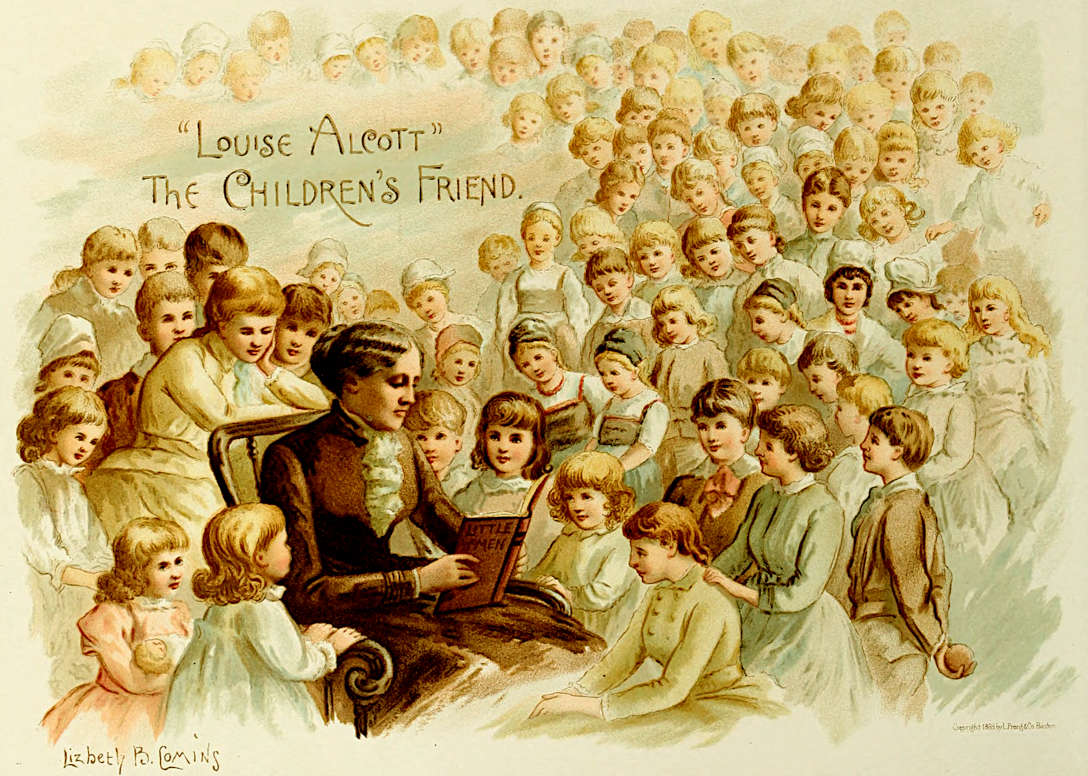
“Louise Alcott”
The Children’s Friend.
“Louise Alcott”
The Children’s Friend.
By EDNAH D. CHENEY.
Illustrated by LIZBETH B. COMINS.

BOSTON:
L. PRANG & COMPANY.
Copyright, 1888, by L. Prang & Co., Boston, Mass.
No explanation can be necessary for offering to the children of America a memorial of Louisa May Alcott, to whom a whole generation looks up with honor and affection as their benefactor and friend.
This slight sketch of her life is not intended to take the place of the full biography, which, it is hoped, will be prepared under the auspices of her own family. The aim has been to show how truly her writings represented herself, and came out of her own varied and fruitful life.
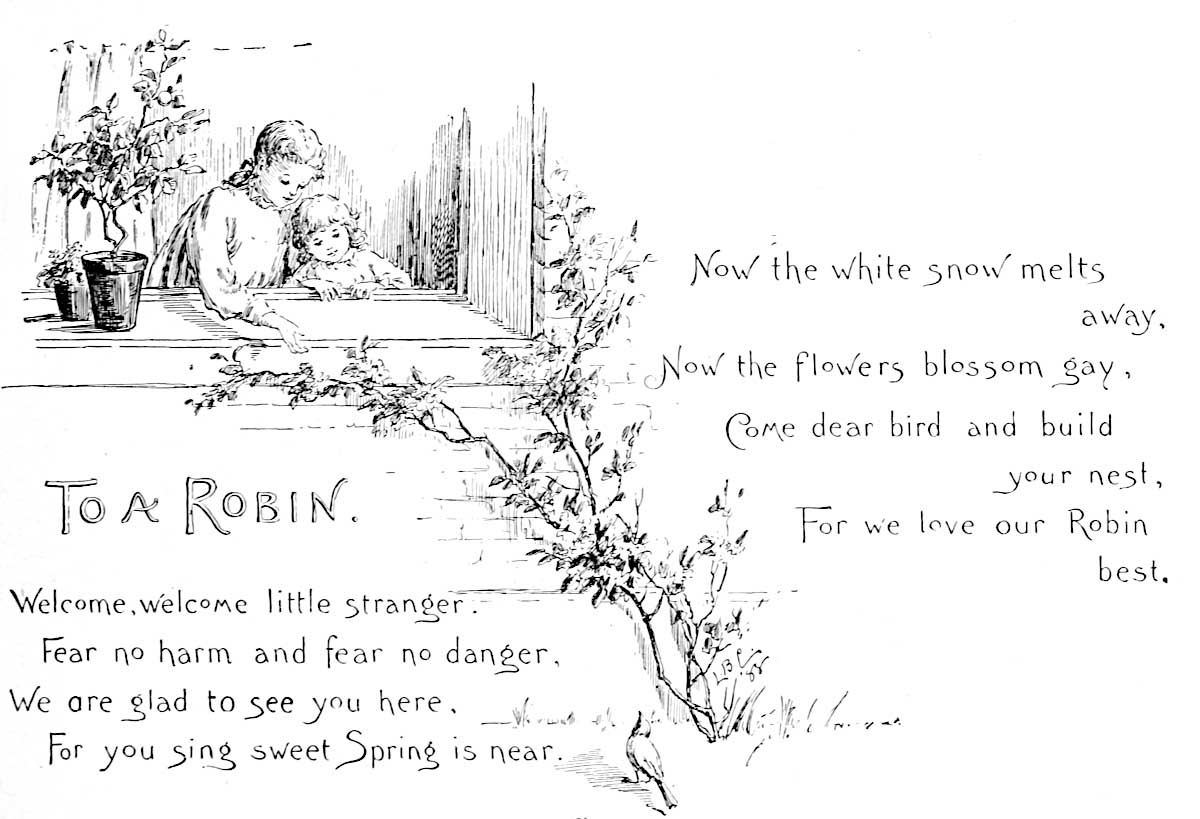
A word more should be said in regard to the poems. The “Song of the Suds” is introduced to express her sense of the poetry of labor. The lines “To a Robin” are interesting as her childish expression. The poems to her father and mother show the deep, filial reverence and tenderness which were among her strongest traits. The two poems by her father are added to indicate the love with which the orphan child, who became so large a part of her life, was welcomed by her family, and her father’s recognition of the motives which prompted her to exertion, which were, not love of money or fame, but sacred duty to those whom God had given her to cherish and bless.
This book is affectionately dedicated to the children of America.
EDNAH D. CHENEY.
It was on the twenty-ninth of November, in the good year 1832, when a dear little baby girl came into a sweet and beautiful home in the pleasant suburb of Germantown, near the great city of Brotherly Love—or Philadelphia.
Very welcome was the dear baby, for she came to loving, true hearts: to a father who was holy and good, and felt a reverence for every child; to a mother whose great generous heart was ready to hold all in its loving embrace; and to a little sister who was full of delight in the baby. This baby was Louisa Alcott, the children’s friend.
A picturesque house it was, and it is still standing, though the little town has grown into a great one, and is not so country-like and pretty as it was then.
[Pg 6]
Her father taught a school in Philadelphia, and the little ones grew and throve under their mother’s watchful eye.
She lived only a year or two in this first home, when the father was obliged to give up his school and their pleasant house, and remove to Boston.
The family went by sea from Philadelphia, and the two little girls were all nicely dressed in clean nankeen dresses for the voyage; but they had not been long on board before the lively Louisa was missing, and after a long search she was brought up from the engine-room, where her eager curiosity had carried her, and where she had a beautiful time, with plenty of dirt. You will understand from this early frolic of hers what a lively little child she was, full of fun and mischief, and will not be surprised when I tell you that Nan in “Jo’s Boys” represents herself, and that she can describe her scrapes so well because she had been in them all.
The little story, “Poppy’s Pranks,” is a true account of the first years of her life in Boston, when she got lost in the streets, tumbled into the Frog Pond, and made things generally lively for everybody about her. She got lost and was cried about the street: “Lost! a little girl, four years old; curly brown hair, blue eyes, had on a white frock and green shoes; calls herself Poppy.” Still, the child was good. “Oh, dreadfully [Pg 7]good! for a week. Quite an angel was Poppy. So meek and gentle, so generous and obedient, you really wouldn’t have known her.”
When she was three years old another little girl came into the home, and was named Elizabeth, for that dear, good woman, Elizabeth P. Peabody, who was then helping Mr. Alcott in the school, and who has loved and helped everybody so much, that she is well called the “Grandmother of Boston.”
Then a baby brother came, only to die, and the children’s hearts were sad that they could not keep him. His little body was laid in the tomb of their grandfather, Col. May, in the old burial-ground on the Common, and the family always kept his birthday with loving remembrance, because they felt his soul belonged to them, and they would know him again in heaven.
Last of all was the little May, who was tenderly cared for by the oldest sister, and who quarrelled with and adored the gifted Louisa.
When Louisa was only eight years old she was already fond of writing, and she composed the poem in this book, called “The Robin.” One cold morning the children found in the garden a little half-starved bird, and having warmed and fed him, they felt inspired to write a touching poem. The loving mother was so pleased [Pg 8]with these verses that she said, “You will grow up a Shakespeare.” Her child didn’t become that; but, as we have one Shakespeare, perhaps it was just as well that she grew up to be the “children’s friend,” and to write stories for them, which have added very much to their happiness, and helped them to live better lives.
At this time Mr. Alcott kept that school in the Masonic Temple, which has become so famous by the account Miss Peabody has given of it. Some things in the school at Plumfield are taken from this model, but not much, for this was only a day school, and I don’t think the teacher thought quite so much of making the children’s bodies strong and giving them a jolly time as Mr. Bhaer did. But he did encourage them to talk and to express all their earnest thoughts. “It was a school of thirty children, mostly boys under ten years of age; well disposed, good-natured, overflowing with animal spirits, and all but intoxicated with play.”
Louisa never went to this school, but the children had very good times at home. She went later to a smaller school kept by her father in the home in Beach Street. In fact, Louisa went to school very little, and learned all she knew from her father and mother, and the bright, intelligent people they always had about them. [Pg 9]She went a little while once or twice to a child’s school and a few weeks to a district school, but her education was very varied and irregular.
But the children were taught by their father in the pleasantest way at home. For two hours in the morning they were either in his study or on some shady seat in the garden under his care. He taught them much by writing, and they each kept a journal of their work and their lives. They wrote down words and their meanings, and often made drawings to illustrate them. The father sometimes made pictures of the houses in which they were staying, or the landscapes they loved, and I have seen in one of the journals a sketch of himself, with the little Elizabeth in his lap. One of the children wrote once, “She said prayers, but I think my resolutions to be good are prayers.”
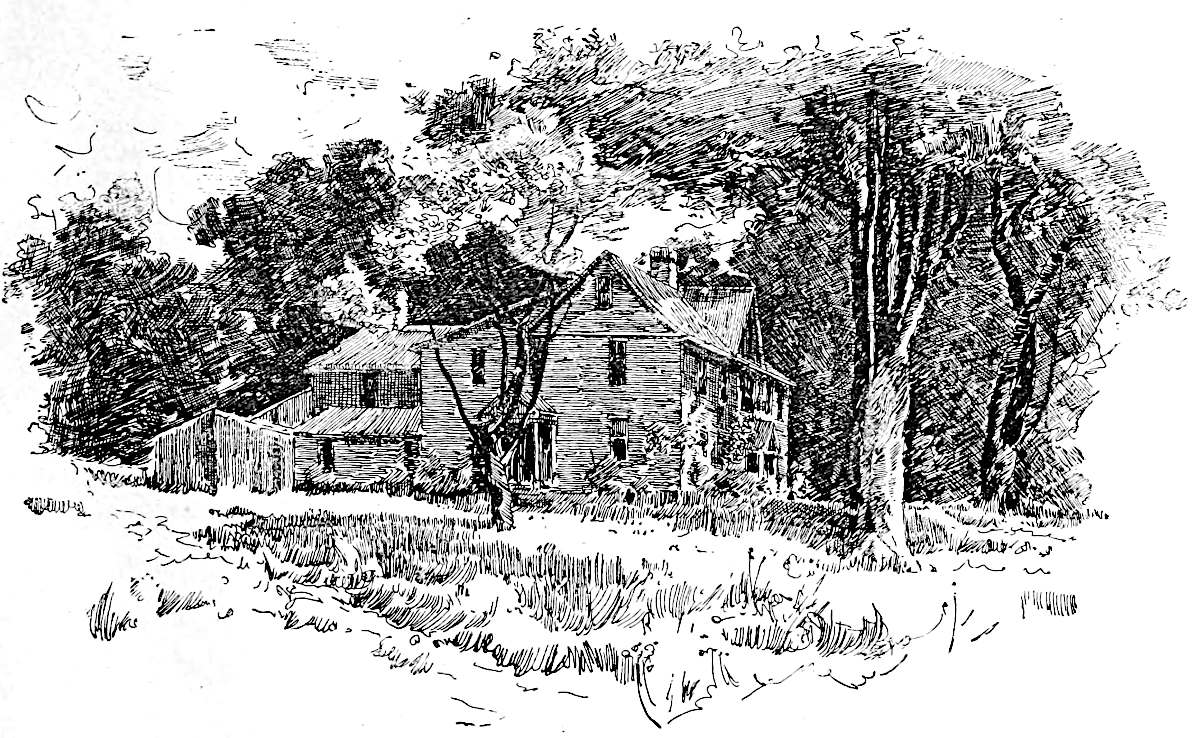
The school in Boston was not prosperous, and Mr. Alcott went to Concord to live in a small cottage. This house is described in “Little Women” as Meg’s first home, but Anne never lived there after her marriage. It had a pleasant garden full of trees; and best of all, it had a great barn, in which the children had free range, and here they acted out all the plays which came into their active little brains. “Jack and the Bean Stalk” was a favorite, and they had many a tumble from the beams in climbing up to the imaginary giant’s castle.
[Pg 10]
They lived three years in this cottage, and to the children they were very happy ones, for they did not then understand the anxieties of the father and mother, on whom poverty was pressing hard.
During this time Mr. Alcott went to England and brought back a gentleman with him, who had some peculiar ideas about making a paradise on earth. The family went to a place called Fruitlands to try the experiment. Miss Alcott has told the story of this life in “Transcendental Wild Oats” with such a mixture of pathos and humor that you cannot tell whether to laugh or to cry.
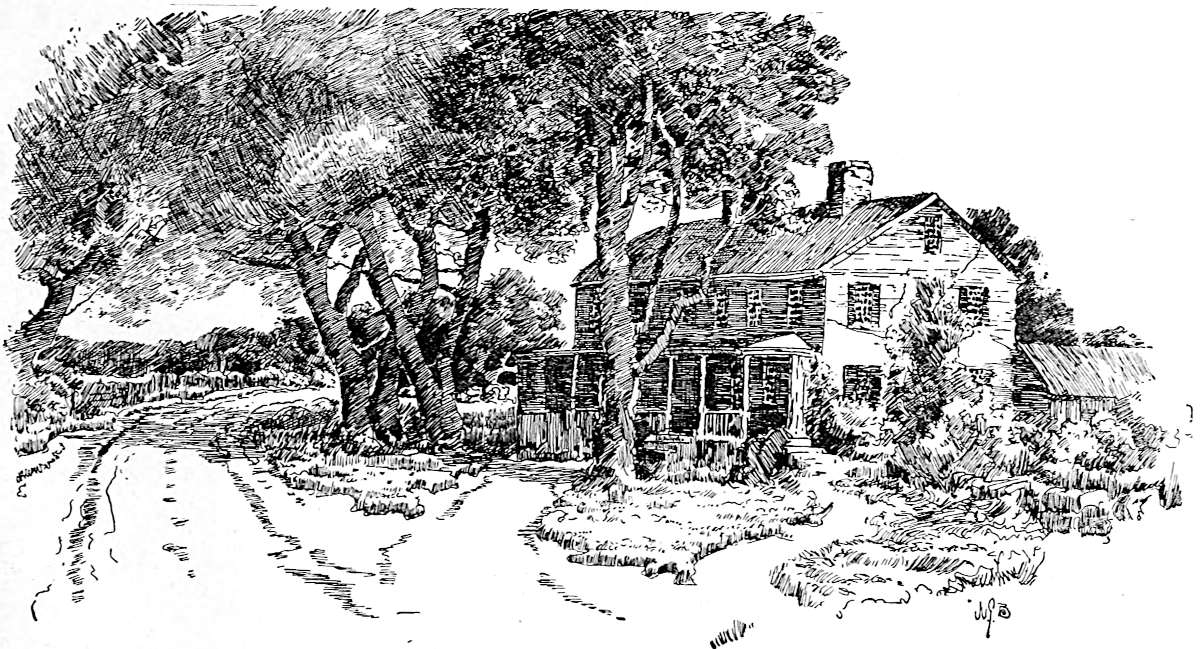
They returned to Concord to another house in which the great novelist Hawthorne afterwards lived. Here Mr. Alcott cultivated land, raising fruit and vegetables, and there the girls first began to realize the poverty of the family, and to feel that they must try to ease the burdens of father and mother.
And now, dear children, before I tell you how “Little Women” and all the books you love so much were written, I want you to realize how fully Miss Alcott had known almost all that she has described. She knew the bitterness of poverty, when even the daily food, if not scanty, was simple in quality and sweetened by no luxuries. All that she has told you of the struggles of young girls, turning their dresses and painting their [Pg 13]shoes, and carrying a torn glove in the hand, and every little petty misery of the toilet, she has not only seen but known. All the sacrifices made by one sister or friend to help another, were felt or observed by her, and all the tender, wise rebukes from father and mother were treasured up in her memory. Scarcely an adventure in her stories but is painted from life, altered in time and place, but still revealing the history of some real person.
Out of their hard trials, borne with love and courage, but felt just as keenly as other girls feel them, as out of a dark mine, she has drawn the gold and silver and precious jewels with which she has brightened the lives of so many children and hard-working girls; for nothing helps us like knowing that others have suffered as we have and conquered as we may. What was the secret of her power to do this? It was that she kept her heart full of love and faith and courage. She was never ashamed of the poverty or hardships she had been through, but was proud that she could do whatever work was necessary for herself or her family, and she was full of loving thought for everybody else, and longing to help them in the sorrows and trials she knew so well herself.
[Pg 14]
You feel that Miss Alcott tells you the whole story of her life. She shows you how she loves fun and play, and wants all children to have plenty of it, and how children’s restless spirits may lead them to do many wild pranks without their being really wicked; but she also shows you that when they really do wrong or cherish wrong feelings, or are careless or inconsiderate of others’ feelings and happiness, they suffer very much from it, and more in their own hearts than in any other way.
Here is a little picture of the “rooms in the heart,” which was the children’s real experience, a lesson which they never lost, but to which, even to their latest day, they looked for guidance in their conduct. The passage occurs in “Little Men”:—
“‘Well, it’s one of my private plays, and I’ll tell you, but I think you’ll laugh at it,’ began Demi, glad to hold forth on this congenial subject. ‘I play that my mind is a round room, and my soul is a little sort of creature with wings that lives in it. The walls are full of shelves and drawers, and in them I keep my thoughts, and my goodness and badness, and all sorts of things. The goods I keep where I can see them, and the bads I lock up tight, but they get out, and I have to keep putting them in and squeezing them down, they are so strong. The thoughts I play with when I am alone or in bed, and I make up and do what I like with them. Every Sunday I put my room in order, and talk with the little spirit that lives there, and tell him what to do. He is very bad sometimes, and won’t mind me, and I have to scold him, and take him to grandpa. He always makes him behave, and be sorry for his faults, because grandpa likes this play, and gives me [Pg 15]nice things to put in the drawers, and tells me how to shut up the naughties. Hadn’t you better try that way? it’s a very good one’; and Demi looked so earnest and full of faith that Dan did not laugh at his quaint fancy, but said soberly:—
“‘I don’t think there is a lock strong enough to keep my badness shut up. Any way, my room is in such a clutter I don’t know how to clear it up.’”
In telling you about Miss Alcott’s childhood, I must tell you how fond she was of animals. She delighted in dogs, though she never possessed one, but she has made the performing dog Sanch as real and interesting as any of her children, and the story of the little raspberry girls watering sheep in the crowded cattle car might well rouse up the railroad men to their duty of sparing these poor, patient animals all needless suffering. But cats were the especial pets of the household; the children played with them and tended them in sickness, and buried them when dead, and Louisa embalmed their memory in the story of the “Seven Black Cats.”
Amid the discomforts of travel she could get pleasure from her favorite animals:—
“Up the hill they went after breakfast; and balm was found for the old lady’s woes in the sight of many Angora cats, of great size and beauty. White as snow, with tails like plumes, and mild, yellow eyes, were these charmers. At every window sat one; on every door-step sprawled a bunch of down; and frequently [Pg 16]the eye of the tabby-loving spinster was gladdened by the touching spectacle of a blond mamma in the bosom of her family.
“‘If I could only carry it, I’d have one of those dears, no matter what it cost!’ cried Lavinia, more captivated by a live cat than by all the dead Huguenots that Catherine de Medicis hung over the castle walls on a certain memorable occasion.”
Dolls were equally dear to her. They seem to form the “missing link” in a child’s heart between animate and inanimate nature. Louisa made hers do everything that a human being could do. They were fed, educated, punished, rewarded, nursed, and even hung and buried; and the story of the little girls who sent their dolls on a journey for the pleasure of hearing their adventures, seemed hardly an exaggeration to her:—
“As soon as Flora and Dora recovered from the bewilderment occasioned by the confusion of the post-office, they found themselves in one of the many leathern mail-bags rumbling Eastward. As it was perfectly dark, they could not see their companions, so listened to the whispering and rustling that went on about them. The newspapers all talked politics, and some of them used such bad language that the dolls would have covered their ears, if their hands had not been tied down. The letters were better behaved and more interesting, for they told one another the news they carried, because nothing is private in America, and even gummed envelopes cannot keep gossip from leaking out.
“‘It is very interesting, but I should enjoy it more if I was not grinding my nose against the rough side of this leather bag,’ whispered Dora, who lay undermost just then.
[Pg 17]
“‘So should I, if a heavy book was not pinching my toes. I’ve tried to kick it away, but it won’t stir, and keeps droning on about reports and tariffs and such dull things,’ answered Flora, with a groan.
“‘Do you like travelling?’ asked Dora, presently, when the letters and papers fell asleep, lulled by the motion of the cars.
“‘Not yet, but I shall when I can look about me. This bundle near by says the mails are often sorted in the cars, and in that way we shall see something of the world, I hope,’ answered Flora, cheering up, for, like her mamma, she was of an inquiring turn.
“The dolls took a nap of some hours, and were roused by a general tumbling out on a long shelf, where many other parcels lay, and lively men sent letters and papers flying here and there as if a whirlwind was blowing. A long box lay beside the dolls who stood nearly erect leaning against a pile of papers. Several holes were cut in the lid, and out of one of them was thrust a little black nose, as if trying to get air.”
This real feeling of the Alcott children adds to the pathos of the sacrifice to the Kitty Mouse in “Little Men”:—
“The superb success of this last offering excited Teddy to such a degree that he first threw his lamb into the conflagration, and before it had time even to roast he planted poor, dear Annabella on the funeral pyre. Of course she did not like it, and expressed her anguish and resentment in a way that terrified her infant destroyer. Being covered with kid, she did not blaze, but did what was worse, she squirmed. First one leg curled up, then the other, in a very awful and life-like manner; next, she flung her arms over her head as if in great agony; her head itself turned on her shoulders, her glass eyes fell out, and with one final writhe of her [Pg 18]whole body she sank down a blackened mass on the ruins of the town. This unexpected demonstration startled every one, and frightened Teddy half out of his little wits. He looked, then screamed, and fled toward the house, roaring ‘Marmar,’ at the top of his voice.”
As soon as the girls were old enough to comprehend the needs of the family, their earnest desire was to help in its support.
Louisa naturally chose her father’s profession of teaching, and began when very young to teach some of the children of the neighborhood. One or both the sisters taught school at various times, and Louisa was governess in a rich family in Boston.
She never disdained any work that promised help towards her object. Her mother at one time opened an intelligence office, and when a gentleman applied for some one to “help” in the family, “to be treated with the greatest consideration and kindness,” she said, “Mother, why can’t I go?” Her mother allowed her to try the experiment, but it proved a hard experience. She has herself told the story, and it shows how much a poor “hired girl” may suffer from want of respect and consideration, even from the “best families.”
The family struggled long with poverty, and often ate the bitter bread of dependence. But they were never so poor but they had something to share with those in [Pg 19]need, and the generous spirit of the mother is justly shown in the opening scene of “Little Women,” where the Christmas breakfast is given to the poor German family.
The fugitive slave was safe within their territory, and was hidden in the barn, and even in the old brick oven, when his persecutors came in search of him. From stories which Louisa learned from these men, came the wonderful tale of “My Contraband,” the most powerful and passionate of any of her stories in “Hospital Sketches,” and also “An Hour,” which tells of the slaves’ eager longing for liberty.
At a later period a band of houseless emigrants were encamped in the yard of their house in Boston, from which act of perhaps inconsiderate charity came a run of smallpox for all the household.
This period of the girlish life of the family is represented in her famous “Little Women,” the most popular story book for children ever written.
The father’s character is but slightly indicated, and he does not take a very active share in this story. But as if, of purpose to give him due respect, in the opening chapter of the second volume, she describes his life, saying, “the quiet man sitting among his books was still head of the family, the household conscience, anchor and comforter.”
[Pg 20]
In “Eli’s Education” she has given the early life of her father, who had to struggle hard for his education. His influence upon his daughters was very strong and deep, although less apparent than the mother’s.
This extract will show how he began life:—
“His father had no patience with him, called him a shiftless dreamer, and threatened to burn the beloved books. But his mother defended him, for he was her youngest, and the pride of her heart; so she let him scribble all over her floors before she scrubbed them up, dipped extra thick candles for his use, saved every scrap of paper to swell his little store, and firmly believed that he would turn out the great man of the family. His brothers joked about his queer ways, but in his sisters he found firm friends and tender comforters for all his woes. So he struggled along, working on the farm in summer and in a clock shop during the winter, with such brief spells of schooling as he could get between whiles, improving even these poor opportunities so well that he was letter-writer for all the young people in the neighborhood.
“Now, he was writing in his journal very slowly, but very well, shaping his letters with unusual grace and freedom; for the wide snow-banks were his copybooks in winter, and on their white pages he had learned to sweep splendid capitals or link syllables handsomely together. This is what he wrote that night, with a sparkle in the blue eyes and a firm folding of the lips that made the boyish face resolute and manly:—
“‘I am set in my own mind that I get learning. I see not how, but my will is strong, and mother hopes for to make a scholar of me. So, please God, we shall do it.’
“Then he shut the little book and put it carefully away in the blue chest, with pen and ink, as if they [Pg 21]were very precious things; piously said his prayers, and was soon asleep under the homespun coverlet, dreaming splendid dreams, while a great bright star looked in at the low window, as if waiting to show him the road to fortune.”
Miss Alcott’s mother was a woman of large, generous nature and fine intellectual powers. She is well represented by Mrs. March in “Little Women” in her motherly relations. Her early life is told in the “Story of Aunt Abby.”
Meg, Jo, Beth, and Amy are characteristic portraits of the four girls. Meg, or Anne, was the domestic, home-loving sister with the gentle disposition of the father, and she knew the happy marriage and sad widowhood described in “Jo’s Boys.” The writer herself is represented in the warm-blooded, impetuous, generous Jo; overflowing with life and talent, strong and rash in her judgment, high and heroic in her purposes, refined, idealized, and ever held up by the high spiritual influences which her father’s thought and life shed around her, though she sympathized more with her practical mother. Her sympathy with others, her delight in blessing them, her keen understanding of their natures and trials, are all true of the girl who was to develop into such strong, noble womanhood. It is not true that she courted under an umbrella or married a German professor, but she has so well imagined the matrimonial conclusion [Pg 22]which was demanded for the story, that we are tempted to wish it were. She reappears in “Little Men,” “Jo’s Boys,” “Old-fashioned Girl,” and many other stories.
The tender Elizabeth (the Beth of the story) drooped in her young maidenhood even as the tale reports, and the father sat alone by the beautiful body of his child all night in silence. The mother’s heart, which had borne so many trials, was never quite blithe after this long watching of two years, ending in the loss of her cherished child.
Every one who knew the young, enthusiastic, artistic May Alcott, recognized her in the charming sketch of “Amy.” Beautifully idealized by her sister’s genius, her little faults and peculiarities are delicately sketched in, and we can see her stately walk, and recognize the child-like, loving spirit which never forsook her. She had her youthful romances and day-dreams, but she did not marry Laurie, nor live to enjoy the blessings of motherhood and family life. She went abroad in 1878 for improvement in art, in which she had much success, and married a Swiss gentleman. Death closed her happy married life of only a few months. She left her baby, a girl, to the care of her sister Louisa, who sent out to Europe for the little nursling, and ever afterwards cherished her as her own child. The verses of Mr. Alcott show how the motherless child was welcomed into heart and home.
[Pg 23]
“Who was Laurie?” is a question asked by many children. No one boy united all his traits, but three of their neighbors’ children in Concord were especially intimate in the Alcott family, and supplied letters for the post-office and other incidents of the story. But the most perfect type of the accomplished, generous Laurie was a young Polish lad whom Miss Alcott met in Europe.
No one can help seeing in her stories her fondness for boys. She loved the bold, free spirit of adventure in them, the chivalric devotion and self-sacrifice, the eagerness for knowledge of life, rather than of books. She always held up a high standard, and believed in their future, in spite of all boyish faults and follies. Consequently she was warmly beloved, and “Jo’s Boys” was not merely a fiction of the imagination, but a reality of the heart.
As soon as the war broke out, Miss Alcott could not rest at home, but eagerly offered her services as nurse in the army hospitals. She had been brought up in anti-slavery principles, and was full of patriotic zeal and sympathy for the soldiers.
She has told the story of her work in “Hospital Sketches,” which is very largely a mere transcript of letters which she sent home to her family. She was stricken with fever while on duty, and returned home to suffer many weeks of illness, and she [Pg 24]never recovered from the terrible strain upon her nervous system. The suffering she had witnessed and the intense excitement of the war produced a fever of the brain, and the peaceful chamber at Concord became so filled with harrowing visions that she never loved to be there afterwards.
Miss Alcott never liked teaching, and longed for more congenial occupation. When about nineteen or twenty she became enamoured of the stage, and was very eager to develop her dramatic talent as an actress, but wiser counsels restrained her. She has indicated this experience in “Work,” which gives a great deal of her own life and struggles. She understood her own powers and her own defects, and while she saw it was not the life for her, she was sensible to its fascinations as well as its dangers.
“On the night of the benefit, Lucy was in a most exasperating mood, Christie in a very indignant one, and as they entered their dressing-room they looked as if they might have played the ‘Rival Queens’ with great effect. Lucy offered no help and Christie asked none, but putting her vexation resolutely out of sight, fixed her mind on the task before her.
“As the pleasant stir began all about her, actress-like, she felt her spirits rise, her courage increase with every curl she fastened up, every gay garment she put on, and soon smiled approvingly at herself, for excitement [Pg 25]lent her cheeks a better color than rouge; her eyes shone with satisfaction, and her heart beat high with a resolve to make a hit or die.
“Christie needed encouragement that night, and found it in the hearty welcome that greeted her, and the full house, which proved how kind a regard was entertained for her by many who knew her only by a fictitious name. She felt this deeply, and it helped her much, for she was vexed with many trials those before the footlights knew nothing of....
“But, in spite of all annoyances, she had never played better in her life. She liked the part, and acted the warm-hearted, quick-witted, sharp-tongued Peg with a spirit and grace that surprised even those who knew her best. Especially good was she in the scenes with Triplet, for Kent played the part admirably, and cheered her on with many an encouraging look and word. Anxious to do honor to her patron and friend, she threw her whole heart into the work; in the scene where she comes like a good angel to the home of the poor playwright, she brought tears to the eyes of her audience; and when, at her command, Triplet strikes up a jig to amuse the children, she ‘covered the buckle’ in gallant style, dancing with all the frolicsome abandon of the Irish orange-girl, who for a moment forgot her grandeur and her grief.
“That scene was her best, for it is full of those touches of nature that need very little art to make them effective; and when a great bouquet fell with a thump at Christie’s feet, as she paused to bow her thanks for an encore, she felt that she had reached the height of earthly bliss.”
But writing of poems, and especially of stories, was her earliest love, and she now began to pursue this work earnestly. She wrote stories which she sent secretly to the [Pg 26]newspapers, and great was her joy when they were accepted, and wild the excitement of the little family over the first money which she thus earned. With marvellous facility she poured out sheet after sheet of the wildest romances, full of passionate declamation and soul-stirring adventure. They were published in Gleason’s Pictorial, and were in constant demand, and thus brought her much-needed money.
But she found that she was not in her true path. She was writing for money only, and not from an earnest purpose to represent life truly, and to disseminate a sweet and wholesome influence. She has described this experience in “Little Women.” But it was only frivolity and excitement, not positive evil in which she had indulged, and we must not infer too much from her self-accusations. How entirely her later writings redeemed this early fault, all will admit, for her highest praise is for the healthy, moral influence of her books. No one would have condemned her as severely as she does herself. She thus tells the story of her abandonment of this work:—
“As soon as she went to her room, she got out her papers, and carefully re-read every one of her stories. Being a little short-sighted, Mr. Bhaer sometimes used eye-glasses, and Jo had tried them once, smiling to [Pg 27]see how they magnified the fine print of her book; now she seemed to have got on the professor’s mental or moral spectacles also, for the faults of these poor stories glared at her dreadfully, and filled her with dismay.
“‘They are trash, and will soon be worse than trash if I go on; for each is more sensational than the last. I’ve gone blindly on, hurting myself and other people, for the sake of money; I know it’s so, for I can’t read this stuff in sober earnest without being horribly ashamed of it; and what should I do if they were seen at home, or Mr. Bhaer got hold of them?’
“Jo turned hot at the bare idea, and stuffed the whole bundle into her stove, nearly setting the chimney afire with the blaze.
“‘Yes, that’s the best place for such inflammable nonsense; I’d better burn the house down, I suppose, than let other people blow themselves up with my gunpowder,’ she thought, as she watched the ‘Demon of the Jura’ whisk away, a little black cinder with fiery eyes.
“But when nothing remained of all her three months’ work, except a heap of ashes, and the money in her lap, Jo looked sober, as she sat on the floor, wondering what she ought to do about her wages.
“‘I think I haven’t done much harm yet, and may keep this to pay for my time,’ she said, after a long meditation, adding, impatiently, ‘I almost wish I hadn’t any conscience, it’s so inconvenient. If I didn’t care about doing right, and didn’t feel uncomfortable when doing wrong, I should get on capitally. I can’t help wishing, sometimes, that father and mother hadn’t been so dreadfully particular about such things.’
“Ah, Jo, instead of wishing that, thank God that ‘father and mother were particular,’ and pity from your heart those who have no such guardians to hedge them round with principles which may seem like prison walls to impatient youth, but which will prove sure foundations to build character upon in womanhood.
[Pg 28]
“Jo wrote no more sensational stories, deciding that the money did not pay for her share of the sensation.”
In 1855 she published a little volume called “Flower Fables,” which she had written for one of her friends when sixteen years old. She received thirty-two dollars for it.
It was probably about this time that a friendly publisher gave her the advice, “Louisa, give up writing, stick to your teaching,” accompanying his unwelcome advice with a small sum of money. “When I make my little pot of gold by writing, I will repay you this,” she said. When in a few years she received a handsome sum of copyright money, she thought she had found the “pot of gold,” and returned the money, as she had not taken the advice.
In 1864 she published a more ambitious story or novel, entitled “Moods.” While there is much to indicate her future power, the book has not the charm of her later stories, and it did not succeed with the public.
Perhaps she never felt such discouragement as from the severe criticisms of this book, on which she had spent much time and labor. But her motive for exertion was too strong to allow her to yield to despondency. She wisely turned to the life which [Pg 29]she thoroughly understood, and in 1868 produced, out of her own family experience, “Little Women,” which at once won the hearts of all the children, and established her fame and fortune. The children throughout the land recognized her as their friend and their story-teller, and the second series, which should complete the story, was waited for with as much impatience as the news of a battle.
Vehement was the indignation when Jo refused to make Laurie happy, and young girls cried themselves sick over the pathetic passages of the story.
Violent as the excitement was, it was not transient. This book has commanded a steady sale ever since, and secured a welcome from publisher and public for everything which she afterwards wrote.
She has herself given a most amusing description in “Jo’s Boys” of this success, as well as of the somewhat oppressive attentions which were poured upon her. She always shrank from any public demonstrations, and remained as simple, straightforward, natural, impulsive, and warm-hearted as a woman as she was when a child.
“The March family had enjoyed a great many surprises in the course of their varied career, but the greatest of all was when the Ugly Duckling turned out to be, not a swan, but a golden goose, whose literary [Pg 30]eggs found such an unexpected market that in ten years Jo’s wildest and most cherished dream actually came true. How or why it happened she never clearly understood, but all of a sudden she found herself famous in a small way, and, better still, with a snug little fortune in her pocket to clear away the obstacles of the present and assure the future of her boys....
“Things always went by contraries with Jo. Her first book, labored over for years, and launched full of the high hopes and ambitious dreams of youth, foundered on its voyage. The hastily written story, sent away with no thought beyond the few dollars it might bring, sailed with a fair wind and a wise pilot at the helm straight into public favor, and came home heavily laden with an unexpected cargo of gold and glory....
“It was the power of making her mother’s last years happy and serene; to see the burden of care laid down forever, the weary hands at rest, the dear face untroubled by any anxiety, and the tender heart free to pour itself out in the wise charity which was its delight. As a girl, Jo’s favorite plan had been a room where Marmee could sit in peace and enjoy herself after her hard, heroic life. Now the dream had become a happy fact, and Marmee sat in her pleasant chamber with every comfort and luxury about her, loving daughters to wait on her as infirmities increased, a faithful mate to lean upon, and grandchildren to brighten the twilight of life with their dutiful affection. A very precious time to all, for she rejoiced, as only mothers can, in the good fortunes of their children. She had lived to reap the harvest she sowed; had seen prayers answered, hopes blossom, good gifts bear fruit, peace and prosperity bless the home she had made; and then, like some brave, patient angel, whose work was done, turned her face heavenward, glad to rest.”
[Pg 31]
Dearer than all the fame was the power she gained by her writings to lift her family out of poverty and care into welfare and luxury. Her father was “throned in philosophic ease,” and every taste gratified; his library replenished, his books re-bound, and his leisure made peaceful and serene.
It was sweet to see the motherly hands, which had toiled so long for every member of the household, resting in calm satisfaction. The widowed sister and the dear nephews were helped in every emergency; the young artist was furnished with means to go abroad and pursue her career; the little babe was surrounded with every comfort; the old age of the mother was made peaceful and happy, and the long, slow passage of her father to the grave was smoothed with every attention and care.
Nor did her beneficence end at home. She did not have a Plumfield school for boys, but she had her boys, whose career she watched with constant love and care, and whom she sent to Europe to study, or aided with means at home, as their needs required. The circle of her influence was ever widening, and her charity flowed out to many who never knew its source. She was constantly appealed to for advice by young writers, and though she gave severe criticism, she readily [Pg 32]acknowledged merit and success. She gave sympathy and help to every good reform, and was an ardent advocate of Woman’s Suffrage and other plans for the advancement of women.
In 1865 her long-cherished desire of a visit to Europe was gratified. She went as companion to an invalid lady. She left her on the Continent and went alone to England, where she visited dear friends, and had a delightful time. Very little of this experience appears in her books, and she very seldom goes out of her native surroundings for her characters and incidents. She was thoroughly American in all her feelings, and she studied daily life more than old books and chronicles.
Four or five years later she went again to Europe with her youngest sister and a friend. She has given a very lively and interesting account of this journey in “Shawl Straps,” in which she rather caricatures herself as the old lady of the party, for she was not yet forty. But ill-health had thrown its saddening influence over her, and the hints of physical and nervous suffering are only too real. She was called home by news of the sudden death of her beloved brother-in-law. She has told the sweet, touching story of his death in “Little Men”:—
[Pg 33]
“‘He was only ill a few hours, and died as he had lived, so cheerfully, so peacefully, that it seems a sin to mar the beauty of it with any violent or selfish grief. We were in time to say good-by; and Daisy and Demi were in his arms as he fell asleep on Aunt Meg’s breast. No more now, I cannot bear it’; and Mr. Bhaer went hastily away quite bowed with grief, for in John Brooke he had lost both friend and brother, and there was no one to take his place.”
I have tried to show you how Miss Alcott’s life was revealed in her stories, and when you wonder how she could charm and interest children so, this is the answer: because she tells you what she knows well herself. All her books are full of incidents treasured in her heart and memory.
“The Grandmother” in “Old-fashioned Girl” tells the stories of Lafayette and Madam Hancock, which she had from her mother’s lips. Some of the methods used by Mr. Bhaer in disciplining his boys were Mr. Alcott’s plans in his Boston school; especially making the boys whip him instead of receiving the blows themselves.
May’s experiences furnished the story of “Class Day.”
In 1879, Miss Alcott spent some weeks at Willow Cottage, Magnolia, where she wrote the story of “Jack and Jill.” The main part of the story describes life in Concord, [Pg 34]or “Harmony,” as she translates it. But a little paragraph pictures the beautiful sea-shore place, and the kind, bright hostess who made it such a home; and the story of the lobsters is founded in melancholy fact. Here is her description of this pleasant summer home:—
“The Willows was a long, low house close to the beach, and as full as a bee-hive of pleasant people, all intent on having a good time. A great many children were swarming about, and Jill found it impossible to sleep after her journey,—there was such a lively clatter of tongues on the piazzas, and so many feet were going to and fro in the halls. She lay down obediently, while Mrs. Minot settled matters in the two airy rooms and gave her some dinner; but she kept popping up her head to look out of the window to see what she could see. Just opposite stood an artist’s cottage and studio, with all manner of charming galleries, towers, steps, and even a sort of drawbridge, to pull up when the painter wished to be left in peace. He was absent now, and the visitors took possession of this fine play-place. Children were racing up and down the galleries, ladies sitting in the tower, boys disporting themselves on the roof, and young gentlemen preparing for theatricals in the large studio.”
The first chapter of the story gives a very lively description of the favorite New England winter sport of “coasting,” which is a good sketch of the scenes on the popular resort of Ponkataset Hill in Concord:—
“Up and down three long coasts they went as fast as legs and sleds could carry them. One smooth path led into the meadow, and here the little folk congregated; one swept across the pond, where skates went gayly around, like water-bugs; and the third, from the very top of the steep hill, ended abruptly at a rail fence on the high bank above the road.
“There was a group of lads and lasses sitting or leaning on this fence to rest, after an exciting race, and, as they reposed, they amused themselves with criticising their mates still absorbed in this most delightful of out-door sports.”
In “Work” she describes her beloved minister, Theodore Parker, the truest of friends; and in “Old-fashioned Girl,” two young artists who cling to each other through all variations of life and fortune. The doctor and the philanthropist (a beautiful girl lost on the ill-fated “Schiller”), the actor and the lawyer, were all drawn from life.
It is this truth to real experience which gave her such power over the hearts of children and girls, for they felt she understood and knew all their trials, and never considered them small.
To understand other people’s feelings is the first step toward really helping them.
A noble philanthropist said to me, “How much Louisa Alcott has done to lead girls to right ways of thinking!” That is what she has tried to do for you, her dear [Pg 38]children and girls. She has tried to show how sweet and precious home life is, and how you can always find something to bless those right around you, and make yourselves and them happier and better. She has taught you that homely, quiet work is never to be despised, and that character and happiness can be built up without great talents or large fortune. She has taught you never to despise or despair of any child, however poor or homely or naughty, or even sinful he may be; but to seek out the good angel in him, by which he may be led onwards and upwards to usefulness and happiness. And she has also taught you that if you are blessed with great gifts, with wealth or talent, you have no right to leave them unemployed, but must be as faithful to your large opportunities as others to their small ones. Her boy Laurie must be shaken out of his elegant languor and good-natured self-indulgence, as thoroughly as Dan must be civilized out of rudeness. And the great principle which governed her own life, and made her the benefactor and the friend of children, was loyalty to duty in whatever form it appeared.
One of her prettiest poems is the “Song from the Suds,” and her description of bread-making makes it as poetic as Nausicaa’s washing.
[Pg 39]
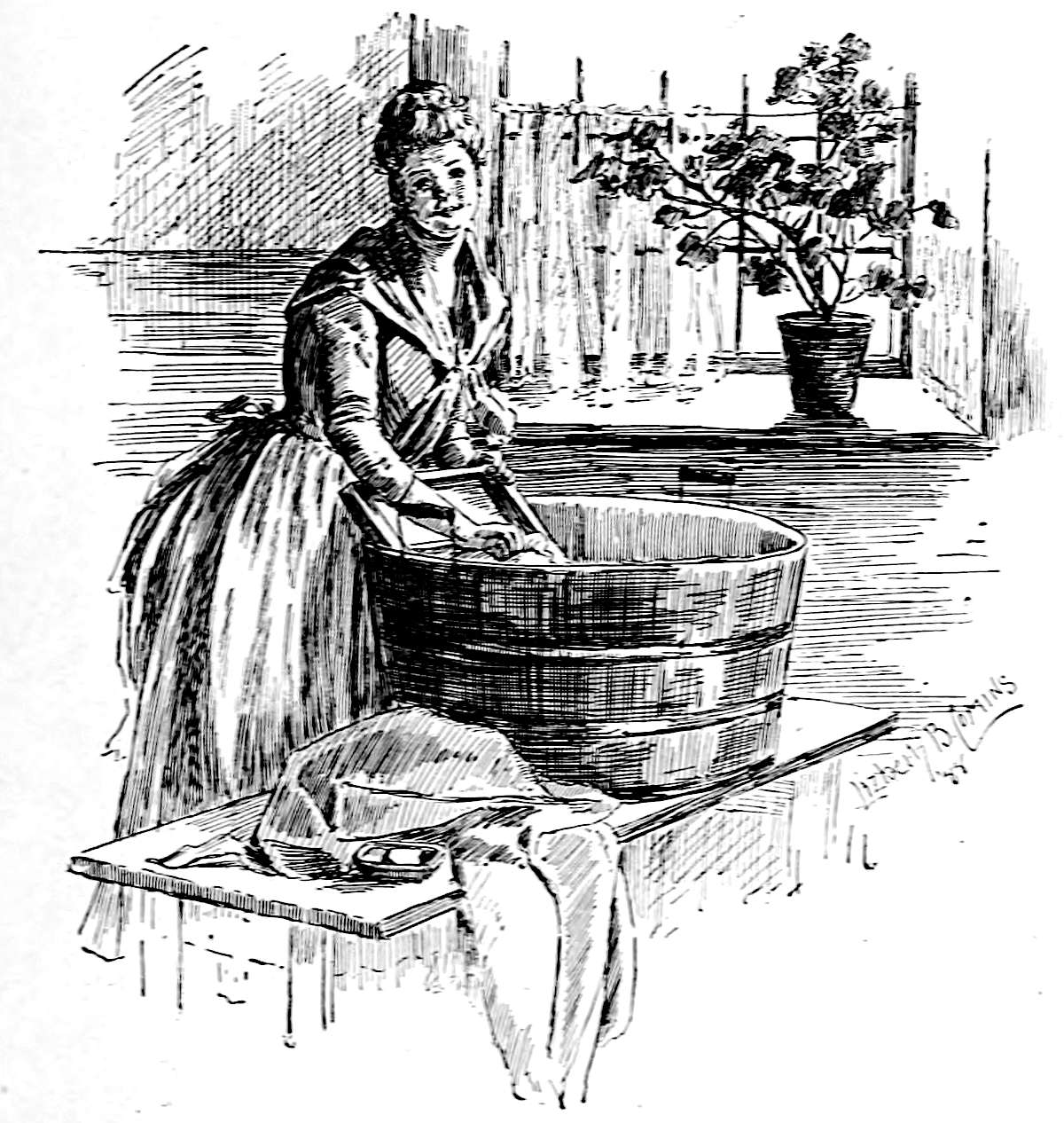
In the little story of the “Jerseys” she has sketched her idea of a true woman, as she wants her girls to be.
[Pg 41]
How full of life the teacher is, as described by the school-girls:—
“‘She’s not a bit of a fashion-plate, but a splendid woman, just natural and hearty and sweet.’ Even her clothes have a superior air about them. ‘Her jersey fits splendidly! There she is now! Girls, she’s running! Do come and see!’
“All ran in time to see a tall young lady come up the wide path at a good pace, looking as fresh and blithe as the Goddess of Health.”
This healthy, wise teacher shows the girls the folly of many of their conventional notions, and encourages them in their efforts for broader lives, “and long after they were scattered apart, they remembered the lessons which helped them to be what their good friend hoped—healthful, happy, and useful women.”
The high spiritual religion of her father, the warm, human affections of her mother, full of natural joy in life, and knowing that mirth and fun helped the world on, as well as seriousness and labor, blended in Miss Alcott’s work in such delightful humor, that tears and smiles are alike ready at her call; and whatever she writes you find, as Burns says,—
[Pg 42]
How tenderly the children feel for the little dog who has lost his beautiful tail, as if they had known what it was to be doggies themselves! How she enjoys Jacko’s fun, and enters into the life of the circus boy; and even sympathizes with the poor rough bear, who tried to live in freedom in the woods, but came back to his prison to die! She has the blessed power of imagination, by which she can “put herself into another’s place,” and feel his experiences as if they were her own.
It seems a pleasant thing to write all these beautiful stories for children, and perhaps some of you will resolve to follow her example in writing. But, remember, nothing can be done without hard work, and Miss Alcott wrote many an hour when she felt sick and weary, and would gladly have lain down in some quiet place to rest. Her fingers became cramped with holding a pen so much, and her head was dizzy and weary with thinking out her stories, and correcting proofs, beside having many a care. Then the dear old mother died; and not many years after the father was stricken with paralysis, and for almost six years the two sisters cared for him when he was feeble as a little child.
[Pg 43]
So she became tired out, and she went to a good friendly home to rest. A whole year she was there, and we fondly hoped she was regaining the strength she had used to help and bless so many people. But
A cold brought on a severe attack in head and throat, and she lay unconscious and helpless. Her father’s serene life had closed two days before, and as the dear friends of the family gathered to pay their tribute of affection and respect to him, they heard the thrilling words, “Louisa Alcott is dead!”
Those words reached over many lands, and everywhere children mourned as for a dear friend gone from them. She was ready and willing to go; but it was hard for them to be willing to spare her, to know that no new words would come from her pen, no more lessons of help and strength for their lives.
But let us be thankful that her beautiful, generous heart had poured itself out so lavishly in words of wisdom and beauty, that we can never feel that she is gone from us; we can turn again and again to the stories in which she has told us her life, and thank God that Louisa Alcott lived.
[Pg 44]
She was taken to the beautiful town where her girlhood was passed, and “her boys” went as her guard of honor to the tomb.
In that Sleepy Hollow, where Emerson and Hawthorne, too, were placed, her worn-out frame was laid to rest. She asked to be laid across the feet of father, mother, and sister, “to take care of them as she had done all her life.”
My little friends, you may not one of you have the great talents which made Miss Alcott famous, but every one of you can try to have her spirit of love and duty, can follow in the paths she has pointed out, and, like her, receive the Father’s blessing on “Duty’s faithful child.”
[Pg 45]
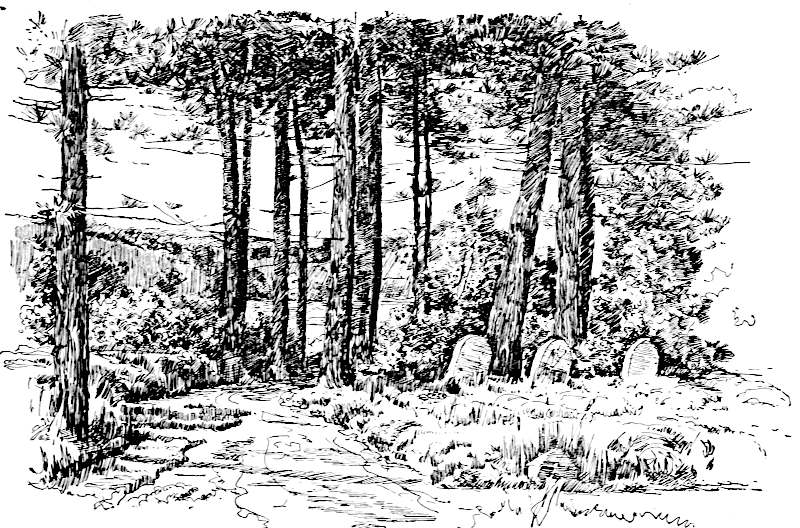
SLEEPY HOLLOW CEMETERY. CONCORD, MASS.
Wordsworth.
[Pg 50]
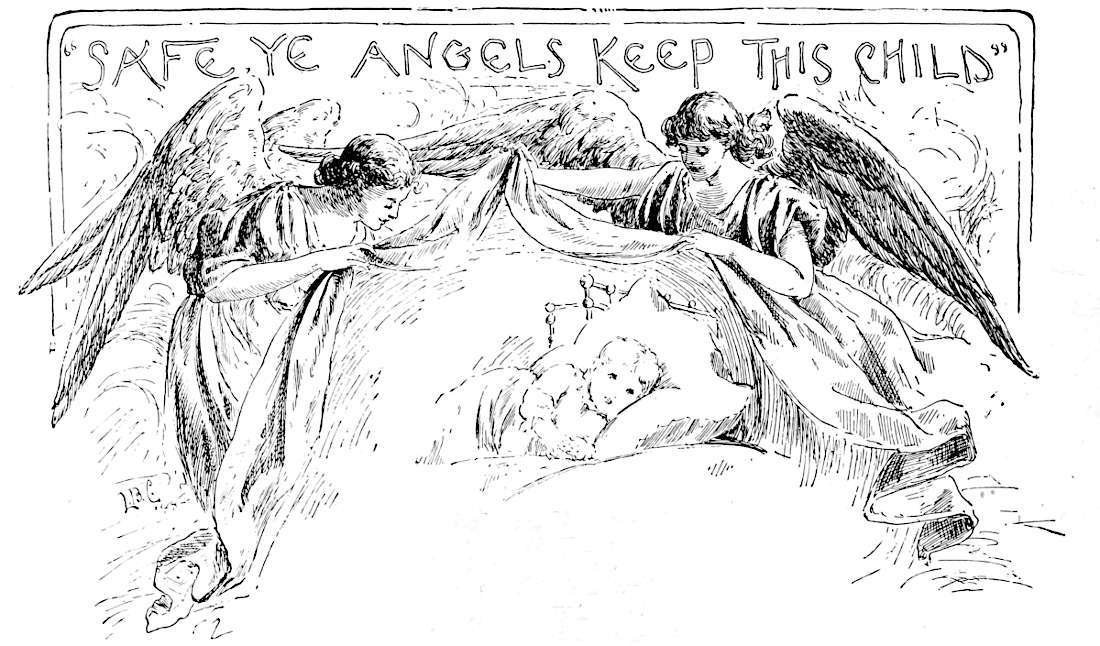
“SAFE YE ANGELS KEEP THIS CHILD”
[Pg 51]
[Lines written by Louisa M. Alcott on the death of her mother.]
[Published in “A Masque of the Poets,” Roberts Brothers, 1878.]
[Pg 55]
[Pg 58]
A period has been added to the name Col. May.
The surname “Meriker” has been corrected to “Nieriker.”
The spelling “Ponkataset” (for “Punkatasset”) has been retained.
The following sentence has been added to the quote on page 17, after the words “a whirlwind was blowing”: “A long box lay beside the dolls who stood nearly erect leaning against a pile of papers.” This sentence comes from Aunt Jo’s Scrap Bag, Volume 6, the source of the quote.
A grave accent has been added to the word “piercèd” in the poem on page 58, to match other editions of the work and to better fit the meter.