ROBERT LOUIS
STEVENSON
READER
ROBERT LOUIS
STEVENSON READER
BY
CATHERINE·T·BRYCE
SUPERVISOR·OF·PRIMARY·SCHOOLS
INTRODUCTION BY
F·E·SPAULDING
SUPERINTENDENT·OF·SCHOOLS
NEWTON·MASS·
Copyright, 1906, by
CHARLES SCRIBNER’S SONS

[Pg v]

| PAGE | |
| Introduction | 1 |
| At the Sea-Side | 5 |
| Playing at the Sea-Shore | 6 |
| My Bed is a Boat | 8 |
| Sailing the Sea of Dark | 9 |
| The Land of Nod | 11 |
| Back to the Land of Day | 14 |
| A Good Play | 17 |
| An Indoor Game | 18 |
| Where Go the Boats? | 21[Pg vi] |
| Louis’s Boats | 22 |
| The Lost Boat | 27 |
| The Land of Counterpane | 34 |
| The Giant of Pillow-Hill | 35 |
| The Lamplighter | 39 |
| Leerie | 40 |
| My Ship and I | 43 |
| The Fairy Island | 44 |
| Bed in Summer | 49 |
| The Sun’s Travels | 52 |
| Windy Nights | 54 |
| The Wind King | 55 |
| The Wind | 61 |
| Farewell to the Farm | 63 |
| In the Country | 64 |
| Autumn Fires | 67 |
| Beautiful Things | 69[Pg vii] |
| My Shadow | 71 |
| The Land of Story-Books | 73 |
| An Evening Game | 75 |
| Robert Louis Stevenson | 79 |
| Robert Louis Stevenson and the Poor Boy | 83 |
| The Lost Child | 85 |
| Strange Lands | 87 |
Robert Louis Stevenson, the poet of childhood, and the child poet! In giving poetic expression to the dearest thoughts and feelings and experiences of his own childhood, he spoke for all children. Better still, he spoke to all children, and in their own language. For Stevenson to remember his childhood was to become a child again; as a child, he wrote his poems of childhood. Hence it is that we all, of whatever age, must read these poems as children, or we fail to read them at all.
Children read them, understand them, and enjoy them without an effort. They need no interpretation; [Pg 2]they cannot be interpreted. Similar childish ideas and experiences alone qualify the little reader to appreciate Stevenson’s thought. With this qualification in mind the selections were made for this book. They are quite within the interest and comprehension of normal children of six or seven years of age.
The stories in prose expand and supplement the poetic selections. The whole book is a child’s biography of a child. All the stories introduced are true in spirit, that is, true to the child character of Stevenson; most of them are also substantially true in fact. They show the child’s intense love of stories, of poetry, of drama; the fertility of his imagination; the courageous power of his spirit to overcome bodily suffering; his ceaseless activity, and his broad and tender sympathy.
The words used in the stories have been chosen with due regard not only to the child’s understanding, but to his reading vocabulary. Beside the words used in the poems, only such words are introduced as will be found in any well-graded Primer and First Reader. Hence, both in subject-matter and in language, this book is especially adapted to use in the second grade.
[Pg 3]
A suggestion about the manner of using the book may not be out of place. As an introduction the teachers should read the selection beginning on page 79. The children will read this for themselves when it is reached, following the order of the book. Each poem should be read and reread, until every word is thoroughly familiar. This will make easy the reading of the prose immediately following, which employs, to a large extent, the vocabulary of the poem.
[Pg 6]
Were you ever at the sea-shore?
Did you play in the sand?
All children like to play in the fine, white sand.
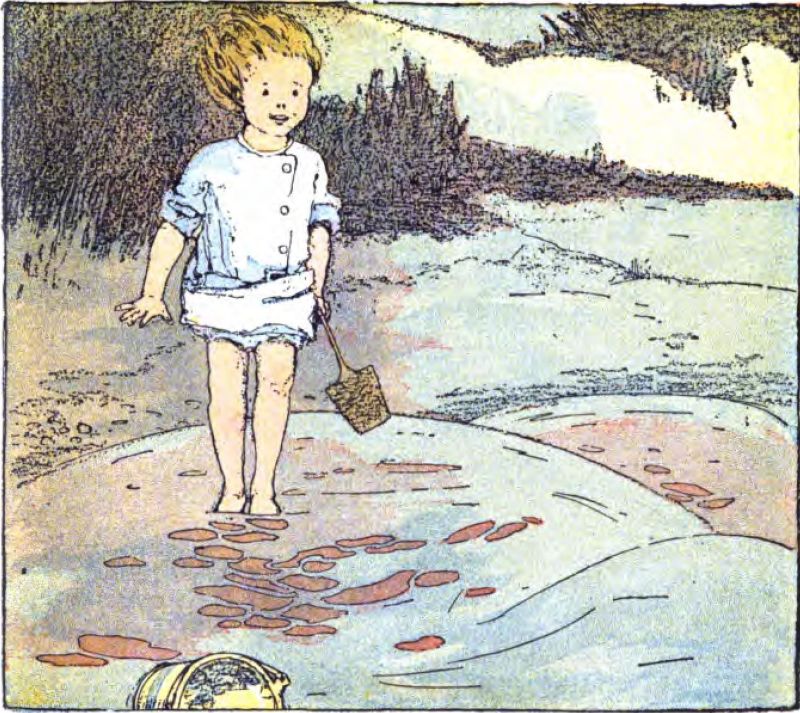
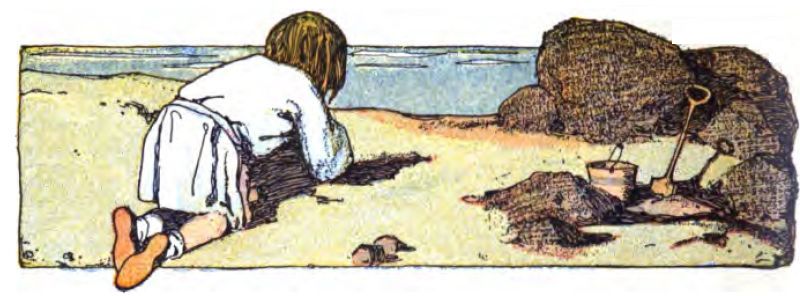
One summer Louis was down at the sea-shore.
His mother gave him a little wooden spade.
All day he played on the shore with his nurse.
He liked to dig holes in the sand.
“See, Nursie!” he would call. “See what a deep hole I have made!
I shall dig more holes.”
So he would dig and dig with his wooden spade.
“O Nurse! I have so many holes.
But they are all empty like a cup.

I don’t want empty holes.
I want to put something into them.
Shall I fill them with water?”
“Not now, laddie,” Nurse answered.
“It is time to go home to tea.
[Pg 7]
To-morrow we will see about filling your holes.”
Next morning Nurse and Louis came back to the sea-shore.
“Look, look, Nursie!” called the child.
“Someone has filled all the holes I made.

Now, they look like wells.
Who could have done it?
Some other little boy, I think.”
“No, laddie,” Nurse replied.
“No other little boy filled the holes.
Last night, when you were sleeping, the sea came up.
It filled the holes till they could hold no more.”
“Does the sea come up every night, Nursie?”
“Yes, laddie.”
“Then every day I will dig more holes.
I will make them deep and empty like a cup.
Every night the sea will fill them all.
I shall call them my sea wells.”
[Pg 8]
[Pg 9]
Did you ever hear a child cry when it was time to go to bed?
Did you ever hear a child coax to “stay up a little longer”?
Let us see how our boy, Louis, went to bed.
“Come, laddie, it is time to go to bed,” calls Nurse.
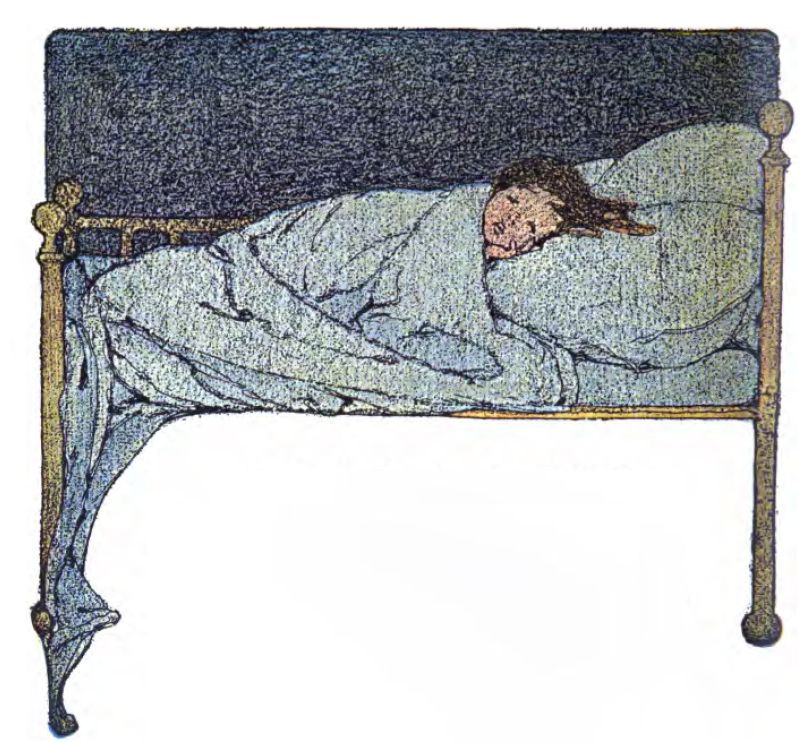
“Bed! Do you call that a bed?
I call it my boat.
I never go to bed at night.
I just sail away to the land of dreams in my boat.”
“Well, child, put on your night-gown before you go.”
“O Nurse! That is not a night-gown!
That is my sailor-coat.
All night-sailors wear coats like that.”
“Very well, my dear. Now, then! shall I lift you into your boat?”
“No, no, Nursie!
You don’t play right.
You should say, ‘shall I help you aboard?’
Now, all aboard for the land of dreams!
Good-night, Nursie! Good-night, all my friends on shore!
[Pg 10]
I will shut my eyes, and sail away from the Dayland shores.
My boat sails so fast!
Soon I shall see the shores no more.
I cannot hear you, Nurse, if you call.
I shall be sailing miles away.
All night long I shall sail over the Dark sea.
But when the morning comes I will return.
When you come into my room in the morning, Nurse, you will find me.
My vessel will have returned safe.
You will find it safe beside the pier.
Good-night, dear Nurse.
Good-night, all my friends on shore.”
[Pg 11]
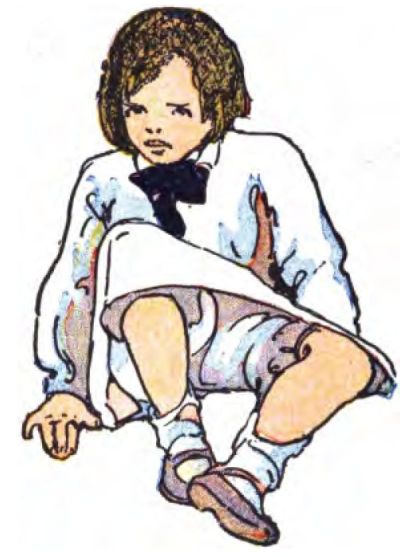
You remember how Louis sailed away over the Sea of Dark.
Shall I tell you how he returned?
In the morning when Nurse went into his room, there he was in bed.
“Good-morning, my sailor-laddie.
Have you come back to your friends on shore?”
“Good-morning, Nursie.
I have just returned from sailing all night long.”
“To what land did you sail, my child?”
“Away to the land of Nod.”
“And is it far, far away?”
“Yes, it is miles and miles from here.
I have to sail all night to go and return.”
“Who goes with you, in your boat, little sailor-boy?”
“No one. I go all alone.”
“But how can you find your way in the dark?”
“Oh, I go every night. So I know the way.”
“Tell me some of the things you see and do in the land of Nod.”
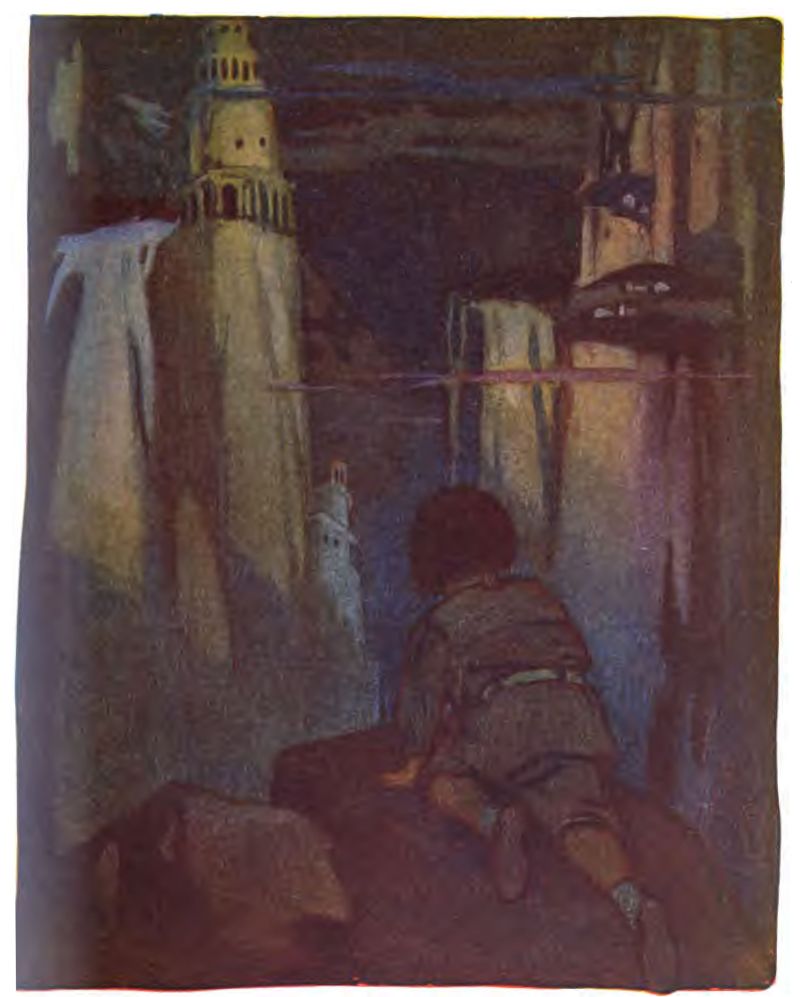
“There are many streams to be seen.
Sometimes I sail on them.
[Pg 15]
Sometimes I walk beside them.
Then there are high mountains.
They are the mountains of dreams.
I often climb these mountains.
All kinds of good things are in the land of Nod.
There are strange things to eat and strange things to see.
And, Nursie, there are some things that frighten me.
I cannot tell you about these frightening things.
But I do wish I could tell you about the music I hear there.
It is the most curious music.
It is so beautiful and so sad.
I hear it plainly in the land of Nod.
But I cannot remember it when I come back to you.
The land of Nod is a strange land.
It is the land where dreams live.”
“Why do you never go to this strange land by day?”
“Nursie, I often try to go by day.
But I never can find my way.
Only at night when I am asleep, can I sail to the strange land of Nod.
Only in my dreams can I see the little streams and high mountains.
All day from morning till night I must stay here.
[Pg 16]
But every night I get into my boat and sail away to the land of Nod.”
When Louis became a man, he still had many strange dreams.
He remembered these dreams and made them into stories.
When you are older you will read them.
Some tell about the strange things and strange people.
Some tell all about beautiful things.
Some tell about the “frightening things” he saw.
I know you will like them all.
[Pg 17]
[Pg 18]
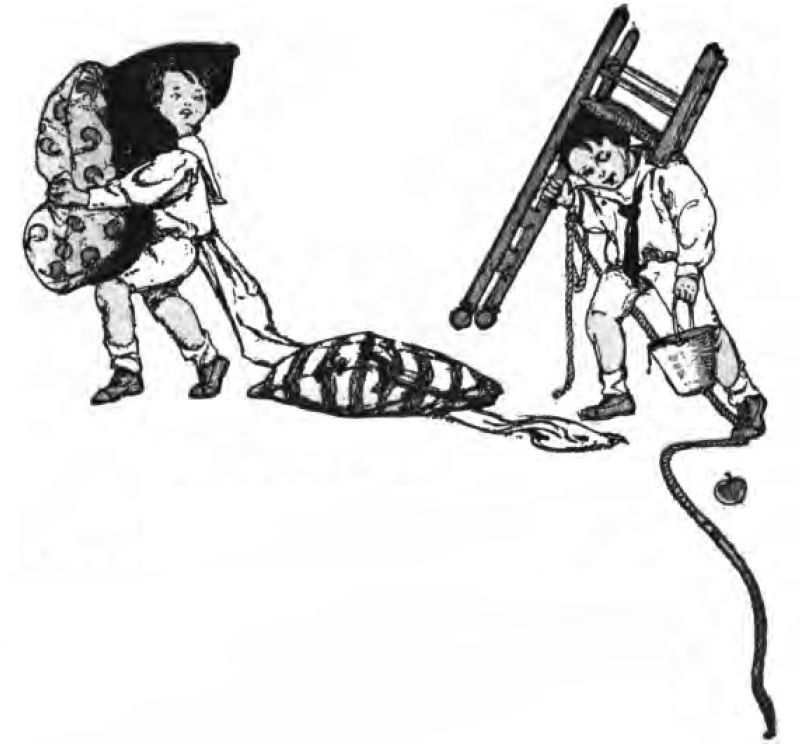
Sometimes Louis could not go out to play.
Then he made up a game to play in the house.
One day his cousin Tom came to visit him.
They played every game they knew.
Then Tom said, “I wish we could go out to play.”
“But we cannot,” answered Louis.
“If we could go out, what would you like best to play, Tom?”
“Sailing boats,” answered Tom.
“So would I,” said Louis.
“Let us build a boat, Tom.”
“Where? In the house? A real boat, Louis?”
“No, a make-believe one.
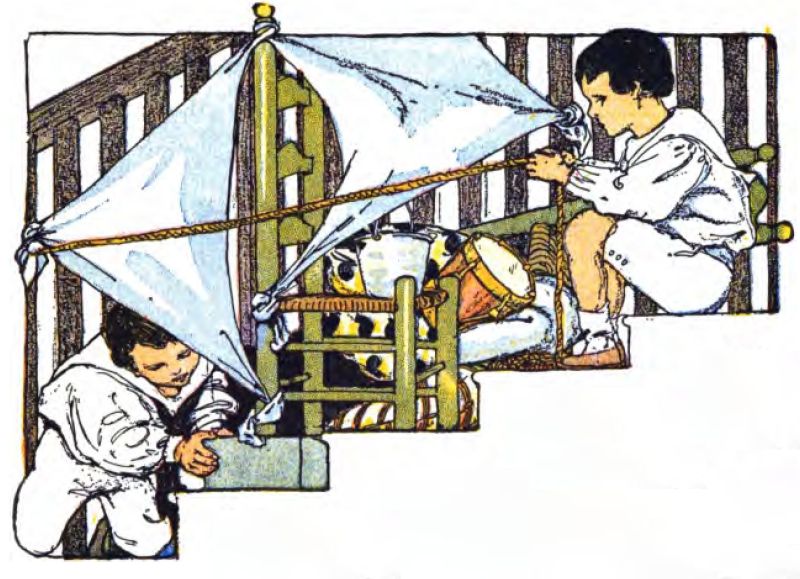
We can build it on the back stairs.”
“Of what shall we build it, Louis?”
“Chairs,” answered Louis.
“Go get all the chairs from the back bedroom.
I will run and get some sofa pillows.
They will make fine cushions for our boat.”
Soon the boat was built.
“All aboard!” shouted Tom.
“What are you thinking of, Tom?” asked Louis.
“Sailors do not sail for miles and miles and days and days in an empty ship, do they?”
[Pg 19]
“What shall we take with us, Louis?”
“Suppose the ship should leak when we are miles from land.
What would we need then, Tom?”
“Tools to mend it,” answered Tom.
“Yes, so let us get some tools to take with us.”
The boys found some nails and a saw.
These they put into the boat.
“Now, are we ready to sail over the billows?” asked Tom.
“The water of the sea is salt.
I know, for I tasted it when I was at the sea-shore.
We cannot drink it.
So I think I will get some water in a pail from the nursery,” answered Louis.
“I am always thirsty when I am sailing.”
“Yes,” said Tom, “and we cannot sail for miles and miles without getting hungry.”
[Pg 20]
The boys filled the nursery pails with water and carried them to the boat.
Then they went down stairs for something to eat.
They got an apple and a slice of cake.
“This is enough for you and me, Tom.
We shall want nothing more till tea-time.”
The lads climbed into the boat and sailed away.
They sailed, they said, for days and days.
The apple, the cake and the water were soon gone.
It was the very best of play!
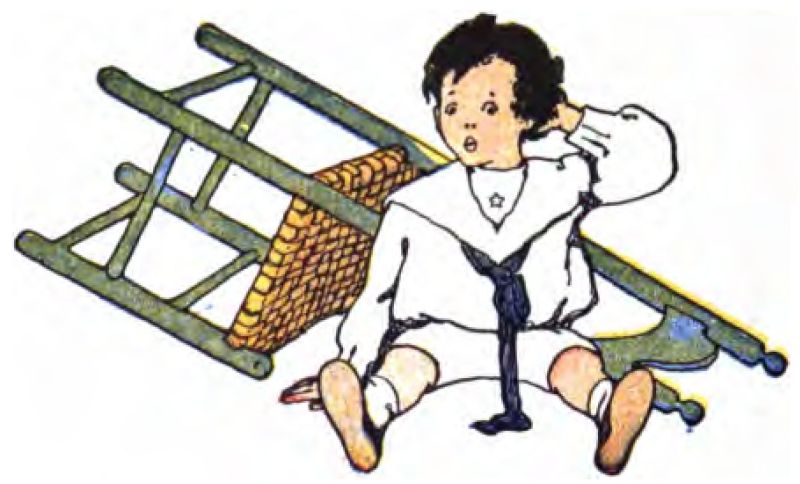
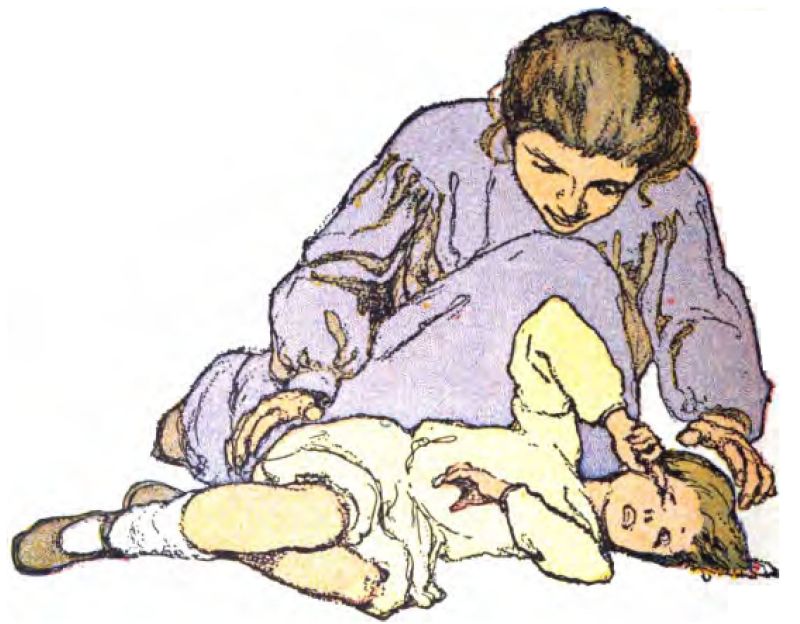
They were having a fine time till Tom fell out of the boat.
He did not get drowned.
But he must have thought the billows were hard, for he hurt his knee.
So Tom would play no longer.
There was now but one sailor left.
He did not like to sail alone, so he too came ashore.
And the play was ended.
[Pg 21]
[Pg 22]
You know Louis liked to play with boats.
His bed he called a boat.
He built a boat of chairs on the stairs.
Often he sailed little boats on the river.
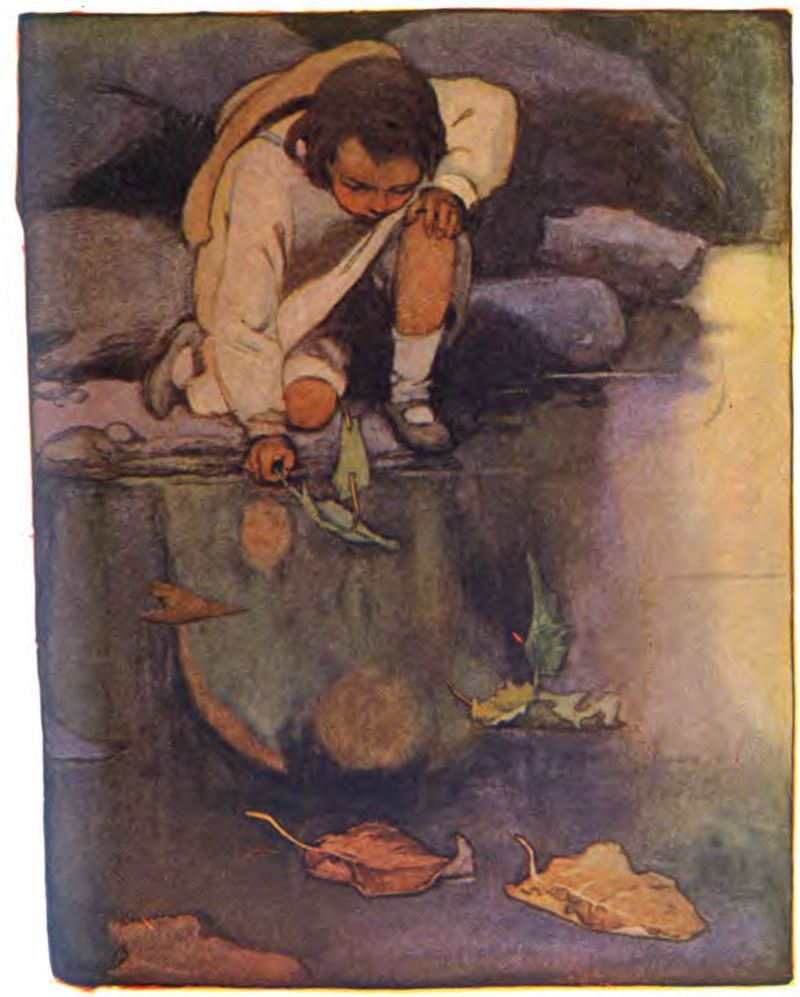
Sometimes he played that large, green leaves were his boats.
“See, Nursie,” he would call, “what a fine fleet of boats I have.
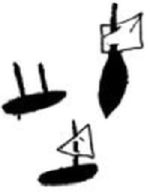
They are all painted green.
I call them my Green Fleet.
Do you know who painted them?”
“Did you paint them, Louis?”
“No, Nurse; try again!”
“Did Bob?”
“No, no! Try once more.”
“Then it must have been Tom.”
“You have not guessed the right one yet, Nurse.
Will you give it up?”
“Yes, my child, I give it up.”
“Why, it was Mr. Sun,—a very good friend of mine,” laughed Louis.
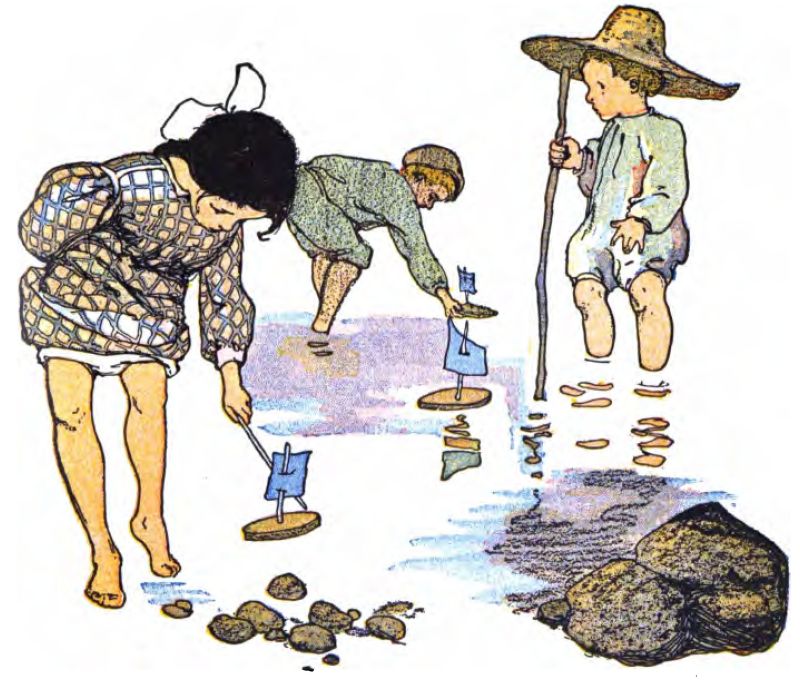
Sometimes the boy used chips for boats.
He often put little stones, or berries, or bright flowers on them.
“This is my Tree Fleet, Nursie.
[Pg 23]
[Pg 24]
These ships are sailing to the Far-away lands.
They are loaded with all kinds of good things.
How glad the little children of those lands will be to see my ships come in!
O Nursie! I wish I were big and strong enough to go to the Far-away lands, too!”
And it may be the nurse would answer, “So you shall, some day, dearie.”
“But, Nursie, when will my ships all come home again?”
“After they have sailed to the Far-away lands and left all the good things they carry.”
“And what will they bring back to me?”
Then Nurse would tell him of the strange things that come from the Far-away lands. And the boy would again wish that he might visit them.
Sometimes he had pretty little toy-ships given to him.
I am sure when he saw their white sails he would call to his nurse, “This is my Bird Fleet.
My ships fly over the water like birds!
See, their sails look like white wings!
O Nurse! Do you think I shall ever sail in a big ship over the water to visit the strange lands?”
We know the kind nurse would again answer, “Yes, my child, when you are older.”
If some of his ships floated out of sight, away down the river, do you think he cried?
[Pg 25]
No, indeed!
“Never mind, Nurse! Do not try to get them,” he would say.
“They will float down the river away past the mill.
They may float a hundred miles or more.
Then they will come ashore.
Perhaps some other little children will find my boats.
Do you think they will like to play with them, Nursie?”
[Pg 26]
When the boy grew tired of his boats, his nurse would call him.
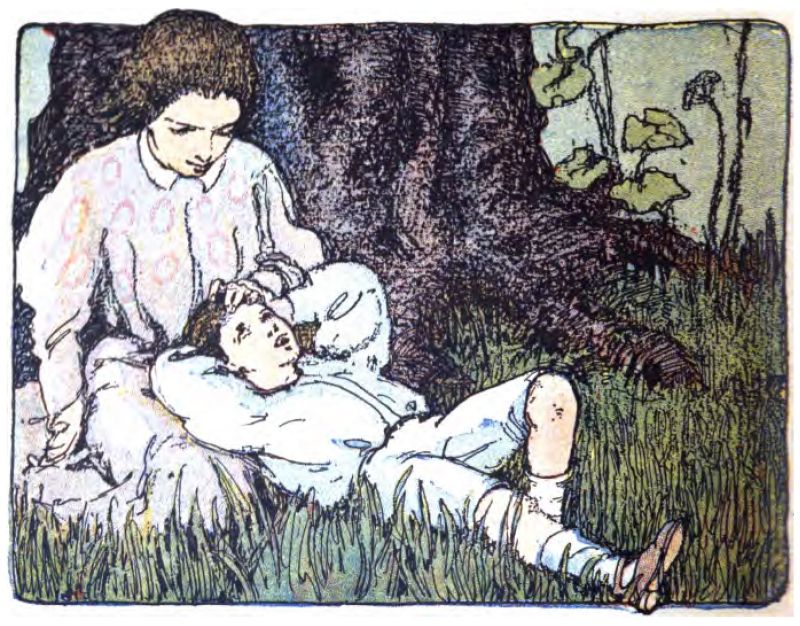
“Come, laddie, rest awhile, and I will tell you a story about a boat.”
There beside the brown river, under the tall trees, the boy rested and listened to some strange story of the sea.
I do not know what story the nurse told Louis, but I think you will like the one I shall tell you.
[Pg 27]
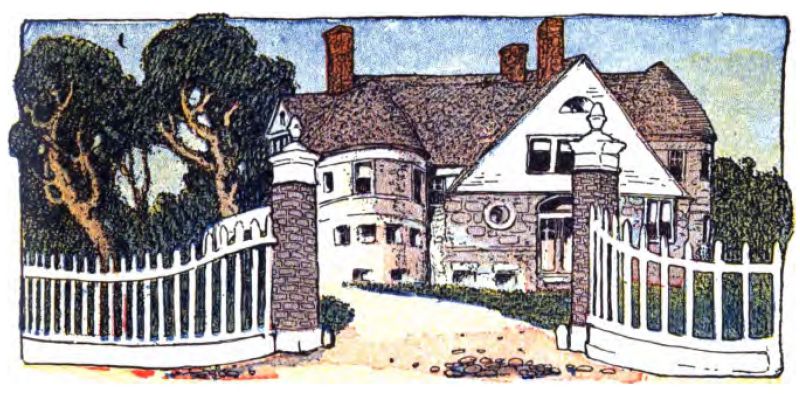
Tom and Alice lived in a beautiful house in the country.
They had a large garden where they played.
A river flowed through one part of the garden.
This was the children’s best-loved play-ground.
In summer they played “Indians” under the trees, or floated their toy-boats on the water.
One morning their grandmother came to visit them.
The children were happy, for they loved their grandmother very much.
She knew how to tell stories—just the kind of stories the children liked best.
She told stories about Indians and fairies and other strange people.
[Pg 28]
When she came to visit, she always brought a pretty present to each child.
This time, she brought Tom a large toy-sailing ship.
To Alice she brought a beautiful new doll.
These were just what the children had been wishing for.
After they had thanked their grandmother, the children ran down to the river, to try the new boat.
Alice took her new doll with her.
Tom tied a strong cord to the boat so that it could not get away.
It sailed out like a white-winged bird over the water.
Tom ran along the shore holding the cord.
“Look, Alice!” he cried, “see how well she sails.
She is the best boat I ever had.
Let us put your new doll aboard.
We will give her a fine sail.”
“I am afraid she will get drowned, Tom.”
“Oh, no! I will hold the cord; and you see, this boat cannot tip over.”
“But she might get her dress wet.”
“No, for my boat is so big, the water cannot go over it.”
“Well, she may go for a little sail,” said Alice.
Tom pulled the boat to the shore and Alice put her new doll on board.
[Pg 29]
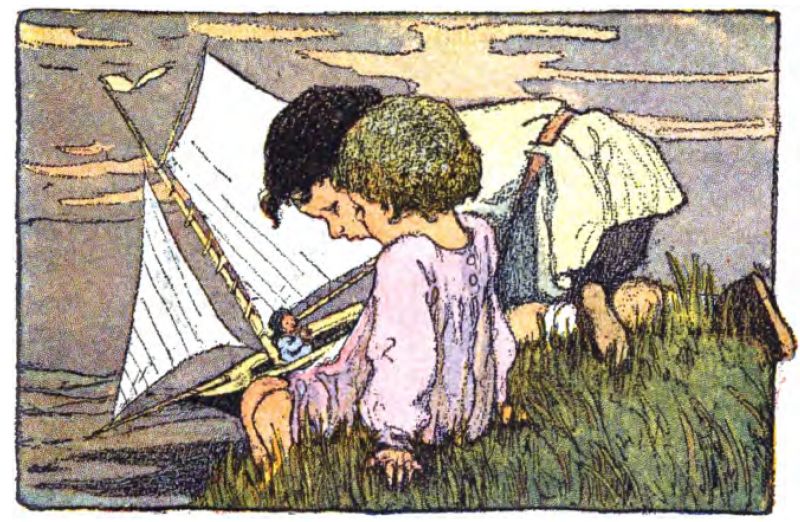
Now the boat seemed to go faster than before.
“I am sure my doll is having a fine time,” said Alice.
“I wish I were small, too, so that I might go with her.”
The boat sailed out into the middle of the river.
All at once, the cord slipped from Tom’s hand. Away went the boat! Faster and faster down the stream!
“O, my doll! My beautiful doll! She will drown! I know she will!” cried Alice.
“My boat! My new boat! It will float a hundred miles down the river! It will never come back! I have lost my new boat!” cried Tom.
The children ran to the house to tell their grandmother the story of the lost toys.
[Pg 30]
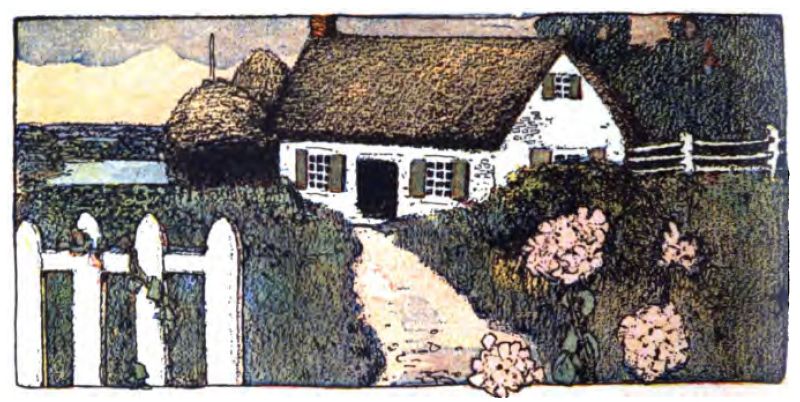
A mile down the river stood a little house.
A very poor woman lived in this house.
She had two little children, a boy and a girl.
Nell, the little girl, was lame.
All day long she had to stay in bed.
Still she tried to be cheerful and happy.
Only one thing she always was wishing for.
“O mother!” she would say, “if I only had a doll, how happy I should be!”
“My child,” her mother would answer, “you know I would buy you a doll if I could.
We are too poor, dear.
Mother is sorry that she cannot buy a doll for her little sick girl.”
“Never mind, mother! I have you and brother Will.
[Pg 31]
I do not need a doll to make me happy.”
“When I grow to be a man, Nell, I will buy you the finest doll in the world,” said Will.
“Thank you, dear.
But you know when you grow to be a man, I shall no longer be a little girl.”
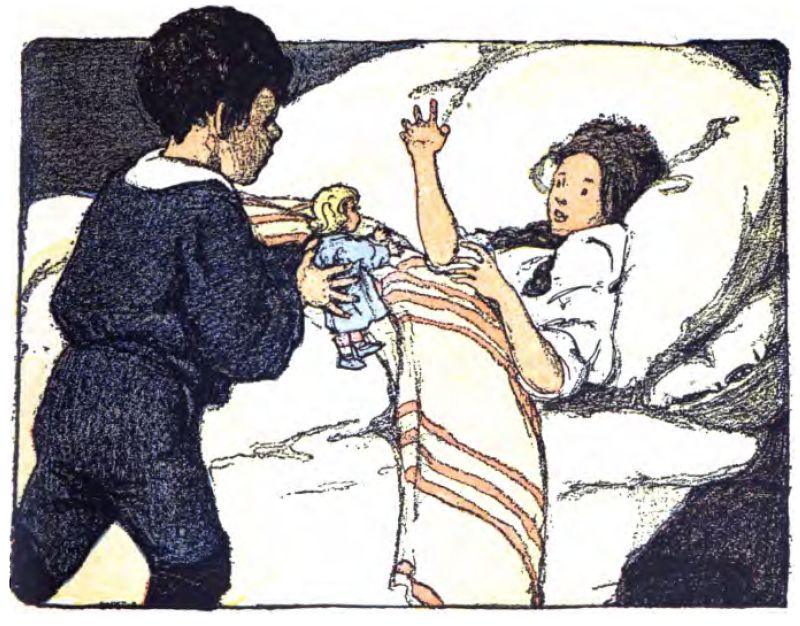
One summer day, Will rushed into the house.
He had a beautiful doll in his hand.
“O Nell! Nell! See what I have for you!” he cried.
[Pg 32]
Nell took the doll in her little, white hands.
I wish you could have seen how happy the poor child was.
“Is it for me, Will? Where did you get it?”
“It came sailing down the river in a fine new boat.
The doll is for you, and the boat is for me.
It came ashore near our house.
What fun we will have with our new toys!”
“Children, I am afraid you cannot keep the toys,” said mother.
“Some children must have lost them.
I think they may belong to Tom and Alice who live in the big house up the river.
Will, you must take them back.”
Nell’s eyes filled with tears as she looked at the beautiful doll.
“Mother, if I take the boat back, do you think Nell may keep the doll?” asked Will.
“No, Tom. The toys do not belong to us.
You must take both back.
I am sorry for you, children, but we must be honest.”
Nell kissed the beautiful doll and handed it to Will.
Then she hid her face and cried as if her heart would break.
Slowly Will carried the toys to the big house.
He found Alice, Tom and Grandmother in the garden.
[Pg 33]
When they saw Will, the children shouted, “There is my doll!” “There is my boat!”
Will gave the doll to Alice and the boat to Tom, and turned to go home.
“Wait,” said grandmother. “Tell us how you found the boat.”
So Will told them the whole story.
“I saw this boat sailing down the river,” said Will.
“It came ashore near my home.
I ran with it to the house.
I wanted to show it to my little sister, Nell.”
When Will came to the part about his little lame sister, he could hardly speak.
Alice was crying.
“The poor little lame girl!” she cried.
“She has no doll, and I have ever so many!
Here, little boy, give her this doll with my very best love!”
Tom did not say anything, but he put his new boat into Will’s hand, and Will knew Tom wanted him to keep it.
How he thanked the kind children, Will does not know to this day.
It was a very happy Will who ran all the way home. And it was a very happy Nell that kissed the beautiful doll, that was now her very own.
But I think Alice and Tom were just as happy.
Don’t you?
[Pg 34]
[Pg 35]
Sometimes Louis was sick and had to stay in bed all day.
Then nurse would put two pillows under his head.
All his toys were put on the bed beside him.
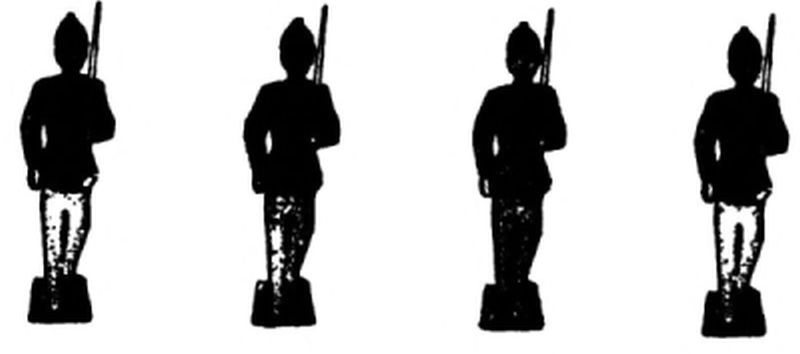
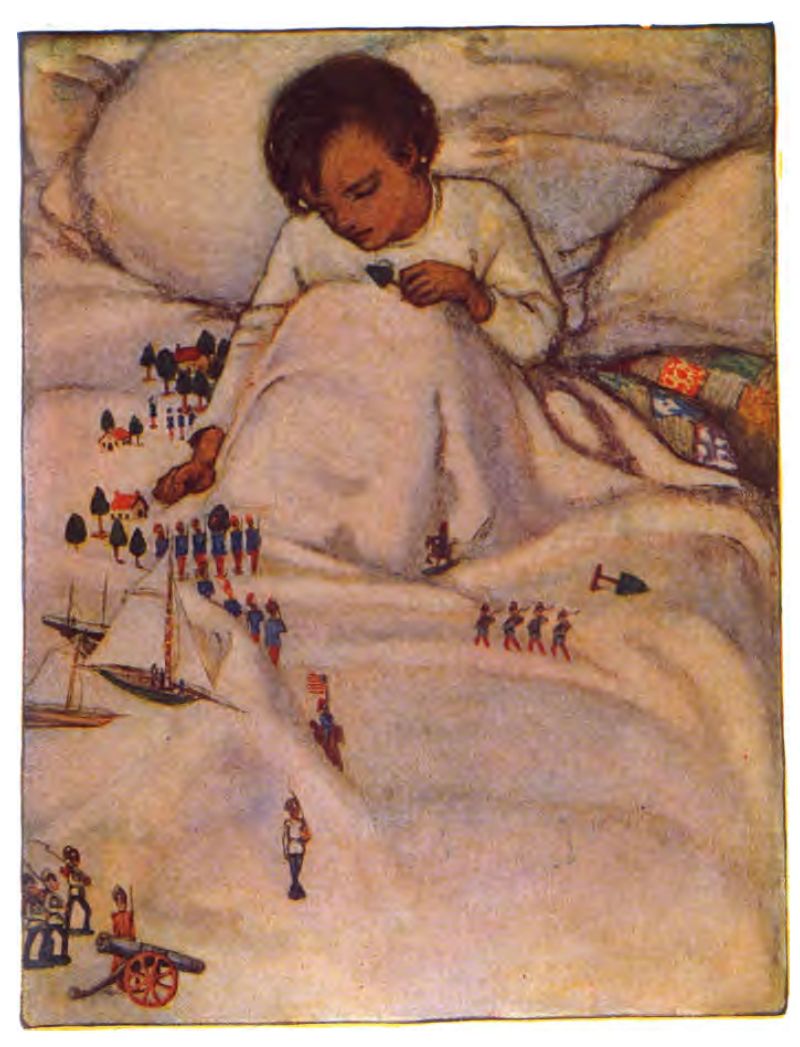
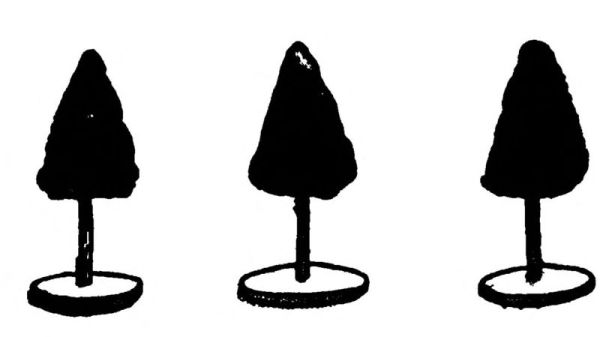
He had a large box of leaden soldiers, a box of tiny ships, and a box of toy houses and trees.
“Now, Nursie, I shall play that my pillows are a big hill.
I am the great giant that lives on Pillow-Hill.
My bed is the Land of Counterpane.
Everyone in the Land of Counterpane must obey the great giant of Pillow-Hill.
Watch my leaden soldiers!
See their fine uniforms!
I will show you how well they can drill.”
The soldiers stood in fine rows.
Their uniforms looked bright and new.
They looked like real soldiers drilling.
Sometimes Louis made hills of the bedclothes and made his soldiers march among them.
When he grew tired of his soldiers, he would call his nurse.
“Come, Nurse, come and see how strong the giant of Pillow-Hill is.
[Pg 36]
See all these soldiers!
Do you think I am afraid of them?
Watch them run when they see the great giant of Pillow-Hill coming after them.”
Then he would throw them all into their box.
“See, Nurse, how the giant frightened them all away!
They have gone from the Land of Counterpane.”
Next, he would take his tiny ships from their box.
“Now, Nurse, I shall make believe there is a big sea in the Land of Counterpane.
See my ships sail over the sea!
Have I not a fine fleet?
These ships are great and strong.
They sail miles and miles through the land of Counterpane.
I shall send them to you, Nurse.
Then you must send them sailing back to me.”
So the ships were sent sailing up and down among the sheets.
When Louis grew tired of this, he had a different play.
“These ships are great and strong, but they are not as great and strong as the giant of Pillow-Hill.
I can blow them all over into the sea.
Watch me, Nursie; I can blow like a strong wind.”
He blew and blew till every ship was blown over.
Then nurse put them all away in their box.
[Pg 37]
[Pg 38]
There were no more ships in the Land of Counterpane.
“It’s time for another play, Nurse.
Let us open the other box.
Now we will build a city.
Put the houses up and down in streets.
I will plant the trees in rows before the houses.
Now, Nursie, is not that a fine city?
See what long, straight streets we have.
How tall the trees look.
It is as fine as a real city.
I shall call it Counterpane Town.
It all belongs to me, the great giant of Pillow-Hill.
What good times we have, Nursie, in my pleasant Land of Counterpane!”
So the dear child would play all day in bed.
He forgot it was a bed. It was his dear Land of Counterpane.
[Pg 39]
[Pg 40]
Leerie is the name the children in Scotland call the man who lights the street lamps.
“Leerie” means lighter.
Every evening, just as it begins to get dark, the lamplighter goes through the town.
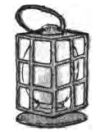
He carries a ladder and a lantern.
When he comes to a lamp-post, he places his ladder against it.
Then he climbs up and lights the lamp from his lantern.
So through the town he goes lighting all the lamps.
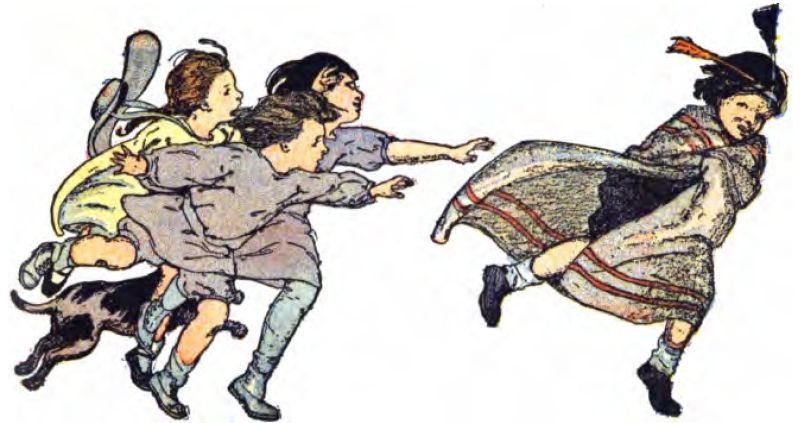
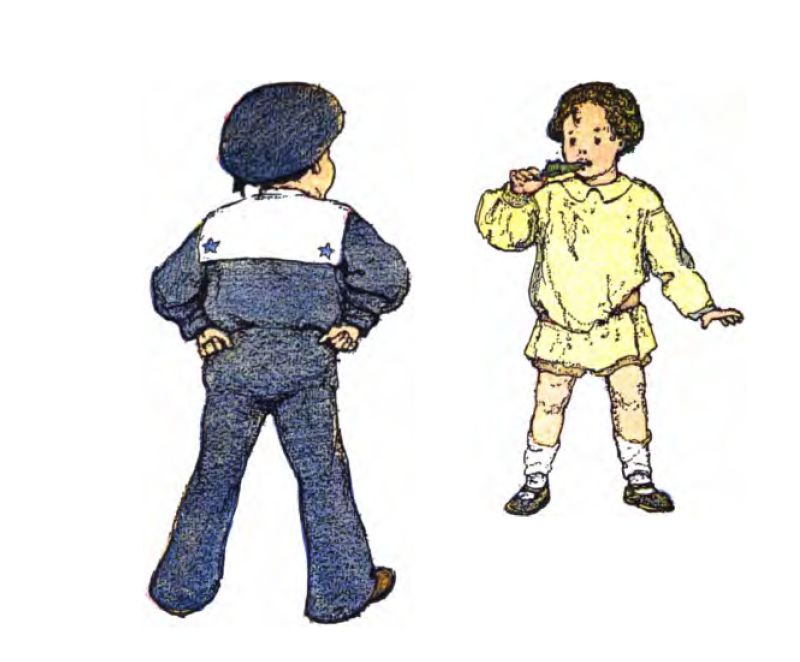
Often a crowd of boys follow him, calling,
Sometimes this makes the lamplighter angry.
He drops his ladder and chases the boys.
Just in front of Louis’s home was a lamp-post.
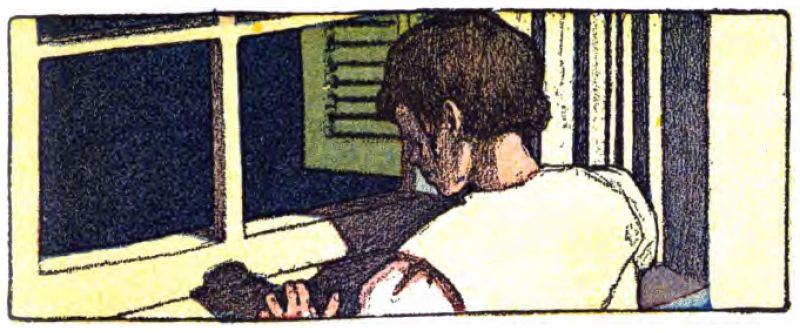
Every evening as soon as it began to get dark Louis ran to a front window.
There he would watch for the lamplighter.
He could not follow Leerie with the other boys and he never teased him.
[Pg 41]
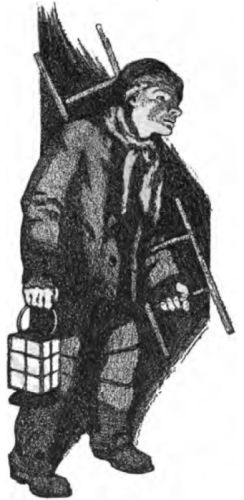
When the lamplighter came Louis nodded and smiled to him.
He liked to watch Leerie light the lamp before the house.
I hope Leerie always looked up and saw the lonely little lad.
Perhaps he did and nodded to him.
Or, better still, perhaps he waved his bright lantern to Louis before he hurried down the street to light the other lamps.
Louis thought it must be great fun to be a lamplighter.
I think he told his nurse about it.
Perhaps he said, “Nursie, don’t you think it must be fine to be a lamplighter? I do.”
“But why, my child?”
“Well, you see, if we had no lamplighter, the town would all be dark.
I don’t like the dark.
It is good to make the town light for all little children.
[Pg 42]
Just think, Nursie, of coming into a street and finding it all dark.
Then as Leerie passes along with his ladder and his lantern, it all becomes light.
I had rather be a lamplighter than anything else in the world.”
“But, laddie, you told me the other day that you wanted to sail to the Far-away land.”
“So I do, Nursie.
But don’t you think I might go around, just once, and light the lamps with Leerie?”
Perhaps some night Leerie did take the little boy around with him.
Perhaps he often let him light the lamp before the door.
I hope so. Don’t you?
[Pg 43]
1
2
3
[Pg 44]
I told you that Robert Louis Stevenson wrote many poems for children.
Once a mother gave a book of Mr. Stevenson’s poems to her little son Willie for a birthday present.
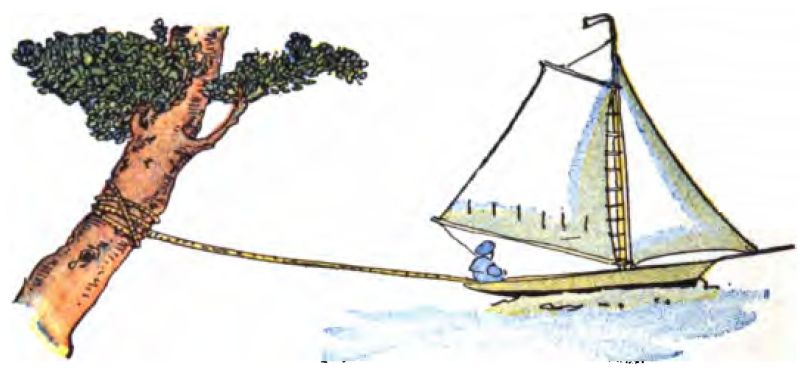
His father gave Willie a little boat.
It was a beautiful boat with large white sails.
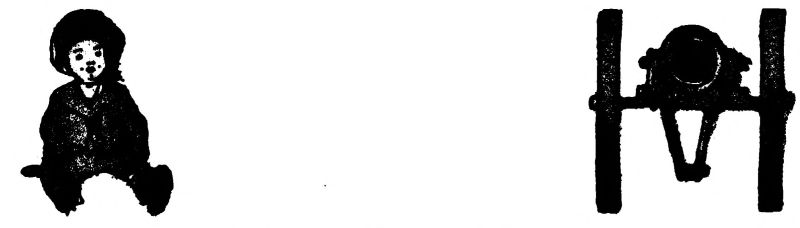
A little doll dressed like a sailor stood at the helm.
Willie’s mother read him the little poem you have just read, “My Ship and I.”
Willie thought it was the best poem he had ever heard.
He said, “Mr. Stevenson means me and my boat, I know.”
One warm summer afternoon he went down to the pond to sail his new boat.
He tied his boat by a long string to a tree near the water.
[Pg 45]
Then he pushed it out from the shore and lay down under the tree to watch it sail.
As he watched, he said over and over to himself the words of Mr. Stevenson’s poem.
“Wouldn’t it be fine,” he thought, “if the doll at the helm of my ship could become alive?
Then if I could grow as small as he is, what fun we would have sailing on the pond.
We could sail to that island and land upon it.
I believe fairies live there.
But there is no use wishing, for such things cannot come true.”
“Why not?” asked a small voice near by.
Willie looked down.
There near the shore was his ship; and—could it be true?—Yes, the doll at the helm was steering the boat!
“It can’t be true! It can’t be true!” said Willie to himself.
“Why not?” asked the voice again.
Willie was looking right at the doll and saw that he was the one who said, “Why not?”
“Are you really alive?” asked Willie.
“Alive!” answered the doll-sailor. “Who says I am not? Of course I am alive!
Are you alive yourself, you big boy?”
“I—I—I think so,” answered Willie.
“Then come for a sail, big boy.
The water is fine to-day.”
[Pg 46]
“But how can I?” asked Willie. “I am too large.
I should sink the boat.”
“That’s so; so you would,” said the doll-sailor.
“Wait here till I come back.”
Quickly he turned the ship about and sailed over to the little island.
Willie saw him land, then go on board again, and turn his ship toward the shore.
Soon he sailed back to where Willie stood.
In his hand he held a tiny leaf.
“Eat this,” he said, handing the leaf to Willie.
As soon as he put the leaf into his mouth, the ground seemed to rise with a rush.
[Pg 47]
At first Willie thought he was falling; but no! he was still standing firmly.
“How do you feel now?” asked a voice at his ear.
Willie turned toward the voice.
There stood the doll-sailor; but how different he looked!
“Why, you are as tall as I am!” said Willie.
“No, you are as short as I,” answered the doll-sailor.
“The leaf you ate was a fairy leaf and made you grow small.
Now will you come for a sail with me?”
Sure enough! Willie was now the same size as the doll-sailor.
The ship seemed very large to him now.
“Thank you,” answered Willie, “I shall be pleased to sail with you.”
As soon as they went aboard, the doll-sailor said, “Where shall we go?”
“To the island where you found the fairy leaf,” said Willie.
“Very well! I’ll take the helm.
You fire that penny cannon at the bow to let the fairies know we are coming.”
Willie did as he was told.
“Bang! Bang!” Dear me! What a noise that cannon made!
And how it set the ship rocking!
[Pg 48]
Willie had never heard such a din, or felt so badly shaken up.
Shake! Shake! Shake!
Bang! Bang! Bang!
He rubbed his eyes and looked up.
He was still under the tree beside the pond.
His mother was bending over him and shaking him, and saying, “Wake up! wake up! It is supper-time.”
His dog was barking loudly at the toy-boat, still sailing on the pond.
“Oh!” said Willie, as he rose from the ground. “I dreamed it all. But it was a lovely dream!”
[Pg 49]
When Robert Louis Stevenson was a boy, he lived in Scotland.
There the summer days are very long.
It is often quite light at ten o’clock at night.
At eight o’clock, bedtime for Louis, it seemed like daytime.
Of course, Louis did not like to go to bed then. Would you?
Just think of going to bed before the little birds!
In Scotland the winter days are very short.
[Pg 50]
Often it is only light from nine in the morning till four in the afternoon.
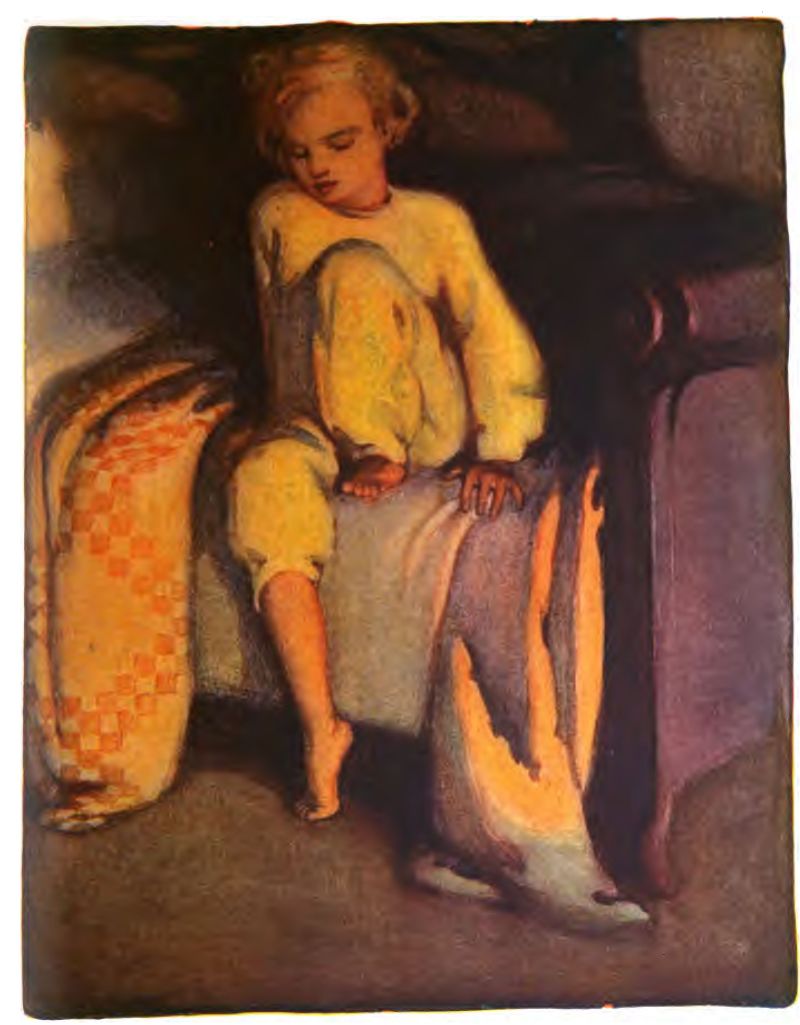
Then, when Louis arose in the morning, it was dark.
It seemed like the middle of the night to the little boy.
The room was cold, for the fire had just been started.
But he sprang up quickly.
Nurse had to light a candle so he could see to dress.
But Louis did not seem to mind getting up in the dark.
What he did dislike was going to bed in the daytime.
I don’t blame him much. Do you?

[Pg 51]
[Pg 52]
[Pg 53]
[Pg 54]
[Pg 55]
Louis loved stories.
His mother and his nurse told him many wonderful tales.
When Louis was alone he often thought of these stories.
He sometimes played that the stories were all true.
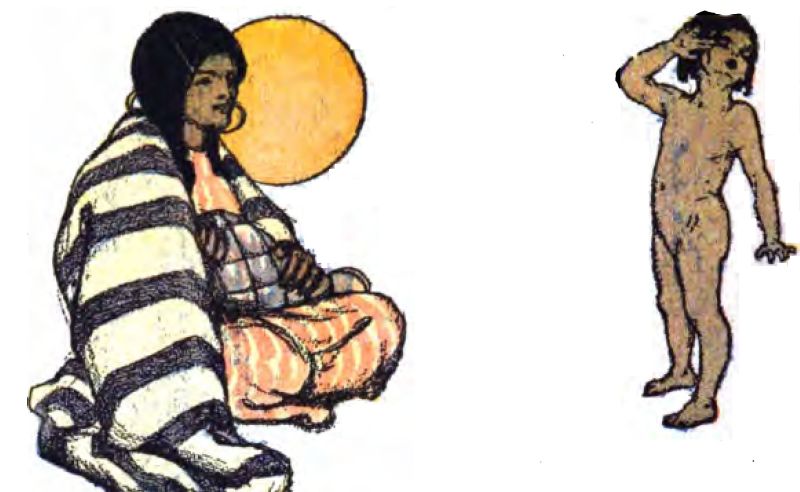
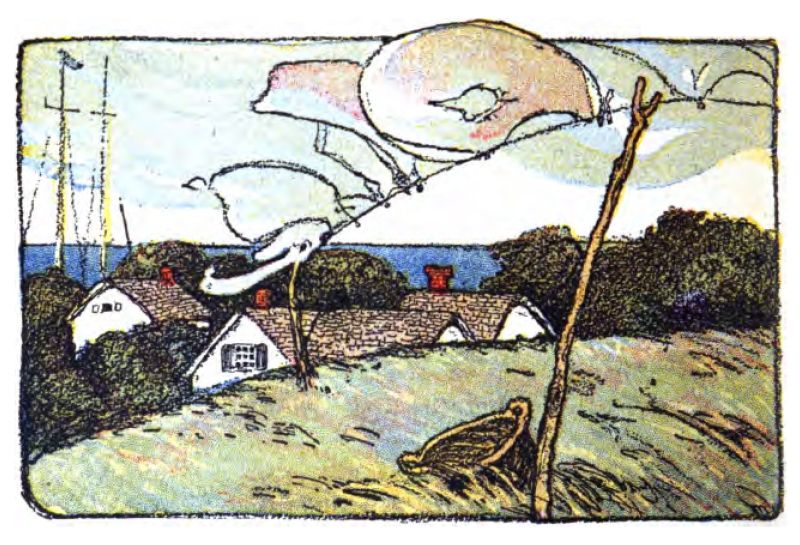
At night, when the moon and stars were hidden, he listened to the wind.
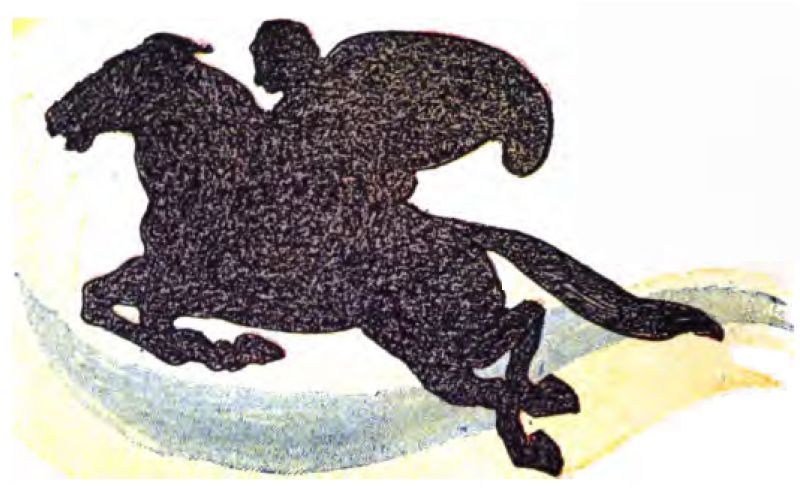
“It is a man riding by in the dark and wet, Nursie,” he would say.
“All night long he rides.
Do you not hear him galloping by?”
I think his mother or nurse may have told him the story of the Wind King.
Perhaps that is why he said he heard a man galloping by.
Do you know the story of the Wind King?
Mothers away across the sea tell it to their children.
“Listen to the wind, little ones!” say the mothers.
“When the wind is high the Wind King is galloping by.
He gallops over the land and the sea.
He rocks the birds in their nests in the high trees.
[Pg 56]
He tosses the ships on the sea.
All night he gallops about.
He rides a big black horse.
Good children never see him.
They hear only the galloping of his horse as he rides by.
But once long, long ago, there lived a very wicked man.
He did many wicked things.
Everyone feared him; nobody loved him.
One day he went into the woods.
He went from tree to tree, breaking the eggs in the pretty nests.
‘You will be punished for this!’ hooted a wise old owl.
‘The Wind King will punish you.’
‘Who is afraid of the Wind King? Not I!’ answered the man.
And on he went through the woods.
By and by it grew dark.
‘It can’t be night so soon,’ said the man.
‘It is going to rain, I fear.’
Just then he heard the loud roar of the thunder; then he saw the bright lightning.
‘I must get out of here quickly,’ he thought.
It grew darker and darker in the woods.
The faster the man hurried, the worse grew the storm.
He began to run.
[Pg 57]
He could not see where he was going, so he ran into the trees and hurt himself.
At last, tired out, he fell to the ground.
As he lay there, frightened and wet, he heard the galloping of a horse.
‘Here comes a man riding a horse; he will help me out,’ he thought.
Nearer and nearer came the rider.
Now the galloping sounded over his head.
The man looked up.
There, in the air, he saw a great black horse!
On his back rode a very tall man with shining black eyes and long dark hair.
On his head he wore a crown that flashed like lightning.
Quickly the horse came down to the ground.
Then the rider spoke in a deep voice that sounded like the roaring of the thunder.
‘Do you know who I am?’
‘Yes,’ answered the frightened man; ‘you are the Wind King.’
‘And do you know why I have come for you?’
‘Why?’ cried the man.
‘I have come to take you for a ride on my horse.
Hurry and climb up behind me.’
The frightened man did as he was told.
As soon as he had climbed to the horse’s back, he rose swiftly into the air.
[Pg 58]
How he galloped and galloped!
The man was too frightened to speak.
Soon they alighted on a high mountain.
The horse stamped with his great hoofs, the thunder roared, and the lightning flashed.
Then a door opened into the mountain.
In they galloped and the door closed with a noise like thunder.
‘Get down!’ thundered the Wind King.
The man did so, and looked about him.
He was in a large cave lighted by the flashing lightning.
The cave was almost filled with birds.
They were all sorrowing.
‘Why do you sorrow, my little birds?’ asked the Wind King.
‘Should we not sorrow, O King?’ answered the birds.
‘A wicked man has broken all our beautiful eggs.
There are no more happy nests in the woods.
We are man’s friends; we sing for him; we kill insects that harm his plants; we never do man any harm.
But one man has brought great sorrow to us.’
‘Which man?’ asked the Wind King.
‘The man you just brought into the cave,’ cried all the birds.
And every bird looked at the frightened man.
[Pg 59]
How sorry he was now!
How he wished he had never harmed the birds!
The Wind King spoke again in his deep, gruff voice.
‘Wicked man, why did you do this?’
The man was too frightened to answer, so the Wind King spoke to the birds.
‘Because this man has been so wicked, I will shut him up in this mountain.
[Pg 60]
Here he shall stay until he is sorry for what he has done.’
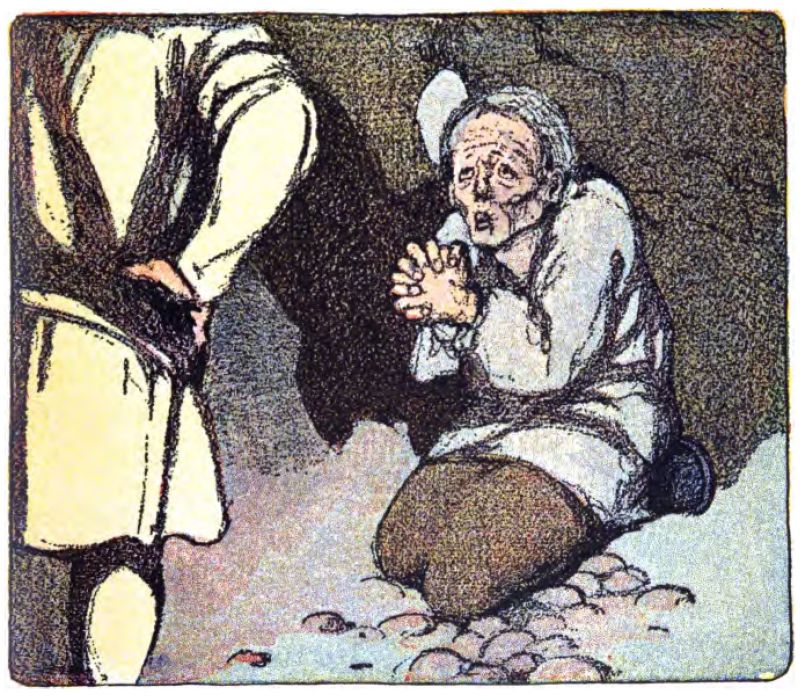
The man fell on his knees.
‘O Wind King! O dear little birds! I am sorry now!
Let me out and I will help the birds make new nests.
I will always be kind to the birds and I will tell others how to help them.
Forgive me, dear little birds, and after this I will be your friend, indeed!’
‘What shall we do with him?’ asked the King.
‘Let him go,’ sang all the birds; ‘we forgive him.
We think he will never be so wicked again.
And we love to see everyone happy.’
Before the man could thank them, the birds had all flown away.
The Wind King touched the man’s eyes and he fell into a deep sleep.
When he awoke he was in the woods once more.
Green trees were bending over him.
A bluebird sang as he built a new nest.
In every tree birds were busy at work.
‘How happy and beautiful they are!’ thought the man.
‘How could I ever have hurt such little things?
Hereafter I shall be the birds’ best friend.’
And, little ones, he kept his promise.”
[Pg 61]
1
[Pg 62]
2

3

[Pg 63]
[Pg 64]
Louis and his cousins have been spending the summer in the country.
It has been a long summer of out-of-door fun.
They have played among the flowers in the garden.
They have run races and played games in the fields.
Here, too, they have gathered the beautiful wild flowers.
Who, do you think, made up most of the games they played?
Down in the meadow they watched the cows feeding.
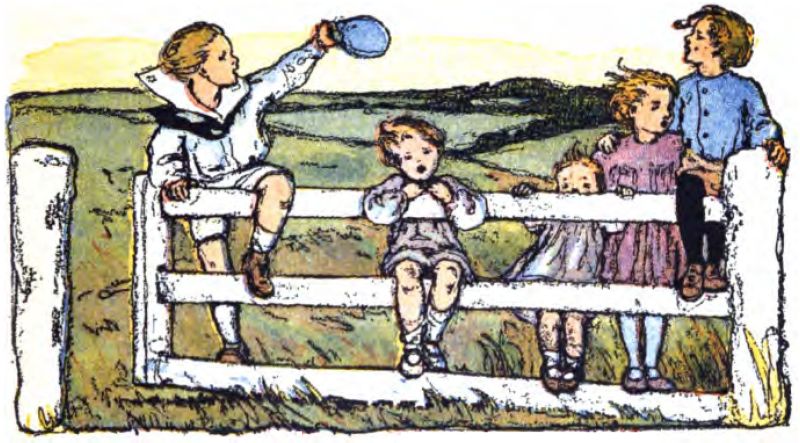
The meadow gates were so broad all the children could swing on them.
They visited the stable to see the horses.
Perhaps they rode them to work.
When the tired, thirsty horses came for a drink the children pumped the clear cold water for them.
They climbed the ladder into the hayloft.
There they found the nests the hens had hidden away.
Perhaps some days, when it rained, Louis went away alone.
The hayloft would be a fine place for the lad.
Here he could rest on the sweet hay.
[Pg 65]
He could hear the soft pitter, patter of the rain.
Just think what a fine place in which to plan new games or stories for his cousins!
The children knew every nook on the farm.
They knew and loved every animal.
It had been a delightful summer.
Now it is time to go home.
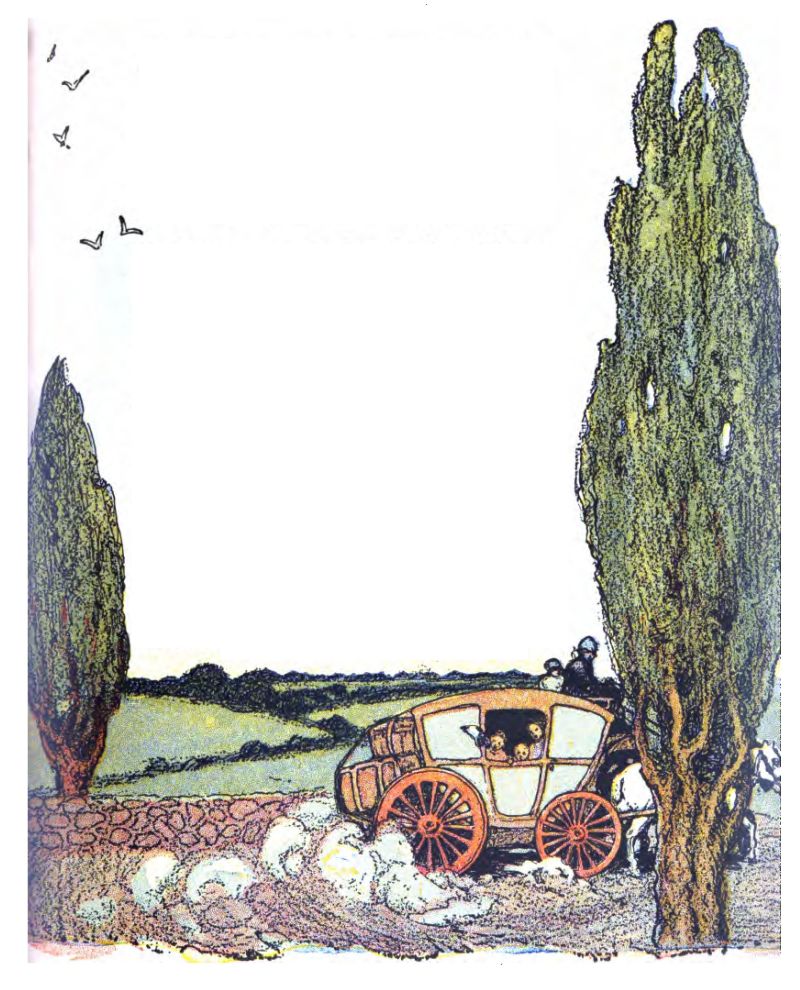
The coach is at the door.
The children have said “Good-by” to all the people and animals on the farm.
Quickly they climb into the coach.
From it, they wave good-by to the farm.
Listen to what each says!
“Good-by to the house and the garden!” cries one.
Another calls, “Good-by to the fields and the lawn!”
[Pg 66]
“Dear old meadow gates, good-by!” shouts another.
“Good-by to the pump and the stable!”
“Good-by to our swing in the tree!”
I think it is Louis who calls, “Farewell, ladder by the hayloft door!
Fare you well, O hayloft where the cobwebs cling.”
Then all the children shout, “Good-by, good-by to everything!”
“Crack!” goes the whip.
Off they start.
Soon the farm is out of sight.
The children think of the good times they have had all summer.
And once more they say softly, “Good-by, good-by to everything!”
Often in the long winter, Louis remembered the good times at the farm.
How he longed to be there again!
He thought of the quiet times he had enjoyed in the hayloft.
Perhaps he told his nurse the stories he made up as he lay in the sweet hay.
We know he loved the dear old farm and never forgot his good times there.
When he became a man he wrote the little poem you have just read.
This shows us he remembered the old farm.
[Pg 67]
[Pg 68]
[Pg 69]
Louis loved beautiful things.
He was always looking for them, and so he always found them.
In summer the bright flowers filled him with joy.
When they were gone he looked for something else that was bright and beautiful.
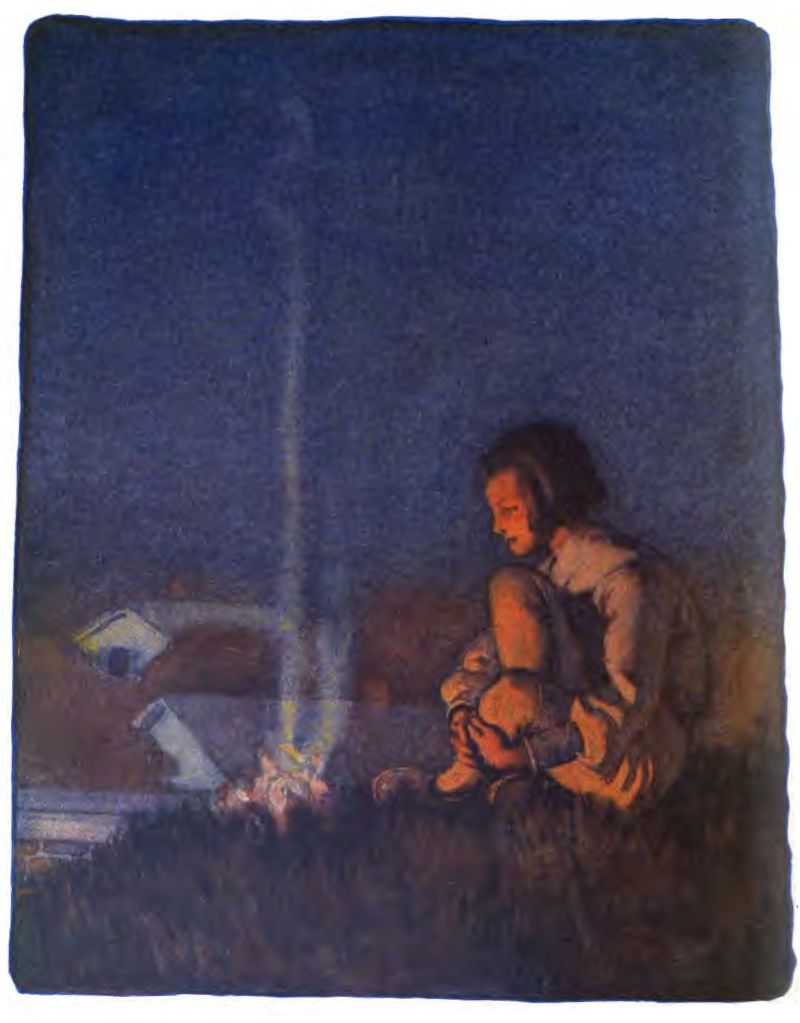
He found it in the autumn fires.
All boys like to burn the dry leaves in the autumn.
But they think only of the fun they have.
When Louis looked out at the fires, he saw that they were beautiful.
I think I can hear him calling to his nurse.
“Come, Nurse, see the red fire!
How it blazes!
And, Nurse, watch the soft, gray smoke.
See how it rises higher and higher toward the sky!
Now it trails far out like a soft, gray veil!
The fire is bright and the smoke beautiful!”
Louis said we had the bright flowers in summer and the bright fires in the fall.
He also said we had something bright in each season.
Can you tell something bright or beautiful to be seen in the winter?
[Pg 70]
Robert Louis Stevenson wrote these lines, also:
What did he mean?
Is the world full of beautiful things?
Can we see them as Louis did?
When he was a little boy at home, he looked for them and he always found them.
When he grew to be a man, he still found beautiful things all over the world.

[Pg 71]
1
2
3
[Pg 73]
[Pg 75]
Sometimes Louis visited his grandfather.
His grandfather and an aunt lived in the country.
Louis was very fond of them and they were very kind to the little boy.
His grandfather showed him how to play with his toy soldiers.
His aunt told him stories and bought many story-books for him.
At evening the family sat in a large room.
The grown-up people sat around the fire and talked or sang.
In the room was a large sofa.
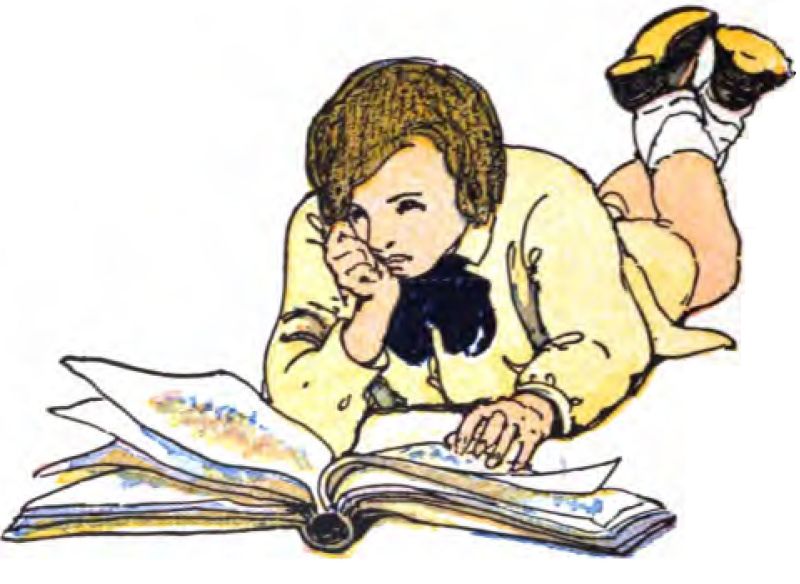
In the daytime Louis read his story-books on it.
At night he played his stories behind it.
The sofa had a high back.
Back of it there were always dark shadows.
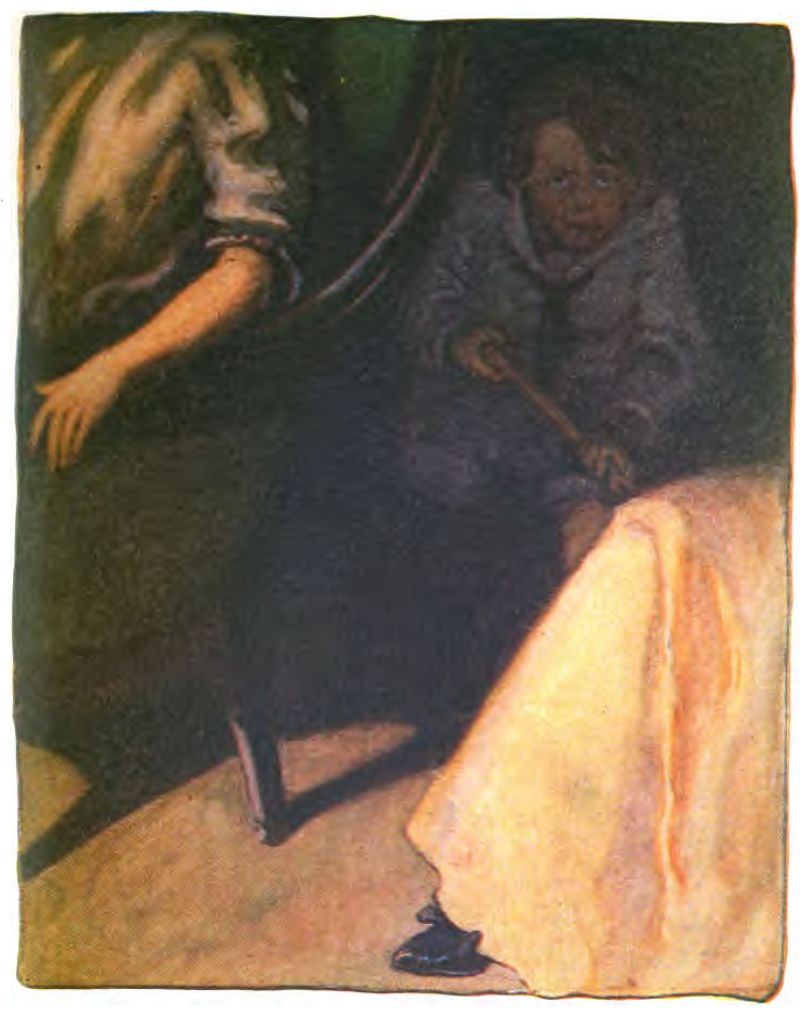
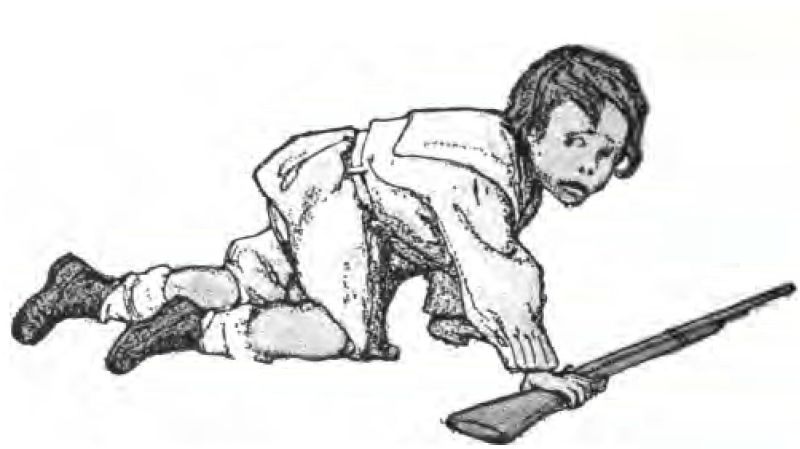
Taking his little gun, Louis would crawl along the wall to the place back of the sofa.
He called this place the forest.
There he would play the stories he had read in his book.
Sometimes he played he was a hunter.
He would lie quiet as a mouse looking right before him.
[Pg 76]
He was waiting for the roaring lions to come down to the river to drink.
I suppose he played he shot many lions and other wild animals in his own play-forest.
Sometimes he played he had a hunter’s camp behind the sofa.
No one could see him as he lay and looked up at the moon.
The lamp was his moon.
Again, he played that the grown-up people were white men in camp.
The fire was their camp-fire.
They were sitting around it laughing and talking.
They would not have laughed so loudly had they known Indians were near.
Yes, Louis was a wild Indian.
He crept softly around the white men’s camp.
Had he been a real Indian, and his gun a real gun, how easily he might have shot them all!
So all evening, without any other child to play with him, Louis played the stories he knew and loved.
When it was bedtime his nurse came for him.
How hard it must have been for Louis to forget that he was no longer a brave hunter, or an Indian scout!
How hard it must have been to remember he was a little boy once more!
Instead of shooting the white men in their camp, he had to kiss them and say, “Good-night.”
[Pg 77]
[Pg 78]
Then he took his nurse’s hand and went upstairs.
I think as he was getting ready for bed he told his nurse all about his play.
“O Nursie! I’ve had such fun to-night.
I was an Indian.
With my little gun I crawled to an encampment of white people.”
“Did you shoot anyone, laddie?”
“No, Nursie, just as I got near, you called and I changed from an Indian into your little laddie.”
Do you not think Louis knew how to play well?
Do you ever play stories you have read?
Try it sometime; it is great fun.
[Pg 79]
Robert Louis Stevenson lived way across the ocean in Scotland.
When he was a little boy he was often sick.
Sometimes he could not go out of doors for months.
He had to spend many long days in bed.
His father and mother were rich and very kind to their little son.
They gave him everything he wanted that was good for him.
They tried in every way to make him happy.
Besides, he had the kindest nurse that a boy could have.
She loved Louis as if he were her own child.
“I have two mothers,” Louis would say.
When the little boy was sick and had to stay in bed, his nurse played games with him.
Often she read to him or told him beautiful stories.
Sometimes in the night the little lad could not sleep for pain.
Then he was afraid of the dark, and of the wind.
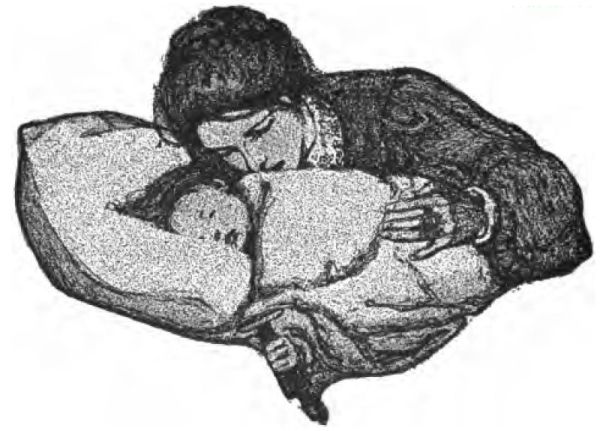
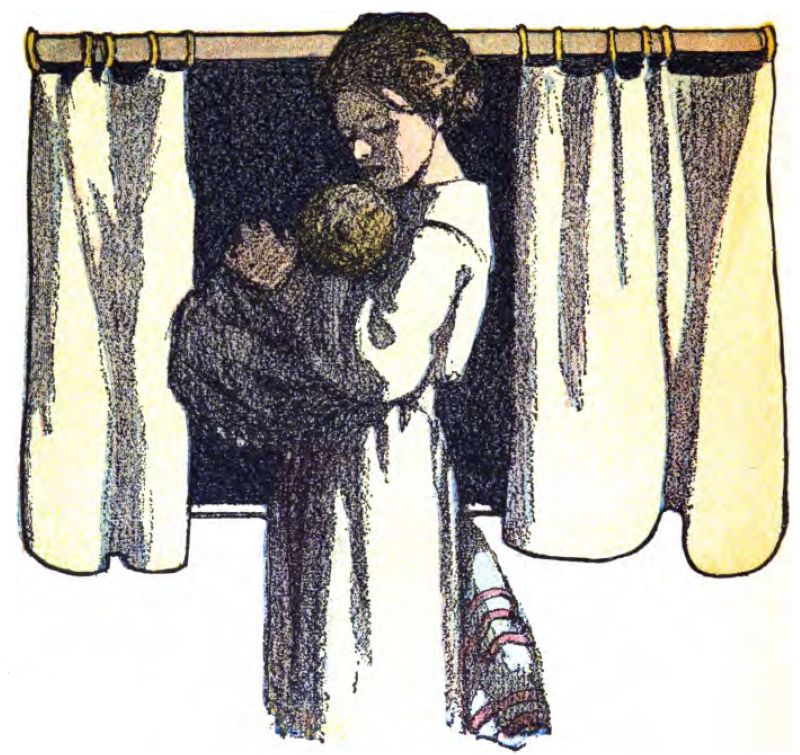
His nurse would wrap him warmly in a shawl or the bed clothes and carry him to the window.
“Look, laddie dearie,” she would say, “look at the stars.
[Pg 80]
They are bright.
It is always light somewhere in the world.
It will soon be morning and the pain will all be gone.”
So she would hold him fast and tell him stories or sing to him, till he forgot his pain and fell asleep.
[Pg 81]
Louis had no brothers or sisters, but he had many cousins who often came to visit him. These were his playmates.
He loved to play with other children.
I never knew of a boy who loved play more than Louis.
If he had no one else to play with, he played with his nurse.
Sometimes he made believe that his shadow was another little boy who played with him.
Sometimes he thought the wind was a big child playing out of doors.
When he went to bed at night, he made believe his bed was a boat.
“Good-by, Nurse,” he would say; “I’m going sailing into the Land of Nod.”
“Good-by, laddie. Don’t forget to sail back to your nursie.”
Even when he was sick and had to stay in bed, he turned it into a game.
His bed was the Land of Counterpane.
He was a giant who lived on Pillow-Hill.
He had many toys and he loved them all.
But best of all he loved his toy-soldiers.
Even when he was a man he always had a box of soldiers, and played with them.
When he heard the wind at night, he made believe it was a man riding by.
[Pg 82]
The roaring of the wind he called the beat of the horses’ hoofs.
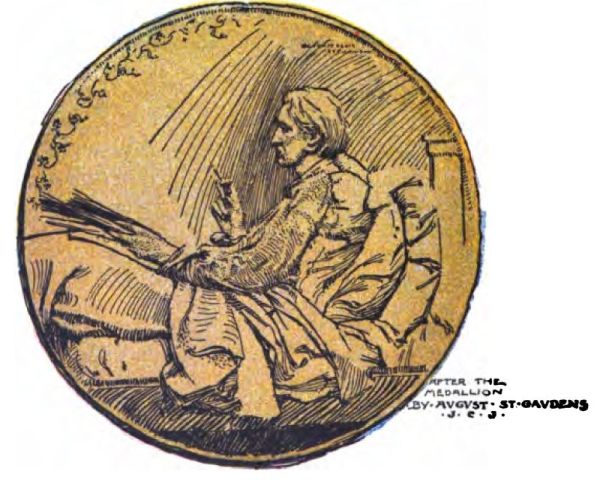
Always playing, always trying to be cheerful and happy, I am sure Robert Louis Stevenson must have been one of the dearest boys in the world!
Don’t you wish you could have played with him?
Would you not like to hear some of the wonderful stories he knew so well how to tell?
So you shall when you are older; for he has written many stories and poems for the children he loved so well.
Every poem in this book was written by Robert Louis Stevenson.
[Pg 83]
When Robert Louis Stevenson became a man, he still loved children.
He was always kind to them.
Whenever he could he tried to please them and make them happy.
One day he was sitting in a park in Scotland.
It was summer.
The birds were singing.
The flowers were all in bloom.
Mr. Stevenson saw a little boy lying under a bush.
The boy seemed very poor.
His clothes were ragged; he wore no shoes.
He was listening to the birds and did not know that a man was sitting just back of him.
Mr. Stevenson thought to himself, “How poor that child must be!
He looks so ragged and lonely.
Perhaps he is hungry, too.
I should like to do something to please him.”
He thought for a little while, then he said to himself, “I know what I will do!”
Stepping softly over the grass, so that the boy would [Pg 84]not hear him, he slipped a penny into one of the lad’s pockets.
Then softly he returned to his seat.
After a while the boy got up.
He stretched himself, then thrust his hands into his pockets.
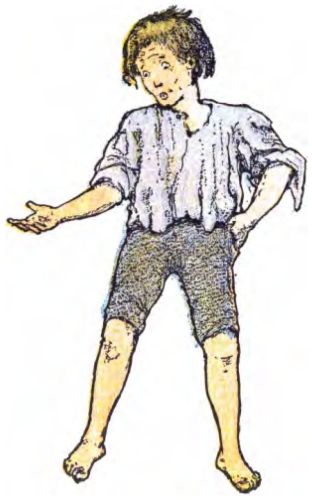
He started to walk away, but suddenly stopped, drew his hand from his pocket, and stood staring at the bright new penny.
Where had it come from?
Perhaps he thought a fairy had put it in his pocket.
He could not guess how it ever came to be there.
But his face showed how glad he was to get it.
His look of pleasure and surprise filled Mr. Stevenson with joy.
After the boy had hurried off to spend his wonderful penny, Mr. Stevenson smiled and started home as happy as the poor boy.
[Pg 85]
One winter evening, when Mr. Stevenson was a young man, he was hurrying home.
The wind blew loud, and cold.
Few people were on the streets.
Mr. Stevenson thought of the supper and warm fire waiting for him at home.
He drew his coat closer about him and hurried on his way.
Suddenly, above the roar of the wind, he thought he heard a low cry.
He stopped and listened.
But he could hear only the wind blowing among the bare trees.
Again he hurried on, and again he heard the same low cry.
Once more Mr. Stevenson stopped and listened,—this time longer than before.
Yes; sure enough, there was a sad little cry—the cry of a child.
Hurrying down a side street Mr. Stevenson found the little one.
She was lost.
It was dark and she could not find her way home.
The poor child was almost frozen.
[Pg 86]
“Where do you live, my child?” asked Mr. Stevenson.
“With mother,” sobbed the little girl.
“On what street do you live, little one? Don’t you know?”
“No! no! I want my mother. Take me home. I’m so cold.”
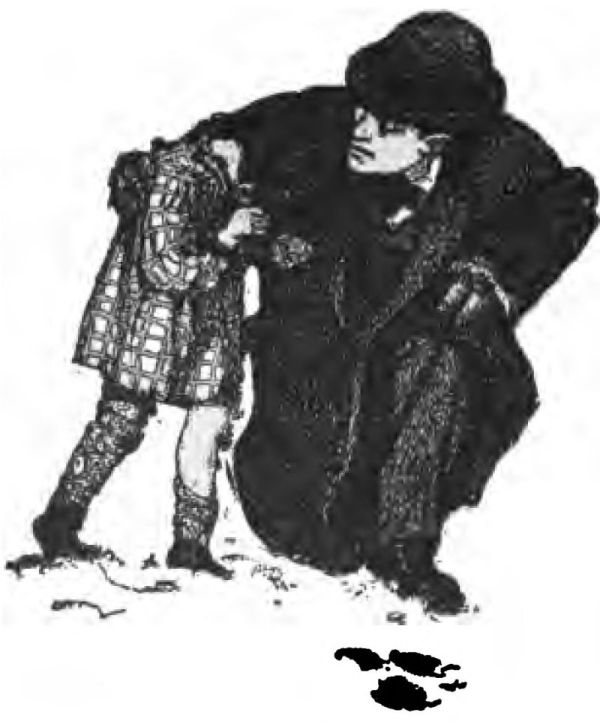
At once Mr. Stevenson took off his heavy overcoat.
He wrapped the little one in it, just as his nurse used to wrap him up when he was a sick little boy.
Taking the child in his arms, he carried her from house to house, all night long, trying to find her home.
He never thought how cold he was without his coat.
He thought only of the little lost child.
At last he found the child’s home and left her safe in her mother’s arms. Then how happy he was!
The mother herself could not have been happier.
[Pg 87]
You remember, when Louis played with his toy-ships, he always wanted to sail to the far-away lands.
He loved to read stories of strange lands and strange people.
Many times he said to his nurse, “When I am a man I shall visit the far-away lands that I have read about.”
When Robert Louis Stevenson became a man, he did visit these strange lands.
[Pg 88]
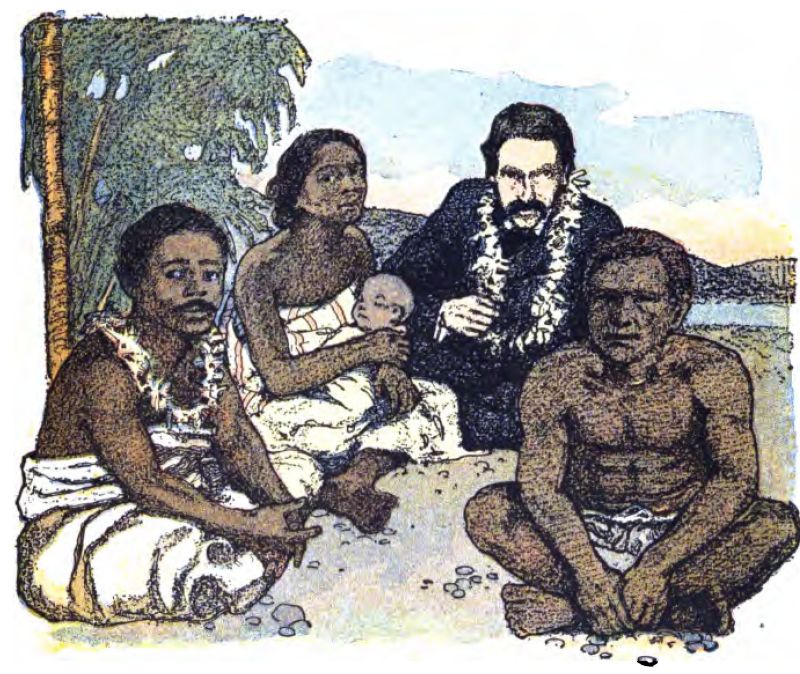
In a beautiful little ship he sailed for miles and miles over the sea.
He visited many islands,—islands more wonderful than the fairy islands you have read about.
After a while he built a home on one of these wonderful islands.
Here he wrote some of his best books.
The strange people he found living there grew to love Mr. Stevenson very much.
He was their friend.
They always came to him when they were in trouble.
And he always helped them.
Are you not glad Mr. Stevenson was able to do the thing he wanted to do all his life?
THE END