
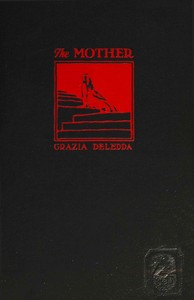
The mother by Grazia Deledda
QR code
"The Mother" by Grazia Deledda is a novel written in the early 20th century. Set in a remote Sardinian village, it is a stark psychological study of a young priest, Paul, his devoted mother Maria Maddalena, and Agnes, the solitary woman who awakens his forbidden desire. The story probes the clash between human love and religious duty, filtered through superstition, village poverty, and maternal anguish. Its tension is intimate and fateful, unfolding
over a brief span with the inevitability of tragedy. The opening of the novel follows a stormy night in which Maria Maddalena realizes Paul is slipping out to a woman’s house and, after failing to intervene, returns home torn between fear, faith, and a vivid, unsettling dream of the parish’s disgraced former priest. Paul, having just agreed to flee with Agnes, is shaken by the wind and his conscience, prays at the church door, then faces his mother; pressed by her quiet firmness, he swears to end the affair. Through a sleepless, tormented night he oscillates between resolve and longing, finally writing a letter to break it off; at dawn he celebrates Mass, chastens his meager flock, and has his mother deliver the note before being summoned to a dying hunter. Interwoven are memories that deepen the stakes: the mother’s recollection of their hopeful arrival in Aar and Paul’s of childhood shame at his mother’s servitude, seminary years, and an earlier encounter with a fallen woman. The section closes with domestic unease, the sacristan boy’s brisk chatter, and a pointed exchange about priestly celibacy, underscoring the moral conflict now set in motion. (This is an automatically generated summary.)
Download for free
For your e-reader or reading app — Kindle, Kobo, Apple Books, Calibre etc.
Kindle → Use Send-to-Kindle
Kobo, Nook etc. → Transfer via USB
Phone, tablet or computer → Open in a reading app
Other formats & older devices
There may be more files related to this item.
About this eBook
| Author | Deledda, Grazia, 1871-1936 |
|---|---|
| Translator | Steegmann, Mary G. |
| Uniform Title | La madre. English |
| Title | The mother |
| Original Publication | New York: Grosset & Dunlap, 1923, reprint 1928. |
| Credits | Sean/IB@DP |
| Language | English |
| LoC Class | PQ: Language and Literatures: Romance literatures: French, Italian, Spanish, Portuguese |
| Subject | Italy -- Fiction |
| Subject | Mothers and sons -- Fiction |
| Subject | Sardinia (Italy) -- Fiction |
| Subject | Italian fiction -- Translations into English |
| Subject | Priesthood -- Fiction |
| Category | Text |
| eBook-No. | 77111 |
| Release Date | Oct 22, 2025 |
| Copyright | Public domain in the USA. |
| Downloads | 528 downloads in the last 30 days. |
Project Gutenberg eBooks are always free!